



Asakusa Geisha Encyclopedia: Inside Tokyo’s Hanamachi
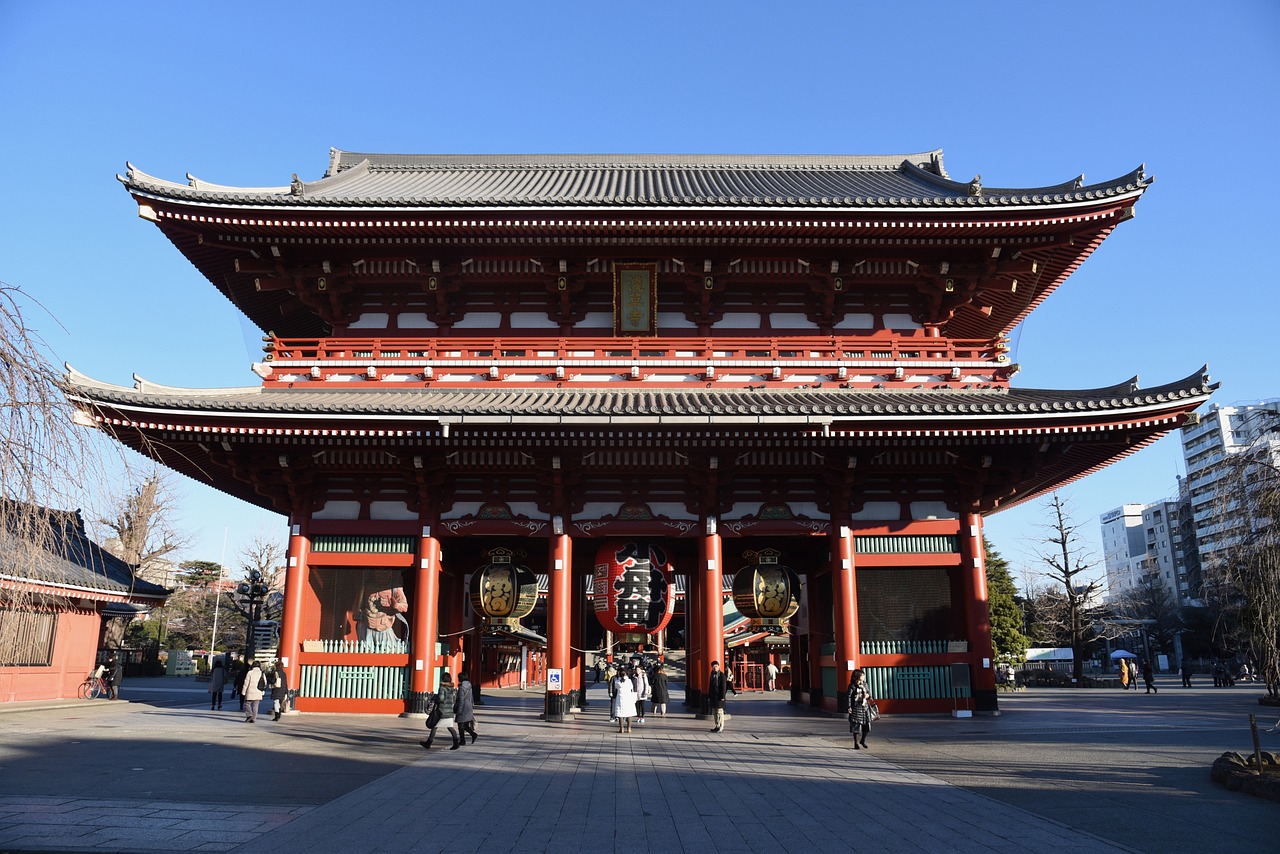
Asakusa geisha are the professional performing artists of Tokyo’s hanamachi behind Sensō-ji temple — a geisha district with roots in the early Edo period, where around twenty geisha are registered with the kenban office and perform at ozashiki (private geisha banquets) today. This encyclopedia was written from inside that world: Miyakodori is a machiai-chaya (teahouse) in Asakusa’s Kannon-ura, operating since 1950, whose okami — Chikage — debuted as a hangyoku herself in 1969 and remains the only okami in Asakusa with a geisha career of her own. What follows is everything we can put on one page: what a geisha actually is, how a young woman becomes one in Asakusa today, what geisha wear and why, what really happens at a banquet, and how a district that once registered over a thousand geisha carries its art into a new generation.
What Is a Geisha? The ‘Person of Art’
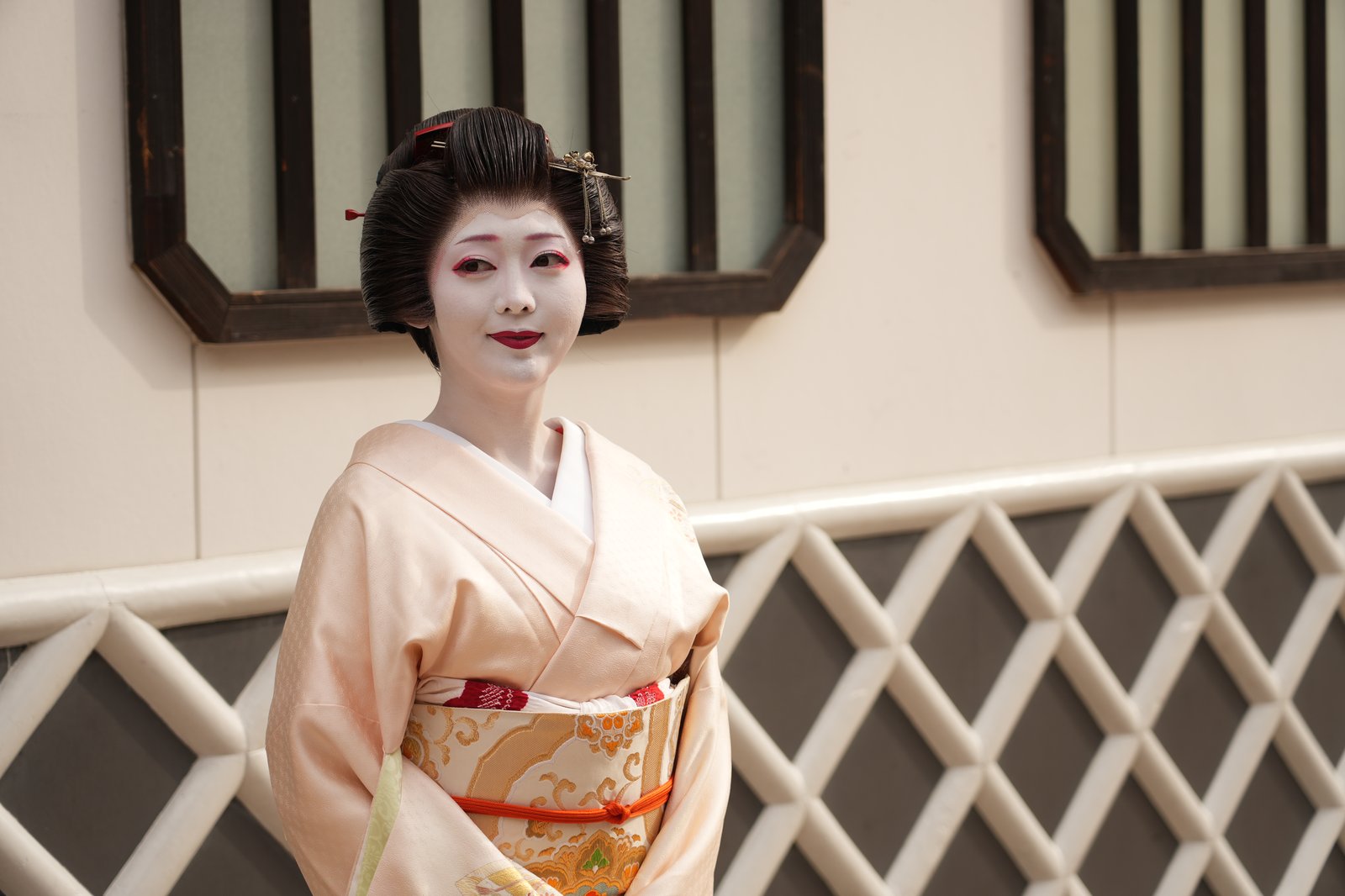
A geisha is a “person of art” — a professional performer of traditional Japanese dance, music, and hospitality. The word itself settles most misunderstandings: gei means art, sha means person. Everything else about the profession follows from that.
Gei Means Art: Why the Name Says Everything
A geisha always performs for her guests — dance, shamisen, song, the art of conversation. To keep that promise she trains continuously: weekly lessons in shamisen, hayashi percussion, dance, song, and deportment, with no finish line. The training is not a phase of a geisha’s career; it is the career. Chikage, Miyakodori’s second-generation okami, puts it in one sentence the house still lives by: “A geisha without art is just a person.”
Geisha Are Not Hostesses: The Difference Is the Art
Japanese guests in particular often ask how geisha differ from hostesses at modern night-time establishments. They are entirely different professions, and the difference is that word again: art. A geisha appears before guests to perform something she has spent years refining; the drinks and conversation frame the performance, not the other way around. For the fuller definition, see our direct answer to what is a geisha.
Edo Origins: Where This Culture Began
Geisha culture took shape in the Edo period, when entertainment culture flowered in the peace of the 17th century and matured through the Genroku era alongside kabuki and ukiyo-e. Each generation refined the forms — the kata — and passed them on, so a geisha training today inherits centuries of accumulated refinement. That inheritance, more than any costume, is what a guest is actually watching on the tatami.
Becoming a Geisha in Asakusa: Minarai, Hangyoku, Ippon
A hangyoku is a young geisha in the early years of her career — and both hangyoku and ippon (fully fledged geisha) are geisha; only minarai, the trainees, are not yet geisha. That single sentence corrects the most common misunderstanding about the Tokyo system, so it is worth stating before the details.
The Three Stages — and Only Two Are Geisha
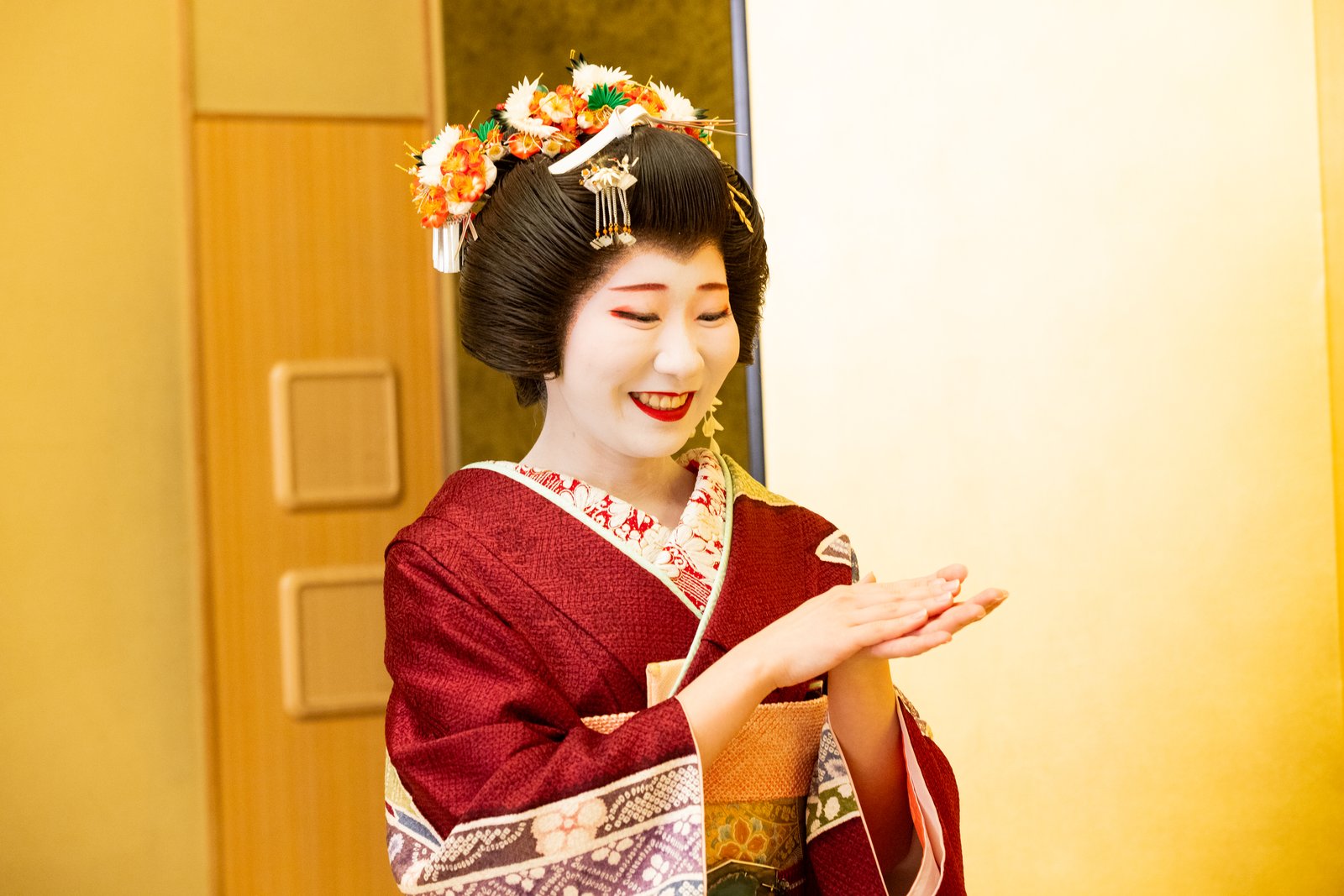
The path has three steps. A minarai (“learner”) spends roughly six months to a year attached to a teahouse or okiya, drilled in the foundations before ever performing: pouring, handing things to a guest, walking on tatami, seating order, polite speech. Then comes the hangyoku debut — she is now a geisha, appearing at ozashiki in furisode and hana-kanzashi, dancing pieces chosen to look charming and youthful. After two to four years, depending on how her art matures, she takes her ippon hirome — the ceremony marking her move from hangyoku to ippon, a fully fledged geisha, with trailing hem, tortoiseshell kanzashi, and repertoire to match. Most geisha have their own hikizuri made in time — often around this step if they spent several years as hangyoku — but few own many, and a woman who debuts directly as ippon may not have one at first. In Tokyo a woman can debut from eighteen, after finishing high school (Kyoto’s maiko begin at fifteen). No license or certification is required at any stage: it is the kenban and the hanamachi, not a diploma, that recognize a geisha. Nor is there an exam for the step to ippon; in Asakusa this is simply called “becoming ippon” (Kyoto calls it erikae). Women who want to join usually contact the Asakusa kenban directly; some instead reach out to an okiya after finding it on social media — both routes are accepted.
Hangyoku: Tokyo’s Young Geisha
The lessons — dance, tsuzumi and taiko drums, song — are the same for hangyoku and ippon; what differs is the repertoire and the expression. A hangyoku dances to look lovely; an ippon dances with the polish and iki (understated chic) of a grown geisha. Asked what kind of person suits the path, Chikage’s answer is not about talent but about kibataraki — attentiveness: someone who neither pushes herself forward nor shrinks back, who notices what the room needs. “From eighteen,” she says, “anyone can start” — the rest is training.
Becoming Ippon: One Okami’s Own Timeline
The clearest way to see the system is a real career: Chikage entered the hanamachi at fifteen, spent a few months as a minarai, debuted as a hangyoku, and took her ippon hirome three and a half years later. What moves a hangyoku forward is not the calendar alone: the hanamachi weighs her age, how grown-up she carries herself, and above all how her art has matured. (Her full story is in the Voices chapter below.)
Goro-san is the oldest working geisha in Asakusa. She began as a tachikata dancer and now performs as a jikata singer — here she and our okami talk about both sides of the tatami. English subtitles available.
Tachikata and Jikata: The Two Roles on the Tatami
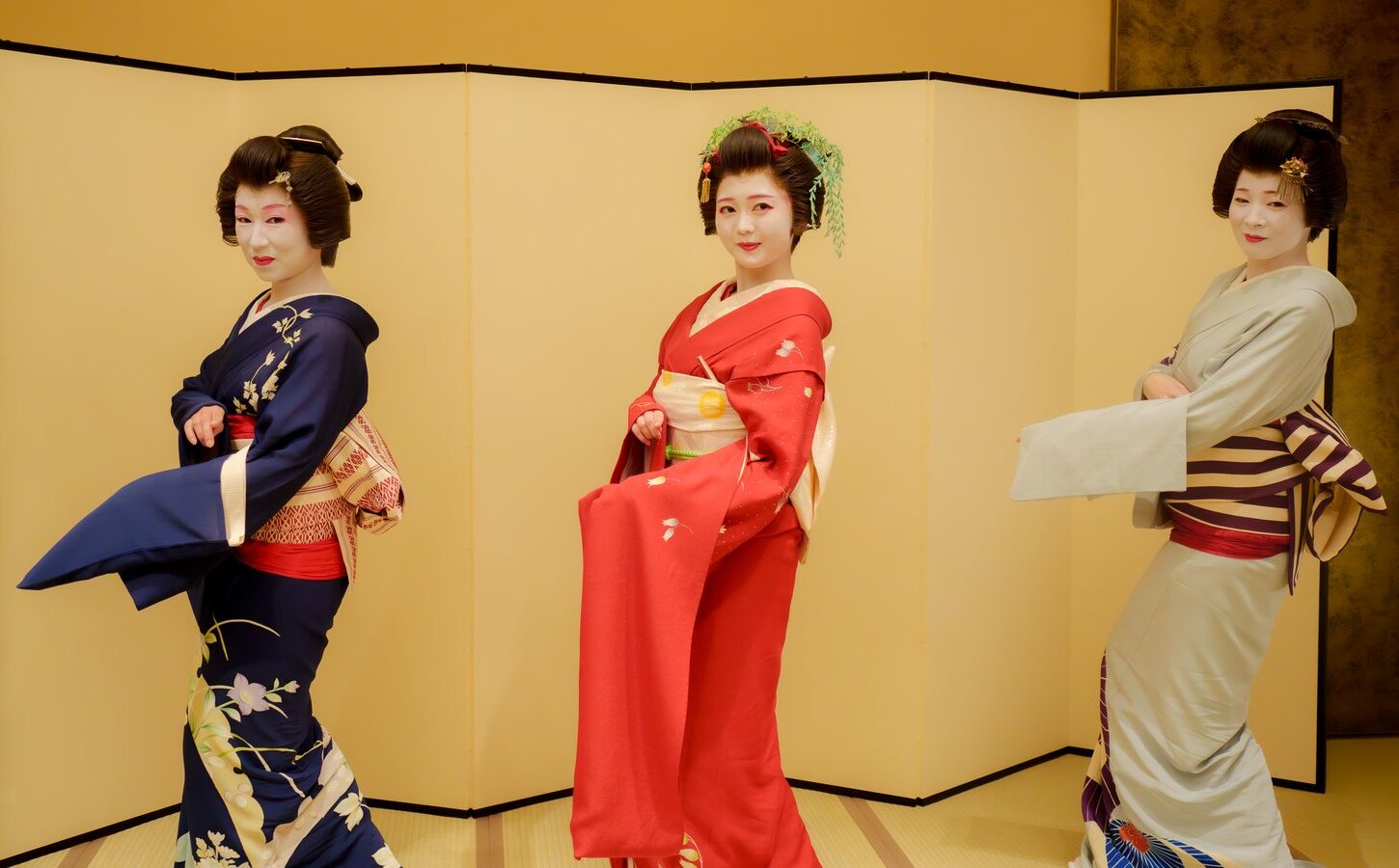
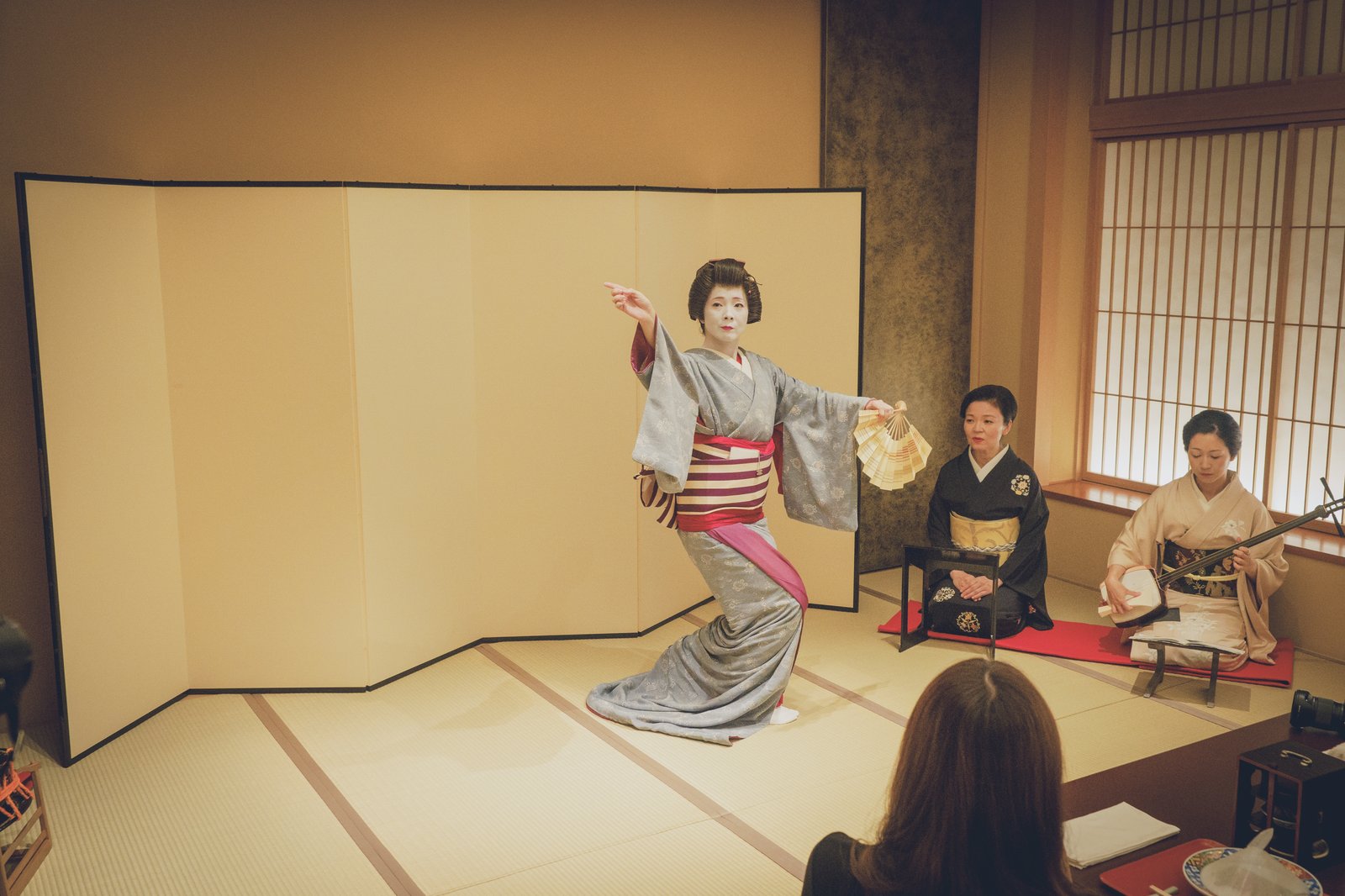
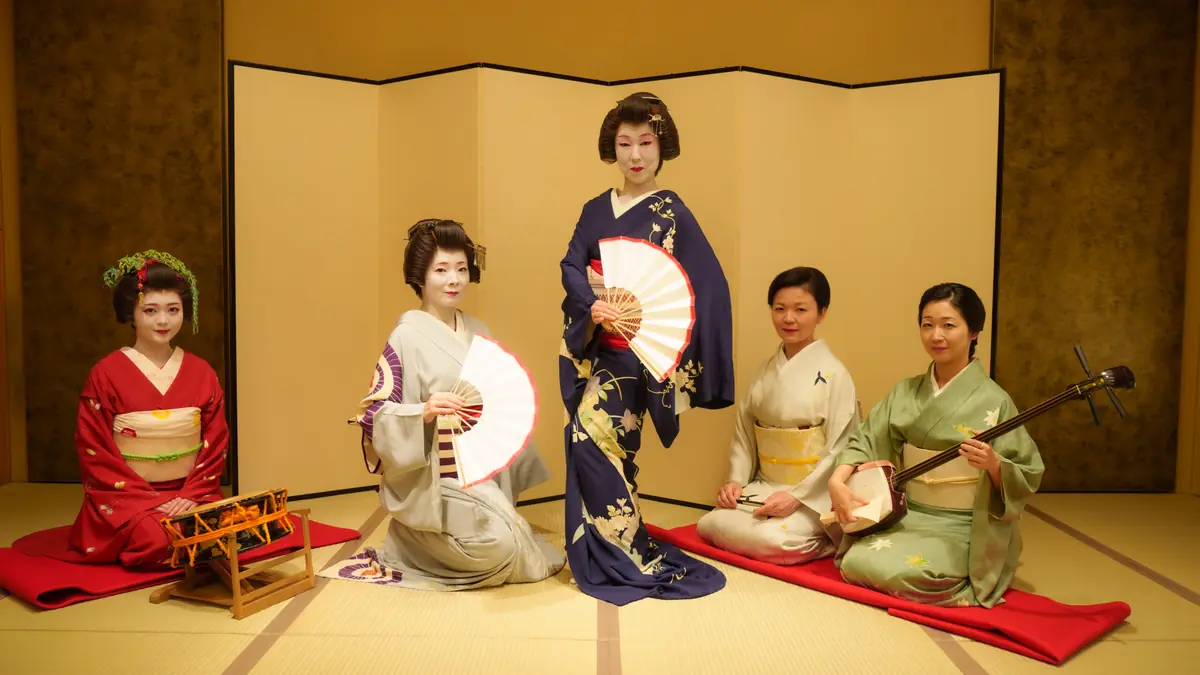
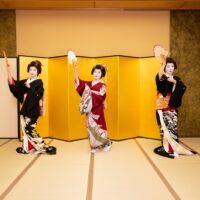
Visitors at an ozashiki often ask why one geisha wears the famous white makeup and another does not. The answer is the profession’s least-known division of labor. A tachikata is a geisha who dances; a jikata is a geisha who plays shamisen and sings. Both are fully geisha — they simply carry different halves of the performance.
Why Some Geisha Don’t Wear White Makeup
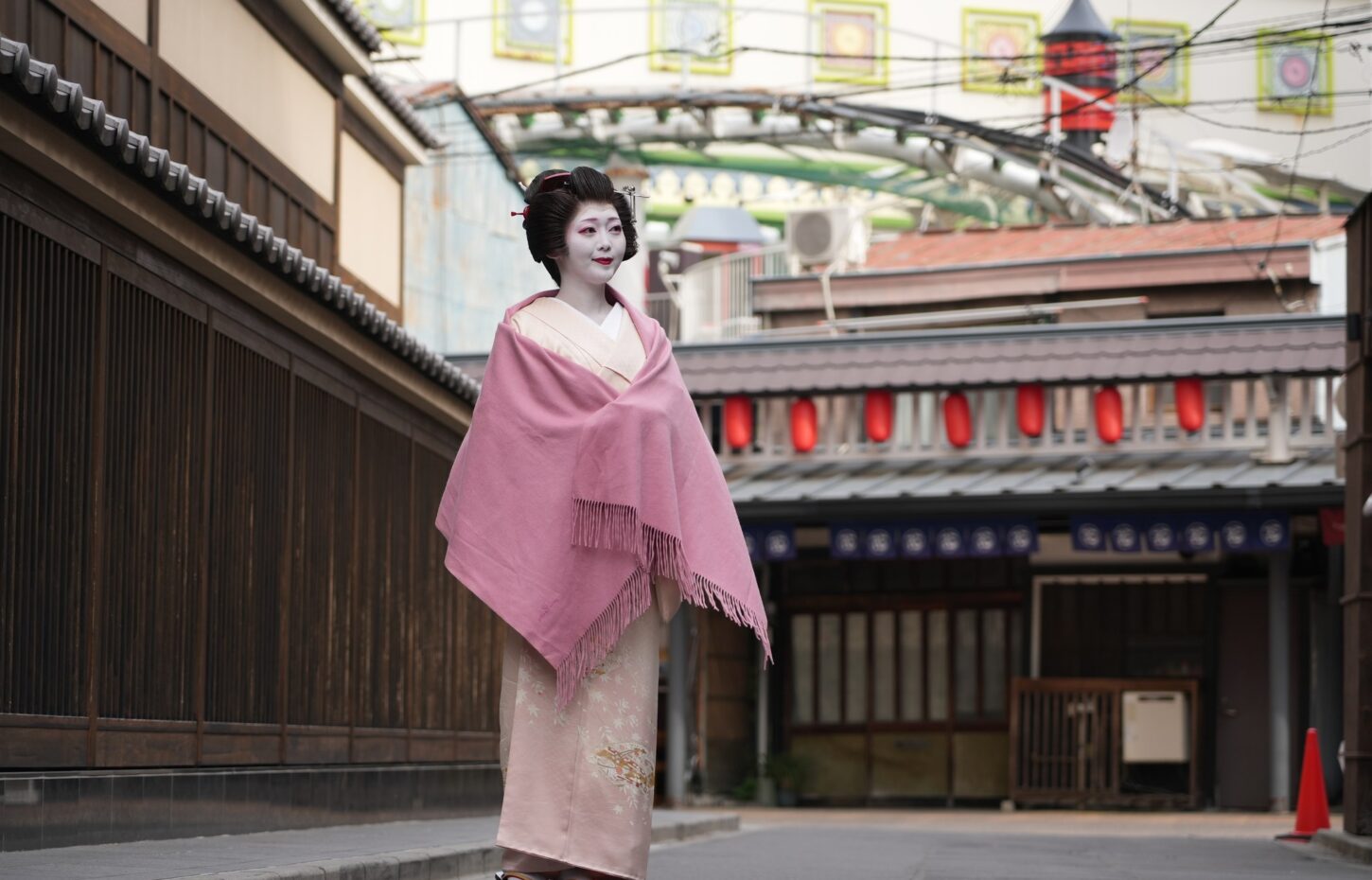
The tachikata appears in the classic image: white makeup, formal kimono, nihongami — traditional Japanese coiffure. The jikata performs in her natural face and what the hanamachi calls yōhatsu, a modern upswept style. Nothing about that division reflects rank; it reflects the job. The dancer is the figure the room watches, dressed to be watched, while the musician’s work is heard.
What Changed: Jikata Once Wore Nihongami Too
The split is more recent than it looks. Longer ago, jikata also appeared in full Japanese coiffure — by the account of a jikata working in Asakusa today, the hairstyle difference between the two roles arrived with the modern era. It is a useful correction to the idea that everything in this world is fixed: the art the jikata plays has been handed down intact, while the way she wears her hair moved with the century. Traditions that survive tend to be the ones that know which parts are load-bearing.
A Geisha Who Switched Roles
The two roles are not castes. Komaaki, a jikata performing in Asakusa today, began as a tachikata: she spent her first two to three years dancing, studying both arts in parallel, then moved to the shamisen side — a path she describes as gradual, since the instrument “isn’t something you can simply pick up.” Asakusa’s jikata train under a shamisen master of the Yamatogaku tradition — lessons that, for over two decades, have been held in Miyakodori’s own tatami rooms.
Geisha and Oiran: Two Different Worlds
Geisha and oiran are the two figures most often confused by visitors, and the distinction is simple to state. Oiran were the celebrated courtesans of old Yoshiwara, whose profession — recognized as legitimate work in its era — included selling companionship; geisha, a younger profession that grew up alongside them, specialized in artistic entertainment and sold only that: dance, music, and the pleasure of a well-run evening. The division was understood clearly at the time, not as a judgment but as two licensed roles.
Art Versus Beauty: The Essential Difference
The line was even kept in writing: at the kenban, the two trades were posted on the same boards but in separate rows. When Edo authorities formally recognized geisha in Yoshiwara, a registry office — the kenban — was established to manage them, posting their names on boards. Its purpose was control, but it had a side effect that still matters: it put in writing who was a geisha and who was not, and that line has held ever since.
The Obi Tells You: Front or Back
Dress codes reinforced the line: a geisha ties her obi at the back; an oiran tied hers at the front. It remains the quickest way to read any historical print or costume photo. Guests of that era often played shamisen and sang themselves — an evening with geisha was participatory, “a bit like karaoke today,” as Miyakodori’s okami puts it. For the full story of the courtesans’ world, see our guide to oiran, the courtesans of old Yoshiwara.
The full comparison: Oiran vs Geisha: What’s the Difference? — the obi, the geta, the kenban records, and which of the two still exists today.
Asakusa vs Kyoto: Iki and Hin
Most visitors arrive with Kyoto images in mind, so the natural question follows: how is Asakusa different? At the root the professions are the same — Kyoto says geiko where Tokyo says geisha — and the white makeup and classical training are shared ground. The differences are in dress, dance lineage, debut age, and above all aesthetic.
Hangyoku vs Maiko: Same Idea, Different Cities
Tokyo’s hangyoku and Kyoto’s maiko are the closest counterparts the two cities have — the young years, in furisode — yet, as Chikage puts it, “they are really different.” A maiko trails her hem and ties the darari-no-obi, the long hanging obi of the Kyoto postcard image; a hangyoku wears her furisode tucked at the hem in the Tokyo hashori style (the next chapter has the details). The calendar differs too: a maiko can begin at fifteen, a hangyoku from eighteen.
Kimono and Dance Schools (an Okami’s Personal View)
A Tokyo geisha’s formal trailing kimono is the Edo komon — covered edge to edge in a pattern so minute it reads as a solid color from across the room — while Kyoto’s geiko rarely wear it, favoring tsukesage and color-graded kimono with pictorial designs at the hem. Dance divides along school lines: the lineages most guests encounter in Tokyo are Hanayagi, Fujima, and Onoe — Asakusa’s dance is centered on the Hanayagi school — whereas Gion dances in the Inoue school, an old and distinct lineage whose movement looks entirely different. Chikage, who holds an assistant-master (shihandai) license in the Hanayagi school, is careful to frame this comparison as her personal view.
Edo Iki: The Aesthetic That Defines Asakusa
Asked to name the deepest difference, Chikage offers what she calls “just my own image”: Edo — Tokyo — dresses toward iki, the understated, sharp-edged chic of the old shitamachi, while Kyoto dresses toward hin, refined grace and good taste. Iki is a pillar of Japanese aesthetics — the subject of philosopher Kuki Shūzō’s classic study — and the Edo komon is iki made visible: extravagance hidden in a pattern you must come close to see. That restraint is the aesthetic Asakusa’s geisha inherit, and a guest feels it in the room before anyone explains it.
What Asakusa Geisha Wear: Hair, Kimono, and Belled Pokkuri
In the hanamachi, dress is information: hair, hem, and even footwear announce a geisha’s career stage — precisely enough that once you know the system, you can read almost any photograph of a geisha in nihongami like a caption.
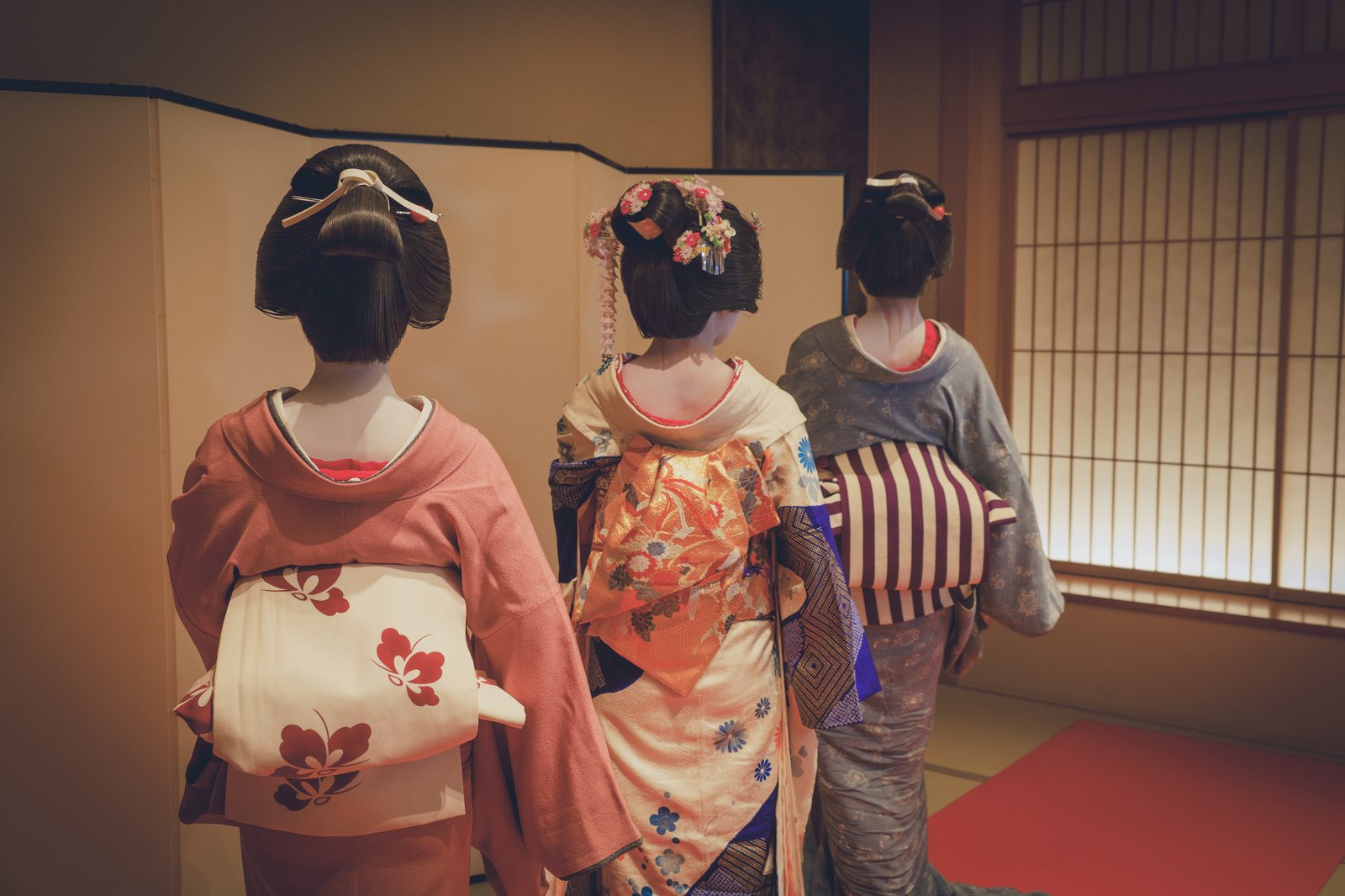
Three Mage Hairstyles: Momoware, Takashimada, Tsubushi
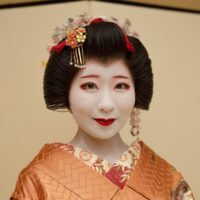
Among the geisha who wear nihongami, classical Japanese coiffure sorts into three mage (topknot) forms that track a career. A hangyoku — Tokyo’s counterpart to Kyoto’s maiko, whose own hairstyles differ — wears the momoware, the “split peach,” whose cleft knot has marked young girls since the Edo period. Once she is ippon, she moves to the takashimada, the tall, stately knot young geisha favor (the bridal bunkin-takashimada is its separate descendant). And when the heavy takashimada grows tiring with the years, senior geisha change to the lower, lighter tsubushi. The system has grammar rules — hair and kimono must agree, and the okami notes that the shimada does not sit well with the Edo komon — and the discipline extends to cosmetics: false eyelashes and glittering eyeshadow are simply not worn with nihongami, because the silhouette turns wrong in profile. Chikage remembers a geisha arriving in false lashes once; the answer was no.
Black Montsuki: A Geisha’s Formal Dress
When a hangyoku becomes a full geisha, her formal dress becomes the black montsuki — a black kimono bearing family crests, the most formal attire a geisha owns, worn for debuts, formal stages, and the most important ozashiki. Adulthood in this profession is marked not by more ornament but by less: one color, the family crests, and the art does the rest. In January, while the black kimono is worn, both hangyoku and ippon wear an ear-of-rice kanzashi; with the black hikizuri the obi is basically tied in the yanagi-musubi, without an obijime — the “willow obi,” a Tokyo phrase.
A Hangyoku’s Furisode, Hashori, and Belled Pokkuri
Everything a hangyoku wears is designed to read as youth. Her furisode carries the long swinging sleeves of an unmarried girl; her shoulders bear kataage, the same tucks sewn into children’s kimono for Shichi-go-san; her hem is tucked at the hip in the Tokyo hashori style rather than trailing; even her obi is tied differently. And on her feet: pokkuri, tall lacquered clogs with a hollow in the platform holding small bells, so that a hangyoku jingles softly with every step — Chikage wore them in her own hangyoku days. Even the footwear announces, gently, that a young member of the profession is coming.
Why white? Before electricity, an ozashiki was lit by candles, and white read across a dark room. An Asakusa geisha explains the few colours actually used — red, black, a little pink — and the white left on the neck. English subtitles available.
Geisha Makeup: The Art of Subtraction
Why do geisha wear white makeup? It is among the most-asked questions about geisha appearance, and Asakusa can answer with unusual authority: Chikage was known among her peers as exceptionally skilled at the makeup worn with nihongami, and she distills the entire tradition into one word: subtraction.
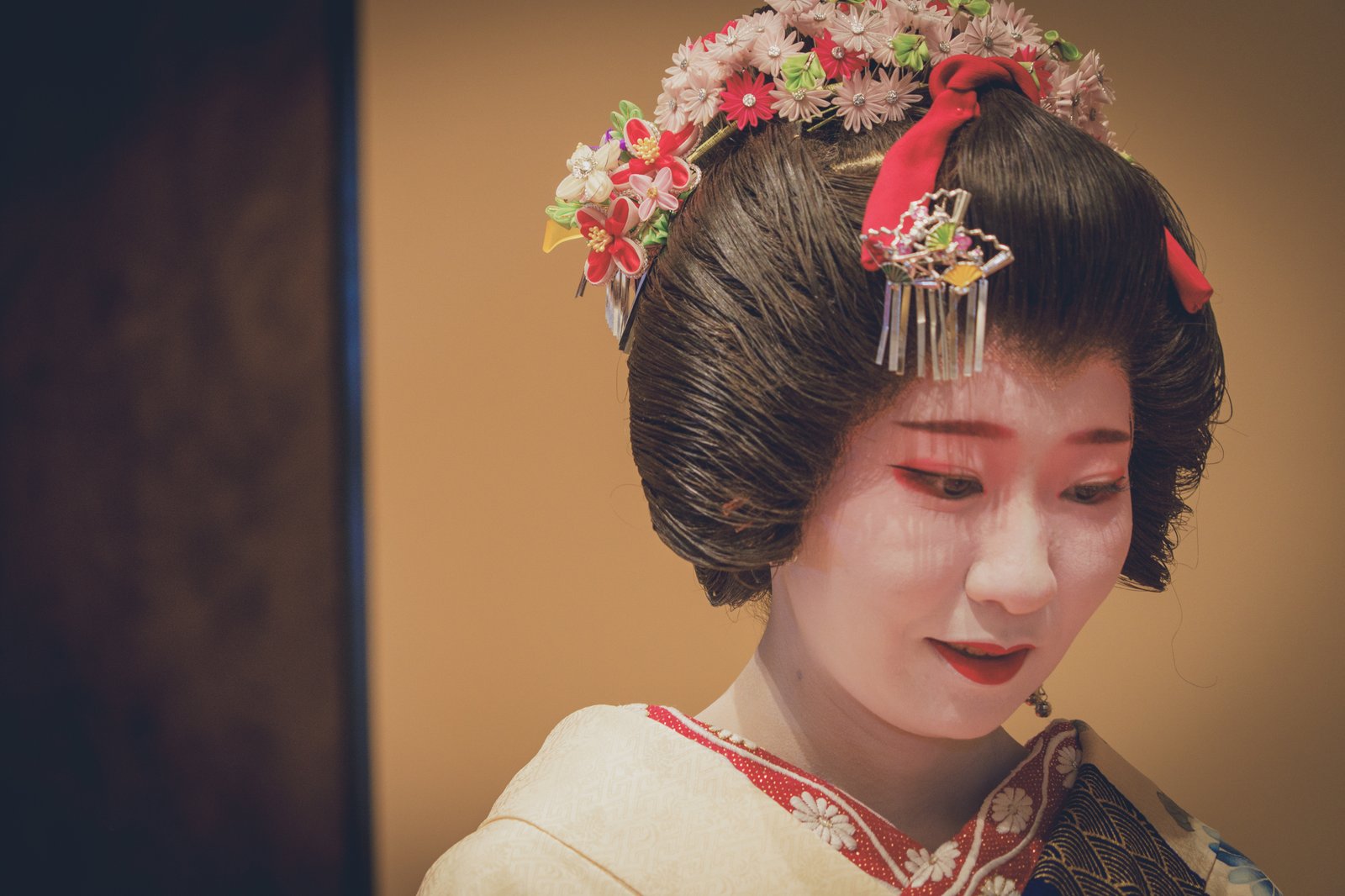
Three Colors, Nothing Added
Geisha makeup uses white, red, and black — nothing else. Modern cosmetics work by addition, layering color on color; the geisha tradition works the other way, and individuality lives in how far each woman dilutes her red. Brows are drawn faintly in black, overlaid with red, and blurred into the old-fashioned drooping “crescent moon” shape; lips take true red only, never pink or beige; a small touch of red at the corner of the eye is, in Chikage’s words, where the allure lives. Asked for the craft’s most important rule, her answer is the philosophy in miniature: never let it look modern — subtract; almost never add.
Why White? The Candlelight Theory
On the origin of the white face, Chikage is careful to call her answer a guess — but it is the explanation handed down inside the profession. In the centuries before electricity, banquet rooms were lit by large candles called hyakume-rōsoku, and painting the face white made a performer luminous in that dim light; she suspects the original was a light wash rather than today’s full white. The modern craft uses two materials — eri-oshiroi, powder dissolved in water or lotion (Kyoto’s maiko use it exclusively), or stage-white “pancake” — chosen by what a woman’s skin tolerates. The eri-oshiroi goes over a base of bintsuke-abura, the same pomade sumo wrestlers dress their hair with; pancake is worked over a white foundation instead. A practiced geisha finishes in well under thirty minutes; Chikage took ten to fifteen, and was called fast.
Mitsueri: The Painted Nape
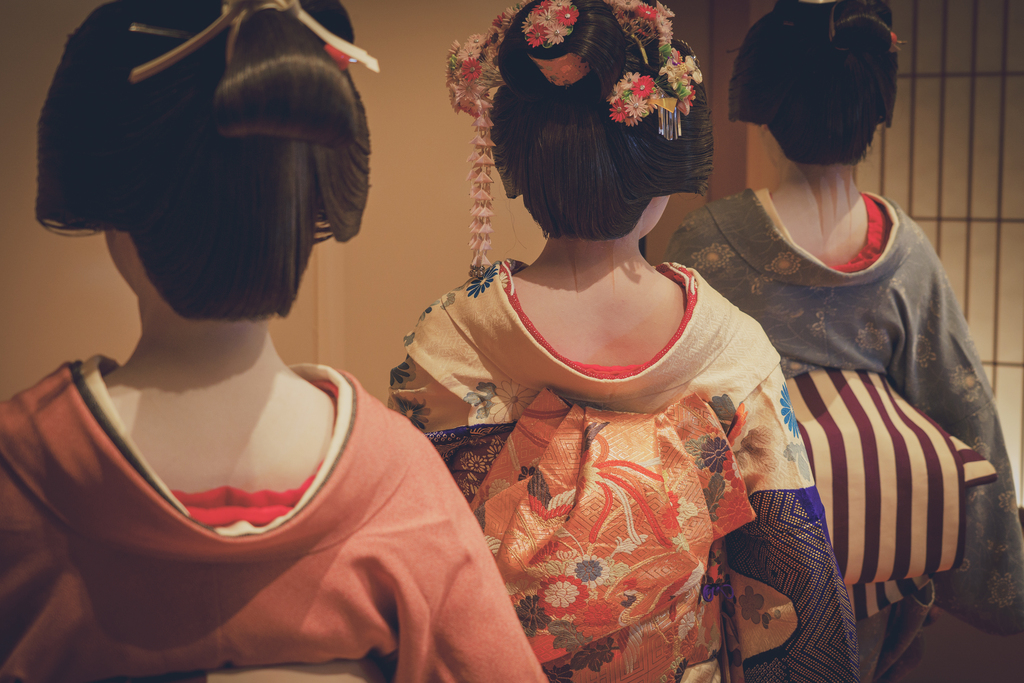
Look at any geisha from behind and you will see the tradition’s subtlest trick: the mitsueri, two or three prongs of bare, unpainted skin left at the nape — drawn deliberately asymmetric, because a real hairline never is, so that in a dance or a photograph the neck reads longer and sleeker than it is. A geisha can hardly paint her own nape, so the mitsueri is usually the work of the hakoya, the dresser — and when hands are short, some skip it and paint the nape solid. For the full history, tools, and step-by-step, see our complete guide to geisha makeup — this chapter is only the encyclopedia entry.
The Ozashiki: What Actually Happens at a Geisha Banquet
An ozashiki is a private banquet-room gathering where geisha perform, host traditional games, and keep the evening flowing. Everything else in this encyclopedia — the training, the dress, the makeup — exists for this room.
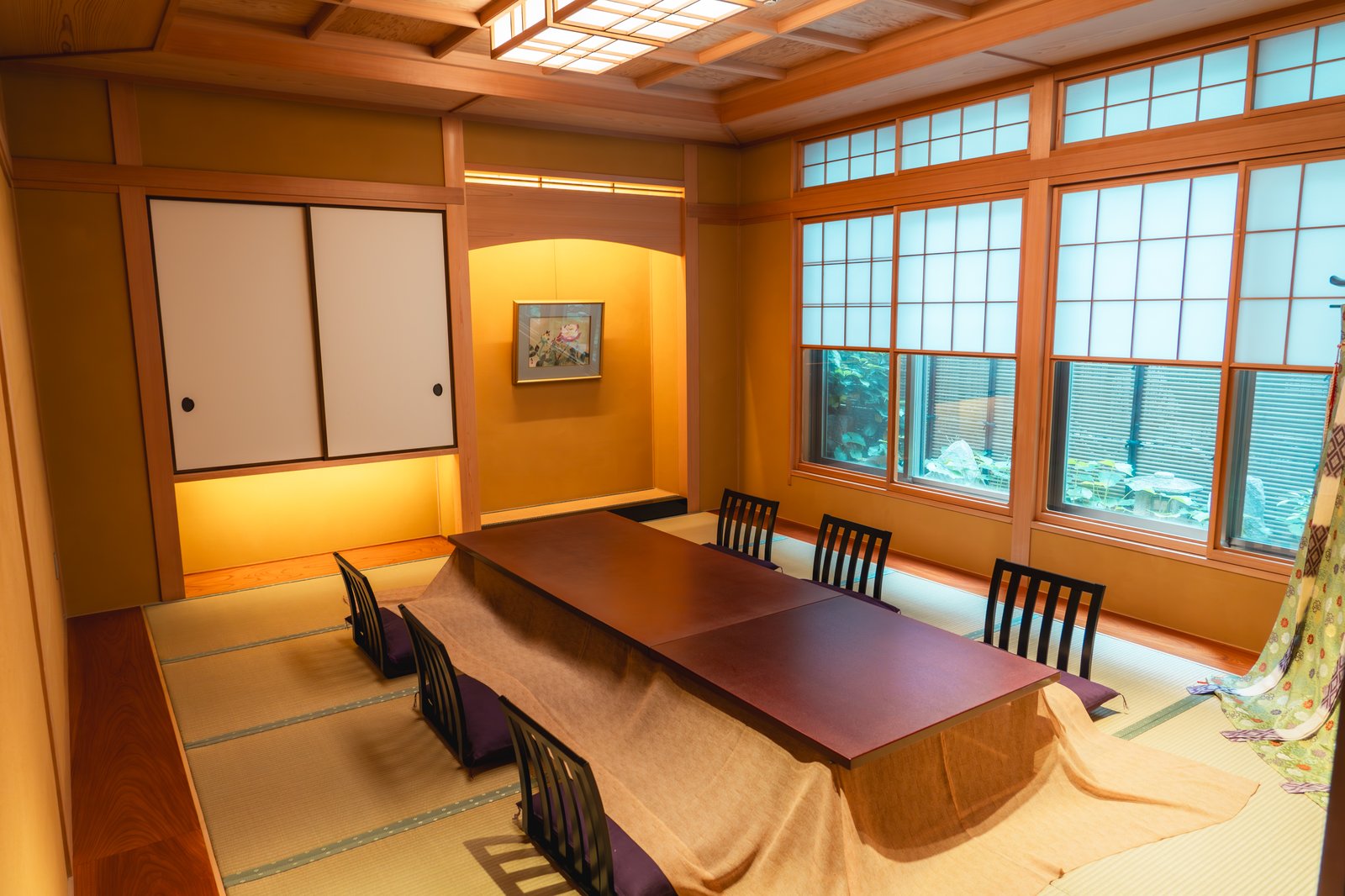
What an Ozashiki Is
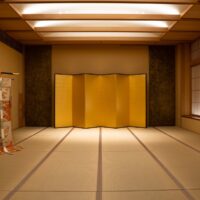
The shape of the evening has been stable for generations: guests dine and drink at the tatami table (at Miyakodori the geisha do not join the meal — they are working), watch dance and live music performed a few feet away, then play ozashiki-asobi, party games passed down for more than two hundred years, with the geisha as hosts and co-conspirators. Between all of it runs conversation, and at Miyakodori the okami sees to it that every guest finds their way into the fun — Chikage’s own description of her part. Miyakodori’s tea house sessions compress the same arc into a designed 75 minutes — the ozashiki in miniature.
Manners That Matter — and Ones You Can Relax About
The honest secret about ozashiki etiquette: almost all of it binds the professionals, not you. In attending guests a geisha never turns her back to them, and hands or pours everything from a seated position, because standing over a guest reads as looking down at them; seating follows the tokonoma alcove, the kamiza side being the seat of honor. Guests are asked to remember none of it — sensing what feels easy for each guest is precisely what a geisha is trained to do. If you want one thing to actively try: pour for your geisha. She pours for you, you pour for her; reciprocal pouring is one of the warmest threads of ozashiki communication, and foreign guests are welcomed into it rather than excused from it.
Chairs, Kimono, and Photos: Practical Notes
The banquet room has modernized where comfort demanded it — low chairs at the tatami table are standard at Miyakodori — while the room’s manners have not. Practical guidance for guests lives in our complete geisha experience guide and, for manners in depth, the tatami room etiquette guide.
Ozashiki Games: Konpira Fune Fune and Beyond
Ask returning guests what they remember most and the answer is usually a game. The classic repertoire at an Asakusa ozashiki includes Konpira Fune Fune, the accelerating rhythm duel played over a small wooden stand to a folk song from Shikoku; Tora Tora, the gesture battle of warrior, tiger, and old woman fought from behind a folding screen; and Tōsenkyō, the fan-toss game scored against a target — with the geisha dancing, playing, and coaching beside you throughout.
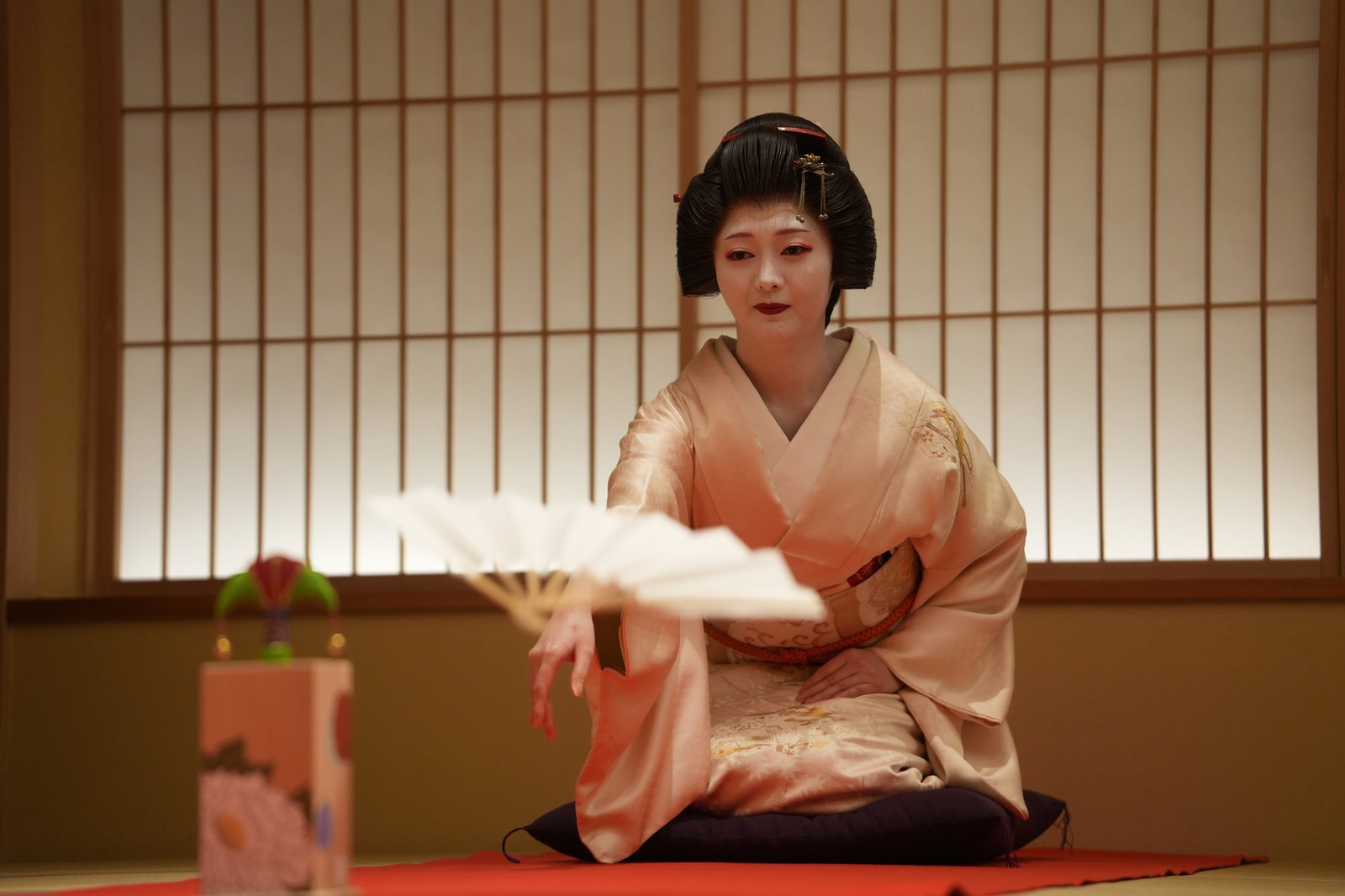
How Geisha Learn the Games
Here is a detail that surprises people: there is no class for this. Unlike dance or shamisen, which have formal weekly lessons, the games are absorbed naturally — passed from geisha to geisha in the course of working, the way any living folk tradition survives. They are not stage repertoire; they are what the hanamachi does for fun, which is exactly why they feel alive.
Which Plans Include Games
Every format at Miyakodori includes at least one: the 75-minute tea house session builds in Konpira Fune Fune, and private ozashiki plans add more of the repertoire as the evening’s length allows. For full rules, lyrics, and the complete catalog, see our Ozashiki Games guide — the pillar this chapter defers to.
See the Ozashiki This Encyclopedia Describes
Everything above — the training, the dress, the games — comes together at a private ozashiki (geisha banquet) with Asakusa geisha at Miyakodori. Reservations are by request.
Request a ReservationDance and Music: Asakusa Meibutsu, Sawagi, and Yamatogaku
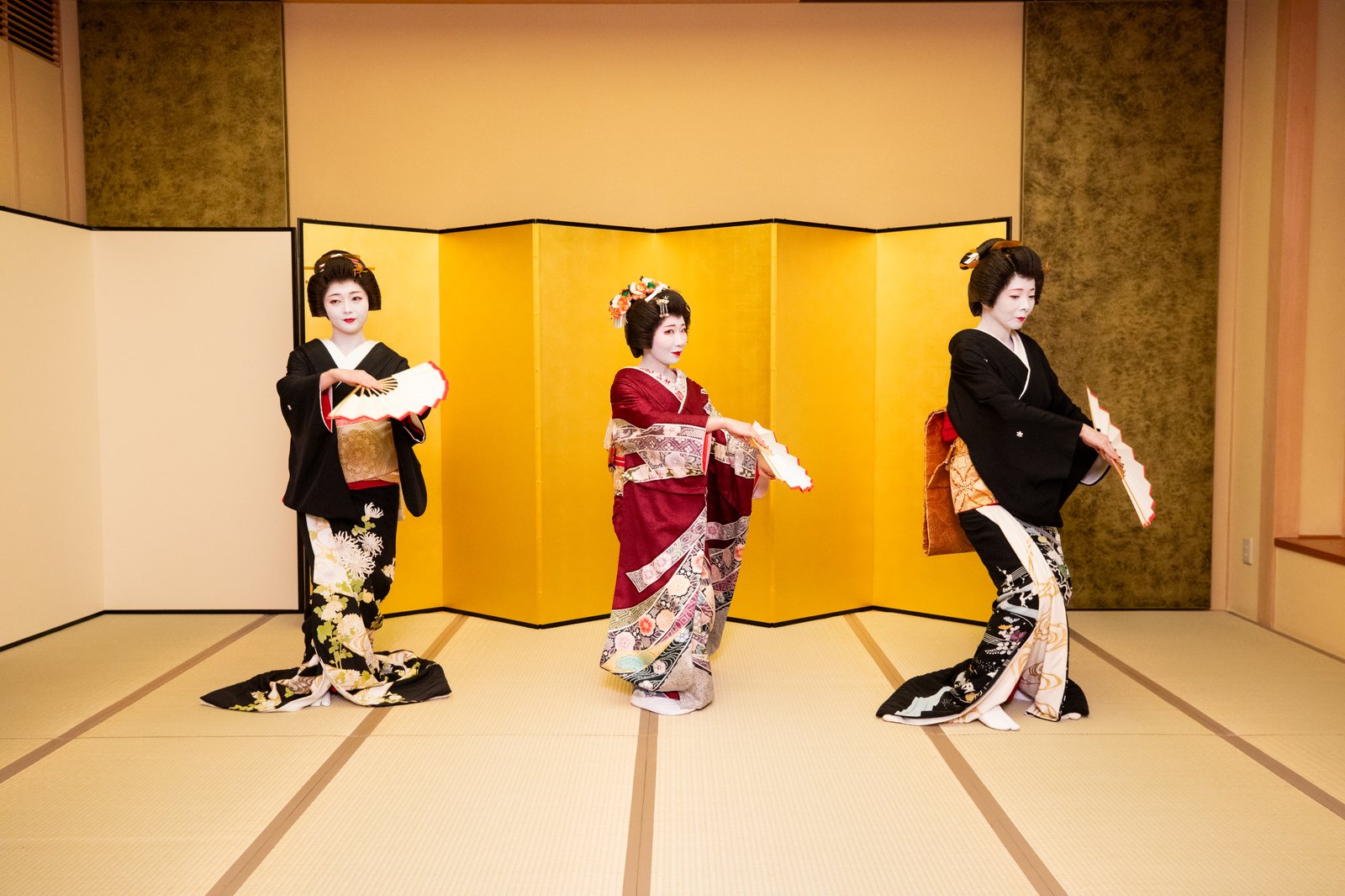
The repertoire of an Asakusa ozashiki runs from Asakusa Meibutsu, a dance written for this district and closely identified with it, to sawagi, the old send-off song shared across Tokyo’s hanamachi. The music is carried by shamisen, and Asakusa’s jikata train in the modern classical school of Yamatogaku. Almost none of it has been written about in English. The guide for this chapter is Chikage herself — a shihandai of the Hanayagi school who performed Japanese classical dance on the stages of the Kabukiza, the National Theatre, and the Meijiza. At Miyakodori today, a first-time guest usually sees those first two dances in sequence. Alongside them sits Asakusa Goyomi — four pieces, one for each season, whose choreography changes every year.
Asakusa Meibutsu: A Dance Only Asakusa Has
Asakusa Meibutsu — “Asakusa’s Famous Things” — is a dance made for this district and bound up with it. Its lyrics tour Asakusa’s landmarks and festivals, and the performers paint each one with fan and hands: the Sanja Matsuri, the portable shrines (a held fan becomes the carrying-pole of a mikoshi), the kabuki hero Sukeroku of Hanakawado. Bright, festive, danced by several geisha together — and young as repertoire goes: by the okami’s recollection it did not yet exist when she made her own debut.
Sawagi: The Song That Changes with the Seasons
Far older is sawagi, born in Yoshiwara and danced across Tokyo’s hanamachi — by the okami’s account, in nearly all six. Its subject is the evening’s most bittersweet moment, the send-off — “shall I see you off, or be seen off?” — and it changes its clothes constantly: lyrics and choreography shift for celebrations, for spring, for summer, for the New Year. It also carries a quiet rule of rank: at an ozashiki, sawagi is danced by ippon geisha, while hangyoku take the drums and hayashi — unless there simply aren’t enough hands that night. Chikage remembers exactly what that felt like — it was the dance she waited to be senior enough to perform.
Three Shamisen and Yamatogaku: The Sound of the Ozashiki
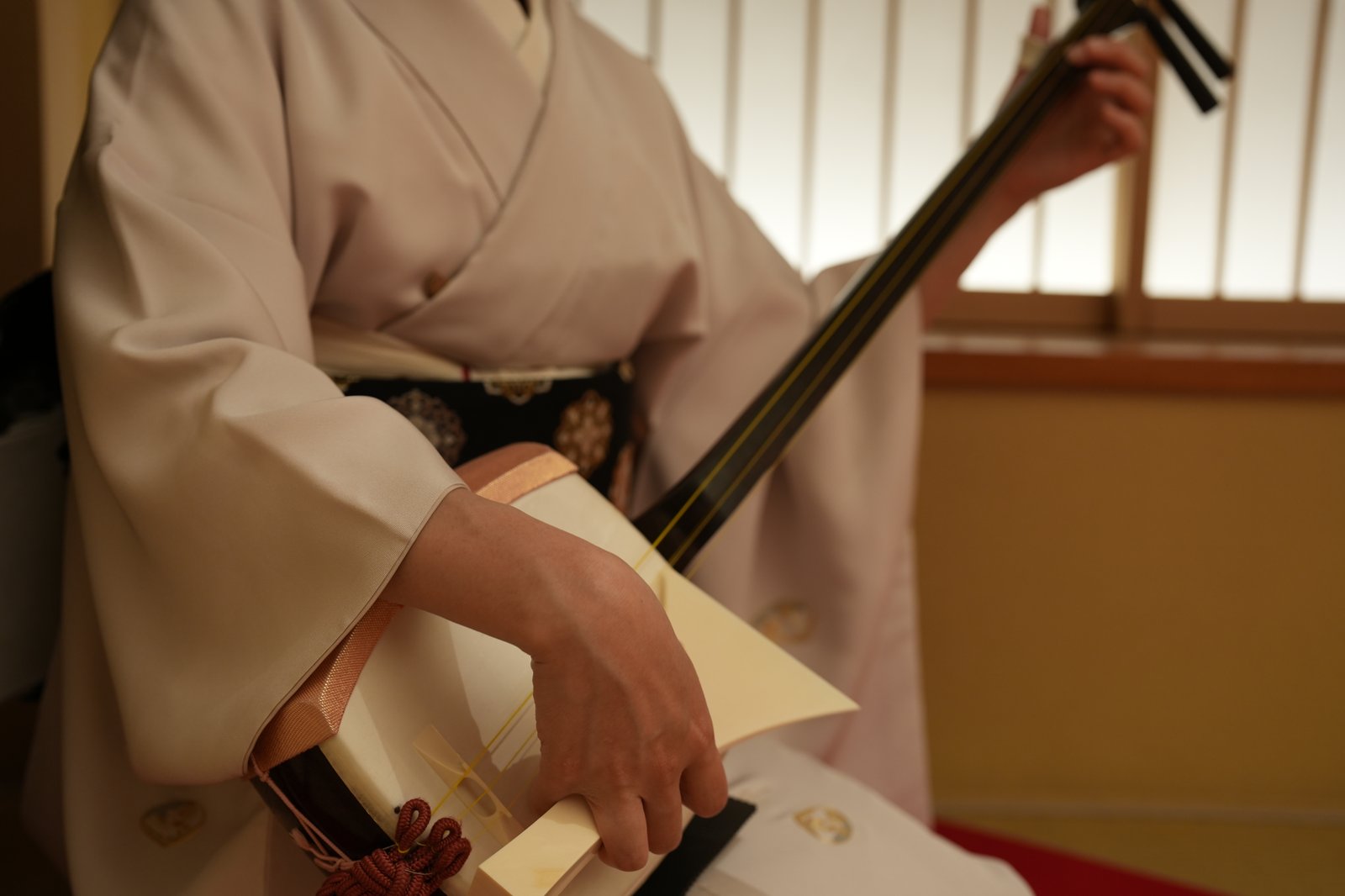
Shamisen come in three neck widths — hosozao, chūzao, futozao — a family graded by register “like violin, viola, cello, and contrabass,” in the words of the Yamatogaku iemoto who has taught Asakusa’s jikata for more than twenty years. Nagauta and kouta take the slender neck; Yamatogaku favors the middle. Yamatogaku itself deserves the pause: founded in 1933 by a member of the Okura family, one of the great business dynasties of the era, who returned from his student years in Cambridge wanting to create a Japanese musical form centered on women performers, it set lyrics by leading poets — Kitahara Hakushū, Shimazaki Tōson — and broke a rule traditional Japanese music had always kept: Yamatogaku harmonizes, blending Japanese and Western sound. One more thing separates this music from any orchestra: there is no conductor. The players align by breath alone — that silent agreement, the iemoto says, is both the hard part and the culture itself. For the full detail, see our guide to geisha instruments and the music of the ozashiki.
The Asakusa Hanamachi: From Over 1,000 Geisha to a New Generation
Numbers most websites don’t have: at its Taishō-era peak a century ago, Asakusa’s kenban registered about 1,060 geisha, served by roughly three hundred establishments — and the machiai-chaya (teahouses) outnumbered the ryōtei restaurants five to one. Understanding how that world became today’s — around twenty geisha, and a new generation debuting into their care — is the best short course in how a hanamachi actually works.
- Taishō-era peak, a century ago: about 1,060 geisha, roughly 300 establishments — machiai-chaya (teahouses) outnumbered ryōtei restaurants five to one
- 1969: more than 140 geisha, with about 75 ryōtei and teahouses between them
- Today: around 20 geisha registered with the Asakusa kenban
A Century in Numbers: What the Kenban Records Show
When Chikage debuted as a hangyoku in 1969, the district still held more than 140 geisha, and some seventy-five ryōtei and teahouses between them — and by her account those years outshone even Japan’s later bubble era: banquets ran past midnight as a matter of course, and guests would sweep four or five geisha off to Roppongi or Akasaka afterward, the engagement clock still running. Asakusa had its own character within Tokyo, too: for a time after the war it remained the one hanamachi where a girl could still begin in her mid-teens — a holdover from an older era, since standardized under modern law, and the reason a fifteen-year-old Chikage could enter the world she was born beside. Today the kenban registers around twenty geisha — which means every geisha performing in Asakusa tonight carries a share of a century’s art, and this district treats each debut as news.
Why ‘Ichigensan Okotowari’ Existed: Credit, Not Exclusion
Why did every one of Tokyo’s hanamachi refuse first-time guests? Not snobbery — bookkeeping. The flower-and-willow world ran on tsuke, credit: bills settled every few months, or deposits topped up as they ran down. In a cash economy with no credit cards, that only works with guests whose word is good, so “by introduction only” was a credit check, not a velvet rope. The system worked exactly as designed, and that was the difficulty: if first-timers cannot come, advertising is pointless, so the practice of seeking new guests never had a reason to develop — through the print era, the internet era, and the social media era alike. And the teahouses, which unlike ryōtei had no kitchen and no second income beyond the ozashiki itself, felt every contraction first. This is our house’s own analysis, and it is a Tokyo story — Kyoto’s is different. But it ends the way our third generation always ends it: that is exactly why the opportunity exists.
The Door Miyakodori Opened
That introduction requirement remains the norm across Asakusa’s hanamachi. Miyakodori chose to open the door — the first machiai-chaya in Asakusa to welcome guests without an introduction: direct online booking, English support, transparent pricing. Not a break with tradition, but the one addition it had never needed until now: a way in for someone who doesn’t yet know anyone. The fuller story is told by our third generation in 1,060 to 20: what happened in Asakusa’s geisha world.
Kei-san worked as a hakoya, the attendant who carried a geisha’s shamisen box and kept the evening moving. Sixty years in Asakusa, and later Secretary General of the Asakusa association — here the kenban is remembered from the inside. English subtitles available.
The System Behind the Scenes: Kenban, Hakoya, and How Geisha Are Paid
Almost nothing in this chapter exists anywhere else in English. The hanamachi runs on an offstage machinery — a registry, a payment system, a guild of backstage professionals, even its own messaging network — and understanding it answers the questions visitors are usually too polite to ask.
Kenban Registration: The Mark of a Real Geisha
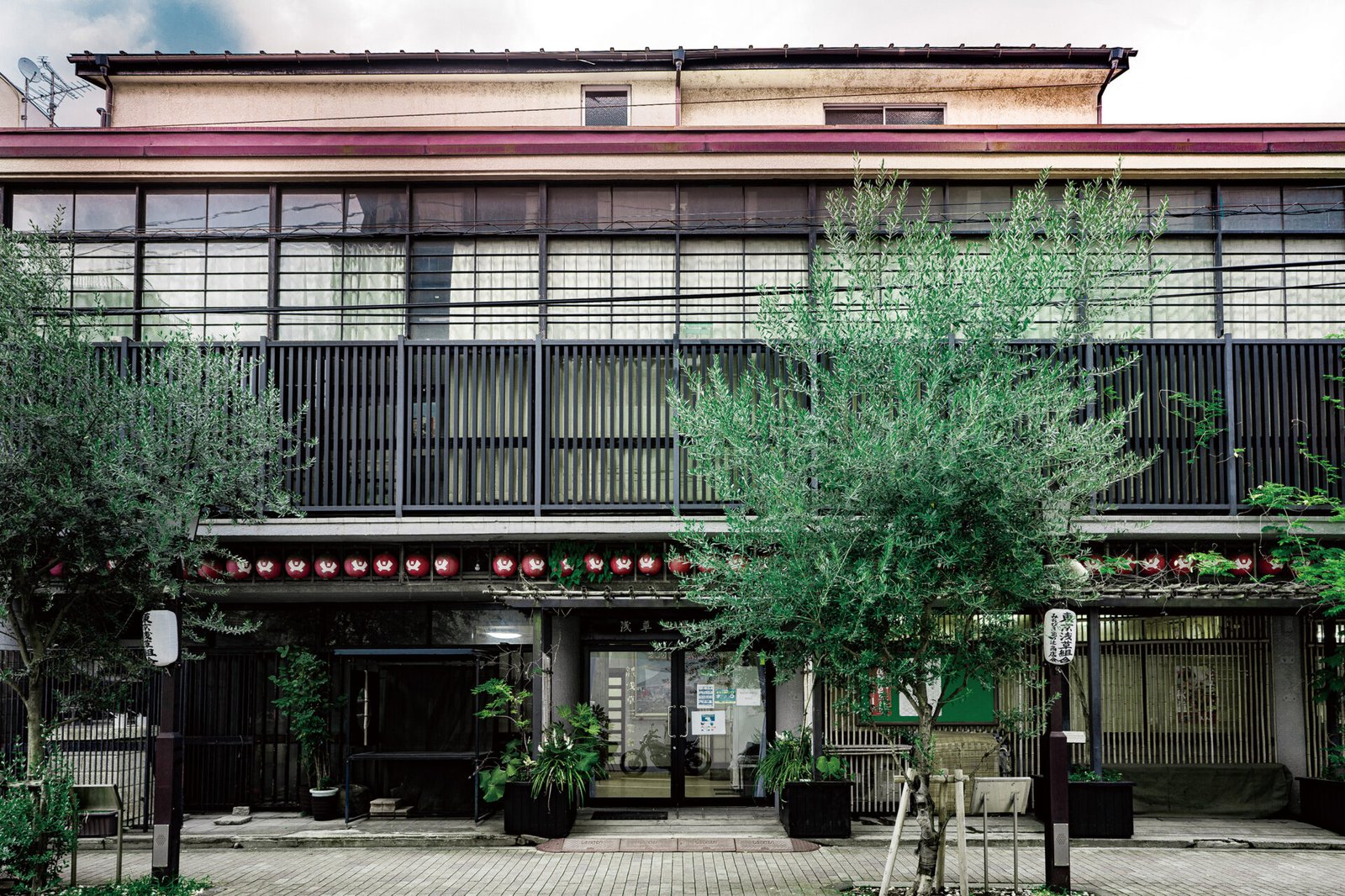
Every working Tokyo geisha is registered with her district’s kenban — Asakusa’s geisha with the Asakusa kenban, Shimbashi’s with Shimbashi’s. As chapter two explained, no diploma or dance-school license makes a geisha; registration does. It is also the quickest question to ask of any “geisha experience” you may be offered anywhere: is the performer registered with her local kenban? Asakusa’s registry stands at around twenty geisha today.
How the Money Flows: Geisha as Independent Professionals
A fact that corrects most of what is written about this world: geisha are not employees of any teahouse — not Miyakodori’s, not anyone’s. Each geisha is an independent professional, registered with the kenban, whom a house invites to an engagement. Fees are time-based, and the flow is formal: the guest pays the ryōtei or machiai-chaya; the house submits the geisha’s engagement slip to the Asakusa association; the association pays each geisha by bank transfer, like the professional she is. Each banquet is assembled for the performance it needs — musicians and dancers invited in combination. At Miyakodori the smallest lineup is one jikata and one tachikata, since live shamisen, song, and dance all have to happen in the same room. Hangyoku likewise belong to Asakusa, not to any single house, and are invited the same way.
The Hakoya: Keepers of the Shamisen Boxes
The hakoya — “box man” — takes his name from the shamisen’s long carrying box, which he transported as geisha moved from engagement to engagement, along with every errand in between. The role is as old as the organized Asakusa hanamachi itself, running back to the Meiji era: hakoya lived in at the kenban, two at a time, on call through the night, and even stood the district’s fire watch, a sashiko fireman’s coat and helmet always hung ready — worn for the year-end “mind the fire” rounds and, on the rare occasion, for a real call-out. Prewar society ranked the hakoya low — a prejudice of that era, and one that ended with it — but inside the hanamachi the relationship was always mutual courtesy: geisha were raised to treat their hakoya well, and the hakoya served with pride.
‘Aijō’: The Hanamachi’s Own Messaging System
Long before smartphones, the hanamachi had a messaging system of its own. The aijō — written with characters suggesting “affection” — was the slip listing each geisha’s atokuchi, her next engagements: which house, what time, whose banquet. Geisha telephoned the kenban from banquet rooms to check theirs, and the hakoya delivered the slips through the night. Chikage had every ryōtei’s phone number memorized — looking one up wasted time, in years when a geisha measured her night by how many banquets she could reach — and when schedules tangled, the hakoya smoothed things over with the houses: the hanamachi’s diplomat as well as its courier. His full story is in our profile of the hakoya, the unsung keeper of Asakusa’s geisha world.
Real Lives: Marriage, Taikomochi, and Common Misconceptions
Every culture that gets photographed more than it gets talked to accumulates myths. This chapter answers the questions guests actually carry into the room, from inside.
Can Geisha Fall in Love and Marry?
Yes. Geisha can date, and the choice of how to live is theirs. Tradition speaks of the danna — the patron — but plenty of geisha have built their careers without one, and some simply live with the person they love. Marriage while continuing to work has always existed too, though rarely: in Chikage’s working years, among well over a hundred geisha, she recalls exactly one who was married. Geisha are professional women with private lives, and the hanamachi has always left room for both.
Taikomochi: The Male Geisha
The hōkan — better known abroad as taikomochi — is the male geisha: a professional entertainer of the banquet room whose art centers on comedy, games, and keeping an evening airborne. The profession survives today only here in Asakusa, where six hōkan are registered with the kenban. He is engaged the way geisha are — invited, typically as an addition to a geisha party once its lineup is set — and one mark sets him apart from the tachikata beside him: hōkan do not wear white makeup. His full story is in our guide to the taikomochi.
Is the Training Really as Harsh as the Movies Say?
Films and memoirs have fixed an image of apprenticeship as ordeal — children surrendered, rivals scheming, tears on the practice floor. Here is what it looks like in Asakusa now: a woman finishes high school, chooses this profession as an adult, and trains through weekly lessons that never end — demanding, but chosen and paid. Asked what was hardest about her own minarai period, Chino — a geisha performing in Asakusa today — answered that nothing was: there was a great deal to learn in a short time, and she absorbed it without suffering, because “all I felt was I want to start — I absolutely want to do this.” The training is real; the ordeal is a genre convention.
The Asakusa Geisha Year: Sanja Matsuri, Spring Debuts, and Setsubun Obake
The hanamachi keeps its own calendar, and almost none of it has ever been written down in English. Three fixtures give the flavor.
Why Debuts Happen in Spring
A debut date is decided less by readiness than by the kimono calendar. May is avoided — Golden Week runs straight into the Sanja Matsuri, and a debut would drown in the noise. From June the kimono changes from lined awase to unlined hitoe, and a debut wants the formality of awase; summer is out for the same reason. Subtract all that and only about half the year remains, which is why new geisha traditionally step out in late winter and spring — February through April is the sweet spot. (The apprenticeship before it has its own folklore: in the old days, the minarai period was six months for everyone.)
Sanja Matsuri: The Hanamachi’s Biggest Stage
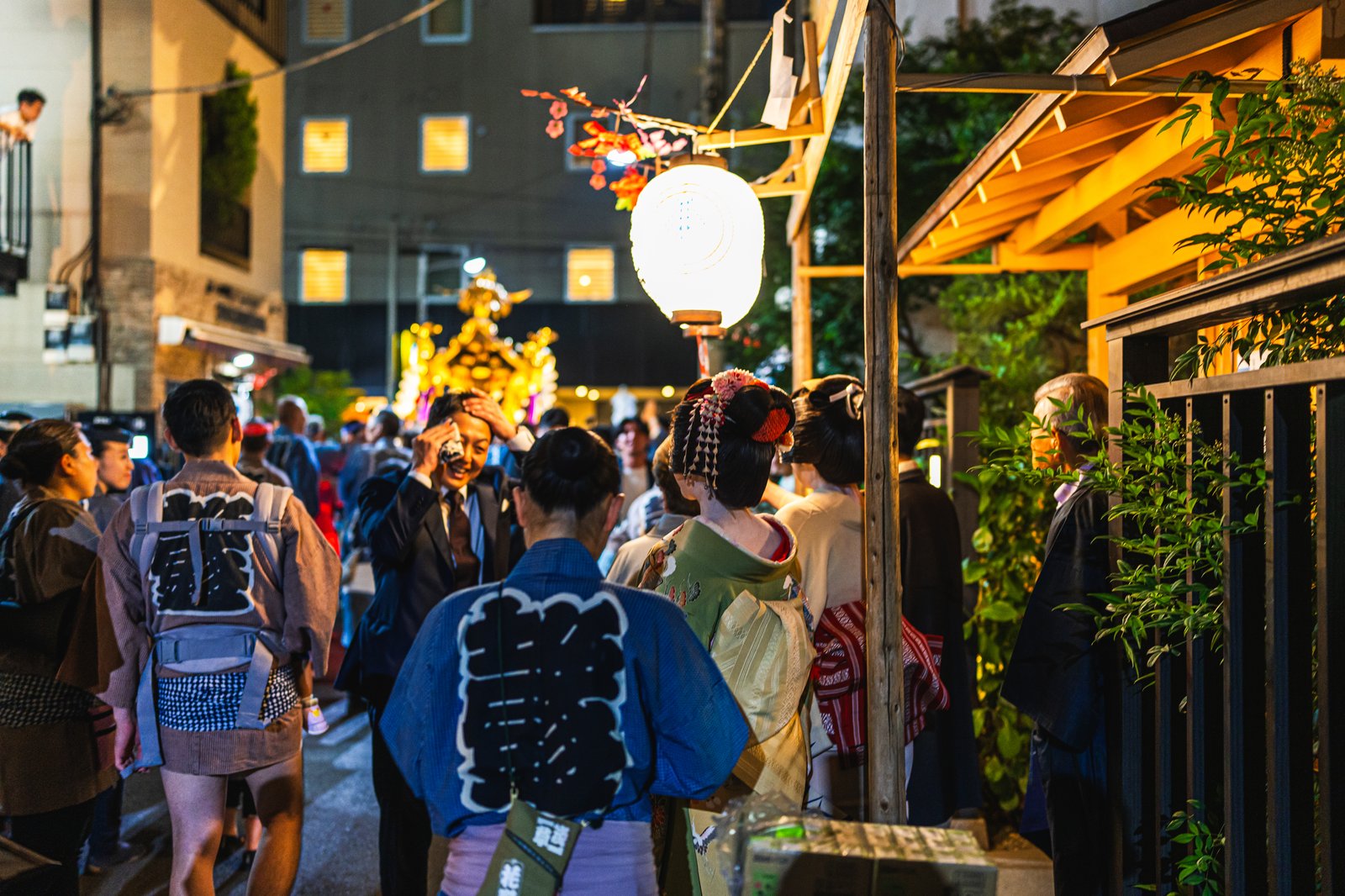
At May’s Sanja Matsuri — Asakusa’s great festival — the geisha appear in kumiodori, ensemble troupes of seven or eight mixing tachikata and jikata; the word itself is hanamachi jargon used only for Sanja. In the district’s busiest years, the troupes rode between engagements on the back of a two-ton truck — festival logistics, hanamachi style.
Setsubun Obake: A Night of Playful Disguise
On Setsubun, February 3rd, the district’s most cheerful tradition takes over: obake — the hanamachi’s own name for its Setsubun costuming, not the ghost the word means elsewhere — when geisha, joined by former geisha, form troupes of two or three and tour the banquet rooms in costume. The disguises follow the times — recent years have seen Matsuken Samba and Super Mario — and the showmanship is real: a dancer may finish a number, slip behind the folding screen, and reappear seconds later as someone else entirely. Beneath the comedy sits the old meaning of Setsubun: driving out misfortune before spring. A culture that can laugh at itself once a year, on schedule, is a culture at ease with its own dignity.
Voices from the Hanamachi: The Okami and Four Working Geisha
An encyclopedia of geisha would be dishonest with no geisha in it. These are real people, performing in Asakusa now — and their stories say more than any definition can.
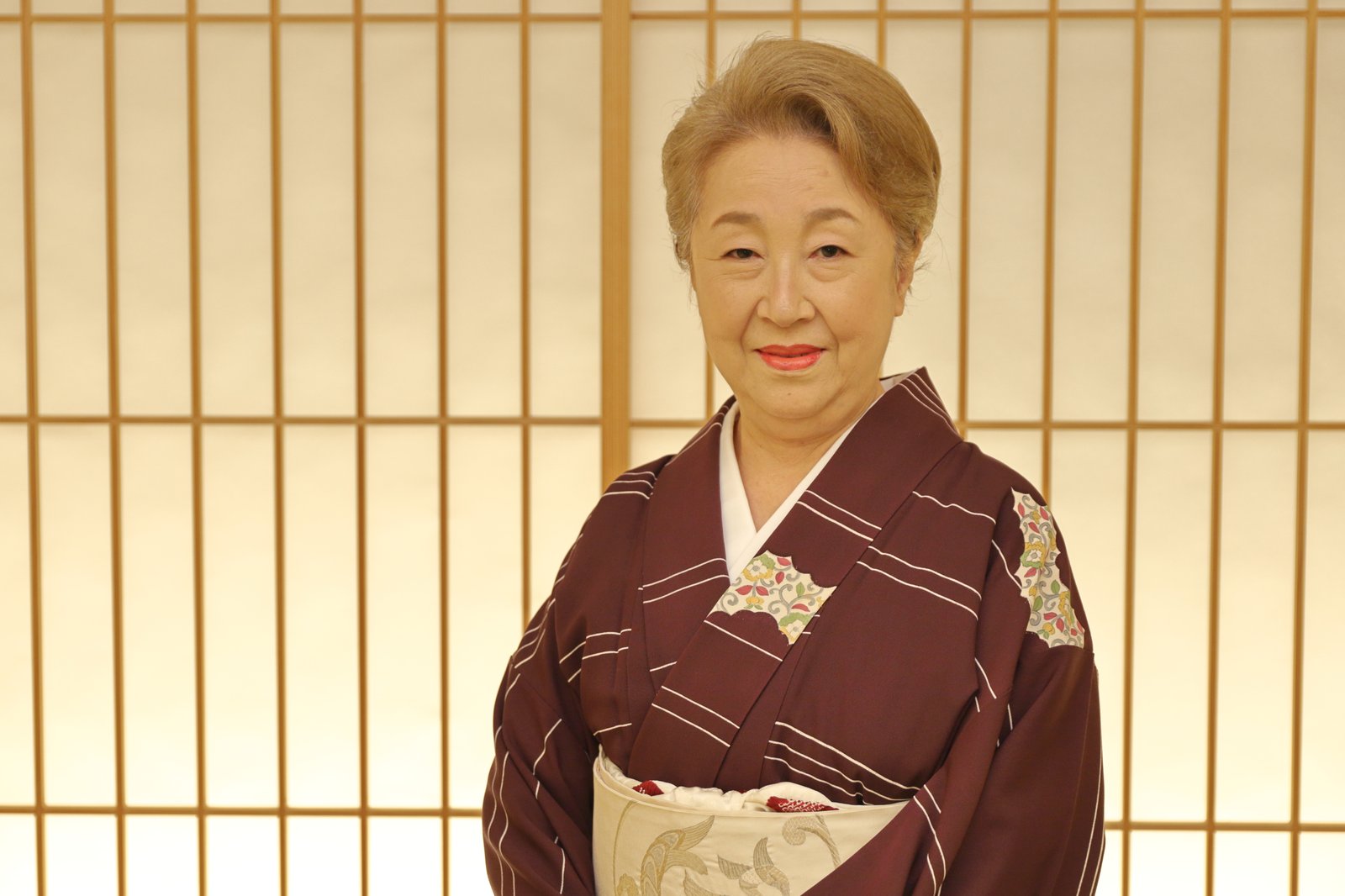
Chikage: The Only Okami in Asakusa Who Was Herself a Geisha
Chikage’s biography is the district’s in miniature. Born and raised in Asakusa, daughter of a geisha and granddaughter of a shinpa actor — the modern theater genre born in the 1880s — she began her lessons at five, on the traditional “lucky sixth”: the sixth day of the sixth month of her sixth year by the old count, when the folklore says an art, once started, will never bore you. By her hangyoku years she carried five or six disciplines at once: dance, tsuzumi and taiko drums, tea ceremony, nagauta shamisen, kiyomoto, kouta. She entered the hanamachi at fifteen, debuted in 1969, took her ippon hirome at eighteen and a half, and worked the tatami for twenty-seven years; at forty-two she became Miyakodori’s okami — and because Asakusa does not permit one woman to be both geisha and okami, she retired from the profession to take the house. The elder who has spent sixty years in Asakusa’s hanamachi — once a hakoya, now the kenban’s office chief — puts her standing simply: even among geisha, she was another class — and had been since she was young.
Komaaki, Chino, Chizuru: Three Careers, Three Reasons
Komaaki grew up admiring Kyoto’s maiko and had no idea Tokyo had geisha of its own — until, as an adult, she saw geisha in black formal dress on a Tokyo street and discovered the world existed a train ride away. She joined mindful that the timing wouldn’t wait, danced her first years as a tachikata, and made the switch to shamisen described earlier. Chino’s path began at a nursery-school recital, watching children perform ballet and Japanese dance side by side; the wish to study nihon buyō “slept like a seed” until she was eighteen, when it opened — and the geisha profession was where that study could become a working life. Chizuru is honest about the hard part: it was the debut that frightened her, stepping out from the teahouse where she trained to rooms and guests she didn’t know. What made it worth it came after — meeting people she would never otherwise have met, and having her growth, lesson by lesson, noticed and praised. That, she says, is the moment she is gladdest she became a geisha.
A Senior Geisha Still on Stage
And then there is Goro-san — Asakusa’s most senior active geisha, once a dancer, now performing as a jikata. She and Chikage met when Chikage arrived as a hangyoku; Goro-san likes to say she fell for her on sight — “such a beautiful hangyoku” — and the two have spent the decades since calling each other the world’s best geisha. A friendship of some sixty years, both women still at work in the same hanamachi — one on the tatami, one running the house: no statistic argues the culture’s vitality better.
A Culture Very Much Alive: Asakusa’s Geisha Today and Tomorrow
Most of what is written about geisha in English is an elegy. This encyclopedia ends differently, because the view from inside the room is different.
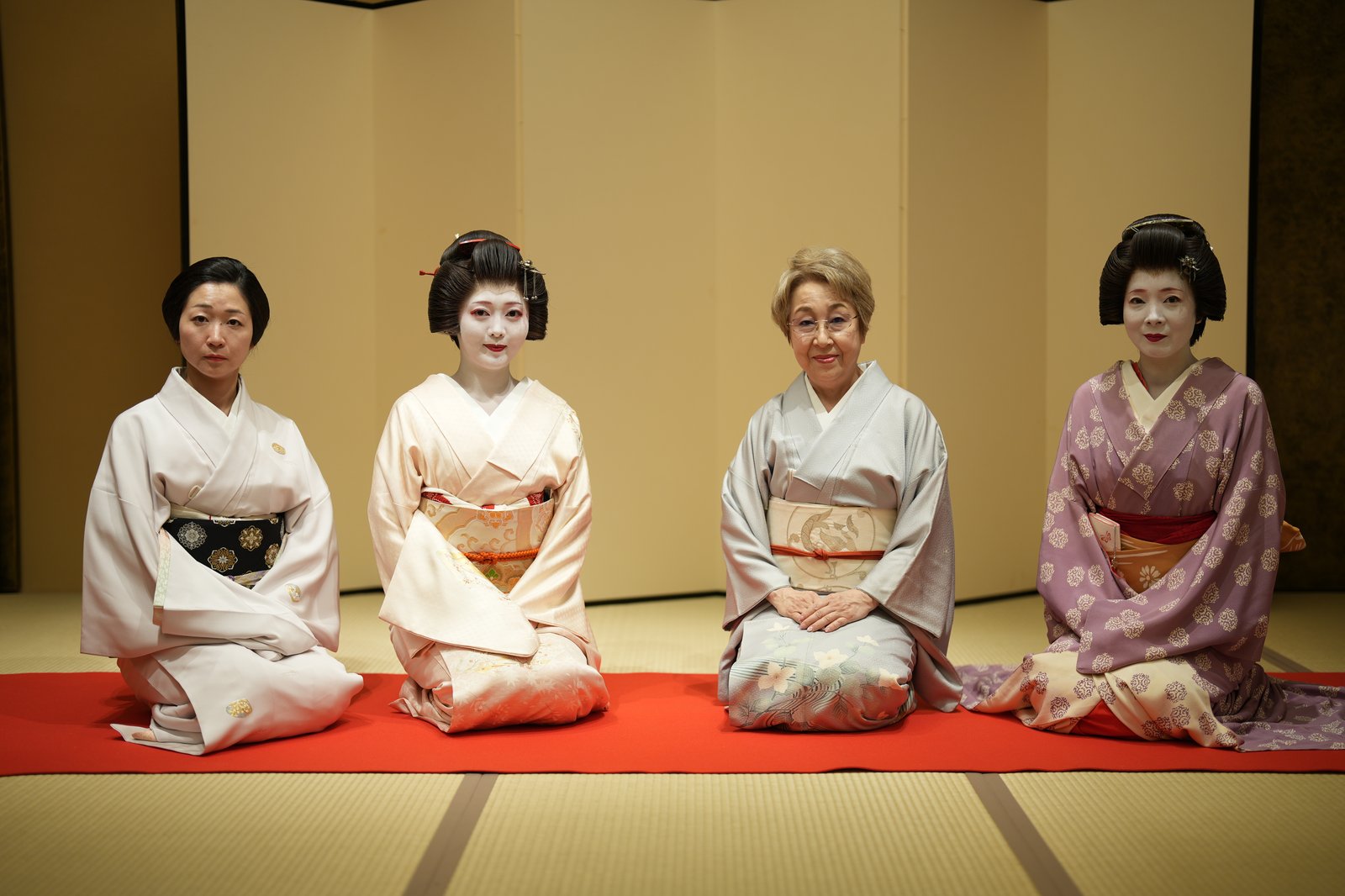
Two Centuries of Refinement, Still Going
The form of the ozashiki has barely changed in about two centuries — and it still works. Guests in 2026 laugh at the same games and feel the same pull of live shamisen in a small room that Edo-period guests felt. An entertainment that can hold a modern audience without changing is not a relic; it is a form refined until nothing inessential remained — which is why what began as the night trade of its era now stands, without argument, as traditional culture.
More Guests, More Aspiring Geisha
The room itself is getting fuller. International guests have grown rapidly in recent years — from Europe, the Americas, across Asia — first mostly invited by Japanese hosts, now increasingly booking on their own. Across the house’s guests the breadth is the point: from their twenties to their nineties, families with children and grandparents, friends’ gatherings — everyone ends up playing the same game, and, as our okami puts it, you realize it’s universal. The culture is answering back: applications from women who want to become geisha are rising — the okami senses the international guests are part of the reason — and for the newly debuted, every added banquet is a place for the art to grow. Every newcomer, as the house’s third generation puts it, is a treasured colleague.
Breaking Tradition to Keep It
Miyakodori’s third generation has a phrase for the house’s philosophy: breaking tradition to save tradition. Keep what carries the culture — the art, the training, the dignity of the room — and break what was keeping people out of it, starting with the closed door. The okami’s version is gentler and identical: hold on to the good, and let the new in. The future this house works toward has three parts — more people who want an evening with geisha, more women who want to become geisha, and more places where the two can meet — and one ambition spoken out loud between them: that when people in Japan or anywhere in the world think of an evening with geisha, they think of Asakusa, and of Miyakodori. If this encyclopedia has turned reading into wanting to meet, the next step is our guide to meeting real geisha in Asakusa.
Plan Your Evening
This encyclopedia is written from inside the room. See the real thing for yourself — a private ozashiki (geisha banquet) with Asakusa’s own geisha, in the hanamachi behind Sensō-ji. Reservations are by request.
Request a ReservationFrequently Asked Questions
Are there geisha in Asakusa?
Yes — around twenty geisha are registered with the Asakusa kenban and perform at ozashiki today, from hangyoku to senior ippon, alongside six hōkan (male geisha). New debuts continue, and the district treats each one as news.
Can foreigners see geisha in Tokyo?
Yes. Tokyo’s hanamachi traditionally required an introduction (ichigensan okotowari), but at Miyakodori in Asakusa that rule does not apply — we accept direct bookings from new guests, with English support, no introduction needed.
Where can I see real geisha in Tokyo?
The reliable way is a reserved ozashiki in Asakusa — either a small-group tea house session or a private geisha banquet. Free public performances happen on selected dates in Asakusa, and street sightings near Kannon-ura are possible but a matter of luck.
Are there still geisha in Japan?
Yes — geisha are working professionals today, in Kyoto, Tokyo, and other cities. In Tokyo’s Asakusa district alone, around twenty geisha perform at real engagements, and applications from women who want to enter the profession are rising.
What is the difference between a hangyoku and a maiko?
They are the closest counterparts the two cities have: a hangyoku is a young Tokyo geisha, debuting from eighteen after high school; a maiko is her Kyoto counterpart, who can begin at fifteen. A hangyoku is already a geisha, and the dress differs — a maiko trails her hem with the long darari obi; a hangyoku wears her furisode tucked, Tokyo-style.
Why do geisha wear white makeup?
The explanation handed down inside the profession — our okami is careful to call it her educated guess — is candlelight: in the era before electricity, a white face made the performer luminous in a dim banquet room. The makeup worn with nihongami uses only three colors — white, red, black — applied by subtraction, never addition.
Can geisha marry?
Yes — geisha can fall in love, and some marry and continue working, though it has always been rare: in our okami’s working years, among well over a hundred geisha, she recalls exactly one. The choice of how to live belongs to each geisha.
What is the difference between geisha and taikomochi?
A taikomochi — properly hōkan — is a male geisha, a professional entertainer whose art centers on comedy and party games rather than the classical dance a tachikata performs. The profession survives today only in Asakusa, where six hōkan are registered with the kenban, and unlike the tachikata beside him he does not wear white makeup.
How many geisha are in Asakusa today?
Around twenty, registered with the Asakusa kenban — a number that reads differently from inside the district: each is a working artist carrying a share of a century’s repertoire, performing tonight, with a new generation debuting behind her.
Do you tip geisha at an ozashiki?
Tipping isn’t mandatory in Japan, but at Miyakodori an optional gratuity line is provided on the final bill, and many guests choose to add one as a gesture of appreciation. This is separate from goshugi, a small traditional gift envelope offered after a performance — a custom many guests enjoy taking part in. You never announce it to the geisha yourself: tell the okami, and she prepares the envelope and tells you when the moment has come.


Geisha Shows in Tokyo: Witnessing the Art of the Flower and Willow World in 2026
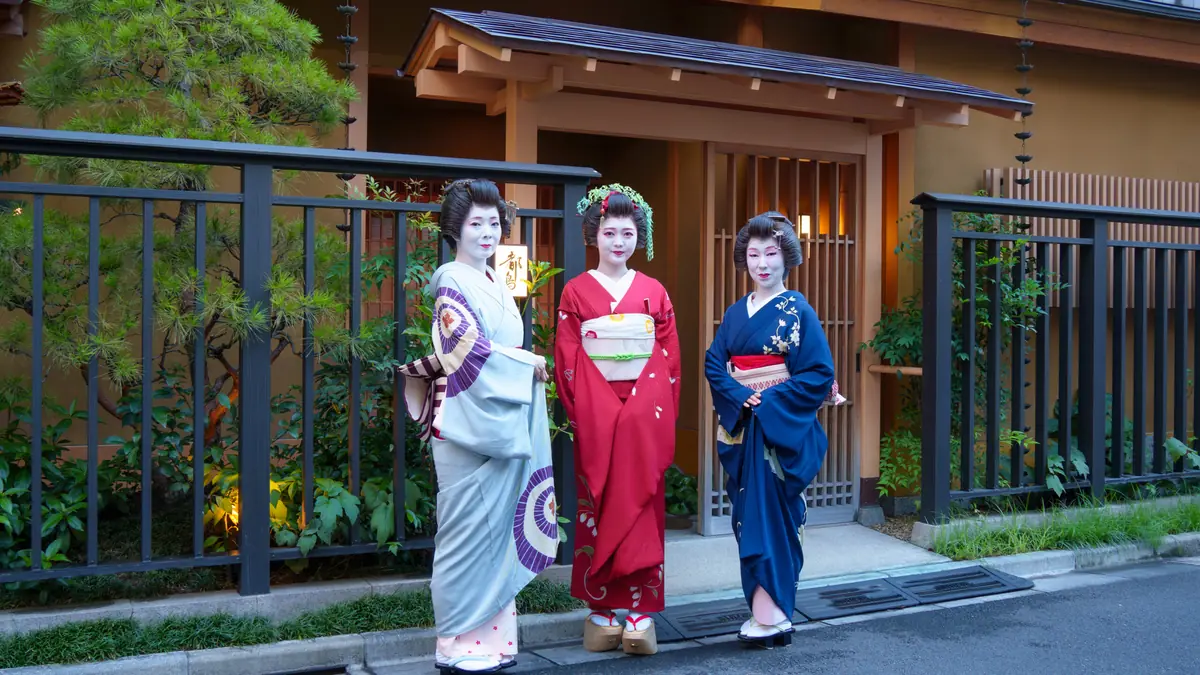
Geisha Shows in Tokyo: Where to See Geisha, and How Tokyo Compares with Kyoto
Celebrate the Start of 2026 in Asakusa — Your Complete Guide to a Perfect New Year’s Day
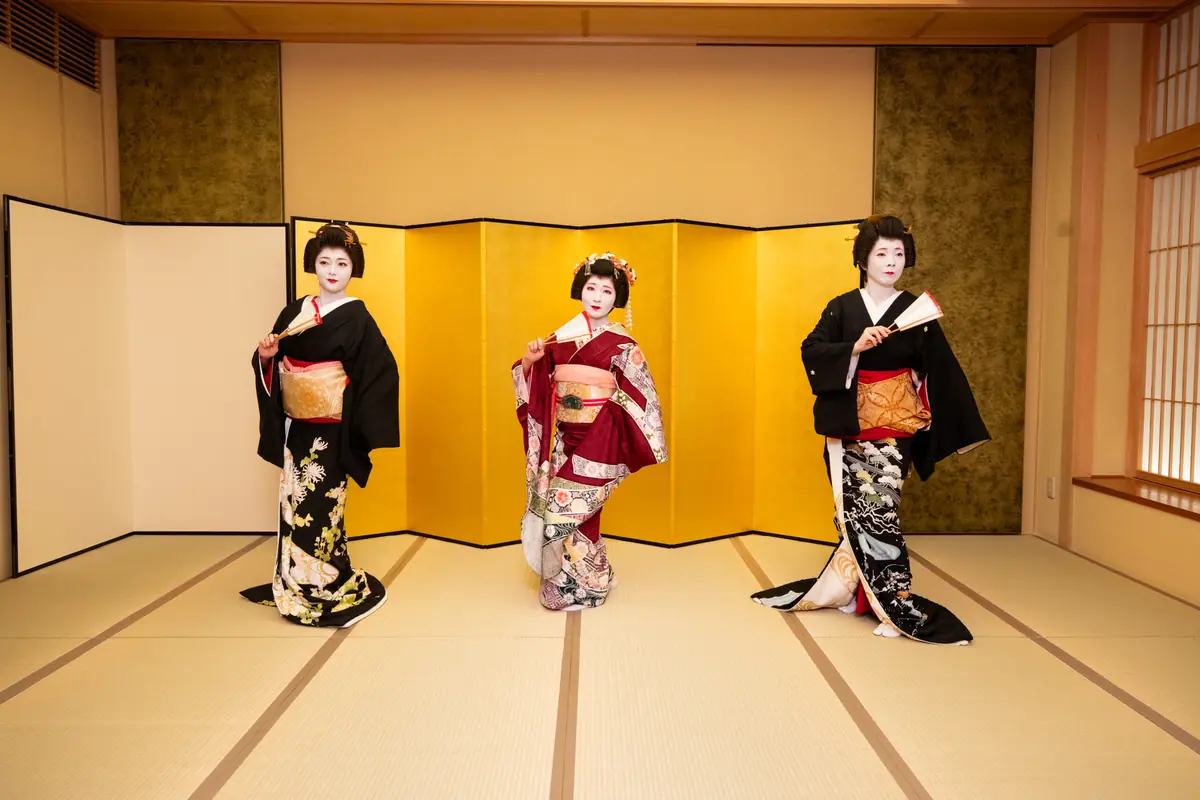
Maiko vs Geisha: The Differences (2026 Edition)
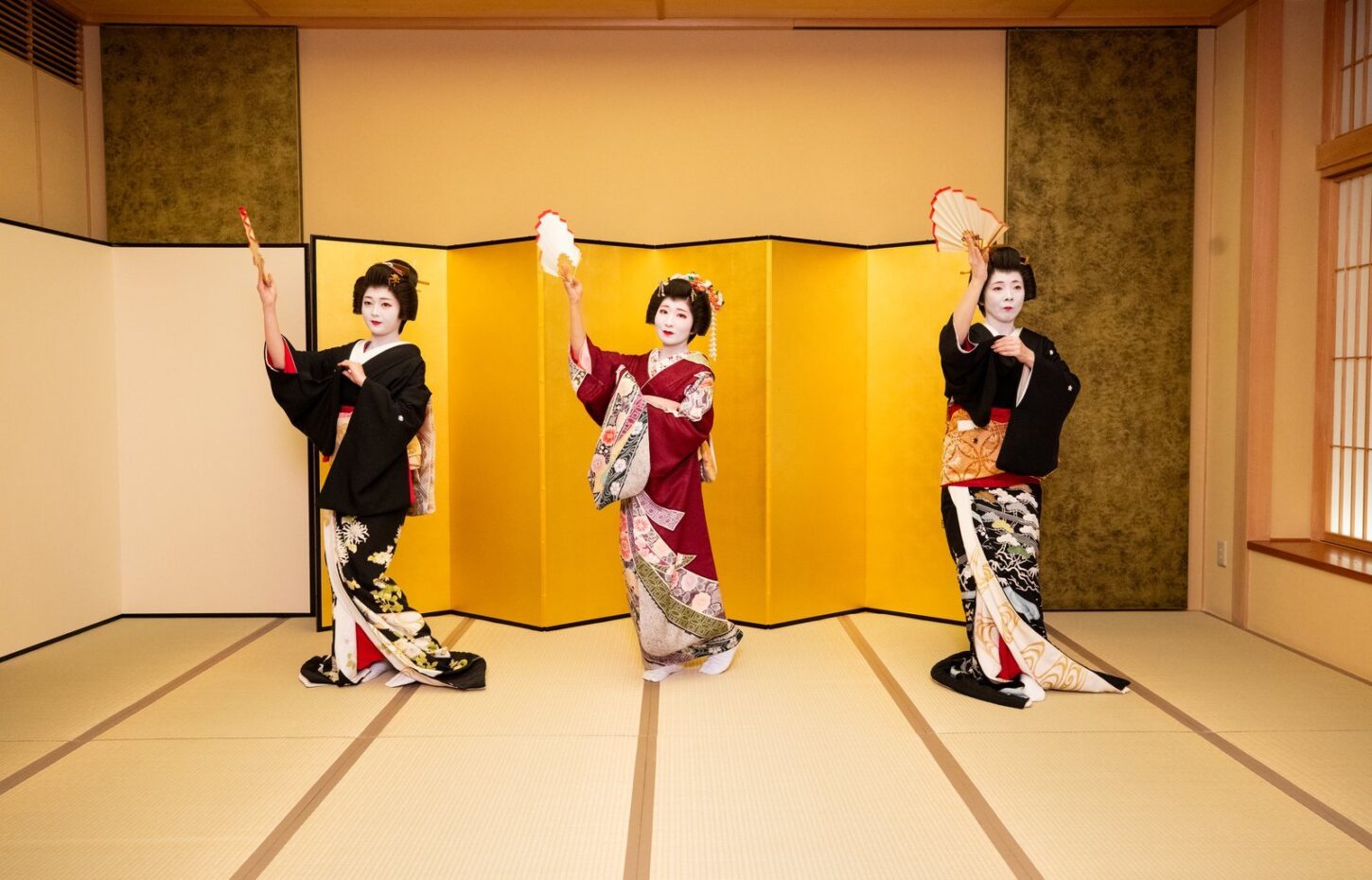
Geisha Dance: The Nihon Buyo You Will See at an Asakusa Ozashiki
No comments yet.