



What Is the Tora Tora Game? Rules, History, and How to Play
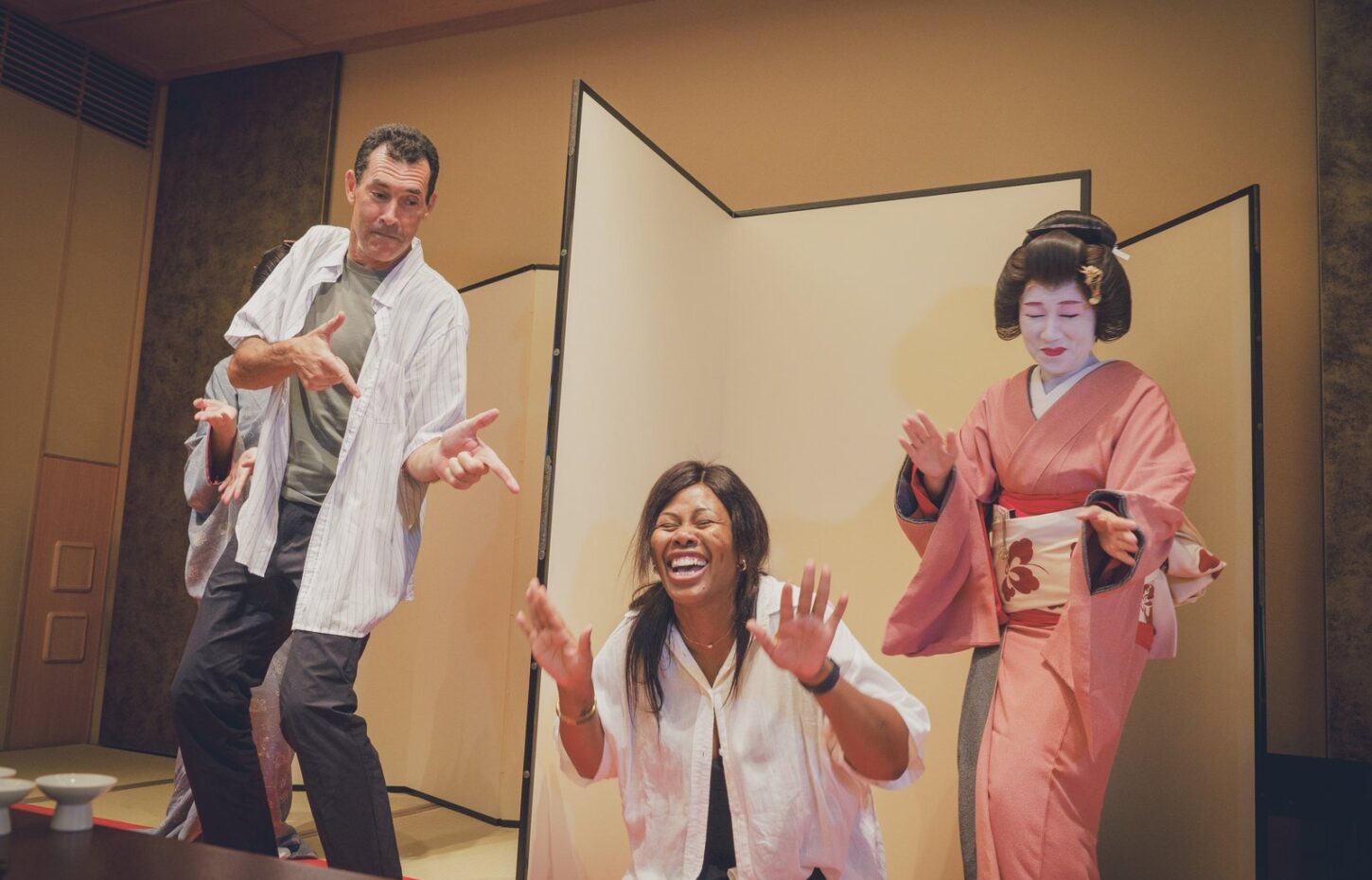
The tora tora game (also written toratora) is a traditional Japanese parlor game played at a geisha ozashiki — essentially rock paper scissors performed with the whole body and set to live shamisen music. Two players kneel on either side of a folding screen, and the moment the song stops they strike one of three poses: a tiger, a samurai, or an old woman with a cane. The tiger beats the old woman, the old woman beats the samurai, and the samurai beats the tiger — and whoever loses drinks. The three characters come from a kabuki and puppet-theater tale about the warrior Watonai, and games like this were already being played in the pleasure quarters of the Edo period. At Miyakodori in Asakusa, a machiai-chaya (traditional waiting tea house) founded in 1950, tora tora is one of the ozashiki asobi our geisha play with guests.
If you have ever pictured a geisha evening as something quiet and formal, the tora tora game will surprise you. Picture two players kneeling on either side of a folding screen, unable to see each other, striking a pose the instant a shamisen song ends. One becomes a tiger, one a samurai, one an old woman with a cane, and in that split second someone wins and someone drinks. Here at Miyakodori in Asakusa, this is one of the games our guests remember most, and it is far older and cleverer than it first appears. Below, we explain what the tora tora game really is, how it is played, where it comes from, and why it has become a favorite among foreign visitors experiencing Japanese culture for the first time.
What is the tora tora game
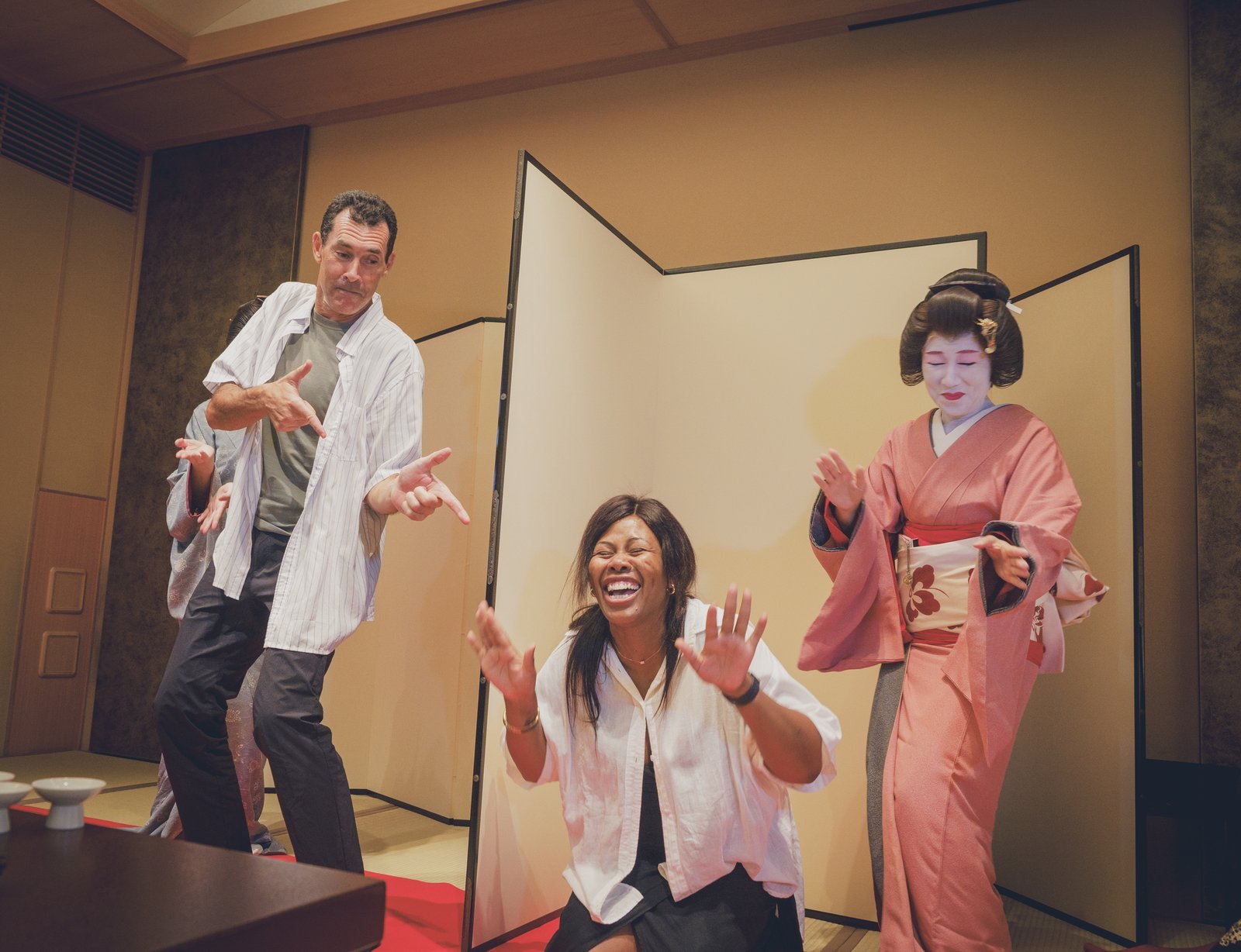
The tora tora game, sometimes written toratora, is a traditional Japanese parlor game known in the geisha world as ozashiki asobi, meaning the games played in the tatami reception room where geisha entertain. It is essentially a form of janken, or rock paper scissors, but performed with the whole body instead of the hand, and set to live shamisen music — two players at a time, three characters, and the rest of the room watching.
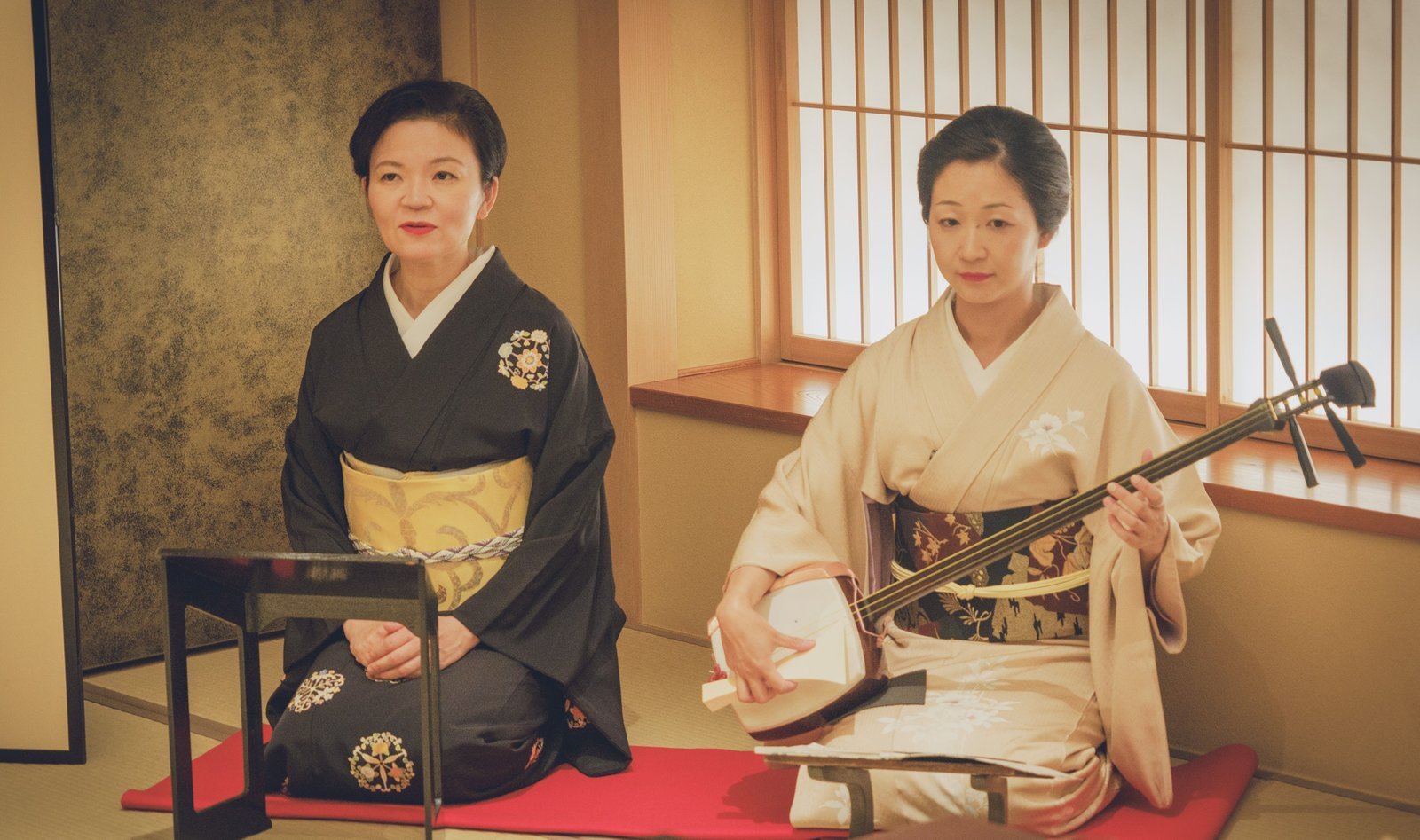
The name comes from the tiger, tora in Japanese, which is one of the three characters at the heart of the game. It is playful, physical, and a little theatrical, and because the outcome usually decides who drinks the next small cup of sake, it belongs to the family of Japanese drinking games. What makes it special is not the rules but the atmosphere: the live song, the laughter of the room, and the fact that you are playing alongside a real geisha rather than watching from a distance.
The rules: three characters, one screen
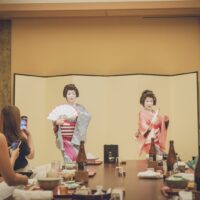
The charm of tora tora is how simple the rules are once you see them in action: three characters, two players, and a game most guests learn in under a minute. A folding screen, called a byobu, is placed between two players so they cannot see each other. A geisha sings and plays the shamisen, and the moment the song stops, both players step out from behind the screen striking one of three poses.
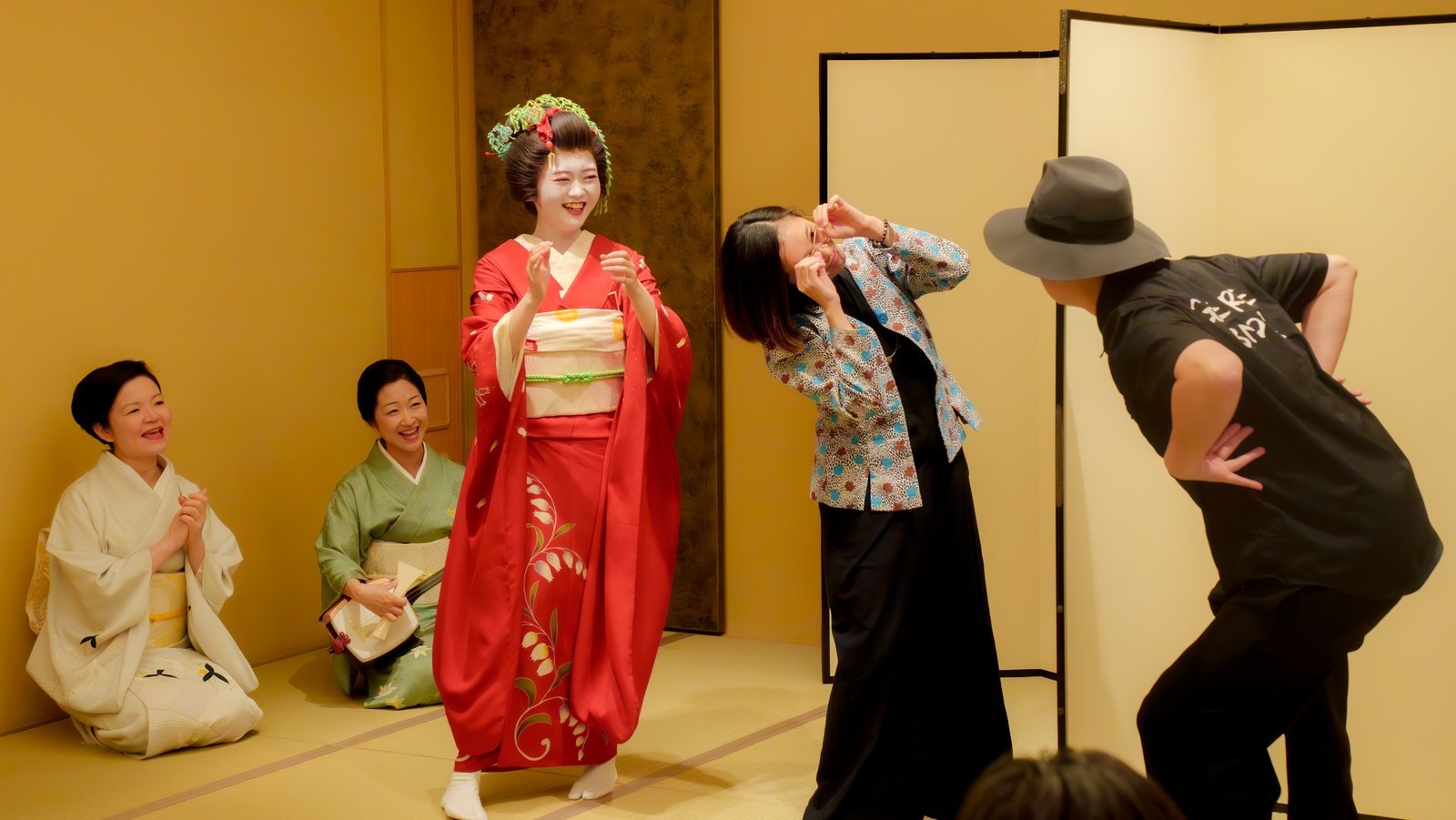
There are three characters, and each one beats another in a circle, exactly like rock paper scissors. The tiger, tora, crawls forward on all fours, fierce and low. The samurai, often based on the legendary warrior Watonai, stands tall and points a spear forward. The old woman, his mother, walks bent over leaning on a cane. The tiger beats the old woman. The old woman beats the samurai, because she is his mother. The samurai beats the tiger, because he is a warrior. If both players choose the same character, it is a draw, and they play again.
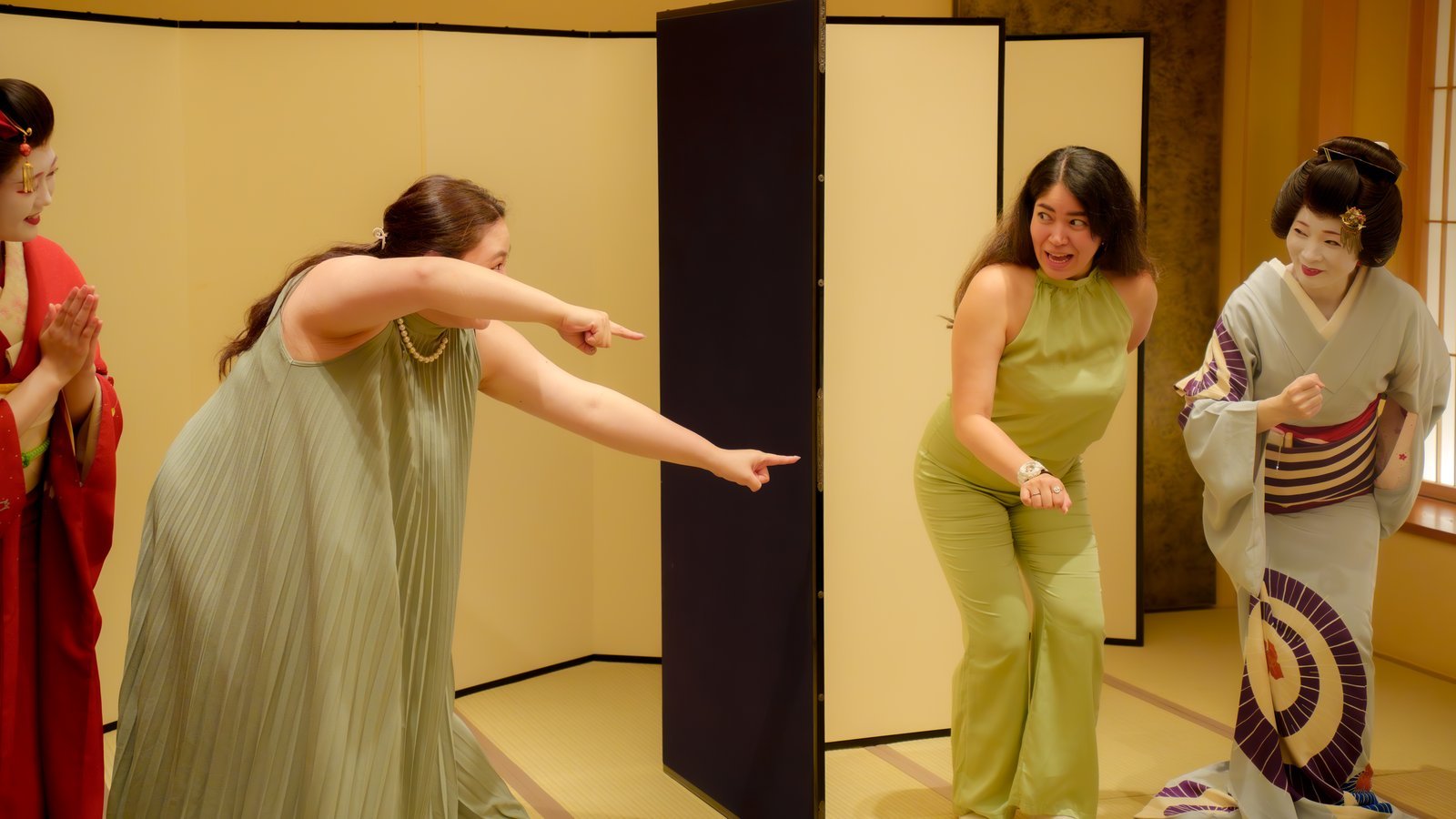
Whoever loses drinks. That is the whole game, and yet a single round can leave an entire room laughing, because you commit to your pose blindly and only discover your fate when you both appear.
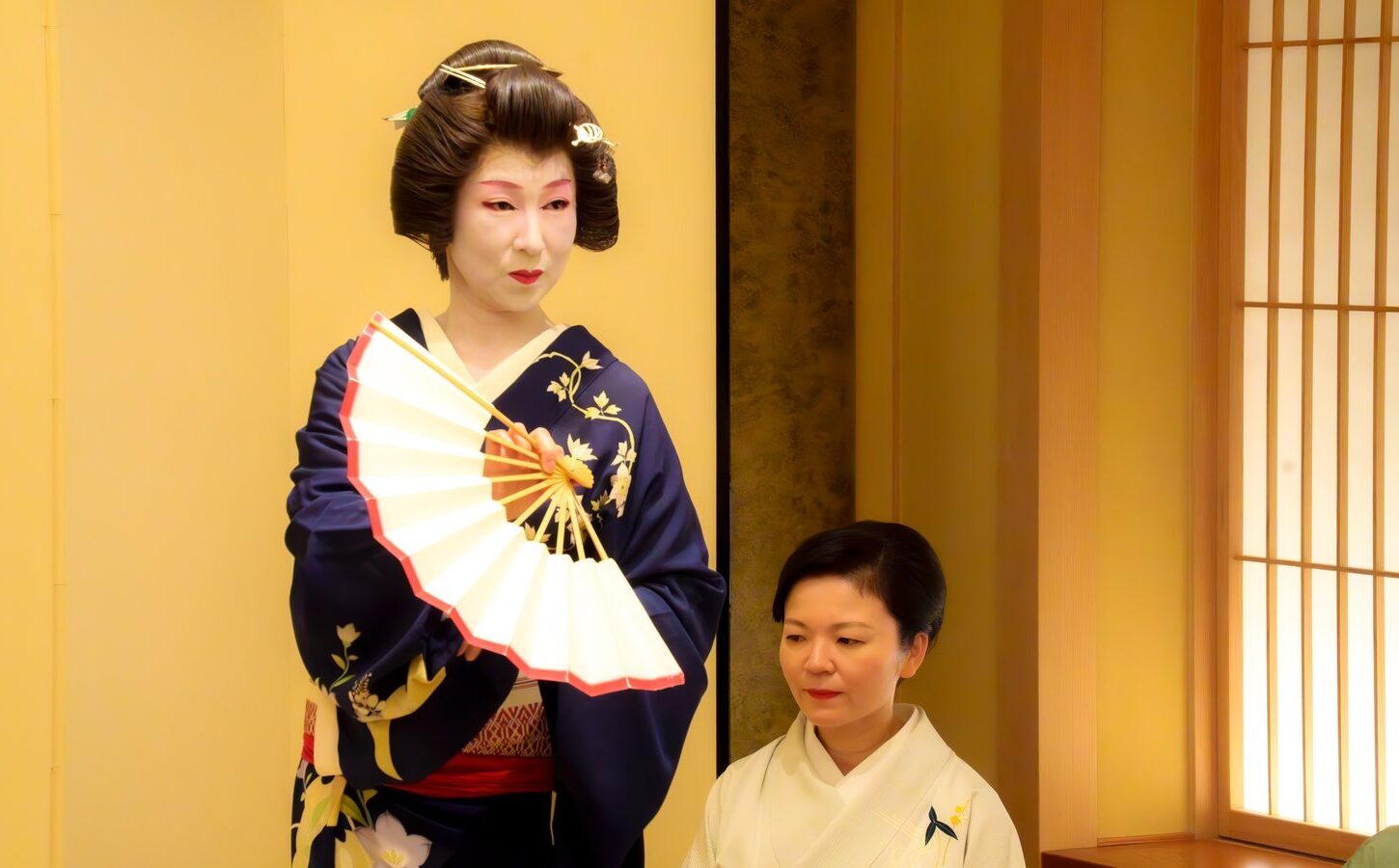
The okami teaching Tora Tora to a new geisha — the three poses, and what beats what.
The story behind the game
Part of what we love about sharing tora tora is the history hidden inside it, which reaches back to the pleasure quarters of the Edo period. The game is tied to a famous kabuki and puppet-theater tale about Watonai, a half-Japanese, half-Chinese hero who, in one dramatic scene, tames a wild tiger in a bamboo grove. The three characters of the game, the tiger, the warrior, and the warrior’s mother, come straight from that story.
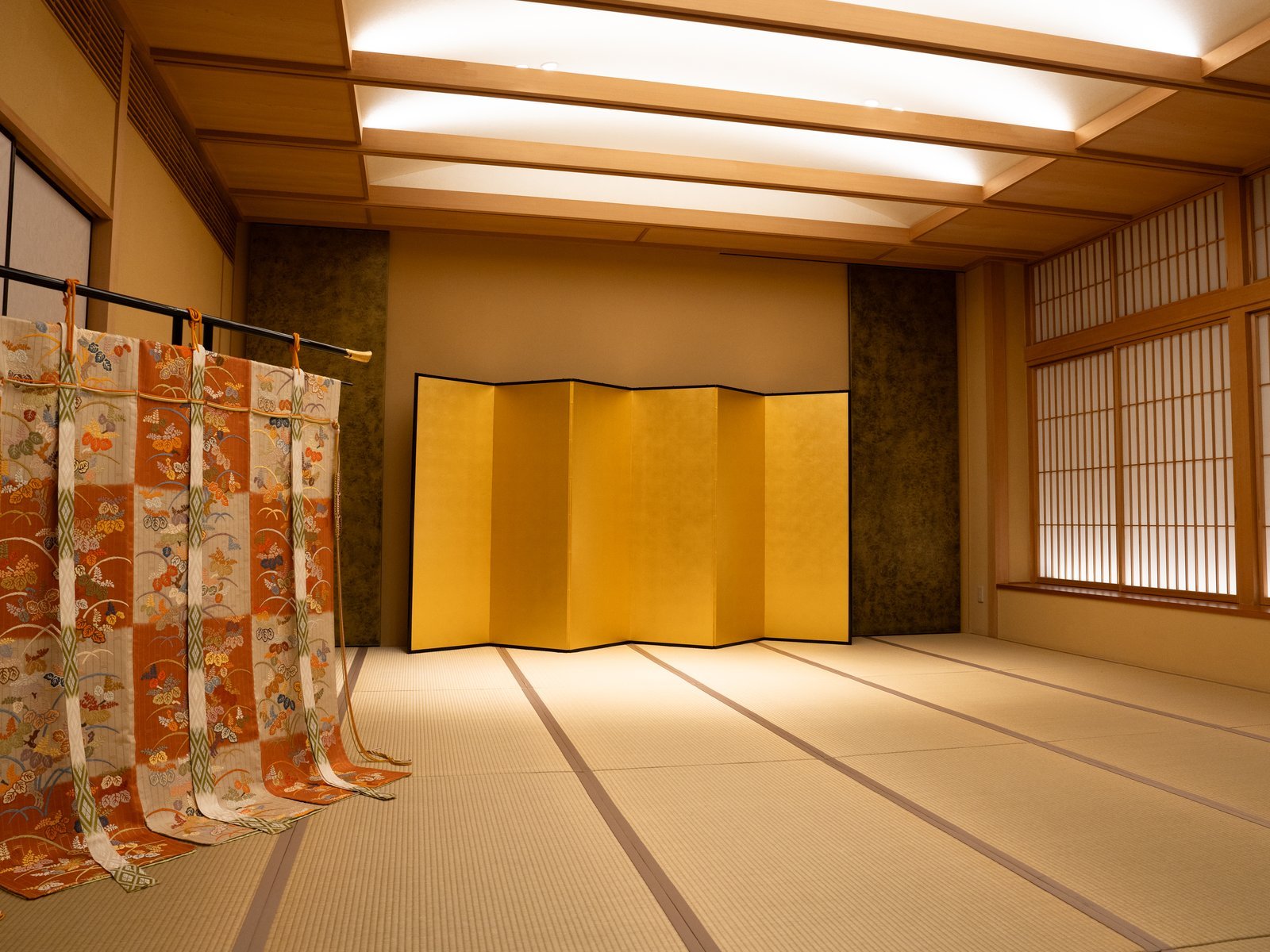
Games like this were played in the pleasure quarters of the Edo period, and remarkably, the way our guests play today has barely changed in over two hundred years. When our okami, the proprietress of Miyakodori and a geisha in Asakusa for 27 years, from 1969, speaks about this world, she often returns to one point: these arts have been polished and passed down since long before film or photography existed, and they were meant to be felt in person. Tora tora is a small, joyful piece of that living tradition, and playing it connects you to centuries of guests who laughed at exactly the same reveal.
Why foreign guests enjoy it
We host visitors from all over the world, and tora tora is often the moment the whole evening opens up: three poses, no words, and no Japanese needed. There is no language barrier in a game built on gestures. You do not need to speak Japanese to understand a tiger, a spear, or a grandmother with a cane, and the instant both players pop out from the screen, everyone laughs together regardless of where they are from.

You can see exactly what we mean in this short clip of our geisha playing tora tora with a guest here at Miyakodori. Watch how quickly the room lights up the moment both players appear from behind the screen. That reaction is the same whether our guest is from Tokyo, London, or New York.
It also gently dissolves the nervousness many first-time guests feel. The image of the geisha world as distant or intimidating fades the moment you are kneeling behind a screen, mid-game, competing against a geisha who is clearly enjoying it as much as you are. For many of our overseas guests, this is the memory they carry home: not a performance they watched, but a game they played.
Play tora tora with an Asakusa geisha
Tora tora is one of the ozashiki asobi our geisha play with guests during a private ozashiki (a private gathering with geisha) at Miyakodori in Asakusa. No Japanese needed — the geisha guides you through every pose. First-time and overseas guests are welcome.
Request a ReservationEtiquette and how to enjoy it
You do not need to prepare anything to play tora tora, and there is no strict etiquette to memorize. The geisha guides you through it, and the only real rule is to commit fully to your pose. A half-hearted tiger is far less fun than a fierce one. If you would rather not drink alcohol, that is completely fine; the drinking — traditionally one small cup of sake for whoever loses the round — is part of the playful tradition, not an obligation, and the game is just as enjoyable with tea or a soft drink.
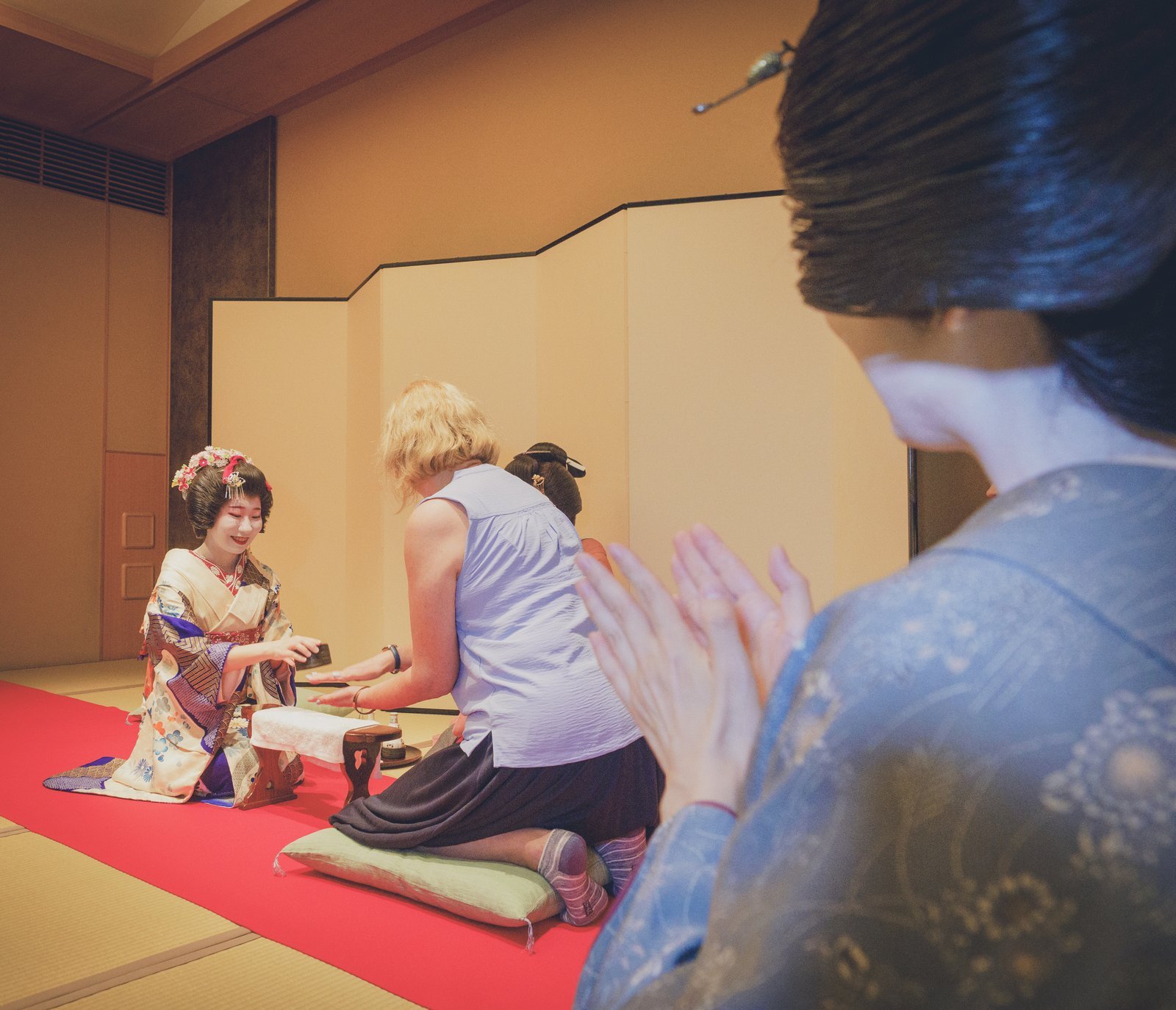
Tora tora is one of several games that fill an ozashiki. If you want the others — the rhythm game played against a quickening shamisen, the fan thrown at a butterfly target — we have written them out in full: Every ozashiki game, with rules and Konpira fune fune, the one guests remember most.
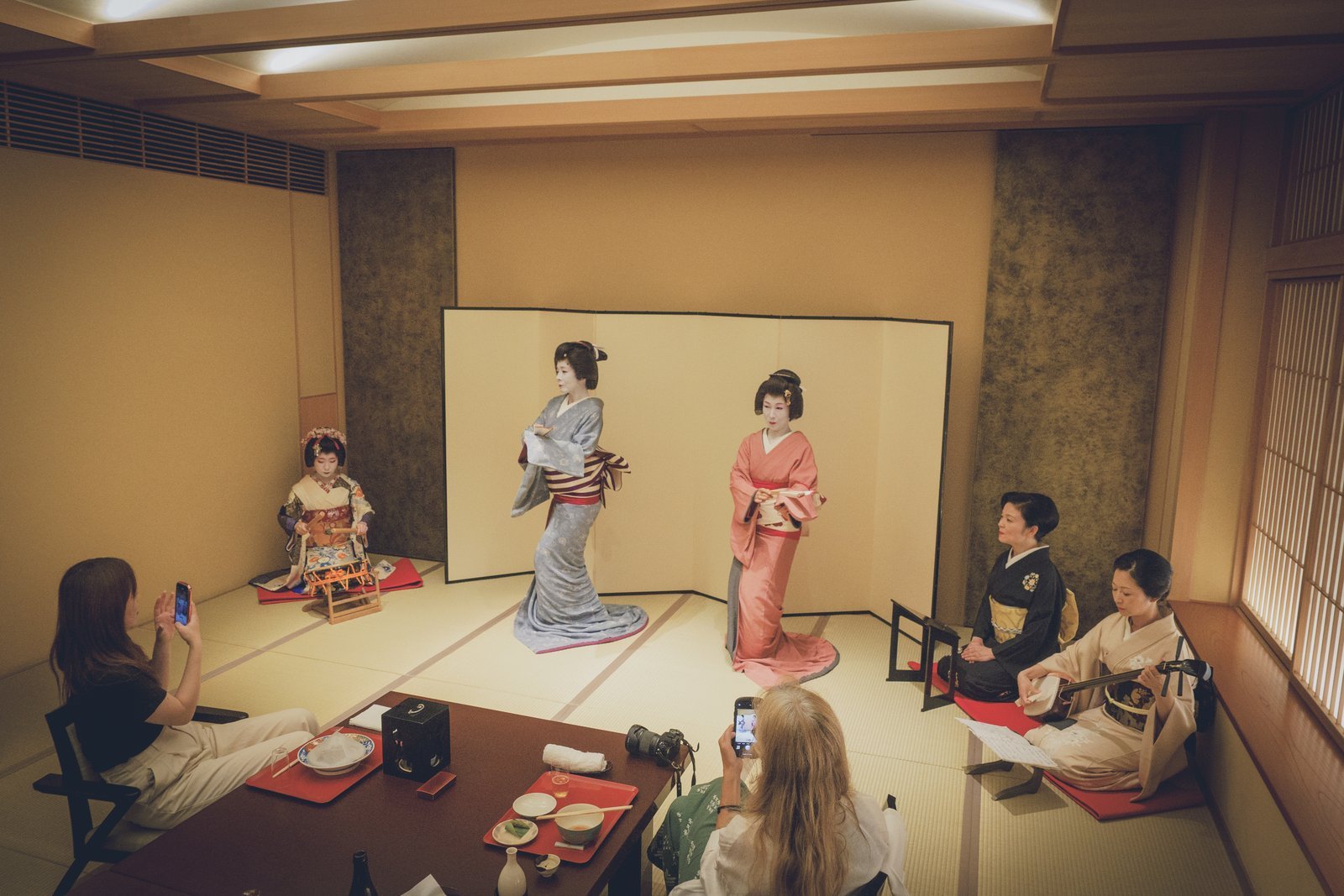
Tora tora usually comes as one part of a longer evening at our teahouse, alongside seasonal kaiseki cuisine, geisha dance, and live shamisen music. It tends to arrive once the room has warmed up and conversation is flowing, when the distance between guest and geisha has already begun to close.
Frequently Asked Questions
Is tora tora a drinking game?
Yes — traditionally the loser drinks one small cup of sake, which places tora tora in the family of Japanese drinking games. That said, the drinking is optional and the game is fun with any drink, including tea or a soft drink.
What are the three characters in the tora tora game?
The three characters are a tiger, a samurai, and an old woman with a cane. The tiger beats the old woman, the old woman beats the samurai because she is his mother, and the samurai beats the tiger because he is a warrior — a circle exactly like rock paper scissors. If both players strike the same pose, it is a draw and they play again.
Why is the game called tora tora?
Tora means tiger in Japanese, and the tiger is one of the three characters at the heart of the game. The name is sometimes written as a single word, toratora.
Do I need to know Japanese to play?
No. Tora tora is played entirely through poses and gestures, so it works across any language. The geisha will show you everything.
Is it hard to learn?
Not at all. It is rock paper scissors with three characters, learned in under a minute. The fun is in the timing and the surprise, not the difficulty.
Is tora tora the only game played at an ozashiki?
No — tora tora is one of several ozashiki asobi played during a geisha evening. The others include a rhythm game played against a quickening shamisen and a fan thrown at a butterfly target.
Where can I experience the tora tora game in Tokyo?
Here at Miyakodori in Asakusa, tora tora is one of the ozashiki asobi our geisha play with guests during an evening at our teahouse. We welcome first-time visitors, including those from overseas.
Summary
The tora tora game is one of the most delightful ways to step inside Japanese culture rather than simply observe it. Beneath its simple rock-paper-scissors rules sits a two-hundred-year-old tradition, a kabuki legend of a tiger-taming samurai, and an atmosphere of shared laughter that crosses every language. It is playful, historic, and genuinely fun, and it captures exactly what a geisha evening is really about. If you would like to play tora tora yourself and experience authentic Asakusa geisha culture firsthand, we would be honored to welcome you here at Miyakodori.
Footnotes / Sources
- Asakusa Geisha (Asakusa Kenban): https://asakusakenban.com/
- Miyakodori and the machiai-chaya tradition (PR TIMES): https://prtimes.jp/main/html/rd/p/000000001.000165250.html
- About Miyakodori (Asakusa Tourism Federation): https://asakusa.gr.jp/jp/?p=385
- Tokyo Metropolitan feature: https://www.my.metro.tokyo.lg.jp/w/000-20240711-43128106
- Tora tora in action (Miyakodori Instagram): https://www.instagram.com/miyakodori_asakusa_experience/reel/DV8czruj026/
Experience tora tora at Miyakodori in Asakusa
Kneel behind the byobu screen, wait for the shamisen to stop, and play tora tora with a real Asakusa geisha — part of a private ozashiki (a private gathering with geisha) at our teahouse, alongside seasonal kaiseki cuisine, geisha dance, and live shamisen music. First-time and overseas guests welcome.
Request a Reservation


- Oiran vs Geisha: What's the Difference? (Answered in Asakusa)
- Traditional Japanese Games: From Shogi to Geisha Parlor Play
2026 Best Tokyo Geisha Dinner Guide: Top Recommendations for an Authentic Evening in Asakusa
Where to See Geisha in Tokyo, Japan: A Guide to the Best Hanamachi & Experiences
Asakusa Geisha Culture: History Q&A【Miyakodori】
Enjoy Asakusa! Complete Year-Round Information on Seasonal Events, Festivals, and Sightseeing Activities

Luxury Adult Trip in Asakusa | Comprehensive Guide to Upscale Hotels, Dining, and Experiences

No comments yet.