



Geisha Show in Tokyo: Where to See an Authentic Geisha Performance in Asakusa
To see a real geisha show in Tokyo, look to the city’s six remaining hanamachi (geisha districts) — Asakusa, Shimbashi, Akasaka, Kagurazaka, Mukojima, and Yoshicho — where working geisha still perform. Your options fall into three tiers: a ticketed public stage performance held a few times a year, a short free or low-cost cultural demonstration, or a private ozashiki (a private gathering with geisha) in a private tatami room, where the geisha spend your whole booking with you and the dance and live shamisen happen a few feet away. Asakusa is the district that most openly welcomes newcomers: counting ours, two houses there still welcome guests for an evening with geisha today — ours is Miyakodori, a machiai-chaya (waiting teahouse) that has stood just north of Senso-ji temple in Asakusa since 1950.
If you have searched for a geisha show in Tokyo, you have probably noticed how confusing the results are. Some point you toward a staged theater performance. Others promise a “geisha dinner” that turns out to be dinner with someone dressed the part. So where do you go to see the real thing, up close, the way it has been performed for generations? This guide walks you through what a genuine geisha performance in Tokyo looks like, where the city’s living geisha districts are, and what to expect when you spend an evening with real Asakusa geisha. Here at Miyakodori, a machiai-chaya that has sat in Asakusa since 1950, we host these evenings ourselves, so we will also be honest about the difference between watching a show and being part of one.
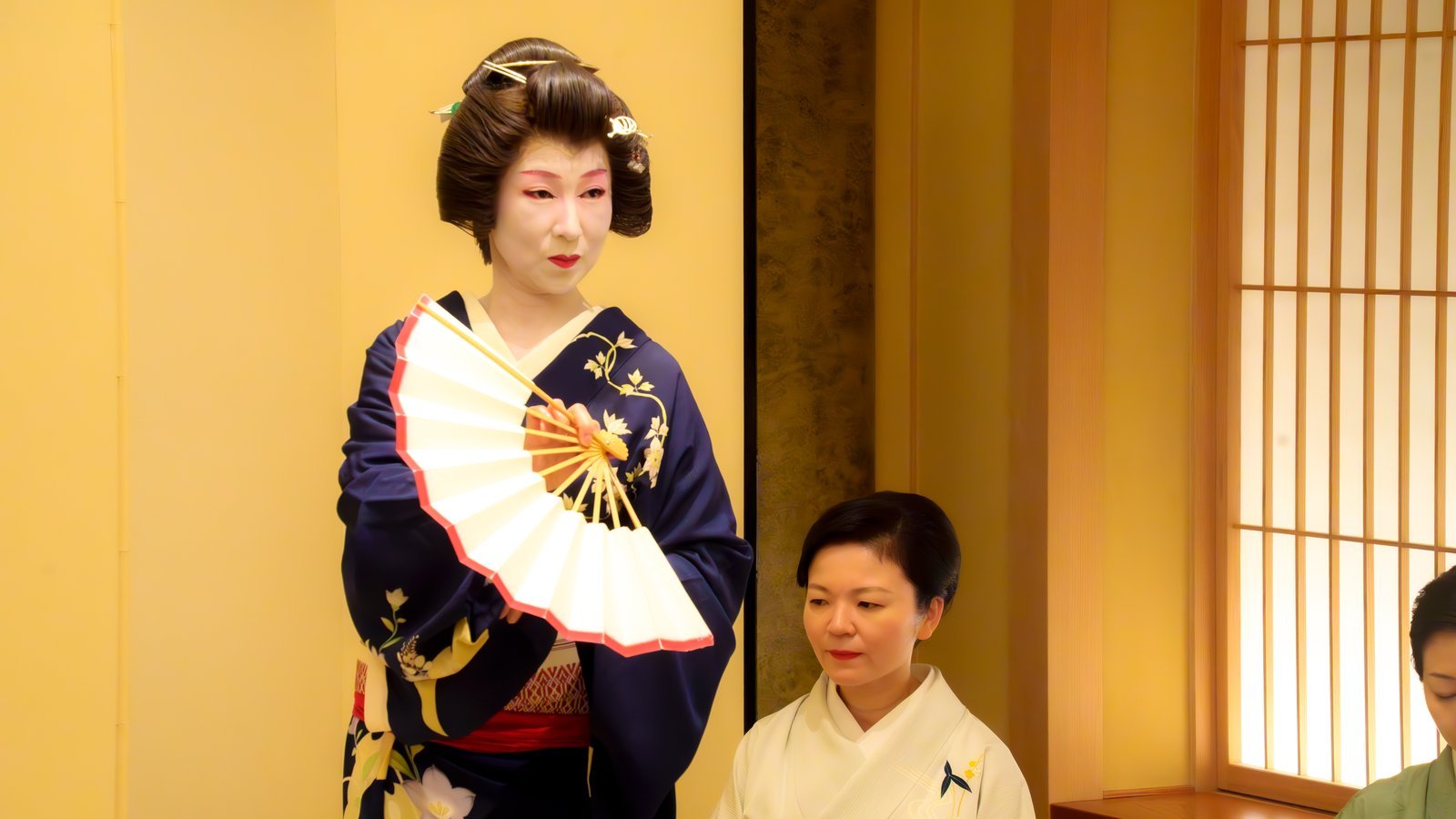
Geisha, geiko, maiko: what you are actually going to see
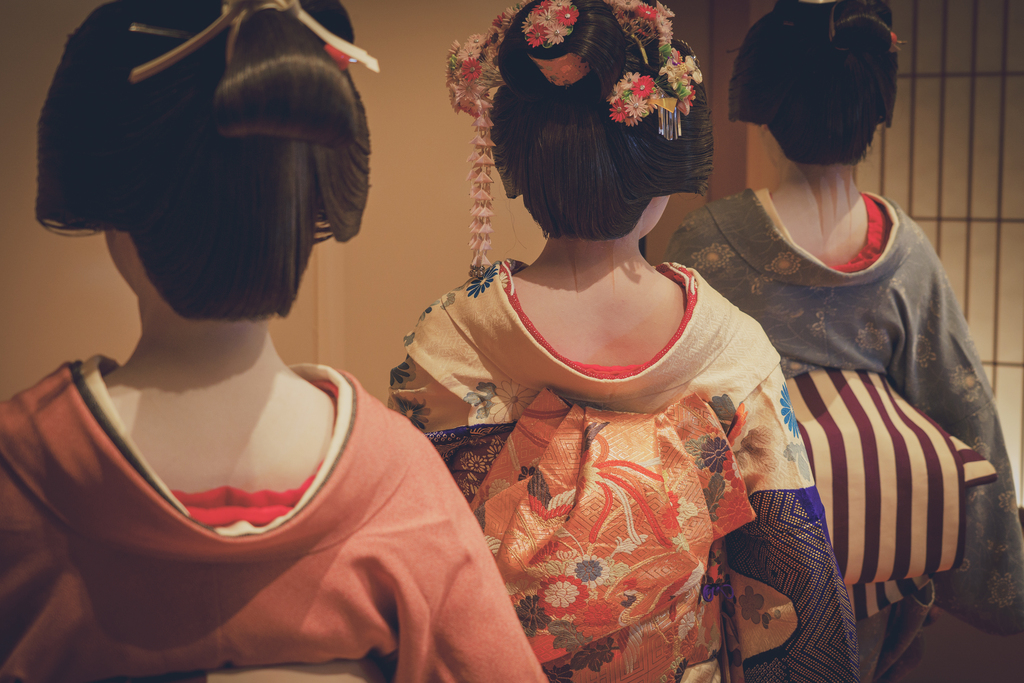
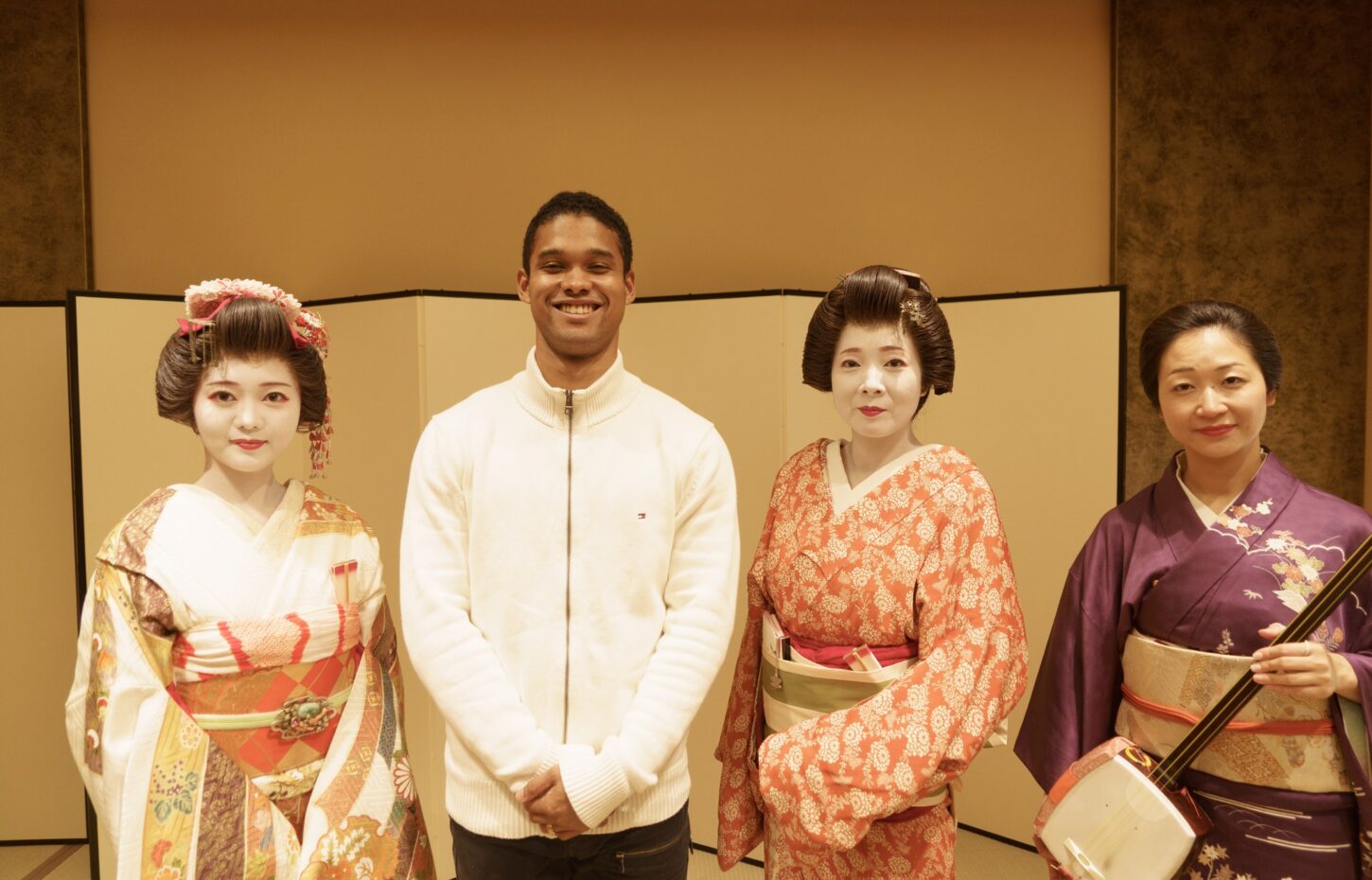
Before you book anything, one piece of vocabulary saves a lot of confusion. A geisha is a professional performing artist — trained for years in classical dance, shamisen, song and the art of hosting a room, an art that, as our okami puts it, has been polished since the late seventeenth century. In Kyoto the same profession is called geiko, and a young geisha still in training is a maiko. In Tokyo, and here in Asakusa, we say geisha, and a young geisha in training is a hangyoku.
This matters for what you will see. The Kyoto image most travellers arrive with — the maiko in the long-sleeved kimono, photographed in a Gion lane — belongs to a different city and a different tradition of dance. What Asakusa offers is the Tokyo version: sharper, quicker, closer to the guest, and built around the ozashiki rather than the stage.
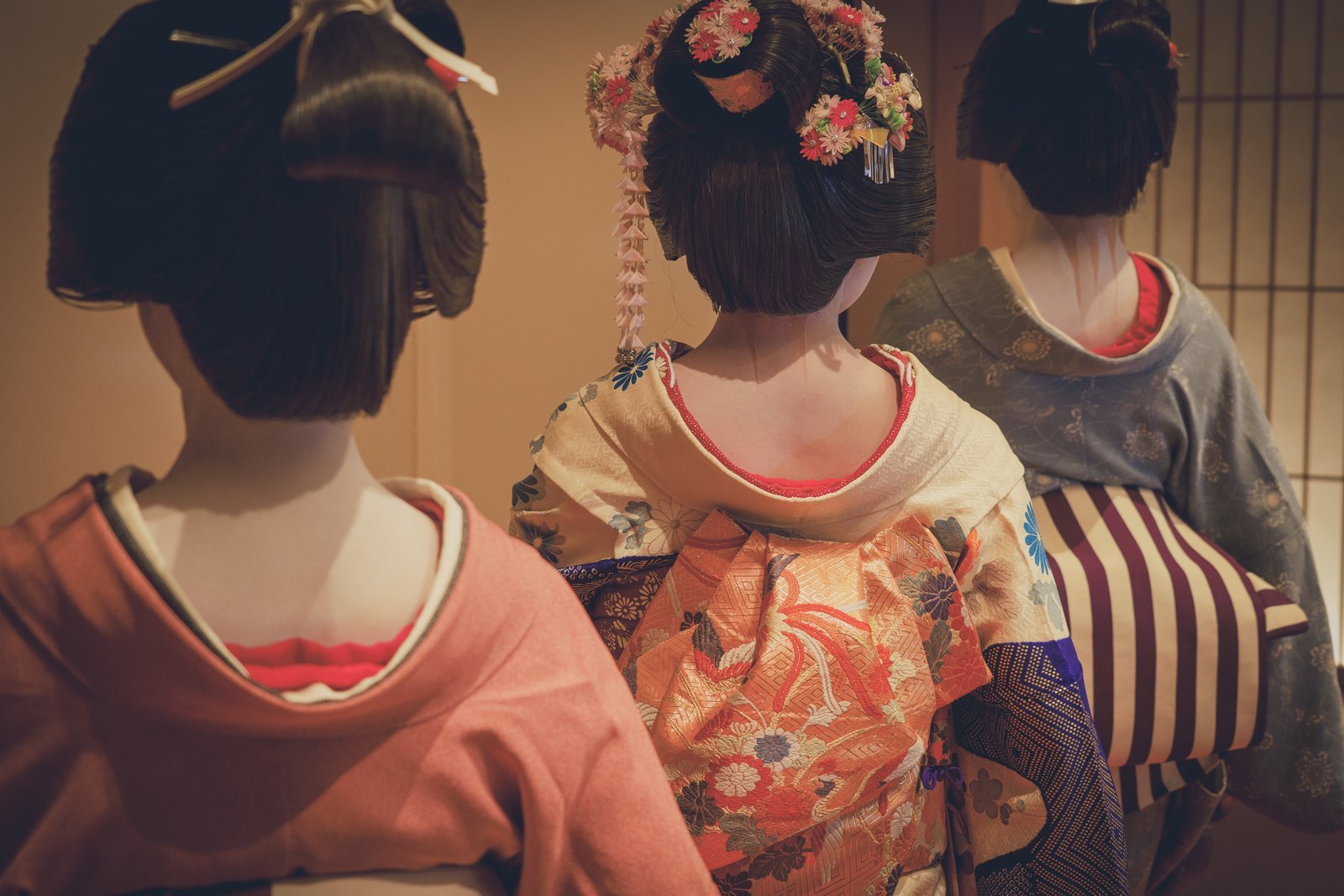
If you want the full background on the profession itself, we have written it out separately.
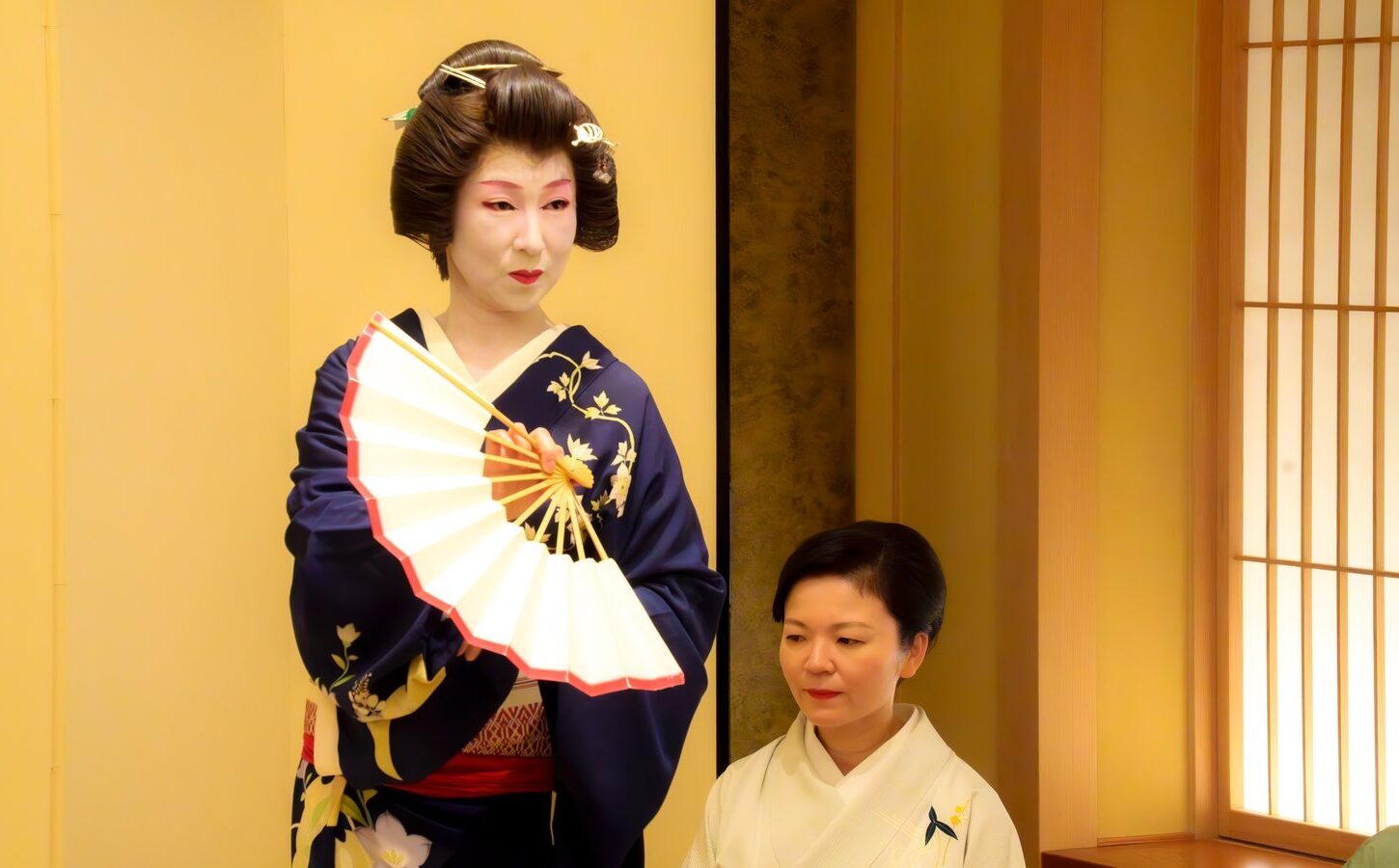
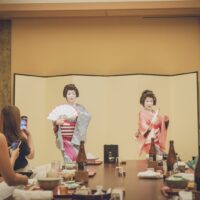
What the dance actually looks like on the tatami: the fan, the kimono, and the jikata playing behind.
Where the living geisha districts of Tokyo are
Tokyo still has active hanamachi, the flower districts where geisha work. Today, in 2026, six of them carry on the tradition: Asakusa, Shimbashi, Akasaka, Kagurazaka, Mukojima, and Yoshicho in Nihonbashi Ningyocho. Each has its own character shaped by the guests who historically frequented it.
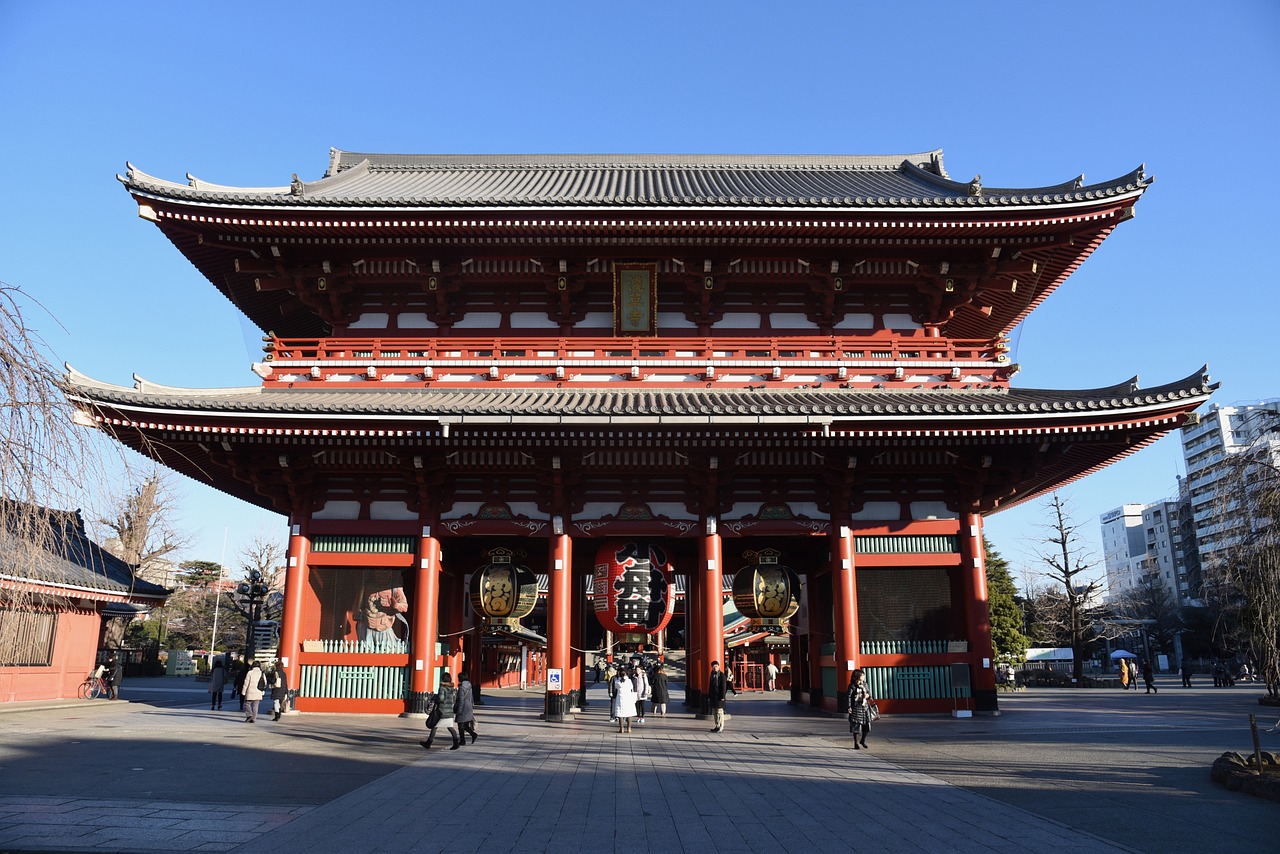
Districts such as Shimbashi and Akasaka sat close to the government quarter and drew politicians and business leaders, so they developed a more exclusive feel. Asakusa is different. As our okami explains it, Asakusa is built around Senso-ji, the oldest temple in the city, and it became the most tourism-oriented part of old Tokyo. That shaped the local geisha culture into something a whole neighborhood protects and nurtures, loved by people of every age, trade, and station. That openness is exactly what makes Asakusa special.
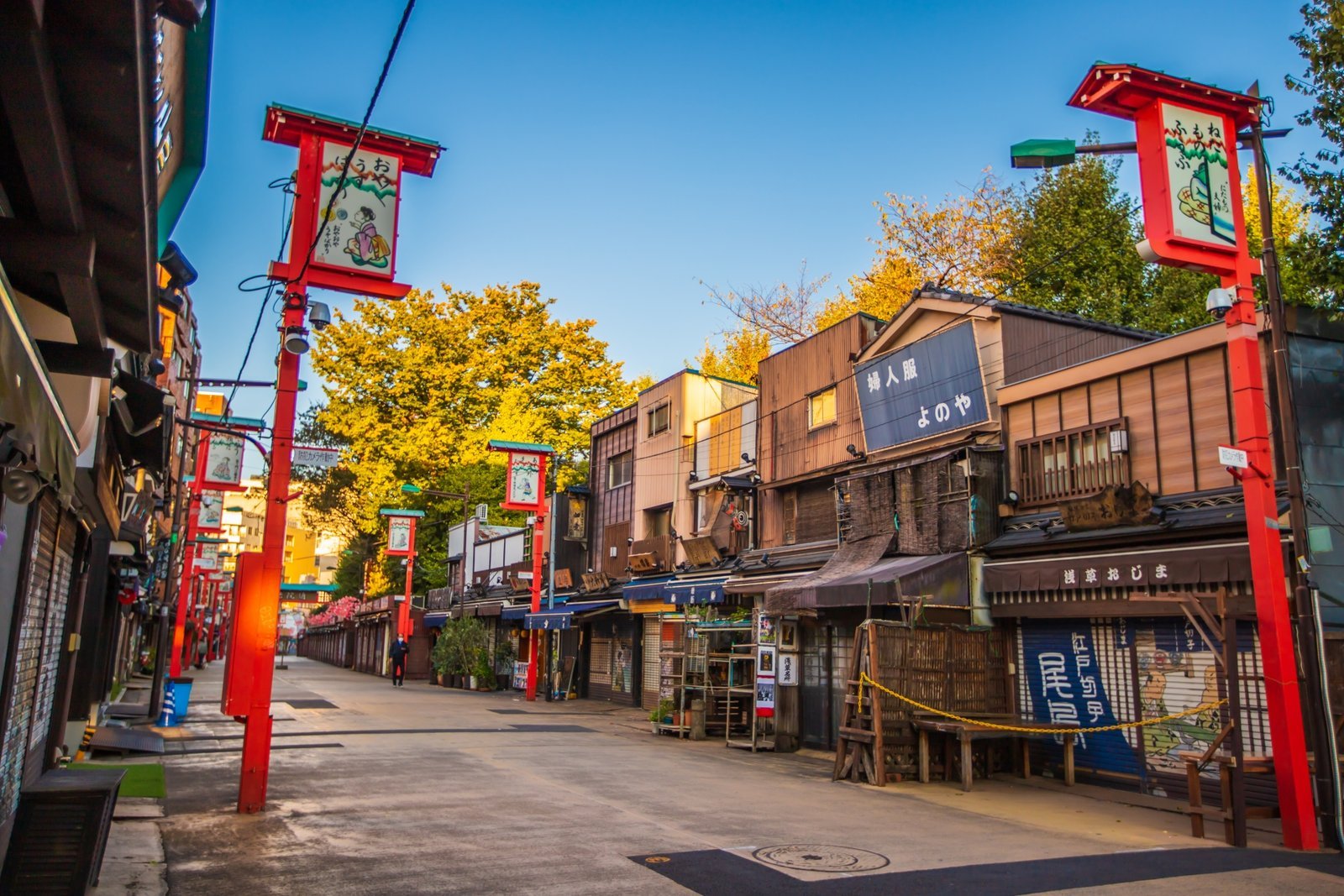
That word, open, is worth pausing on. In a lot of writing about geisha, you will read about the “you must be introduced” rule, the sense that these places are sealed off to outsiders. In some districts that reputation is earned. Asakusa wears its tradition more warmly. Counting ours, two houses in Asakusa still welcome guests for an evening with geisha today.
There is one more distinction worth knowing. A house whose main purpose is enjoying the company of geisha, rather than simply serving fine food, is called a machiai-chaya, a “waiting teahouse.” We are the only house in Asakusa that still takes this form. In practice that means the geisha, and the time you spend with them, are the heart of the evening rather than an add-on to a meal.
So when you search for a geisha show in Tokyo, remember that the districts are not tourist stage sets. They are working neighborhoods where a centuries-old profession still operates. Asakusa is the one that most openly welcomes newcomers to take part.
The different ways to see a geisha performance in Tokyo
There is no single kind of geisha show in Tokyo. Broadly, your options fall into three tiers — a ticketed public stage performance held a few times a year, a short free or low-cost cultural demonstration, and a private ozashiki where the geisha stay with you for the whole of your booking — and it helps to know which one you are actually booking.
The first is a public stage performance. A few times a year the Asakusa geisha community puts on open events, seasonal dances and showcases held at larger venues, where you buy a ticket and watch from the audience. These are wonderful, genuinely performed by working Asakusa geisha, and a lovely low-commitment way to see the dances. But they are scheduled, seated, and one-directional. You watch; you do not interact.
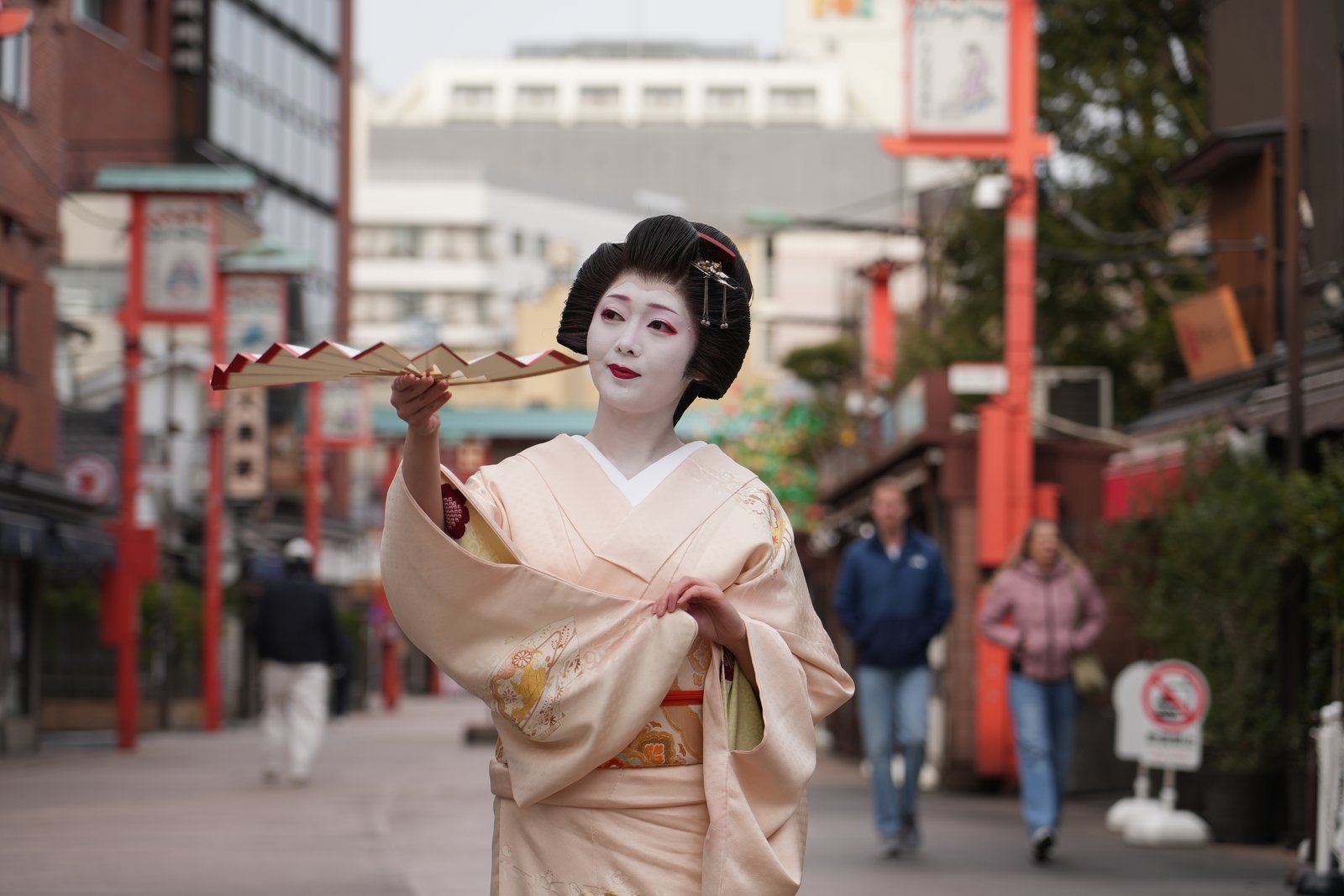
The second is a free or low-cost cultural demonstration. Around Asakusa you can sometimes catch short public presentations of geisha arts, arranged so that visitors get a taste of the tradition. These are a good introduction, though by nature they are brief and general.
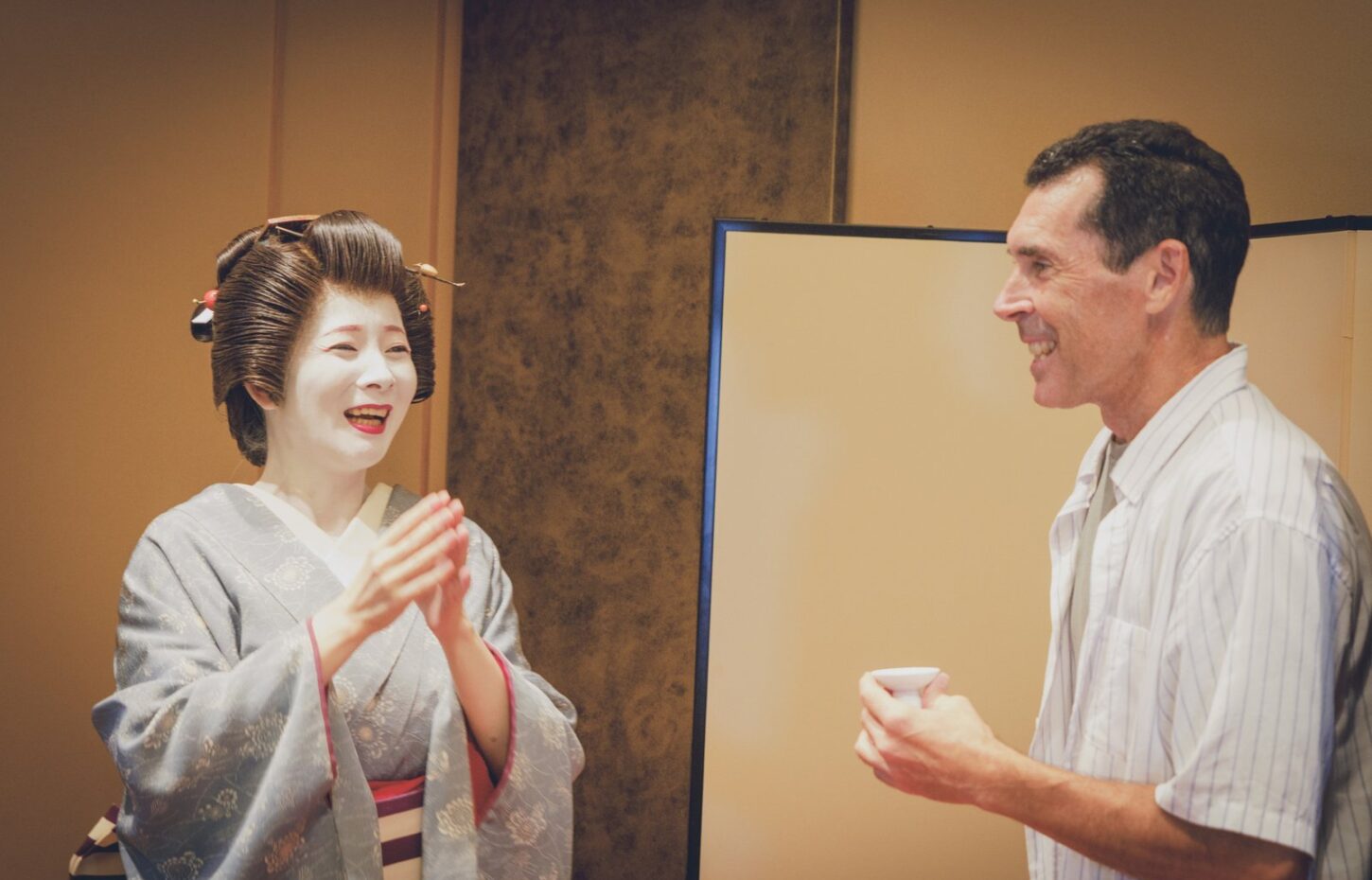
The third is a private ozashiki, an evening in a private tatami room, where the geisha spend the whole booking with you. This is the real thing, and it is what we host. It is not a performance you watch from a distance. It is an experience you are inside of. The dance and the shamisen are performed a few feet away, you share drinks and conversation, and you play the traditional geisha parlor games together.
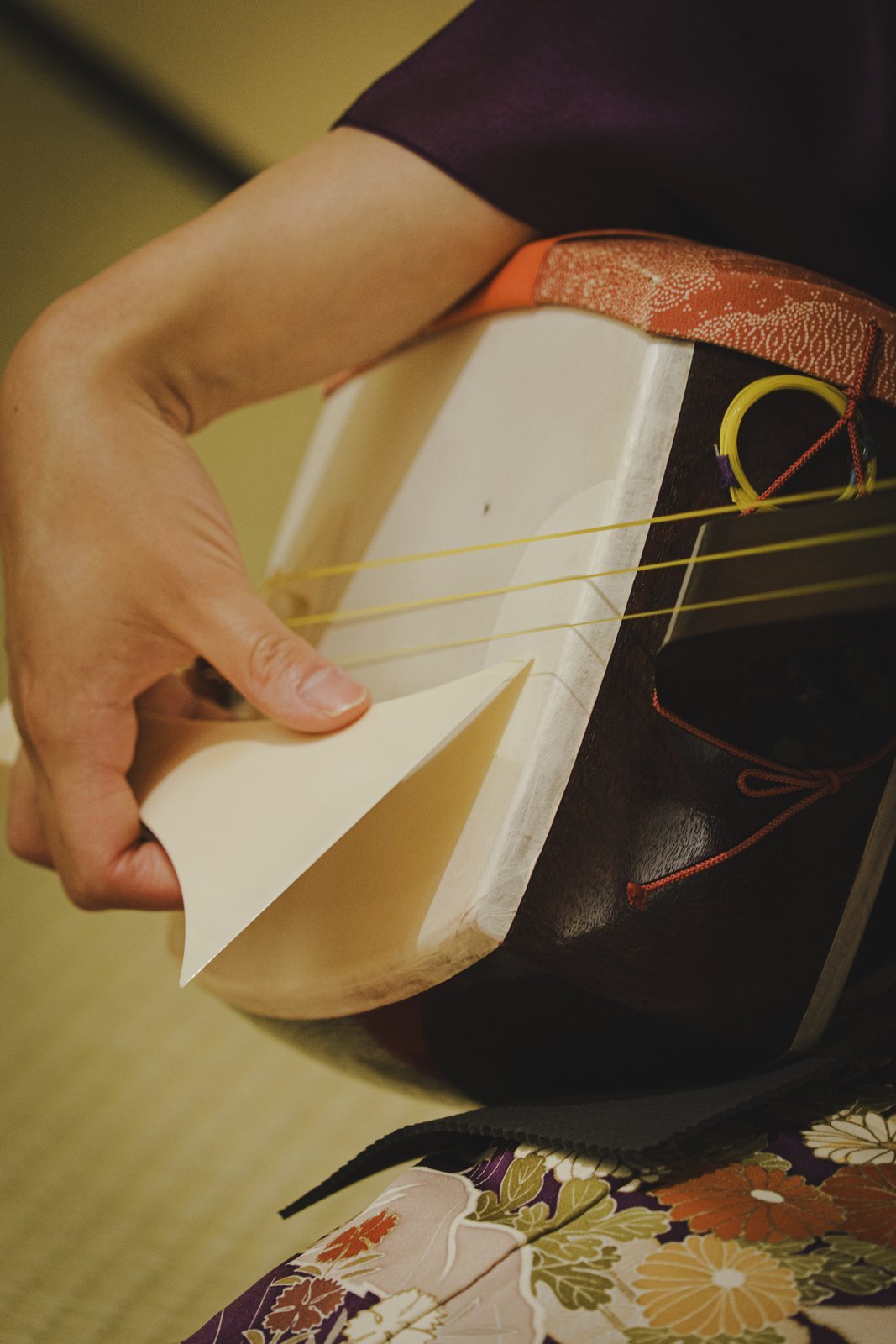
Which should you choose? If your time in Tokyo is tight and you mainly want to see the dances, a public performance is the efficient answer. If you want the fuller cultural experience, the one that stays with you, the private evening is worth planning around. Our okami puts the value of the live, close-up encounter plainly. “This art has been polished since the late seventeenth century and handed down to today. You cannot understand it from a video. You have to feel it live, and in an ozashiki it is right in front of you.”
She adds a detail we love. “What is fascinating is that the games guests play have not changed in at least two hundred years.” You are not watching a reenactment. You are joining something continuous.
See it from inside the room, not from a seat
Miyakodori hosts private ozashiki (a private gathering with geisha) evenings in Asakusa, built around real working geisha — their dance, live shamisen, the traditional parlor games, and a seasonal kaiseki meal. First-time guests, including visitors from overseas, are welcome.
Request a ReservationWhat actually happens during an ozashiki evening
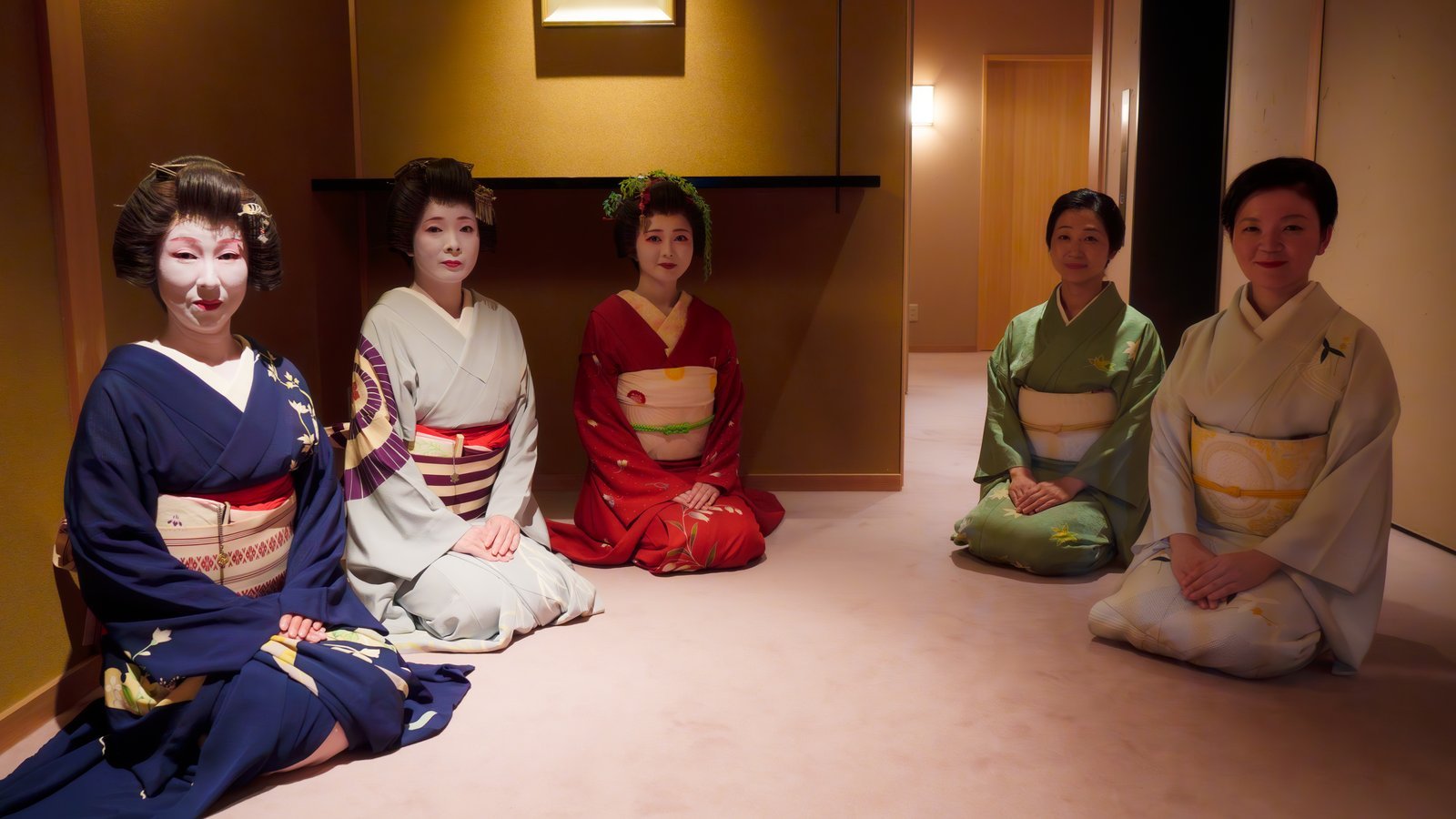
If the private evening is new to you, the idea can feel intimidating, so here is how an ozashiki at our house — held in one of our three private rooms, which seat between one and twenty-three guests — actually unfolds. There is far less formality to fear than people expect.
The geisha are with you in your private room for the whole of your booked time. That is the first thing to understand. This is not a case of a performer appearing for ten minutes and leaving. As our okami describes it, they stay throughout, pouring drinks and sharing them with you, and the conversation flows from there. Then you watch the arts they polish every single day, the dance and the live shamisen music, and you play the games known as ozashiki asobi.
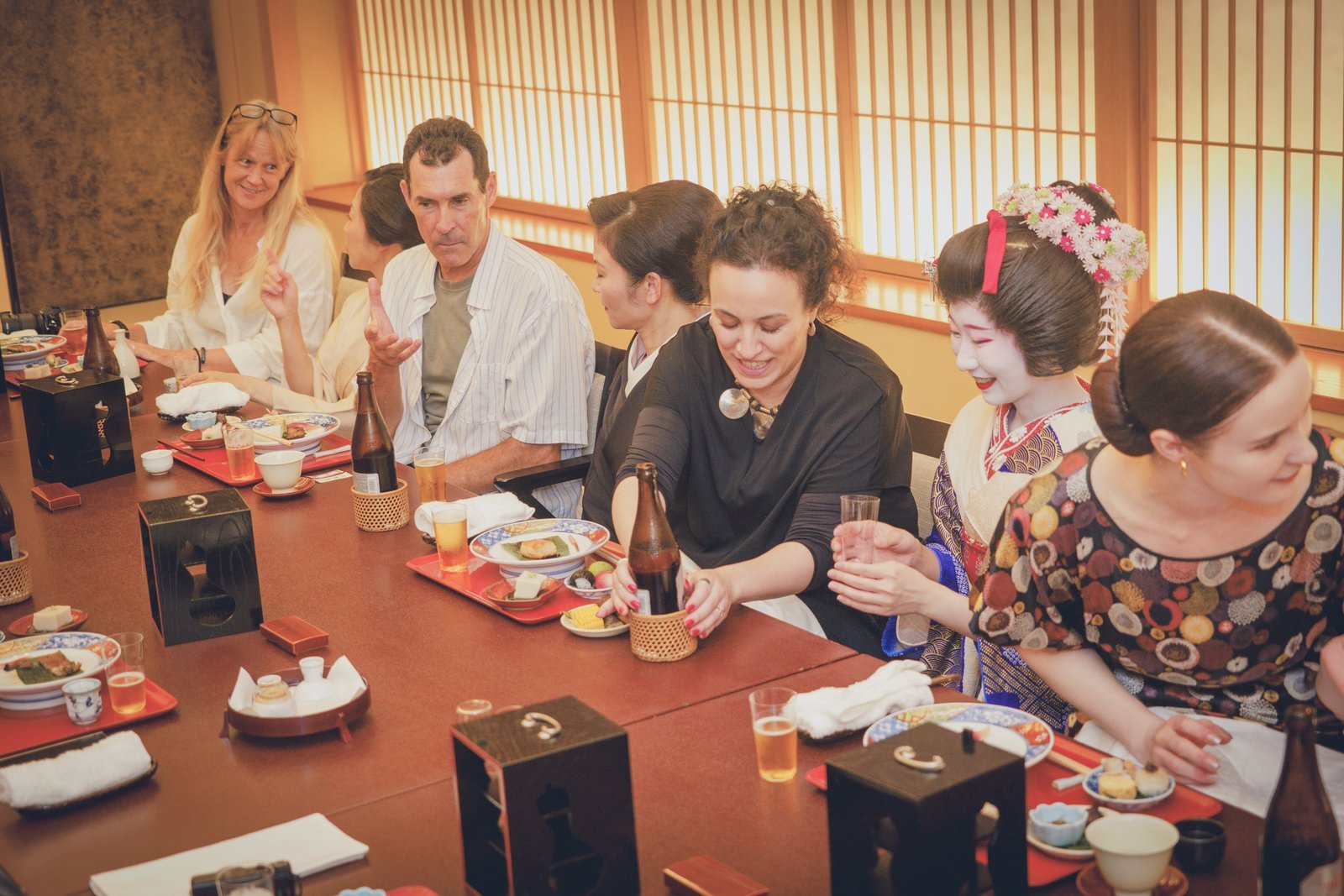
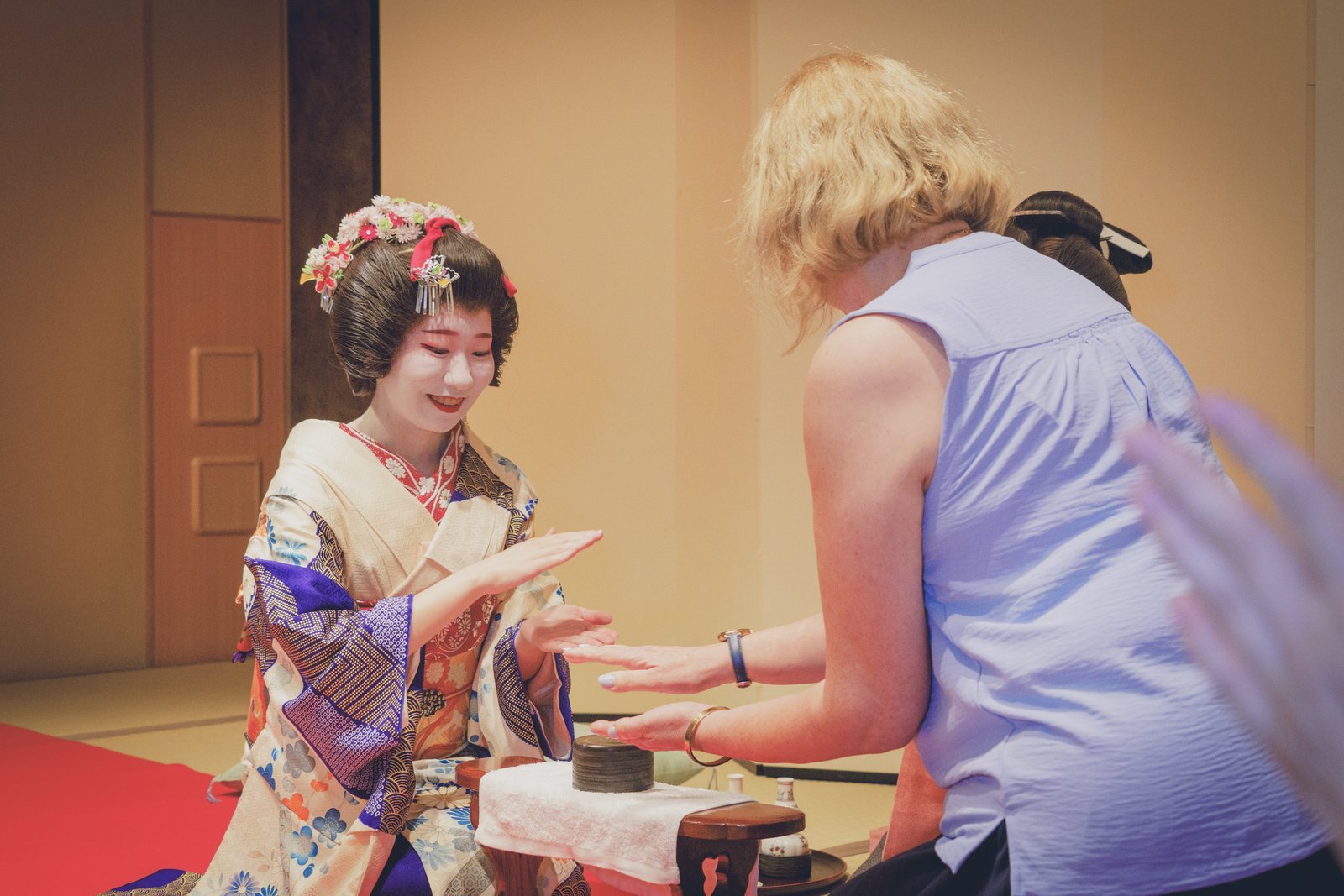
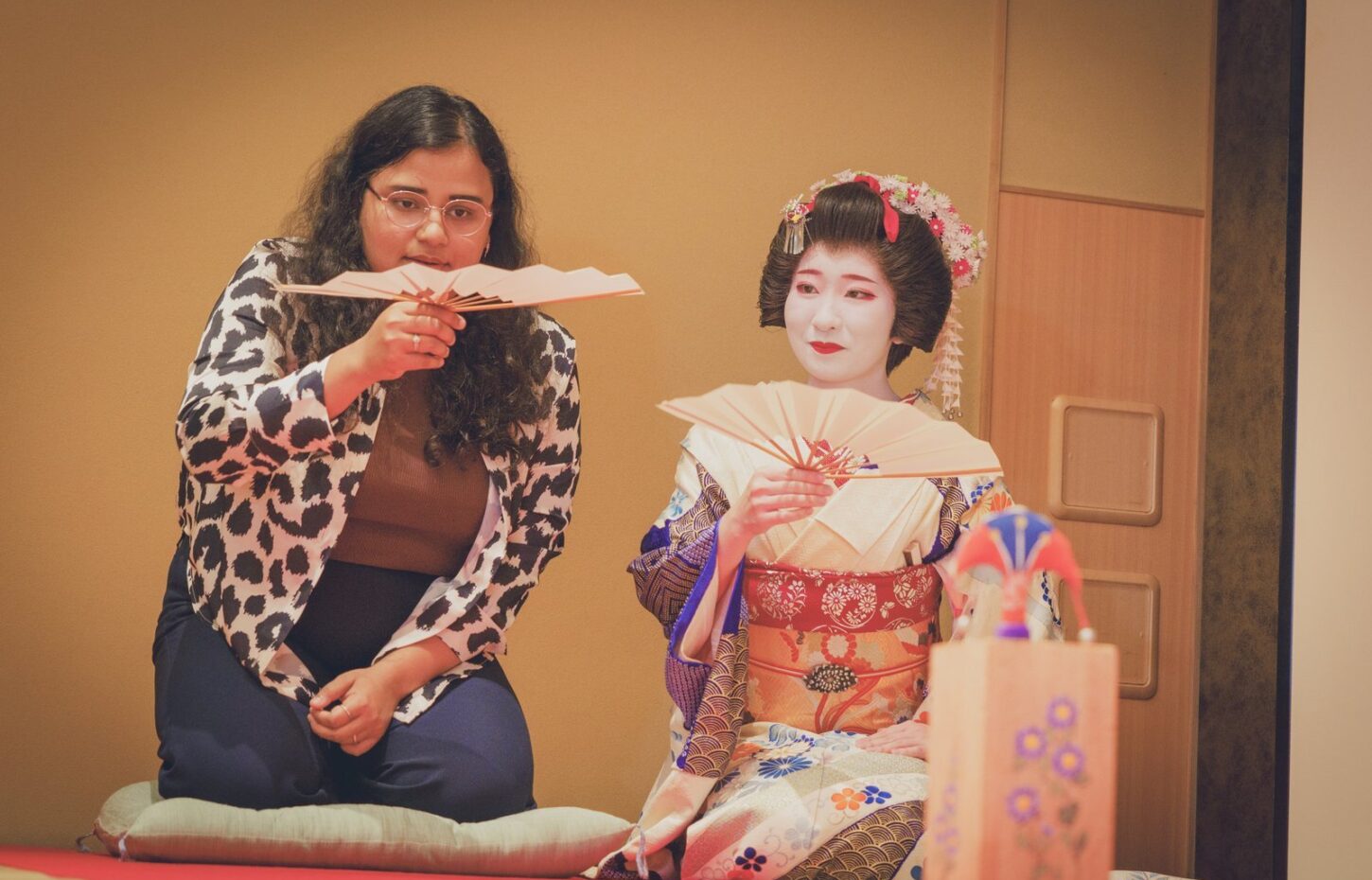
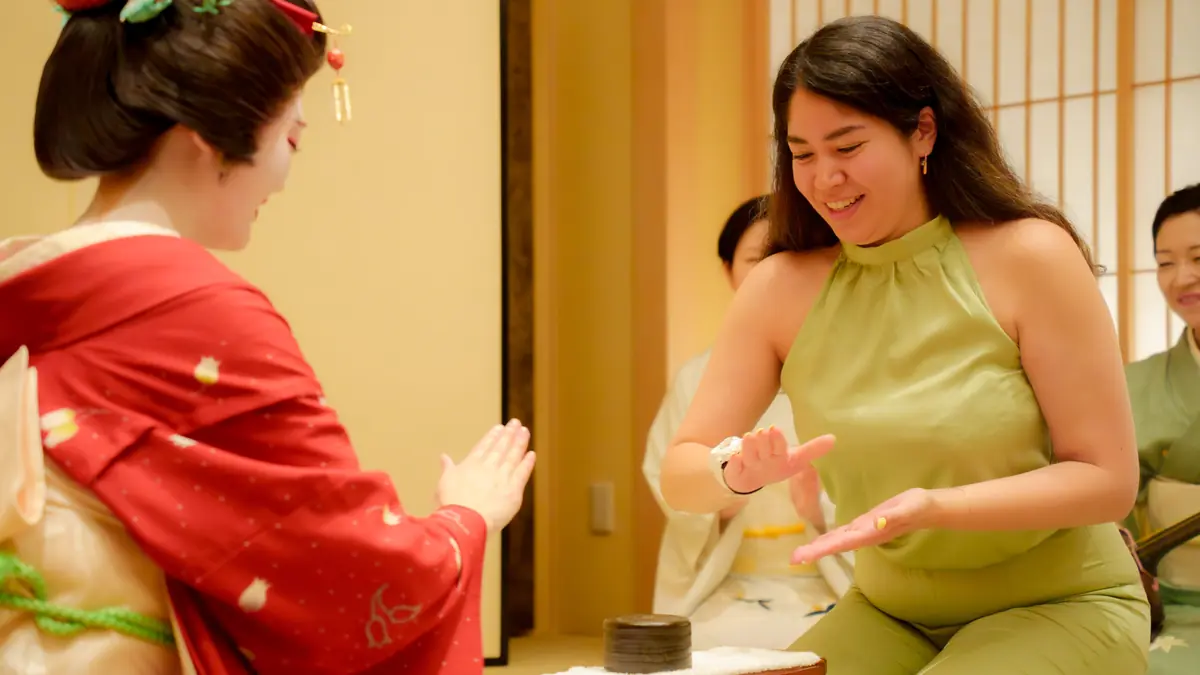
Those games are a highlight. There is konpira fune fune, a fast rhythm game; tora tora, a playful version of rock-paper-scissors acted out with the whole body; and tosenkyo, a game of throwing a fan at a target. There are many others. What they all do is close the distance between guest and geisha. As our okami puts it, the space between you shrinks, the conversation gets livelier, and the time disappears before you know it.
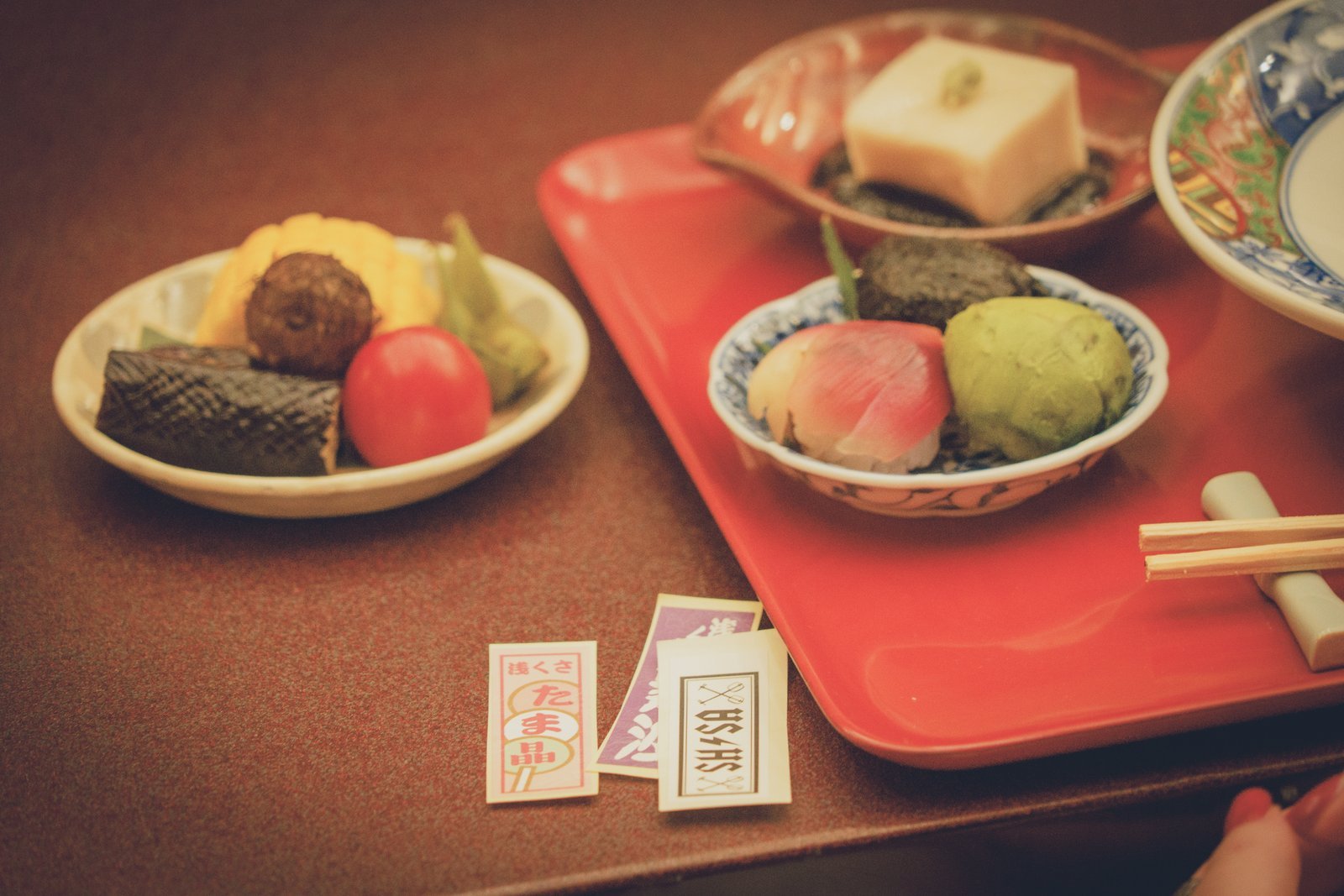
The food is part of it too. A seasonal kaiseki meal is served, the multi-course Japanese cuisine that changes with the time of year and puts the four seasons on the plate. If you have dietary needs, it is worth asking ahead; we are able to accommodate a range of requirements.
A word for anyone worried about the “must be introduced” reputation. We welcome first-time guests openly and say so plainly. If nerves show early, the geisha are skilled at putting you at ease, and if there is a short wait before they arrive, our staff will chat with you and explain a little about this world so you settle in. You do not need to know anything in advance. You do not need special clothes. You bring curiosity, and the evening does the rest.
One thing worth setting your expectations on: the room itself is designed to keep the geisha at the center. Our okami is deliberate about this. The decor honors the traditional Japanese atmosphere, with seasonal paintings and ornaments that change month to month, a lavish kagami-mochi at New Year, and so on, but it is kept deliberately understated so as never to upstage the geisha, who are the true stars of the evening. Everything is arranged around them.
Why an Asakusa geisha evening is worth planning for
Plenty of things in Tokyo can be enjoyed on the spur of the moment. A geisha evening rewards a little planning — a private ozashiki is arranged ahead of your dates rather than booked on the day — and here is why we think it is worth the effort.
What you are buying is not a show in the ordinary sense. You are spending an evening inside a living tradition, in the company of geisha who have devoted their lives to it, and, if you are with us, with an okami who trained as a geisha and has run this house for decades. As she says, what each guest takes away is different every time, and that is what makes it genuinely interesting. It is entertainment, but you also feel, without anyone forcing it, the way these women live and the culture they carry.
There is a reason this matters now. So much of the tradition that survives in Asakusa survived because the community chose to protect it. The name of our house comes from a classical poem by Ariwara no Narihira in the Tales of Ise, and it carries a wish, that we remain a place where guests and hosts genuinely think of one another. That is the spirit we try to keep.
You will not get this from a video, and you will not get it from an imitation. Our okami said something that stays with us. The character for geisha is written as “person who does art,” and in that spirit, the value lies in feeling the art performed live. That is the whole case, really. Come and feel it in the room, not on a screen.
Frequently asked questions
Where can you see a real geisha show in Tokyo?
You can see a real geisha show in Tokyo in the city’s six remaining hanamachi (geisha districts): Asakusa, Shimbashi, Akasaka, Kagurazaka, Mukojima, and Yoshicho in Nihonbashi Ningyocho, where working geisha still perform. Your options there are a ticketed public stage performance held a few times a year, a short free or low-cost cultural demonstration, or a private ozashiki (a private gathering with geisha) in a private room. Asakusa is the district that most openly welcomes newcomers: counting ours, two houses there still welcome guests for an evening with geisha.
What is the difference between a geisha show and a private geisha experience in Tokyo?
A geisha show usually means a scheduled stage performance you watch from an audience seat, often held a few times a year at a public venue. A private geisha experience, or ozashiki, is an evening in a private room where the geisha spend your whole booking with you, performing dance and shamisen up close, sharing conversation and drinks, and playing traditional games together. The show is something you watch; the private evening is something you take part in.
Can foreign visitors book a geisha evening in Asakusa?
Yes. Contrary to the old “you must be introduced” reputation, we welcome first-time guests, including visitors from overseas, and say so openly. Our staff help you feel comfortable, and the geisha are practiced at easing any first-night nerves.
Do I need to speak Japanese?
You do not need to speak Japanese to enjoy the evening. Much of the experience, the dance, the music, the games, is felt rather than spoken, and the hosting is designed to include you. If language support matters for your booking, ask when you enquire.
What games are played during an ozashiki?
The traditional parlor games played with the geisha are known as ozashiki asobi. They include konpira fune fune, a fast rhythm game; tora tora, a playful version of rock-paper-scissors acted out with the whole body; and tosenkyo, a game of throwing a fan at a target, among many others. As our okami puts it, the games guests play have not changed in at least two hundred years.
What kind of food is served?
A seasonal kaiseki meal is served — the multi-course Japanese cuisine that reflects the time of year. If you have dietary requirements, let us know in advance and we will do our best to accommodate them.
What should I wear to a geisha evening?
There is no special dress requirement. Smart, comfortable clothing is fine. What matters more is coming with an openness to the experience.
When is the best time to plan a visit?
A private evening can be arranged year-round, and the seasonal kaiseki and the room’s changing seasonal decorations mean each visit has its own character. Because a private booking is planned rather than walk-in, it is worth enquiring ahead of your Tokyo dates.
Plan your own geisha evening in Asakusa
A geisha show in Tokyo can mean many things, from a ticketed stage dance to an imitation dinner. The living version, the one that has been refined for centuries and is still performed a few feet from where you sit, is found in the hanamachi of Asakusa. Here at Miyakodori, the district’s only machiai-chaya — a 13 to 15 minute walk from Asakusa Station, or about four minutes by taxi, just north of Senso-ji — we host private ozashiki evenings built entirely around real Asakusa geisha, their dance, their shamisen, their games, and a seasonal kaiseki meal.
If you would like to spend an evening inside this tradition rather than watching it from a distance, we would be glad to welcome you. Learn more and enquire about a private geisha evening at en.miyakodori-geisha.com.
Spend an evening with real Asakusa geisha
A private ozashiki (a private gathering with geisha) at Miyakodori, the only machiai-chaya in Asakusa: dance and live shamisen a few feet away, the traditional games, and a seasonal kaiseki meal. Tell us your dates and we will take it from there.
Request a ReservationSources
- Asakusa Kenban (Tokyo Asakusa Association), official site: asakusakenban.com
- Asakusa Tourism Federation, Miyakodori listing: asakusa.gr.jp
- Tokyo Metropolitan Government, “My Tokyo” feature: my.metro.tokyo.lg.jp
- PR TIMES release on machiai-chaya / ozashiki teahouse culture: prtimes.jp


- Geisha: What Do They Actually Do in Japan?
- Planning a Group Dinner in Tokyo: A Private, Unforgettable Evening in Asakusa
Tosenkyo: The Geisha Fan-Throwing Game, Explained
Japanese Tea Ceremony in Tokyo: A Guide to Chadō — and the Geisha Tea House Few Travelers Know
Geisha Danna: What a Geisha’s Patron Was, and How Geisha Are Supported Today
Japanese Geisha Cup Game: Rules and How to Play Konpira Fune Fune
Experience a Different Kind of Halloween in 2025: A “Wa-Style” Halloween in Asakusa, Tokyo

No comments yet.