Press & Media
This page is for journalists, editors, and media professionals: verified facts about Asakusa Miyakodori and press photography.
- Founded
- June 23, 1950 (company registration date on official records)
- Address
- 3-23-10 Asakusa, Taito-ku, Tokyo 111-0032, Japan
- Press contact
- info.ozashiki@miyakodori.art
Facts updated
At a glance
- Name
- Asakusa Miyakodori (浅草 待合茶屋 都鳥)
- Operated by
- Miyakodori Co., Ltd.
- Location
- North of Senso-ji Temple (the quiet Kannon-ura side), about a 3-minute walk beyond the temple grounds. 13 minutes on foot from the Asakusa stations of the Ginza Line, Tobu Skytree Line and Tsukuba Express (15 minutes from the Toei Asakusa Line), 4 minutes by taxi
- Hours
- 2:00 PM – 8:00 PM (last start time) — later times on request
- Closed
- Saturdays, Sundays and public holidays, and over the New Year holidays. A private ozashiki on a day we are normally closed may be possible on request, at least a week ahead, at an additional charge
- Rooms
- 3 tatami banquet rooms (largest seats 23 guests): two with table and chair seating, one with a horigotatsu, a low table with a well beneath it for your legs
- Website
- en.miyakodori-geisha.com (Japanese: miyakodori-geisha.com)
Miyakodori in three lines
Founded in Asakusa in 1950, Miyakodori is the only machiai-chaya in Asakusa — a house that hosts gatherings with geisha (ozashiki). In a trade where first-time guests traditionally needed a personal referral, Miyakodori opened its doors to first-time guests, including visitors from abroad. Today it hosts ozashiki gatherings with Asakusa’s working geisha for guests from Japan and around the world.
Key facts for journalists
- Three geisha perform together
- At Miyakodori’s Ozashiki Tea House sessions, three geisha perform together: two dance while the third sings and plays the shamisen. Having two dancers widens the range of poses, expressions and pieces. These scheduled sessions are shared with other guests; for a private ozashiki, the number of geisha varies with the plan and group size.
- Asakusa’s only machiai-chaya
- Miyakodori is the only machiai-chaya in Asakusa, a house where guests invite geisha to an ozashiki, and has operated in Kannon-ura, north of Senso-ji, since 1950. Its Ozashiki Tea House sessions are held in the Grand Hall, the largest of its three ozashiki rooms. Chikage, the okami (proprietress), is a former geisha.
- Asakusa’s geisha community
- About 20 geisha are active in Asakusa today. Geisha are independent professionals registered with the local geisha office (kenban); Miyakodori does not “employ” them — it books them for each ozashiki.
- Hōkan (Taikomochi)
- Long known as Japan’s only male geisha: performers with an art all their own, who perform alongside the geisha and lift the mood of the gathering. Asakusa is the only place in Japan with officially registered hōkan. Six hōkan are registered with the Asakusa kenban today, and one of them is a woman, a breath of fresh air in a role long held by men. We can arrange for a hōkan to join a private ozashiki at Miyakodori.
- The Okami (proprietress)
- Chikage, the second-generation okami, is a former geisha. She debuted as a geisha in 1969 at age 15, as a hangyoku (a young geisha), and moved to the ippon stage at eighteen and a half. She has been involved in geisha culture for over 57 years, including 27 years as a geisha. She is the only proprietress in Asakusa with direct experience as an active geisha. Her training in dance and kiyomoto (a traditional style of narrative singing) began at age five, following the traditional “sixth day of the sixth month at age six” custom (counted in the old style).
- Third generation
- Yuta Kawamura, Miyakodori’s third generation.
Style guide
Common errors and correct usage.
| Common error | Correct |
|---|---|
| Founded in 1948 | Founded in 1950 (confirmed by official company records) |
| “Geisha employed by / belonging to Miyakodori” | Geisha are independent professionals registered with the Asakusa kenban; Miyakodori arranges them for each ozashiki |
| “A short walk from Kaminarimon gate” | North of Senso-ji (Kannon-ura area); 13 min on foot from Asakusa stations (15 min from the Toei Asakusa Line) |
| “The only place in Japan to see a hōkan” (about the restaurant) | The uniqueness belongs to the hōkan and to Asakusa: “hōkan, long known as Japan’s only male geisha, can be arranged for an ozashiki at Miyakodori” |
| “Taikomochi” as the main term | Hōkan (Taikomochi) — hōkan is the standard term in Asakusa |
Selected press
ABC (Australia) Foreign Correspondentbroadcast August 4, 2026
“The Geisha of Tokyo”
The programme filmed an ozashiki at Miyakodori (final segment, from around the 23-minute mark).
ABC NewsAugust 8, 2026
“Inside the closed world of Japan’s geisha”
The Sankei ShimbunMarch 10, 2026
Feature on okami Chikage: carrying ozashiki culture to the world and the next generation.
Re·rise News (YouTube)December 2021
Interview with Miyakodori’s third generation (Japanese).
Photography
Please read the Terms of use, then register your outlet and the intended use: the downloads open right away. Each photo is 2000 pixels on the long side, with a small watermark. Six short videos open with them.
Terms of use
- Who may use them
- Newspapers, magazines, web media, bloggers, YouTubers and other creators, and travel companies that feature Miyakodori or sell visits to it.
- What for
- Only to introduce, report on or sell Miyakodori. Not to promote other venues or experiences, not as advertising or stock material, and not by competing services.
- Credit
- Photo courtesy of Asakusa Miyakodori (for the videos: Video courtesy of Asakusa Miyakodori)
- Links
- Online articles and blogs: the credit and a link to our website. Videos: the credit and the link in the description. Social media: the credit and a tag, Instagram @miyakodori_asakusa_experience or TikTok @miyakodori_geisha. Newspapers, magazines and TV: the credit only. Travel companies: the credit. A link to our website is welcome where possible, but it is not required. Our website: en.miyakodori-geisha.com (for articles in Japanese, miyakodori-geisha.com).
- Editing
- Please do not alter the photos beyond cropping, and do not remove or cover the watermark. The videos may be shortened, but please do not remove or cover the Miyakodori name shown on screen.
See all 50 photos
Geisha 20
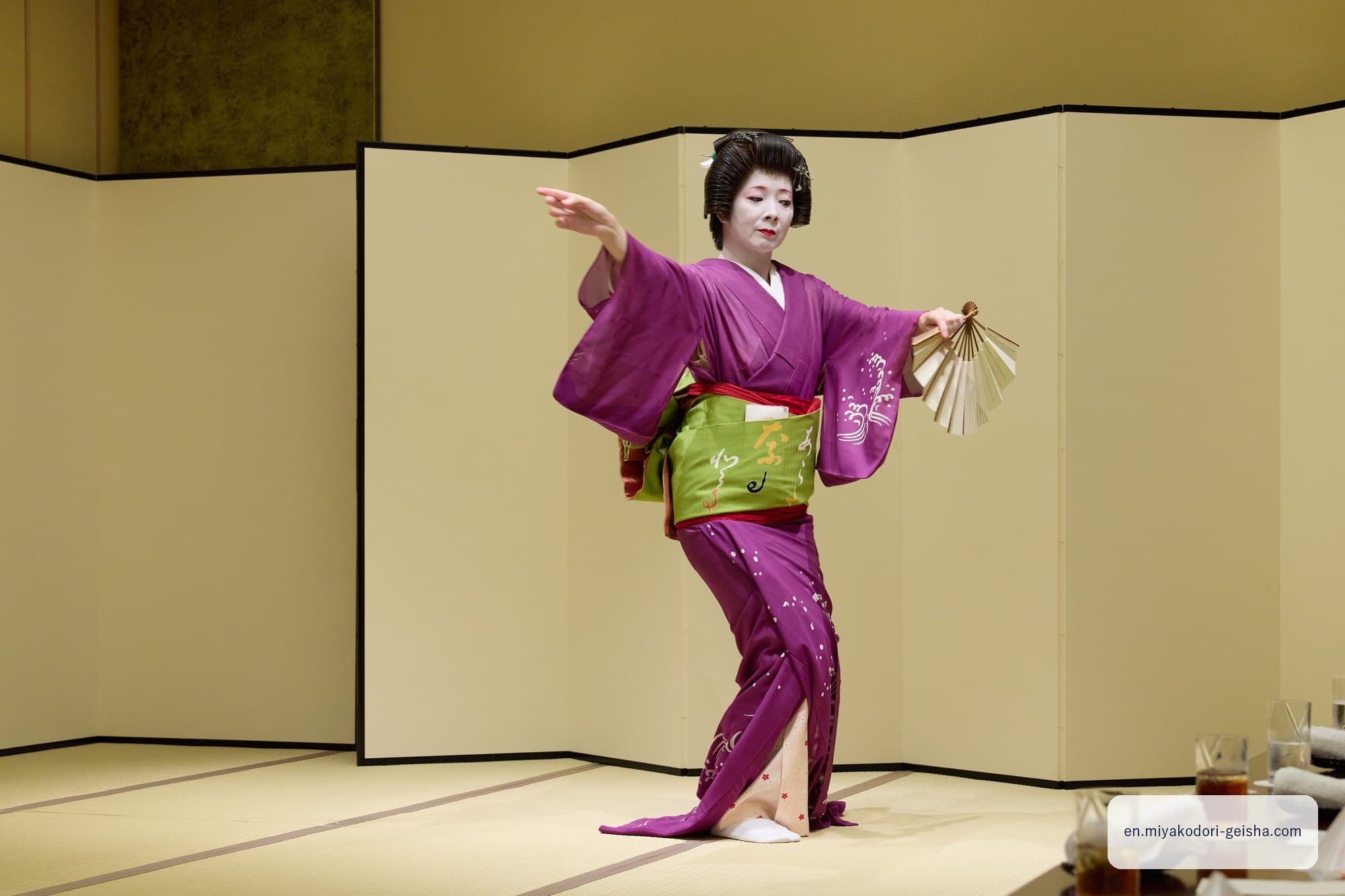
A geisha dances, arms spread with an open fan 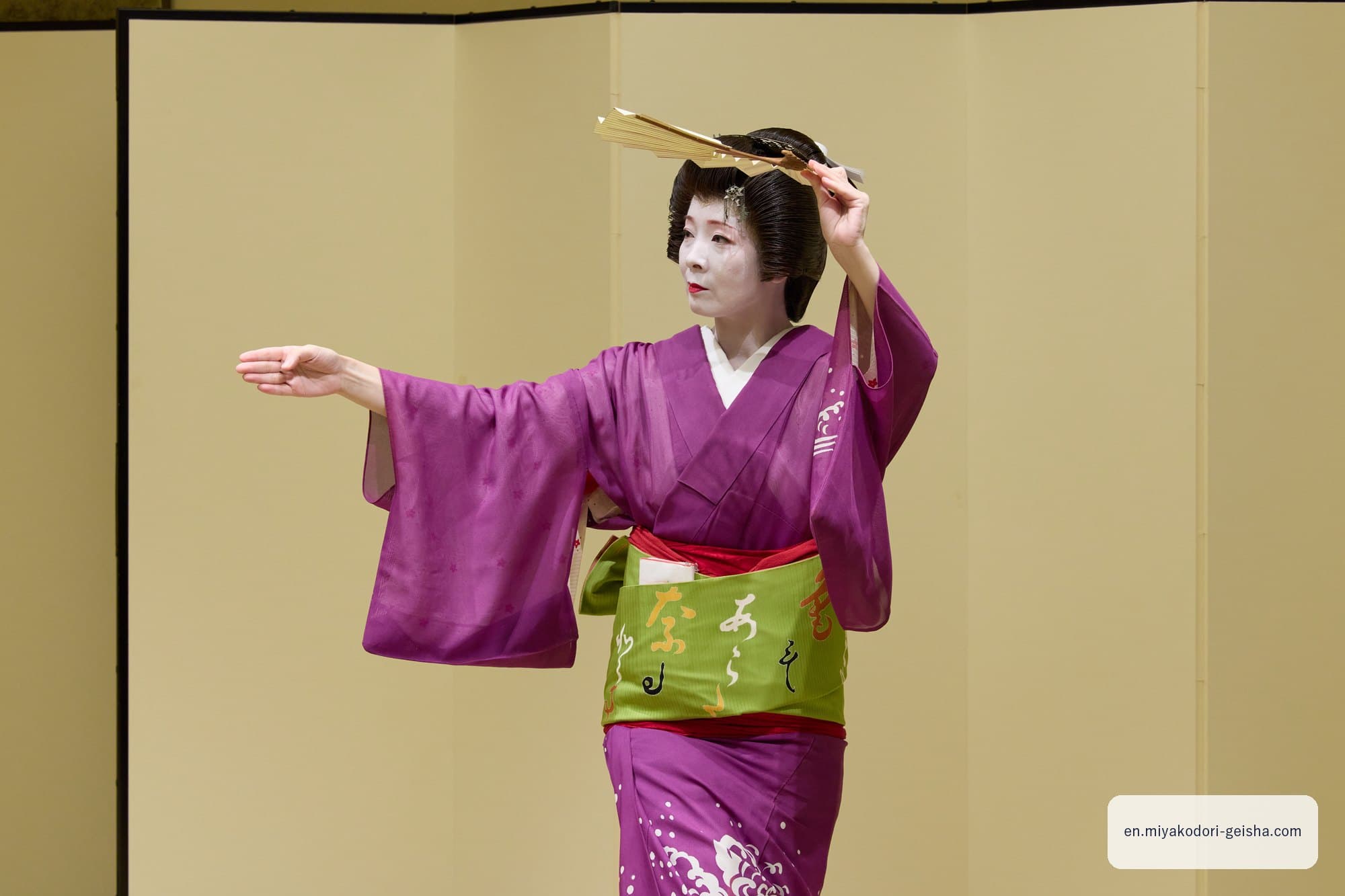
A geisha raises her fan overhead in a dance 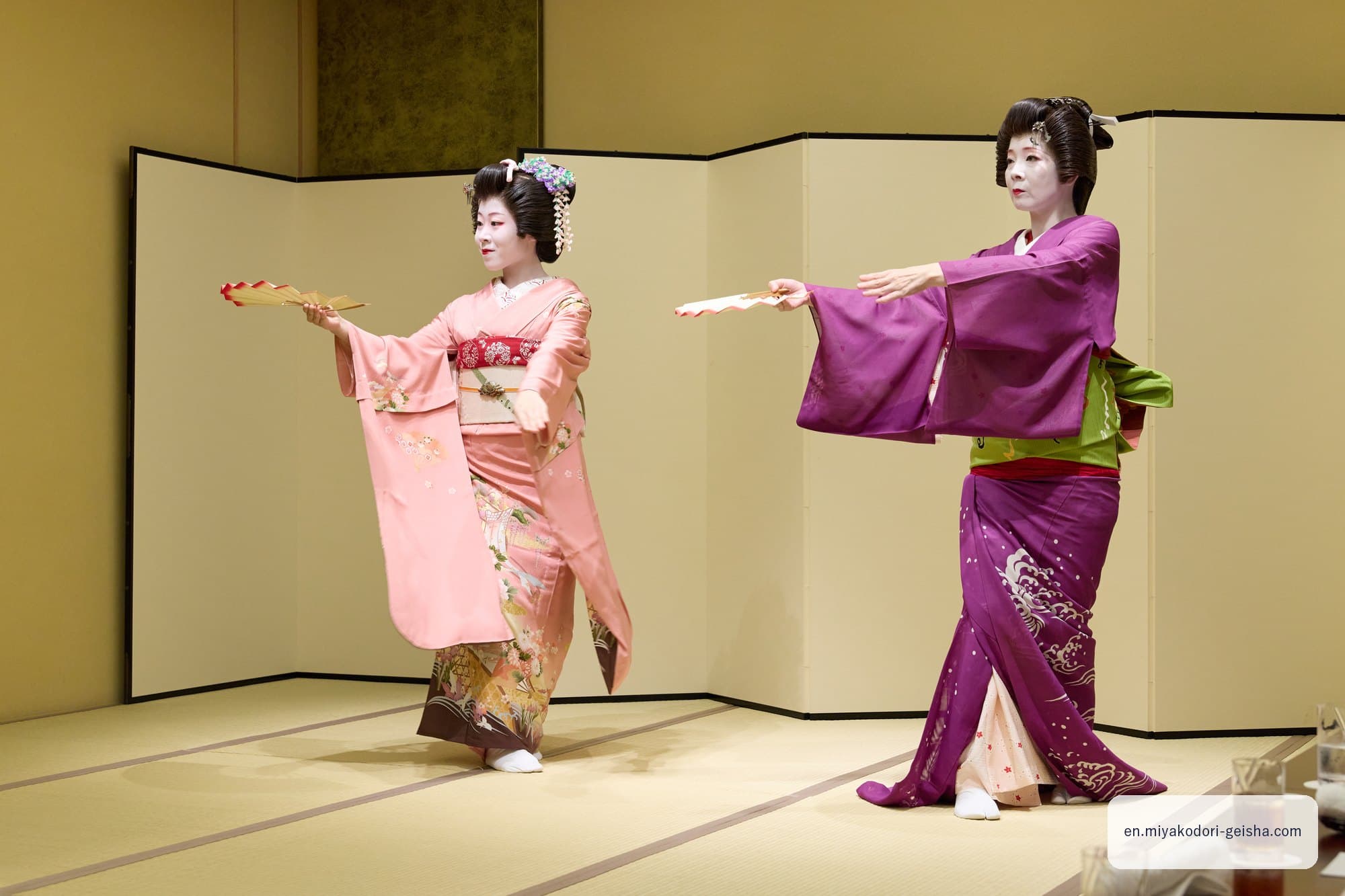
Two geisha extend their fans in unison 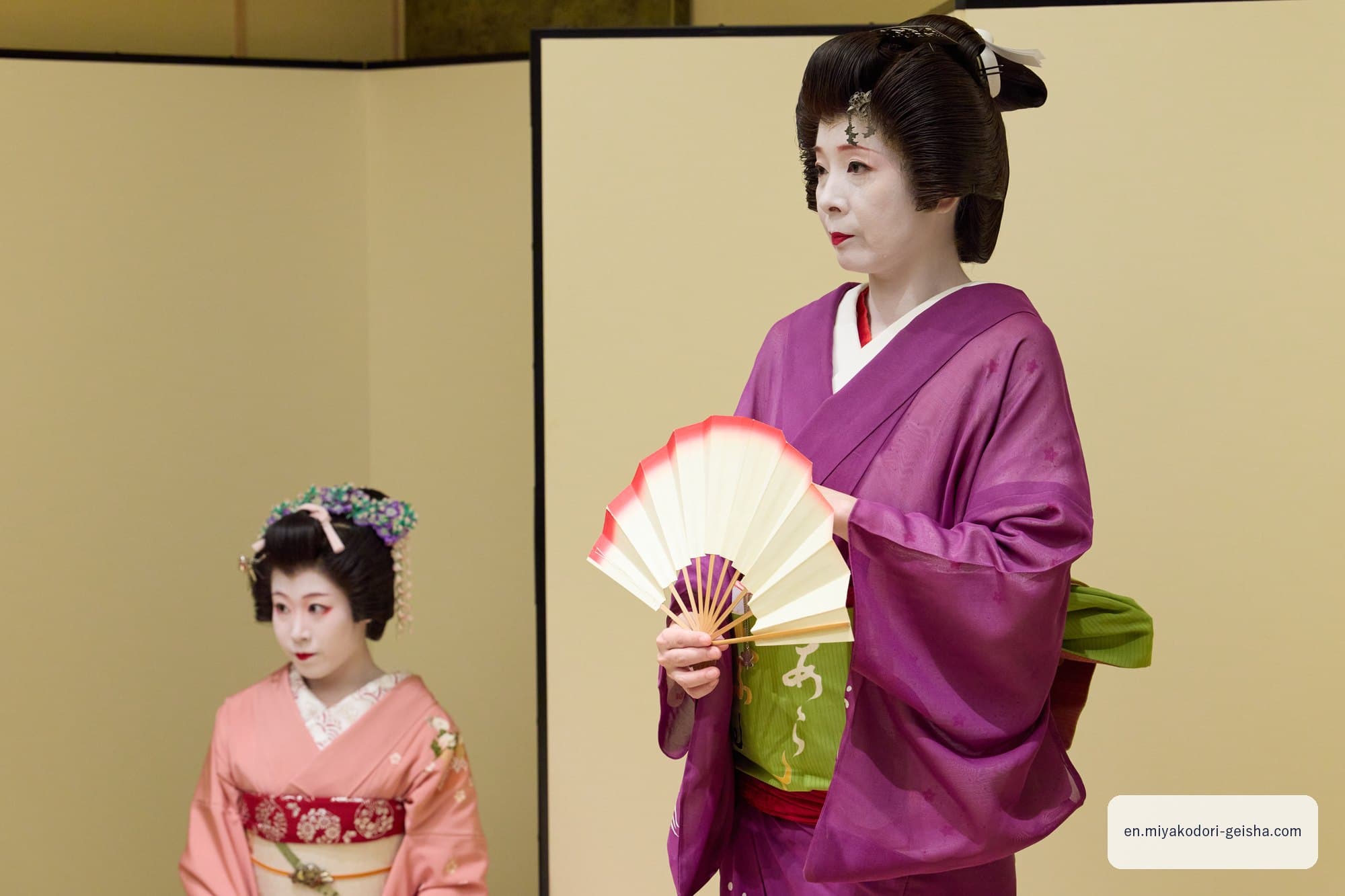
A geisha holds a red-and-white fan 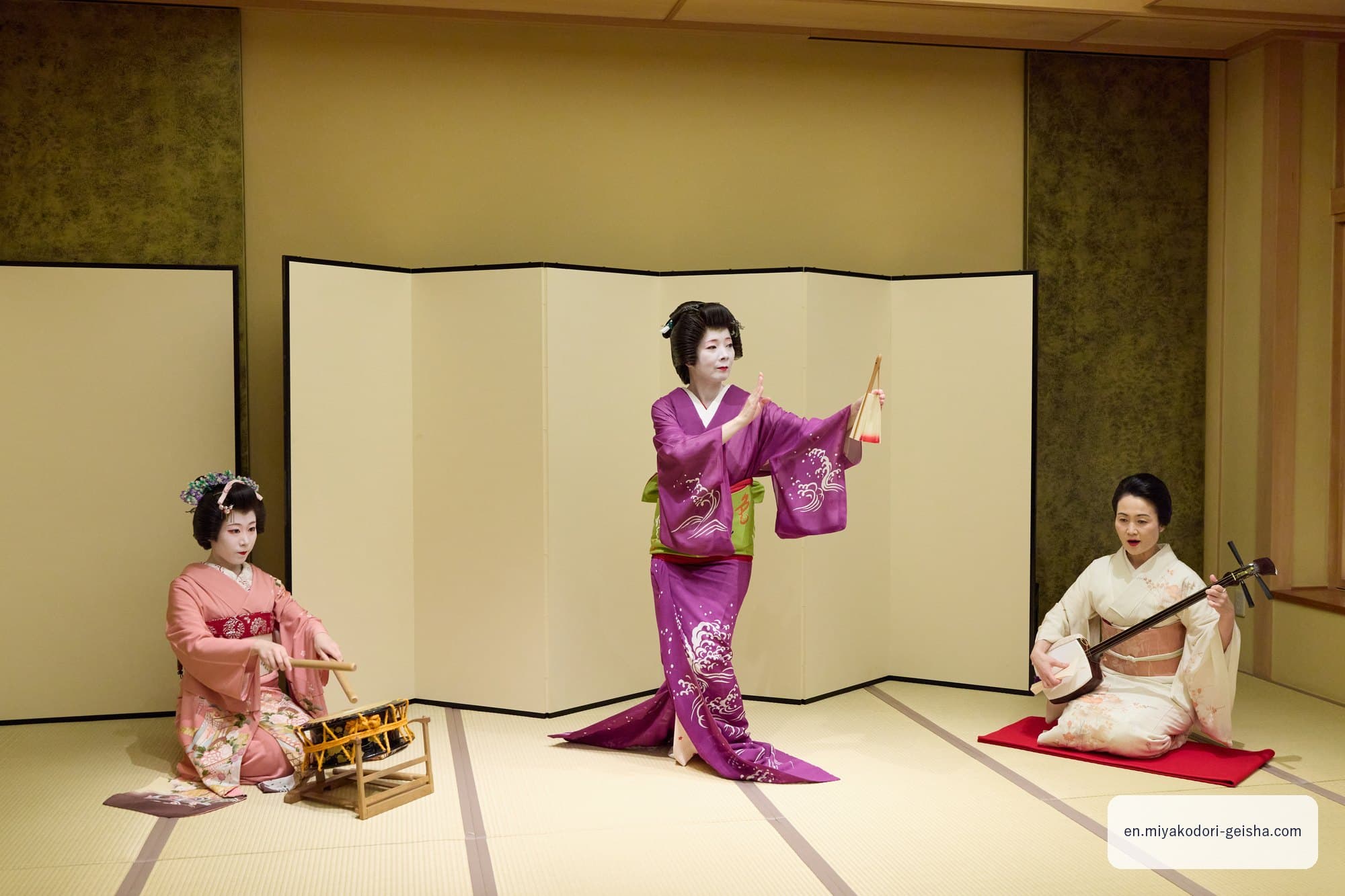
Dance, drum and song: a full ozashiki performance in the main room 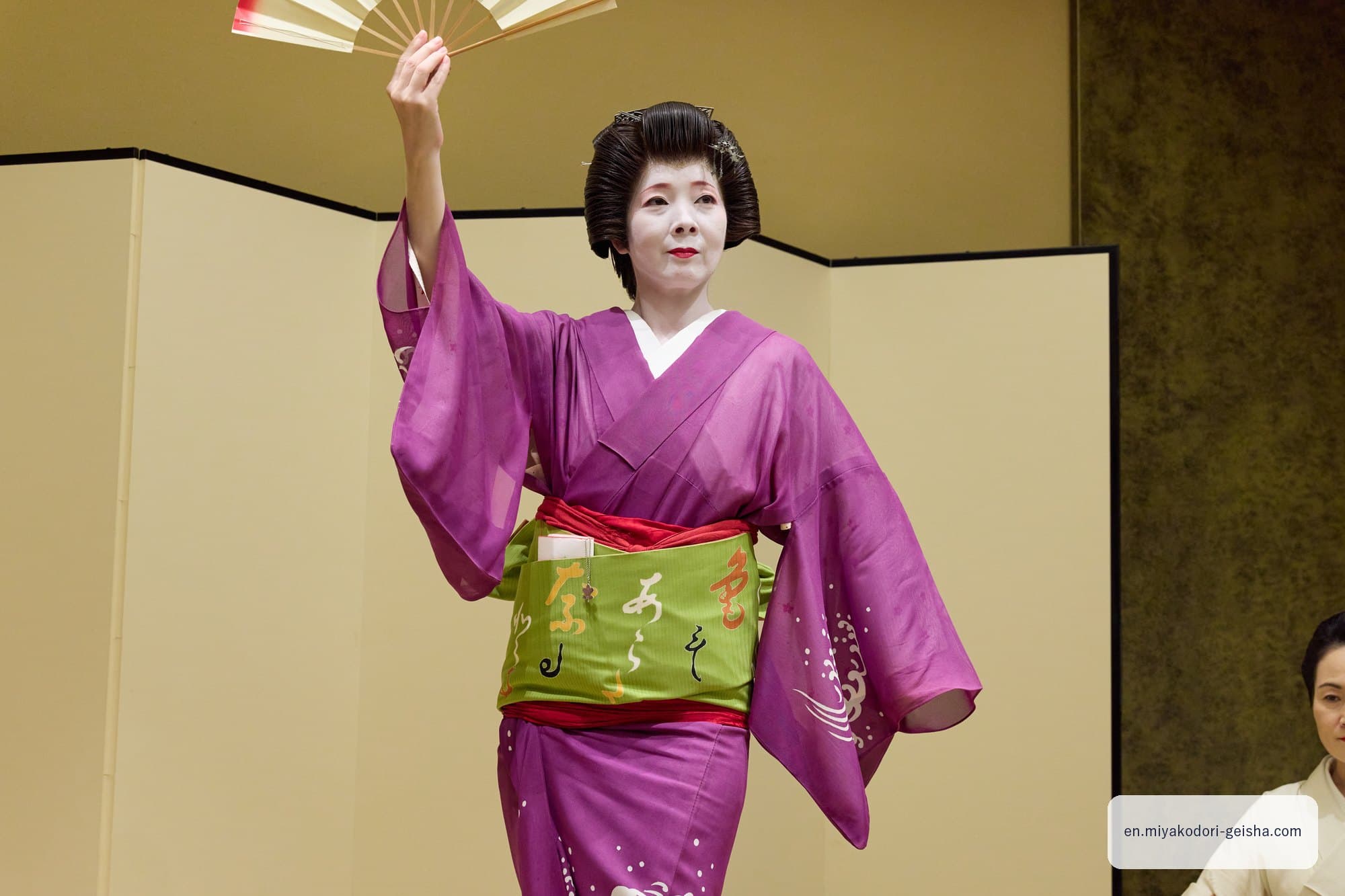
A geisha lifts her fan high 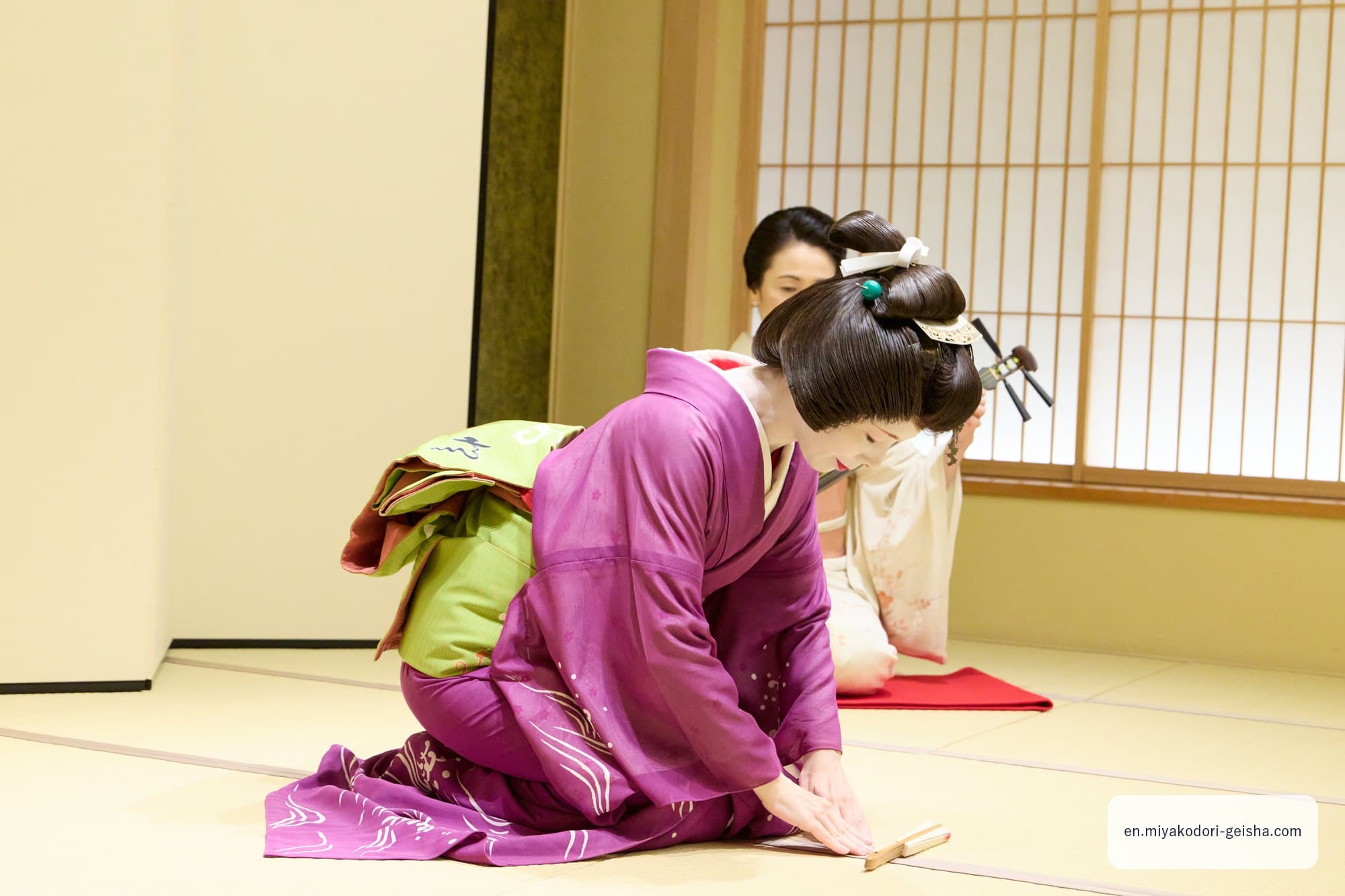
A geisha bows to close her dance 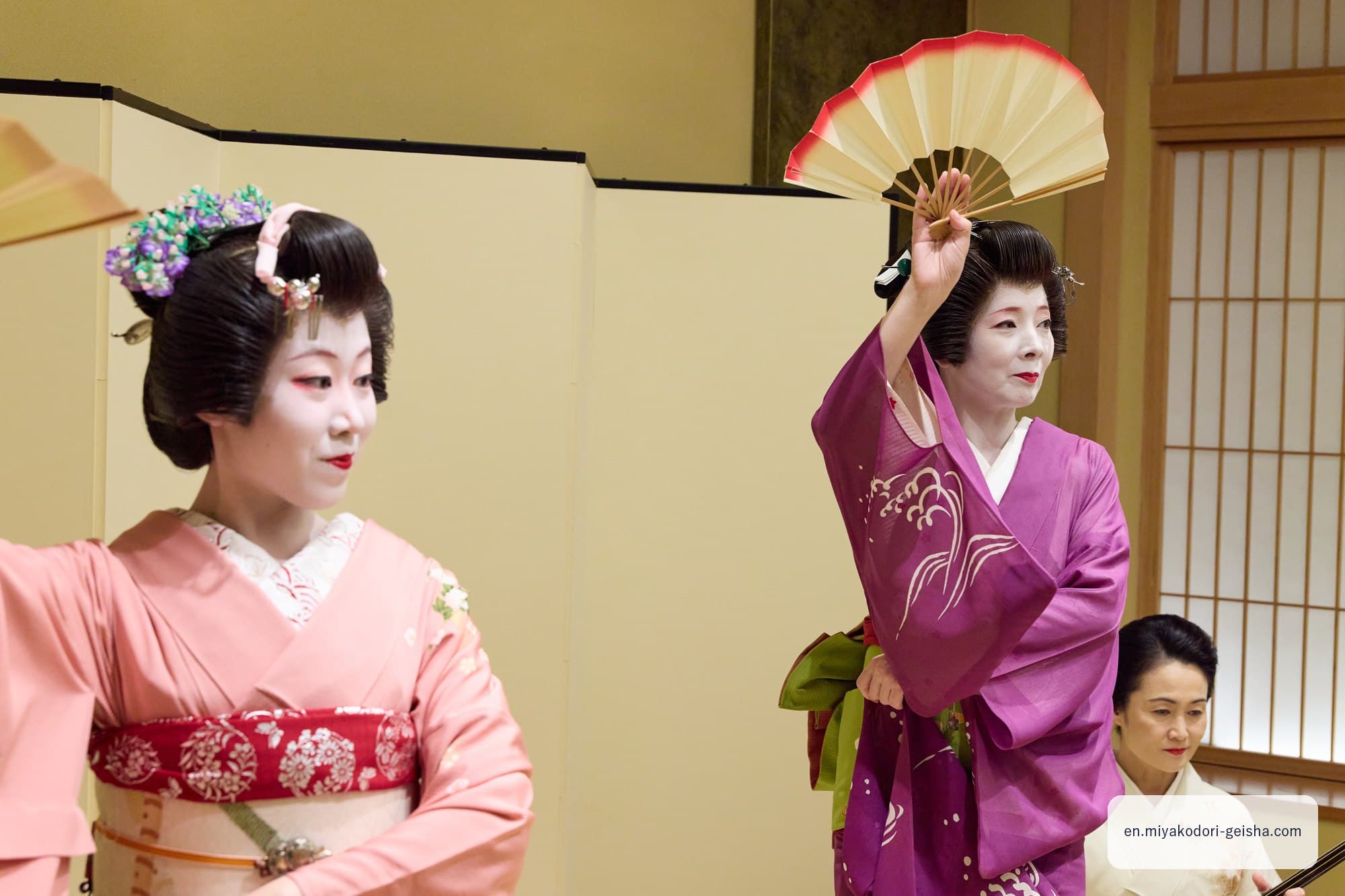
One geisha dances with a raised fan as another looks on 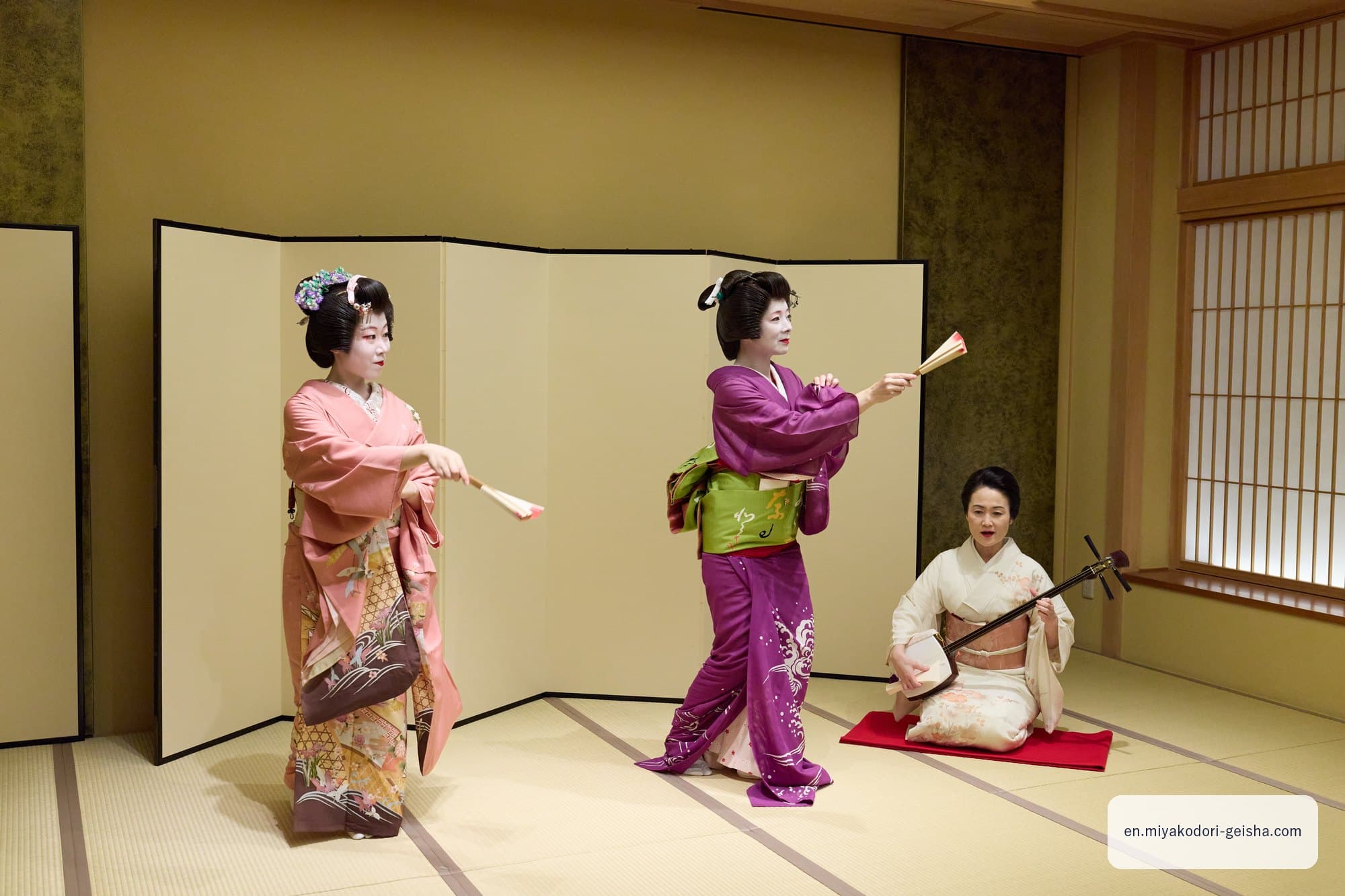
Two geisha dance as the jikata sings and plays the shamisen 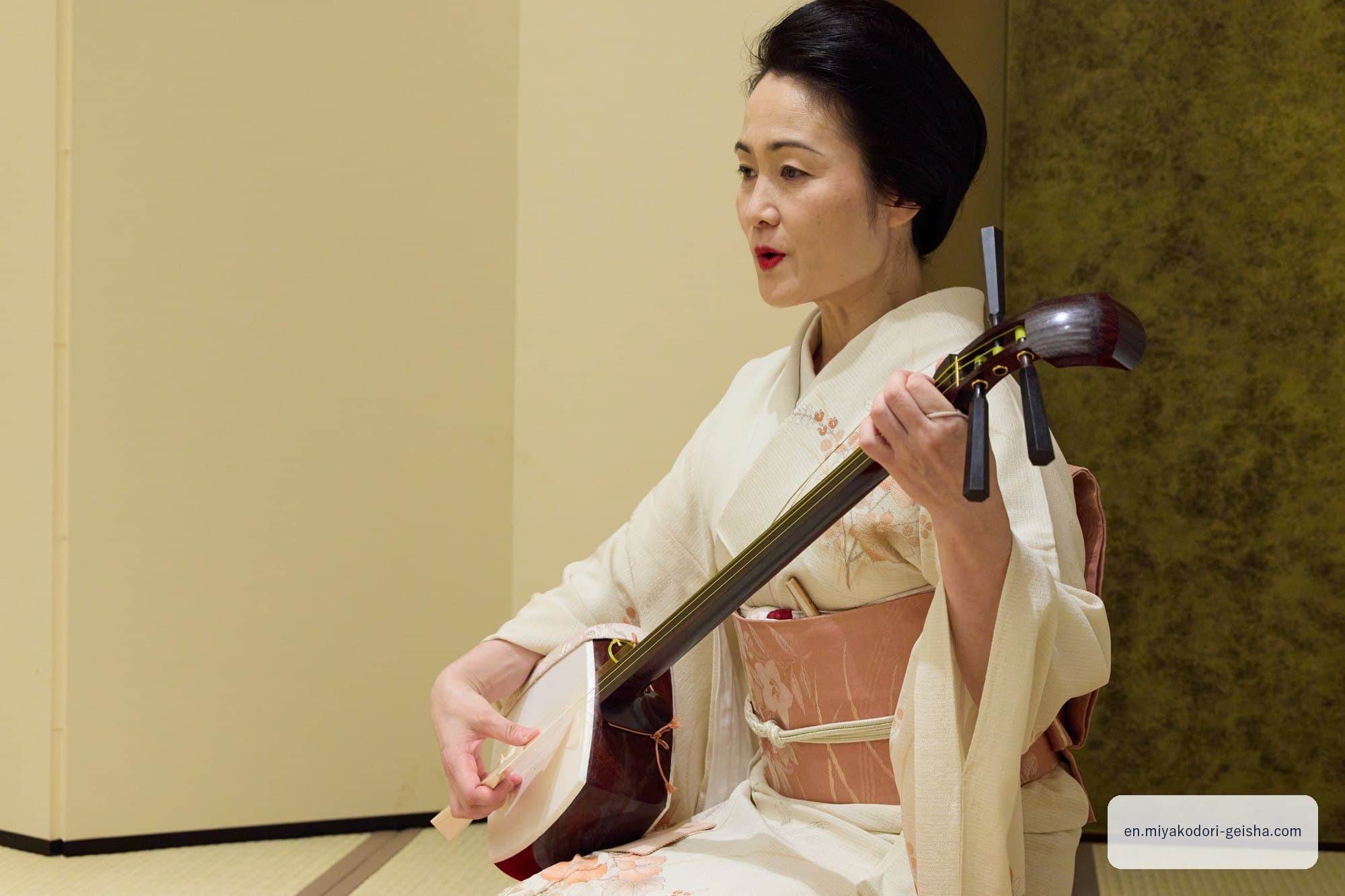
The jikata sings and plays the shamisen 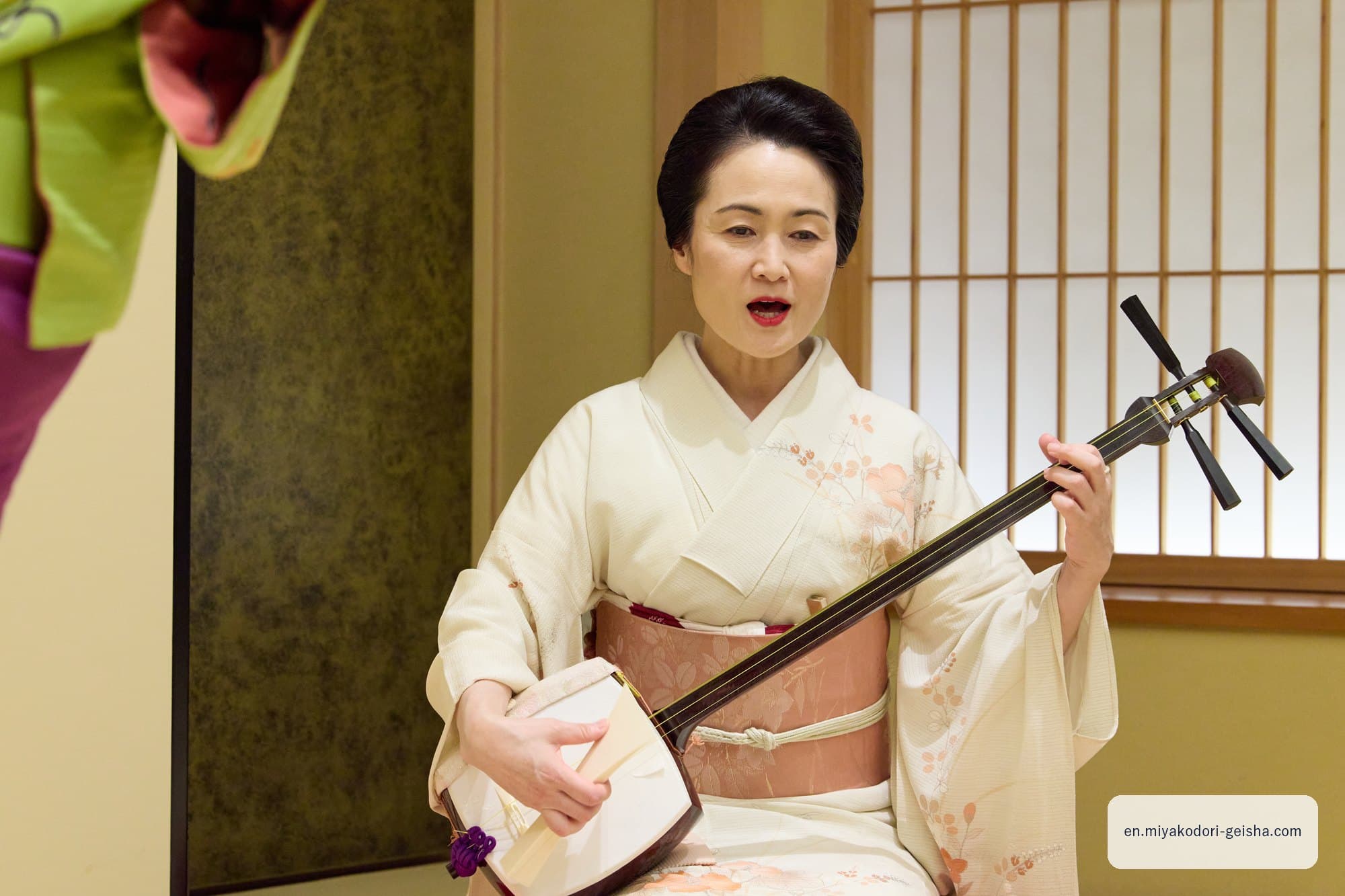
The jikata sings at the shamisen in front of the shoji screens 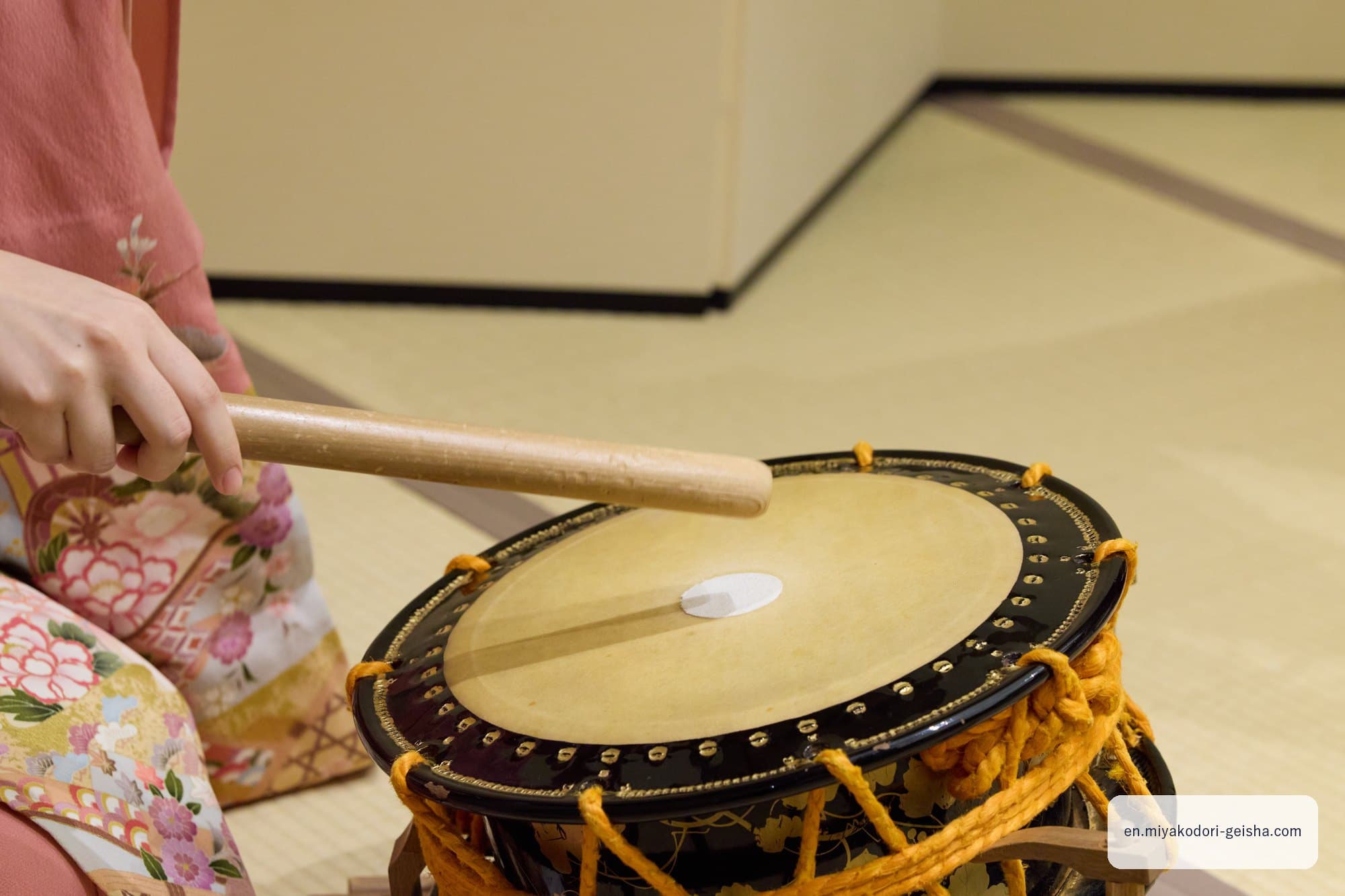
Close-up of a hand striking a shime-daiko drum 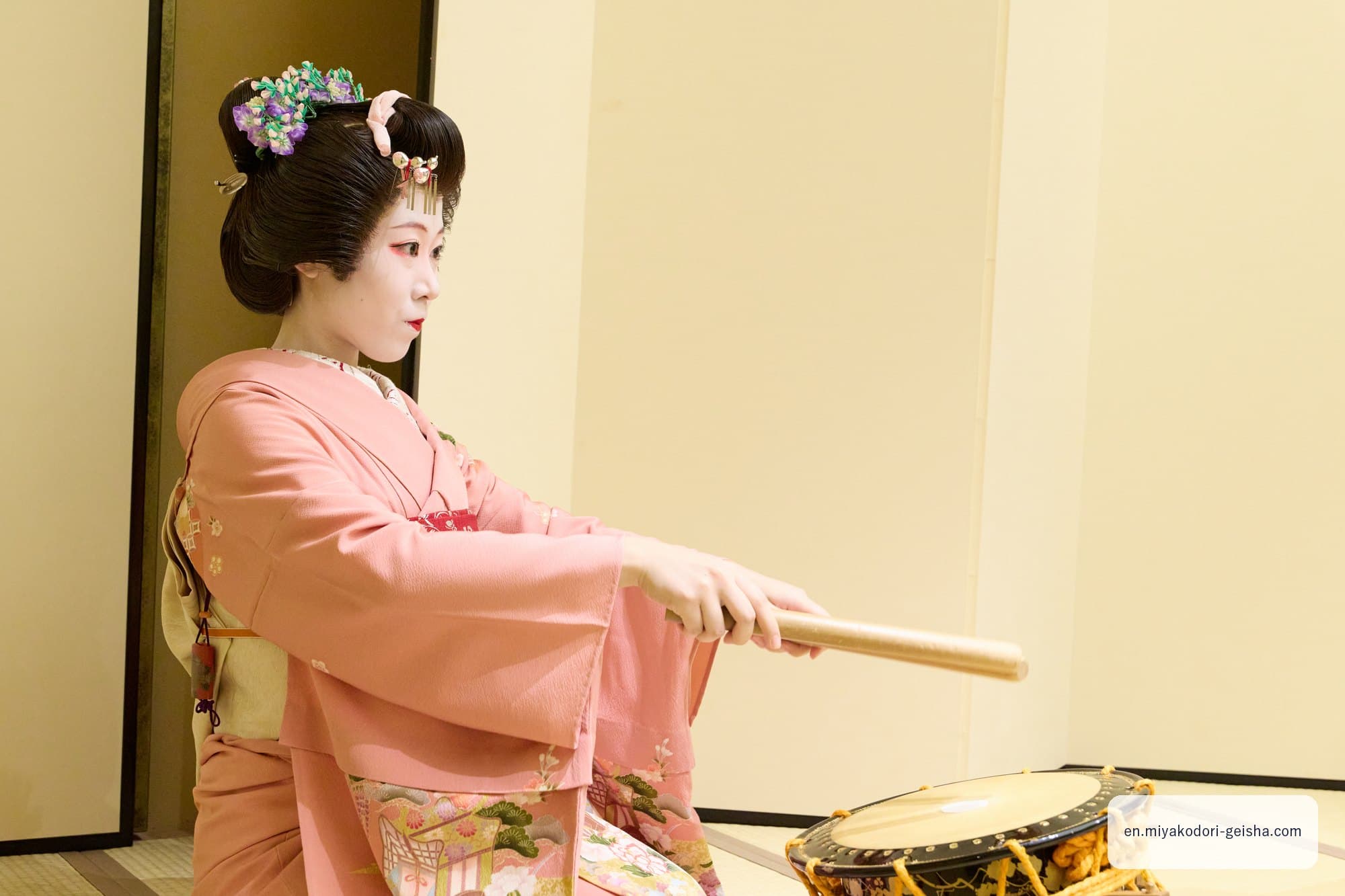
A geisha strikes the drum with her stick 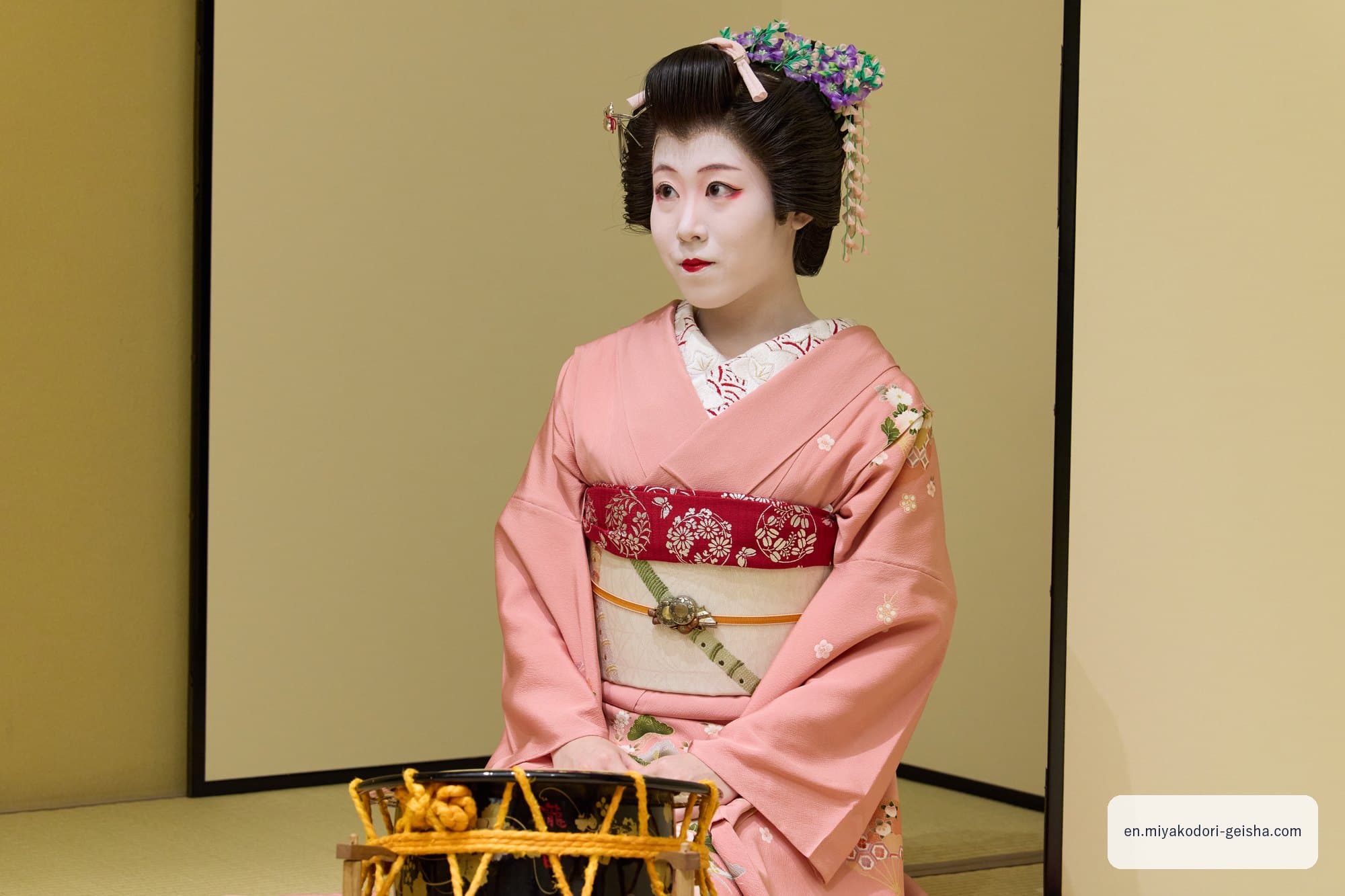
A geisha kneels at the drum 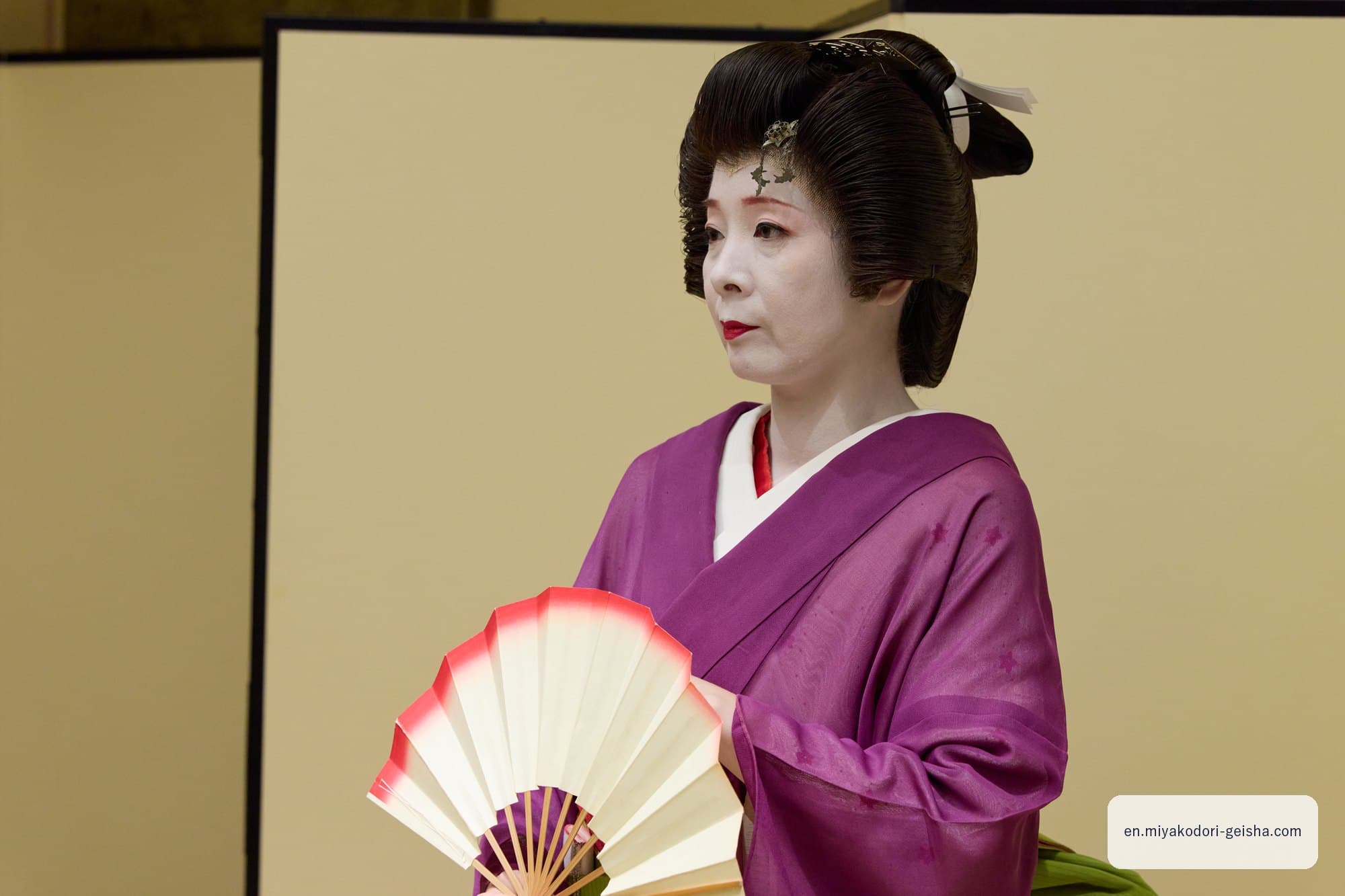
Profile of a geisha holding a red-and-white fan 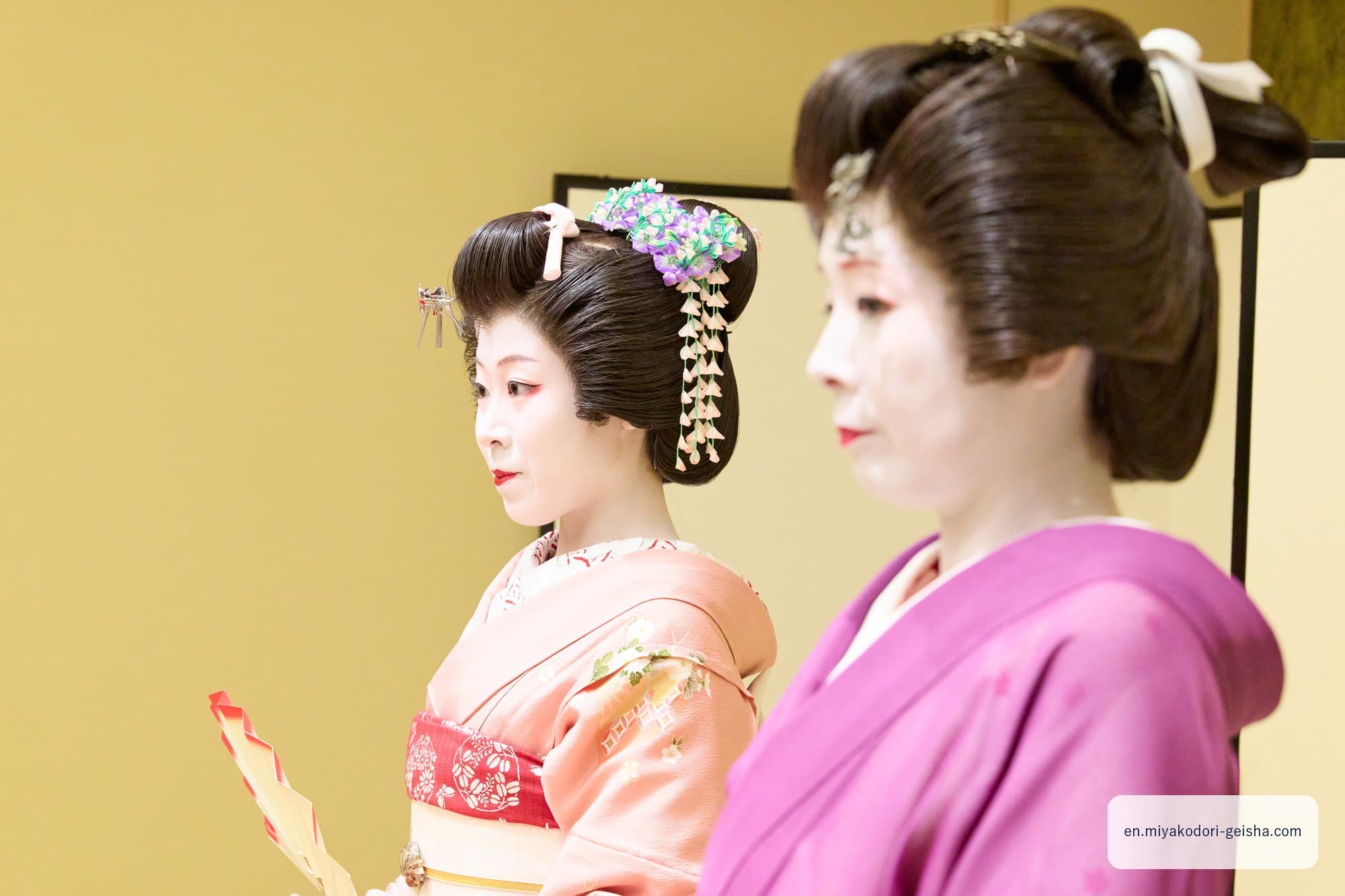
Two geisha side by side: hair ornaments and traditional Japanese hairstyles 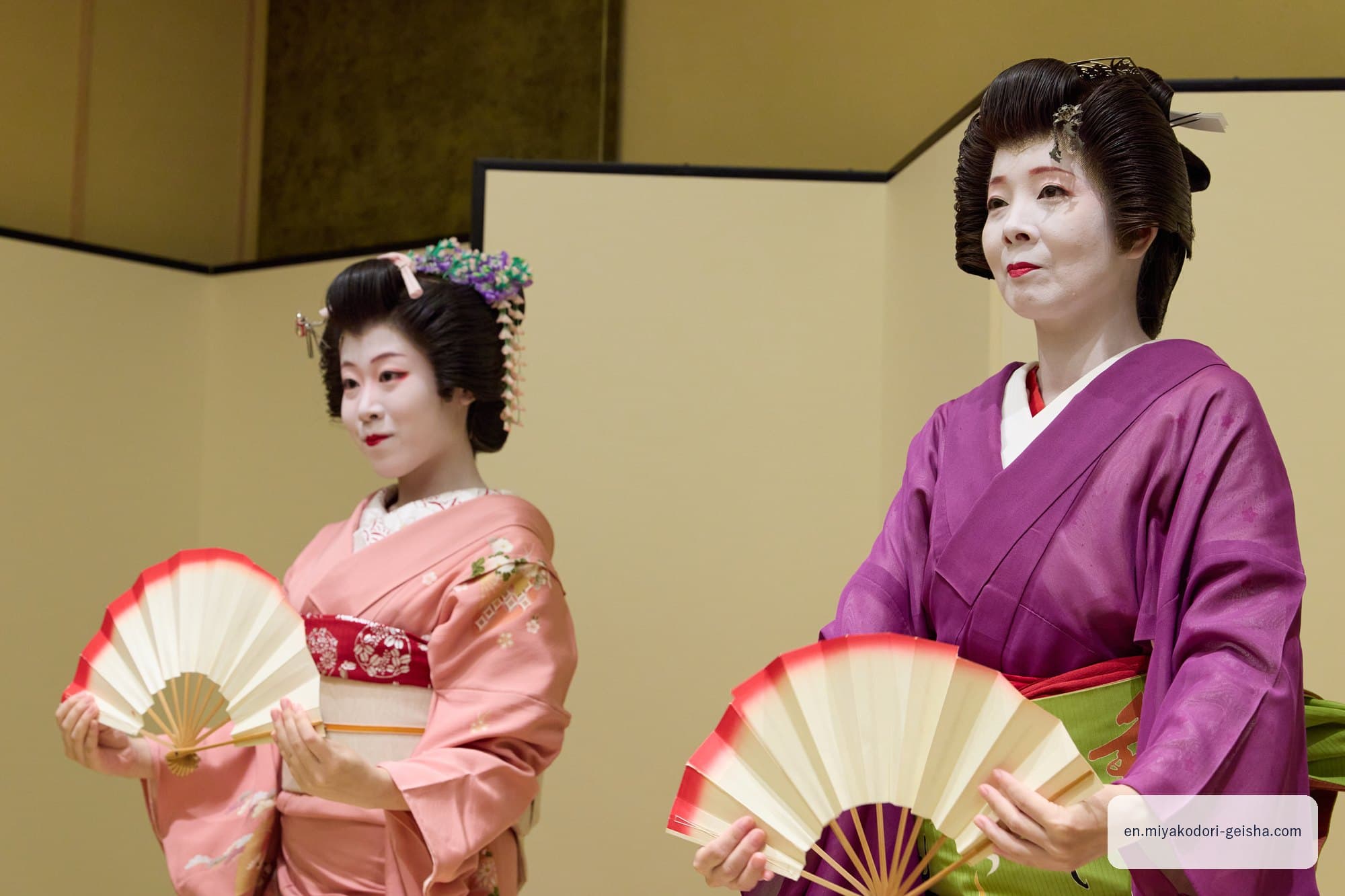
Two geisha stand together with open fans 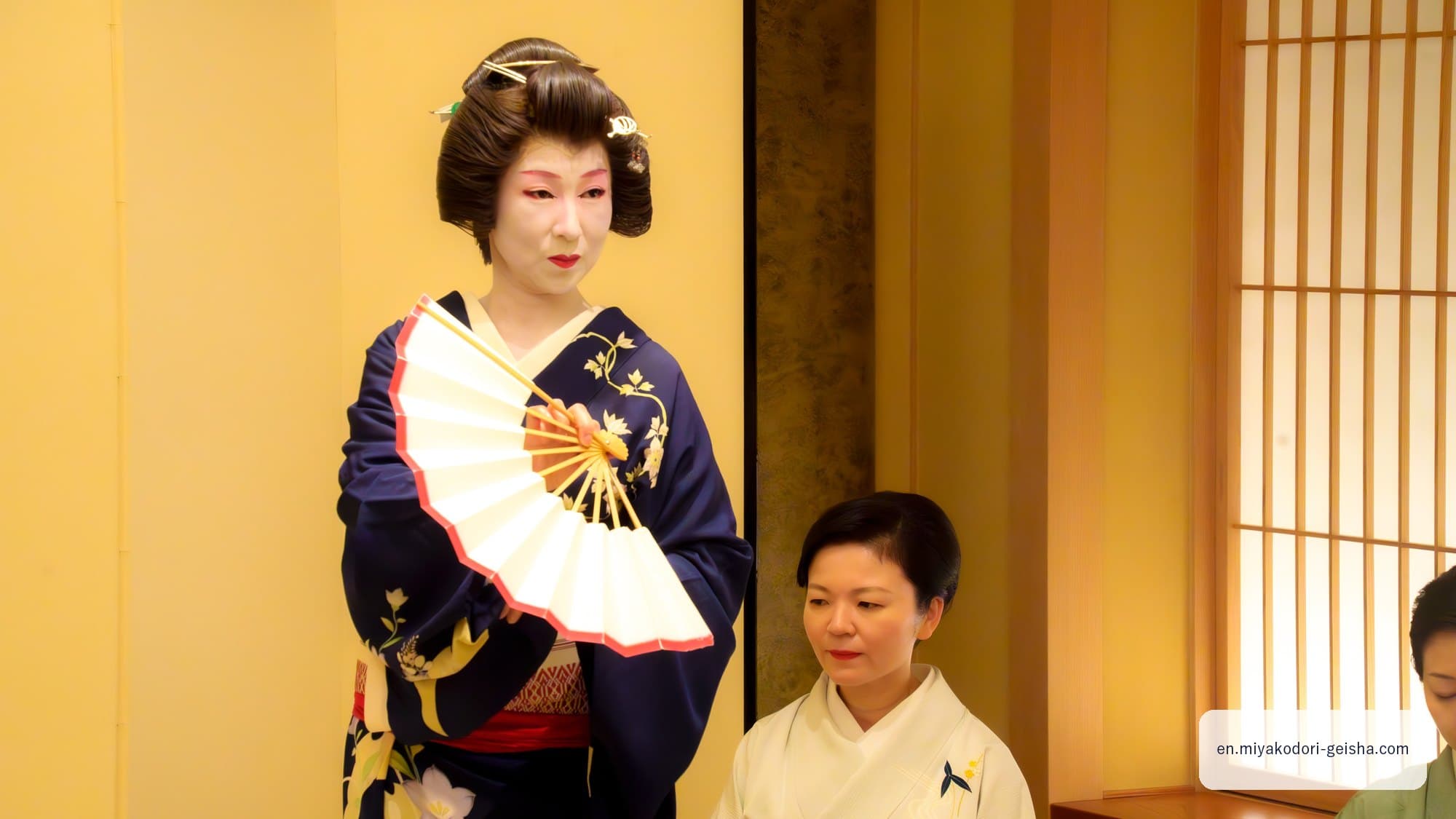
A geisha dances with an open fan 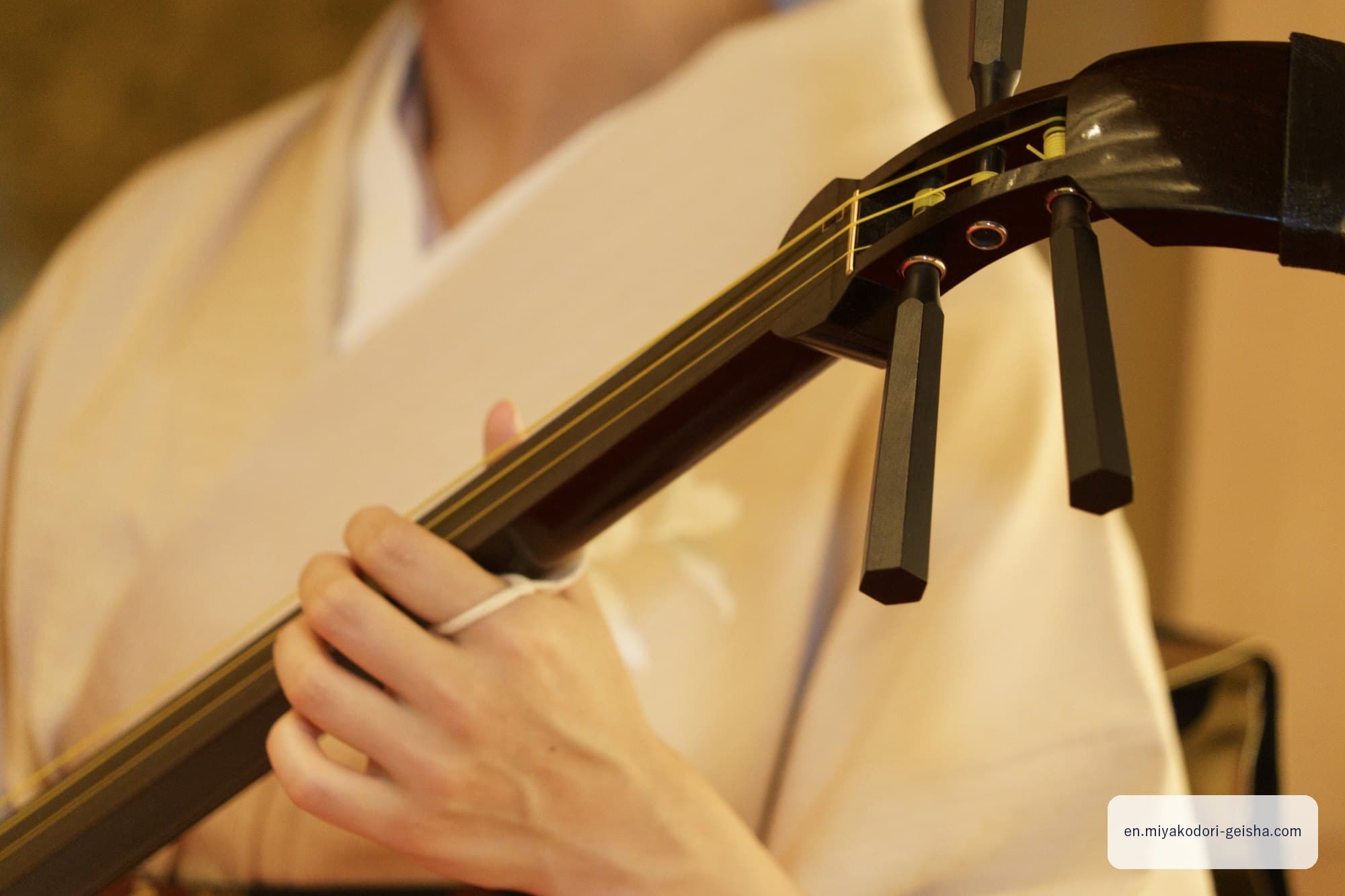
Close view of a shamisen neck and tuning pegs 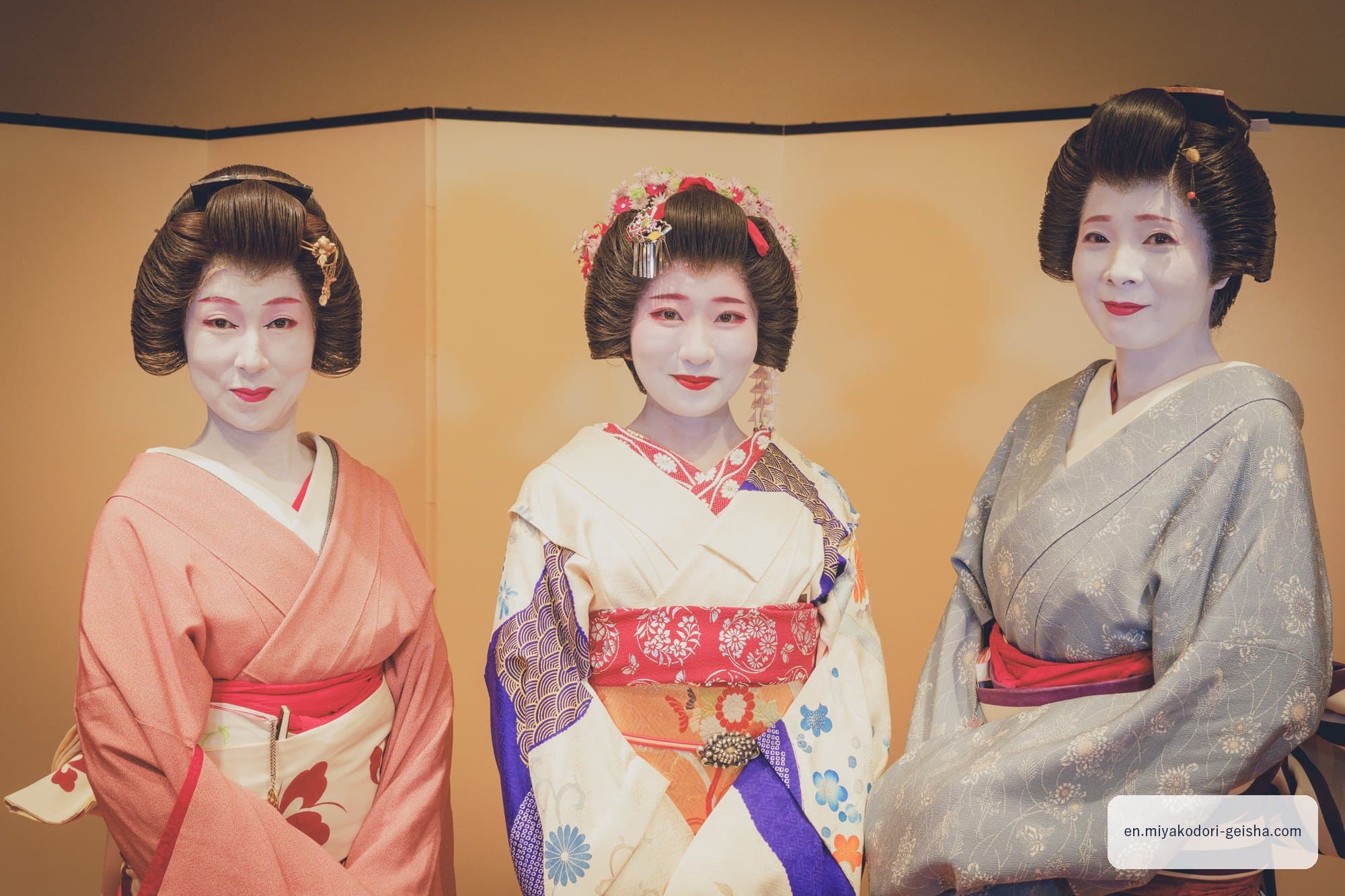
Geisha of Asakusa
Ozashiki games 14
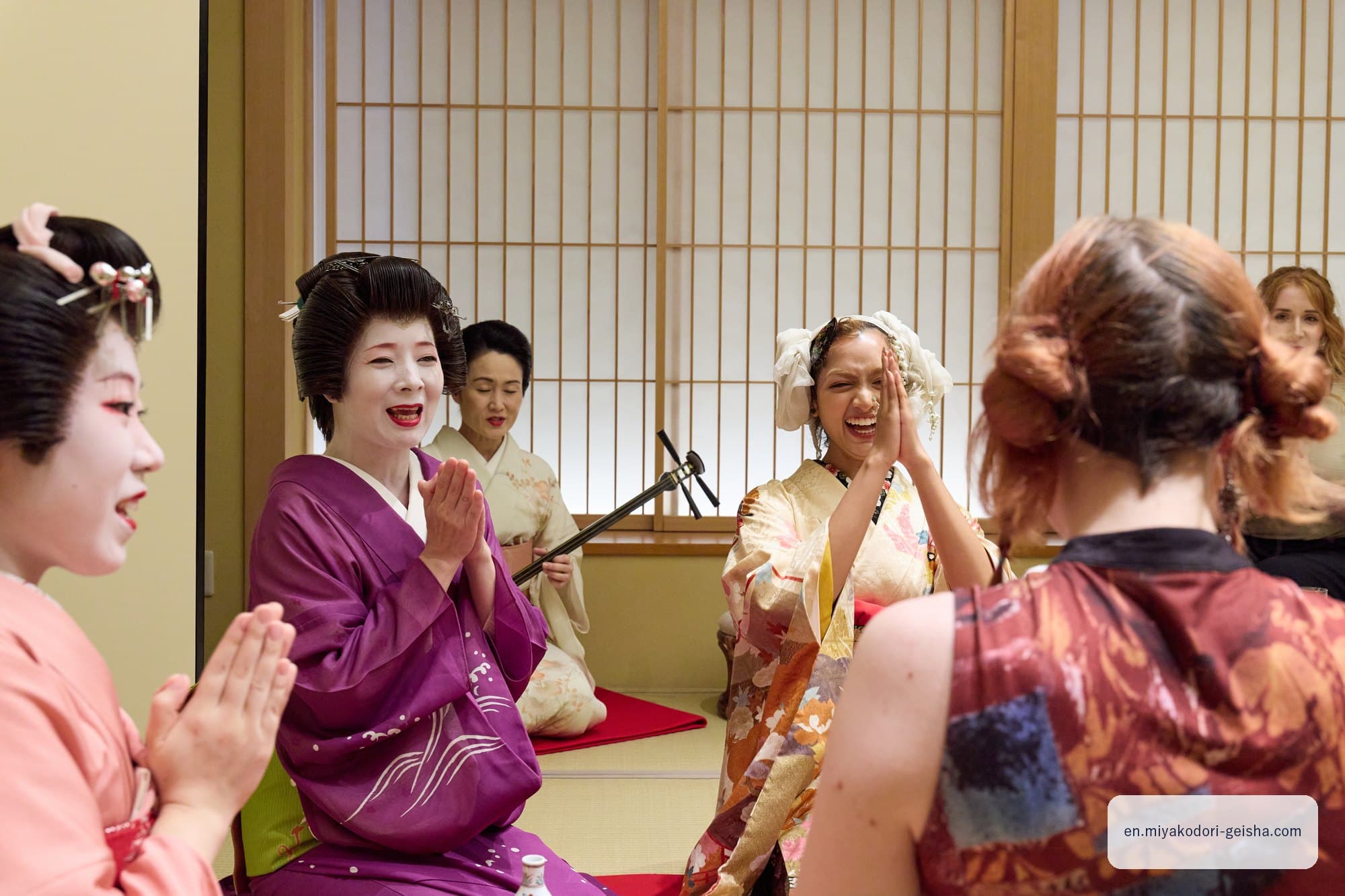
The moment a round of Konpira Fune Fune is decided: geisha and guests laugh together 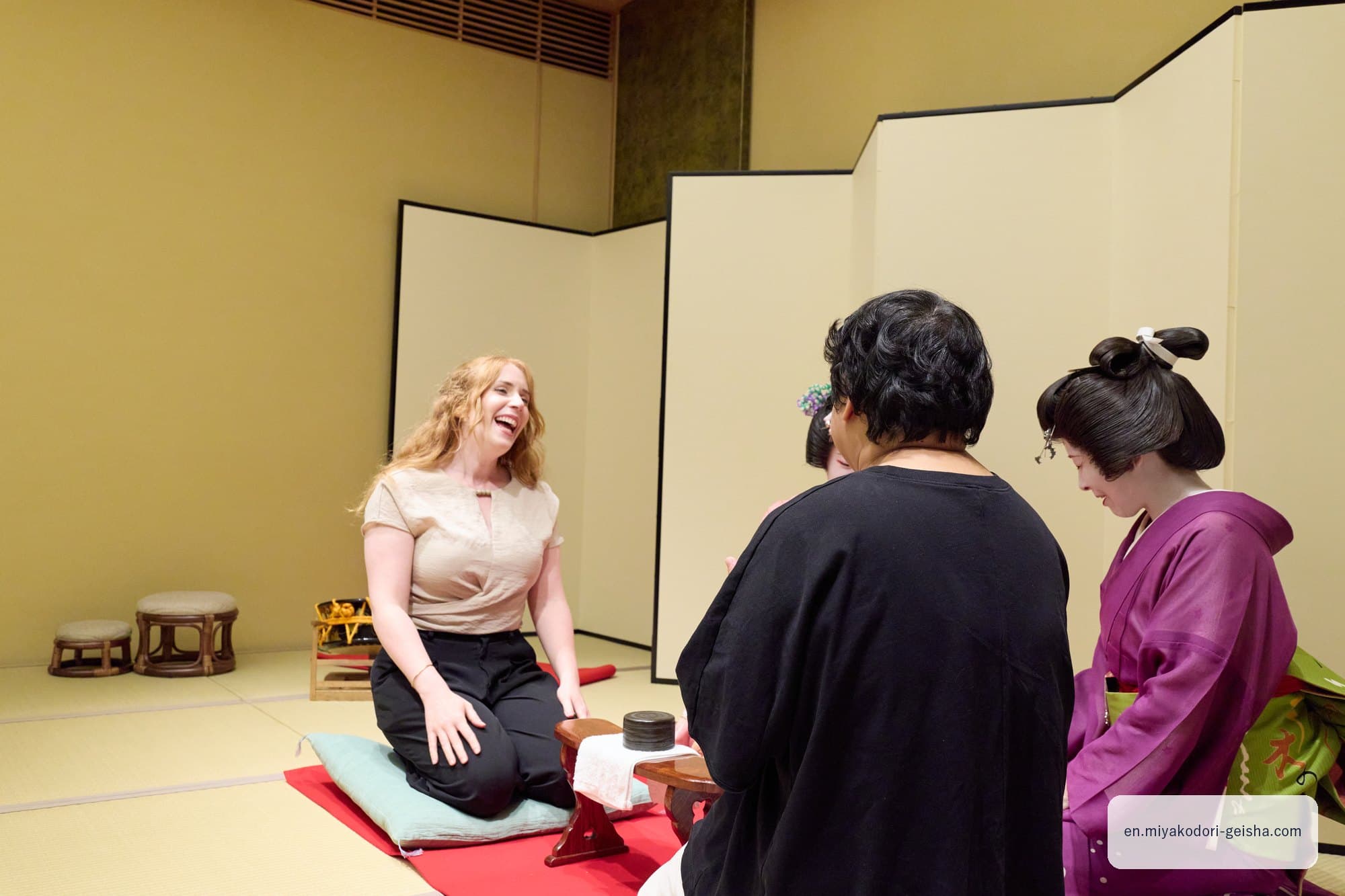
Konpira Fune Fune in front of a folding screen; the guest and the geisha both burst out laughing 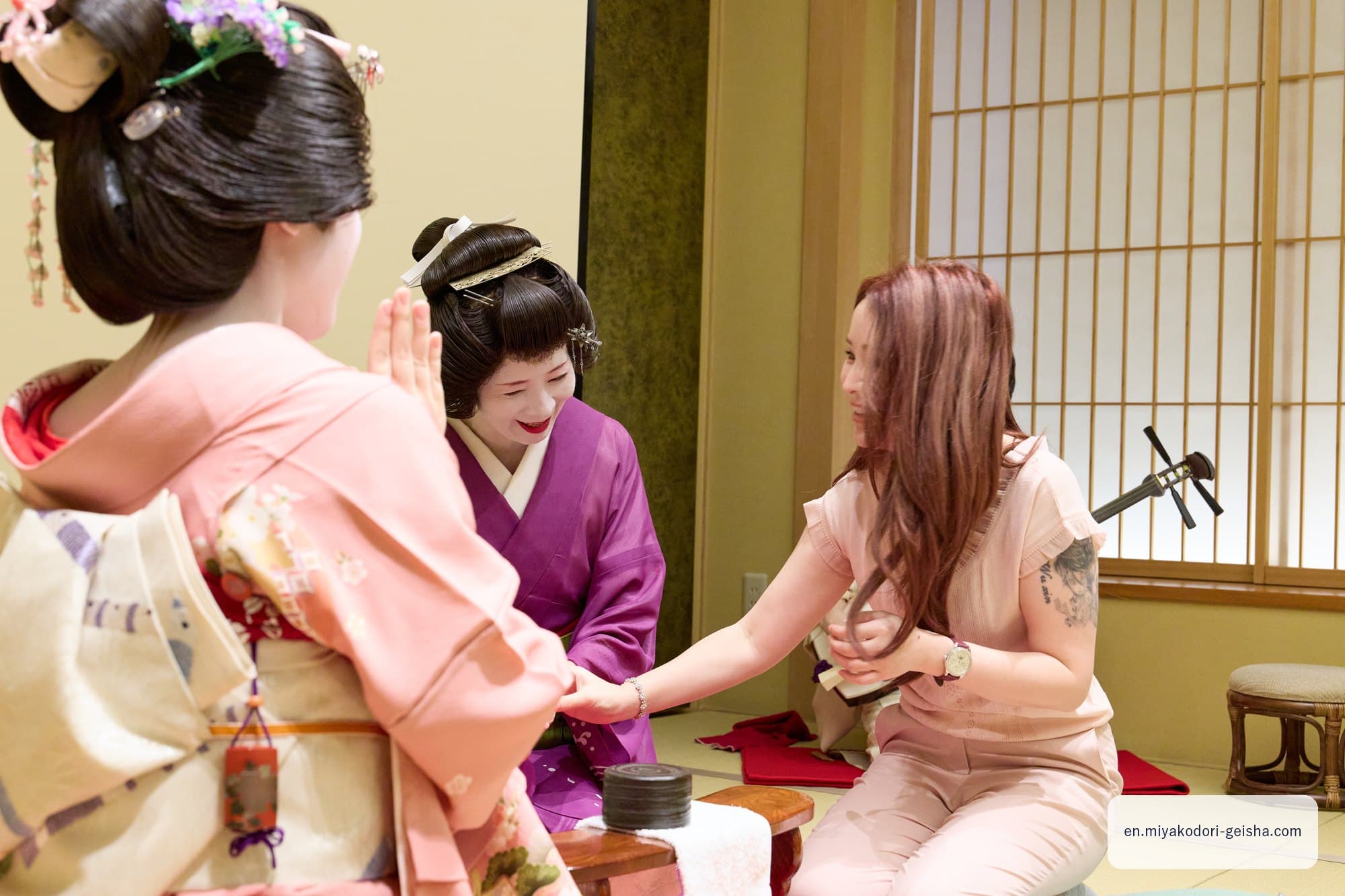
Hands meet over the table in Konpira Fune Fune 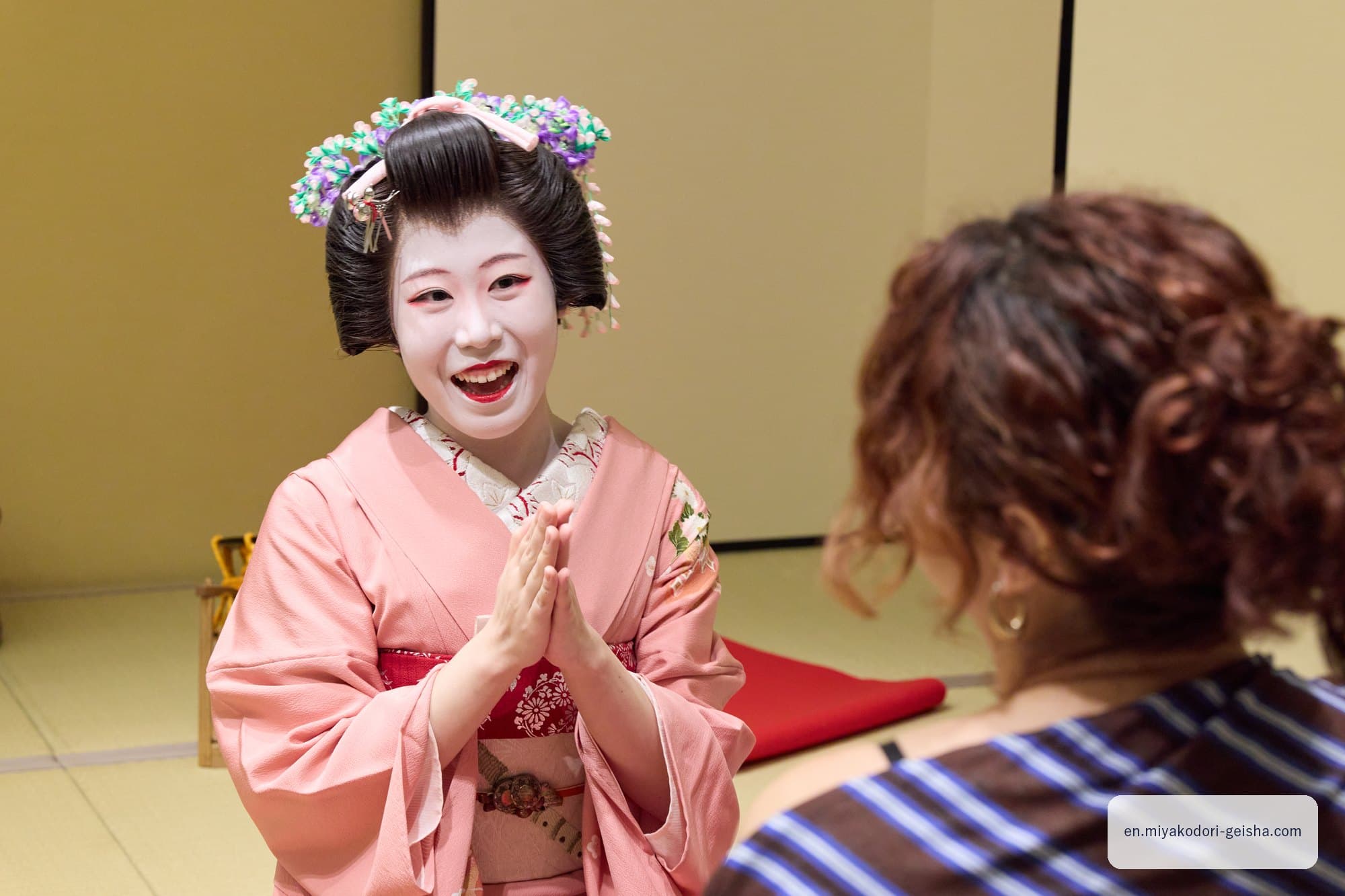
A geisha, palms together and smiling, faces her guest 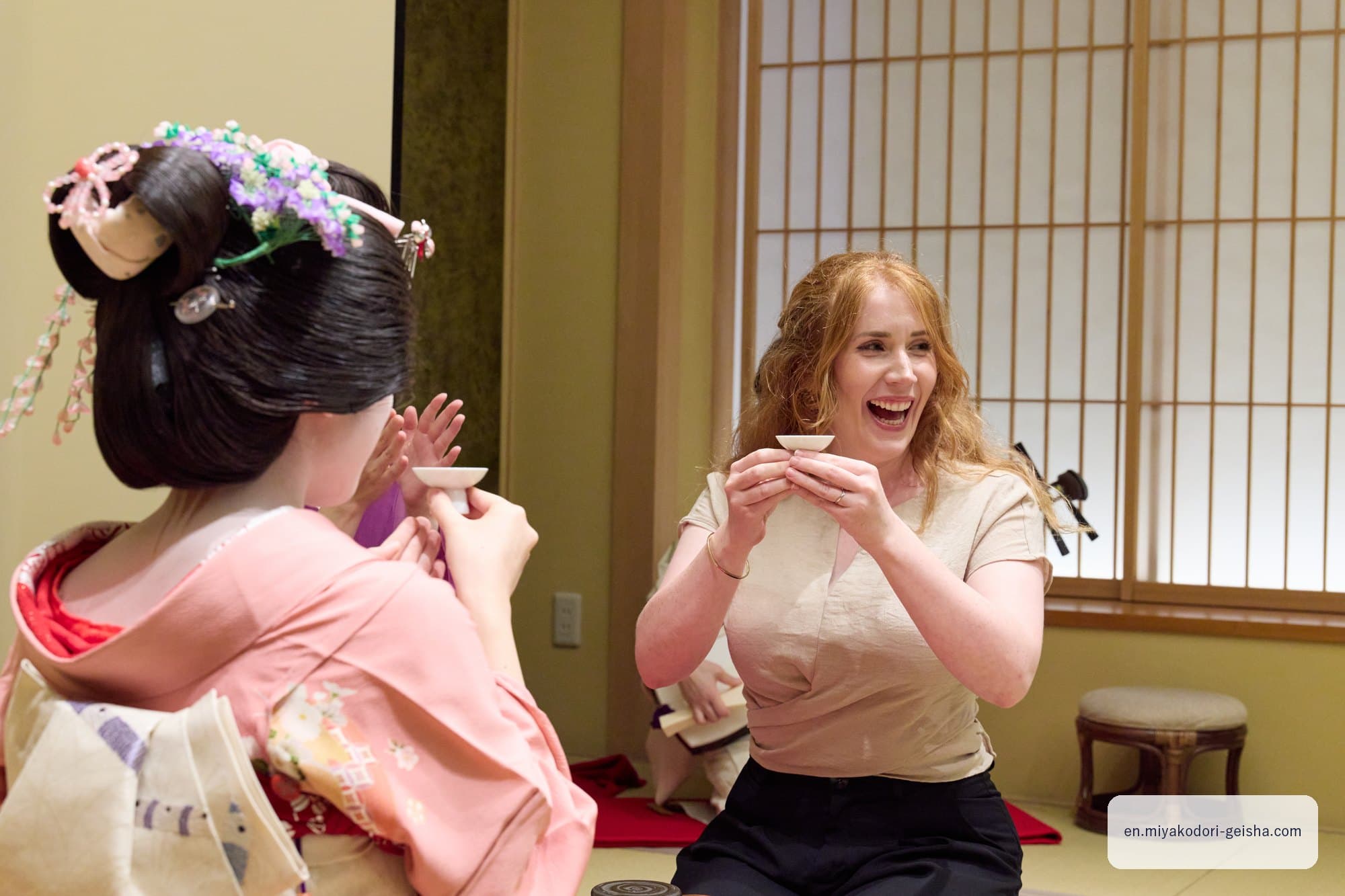
A guest raises a sake cup and laughs with a geisha 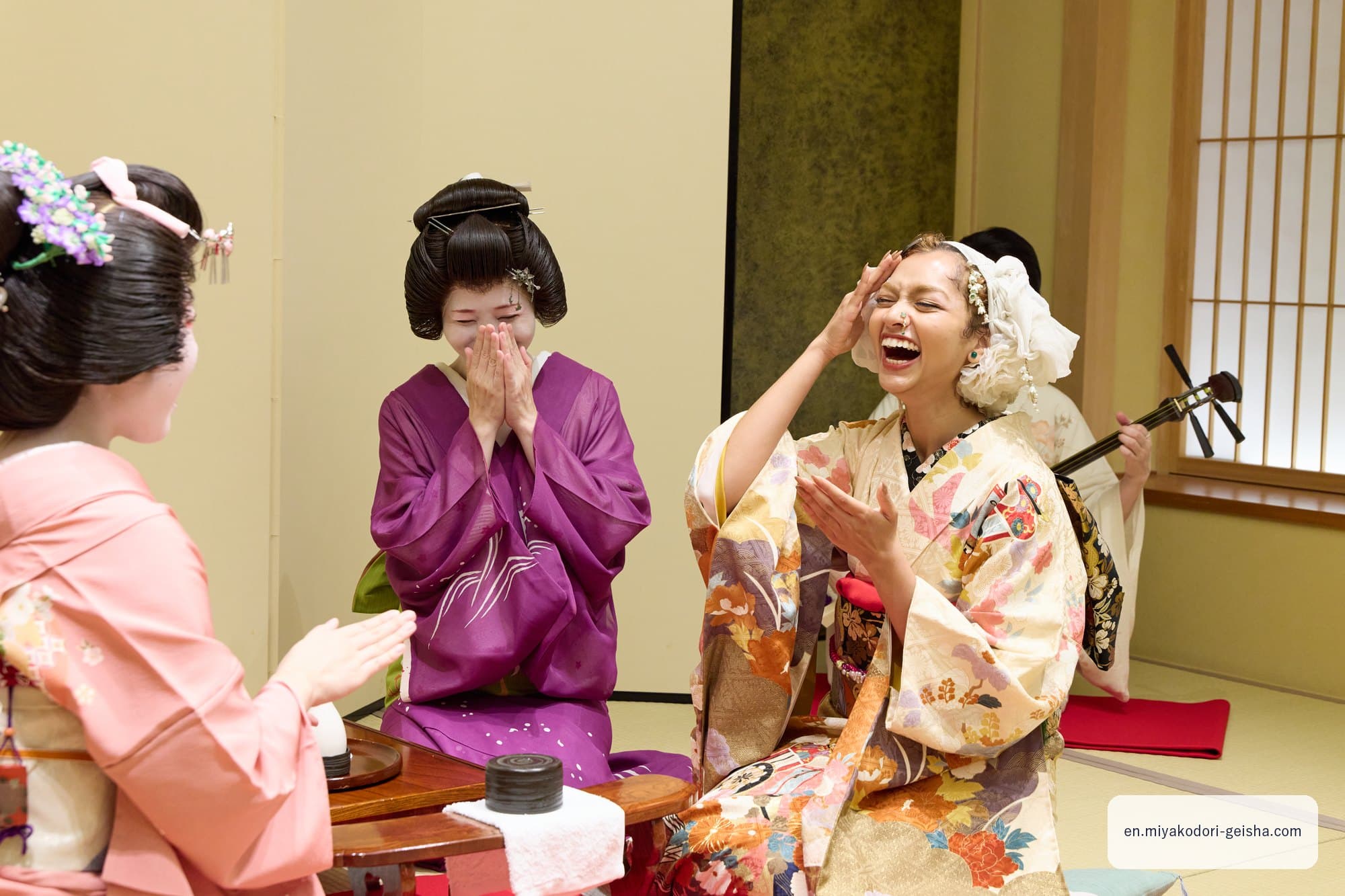
A guest laughs at losing Konpira Fune Fune while a geisha hides her laughter 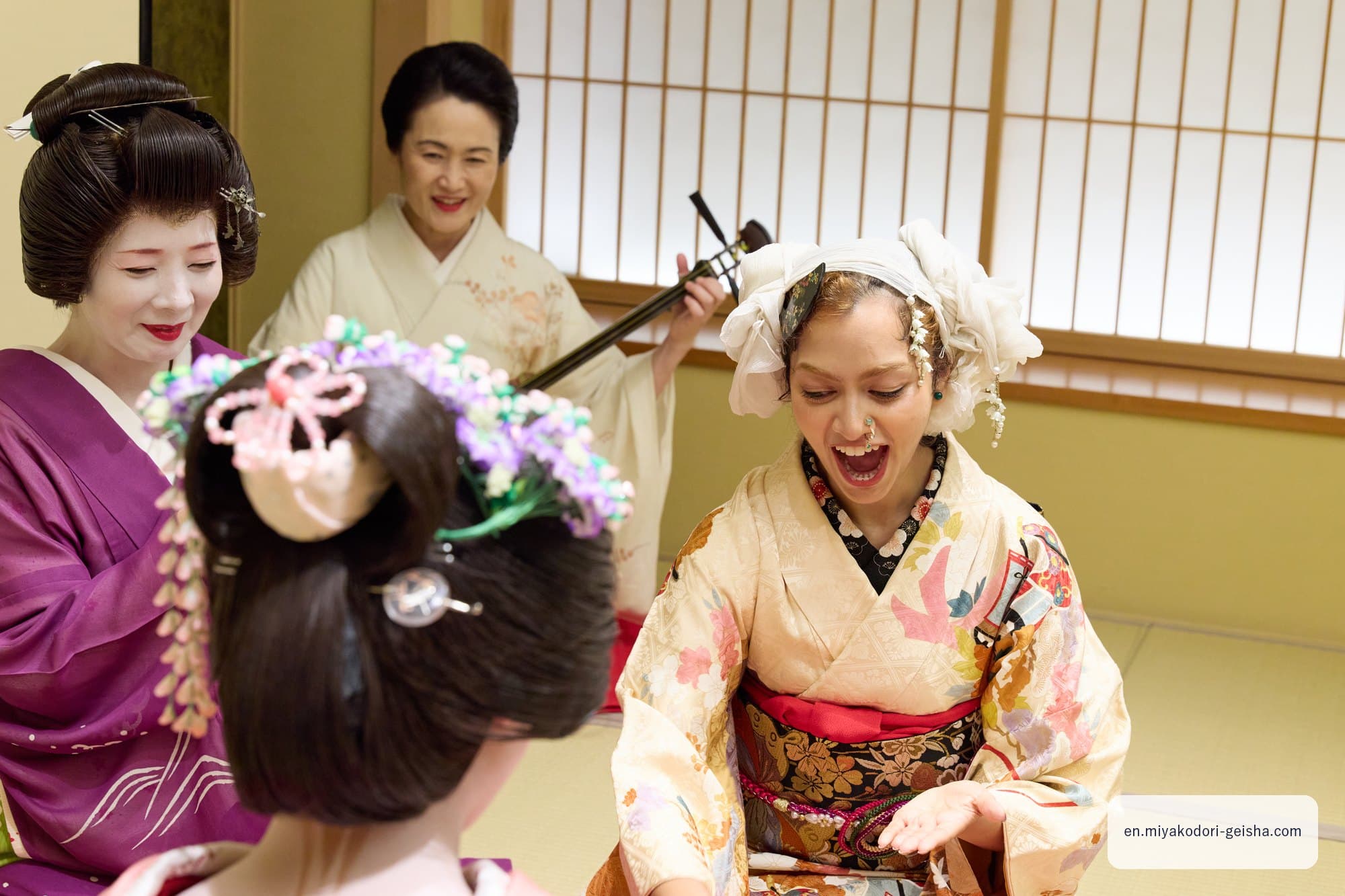
A guest cries out with laughter at the moment she loses; behind, the jikata plays the shamisen 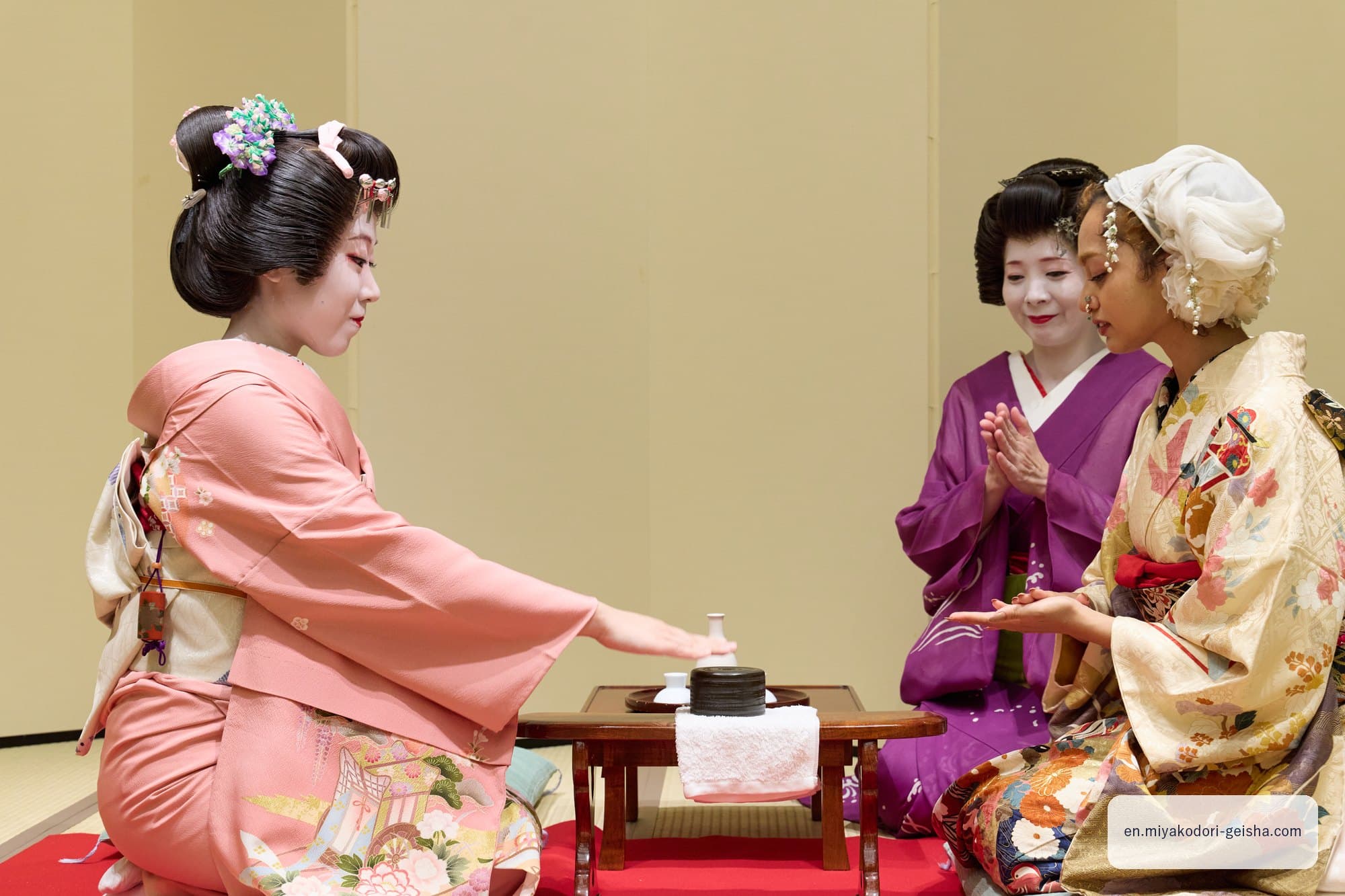
A geisha and a guest face each other across the table in Konpira Fune Fune 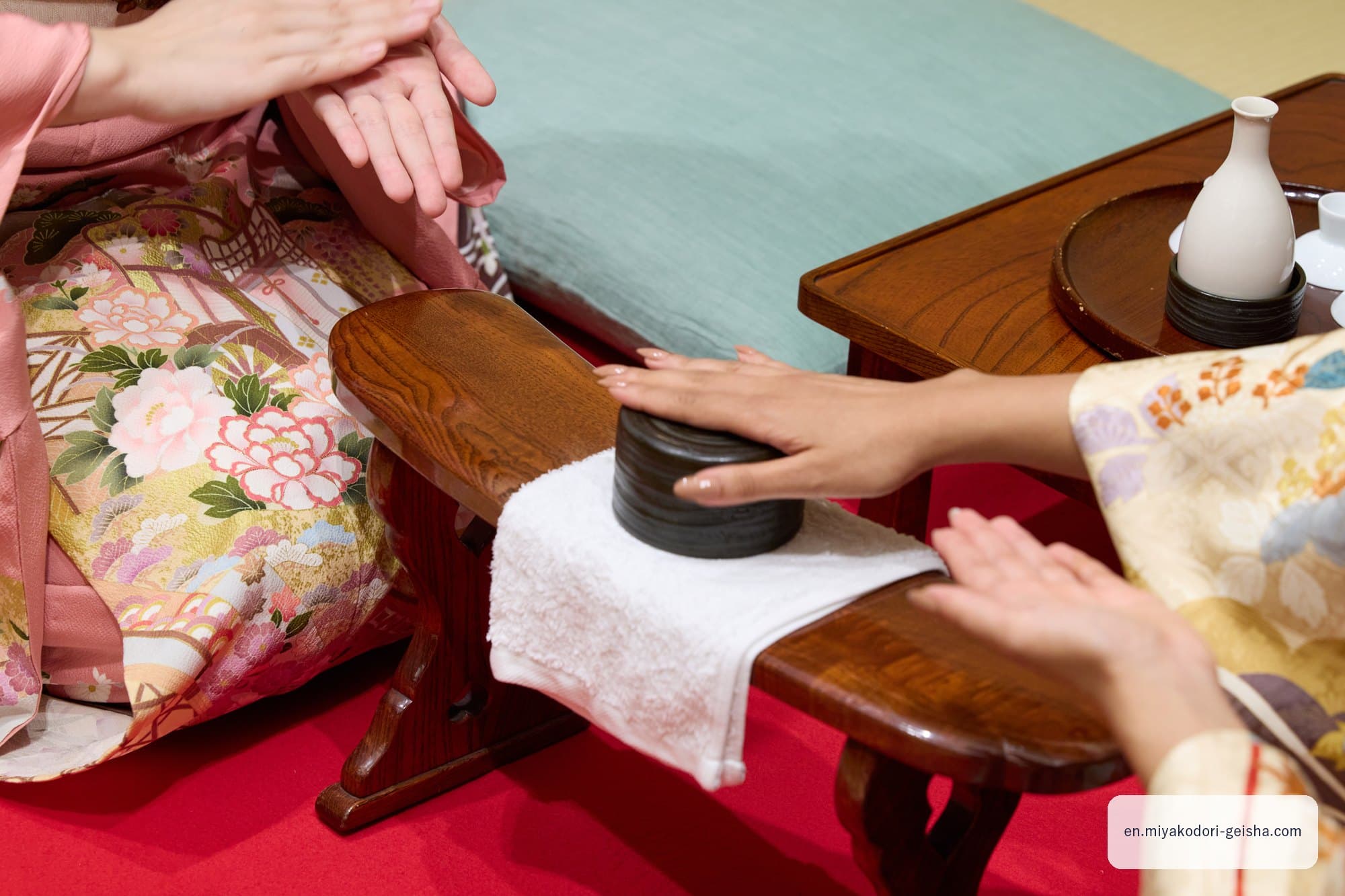
Close-up of Konpira Fune Fune: players take turns reaching for the piece on the small stand 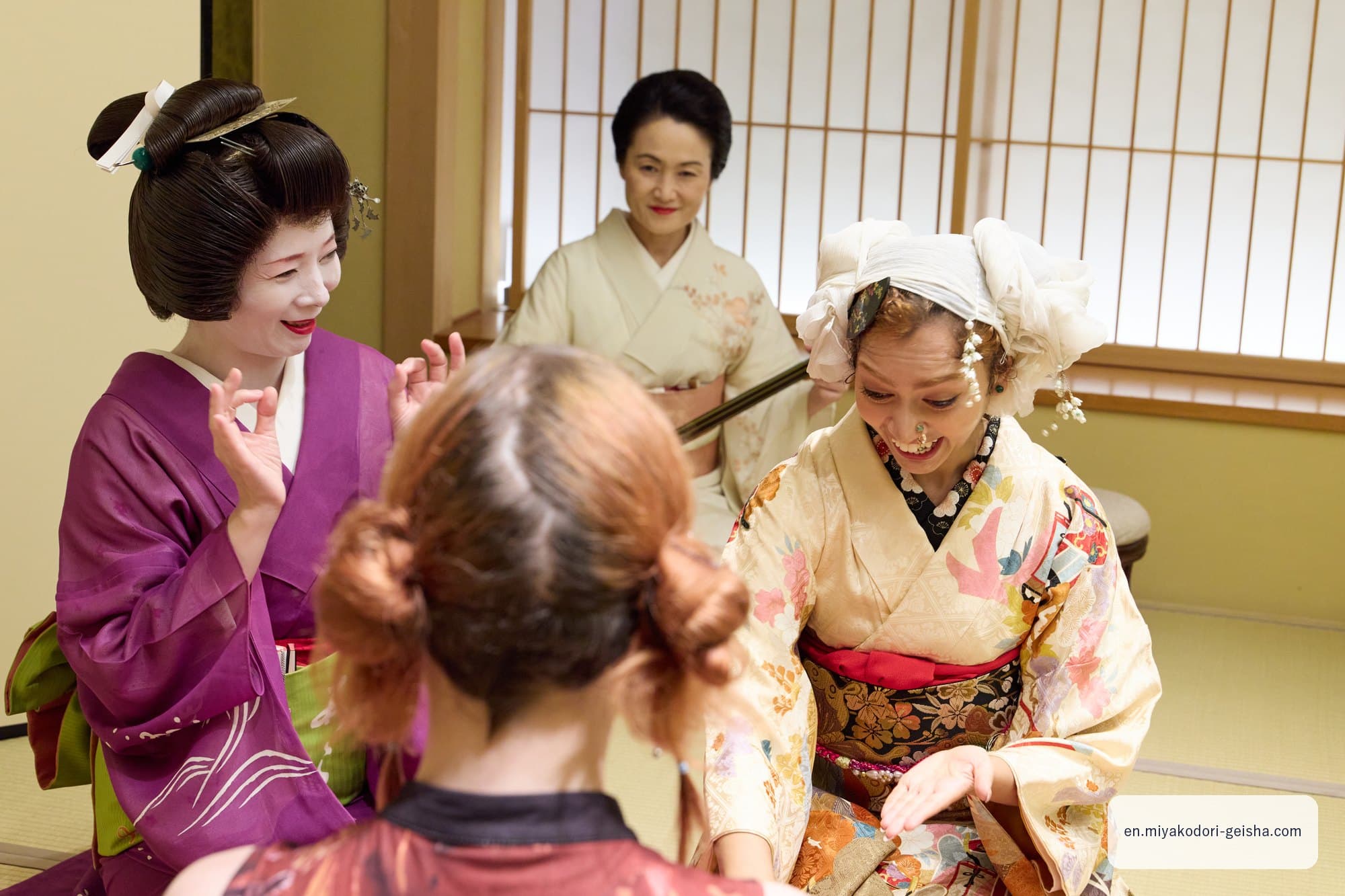
Guests laugh after losing a round; the jikata smiles as she plays 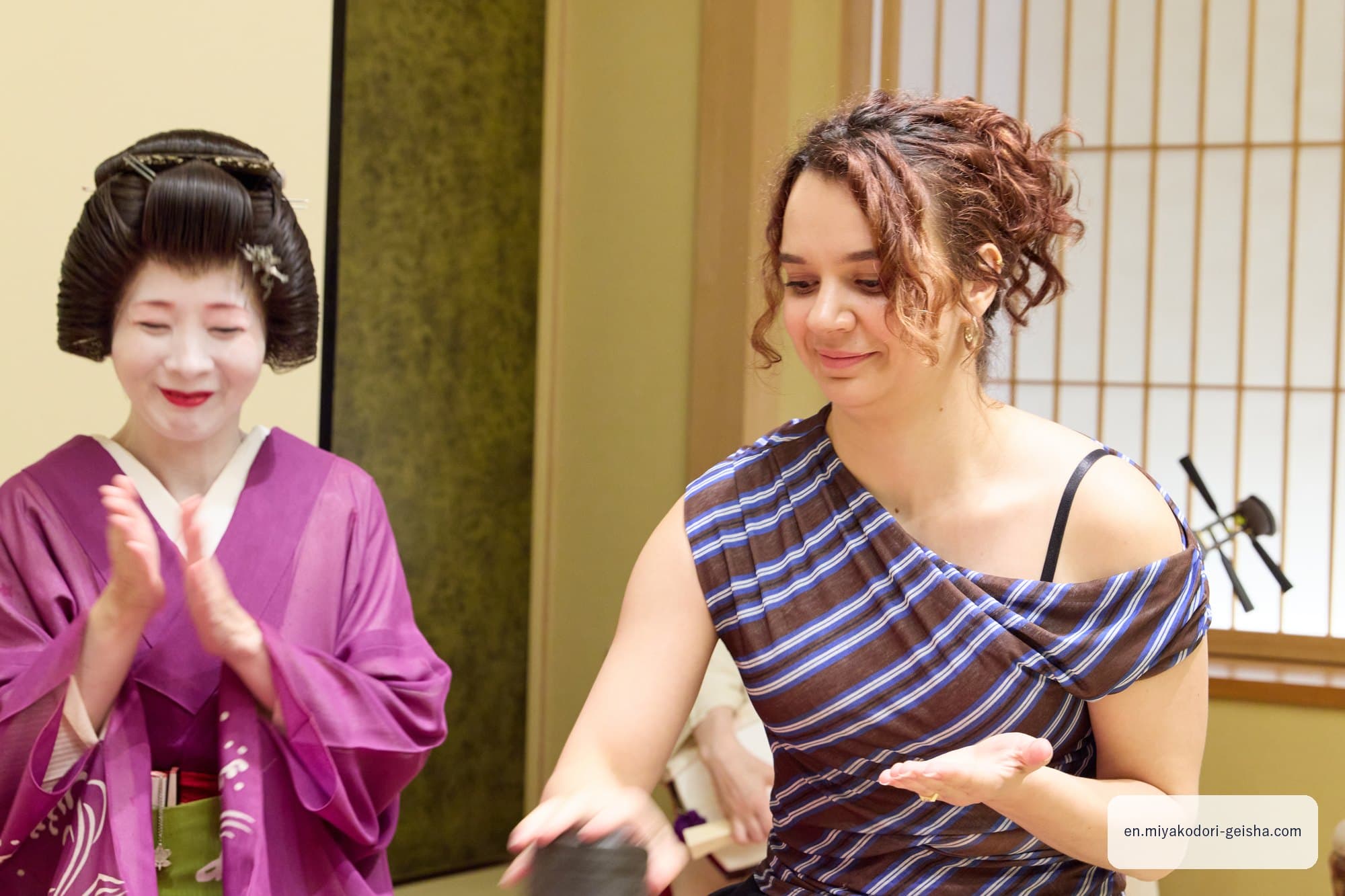
A geisha claps along as a guest joins the game 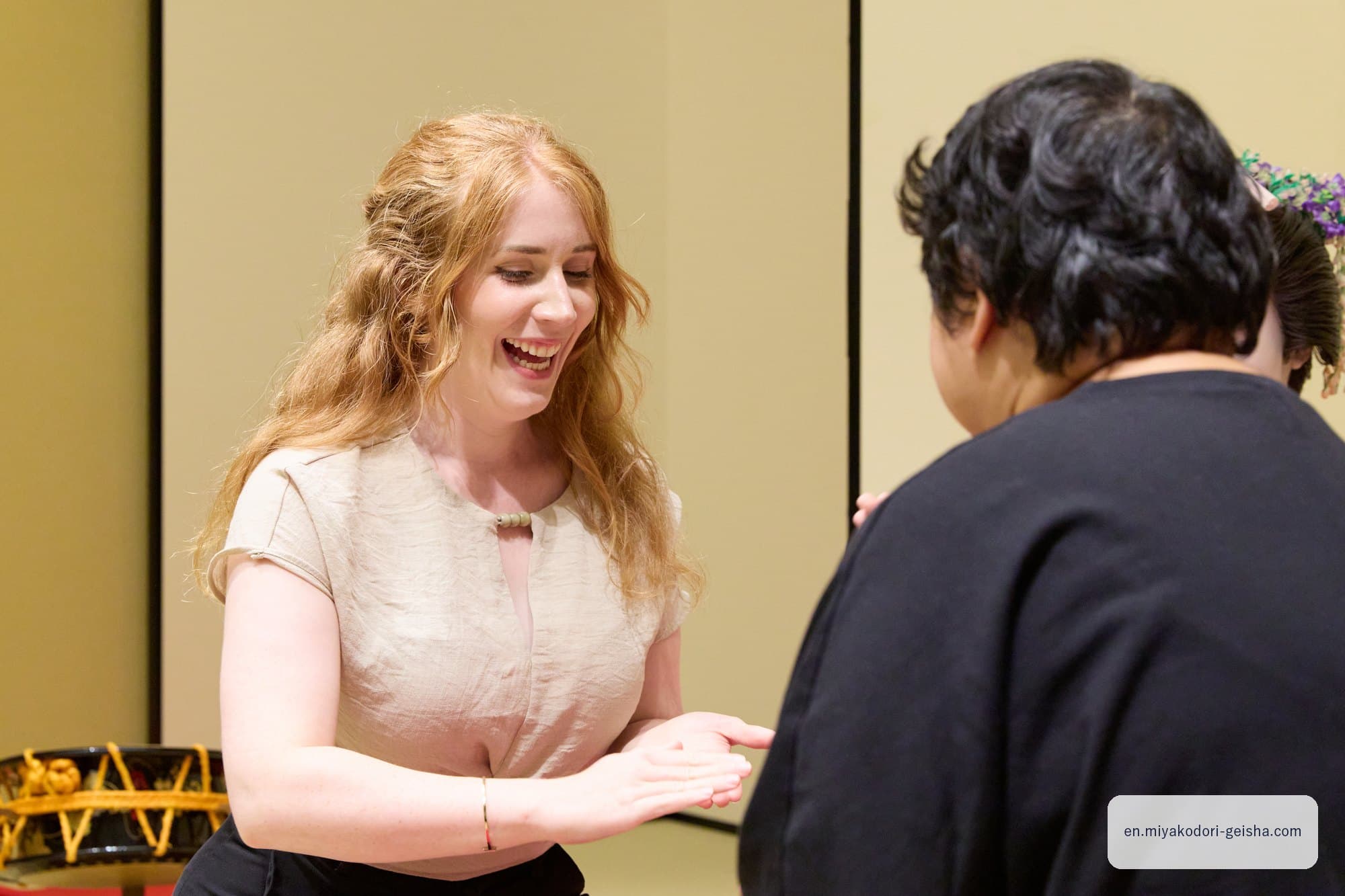
A guest, hands ready, laughs mid-game 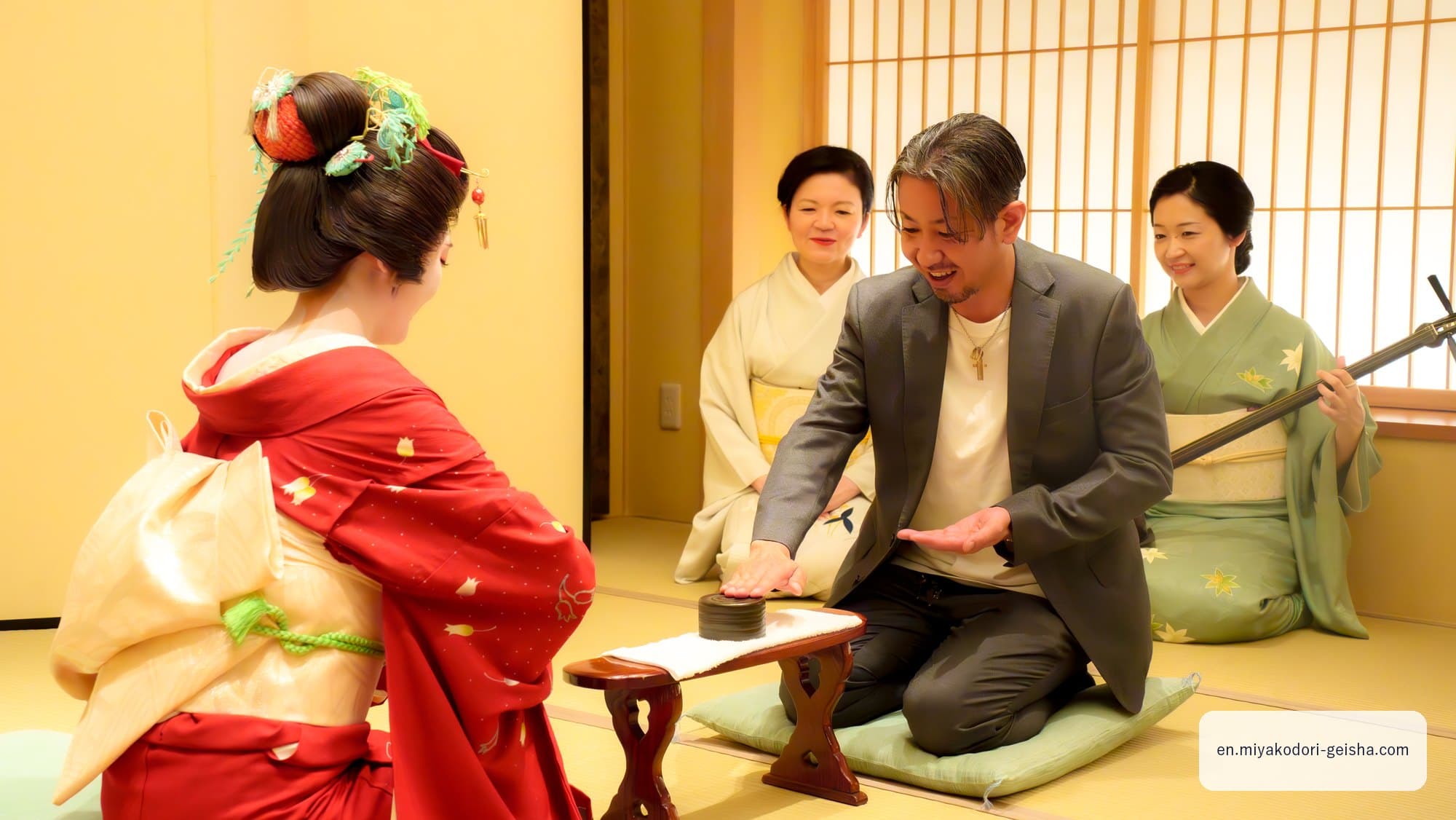
Playing Konpira Fune Fune face to face with a geisha, as the jikata plays the shamisen behind 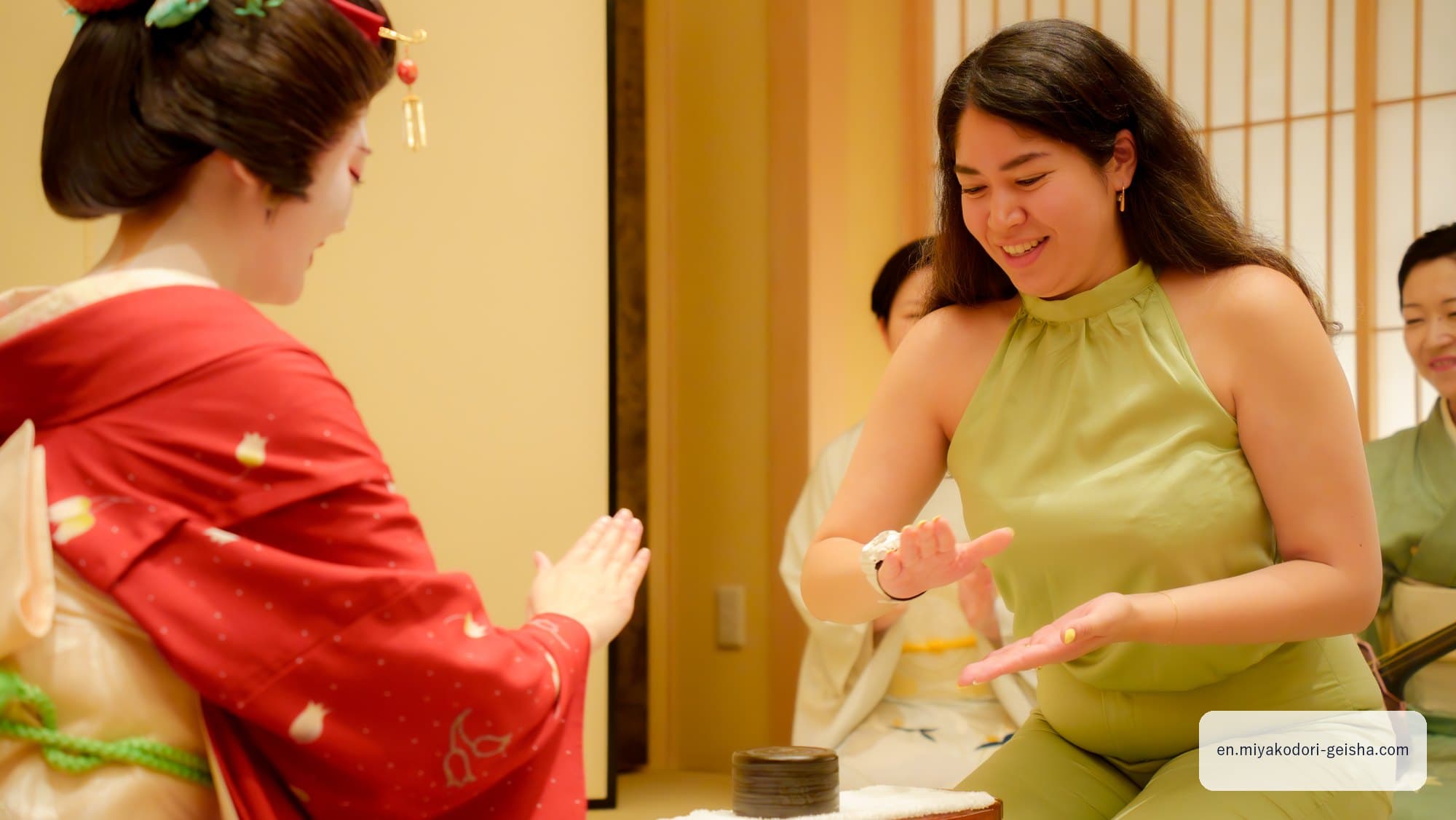
A woman laughs as she plays Konpira Fune Fune with a geisha
Guests at the ozashiki 9
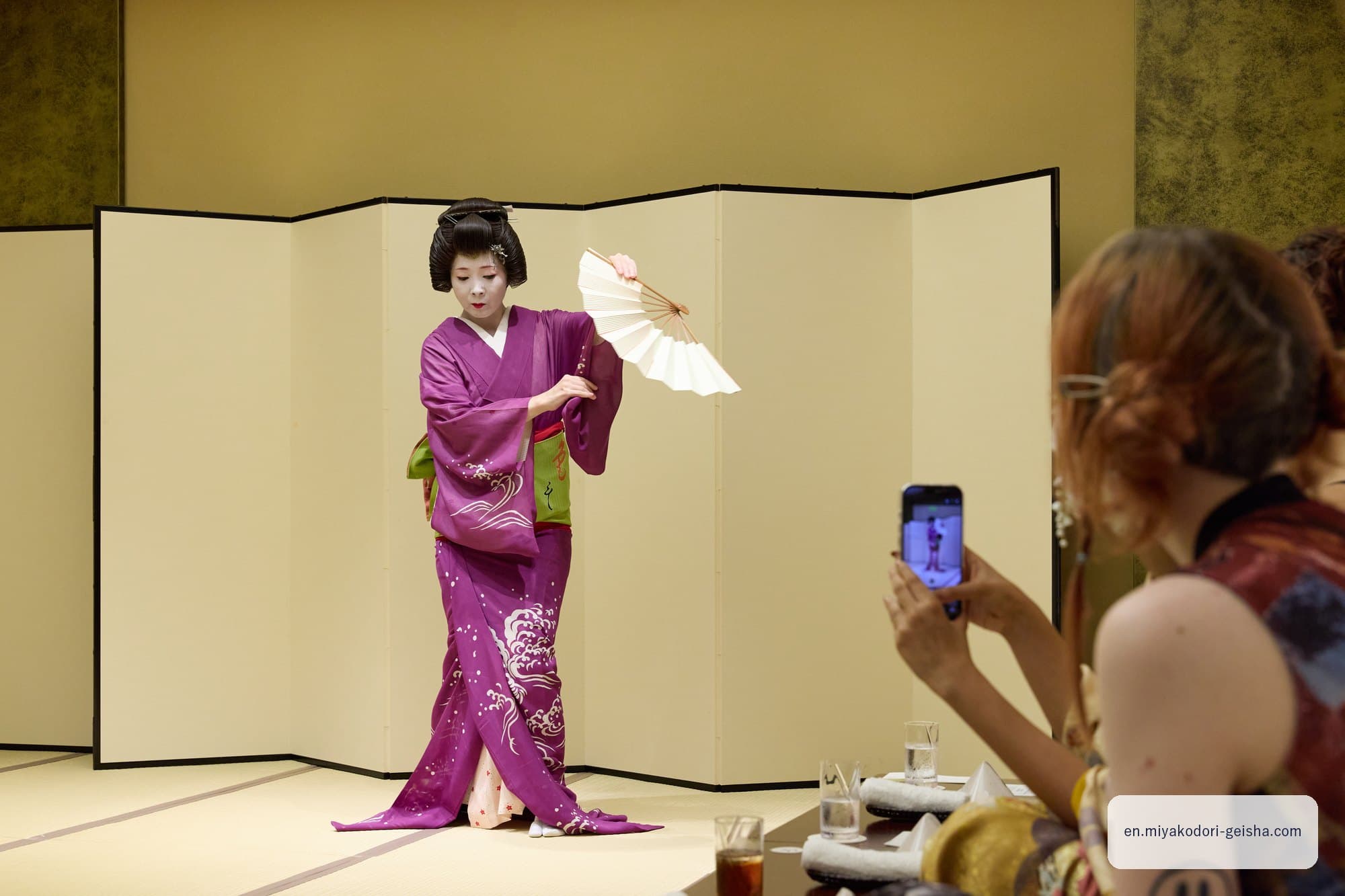
A guest films a geisha's dance on her phone 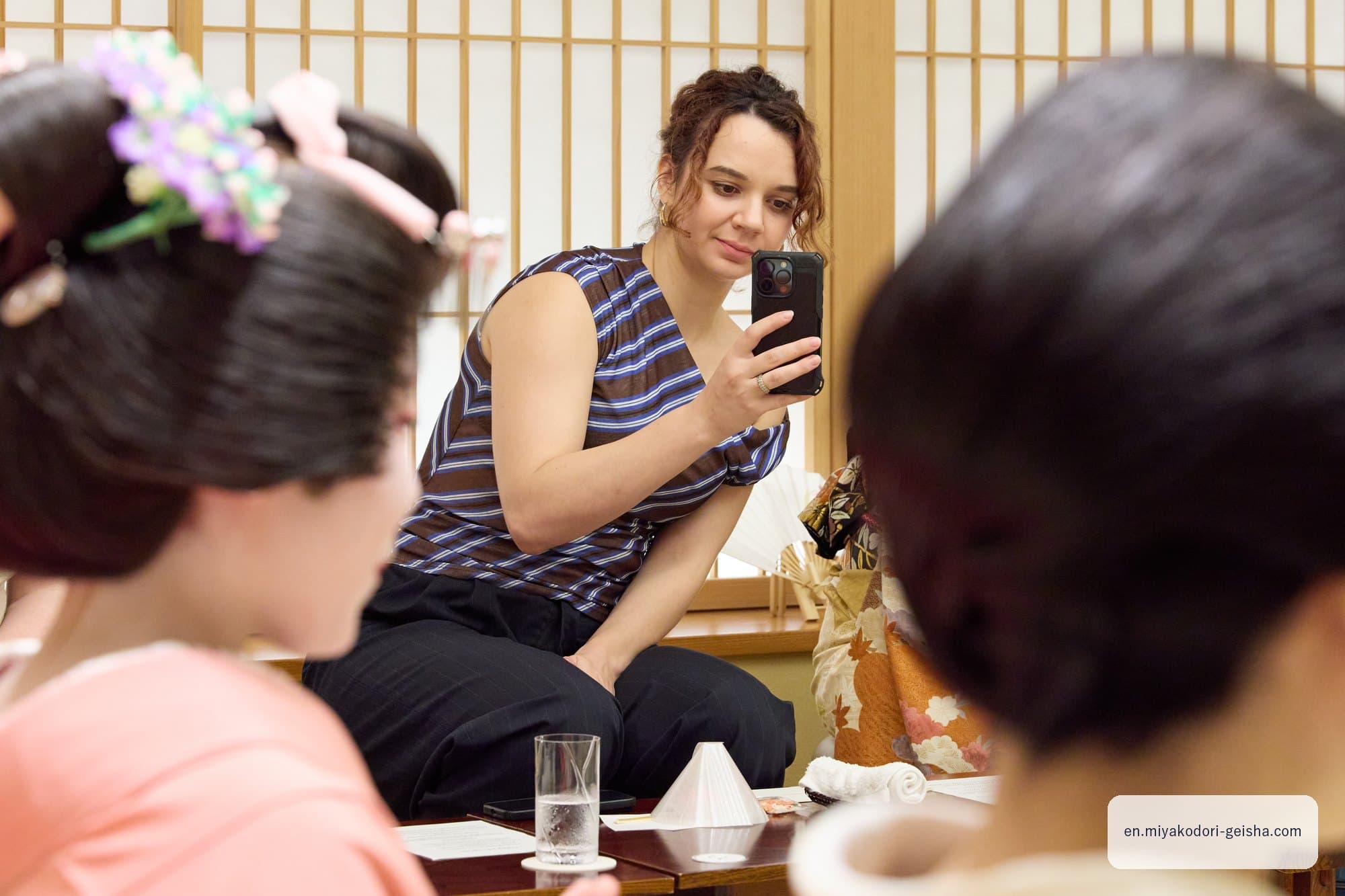
A guest takes a photo of a geisha 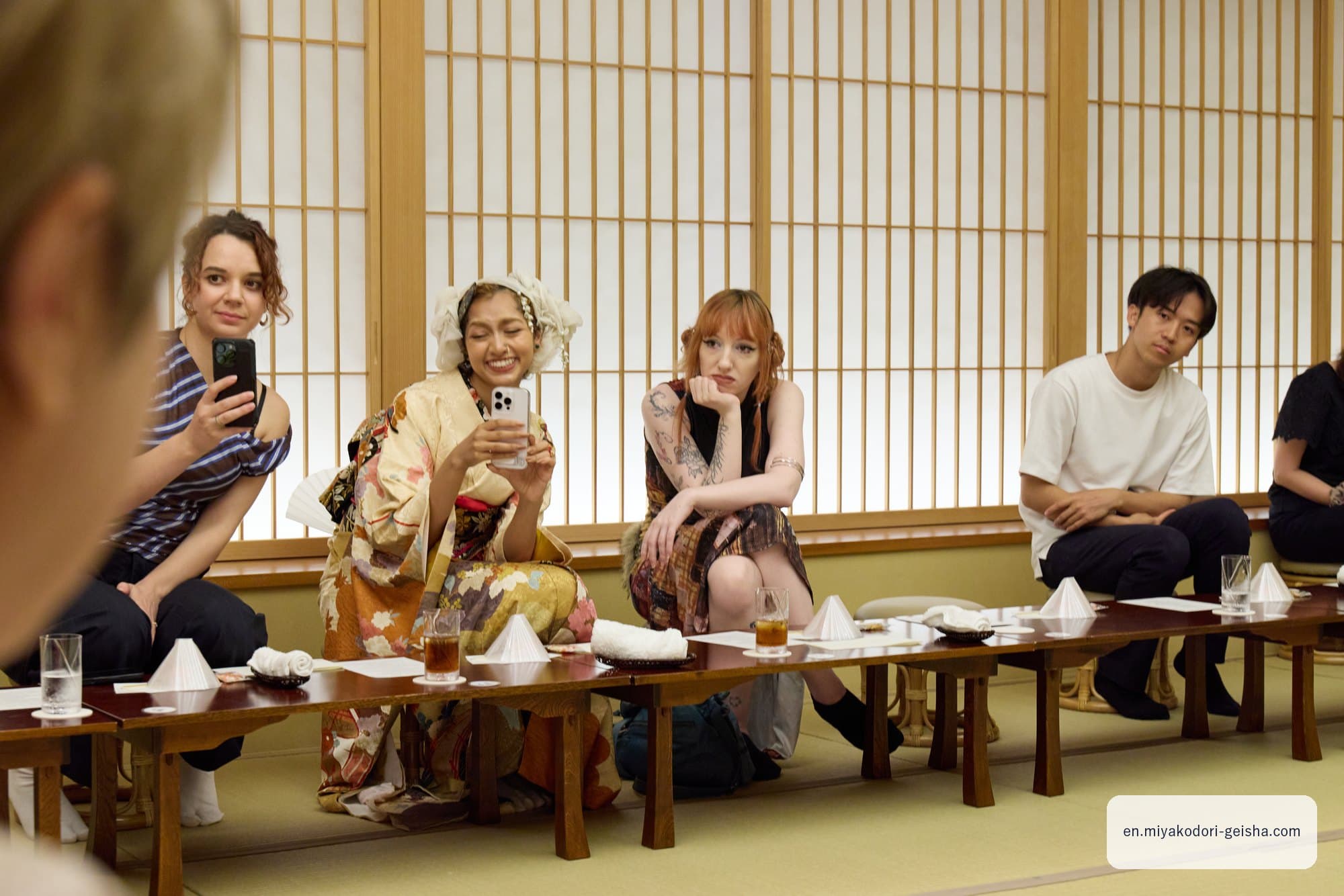
Guests seated along the low tables enjoy the performance 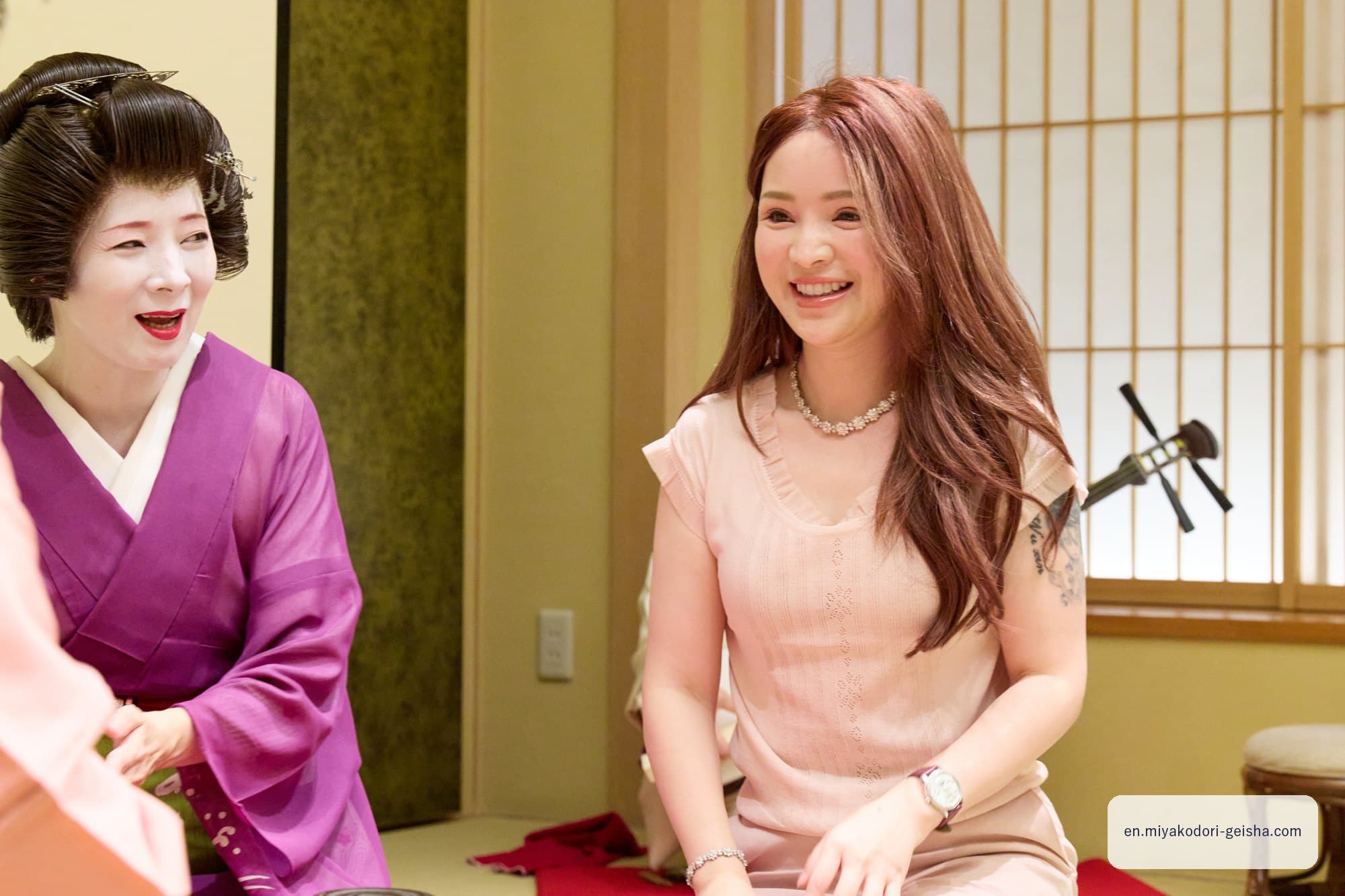
A guest and a geisha chat and smile between games 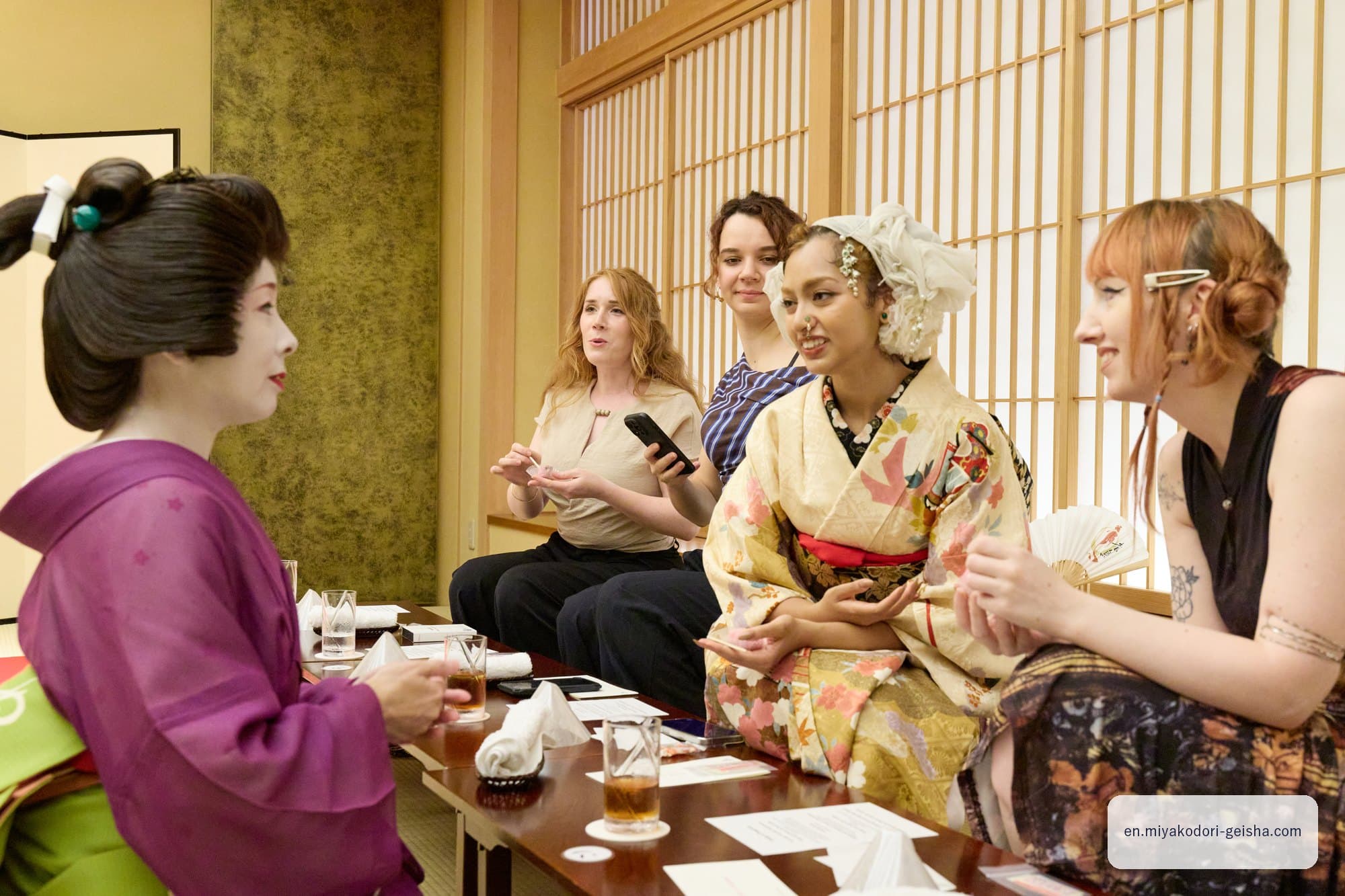
A geisha talks with guests at the table by the shoji screens 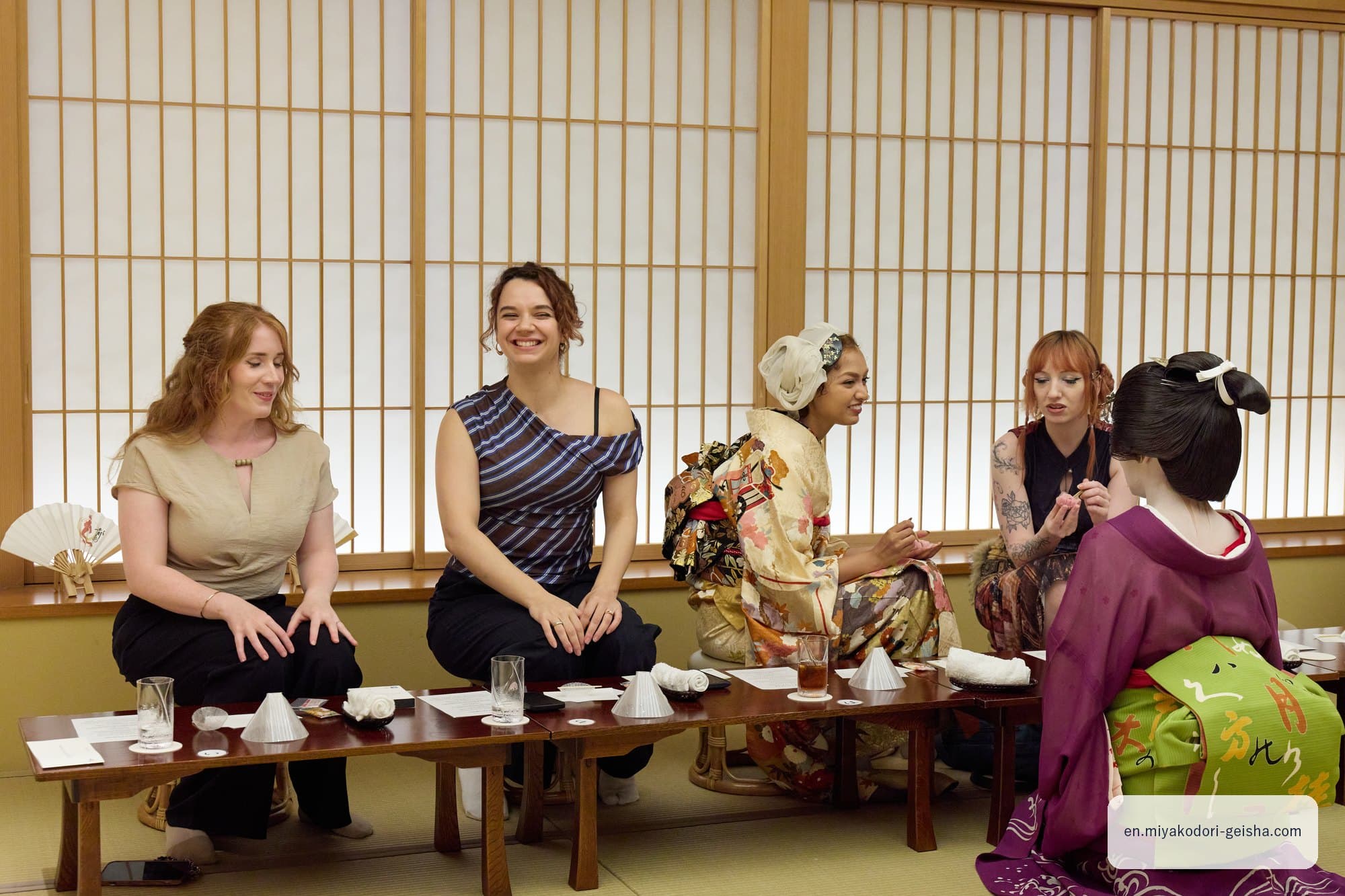
Guests relax at the long table in the main room, with a geisha among them 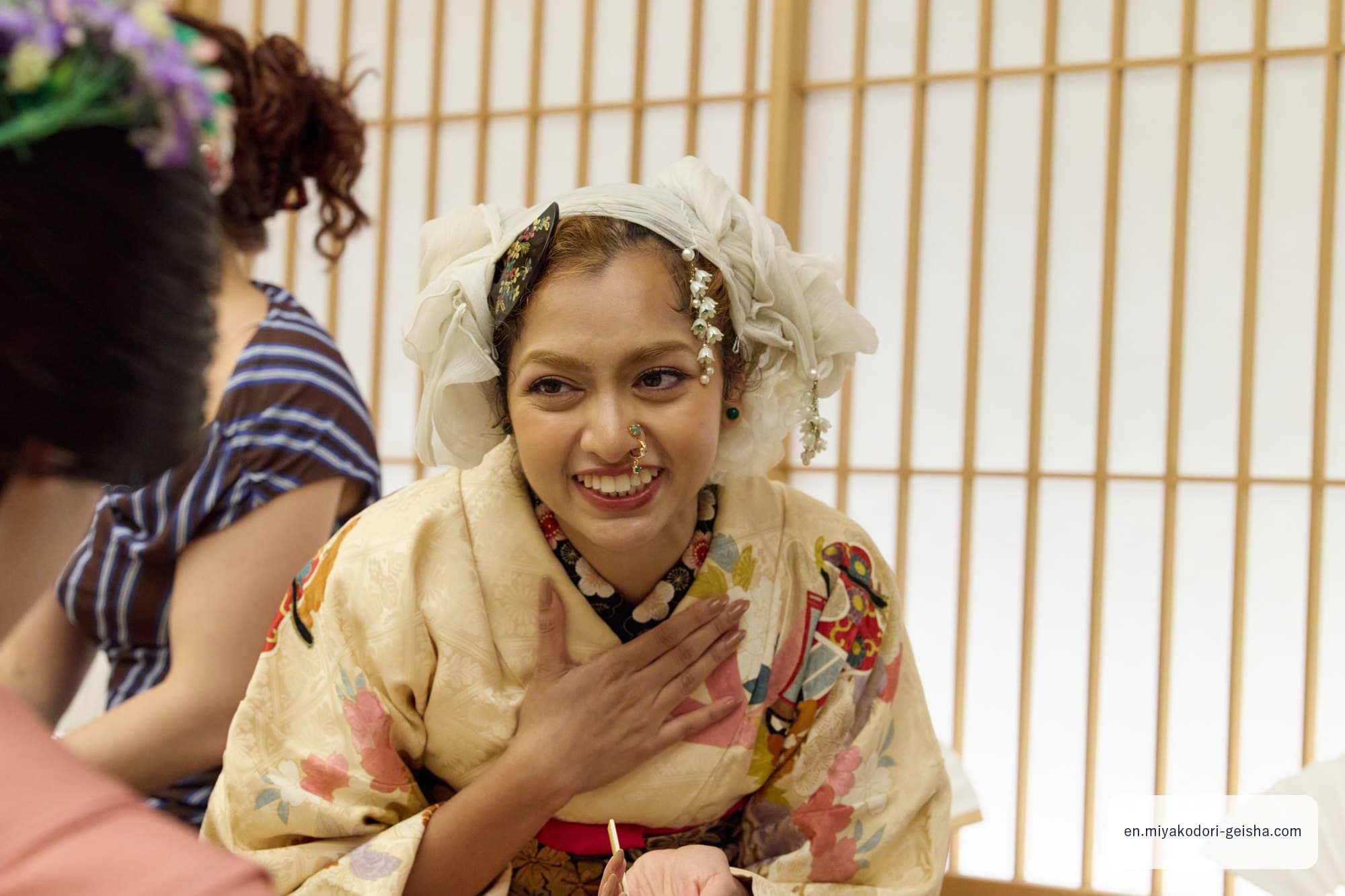
A guest in a kimono laughs, hand on her chest 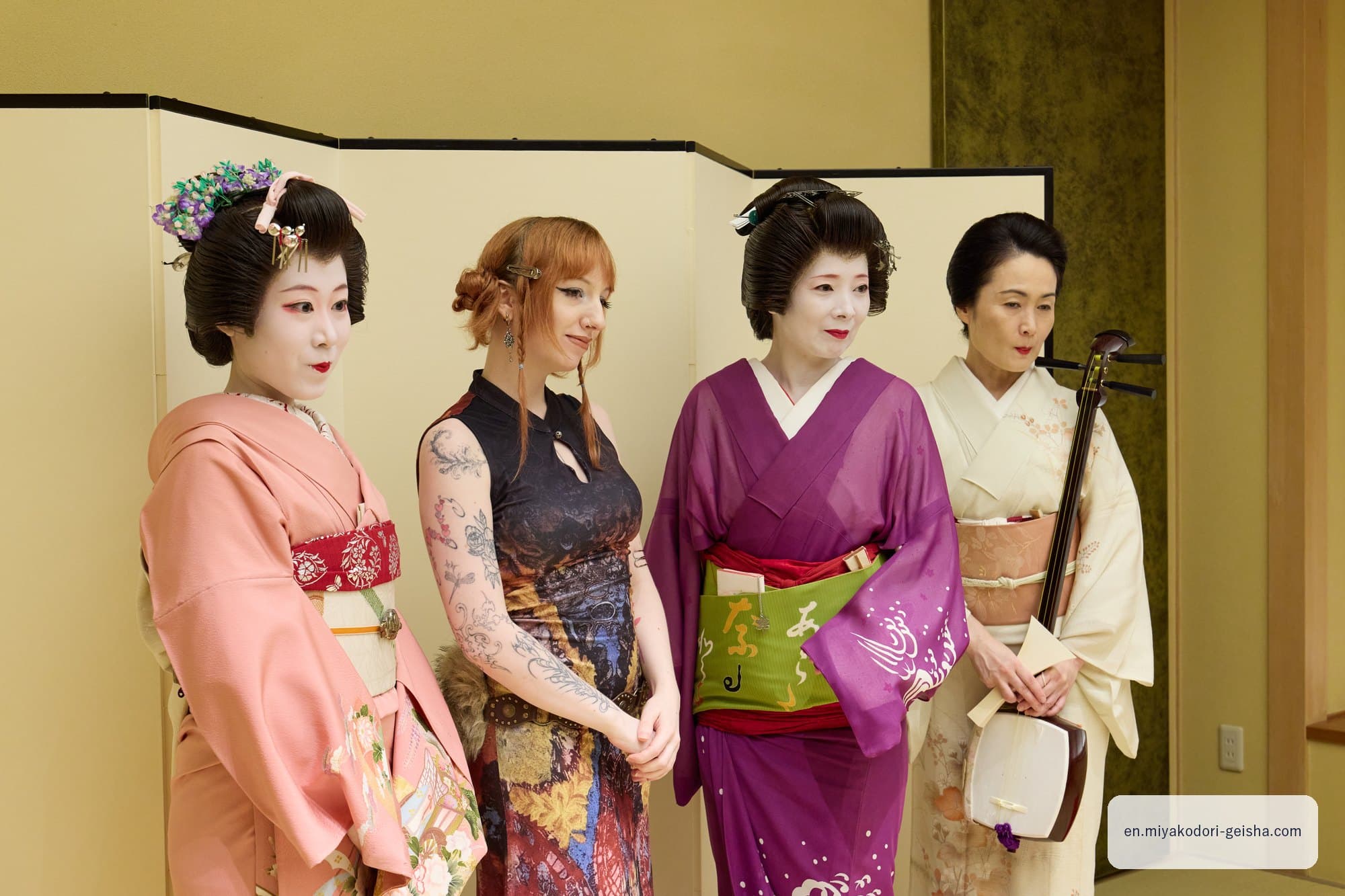
Geisha and a guest pose for a photo together 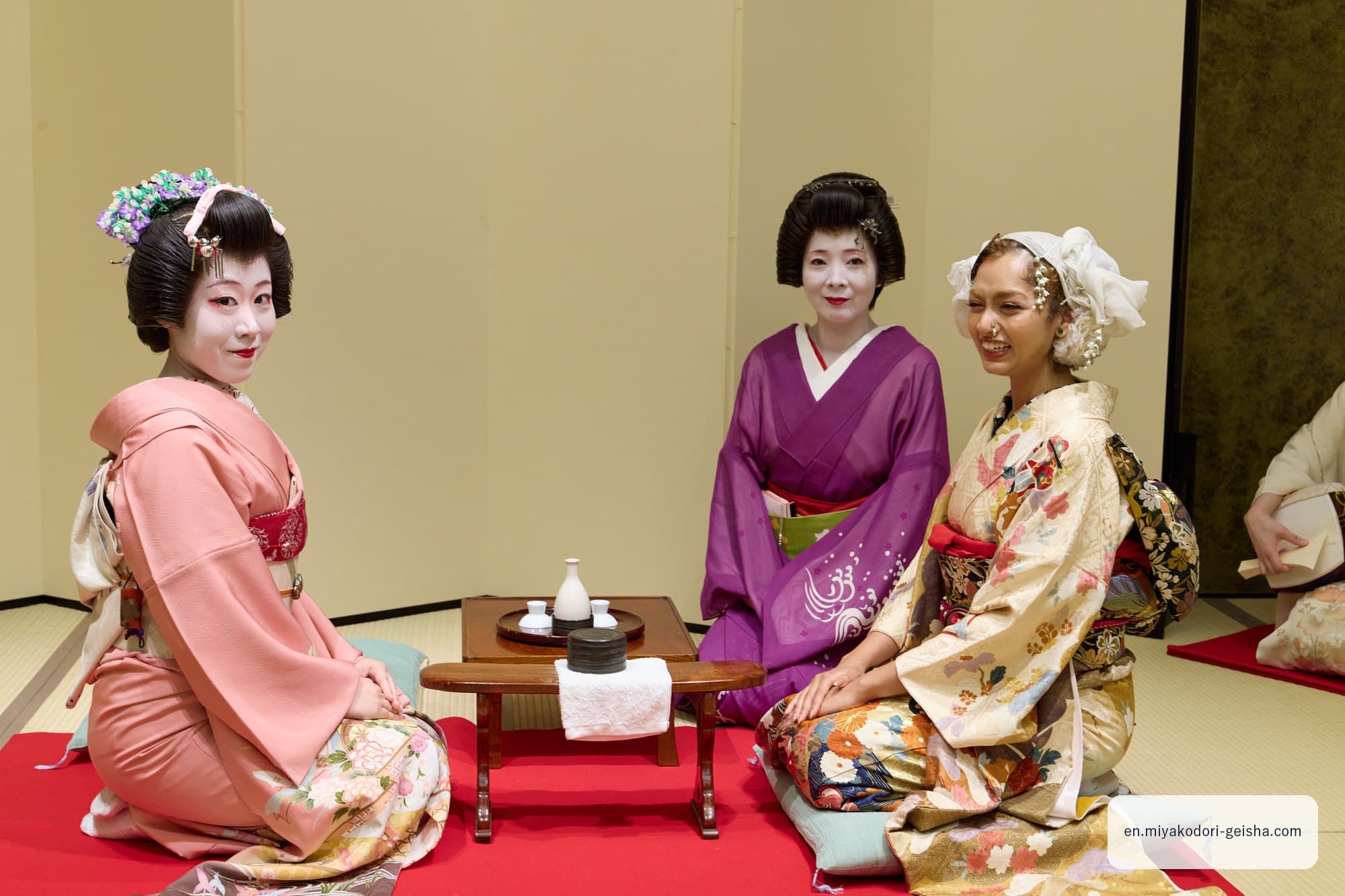
Geisha and a guest gather around the Konpira Fune Fune table
The house 7
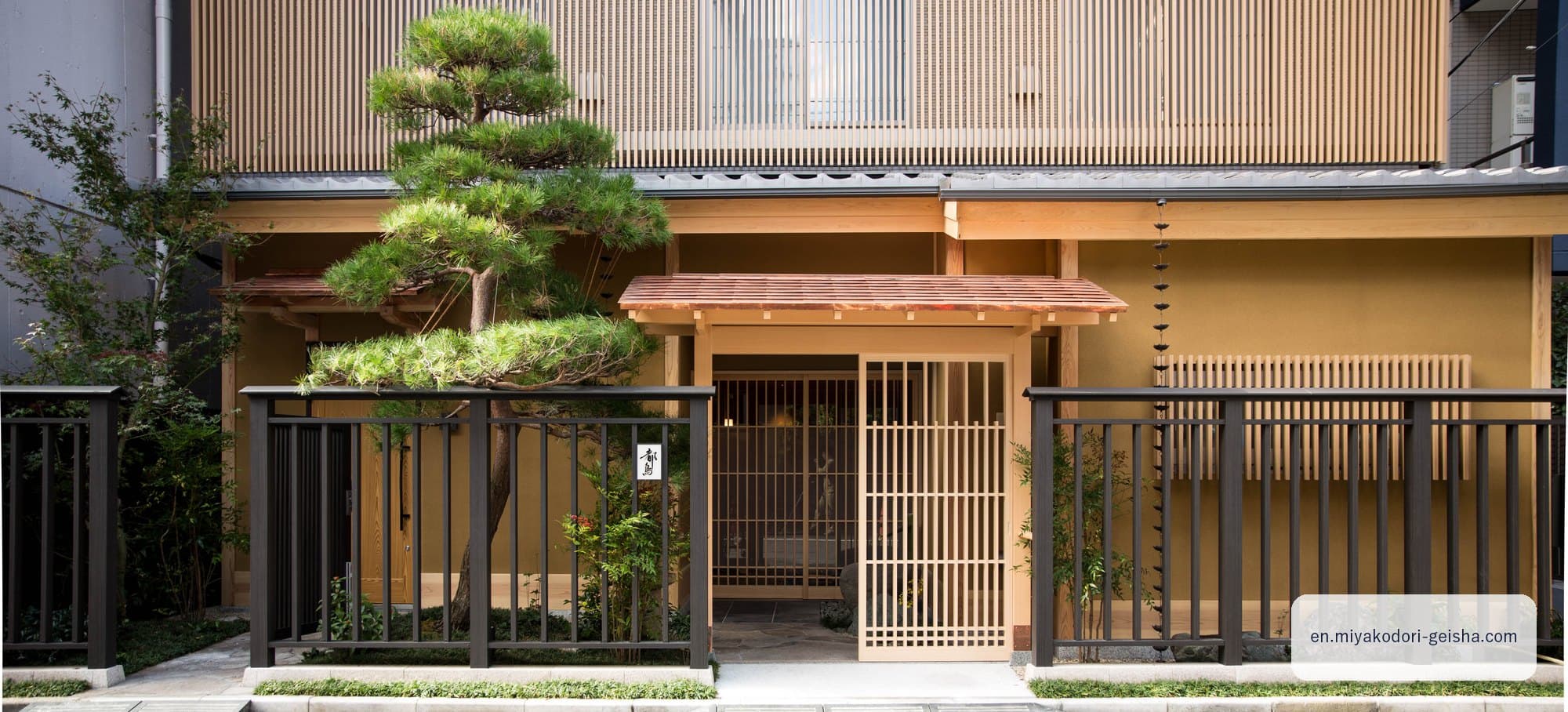
Miyakodori by day, in the Kannon-ura neighborhood behind Senso-ji 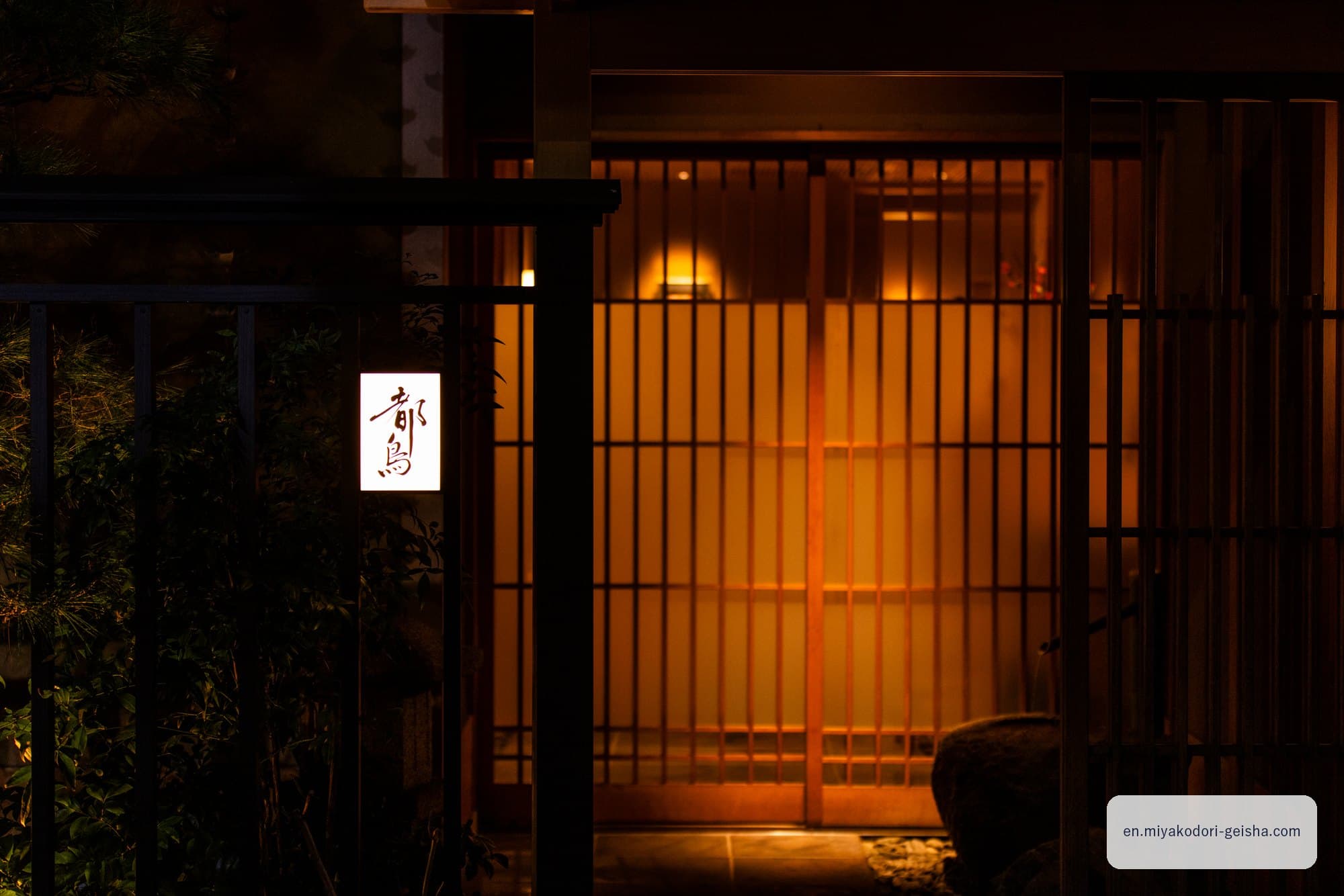
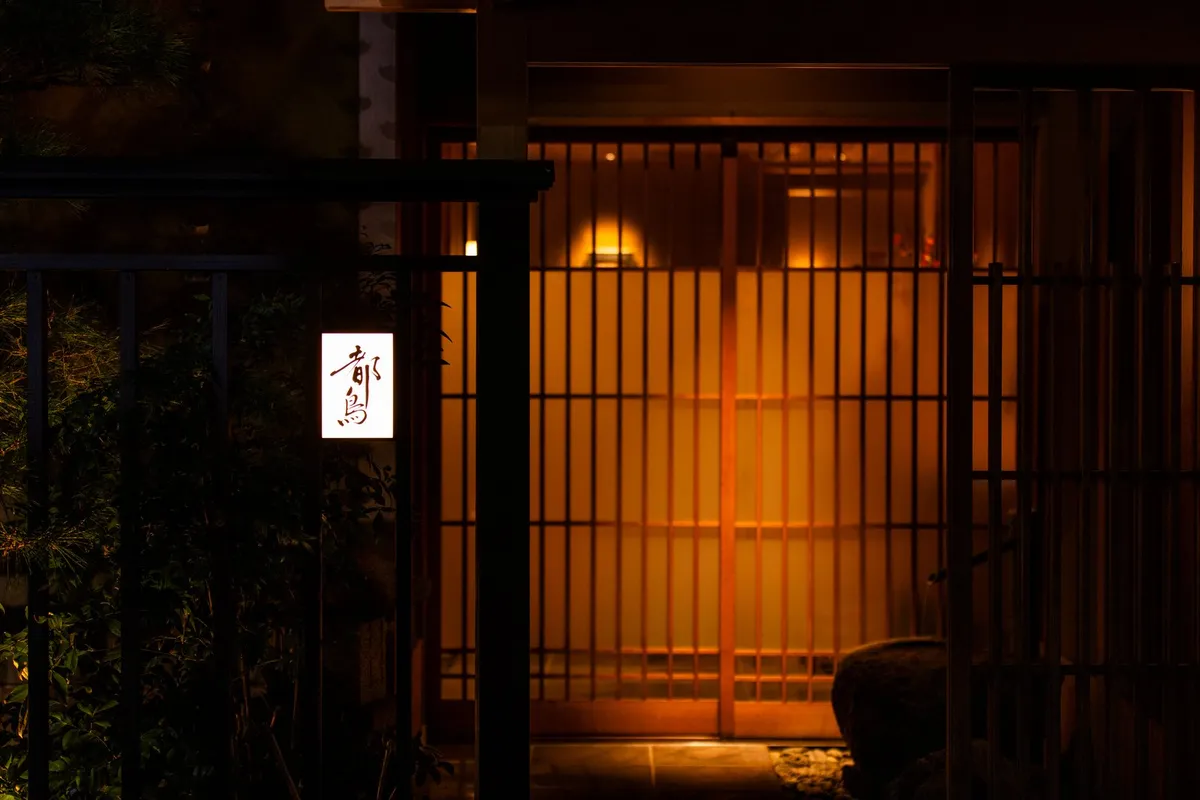
The entrance at night 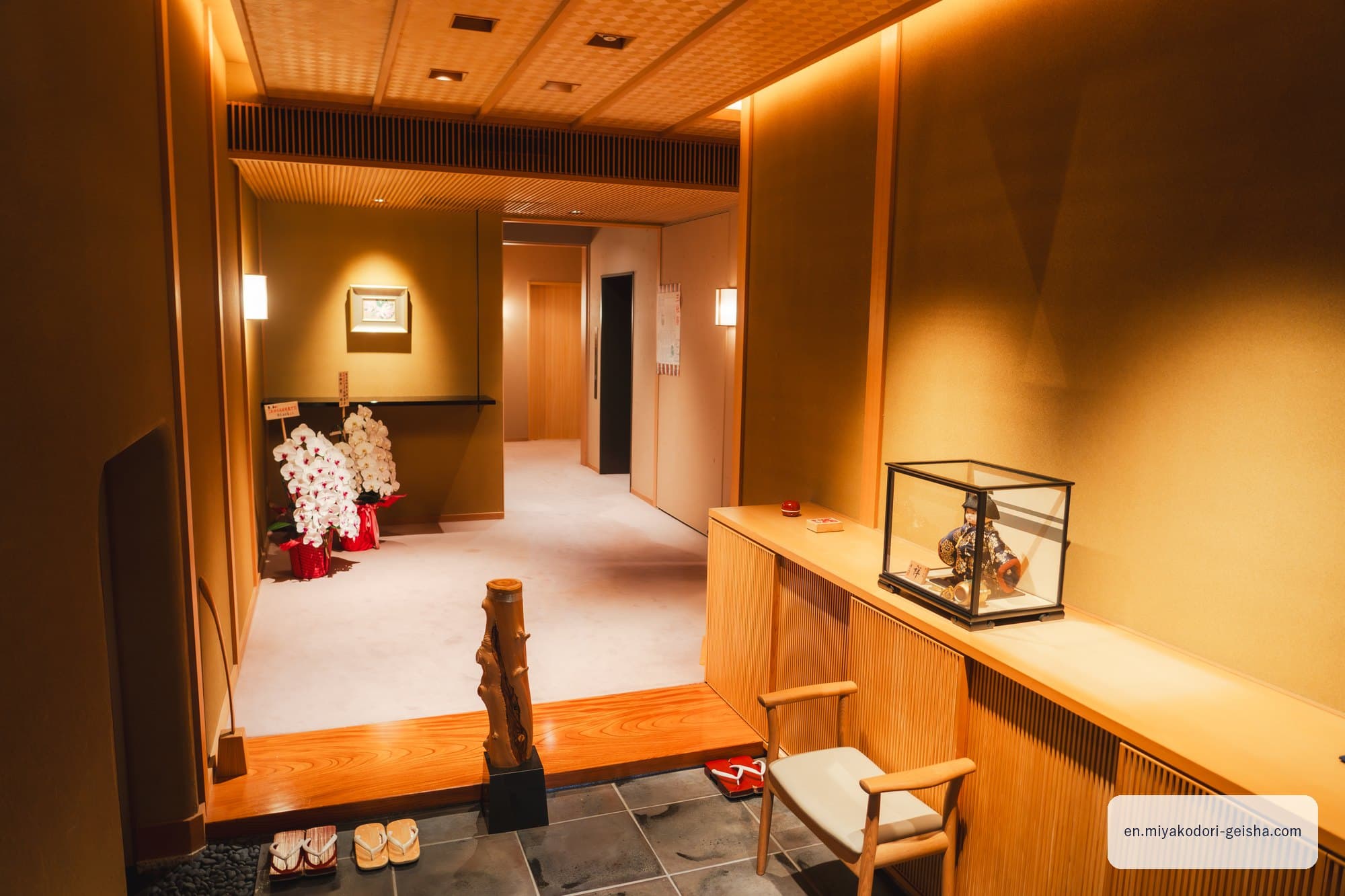
The entrance hall, where guests take off their shoes 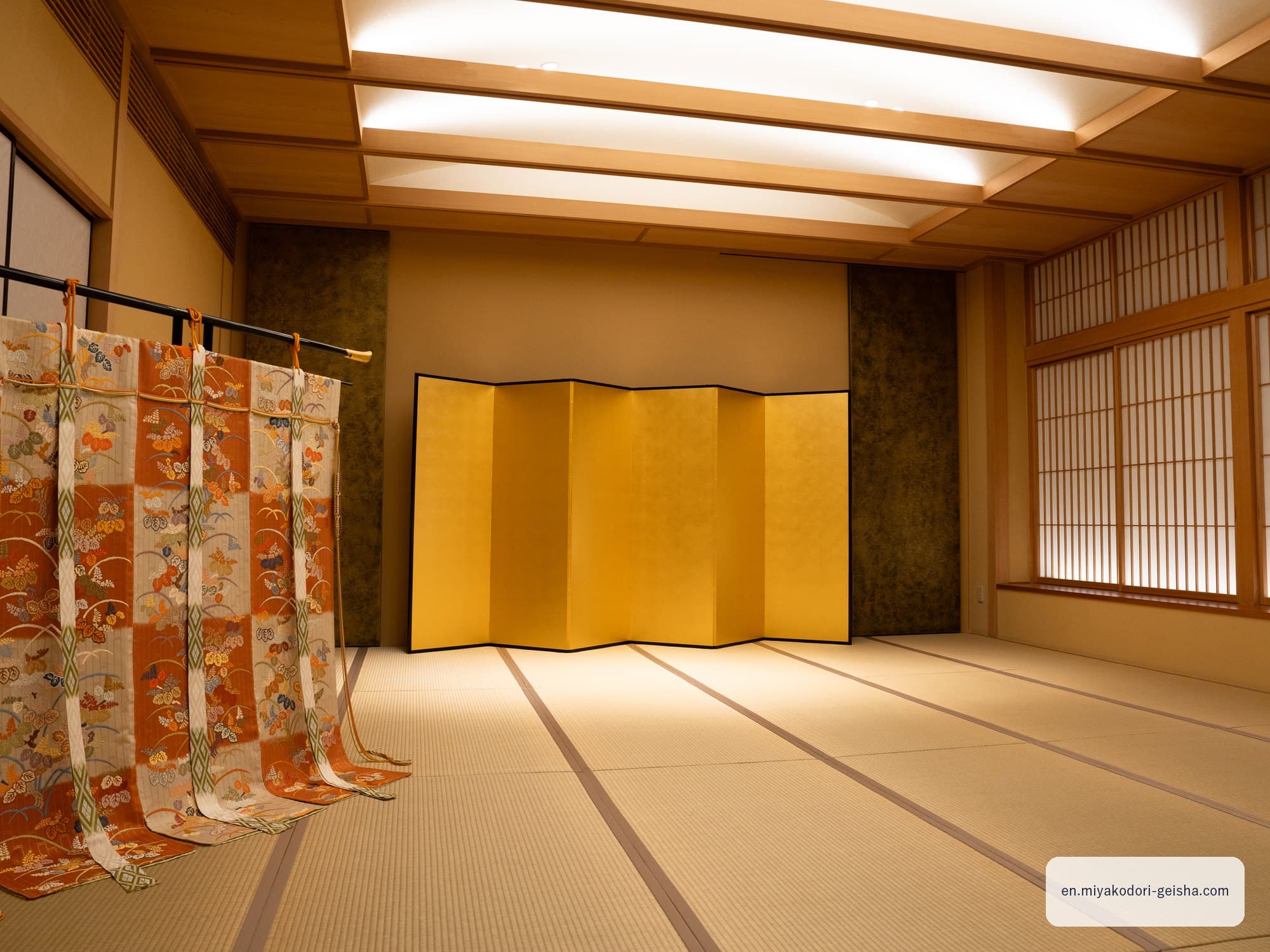
The main ozashiki room 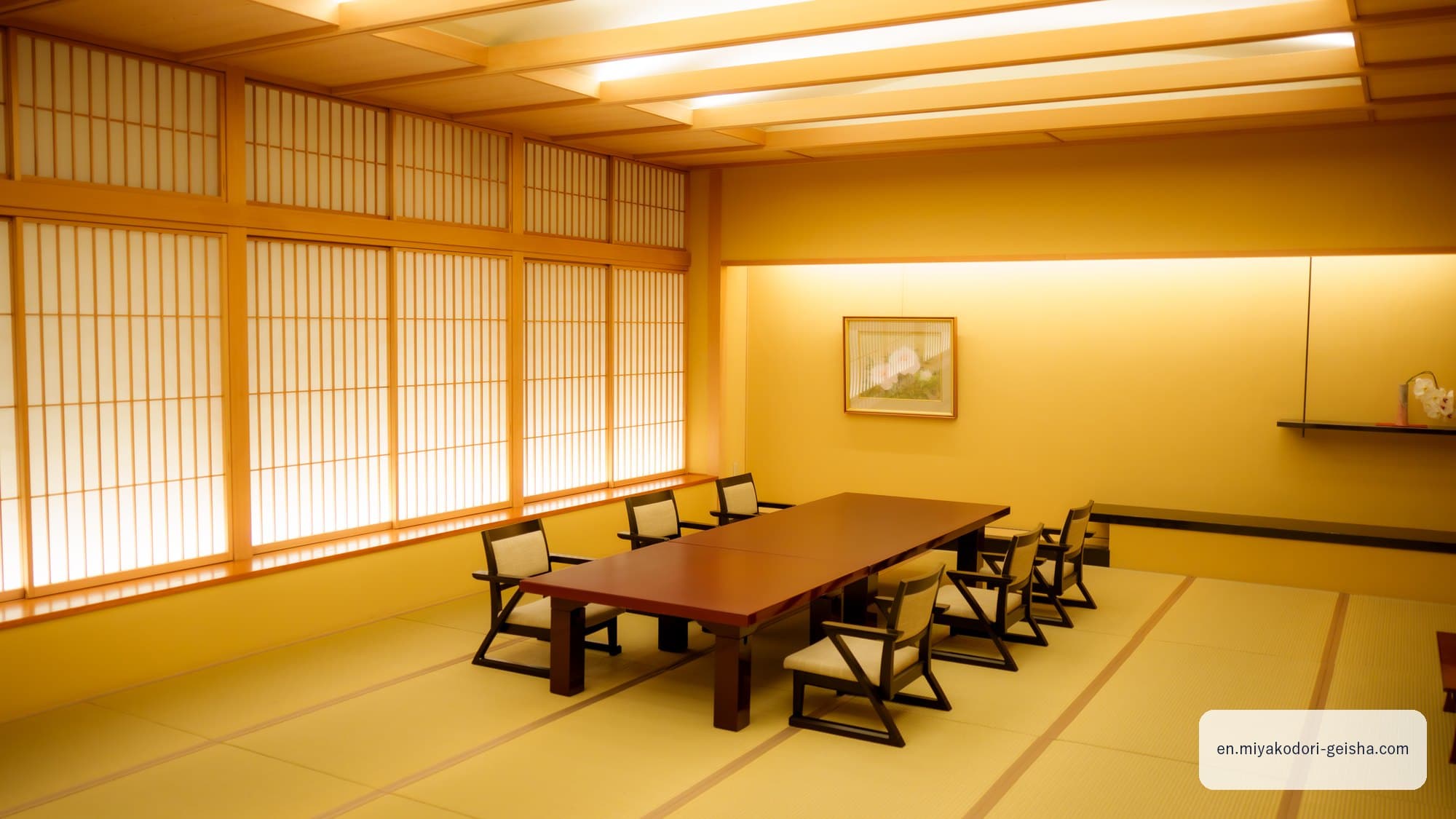
Low tables in the main room, with floor chairs (zaisu) so guests need not kneel 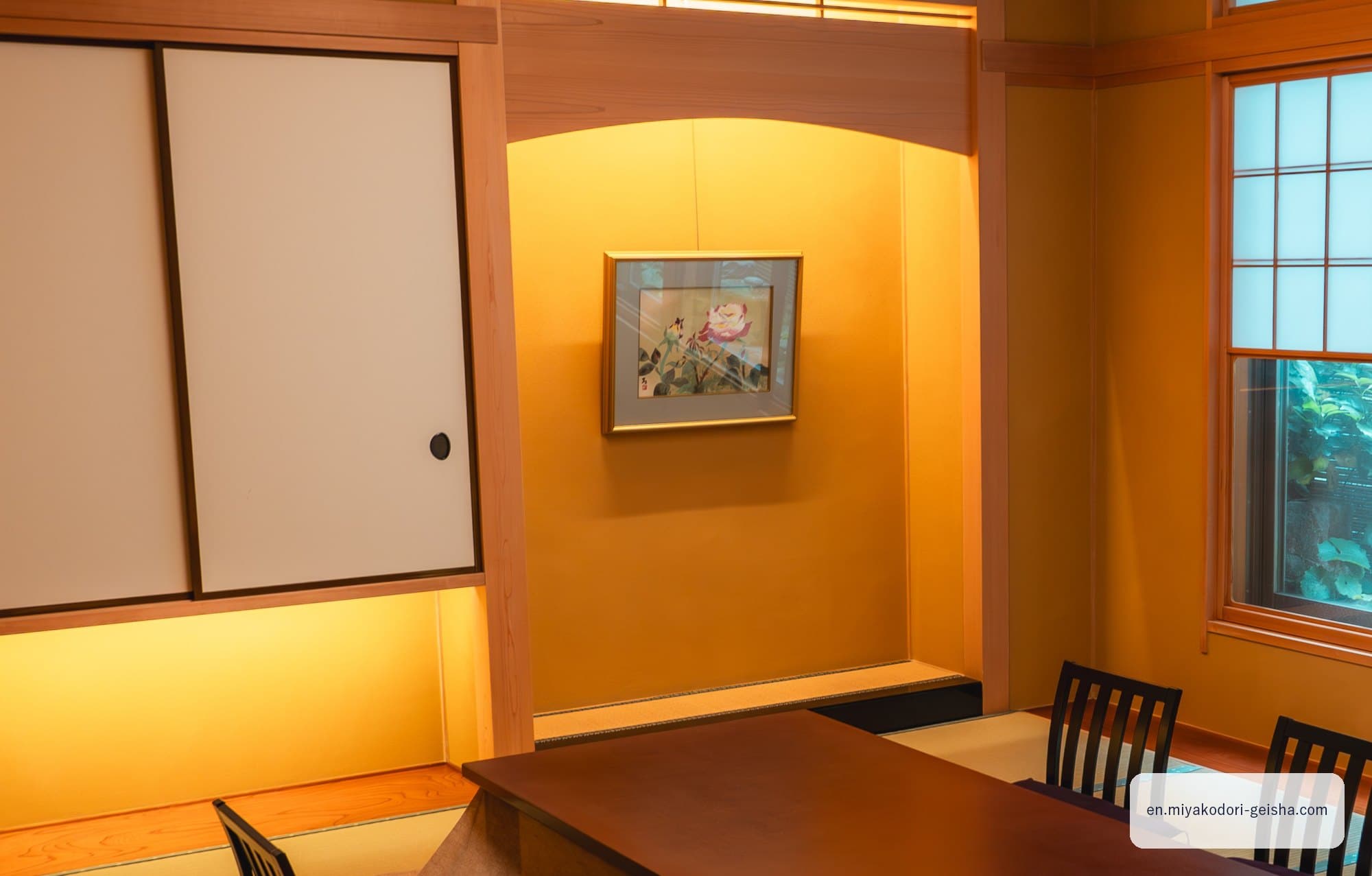
A private room 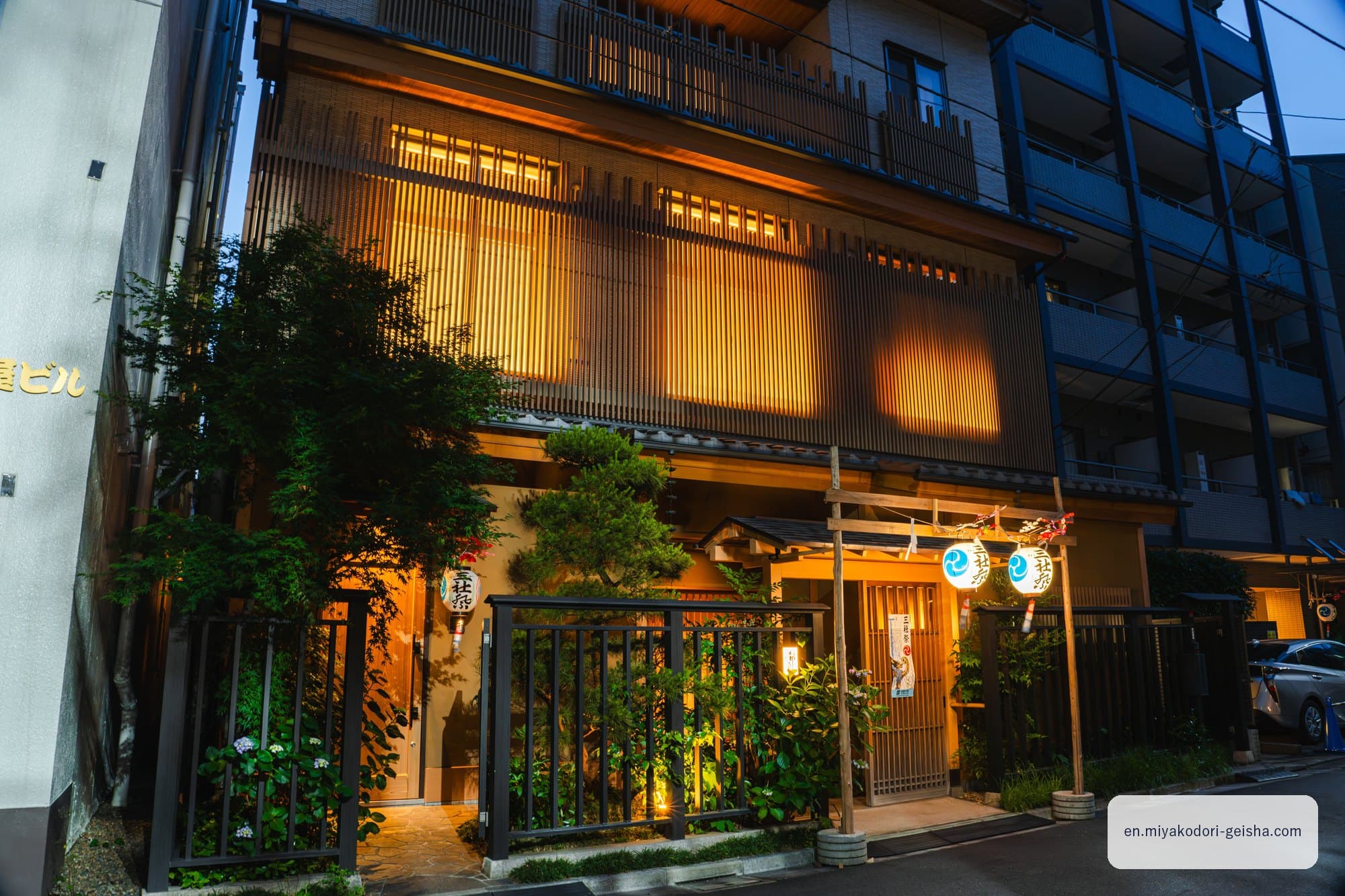
Miyakodori at dusk, decorated for the Sanja Festival
Full-size files without the watermark are for newspapers, magazines, TV and large print. Send a request (choose “High-resolution photos”) or email info.ozashiki@miyakodori.art with your outlet’s name and the intended use.
Interview & filming requests
Interview requests for our okami, Chikage, are especially welcome. She worked as a geisha, first as a hangyoku and then at the ippon stage, before becoming a proprietress. She is the only proprietress in Asakusa with direct experience as an active geisha.
Please note that interviews or filming involving the geisha themselves carry a fee, as their preparation and time must be compensated — geisha are independent professionals. Details on request. There is no fee for an interview with our okami.
For interviews, filming, high-resolution photos or other press requests, please contact us in advance with the form below. We will review your request and reply personally.