日本語のページはこちら
MIYAKODORIASAKUSA · TOKYO

Guidebook · Asakusa

The world of
Asakusa geisha.

A guide to geisha, the ozashiki (a gathering with geisha) and Asakusa’s geisha district, from Miyakodori, a machiai chaya that has worked with Asakusa geisha since 1950. Choose a path below and read in order, or look up a word.

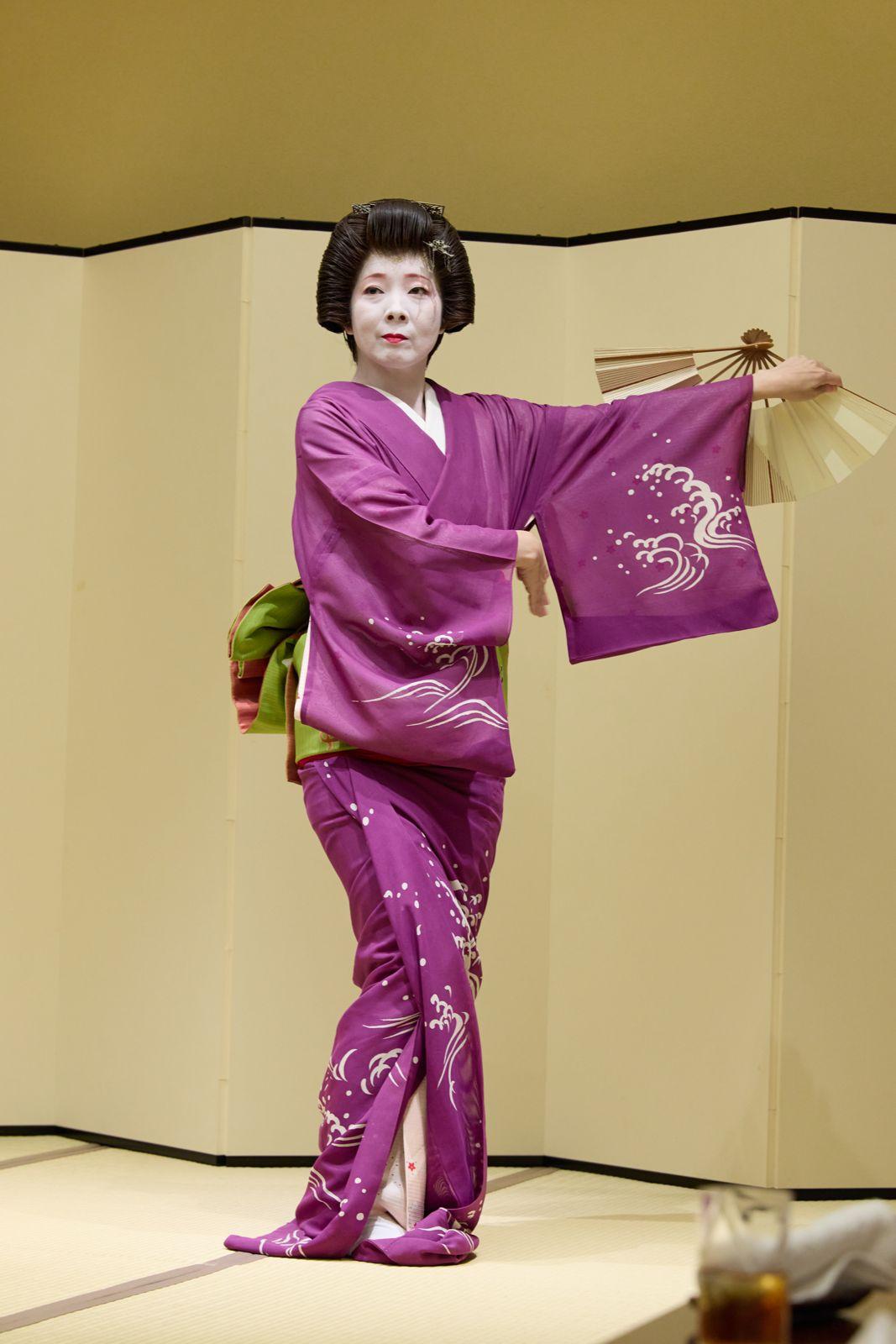
A geisha in a purple kimono dances with an open fan before a folding screen.

01 / Where to start

Three paths,
read in order.

Each path brings together a few of our articles in a suggested reading order.

Path 1

What a geisha is

Start here if you are new to the subject: who geisha are, the roles and stages, and how they differ from the courtesans of old Edo.

  1. What is a geisha?A direct answer from Asakusa: performers trained in dance, music and conversation, registered with a kenban, the local geisha office.
  2. Types of geishaThe roles of geisha (dancers and musicians) and their stages, plus the hōkan, long known as Japan’s male geisha.
  3. How to become a geishaThe kenban and the okiya, training before a debut, and the hangyoku and ippon stages.
  4. Oiran: Japan’s highest-ranking courtesansWho the oiran of Edo’s Yoshiwara were, and why none remain today.

Path 2

Inside the ozashiki

What happens in the tatami room: how an ozashiki unfolds, the games, the dance and the etiquette.

  1. The ozashiki, from start to finishIs it a dinner, a performance or a private club? A guide to the traditional geisha party.
  2. Ozashiki asobi: the geisha gamesKonpira fune fune, Tora tora and Tōsenkyō: what happens, and how guests can join in.
  3. Konpira fune fune: the game explainedThe rules and origins of the best-known geisha rhythm game.
  4. Konpira fune fune: the lyricsThe words of the song, and how to play along with geisha.
  5. Geisha danceClassical Japanese dance (nihon buyo), performed by the dancers to live shamisen music: the schools, the dances, and how a performance unfolds.
  6. Etiquette in a tatami roomBowing, photos, what to wear, and the rules the geisha themselves live by.

Path 3

Asakusa’s geisha world

The district itself: how a hanamachi works, what changed in Asakusa, and the people and festivals that keep it going.

  1. What is a hanamachi?A geisha district as a living network of teahouses, geisha houses and the kenban.
  2. 1,060 to 20: what changed in AsakusaAbout a century ago, some 1,060 geisha worked in Asakusa; today there are about twenty. Our third generation on what happened, and the future.
  3. Hakoya: the keeper behind the scenesThe dressers who carried the shamisen cases and kept the district running for over a century.
  4. Taikomochi: Japan’s male geishaThe hōkan, entertaining at banquets since the Edo period, and where they perform today.
  5. Sanja Matsuri in AsakusaThree days each May, close to one hundred mikoshi (portable shrines), and a geisha procession.

02 / Words to know

Twelve words
from the geisha world.

Ozashikiお座敷

A gathering in a tatami room where geisha perform dance and music, play games and talk with the guests. It is not a one-way show: the guests can take part.

The ozashiki, from start to finish
Machiai chaya待合茶屋

A house that hosts ozashiki and arranges the geisha for each one. Unlike a ryotei, a traditional Japanese restaurant, it does not run a full kitchen. Miyakodori, founded in 1950, is the only machiai chaya in Asakusa.

About Miyakodori
Kenban見番

The geisha office of a district. Asakusa’s geisha and hōkan are registered with the Asakusa kenban; they are independent professionals.

What is a hanamachi?
Minarai見習い

An apprentice who watches and learns, for six months to a year, before her debut as a geisha.

How to become a geisha
Hangyoku半玉

A young geisha in Tokyo, in a long-sleeved, brightly colored kimono. She is already a geisha and performs at ozashiki; Kyoto’s word for her stage is maiko.

How to become a geisha
Ippon一本

The stage a hangyoku moves on to after several years; some geisha debut directly as ippon. In Asakusa there is no exam for this step; our okami became ippon at eighteen and a half.

Types of geisha
Tachikata立方

The dancer, with white makeup and a traditional Japanese hairstyle.

Geisha dance
Jikata地方

The musician, who plays the shamisen and sings, without white makeup and with her own hair styled up.

Types of geisha
Hōkan (taikomochi)幇間

Long known as Japan’s only male geisha: performers with an art all their own, who perform alongside the geisha and lift the mood of the gathering. Asakusa is the only place with officially registered hōkan; of the six, one is a woman, a breath of fresh air in a role long held by men.

Taikomochi: Japan’s male geisha
Hakoya箱屋

The specialist who dresses a geisha in her kimono and obi (the sash). The name is said to come from the box (hako) that once carried her shamisen to the ozashiki.

Hakoya: the keeper behind the scenes
Mitsu-eri三つ襟

Two or three thin lines of skin left unpainted at the nape when the white makeup is applied, so the neck looks longer from behind. The hakoya paints them.

Asakusa Geisha Encyclopedia
Goshugi御祝儀

A traditional cash gift in an envelope, handed directly to a geisha as thanks, usually after the dance. It is separate from the gratuity line on the bill.

Our FAQ on goshugi

More words, and how the geisha world works, each entry with its source: Miyakodori Archive

03 / From our okami

In Chikage’s words.

Chikage, our okami (the woman who runs Miyakodori), was an Asakusa geisha for 27 years before she took over Miyakodori.

  • “Take away the art, and a geisha is just a person.”

    On what makes a geisha a geisha. In Asakusa, geisha in their seventies and older still take lessons every week.

  • “I’d say it comes down to not adding much.”

    On the secret of geisha makeup, which uses only white, red and black.

  • “I want Miyakodori to always be a place where guests and hosts care about one another.”

    On what she hopes Miyakodori will remain.

More about Chikage

04 / New articles

Latest articles.

When you are in Asakusa

See it for yourself.

No referral is required, and an English interpreter is with you at a private ozashiki.

Private ozashiki

A room reserved for your party, for 1, 2 or 3 hours.

Request a private ozashikiAbout the private ozashiki

Ozashiki Tea House

A 75-minute program with three geisha and shared seating.

See dates and bookAbout the Tea House

Prices for both are on our pricing page.