



Kaiseki with Geisha in Tokyo: A Banquet, Course by Course, from an Asakusa Teahouse
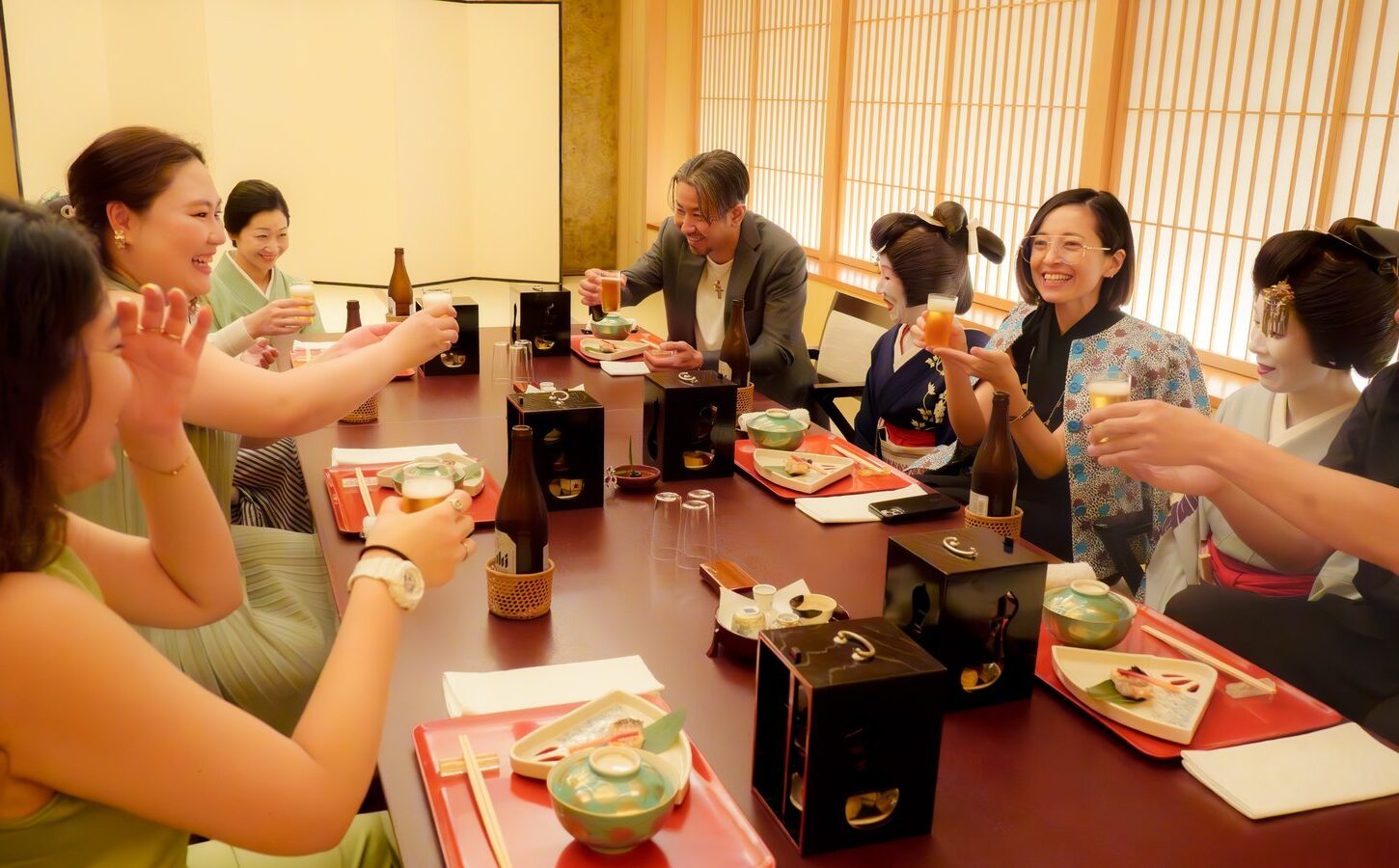
Kaiseki with geisha is a Japanese course meal eaten at an ozashiki, a banquet in a private tatami room. The geisha pour your drinks and talk with you, then dance and play games between the dishes. At Miyakodori, the three-hour plan includes a seven-course meal and free-flowing drinks. The geisha do not eat, so the dishes are yours, and the dance and the games usually come in at familiar points in the menu.
Miyakodori is a machiai-chaya in Asakusa, founded in 1950: a traditional teahouse that hosts geisha banquets. This guide describes how the meal fits into the gathering, from what we see in our own rooms. Because we sell this meal, it also says where another kind of dinner may suit you better.
Kaiseki Means Two Different Meals
In English, one word covers two Japanese meals that sound the same. The first, written 懐石, is the plain meal a host serves before tea at a formal tea gathering (chanoyu). Its characters mean “breast-pocket stone”, and the name is thought to come from the warm stones Zen monks tucked into their robes against hunger. The second, written 会席, means a seat at a gathering. It is the banquet meal, served as a set menu with a tray for each guest.
| Feature | 懐石 | 会席 |
|---|---|---|
| Where you meet it | A formal tea gathering | A banquet, including an ozashiki |
| What it is | A simple meal served before the tea | A set menu, with a tray for each guest |
| The drink | Tea follows the meal | Sake is the main drink |
The meal at an ozashiki is the banquet kind. It suits a room where people pour for one another and talk, so the dishes arrive alongside a dance and games, not in silence.
The distinction follows the Japanese dictionary Kōjien, as summarized in Wikipedia’s article on kaiseki.
If you are comparing kaiseki restaurants, our guide to kaiseki in Tokyo covers that side, and what a ryotei is explains the kind of house that serves banquet meals.
How the Courses Run at an Ozashiki
The three-hour plan serves seven courses. What follows is the usual order of a visit, not a timetable to the minute.
Our staff meet you at the door and take your bags, and incense is always lit when guests arrive. The geisha come in soon after you sit down. They bow, welcome you and keep the greeting short, so that the guests stay the center of the room. If your group arrived early, a first drink and a toast among yourselves often come before they enter.
| Course | The dish | In the room |
|---|---|---|
| 1. Appetizer (zensai) | A few small dishes to start the meal. | The first toast is made, and the geisha begin to pour. |
| 2. Soup (wan) | A clear soup, chosen for the season. | The geisha talk with you, and you can ask them anything through the interpreter. |
| 3. Sashimi | Sliced raw fish. | The geisha take a brief moment to prepare for the dance. |
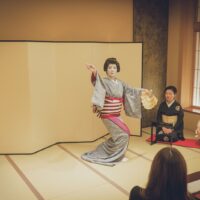
| 4. Grilled dish (yakimono) | A grilled dish. | The dance usually begins around now, to live shamisen (a three-stringed lute). |
| 5. Simmered dish (nimono) | A simmered dish. | The games usually begin around now. |
| 6. Fried dish (agemono) | A fried dish. | More games and conversation, and photos with the geisha are welcome. |
| 7. Rice course (oshokuji) and fruit (mizugashi) | Rice to close the meal, then fruit. | The closing course tells the room the visit is nearly over, and the group photo and the closing hand-clap follow. |
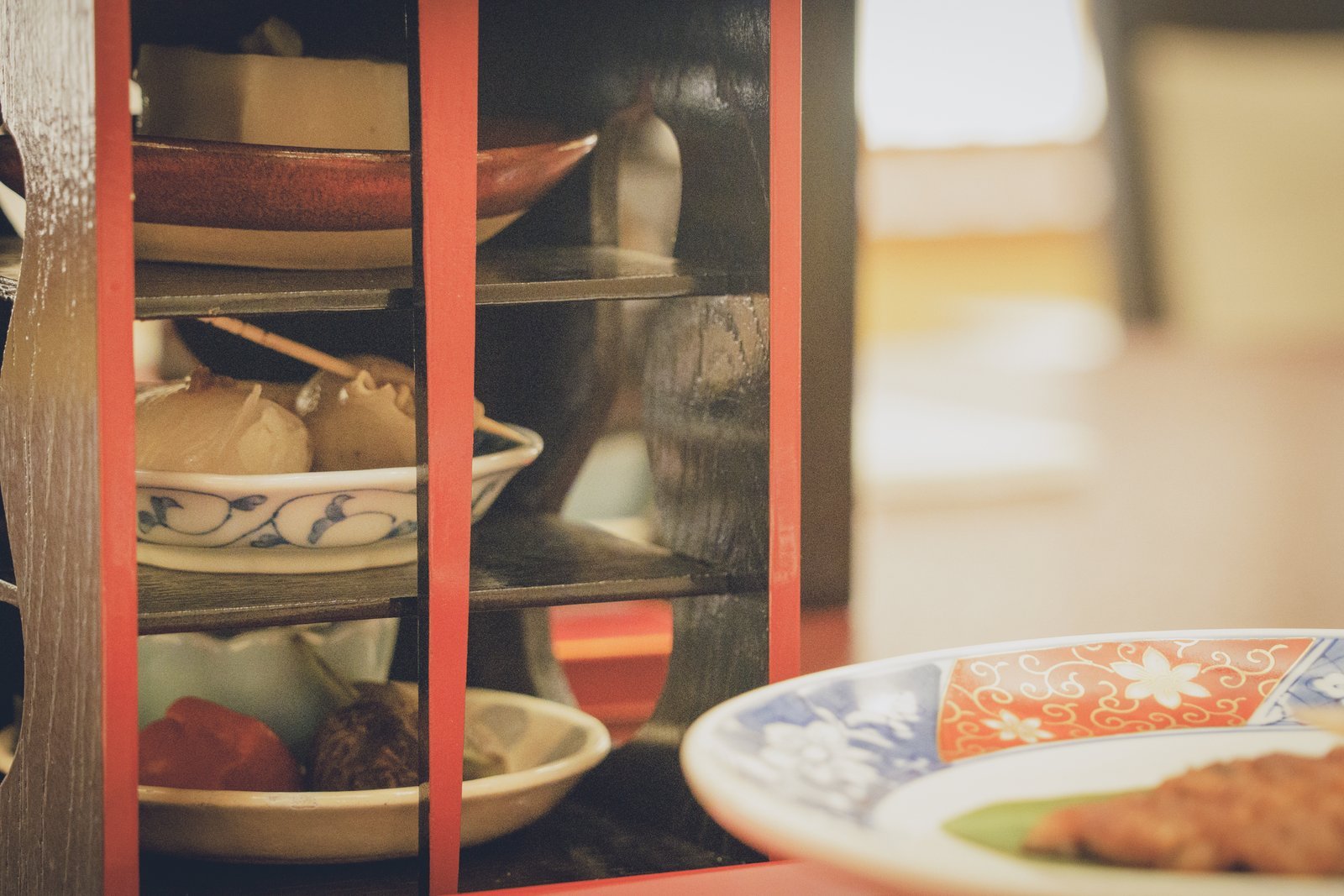
Geisha have their own phrase for starting the dance, お座敷をつける (o-zashiki o tsukeru), which means putting on the performance. It usually happens about twenty minutes after you walk in, between the sashimi and the grilled dish, and the geisha are ready within a few minutes. A song lasts about three minutes, and guests tend to film more than they take photos. Our guide to the geisha dance explains what you are watching.
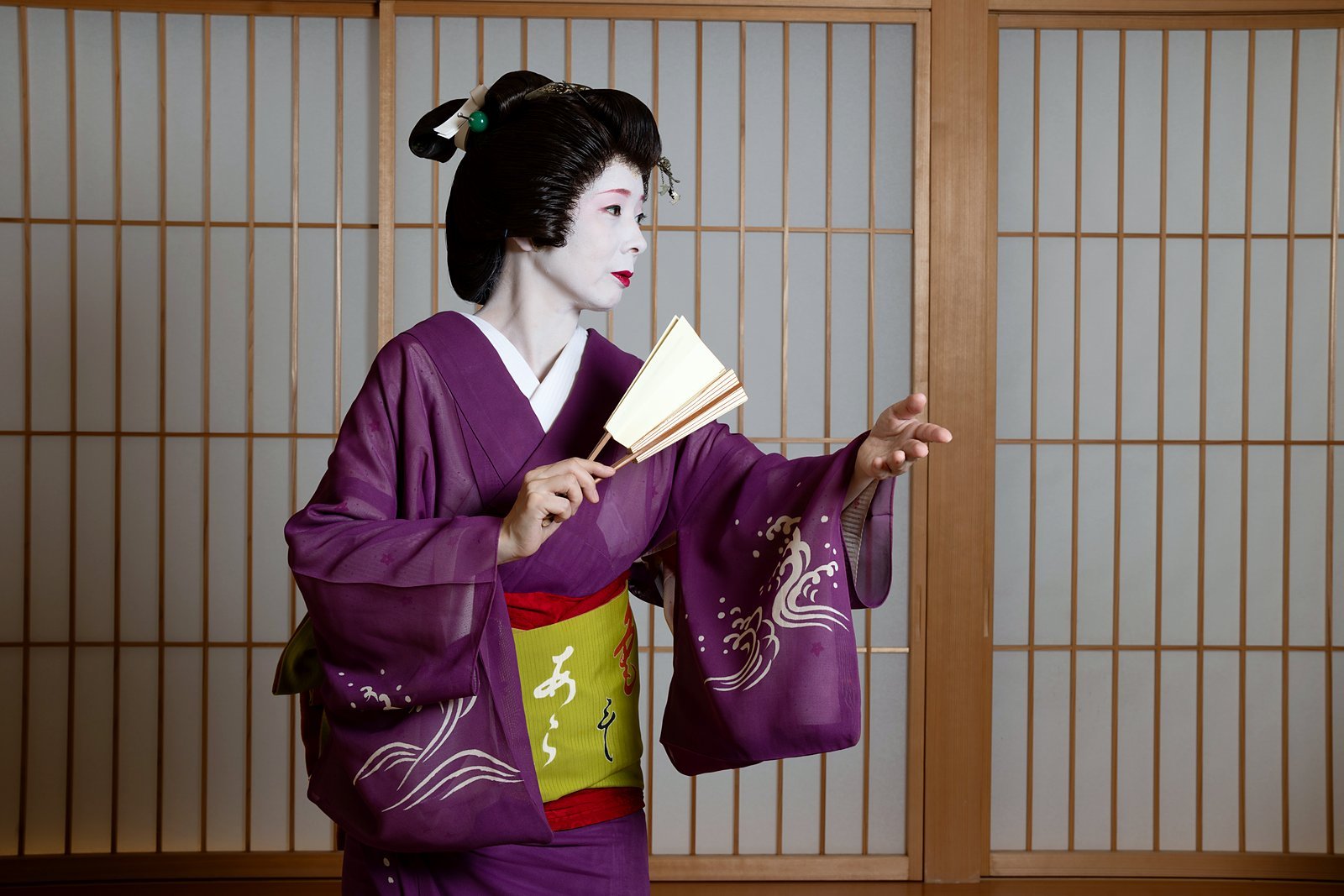
The games come next, usually around the simmered dish. They are simple parlor games played with the geisha, and our guide to ozashiki games describes them.
The end of the meal and the end of the visit arrive together. The last course is timed to your booking, and the rice and the fruit tell the room it is time to wind down. The visit closes with a group photo and a hand-clap called the tejime.
What the Geisha Do While You Eat
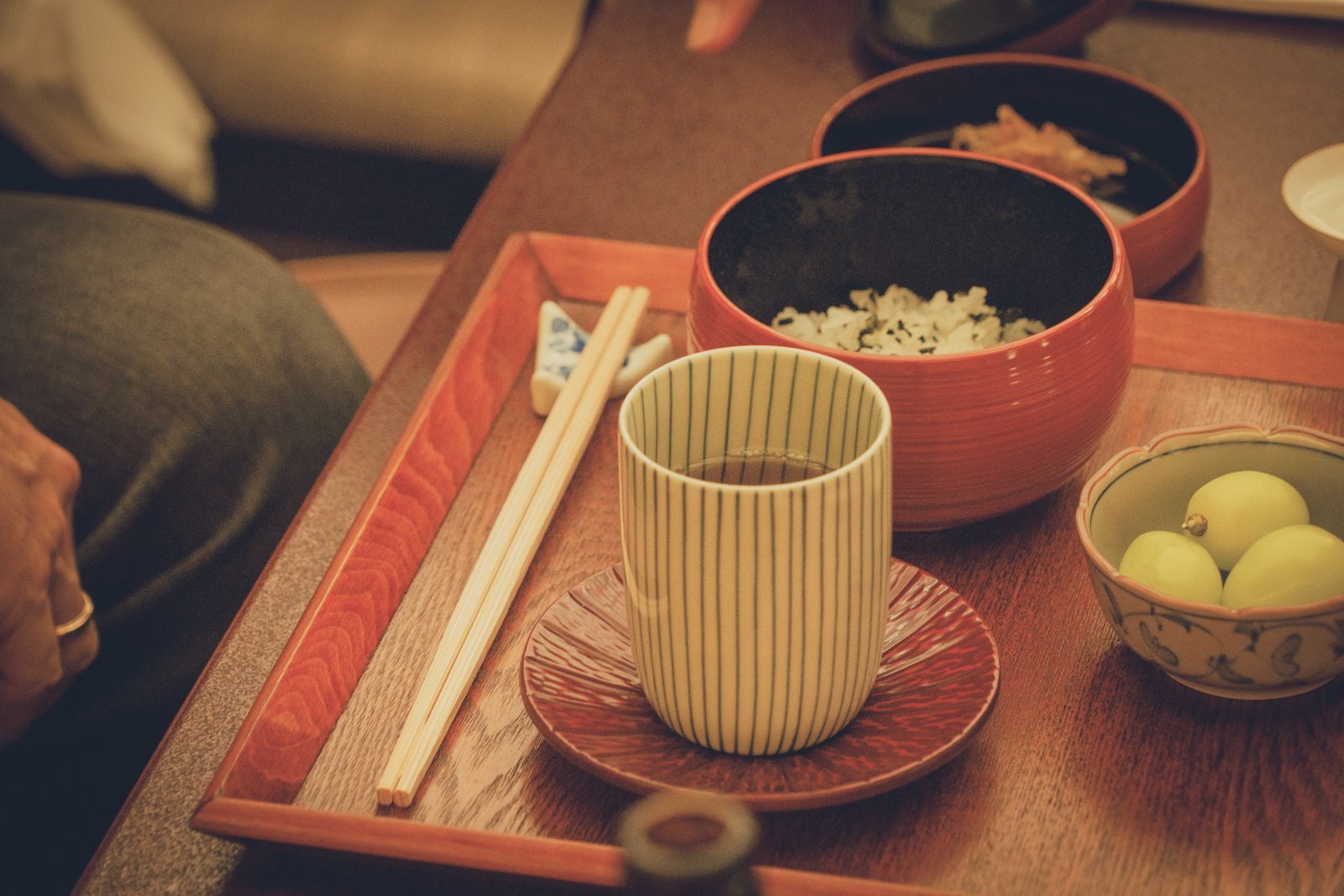
The geisha do not eat during the ozashiki. They are at work, pouring for you and talking with you, and the dishes are yours to enjoy.
Pouring goes both ways. Guests pouring for the geisha is welcome, and a geisha may ask whether she can have a drink from you. We tell every table that guests are welcome to pour for the geisha, including guests who do not drink themselves.
Free-flowing beer, house sake and a selection of non-alcoholic drinks are included in the three-hour plan, and an English-speaking interpreter is in the room, so conversation runs freely across the courses.
Seasons and the Menu
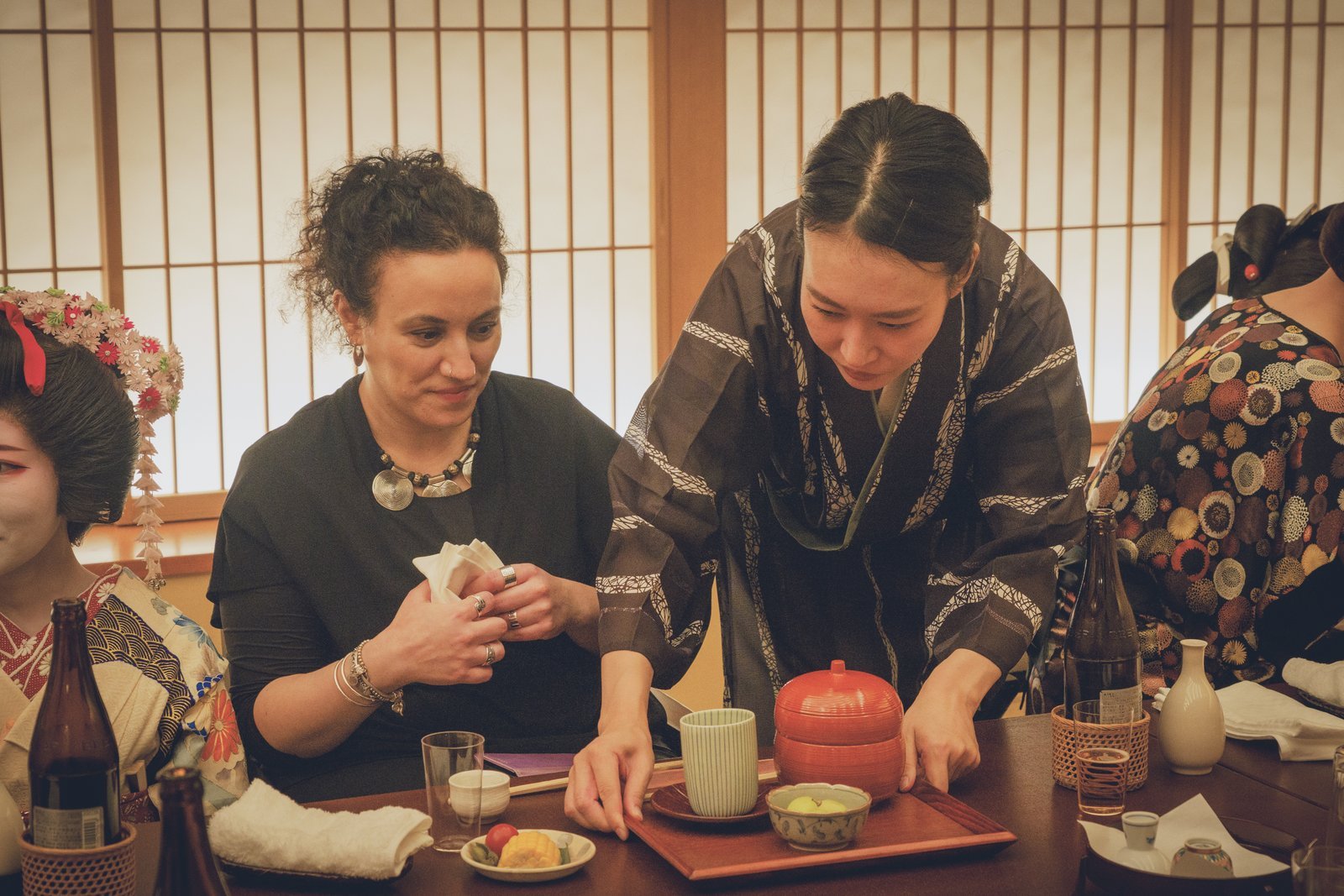
Kaiseki is built around the season. Cooks look for ingredients at their peak, and the plates are chosen to suit the time of year, so the same course looks different in spring and in autumn.
At Miyakodori the menu is not fixed. The soup is chosen for the time of year, the other courses shift with the season as well, and the closing rice course changes least. Most of the courses come from specialist caterers. We do not publish a fixed menu, since the dishes follow the season.
The room follows the calendar too. Almost everything in it changes, from the kimono and the flowers to the dances; in January, for example, the room carries New Year decorations.
A Seven-Course Meal in a Private Ozashiki in Asakusa
Geisha pour for you and talk with you, then dance and play games between the courses. The three-hour plan includes the meal and free-flowing drinks, and one guest can book alone.
Request a ReservationAt the Table: What to Know
- Shoes and socks. You take off your shoes at the entrance. Socks are a nice thing to have, since the floors are tatami.
- Seating. Every room has a tatami floor. Two rooms have tables and chairs, and one has a sunken-floor table (horigotatsu), so nobody has to kneel on the floor. Our page on the private ozashiki shows the rooms.
- Photos. Photos and video are welcome at a private ozashiki. Please do not live-stream.
- Leftovers. If you cannot finish a dish, ask the staff whether it can be packed to take home. It depends on the dish.
Dietary Needs, and When Kaiseki Is Served
Tell us about allergies and dietary restrictions when you book. Vegetarian and vegan guests, and guests with allergies, can be accommodated. Guests who need a fully halal or fully kosher meal are served a bento in place of the kaiseki, and we ask for five days’ notice.
Kaiseki is served when a visit starts at 17:30 or later, and the three-hour plan accepts start times between 17:30 and 20:00. A visit that starts earlier can add a seasonal bento instead, and so can the one-hour plan at any hour. The two-hour plan can add a kaiseki course if it starts at 17:30 or later; it is ordered for every guest, two days ahead.
If you want a first look without a meal, the 75-minute Ozashiki Tea House serves matcha and a Japanese sweet in a shared room.
Other Ways to Have a Cultural Dinner in Tokyo
If you are still choosing, the kinds of cultural dinner in Tokyo differ mainly in who does the entertaining and how much you take part. We run the last of these, so the table describes the others in general terms.
| Kind of dinner | What it is like | A good choice if |
|---|---|---|
| Kaiseki restaurant or ryotei | A course meal prepared by the house, where the cooking is the main event. | You want to focus on the food. |
| Dinner show or themed dinner | You eat while a show runs on stage, and you watch. | You want a show you can simply watch. |
| Dinner cruise on a traditional houseboat (yakatabune) | A meal on the water, with views of the city. | The setting matters more to you than the stage. |
| Home dinner with a local host | A meal in a family home, with conversation across the table. | You want to see how people eat at home. |
| Private ozashiki with a kaiseki meal | A course meal in your own tatami room. Geisha pour for you and talk with you, then dance to live shamisen and play games with you. | You want to meet people who carry a tradition and join in rather than just watch. |
Booking Kaiseki with Geisha at Miyakodori
The plan that includes the meal is the three-hour Geisha Kaiseki Dinner. It comes with:
- a seven-course meal
- free-flowing beer, house sake and a selection of non-alcoholic drinks
- three geisha as standard
- an English-speaking interpreter
Visits start between 17:30 and 20:00, and one guest can book alone. Rates depend on the number of guests, so we leave them to our pricing page, where they stay current. If you want the plans side by side, our guide to the cost of a geisha dinner works through them. If you are still deciding, our piece on whether a geisha experience in Tokyo is worth it may help.
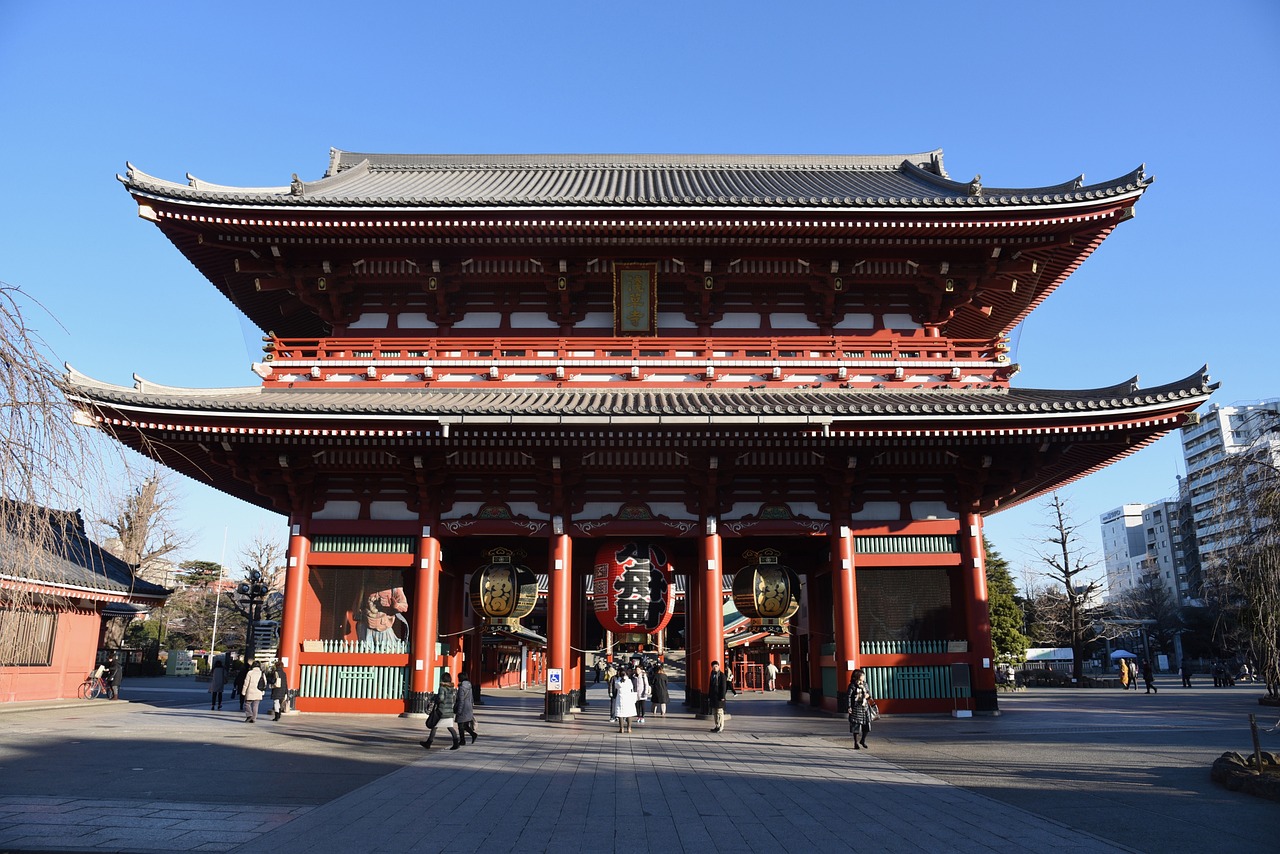
Miyakodori stands behind Senso-ji, about three minutes’ walk beyond the temple grounds.
Frequently Asked Questions
What is kaiseki with geisha?
Kaiseki with geisha is a Japanese course meal eaten at an ozashiki, a banquet in a private tatami room. Geisha pour your drinks and talk with you, then dance and play games between the courses. At Miyakodori the three-hour plan includes a seven-course meal and free-flowing drinks.
What is a traditional Japanese banquet with geisha like?
A traditional Japanese banquet with geisha is called an ozashiki. You sit in a private tatami room and are served a course meal, while the geisha pour for you and talk with you. They also dance to live shamisen and play simple games with you. At Miyakodori a visit runs one, two or three hours, and the three-hour plan includes seven courses. You can book directly, with no introduction.
What is a good Tokyo cultural experience dinner?
It depends on how much you want to take part. A kaiseki restaurant or a dinner show is built for eating and watching. A private ozashiki with kaiseki seats you at the table with geisha who talk with you and then dance and play games with you, so you take part rather than just watching.
What is the difference between the two kinds of kaiseki?
Both are pronounced kaiseki. 懐石 is the plain meal served before tea at a tea gathering, and 会席 is the banquet meal, a set menu with sake as the main drink. The meal at an ozashiki is the banquet kind.
Do geisha eat with you at an ozashiki?
No. Geisha do not eat during the ozashiki. They are at work, pouring and talking with you, and the dishes are yours. Guests are welcome to pour for the geisha in return.
Can I have kaiseki in the daytime or on a one-hour visit?
Kaiseki is served when a visit starts at 17:30 or later, so a daytime visit cannot include it. The one-hour plan does not include it at any hour. A seasonal bento can be added to a daytime visit or to the one-hour plan instead.
Can you serve vegetarian, halal or allergy-friendly meals?
Tell us when you book. Allergies and dietary restrictions, including vegetarian and vegan, can be accommodated. Guests who need a fully halal or fully kosher meal are served a bento in place of the kaiseki, and we ask for five days’ notice.
Book the Kaiseki Visit
The three-hour Geisha Kaiseki Dinner includes seven courses and free-flowing drinks, with start times from 17:30. For a shorter first look, the 75-minute Ozashiki Tea House serves matcha and a Japanese sweet. Current rates are on our pricing page, and we answer questions about diets and seating before you book.
Request a Reservation


- Is a Geisha Experience in Tokyo Worth It? An Honest Answer from an Asakusa Teahouse
- Sensoji at Night: Light-Up Times by Month and What Is Open After Dark
Japanese Culture Events: A 2026 Guide to Festivals and Traditions for International Travelers
Geisha Movies: Films, TV Series and Documentaries to Watch, Picked by an Asakusa Teahouse
Wagashi in Japan: A Guide to Traditional Japanese Sweets, Seen Through the Eyes of an Asakusa Geisha House
Yoshiwara, Tokyo: The History of Edo’s Pleasure District and What Remains Today
What Is the Tora Tora Game? Rules, History, and How to Play
Geisha in Tokyo: The Complete History Guide
Comment ( 0 )
Trackbacks are closed.

No comments yet.