



3 Day Tokyo Itinerary: What to Book for Each Night, With a Day in Asakusa
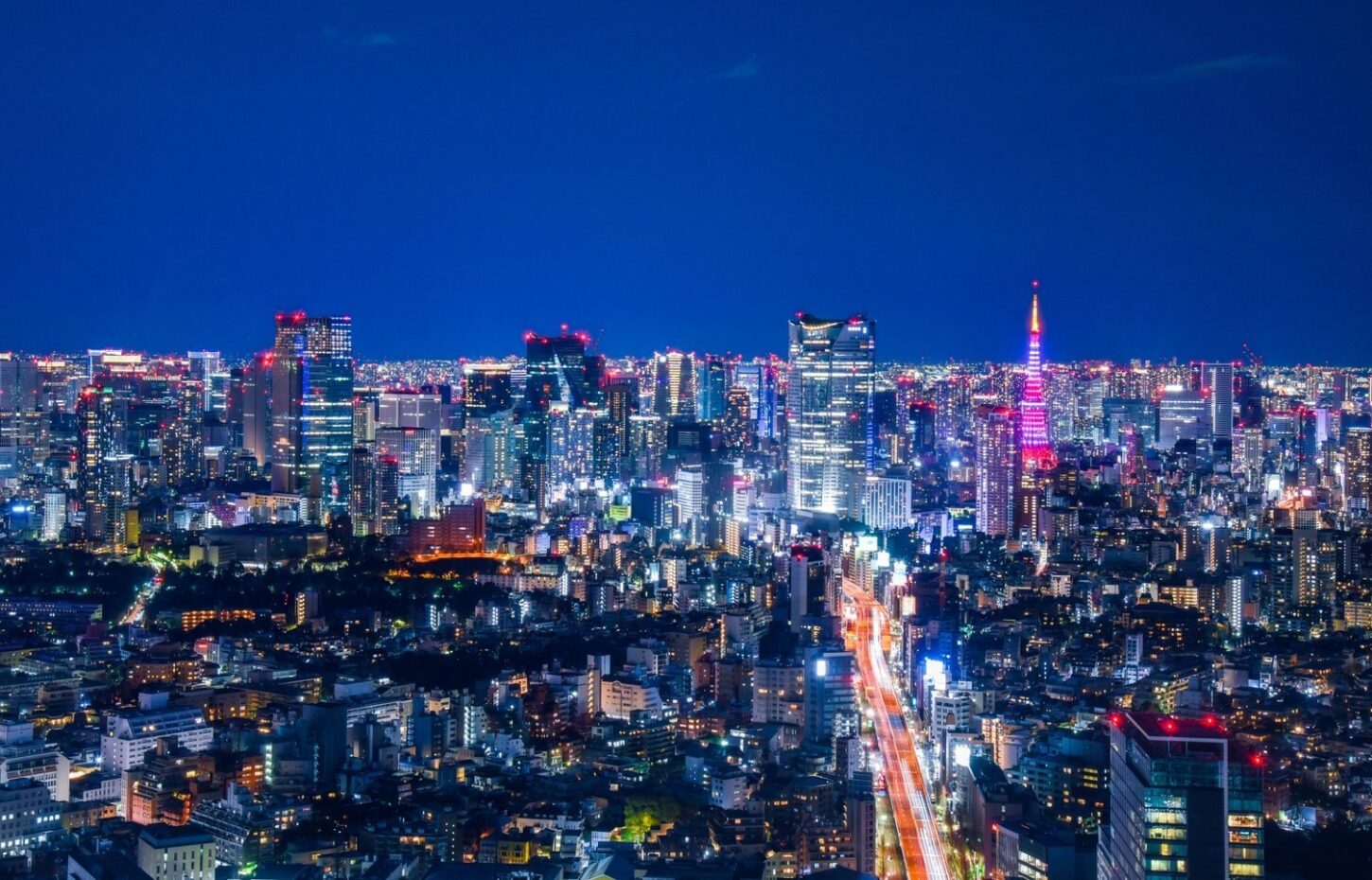
A good 3 day Tokyo itinerary is built backward from where you want to be at 17:00 (5 p.m.) each day, with one slot a night chosen from the booking table below. This one spends day 1 in Asakusa, day 2 around Meiji Jingu, Harajuku and Shibuya, and day 3 around Tsukiji and Ginza. Three of the night options carry booking rules: Shibuya Sky tickets go on sale up to two weeks ahead, Kabukiza single-act seats open online at noon the day before, and a private ozashiki, a gathering with geisha, is usually requested at least two to three days ahead. The rest you can walk into.
Miyakodori is a machiai-chaya in Asakusa, a traditional teahouse founded in 1950 where private gatherings with geisha are held. Asakusa is our neighborhood, so day 1 is the part of this plan we know first-hand. Outside Asakusa we have not walked these routes ourselves: every opening time, ticket rule and travel time below comes from an official page or from Tokyo Metro’s own route search, checked on 6 November 2026, and each source is listed at the end. Many travel times start at Asakusa Station, so if you are staying elsewhere, run your own starting point through the same route search.
Daytime is easy to fill in Tokyo, so this page spends its effort on the nights: which ones need a booking, by when, and how long the trip takes from where you will be standing.
3 Day Tokyo Itinerary at a Glance
Each day is anchored on the place where you stand at 17:00, because that decides which night options are within easy reach.
| Day | Daytime | At 17:00 | Night options |
|---|---|---|---|
| Day 1 | Asakusa and Senso-ji, with Ueno if you like (see our Asakusa and Ueno plan) | Asakusa | Senso-ji lit up, the terrace at the Asakusa Culture Tourist Information Center, Asakusa Engei Hall, Tokyo Skytree, or a private ozashiki with geisha |
| Day 2 | Meiji Jingu in the morning, then Harajuku and Shibuya | Shibuya | The Tokyo Metropolitan Government Building observatory, the small-bar alleys of Shibuya and Shinjuku, or Shibuya Sky |
| Day 3 | Tsukiji Outer Market, then Ginza | Ginza | A Kabukiza single act, or back to Asakusa for a private ozashiki with geisha |
Day 1 in Tokyo: Asakusa
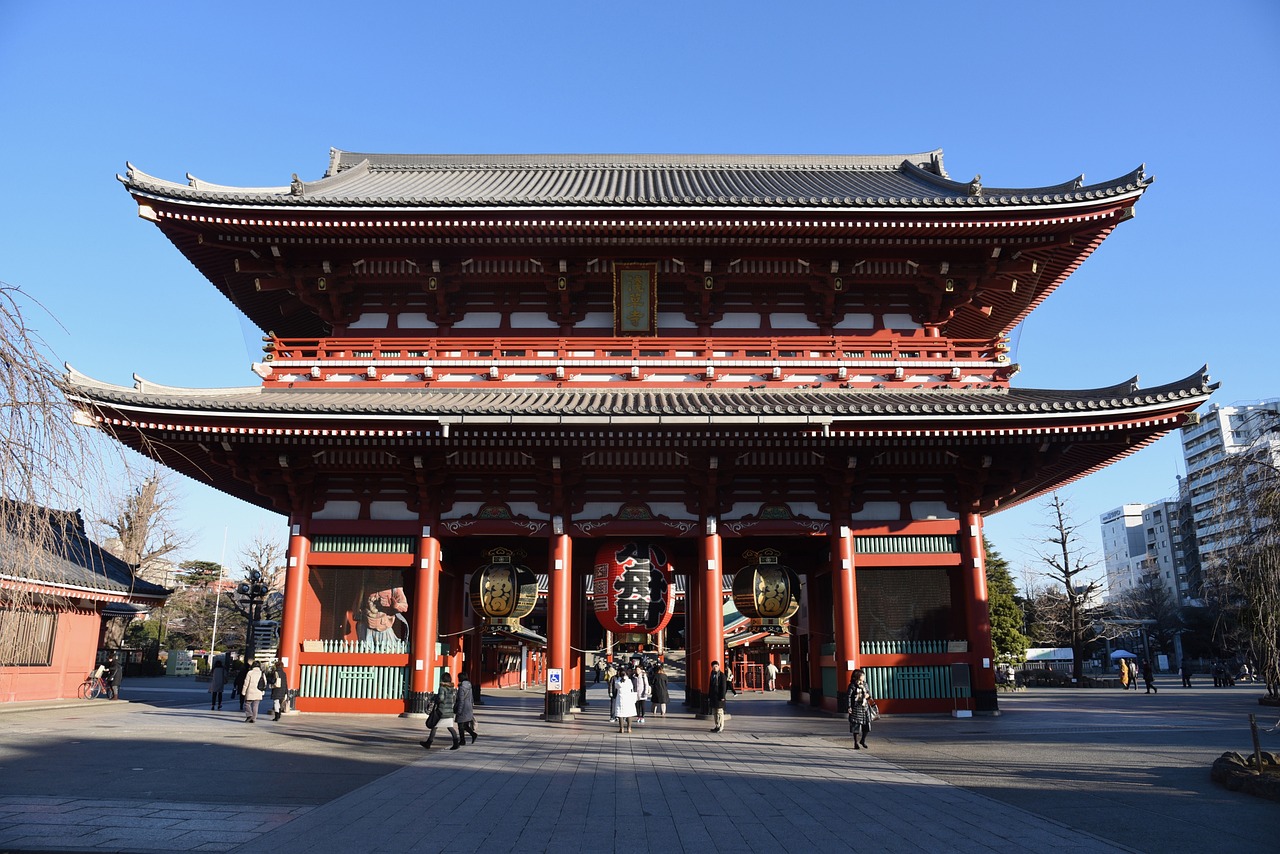
Spend the first day in Asakusa. Our guide to Asakusa to Ueno and the day between them sets out an order: Senso-ji early, Kappabashi in the late morning, Ueno at midday and Asakusa again at the end of the day. For more stops, see our guide to the best things to do in Asakusa, and if you land at Haneda or Narita first, our airport to Asakusa guide covers the trains.
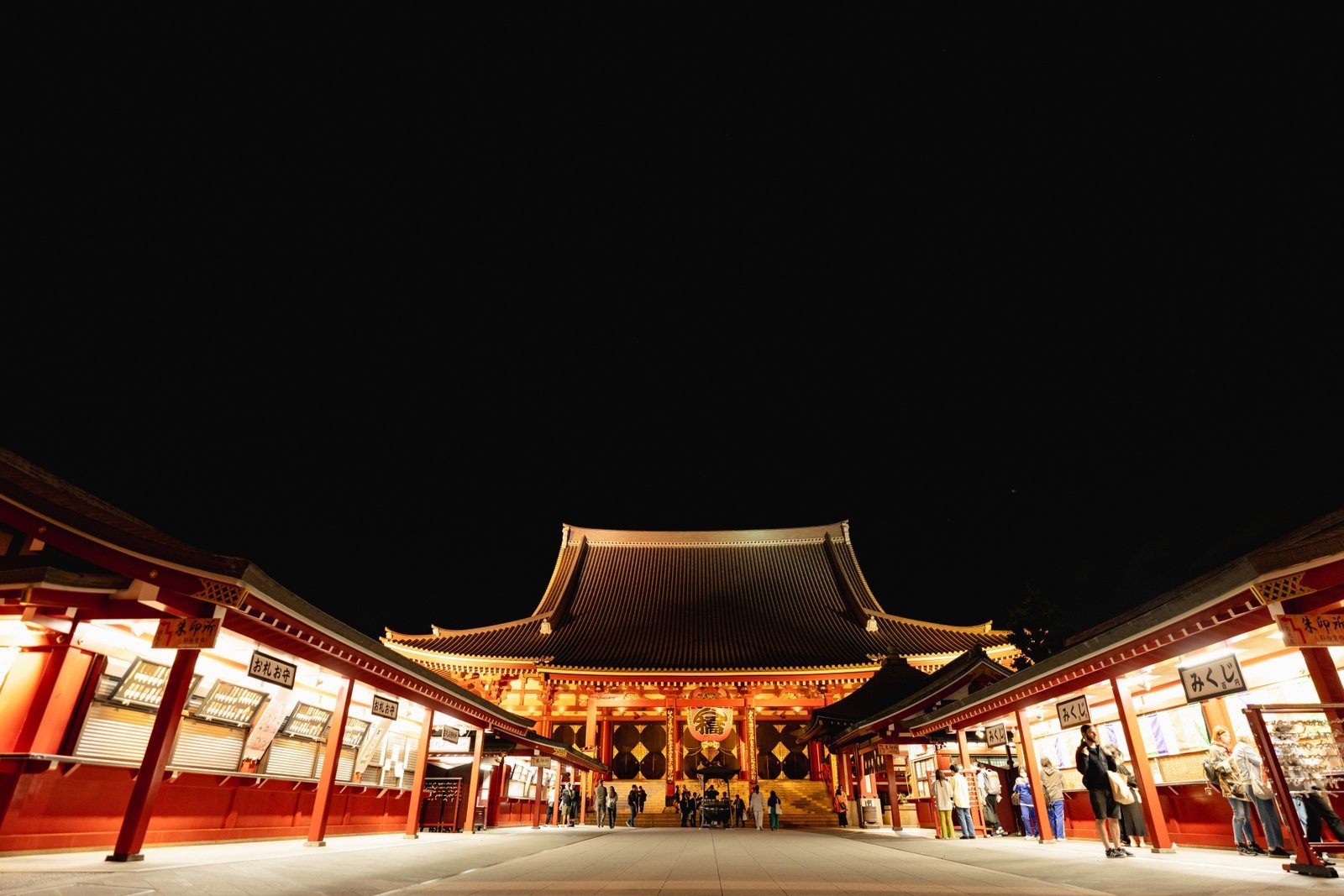
Do the temple itself in daylight. The Senso-ji Main Hall closes at 17:00, but every day from sunset to about 23:00 the temple lights the Main Hall, the five-storied pagoda, Hozomon and Kaminarimon, so the same walk looks different after dark.
Day 2 in Tokyo: Meiji Jingu, Harajuku and Shibuya
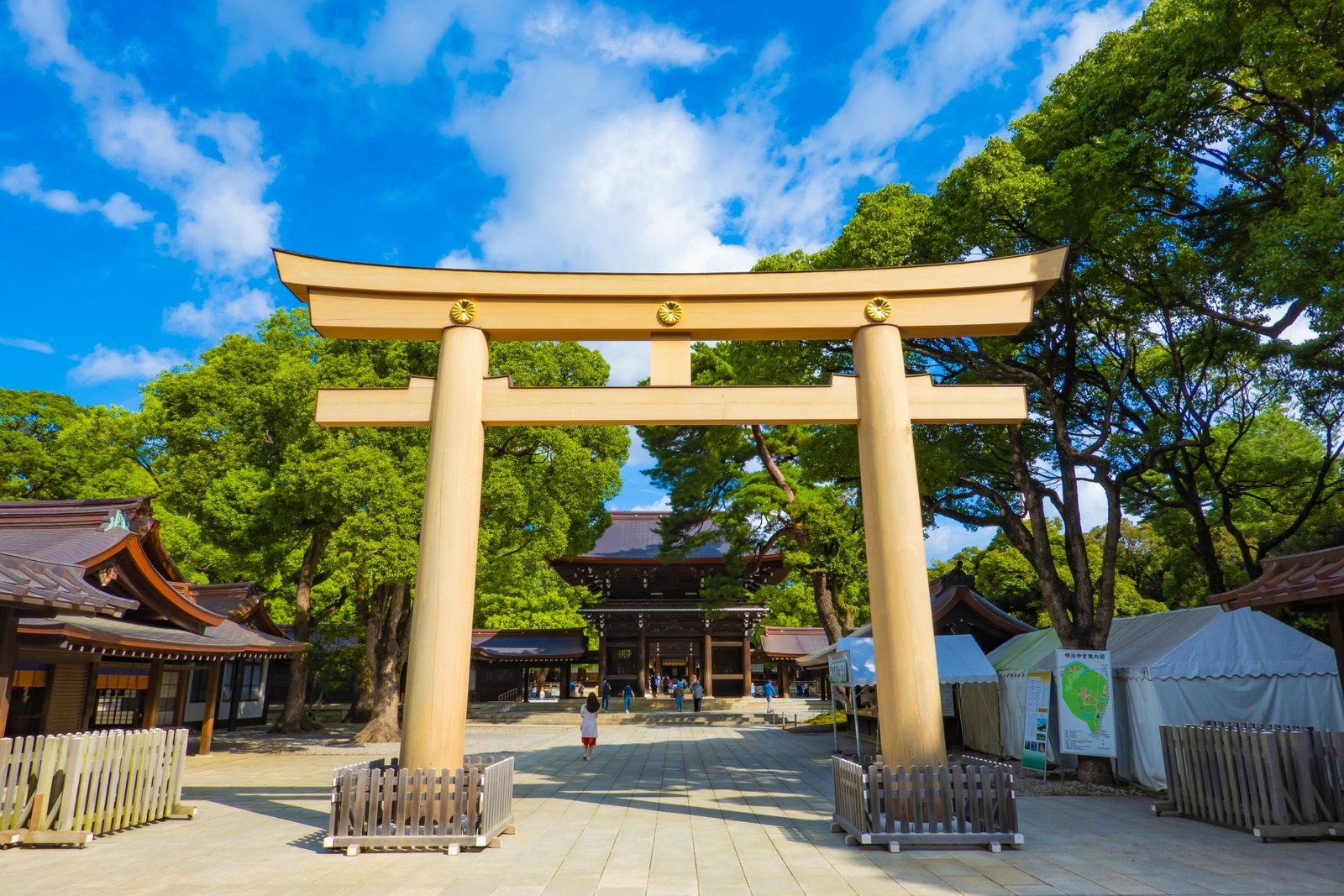
Start at Meiji Jingu, which closes at sunset. The shrine lists 6:10 to 16:10 for November, and the hours change by month. From Asakusa Station, Tokyo Metro’s route search gives about 35 to 40 minutes to Meiji-jingumae, with one change from the Ginza Line to the Chiyoda Line.
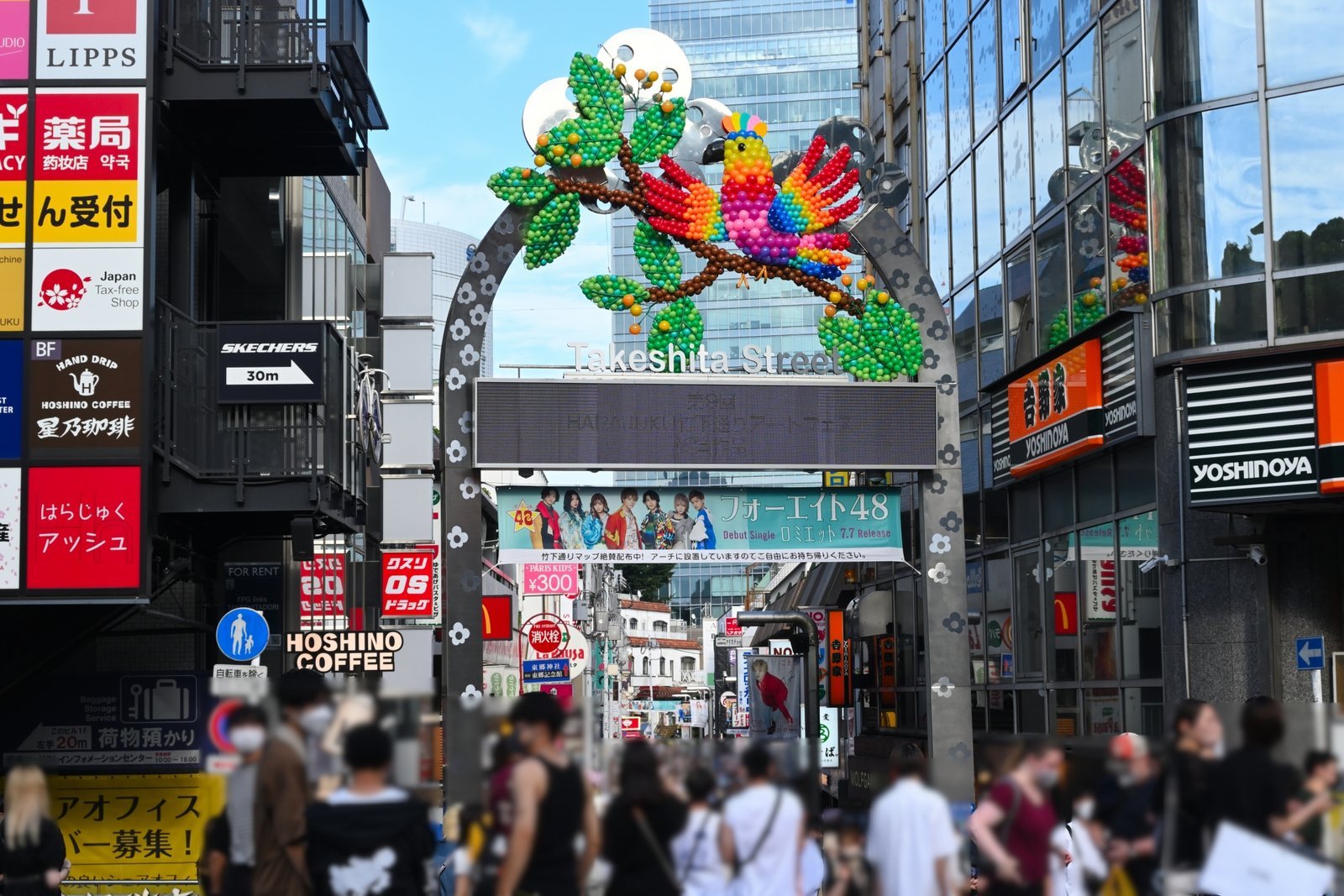
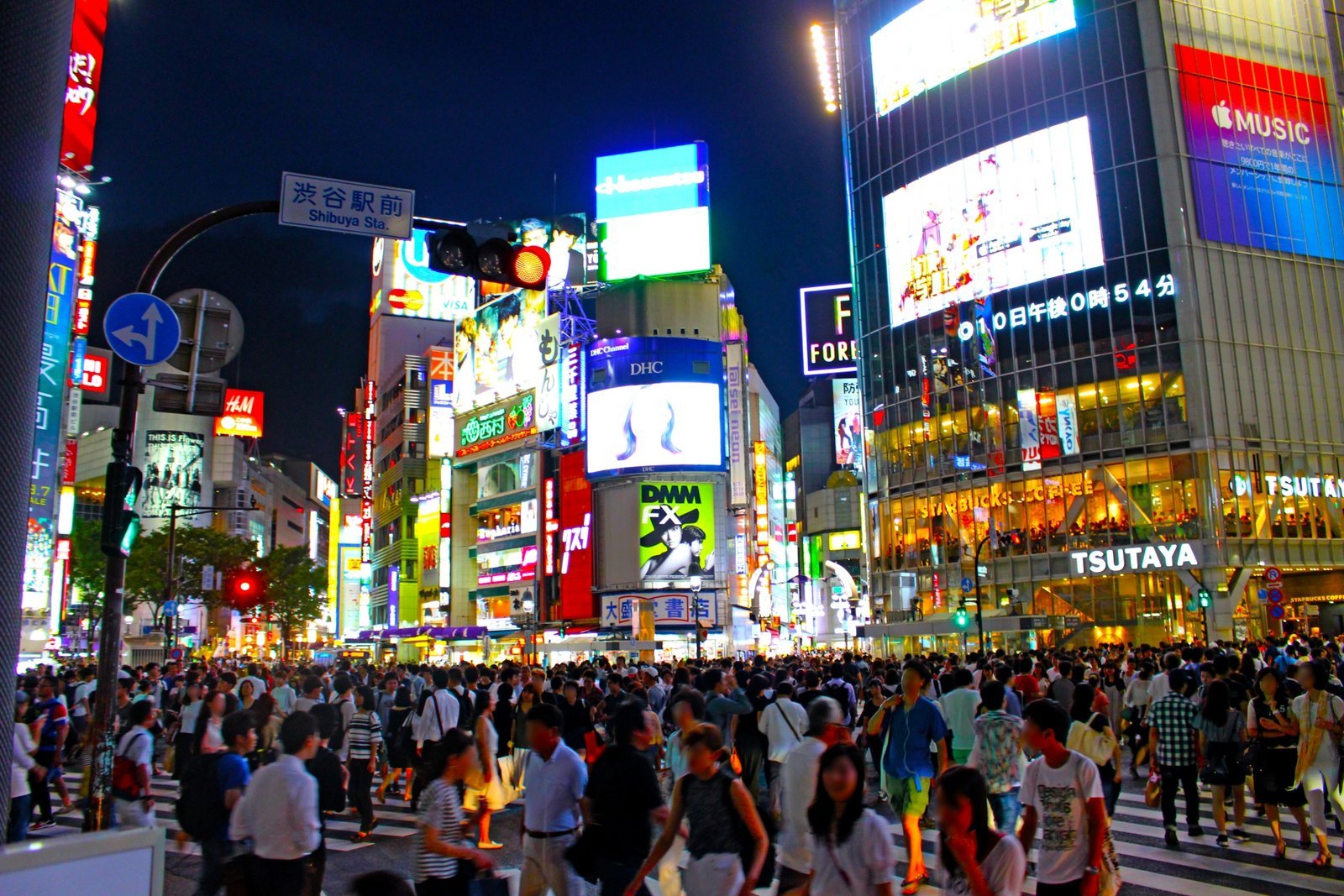
Harajuku and Shibuya fill the rest of the day. The route search gives about 5 minutes from Harajuku Station to the Shibuya Scramble Square building: 2 minutes on the JR train, then a 3-minute walk. We have not walked the streets between the two, so we leave that stretch of the day to you.
Be in Shibuya by 17:00. If Shibuya Sky is your pick for this night, read its ticket rules in the night 2 table before you travel.
Day 3 in Tokyo: Tsukiji and Ginza
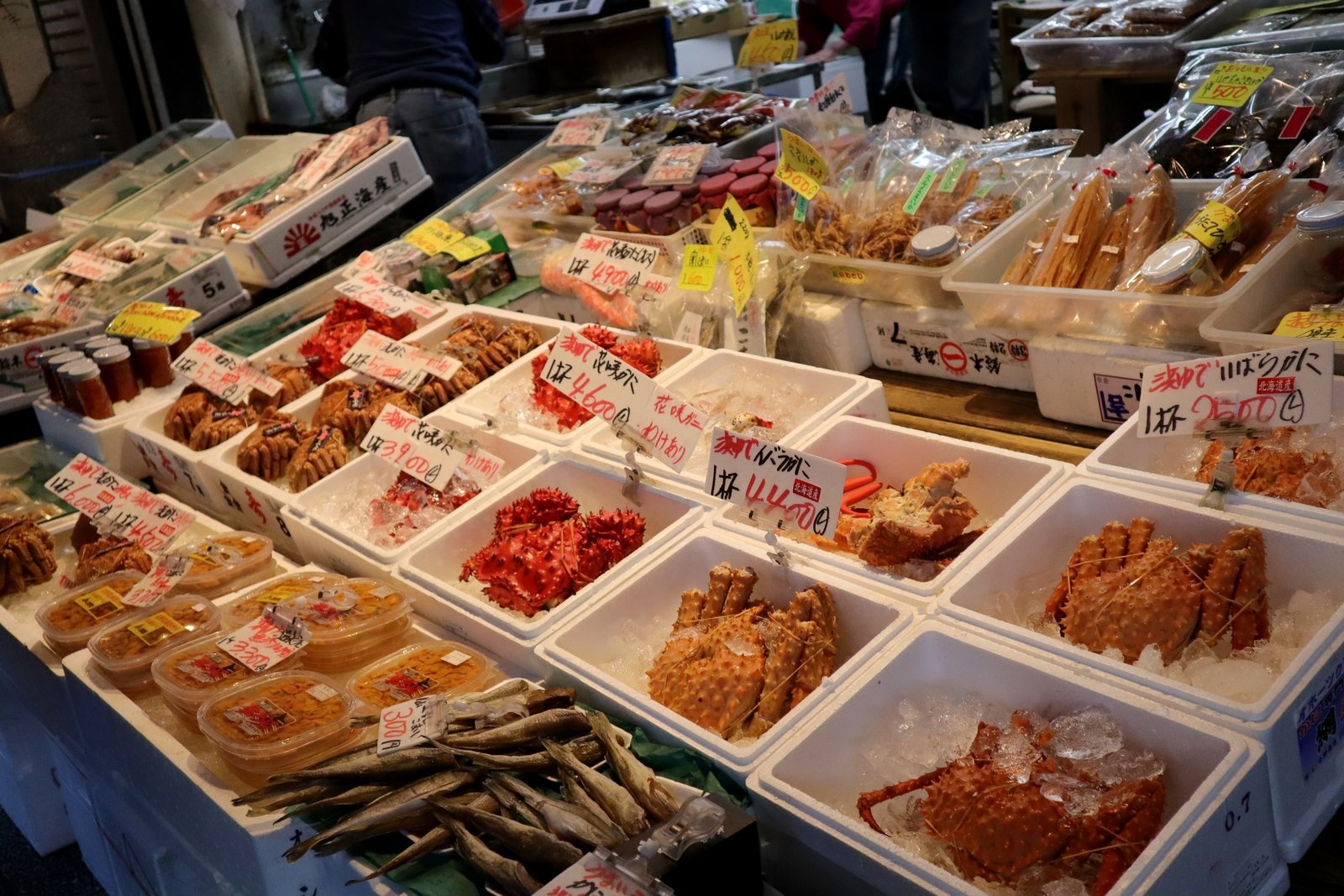
Spend the morning at Tsukiji Outer Market. From Asakusa Station the route search gives about 26 minutes with no change: 13 minutes on the Toei Asakusa Line, then a 13-minute walk. The shops keep their own hours, and we could not find one set of opening times for the market, so check the market’s English page and the shops you care about before you go.
From the market to the Kabukiza in Ginza is an 11-minute walk by the route search, so an afternoon in Ginza can end at the theater door at about 17:00.
Tokyo at Night: What to Book, and by When
Read each table from the place where you stand at 17:00. The middle columns give the booking rule and the hours that matter, and the last column gives the trip from your 17:00 spot. Each table runs from the free options to the ones that cost more. Our guide to cultural things to do in Tokyo at night describes several of these options in more detail.
Opening times and ticket rules were checked on each venue’s own page on 6 November 2026. Travel times and fares are from Tokyo Metro’s route search for weekday departures on Monday 9 November 2026. They are the search’s figures, not ones we timed ourselves.
Night 1: From Asakusa
| Option | Booking and deadline | Hours that matter | Getting there |
|---|---|---|---|
| Senso-ji lit up | None needed. | The lighting runs from sunset to about 23:00. The Main Hall itself closes at 17:00. | You are already there. |
| Terrace at the Asakusa Culture Tourist Information Center (our guide to the free terrace) | None. Free, and open every day, though maintenance closures are possible. | The terrace stays open until 22:00. The building itself closes at 20:00. | 1 minute on foot from Asakusa Station on the Ginza Line. |
| Asakusa Engei Hall, rakugo and variety | None. Buy at the window on the day; reservations are for groups of ten or more. Night tickets for adults cost less: ¥2,500 from 18:00 and ¥2,000 from 19:00, against ¥3,500 at the regular price. They go on sale at those hours on the day, never in advance. | The night part runs 16:40 to 21:00, and special programs differ. As a rule, once inside you can stay until the show ends, but there is no re-entry. | 8 minutes on foot from Asakusa Station. |
| Tokyo Skytree | No deadline. Buy online if you can: a ticket from the counter or a machine adds ¥500. | 10:00 to 22:00, last entry 21:00. Tembo Deck tickets start at ¥1,800 for adults, and the price depends on the day. | About 3 minutes on the Tobu Skytree Line from Tobu Asakusa Station. The route search gives 7 minutes door to door. |
| Private ozashiki with geisha at Miyakodori (weekdays) | Request it online at least two to three days ahead; for anything closer, phone us. Saturdays, Sundays and public holidays are closed days. | A visit can start between 14:00 and 20:00 and runs one to three hours. A three-hour visit starts at 17:30 or later. | 13 minutes on foot from Asakusa Station on the Ginza Line, through the Senso-ji grounds, or 4 minutes by taxi. We can call a taxi for the ride home. |
The Engei Hall’s own pages are in Japanese, and we found no mention of English-language shows on them. English-language rakugo is a separate event: the English Rakugo Association stages shows at the Asakusa Culture Tourist Information Center on some Sunday afternoons, from 14:00 to 16:00, with tickets sold through Peatix.
Night 2: From Shibuya
| Option | Booking and deadline | Hours that matter | Getting there |
|---|---|---|---|
| Tokyo Metropolitan Government Building observatory, Shinjuku | None. Free, and reservations are not taken. Expect a 20 to 30 minute wait to go up. | The South Observatory is open 9:30 to 22:00, with last entry 30 minutes before closing, and is closed on the first and third Tuesday of each month. The North Observatory closes at 17:30, but stays open until 22:00 on the days the South is closed. Either can close at short notice in bad weather. | About 30 minutes from the Shibuya Scramble Square building by the route search: 8 minutes on the JR Yamanote Line, with most of the rest on foot. The Toei Oedo Line station Tochomae connects directly to the building. |
| Small-bar alleys: Nonbei Yokocho in Shibuya, Omoide Yokocho and Golden Gai in Shinjuku | None: walk in. JNTO notes that most bars in Nonbei Yokocho fit ten people at most. | Each bar sets its own. Keep the last train in mind (see getting home below). | Nonbei Yokocho is in Shibuya. Shinjuku, for Omoide Yokocho and Golden Gai, is 4 minutes from Shibuya Station on the JR line by the route search. |
| Shibuya Sky, the rooftop deck | For entries from 19 November 2026, tickets bought on the official site for visitors living overseas, or through the authorized resellers Klook, Trip.com and KKday, are checked against the original passport of every visitor, and a QR code alone is not enough. Tickets go on sale up to two weeks ahead, so buy once you know the date. Online adult prices are ¥2,700 for entry until 14:59 and ¥3,400 from 15:00; the window charges ¥3,000 and ¥3,700. If the online sale is sold out, the window is sold out too. | 10:00 to 22:30, last entry 21:20. The roof can close in bad weather. On Thursday 19 November 2026 it opens at 15:00. | At 17:00 you are already in Shibuya: the building connects directly to Shibuya Station, with the entrance on the 14th floor. From Asakusa Station it is about 38 minutes: 34 on the Ginza Line with no change, then a 4-minute walk. |
Sunset comes early in the cooler months, so a 17:00 arrival at Shibuya Sky will miss it. Skytree’s website listed sunset at 16:41 on 6 November, so for daylight at the top, choose an entry before about 16:30 and check the sunset time for your date. Entries from 15:00 fall in the higher online price band.
Night 3: From Ginza
| Option | Booking and deadline | Hours that matter | Getting there |
|---|---|---|---|
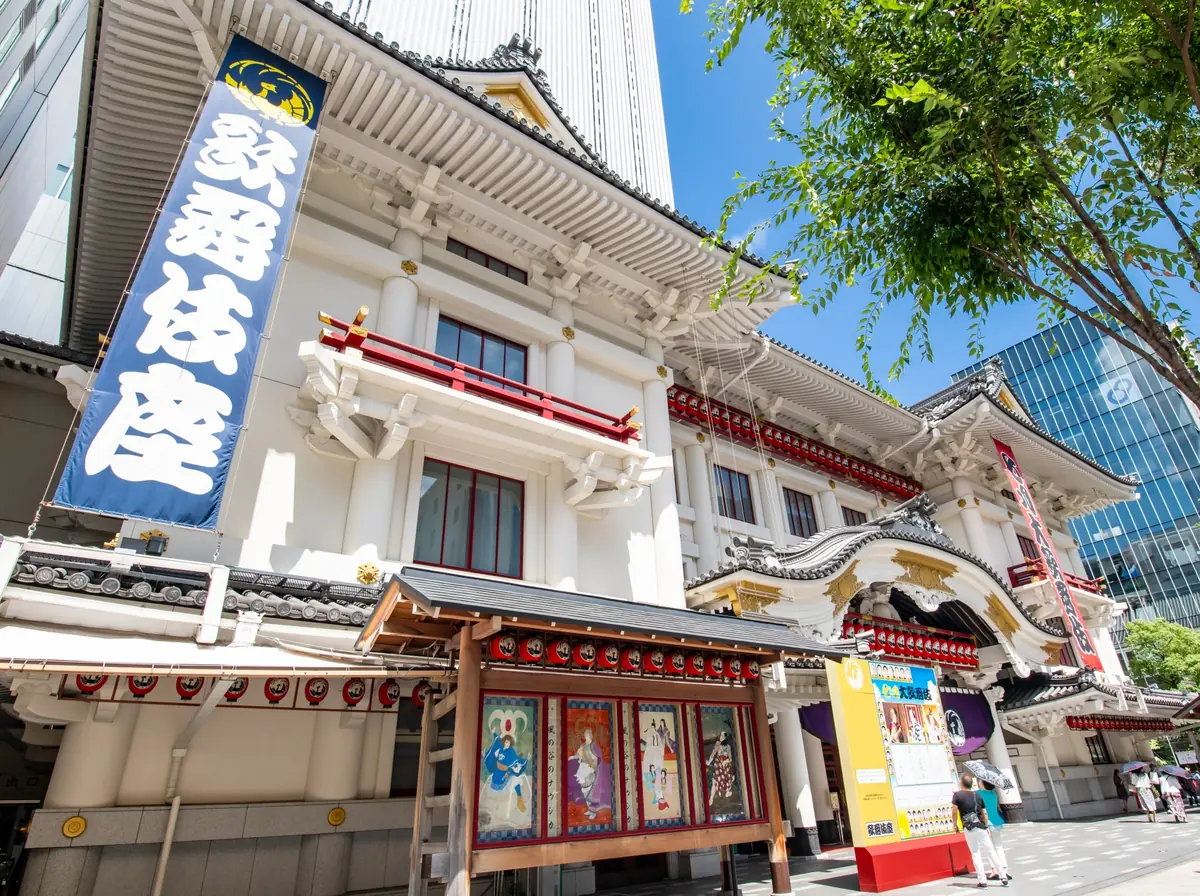
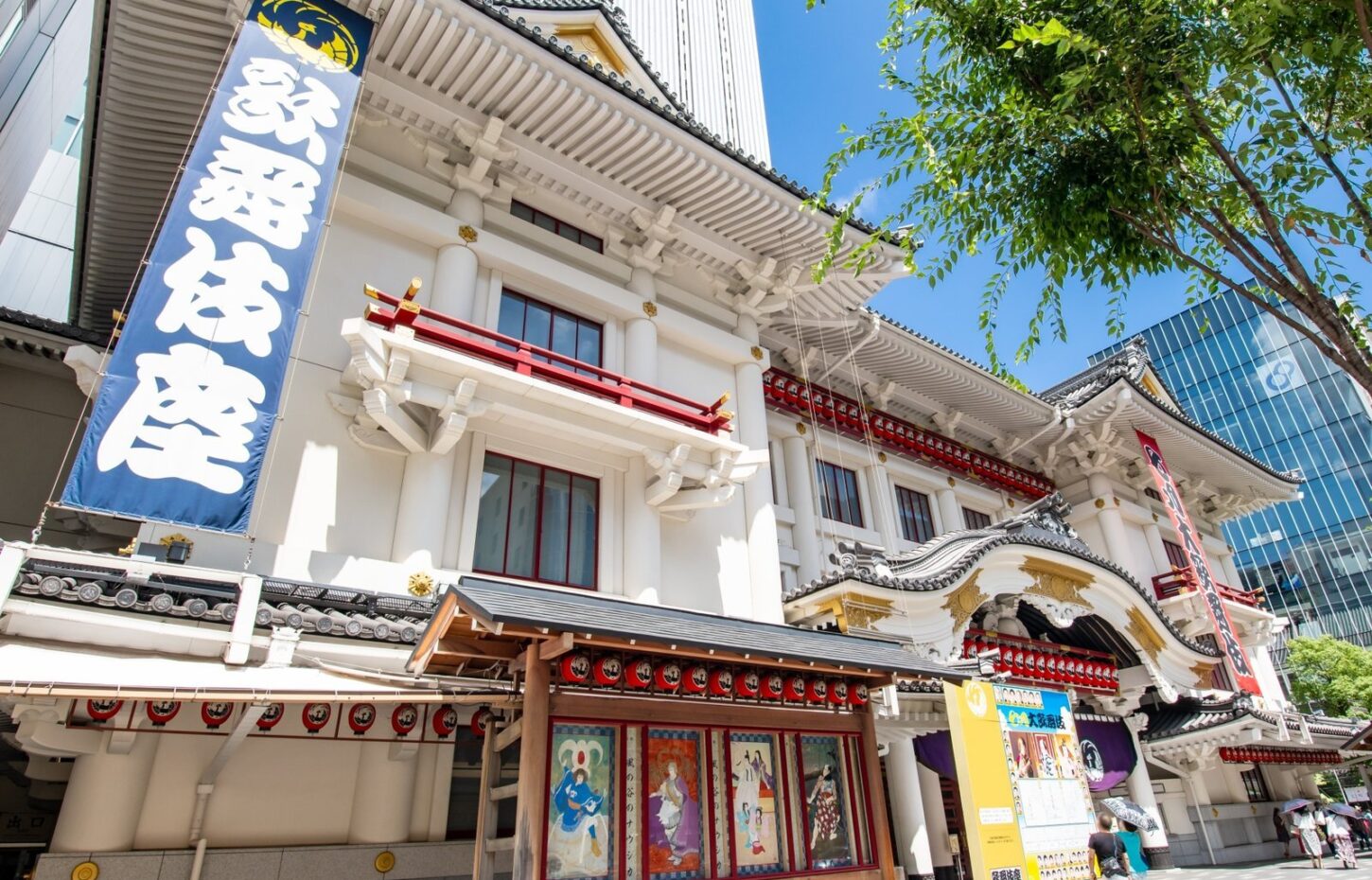
| Kabukiza single act, 4th-level seats | Online from 12:00 the day before, act by act. If seats remain, the single-act box office sells from 10:00 on the day. There are about 70 seats online and about 20 at the box office, and sales end when they run out. | Programs change monthly. In the November run, 1 to 25 November 2026, 4th-level acts cost ¥1,600 to ¥3,000, and the last act of the day runs 18:45 to 21:17. Check the day’s times on Kabuki Web. | You are in Ginza already. Kabuki Web gives 1 minute on foot from Exit 3 of Higashi-Ginza Station. From Asakusa Station it is about 15 minutes with no change on the Toei Asakusa Line. |
| Back to Asakusa for a private ozashiki with geisha (weekdays) | The same rules as night 1: online at least two to three days ahead, and closed on Saturdays, Sundays and public holidays. | The last start is 20:00, and a visit runs one to three hours. | 12 to 13 minutes from Higashi-Ginza to Asakusa Station on the Toei Asakusa Line with no change, then 15 minutes on foot from the Toei station or 4 minutes by taxi. |
From the 4th level you cannot see the hanamichi, the raised walkway that runs through the audience, and the main stage may be partly hidden. English captioning costs ¥1,000 per act, in cash. For how kabuki compares with rakugo, sumo and an ozashiki, see our guide to traditional entertainment in Tokyo.
The Ozashiki as One Option
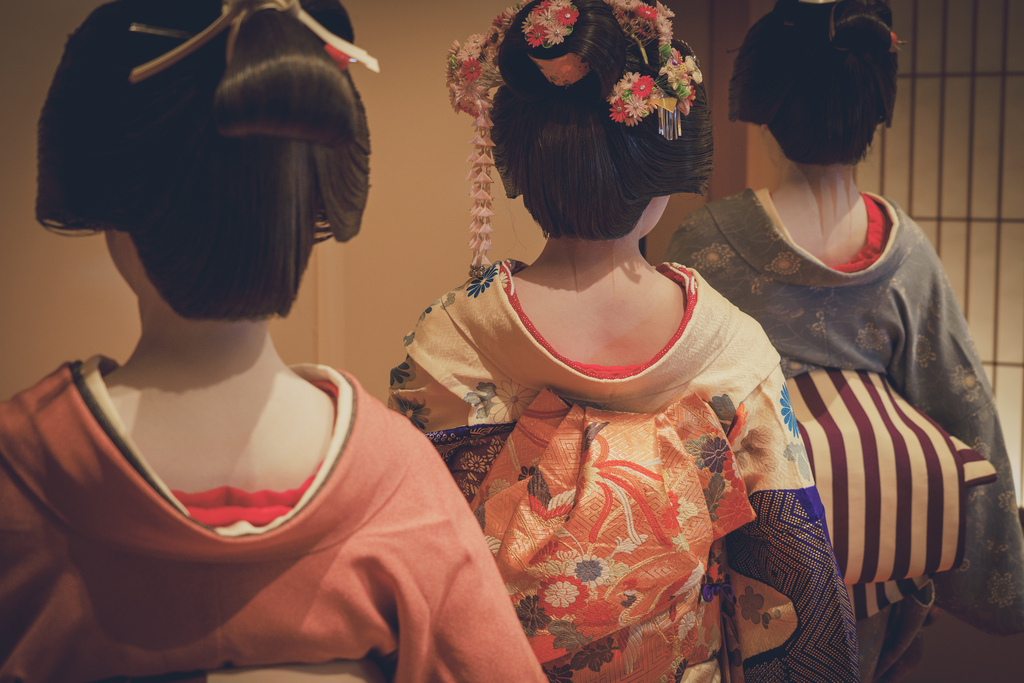
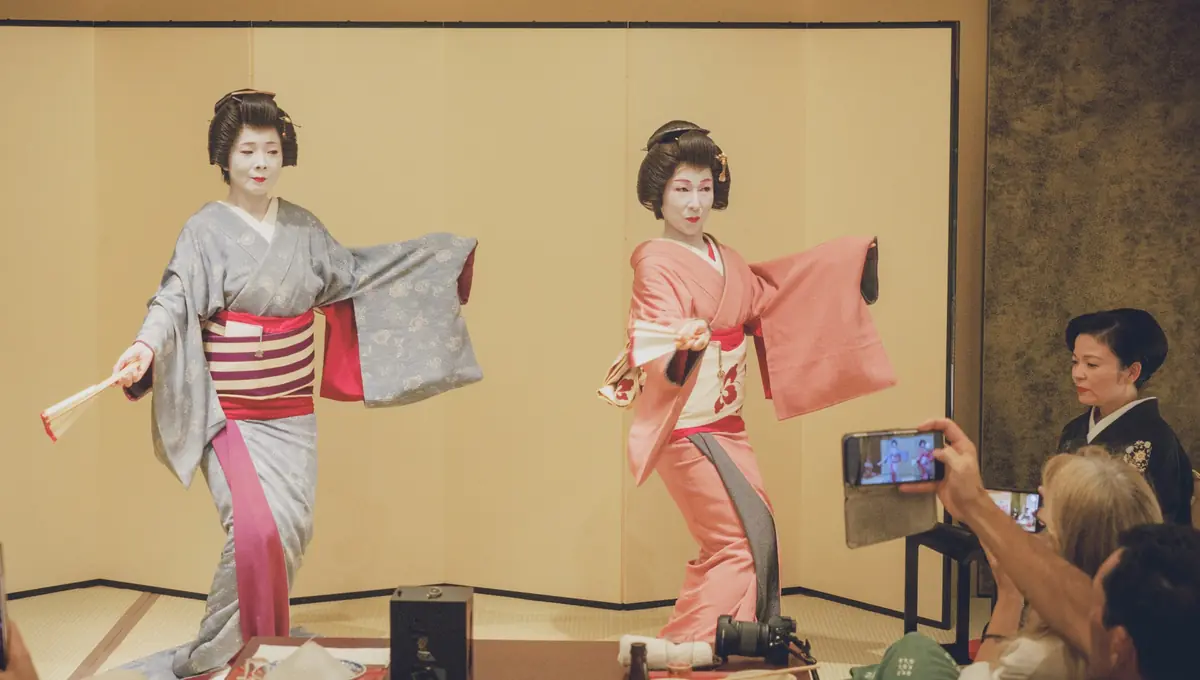
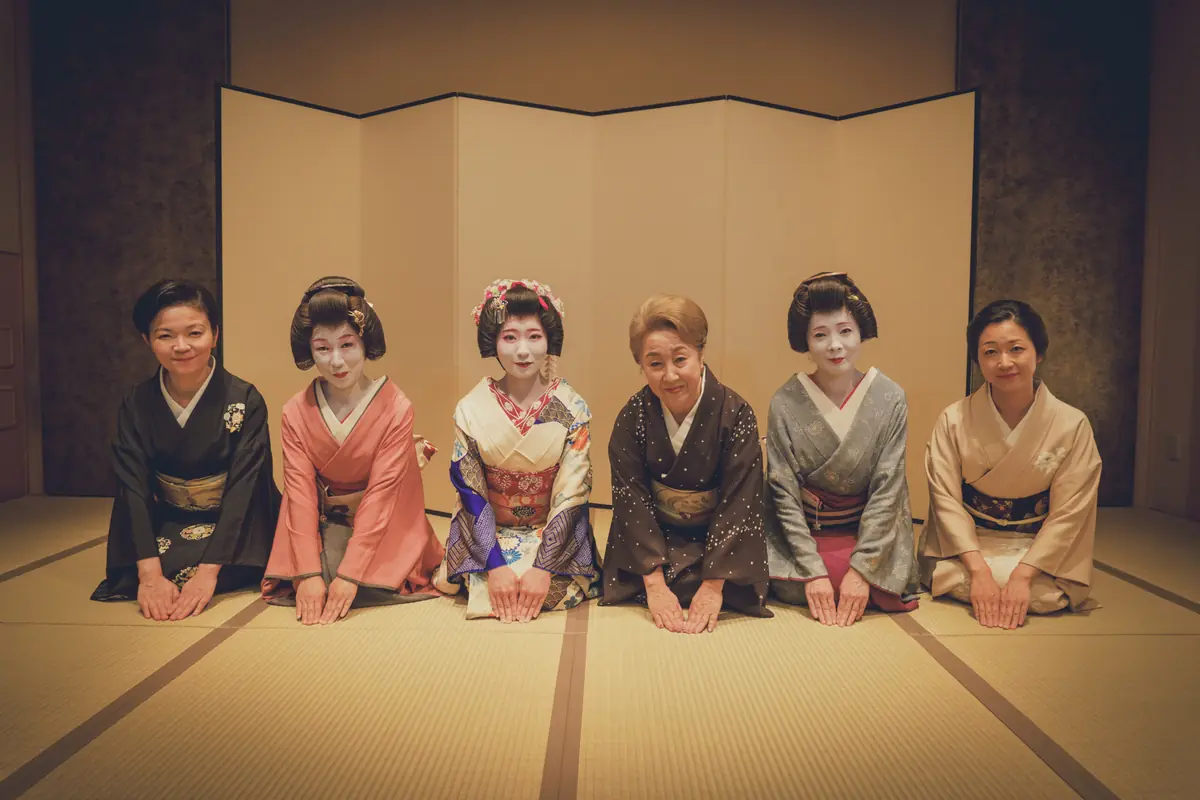
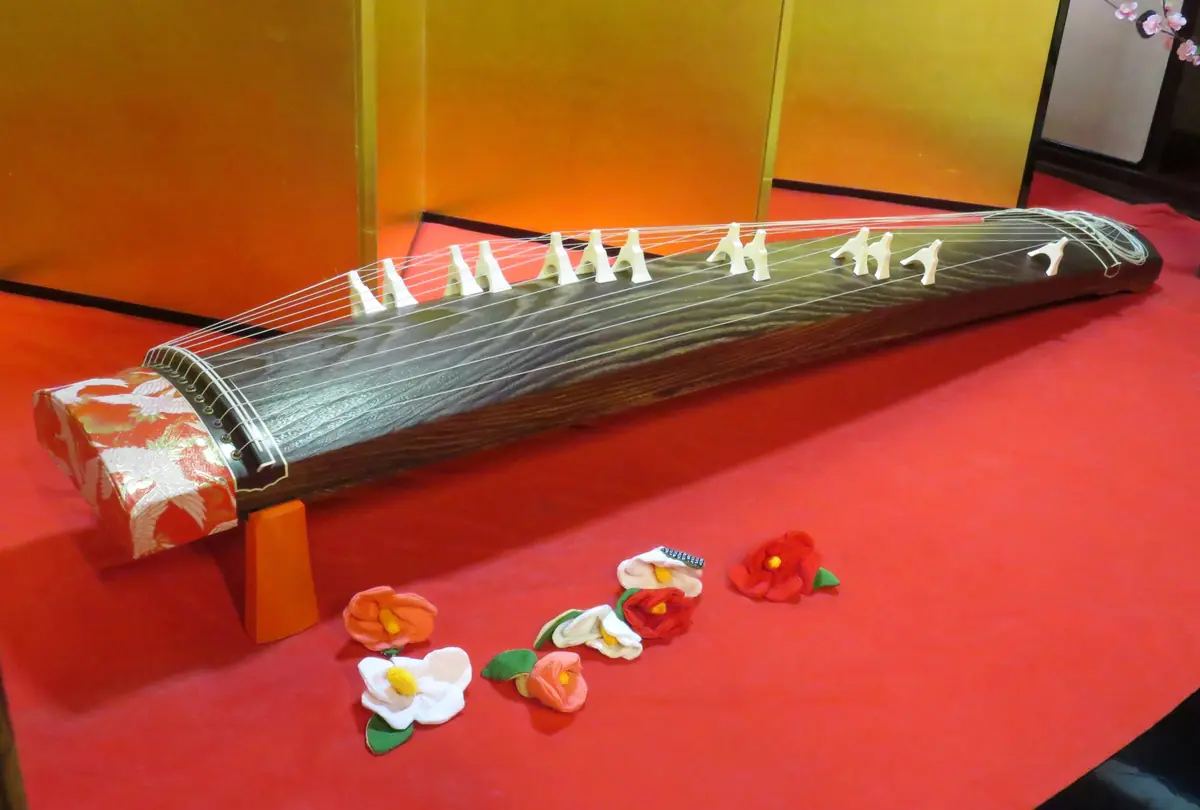
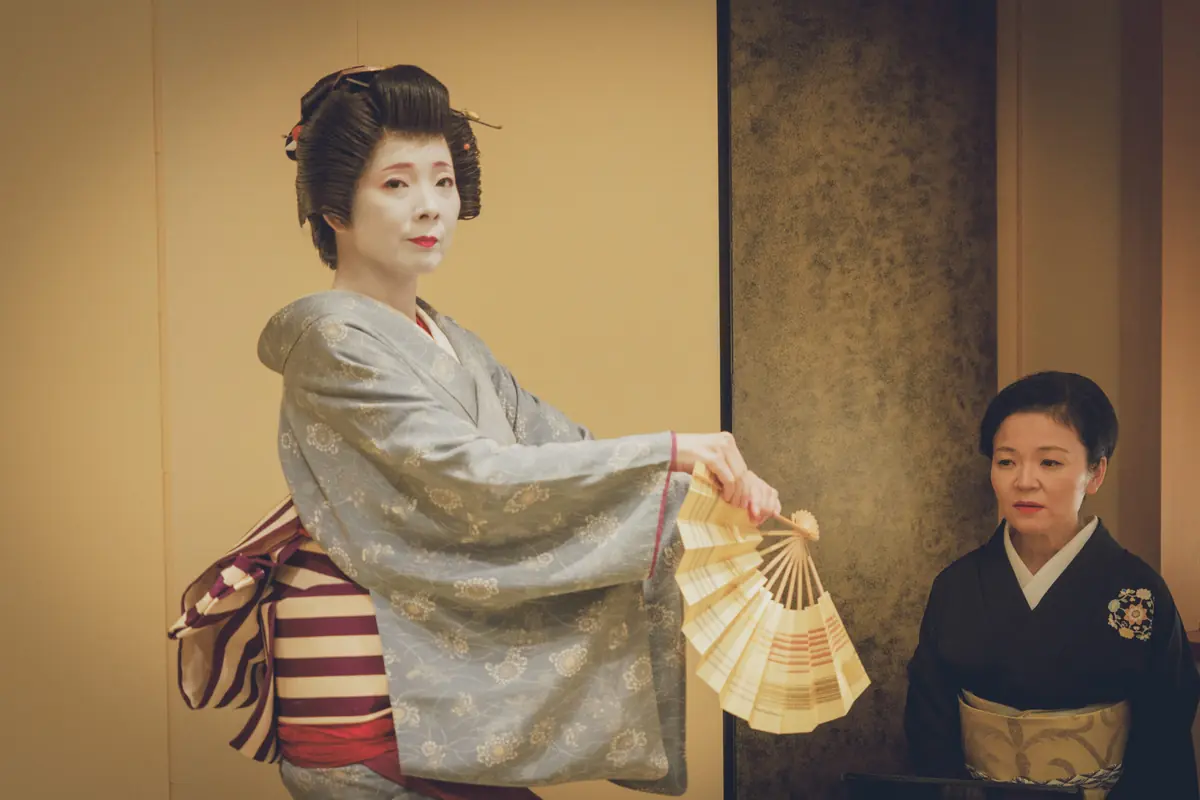
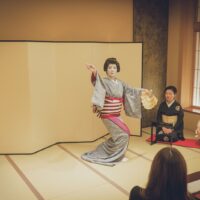
At an ozashiki, a private gathering with geisha, you sit in a tatami room while the geisha pour drinks, talk with you, play games and dance to live shamisen (a three-stringed lute). It is not a tea ceremony.
It fits a weekday night with nothing else booked. Saturdays, Sundays and public holidays are closed days, and a special opening needs at least a week’s notice and a surcharge, arranged by phone or email rather than the booking form. On a short trip the simplest plan is to put the ozashiki on one of your weekday nights, as night 1 in Asakusa or as night 3 after Ginza.
A visit starts between 14:00 and 20:00 and lasts one to three hours, and a single guest can book. No introduction is needed: a first-time visitor can request an ozashiki online, in English. The floors are tatami, but two rooms are set with tables and chairs and one has a table over a sunken floor, so nobody has to kneel. The tatami room page shows all three.
Miyakodori stands at 3-23-10 Asakusa, Taito-ku, behind Senso-ji to the north. From Asakusa Station on the Ginza Line it is a 13-minute walk, through the temple grounds and about three minutes beyond them, or a 4-minute taxi.
It suits some itineraries and not others. If your nights fall on Saturdays, Sundays or public holidays, we are closed unless we arrange a special opening, and a viewpoint or the small-bar alleys may suit you better. If you would rather not sit for an hour or more, one of the free viewpoints is the lighter choice.
If you have just an afternoon free, the 75-minute Ozashiki Tea House is a shared session that runs mainly on Mondays, Wednesdays and Fridays at 15:00 and ends at 16:15. You can book online until 14:00 on the day, and after that by phone or on the spot. It includes a dance with live shamisen, questions for the geisha, a game, and matcha with a Japanese sweet, and ordering one drink is required, paid separately. English support is available. Current rates for every plan are on our pricing page.
Put a Private Gathering with Geisha on One of Your Tokyo Nights
An ozashiki is a private gathering with geisha, who pour drinks, talk with you, dance to live shamisen and play games with you. Your group has a tatami room to itself for one to three hours on a weekday, and even a single guest can book.
Request a Reservation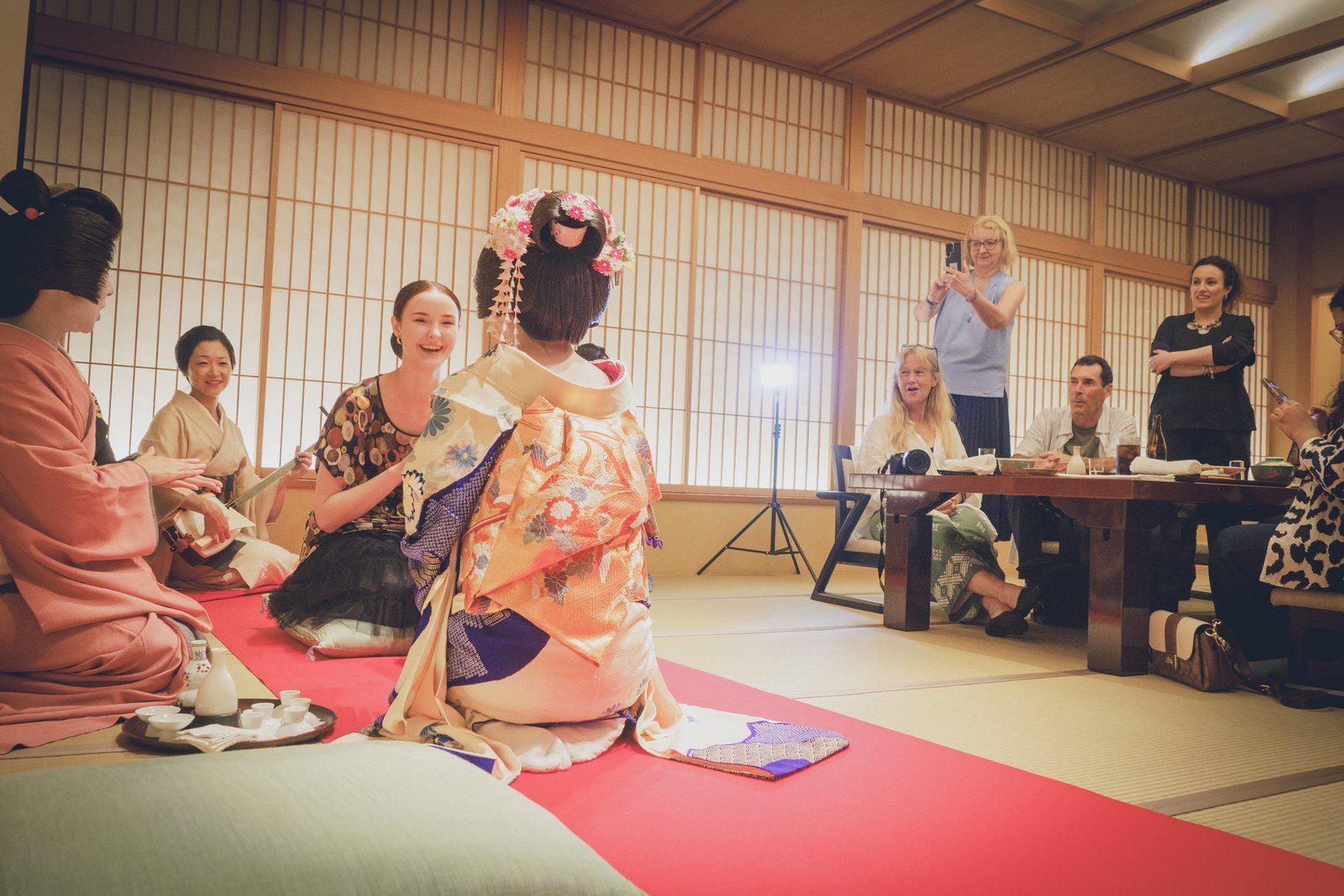
Getting Around Tokyo and Getting Home
- Route search. Tokyo Metro’s own route search covers JR and Toei lines as well, and it can look up the first and last train for a date. Enter your own hotel as the starting point: the times above that start at Asakusa Station assume you are staying in Asakusa.
- Last trains. According to JNTO, last trains in most Japanese cities leave around midnight to 1 a.m. On Monday 9 November 2026 the route search’s last trip from Shibuya Station to Asakusa Station left at 23:51 and arrived at 00:24, and the last trip from the Kabukiza to Asakusa Station left at 00:04 and arrived at 00:23. Saturday 14 November gave the same 23:51 from Shibuya. Look up your own date before you commit to a late slot.
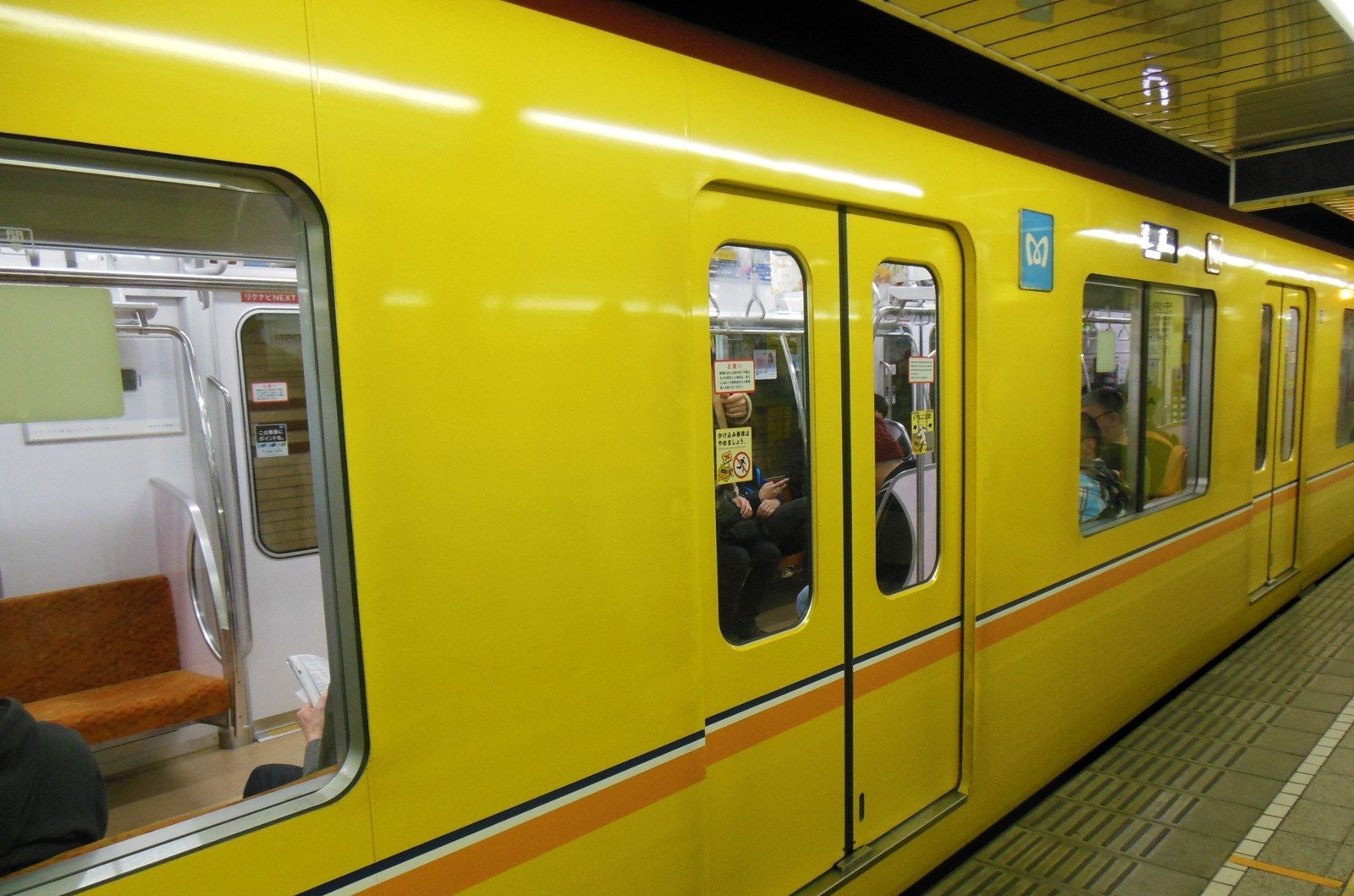
- Subway pass. The Tokyo Subway Ticket is sold to overseas visitors and to domestic visitors who live outside Tokyo and seven nearby prefectures. It costs ¥1,000 for 24 hours, ¥1,500 for 48 hours and ¥2,000 for 72 hours from your starting time, and it covers every Tokyo Metro and Toei Subway line. JR trains are not included, so the Harajuku to Shibuya ride on day 2 is paid separately.
- Whether the pass pays. Staying in Asakusa, the route search’s IC card fares come to ¥504 for the two subway rides on day 2 (¥252 each way) and ¥440 on day 3 (¥220 each way), both under the ¥1,000 price of a 24-hour ticket. On this plan, single fares cost less. A different hotel changes the sum.
Frequently Asked Questions
What is a good 3 day Tokyo itinerary for a first visit?
Plan each day backward from where you want to be at 17:00. A workable plan is Asakusa on day 1; Meiji Jingu, Harajuku and Shibuya on day 2; and Tsukiji and Ginza on day 3. Give each day one night slot from the booking table: Senso-ji lit up or a private ozashiki with geisha on day 1, the free metropolitan government observatory or Shibuya Sky on day 2, and a Kabukiza act on day 3.
Is 3 days enough for Tokyo?
It is enough for a first look at three areas, not the whole city. This plan gives each day one area and each night one slot, and Ueno can join day 1 if you follow our Asakusa to Ueno plan. Anything beyond that needs a fourth day or a swap.
What should I book before I arrive in Tokyo?
Three night options carry booking rules. Shibuya Sky tickets are sold up to two weeks ahead, and for entries from 19 November 2026, tickets bought on its site for visitors living overseas, or through Klook, Trip.com and KKday, are checked against original passports. Kabukiza single-act seats go on sale online at 12:00 the day before. A private ozashiki (a gathering with geisha) at Miyakodori is usually requested at least two to three days ahead, and it is closed on Saturdays, Sundays and public holidays. The Tokyo Metropolitan Government Building observatory, Senso-ji lit up and the small-bar alleys need no booking.
Can I buy Shibuya Sky tickets on the day?
Sometimes. As of 6 November 2026 the window sells adult tickets at ¥3,000 for entry before 15:00 and ¥3,700 from 15:00, against ¥2,700 and ¥3,400 online. If the online sale is sold out, the window is sold out as well, and tickets go on sale up to two weeks ahead, so buy early for a date you cannot move.
Is the Tokyo Subway Ticket worth it for three days?
Not on this plan if you stay in Asakusa. On 6 November 2026 Tokyo Metro’s route search gave IC card fares of ¥252 between Asakusa and Shibuya and ¥220 between Asakusa and Higashi-Ginza. The subway rides on day 2 add up to ¥504 and on day 3 to ¥440, against ¥1,000 for a 24-hour ticket. Staying elsewhere or adding rides changes the sum, and JR rides are not covered.
What time is the last train in Tokyo?
According to JNTO, last trains in most Japanese cities leave around midnight to 1 a.m. On Monday 9 November 2026 Tokyo Metro’s route search gave 23:51 as the last trip from Shibuya Station to Asakusa Station, arriving at 00:24. Look up your own station and date before you book a late slot.
Can I see a geisha ozashiki on a weekend?
Not on a standard booking, because Miyakodori is closed on Saturdays, Sundays and public holidays. A special opening is possible with at least a week’s notice and a surcharge, arranged by phone or email. For a weekday afternoon, the 75-minute Ozashiki Tea House runs mainly on Mondays, Wednesdays and Fridays at 15:00.
Sources
Pages checked on 6 November 2026. Hours, prices and rules change, so confirm on the venue’s own page before you go. Pages marked Japanese were read in Japanese.
- Tokyo Metro, route search: travel times, IC card fares and last trains, queried on 6 November 2026 for weekday departures on Monday 9 November 2026 and for one Saturday, 14 November 2026.
- Tokyo Metro, Tokyo Subway Ticket: prices, the lines covered and who can buy it.
- Senso-ji, lighting schedule (Japanese): sunset to about 23:00 every day.
- Senso-ji, visiting the Main Hall (Japanese): the Main Hall closes at 17:00.
- Taito City, Asakusa Culture Tourist Information Center: building hours, terrace hours, free admission and the walk from Asakusa Station.
- Asakusa Engei Hall, tickets (Japanese): session times, night tickets, walk-in sales and group reservations.
- English Rakugo Association: English-language shows at the Asakusa Culture Tourist Information Center.
- Tokyo Skytree and its ticket page: opening hours, last entry, sunset time, ticket prices and the counter fee.
- Tobu Railway, access to Asakusa and Tokyo Skytree Town: the 3-minute ride on the Tobu Skytree Line.
- Shibuya Sky, tickets (Japanese): prices, sales window, sold-out rule, the passport check from 19 November 2026 and the hours for 19 November. Also its FAQ (Japanese; opening hours and last entry) and access page (Japanese; the 14th-floor entrance).
- Tokyo Metropolitan Government, observatories (Japanese): hours, closing days, waiting time and the rule on reservations. Its facilities page (Japanese) gives the station access.
- Kabuki Web, single-act tickets for the 4th level: sales times, seat numbers, the view and English captioning.
- Kabuki Web, single-act times for November 2026: acts, times and prices for 1 to 25 November.
- Kabuki Web, Kabukiza Gallery: the Kabukiza Tower address, 4-12-15 Ginza, and the walk from Exit 3 of Higashi-Ginza Station.
- Meiji Jingu, how to visit: opening hours by month.
- Tsukiji Outer Market, English page: the market’s own page, where we found no single set of opening hours.
- JNTO, nightlife guide: last trains in Japanese cities. Its yokocho feature describes Nonbei Yokocho, Omoide Yokocho and Golden Gai.


- Romantic Things to Do in Tokyo: Cultural Ideas for Couples, Compared
- Kimono vs Yukata: The Differences, and What to Wear in Asakusa
26 Best Experiences in Tokyo: Unique Guide (2026)
The Ultimate Tokyo Food Experience 2026: A Guide to the Best Tours, Restaurants, and Local Eats
Best Private Room Restaurant in Tokyo: A Guide to Exclusive Dining at Asakusa Miyakodori
Best Kaiseki Tokyo: Japan’s Ultimate Culinary Art Form
Traditional Entertainment in Tokyo: Kabuki, Sumo, Rakugo and a Geisha Ozashiki
The Ultimate Guide to Tokyo Dinner Shows 2026
Comment ( 0 )
Trackbacks are closed.
No comments yet.