



Asakusa Observation Deck: The Free Terrace Above Kaminarimon
We are Miyakodori, a teahouse in Asakusa. If you want a view over the streets around Senso-ji without paying for a ticket, there is one, and it is a short walk from Asakusa Station.
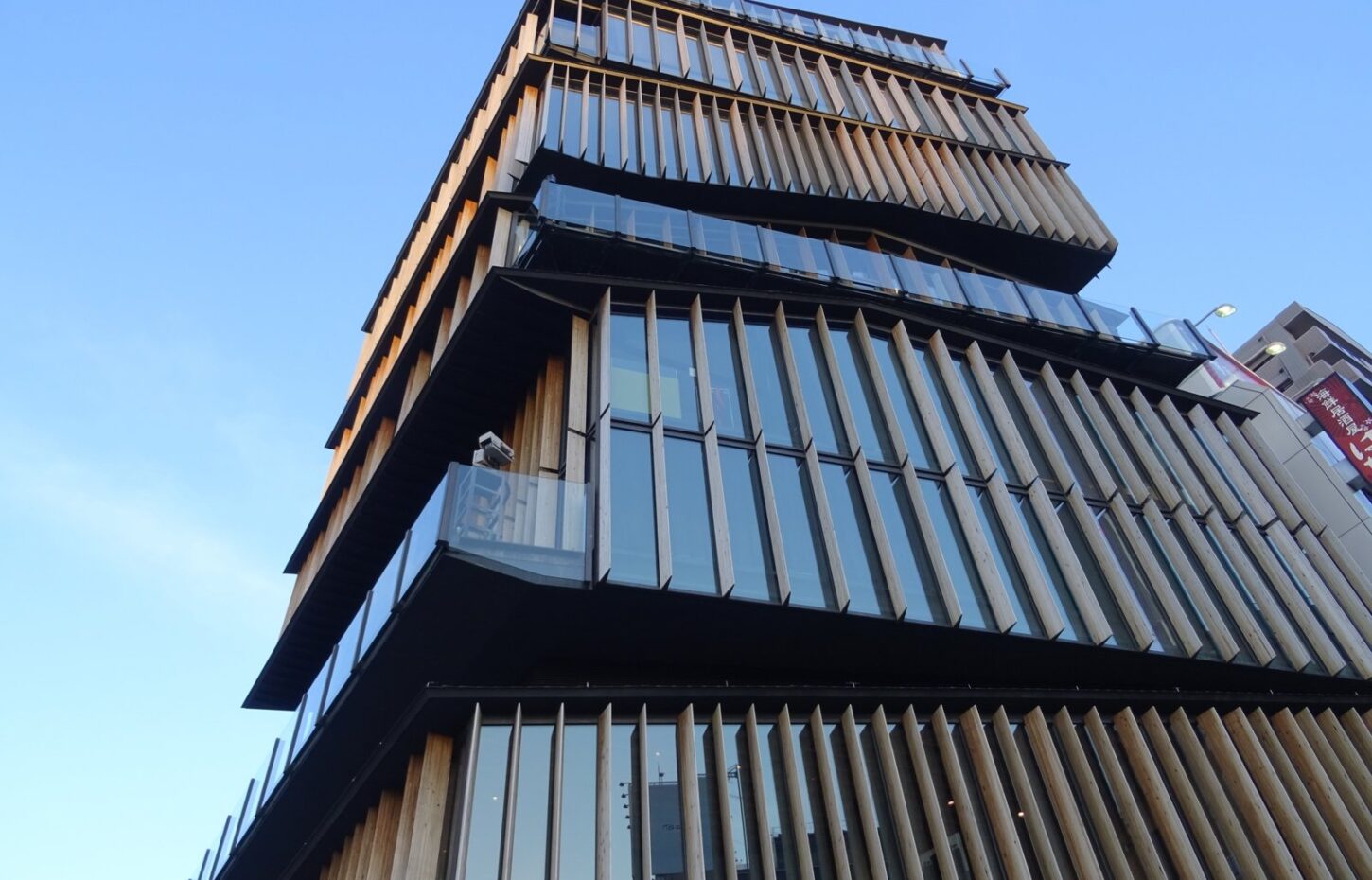
The Asakusa observation deck most visitors mean is the free terrace on the 8th floor of the Asakusa Culture Tourist Information Center, opposite Kaminarimon. It is open every day from 9:00 a.m. to 10:00 p.m., it costs nothing, and it looks out over Asakusa and Tokyo Skytree.
The Free Terrace at a Glance
The terrace belongs to a public building run by Taito City, designed by the architect Kengo Kuma. The details below come from Taito City’s own pages, checked on 3 October 2026.
- Where
- 8th floor, Asakusa Culture Tourist Information Center, 2-18-9 Kaminarimon, Taito City, Tokyo
- Terrace hours
- 9:00 a.m. to 10:00 p.m. The rest of the building closes at 8:00 p.m.
- Cost
- Free
- Open
- Every day, though the center says it may close for maintenance
- Getting there
- 1 minute from Asakusa Station on the Ginza Line, 2 minutes from the Toei Asakusa Line, 5 minutes from the Tobu Skytree Line and 10 minutes from the Tsukuba Express
- Phone
- +81-3-3842-5566
What You See from the Terrace
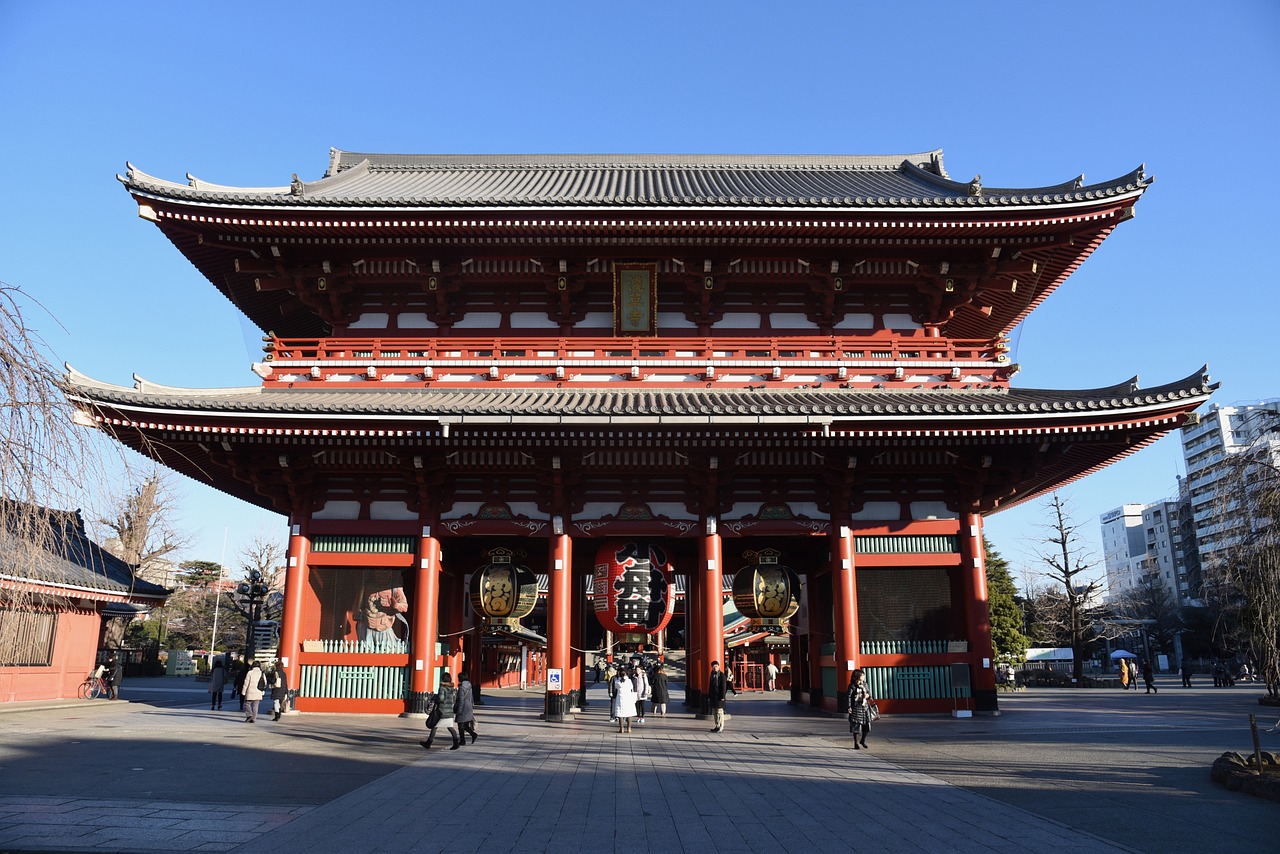
Taito City describes the terrace as a free viewpoint over the town of Asakusa and Tokyo Skytree. Local guides add that, on the other side, you look down on Kaminarimon and Nakamise Street leading towards Senso-ji, and that the golden flame on the Asahi Beer building is easy to spot.
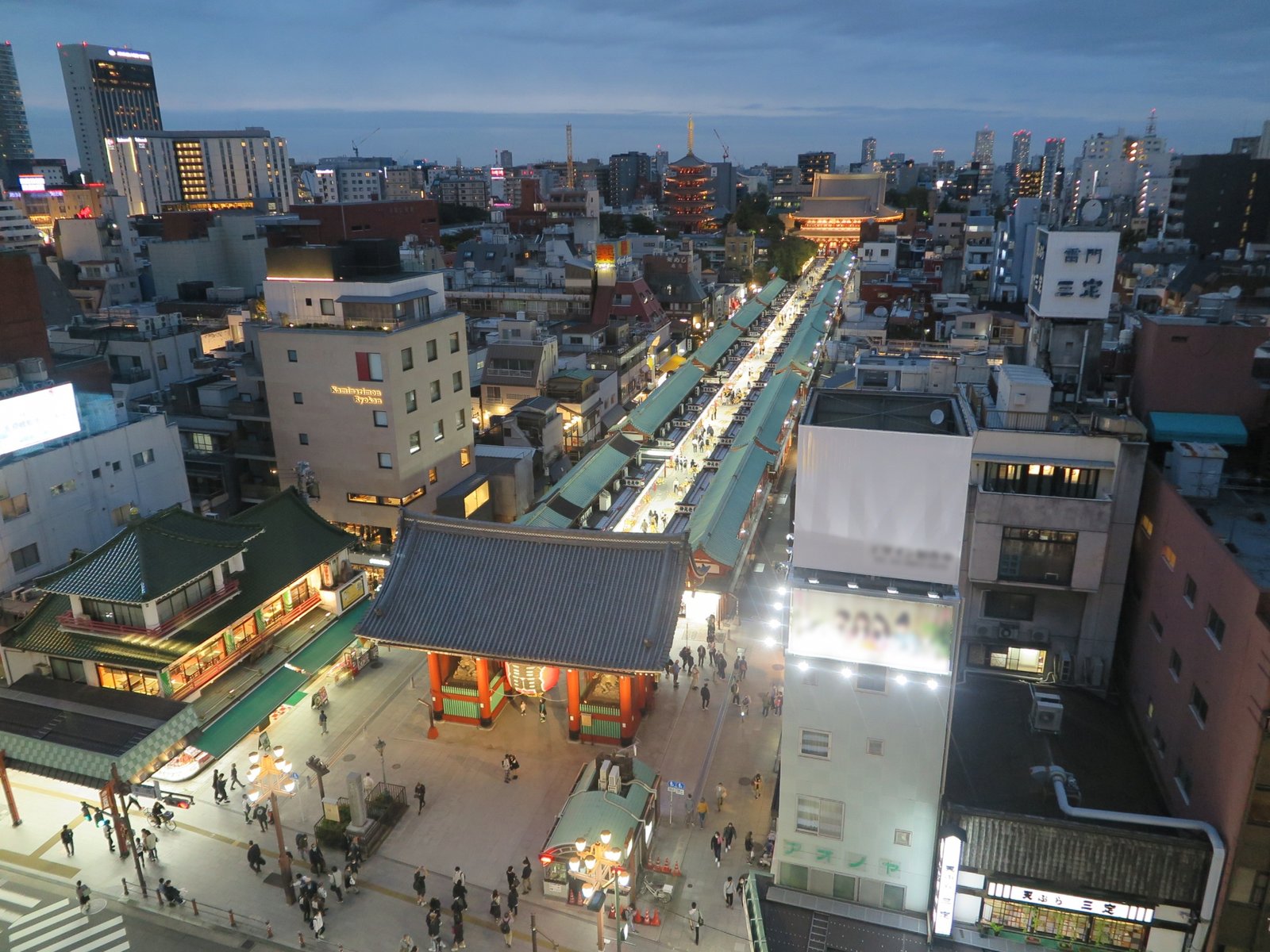
What you see is the busy front of the temple. The quiet streets behind Senso-ji, where Miyakodori is, lie on the far side of the main hall.
When to Go
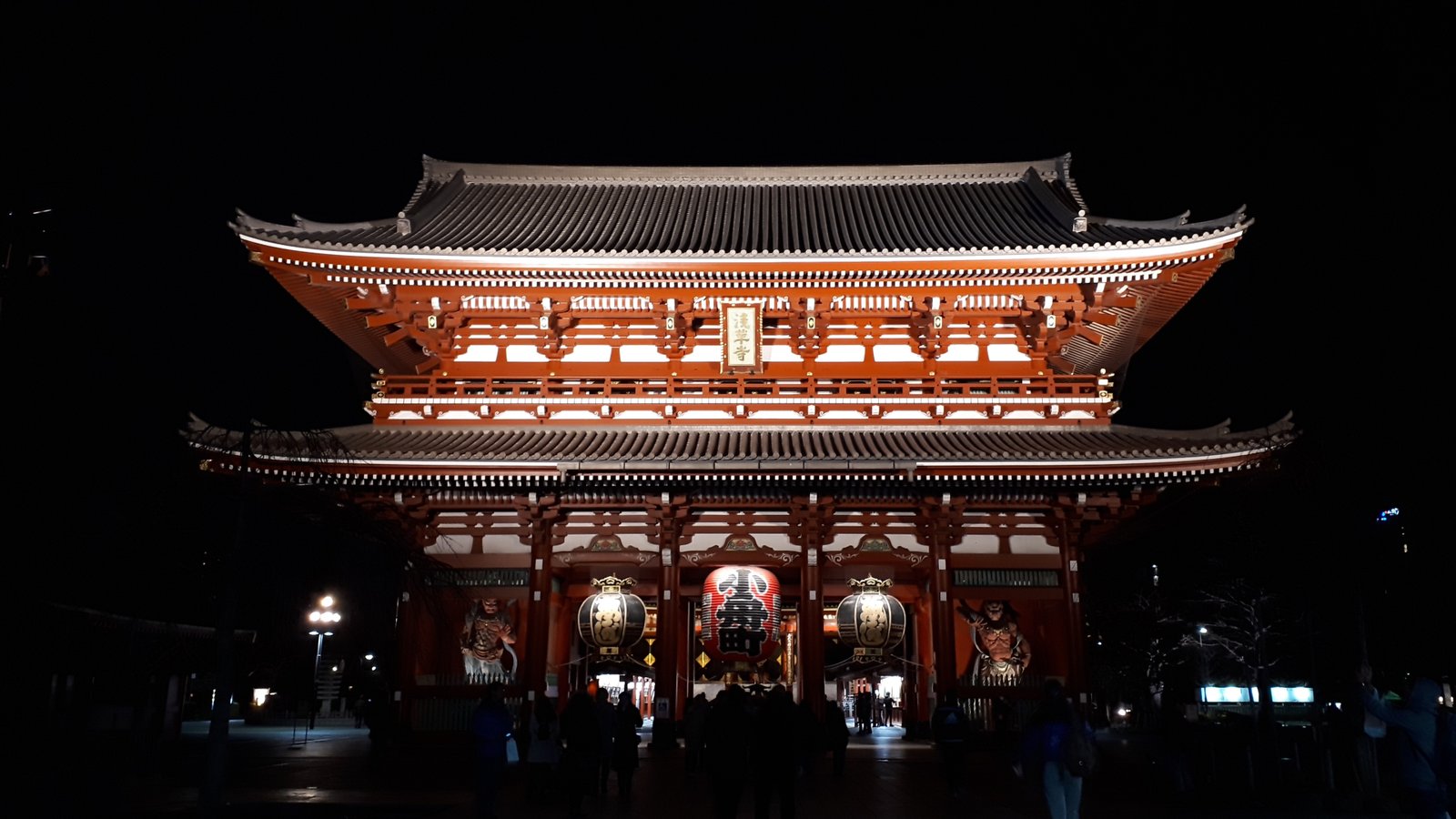
The terrace stays open until 10:00 p.m. Senso-ji’s main hall, five-storey pagoda, Hozomon gate and Kaminarimon are lit up every night from sunset until around 11 p.m., so a visit between sunset and closing time is one of the easier ways to see the temple lit up from above.
If you are arriving with luggage, note that the center no longer stores suitcases. Taito City ended that service on 31 March 2026. The center also lists stroller and wheelchair loans for visitors, so ask at the information desk on the ground floor.
If You Want to Go Higher: Tokyo Skytree
The terrace is a good place to look at Tokyo Skytree, but not to look down from it. If you want to be up there, the Tembo Deck is on the 350 m level and the Tembo Galleria on the 445 and 450 levels. Both need a ticket, so check the current prices and booking options on the official Tokyo Skytree site. From Asakusa, the Tobu Skytree Line takes about 3 minutes to Tokyo Skytree Station.
After the View: The Quiet Side of Senso-ji
From the terrace, the temple looks like the heart of Asakusa, and for visitors it is. But Asakusa’s geisha district lies on the other side of Senso-ji, in the quiet area locals call Kannon-ura, literally “behind Kannon”. Miyakodori is there, 13 to 15 minutes’ walk from the stations through the temple grounds, or about 4 minutes by taxi. You can read about the district in our guide to the Asakusa geisha district.
The same building also hosts the public Asakusa Geisha Ozashiki Odori, which we cover in our guide to where to see geisha dance in Asakusa.
Look Beyond the View
At our teahouse behind Senso-ji, a private ozashiki (geisha banquet) can follow an afternoon in Asakusa, with English support. First-time and overseas guests are welcome without an introduction.
Request a ReservationAsakusa Observation Deck: FAQ
Is the Asakusa observation deck free?
Yes. The 8th-floor terrace of the Asakusa Culture Tourist Information Center has free admission, according to Taito City.
What time does the Asakusa observation deck close?
The terrace closes at 10:00 p.m. and opens at 9:00 a.m. The rest of the building closes at 8:00 p.m., and the center says it may close for maintenance.
How do I get to the Asakusa observation deck?
The center is opposite Kaminarimon. It is 1 minute from Asakusa Station on the Ginza Line, 2 minutes from the Toei Asakusa Line, 5 minutes from the Tobu Skytree Line and 10 minutes from the Tsukuba Express.
Is Tokyo Skytree worth it instead of the free terrace?
They do different jobs. The terrace is free and low, and it puts Tokyo Skytree in the view. The Tembo Deck, at 350 m, is far higher and needs a ticket.
Can I leave my luggage at the Asakusa Culture Tourist Information Center?
No longer. Taito City ended the luggage storage service there on 31 March 2026.
For more of the neighbourhood, our Asakusa tourist guide plans a full day, and our guide to Asakusa at night covers the hours after the terrace closes. If you are coming from the airport, our guide to where Asakusa is and how to get there helps with the journey. We hope the terrace gives you a good first look at the neighbourhood.
Round Off a Day in Asakusa
Miyakodori, founded in 1950, is the only machiai-chaya in Asakusa. Request an ozashiki (geisha banquet) in a private room, with English support.
Request a Reservation


- How to Get from Haneda or Narita Airport to Asakusa: A Local's Guide
- Asakusa vs Akasaka: Where to Stay in Tokyo, and How the Two Old Geisha Districts Compare
Japanese Culture: Traditions, Arts and Living Heritage — Complete Guide
Asakusa’s Recommended Events & Festivals in September
Asakusa Geisha: Where to Meet Real Geisha in Tokyo
Must-Visit Theaters in Asakusa Sightseeing! From Spotting Same-Day Tickets for Casual Enjoyment to Famous Long-Established Venues
Celebrate the Start of 2026 in Asakusa — Your Complete Guide to a Perfect New Year’s Day
No comments yet.