



Asakusa Tourist Guide: A Full Day in Tokyo’s Most Traditional Neighbourhood
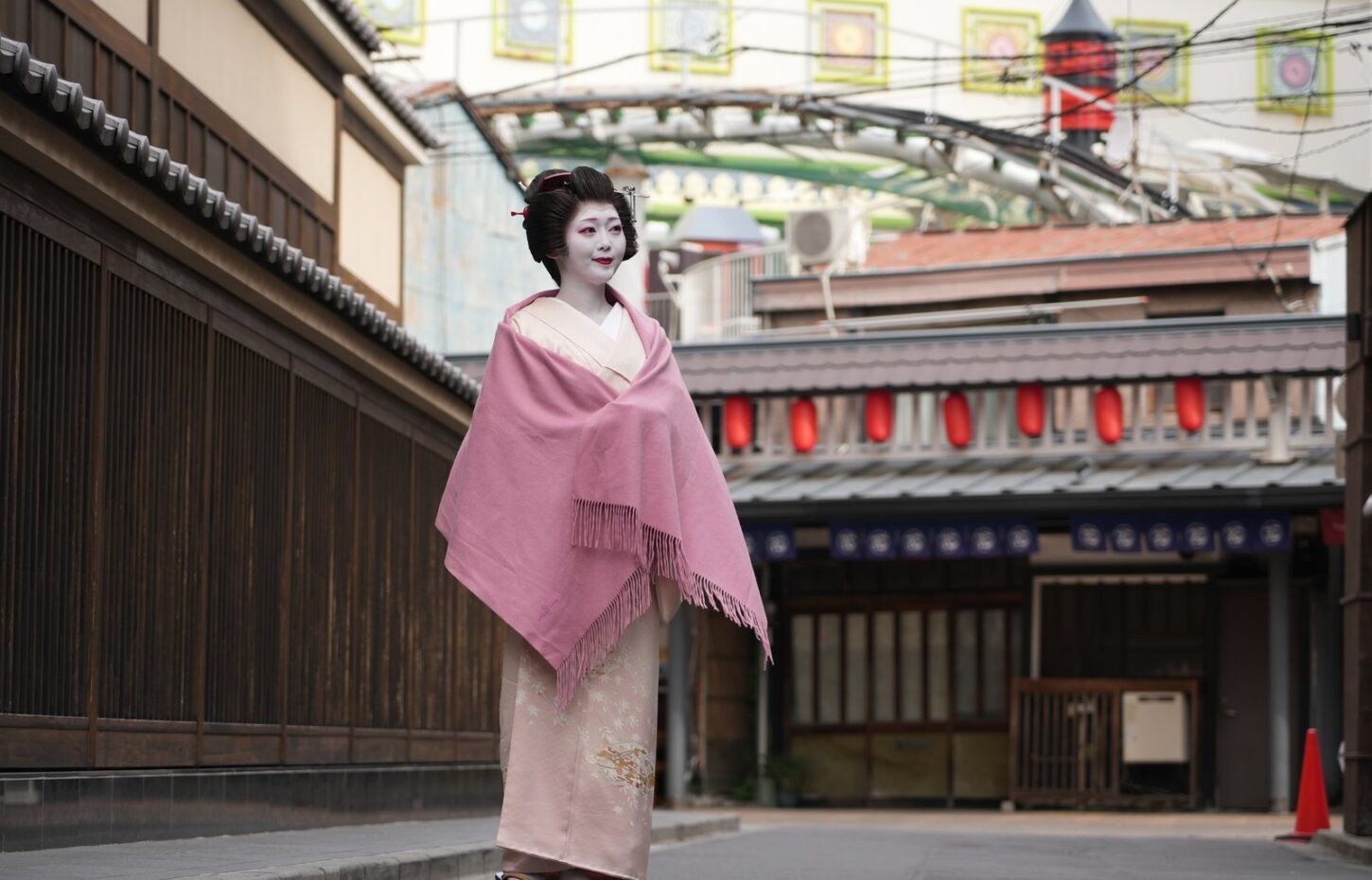
Asakusa is Tokyo’s most traditional neighbourhood, and a full day here covers Sensō-ji — the city’s oldest Buddhist temple — the Nakamise-dori shopping street, Kappabashi, and the Sumida riverbank facing Tokyo Skytree. It is also one of Tokyo’s six active hanamachi (geisha districts), which is what makes an evening here different from the rest of the itinerary.
Asakusa sees thousands of tourists passing through it in a single day. Families following the crowds toward Sensō-ji, couples wandering Nakamise-dori eating street food, first-time visitors squinting up at the Skytree from the Sumida riverbank. Asakusa has a way of pulling people in — it survived the war, it survives the crowds, and every May it fills up again for the Sanja Matsuri and a dozen smaller festivals besides. We grew up here, in Asakusa’s old hanamachi, the geisha quarter, and we still think it’s one of the most rewarding neighborhoods in Tokyo to spend a full day exploring — the heart of what locals still call shitamachi, old downtown Tokyo.
Sensō-ji and Kaminarimon: Where Every Asakusa Tourist Begins
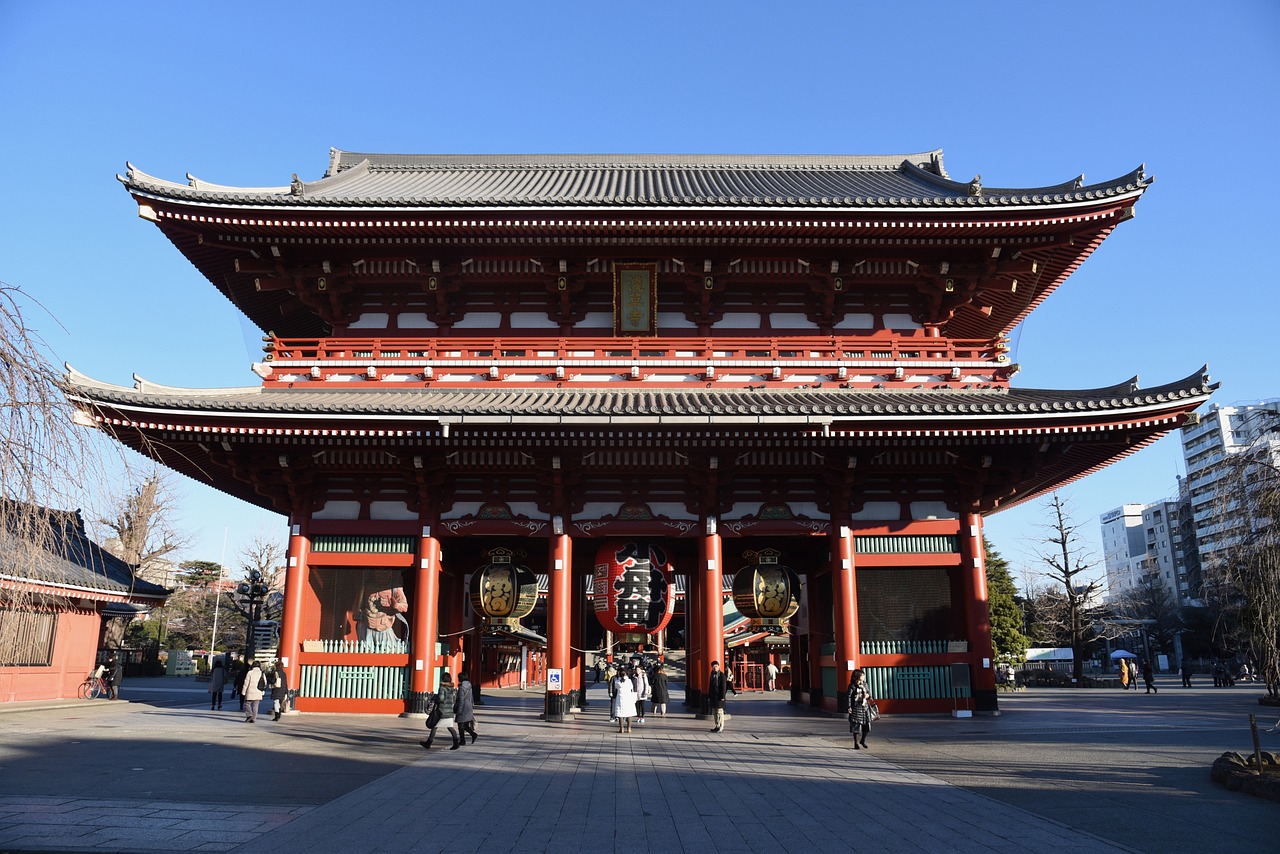
Almost everyone starts the same way, and there’s a good reason for it. Kaminarimon, the “Thunder Gate,” is the single most photographed spot in the neighborhood — a giant red lantern hanging between two guardian statues, marking the entrance to the temple grounds. Walk through it early, before the tour groups arrive, and the whole street still feels a little sleepy, lanterns glowing faintly even in daylight.
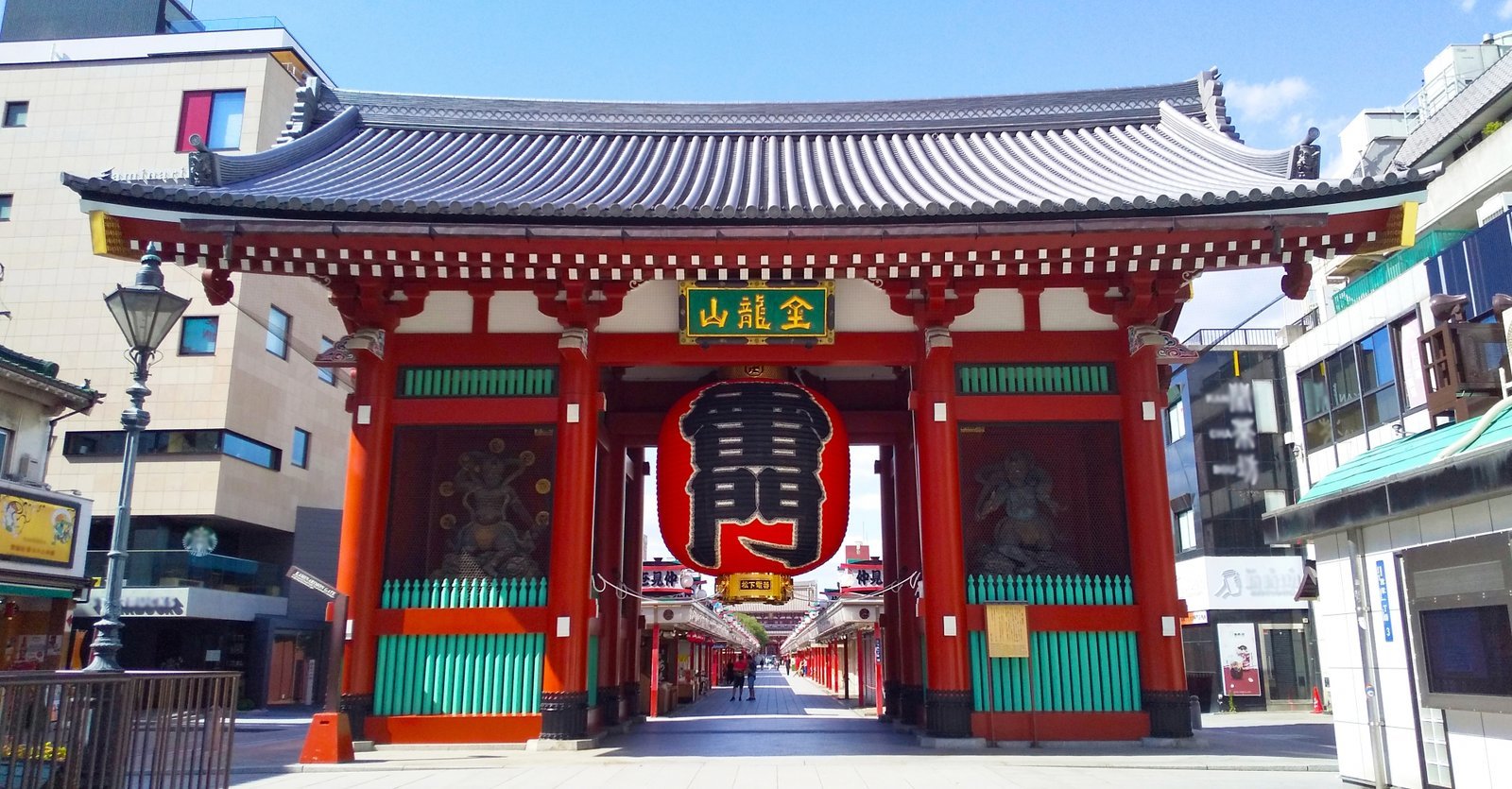
Sensō-ji is Tokyo’s oldest Buddhist temple, and its five-story pagoda and main hall are worth slowing down for. If you’re comparing shrines and temples elsewhere in Japan, Sensō-ji is a useful benchmark — it’s busier, older, and more central to daily local life than almost anywhere else on a typical Tokyo itinerary. Early morning, before the shops fully open, is genuinely the best time to feel that quieter, more atmospheric side of the temple, and it’s the best window for photos without a crowd in every frame.
Nakamise-dori: Shopping Asakusa’s Historic Main Street
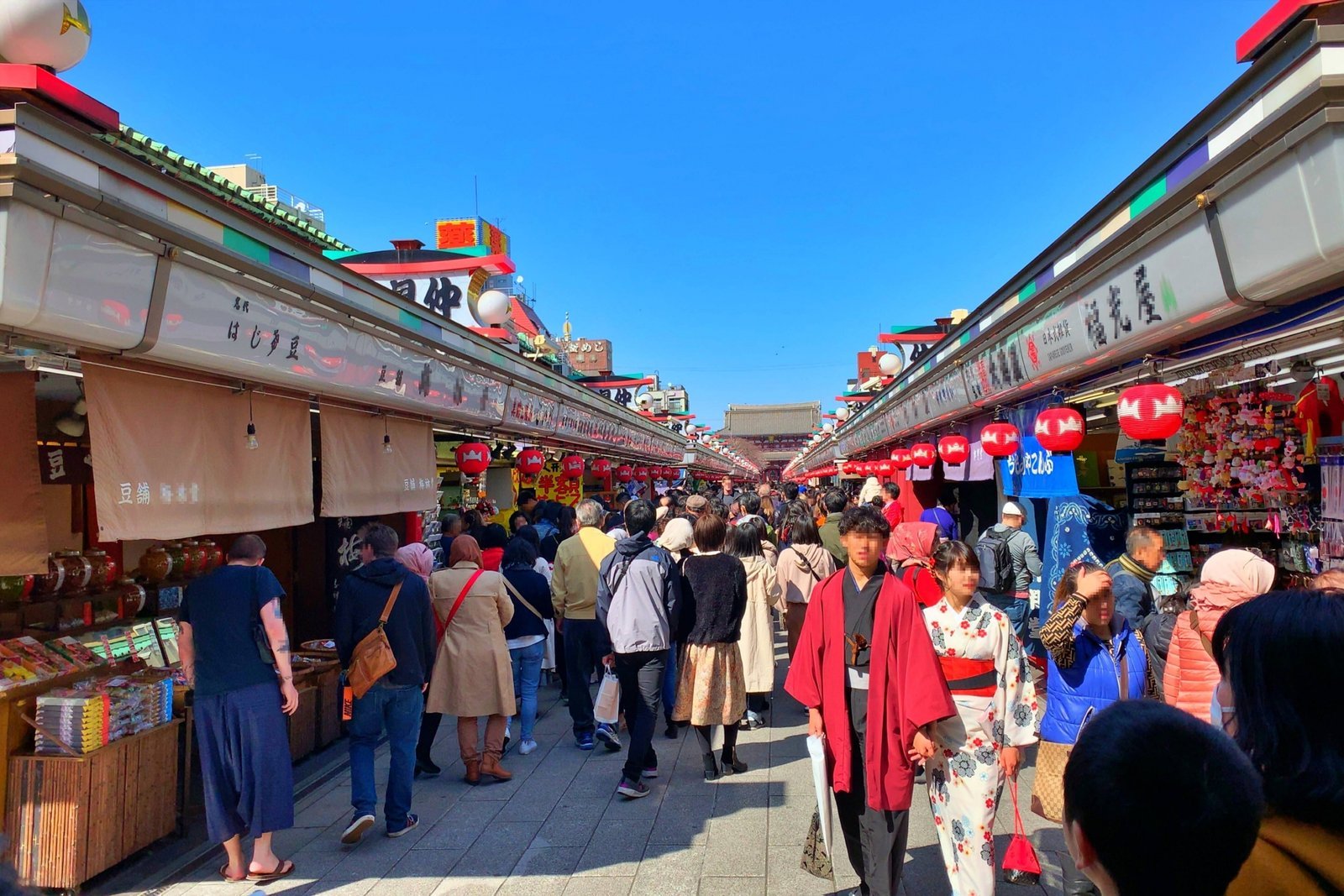
Between the gate and the temple runs Nakamise-dori, a shopping street lined with small shops and vendors that have been selling souvenirs, folding fans, yukata, and traditional crafts to visitors for well over a century. Eat a rice cracker or a stick of dango as you walk, and take the side streets that branch off Nakamise-dori itself; that’s usually where the quieter, family-run stores are, the ones selling handmade combs or hand-dyed textiles rather than keychains.
Rickshaw Rides and Cinematic Old Rokku
If you’d rather not plan the route yourself, Asakusa is one of the easiest places in Tokyo to book a short rickshaw ride, usually starting right near Kaminarimon. It’s a unique way to see the neighborhood, and a good rickshaw puller will double as an informal guide, pointing out details a first-time visitor would otherwise walk straight past. Many offer their tours in English, which makes them a comfortable option if you’re not confident navigating on foot.
For a quieter alternative, take a self-guided detour through Rokku, the old entertainment street just west of the temple. Rokku was Tokyo’s original theater and cinema district a century ago, and while most of the old playhouses are gone, the street still has a faded, cinematic charm that most Asakusa tourist guides skip entirely.
Beyond the Crowds: Kappabashi and Hanayashiki
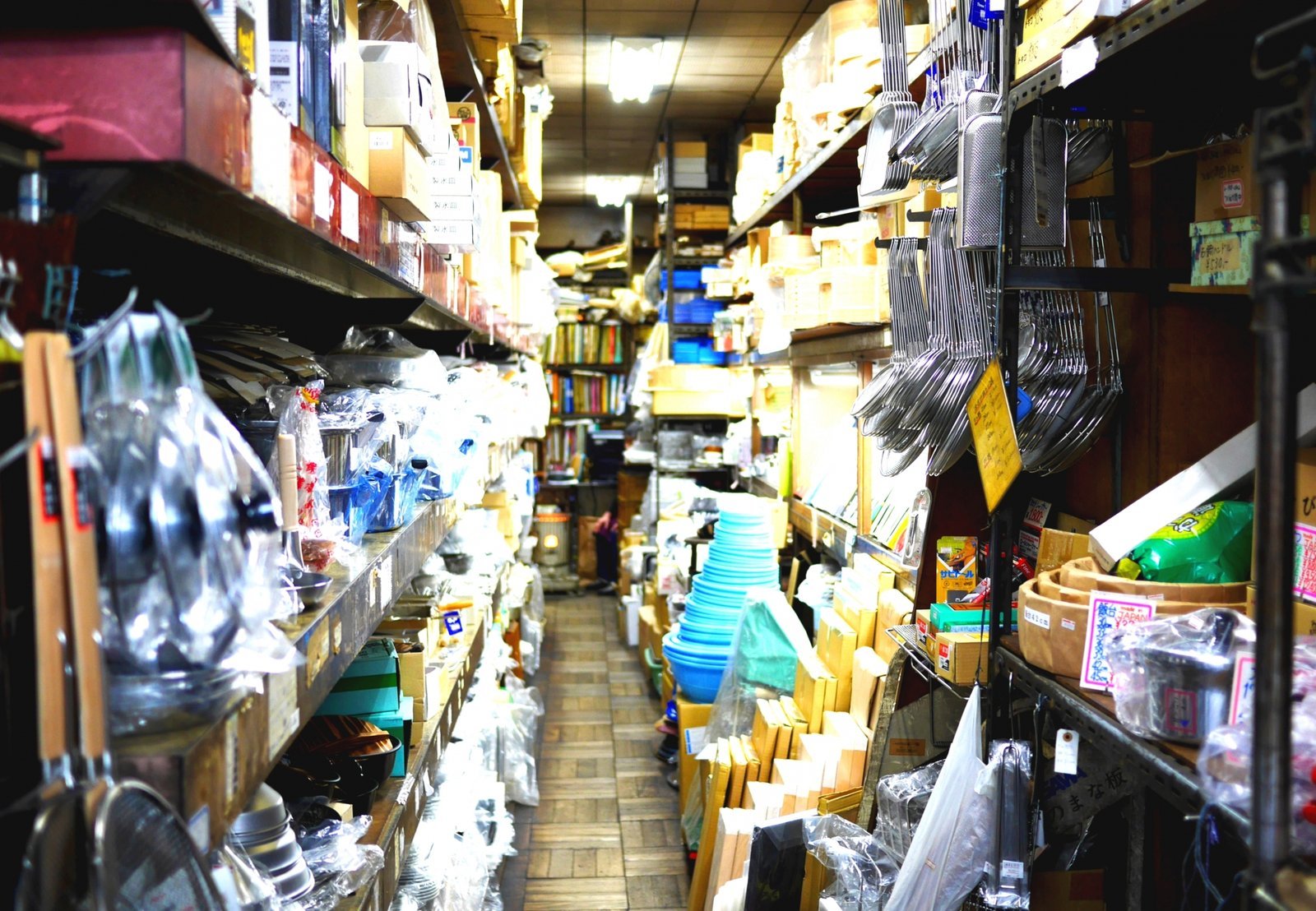
Once you’ve done the temple we suggest a trip to Kappabashi. Sometimes called Kitchen Town, it’s about a ten-minute walk west of the temple, a street entirely devoted to restaurant supplies — the famous plastic-food shops, knife sellers, and kitchenware stores that Tokyo’s chefs actually shop at. It’s an unusual, very local pocket of the neighborhood, and it rarely makes it onto a first-time visitor’s list.
If you’re traveling with kids, or you simply want a closer, more old-fashioned stop, Hanayashiki is worth the short walk. It’s a small, long-established amusement park tucked into a quiet corner near the temple, and its roller coaster is a genuinely old-fashioned ride rather than a modern thrill machine. It’s compact, a little retro, and completely unlike the enormous parks elsewhere in Tokyo — which is exactly its charm.
A Taste of Asakusa: Where to Eat and Drink
You won’t go hungry here. Nakamise-dori and the streets around it are full of small food stalls selling everything from fresh melon pan (a local bakery favorite) to grilled skewers and soba noodles, and it’s easy to build an entire afternoon around grazing your way down one street. For something more substantial, the neighborhood has no shortage of tempura, sushi, and unagi restaurants — look for the ones with a line of locals outside.
Two places we can point you to, because Chizuru — one of the Asakusa geisha we invite to our ozashiki — named them herself when we asked where she goes on her own time: the parfait at Goto, a fruit parlour on Hisago-dori — inexpensive and very good, in her words — and the small coffee roasters that keep opening in nearby Kuramae, which she works her way through on days off. That is one geisha’s own list, not a neighbourhood consensus, which is rather the point of it.
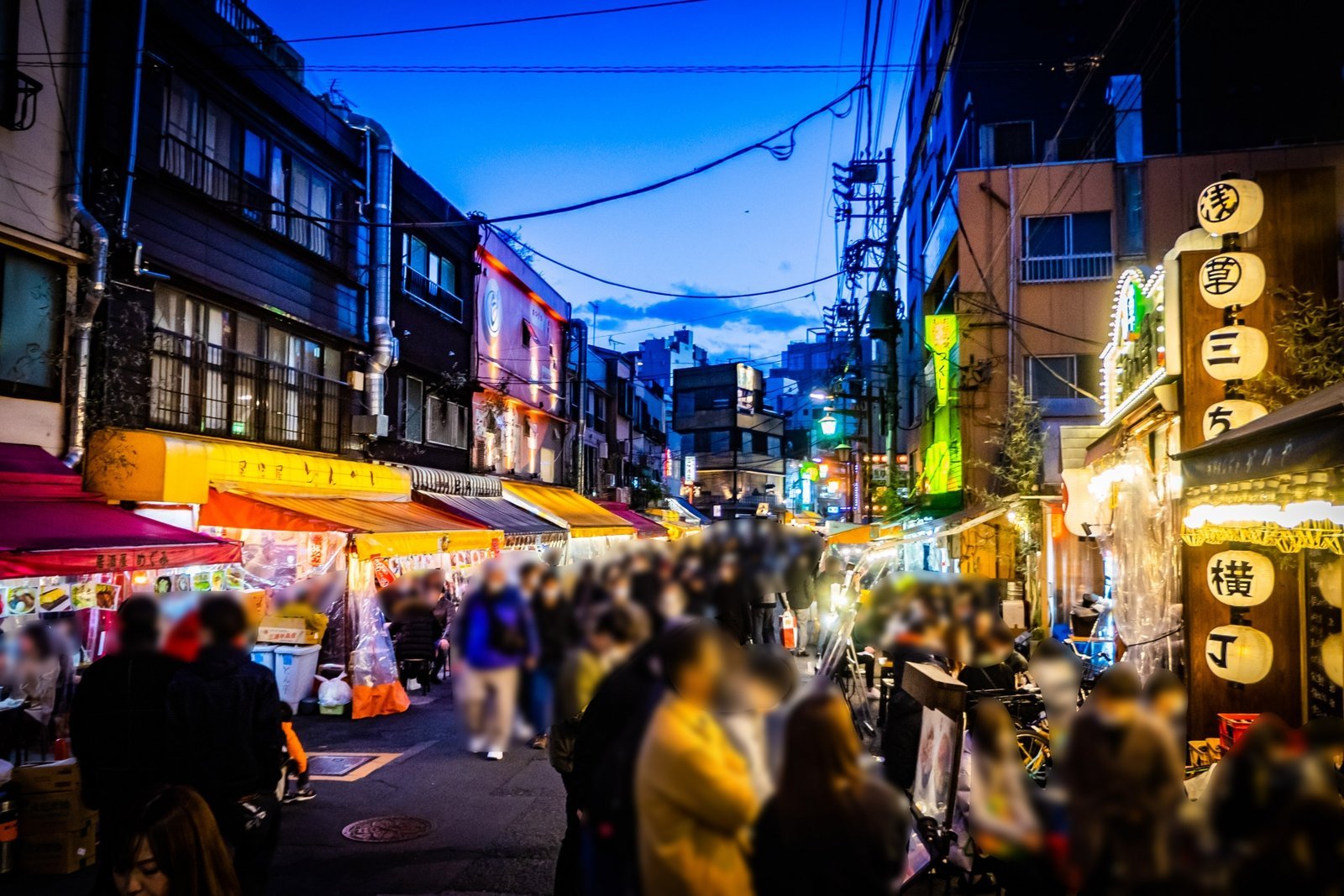
In the evening, a handful of old-fashioned bars and izakaya open up around Hoppy Street, a short walk from the main temple grounds, where you can get a cold drink and a plate of grilled skewers at a plastic table on the sidewalk — a much more low-key kind of nightlife than you’ll find in Shibuya or Roppongi, but a genuinely local one. We’ve written a fuller guide to Asakusa after dark if you’re planning to stay out. If sushi is the main draw for your trip, the Tsukiji outer market is a short train ride away and worth the detour for serious food lovers.
Along the Sumida River: Skytree Views and the Asahi Beer Hall
From Sensō-ji, it’s a short walk east to the Sumida River, and this is where Asakusa’s older, more traditional streets give way to a very different skyline. Tokyo Skytree rises directly across the water, and on a clear day the view from the riverbank — Skytree on one side, the iconic golden “flame” sculpture atop the Asahi Beer Hall on the other — is one of the more striking contrasts in the city: centuries-old temple roofs in the foreground, one of the tallest towers in the world behind them. It’s one of the best places in Asakusa for photos, especially near sunset.
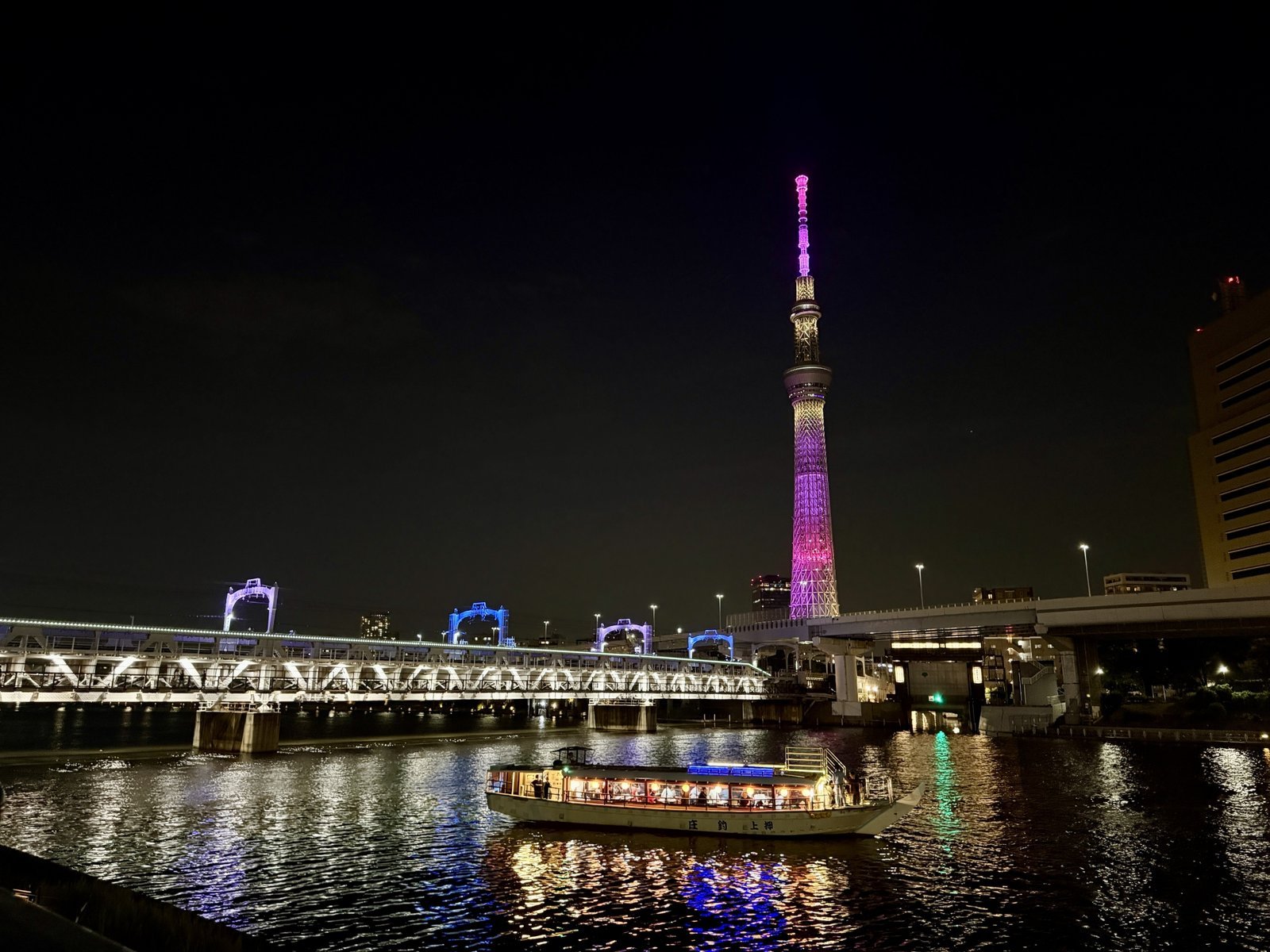
A river cruise from the pier near Azumabashi is a relaxed way to see this stretch of the Sumida, and it’s a good option if you’d rather sit by the window than keep walking. If you want the view from above instead, Skytree’s observation deck tickets can be booked in advance to skip the longer queues.
If You Have More Time: Ueno, Akihabara, and Beyond
Asakusa sits close enough to a few other Tokyo neighborhoods that it’s easy to extend your day, or your trip, without much extra travel. Ueno, with its park, museums, and zoo, is a few train stops away, and nearby Yanaka is another quiet shitamachi neighborhood worth a slow afternoon if Asakusa’s crowds have worn you out. Akihabara, Tokyo’s electronics, anime, and retro gaming district, is similarly close. If sumo interests you, Ryōgoku — home of the national sumo stadium, where you might spot wrestlers walking to training in the morning — is just across the river.
For visitors who want to compare old Tokyo with new, Harajuku, Shibuya, Shinjuku, Roppongi, and Ginza are all reachable within thirty to forty minutes, and Odaiba, with its aquarium and waterfront, makes for an easy half-day if you’re traveling with kids. All of this makes Asakusa a genuinely convenient home base for a longer Tokyo stay.
Kimono, Matcha, and Small Traditions
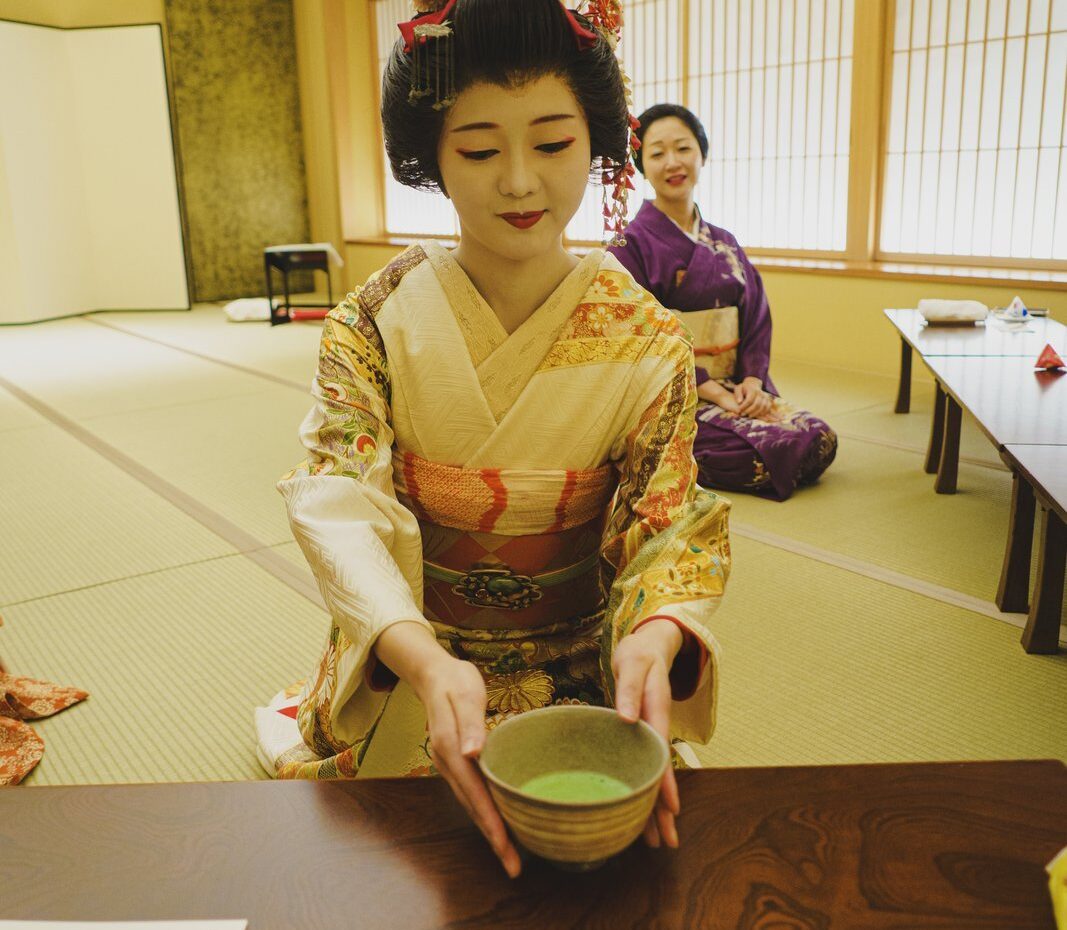
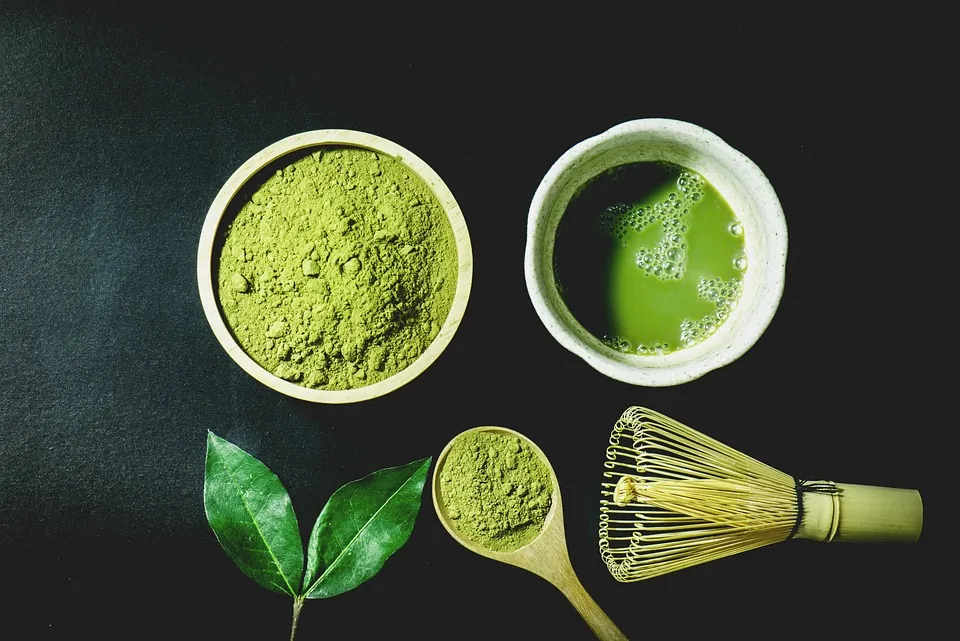
Asakusa is one of the easiest places in Tokyo to rent a kimono for the day, and plenty of visitors and locals do — it’s a small thing, but walking Nakamise-dori in kimono changes how the whole street feels around you. Between stops, look for the tea houses and small gardens tucked along the side streets; a bowl of matcha with a seasonal sweet is a good way to rest your feet mid-afternoon, and the Japanese tea ceremony behind it is a tradition that goes back much further than any of the shopping streets around it.
Asakusa Through the Seasons
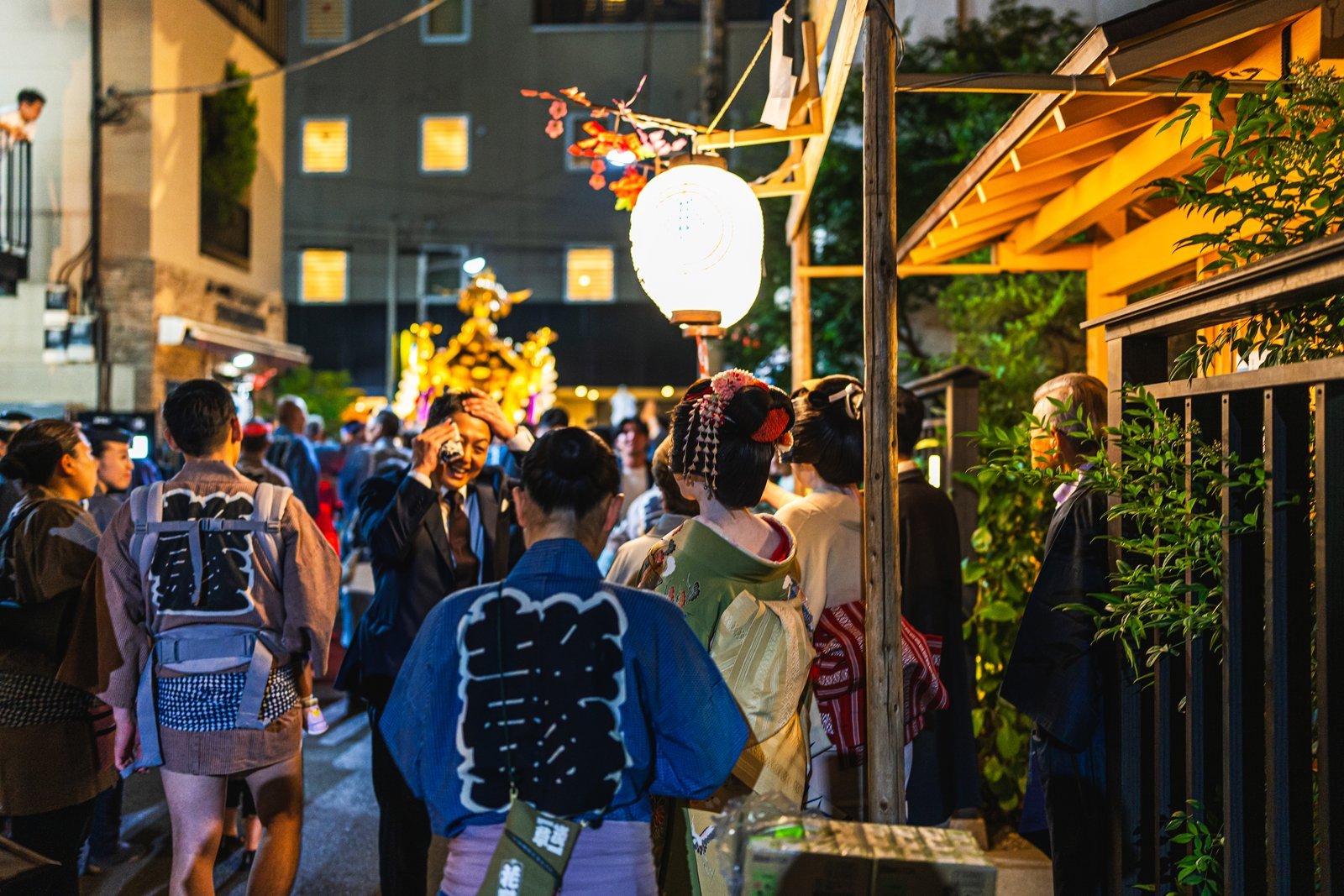
The neighborhood changes considerably depending on when you visit. Cherry blossoms line the Sumida riverbank from late March into early April, and the short walk along the water becomes one of the city’s more beautiful sakura spots. Mid-May brings the Sanja Matsuri, one of Tokyo’s largest and liveliest festivals, drawing around 1.5 million people over three days as portable shrines are carried through the streets around Sensō-ji. Inside the hanamachi it has its own shape: the geisha put together what Asakusa calls a kumi-odori, a dance group of seven or eight mixing dancers (tachikata) and musicians (jikata), and move from engagement to engagement all day. Geisha who worked those festivals remember piling into a two-tonne truck to get between appointments, because the day was that busy. The word itself literally means “ensemble dance” and exists in other Japanese performance traditions; inside the Asakusa hanamachi it refers specifically to this Sanja Matsuri performance.
Late July brings the Sumida River Fireworks Festival, with tens of thousands of spectators lining the riverbank. By November, the gardens near Sensō-ji turn with autumn color, and in winter, the New Year period draws enormous crowds for hatsumode, the first temple visit of the year — if you don’t mind the crowds, it’s one of the most memorable times to see Asakusa at its most alive.
One more date the guidebooks miss: 3 February, Setsubun. Alongside the bean-throwing at the temple, the geisha go around the ozashiki in costume — the trade word for it is obake — in twos and threes, dancing, slipping behind a folding screen and reappearing as someone else entirely. Recent years have produced everything from Matsuken Samba to Super Mario. It’s played for laughs, but it’s also a way of driving out the old year’s bad luck.
Planning Your Visit: Getting There and Where to Stay
Asakusa Station is served by several train and metro lines, plus the Tobu Skytree Line, so getting here from most parts of Tokyo is straightforward and rarely takes more than thirty minutes. From Narita or Haneda Airport, the JR and rail links into central Tokyo connect easily to Asakusa, and having an IC card loaded before you arrive will save you time at every ticket gate along the way.
If you’re only giving the neighborhood one day, we’d suggest arriving early — by mid-morning, Nakamise-dori and the temple grounds fill in fast, and the quieter side streets are much more enjoyable before more visitors arrive. Most shops and the temple grounds are free to enter and open early; Hanayashiki, the river cruise, and kimono rental are the main paid experiences worth booking or reserving ahead, especially around public holidays and festival dates. Asakusa also has a good range of hotels and traditional ryokan-style accommodation if you’d rather stay in the neighborhood itself than commute in from elsewhere in the city — a good option if you’re planning to extend the trip with a soak at an onsen in nearby Hakone.
A single day is enough to see Asakusa’s major sights, but if you can spare an evening as well, that’s when the neighborhood shows you something a typical Asakusa tourist itinerary doesn’t usually include.
Spend the Evening Inside Asakusa’s Hanamachi
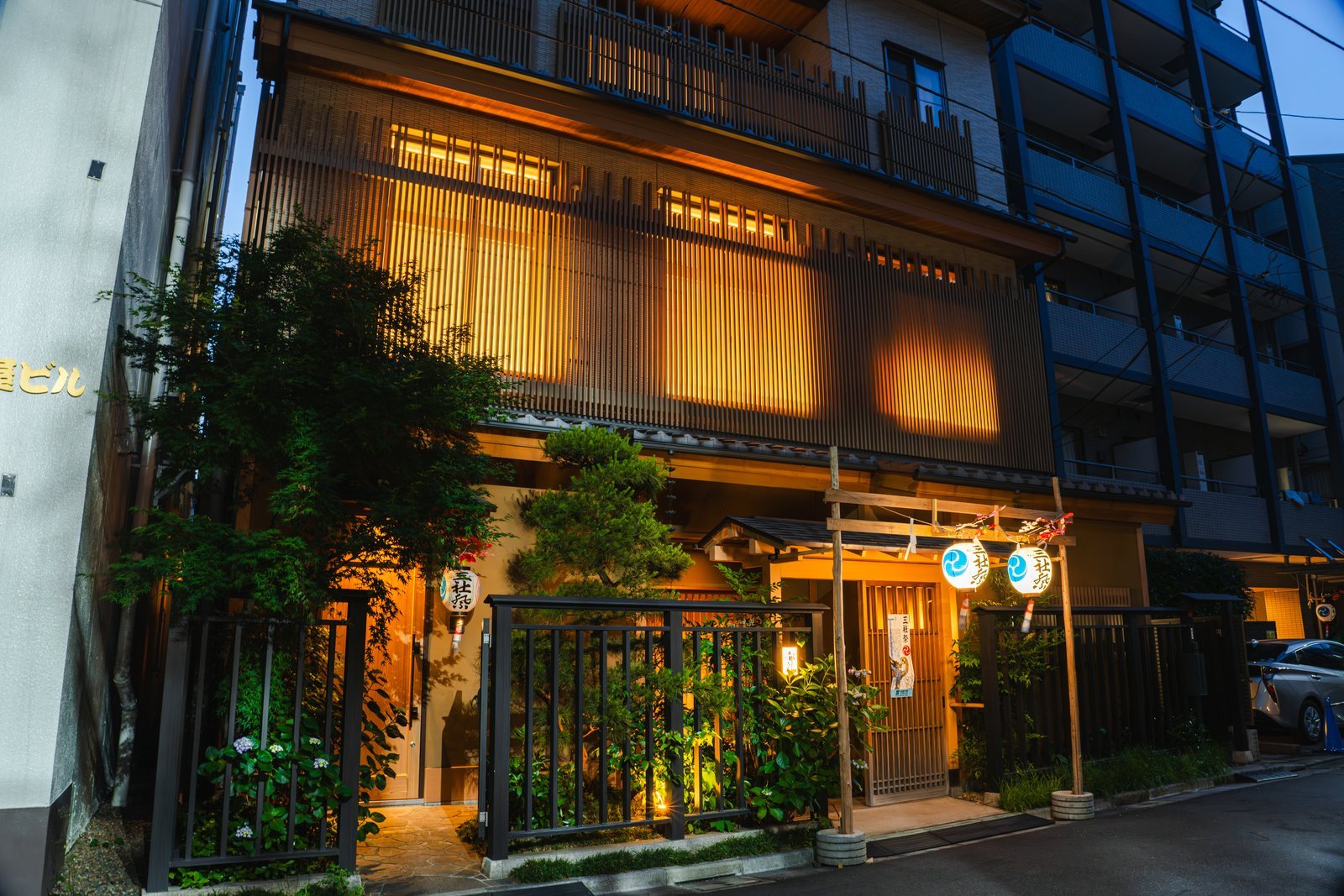
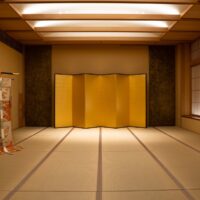
Miyakodori is a machiai-chaya in Asakusa’s old geisha quarter, about three minutes north of Sensō-ji through the temple grounds. Spend the evening at a private ozashiki (geisha banquet) with Asakusa geisha, with an English interpreter in the room throughout. One-, two- and three-hour plans.
Request a ReservationWhere you can experience Traditional Asakusa Culture
The question we get asked most often is where, in a neighbourhood this busy, you can actually meet Asakusa’s geisha culture rather than just read about it.
This is why Miyakodori exists. Our okami (proprietress) and her mother before her were both born and raised right here in Asakusa’s hanamachi, and our okami spent decades working as a geisha herself — she is the only okami in Asakusa who was herself a geisha — before she took over this machiai-chaya, a traditional teahouse that receives guests and brings the food in from outside rather than cooking it on the premises. She has lived inside the Asakusa geisha culture her whole life. One thing worth saying plainly, because the English word “teahouse” misleads people: a machiai-chaya is not a tea ceremony venue. There is no chadō demonstration here and no one will teach you the forms — matcha and a seasonal sweet are served as hospitality, and that is the whole of the tea in it.
Most visitors only associate geisha culture with Kyoto, and Kyoto’s hanamachi are, without question, beautiful and historic. But Asakusa has its own geisha district, quietly running for centuries alongside Kyoto’s, and it’s still active today — you simply have to know where to look. Its roots are three separate streams that eventually merged: the hirokoji geisha who entertained at the tea stalls in front of Sensō-ji, the geisha of the Sanya canal who saw guests off toward Yoshiwara, and the Saruwakachō geisha attached to the kabuki theatres relocated north of the temple by the Tenpō reforms — taught by the theatres’ own musicians, and known for the standard of their art. In 1885 the three came together around the park, and in 1896 the district established its own kenban, the office that still registers Asakusa’s geisha and books their engagements today. We’d like to think Miyakodori is that authentic, still-living answer, right here in Tokyo.
The name was chosen by the founder, from a poem in the Tales of Ise, written by the courtier Ariwara no Narihira over a thousand years ago, about a bird he meets on a journey away from the capital: if you’re worthy of your name, then tell me, miyakodori — capital bird — is the one I long for safe and well? The name carries a wish our okami still puts into words — that Miyakodori remains the kind of house guests think of in exactly that way once they’ve left, and that thinks of them in return. A place, and people, you stay connected to.
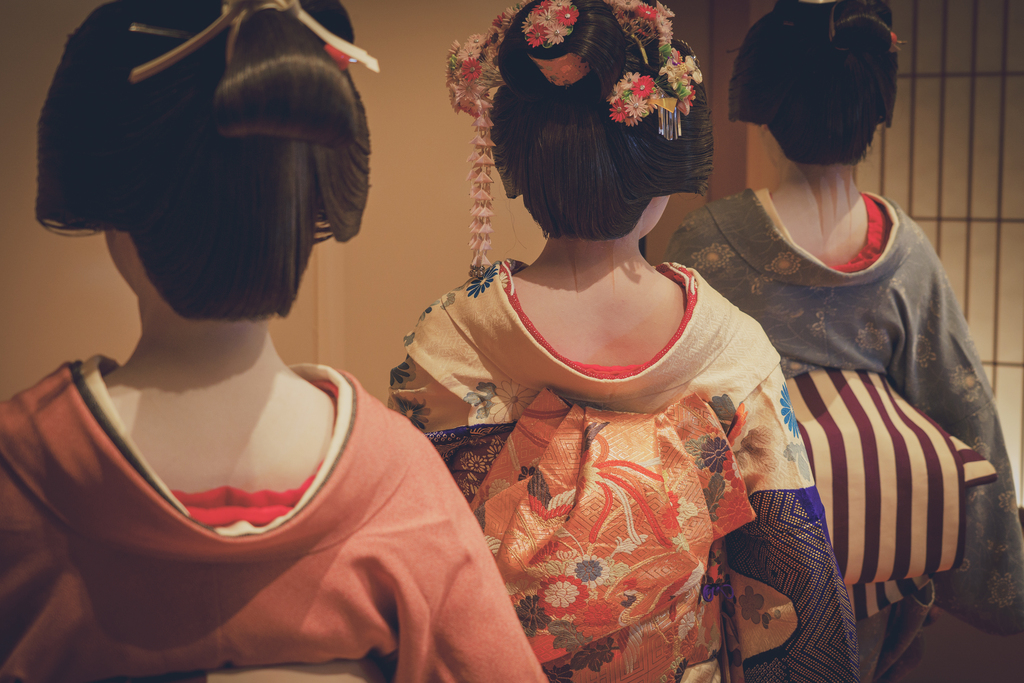
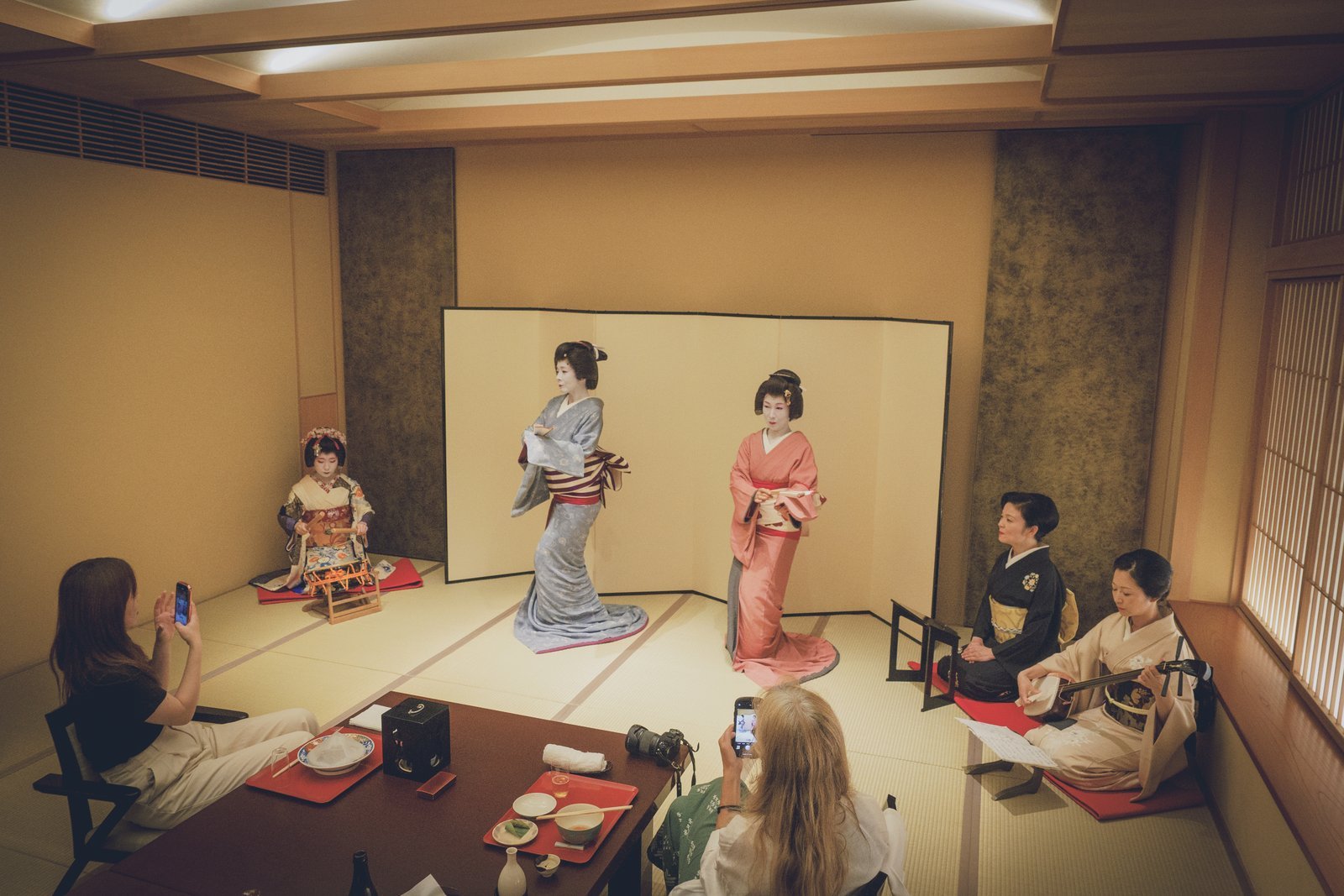
As our okami puts it, a geisha isn’t simply someone skilled in the traditional arts. It’s someone who has come to love those arts enough to make entertaining and caring for guests a lifelong calling in itself. The word is literal about it: gei-sha, written with the characters for “art” and “person” — a person of art. When you spend an evening with us, the geisha stay in your room for the full length of your visit — two or more, depending on the plan — pouring drinks, talking with you, performing the arts they practise daily, and leading traditional ozashiki games like Konpira Fune Fune and Tora Tora that have barely changed in two hundred years. The evening unfolds slowly, in a warm, quiet space very different from the bars and nightlife elsewhere in the city, the way it always has.
Asakusa is also the only hanamachi in Japan where the Hōkan (Taikomochi) — Japan’s only male geisha — are still formally registered and working. Inviting one to an ozashiki is part of what an evening in Asakusa can offer.
Being a machiai-chaya has a practical upside for visitors, too. Because we don’t run a kitchen of our own, the meal is brought in from the kitchens we work with, and we can build it around almost any requirement — vegan, vegetarian, gluten-free, allergies. Fully halal or kosher meals are served bento-style and need five days’ notice. Food depends on the plan: the kaiseki dinner is included on the three-hour plan, while on the one- and two-hour plans a meal is an optional add-on, so you can eat elsewhere and come to us for the evening itself. Drinks run the other way. The two- and three-hour plans include free-flow drinks; it is only on the one-hour plan that a drink is ordered separately from the plan price.
We know the “no first-timers” reputation this world sometimes has, and we say clearly, including on this website, that first-time guests are genuinely welcome. If you’re nervous walking in, that’s normal — the geisha are used to easing new guests into the evening, and our staff will happily talk you through what to expect before anyone arrives.
Our okami is especially direct about why this matters for visitors from outside Japan. A lot of what gets marketed abroad as a “geisha experience” is closer to costume play — the look, borrowed, without the centuries of training and history behind it. The art itself was born in the Edo period, in the late seventeenth century, when the end of the warring years brought peace and, with it, a flowering of popular entertainment; every generation since has refined it. What we offer is the real, living version of that art, adapted respectfully for a modern evening but never diluted. The shamisen playing a few feet from you, the geisha’s presence in the room — it has to be felt live to mean anything at all.
Frequently Asked Questions About Visiting Asakusa
Is Asakusa worth visiting as a tourist?
Yes — it’s one of the few Tokyo neighborhoods that combines a major historic temple, an active old shopping street, riverside views of Skytree, and pockets of genuinely local life like Kappabashi and Rokku, all within easy walking distance of each other.
How many days do you need to see Asakusa?
A single day is enough to cover the main sights comfortably. If your schedule allows for an evening as well, that’s when you can move past sightseeing and experience something more immersive, like a traditional geisha ozashiki.
What’s the best time of year to visit Asakusa?
Late March to early April for cherry blossoms along the Sumida River, mid-May for the Sanja Matsuri, and late July for the Sumida River Fireworks Festival are the most memorable, though also the most crowded. Early winter mornings, outside the New Year rush, are the quietest time to see the temple.
How do I get from the airport to Asakusa?
From Narita or Haneda, JR and private rail lines connect into central Tokyo, where you can transfer to a train or the Tobu Skytree Line into Asakusa Station. Loading an IC card before you travel makes every transfer faster.
What is Asakusa best known for?
Sensō-ji, Tokyo’s oldest temple, and Nakamise-dori, the historic shopping street leading up to it, are the neighborhood’s most famous landmarks. Asakusa is also one of Tokyo’s six active hanamachi, or geisha districts — the tradition is not Kyoto’s alone.
Where is Miyakodori, and when is it open?
We’re at 3-23-10 Asakusa, Taitō-ku, in the middle of the old geisha quarter on the north side of Sensō-ji — about three minutes once you’re through the temple grounds, and thirteen to fifteen minutes on foot from Asakusa Station depending on which line you arrive on. The walk takes you through the temple precinct, which is part of the pleasure of it. We receive guests from 14:00, with 20:00 the latest start, and we’re closed Saturdays, Sundays and public holidays. There is a lift in the building.
Can foreign visitors experience real geisha culture in Asakusa?
Yes. At Miyakodori, first-time and international guests are genuinely welcome, and the geisha and our staff are experienced at helping new visitors feel comfortable from the moment they arrive. An English interpreter is present throughout.
Is a geisha evening only for special occasions?
Not necessarily. Many of our guests come to celebrate an anniversary, host a business guest, or mark a family occasion — but we’re just as happy to welcome anyone who’s simply curious about the culture and wants to experience it firsthand.
Ready to End Your Asakusa Day Differently?
If a day of temples, street food, and river views leaves you wondering what the neighborhood looks like after dark, that’s the evening we’d love to show you.
The shape of it is simple. There are three plans — one, two and three hours — with an English interpreter in the room the whole time. The one-hour plan runs in the afternoon, starting between 14:00 and 17:00, and is ¥34,000 per person for groups of four or more — smaller groups pay a higher per-person rate, one drink per guest is a required separate order (¥800–¥5,500 depending on what you choose), and food on that plan is optional rather than included. The two-hour plan can start any time from early afternoon into the evening; the three-hour plan is an evening one and includes a kaiseki dinner. The one- and two-hour plans can be booked by a single guest, so travelling alone is no obstacle.
Take a look at our plans and request a time that works for your visit — we’ll take care of the rest.
End Your Asakusa Day at a Private Ozashiki
Three plans — one, two and three hours — at Miyakodori, a machiai-chaya in Asakusa’s hanamachi. A private ozashiki (geisha banquet) with Asakusa geisha and an English interpreter in the room the whole time. First-time and international guests are genuinely welcome.
Request a Reservation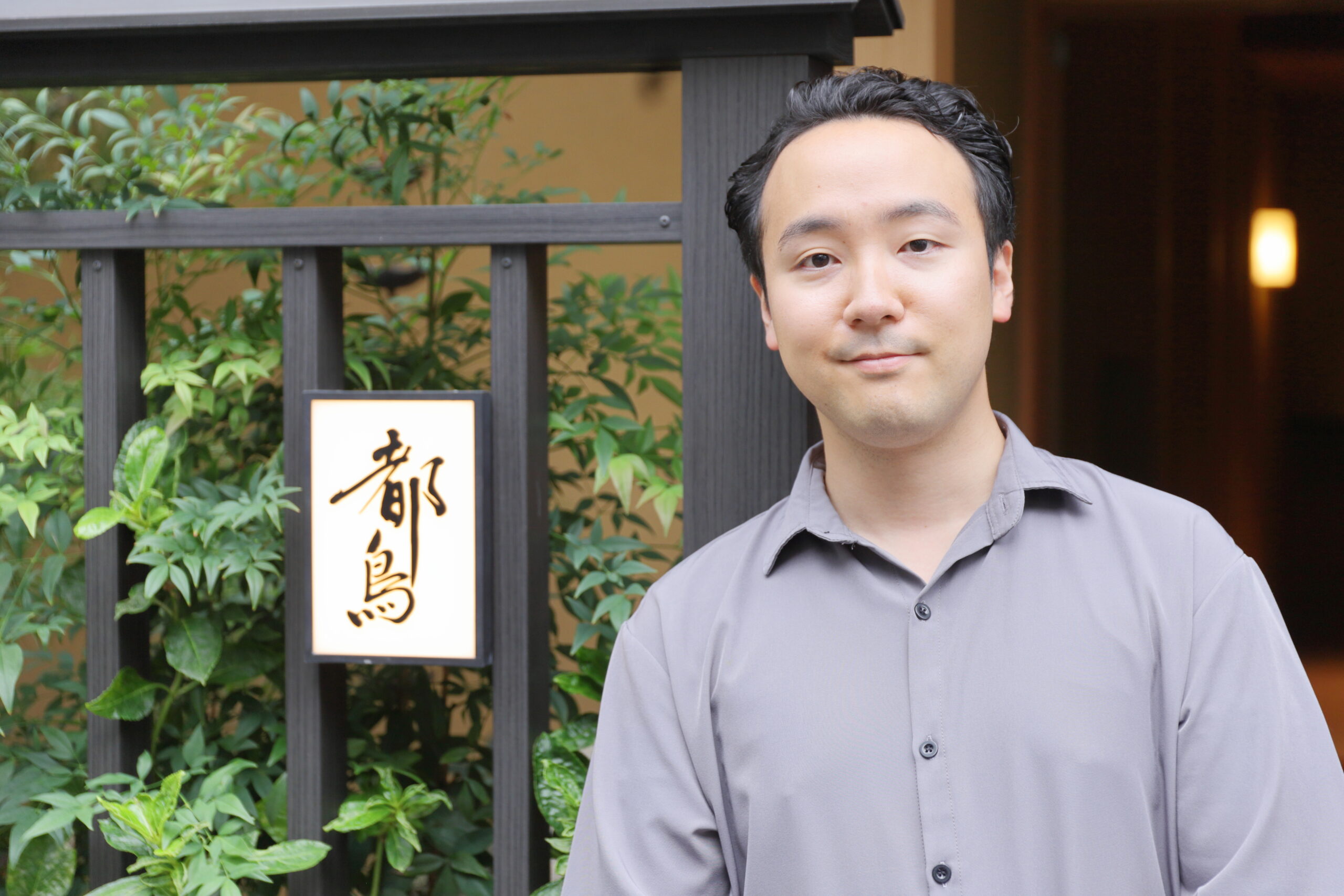


- How to See a Geisha in Tokyo: 5 Ways Compared (2026)
- Tokyo VIP Tours, Reimagined: An Evening at Miyakodori
Enjoying Exquisite Shaved Ice in Asakusa! Top 6 Local Favorites Part 2
[2025 Edition] Complete Guide to Winter Events in Asakusa! From Traditional Festivities to Hatsumode
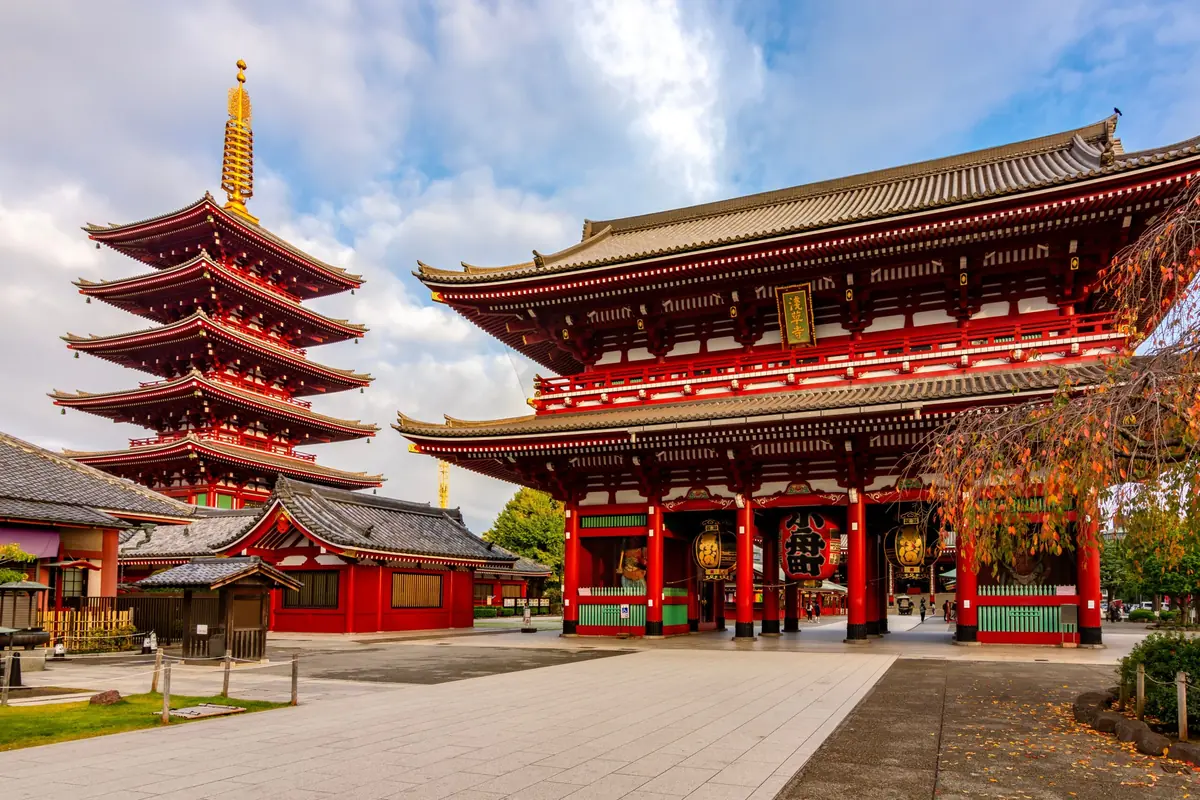
Autumn Asakusa Temple Sightseeing Guide | Maple Viewing, Illumination, Events, and Recommended Gourmet Information Summary
Complete Guide to Asakusa: Tourist Spots, Food & Hidden Gems
Wagashi in Japan: A Guide to Traditional Japanese Sweets, Seen Through the Eyes of an Asakusa Geisha House
No comments yet.