



Traditional Japanese Architecture: What You Find Inside a Japanese House, and How to Behave There
Traditional Japanese architecture is easiest to understand from the inside, through a handful of parts: the genkan, an entrance with a step up where shoes come off; tatami mats, which set the size of each room; two kinds of sliding screen, translucent shoji and opaque fusuma; and the tokonoma, an alcove that decides where everyone sits. Inside a Japanese house, take your shoes off at the step, keep slippers off the tatami, and leave the seat nearest the tokonoma to the most senior guest. In Tokyo you can walk through historic houses at the Edo-Tokyo Open-Air Architectural Museum, the Kyu-Iwasaki-tei Gardens and the Kyu Asakura House.
We are Miyakodori, a teahouse in Asakusa where geisha entertain guests, open since 1950. The building we work in today is a modern one, with an elevator between its two floors of guest rooms. What it keeps are the parts of a Japanese reception room, and guests use them every day: three tatami rooms, an entrance where shoes come off, sliding screens and an alcove. This guide explains each part with our rooms as the example, then lists where in Tokyo you can see the same parts in older houses. Opening hours and admission below come from each site’s official website, checked on 15 November 2026.
The Parts of a Traditional Japanese House, at a Glance
A Japanese-style room (washitsu) has very little furniture. The parts of the building do the work that furniture and fixed walls do elsewhere. This table names each part, what it is, and what a visitor should do around it.
| Part | What it is | What to do | Where you see it with us |
|---|---|---|---|
| Genkan (entrance) | A tiled floor at street level, then a step up into the house | Take your shoes off before the step, and step up in socks | The front entrance, with its one step |
| Tatami | Mats of woven rush that cover the floor and measure the room | No shoes or slippers on them; socks rather than bare feet | The floor of all three rooms |
| Shoji | Sliding screens of a wooden lattice and translucent paper, usually on the outer side of a room | Slide them gently; the paper tears if pushed | Along the windows |
| Fusuma | Sliding panels of thick, opaque paper, used between rooms or over storage | Open them with the small round pull, not by the paper | In the ground-floor room |
| Tokonoma (alcove) | A recessed alcove for a scroll or picture and flowers, changed with the season | Do not sit in it or set things in it; the seat nearest it goes to the senior guest | A painting changed each month, with flowers |
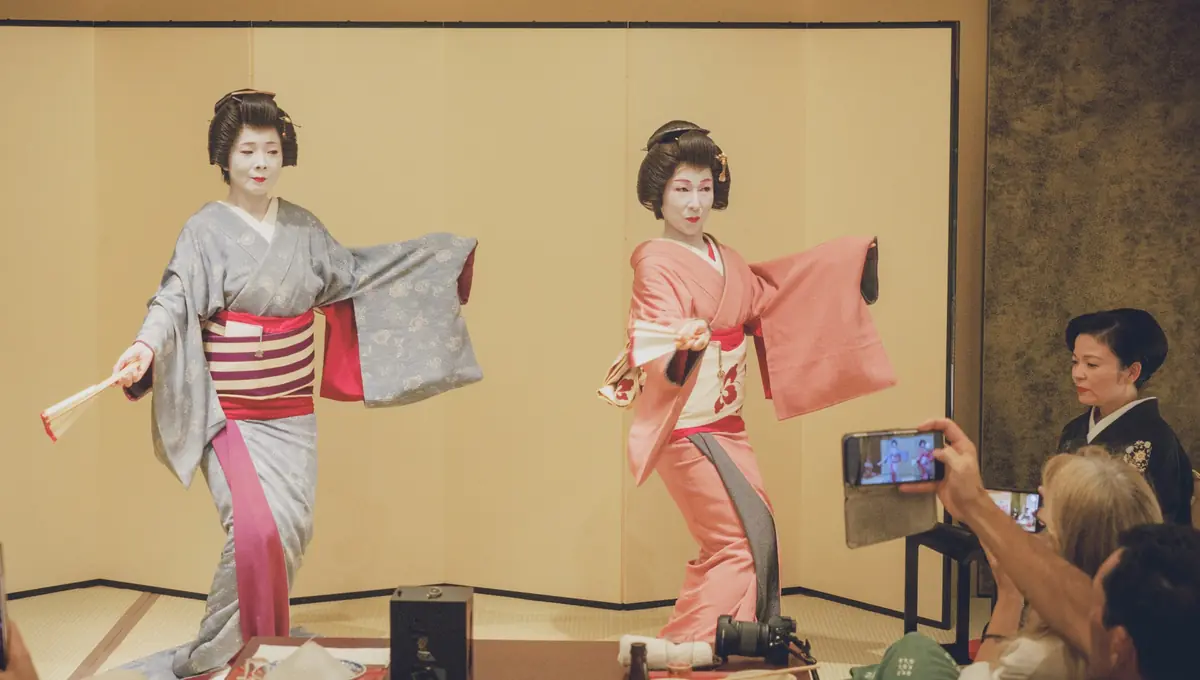
| Byobu (folding screen) | A free-standing screen that folds in a zigzag | Look, but do not lean on it or touch the painted surface | The geisha dance in front of it in our largest room |
| Horigotatsu (sunken table) | A low table set over a well in the floor, so you sit with your legs down | Sit on the cushion and lower your legs into the well | One room, on the ground floor |
The general descriptions follow japan-guide.com and nippon.com, listed under Sources. The last column describes our own rooms.
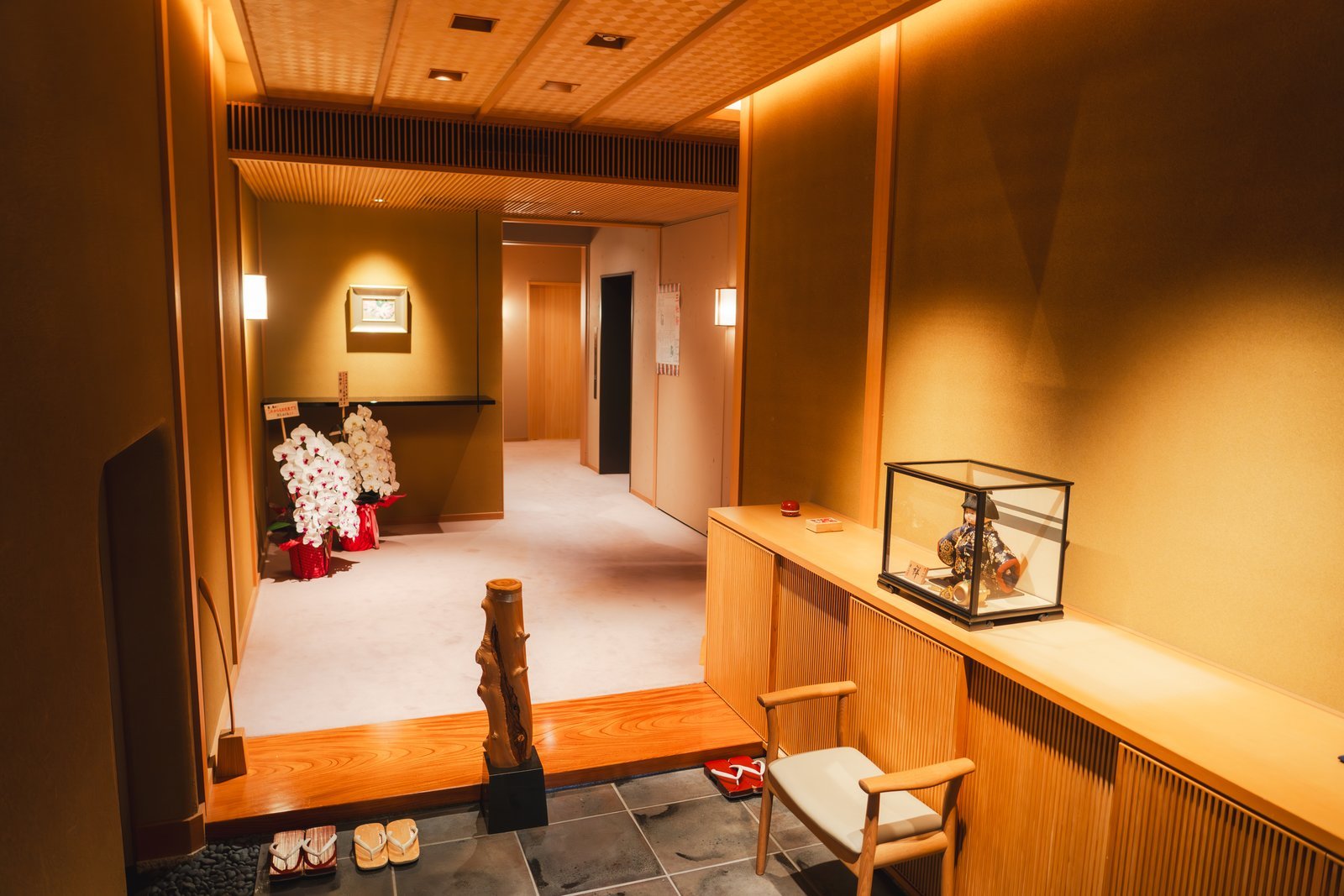
The Genkan: Where Shoes Come Off
Every Japanese house begins with the genkan. You enter onto a floor of stone or tile at street level, and a step called the agari-kamachi marks where the house begins. Nippon.com describes the step as the boundary between indoors and outdoors; visitors may sit on it to take off their shoes, and the raised floor keeps street dust out. The custom of taking off shoes grew from a life lived on tatami, where people sat and slept on the floor, as Japan’s national tourism organization explains.
In our house the genkan has a single step, the only one inside the building. Because shoes come off at the door, wear socks or bring a pair. Bare feet on tatami are thought impolite in Japan, and some guests arrive in sandals without realizing. Incense is lit whenever we receive guests, so the first thing you notice as you step in is its scent.
Tatami: How Japanese Rooms Are Measured
Tatami are thick mats of woven rush laid edge to edge across the floor. They are so much a part of the Japanese house that a room is described by how many mats it holds, as in an “eight-mat room”. Footwear of any kind, slippers included, comes off before you step onto tatami.
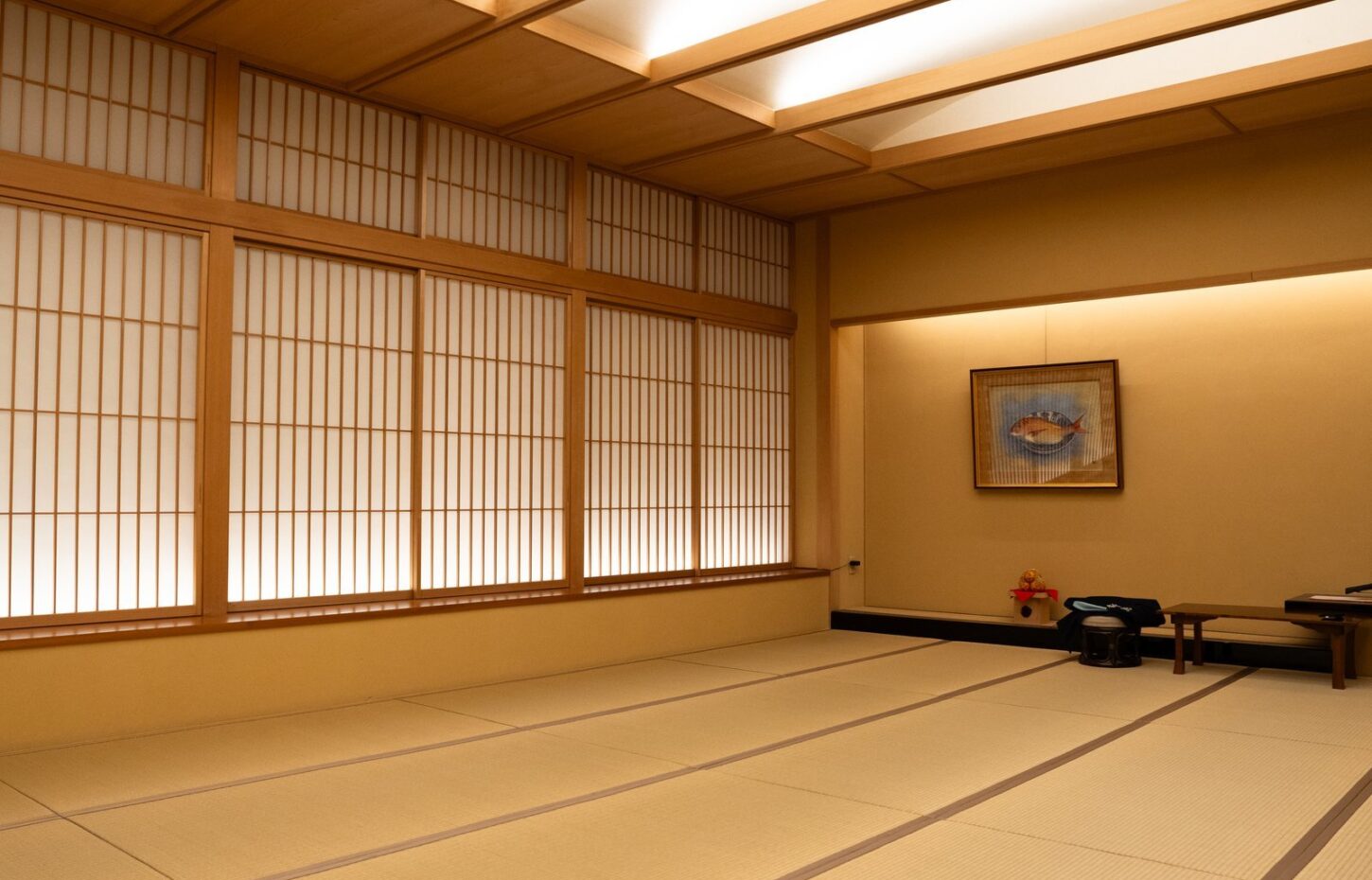
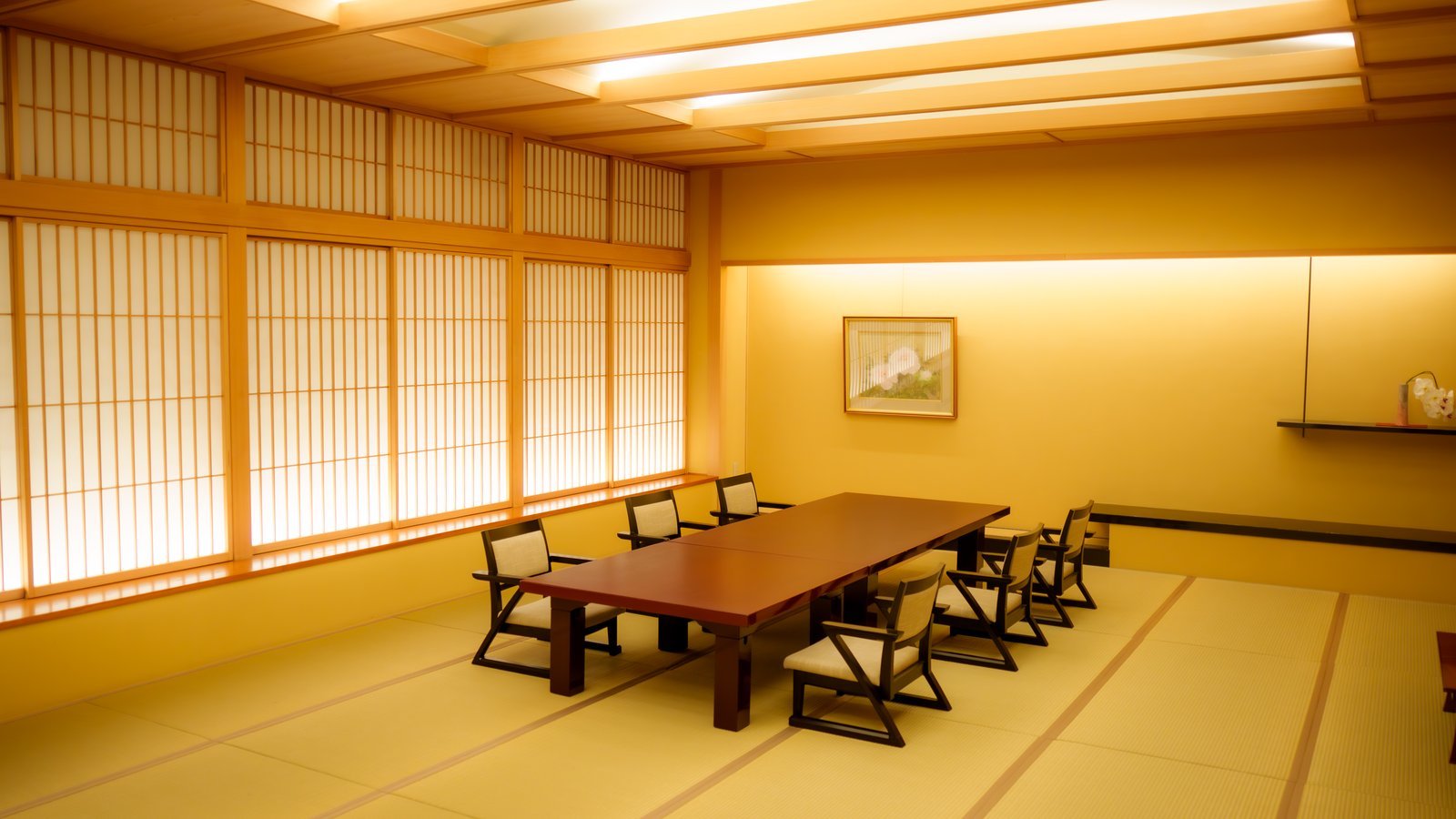
Our three rooms are all tatami rooms. The two smaller ones are 15 mats each and the largest is 30 mats. A tatami floor does not mean sitting on the floor, though. Two of our rooms have tables and chairs, and the third has a sunken table where you sit with your legs down, so there is no room where you kneel on the floor for the whole visit. If you have read that a tatami room means kneeling in seiza for hours, that is not how a guest sits here.
Shoji and Fusuma: Two Kinds of Sliding Screen
A Japanese room is closed with sliding screens rather than hinged doors, and there are two kinds. Shoji are a wooden lattice covered in translucent paper. They usually stand on the outer edge of the building, where they soften the daylight coming in. Fusuma are heavier panels covered in thick, opaque paper. They divide one room from the next and can be lifted out to join two rooms into one. In temples and palaces the fusuma were painted by famous artists, and in ordinary homes they are plainer. Above them there is sometimes a carved wooden transom, the ranma, which lets air and light pass between rooms.
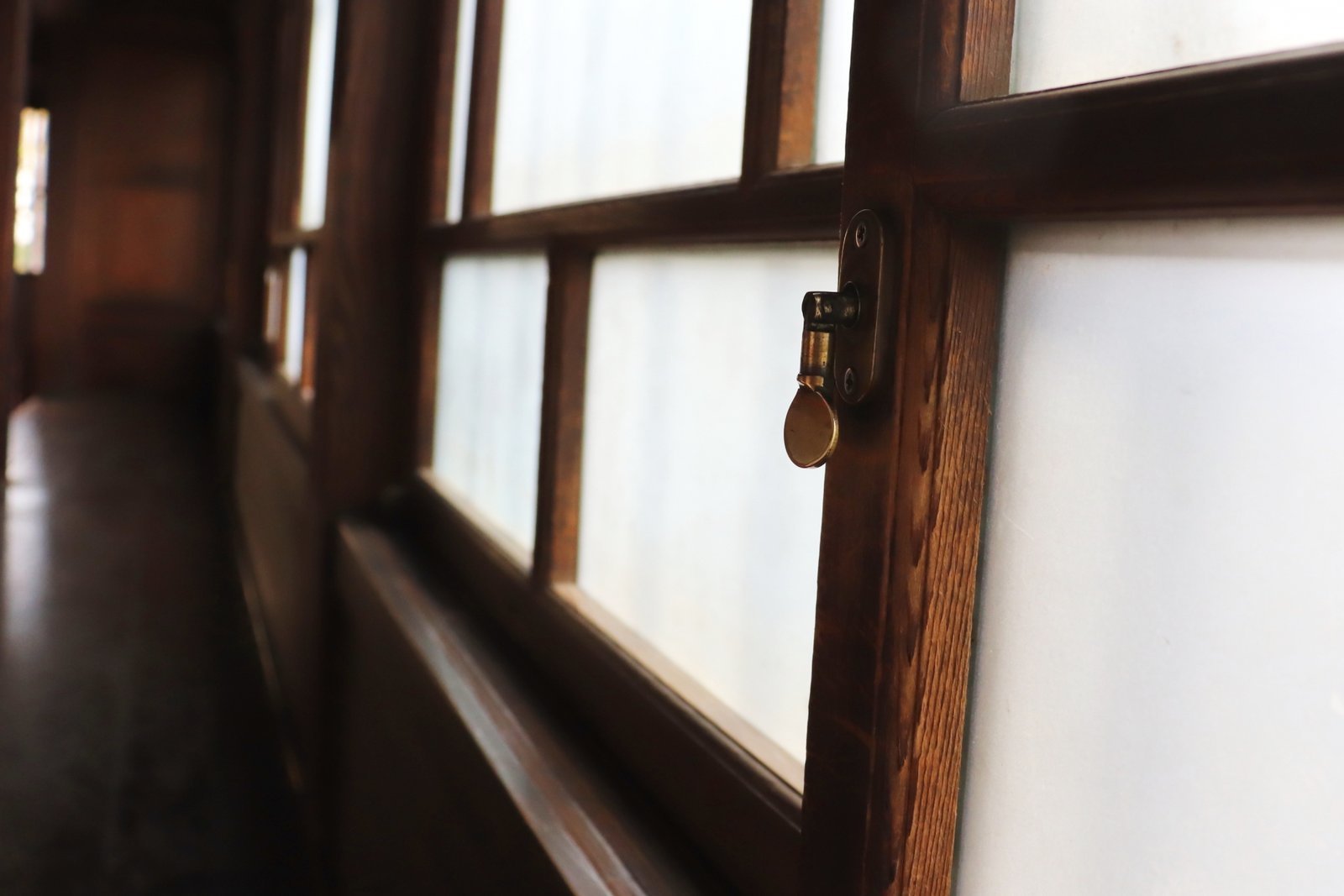
Screens slide in grooves cut into a wooden sill below, the shikii. A guide published by Shibuya City for one of its preserved houses notes that the doors at the edge of a Japanese veranda were once shoji running along such a sill; from the Meiji era they gave way to glass doors, which were heavy enough to need wheels and rails. Older houses in Tokyo still show both.
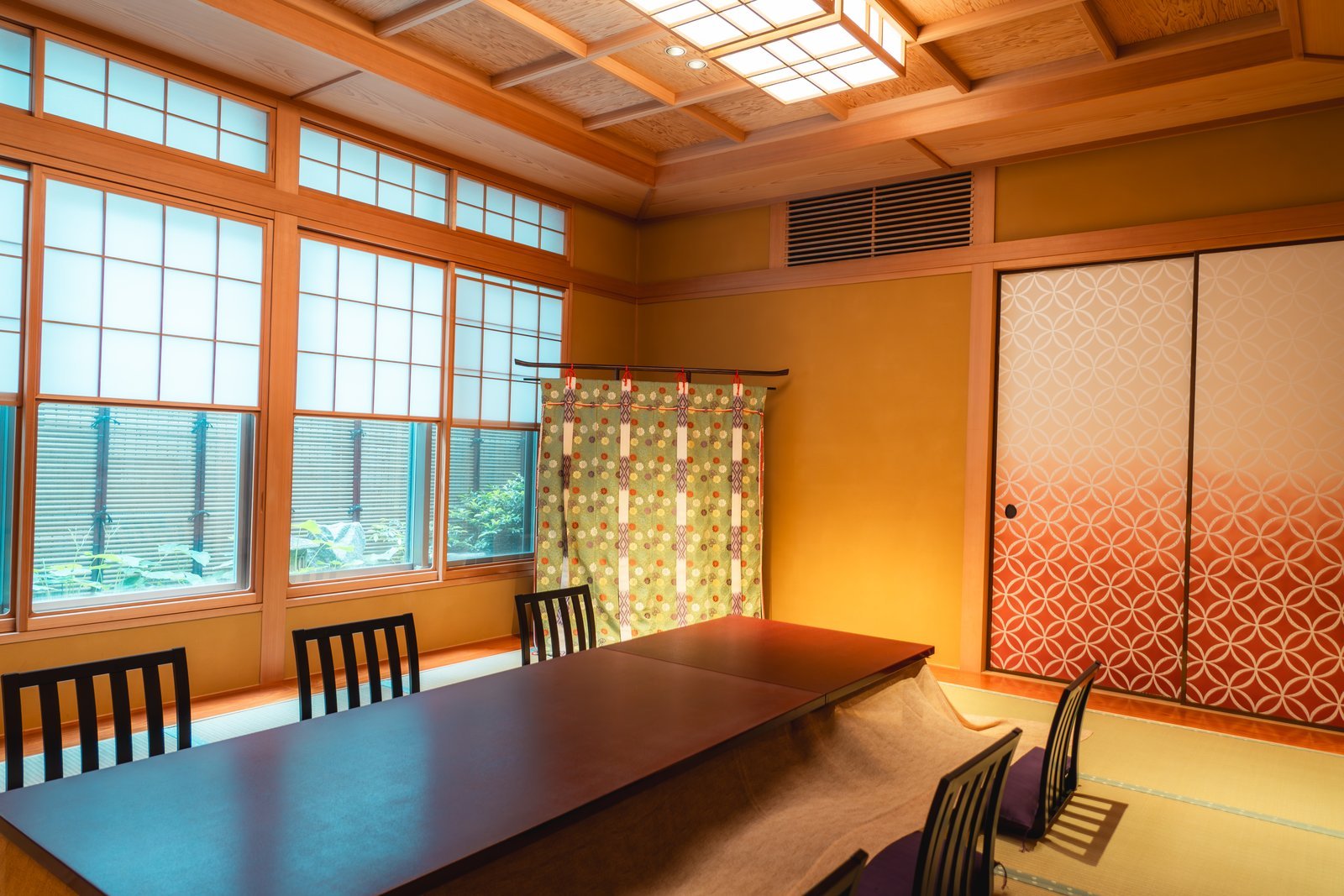
In our rooms the long walls of windows are lined with shoji. During traditional games such as konpira fune fune, the musician who plays the shamisen kneels on a red felt cloth in front of the shoji. Our ground-floor room also has fusuma, with patterned paper and a small round pull.
The Tokonoma: The Alcove That Decides Where You Sit
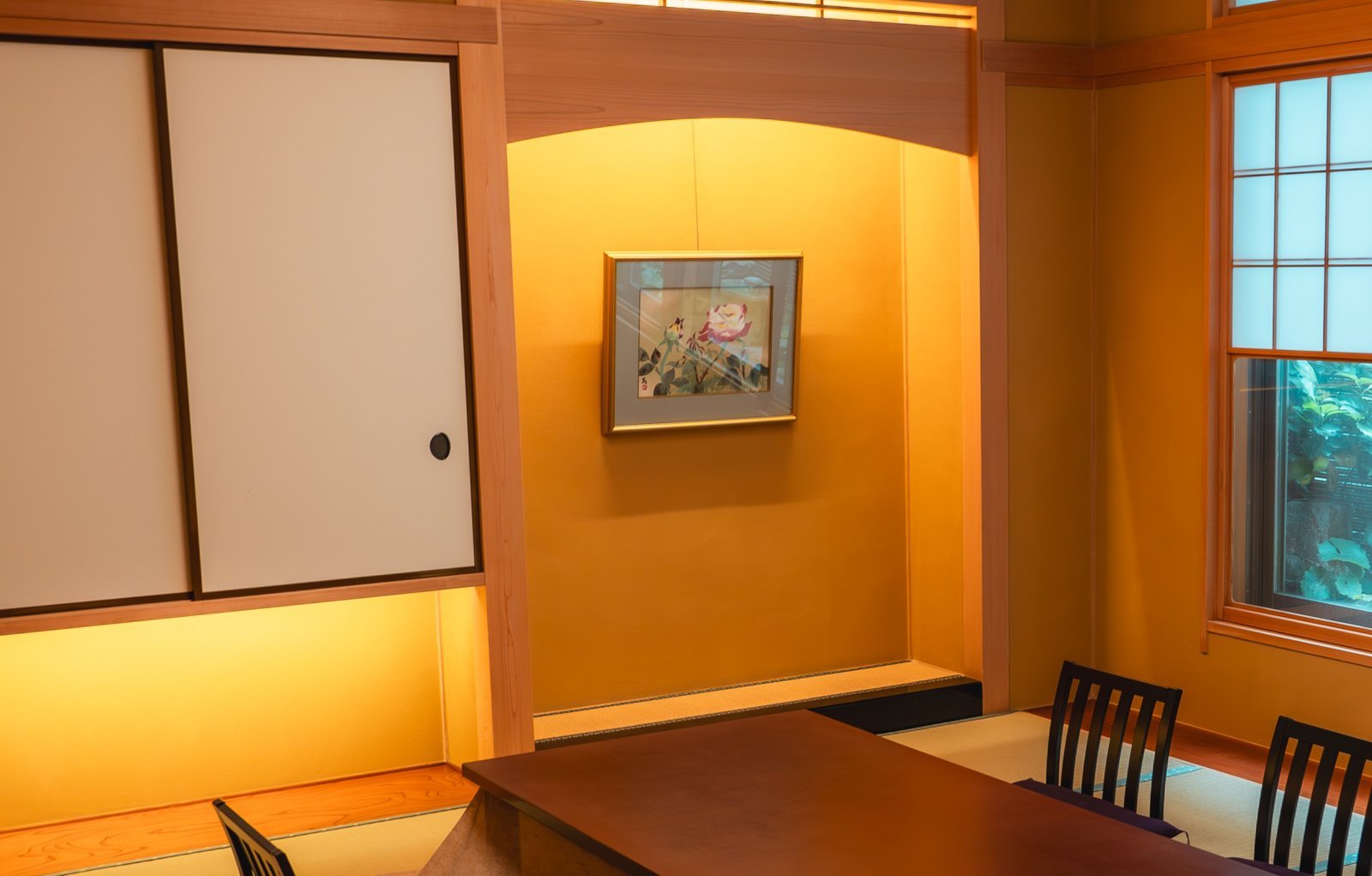
The tokonoma is a recessed alcove in the main wall of a formal room. Traditionally it holds a hanging scroll with a vase or an arrangement of flowers, and the display changes with the season. It is not storage and it is not a seat. Nothing is put down in it except what the house has placed there.
The tokonoma also sets the seating. The place closest to it is the upper seat (kamiza), and the place nearest the door is the lower seat (shimoza). Our okami, Chikage, the proprietress of the house, explains the rule the way she teaches it to young geisha:
“The side nearer the tokonoma is the upper seat. The higher person sits as close to it as possible, and if you think you are the lowest, you sit nearest the exit.”
Chikage, okami of Miyakodori, speaking about seating in an ozashiki (2026)
In our largest room, she teaches, the seats at the far end and along the windows are the upper ones. For a guest, the practical version is short. If you are hosting, give the seat nearest the alcove to your most important guest. If you are invited, wait to be shown where to sit. Our guide to etiquette in a tatami room covers the seating rules among geisha, and what is and is not expected of a guest.
Our tokonoma do not hold hanging scrolls. Instead, a painting is chosen for each month and flowers are arranged beside it. Seasonal decorations go up through the year as well: New Year decorations in January, and a display of samurai armor in February.
The Folding Screen, the Sunken Table and the Veranda
Byobu: A Wall You Can Move
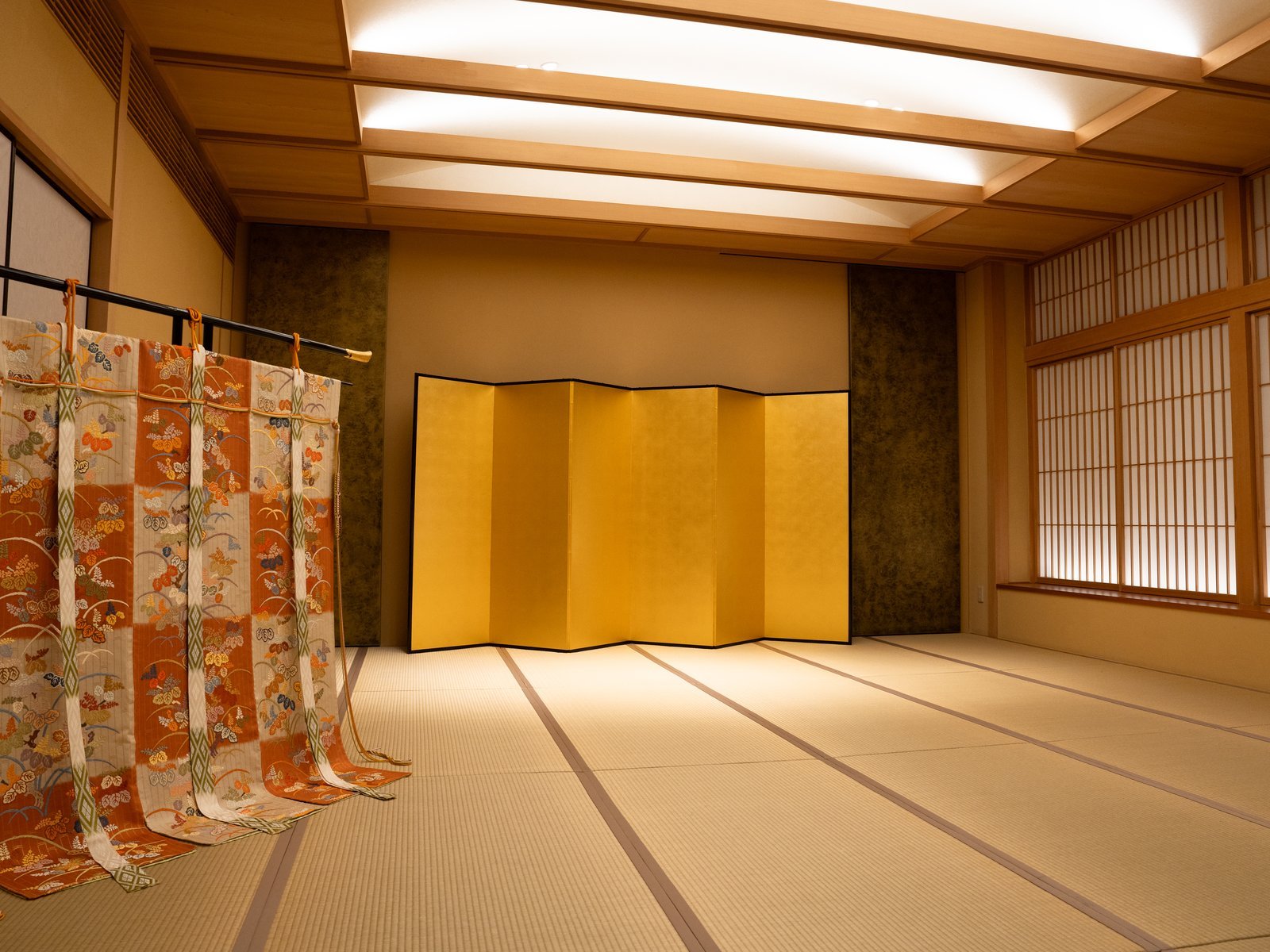
A byobu is a folding screen that stands on its own because its panels are set in a zigzag. In a Japanese house it can block a draft, hide a corner or form a backdrop. In our largest room a long folding screen stands at one end, and that is where the geisha dance: they dance with their backs to it, and guests sit facing it. The screen turns a plain wall into a stage.
Horigotatsu: The Sunken Table
A kotatsu is a low table covered with a blanket and heated underneath. The horigotatsu sets the table over a well cut into the floor, so you sit on a cushion with your legs hanging down as if on a chair. Our ground-floor room is set up this way: the table stands over the well with a cloth over it, and you sit on low legless chairs with purple cushions. In photographs it can look like a low table on the floor, but your legs go down into the well.
Engawa: The Strip Between Room and Garden
Many older houses have an engawa, a wooden strip that runs between the tatami rooms and the garden, closed off by shoji or glass doors. Our modern building does not have one, so this is the part to look for in the historic houses below. At the Kyu Asakura House, Shibuya City’s guide notes that the upstairs corridor looks down over the garden.
Where to See Inside a Traditional Japanese House in Tokyo
Three places in Tokyo let you walk through the inside of older Japanese houses. They differ in what they show, so choose by what you want to see. At all three you take your shoes off to go inside some of the buildings, so wear shoes that slip on and off easily and bring socks.
| Place | What you see inside | Hours and closed days | Admission (adults) |
|---|---|---|---|
| Edo-Tokyo Open-Air Architectural Museum (Koganei) | Historic buildings moved from across Tokyo, from a thatched mid-Edo farmhouse to a 1902 house and a row of old shops; you can step up into some of them | 9:30 am to 5:30 pm from April to September, to 4:30 pm from October to March, last entry 30 minutes before closing. Closed Mondays (the next day if Monday is a holiday) and over the New Year | ¥400; seniors 65 and over ¥200 |
| Kyu-Iwasaki-tei Gardens (Taito) | The great hall of a Meiji-era Japanese-style residence in the formal shoin style, with painted panels, beside a Western-style house of 1896 | 9:00 am to 5:00 pm, last entry 4:30 pm. Closed 29 December to 1 January | ¥400; 65 and over ¥200 |
| Kyu Asakura House (Shibuya) | A two-storey wooden house of 1919 with almost every room laid with tatami, and a garden on a slope | 10:00 am to 6:00 pm, last entry 5:30 pm; from November to February to 4:30 pm, last entry 4:00 pm. Closed Mondays (the next weekday if Monday is a holiday) and 29 December to 3 January | ¥500 |
Edo-Tokyo Open-Air Architectural Museum
The museum stands in Koganei Park in western Tokyo, a 5-minute bus ride and a 5-minute walk from Musashi-Koganei Station on the JR Chuo Line. Its buildings were moved here from around Tokyo. Two to look for are the Tsunashima family farmhouse, built between 1680 and 1745, with a thatched roof, an earth-floored area and an old-style alcove board, and the house of Korekiyo Takahashi, built in 1902 in Akasaka. The museum suggests shoes that are easy to take off, because some buildings can be entered. One building, the Jisho-in Mausoleum, is closed for repairs until late March 2027. Tickets can be bought online for a set date or at the gate on the day.
Kyu-Iwasaki-tei Gardens
The gardens are a 3-minute walk from Yushima Station on the Tokyo Metro Chiyoda Line, and the closest of the three to Asakusa. Of the Iwasaki family’s Japanese-style residence, only the great hall remains. It is built in the shoin style used for formal reception, and its tokonoma and fusuma carry paintings said to have been designed by Hashimoto Gaho. The Tokyo Metropolitan Park Association asks visitors to wear socks to protect the buildings, and entry to parts of the Japanese wing is restricted.
Kyu Asakura House
The house is a 5-minute walk from Daikanyama Station on the Tokyu Toyoko Line. It was built in 1919 by Torajiro Asakura, a local politician, and is now an Important Cultural Property. Shibuya City notes that the rooms for formal guests follow the shoin style, as was the custom, while the cedar rooms at the back use a relaxed sukiya style. The rules show the etiquette in practice: shoes come off for the visit, socks must be worn, and bare feet and slippers are not allowed. Some rooms are closed to protect the building.
Eating in a Traditional Room: A Cultural Dinner in Tokyo
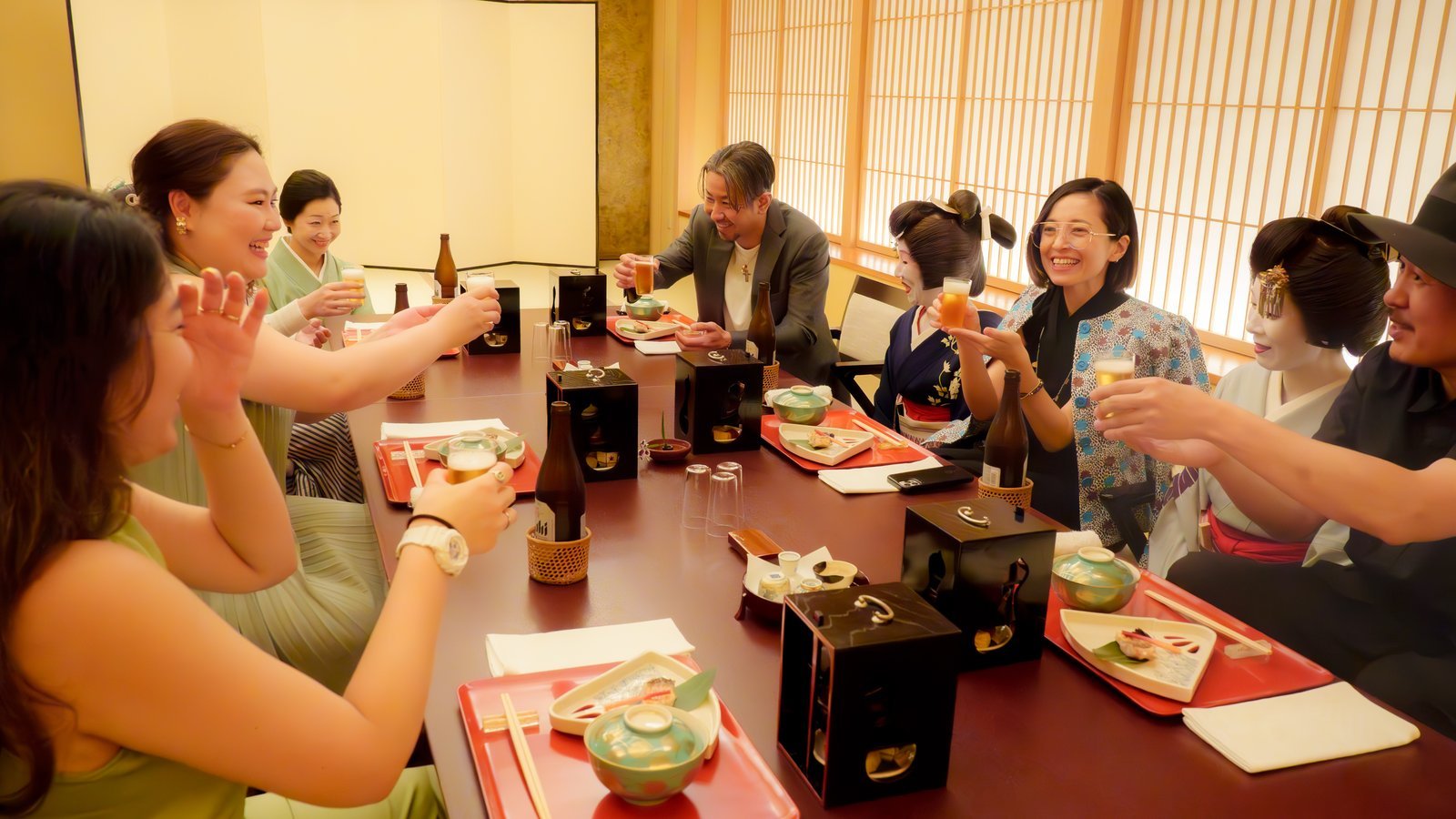
Seeing the parts of a Japanese house is one thing; spending a few hours in them as a guest is another. At a teahouse that hosts geisha, the parts above are in use: you take off your shoes at the genkan, the senior guest sits on the tokonoma side, and the geisha dance in front of the folding screen to live shamisen. A meal and drinks are served at the table, and the geisha play traditional games with you.
That is what a private visit to our house is. The rooms are for your party alone, with chairs or a sunken table rather than kneeling on the floor. Our three-hour plan includes a kaiseki course, and with the shorter plans a meal can be added. If you would like to know how a teahouse like ours differs from a ryotei, our guide to the ryotei sets out the two kinds of house. For the idea of hospitality behind the details, from the incense at the door to the farewell at the entrance, see our guide to omotenashi. If what you are after is a cup of matcha in a garden teahouse rather than a visit with geisha, our guide to tea houses in Tokyo compares the kinds.
Be a Guest at an Ozashiki in Asakusa
A private ozashiki in a tatami room for your party alone, with dances to live shamisen music and traditional games. Choose one, two or three hours, starting between 2:00 and 8:00 pm on weekdays except public holidays. A guest travelling alone can book.
Request a ReservationFrequently Asked Questions
What are the main features of traditional Japanese architecture?
Inside, the main features are the genkan entrance with a step where shoes come off, tatami mats that cover the floor and set the size of each room, sliding screens instead of doors (translucent shoji and opaque fusuma), and the tokonoma, an alcove whose position decides the seating. Older houses also have an engawa, a wooden strip between the rooms and the garden.
What does the inside of a traditional Japanese house look like?
Rooms are floored with tatami and have very little furniture. Paper screens slide to open or close each room, a low table or a sunken table is used for meals, and the main room has an alcove holding a scroll or picture and flowers. Shoes stay at the entrance, and slippers come off before the tatami.
What is a tokonoma used for?
A tokonoma is a raised alcove for displaying a hanging scroll or picture with flowers, usually changed with the season. It also marks the seating: the seat closest to it is the upper seat for the most senior guest, and the seat nearest the door is the lowest. Guests do not sit in it or put things in it.
What is the difference between shoji and fusuma?
Shoji are sliding screens of a wooden lattice and translucent paper, set on the outer edge of a room to let in soft light. Fusuma are sliding panels of thick, opaque paper that divide one room from another or close off storage, and in grand houses they are often painted.
Where can I see inside a traditional Japanese house in Tokyo?
The Edo-Tokyo Open-Air Architectural Museum in Koganei has historic houses moved from around Tokyo, some of which you can step into. The Kyu-Iwasaki-tei Gardens near Yushima Station keep the great hall of a Meiji-era Japanese-style residence, and the Kyu Asakura House near Daikanyama is a tatami house from 1919. Check each official website for hours before you go.
What is a good cultural dinner experience in Tokyo?
A dinner in a traditional tatami room with geisha is one of the few ways to spend a few hours inside Japanese architecture as a guest. At a teahouse such as ours in Asakusa, your party has a private room with chairs or a sunken table, a meal and drinks are served, and geisha dance to live shamisen and play traditional games with you.
Sources
- Edo-Tokyo Open-Air Architectural Museum: Closed day and admission fee, Getting here, On your visiting, Reconstructed buildings; in Japanese, tickets and repair closures (checked 15 November 2026)
- Tokyo Metropolitan Park Association: Kyu-Iwasaki-tei Gardens outline and access; in Japanese, Kyu-Iwasaki-tei Gardens (checked 15 November 2026)
- Shibuya City, in Japanese: Kyu Asakura House, with its leaflets on the building and the wooden rails (checked 15 November 2026)
- japan-guide.com: Traditional Japanese-style rooms (checked 15 November 2026)
- Nippon.com: The genkan: Japan’s traditional entryway and footwear etiquette (checked 15 November 2026)
- Japan National Tourism Organization: Understanding and mastering Japanese manners and etiquette (checked 15 November 2026)
Opening hours, closures and admission change. Check the official website before you go if a detail matters to you.


Things to Do in Tokyo at Night: Walk-In and Book-Ahead Options
Tea Houses in Tokyo: Which Kind of Teahouse to Visit
Kabuki in Tokyo for First-Timers: One Act, English Help and Tickets

3 Day Tokyo Itinerary: What to Book for Each Night, With a Day in Asakusa
Traditional Entertainment in Tokyo: Kabuki, Sumo, Rakugo and a Geisha Ozashiki
26 Best Experiences in Tokyo: Unique Guide (2026)
Comment ( 0 )
Trackbacks are closed.

No comments yet.