



What Is a Ryotei? Japan’s Traditional Restaurant Culture, Explained
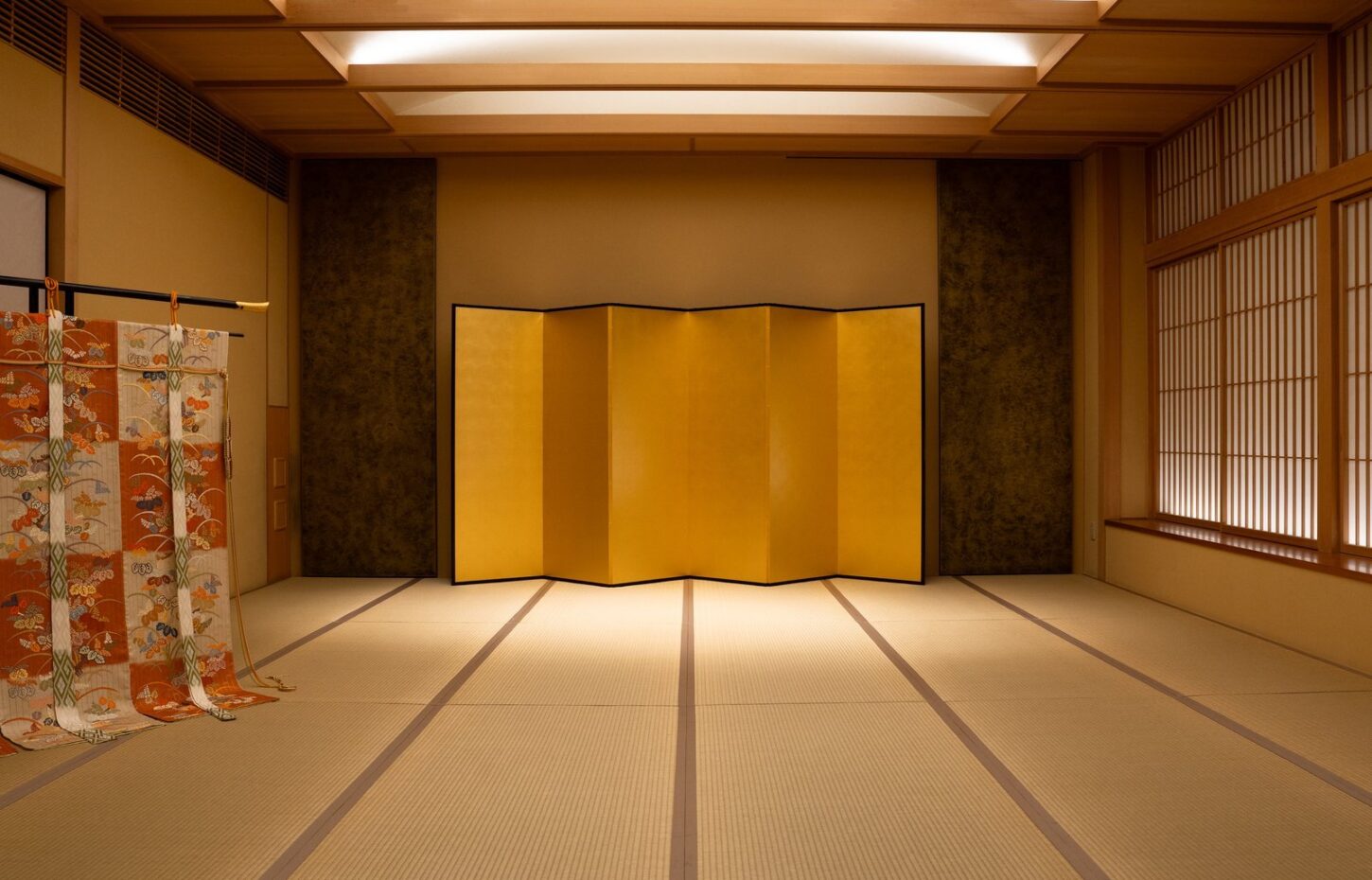
A ryotei (料亭) is a traditional Japanese restaurant built around private tatami rooms, multi-course kaiseki cuisine, and room-by-room service — the room and the pace of the meal are yours for the evening, not shared with other guests. Kaiseki is a style of meal, not a type of house: you can eat it at a ryotei, a ryokan, or a stand-alone restaurant. A related but different house, the machiai-chaya, does not cook on its own premises — it lends the room and brings the meal and the geisha in from outside. Miyakodori is the only machiai-chaya in Asakusa — a machiai-chaya rather than a ryotei, as its owner is careful to say — and one of the few houses in this trade to take bookings from first-time and overseas guests without an introduction.
What Is a Ryotei?
A ryotei (料亭) is a traditional Japanese restaurant that combines formal cuisine with private tatami rooms and close, room-by-room service. Guests are typically seated in a room of their own and served a multi-course meal — most often kaiseki — by an attendant who looks after that room for the evening.
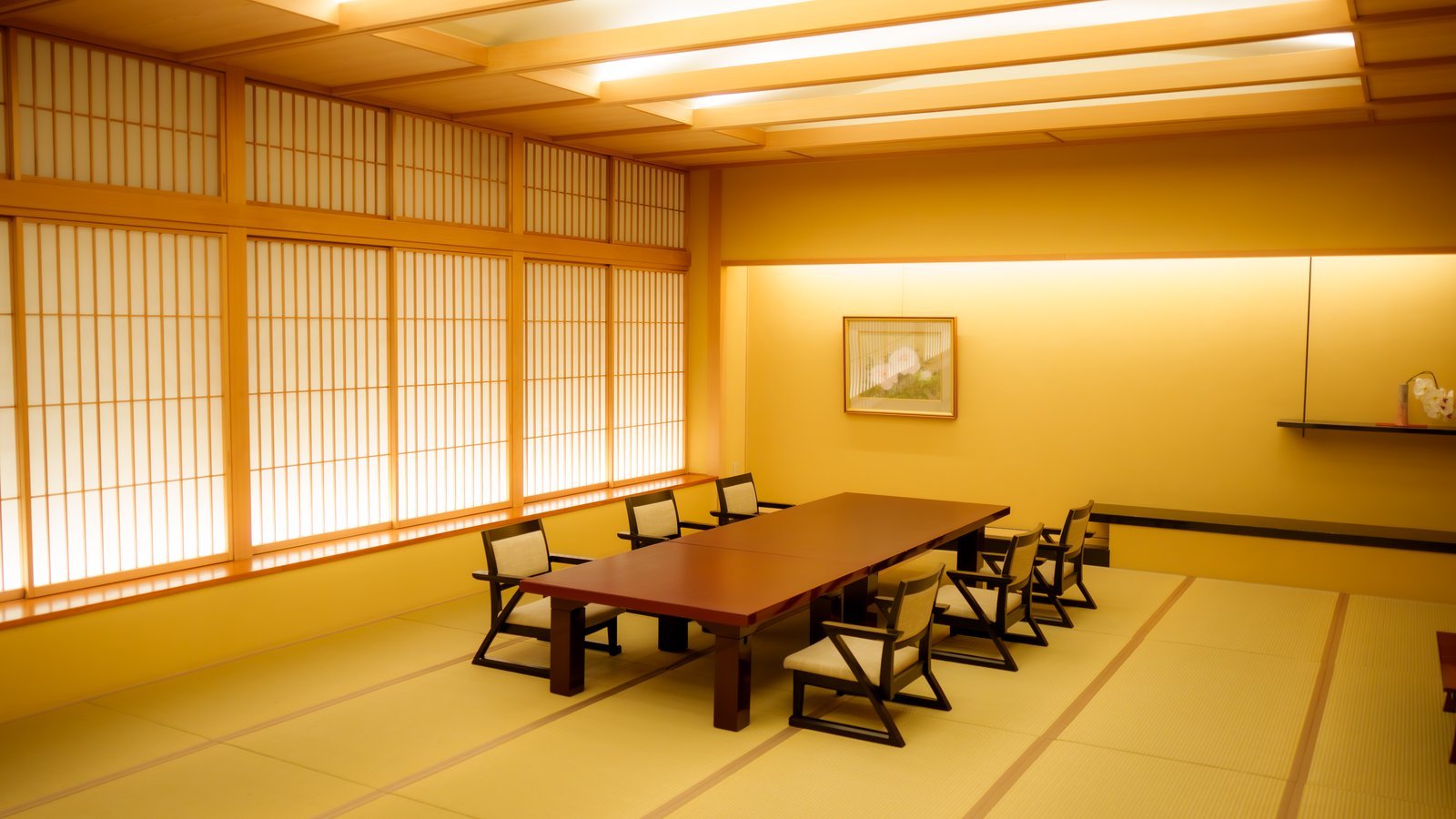
What sets a ryotei apart from other high-end Japanese restaurants is less the cooking than the setting. The food can match any serious kitchen in the city. The difference is that you are not sitting in a dining room shared with other guests: the room is yours for the evening, and the service and the pace of the meal follow your party rather than the house’s turnover. That shows in the building itself — a discreet entrance, a private room, an attendant who stays with you instead of a floor shared between tables.
This catches first-time visitors out. Prices are usually quoted per person for the evening rather than per dish, because the room and the service are part of what you are paying for. What the figure covers varies from house to house — drinks, room charges, and geisha entertainment are often counted separately — so it does not compare directly with a restaurant bill.
A Short History of the Ryotei
The ryotei developed out of the eating and entertainment culture of the Edo period (1603–1868), but not along a single line. What came before it differed from city to city. Some were teahouses that hired out rooms and had the food brought in from outside. Others — the ryōri-chaya, or dining teahouses — cooked and served on their own premises from the start. Terminology and legal categories varied by region and period, and a house’s name did not always tell you how it worked. The ryotei as we know it emerged from these overlapping traditions rather than from one path through them: a house with its own kitchen, its own rooms, and its own standard of service.
The connection to the hanamachi — the districts where geisha lived and worked — is not incidental. Ryotei were among the venues where guests could engage geisha. A guest booked the room; the house arranged for geisha to attend. In the districts where the tradition continues, that is still how it works, and it explains why the two words so often appear together in English writing about Japan.
By the twentieth century the ryotei had acquired a second reputation, as a discreet setting for political and business entertaining. The phrase ryotei seiji — “ryotei politics” — refers to exactly that: informal political negotiation conducted in these rooms. Before the war the same practice was more often called machiai seiji, after the machiai-chaya where much of it took place; the phrase shifted as the houses themselves were relabelled. In the later decades of the century, as business-entertainment practices changed, some houses that had depended on that trade sought a broader clientele. An evening that once arrived through a company account became something a guest could book for themselves.
What Happens at a Ryotei?
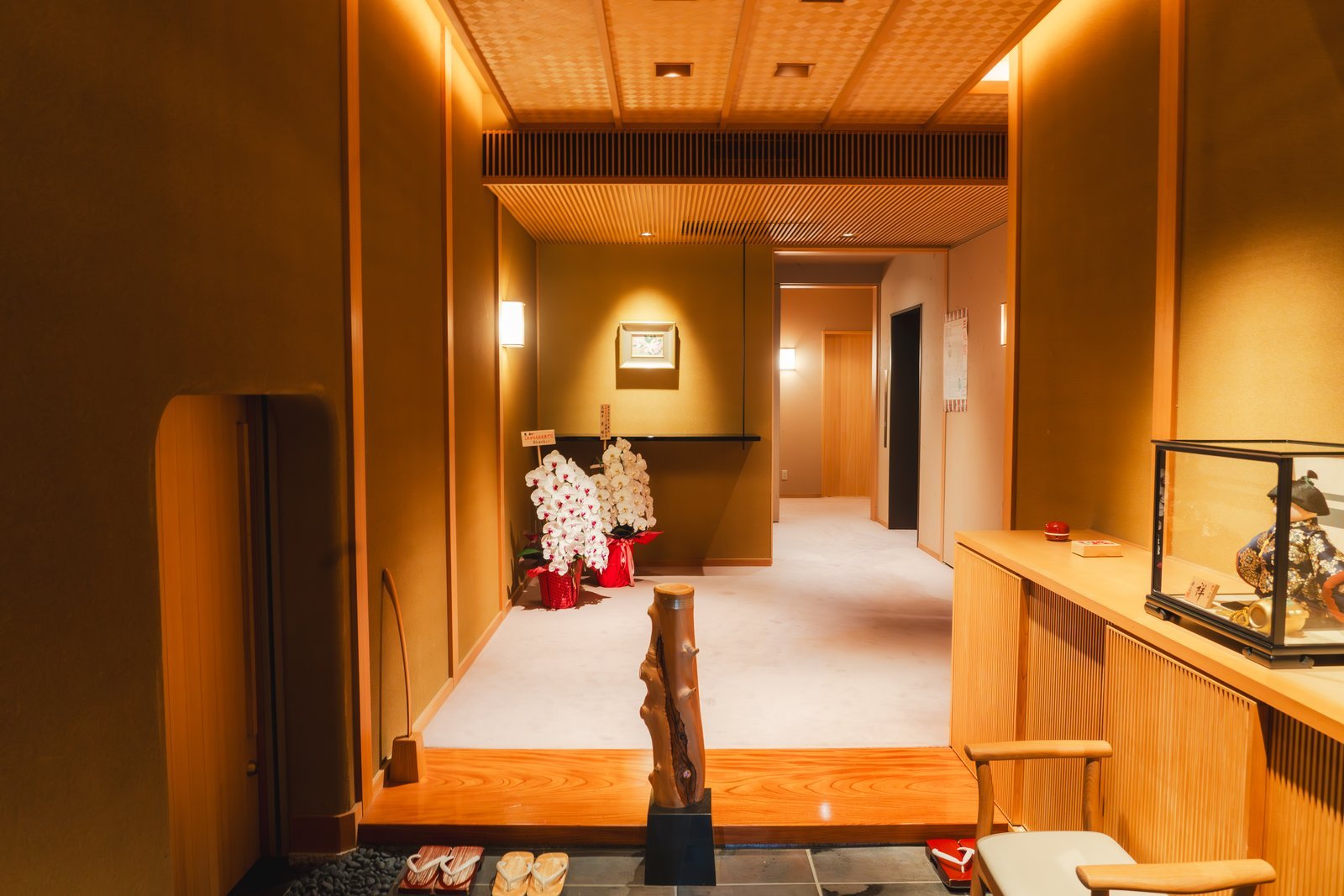
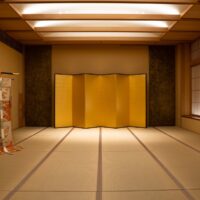
Someone meets you at the entrance and takes you to your room. You step up at the threshold and leave your shoes there. Most rooms have a tokonoma — an alcove holding something seasonal — and a low table, sometimes set over a sunken well so you can sit with your legs down.
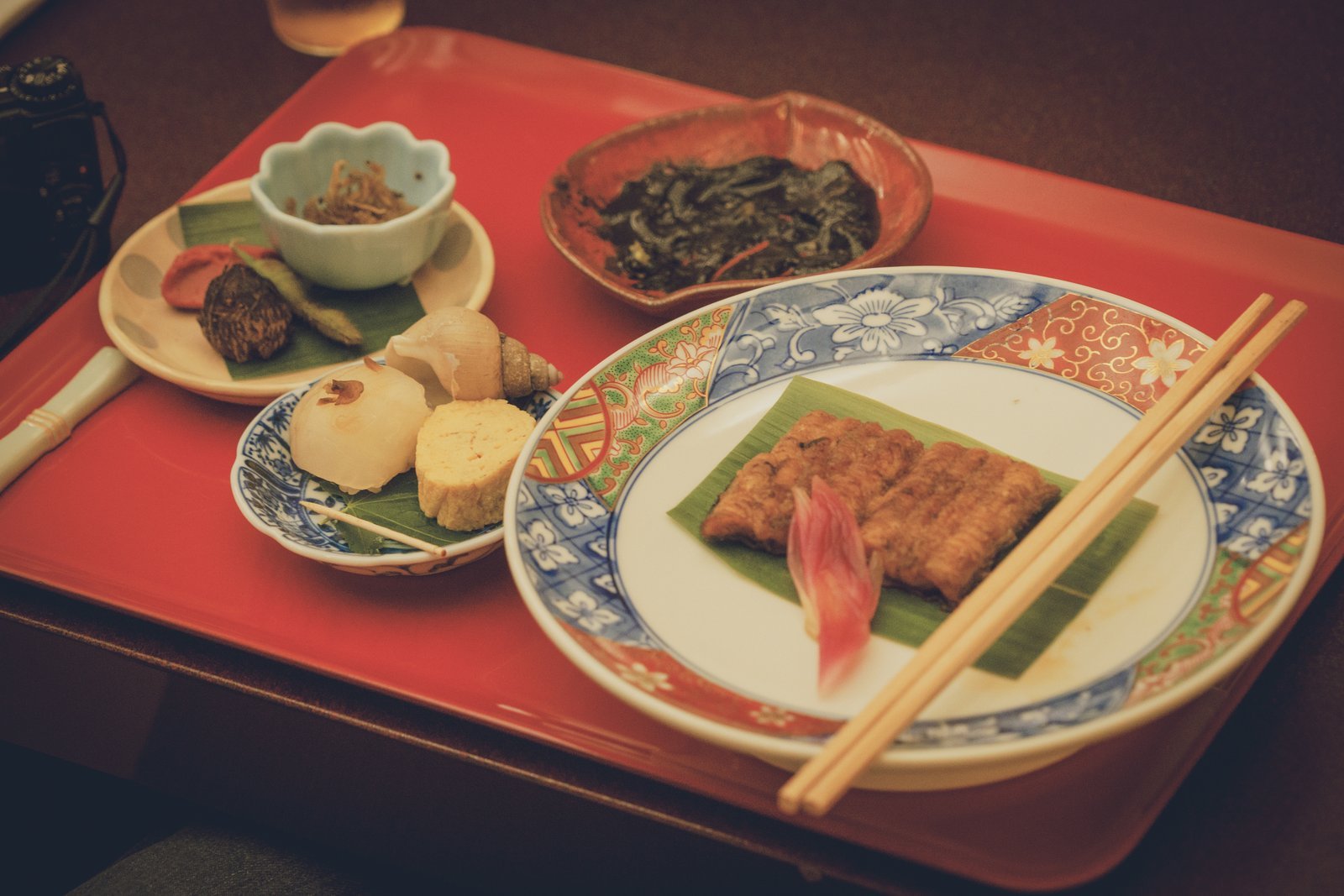
The meal arrives in courses, timed by the attendant rather than ordered by you. What a ryotei serves is usually kaiseki in its banquet sense (会席) — a sequence of small dishes composed around what is in season. A typical progression runs from an opening dish through clear soup, sashimi, something grilled, something simmered, rice and pickles, and a sweet, though the exact order and number of courses vary by house and by season. What is served in October is not what is served in April, and that is the point rather than a limitation.
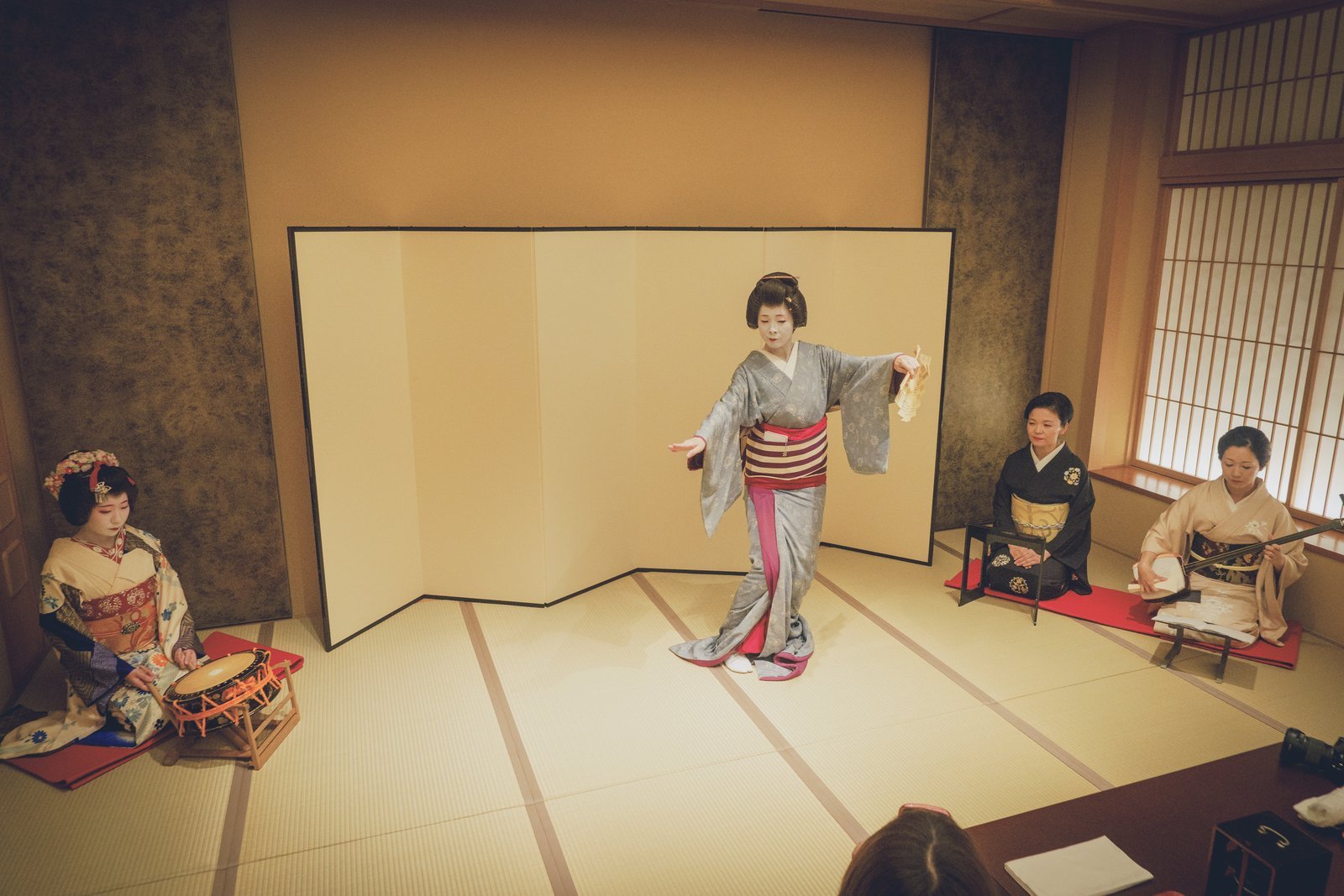
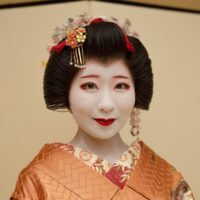
If geisha have been engaged, they join the party for the portion of the evening that was booked. They pour, they talk, they perform — dance, shamisen, and the drinking games that belong to this setting. The timing and the length of the engagement are settled when the booking is made. In a busy district a geisha may have another room to go on to afterwards; the trade has its own word for it, atokuchi (後口) — the next engagement of the evening.
The shape of the evening follows the booking rather than running open-ended. A ryotei evening is a timed reservation, and it closes when that time is up.
Spend an Evening Built Around Your Room
At our teahouse in Asakusa, a private ozashiki (geisha banquet) pairs seasonal kaiseki cuisine with Asakusa geisha — dance, shamisen, conversation and the old parlor games — timed to your booking, for your group alone. First-time and overseas guests welcome.
Request a ReservationRyotei vs Kaiseki: What’s the Difference?
This is a common source of confusion in English, and it comes from treating two different kinds of word as if they were the same kind.
Kaiseki is a style of meal. Ryotei is a type of establishment.
- Kaiseki — a multi-course meal built around what is in season, served in a set sequence, with each course composed as much for the eye as the palate. You can eat kaiseki in a ryotei, in a ryokan, in a standalone restaurant, or at a counter.
- Ryotei (料亭) — a house with private tatami rooms, room-by-room service, and a per-person price for the evening. What it serves is very often kaiseki, but the word describes the house, not the food.
So “ryotei vs kaiseki” is not a comparison of two competing options. A ryotei is one of the places you might eat kaiseki, and kaiseki is the meal a ryotei most often serves.
Two footnotes worth having. The word is written two ways, and they are not the same thing: 懐石 is the simpler meal that accompanies a tea gathering, while 会席 is the banquet form you will meet in a ryotei. In casual use the distinction is often ignored, but if you are reading a menu, it tells you which tradition you are in. And a kaiseki restaurant with a counter is a genuinely different experience from a ryotei room, even when the food is comparable: at a counter you watch the chef and the evening is about the cooking; in a ryotei room you are in a closed space with your own party and the evening is about the occasion.
Ryotei vs Machiai-Chaya: A Related but Different Kind of House
Not every house with private tatami rooms and geisha in attendance is a ryotei. There is a second form, rooted in an older practice and much less written about in English, called a machiai-chaya (待合茶屋) — literally a “waiting teahouse.”
The difference is in the kitchen.
- Ryotei — cooks on the premises. The house has its own kitchen and its own chefs, and the meal is prepared where you eat it.
- Machiai-chaya — does not cook on the premises. The food is ordered in from outside, a practice called shidashi (仕出し). What the house provides is the room, the service, and the arrangements: it is, at its foundation, a business of lending rooms.
This is not a modern shortcut. The arrangement has precedent in the older teahouse practice of hiring out the room and having the food come from specialists. What such houses have been called, though, has shifted: in postwar Tokyo a number of houses registered as machiai were renamed ryotei without changing how they actually worked. The labels are less stable than the practical distinction behind them, which is why the kitchen is the more useful thing to ask about.
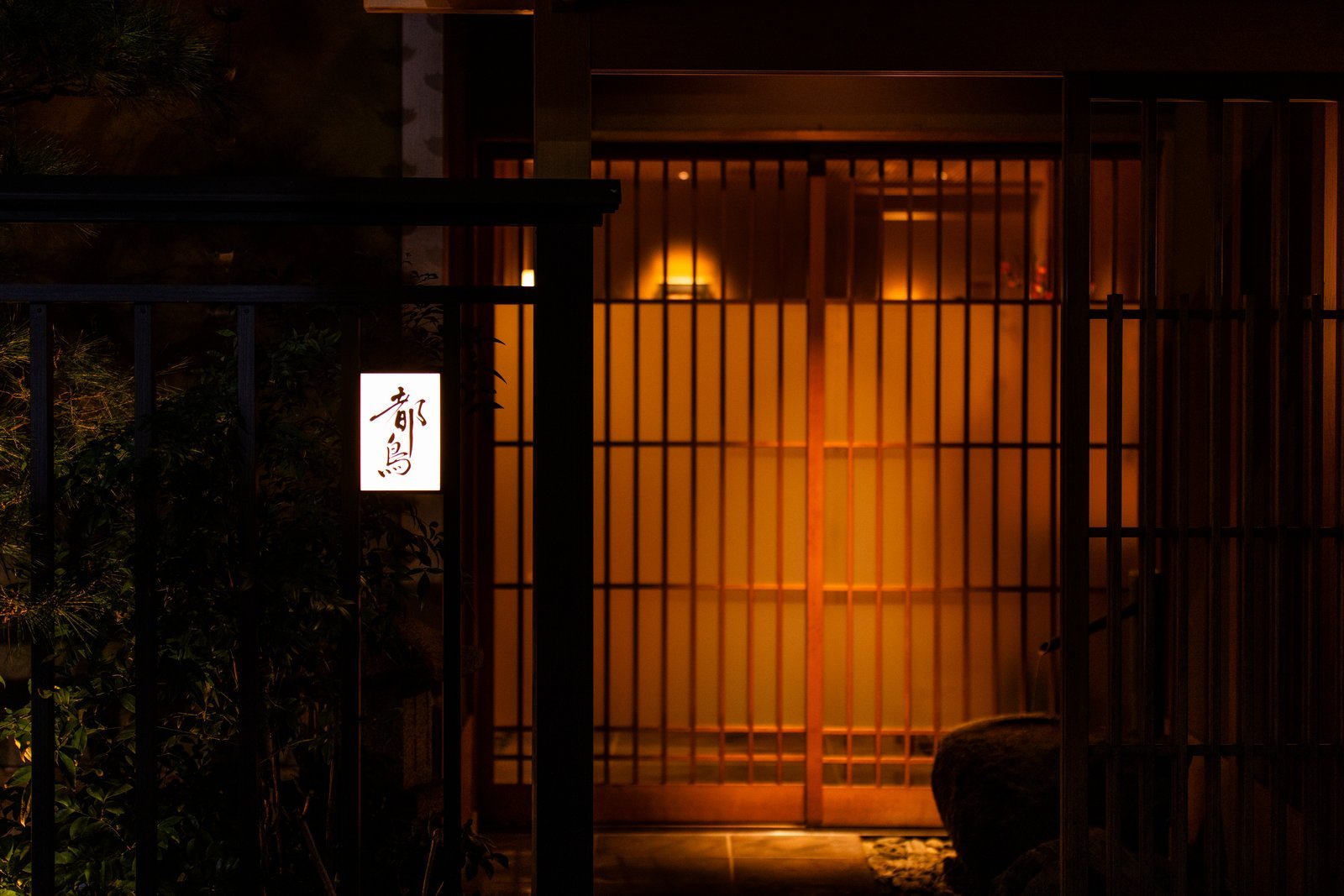
The distinction matters because the two are readily conflated in English. Asked directly whether his house is a ryotei, the third-generation owner of Miyakodori in Asakusa answers plainly: “Formally, we are a machiai-chaya.” Guests may well assume otherwise, because from the guest’s chair the evening looks much the same — the room, the courses arriving in order, the geisha attending for the portion of the evening arranged in the booking. The difference is behind the wall, in whether there is a kitchen there or not.
So if you are trying to place a particular house, the question to ask is not how good the food is. It is where the food is cooked.
Ryotei and Machiai-Chaya in Asakusa Today
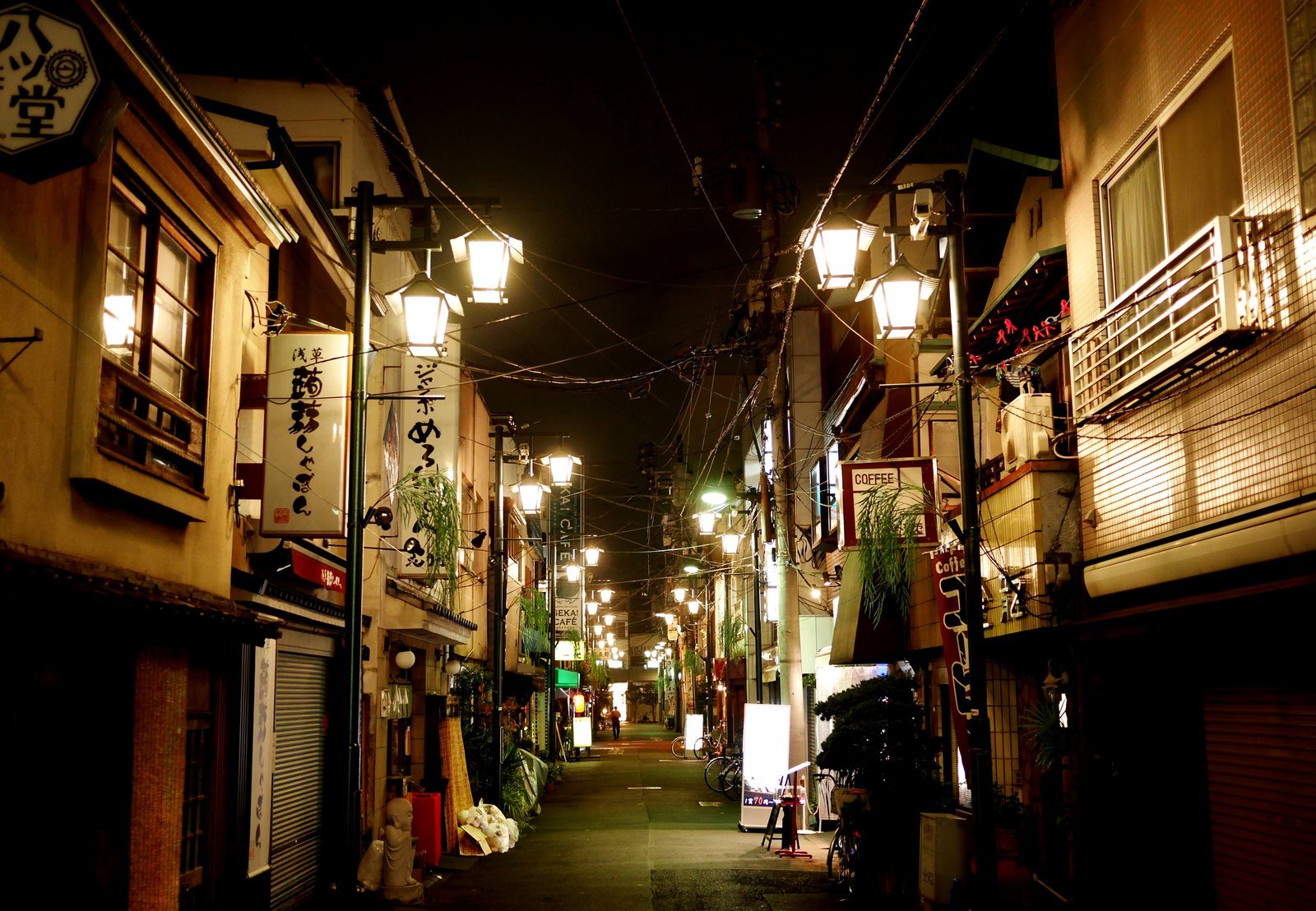
Asakusa is one of the Tokyo districts where both forms are still a working part of the evening rather than a preserved one. Geisha are engaged through the local kenban, the registry office that keeps the roster and handles the bookings, and under the current Asakusa system the houses arrange them for guests room by room.
What has changed is the door. The introduction system — where a first visit required someone the house already knew — was the ordinary way in for most of the twentieth century, and for a visitor without local connections it was a major barrier. Saying plainly that you accept first-time guests is still unusual in this trade; most houses do not say it at all. A few now do, and take direct bookings in English without an introduction. Miyakodori, founded in 1950, is one of them, and it is the only machiai-chaya in Asakusa — a machiai-chaya rather than a ryotei, as its owner is careful to say, but running the same kind of evening in the same district.
That is a real change in access, and it is a change worth stating precisely. It does not alter the form of the evening: the room is still private, the meal still arrives in courses, the geisha still attend for the portion of the evening that was booked. It alters who is able to book it.
Frequently Asked Questions
What does “ryotei” mean in Japanese?
料亭 is written with two characters: 料, associated with provisions and charges, and 亭, a pavilion or establishment. In modern Japanese the word refers to a traditional high-end dining house — and in practice it implies more than the characters do: private rooms, a set multi-course meal, and service organized around one party at a time.
Is a ryotei the same as a regular Japanese restaurant?
No. The food may be comparable to a high-end restaurant’s, but the arrangement is different: you book a private room rather than a table, the courses are timed by an attendant rather than ordered from a menu, and the price is generally quoted per person for the evening rather than per dish.
What is the difference between a ryotei and kaiseki?
Kaiseki is a style of meal; a ryotei is a type of establishment. A ryotei usually serves kaiseki, but you can also eat kaiseki at a ryokan, at a standalone restaurant, or at a counter. See the section above for the full comparison.
Can foreign visitors go to a ryotei?
Yes, though it depends on the house. Many have historically required an introduction from an existing guest, and some still do. Others now accept direct bookings from overseas, with English support. If a house does not say either way, it is worth asking before assuming you cannot book.
How much does a ryotei cost?
Pricing is generally per person for the evening and varies widely by house, by the length of the booking, and by whether geisha are engaged. What the figure includes also varies — drinks, room charges, and entertainment may be counted separately — so it is not comparable to a per-dish restaurant bill. Houses that publish their rates make this easier to plan than it used to be.
How is a ryotei different from a machiai-chaya?
The practical difference is whether the house has its own kitchen. A ryotei cooks on the premises; a machiai-chaya brings the meal in from outside (shidashi) and provides the room and the service itself.
See the Evening for Yourself
Miyakodori, founded in 1950, is the only machiai-chaya in Asakusa — a machiai-chaya rather than a ryotei, running the same kind of private, room-by-room evening. First-time and overseas guests are welcome without an introduction.
Request a Reservation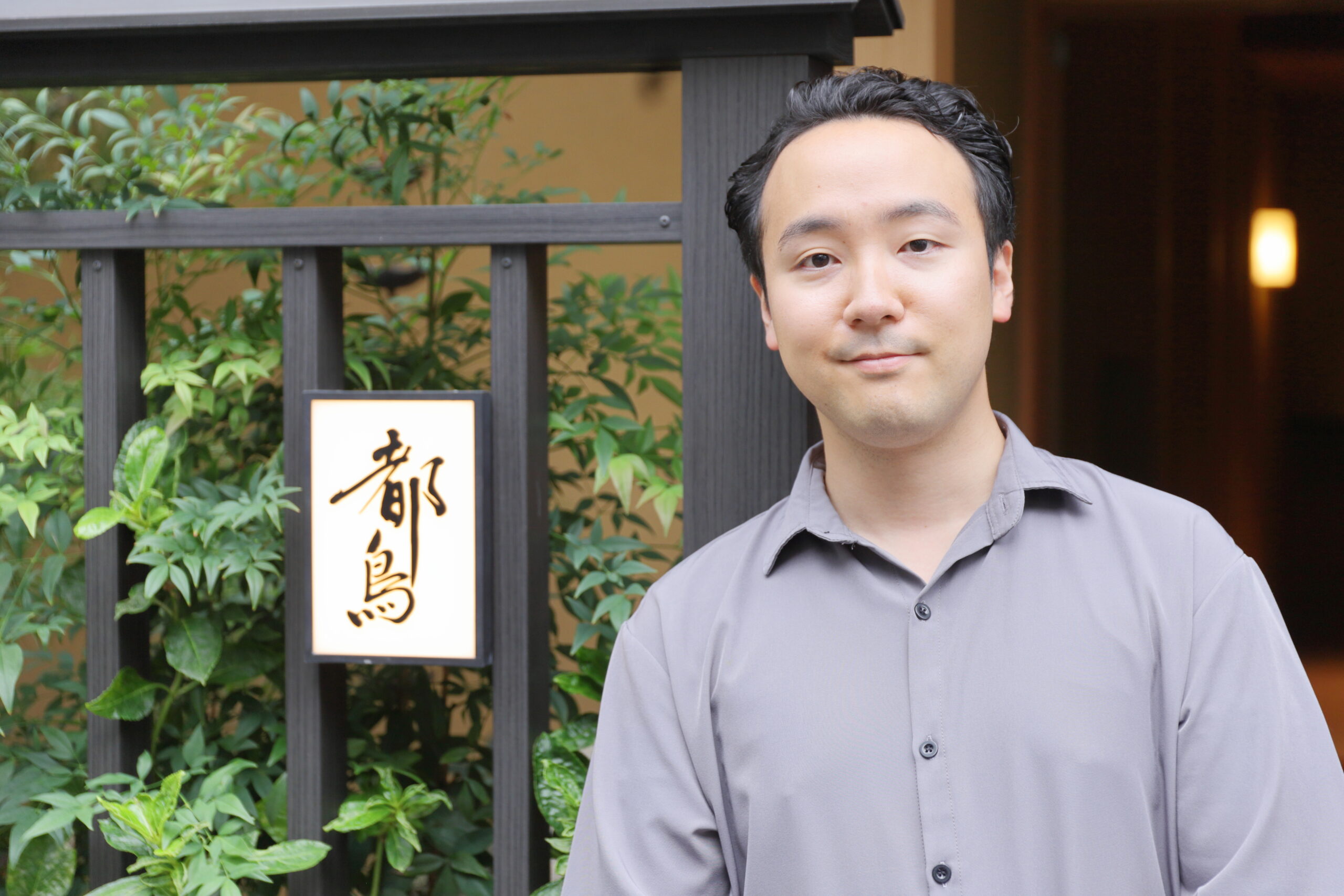


- Asakusa Temple Autumn: A Guide to Fall Foliage at Senso-ji and the Streets of Old Tokyo
- Geisha Hairstyles: Nihongami, Wigs, and What Asakusa Geisha Wear Today
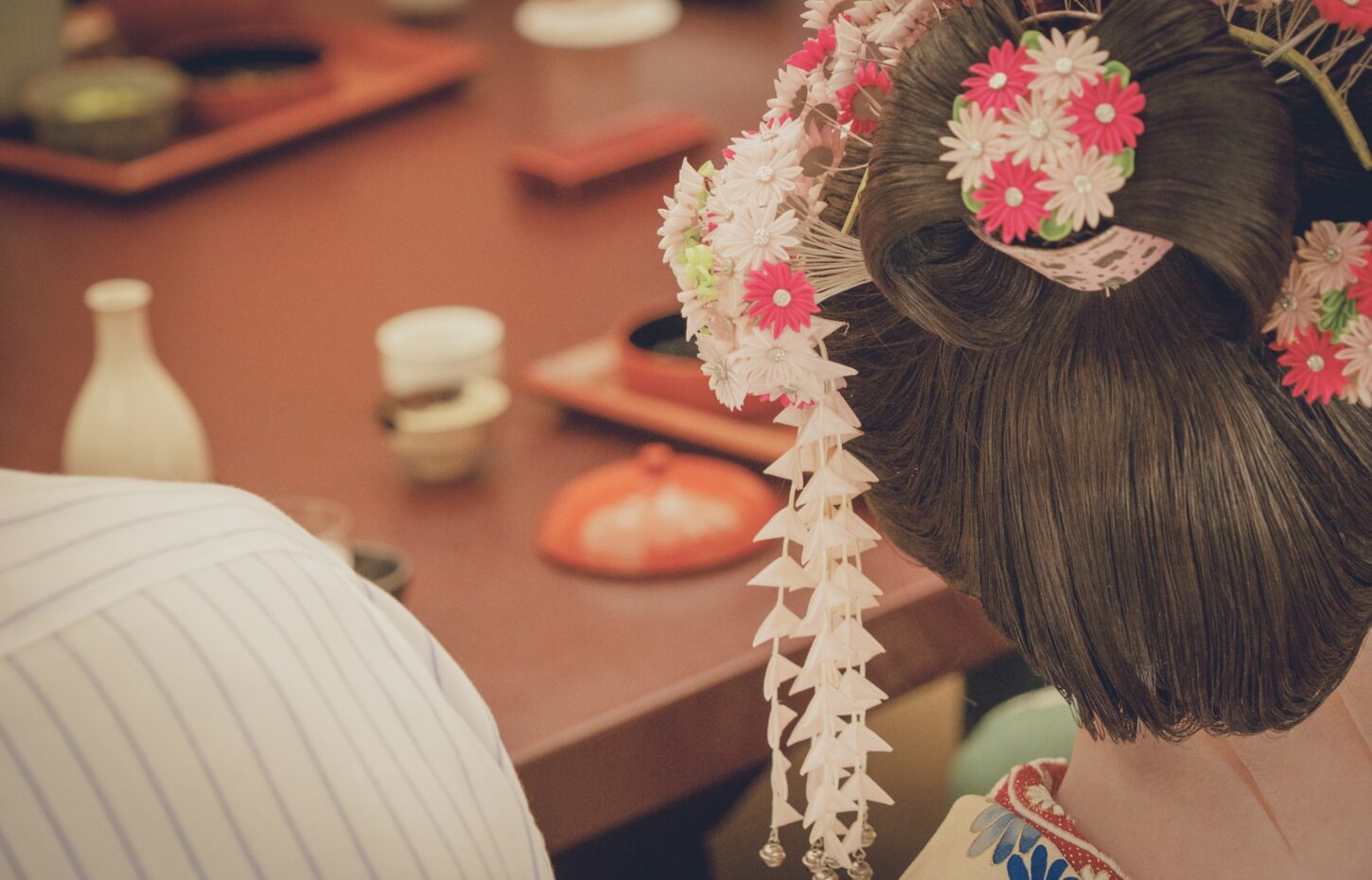
Kanzashi: A Guide to Japanese Hair Ornaments
Asakusa Sightseeing with a Baby Stroller: Safe Access & Guide to Kid-Friendly Spots & Gourmet Part①
Complete Guide to Asakusa: Tourist Spots, Food & Hidden Gems
Asakusa Sightseeing with a Stroller: Family-Friendly Attractions & Gourmet Guide Part 3
Geisha in Tokyo: The Complete Knowledge Guide
No comments yet.