



Karyukai: The Flower and Willow World of Geisha — Japan’s Geisha Culture Explained
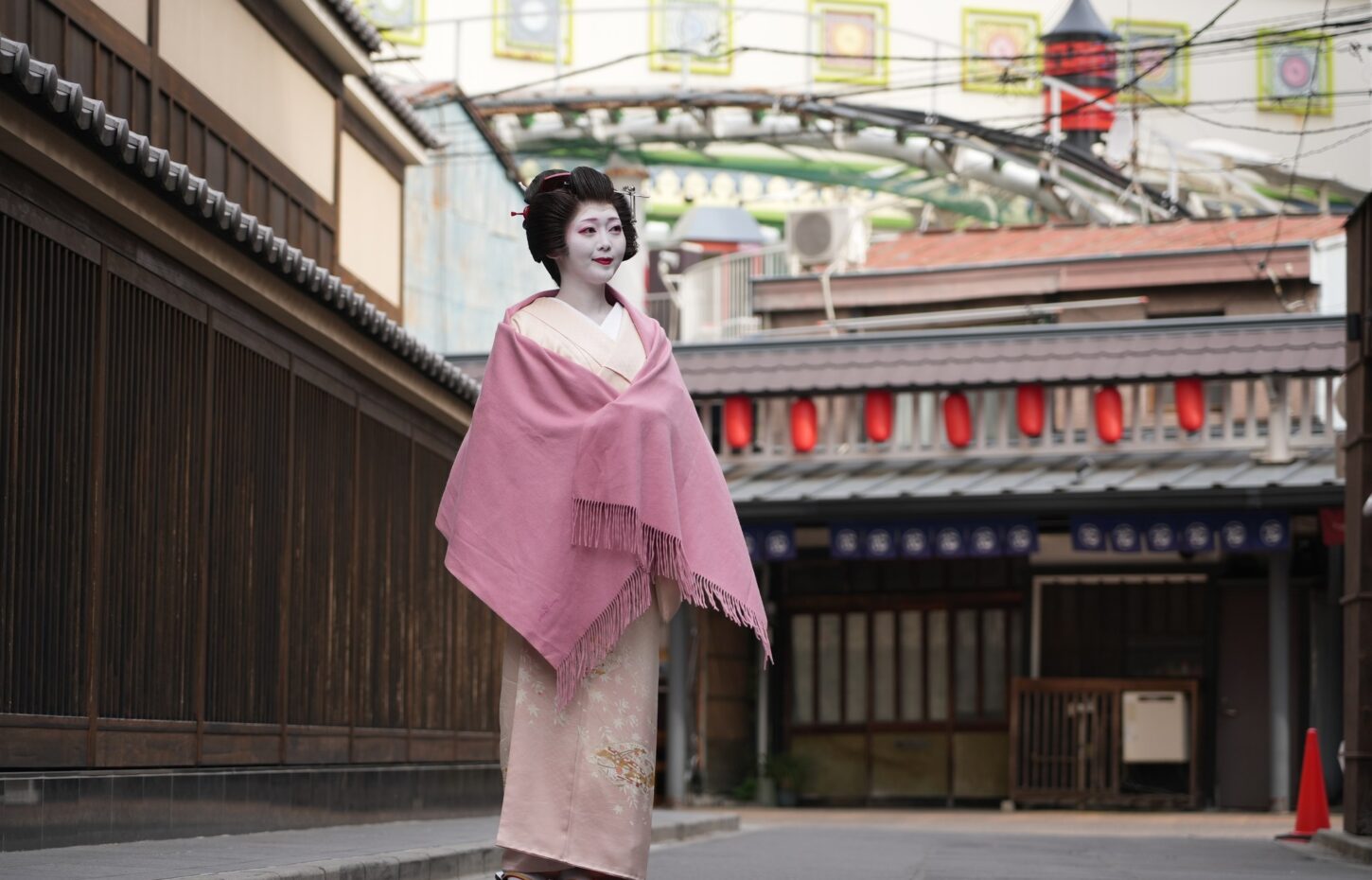
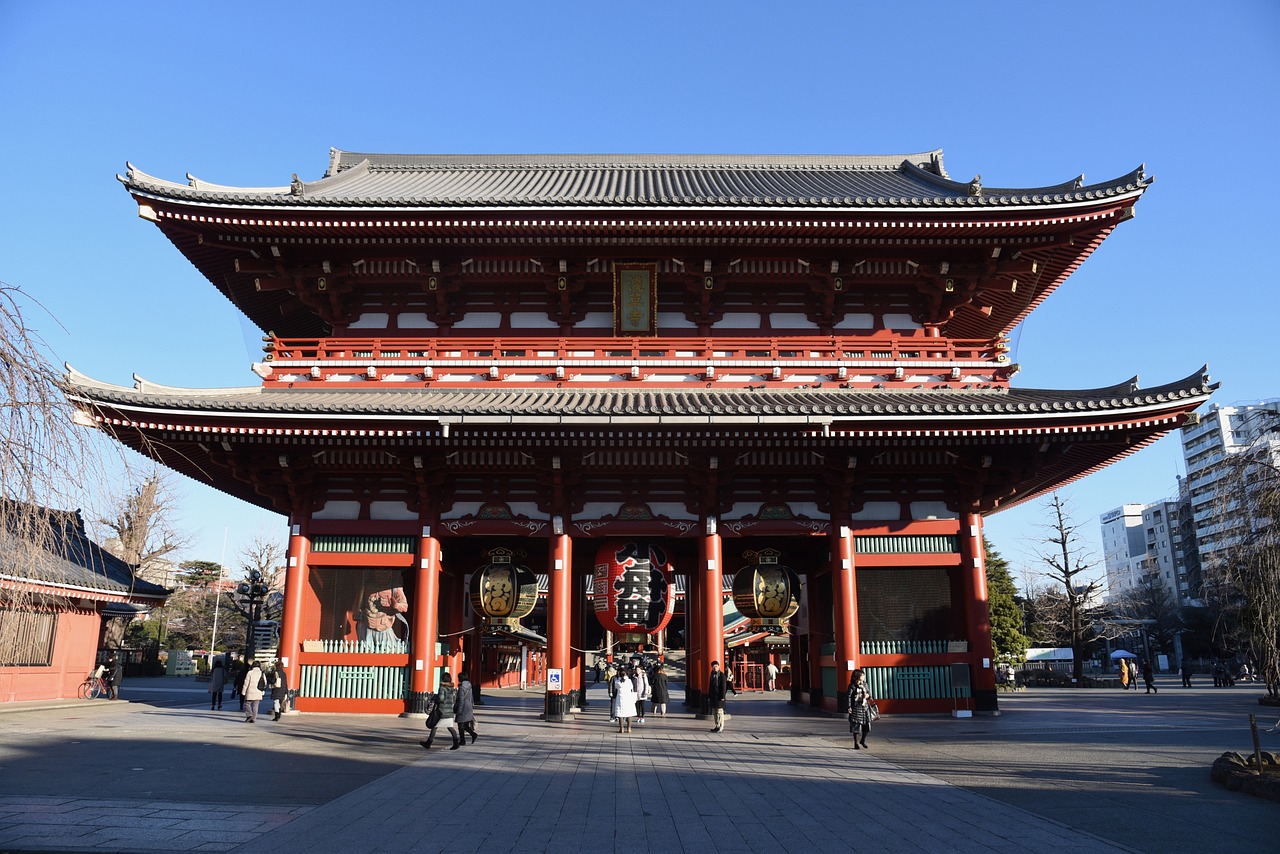
Karyūkai (花柳界, “the Flower and Willow World”) is the traditional social and cultural world of geisha in Japan — including the geisha themselves, the teahouses and geisha-house communities that sustain them, and the patrons, teachers, and musicians who keep the art of ozashiki entertainment alive. Still active today in districts like Tokyo’s Asakusa and Kyoto’s Gion, the karyukai remains a living world — one that continues to shape Japan’s most refined traditions of hospitality and art. To truly understand it, though, it is not enough to define the word: the karyukai is best understood through the people, relationships, etiquette, and artistic values that keep geisha culture alive.
Karyukai at a Glance
The karyukai is best understood not as a place, but as a world — a society shaped largely by women and built on artistry, discretion, and long-cultivated relationships between geisha, patrons, teachers, and teahouse owners.
| Japanese | 花柳界(かりゅうかい) |
|---|---|
| Pronunciation | kah-ryoo-kai (ka·ryu·kai) |
| Literal meaning | “The Flower and Willow World” |
| Best understood as | A social and cultural world, not a physical place |
| The “Flowers” | By one common interpretation: high-ranking courtesans (oiran) |
| The “Willows” | By the same interpretation: geisha — flexible, enduring, growing more respected with age |
| Social structure | Shaped largely by women (proprietresses and senior geisha lead) |
| Active in | Tokyo (Asakusa), Kyoto (Gion), and other Japanese cities |
| Not the same as | Hanamachi — the physical geisha district where the karyukai operates |
What Does “Karyukai” Mean? Flower, Willow, and the World Between
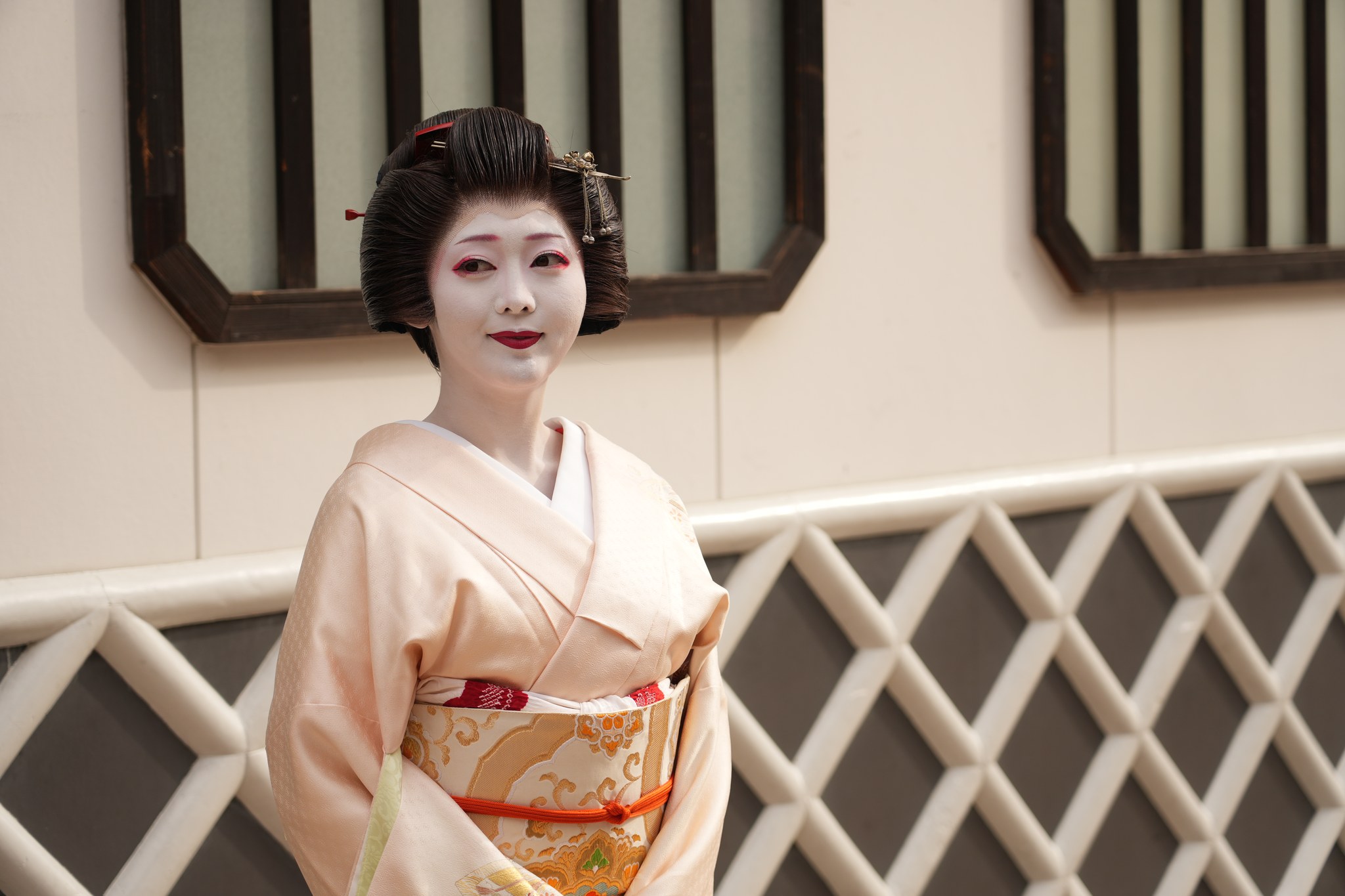
Karyukai means “the Flower and Willow World.” By one widely cited interpretation, the “flowers” referred to oiran (courtesans), known for their brilliance but brief careers, while the “willows” refer to geisha, who — like the tree — are graceful, flexible, and grow stronger with time.
Flower vs. Willow — The Hidden Metaphor
The two characters that open the word carry its meaning. Ka (花) is the flower; ryū (柳) is the willow. In one interpretation often repeated within the geisha world, the flower stands for the oiran — the courtesans of the Edo pleasure quarters, celebrated for a beauty as vivid as it was short-lived. The willow stands for the geisha: less showy at first glance, but supple, deep-rooted, and lasting.
It is a fitting image. A willow bends in the wind without breaking. It does not bloom for a single dazzling season and fade; it grows year after year, and a geisha’s art is much the same. Where the flower is admired for youth, the willow is admired for what time gives it — refinement, presence, and a craft that only deepens with the decades. This is why, in the karyukai, age is not something to be hidden. A senior geisha commands more respect than a young one, because she has had longer to cultivate her art.
Karyukai vs. Hanamachi — Two Different Concepts
It is easy to confuse karyukai with hanamachi, but they describe different things. The karyukai is the social and cultural world — the people, the relationships, and the shared values. The hanamachi (花街, “flower town”) is the physical place: the district of teahouses and geisha houses where that world operates.
In other words, the karyukai is who and why; the hanamachi is where. A geisha belongs to the karyukai as a culture, and works within a hanamachi as a neighborhood.
the structure of a hanamachi — for readers who want to understand the streets, teahouses, and registry offices where the karyukai lives.
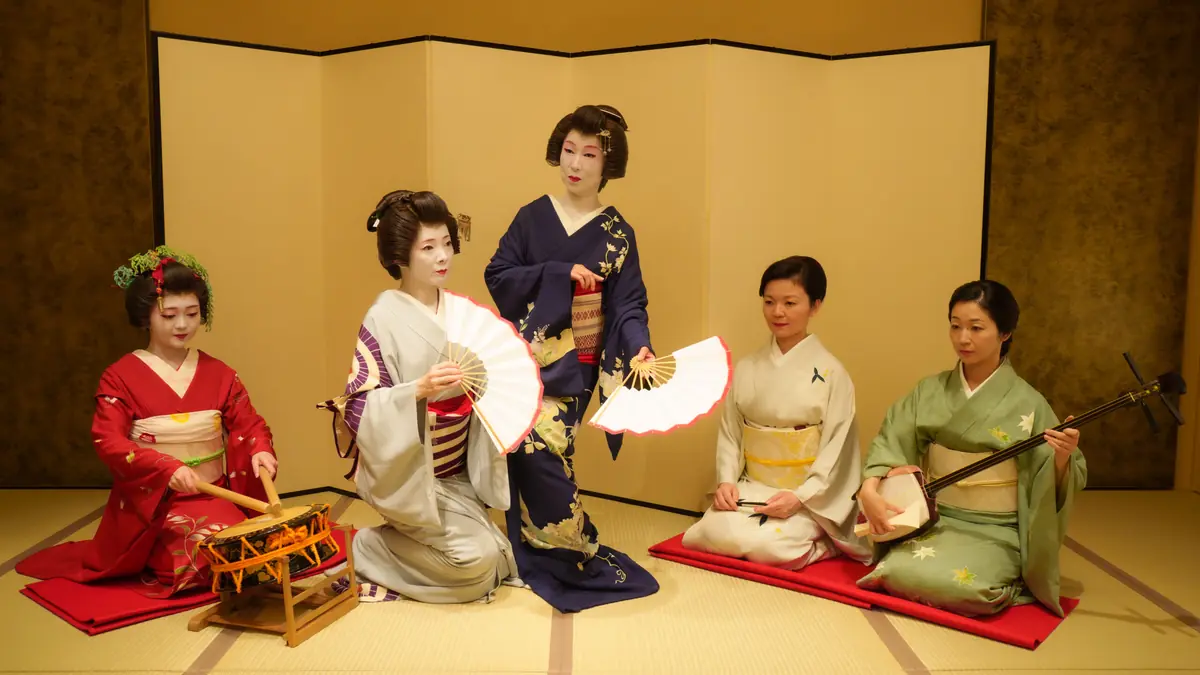
A jikata geisha explains the split herself: the tachikata wears the white makeup and the Japanese-style hair, while the jikata performs in western-style hair — though a long time ago the jikata wore Japanese hair too. Subtitled on screen.
Who Belongs to the Karyukai? The People Behind the Geisha World
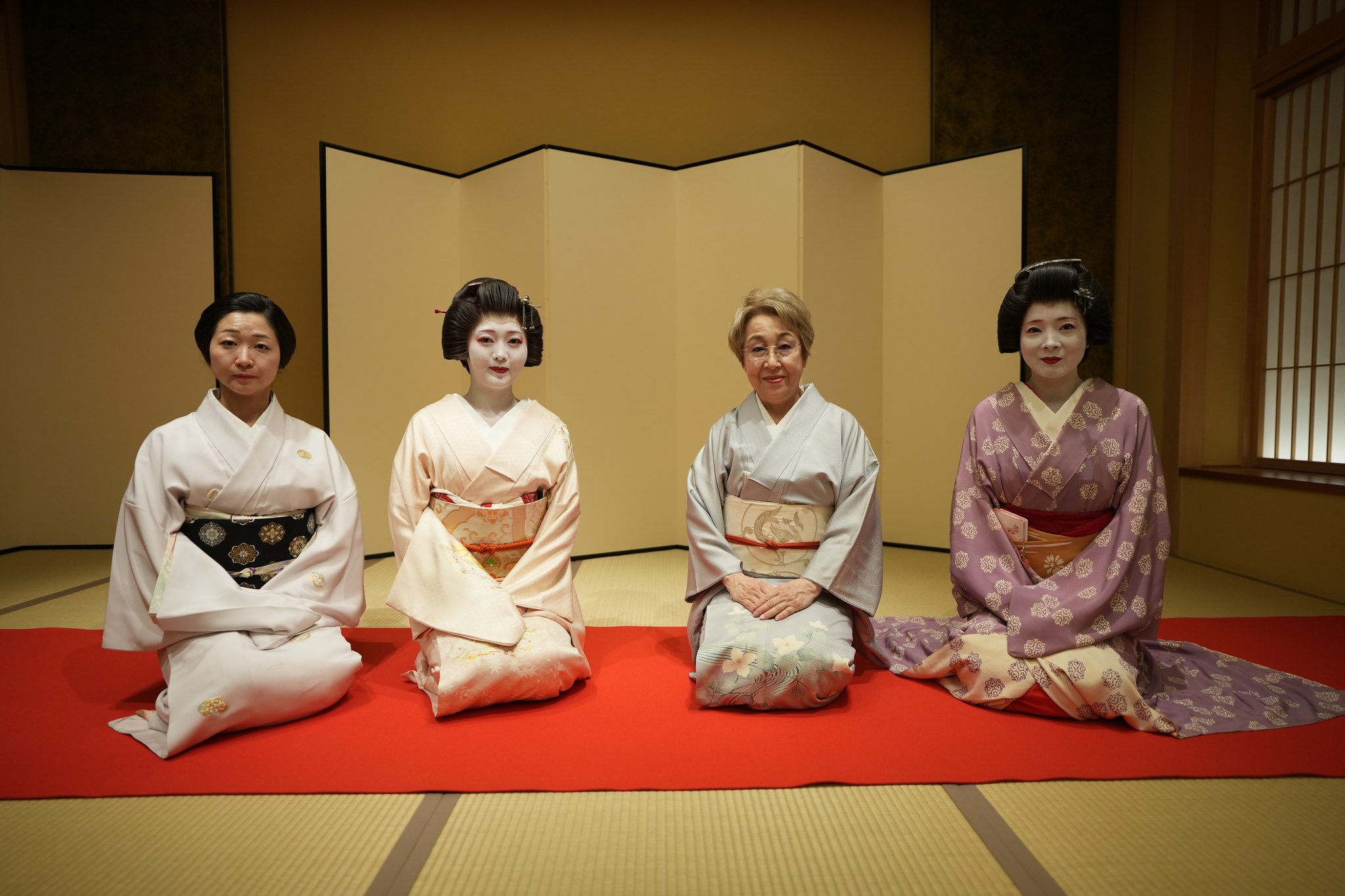
The karyukai is made up of geisha (including hangyoku apprentices), the proprietresses of teahouses and geisha houses, musicians and artisans, teachers, and devoted patrons — each playing an essential role in sustaining the art.
It helps to picture not a list of titles, but a web of relationships:
Geisha perform. Proprietresses (okaasan) protect and train them. Teachers pass down the arts. Musicians and artisans support each performance. Patrons sustain it all. Together, they form the karyukai.
Geisha and Hangyoku — The Artists
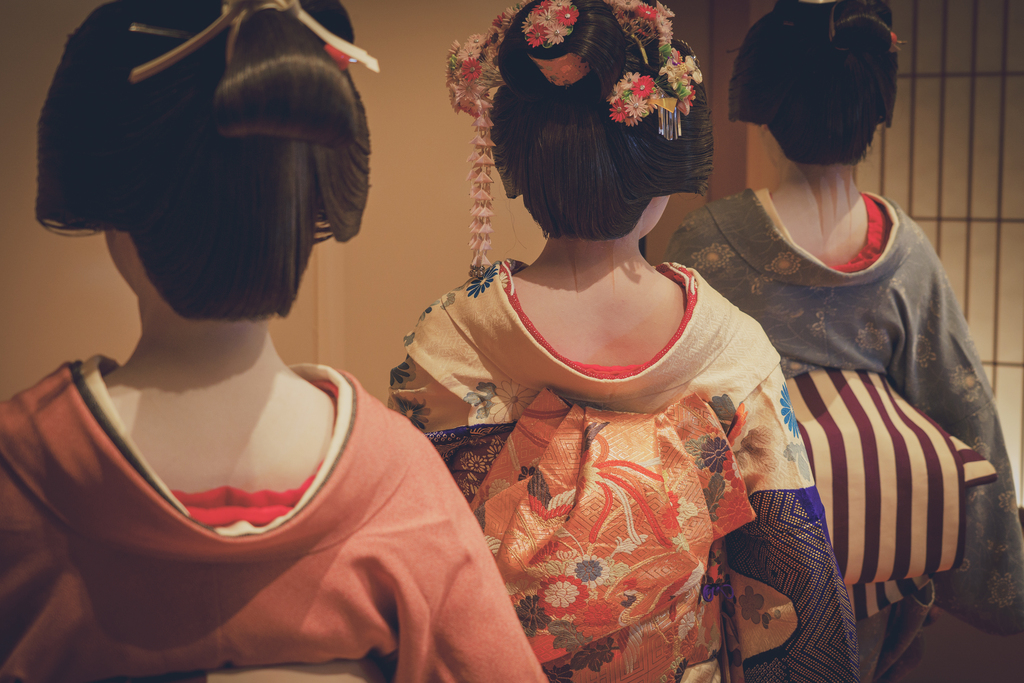
At the center are the geisha and the hangyoku — the young apprentice geisha of Tokyo. The path into the art has three stages. A future geisha first enters as minarai (a trainee, not yet a geisha), spending roughly six months to a year learning the foundations. She then debuts as a hangyoku — and from this point, she is already a geisha, simply a young one still in training. After several years, she marks her transition to a full-fledged geisha through a ceremony called ippon hirome.
In Asakusa, hangyoku are apprentice geisha rather than a separate category — the same role that Kyoto calls maiko. Within a geisha house, an established geisha often takes a younger one under her wing as onesan (older sister) to her imoto (younger sister), passing down not just technique but the unwritten manners of the trade.
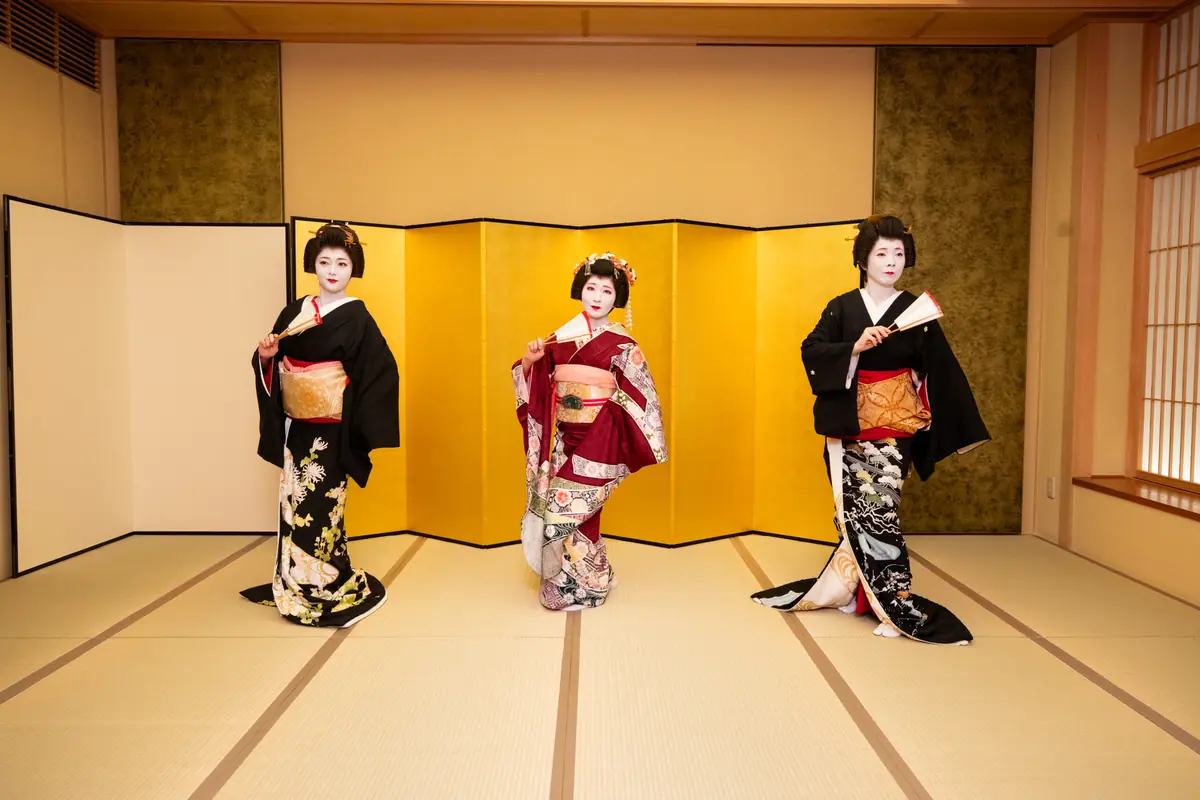
Geisha also fall into two artistic roles. The tachikata are the dancers — the ones in white makeup and traditional nihongami hairstyles. The jikata are the musicians and singers, who play the shamisen and perform without white makeup, in a more contemporary style. Both are geisha; they simply carry the performance in different ways.
Importantly, geisha are not employees of any single teahouse. They are independent professionals registered with the local kenban (geisha registry), invited to perform — a structure that has defined the trade for generations.
Okaasan and Ochaya — The Proprietresses
If geisha are the artists, the okaasan are the guardians. The proprietress of a geisha house (okiya) trains and protects the young women in her care, while the mistress of a teahouse (ochaya) arranges the gatherings where they perform. These women — often former geisha themselves — run the day-to-day business of the karyukai and hold its standards.
how ochaya and okiya work together — for the full structure of teahouses, geisha houses, and the registry that connects them.
The Patrons — The Unsung Foundation
The karyukai could not exist without its guests. Patrons are not simply customers; at their best, they are stewards of the culture — the people whose continued presence keeps the music playing and the next generation in training. In an earlier era, regular patrons would even take young apprentices to dinner after an evening’s work, teaching them games and worldly manners as part of their education. To support a geisha house was, in a real sense, to support an art form.
This is why the karyukai prizes a certain kind of guest — not the one who spends the most, but the one who understands how to be there. (More on that below.)
The Unsung Artisans
Behind every performance stands a quiet ecosystem of craft. Shamisen players and singers provide the music; kimono makers and dressers (otoko-shu) assemble layers of silk that a geisha cannot put on alone; hairdressers shape the elaborate nihongami. These artisans rarely appear before guests, yet the karyukai depends on them as much as on the geisha themselves. A single evening in a teahouse is the work of many hands.
The Values of the Karyukai — What “Geisha Entertainment” Really Means
The karyukai is governed by values of refined entertainment, discretion, long-term relationships, and the lifelong pursuit of artistic mastery — values that have shaped Japanese hospitality for centuries and continue to do so today.
The first is mastery without end. Geisha train for a lifetime, and the most accomplished are the first to say they are still learning. The okami of Miyakodori, who has spent more than fifty years in this world, puts it simply:
“Even now, I don’t think I’ve mastered it. This work — like learning English — is a lifetime of training, a lifetime of study.”
The second is the ideal of kirei na asobi — “beautiful play.” This phrase describes not childish play, but a refined form of entertainment built on respect, restraint, wit, and shared enjoyment. A guest who embodies it is not the one who spends lavishly, but the one who knows how to be present with grace. As the okami describes the kind of guest geisha most enjoy:
“What makes a guest ‘cool’ at our ozashiki? It’s not about money. It’s the smartness of how you play — graceful, refined, not overly forward, and someone who quietly knows the etiquette of the tatami room without making a show of it. We call it kirei na asobi — ‘beautiful play.’ That kind of guest, geisha will always want to see again.”
The third is shared joy. For all its refinement, the karyukai exists to create delight — and that delight, it turns out, travels well across cultures. Watching families from around the world laugh together at an ozashiki, the okami reflects:
“Watching kids, parents, and grandparents all playing games together at our ozashiki — that’s when I realized: a sense of joy is universal.”
These values — mastery, beautiful play, and shared joy — are what separate a true ozashiki from mere dinner and a show. They are also what makes the karyukai a culture rather than an industry.
Experience Kirei na Asobi for Yourself
The values described here — refined play, discretion, and the lifelong art of the geisha — are not museum pieces. At Miyakodori, a teahouse in the heart of Asakusa’s karyukai, you can take part in a private ozashiki (geisha banquet) yourself, with an English interpreter and no introduction required.
The Karyukai Today — A Living Tradition
The karyukai is still active today in geisha districts such as Asakusa in Tokyo and Gion in Kyoto. While the scale of the geisha world has changed over time, local communities continue to carry it forward — and at Miyakodori in Asakusa, the proprietress has observed growing interest among those who wish to train as geisha.
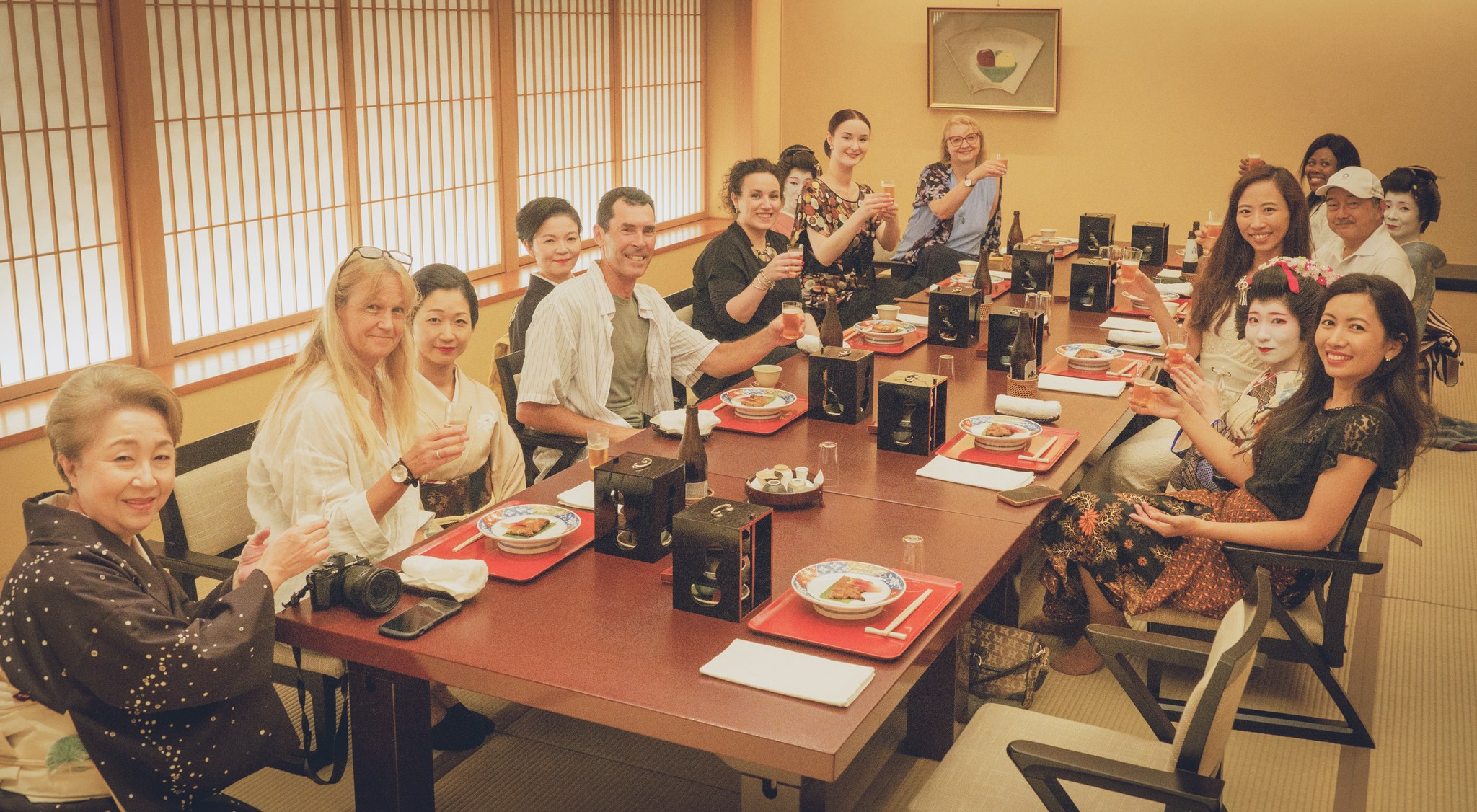
Far from being a museum piece, the karyukai is a tradition that has adapted and endured. The shift over the decades has been less a matter of disappearance than of distillation — from a world of mass nightlife toward one centered on the preservation of a high art. In Asakusa, the lanterns still light in the evening, the shamisen still plays, and the work of training young artists continues.
There is even reason for optimism close to the ground. At Miyakodori, the okami notes that after a quieter period, more young women have begun seeking to enter the profession — and she suspects that the interest of international guests has played a part, giving the next generation a reason to dream:
“Lately, more young women have come wanting to become geisha. I think the fact that guests from overseas come to see us may be part of what makes them want to.”
The karyukai, in other words, is not a memory to be preserved behind glass. It is a living world, carried forward by a new generation in the districts where it has always belonged.
Tokyo’s active hanamachi — for where the karyukai still operates in the city today.
Frequently Asked Questions
- What does karyukai mean in English?
- Karyukai (花柳界) translates literally as “the Flower and Willow World.” It refers to the traditional social and cultural world of geisha — the people, places, and values that sustain geisha entertainment in Japan.
- What is the difference between karyukai and hanamachi?
- The karyukai is the social and cultural world of geisha — the people and the values. The hanamachi is the physical district of teahouses and geisha houses where that world operates. One is who and why; the other is where.
- Do geisha still exist today?
- Yes. Geisha continue to work in active districts such as Asakusa in Tokyo and Gion in Kyoto. The karyukai is a living tradition, with teahouses still operating and young artists still entering training.
- What do geisha do in the karyukai today?
- Geisha perform traditional dance, music, and conversation at ozashiki (banquets), entertaining guests with a refined art built on years of training. Some specialize as dancers (tachikata), others as musicians and singers (jikata).
- Who belongs to the karyukai?
- Geisha and their hangyoku apprentices, the proprietresses of teahouses and geisha houses (okaasan), musicians, kimono artisans, teachers, and devoted patrons — each plays an essential role in sustaining the art.
- How do you pronounce karyukai?
- It is pronounced kah-ryoo-kai (ka·ryu·kai), with three even beats.
- Is a geisha the same as an oiran?
- No. Oiran were high-ranking courtesans of the Edo-era pleasure quarters, while geisha are professional artists of dance, music, and hospitality. In the “flower and willow” metaphor, the two are often distinguished as the dazzling but brief “flower” and the enduring “willow.”
Experience the Karyukai in Asakusa
The world described here is not a historical reconstruction — it is the everyday work of Miyakodori, a geisha teahouse in the heart of Asakusa’s karyukai. Founded in 1950, Miyakodori is led by the okami Chikage, who entered this world as a young apprentice, performed as a geisha for twenty-seven years, and holds a master instructor’s license (shihandai) in the Hanayagi school of classical Japanese dance — the central school of Asakusa.
Her hope for the karyukai is a simple one, and it reaches beyond any single teahouse:
“When people think of Asakusa, I want them to think of Miyakodori. Whether they’re from Japan or anywhere in the world, I want them to know that Miyakodori is the place to enjoy a real geisha banquet.”
Experience the karyukai firsthand — step into the Flower and Willow World yourself at an authentic Asakusa ozashiki.
Reserve a Private Geisha Banquet in Asakusa
Step into the living karyukai at Miyakodori — an authentic ozashiki (geisha banquet) in the heart of Asakusa. Book directly online, with an English interpreter included in every session.
The complete guide to geisha — the full picture of geisha history, arts, and culture in Japan.


- What Is a Hanamachi? Meaning, Structure & Japan's Geisha Districts Explained
- Geisha Show on Netflix: The Makanai and the Real World of Geisha
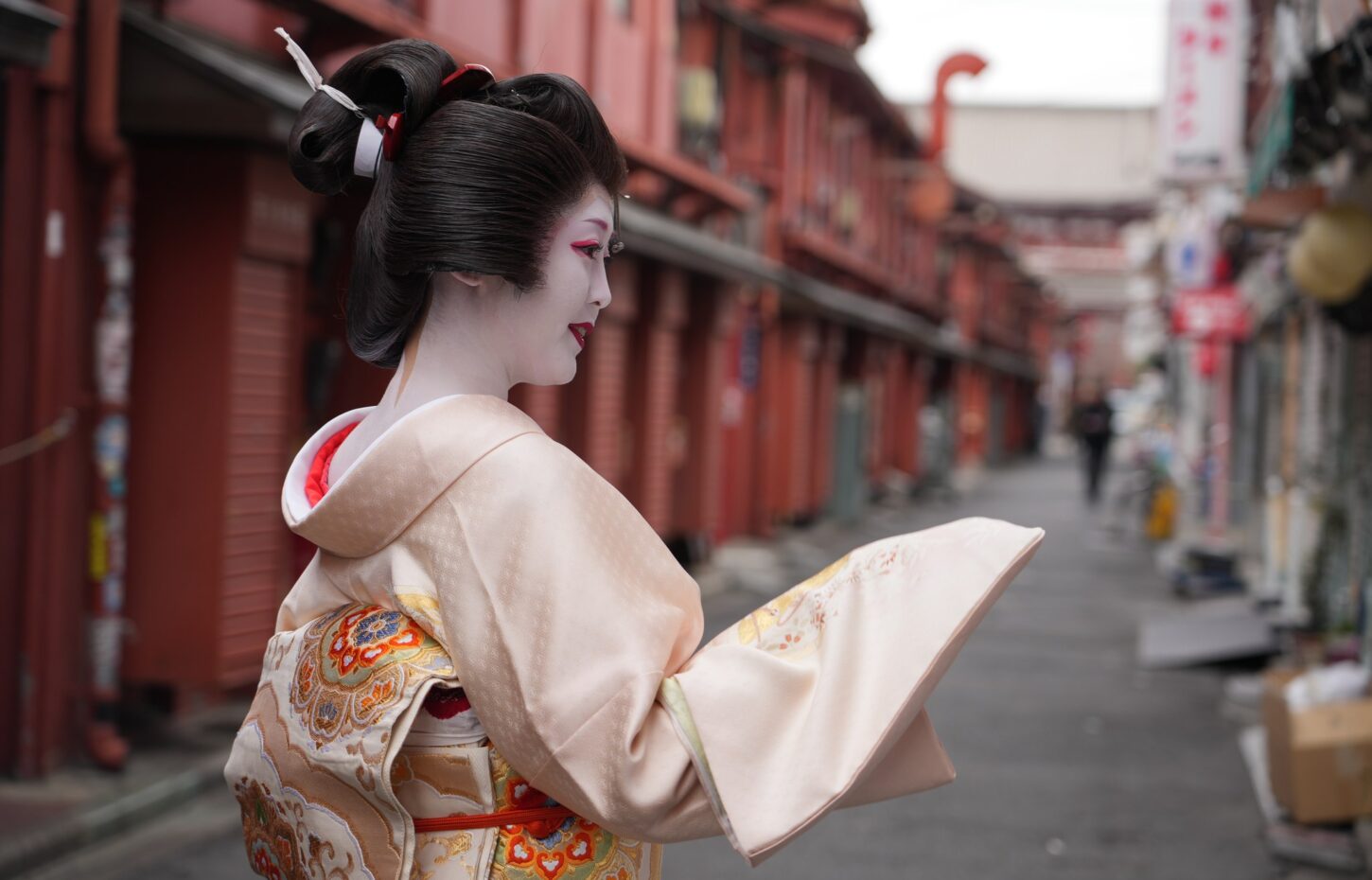
Asakusa Geisha: Where to Meet Real Geisha in Tokyo
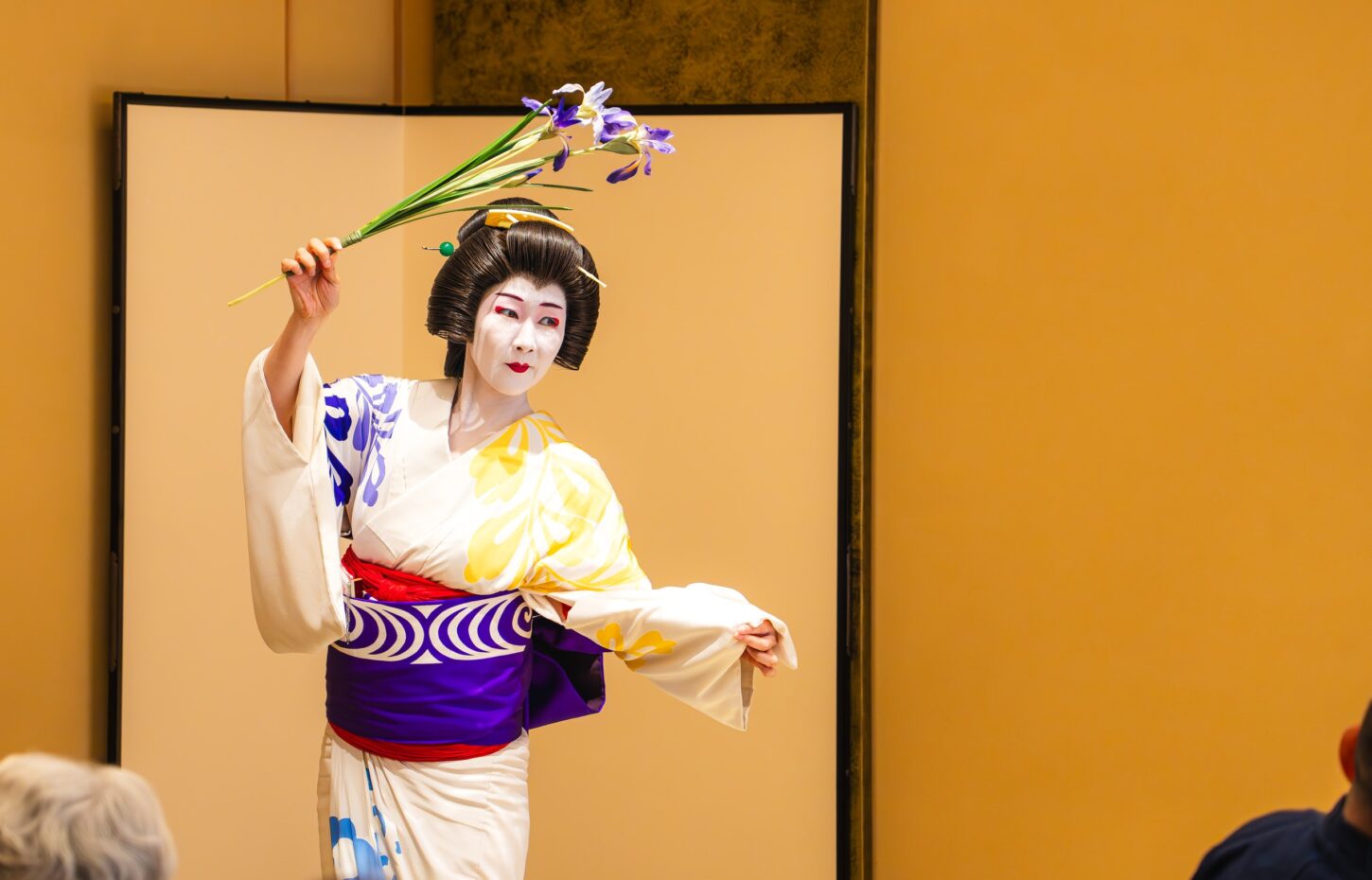
Why Geisha Are Special: An Art Refined for 200 Years, Explained by a Third-Generation Owner
Asakusa Geisha Culture: How-to & Etiquette Q&A【Miyakodori】
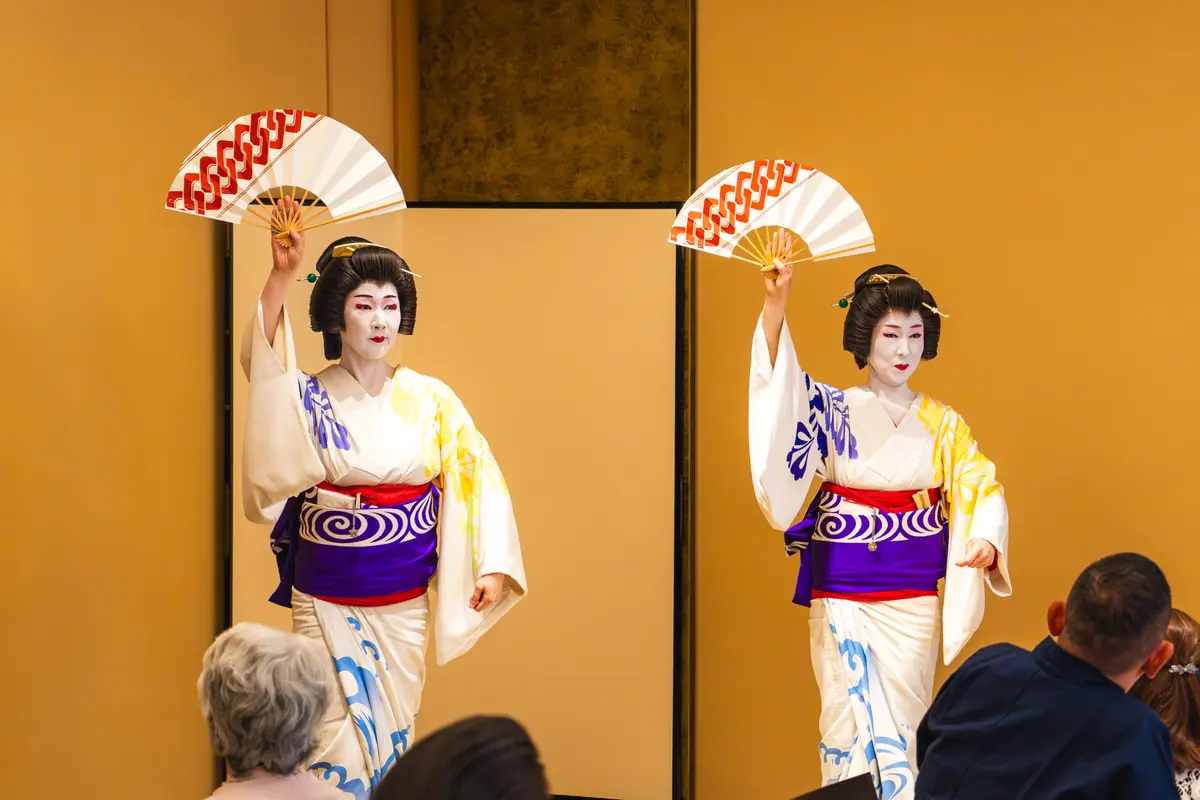
A Guide to Tokyo’s Geisha Districts: Finding Authentic Experiences and Cultural Immersion
Authentic Geisha Experience vs. Geisha Makeover: What’s the Difference?
Maiko vs Geisha: The Differences (2026 Edition)
Comment ( 0 )
Trackbacks are closed.
No comments yet.