



The Ultimate Guide to Geisha Dinner in Tokyo: Experience Authentic Japanese Culture, Cuisine, and Entertainment in 2026
When planning a travel itinerary to Japan, many people search for that one transformative moment—a memory that encapsulates the beauty, history, and mystery of the country. While the neon lights of Shinjuku and the bustling crossing of Shibuya are iconic, the soul of this city lies in its traditional arts. And there is no experience more quintessential, yet often elusive, than a private geisha dinner in Tokyo.
For centuries, the world of the geisha (or geiko as they are known in Kyoto) was a closed society. However, the doors to this elegant “Flower and Willow World” (karyukai) are opening to international visitors.
This comprehensive guide will explore everything you need to know about booking and how to enjoy a geisha dinner in Tokyo. We will delve into the history, the etiquette, the culinary delights of kaiseki, and why Asakusa Miyakodori stands out as the premier place for an authentic, accessible, and unforgettable evening.
1. Beyond the Myths: What is a Geisha Dinner?
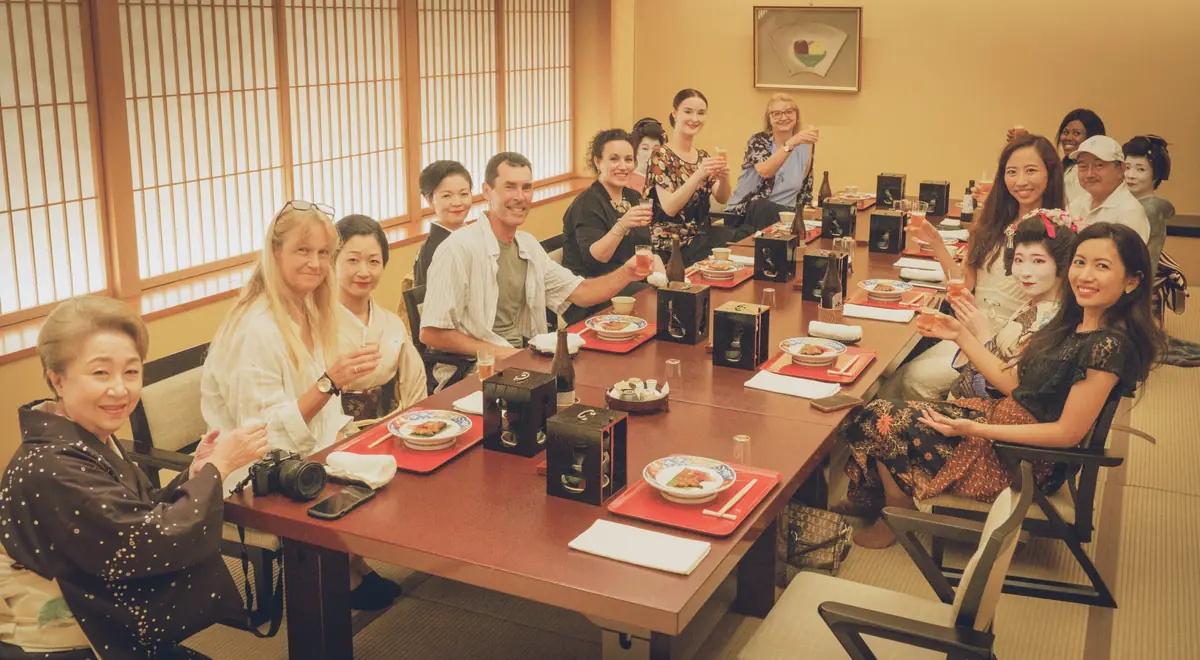
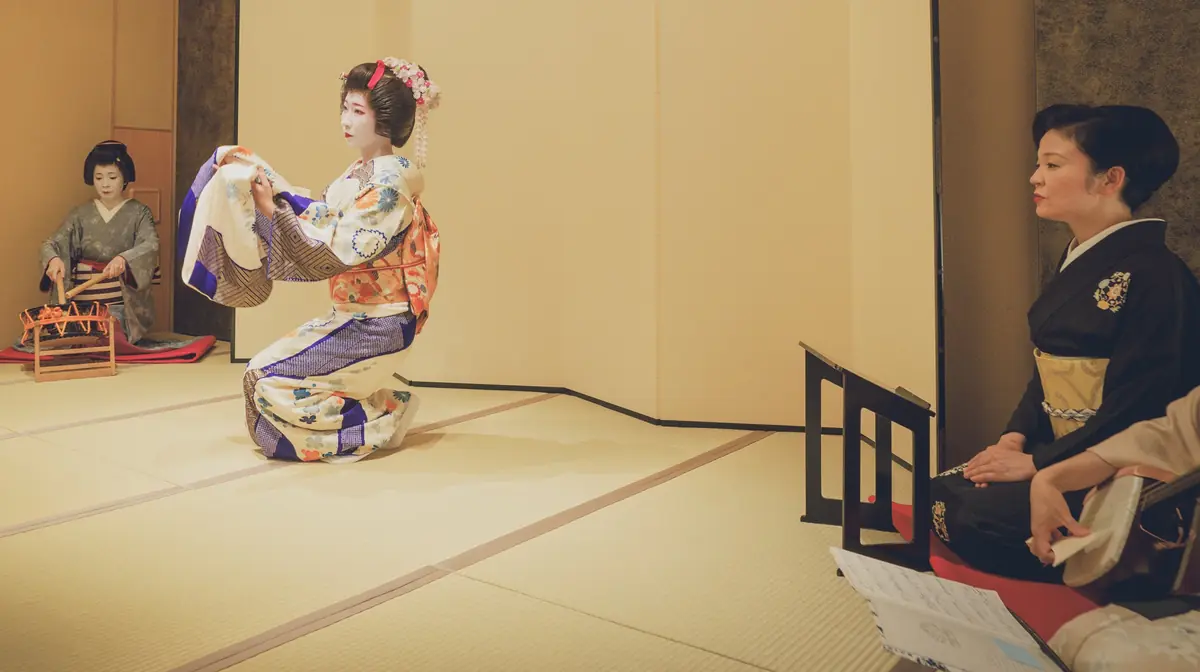
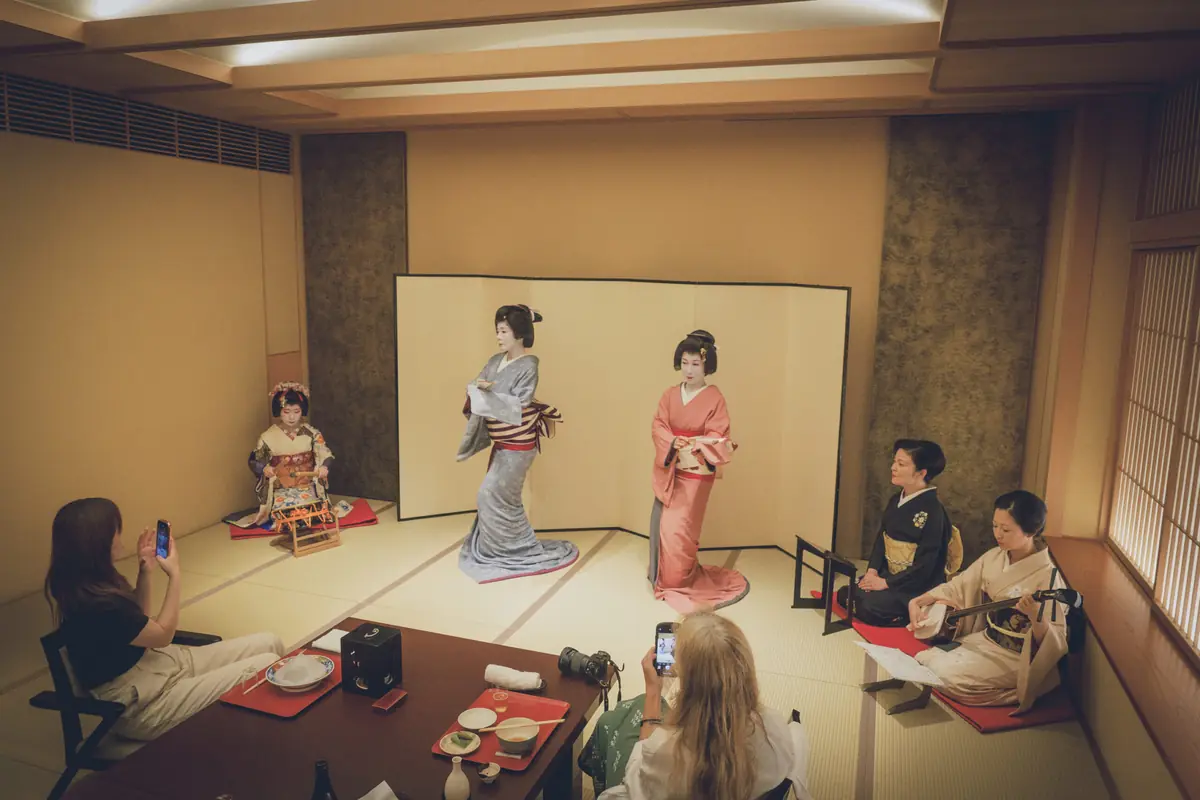
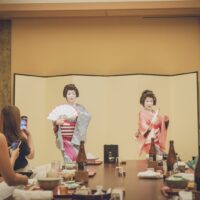
A geisha dinner in Tokyo is, at heart, an ozashiki: a private gathering in a tatami room where geisha perform classical dance and live shamisen music and share conversation and interactive ozashiki games with you. A multi-course kaiseki meal can be added, but the geisha are the heart of the ozashiki. At Asakusa Miyakodori, these evenings run from one to three hours and can be booked directly online, with no introduction required.
To truly appreciate a geisha dinner experience, one must first dispel the Hollywood myths and understand the reality of the profession. Unlike tourist-focused classes where you might just dress up, a dinner is a deep dive into the real culture.
The Art of the Banquet (Ozashiki)
A geisha dinner is technically referred to as an ozashiki. The word literally means “tatami room,” but it has come to signify a private banquet attended by geisha. Unlike a stage show where you are a passive observer, an ozashiki is an immersive, intimate social event.
It is a trifecta of Japanese culture:
- Culinary Art: High-end kaiseki cuisine served at a traditional teahouse (machiai-chaya).
- Performance Art: Classical dance and live music.
- Social Art: The company of the geisha, conversation, and hospitality (omotenashi).
Geisha: The Artists
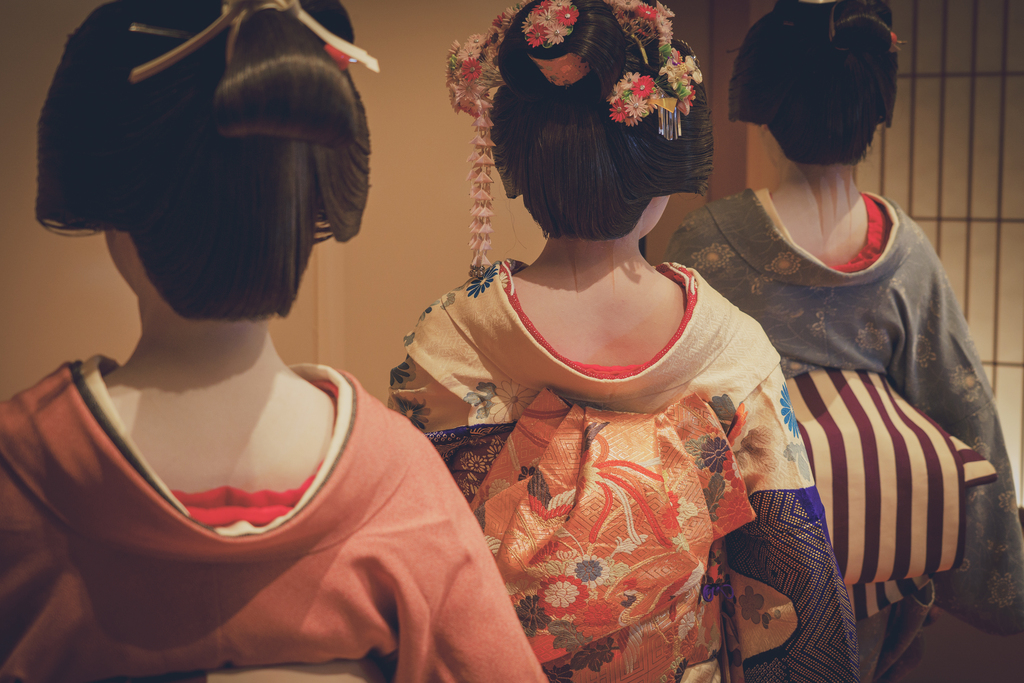
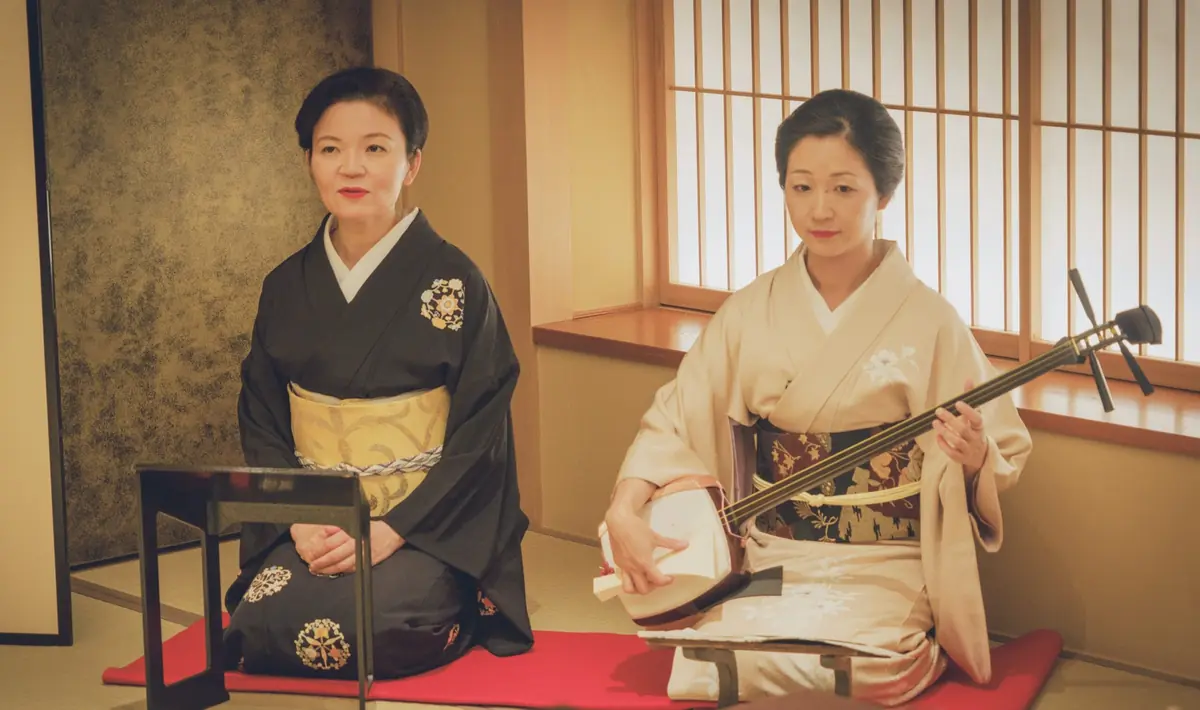
Geisha are highly trained artisans. The word itself translates to “person of the arts.” In Tokyo, their history is rooted in the Edo period. When you book a dinner, you are essentially hiring professional entertainers who have spent years mastering the shamisen (three-stringed instrument), traditional singing, and classical dance (Nihon Buyo). They ensure every guest feels like the most important person in the room.
2. The Culinary Journey: Understanding Kaiseki
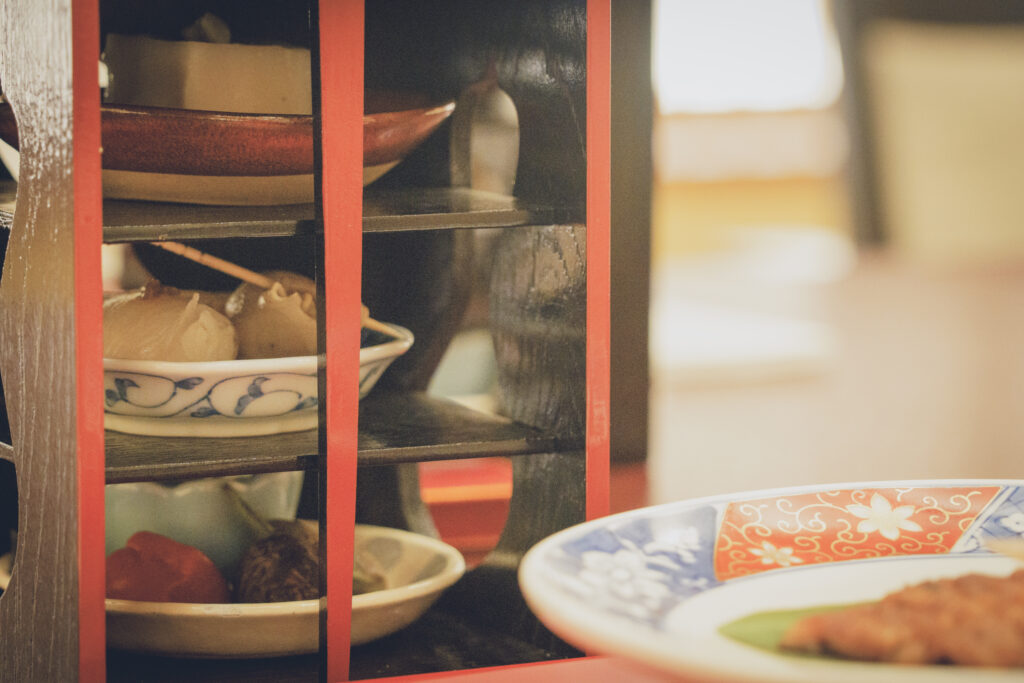
A geisha dinner is not just about the entertainment; it is a gastronomic journey. The meal served is almost always kaiseki—Japan’s traditional haute cuisine.
The Philosophy of Kaiseki
Kaiseki is a traditional multi-course Japanese haute cuisine built around seasonal ingredients, served as a sequence of small, carefully composed dishes.
Kaiseki emphasizes seasonality above all else. The menu changes not just by the season, but often by the month or even the week. A typical dinner at a venue like Asakusa Miyakodori includes multiple courses served over a duration of 2 to 3 hours.
Inclusive Dining: Halal and Vegan Options
One of the biggest challenges for international visitors seeking traditional experiences is dietary restrictions. Asakusa Miyakodori does not cook in-house; meals come from partner restaurants, so the menu can be adjusted for allergies and dietary needs such as vegan and vegetarian. Fully halal or kosher meals are served as bento (boxed meals) and need 5 days’ notice. This inclusivity ensures that this entertainment is accessible to everyone, regardless of dietary needs.
A short montage of the room itself, filmed at the teahouse: the dancing, the shamisen, and the games between them.
3. The Flow of the Evening: What to Expect
Many travelers are nervous about what actually happens during the dinner. Here is a step-by-step breakdown of a typical evening at a geisha experience in Asakusa.
Arrival and Welcome
You arrive at the machiai-chaya, a traditional building often tucked away in a quiet neighborhood. You will remove your shoes at the genkan (entryway) and step onto the tatami mats. The atmosphere immediately shifts from the bustling Tokyo streets to a serene, historical space.
The Ice-Breaking
As the first courses are served, the geisha will enter. They will pour your drinks—beer, sake, or tea. In Japanese culture, you never pour your own drink. This act of pouring is the first step in building a connection.
The Performance (Odori)
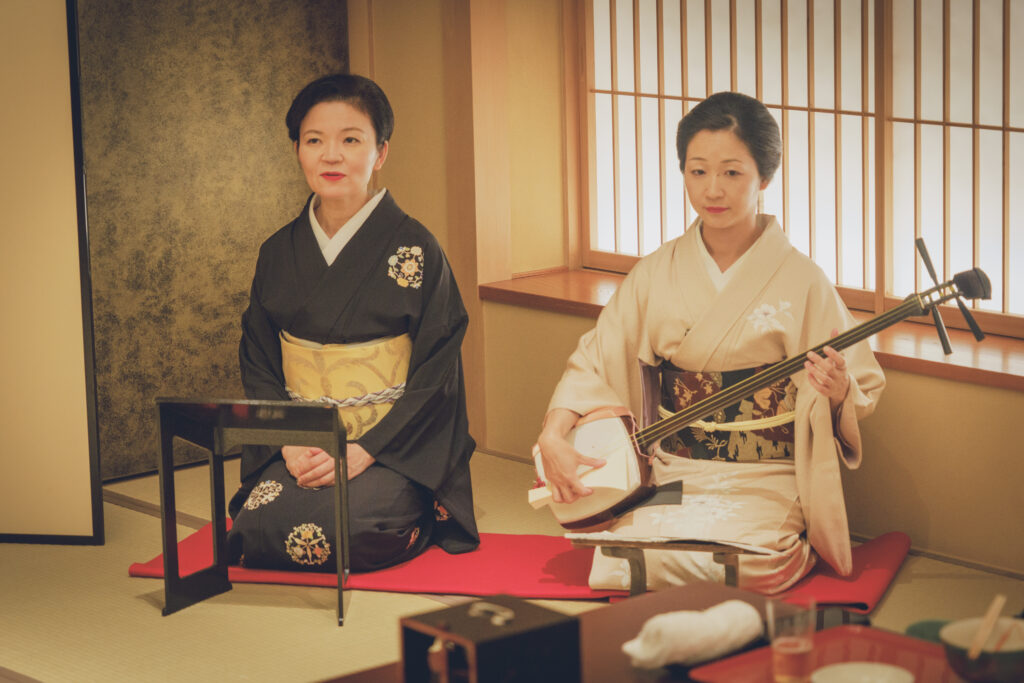
Midway through the meal, the lights may dim slightly. It’s time to watch the formal performance.
- The Jikata: One geisha will play the shamisen and sing.
- The Tachikata: The other will perform a classical dance. This is a moment of pure artistic appreciation. You will learn about the stories behind the dances, often related to the seasons or local legends.
Ozashiki Asobi (Parlor Games)
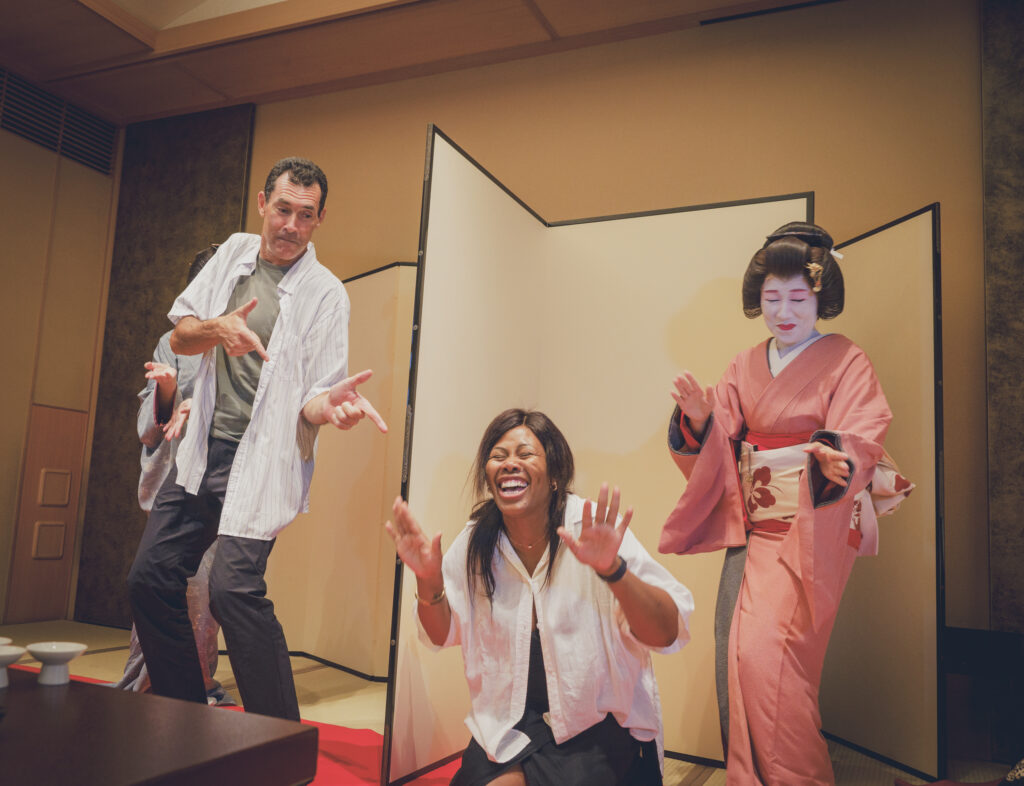
After the formality of the dance, the atmosphere relaxes completely. This is the highlight for many guests: the ozashiki asobi. These are traditional games played to the rhythm of the shamisen.
- Tora Tora Tora: A variation of rock-paper-scissors played with the whole body.
- Konpira Fune Fune: A rhythm game involving playing with a small wooden box.
- Tosenkyo: A fan-tossing game of skill and elegance.
These games are designed to induce laughter and camaraderie. Prizes or a playful penalty drink are often included in the fun.
4. Navigating Tokyo’s Geisha Districts (Hanamachi)
Tokyo has six active geisha districts, known as hanamachi: Asakusa, Kagurazaka, Shimbashi, Akasaka, Mukojima, and Yoshicho. Asakusa is the historic heart of the city’s living geisha tradition — and the home of Asakusa Miyakodori.
- Asakusa (浅草) — A historic hanamachi at the heart of the city’s living geisha tradition, and the setting for Miyakodori’s ozashiki. It is also one of the few districts where guests may meet a taikomochi (male geisha entertainer).
- Shimbashi (新橋) — Known as “the Shimbashi of refined art,” long associated with politics and business, and home to the Shimbashi Enbujo theatre.
- Akasaka (赤坂) — A refined district near the government center, historically frequented by officials and politicians.
- Kagurazaka (神楽坂) — A hillside geisha quarter in Shinjuku, known for its annual Kagurazaka Odori dance performances.
- Mukojima (向島) — An old district across the Sumida River, with the largest geisha population in Tokyo and famous riverside cherry blossoms.
- Yoshicho (芳町) — A small, long-established district in the Nihonbashi–Ningyocho area of central Tokyo.
To find an authentic dinner, you must know the right location. Tokyo has several active hanamachi.
Asakusa: The Cultural Heart
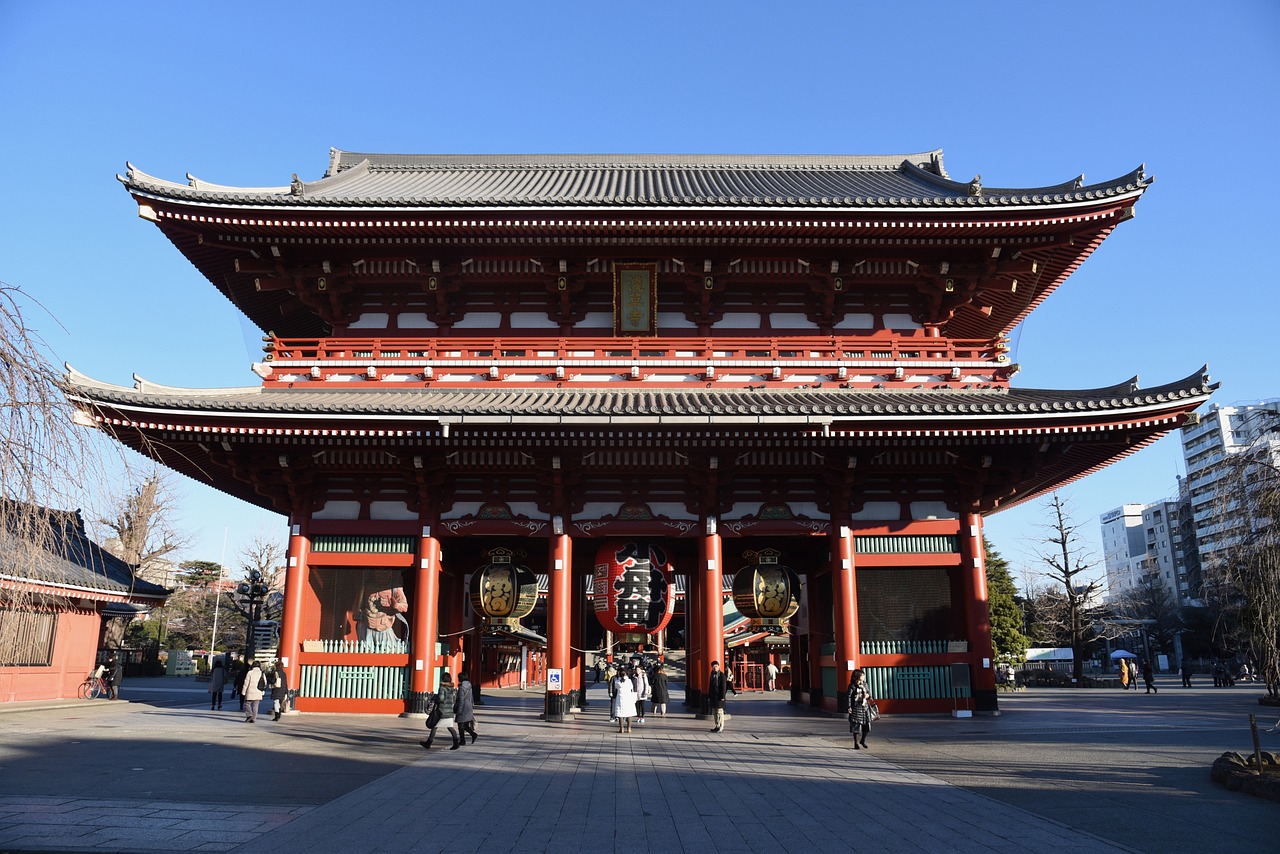
Asakusa is the most recommended district for visitors in 2026. It is the center of “Shitamachi” (downtown) culture, retaining the spirit of old Edo. The geisha here are known for being friendly, approachable, and deeply connected to the festivals of the Senso-ji Temple. It provides the most historical backdrop for your dinner.
Other Districts
- Kagurazaka: Known for its cobblestone streets and chic atmosphere.
- Mukojima: A very traditional district located across the Sumida River.
- Akasaka and Shinbashi: These are the districts of high politics and big business.
For ease of access via public transportation and a welcoming atmosphere, Asakusa is the ideal choice.
5. Why Asakusa Miyakodori is Your Premier Choice
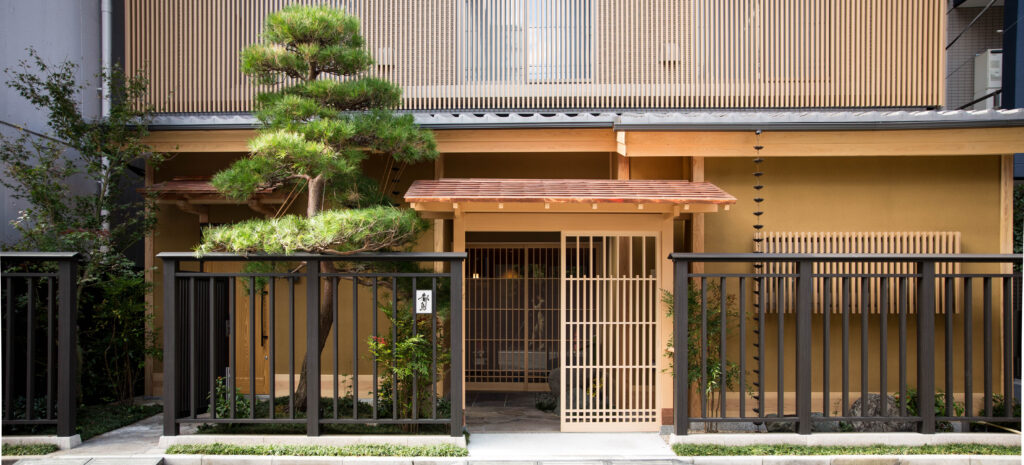
If you are looking for the definitive geisha dinner in Tokyo, we highly recommend Asakusa Miyakodori (https://miyakodori-geisha.com/).
Located in the historic “Kannon-ura” district behind the temple, Miyakodori is a rare gem: a surviving machiai-chaya (waiting tea house) from 1950 dedicated to geisha entertainment.
Why Miyakodori Stands Out:
- Authenticity: You are entering a real, operating establishment with deep ties to the Asakusa Geisha Association (Kenban). This is 100% authentic culture, not a tourist set.
- No “Introduction” Needed: Miyakodori has abolished the barrier of “Ichigensan Okotowari” for guests booking via their website. In Kyoto and many traditional districts, the rule of ichigensan kotowari means that first-time guests cannot enter without a personal introduction from a trusted regular customer. Asakusa has evolved beyond this barrier, and Miyakodori specifically welcomes international travelers and first-time visitors directly—no connections required.
- Total Privacy: They specialize in private rooms. Whether you are a couple on a honeymoon or a corporate group, you have the space to yourself.
- English Support: They provide support for English speakers during the booking process.
- Dietary Inclusivity: As mentioned, they can cater to vegan and other dietary needs, with fully halal or kosher meals served as bento.
Rare Taikomochi (hōkan)
Asakusa is one of the very few places in Japan where guests may be entertained by a taikomochi — a traditional male geisha entertainer. Their art is a distinctive part of the Asakusa banquet world and a rare addition to an evening here.
6. Etiquette and Tips for Guests
To ensure a respectful and enjoyable experience, here are a few tips to help you stay comfortable.
- Socks: You will take off your shoes. Please wear clean, hole-free socks.
- Photos: In a private room at Miyakodori, you are generally allowed to take photos with the geisha. However, always ask “Photo OK?” first. Do not stop geisha on the street for photos; respect their privacy.
- Touching: Never touch a geisha’s wig, kimono, or hair ornaments. These are incredibly expensive and fragile items.
- Respect: Treat them as the highly skilled professionals they are.
7. How Much Does a Geisha Dinner Cost in Tokyo?
Cost is the most common question about geisha dinners — and traditionally the least transparent part of this world. Asakusa Miyakodori publishes its rates openly, so you know exactly what to expect before you book.
Current private ozashiki plans (per person, tax included, for groups of four or more — smaller groups are welcome at adjusted rates):
| Plan | Duration | From (per person) | What’s included |
|---|---|---|---|
| Geisha Highlights | 1 hour | ¥34,000 | Dance, shamisen, and ozashiki games in a private tatami room |
| More Time with Geisha — Most Popular | 2 hours | ¥45,000 | Adds relaxed conversation time and free-flow drinks |
| Geisha Kaiseki Dinner | 3 hours | ¥106,000 | The full evening — kaiseki course dinner and free-flow drinks included |
What sets an ozashiki at Miyakodori apart
- The only machiai-chaya in Asakusa. A machiai-chaya is the traditional tea house that arranges and hosts an ozashiki — and Miyakodori is the only one in Asakusa.
- An okami who was an active geisha. Chikage, the Okami of Miyakodori, has 27 years of experience as a geisha — in the hanamachi ever since her debut in 1969. She is the only proprietress in Asakusa with direct experience as an active geisha.
- Hōkan (Taikomochi) can be invited. Hōkan are Japan’s only male geisha, and Asakusa is the only hanamachi with formally registered hōkan. Inviting a hōkan to perform is part of what an ozashiki at Miyakodori in Asakusa can offer.
- No introduction required. An ozashiki has traditionally been arranged through an introduction from an existing patron. Miyakodori takes reservations directly, including from first-time and overseas guests.
- English-speaking interpreter. An English-speaking interpreter accompanies every private plan.
Meals are not included in the 1-hour and 2-hour plans; a full kaiseki course can be added for ¥18,000 per person, along with options such as a seasonal bento or A5 wagyu. The 3-hour plan includes the kaiseki dinner. Prefer a lighter first step? The Ozashiki Tea House (75 minutes, shared seating, matcha and seasonal sweets) is currently ¥17,600 per person — a special campaign price.
For complete tables by group size and time of day, plus all optional add-ons, see the official pricing page.
8. How to Book Your Geisha Dinner
Booking a private geisha dinner requires some advance planning.
- Plan Ahead: Popular venues like Miyakodori often book out weeks or months in advance, especially during peak seasons.
- Contact Direct: Use the official website (https://miyakodori-geisha.com/) to make an inquiry. You typically do not need a membership card to book online for tourists. For full pricing details, see our geisha dinner pricing page. For details on the private ozashiki room experience, visit our ozashiki experience page.
- Specify Needs: Be sure to include any dietary restrictions (Halal, Vegan, allergies) and the number of guests in your party.
- Duration: Remember the event typically lasts about 2 to 3 hours, so plan your day accordingly.
Frequently Asked Questions
How much does a geisha dinner in Tokyo cost?
At Asakusa Miyakodori, private ozashiki plans start from ¥34,000 per person (the 1-hour plan). The most popular 2-hour plan is from ¥45,000 per person, and the full 3-hour evening with kaiseki dinner and free-flow drinks is from ¥106,000 per person. A shared-seating Ozashiki Tea House experience is also available at ¥17,600 per person.
How long does a geisha dinner last?
Private plans run 1, 2, or 3 hours, and the geisha are with you for virtually the entire time. Most guests choose the 2-hour plan. The shared Ozashiki Tea House format lasts 75 minutes.
Do I need an introduction to book a geisha dinner?
No. While many traditional venues still follow the first-time-guest rule (ichigen-san okotowari), Asakusa Miyakodori accepts direct online bookings from overseas visitors — no membership or introduction required.
Are halal and vegan options available at a geisha dinner?
Yes. Asakusa Miyakodori can adjust the menu for vegan and other dietary needs, and fully halal or kosher meals are served as bento (boxed meals) with 5 days’ notice — include your dietary requirements when you book.
What’s included in the price of a geisha dinner?
Each plan includes a private tatami room and the geisha’s performance — classical dance, live shamisen, and interactive ozashiki games. The 2-hour More Time with Geisha plan adds relaxed conversation time and free-flow drinks, and the 3-hour Geisha Kaiseki Dinner adds a full kaiseki course dinner with free-flow drinks. Meals are not included in the 1-hour and 2-hour plans, but a full kaiseki course can be added for ¥18,000 per person.
Can I add a meal to the 1-hour or 2-hour plan?
Yes. A full kaiseki course can be added to the 1-hour or 2-hour plans for ¥18,000 per person, with options such as a seasonal bento or A5 wagyu. The 3-hour Geisha Kaiseki Dinner already includes the kaiseki dinner.
How do I book a geisha dinner at Asakusa Miyakodori?
You can book directly online through Miyakodori’s reservation page — no introduction or referral is required. English support is provided throughout the booking process, and every dinner is held in a private room.
Do I tip at a geisha dinner, and what is goshugi?
There are two separate customs. Goshugi (御祝儀) is a traditional monetary gift presented to the geisha after they perform, placed in a small decorative envelope (pochi-bukuro); the customary amount is ¥3,000–¥10,000 per geisha. You don’t hand it to the geisha directly — let the okami (proprietress) know, and she guides the timing. If you’ve arrived without cash, Miyakodori can advance the amount and add it to your bill. Separately, an optional tip for the restaurant and its staff is welcomed; guests who wish to leave one are warmly received, and it can simply be added to your bill. Both are voluntary — goshugi for the geisha’s art, a tip for the establishment’s hospitality.
What’s the difference between the Ozashiki Tea House and a private geisha dinner?
The Ozashiki Tea House is a 75-minute, shared-seating session with matcha and seasonal sweets at ¥17,600 per person — an accessible first taste of geisha entertainment. A private geisha dinner (ozashiki) is the full experience: your own private tatami room, geisha for one to three hours, and the choice of a kaiseki course. Most guests looking for the complete, exclusive evening choose the private ozashiki.
Conclusion: A Night to Remember Forever
A geisha dinner in Tokyo is more than just a meal; it is a journey into the heart of Japanese culture. It is a night of elegance, laughter, and connection that bridges the gap between the past and the present.
Whether you are mesmerized by the dance, laughing over a game of Tora Tora Tora, or savoring the seasonal flavors of kaiseki, the memories you create at Asakusa Miyakodori will last a lifetime. You will meet true artisans and witness a world few get to see.
Ready to book your authentic geisha experience? Visit Asakusa Miyakodori today to secure your private banquet for your 2026 trip.
Visit Asakusa Miyakodori
Address: 3-23-10 Asakusa, Taito-ku, Tokyo
Phone: +81-50-1793-5252 (English AI receptionist, 24 hours. Our team follows up with you.)
Hours: Monday–Friday (open) | Saturday & Sunday (closed)
Reservations: Book online | Official Website
References
[1] GEISHA ENTERTAINMENT experience IN TOKYO — TOKI
[2] Tokyo Traditional Geisha Show and Japanese Fine Dining … | Viator
[3] The BEST Tokyo Geisha & maiko experiences 2025 | GetYourGuide
[4] Authentic Geisha Performance with Dinner in Tokyo | TripAdvisor
[5] Geisha Dinner Experience in Tokyo | Living Guide in Japan
[6] The Geisha Experience in Tokyo | Klook
[7] Geisha & Maiko Dinner Shows Tokyo: 5 Best Authentic Experiences [2025 Update] | Food Tours Japan
[8] Exclusive Geisha Dinner Experience in Tokyo | Tinggly [9] Asakusa Miyakodori Official Website
Related Guides
- 2026 Best Tokyo Geisha Dinner Guide
- 2026 Best Geisha Dinner in Kyoto and Tokyo
- 12 Best Tokyo Dinner Places
- Geisha Restaurant Near Me in Tokyo
- How Much Is a Geisha Dinner in Tokyo? (Complete Pricing Guide)
- Hakoya: The Unsung Keeper of Asakusa’s Geisha World


- The Ultimate Guide to the Ozashiki Party: Unlocking the Secrets of Traditional Japanese Entertainment in Tokyo
- Beyond "Geisha Girls": Understanding Japan's Traditional Artists of the Flower and Willow World
How Long Is a Geisha Experience? (Tokyo Ozashiki Guide)
Asakusa Geisha: Where to Meet Real Geisha in Tokyo
Geisha Pictures: A Comprehensive Visual Guide and Stock Photo Resources
Are There Still Geisha in Japan? The 2026 Guide to Finding the Living Legends of Tokyo
The Shamisen: Japan’s Three-Stringed Lute and the Soul of Geisha Music
Ultimate Guide to Asakusa Geisha Ozashiki Odori: Experience Traditional Geisha Dance in Tokyo
Comment ( 0 )
Trackbacks are closed.

No comments yet.