



Tokyo Tourist Guide: A Geisha Teahouse’s View of the City We Call Home
Plan Tokyo around a home base near a major train line and two or three neighborhoods a day — then keep one evening for the part of the city you feel rather than photograph. This guide is written from Miyakodori, the only machiai-chaya in Asakusa, where that evening is spent with real geisha.
We are Miyakodori, the only machiai-chaya in Asakusa — a traditional teahouse where geisha are invited to entertain guests. It is run by our okami (proprietress), who spent twenty-seven years working as a geisha before she took over the house: the only okami in Asakusa who was herself a geisha. We sit a few minutes’ walk north of Senso-ji, roughly 13 to 15 minutes on foot from the Asakusa stations, with the temple grounds on the way. This is our own guide — the neighborhoods we recommend to guests visiting us, before they spend an evening with real geisha here.
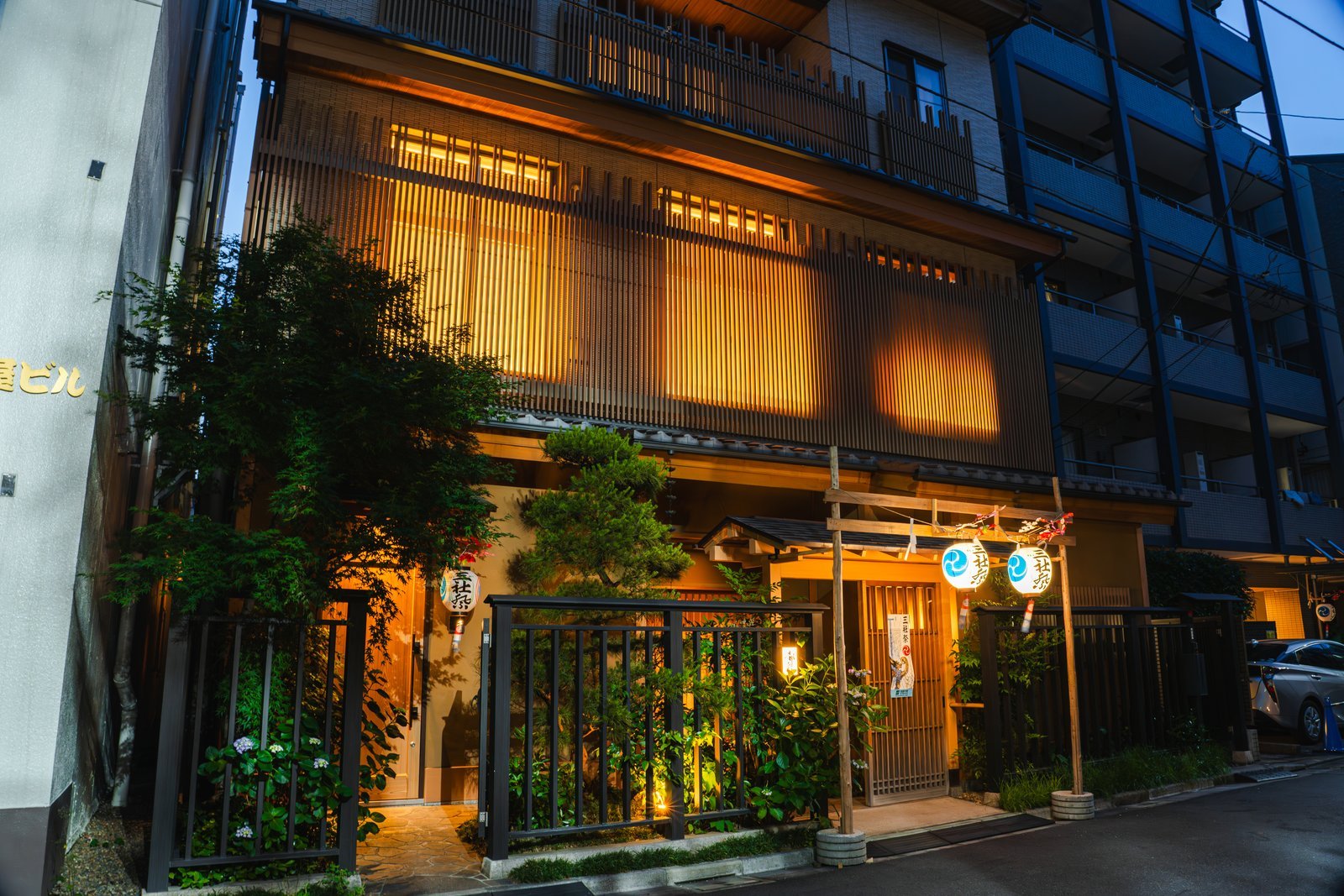
Tokyo is one of the world’s most visited destinations, and Japan rewards visitors who slow down enough to notice it. If you are planning your first trip to Tokyo, use this guide to help you plan.
Planning Your Trip to Tokyo
A few practical tips before you land. Most international visitors arrive through Narita or Haneda airport. Haneda sits closer to central Tokyo and is a shorter train ride into the city, while Narita, further out, is often used by long-haul carriers; either way, the train is almost always faster and cheaper than a taxi once you factor in Tokyo traffic. From either airport, a direct train connection can have you in Asakusa, Ueno, or Shinjuku within 60–90 minutes.
Once you’re here, Tokyo’s rail and subway network is the easiest way to get around. A prepaid IC card (tap-and-go on every train, bus, and even many vending machines) is worth getting on day one. If your trip includes day trips beyond the city, look into a rail pass before you arrive — it’s almost always cheaper than buying individual tickets.
As for timing: spring (roughly late March through April) brings cherry blossoms and crowds in equal measure, while autumn — especially October and November — offers milder weather, quieter shrines, and colour in the parks that rivals the blossoms. Winter is cold but clear, and New Year is one of the most beautiful times to be in Asakusa, we decorate our rooms with kagami mochi and seasonal arrangements. There is no wrong season to visit Tokyo, only a different one.
Where to Stay in Tokyo
Tokyo doesn’t have a single “best” area to stay — it depends on what kind of trip you want. Shinjuku and Shibuya put you close to nightlife, shopping, and major train stations, with hotel options ranging from budget business hotels to international luxury brands. Ginza offers a more polished, upscale stay near department stores and fine dining. Ueno is a practical, well-connected choice close to museums and parks.
We are, of course, biased toward Asakusa. It’s one of the areas of central Tokyo that still feels like a neighborhood, and it puts you within walking distance of Senso-ji, the Sumida River, and our teahouse. Staying here means you can end an evening with a geisha performance a short walk from your hotel, rather than crossing half the city to reach us and back.
Wherever you choose to stay, book early if your trip falls during peak seasons like spring or major festival dates; the best hotels in every price range in Tokyo sell out well in advance.
Tokyo’s Neighborhoods, Briefly Explained
Tokyo is really a collection of very different cities stitched together. Here is a short guide to the major ones, from a local’s point of view rather than a tour bus itinerary.
- Shibuya is the Tokyo you will have seen online — the famous crossing, the Hachiko statue, and a skyline of screens. It’s worth an hour or two, best experienced in the early evening.
- Shinjuku is Tokyo’s transport and entertainment hub, home to the busiest train station in the world, the free observation decks at the Tokyo Metropolitan Government Building, and the narrow bars of Golden Gai.
- Akihabara is the centre of anime, manga, and electronics culture — a genuinely fascinating district even if that isn’t your particular interest, simply for how completely it commits to it.
- Ginza is Tokyo’s answer to a European boulevard: department stores, art galleries, and some of the city’s most traditional restaurants sit side by side.
- Harajuku and Yoyogi, next to the forested grounds of Meiji Shrine, offer one of the city’s sharpest contrasts — a shrine dedicated to quiet, and a street market built for spectacle, a few minutes’ walk apart.
- Ueno combines a large public park with several of Tokyo’s major museums, making it an easy, walkable day if you enjoy art or history.
- Tsukiji, once home to the world’s largest fish market, remains one of the best places in the city to eat sushi, even after the main wholesale market relocated.
And then there is Asakusa — where we are.
Our Home: Asakusa, Then and Now
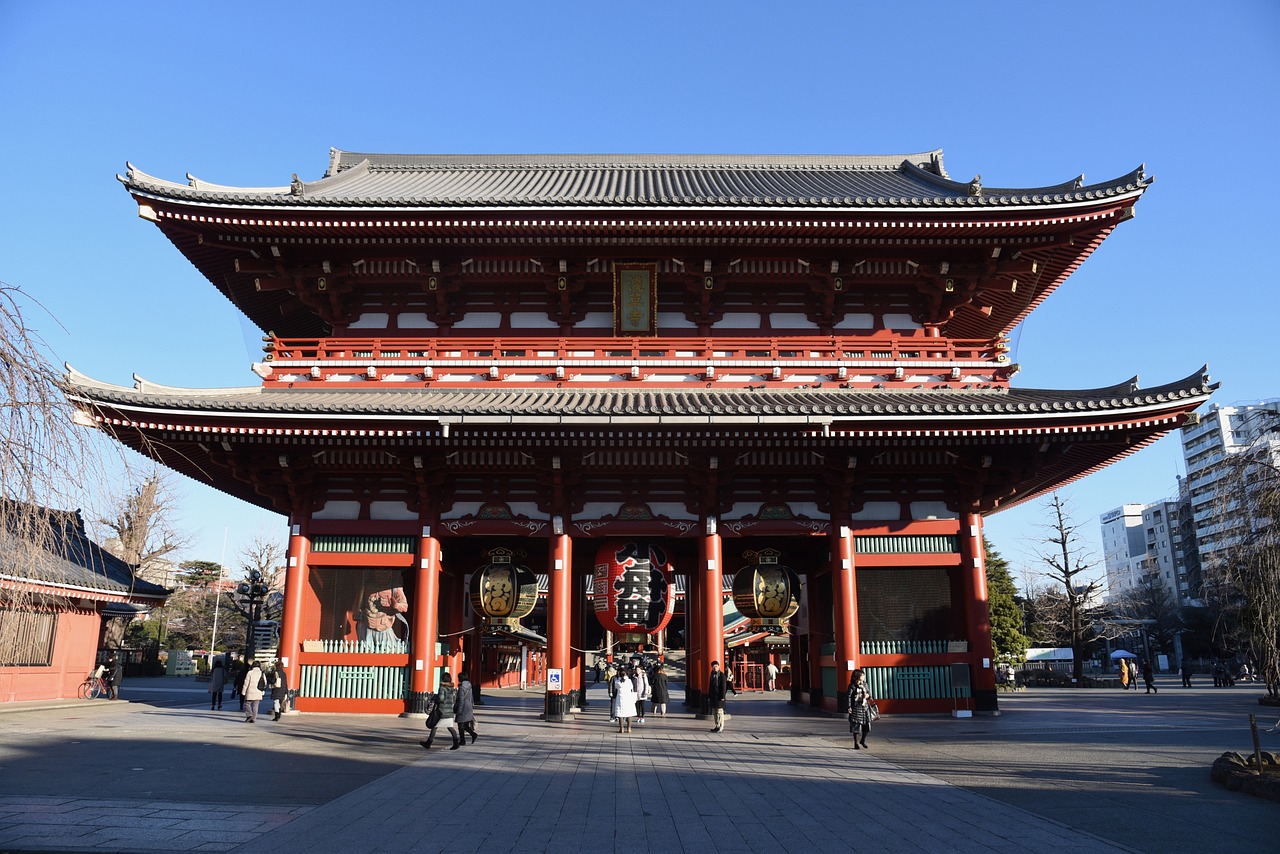
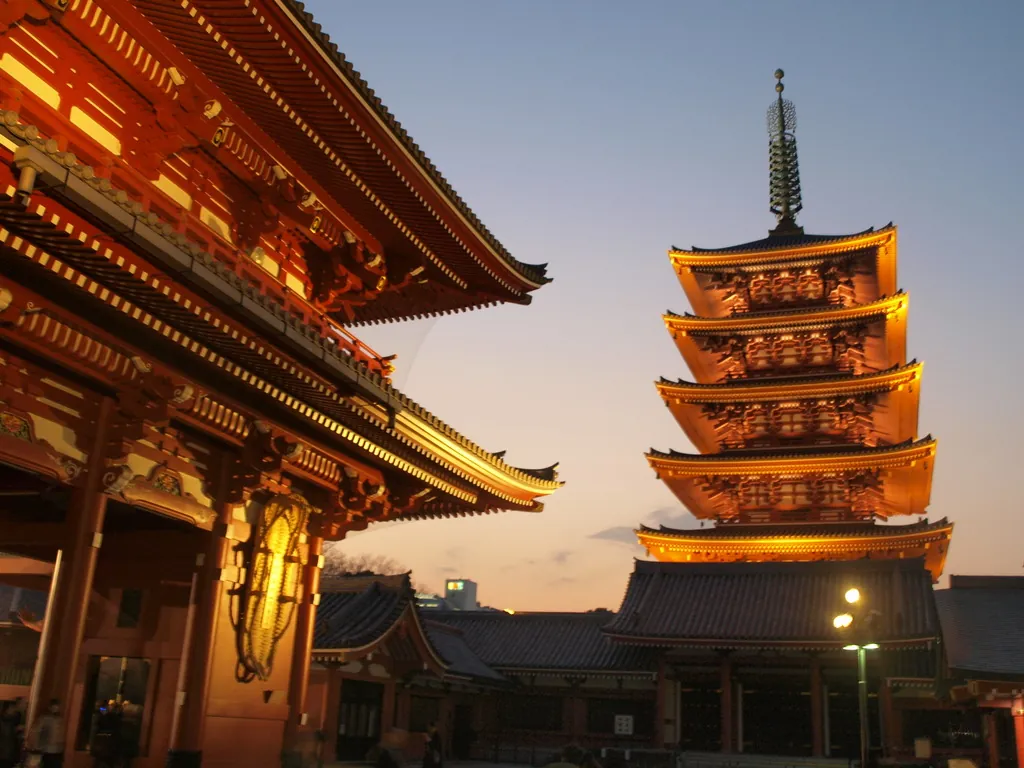
Asakusa was flattened during the air raids of the Second World War and rebuilt almost entirely by the people who refused to leave it. Today it’s known for Senso-ji, Tokyo’s oldest temple, and for the Sanja Festival each spring, when the streets fill with portable shrines and crowds in a way that few other Tokyo neighborhoods can match.
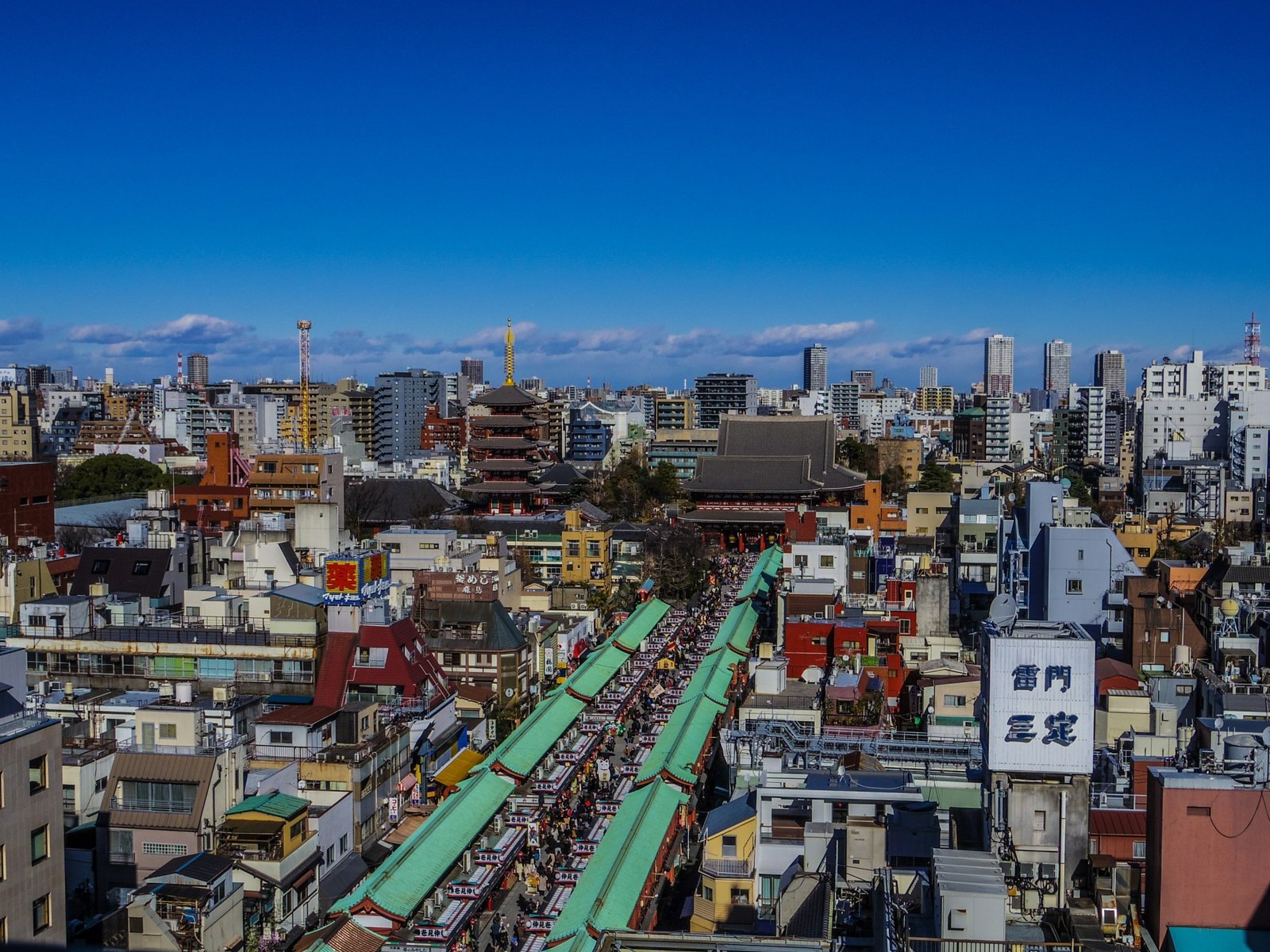
It is also the hanamachi — the geisha district — where our okami and her mother were both born and raised. Asakusa has come back from the devastation of the war, and between the Sanja Festival and everything else that happens here, it’s a place where crowds of people come to enjoy themselves. We want to share the joy of Asakusa — Miyakodori and the wonderful culture of the Asakusa geisha — with as many people as possible.
Asakusa is also the only hanamachi in Japan where hōkan (taikomochi) — the male geisha — are still formally registered and working today, alongside the women. Almost no guidebook mentions them, and they are one of the reasons the geisha culture here is worth going out of your way for.
Most visitors see Senso-ji, buy a snack on Nakamise shopping street, and move on. Very few know that a few streets away, a living tradition is still practiced, evening after evening. If you want the street-by-street version of this neighborhood, we’ve also written a full Asakusa travel guide.
The Top Things Tourists Do in Tokyo
Tokyo’s major attractions are, for the most part, exactly as good as their reputation. If you only have a few days, most first-time visitors build their trip around some combination of the following, and each of these delivers genuinely memorable experiences: the Shibuya crossing and Hachiko statue; Senso-ji temple and Nakamise street in Asakusa; the observation decks of Tokyo Tower or Tokyo Skytree; Meiji Shrine and Yoyogi Park; teamLab’s digital art spaces; a sushi breakfast near Tsukiji; and an afternoon exploring Akihabara or Harajuku. It’s a genuinely excellent itinerary, and we’d never tell a guest to skip any of it.
But almost everything on that list can be seen. It can be photographed, walked through, checked off. There is one experience in Tokyo that has to be felt, in the room, in real time.
An Evening at Miyakodori: Real Geisha Culture, Not Just a Performance
The name was chosen by the founder of the house, from a poem in the Tale of Ise by the Heian-period poet Ariwara no Narihira: “If you are worthy of your name, capital-bird, then let me ask you — is the one I love safe and well?” Our okami, who inherited the house as its second-generation proprietress, says she wants Miyakodori to go on being thought of in that spirit by the guests who come here — a place where we and our guests genuinely care about one another.
People often ask what a geisha actually is. It’s not simply about being skilled in the arts, but people who genuinely love and are devoted to their art. That includes the art of bringing joy to a guest. Entertaining guests is itself part of that art, and these are people who have made peace with doing that as their life’s work. The word itself carries the answer: 芸者, geisha, literally means “a person of art” — 芸 (art) plus 者 (person).
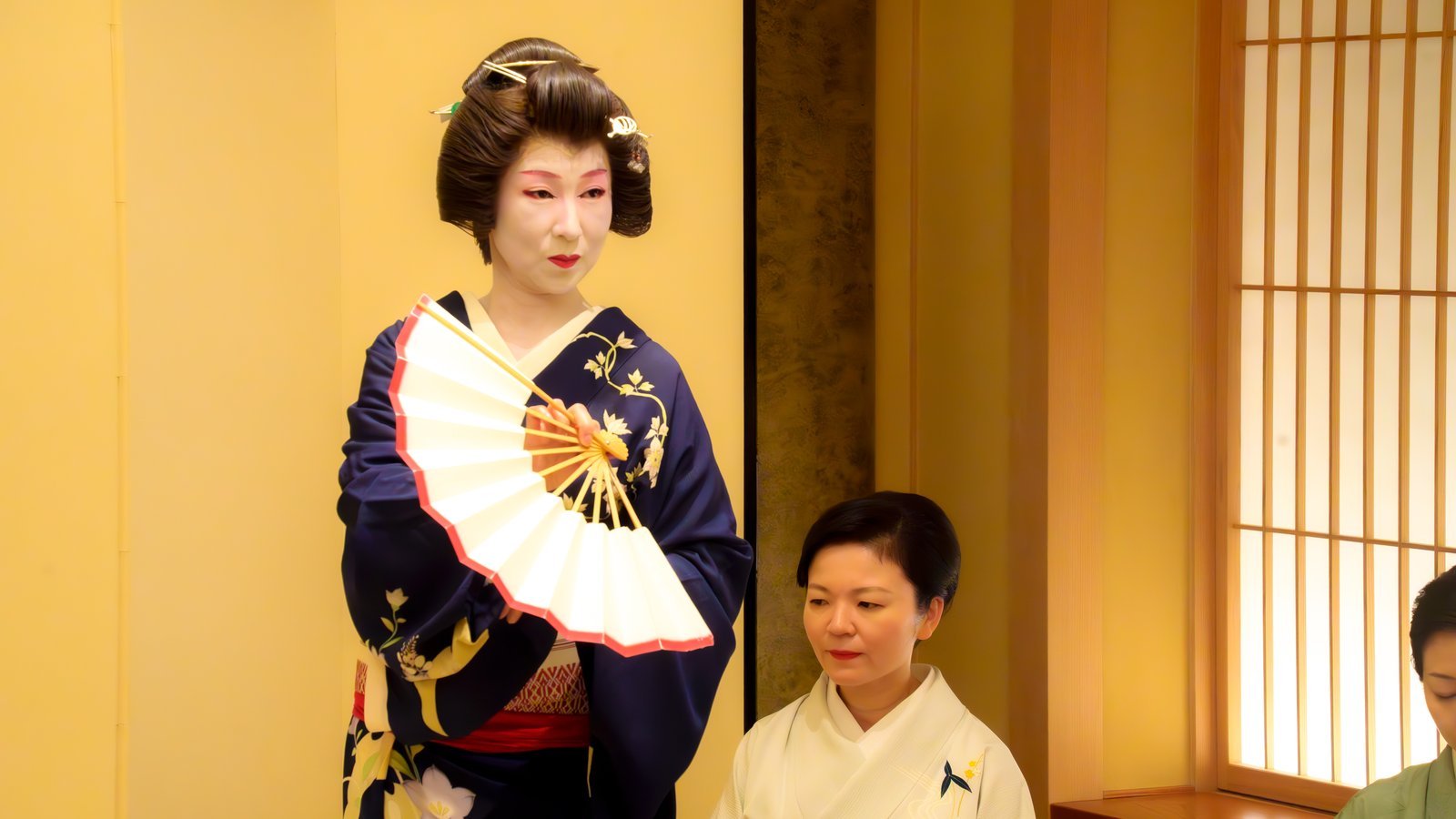
Here is the part that surprises almost every visitor: the geisha are not employees. Each one is an independent professional registered with the kenban, the office of the Asakusa hanamachi where every geisha in the district is on the register. A house like ours does not keep geisha on staff — we invite them, one ozashiki at a time, and they choose the work they take. That is why the names you hear are known across Asakusa rather than attached to any single address, and why the Asakusa hanamachi behaves less like a company than like a guild of self-employed artists.
Our okami dates that art to the late 1600s — the early Edo period, when the country’s wars had ended and its entertainment culture flowered — and she is clear that it has to be experienced live. In an ozashiki, you can feel it right in front of you. What’s interesting is that the games our guests play haven’t changed in at least 200 years. So we want you to feel an art that has been refined since a time before video or photography existed. That entire culture only reveals its true meaning when it’s experienced in person.
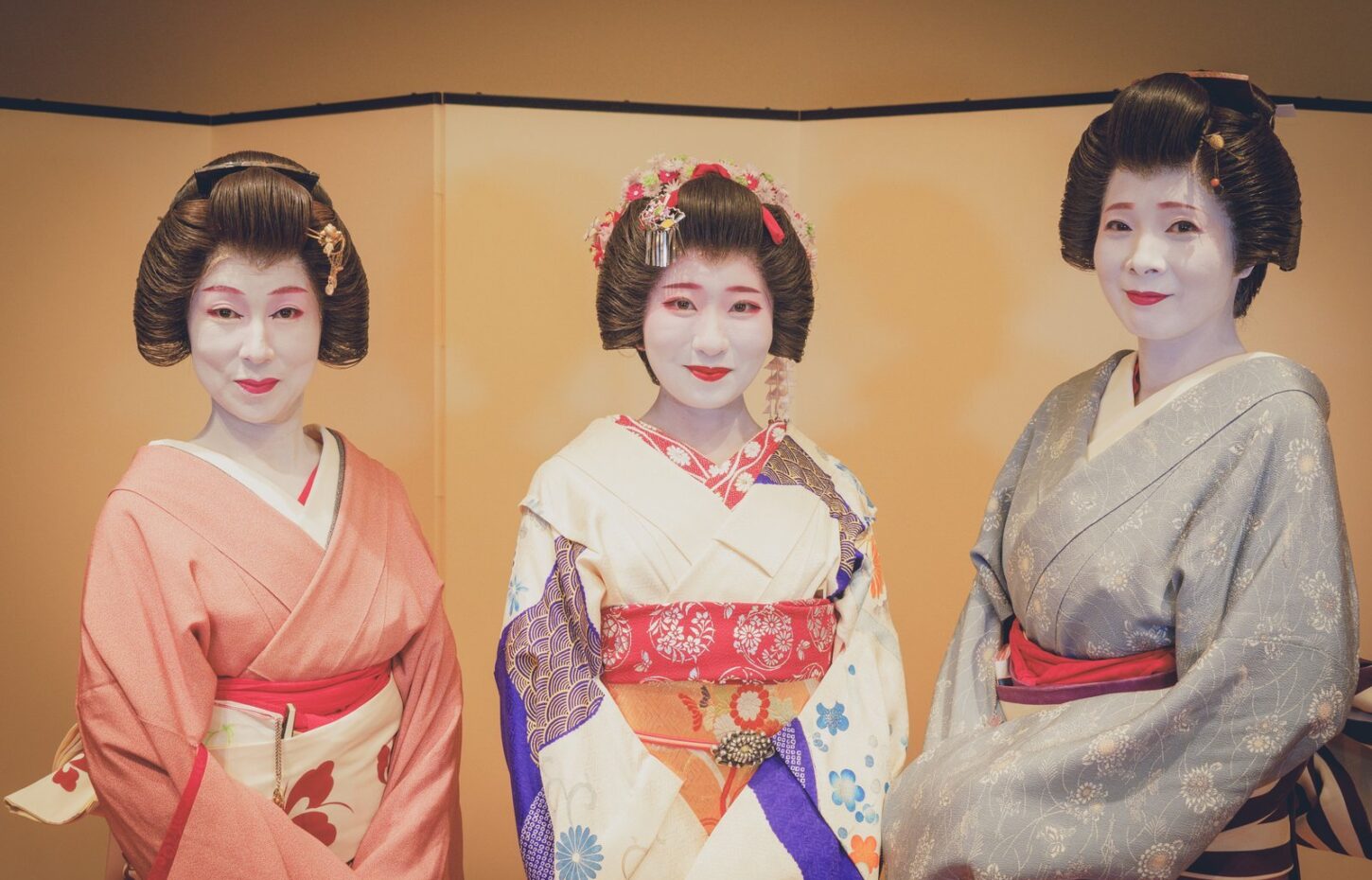
For a first-time guest, that’s the real appeal. Being able to enjoy the culture of authentic geisha — people who have made their art their living for generations. This living culture, and meeting our okami, a veteran of this world who is herself a former geisha and now runs this teahouse — and the conversation and impressions that come out of that meeting are different for every single guest. It’s entertainment you can enjoy in the moment, but you naturally come away sensing the life and culture behind it too. That one-of-a-kind experience is the real appeal of Miyakodori.
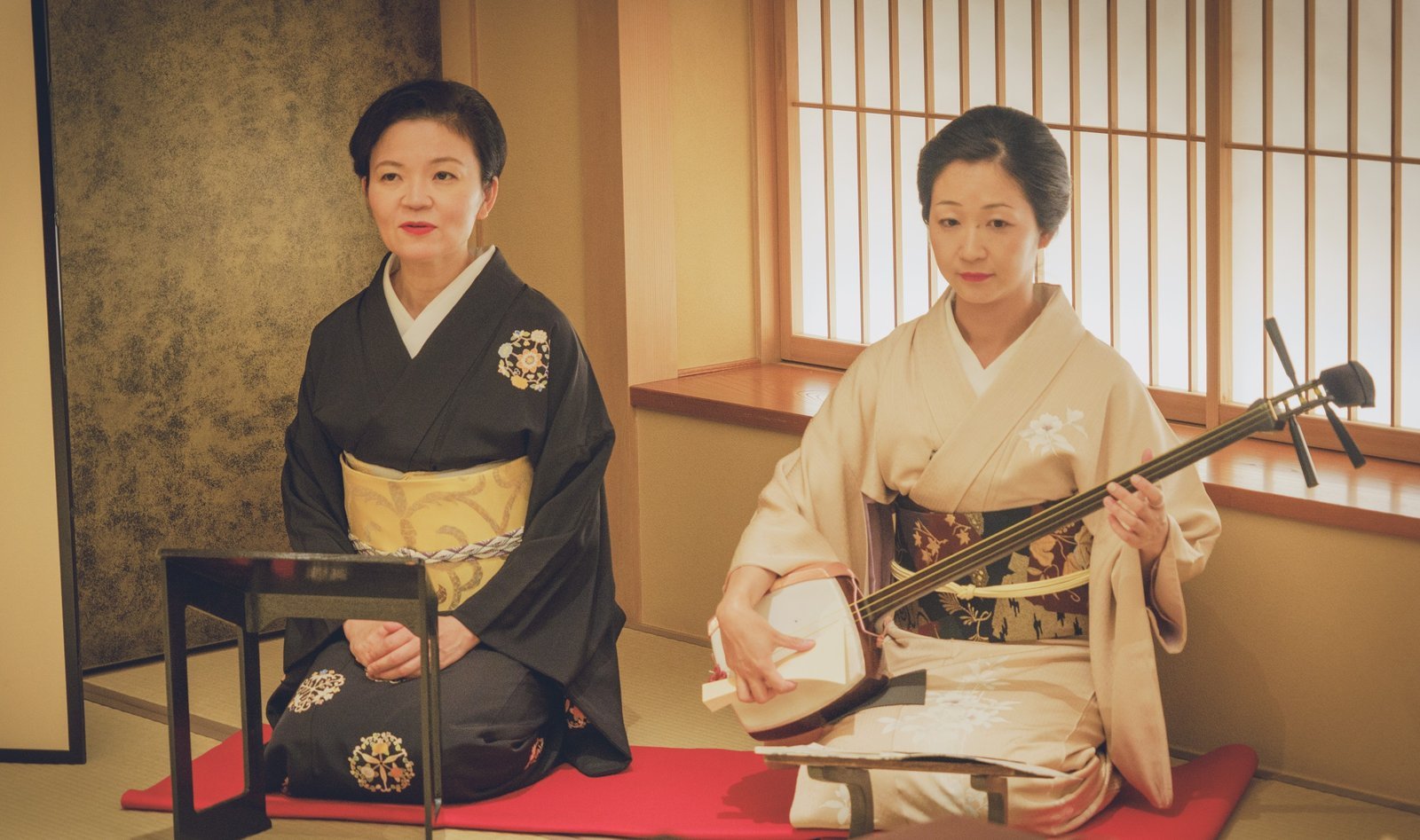
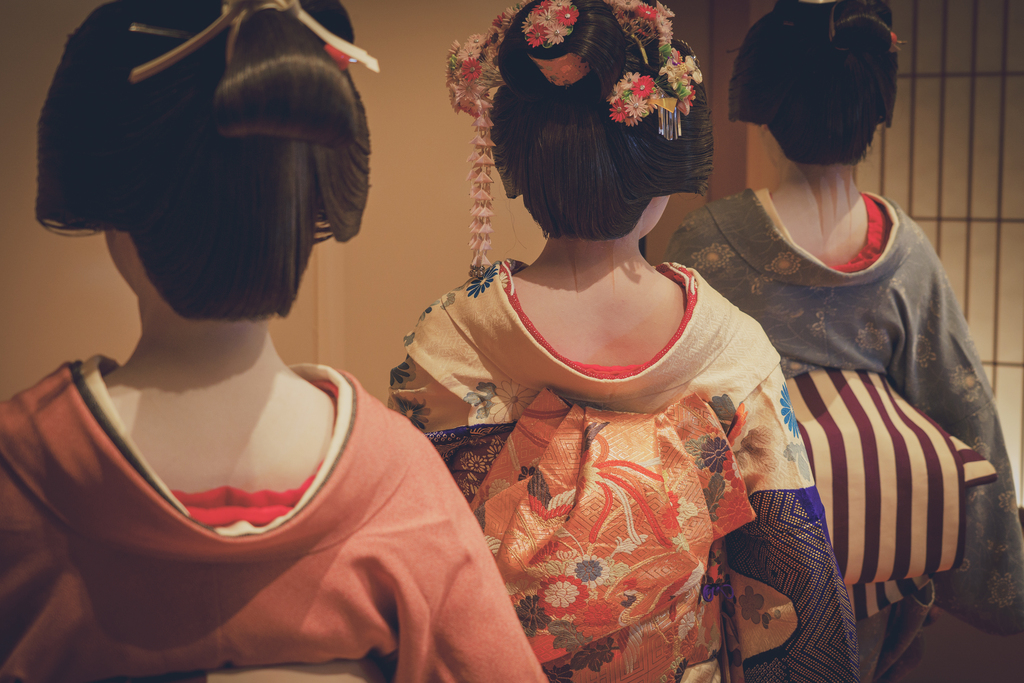
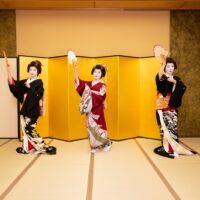
The geisha — two or more of them, depending on the plan — will typically stay in your room for the length of your booking, pouring drinks and talking with you as the evening goes on. You’ll watch the art they have spent years refining, played live rather than to a recording: one of them dances, another accompanies her on the shamisen, the three-stringed lute that carries almost all geisha music. Then you’ll be invited to play ozashiki asobi — traditional games like konpira fune fune, tora tora, and tosenkyo — games that have barely changed in two centuries. The distance between the geisha and the guests naturally closes, the conversation flows more easily, and the time goes by before you know it.
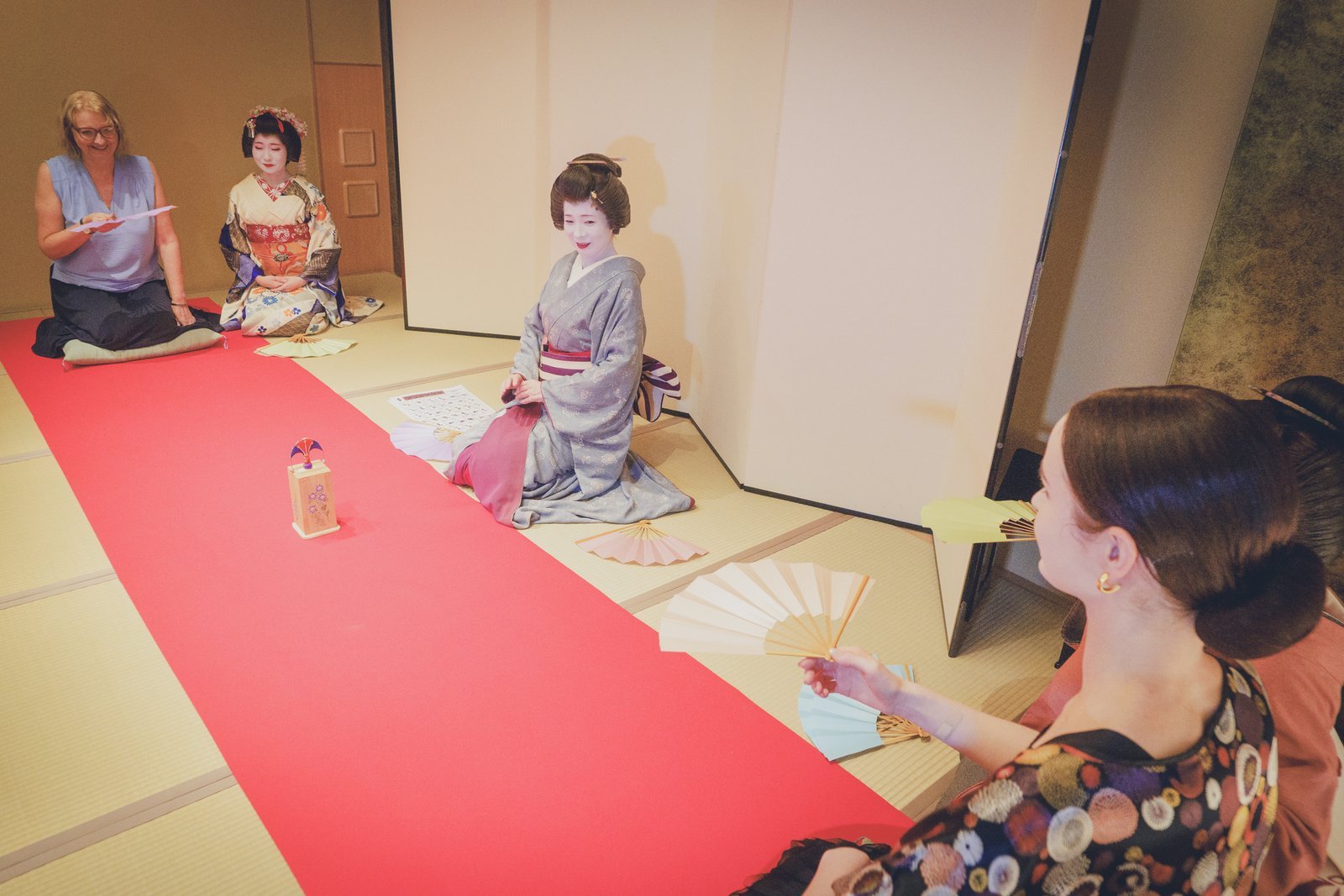
Tosenkyo, the fan-throwing game, has a longer story than it looks. It began as a simplification of tōko, a Chinese game of throwing arrows into a narrow-necked pot that proved too difficult to be fun, and in Edo it became a craze played by children and adults alike — popular enough as a gambling game that the shogunate issued bans against it. Nothing about it is complicated: you throw a fan at a small target on a wooden stand, and the shape the fan, target, and stand land in is scored against a chart of named figures — in our case the forty-one figures of the Kisen-ryū school, whose names are taken from the chapter names of The Tale of Genji. It is also the clearest illustration of why this culture has to be experienced rather than watched — the geisha sits beside you and coaches your throw, and that is not something a video can hand you.
What to Expect at Your First Ozashiki
If you’ve heard that this world operates on an “ichigen-san okotowari” basis — no first-time guests without an introduction — that is traditionally the case, and it was as true of Asakusa as of anywhere else. Most of the other houses in this district still keep the rule. Miyakodori is the house that opened that door: we say so publicly on our own website, you can send a booking request yourself without knowing anyone, and our prices are published rather than quoted privately. Our okami put it plainly to the Sankei Shimbun in March 2026 — she has, in her words, “shaved down the threshold.” And even if you’re nervous at first, the geisha will put you at ease through proper hospitality. If you’d like to see how an evening is actually put together before you commit, we’ve written a longer guide to planning a geisha experience in Asakusa.
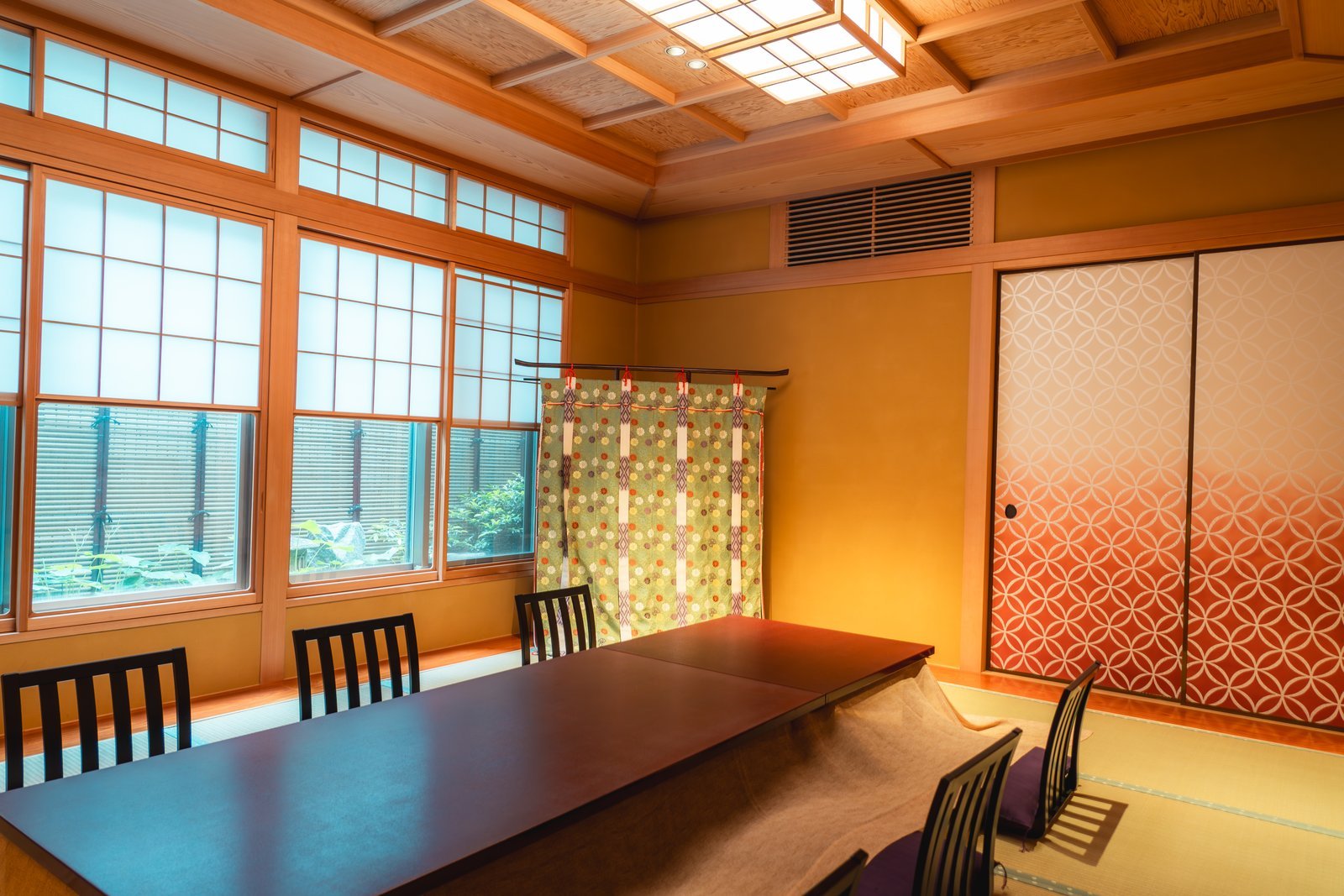
We built the room itself around the same idea. The space keeps its Japanese atmosphere, but there is an elevator — and, to answer the question we’re asked most often by visitors from abroad, you will not be sitting on the floor. Low chairs at the tatami table are our standard, not a special request, so nobody spends the evening negotiating with their knees. The building isn’t step-free everywhere, though, so if getting around it is a concern, please ask us before you book and we’ll tell you honestly what the space can and can’t do. Decorations change with the season — different art each month, a formal kagami mochi at New Year — but the true star here is always the geisha, so we’re careful that the room itself never tries to outshine her.
Spend One Evening With Real Geisha in Asakusa
A private ozashiki (geisha banquet) at Miyakodori — live shamisen, dance, and ozashiki asobi games that have barely changed in two centuries, a few minutes’ walk north of Senso-ji. An English interpreter sits in on every plan.
Request a ReservationFood, Drink, and Hospitality
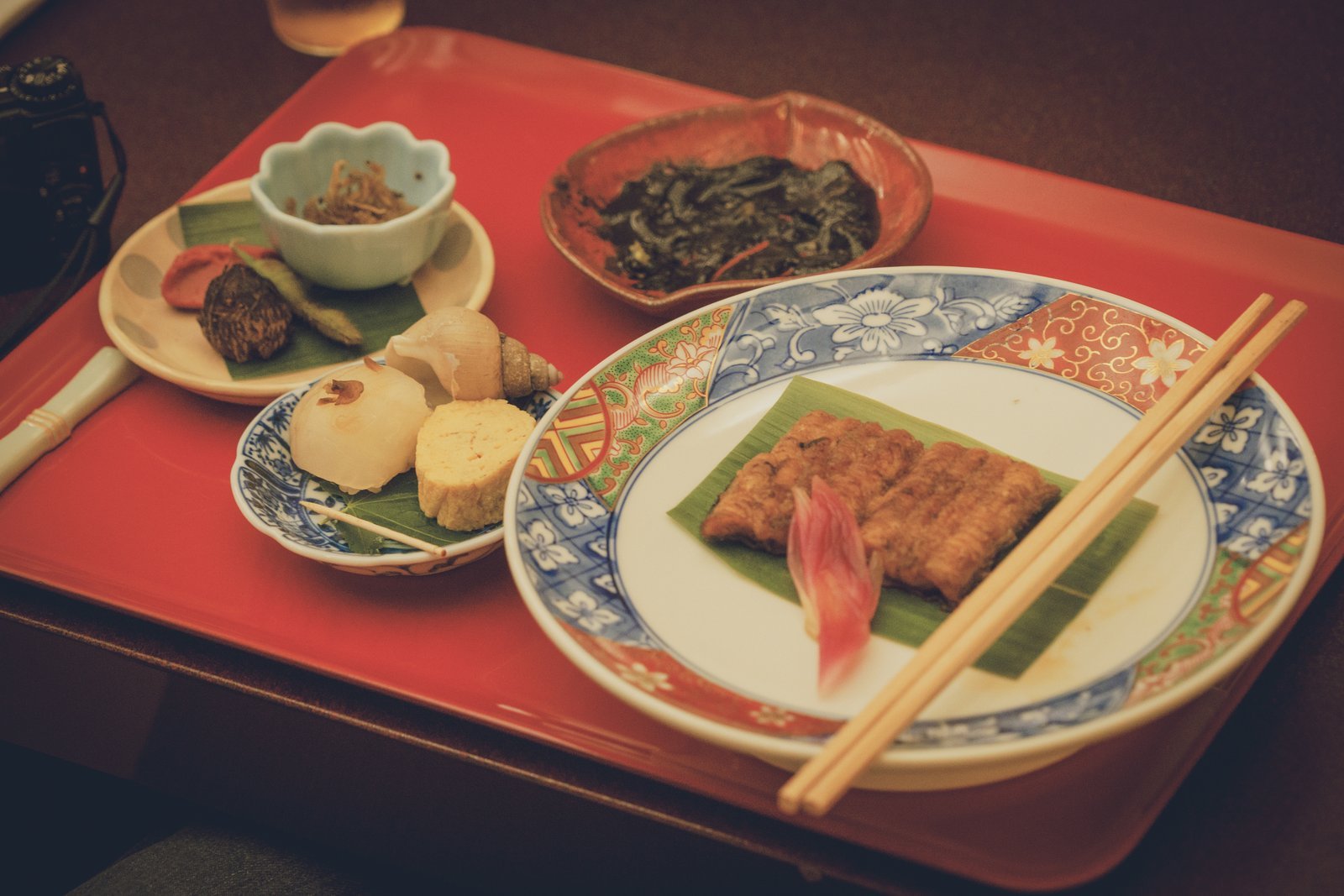
Tokyo’s food scene needs no introduction — sushi, ramen, yakitori, and izakaya culture are reasons enough to visit on their own, and a stay in Asakusa or Tsukiji puts excellent versions of all of them within walking distance. Sake and tea culture run just as deep, and both make their way into an evening with us: drinks poured by hand, conversation over them, and — on our three-hour evening plan — a kaiseki course served as part of the same unhurried evening as the performance. Shorter plans can add a seasonal bento instead, or skip the meal entirely. Because we are a machiai-chaya and don’t run a kitchen of our own, the food comes in from specialist restaurants, which is also why vegan, vegetarian and gluten-free requests are straightforward for us; fully halal or kosher meals can be arranged in bento form with five days’ notice.
A Typical Day in Tokyo vs. An Evening at Miyakodori
Most of Tokyo rewards a fast pace. An evening with a geisha rewards the opposite.
| A Typical Day in Tokyo | An Evening at Miyakodori | |
|---|---|---|
| What you see | Famous streets, shrines, and skylines | A living tradition, refined since the late 1600s |
| Who you meet | Crowds, staff, and fellow visitors | Real geisha — two or more of them — and our okami, herself a former geisha |
| The experience | Sightseeing and photographs | Conversation, live music, and centuries-old games |
| Pace | Fast, itinerary-driven | Unhurried — the room and the evening are yours |
| Where it happens | Anywhere in the city | Asakusa, traditional culture hotspot |
Neither replaces the other. A great Tokyo trip usually has room for both — a day exploring the city’s famous photo spots, and one evening set aside, in one quiet local corner of Asakusa, for something the city can’t offer anywhere else. That balance, more than any single destination, is what makes a Tokyo trip feel complete.
When to Visit & Sample Itineraries
A short Tokyo trip (2–3 days): Senso-ji and Asakusa on day one, ending with an evening at Miyakodori; Shibuya, Harajuku, and Meiji Shrine on day two; a sushi breakfast near Tsukiji and an afternoon in Ginza or Akihabara on day three.
A longer stay (5+ days): Add a day trip beyond the city — Nikko or Hakone are both reachable by train — plus a slower day in Ueno’s museums and parks, and a second evening kept free for whichever part of Asakusa you didn’t get to the first time.
Marking an occasion: Anniversaries, business entertaining, milestone birthdays, and family celebrations are, in our okami’s words, exactly what she hopes people bring to us: “It makes me so happy when guests come wanting to make it a special day. Anniversaries, business entertaining, sightseeing, a family celebration — I really believe our guests come away genuinely delighted, whatever the occasion, so I’d love for anyone with even a passing interest or love of geisha culture to experience it.”
Frequently Asked Questions
What’s the best way to plan a first trip to Tokyo?
Pick a home base near a major train line — Asakusa, Shinjuku, or Ueno are all solid choices — and build your days around two or three neighborhoods rather than trying to cover the whole city at once.
Is Asakusa a good place to stay?
Yes. It’s well connected by train, close to Senso-ji and the Sumida River, and — unlike some more built-up districts — still feels like a real neighborhood.
What’s the difference between a geisha and a geiko?
It’s a regional naming difference rather than a difference in role — geiko is the Kyoto word, geisha the one used in Tokyo. We’ve covered the full history in our guide to geisha and Japanese culture.
Do I need an introduction to visit a machiai-chaya like Miyakodori?
No. We welcome first-time guests, and our staff — along with the geisha who join us for the evening — are used to putting newcomers at ease from the moment you arrive.
Is English support available?
Yes. An English interpreter sits in on every plan, so the conversation with the geisha runs in both directions rather than through gestures, and we’re happy to help first-time international guests understand what to expect before and during the evening.
How do I book an evening with a geisha?
A private ozashiki is arranged by request rather than instant booking: you send a request through our site, we check availability, and we reply — usually within two business days. Prices start from ¥34,000 per person for the one-hour daytime plan with four or more guests; that plan also asks each guest to order one drink, charged separately (¥800–¥5,500). Every plan is listed on our pricing page.
Plan Your Evening With Us
Tokyo will give you plenty to see. We’d like to give you something to feel. If any of this — the history, the art, or simply the chance to spend an evening with real geisha in the neighborhood where this culture still lives — speaks to you, take a look at our plans and pricing and send us a request.
Request an Evening at Miyakodori
A private ozashiki (geisha banquet) at the only machiai-chaya in Asakusa, with real geisha invited for your group alone. An English interpreter sits in on every plan. Reservations are by request rather than instant booking, and we usually reply within two business days.
Request a Reservation


- Tokyo VIP Tours, Reimagined: An Evening at Miyakodori
- The Poems of Ariwara no Narihira — and the One Behind Our Name
What is a Geisha House? An Ultimate Guide to the World of Okiya and Ochaya (2026 Edition)
Geisha Restaurant Near Me in Tokyo: Authentic Ozashiki at Miyakodori Asakusa
1,060 to 20: A Third-Generation Owner on What Changed in Asakusa’s Geisha World

Style Inspiration Guide: Japanese-Style Nail Designs That Pair Beautifully with Kimono for an Asakusa Day Out—Using Only 100‑Yen Shop Items
If You Buy in Asakusa, This Is It! Recommended Souvenir Guide
No comments yet.