



Sensoji at Night: Light-Up Times by Month and What Is Open After Dark
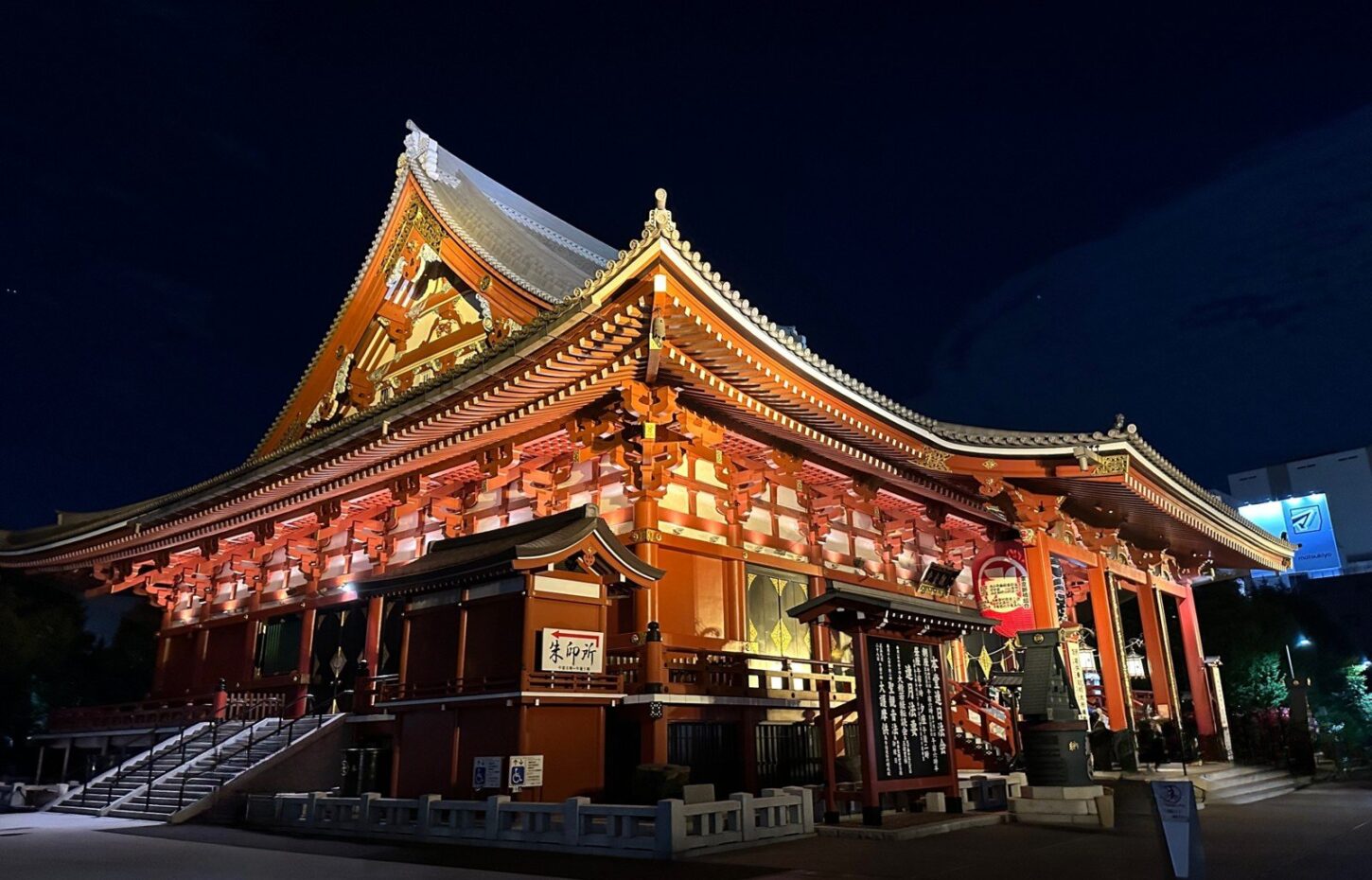
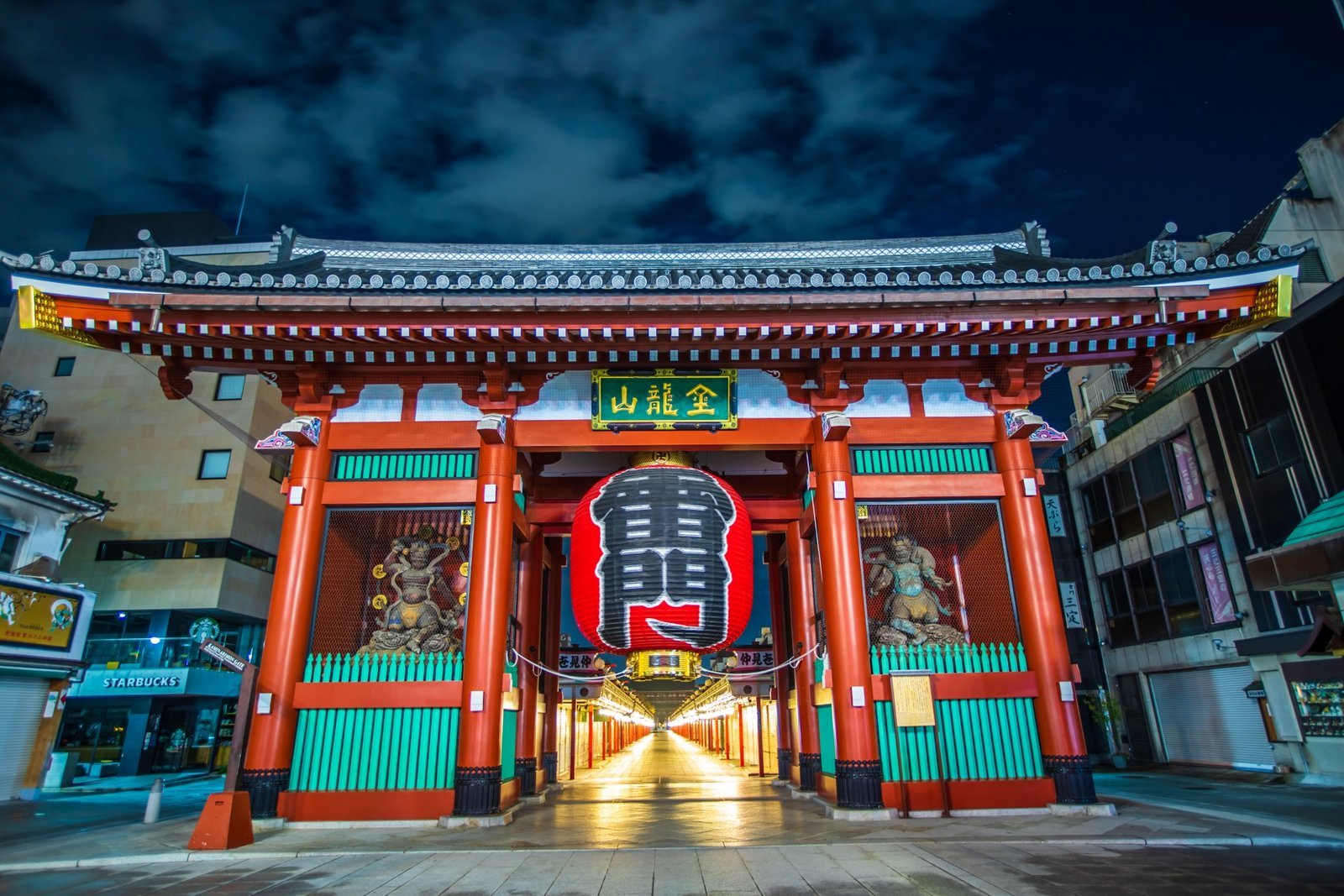
Sensoji is lit every night from sunset to about 11:00 pm, and the temple’s own notice invites visitors to come and see it. The main hall closes at 5:00 pm, so after dark you see the lit buildings from the grounds, not from inside. Sunset falls before 5:00 pm from about 21 October to 23 January and after it for the rest of the year, so the month decides whether the hall is still open when the lights come on.
Miyakodori is a machiai-chaya, a traditional teahouse founded in 1950, and we stand on the north side of Sensoji in Asakusa. This guide covers the night side of the temple: when the lights come on in each month, and what stays open nearby afterward. For the daytime and the quietest hours, see our guide to the best time to visit Sensoji. The hours below come from the temple and from public tourism sources that we read on 6 November 2026, and we have not timed the lights ourselves.
Sensoji at Night at a Glance
The table sets out what each source publishes. Where a detail is not published, it says so.
| Detail | What is published | Source |
|---|---|---|
| Main hall | Open 6:00 am to 5:00 pm. From October to March it opens at 6:30 am. | Sensoji |
| Lighting | Every day, from sunset to about 11:00 pm. | Sensoji |
| What is lit | The main hall, the five-story pagoda, Hozomon gate and Kaminarimon gate. | Sensoji |
| The grounds | The temple’s website gives no closing time for the grounds, and its lighting notice invites visitors to stop by and see the temple at night. japan-guide.com lists the grounds as always open. | Sensoji, japan-guide.com |
| Other halls | Hours are not published. The temple asks visitors to call. | Sensoji |
| Nakamise shops | Most close around 5:00 pm, which leaves the shutters and their paintings on view. | JNTO, Taito City |
| Admission | Free. | japan-guide.com |
Checked on 6 November 2026. The Taito City night guide carries information from June 2024, and the japan-guide.com page was last updated in May 2025, so confirm the details on the temple’s website before a special trip.
When the Lights Come On, Month by Month
The temple says the lighting starts at sunset and gives no clock time. The table below uses sunset times for Tokyo from the National Astronomical Observatory of Japan (NAOJ) for 2026. Each row shows the earliest and latest sunset in the month, because in September and October the time moves by about 40 minutes within a single month. From one year to the next, sunset on any given date shifts by a minute at most in NAOJ’s tables for 2025, 2026 and 2027, so the rows work as a guide for the year you travel.
| Month | Sunset, earliest to latest | Is the main hall still open when the lights come on? |
|---|---|---|
| January | 4:38 pm to 5:07 pm | Yes through 23 January, up to 22 minutes before it closes |
| February | 5:08 pm to 5:35 pm | No, it has closed |
| March | 5:36 pm to 6:02 pm | No, it has closed |
| April | 6:02 pm to 6:26 pm | No, it has closed |
| May | 6:27 pm to 6:51 pm | No, it has closed |
| June | 6:51 pm to 7:01 pm | No, it has closed |
| July | 6:47 pm to 7:01 pm | No, it has closed |
| August | 6:10 pm to 6:46 pm | No, it has closed |
| September | 5:27 pm to 6:09 pm | No, it has closed |
| October | 4:47 pm to 5:26 pm | From 21 October, up to 13 minutes before it closes |
| November | 4:28 pm to 4:46 pm | Yes, 14 to 32 minutes before it closes |
| December | 4:28 pm to 4:37 pm | Yes, 23 to 32 minutes before it closes |
Sunset times are for Tokyo in 2026 from NAOJ. The temple gives “sunset” for the lighting without a clock time, so the moment the lights actually come on is not published and may not match the astronomical sunset exactly. The 5:00 pm closing is the main hall’s published closing time all year.
Between about 21 October and 23 January, the lights come on before the main hall closes, by as much as 32 minutes in late November and early December. For the rest of the year the hall has already closed. In early July sunset is at about 7:00 pm, so the temple is lit for about four hours before 11:00 pm. In early December, with sunset at 4:28 pm, it is lit for about six and a half hours.
The table points to three ways to plan the visit. For the inside of the hall and the shops, go by day. For the lit buildings and the painted shutters, go after sunset. To see the hall open and lit up on one visit, be there between sunset and 5:00 pm, which means roughly 4:30 to 5:00 pm in November and December. Taito City’s tourism guide recommends arriving just as the lighting begins, before the night deepens.
Walking Sensoji After Dark
The night lighting is recent. In the Edo period, according to the temple’s page on Hozomon, the two gates, Kaminarimon and the inner gate that is now Hozomon, were shut at about 6:00 pm, and the grounds stood empty and quiet overnight. The lighting dates from 1 October 2003, when shop owners around the temple proposed it as part of the 400th anniversary of the Edo shogunate.
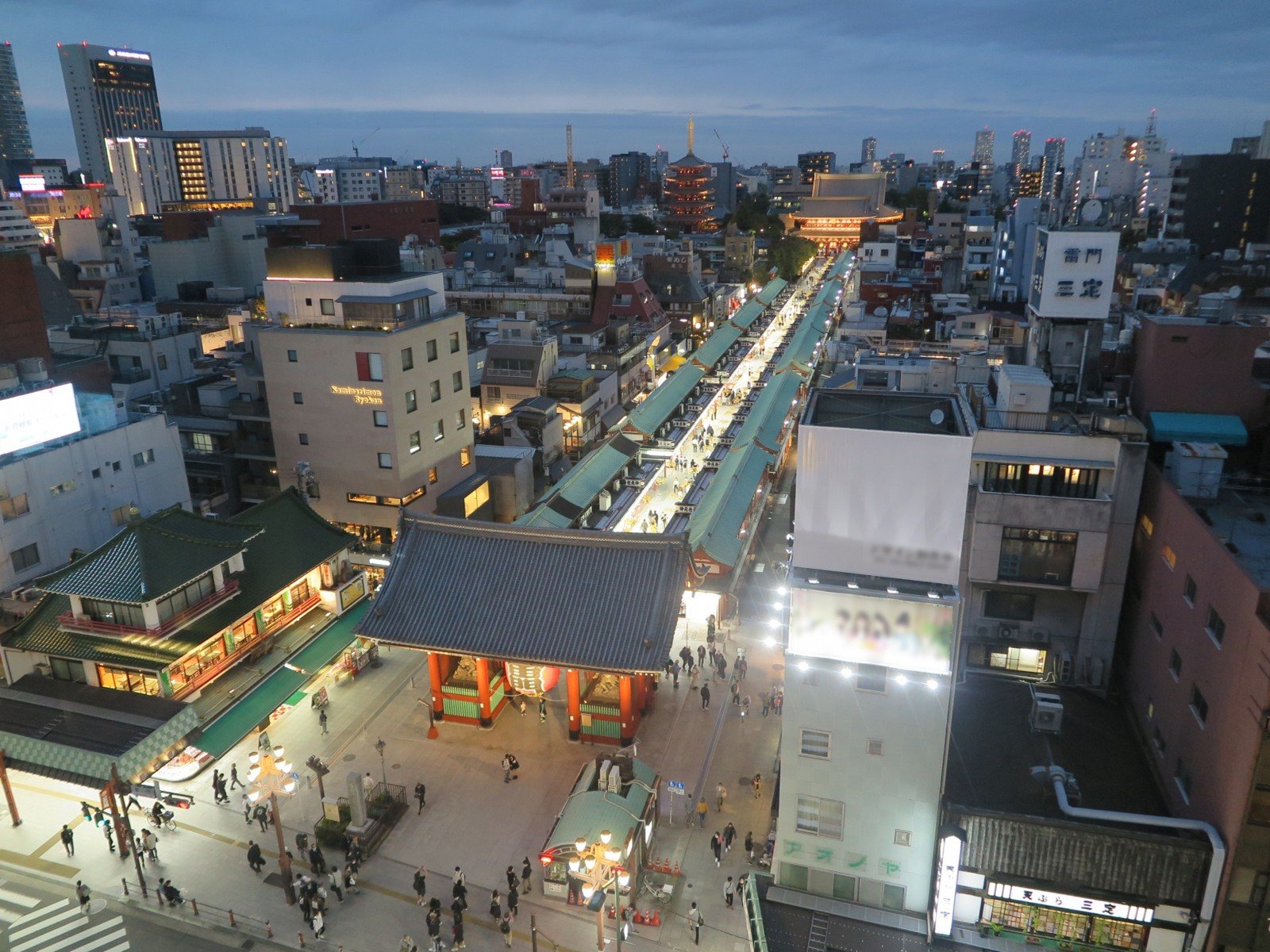
The route runs from Kaminarimon, the outer gate, along Nakamise Street to Hozomon, the inner gate, and then to the main hall and the five-story pagoda. Kaminarimon is about 5 minutes on foot from Asakusa Station, according to GO TOKYO, and Nakamise is about 250 meters long.
Kaminarimon is lit, and its red lantern is 3.9 meters high and weighs about 700 kilograms. GO TOKYO, the official Tokyo travel guide, suggests seeing the gate at night once the crowds have thinned.
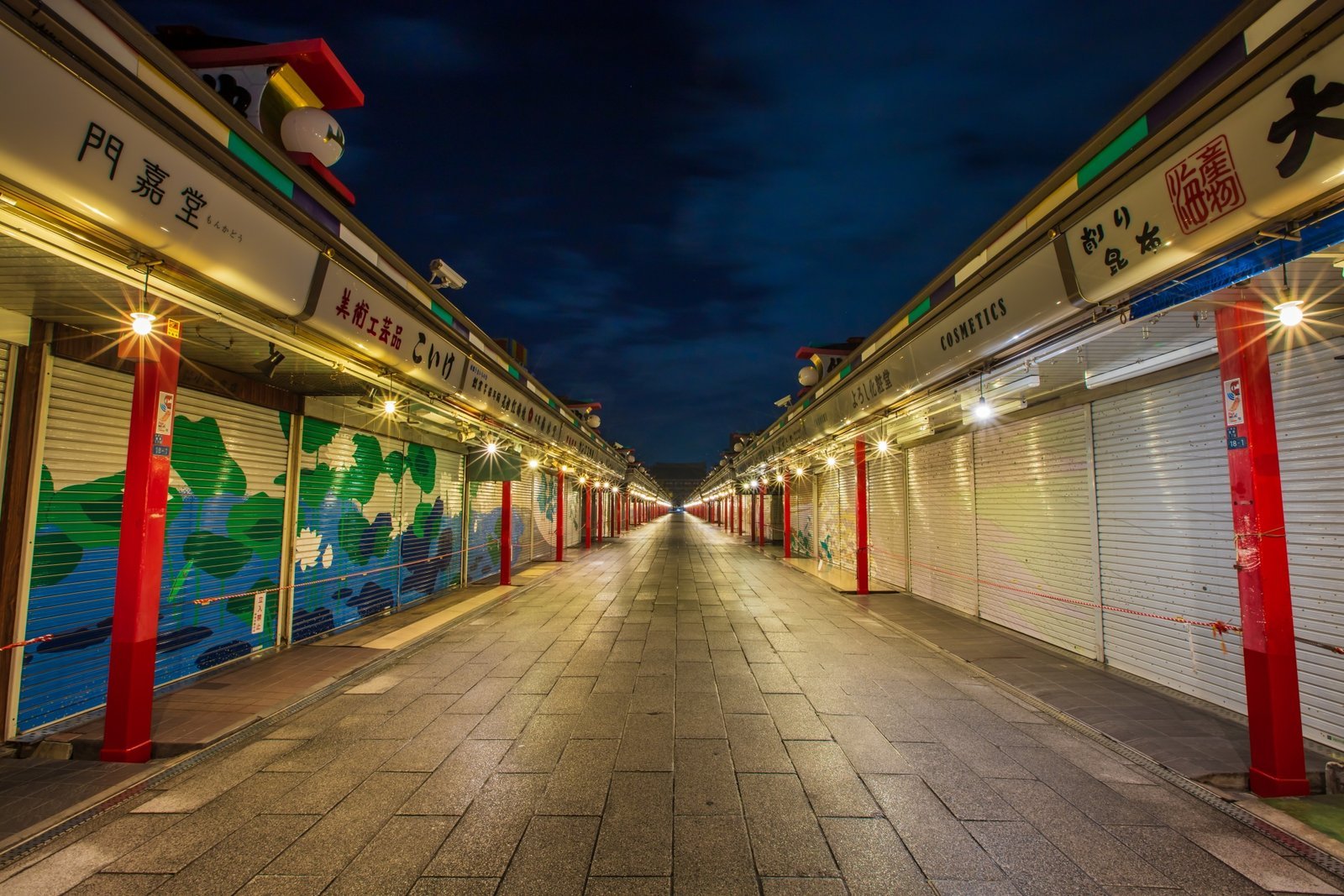
After the shops close, Nakamise becomes a street of shutters. JNTO and Taito City both point to the paintings on them, called Asakusa Emaki, which show seasonal scenes, festivals and old Japan. About 90 shops line the street by day, according to Taito City, and most close in the late afternoon, though the lamps at the shop fronts add to the mood.
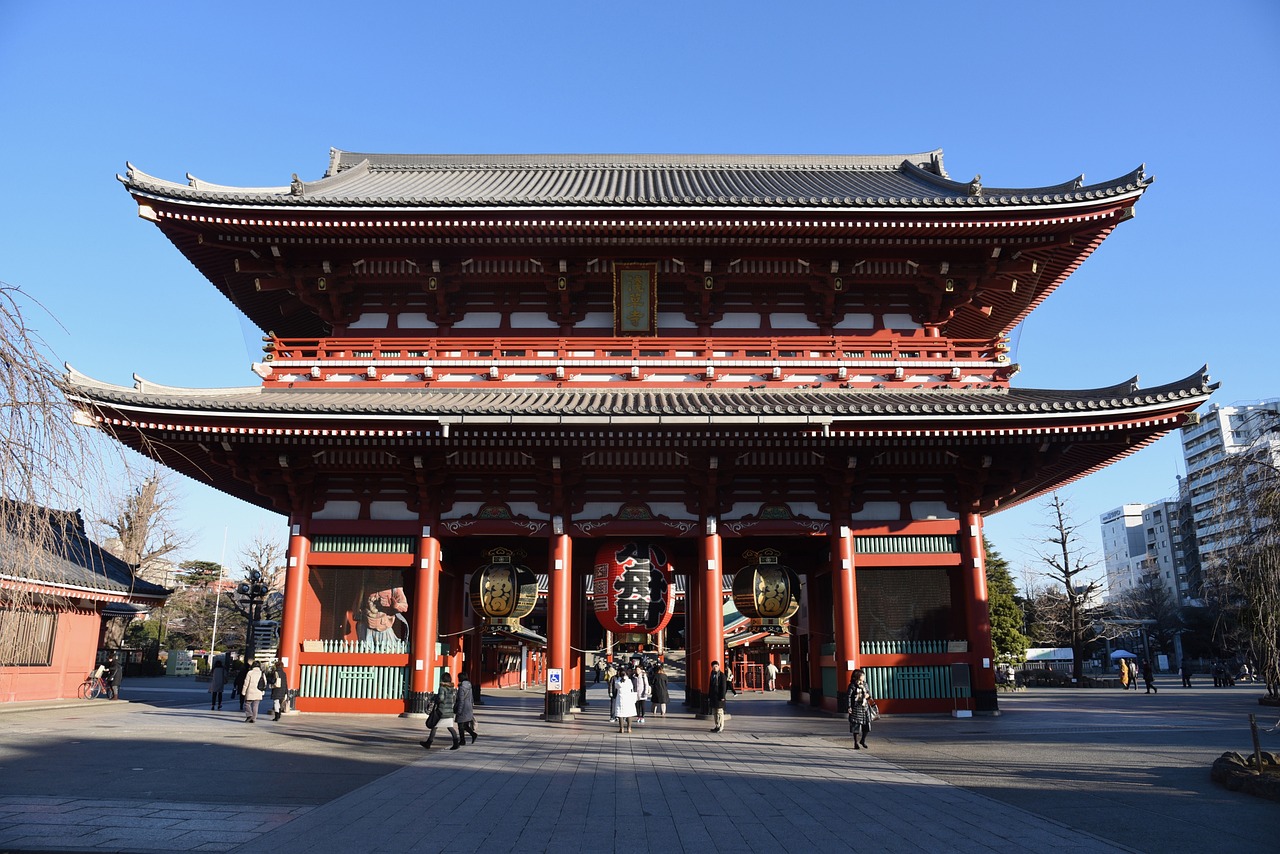
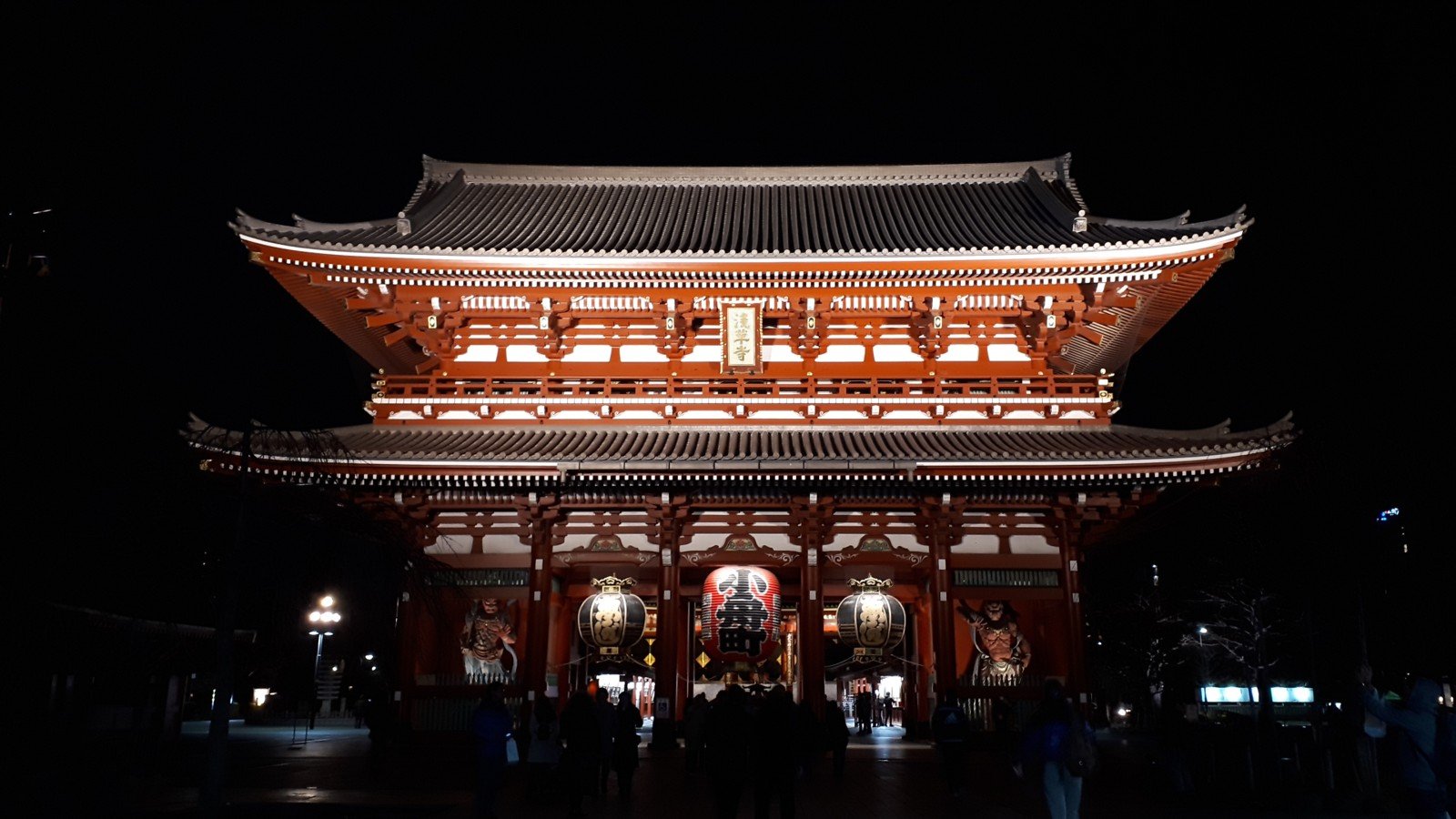
Hozomon has guardian statues, the Nio, on either side of the passage, and a lantern 3.75 meters high hangs in the center. Beyond the gate stand the main hall and the pagoda, which rises 53 meters from the ground. Taito City describes the buildings as wrapped in soft light that brings out their vermilion and yellow.
What Is Open Near Sensoji After the Lights
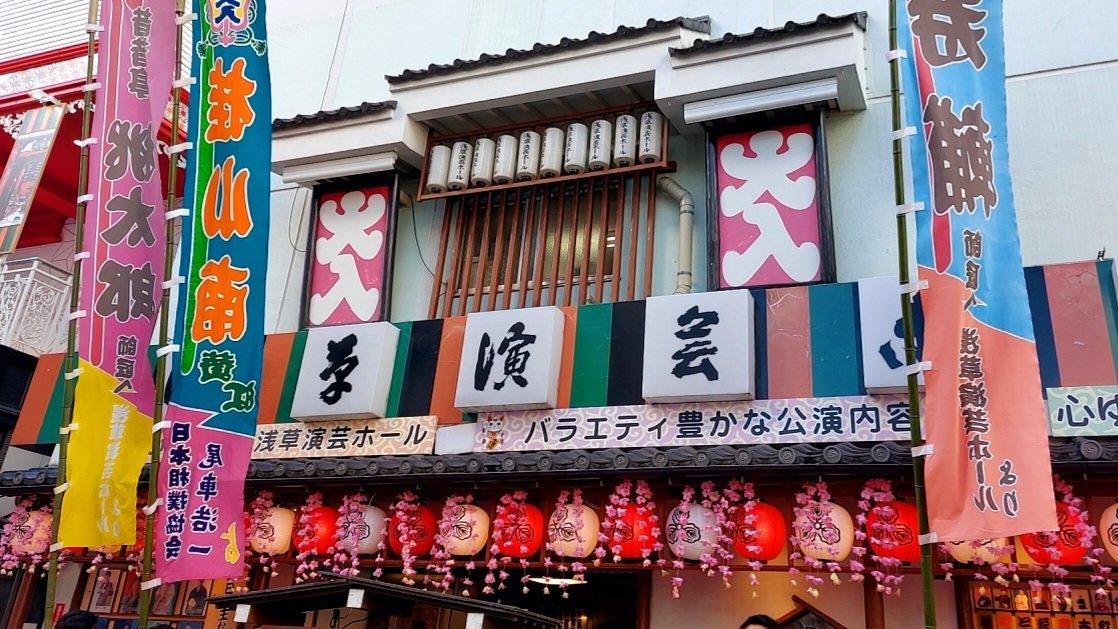
Once Nakamise has closed, the choice narrows to places with their own late hours. The table lists two that need no booking and one that does. Dinner and drinks are outside the table, and our guides to the night in Asakusa and Asakusa nightlife cover them.
| Place | Hours and booking | Source |
|---|---|---|
| Asakusa Culture Tourist Information Center, 8th-floor terrace | A free viewpoint over Asakusa and Tokyo Skytree. The terrace is open 9:00 am to 10:00 pm, and the information counter closes at 8:00 pm. The center can close for maintenance. No booking. | Taito City |
| Asakusa Engei Hall (rakugo and variety) | Open every day of the year. Regular programs run from 11:40 am to 4:30 pm and from 4:40 pm to 9:00 pm, and special programs differ. Tickets are sold at the window on the day, with reduced prices from 6:00 pm and from 7:00 pm. Advance reservations are for groups of 10 or more. | Asakusa Engei Hall |
| A private gathering with geisha (ozashiki) at Miyakodori | By reservation. Visits start between 2:00 pm and 8:00 pm, subject to availability. We are normally open Monday to Friday except public holidays, and a weekend or public holiday needs a special-opening request at least 7 days ahead. | Miyakodori pricing page |
Checked on 6 November 2026. Hours change, so confirm with each venue. Our guide to the free terrace above Kaminarimon covers the view, and our guide to cultural things to do in Tokyo at night covers rakugo, kabuki and night festivals.
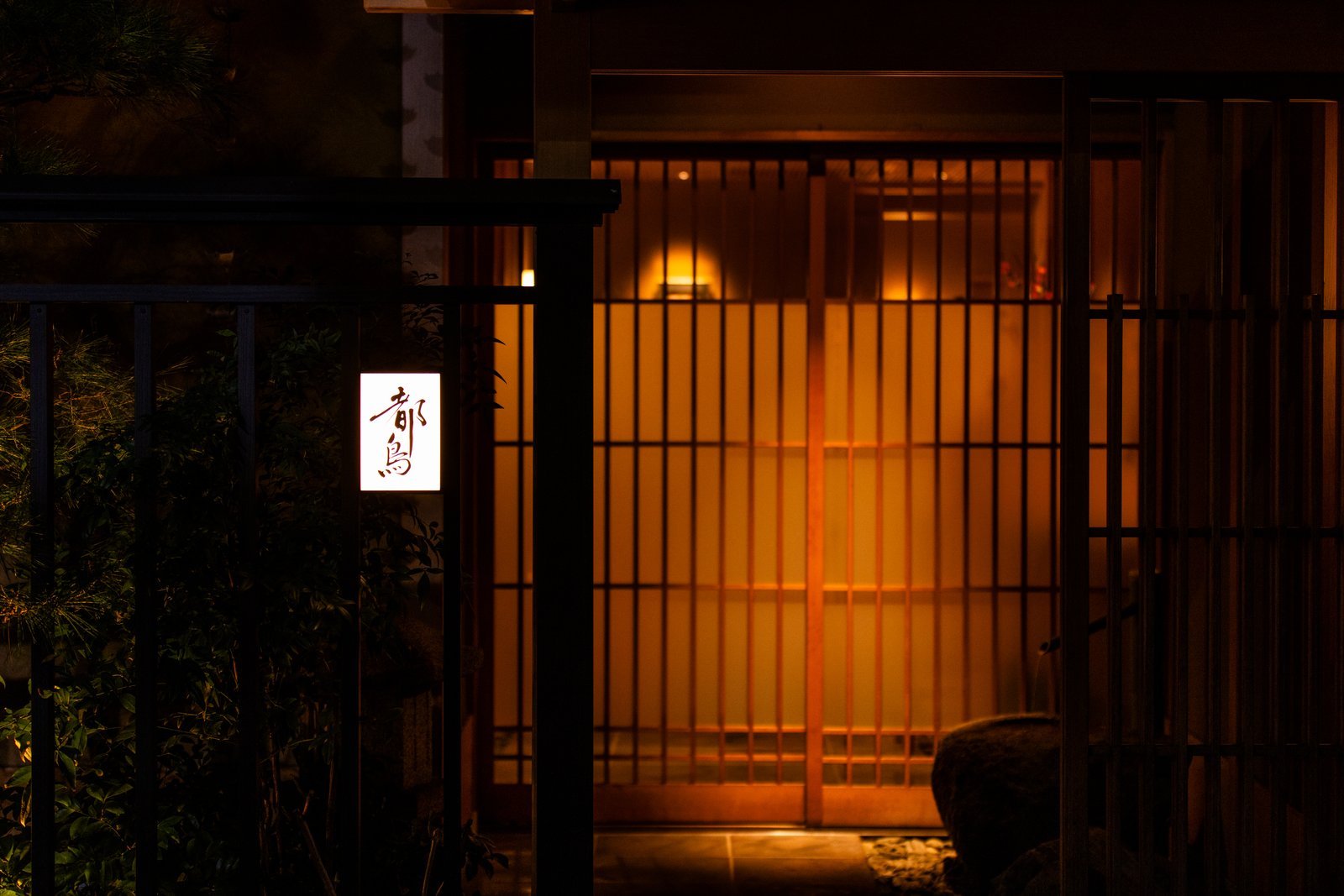
One Option: A Private Ozashiki Behind the Temple
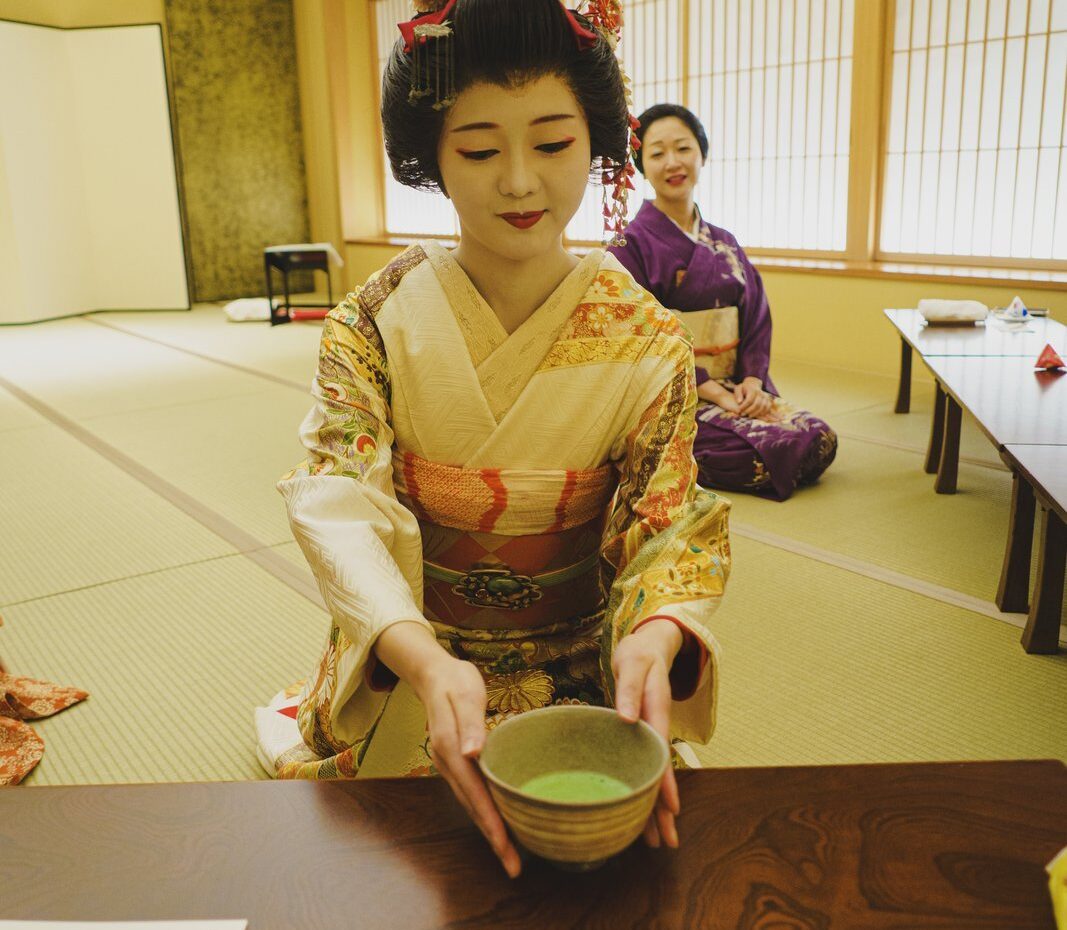
An ozashiki is a private gathering with geisha in a tatami room, with conversation, dances to live shamisen music (the shamisen is a three-stringed lute) and traditional games. It is one option among those above, not a way to see the lights, and it needs a reservation.
We stand north of the main hall, about 3 minutes on foot beyond the far edge of the grounds. The walk from the Asakusa stations takes 13 to 15 minutes and can run through the temple grounds, so a visit that ends after sunset can take you back through the grounds while the buildings are lit. Visits start between 2:00 and 8:00 pm and last one to three hours.
The ozashiki page shows the rooms, the pricing page lists current rates, and a single guest can book.
Plan a Private Ozashiki Behind Sensoji
An ozashiki is a private gathering with geisha in a tatami room reserved for your party. Visits last one to three hours and start between 2:00 and 8:00 pm, with an English interpreter throughout, and a single guest can book.
Request a Reservation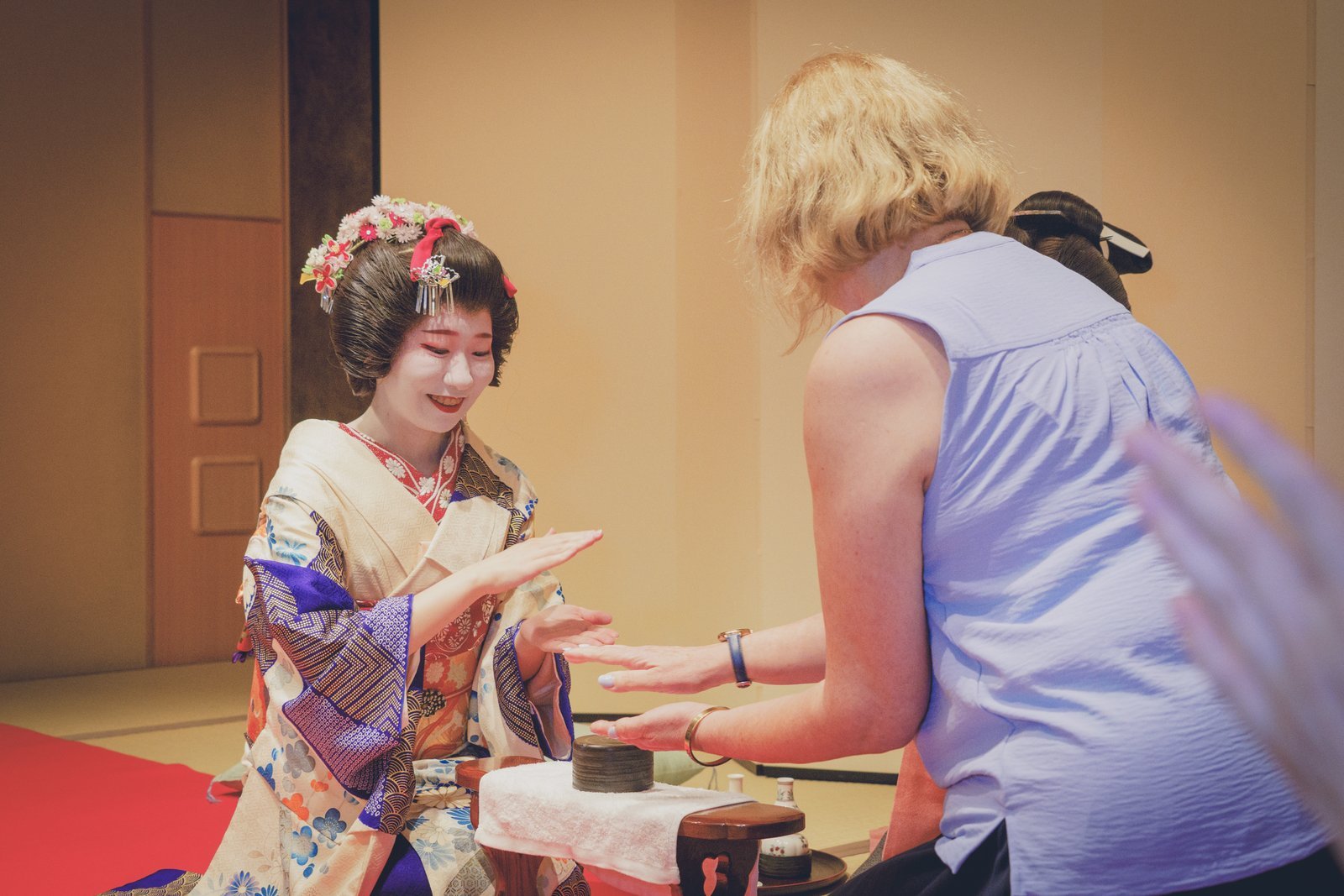
Frequently Asked Questions
Is Sensoji open at night?
The temple lights its main hall, five-story pagoda, Hozomon and Kaminarimon every day from sunset to about 11:00 pm, and its lighting notice invites visitors to stop by. The main hall has its own hours, 6:00 am to 5:00 pm (6:30 am from October to March). The temple’s website gives no closing time for the grounds, and japan-guide.com lists them as always open.
What time do the Sensoji lights come on and go off?
The temple says the lighting runs from sunset to about 11:00 pm every day. Using Tokyo sunset times, that means about 4:30 pm in early December and about 7:00 pm in early July. The temple gives no clock time for the start, so treat these times as estimates.
Can you go inside the Sensoji main hall at night?
The temple publishes hours of 6:00 am to 5:00 pm for the main hall (6:30 am from October to March) and no after-hours opening. From late October to late January the lights come on up to 32 minutes before the hall closes, so a visit between sunset and 5:00 pm can include both. For the other halls, the temple asks visitors to call.
Are the Nakamise shops open at night?
Mostly not. JNTO says the temple and shops close around 5:00 pm, and Taito City says most Nakamise shops close in the late afternoon. With the shutters down you can see the Asakusa Emaki, paintings of seasonal scenes, festivals and old Japan, and Taito City notes that the lamps at the shop fronts add to the mood.
Is Sensoji worth visiting at night?
It depends on what you want. After sunset you get the lit buildings and the painted shutters with fewer people around, according to JNTO and Taito City, but the main hall and most shops are closed. Go by day for the hall and the shopping, and after sunset for the lights.
What is the best time to see Sensoji lit up?
Taito City’s tourism guide recommends arriving just as the lighting begins, before the night deepens. That is about 4:30 pm in early December and about 7:00 pm in early July, and the month-by-month table above gives the range for your dates. GO TOKYO suggests seeing Kaminarimon at night once the crowds have thinned.
Sources
Pages checked on 6 November 2026. Hours and programs change, so use these for orientation and confirm with each venue. Pages in Japanese are marked.
- Sensoji, official site (Japanese): the lighting notice, visiting, Nakamise, Hozomon, Kaminarimon and the five-story pagoda: the lighting hours and the four lit buildings, the main hall hours, the 2003 start, sizes and distances, and the Edo-period gate hours.
- Japan National Tourism Organization, Night Walk on Nakamise Street: shops closing around 5:00 pm, the shutter paintings and the walk from Asakusa Station. The address carries 2022.
- Taito City tourism site, Sensoji and its night guide (Japanese, information as of June 2024): the lit buildings, about 90 shops by day, the shutter paintings, fewer people at night and the advice on timing.
- japan-guide.com, Sensoji (updated 21 May 2025): the grounds listed as always open, and free admission.
- GO TOKYO, Kaminarimon Gate (updated 25 December 2025): the tip to see the gate at night once the crowds have thinned, and the walk from Asakusa Station.
- National Astronomical Observatory of Japan, sunrise and sunset in Tokyo (Japanese, one page per month for 2026, January shown): the sunset times behind the month-by-month table.
- Taito City, Asakusa Culture Tourist Information Center (Japanese, page updated 10 March 2026): the hours of the terrace and the information counter. The center’s main page (Japanese) adds that it can close for maintenance.
- Asakusa Engei Hall, tickets (Japanese): the program times, window sales and reduced night prices.
- Miyakodori, pricing: opening days and start times.


- Kaiseki with Geisha in Tokyo: A Banquet, Course by Course, from an Asakusa Teahouse
- Romantic Things to Do in Tokyo: Cultural Ideas for Couples, Compared
Tokyo Tourist Guide: A Geisha Teahouse’s View of the City We Call Home
Geisha Show in Tokyo: Where to See an Authentic Geisha Performance in Asakusa
Enjoy Asakusa! Complete Year-Round Information on Seasonal Events, Festivals, and Sightseeing Activities
How to Become a Geisha: Training, Stages, and Life in Asakusa Today
Wagashi in Japan: A Guide to Traditional Japanese Sweets, Seen Through the Eyes of an Asakusa Geisha House
Winter Asakusa Gourmet: Food Stalls & Lunches to Warm You Up
Comment ( 0 )
Trackbacks are closed.

No comments yet.