



Best Time to Visit Sensoji Temple: Hours, Crowds and the Quiet Times Locals Know
We are Miyakodori, a machiai teahouse that has stood in Asakusa since 1950, a few minutes’ walk behind Sensoji Temple. We walk past the temple almost every day, in the early morning, at midday and late at night, so we see how the crowds come and go.
Sensoji is Tokyo’s oldest temple and one of the busiest sights in Japan. On a weekend afternoon, Nakamise Street can be so packed that you shuffle rather than walk. At 6:30 on a weekday morning, the same street is almost empty. When you go makes that much difference.
This guide covers the main hall’s opening hours, crowds hour by hour, the best days and seasons, when to photograph Kaminarimon and Nakamise, quiet spots nearby, a sample morning route and how long to stay.
Quick Answer: When is the Best Time to Visit Sensoji Temple?
The best time to visit Sensoji Temple is early morning, between about 6:00 and 8:00 AM, on a weekday. The main hall is already open, the grounds are calm and you can photograph Kaminarimon and Nakamise with few people in the frame.
If you want the shops and street food as well, come between 8:30 and 10:00 AM, before the late-morning rush. If you would rather see the temple lit up, come after about 7:00 PM, when the day crowds have gone and the buildings are illuminated.
The busiest time is roughly 11:00 AM to 3:00 PM, especially on weekends, public holidays and during festivals.
Sensoji Temple Opening Hours
The temple grounds have no gate that closes, so you can walk through at any hour. What changes throughout the day is which buildings and shops are open.
| Main hall (Hondo) | 6:00 AM to 5:00 PM (April to September); 6:30 AM to 5:00 PM (October to March) |
|---|---|
| Temple grounds, Kaminarimon and Hozomon gates | open to walk through at any time |
| Light-up (main hall, five-story pagoda, Hozomon and Kaminarimon) | from sunset until about 11:00 PM, every night |
| Goshuin (temple seal) counter at Yogodo Hall, west of the main hall | 8:00 AM to 4:30 PM (special hours at New Year and on Shiman-rokusen-nichi in July) |
| Nakamise Street shops | hours vary by shop; most open from around 9:00 to 10:00 AM and begin closing in the late afternoon or early evening |
| Admission | free |
For the latest hours, including special hours at New Year, check the official Sensoji website. If you would like to know more about what to pray for at Sensoji and how to worship correctly, see our guide to the temple’s blessings.
Sensoji Crowds by Time of Day
Here is how a typical day at Sensoji looks, from our side of the neighbourhood.
| Early morning (6:00–8:00 AM) | quiet. Best for prayer at the main hall and photos of empty streets. |
|---|---|
| Morning (8:00–11:00 AM) | moderate, rising after 10:00. Best for Nakamise shops as they open and street food without long lines. |
| Midday to mid-afternoon (11:00 AM–3:00 PM) | busiest. Best avoided if crowds bother you. |
| Late afternoon (3:00–5:00 PM) | busy but easing. The last chance to enter the main hall. |
| Evening and night (after 5:00 PM) | calm, especially after 7:00 PM. Best for the light-up and night photos. |
Early Morning (6–8 AM): The Quietest Time at Sensoji
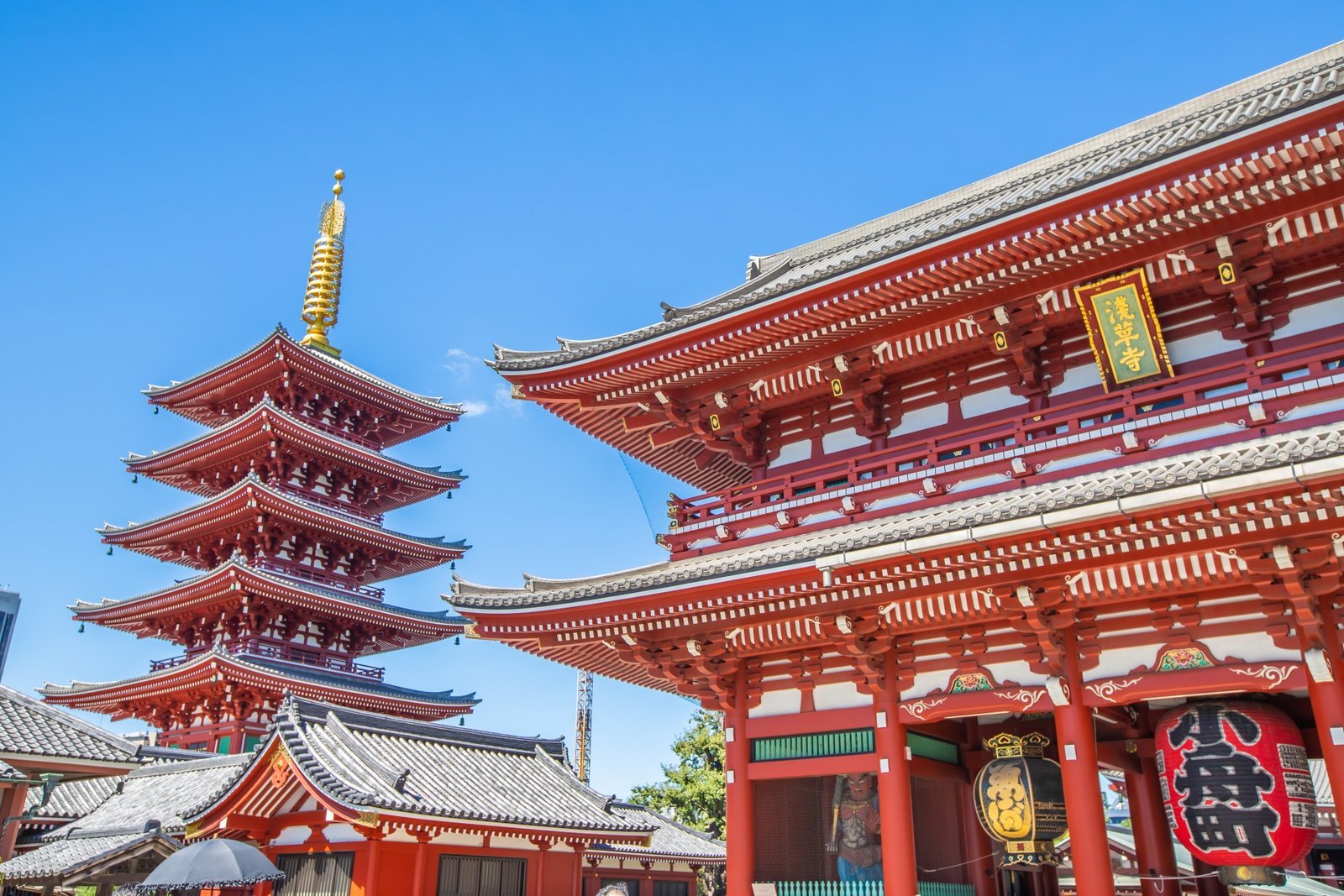
This is the Sensoji we would show a friend. The main hall opens at 6:00 AM (6:30 AM from October to March), and the people you meet are mostly locals stopping to pray on the way to work, joggers and a few photographers. You can stand in front of the main hall without waiting, and the Hozomon gate and five-story pagoda look very different in soft morning light, with nobody in front of them.
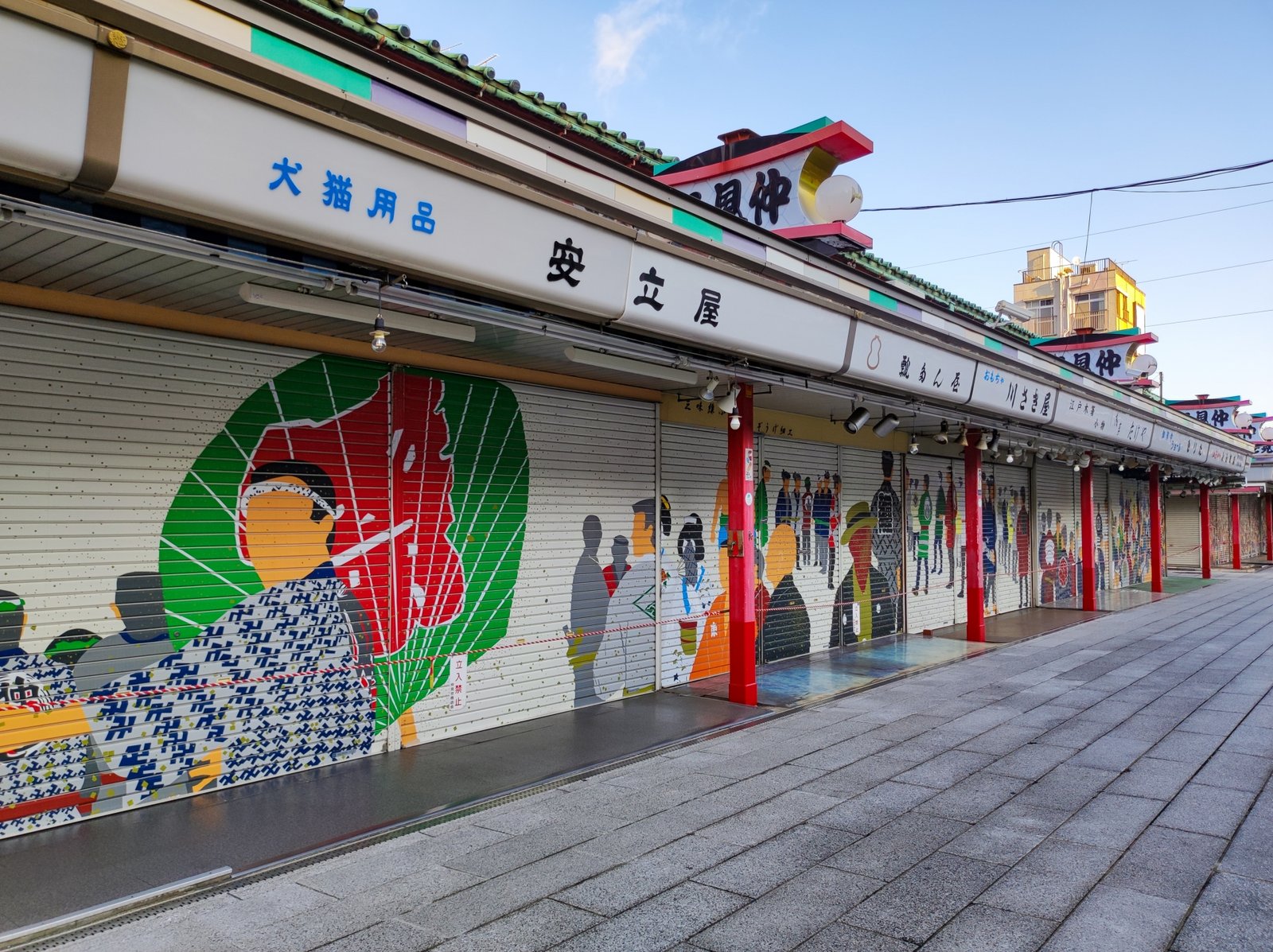
Nakamise’s shops are still shuttered at this hour. Many of the shutters are painted with scenes of Asakusa’s history and festivals, and early morning is one of the few times you can see them.
Morning (8–11 AM): Shops Open, Crowds Still Manageable
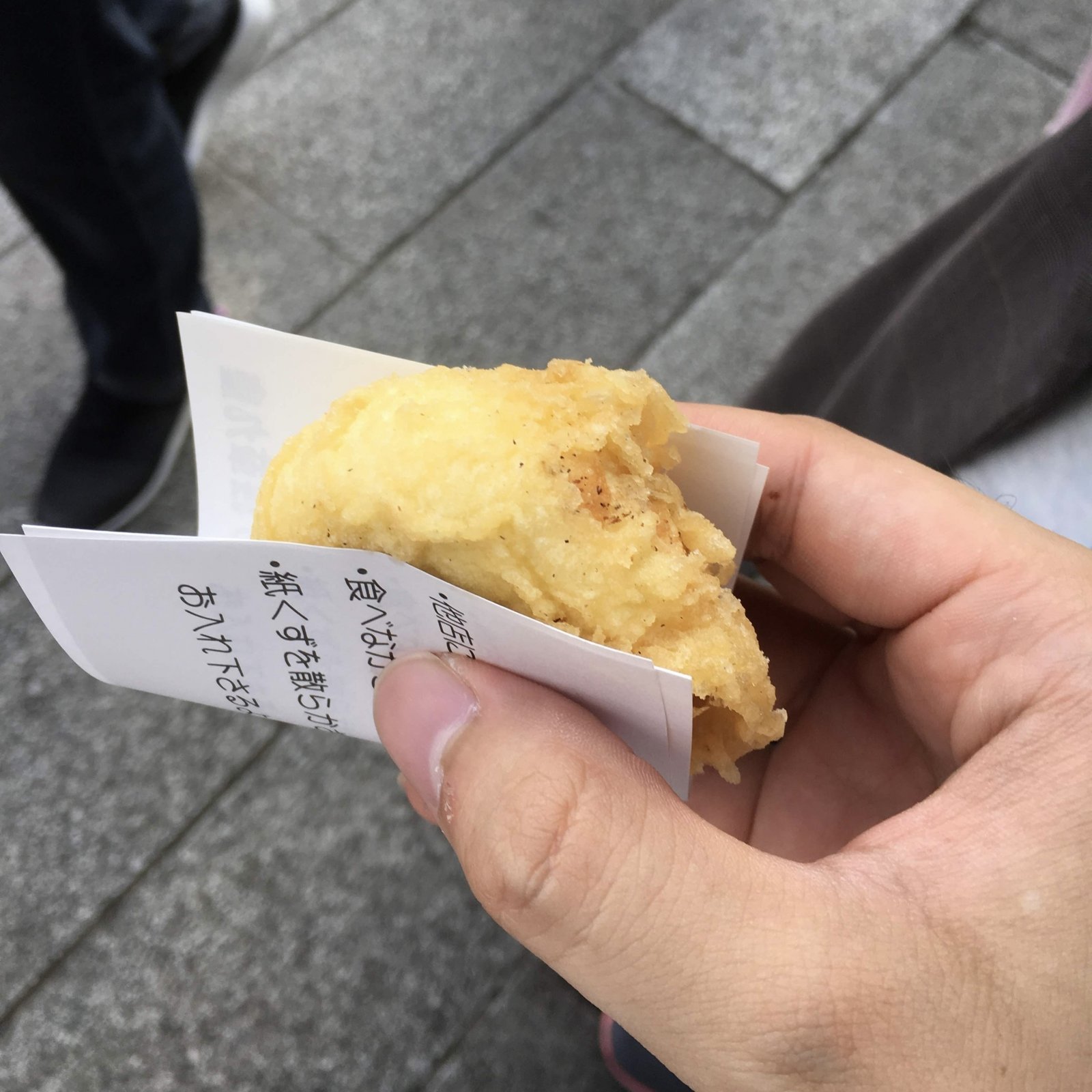
From around 9:00 AM the Nakamise shops start to open, and the street fills up step by step. On a weekday, the hour before 10:00 AM is the sweet spot: you can buy freshly fried age-manju or kibi dango without a long queue and still walk at your own pace. After 10:00 AM, tour groups and day-trippers begin to arrive.
Midday to Mid-Afternoon (11 AM–3 PM): Peak Crowds
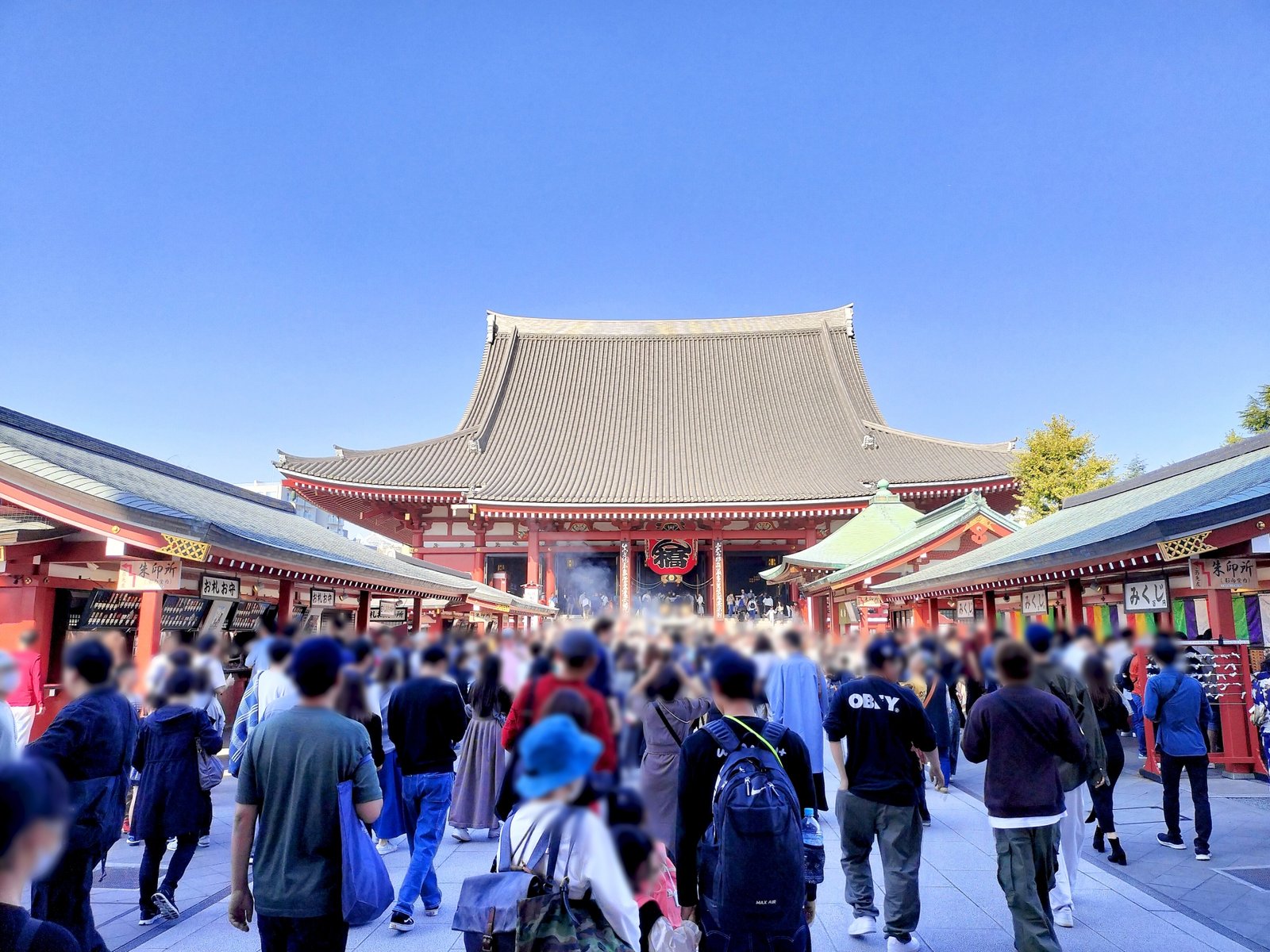
This is when Sensoji is at its busiest. Nakamise can become a slow-moving line, the incense burner in front of the main hall is surrounded, and it is hard to take a photo without strangers in it. If this is the only time you have, use the side streets described below instead of Nakamise, and save the main hall for the end of your visit.
Late Afternoon (3–5 PM): Easing, but Watch the Clock
Crowds begin to thin after about 3:00 PM, although weekends stay busy longer. Remember that the main hall closes at 5:00 PM. If you want to go inside and pray, don’t leave it until the last minute.
Evening and Night (After 5 PM): Sensoji Lit Up
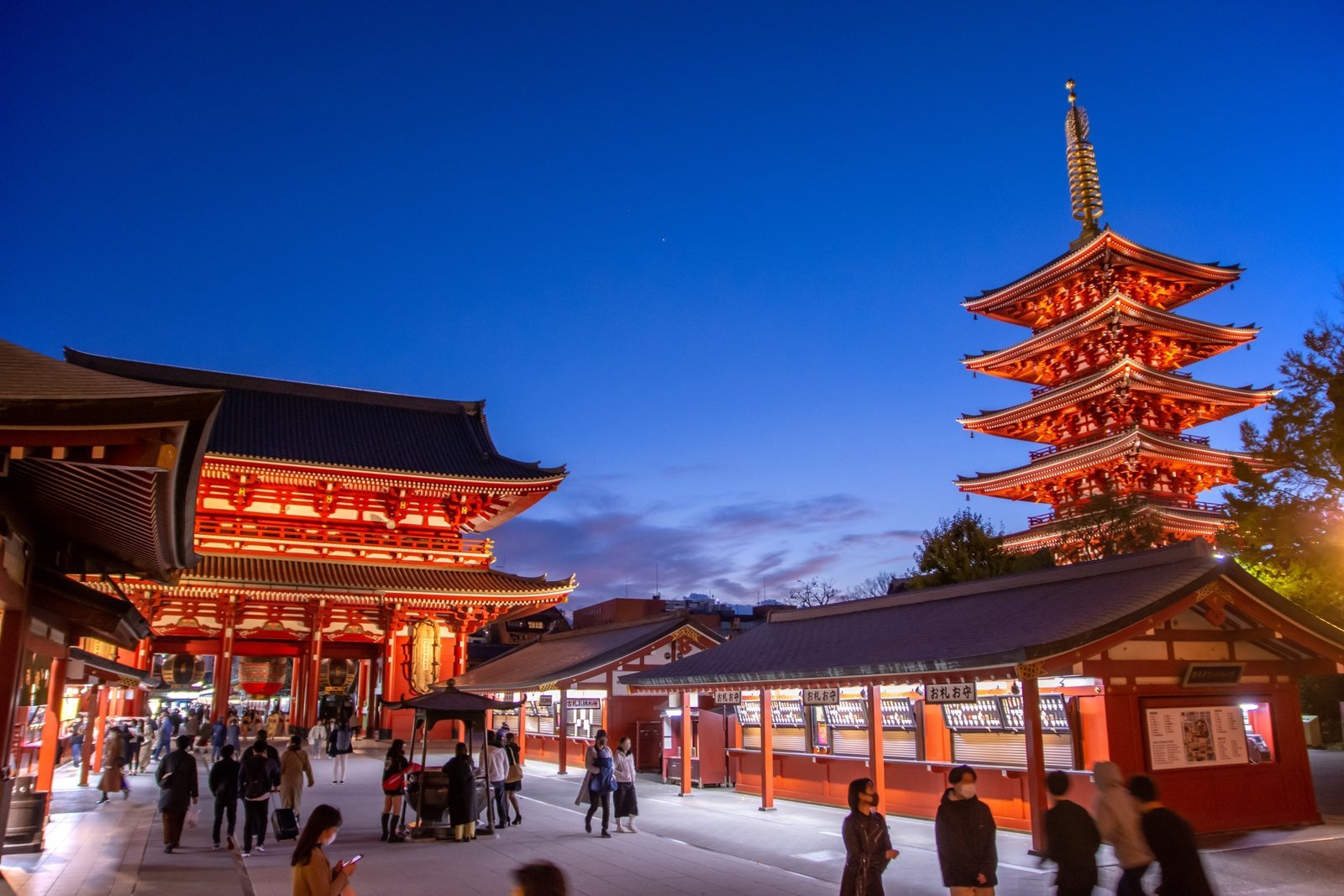
After the main hall closes and the shops pull down their shutters, most day visitors leave. From sunset until about 11:00 PM, the main hall, five-story pagoda, Hozomon and Kaminarimon are lit up every night. After about 7:00 PM the grounds are often calm enough to walk slowly and take photos.
You cannot enter the main hall at night, but you can pray from outside, walk the grounds and see the painted shutters on Nakamise. Evening is also when the streets behind the temple, where we are, come alive with restaurants and teahouses. For more ideas after dark, see our guide to the night in Asakusa.
Sensoji Morning or Night: Which Should You Choose?
Choose early morning if you want to go inside the main hall, feel the temple as a place of worship and take daylight photos. Choose night if you want the illuminated buildings and don’t mind that the hall and shops are closed. If you have two chances during your trip, do both. They feel like two different places.
Best Days of the Week to Visit Sensoji
Tuesday to Thursday Are Usually the Quietest
In our experience, midweek, especially Tuesday to Thursday, is the calmest time to visit. Mondays can be busier than you expect because of long weekends and substitute holidays, and Fridays get busier as the weekend approaches. Always check whether your date falls on a Japanese public holiday, because a holiday Wednesday behaves like a Saturday.
Can You Avoid the Crowds on Weekends and Holidays?
Weekends and public holidays bring large numbers of both Japanese and international visitors, and from late morning Nakamise and the area around the main hall can be hard to move through. You can still have a calm visit: come before 8:00 AM, come after 7:00 PM, or spend the busy middle of the day in the quieter streets around the temple.
Rainy days are another option. Crowds drop noticeably in the rain, and the wet stone and lanterns are beautiful.
Busiest Seasons and Events at Sensoji
Some times of year are much busier than usual. These events are part of what makes Asakusa special, but if you want a quiet visit, plan around them.
- New Year (31 December to early January): hatsumode, the first temple visit of the year, draws huge crowds. Expect queues to reach the main hall, especially from New Year’s Eve to 3 January.
- Cherry blossom season (late March to early April): Sumida Park along the river fills with people for hanami, and the temple gets busier too.
- Golden Week (late April to early May): one of Japan’s biggest holiday periods; families and tourists come in large numbers.
- Sanja Matsuri (the Friday to Sunday around the third Saturday of May): Asakusa’s biggest festival, held by Asakusa Shrine next to Sensoji, with portable shrines carried through packed streets. See the Asakusa Shrine website for details, or read our guide to the Sanja Matsuri.
- Shiman-rokusen-nichi and the Hozuki Market (9 and 10 July): a visit on these days is said to bring the blessing of 46,000 days of worship, and stalls sell potted Chinese lanterns (hozuki).
- Summer holidays and Obon (late July to August): families on holiday, plus the Sumida River Fireworks on the last Saturday of July. If you plan to see the fireworks, see our guide to restaurants with views.
- Tori-no-Ichi (November): a fair for good fortune held at Otori Shrine and Chokokuji Temple, north of Sensoji, which runs late into the night.
- Hagoita Market (17 to 19 December): stalls sell decorated battledores in the temple grounds.
Autumn and early winter outside these dates are a good time to visit: the weather is comfortable and crowds are lighter than in spring. For autumn colour at the temple, see our autumn guide.
Coming Up at Sensoji and Asakusa
- Tori-no-Ichi 2026: 7 November (Saturday) and 19 November (Thursday), at Otori Shrine.
- Hagoita Market 2026: 17 to 19 December.
- New Year 2027: expect the heaviest crowds from New Year’s Eve to 3 January. If you want to celebrate here, see our guide to the New Year in Asakusa, and for quieter spots at the end of the year, see our year-end guide.
Best Times to Photograph Kaminarimon and Nakamise Without Crowds
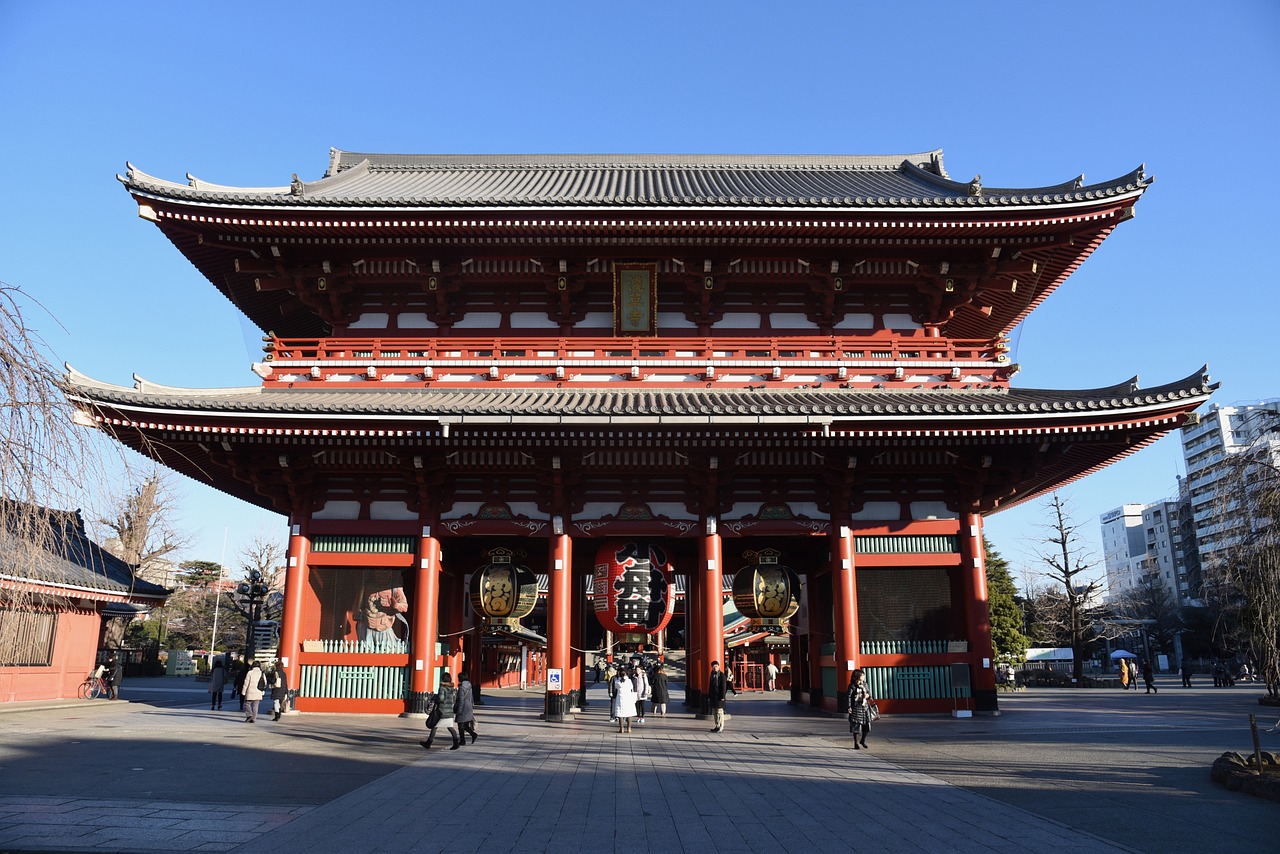
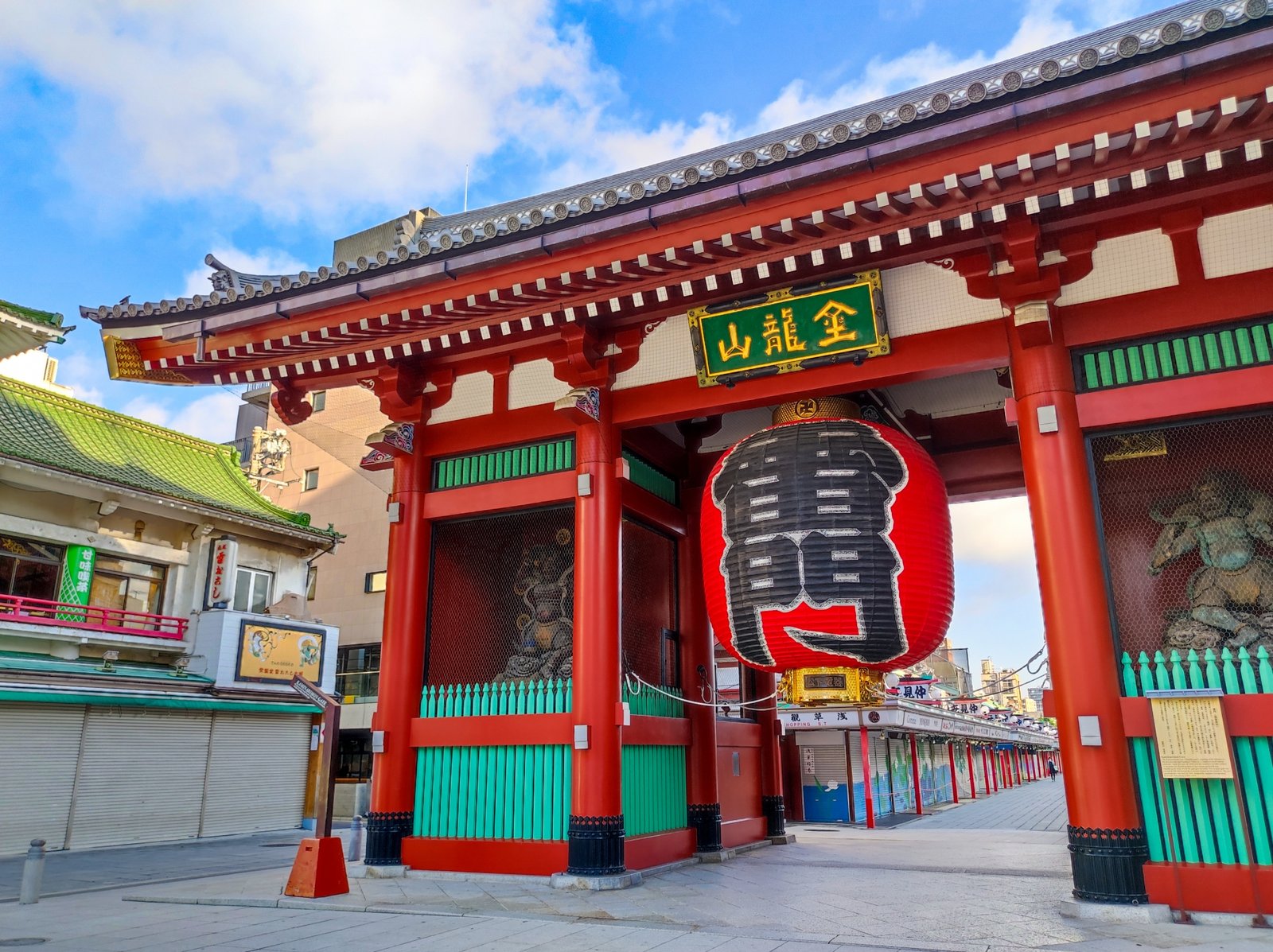
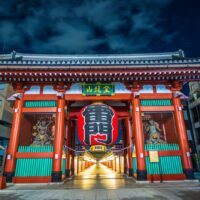
Kaminarimon, with its giant red lantern, is the most photographed spot in Asakusa, and in the middle of the day there is always someone in front of it. For clean shots, go early.
- Kaminarimon: before 7:00 AM for daylight shots with few people; after about 9:00 PM for the lit-up gate.
- Nakamise Street: before 8:00 AM, standing at the Kaminarimon end and looking towards Hozomon; the painted shutters are down at this hour.
- Hozomon and the five-story pagoda: early morning for soft light; after dark when both are lit.
- Tokyo Skytree with Sensoji: from the grounds near the five-story pagoda, or from Sumida Park with Azuma Bridge in the foreground.
A small tip: many people photograph Kaminarimon from straight in front. Stepping slightly to one side, or photographing the back of the gate from the Nakamise side, gives you a different picture and usually fewer people.
Quiet Spots Around Sensoji When the Crowds Build
Asakusa is much more than Kaminarimon and Nakamise. A step or two off the main route, the neighbourhood becomes calm again. These are the places we send guests when the temple is at its busiest.
Denboin-dori
Denboin-dori crosses Nakamise about halfway along. The shopfronts are designed in an Edo-era style, with tiled roofs and carved signs, and the shops sell traditional crafts, sweets and small souvenirs. It is usually much quieter than Nakamise.
- Best for
- browsing traditional shops and signboards
- Time needed
- 20 to 30 minutes
- Nearby
- Nakamise, Asakusa Public Hall
Okuyama Omairimachi and the West Side of the Temple
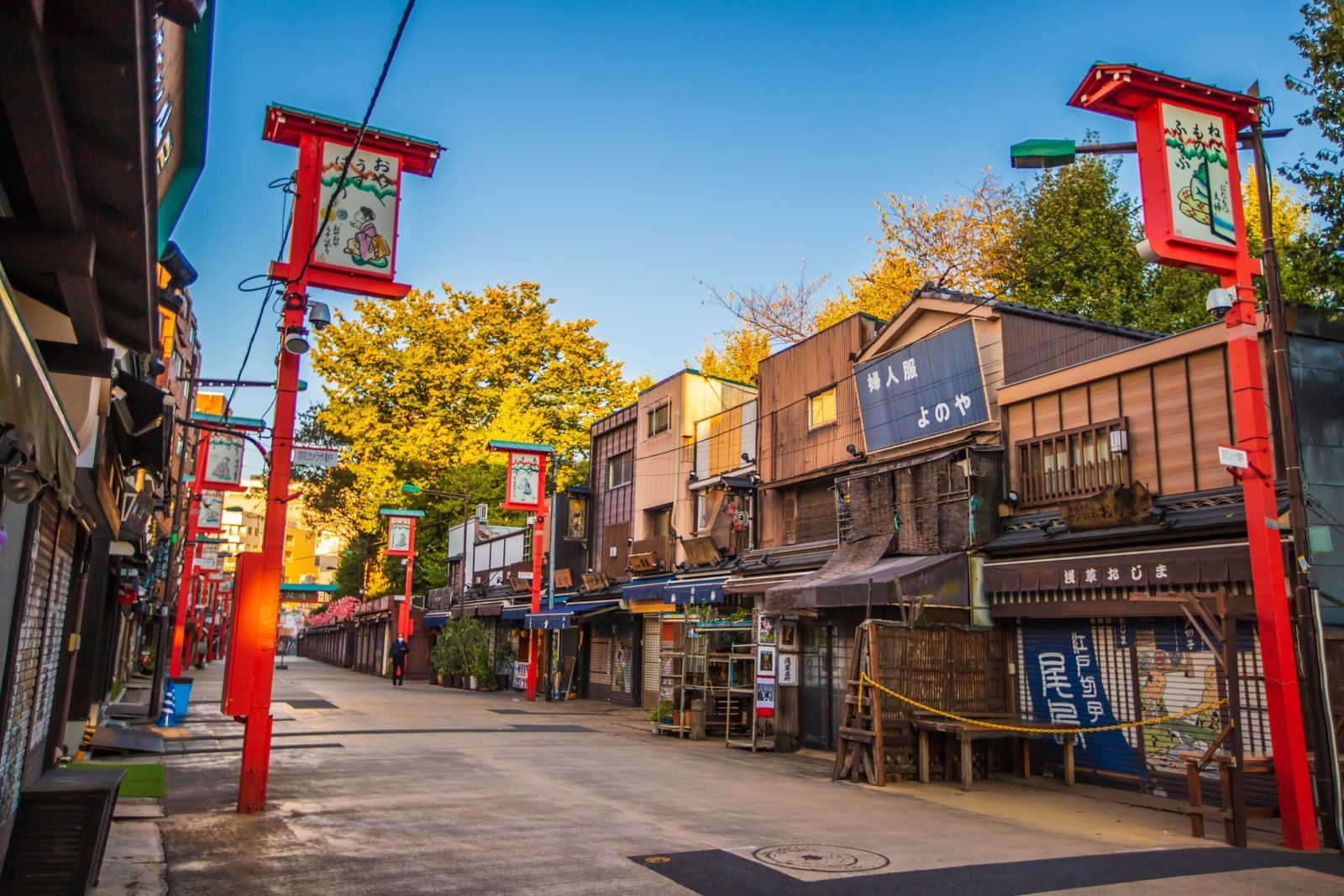
To the west of the main hall lies the area once known as Okuyama, Asakusa’s old entertainment district. Today the Okuyama Omairimachi shopping street and the lanes around it have a relaxed, Showa-era feel, with long-running eateries and small shops.
- Best for
- a local, nostalgic stroll
- Time needed
- 20 to 30 minutes
- Nearby
- Hanayashiki amusement park, Denboin-dori
Kannon-ura (Behind the Temple)
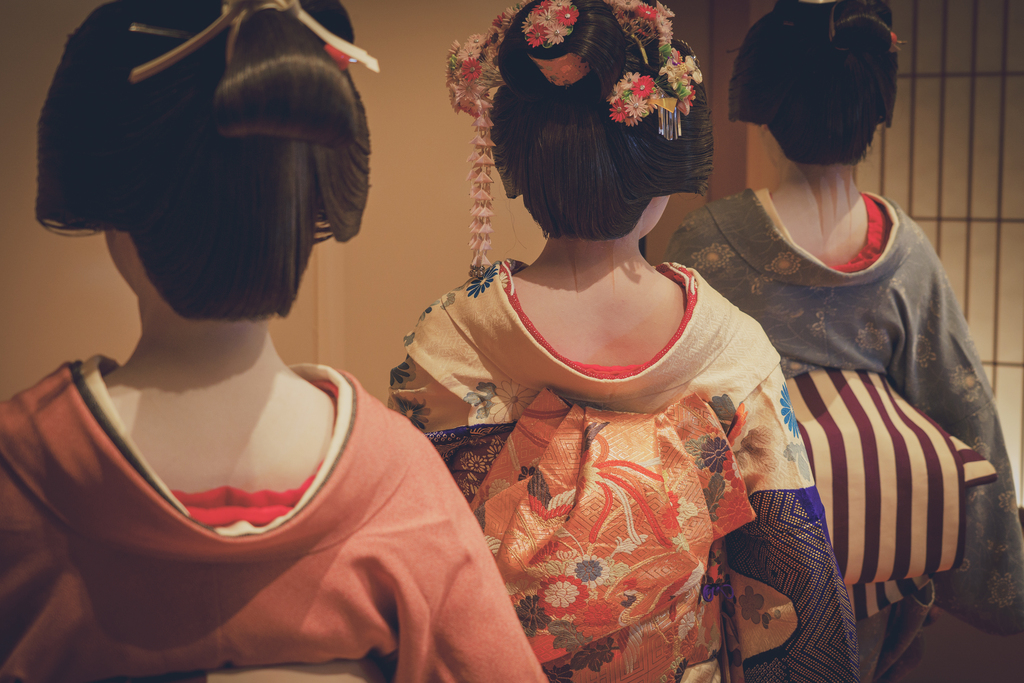
Kannon-ura, the area behind Sensoji, is still a working geisha district. By day it is a quiet residential neighbourhood, and in the evening its traditional restaurants and teahouses open. This is our own street. Nearby, Matsuchiyama Shoden is a small hilltop temple that sees far fewer visitors than Sensoji.
- Best for
- seeing an everyday side of Asakusa and its geisha culture
- Time needed
- 30 minutes to an hour
- Nearby
- Matsuchiyama Shoden, Sumida Park
Hisago-dori and Hoppy Street
Hisago-dori is a covered shopping arcade west of the temple with long-established shops and restaurants, useful on a rainy day. Close by, Hoppy Street is lined with casual izakaya serving stew and drinks at outdoor tables from the afternoon.
- Best for
- an informal lunch or an early drink
- Time needed
- 30 minutes to an hour
- Nearby
- Hanayashiki, Asakusa Rokku
Sumida Park
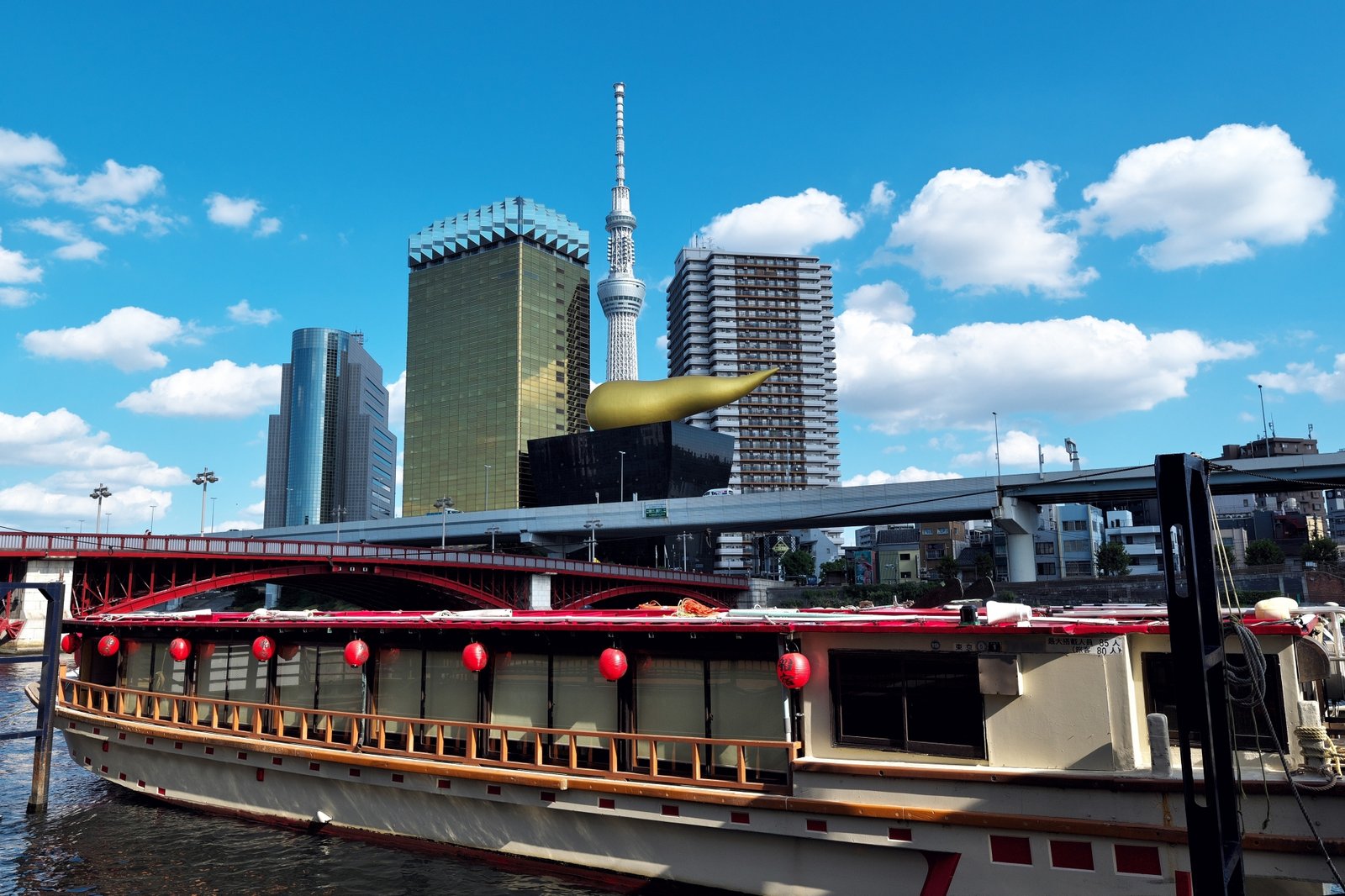
A short walk east of Sensoji, Sumida Park runs along the river and gives the classic view of Tokyo Skytree with Azuma Bridge in front. Outside cherry blossom season it is spacious, with benches where you can sit and watch the water buses pass.
- Best for
- a break and river views
- Time needed
- 20 to 40 minutes
- Nearby
- Azuma Bridge, Asakusa water bus pier, Tokyo Skytree across the river
Retro Cafés in Converted Old Buildings
Asakusa has more and more cafés in converted traditional houses and old coffee shops that have been open for decades. Tucked away from the main streets, they are good places to rest your feet with a coffee or homemade sweets while the crowds pass.
- Best for
- a quiet rest
- Time needed
- 30 minutes to an hour
- Nearby
- side streets around Denboin-dori and Kannon-ura
An Evening in Asakusa After the Crowds Have Gone
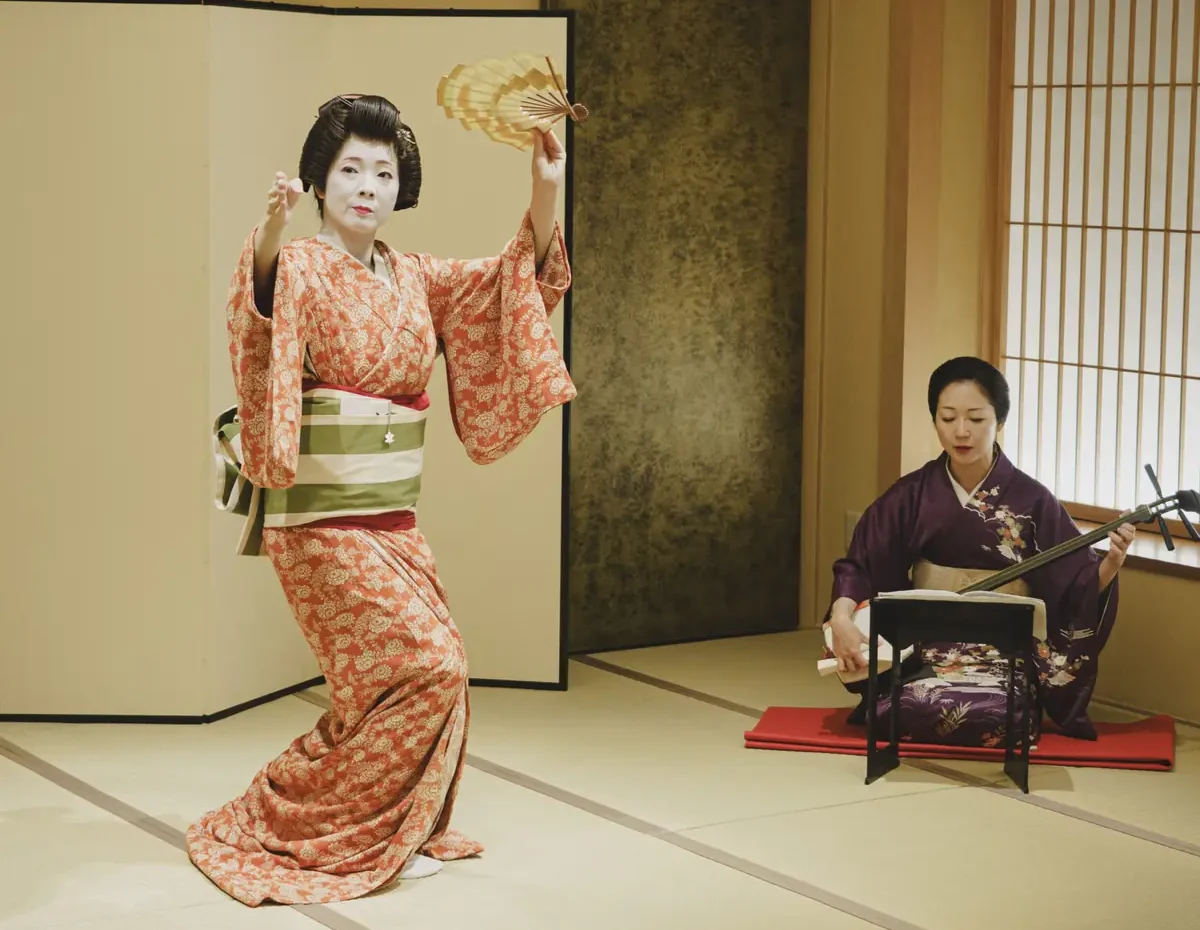
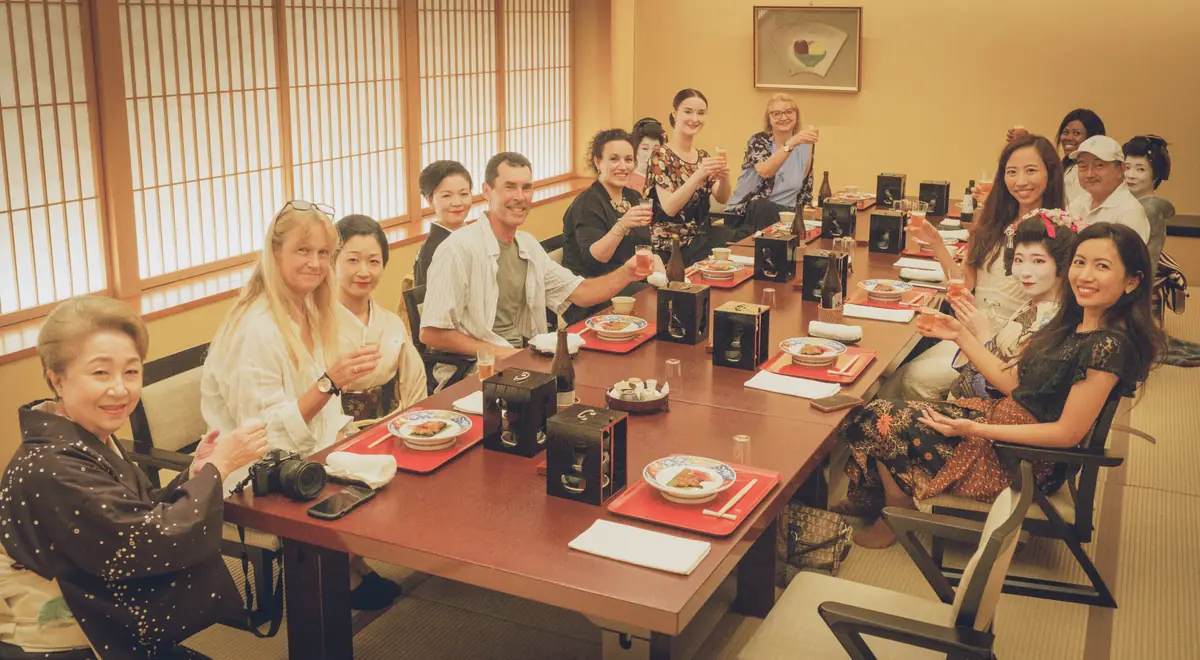
Behind the temple, our teahouse opens its tatami rooms for a private ozashiki (a private gathering with geisha) in the evening. First-time and overseas guests are welcome without an introduction, and English interpretation is provided throughout.
A Quiet Morning at Sensoji: Sample Route
Early Morning Route
- 7:00 AM Arrive at Kaminarimon and walk up to the main hall while the air is still quiet. Pray, draw an omikuji fortune if you like, and walk around the five-story pagoda.
- 8:00 AM Walk back along Nakamise before the shops open and look at the painted shutters. This is the time for photos of the empty street.
- 9:00 AM As the first shops open, try freshly made age-manju or kibi dango without a queue.
- 10:00 AM Before the crowds build, move to Denboin-dori or Okuyama Omairimachi, then finish at Sumida Park.
Use the Side Streets Instead of Nakamise
The most crowded path in Asakusa is Nakamise, which runs about 250 metres from Kaminarimon to Hozomon. After passing through Kaminarimon, turn left or right into the parallel streets instead of going straight up Nakamise. They are much less crowded, still have small shops and cafés, and bring you out near the main hall. On weekends and holidays this saves a lot of time.
Arrive by Water Bus
Instead of a crowded subway, you can arrive on the Sumida River by water bus. TOKYO CRUISE runs boats between Asakusa and piers such as Hinode, Odaiba Seaside Park and Toyosu. The Asakusa pier is by Azuma Bridge, about a minute’s walk from Asakusa Station on the Ginza Line, and the trip shows you the city’s bridges and skyline from the water. For current timetables and fares, check the official TOKYO CRUISE website.
How Long to Spend at Sensoji Temple
Allow about one hour to see the main hall, the five-story pagoda and Nakamise at an easy pace. Allow one and a half to two hours if you also want to shop and eat along the way. If you add the quiet streets above and Sumida Park, half a day in Asakusa goes quickly. For a full day in the neighbourhood, see our Asakusa tourist guide.
Frequently Asked Questions About Visiting Sensoji
What time does Sensoji Temple open and close?
The main hall is open from 6:00 AM to 5:00 PM from April to September, and from 6:30 AM to 5:00 PM from October to March. The temple grounds and gates can be walked through at any hour.
Is Sensoji Temple open at night?
The grounds are open at night, but the main hall is closed. From sunset until about 11:00 PM, the main hall, five-story pagoda, Hozomon and Kaminarimon are lit up every night.
Is there an entrance fee for Sensoji?
No. Visiting the grounds and the main hall is free. Omikuji fortunes, amulets and goshuin seals have their own small fees.
Is Sensoji crowded on weekdays?
Yes, from late morning to mid-afternoon it can be busy even on weekdays. Before 8:00 AM and after 7:00 PM, weekdays are usually calm.
What is the busiest time of day at Sensoji?
Roughly 11:00 AM to 3:00 PM, and busiest of all on weekends and public holidays in that window.
Is Sensoji crowded in September?
September is usually calmer than spring and the summer holidays, but public holidays in mid to late September can bring weekend-level crowds. Early morning on a weekday is still the best choice.
Is it worth visiting Sensoji in the rain?
Yes. Rain keeps many visitors away, and the lanterns and wet stone paths look beautiful. The covered arcade on Hisago-dori is a good place to shelter.
How do I get to Sensoji from Asakusa Station?
Asakusa Station is served by the Tokyo Metro Ginza Line, the Toei Asakusa Line and the Tobu Skytree Line, and Kaminarimon is a few minutes’ walk from each. Asakusa Station on the Tsukuba Express is a little further west.
Summary: Plan Your Visit Around the Clock
Sensoji is crowded for good reason, but you can still choose a quiet version of it. Come between 6:00 and 8:00 AM on a weekday for the calmest visit and the best daylight photos, or after 7:00 PM for the light-up. Avoid 11:00 AM to 3:00 PM on weekends if you can, check the event calendar before you go, and use the side streets when Nakamise is full.
Asakusa has many sides beyond Kaminarimon and Nakamise. Take your time, and you will find the quieter ones.
Round Off Your Day in Asakusa
Miyakodori, founded in 1950, is the only machiai-chaya in Asakusa. Request a private ozashiki (a private gathering with geisha) and spend an evening in a tatami room with Asakusa geisha, with English interpretation throughout.
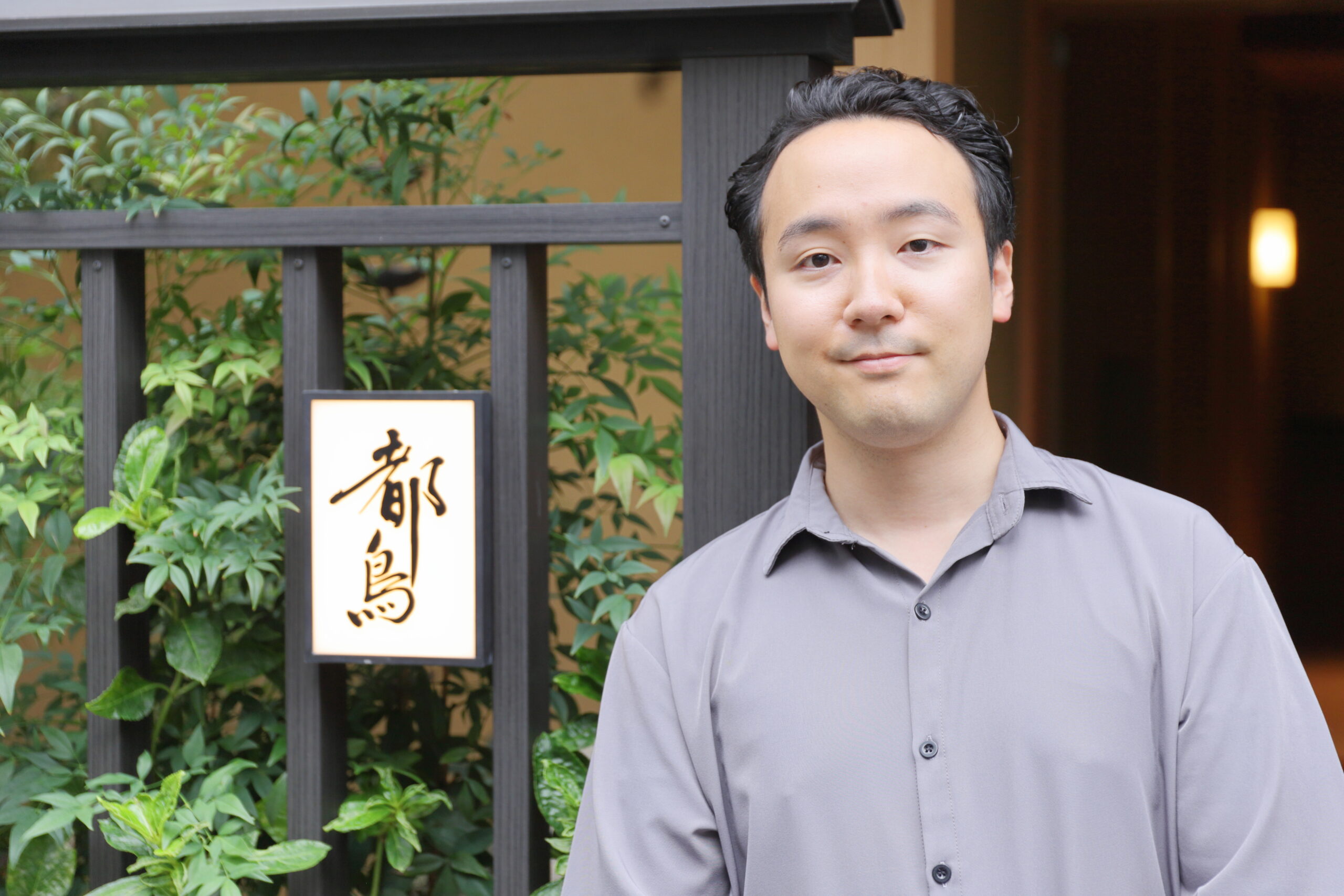


- Watch the Sumida River Fireworks from Prime Seats – Restaurants with Stunning Views & Meals
- Popular Spots to Go Out in Kimono! Introducing Areas like Asakusa, Kamakura, Kyoto, and More
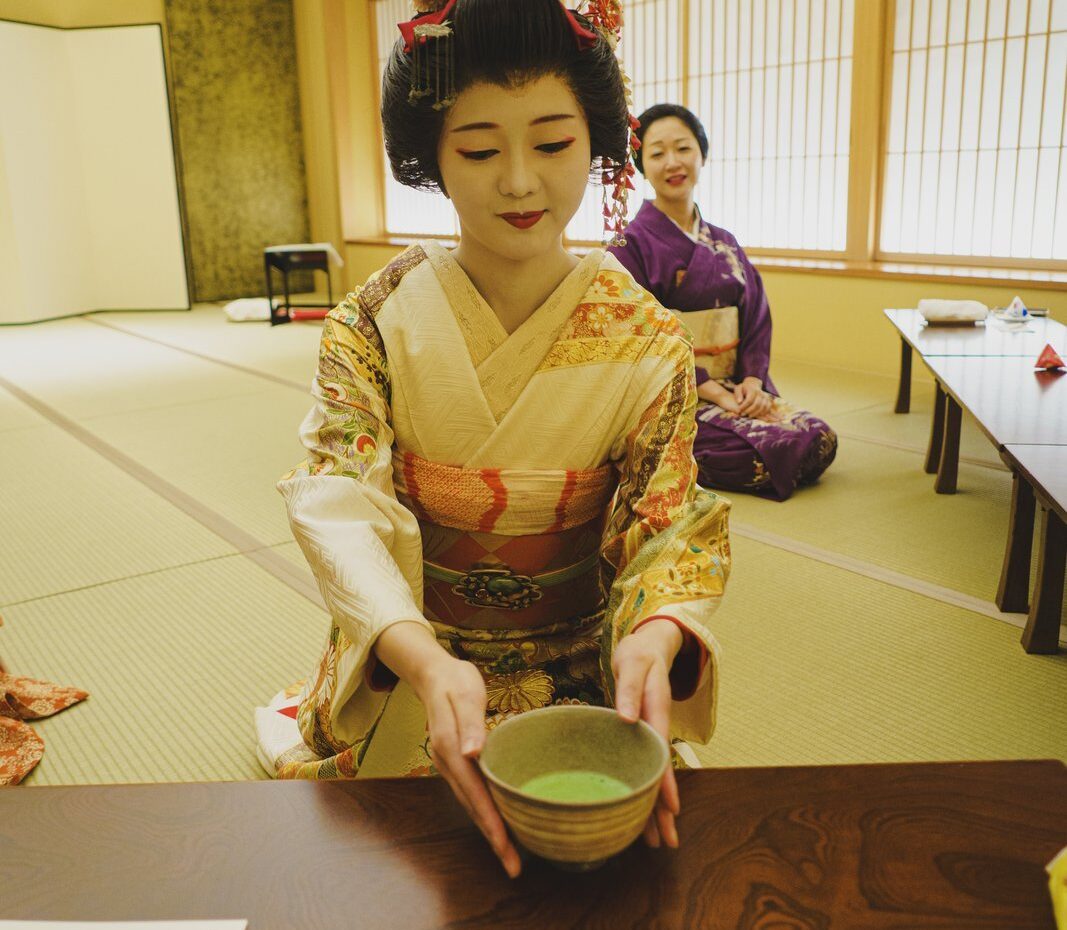
Wagashi in Japan: A Guide to Traditional Japanese Sweets, Seen Through the Eyes of an Asakusa Geisha House
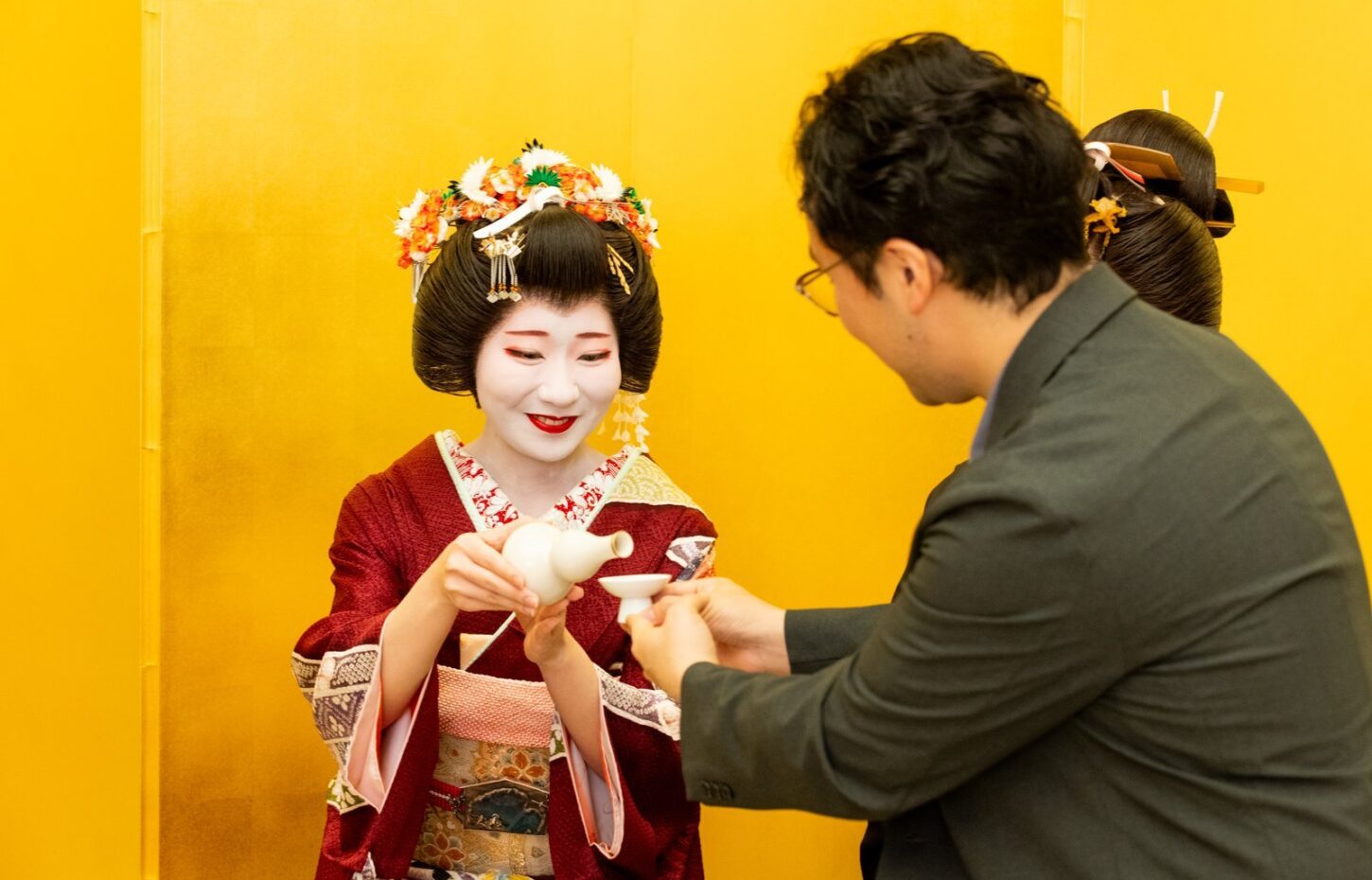
How Much Do Geisha Make? How Geisha Are Paid in Tokyo, Then and Now

Watch the Sumida River Fireworks from Prime Seats – Restaurants with Stunning Views & Meals
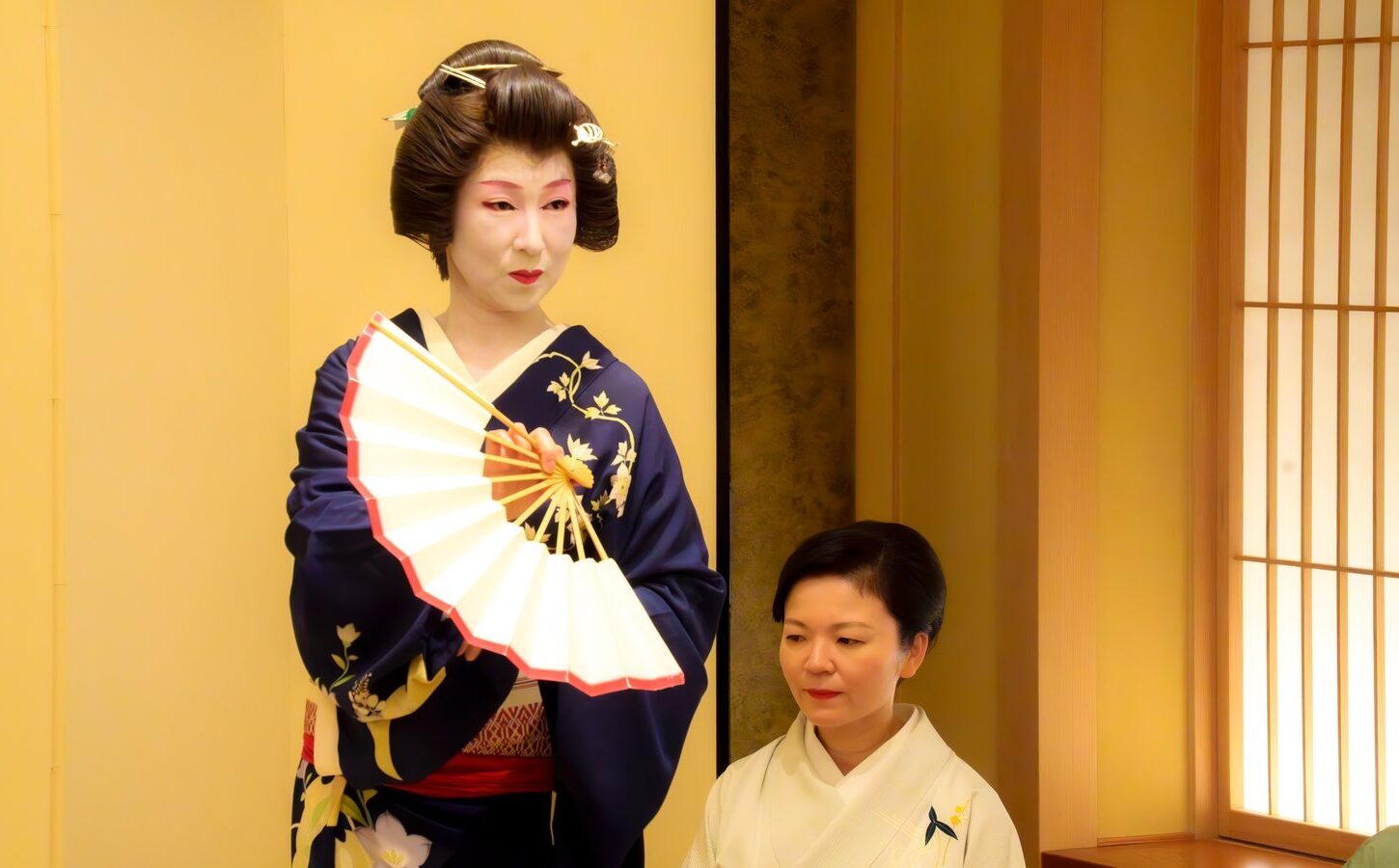
Geisha Show in Tokyo: Where to See an Authentic Geisha Performance in Asakusa
How to Book a Geisha Experience in Tokyo: Step-by-Step Guide (2026)
How Much Is a Geisha Dinner in Tokyo? (Complete Pricing Guide)
Comment ( 0 )
Trackbacks are closed.
No comments yet.