



The Shamisen: Japan’s Three-Stringed Lute and the Soul of Geisha Music
What Is the Shamisen Instrument? Origins, Structure, and Sound
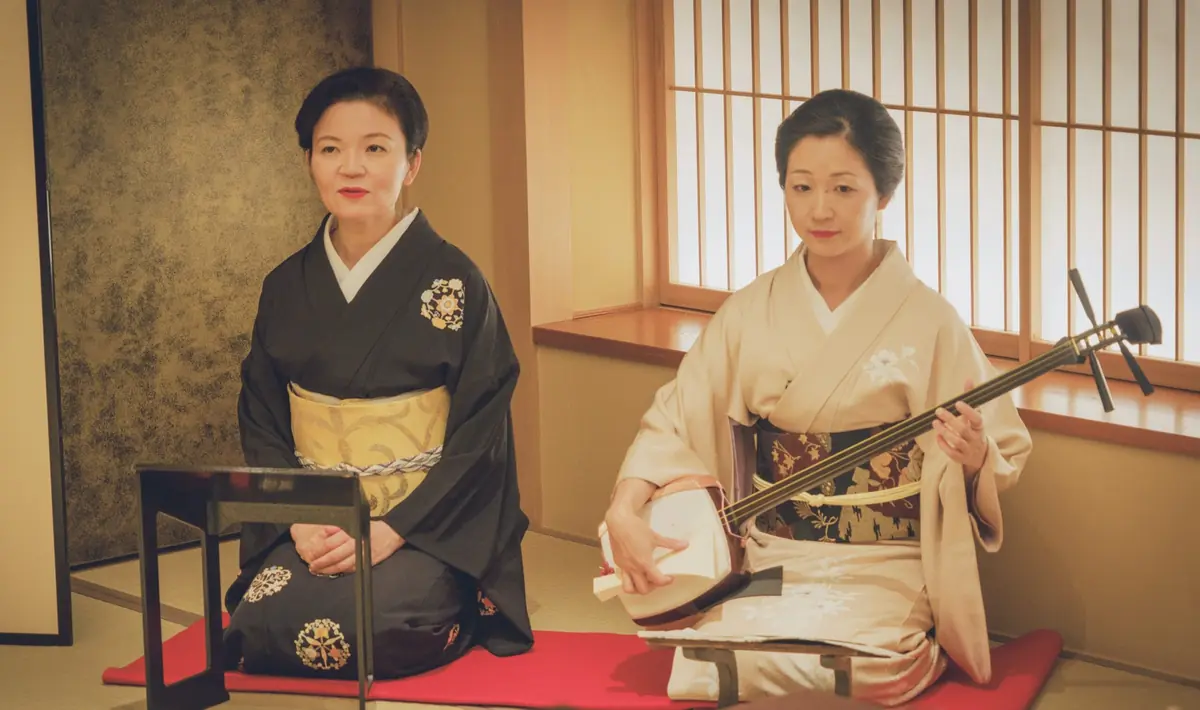
The shamisen (三味線) is a three-stringed, fretless Japanese lute — Japan’s most iconic traditional string instrument. Played with a large plectrum called a bachi, it produces a sound that is at once percussive and deeply expressive, unlike any Western instrument. Used across kabuki theater, folk traditions, and the intimate world of geisha banquets, the shamisen has been central to Japanese musical life for nearly five centuries.
The instrument arrived in Japan in the mid-16th century, adapted from the Ryukyuan sanshin, and quickly became the defining voice of Edo popular culture. Today, it continues to be performed by active geisha, folk musicians, and contemporary crossover artists alike.
Few instruments carry the weight of an entire culture on their strings. The shamisen is one of them — and to hear it performed live, in the room for which it was designed, is to hear Japan itself.
What does “shamisen” mean, and what kind of instrument is it?
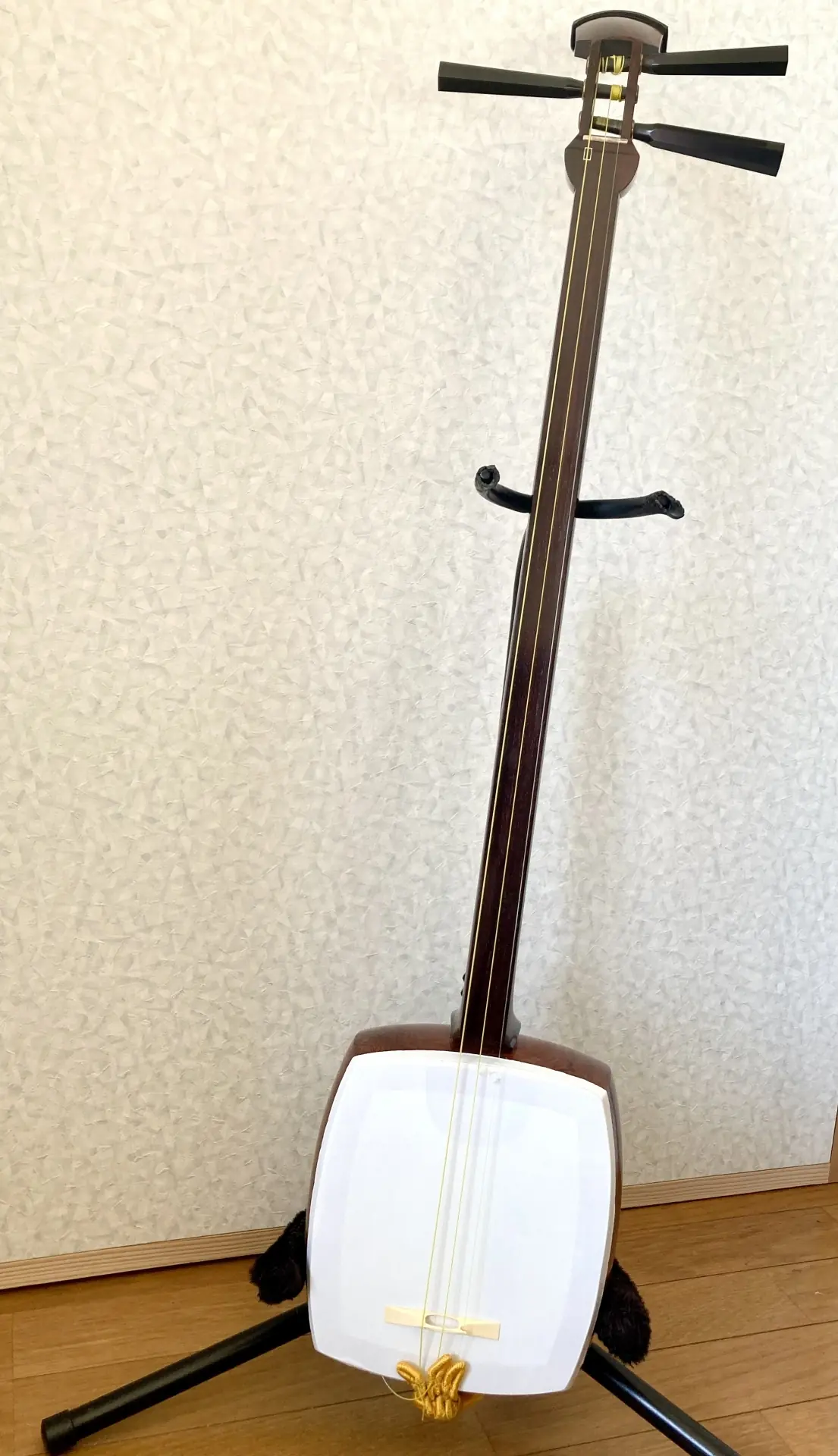
The word shamisen (三味線) literally means “three-flavor strings” — a poetic name that hints at the instrument’s extraordinary range of sound and feeling. It is a plucked string instrument belonging to the lute family, with a long neck, a small square body, and three silk or nylon strings stretched over a resonating skin.
Think of it as Japan’s answer to the banjo or the blues guitar: simple in construction, profound in expression. A skilled player can make the shamisen sound mournful, joyful, tender, or fierce — sometimes all within a single performance.
In everyday English, the shamisen is often described simply as a three-stringed Japanese instrument — or a 3-stringed Japanese instrument — with no direct equivalent in Western music: a fretless, plucked lute with three strings and a small, skin-covered body, unlike anything else in the string family.
How is the shamisen different from a guitar or banjo?
At a glance, the shamisen might remind Western listeners of a banjo or a long-necked guitar. But the differences are significant.
Where a guitar has six strings and metal frets, the shamisen has three strings and no frets at all. This fretless design gives players extraordinary freedom to slide between notes and create the subtle microtonal inflections that define classical Japanese music.
The body of a shamisen is also unlike any Western instrument. It is a small, almost square frame covered on both sides with animal skin — creating a resonance that is at once sharp and warm, cutting and intimate. The sound projection is direct and immediate, perfectly suited to the intimate acoustics of a traditional Japanese room.
What are the three main types of shamisen?
Not all shamisen are alike. There are three main types, each associated with a different musical tradition:
- Hosozao (細棹, “thin neck”): The most slender and delicate of the three. This is the shamisen of the geisha world, used for nagauta — the classical song tradition associated with Kabuki theater and the ozashiki (a private gathering with geisha). Its tone is refined, understated, and deeply elegant.
- Chuzao (中棹, “medium neck”): A versatile middle ground, used for genres such as kouta and jiuta. Often heard in more intimate recital settings.
- Futozao (太棹, “thick neck”): The instrument of tsugaru shamisen, the wild, improvisational folk tradition of northern Japan. Its tone is powerful and percussive — a world apart from the quiet refinement of the geisha’s hosozao.
What is the shamisen made of — and why is the skin so distinctive?
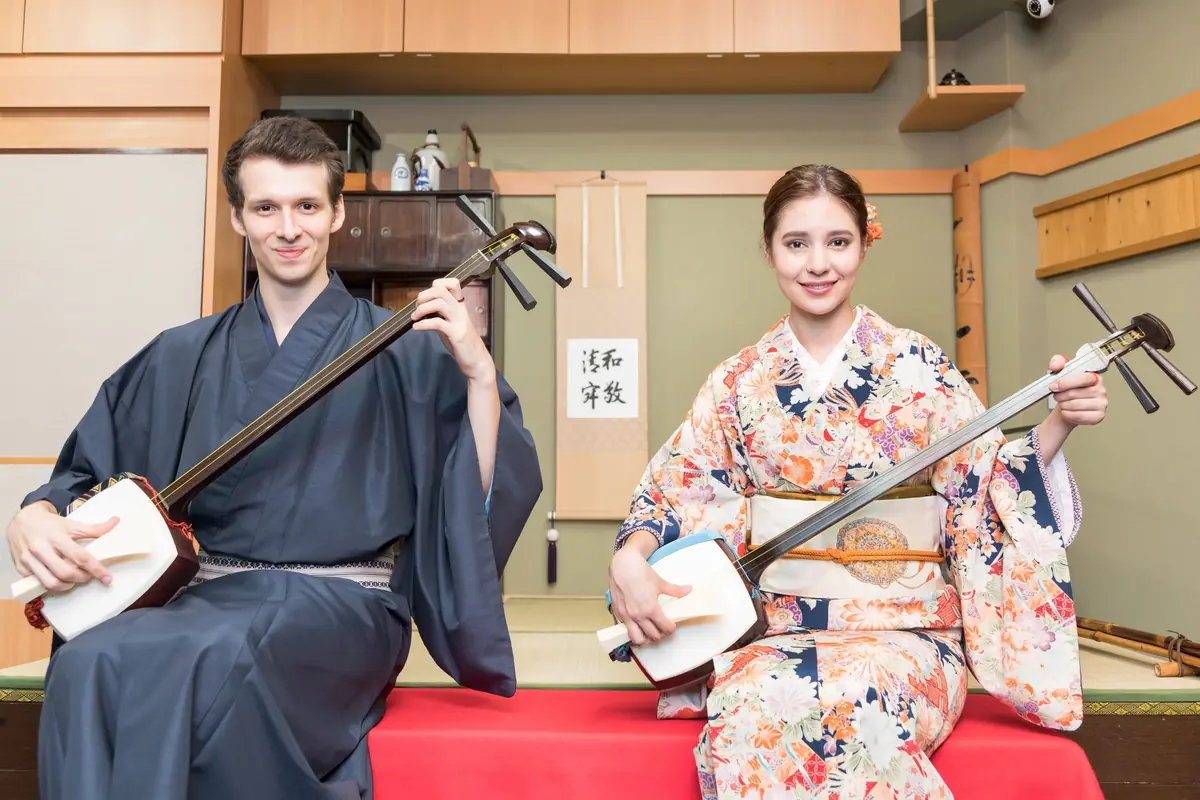
A shamisen body is traditionally covered with cat or dog skin, stretched taut over the frame like a drum. The skin creates the instrument’s signature tone: a crisp, resonant snap on the attack that gradually opens into a warm, sustained ring.
In modern times, synthetic materials are increasingly used — partly for practical reasons, partly in response to animal welfare concerns. Professional geisha performers, however, continue to favor traditional materials for their superior acoustic qualities.
The neck and body are typically crafted from karin (Chinese quince) or kouki (rosewood), prized for their density and tonal clarity. A fine shamisen is not merely an instrument; it is a work of craft that may take a master maker weeks to complete.
How is the shamisen played? (What is a bachi?)
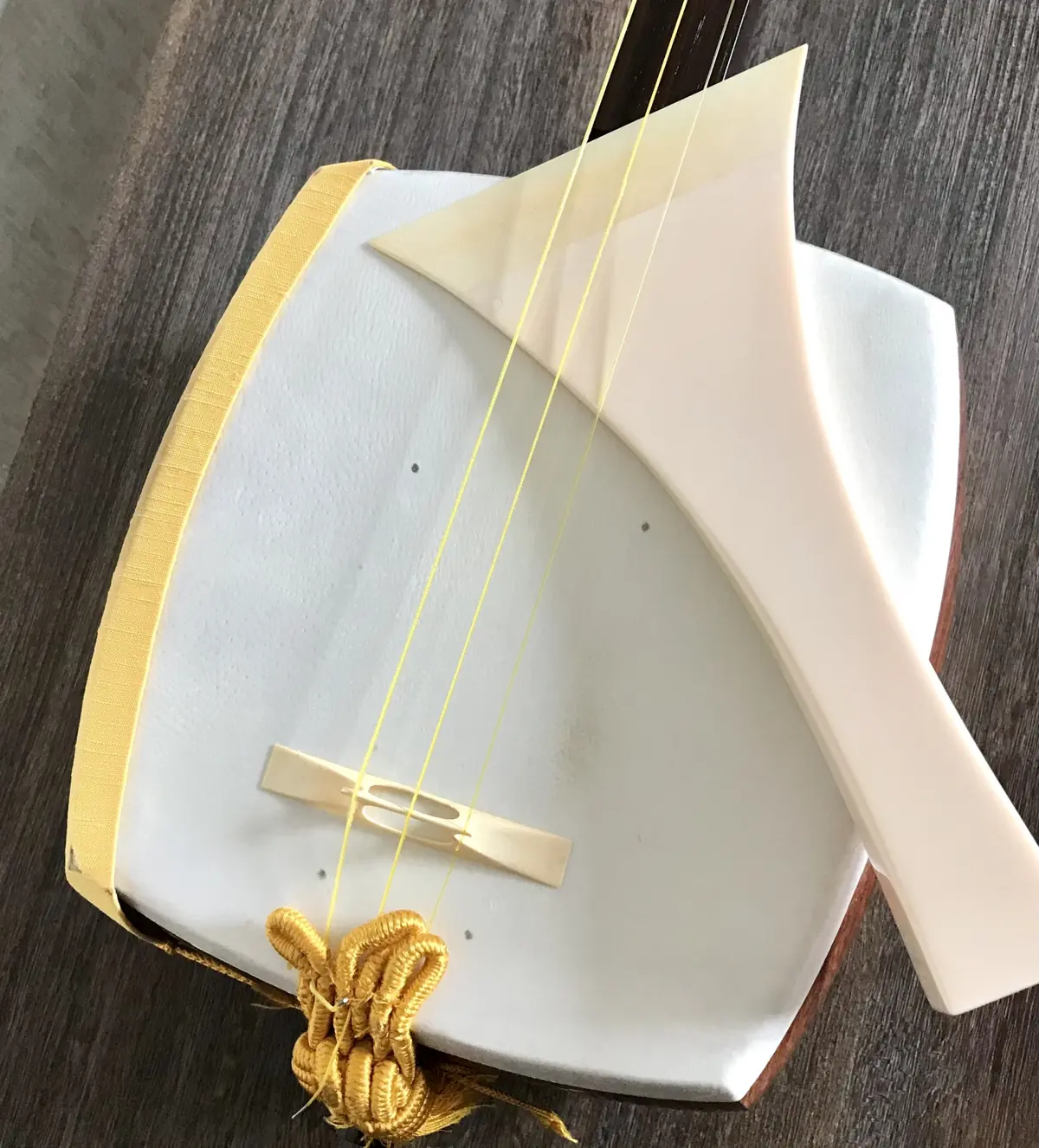
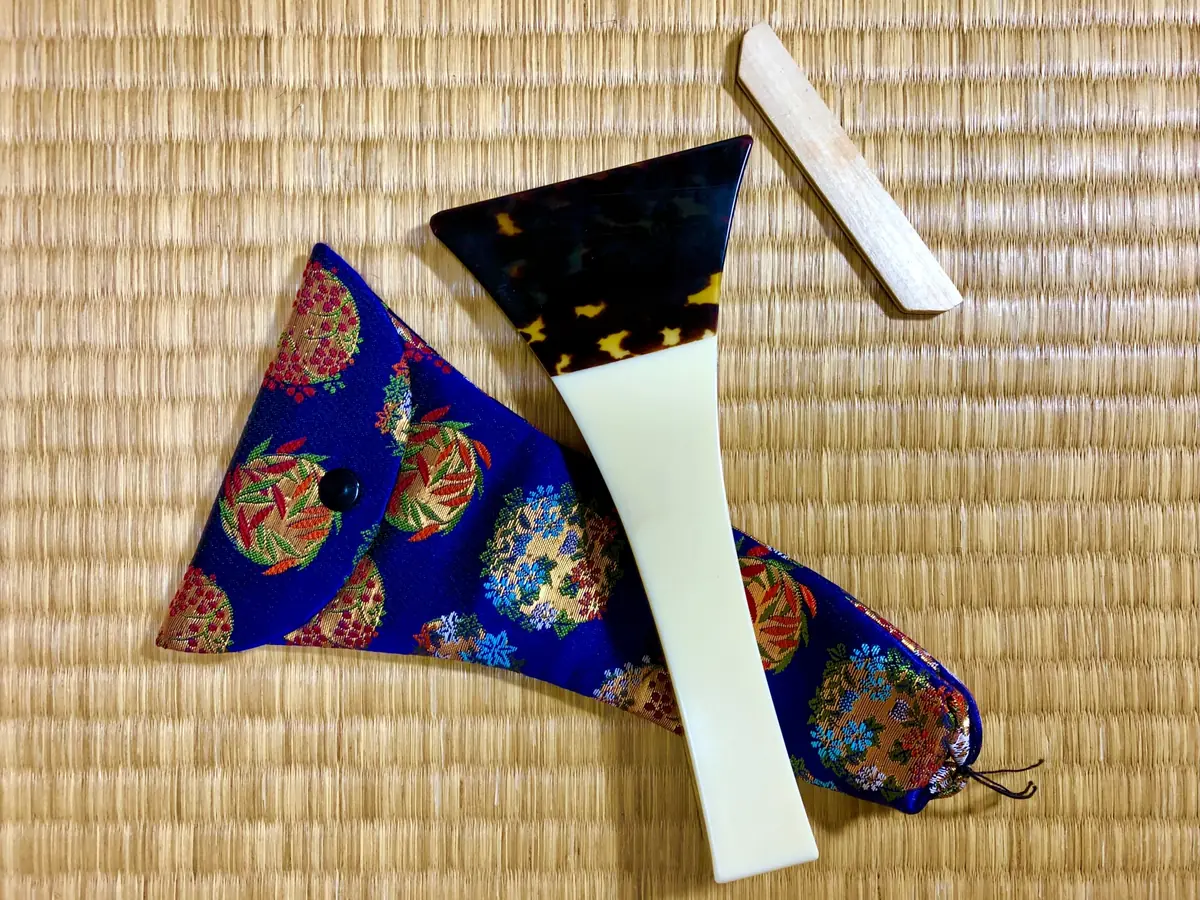
The shamisen is played with a large, fan-shaped plectrum called a bachi (撥). Unlike the picks used in Western string music, the bachi is held loosely in the palm of the right hand and swept across the strings in broad, sweeping strokes.
The left hand presses the strings against the neck at precise points — but because there are no frets, the player must develop an exquisitely sensitive touch and keen ear to find and hold the correct pitches. Even slight variations in pressure change the intonation, giving the shamisen an expressiveness that no fretted instrument can fully replicate.
The bachi also serves as a percussion element: when it strikes the skin of the body between string strokes, it produces a sharp, rhythmic accent. This percussive element, alongside the unique sawari — an intentional buzzing overtone produced by the first string vibrating against a specially shaped notch in the neck — is considered central to the shamisen’s character and beauty.
Shamisen History: How It Became the Voice of Geisha Culture
When did the shamisen arrive in Japan, and where did it come from?
The shamisen’s origins lie not in mainland Japan but in the Ryukyu Kingdom — the island chain now known as Okinawa. The instrument descended from the sanshin, a three-stringed lute brought to Okinawa from the Chinese mainland in the 14th or 15th century.
By the mid-16th century, the sanshin had traveled northward to Osaka, where Japanese musicians adapted it to suit their own musical aesthetics. The body was modified, the strings were changed, and the bachi replaced the original wooden plectrum. What emerged was an entirely new instrument — the shamisen.
By the late Edo period (1603–1868), the shamisen had become the dominant popular instrument of Japan, heard everywhere from the licensed pleasure quarters of Yoshiwara to the grand stages of Kabuki theater.
How did the shamisen become the instrument of geisha?
The connection between shamisen and geisha is not accidental — it is foundational.
The earliest geisha were in fact male performers (taikomochi, or male geisha) who entertained at banquets with music, comedy, and storytelling — a tradition that emerged in the 17th century. Women began entering the profession in the latter half of that same century, and over time the shamisen became the primary instrument around which geisha identity was built.
To become a geisha was, above all, to become a musician. The early years as a junior geisha (known as hangyoku in Tokyo) are devoted largely to the shamisen and to the classical singing traditions that accompany it. A geisha without shamisen mastery was unimaginable.
Okami Chikage, the proprietress of Miyakodori in Asakusa, carries this conviction to this day: “Without the arts, there is no geisha.” It is a statement that sounds simple, but it defines everything. The shamisen is not a prop or a cultural decoration — it is the soul of the geisha’s identity.
What role does the shamisen play in geisha training and art?
For a geisha, learning the shamisen is not a hobby — it is a lifelong practice.
A junior geisha in Tokyo (hangyoku) begins shamisen training as a foundation of her education in the traditional arts. She learns first to hold the bachi correctly, then to produce a clean tone, then to navigate the classical repertoire. Years pass before she is considered proficient enough to perform before guests.
Even after achieving full professional status (ippon), a geisha continues to train. Weekly or daily practice is the norm. The instrument demands it: the fretless neck means technique must be maintained through constant repetition, and the classical nagauta repertoire is vast.
At a geisha banquet (ozashiki), when a geisha performs, she is sharing not merely entertainment but the accumulated devotion of years. The music you hear has been practiced thousands of times before it reaches your ears.
What is the difference between tsugaru shamisen and the nagauta shamisen played by geisha?
These two traditions share an instrument in name only — in spirit, they are worlds apart.
Nagauta (長唄, “long song”) is the classical shamisen tradition of Edo (Tokyo), developed in the world of Kabuki theater and refined within the ozashiki culture of the hanamachi (geisha district). It is subtle, structured, and extraordinarily disciplined. The melody flows like calligraphy — each note placed with intention, each phrase shaped by centuries of accumulated refinement.
Tsugaru shamisen is the tradition of Aomori Prefecture in northern Japan. Born in harsh rural conditions, it is percussive, improvisational, and at times almost aggressive in its intensity. Where nagauta whispers of autumn evenings in Edo, tsugaru shouts of northern winters and survival.
Geisha perform nagauta. When you attend an ozashiki in Asakusa, the shamisen music you will hear is the classical, refined tradition — an art form that has been practiced in Tokyo’s hanamachi since the Edo period.
What famous shamisen pieces are performed at a geisha banquet (ozashiki)?
The nagauta repertoire is rich and varied. Among the pieces most commonly performed at an ozashiki are:
Sakura Sakura — The most recognized Japanese melody in the world, arranged for shamisen and voice. Its pentatonic simplicity conceals considerable expressive depth.
Rokudan no Shirabe — A classical koto piece often adapted for shamisen; its six-section structure unfolds with quiet majesty.
Edo Lullaby (Edo no Komoriuta) — A tender, melancholic song that evokes the atmosphere of old Edo with remarkable intimacy.
Party pieces for ozashiki asobi — At many ozashiki, the geisha will also accompany traditional party games such as Konpira Fune Fune with shamisen and song, transforming music into laughter and shared experience.
The choice of repertoire is shaped by the occasion, the season, and the skill of the performers. An experienced geisha reads the room — and the shamisen speaks accordingly.
Want to hear shamisen performed live in Tokyo? See our experience section below to learn how to attend an ozashiki at Miyakodori in Asakusa.
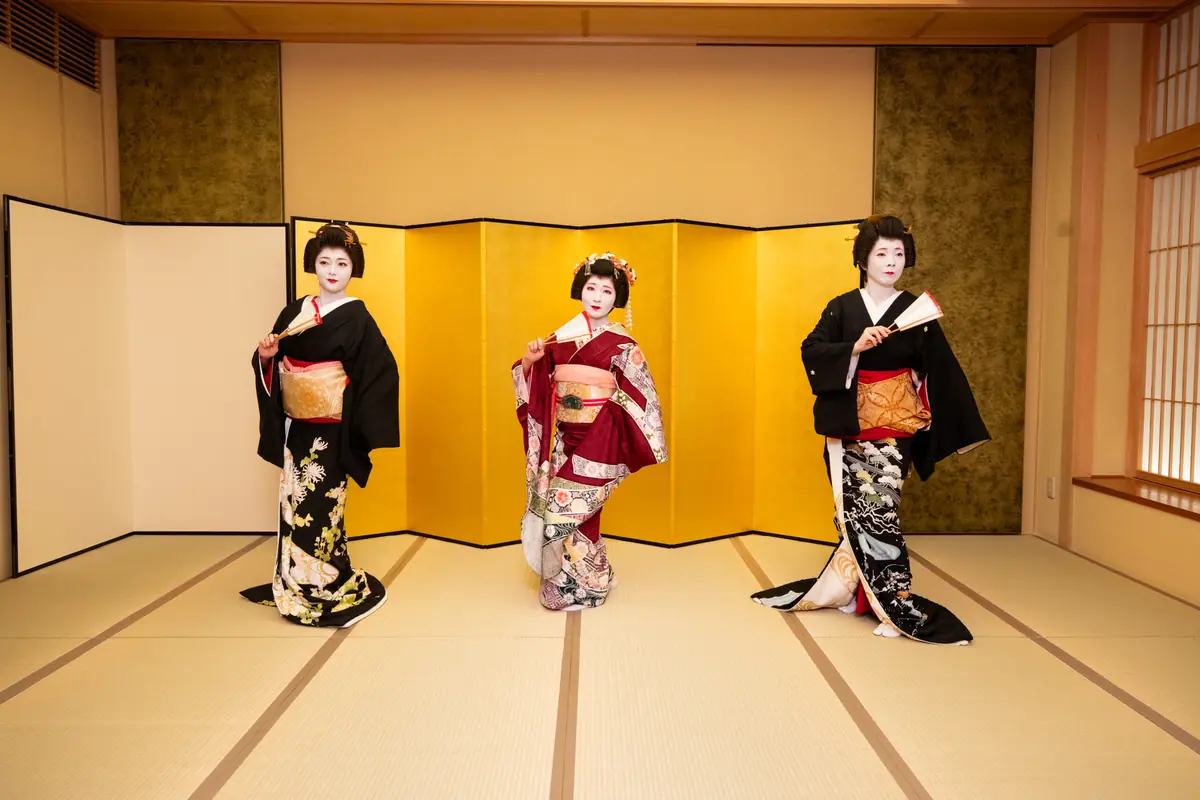
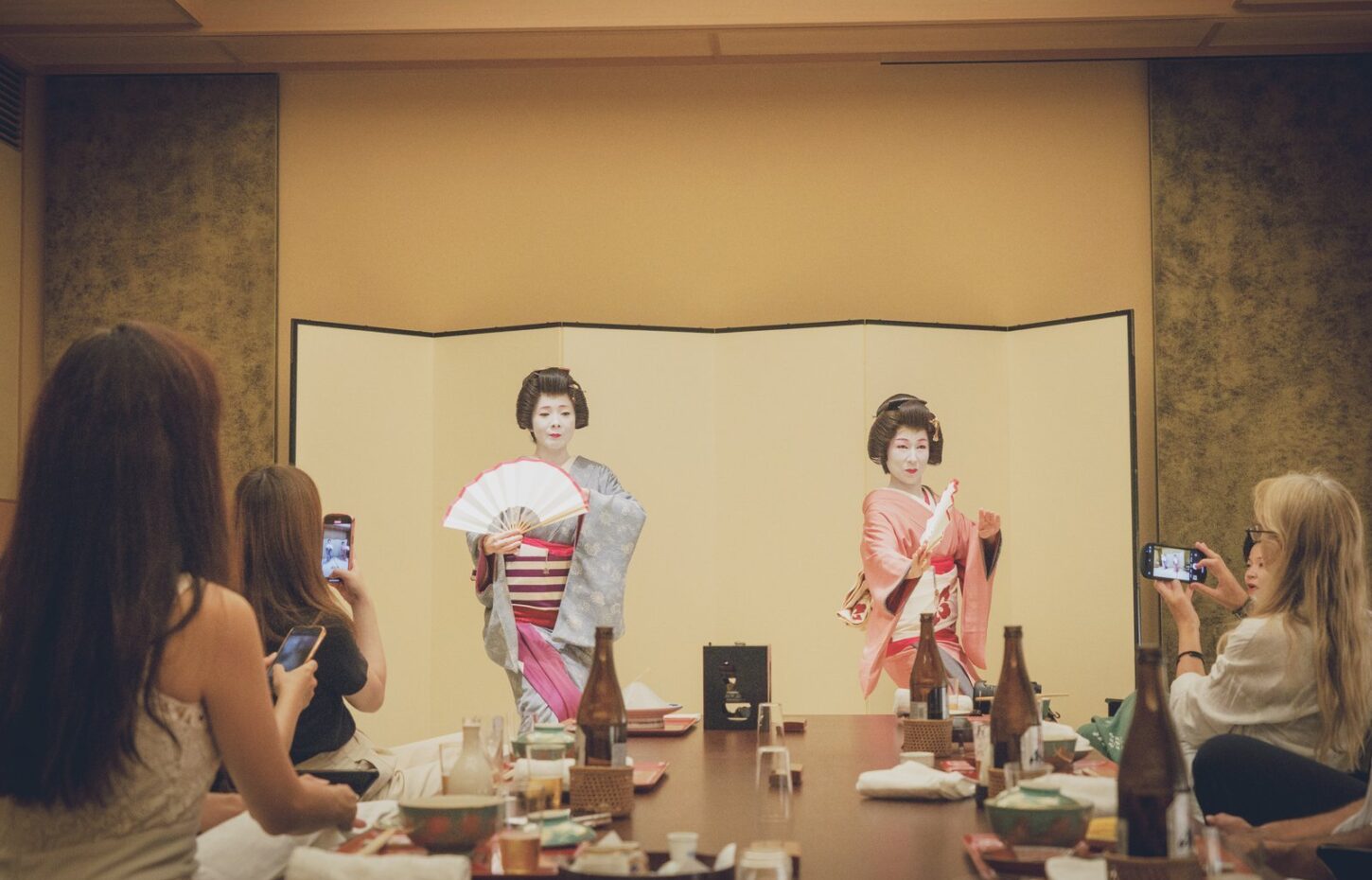
Live, and in the same room: a geisha dances with a fan while the jikata plays the shamisen behind her. Nothing is recorded — the music is being made a few feet away.
What Does Shamisen Music Sound Like — and Can I Hear It Live in Tokyo?
How would you describe the sound of the shamisen?
Words are poor substitutes for the experience, but they are all we have before you are in the room.
The shamisen produces a sound that has no precise equivalent in Western music. The attack is immediate — a crisp, almost percussive strike that cuts through silence. Then, immediately after, the note opens into something softer: a resonant ring that trembles slightly with the sawari buzz, like a voice that is trying to say something it cannot quite put into words.
If you have heard the blues played on a resonator guitar, you will recognize something of that quality — raw, direct, emotionally unguarded. If you have heard Japanese koto music, you will understand the meditative quality of the spaces between notes. The shamisen lives somewhere between those two worlds.
What no recording fully captures is the physical presence of the sound in a small tatami room. The shamisen does not fill a concert hall; it is designed to fill a ma — an intimate space where human connection itself is the primary performance. Heard at distance, it is beautiful. Heard across a lacquered table, three feet from the performer, it becomes something altogether different.
What is nagauta — the classical shamisen style of geisha?
Nagauta (長唄) translates literally as “long song” — a name that speaks to its most distinctive feature. Where other shamisen genres focus on short pieces or instrumental display, nagauta unfolds in long, sustained narrative arcs that can last twenty minutes or more.
Developed in the world of Edo Kabuki theater in the 17th century, nagauta moved from the stage into the ozashiki, where it became the defining musical tradition of the Tokyo geisha world. Its melodies are stately and unhurried; its vocal style is precise and highly trained; its shamisen accompaniment is woven into the voice like a second conversation.
To hear nagauta performed by a geisha who has trained for decades is to experience a depth of artistry that casual encounters with “Japanese traditional music” rarely convey. This is not background music. It is a complete artistic statement.
What other instruments typically accompany shamisen in geisha performances?
The shamisen rarely performs alone at a geisha banquet. Traditional Japanese chamber music is an ensemble art, and the ozashiki reflects this.
Alongside the shamisen, you may hear:
- Kotsuzumi (小鼓): A small hourglass-shaped drum held at the shoulder, producing a bright, resonant “pon” sound. The kotsuzumi player and shamisen player listen to each other with extraordinary sensitivity, engaging in a musical dialogue that has no written score.
- Otsuzumi (大鼓): A larger floor drum with a deeper, more authoritative tone. Its sharp attacks punctuate the music like exclamation marks.
- Fue/Shinobue (笛/篠笛): Japanese bamboo flutes that add an airy, lyrical layer above the strings.
- Voice (utai/jiuta): At many ozashiki, the shamisen accompanies classical singing. The geisha may perform as both instrumentalist and vocalist, or the roles may be divided between performers.
The precise ensemble varies by occasion and by the performers available. What remains constant is the intimacy of the performance — musicians who have trained together for years, reading each other without a conductor, without a score visible on stage.
Is the shamisen difficult to learn?
Honest answer: yes, considerably.
The absence of frets means that every note must be found by ear and muscle memory alone. The bachi technique requires months of practice before a clean tone can be reliably produced. The classical nagauta repertoire demands both technical precision and a deep familiarity with Japanese aesthetic sensibility — which is itself a lifetime’s study.
Professional geisha typically spend years in intensive training before performing publicly. Even after achieving mastery, they continue to practice daily.
This is not said to discourage. Many visitors find that understanding the difficulty deepens their appreciation enormously. When you watch a geisha perform, you are not watching someone play a simple folk instrument — you are watching the result of thousands of hours of devoted practice.
Can I hear live shamisen music at a geisha banquet in Tokyo?
In Tokyo, live shamisen can be heard in theaters, cultural performances, and traditional geisha banquets. Among these settings, the ozashiki — a private geisha banquet — offers one of the most intimate ways to experience shamisen at close range, in the acoustic environment for which the instrument was originally designed.
In Asakusa, this is precisely what you will find.
At Miyakodori, a geisha banquet (ozashiki) includes a live shamisen performance as a central part of the evening. You will hear the instrument performed not in a concert hall, not in a studio recording, but in a traditional tatami room — the acoustic environment for which nagauta was created.
This is one of the rarest experiences available to visitors in Tokyo. While shamisen music is not difficult to encounter in recorded form, hearing it performed live by a practicing geisha — in the context of an actual ozashiki — is an experience that no amount of listening on headphones can replicate.
Miyakodori has been the guardian of this tradition since 1950, making it possible for first-time visitors to enter a world that once required years of personal introductions to access. As Madame Kawamura says: the arts are what make a geisha a geisha. When you attend an ozashiki at Miyakodori, you are hearing those arts performed in full.
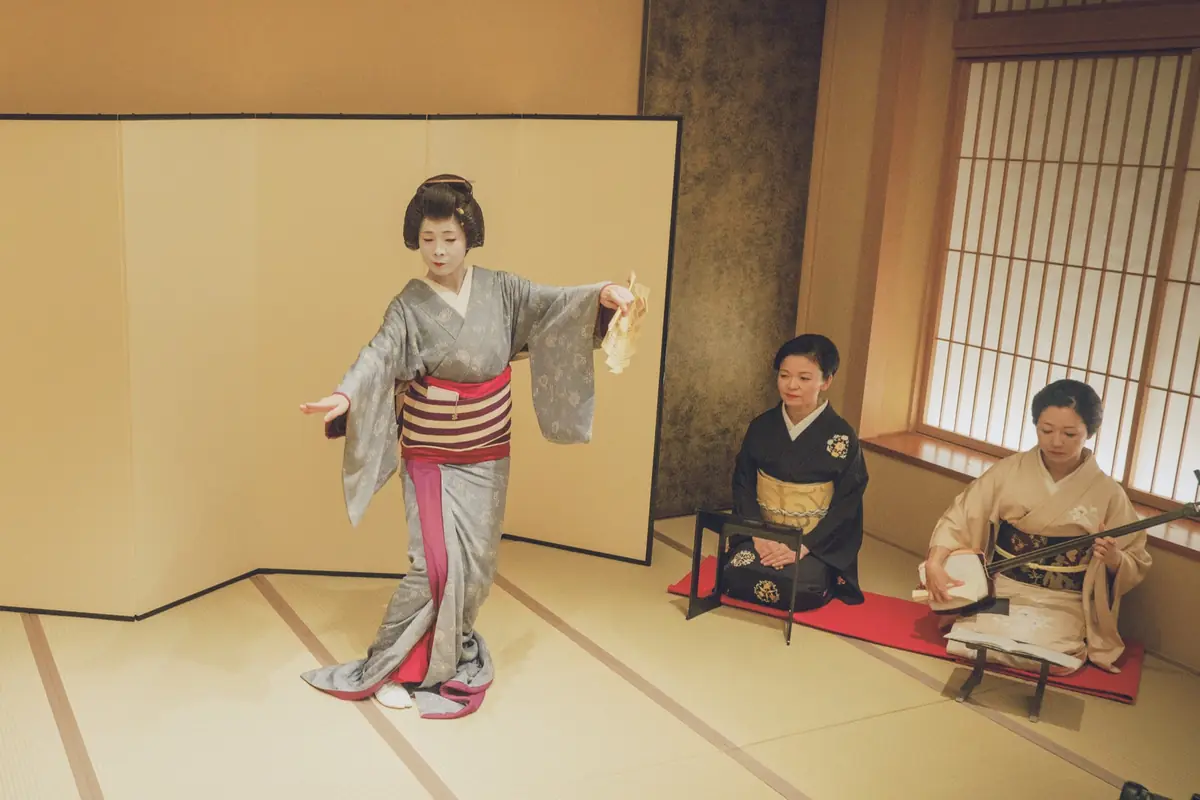
How Does Shamisen Compare to Koto, Shakuhachi, and Other Japanese Instruments?
What is the difference between shamisen and koto?
| Feature | Shamisen | Koto |
|---|---|---|
| Strings | 3 | 13 |
| Frets | None (fretless) | Movable bridges |
| Played with | Bachi (plectrum) | Finger picks |
| Tone | Percussive, direct | Resonant, flowing |
| Size | Portable (~100cm) | ~180cm, floor instrument |
| Primary use | Geisha, Kabuki, folk | Court music, chamber music |
| Ensemble role | Melodic & rhythmic lead | Harmonic depth |
The koto (箏) is Japan’s national instrument — a long, horizontal zither with thirteen strings, played with ivory or bamboo finger picks. Where the shamisen is intimate and vocal, the koto is spacious and architectural.
The most immediate difference is physical presence. A koto is approximately 180 centimeters long and played while seated on the floor, the instrument stretched across the room in front of the performer. The shamisen, by contrast, is held upright and close — a personal instrument, almost like an extension of the body.
Tonally, the koto produces a full, rounded sound with considerable sustain; the shamisen produces a sharper, more percussive attack. In ensemble performance, the two often complement each other — the koto providing harmonic depth while the shamisen carries the melodic and rhythmic energy.
Both instruments appear in the ozashiki context, though the shamisen is the more central and characteristic voice of the geisha world.
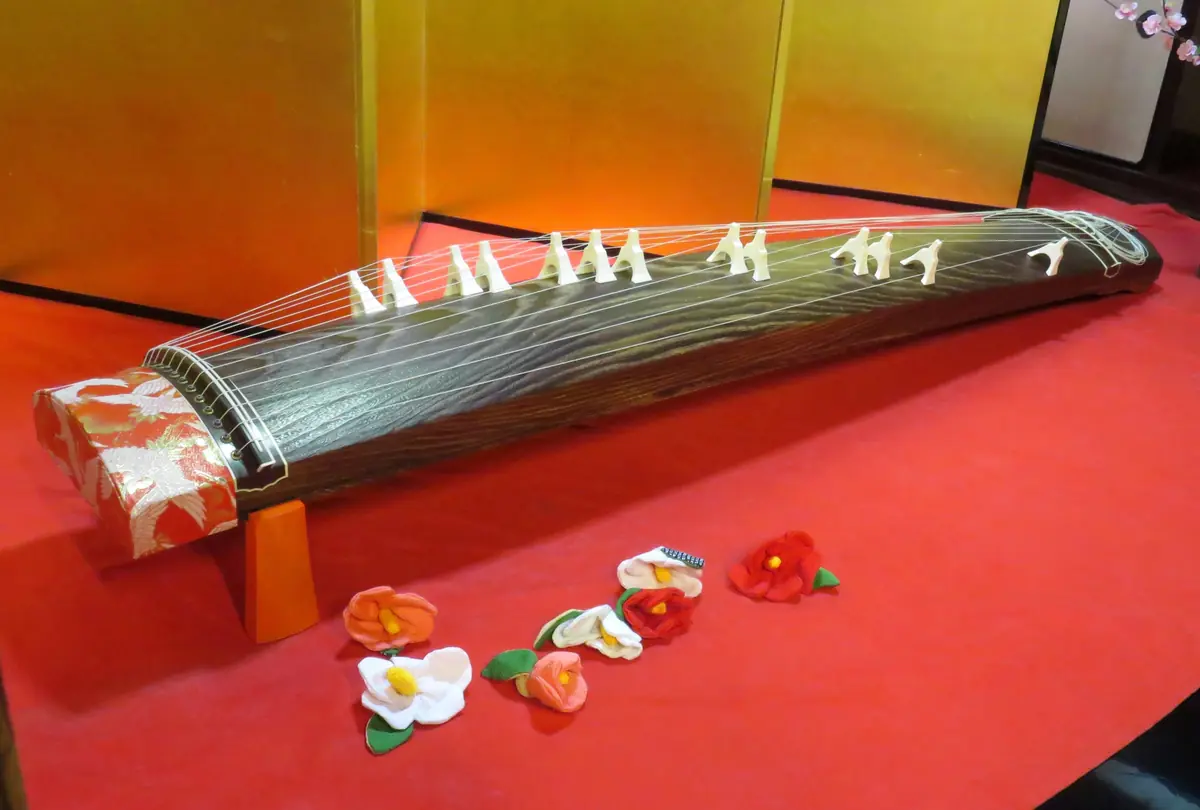
How does shamisen music compare to shakuhachi (bamboo flute)?
The shakuhachi (尺八) is a Japanese end-blown flute made from the root section of bamboo. Its sound — breathy, searching, capable of extraordinary microtonal nuance — has made it one of the most recognizable voices of Japanese classical music.
Where the shamisen is crisp and attack-driven, the shakuhachi is all sustain and breath. The shamisen says something definite; the shakuhachi raises a question. Together, they create one of the most moving combinations in world music.
In the ozashiki, shakuhachi appears less commonly than shamisen or koto, but when it does, its effect is unmistakable. The combination of shamisen’s rhythmic drive and shakuhachi’s meditative floating creates a sonic world that feels simultaneously ancient and immediate.
What are some modern uses of the shamisen in Japan today?
Far from being confined to traditional settings, the shamisen continues to evolve in contemporary Japan.
Yoshida Brothers (吉田兄弟), the most internationally recognized tsugaru shamisen duo, have incorporated rock and electronic music into their arrangements, bringing the instrument to audiences worldwide. Their concerts sell out in venues from Carnegie Hall to Tokyo Budokan.
Various cross-genre ensembles combine shamisen with jazz, hip-hop, and ambient music, demonstrating that the instrument’s tonal qualities translate far beyond its classical origins.
In film and television, shamisen continues to appear in scores both traditional and contemporary — Ennio Morricone famously used it in compositions that blurred the line between East and West.
And in the ozashiki of Asakusa, the hosozao shamisen continues to be practiced exactly as it was in the Edo period — refined, focused, and alive with centuries of accumulated artistry.
Is the shamisen still actively played in Japan?
Yes — though the landscape of its practice has changed considerably.
At the professional level, active geisha performers maintain rigorous shamisen practice as a core requirement of their vocation. In the hanamachi of Tokyo, Kyoto, and several other cities, the traditional practice of nagauta and related classical genres continues uninterrupted.
At the amateur and community level, shamisen has experienced a notable resurgence of interest among younger Japanese, particularly through the influence of tsugaru shamisen’s crossover popularity and the broader renewal of interest in traditional arts among the post-pandemic generation.
Instrument makers, teachers, and performance organizations are thriving — a sign that the shamisen’s future is not in doubt.
Is Geisha culture in Tokyo different from Kyoto — and does that affect the music?
The difference is real, significant, and often misunderstood by visitors planning their first geisha experience.
Kyoto geisha culture — centered in the hanamachi of Gion, Ponto-cho, and Kamishichiken — is shaped by the aesthetic of miyabi (雅): aristocratic elegance, formality, and the refined sensibility of the imperial court. The music performed in Kyoto’s ozashiki tends toward the solemn and ceremonial.
Tokyo (Asakusa) geisha culture is shaped by the aesthetic of iki (粋): the sophisticated, streetwise elegance of Edo’s merchant and artisan culture. Iki prizes wit, spontaneity, and a certain unpretentious, direct elegance. The shamisen music of the Asakusa ozashiki reflects this — there is warmth and playfulness alongside the artistry.
There is also a practical difference for international visitors. Kyoto’s traditional ozashiki system remains largely closed to first-time visitors without personal introductions. In Tokyo’s Asakusa — specifically at Miyakodori — online reservations are accepted directly, with no prior connections required. The same authentic tradition, the same skilled geisha performers, the same live shamisen music: accessible without the barriers that once defined the world.
Where Can I Hear Live Shamisen Music with Geisha in Asakusa, Tokyo?
What can I expect during a live shamisen performance at a geisha banquet (ozashiki)?
The ozashiki at Miyakodori follows the structure of a traditional geisha banquet — but it is not a museum recreation. It is a living gathering, shaped in the moment by the geisha, the guests, and the particular atmosphere of the evening.
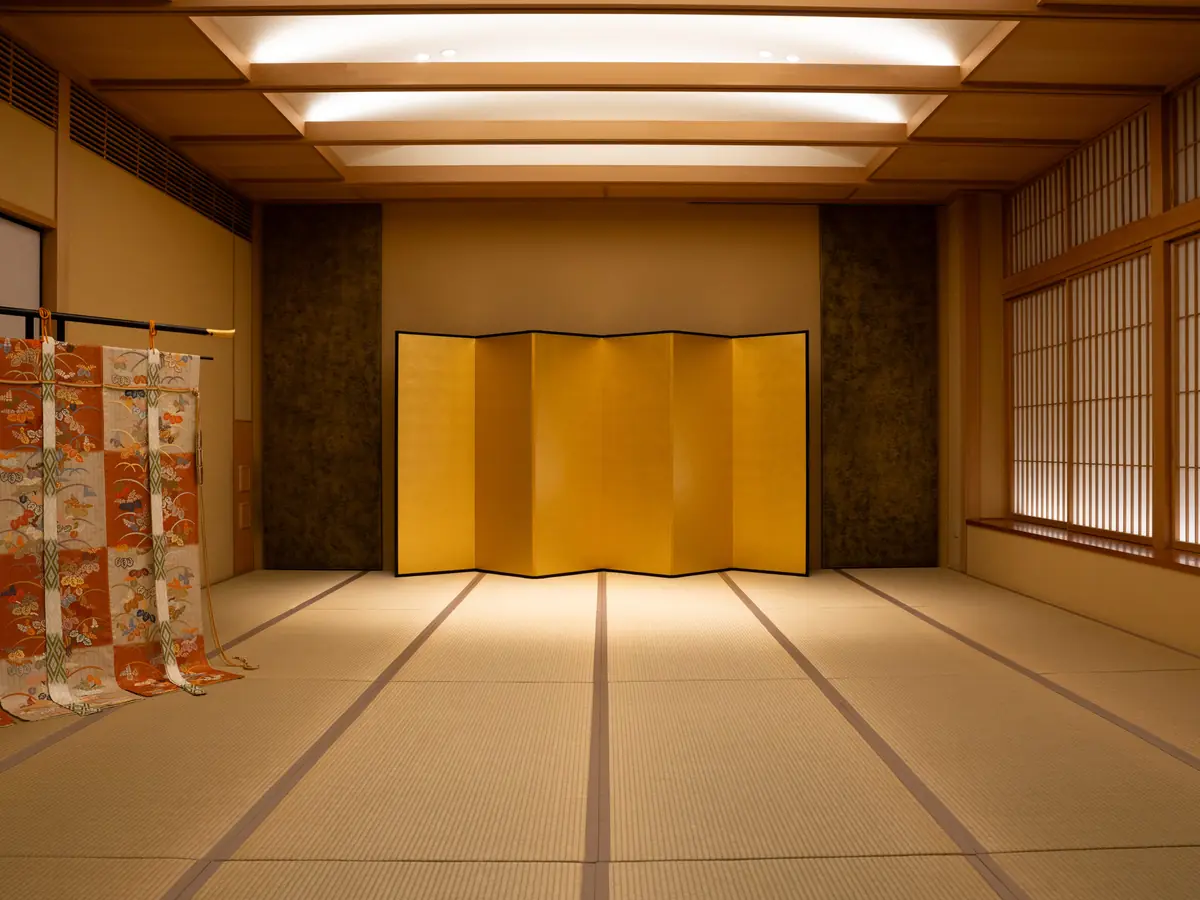
The shamisen performance typically forms the centerpiece of the cultural portion of your evening. You will be seated in a traditional tatami room as the geisha enter and prepare to perform. The atmosphere is intimate — this is not a stage performance viewed from an auditorium, but a shared experience in a small, beautiful room.
The performance may include nagauta — the classical long-song tradition — as well as shorter pieces and songs. If the occasion calls for it, the music may transition into ozashiki asobi (traditional party games), where the shamisen accompanies competitive and comedic games that need no language to enjoy.
The experience is anchored throughout by iki — the Asakusa spirit of warmth, sophistication, and playful generosity that distinguishes Tokyo’s geisha culture from all others.
Is a shamisen experience in Tokyo easier to book than in Kyoto?
Yes — by a considerable margin, and without any compromise on authenticity.
Kyoto’s hanamachi system was built on the concept of ichigen-san okotowari — the refusal of first-time customers without an introduction from a regular patron. While this tradition has softened somewhat in recent years, direct reservations for traditional ozashiki in Kyoto remain effectively unavailable to first-time international visitors.
Asakusa — and specifically Miyakodori — operates differently. When Madame Kawamura made the decision to open Miyakodori’s doors to visitors without prior connections, she was making a conscious choice to keep the tradition alive rather than allow it to close. As she has said, the geisha arts exist to be performed, to be heard, and to be shared.
The result is that international visitors can now access a genuinely traditional geisha banquet with live shamisen music through a direct online reservation — the same experience that once required years of relationships to enter.
How do I book a geisha banquet with shamisen music in Tokyo?
Reservations at Miyakodori can be made directly online through our online reservation form. No introduction, no prior contact, and no Japanese language skills are required.
Miyakodori offers two formats:
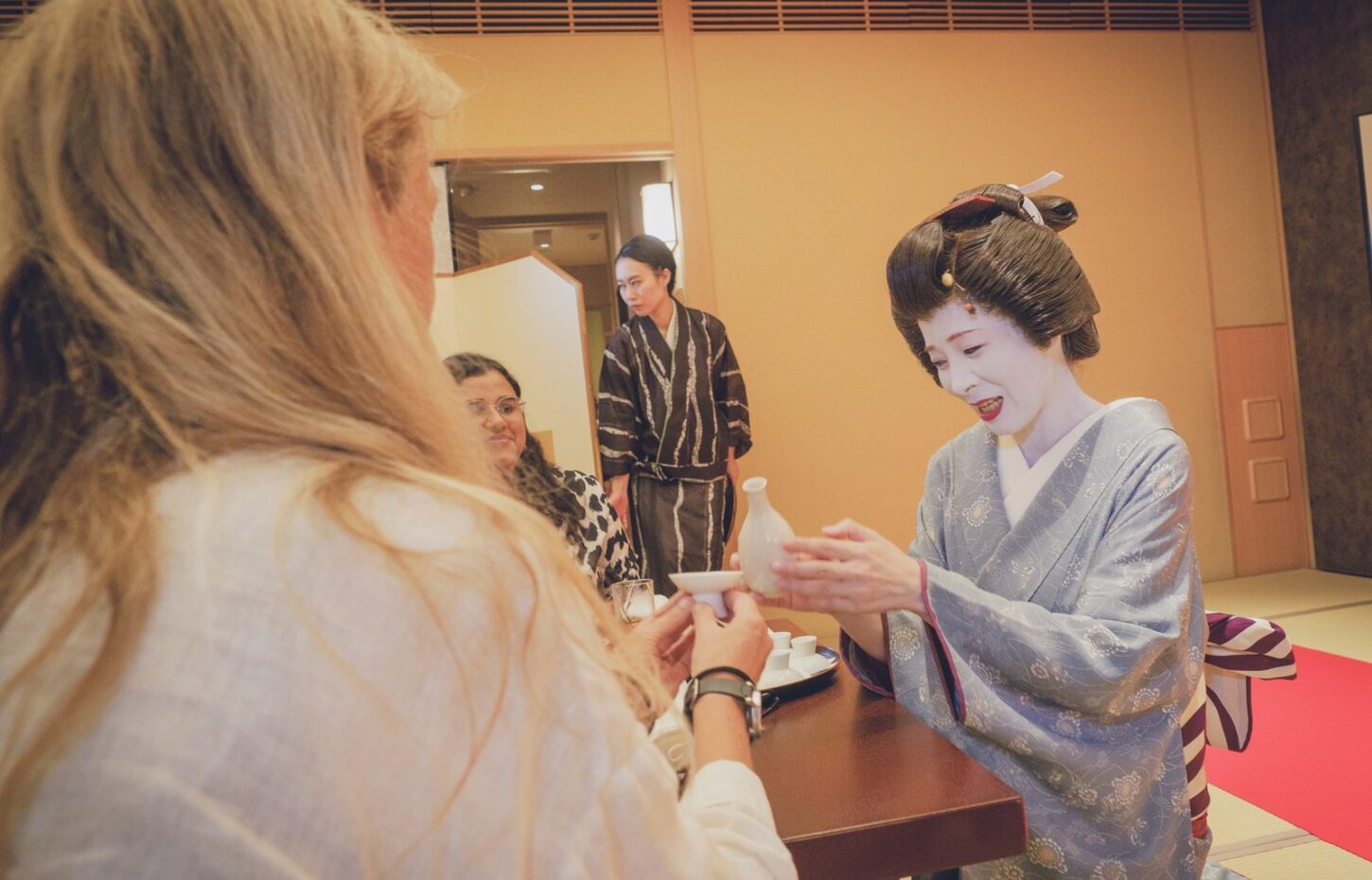
Private Ozashiki — A completely private banquet for your group, customizable from one to three hours. Includes live shamisen performance, traditional arts, and ozashiki party games. Available for groups of varying sizes. Dietary accommodations (vegan, halal, gluten-free) are available upon request.
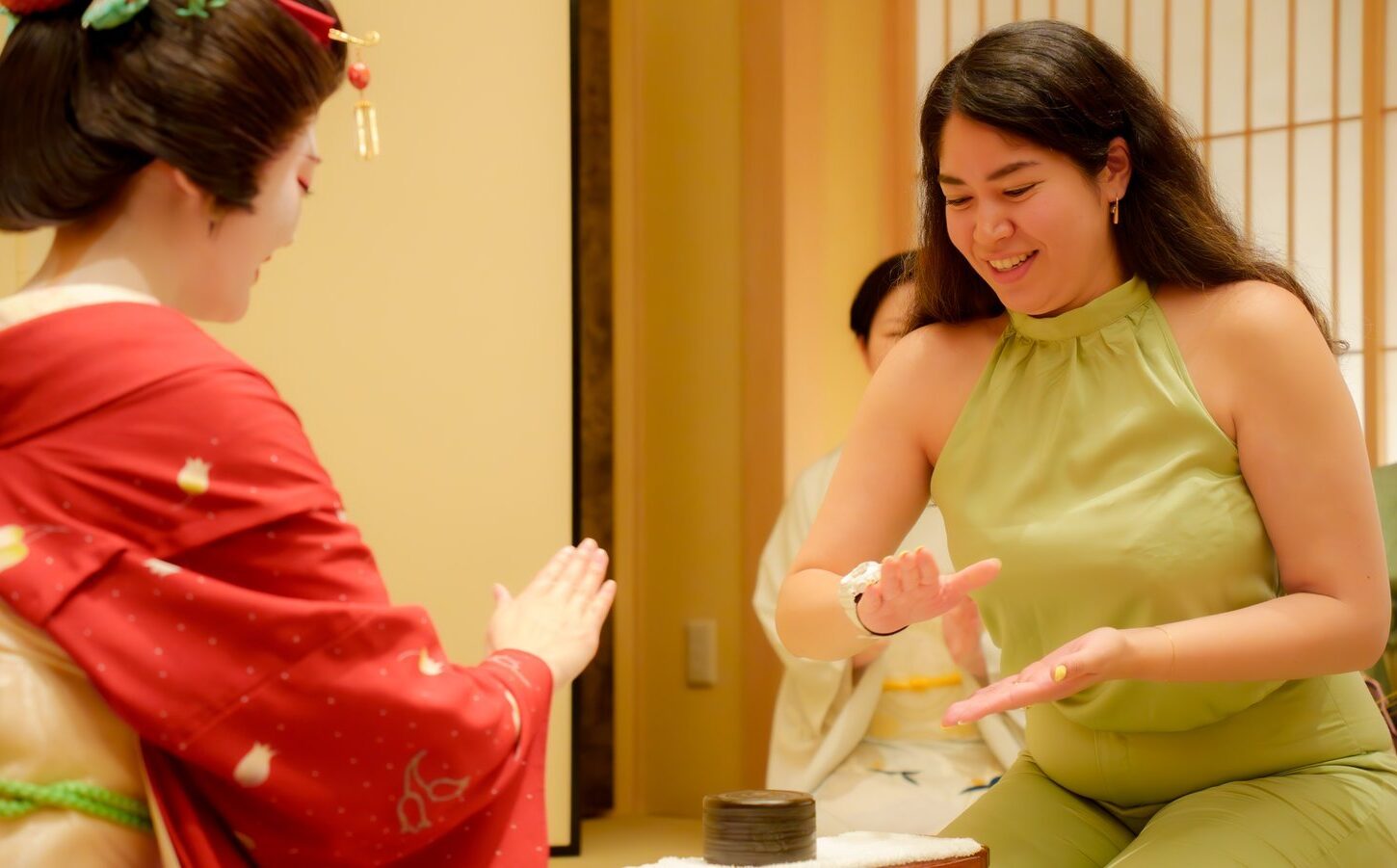
Ozashiki Tea House (MATCHA WITH GEISHA) — A 75-minute shared-seating experience held two to three times per week. Includes matcha and Japanese confectionery alongside a cultural experience with a geisha. An excellent introduction for first-time visitors.
Both experiences include an English interpreter, ensuring that the cultural depth of the evening is accessible regardless of language.
Is Miyakodori English-friendly for international visitors?
Completely. This accessibility is, in fact, one of the core principles behind Miyakodori’s approach.
An English interpreter accompanies every banquet, providing real-time context for the music, the games, the etiquette, and the cultural background of what guests are experiencing. You will understand not merely what you are seeing, but why it matters — and that understanding transforms the evening from a pleasant spectacle into something genuinely moving.
As a third-generation machiai-chaya operating since 1950, Miyakodori is the only establishment in Asakusa that makes this kind of authentic ozashiki experience available to first-time international visitors. It has been the living stage of Asakusa’s geisha culture since 1950 — through active weekly shamisen practice, live ozashiki performances, and the dedicated stewardship of Okami Chikage. Today, it is also the door through which that culture opens to the world.
When you attend an ozashiki at Miyakodori, you are not a tourist watching a performance. You are a Guardian — someone whose presence and appreciation directly sustains the arts, the artists, and the tradition itself. The shamisen you hear has been practiced for years before this evening. Your presence in the room is the reason it continues to be practiced.
Further Reading: Geisha Arts and Culture in Asakusa
The shamisen is one voice in a larger world. If this article has opened a door, the following resources will take you further:
- Geisha in Tokyo: The Complete Knowledge Guide — Everything you need to understand the structure of geisha culture, from the hanamachi and kenban system to the difference between Tokyo and Kyoto geisha traditions.
- Geisha in Tokyo: The Complete History Guide — The full story of how geisha culture emerged in the Edo period, survived the Meiji transformation and the Second World War, and continues as a living tradition today.
- Geisha in Tokyo: The Complete Experience Guide — A practical guide to attending a geisha banquet (ozashiki): what to wear, what to expect, how long it lasts, and everything you need to arrive prepared and at ease.
- The Best Geisha Game Song
- Geisha Drinking Game
- Konpira Fune Fune: the classic ozashiki drinking game song
- the Japanese geisha cup game: how to play
- Ozashiki Games: A Complete Catalog & Rules
- Geisha Instruments: The Music Behind the Ozashiki
Experience graceful performances, warm hospitality, and a timeless atmosphere where Japan’s living traditions come to life.
- Private Ozashiki: An intimate, refined encounter with authentic Asakusa geisha.
- Traditional Geisha Artistry: Elegant dance, live shamisen music, and interactive ozashiki games.
- Historic Machiai-chaya Setting: A sophisticated cultural experience in a traditional teahouse established in 1950.
- English Support Available: Assistance for international guests throughout your visit.


- Geisha in Tokyo: The Complete Experience Guide
- Asakusa Nightlife 2026: A Guide to Tokyo’s Historic Heart After Dark
Asakusa Geisha: Where to Meet Real Geisha in Tokyo
Traditional Japanese Games: From Shogi to Geisha Parlor Play
Maiko vs Geisha: The Differences (2026 Edition)
What Is Ozashiki Asobi? A Guide to Geisha Games, Etiquette, and the Real Experience in Asakusa, Tokyo
How Many Geisha Should You Book for an Ozashiki?
Geisha Culture in Japan: History, Training, and Modern Experiences
Comment ( 0 )
Trackbacks are closed.

No comments yet.