



Geisha Instruments: The Music Behind the Ozashiki
When most people picture a geisha performance, they imagine the glide of silk and the sweep of a dancer’s fan. But beneath every movement is music — live, irreplaceable, and played by geisha themselves.
Traditional geisha music is not background sound. It is the living pulse of the ozashiki (座敷), the private banquet room where geisha entertain guests. The musicians who create that pulse are called jikata (地方) — a specialized class of geisha whose art is sound rather than dance. Understanding the instruments they play means understanding how a geisha banquet actually works.
This guide covers the full ensemble of geisha instruments: the shamisen, the ko-tsuzumi shoulder drum, the taiko drum, the fue flute, and the naga-uta vocal tradition — and explains the roles that divide a geisha performance into its two living halves. For a complete introduction to geisha culture, see our complete guide to geisha culture.
What Instruments Do Geisha Play? [Quick Answer]
Geisha traditionally play the following instruments at the ozashiki:
- Shamisen (三味線) — a three-stringed lute, struck with a plectrum called a bachi; the defining sound of the ozashiki
- Ko-tsuzumi (小鼓) — a small hourglass-shaped shoulder drum, held at the right shoulder and struck with the fingertips
- Taiko (太鼓) — a larger barrel drum used in ensemble pieces and festival music
- Fue (笛) — a Japanese transverse flute; several types exist, including the shinobue used in ozashiki settings
- Naga-uta (長唄) — literally “long song”; vocal music performed by jikata geisha, often accompanying shamisen
Not every geisha plays all of these. The shamisen and song belong to the jikata (地方), the musicians. Drums and other percussion (narimono) are played by the tachikata (立方), the dancers, and at times by the jikata as well — there is no fixed line between the two. The specific instruments heard at any given banquet depend on the ensemble size and the occasion.
The Shamisen — Soul of the Ozashiki
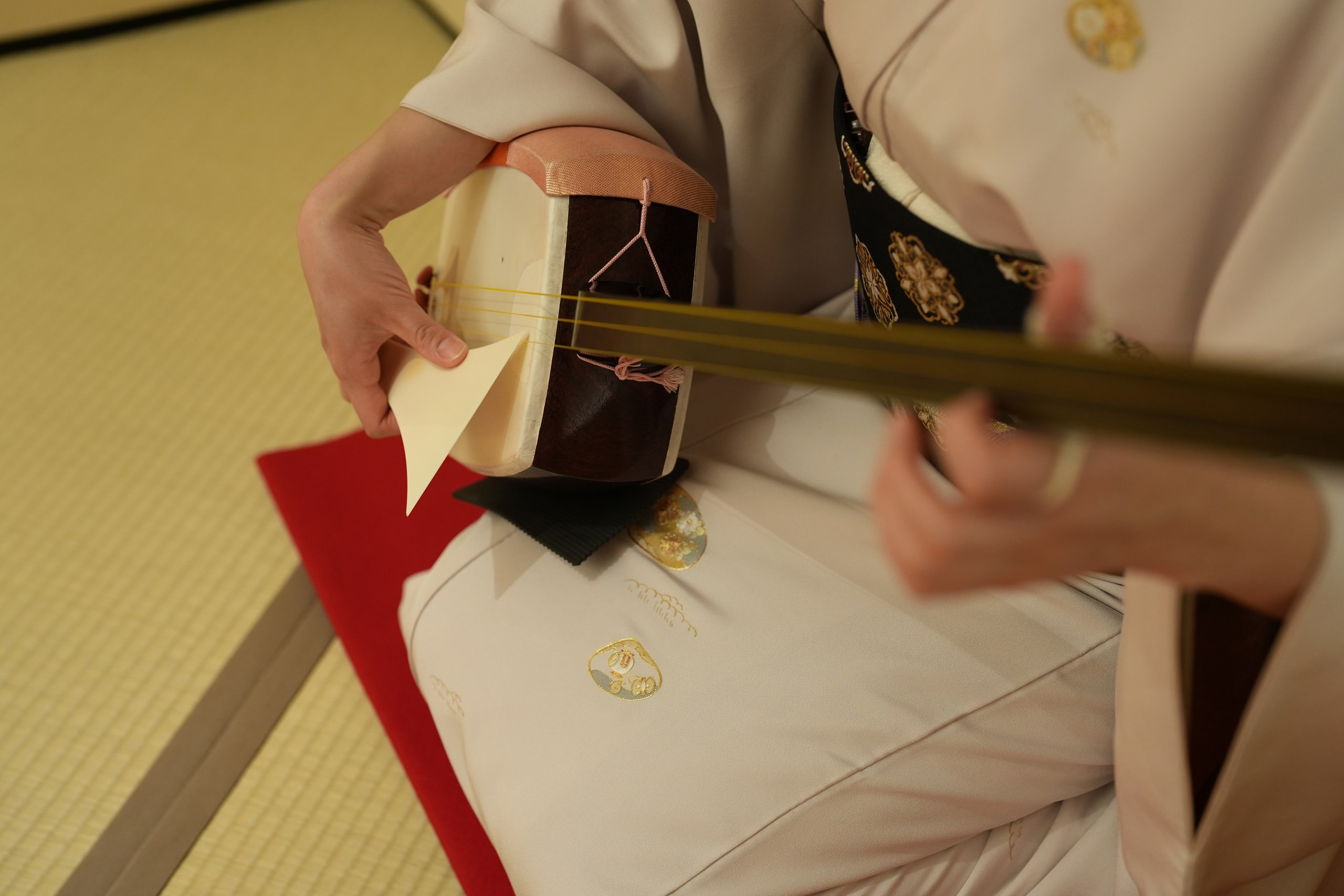
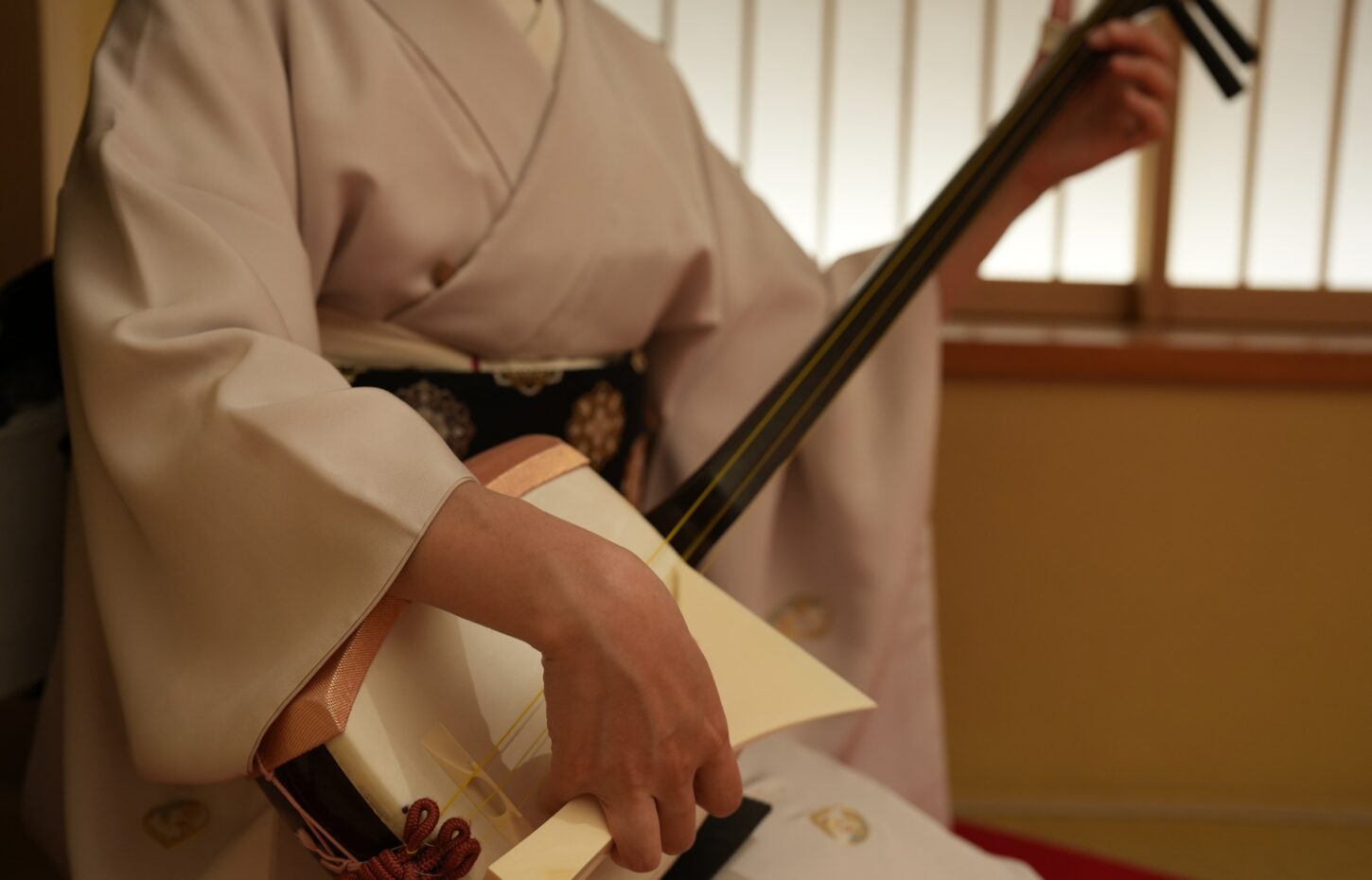
The shamisen (三味線) is the instrument most closely associated with geisha. Its three silk strings and resonant body produce a sound that is instantly recognizable — bright, percussive, and deeply evocative of old Japan.
Played with a large plectrum called a bachi, the shamisen produces sound through striking as much as plucking. The result is a tone that carries both melody and rhythm simultaneously, making it well suited to accompany singing, dance, or the movement of a performance.
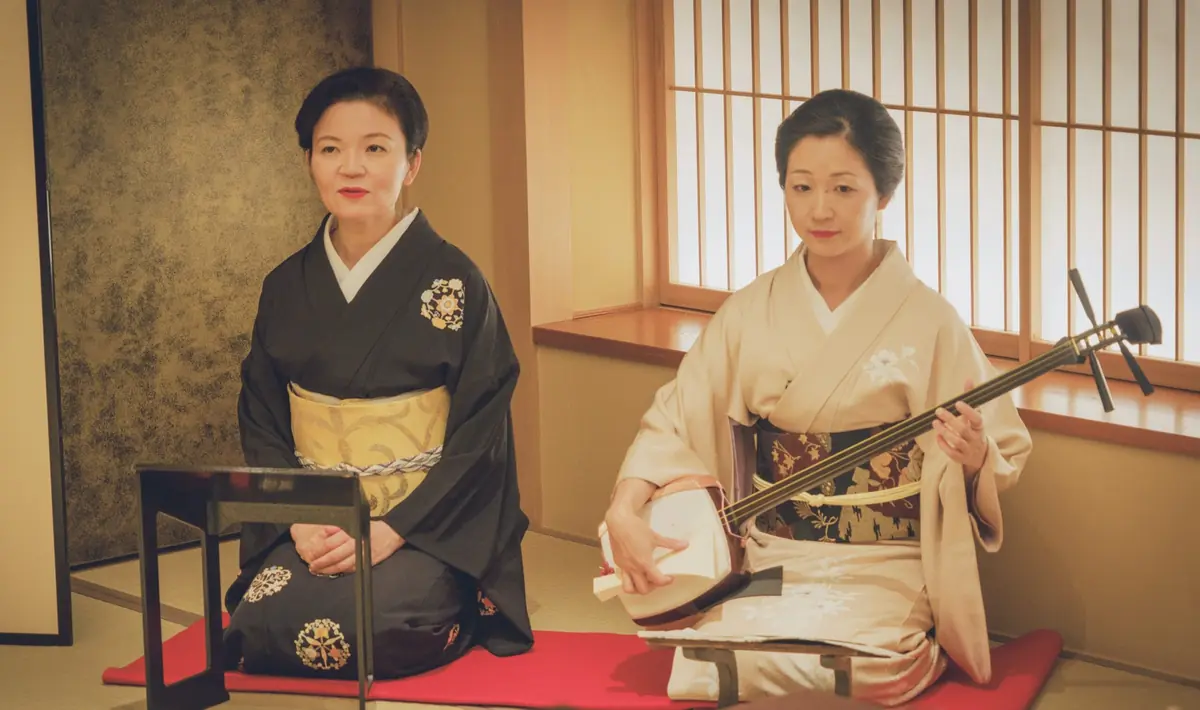
In the ozashiki, the shamisen player sits at the heart of the ensemble. When a banquet has only two geisha — a common arrangement in Asakusa — one jikata geisha typically handles both shamisen and vocal duties together. When larger groups of five or more are assembled, the roles split: one jikata focuses on voice (naga-uta), another on shamisen, and the drums are taken up by the dancers, or at times by a jikata.
The shamisen requires years, often decades, of dedicated practice. Many jikata geisha who specialize in it begin training in childhood. To explore the shamisen‘s history, construction, and tuning in depth, see our dedicated guide to the shamisen.
The Ko-Tsuzumi — Shoulder Drum
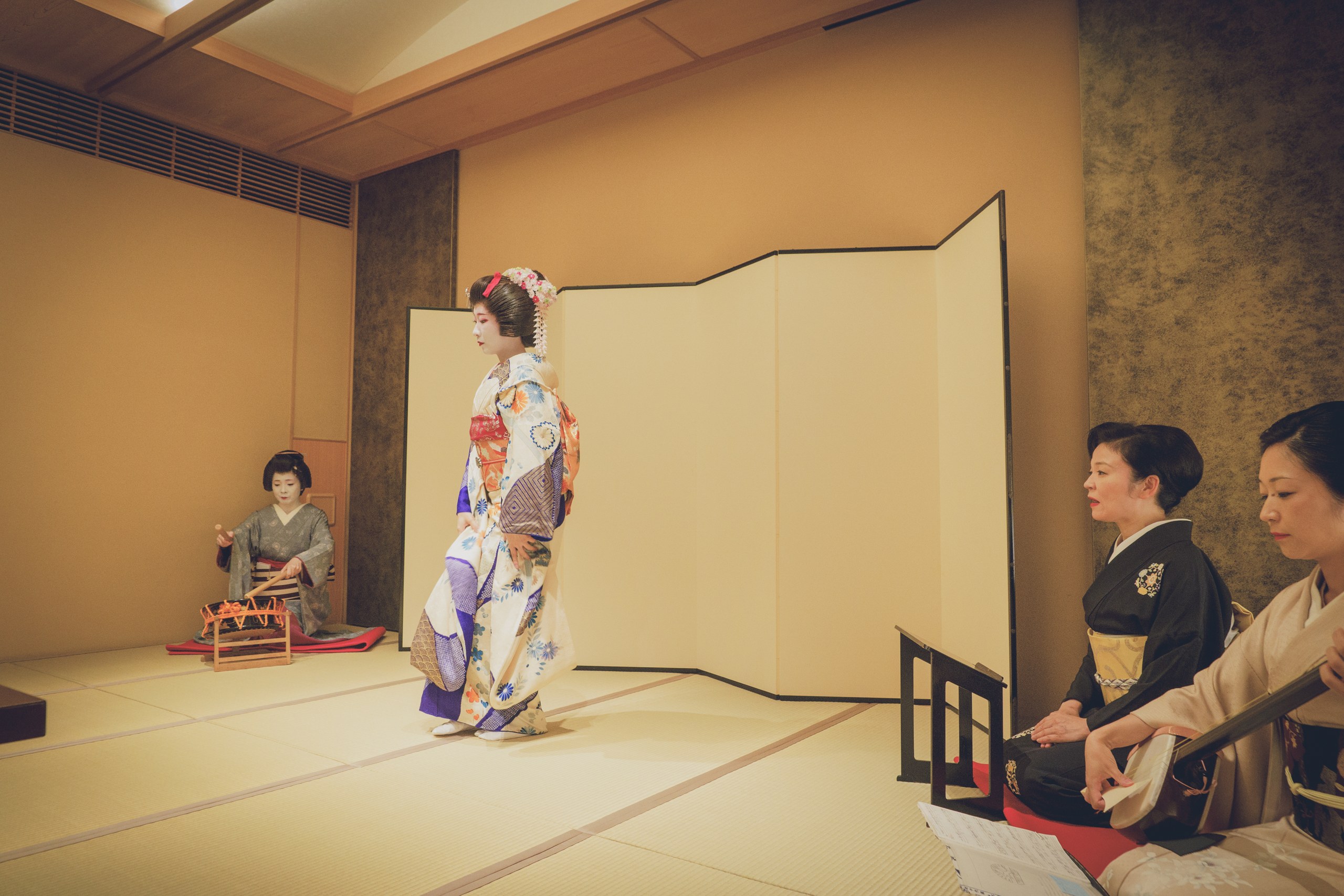
The ko-tsuzumi (小鼓), or simply tsuzumi, is one of Japan’s oldest percussion instruments. Dating back more than a thousand years, it arrived in Japan from continental Asia and became central to Noh theater before finding its place in geisha banquets.
The instrument is hourglass-shaped, with two drum heads connected by cords that run along the body. A player adjusts the tension of these cords — and therefore the pitch — by squeezing them against the body of the drum. This makes the ko-tsuzumi unusual: it is a tunable hand drum, capable of producing several distinct tones from a single instrument.
In performance, the ko-tsuzumi is held at the right shoulder. The player strikes the head with the fingers of the right hand, producing calls that punctuate the music — “yo!” being the most recognizable vocal cue that accompanies each strike. This interplay of drum sound and voice is one of the defining textures of ozashiki music.
The ko-tsuzumi‘s role in a geisha banquet is rhythmic and structural. It frames the phrases of naga-uta singing and marks the transitions in a dancer’s movements, giving the performance a skeletal architecture that keeps all elements aligned.
Taiko and Fue — Percussion and Flute
Taiko (太鼓)
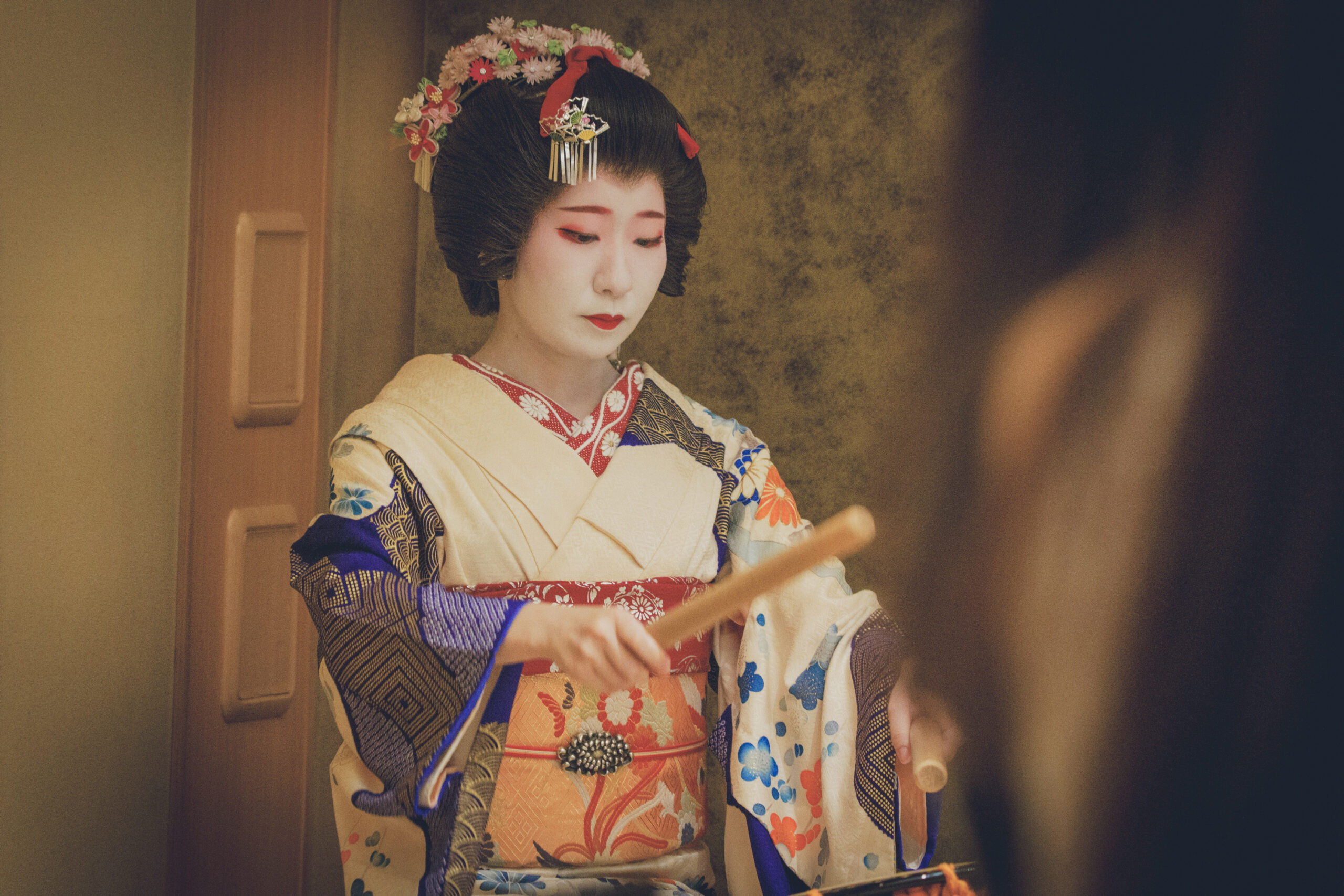
The taiko is a barrel drum stretched with animal skin and struck with wooden sticks called bachi. In the ozashiki context, the o-tsuzumi (大鼓, the larger counterpart of the ko-tsuzumi) and the shime-daiko (締め太鼓, a smaller tunable drum) appear more frequently than the large festival taiko most Westerners recognize.
In the ozashiki ensemble, the taiko provides the low rhythmic foundation. Its strokes are deliberate and spacious — geisha banquet music is not fast or dense, but measured and precise. Every beat is placed with intention, giving the dancer and the naga-uta singer room to breathe and move.
Fue (笛)
The fue is a general term for Japanese flutes. In the ozashiki setting, the shinobue (篠笛), a transverse bamboo flute with a bright and penetrating tone, is the most common. The nohkan (能管), associated with Noh theater, also appears in more formal ensemble pieces.
The fue adds a melodic counterline above the shamisen, its upper register cutting through the low percussion and adding brightness to the ensemble texture. In smaller banquet settings, the flute may be absent; in larger performances, it is the voice that ties the instrumental layers together into a coherent whole.
Naga-uta — The Voice of the Geisha
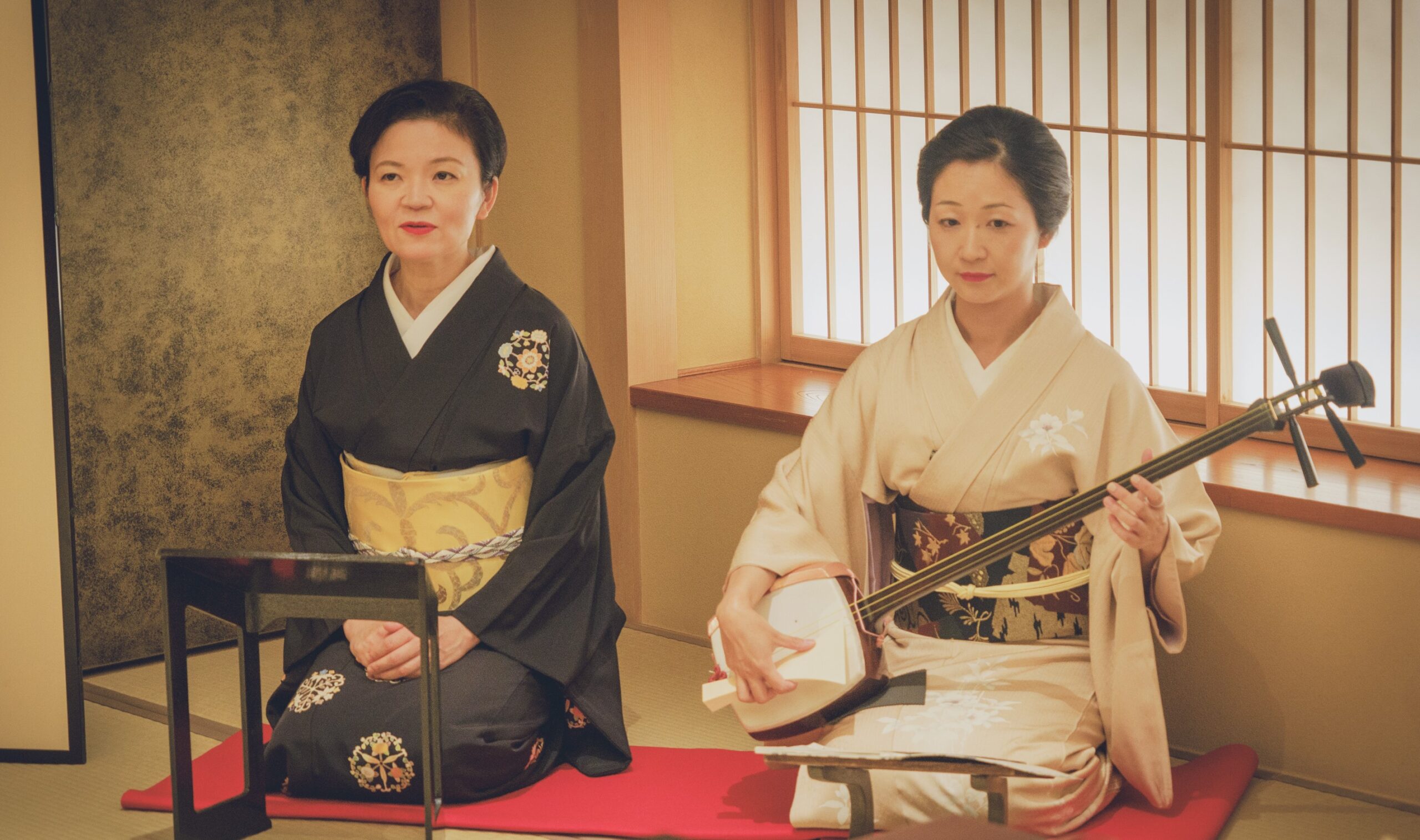
Naga-uta (長唄) — “long song” — is the primary vocal tradition of the ozashiki. It originated in Edo-period Kabuki theater and was carried into the geisha world, where it became the dominant form of sung entertainment at banquets.
A jikata geisha who sings naga-uta typically performs seated, often alongside a shamisen player. The style is highly refined: the voice does not simply carry melody but follows prescribed ornamentation, pitch inflections, and rhythmic patterns that take years to internalize. The texts draw from classical Japanese poetry, seasonal imagery, and the world of the licensed quarters — love, longing, celebration, and the passage of time.
In smaller ozashiki settings, naga-uta and shamisen are performed together by a single jikata geisha. In the traditional large ensemble, they separate into distinct roles: the singers (uta, 唄) and the instrumentalists, led by the shamisen. This division of labor is one of the reasons jikata geisha spend their careers specializing rather than generalizing.
Unlike tachikata (立方) geisha, who perform dance and whose art is visual, jikata geisha are rarely seen by guests to move dramatically. Their performance is contained, inward, and precise. This restraint is not absence — it is the discipline that makes the music hold.
A jikata geisha sings and plays at the same time — both halves of the ozashiki’s music carried by one person.
Jikata and Tachikata — Two Roles Within a Geisha Performance
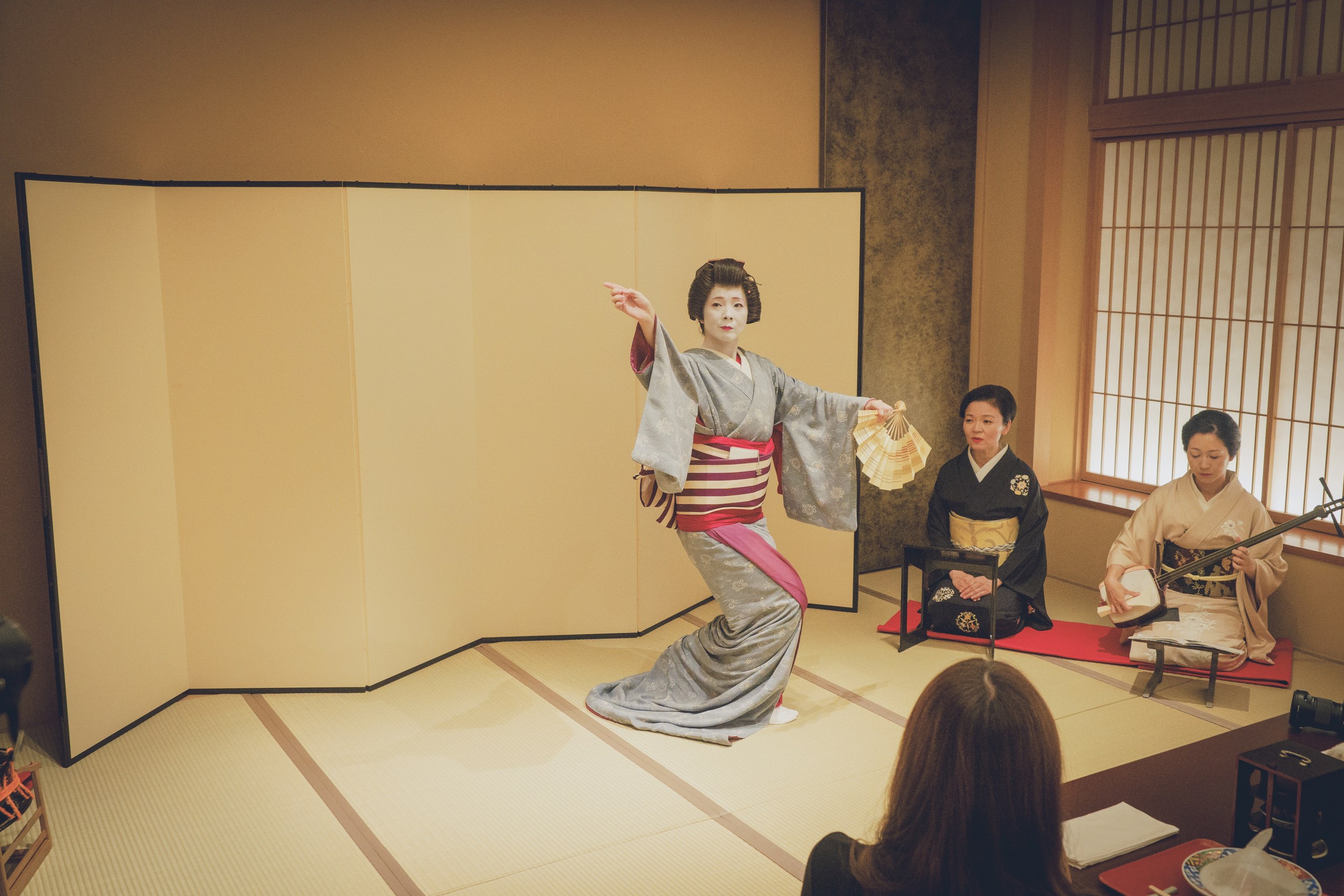
Every geisha performance in an ozashiki rests on a fundamental division: the tachikata (立方) and the jikata (地方).
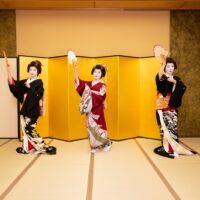
Tachikata are the dancers. Their name means “standing persons” — they perform standing, moving through the space of the ozashiki with fans, parasols, and the full vocabulary of Japanese classical dance. Tachikata are what most guests come expecting to see.
Jikata are the musicians. Their name means “persons of the earth” or, more practically, “those who provide the foundation.” They sit, they play, they sing. Without them, the tachikata have no music to dance to.
In a standard two-geisha banquet — the most common format in Asakusa’s hanamachi (花街, geisha district) — one geisha dances (tachikata) while the other sings and plays shamisen (jikata). Each covers her role entirely. When the ensemble grows, the roles subdivide: a jikata specialist in shamisen may not sing; a jikata specialist in voice may not play.
This division is not hierarchy. Jikata and tachikata are equal in status. They simply represent two different lifetime commitments, each requiring total dedication.
In Asakusa, as in other hanamachi across Japan, assembling a full instrumental ensemble requires careful coordination — skilled jikata who play multiple instruments train for decades, and each banquet is built around the specific artists available. This makes each performance at a venue like Miyakodori a carefully curated event rather than a standardized show. If you’re curious about Asakusa’s geisha community more broadly, see our guide to hanamachi (geisha districts).
Hearing Geisha Music Live in Tokyo
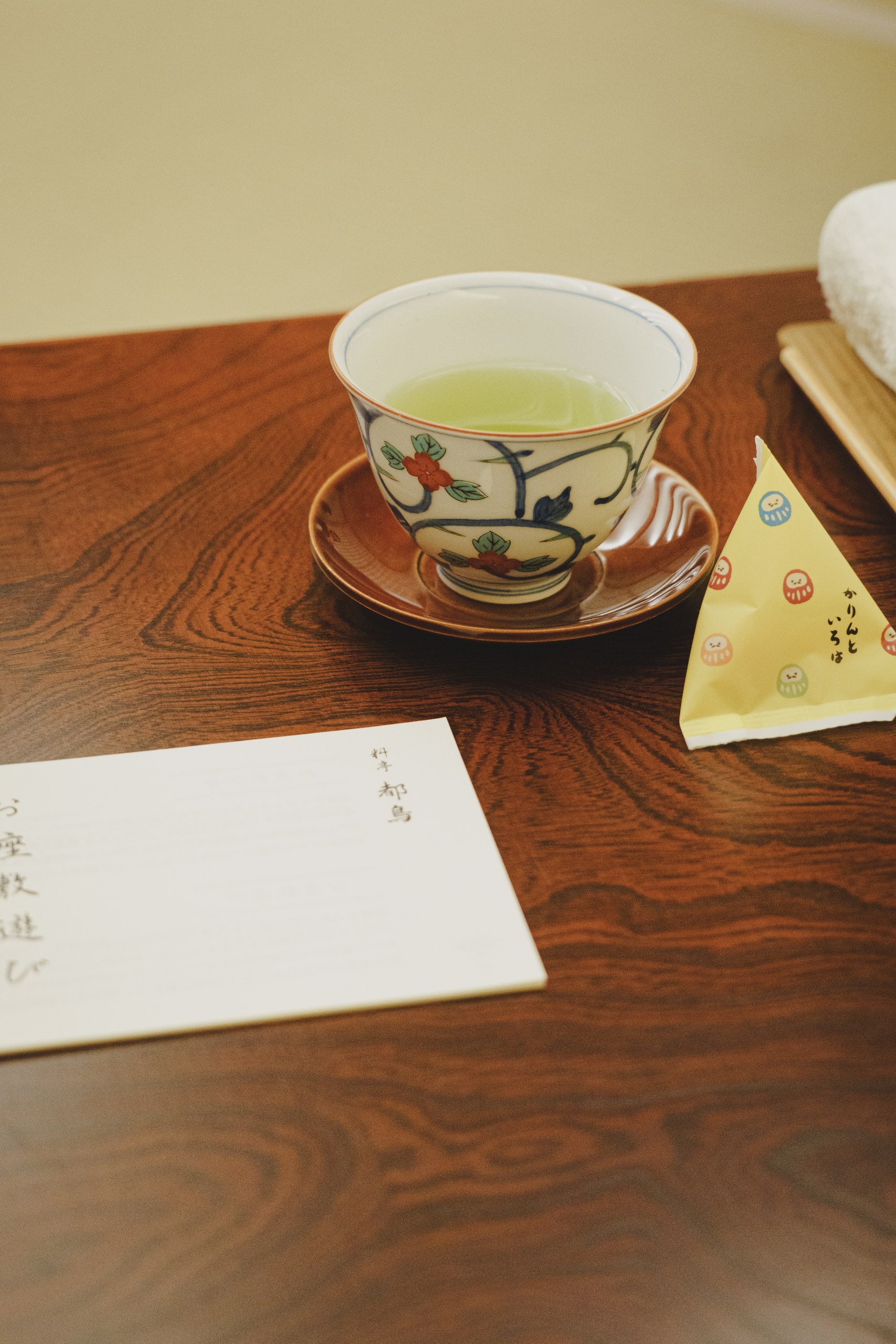
Most visitors to Tokyo do not realize that they can hear live geisha music — not in a theater, but in an actual ozashiki setting, surrounded by the same atmosphere that has framed geisha performance for centuries.
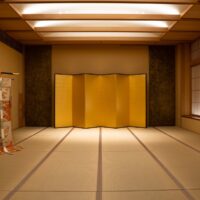
At Miyakodori in Asakusa, the Tea House program offers a structured introduction to this world. Our Tea House experience includes a live performance of seasonal dance accompanied by live shamisen, presented in an authentic ozashiki room.
For guests who want the fullest immersion, a private ozashiki — a banquet arranged just for your party — offers the deepest experience of this music; the Tea House program is simply the most accessible way to begin.
In our experience at Miyakodori, guests who have never encountered live shamisen are almost always struck by the same quality: the intimacy. A concert hall separates you from music. An ozashiki puts you inside it. The shamisen player is two meters away. The dancer’s silk brushes past the tatami in front of you. The ko-tsuzumi‘s sharp punctuation fills the room.
This is not a museum. It is a living tradition.
For those interested in the ozashiki drinking games that often accompany geisha performances — including the famous ozashiki drinking games played to the rhythm of live shamisen — see our guide. The Konpira Fune Fune game, played to the beat of live drumming, is a highlight guests return for. You may also be interested in the role of taikomochi (hokan), the male entertainers who sometimes join ozashiki alongside geisha.
Experience live geisha music at Miyakodori in Asakusa
Reserve Your SeatFrequently Asked Questions
- What instruments do geisha play?
- Geisha traditionally play the shamisen (three-stringed lute), the ko-tsuzumi (shoulder drum), the taiko (barrel drum), and the fue (bamboo flute), and sing naga-uta (long-song vocal music). The shamisen and song belong to the jikata, the musicians; the drums are played by the tachikata, the dancers, and at times by the jikata as well. Not every geisha plays all instruments — most specialize in one or two over a lifetime of practice.
- What is a jikata geisha?
- A jikata geisha is a geisha who specializes in music — playing the shamisen and singing naga-uta — rather than dance. The term jikata (地方) contrasts with tachikata (立方), the dancing geisha. Drums and other percussion are not tied to either role: the tachikata play them, and at times the jikata do too. Both roles are equally important within an ozashiki performance.
- Is the shamisen hard to learn?
- Yes. The shamisen requires years of intensive practice to play at a performance level. Jikata geisha who specialize in shamisen often begin training in childhood and continue refining their technique throughout their careers. The instrument demands precise plectrum control, breath coordination when played alongside singing, and a deep internalization of repertoire.
- How is the tsuzumi drum used in ozashiki?
- The ko-tsuzumi is held at the right shoulder and struck with the fingers of the right hand. Players vocalize calls (“yo!”) alongside each strike, creating a combined vocal-percussive texture. In performance, the ko-tsuzumi punctuates phrases in naga-uta singing and marks transitions in dance, giving the ensemble its rhythmic structure.
- Can I hear live geisha music in Tokyo?
- Yes. At Miyakodori in Asakusa, the Tea House program includes a live performance with shamisen accompaniment. This is an ozashiki-setting experience, not a theater performance — guests sit in the banquet room with the geisha. Reserve a seat here.
- What is the difference between tachikata and jikata geisha?
- Tachikata (立方) geisha are dancers: they perform standing, using fan, parasol, and classical Japanese dance movement. Jikata (地方) geisha are musicians: they sit and provide the live music and vocals. The two roles are complementary and equally valued — a complete ozashiki performance requires both.
Ready to experience the shamisen, the tsuzumi, and the full ozashiki ensemble live?
Reserve a seat at Miyakodori in Asakusa.
Reserve Your Ozashiki Experience


- Why Geisha Are Special: An Art Refined for 200 Years, Explained by a Third-Generation Owner
- Japanese Culture vs American Culture: A Traveler's Guide

Luxury Adult Trip in Asakusa | Comprehensive Guide to Upscale Hotels, Dining, and Experiences
Tokyo VIP Tours, Reimagined: An Evening at Miyakodori
How Many Geisha are Left in Japan? The Truth About the Modern World of Geiko in 2026
The Poems of Ariwara no Narihira — and the One Behind Our Name
The Shamisen: Japan’s Three-Stringed Lute and the Soul of Geisha Music
The Miyakodori Bird in Ukiyo-e: Hiroshige’s Namesake
Comment ( 0 )
Trackbacks are closed.
No comments yet.