



Geisha Dance: The Nihon Buyo You Will See at an Asakusa Ozashiki
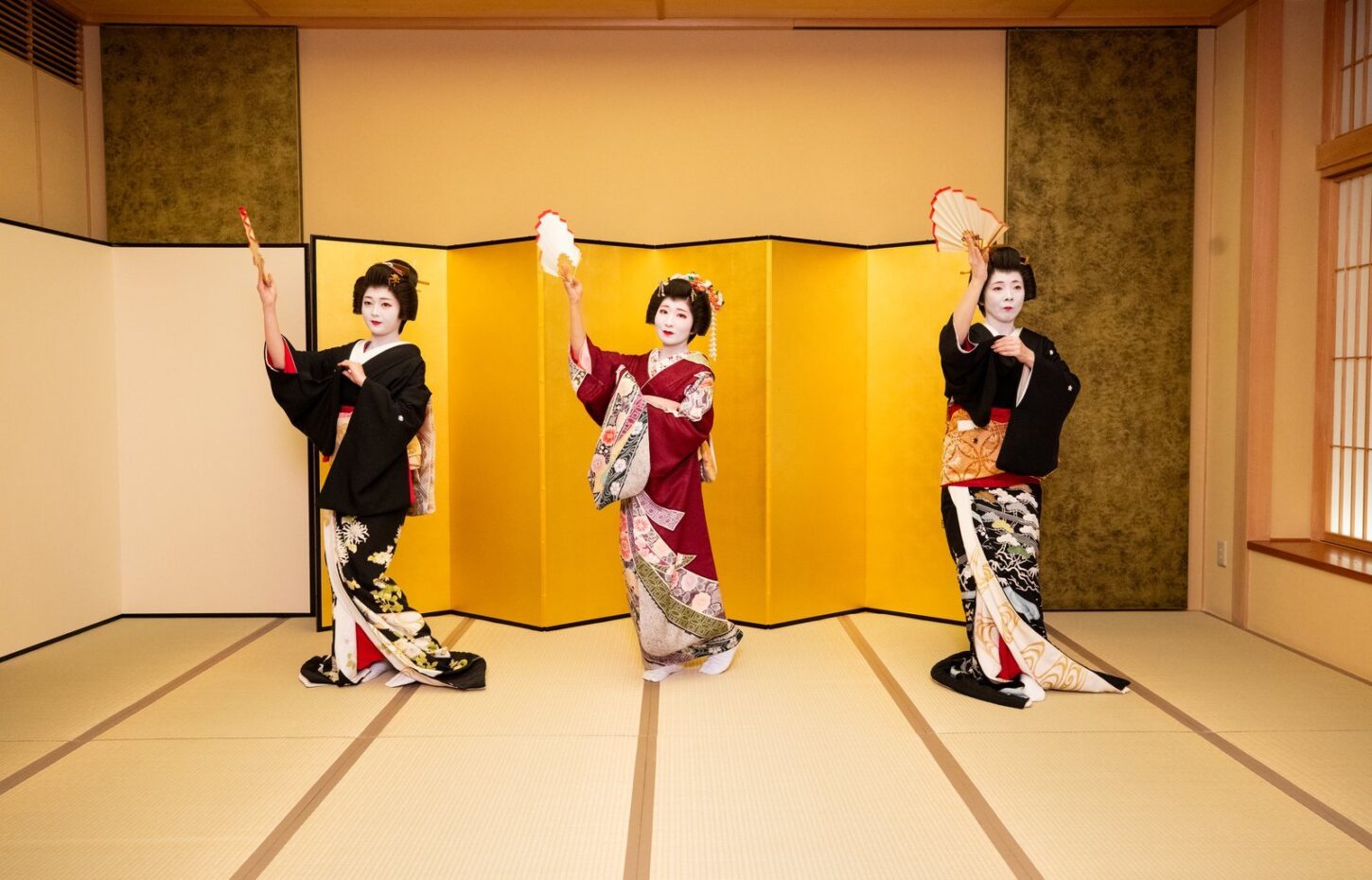
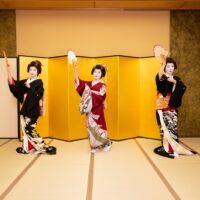
Geisha dance is nihon buyo, Japanese classical dance, performed by the geisha known as tachikata to live shamisen and song from the jikata. In Asakusa, Tokyo, geisha train in the Hanayagi and Fujima schools, and a typical banquet includes three or four short dances lasting ten to fifteen minutes in all. A first-time guest will almost always see the two Asakusa standards, “Asakusa Meibutsu” and “Sawagi.”
What Is Geisha Dance?
The dance geisha perform is nihon buyo (日本舞踊), the classical dance of Japan. It grew out of the dance scenes of kabuki theatre, and it tells its stories through the hands, the fan, and the angle of the body rather than through leaps or fast footwork. At an Asakusa ozashiki, much of what you see is mime: the dancer shows you, line by line, what the song is describing.
A geisha is, first of all, a performer. The word itself means “person of the arts,” and what separates the profession from other forms of hospitality comes down to that one word: at every engagement, a geisha performs. Dance is one of the arts she spends her working life practicing, alongside music, song, and the manners of the banquet room.
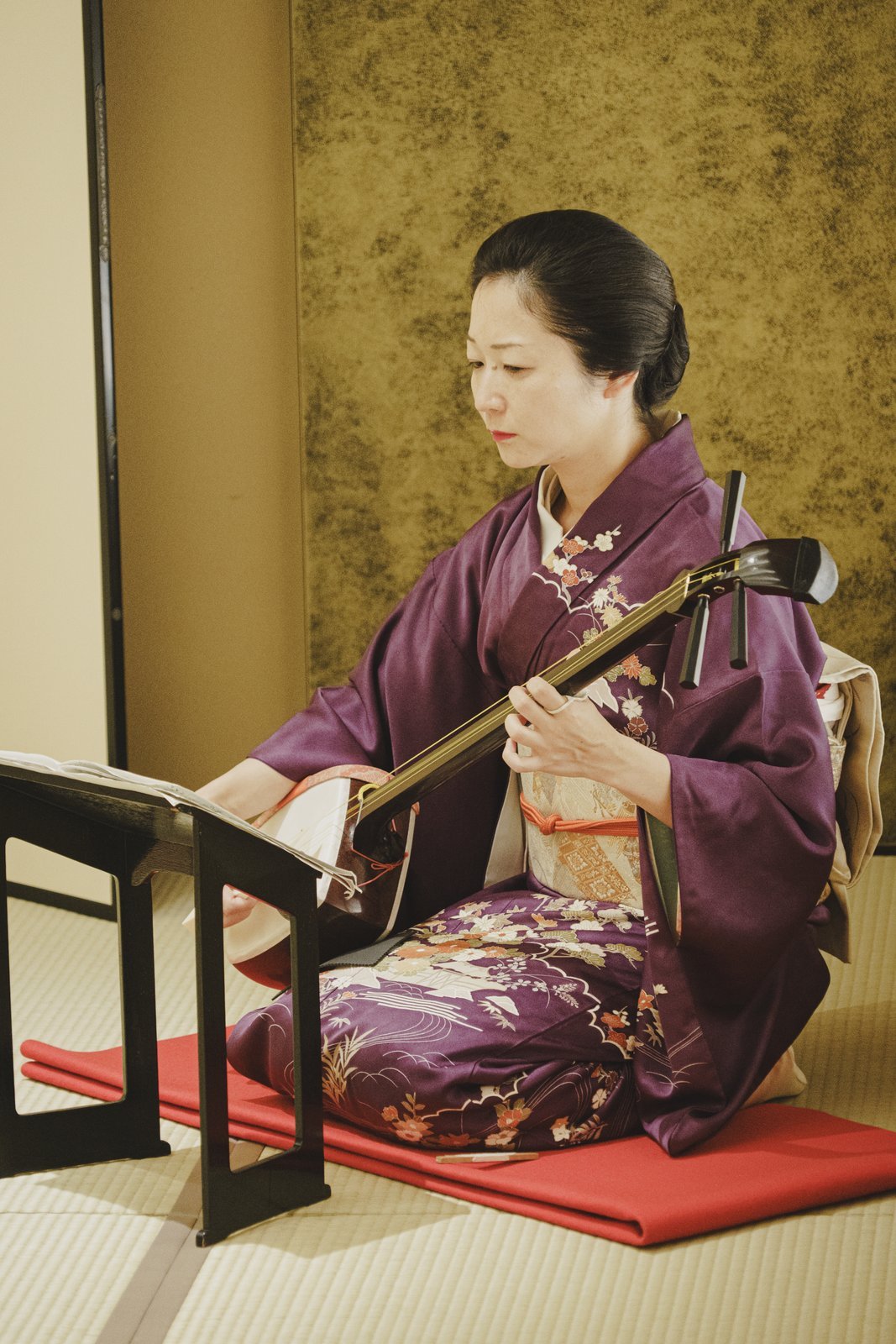
In the geisha world, the dancers are called tachikata (立方) and the musicians who play the shamisen and sing are called jikata (地方). For how the two roles work together, and the instruments the jikata play, see our guide to geisha instruments. This article is about the tachikata’s side: the dance itself.
The Schools: Hanayagi and Fujima
Nihon buyo is taught through schools, or ryū, each with its own head (iemoto) and its own way of moving. Geisha in Asakusa study in the Hanayagi and Fujima schools. Lists found elsewhere online sometimes name other schools for Asakusa; the two used here are Hanayagi and Fujima.
Some geisha go on to earn a natori, a professional name granted by their school as a mark of accomplishment. It is an achievement, not a requirement: a Tokyo geisha must train in dance, but she does not need a formal license to perform at a banquet. The okami (proprietress) of our house, who worked as an Asakusa geisha for twenty-seven years, from fifteen to forty-two, holds a shihan-dai (assistant master’s) license in the Hanayagi school and danced on major Tokyo stages, including the Kabuki-za and the National Theatre, during her career.
What Dances Will You See at an Ozashiki?
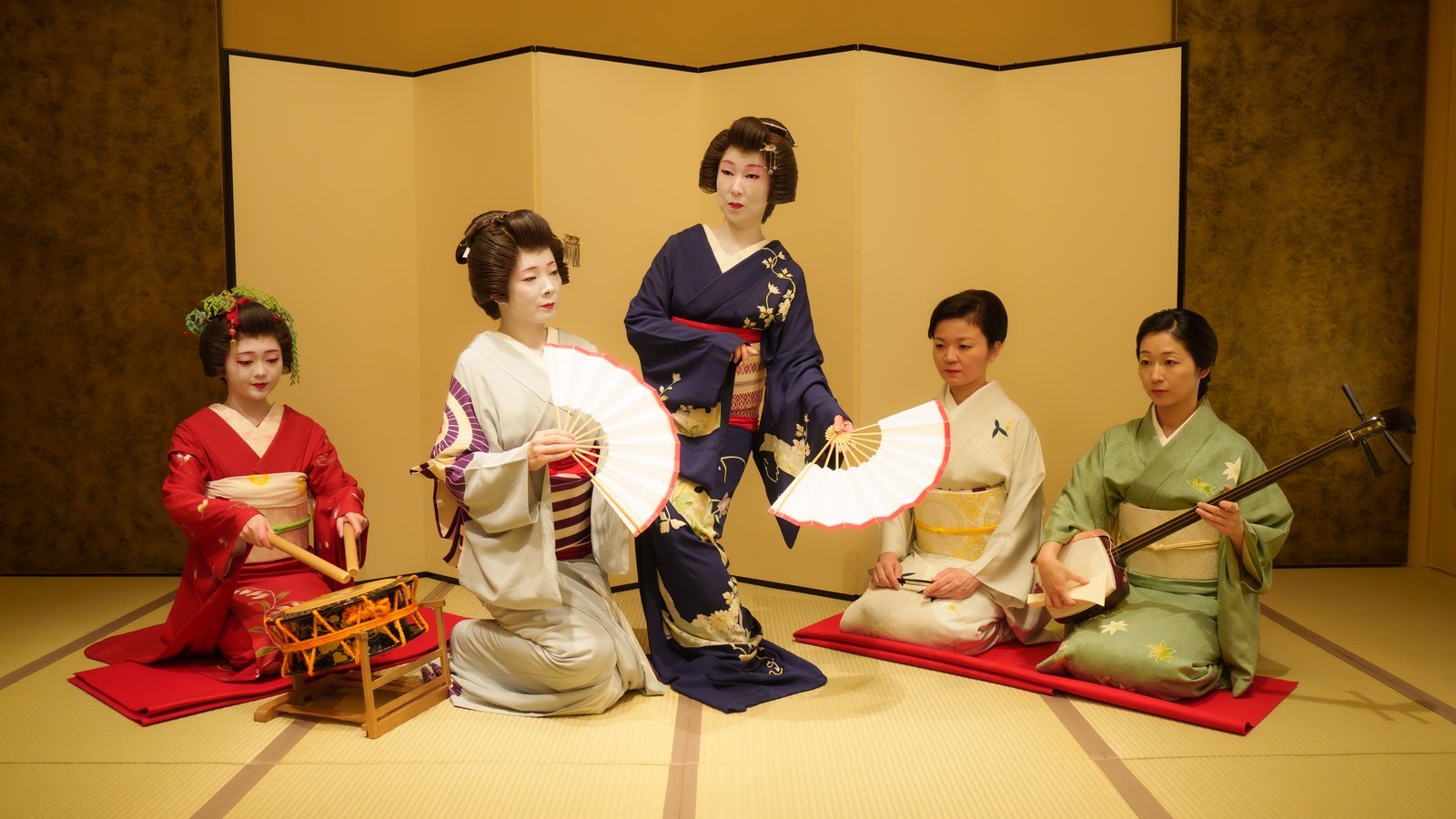
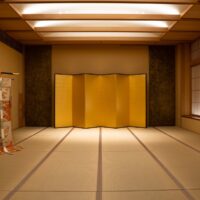
An ozashiki is a private banquet with geisha, held in a tatami room. In Asakusa, the dances follow a pattern that regular guests know well.
Asakusa Meibutsu (浅草名物) — “Famous Things of Asakusa.” This piece was made for the district itself. From its first moments the dancer uses her fan and hands to draw the neighbourhood: the Sanja Festival, the portable shrines carried through the streets — the closed fan becomes a carrying pole on her shoulder — and the landmarks of old Asakusa.
Sawagi (さわぎ) — a lively, short piece danced in almost every one of Tokyo’s six geisha districts. It is much older than Asakusa Meibutsu and comes from the Yoshiwara, Edo’s old pleasure quarter. Its song pictures a host seeing guests off at the end of an evening. The lyrics and the steps change with the occasion and the season — there are versions for celebrations, for spring, for summer, and for the New Year.
Asakusa Goyomi (浅草ごよみ) — “The Asakusa Calendar,” a set of four pieces for spring, summer, autumn, and winter. The choreography changes every year.
Today, Asakusa Meibutsu followed by Sawagi has become something close to a set. For a guest’s first ozashiki, these are the two dances they will almost certainly see. Beyond them, the geisha choose seasonal pieces, and on celebratory occasions they switch to celebratory songs.
How the Dance Unfolds in the Room
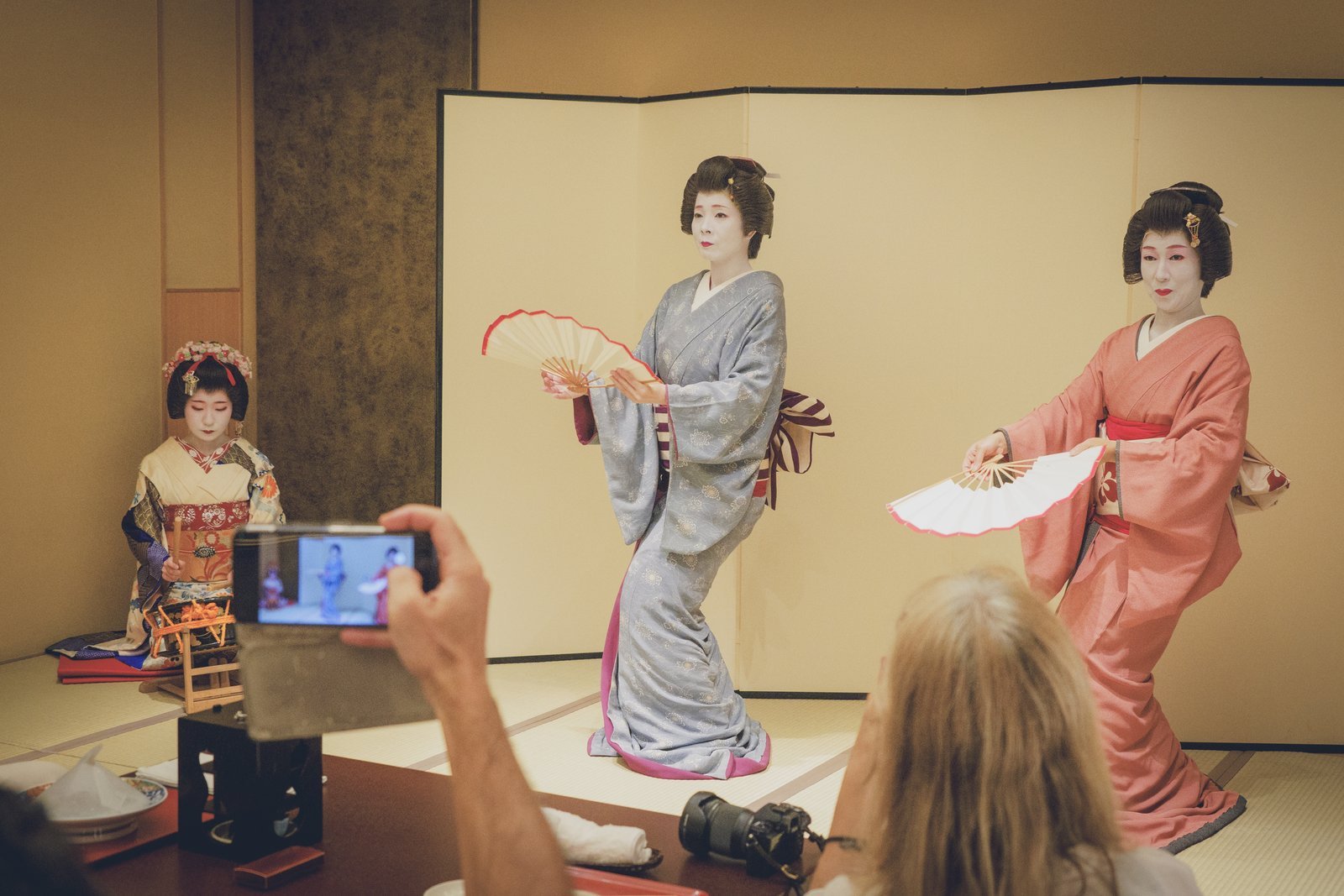
The performance is short and comes in the first half of the banquet. About twenty minutes after the geisha enter, they step out briefly to prepare. When they return, the jikata take their places — a felt cloth, the mōsen, is laid where they sit — and tune their shamisen. That tuning is the signal that the dancing is about to begin.
Three or four dances follow, lasting ten to fifteen minutes in all. The songs are chosen by the jikata and tachikata on the spot; guests rarely make requests. Unlike a theatre, the room is not darkened for the performance. If anything, the lights are turned up a little so the dancers can be seen.
Guests who have heard only recorded shamisen are often surprised by how different the live instrument is. When the first notes sound, a room that was full of conversation goes still. At the end of the last dance there is a moment of silence before the applause — and then the dancers come straight back to the table to pour drinks.
For the full evening around the dance, see our guide to the ozashiki experience.
See Asakusa Meibutsu and Sawagi Danced a Few Meters Away
At a private ozashiki (geisha banquet) in Asakusa, the dance happens right in front of you — live shamisen, no stage, no distance. First-time and overseas guests are welcome.
Request a ReservationApprentice and Full Geisha Dance Differently
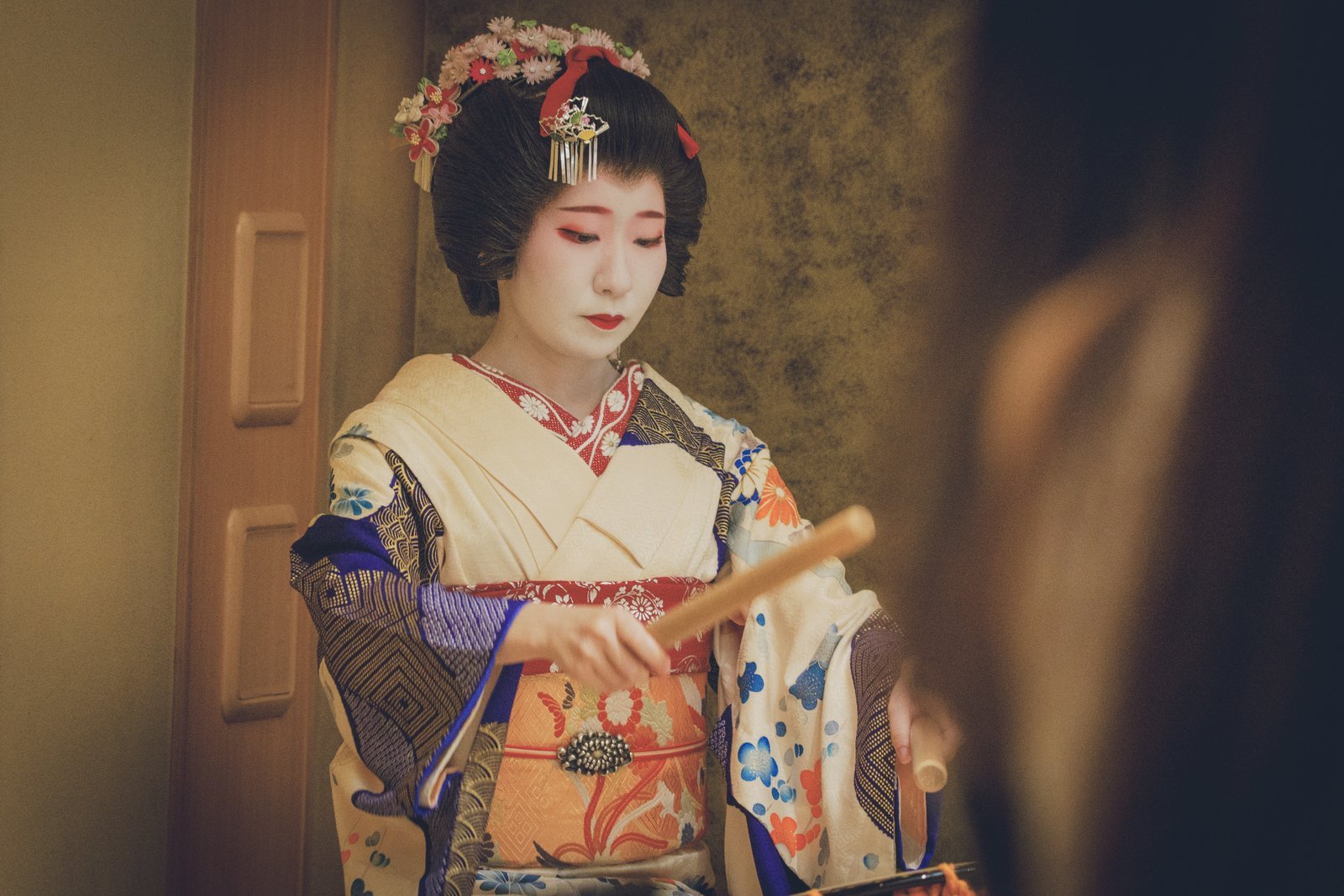
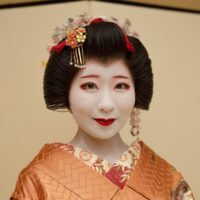
Tokyo’s apprentice geisha are called hangyoku. Their lessons are the same as a full geisha’s — dance and percussion, day after day — but the dances they perform are not. A hangyoku’s dances are chosen to look sweet and youthful. A full geisha, or ippon, trails the hem of her kimono and dances with the adult poise the geisha world calls iki: refined, a little knowing, never heavy.
Sawagi shows the difference clearly. By the custom of Asakusa, hangyoku do not dance Sawagi at an ozashiki; it belongs to the full geisha. On stage, the apprentices dance it too, but in the banquet room it is a piece the young ones look forward to earning. At an ozashiki a hangyoku will often take the drum while her seniors dance.
How long a hangyoku stays an apprentice varies — usually somewhere between two and four years, depending on her age, her appearance, and how her arts are progressing.
How Geisha Train
The okami of our house began her lessons at the age of five, on the sixth day of the sixth month — an old custom held that a child who starts then will not tire of the arts and will become good at them. As a hangyoku her essential lessons were dance, percussion, and the tea ceremony, and she added shamisen, song, and ko-uta (short songs) on top. A typical day meant lessons from about ten in the morning — three of them if she could fit them in — then home, an early dinner, dressing and hair, and the evening’s engagements from five or six o’clock.
The tea ceremony in that list is part of a geisha’s training in poise and manners. It is not something performed at the banquet: an ozashiki does not include a tea ceremony.
Behind the training sits an idea the geisha world takes seriously. The dances were refined by generations of performers until they became kata — fixed forms that anyone can practice. To take lessons is to receive what those who came before built up, in a form that can be handed on. Training does not end when a geisha becomes ippon; the saying in the district is that the arts are for life.
On Stage: From the Asaji-kai to Asakusa Odori
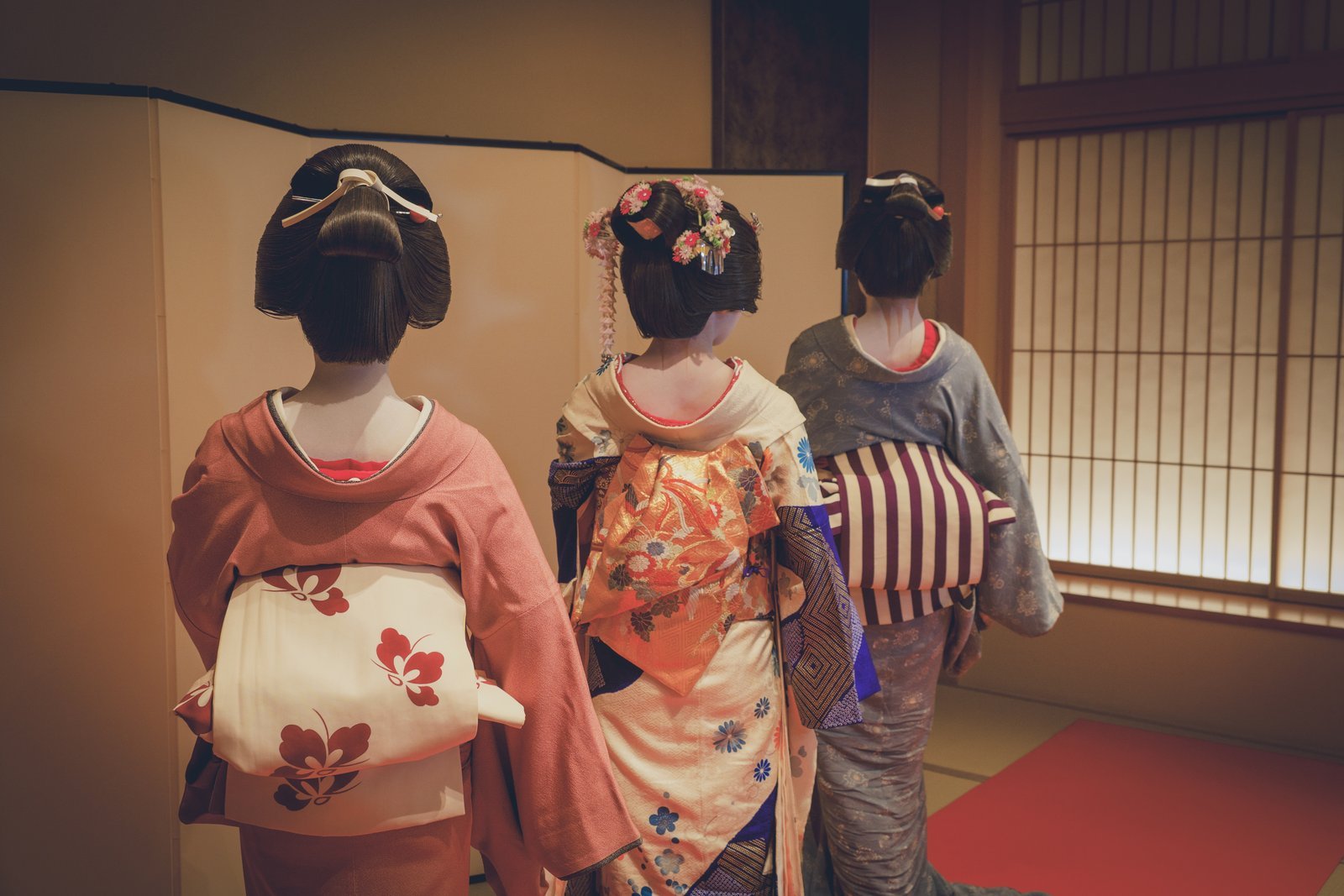
Geisha also dance in public, on stage. In Asakusa the tradition began in 1950 with the Asaji-kai, a recital named by the Asakusa-born playwright Kubota Mantarō; its first performance was held at the Sumida Theatre above the Matsuya department store. In 1995 it took the name it carries today, Asakusa Odori. At the Sanja Festival in May, Asakusa geisha join the procession and dance an offering in the grounds of Asakusa Shrine.
The stage and the banquet room are different worlds. On stage the programme is fixed, the audience is large, and the hangyoku dance alongside their seniors. At an ozashiki the dances are chosen for the room, the audience is a single party a few meters away, and the performance lasts a quarter of an hour. For the public performances, see our Asakusa Ozashiki Odori guide.
Tokyo and Kyoto: Two Ways of Dancing
Kyoto’s geisha districts have their own dance traditions, and the best known belongs to Gion Kōbu, whose dancers study the Inoue school. Our okami, who trained in Tokyo, describes the Inoue style as “completely different” from the Hanayagi, Fujima, and Onoe schools familiar in Tokyo — and offers a personal impression of the two cities: Tokyo dancers aim for iki, a sharp, understated elegance; Kyoto aims for a gentle refinement. Both, in her words, are her own image rather than a rule.
One historian of the Tokyo geisha world makes a related point: Tokyo’s banquet dances stay close to their roots in kabuki, where the movement illustrates the words of the song. The Kyoto tradition developed along a different line. Neither is a lesser version of the other; they grew from different soil. Kyoto has its own customs too. One book on geisha entertainment notes that in Gion, a maiko traditionally dances “Gion Kouta” for a first-time guest, much as a first-time guest in Asakusa sees Asakusa Meibutsu and Sawagi.
For the wider differences between the two systems, see maiko vs geisha.
Where the Banquet Dance Came From
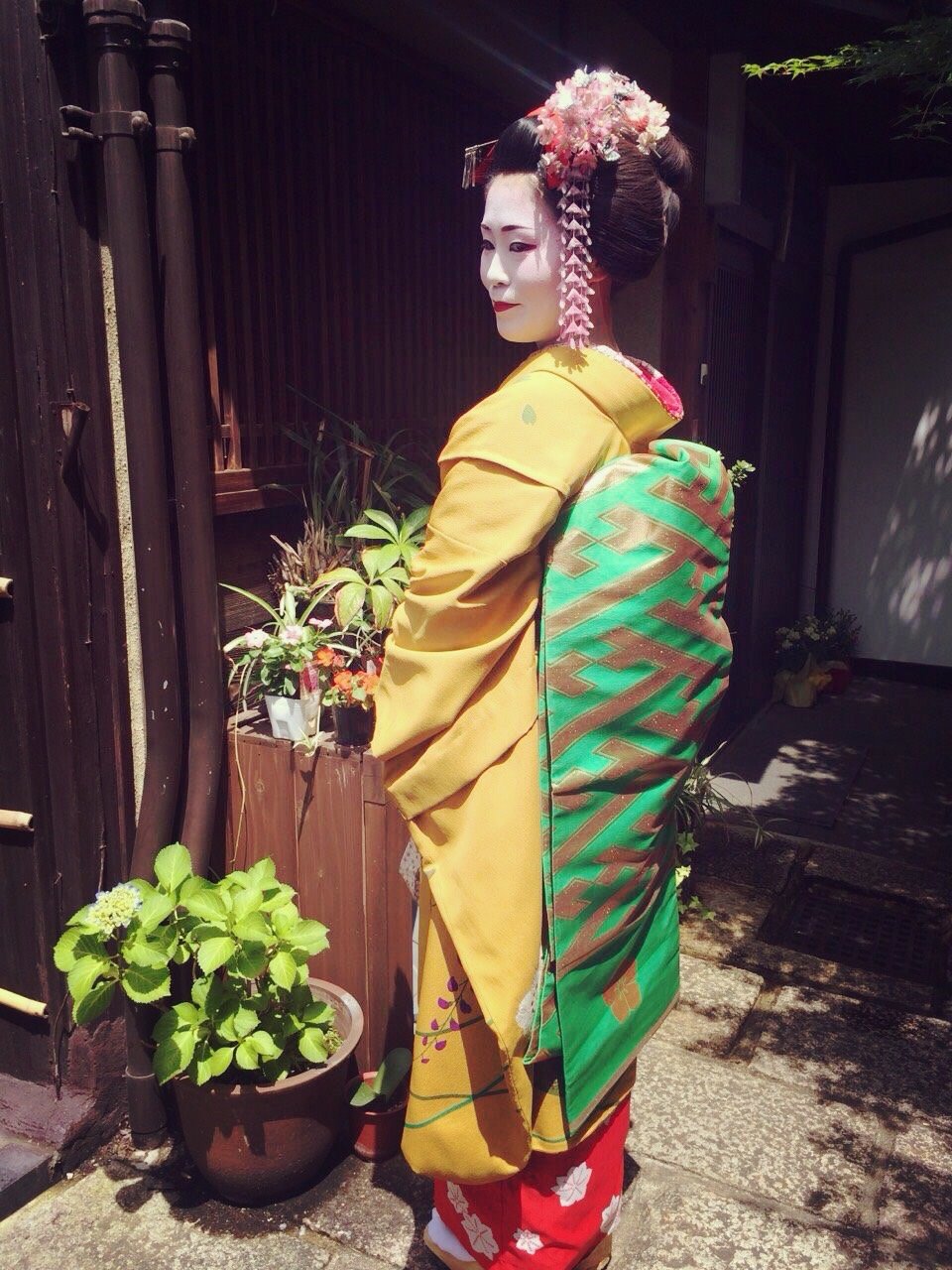
One history of the Tokyo geisha world traces the banquet dance back to kabuki. In the Edo period (1603–1868), the dance scenes of kabuki were carried out of the playhouses and taught in town; the teachers were often former actors, but it was the young dancing girls, the odoriko, who spread the dances through the city. As the odoriko gave way to the geisha, those dances came with them, and the kabuki-style storytelling survives in the banquet room today.
The form of the ozashiki itself has changed remarkably little in two hundred years, and it still delights guests who have never seen it before. At Miyakodori, we think that is because the dances, the music, and the room have been refined over such a long time. The choreography is renewed every year, but the form itself is something the geisha of Asakusa learn and carry on.
Frequently Asked Questions
What is geisha dance called?
It is nihon buyo, Japanese classical dance. The geisha who dance are called tachikata; the musicians who accompany them on shamisen and song are called jikata.
What dance schools do Asakusa geisha study?
The Hanayagi and Fujima schools.
How long is the dance performance at an ozashiki?
Usually three or four dances, about ten to fifteen minutes in all, in the first half of the banquet.
What dances will I see at a first ozashiki in Asakusa?
Almost always “Asakusa Meibutsu” and “Sawagi,” with seasonal pieces chosen by the geisha on the day.
Do apprentice geisha dance?
Yes, but not every piece. In Asakusa, apprentices (hangyoku) do not dance Sawagi at a banquet; they often play the drum instead. On stage, they dance it too.
Is there a tea ceremony at an ozashiki?
No. Geisha study the tea ceremony as part of their training in manners, but it is not performed at the banquet.
Book a Private Ozashiki in Asakusa
Watch nihon buyo performed live at a private ozashiki (geisha banquet), just a few meters from your table. First-time and overseas guests are welcome without an introduction. Full pricing is on our pricing page.
Request a Reservation


Kanzashi: A Guide to Japanese Hair Ornaments
【Wish Come True】Complete List of Benefits at Senso-ji Temple! Also Introducing the Correct Worship Methods
Celebrate the Start of 2026 in Asakusa — Your Complete Guide to a Perfect New Year’s Day
The Best Kakigori in Asakusa: Top Shaved Ice Shops & Visitor Guide
Traditional Japanese Games: From Shogi to Geisha Parlor Play
No comments yet.