



Geisha Movies: Films, TV Series and Documentaries to Watch, Picked by an Asakusa Teahouse
Geisha movies fall into four groups: Japanese classics from the 1930s to the 1950s, such as Kenji Mizoguchi’s A Geisha (1953) and Mikio Naruse’s Flowing (1956); Hollywood films, the most famous being Memoirs of a Geisha (2005); recent comedies and series about maiko, including the Netflix series The Makanai: Cooking for the Maiko House (2023); and documentaries in which geisha speak for themselves, such as Real Geisha, Real Women (2009). Most are set in Kyoto. The table below lists the 13 titles in this guide, and each section says what the film shows and what to know before you watch.
We are Miyakodori, a machiai-chaya in Asakusa, founded in 1950. A machiai-chaya is a traditional teahouse where geisha are called to entertain guests, and geisha perform at our ozashiki, gatherings in a tatami room with dance, live music, games and conversation. Many guests arrive thinking geisha are a Kyoto tradition, and some who have seen Memoirs of a Geisha come with questions about it. We chose the titles below with those guests in mind, and a later section explains what an ozashiki is like in person.
Where to watch depends on your country and changes over time, so check your own streaming service, or a site that tracks where films are available, before you plan a viewing. Some titles with “geisha” in the name are made for adult audiences, so check the age rating as well.
Geisha Movies at a Glance
Release years, directors and casts were checked on 1 November 2026, and the table follows the order of the sections below. Eight of the 13 titles are set in Kyoto and three in Tokyo.
| Title | Type | Set in | What it shows |
|---|---|---|---|
| Sisters of the Gion (1936) | Japanese drama film | Gion, Kyoto | Two geisha sisters with opposite views of the old ways |
| A Geisha (1953) | Japanese drama film | Gion, Kyoto | A new maiko and the geisha who trains her, after the war |
| Late Chrysanthemums (1954) | Japanese drama film | Tokyo | Four retired geisha making their way after the war |
| Flowing (1956) | Japanese drama film | Tokyo | A geisha house in debt, seen through its new maid |
| The Barbarian and the Geisha (1958) | Hollywood film | Shimoda, 1850s | The first American consul general in Japan |
| My Geisha (1962) | Hollywood comedy | Japan | A film star who disguises herself as a geisha |
| Memoirs of a Geisha (2005) | Hollywood film | Gion, Kyoto, from 1929 | A geisha’s story from childhood, filmed mostly in California |
| Maiko Haaaan!!! (2007) | Japanese comedy film | Kyoto | A salaryman infatuated with maiko |
| Lady Maiko (2014) | Japanese musical comedy | Kyoto | A country girl who wants to become a maiko |
| The Makanai: Cooking for the Maiko House (2023) | Netflix series, 9 episodes | Gion, Kyoto | Two friends from Aomori, one in training and one cooking |
| Hannari: Geisha Modern (2006) | Documentary, 95 minutes | Kyoto | The arts geiko train in, narrated in English |
| Real Geisha, Real Women (2009) | Documentary, 52 minutes | Kyoto | Geiko and maiko in their own words |
| The Geisha of Tokyo (2026) | TV report, ABC (Australia) | Tokyo, including Asakusa | Geisha and teahouses in Tokyo today |
Classic Geisha Films from the 1930s to the 1950s
Kenji Mizoguchi and Mikio Naruse each made films about geisha while the world they showed was still part of everyday life. Mizoguchi set his in Gion, a geisha district of Kyoto, and Naruse set his in Tokyo. The four below show the obligations and money worries of the profession more plainly than most films made since.
Sisters of the Gion (1936)
Mizoguchi’s black and white drama follows two geisha sisters in Gion, Umekichi (Yoko Umemura) and Omocha (Isuzu Yamada), who take opposite views of the old obligations of their profession. The elder keeps to them. The younger, who went to a public school and wears Western clothes when she is not working, does not. It is the oldest film on this list, and it shows how the profession looked before the war.
A Geisha (1953)
Mizoguchi returned to Gion after the war with A Geisha, known in Japanese as Gion bayashi. A young woman, Eiko (Ayako Wakao), asks the geisha Miyoharu (Michiyo Kogure) to train her as a maiko, the name Kyoto uses for a young geisha still in training. The film follows the two women from Eiko’s lessons and debut into the pressures of the trade, in 85 minutes.
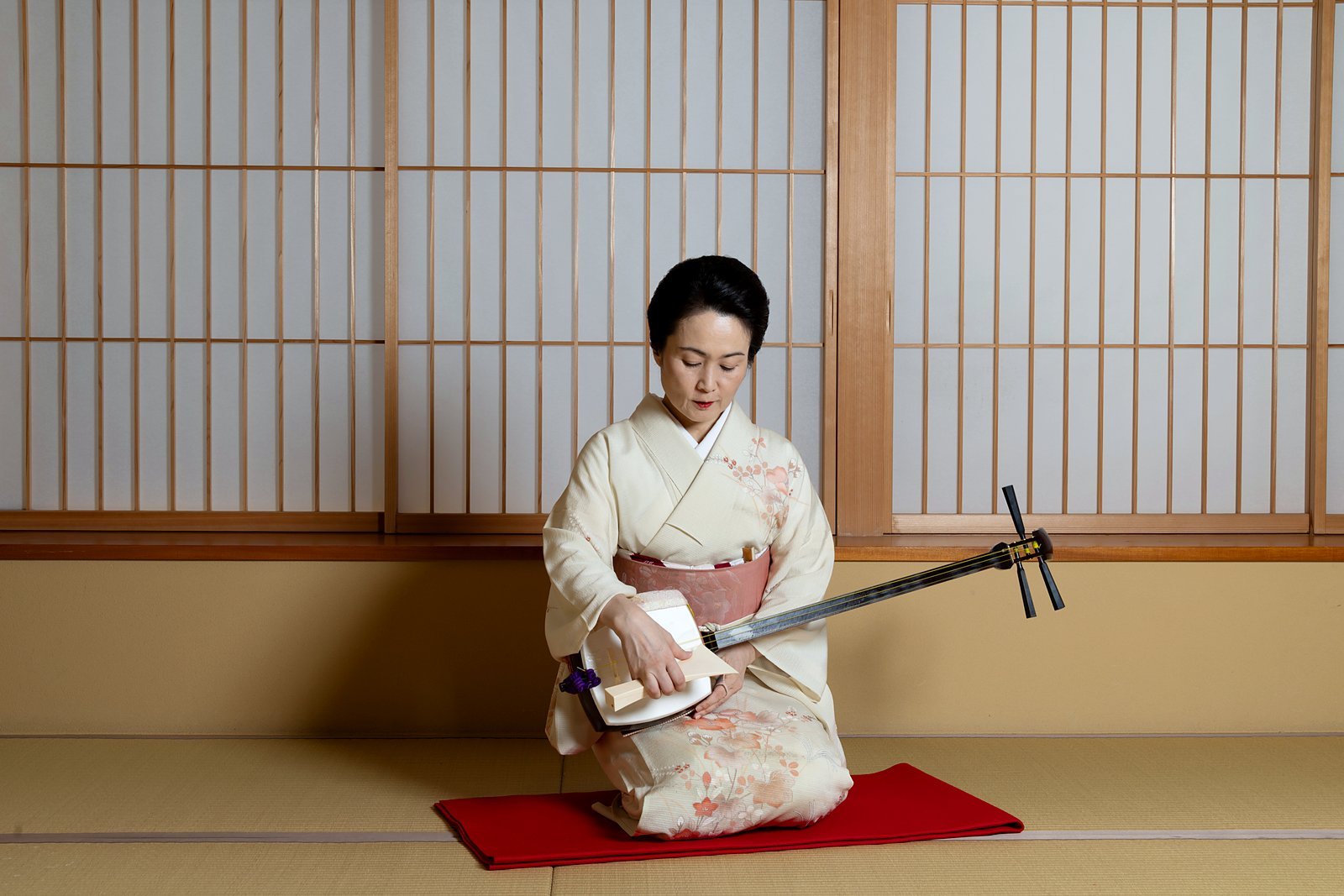
Late Chrysanthemums (1954)
Naruse’s film, written by Sumie Tanaka from three short stories by Fumiko Hayashi, follows four retired geisha in postwar Tokyo, played by Haruko Sugimura, Chikako Hosokawa, Yuko Mochizuki and Sadako Sawamura. One of them, Kin, now works as a moneylender and expects her old friends to repay her. It is a quiet film about the years after the banquets, and one of three titles on this list set in Tokyo.
Flowing (1956)
Flowing, Nagareru in Japanese, takes place inside an okiya, a geisha house in Tokyo. A widow, Rika (Kinuyo Tanaka), comes to work as a maid for the geisha Otsuta, whose house is struggling to pay its loans. Otsuta is played by Isuzu Yamada, the younger sister in Sisters of the Gion 20 years earlier, and Hideko Takamine plays her daughter. The film is based on a novel by Aya Koda, who drew on her own time working as a maid in a geisha house in Tokyo’s Yanagibashi district. Our guide to what an okiya is explains how these houses work in Tokyo and Kyoto today.
Hollywood Films About Geisha
Hollywood turned to geisha in the 1950s and 1960s. John Huston’s The Barbarian and the Geisha (1958) casts John Wayne as Townsend Harris, the first American consul general in Japan, and was shot largely on location there. My Geisha (1962), directed by Jack Cardiff, is a comedy in which Shirley MacLaine plays a film star who disguises herself as a geisha to win the lead in her husband’s film of Madame Butterfly. Both are products of their time, and they show more of how Hollywood imagined Japan than of how geisha lived.
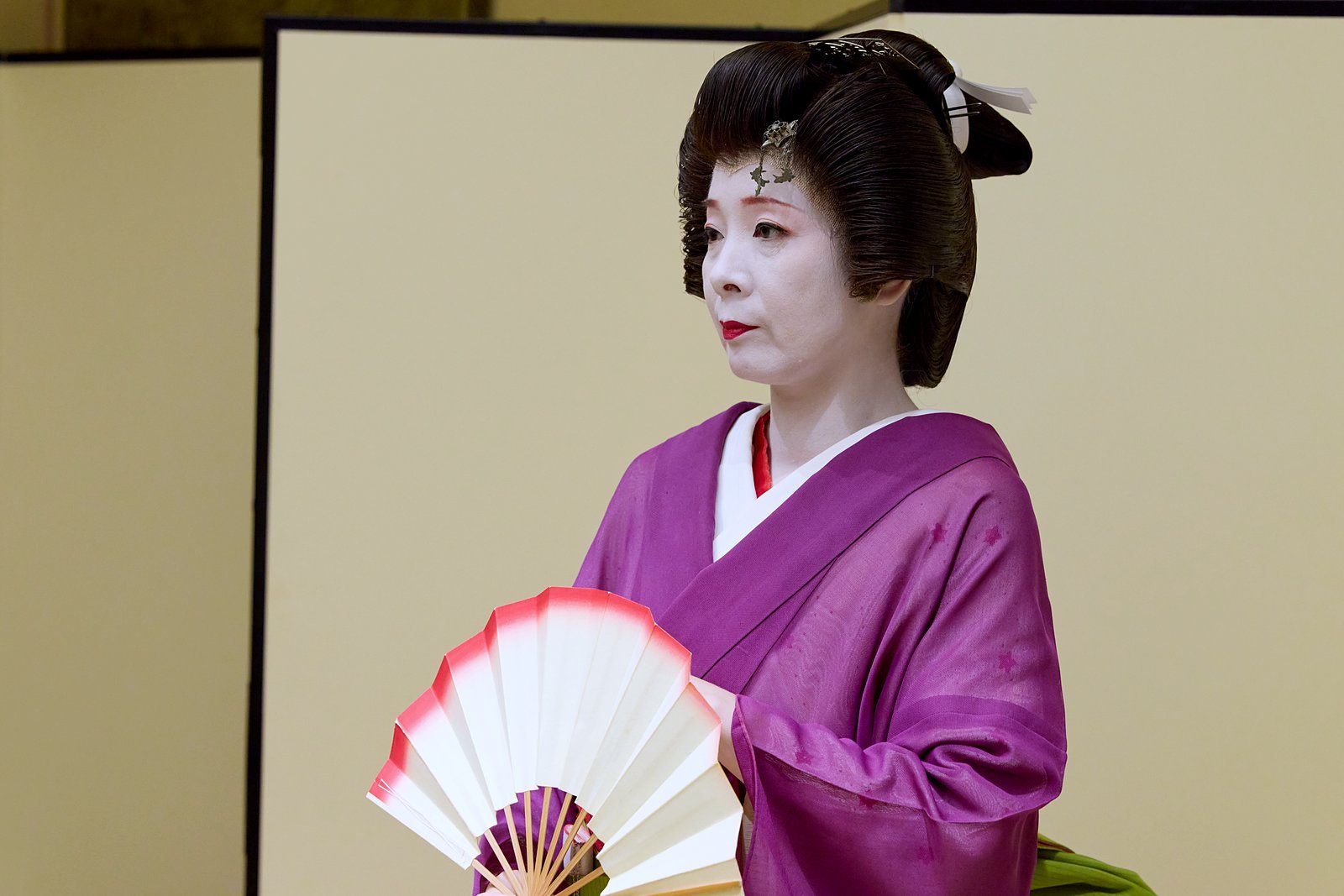
Memoirs of a Geisha (2005)
Rob Marshall’s film of Arthur Golden’s 1997 novel brought geisha to cinemas around the world. Zhang Ziyi, Ken Watanabe, Michelle Yeoh and Gong Li star in a story that begins in Gion in 1929, and the film won three Academy Awards, for cinematography, art direction and costume design. Most of it was filmed in California, on a large set built on a ranch in Thousand Oaks, with some scenes shot at locations in Kyoto. Watch it for the costumes and the look of the district, then read our article on whether Memoirs of a Geisha is a true story for what it gets wrong about geisha.
Recent Geisha Films and Series About Maiko
The three titles below are lighter than the classics, and all three are about maiko in Kyoto.
Maiko Haaaan!!! (2007)
Directed by Nobuo Mizuta from a script by Kankuro Kudo, this broad comedy stars Sadao Abe as a salaryman who is infatuated with maiko. When his company transfers him to its Kyoto branch, he sets out to be welcomed at a teahouse, and the story takes off from there, with Kou Shibasaki and Shinichi Tsutsumi as co-stars. Expect slapstick rather than a portrait of the profession.
Lady Maiko (2014)
Masayuki Suo’s musical comedy stars Mone Kamishiraishi as a country girl with a strong regional dialect who comes to Kyoto wanting to become a maiko, with Hiroki Hasegawa and Sumiko Fuji. The Japan Times review likened it to My Fair Lady, and because it is a musical, expect songs alongside the story.
The Makanai: Cooking for the Maiko House (2023)
This Netflix series of nine episodes was released on 12 January 2023. According to The Hollywood Reporter, Hirokazu Kore-eda, the director of Shoplifters, was its showrunner and co-writer and directed some of the episodes. Two friends from Aomori, Kiyo (Nana Mori) and Sumire (Natsuki Deguchi), move to Kyoto’s Gion district to live in a house of geiko and maiko. Sumire shows a gift for the arts, while Kiyo finds her place as the house’s cook. The series is based on Aiko Koyama’s manga Kiyo in Kyoto, which was also made into a 12-episode anime in 2021. Our article on the geisha show on Netflix looks at the series in more detail, and our guide to geisha in anime covers the animated side.
A note from Tokyo: what Kyoto calls a maiko, Tokyo calls a hangyoku. The name is different, and a hangyoku, like a maiko, is already a geisha, still in her training years. Trainees who have not yet made their debut are called shikomikko. Our guide to the types of geisha explains these stages, and the difference between the geisha who dance and those who play the music.
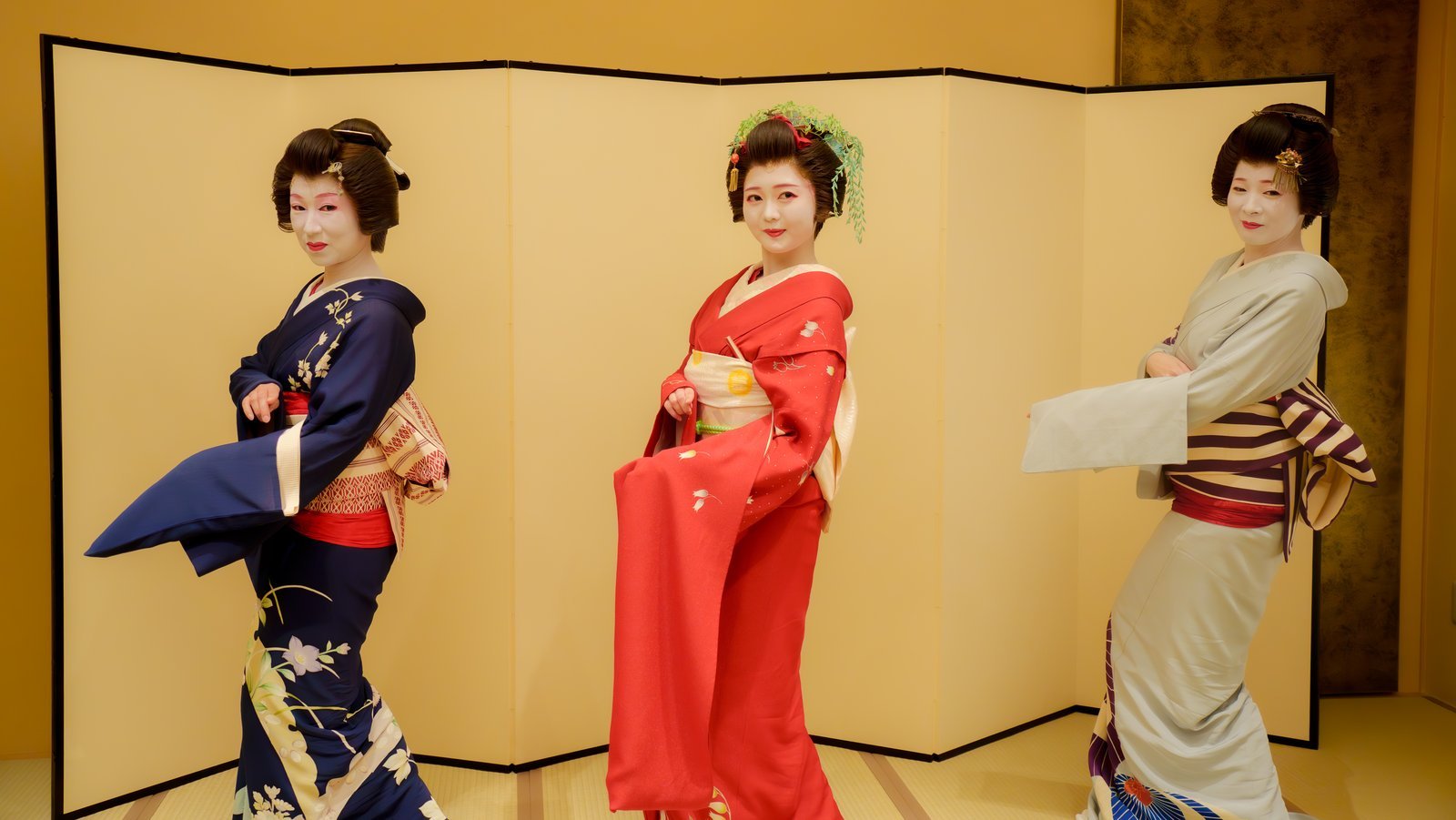
Geisha Documentaries: Geisha in Their Own Words
A documentary lets you hear geisha talk about their own work. The first two below were filmed in Kyoto, where senior geisha are called geiko, and the third in Tokyo.
Hannari: Geisha Modern (2006)
Directed by Miyuki Sohara, this 95-minute documentary is about the arts that geiko in Kyoto train in. It was made with viewers outside Japan in mind: a review in the Kyoto Journal notes that it is narrated in English and subtitled in both languages. Start here if you want the arts explained.
Real Geisha, Real Women (2009)
Peter MacIntosh wrote, produced and directed this documentary, according to the Japan Foundation, Los Angeles. In 52 minutes, 10 active and retired geiko and maiko in Kyoto talk about their lives, along with two men who work alongside them. The Kyoto Journal’s review quotes MacIntosh as wanting to show the geisha speaking in their own words, without narration. Because nothing is explained for you, it is easier to follow once you know the basics.
The Geisha of Tokyo (2026)
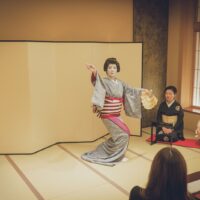
In August 2026, the Australian broadcaster ABC published The Geisha of Tokyo, a report of about 30 minutes for its Foreign Correspondent program, with reporter Natalie Whiting. Part of it was filmed at an ozashiki at our teahouse, where guests from five countries watched three geisha dance and play the shamisen, then joined them in the game konpira fune fune. One of those guests told ABC: “When you see [geisha] on TV, it’s great, but you’re not there.” The program is on ABC’s news site with a transcript, and ABC’s companion article covers the same visit.
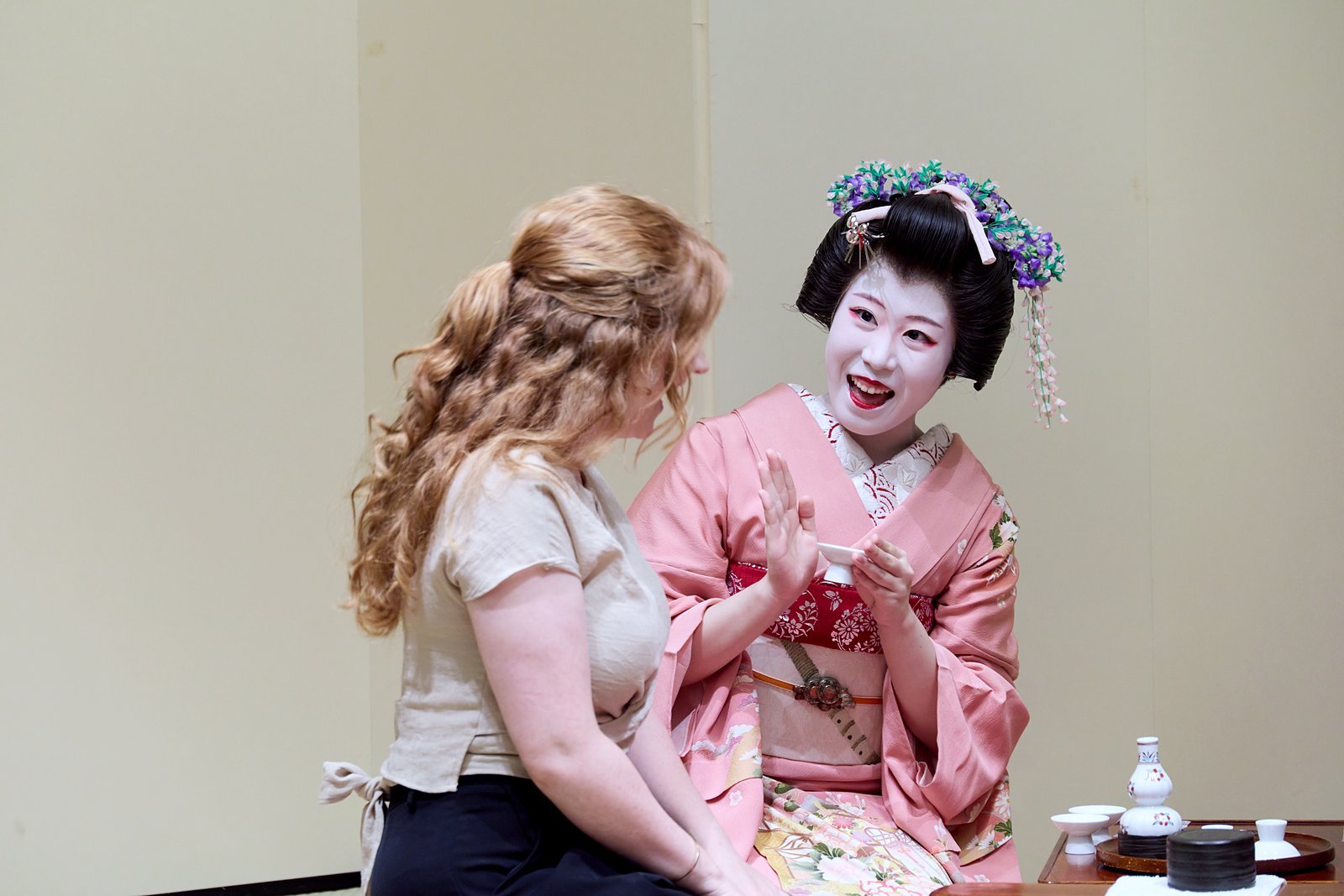
If you would rather read than watch, our interviews with three geisha who work in Asakusa ask each of them how she came to choose this life.
Often Listed as Geisha Movies, but About Courtesans
Lists of geisha movies often include Sakuran (2007), the first feature directed by the photographer Mika Ninagawa, starring Anna Tsuchiya and based on Moyoco Anno’s manga. Its heroine is an oiran, a high-ranking courtesan of the Yoshiwara pleasure quarter in Edo, which was a different profession. Geisha are performing artists, and the two are often confused, on screen and in search results. Our article on oiran vs geisha explains the difference.
What Geisha Films Leave Out: An Ozashiki Today
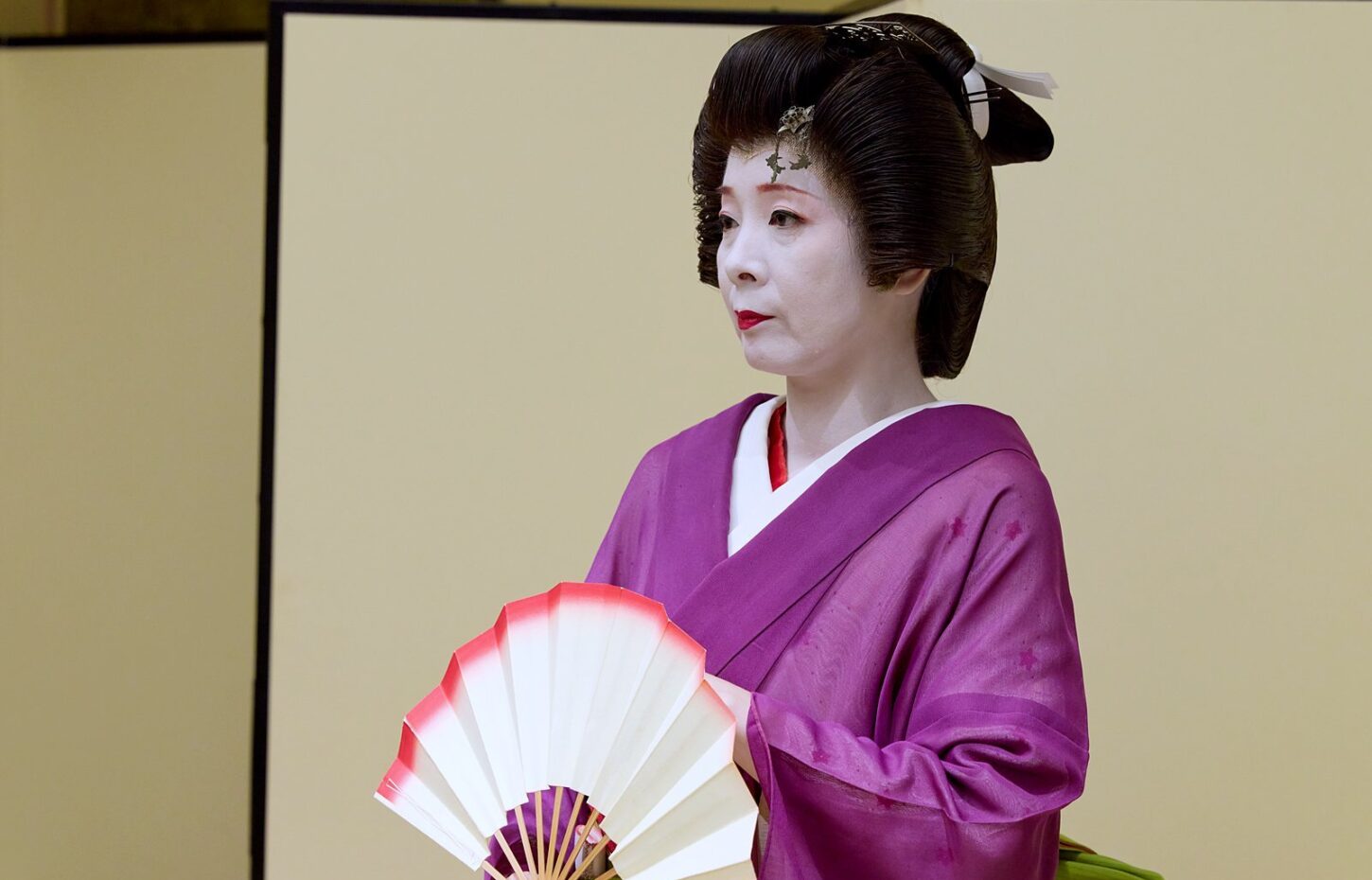
A screen keeps you at a distance. At an ozashiki, the geisha dance a few steps from where you sit, the shamisen is played live in the room, and you are drawn into the conversation and the games. The geisha who dance are called tachikata, and those who play the shamisen and sing are called jikata. Our article on ozashiki games explains konpira fune fune and the other games, which are easier to learn by playing than by watching.
Most geisha films are set in Kyoto, but Tokyo has its own geisha districts, or hanamachi, and Asakusa is one of them. The geisha here are independent professionals, each attached to an okiya and registered at the local kenban (the district’s registry office), and we call them to our teahouse for each ozashiki.
Tokyo has far fewer geisha today than when Late Chrysanthemums and Flowing were made, and its geisha districts are much quieter. The arts in those films are still practiced, though. The geisha here still take lessons in dance, music and song, and each ozashiki that guests book pays the geisha who perform, which is how those arts are passed on to the next generation.
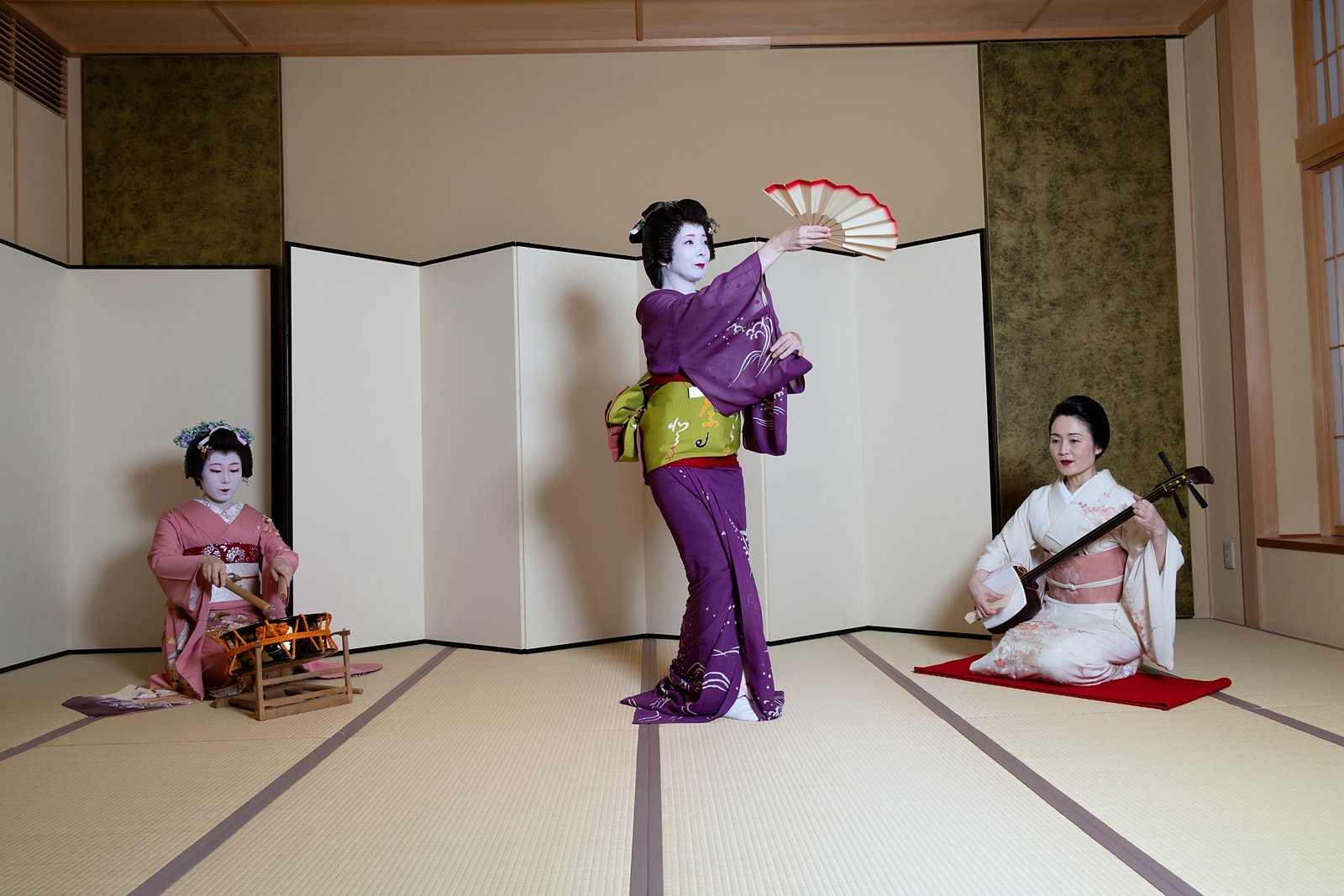
Every private plan includes an English-speaking interpreter, and solo guests are welcome; our Private Geisha Experience page describes the plans. For a shorter first look, the Ozashiki Tea House is a 75-minute session with three geisha in which you share the room with other guests, with matcha and a Japanese sweet. To see what an ozashiki looks like before you come, our YouTube channel has short videos of ozashiki games at our teahouse.
See Geisha in Person, Not on Screen
A private ozashiki at our teahouse in Asakusa brings dance, live shamisen, conversation and parlor games into one tatami room, for your group alone, with an English-speaking interpreter at your side. First-time and overseas guests welcome.
Request a ReservationHow to Choose a Geisha Movie
- For a big-budget picture of a geisha district, start with Memoirs of a Geisha, and remember that most of it was filmed on sets in California.
- For the profession as it was lived, watch the classics: A Geisha for Kyoto, and Late Chrysanthemums or Flowing for Tokyo.
- For something light, choose Lady Maiko or The Makanai; Maiko Haaaan!!! is the broadest comedy of the three.
- To hear geisha in their own words, start with Hannari for the arts explained in English, then watch Real Geisha, Real Women once you know the basics.
- For the present day, watch the ABC report, then read our guide to how to see a geisha in Tokyo, which compares five ways, from a chance sighting on the street to a private ozashiki.
- Whatever you choose, check where it is streaming in your country, and its age rating, before you press play.
Frequently Asked Questions
What are some good movies about geisha?
For the profession as it was lived, start with the Japanese classics A Geisha (1953) by Kenji Mizoguchi and Flowing (1956) by Mikio Naruse. For a big Hollywood production, there is Memoirs of a Geisha (2005). For something lighter, try Lady Maiko (2014) or the Netflix series The Makanai: Cooking for the Maiko House (2023), and for real geisha speaking for themselves, the documentary Real Geisha, Real Women (2009).
Which geisha movies are set in Tokyo?
Most geisha films are set in Kyoto, but two classics by Mikio Naruse take place in Tokyo: Late Chrysanthemums (1954), about four retired geisha after the war, and Flowing (1956), about a geisha house seen through the eyes of its new maid. ABC’s report The Geisha of Tokyo (2026) shows the city’s geisha today, including an ozashiki at our teahouse.
Are there documentaries about real geisha?
Yes. Hannari: Geisha Modern (2006), directed by Miyuki Sohara, explains the arts of the geiko of Kyoto with English narration. Real Geisha, Real Women (2009), by Peter MacIntosh, lets 10 active and retired geiko and maiko speak for themselves in 52 minutes, without narration. ABC’s The Geisha of Tokyo (2026) is a report of about 30 minutes on geisha in Tokyo today.
What is the difference between a maiko and a hangyoku?
The name. A young geisha in her training years is called a maiko in Kyoto and a hangyoku in Tokyo. Both are already geisha who are still in training. Trainees who have not yet made their debut are not geisha yet; in Tokyo they are called shikomikko.
Is Sakuran a geisha movie?
Not quite. Sakuran (2007), directed by Mika Ninagawa, is about an oiran, a high-ranking courtesan of the Yoshiwara pleasure quarter in Edo. It often appears on lists of geisha movies, but the oiran was a different profession. Geisha are performing artists who entertain with dance, music and conversation.
Where can you watch geisha movies?
It depends on your country and changes over time, so check your own streaming service or a site that tracks where films are available. The Makanai: Cooking for the Maiko House is a Netflix series. Check the age rating too, because some titles with “geisha” in the name are made for adults.
Can you see geisha in person after watching these films?
Yes. In Asakusa, geisha still perform at ozashiki, where they dance to live shamisen, play parlor games with guests and talk with them. At Miyakodori, every private plan includes an English-speaking interpreter, and the Ozashiki Tea House is a 75-minute session with three geisha in which you share the room with other guests.
From the Screen to an Ozashiki
After the films, meet geisha in person at a private ozashiki in our teahouse in Asakusa, where they dance to live shamisen, play parlor games with you and answer your questions through an English-speaking interpreter. First-time and overseas guests are welcome, without an introduction. Current rates are on our pricing page.
Request a Reservation


- Traditional Entertainment in Tokyo: Kabuki, Sumo, Rakugo and a Geisha Ozashiki
- Geisha Districts in Japan: Kyoto's Five Kagai, Kanazawa and Tokyo, Seen from Asakusa
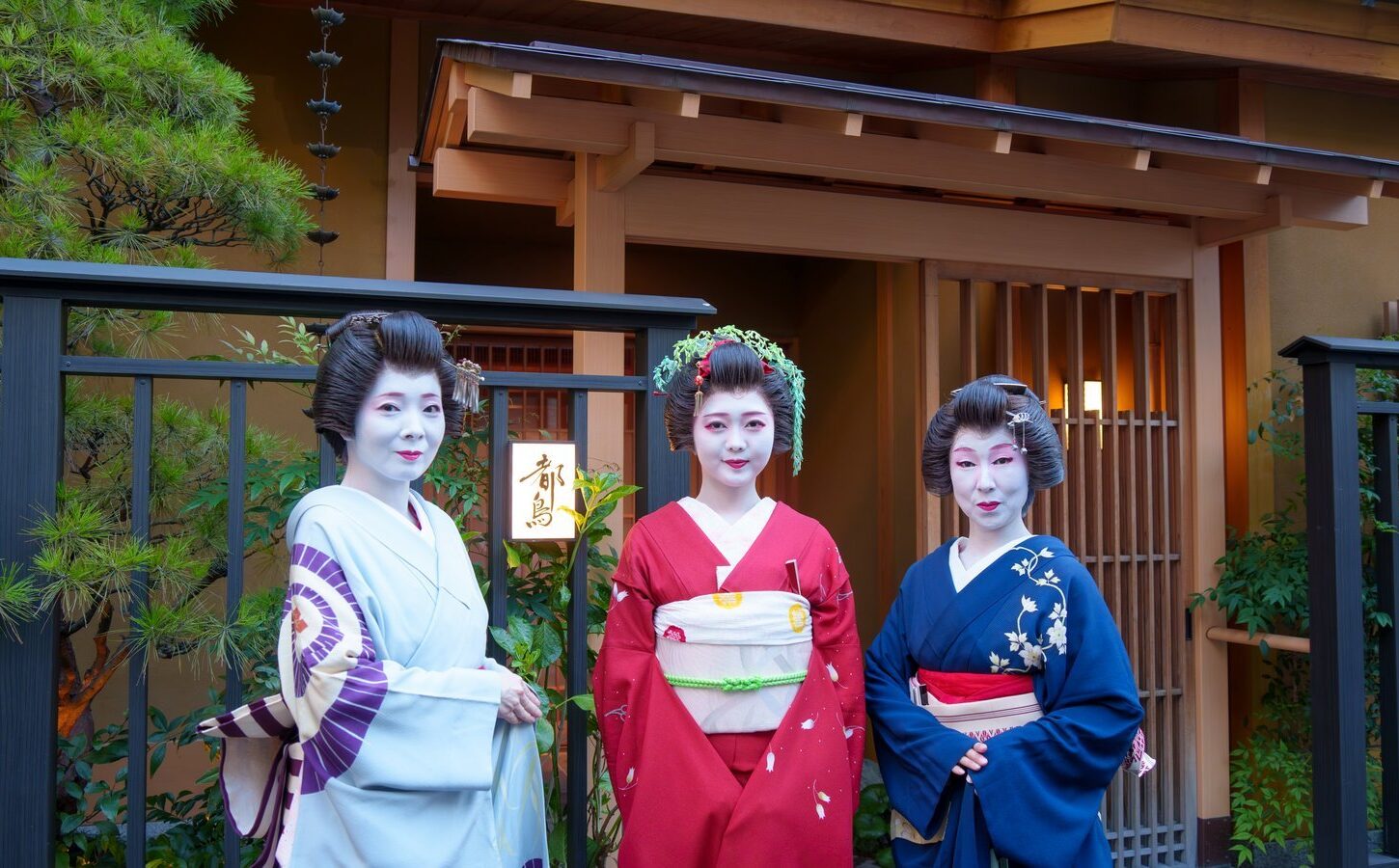
How to Become a Geisha: Training, Stages, and Life in Asakusa Today
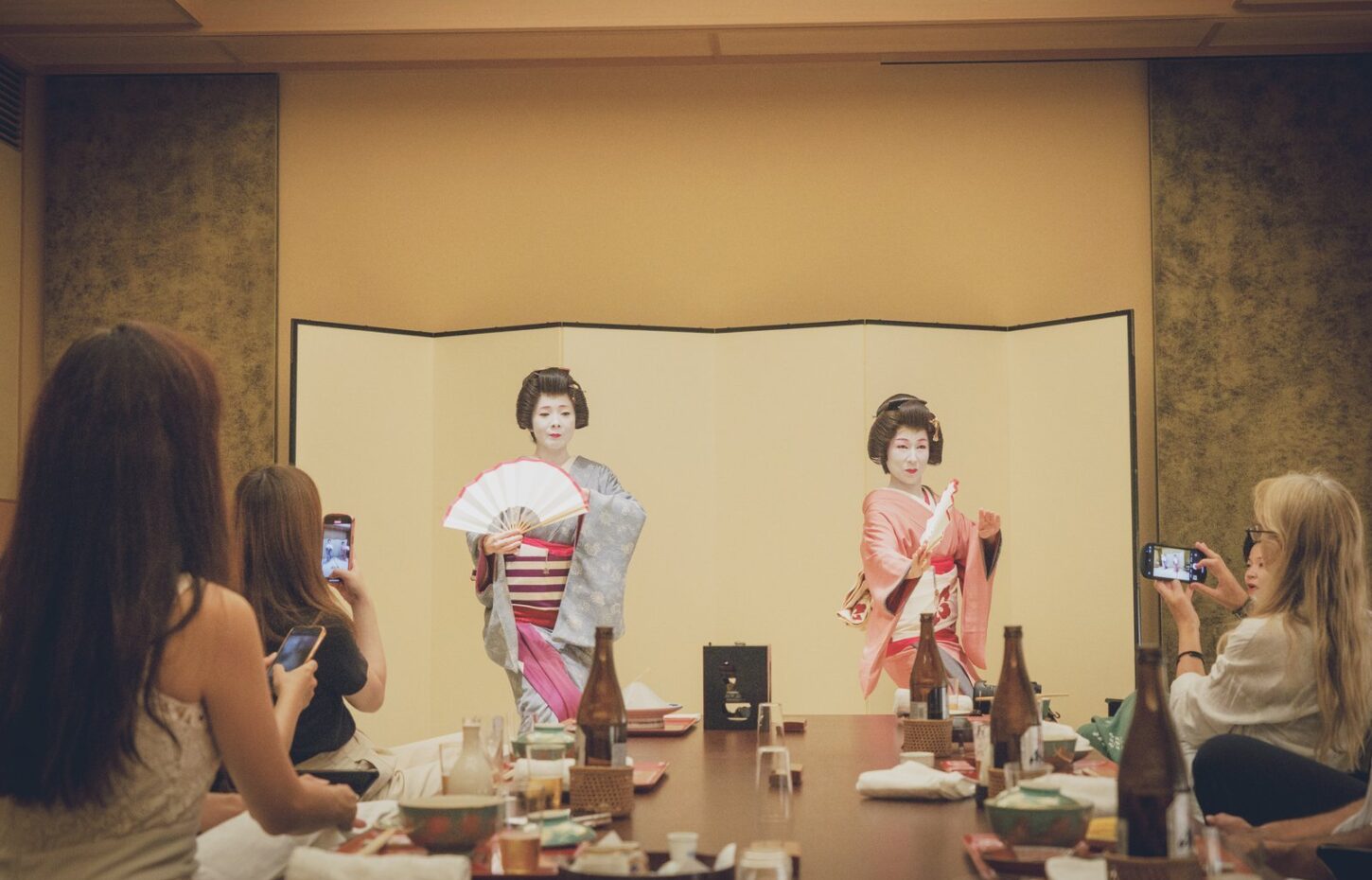
How Many Geisha Should You Book for an Ozashiki?
From Anime Geisha to the Real Thing in Asakusa
Experiencing an Authentic Geisha Show in Asakusa, Tokyo
Tokyo Tourist Guide: A Geisha Teahouse’s View of the City We Call Home
Geisha in Tokyo: The Complete Knowledge Guide to the Karyukai
Comment ( 0 )
Trackbacks are closed.
No comments yet.