



What Is an Okiya? Inside a Geisha House in Tokyo and Kyoto
An okiya is the house a geisha belongs to. It gives her a house name to work under, an okaa-san (“mother”) to guide her, and, in the traditional pattern, a place to keep her kimono, get ready for work and, for apprentices, live. In English it is usually called a “geisha house,” but it is not where guests are entertained. That happens somewhere else.
We are Miyakodori, a teahouse in Asakusa that has hosted geisha entertainment since 1950. The geisha we call to our rooms belong to okiya in our own district, so the okiya is part of daily life for us rather than something out of a novel. This guide explains what an okiya is, who belongs to one, what goes on inside, and how the system works in Asakusa, Tokyo and Kyoto today.
What Does Okiya Mean?
Okiya is written 置屋 in Japanese. The first character, oku, means “to place” or “to keep,” and ya means “house” or “shop.” The name describes a house that keeps geisha on its books and sends them out to work. A geisha belongs to an okiya and works under its name, a relationship that can be compared to a sumo wrestler and his stable.
In Kyoto, an okiya is also called a yakata (屋形), and you will hear both words in Gion. In Asakusa, people simply say okiya.
Every okiya sits inside a hanamachi, or “flower town,” the geisha districts of Japan. Together, these districts and the people who work in them are called the karyukai (花柳界), “the world of flowers and willows.” The okiya is one of three trades that make up a hanamachi, alongside the restaurants and the “waiting teahouses” (machiai) where geisha perform. The kenban, the district office, keeps the register of geisha and ties the trades together.
Who Belongs to an Okiya?
An okiya is run by a woman whom everyone calls okaa-san, “mother.” She is usually a former geisha herself. She takes in young women, looks after their training and kimono, manages their schedules, and speaks for them if there is ever a problem with a customer or a teahouse. The geisha who belong to her house call each other “older sister” and “younger sister,” and the relationship often lasts for life.
Who actually belongs to the house, and who sleeps under its roof, depends on the stage of a geisha’s career. Each step is marked by a presentation ceremony called ohirome.
- ShikomikkoTrainee, not yet a geishaA young woman who has just joined starts as a shikomikko. She takes lessons, helps at banquets and learns how to greet the older geisha. In Kyoto, this stage usually lasts about a year, and the trainee lives in the okiya and helps with the housework. In Asakusa it lasts roughly half a year to a year, and the okaa-san decides when she is ready to debut.
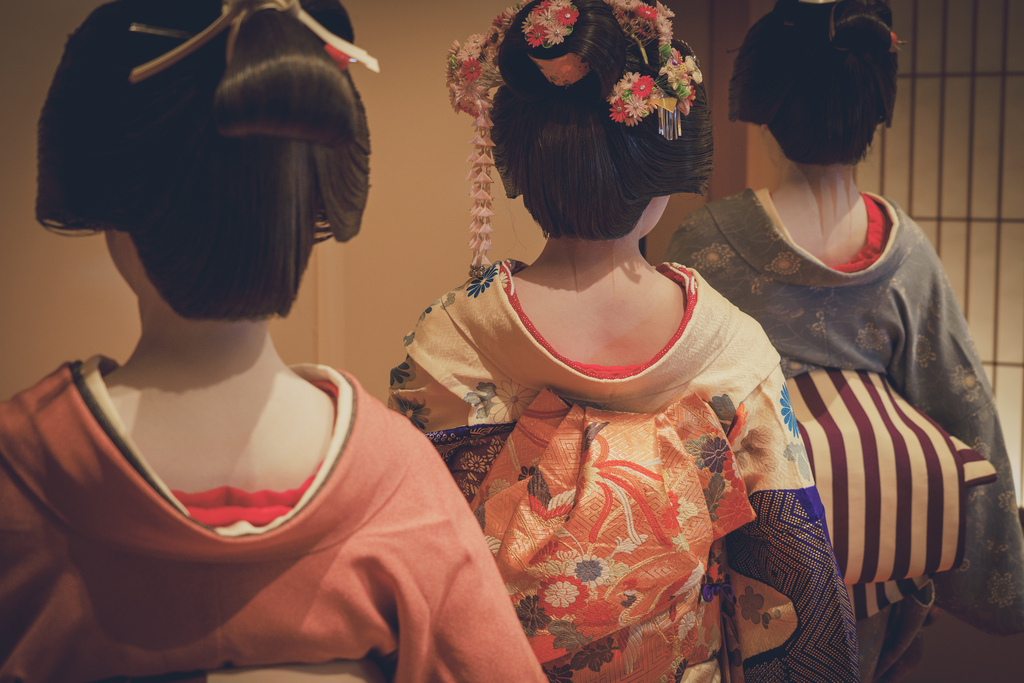
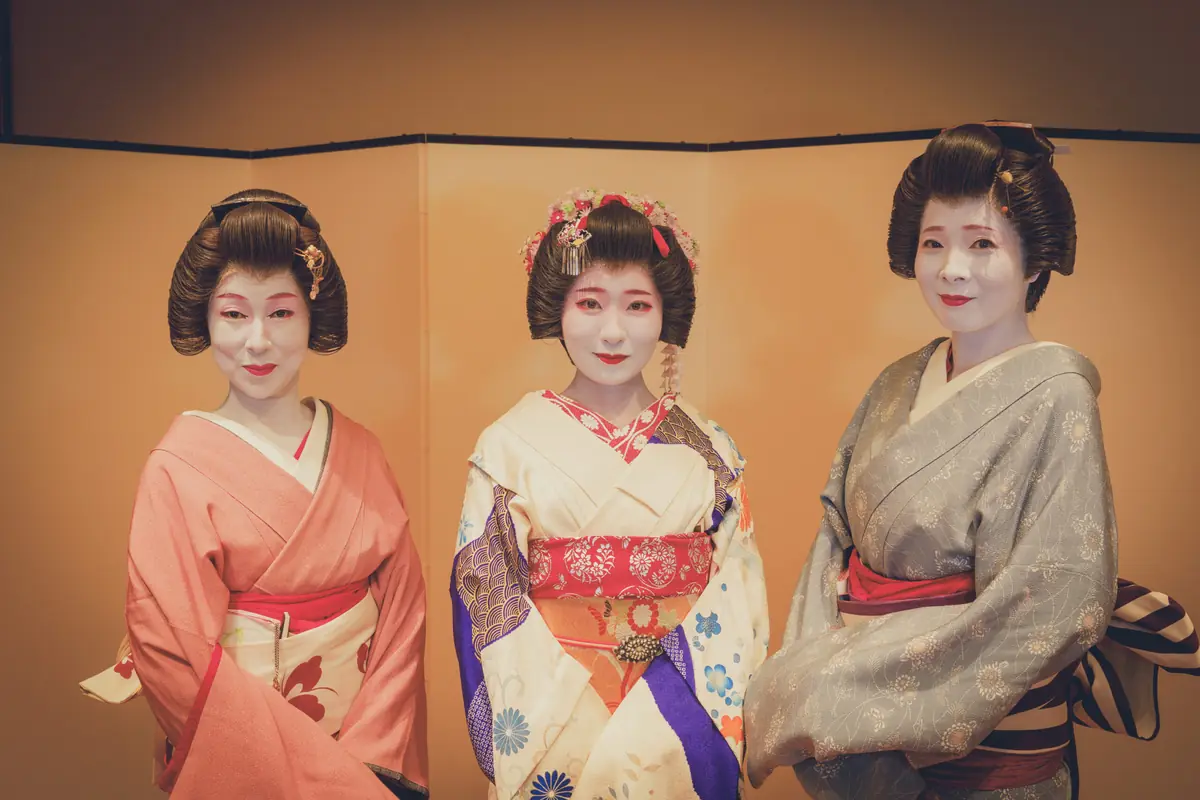
- HangyokuJunior geisha, the Tokyo counterpart of the Kyoto maikoTokyo’s word for the stage that Kyoto calls maiko is hangyoku, “half-jewel.” Like a maiko, a hangyoku is a young geisha working toward becoming fully fledged. She is already a geisha, still in training, and easy to recognize by her long-sleeved furisode kimono and flower hair ornaments. In Kyoto, maiko live in the okiya for the whole of their apprenticeship. The number of hangyoku in Tokyo is much smaller than the number of maiko in Kyoto.
- IpponFully fledged geisha, called geiko in KyotoAfter some years as a hangyoku, a geisha changes into an ippon, the fully fledged “older sister” of the district. A woman who starts at an older age can skip the hangyoku stage and debut directly as an ippon, though she still begins as a trainee. An ippon may stay with the okiya’s household or live on her own, and in Tokyo it is common for geisha to live in their own apartments and come into the district each day.
A geisha also has a standing with her okiya that is separate from her stage. In the old pattern, a young geisha whom the house supports is called kakae. After serving the house for a set number of years, she can become jimae, “independent,” and work under her own sign. A third form, kanban-gari, means renting the okiya’s sign without being supported by the house. Jimae and kanban-gari are words still used in Asakusa today. Whichever standing a geisha has now, she is an independent professional registered with the kenban, not an employee of the house.
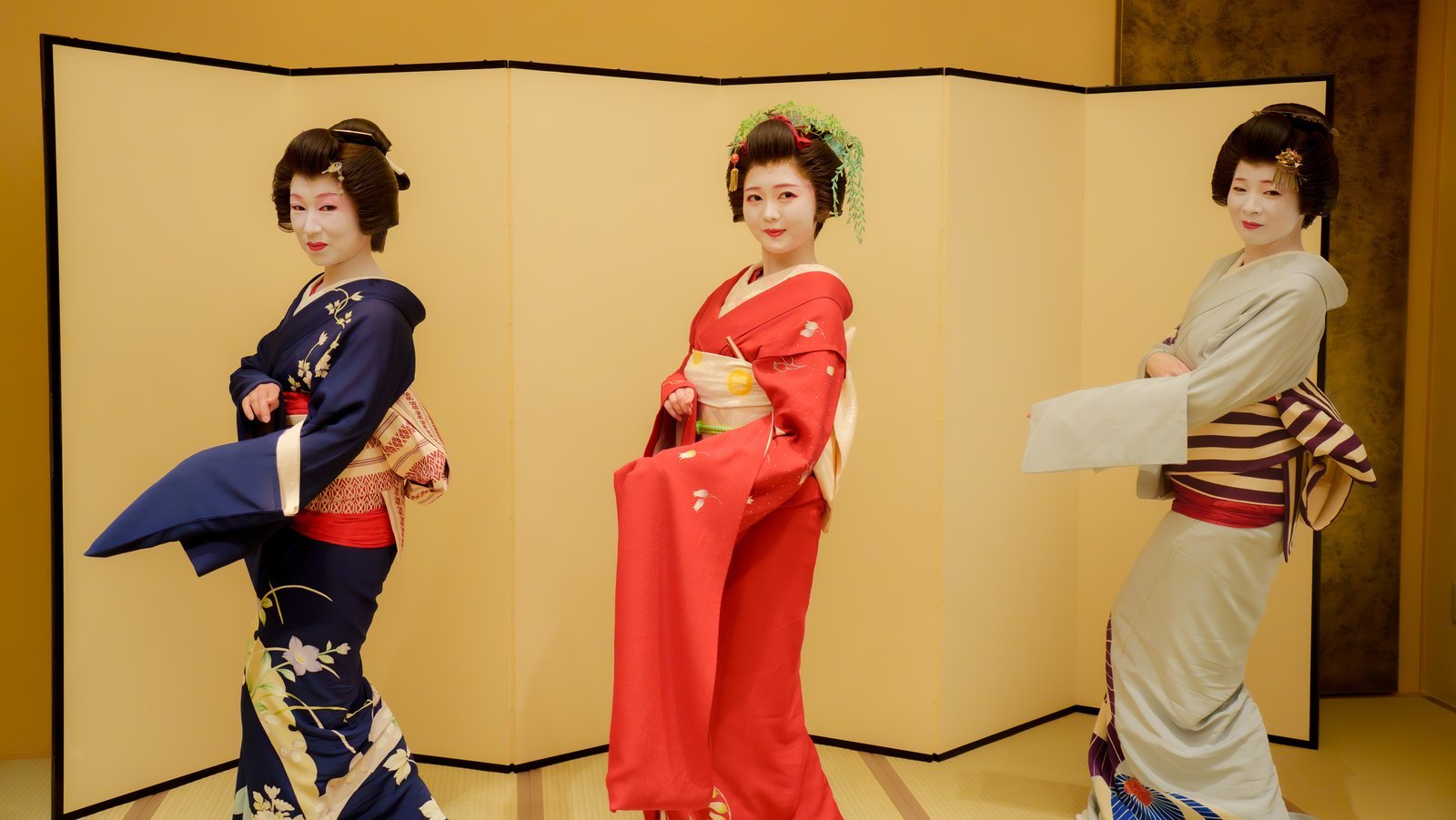
How a Trainee Starts in Asakusa
This is how it usually goes in Asakusa, from what we see at Miyakodori. A newcomer begins by talking with an okiya, and once they agree, she moves to Asakusa and starts with lessons. The okaa-san takes her to meet each teacher, and she greets the older geisha and helps at events. After she begins as a shikomikko, she helps at real banquets. In our experience, she does not use the everyday greeting otsukaresama (thanks for your hard work) with the older geisha. She thanks them by name, “Onee-san, thank you,” and learns the room by watching. Once she can dance a piece or two and play the taiko drum, the okaa-san decides when she will debut. Until the date is set, she is often called by her own name, and her professional name is settled when the ohirome is fixed.
Trainees in Asakusa typically do not live in the okiya house the way Kyoto maiko do. They live in an apartment, either one the okiya arranges or one they rent themselves. No consent form is required to join, though trainees who have their family’s blessing tend to settle in more steadily.
Inside an Okiya: Rooms, Kimono and Daily Life
What the House Looks Like
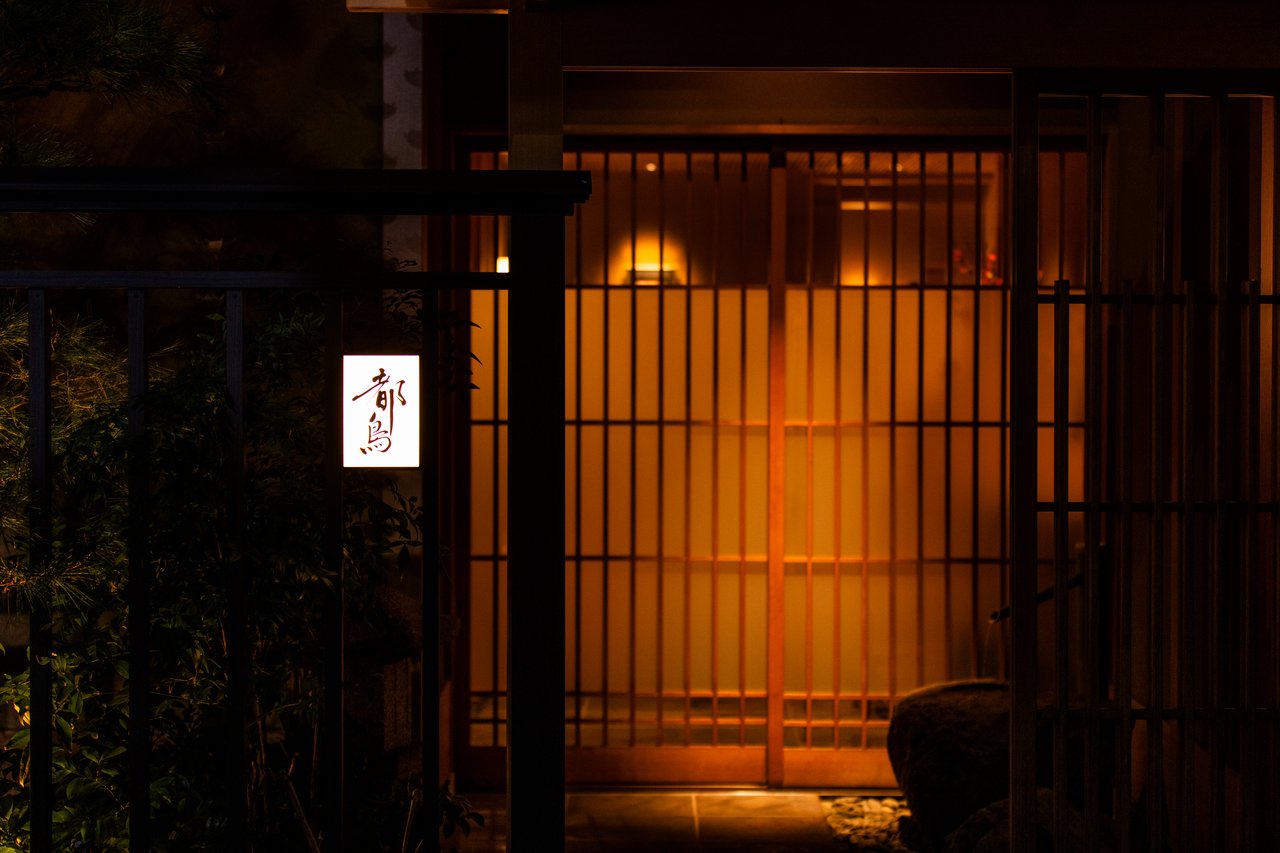
From the street, a traditional okiya looks like an ordinary townhouse. In Kyoto, the clue is often a row of small wooden nameplates by the door, one for each maiko and geiko who belongs to the house. There is no shop front, no menu and no reception desk, because an okiya is not a business that guests walk into.
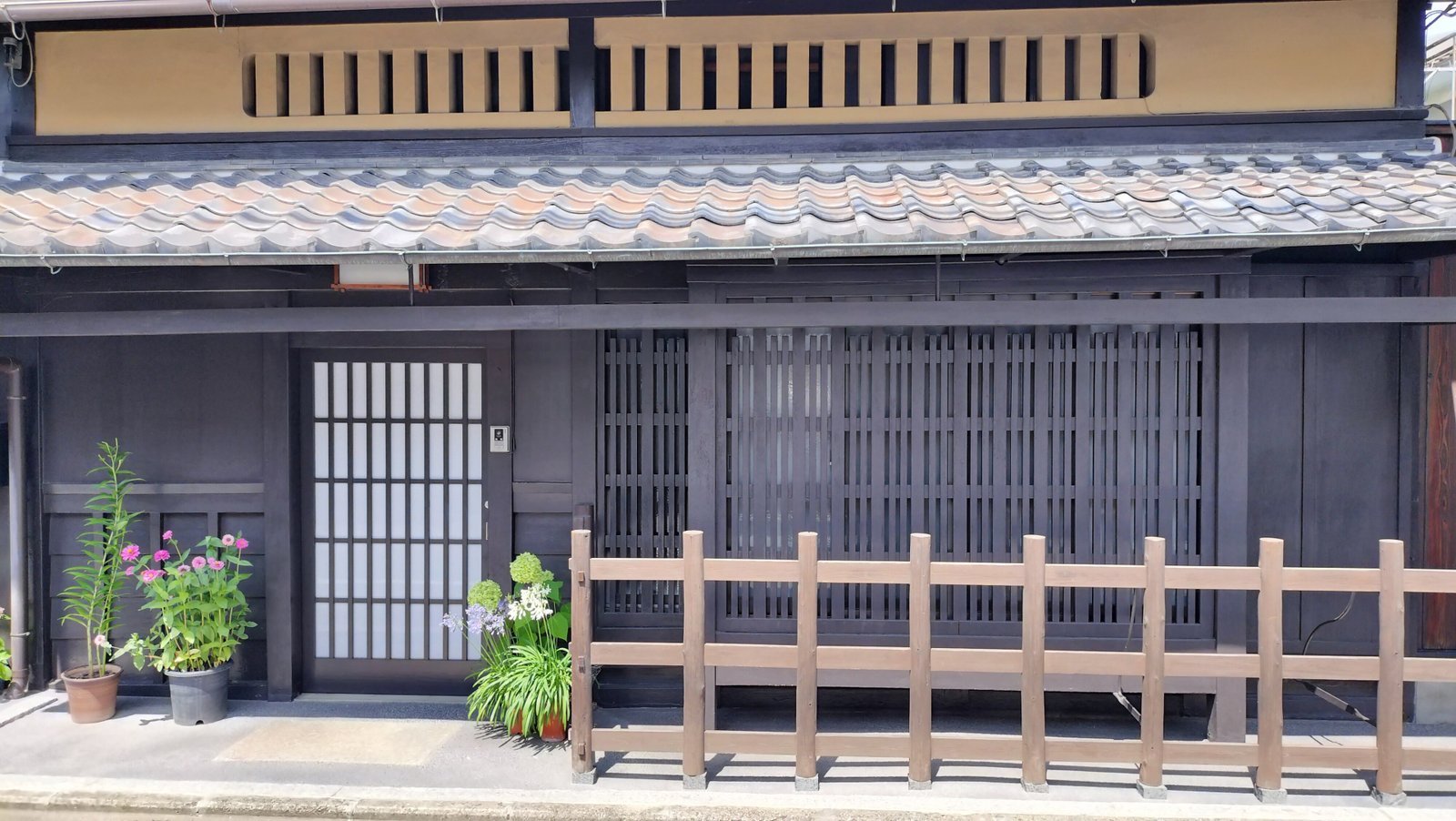
Tokyo’s geisha houses followed a standard plan from the end of the Edo period until the Second World War. According to the writer Iwashita Hisashi, who records the recollections of a Shinbashi geisha who made her debut in 1919, you opened a lattice door onto a tiny earthen-floored entry, then a two-mat vestibule and a six-mat living room with a household shrine shelf and a long wooden brazier. The space in front of the brazier was where the household ate, got ready and received callers. The kitchen and a small bedroom were at the back, and a six-mat room upstairs held the dressing tables of two or three geisha. By the time of the 2009 paperback, most geisha in Tokyo lived in apartments.
In the traditional Kyoto pattern, the rooms that matter most are the ones that support the work:
- Dressing room
- A geisha’s makeup, hair ornaments and kimono are prepared here every afternoon. Formal kimono for a maiko are long, heavy and tied with an obi that needs a professional dresser.
- Kimono storage
- Kimono are among the most valuable things an okiya owns. They are stored in paulownia-wood chests and passed from one generation of geisha to the next, changed with the seasons.
- Living room and kitchen
- Meals are shared, and the okaa-san usually has a sitting room near the entrance where she can see who comes and goes.
- Rooms for apprentices
- Maiko and trainees often share rooms upstairs, sleeping on futon laid out each night.
Many okiya also have a small household shrine, and the women of the house pray there before going out to work.
A Day in an Okiya
The details differ from house to house, but the rhythm is similar. Because banquets run into the evening, many days start late in the morning. Mornings are for lessons in dance, music and, in some houses, the tea ceremony. Early afternoon is for errands, rehearsals and visits to the hairdresser. By late afternoon, the dressing room is busy: makeup, hair, kimono and obi take well over an hour for an apprentice.
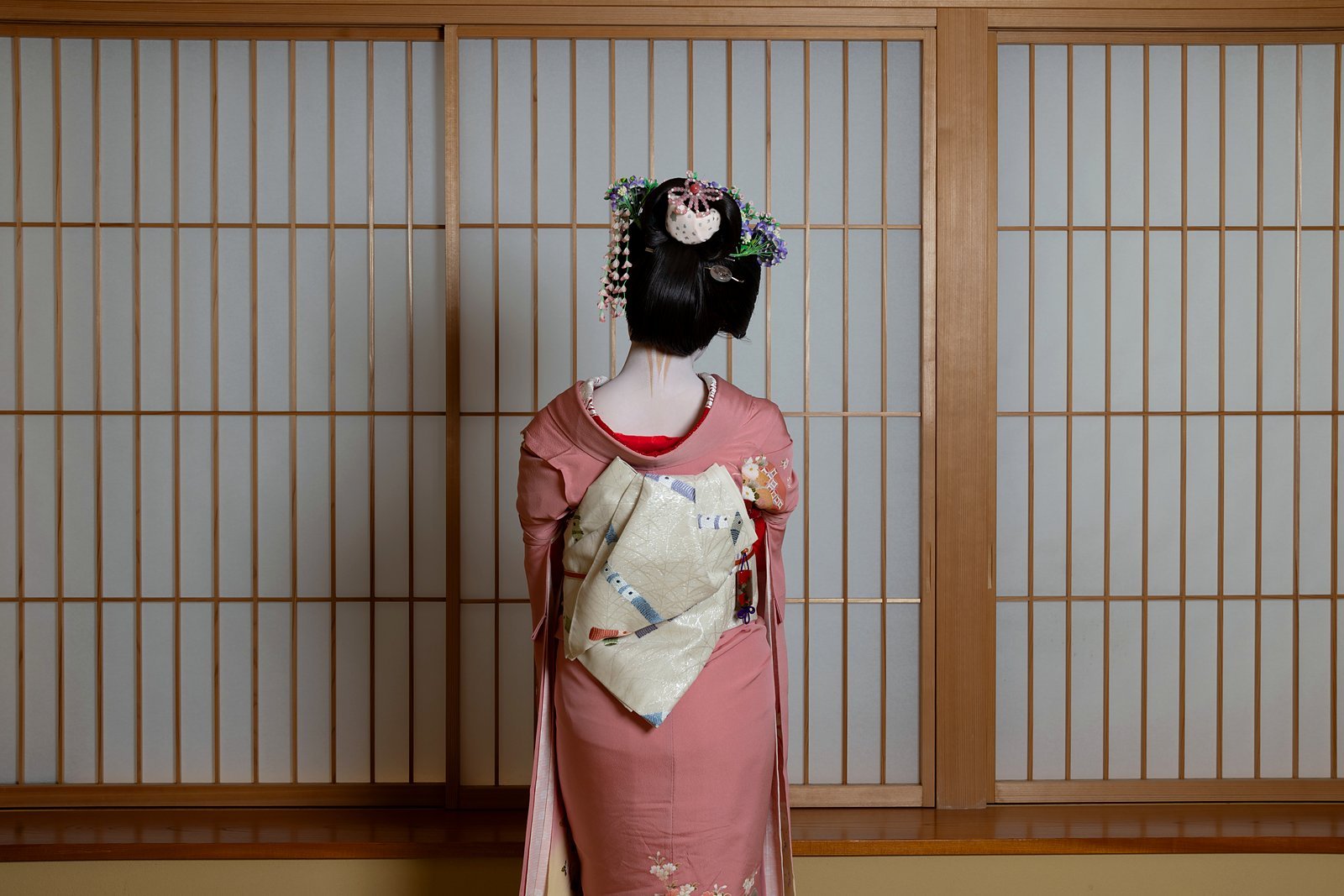
Then the geisha leave for their engagements, sometimes moving between two or three banquets in one night. Before they go, some okiya follow small rituals, such as a word of thanks at the household shrine or a spark of flint struck behind them for luck. In Asakusa, a hangyoku on her way to work in daytime wears a furisode and her usual hair ornaments, with wooden pokkuri sandals on her feet, and carries a small basket bag called a kago.
Lessons and Training
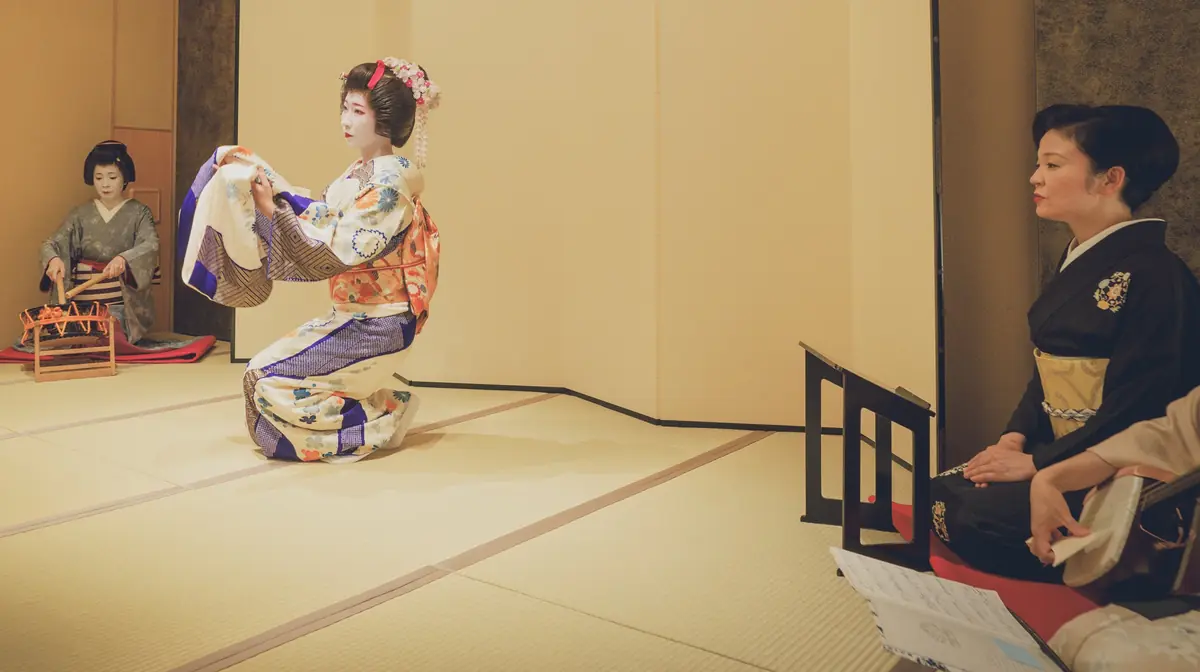
The word geisha means “person of the arts,” and training never really stops. The core skills are shamisen (the three-stringed instrument), singing, and Nihon Buyo, classical Japanese dance. Asakusa geisha study mainly in the Hanayagi and Fujima schools of dance. Dance pieces change with the seasons, so a geisha who performs in spring will dance cherry blossoms, while in autumn the theme turns to moonlight and harvest.
What the lessons are for. A short film from Miyakodori of a geisha dancing behind shoji screens in Asakusa.
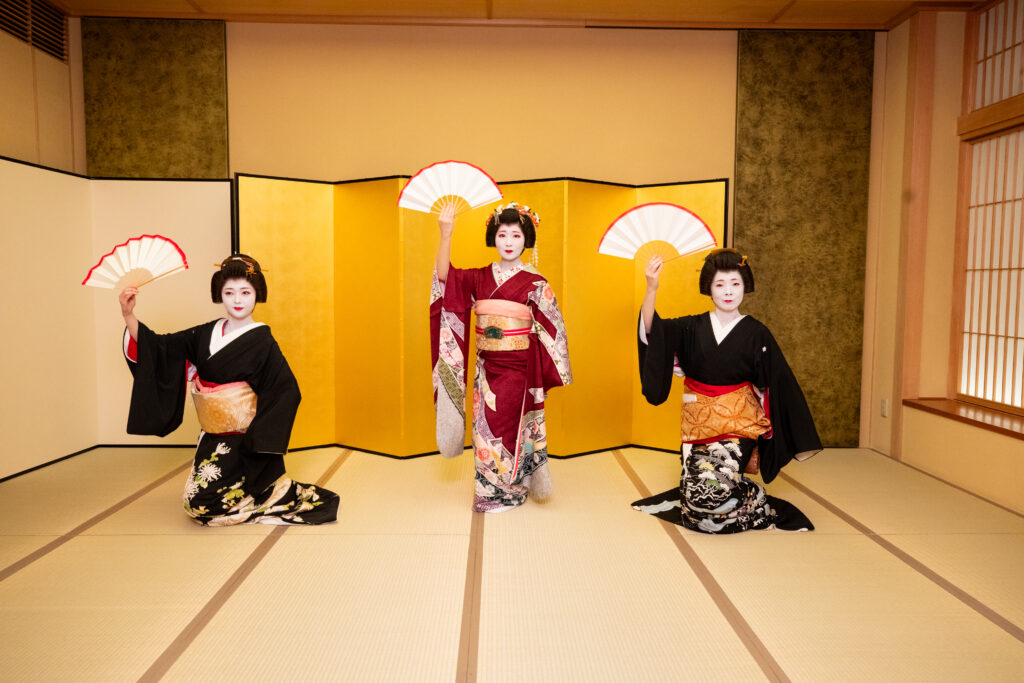
Some geisha also study the tsuzumi hand drum, the bamboo flute, tea ceremony and calligraphy. Just as important is conversation. A good geisha can talk with a company president about current affairs and then keep a table of first-time visitors laughing over a drinking game. In the traditional pattern, the okiya pays for lessons in the early years, and the okaa-san decides when an apprentice is ready to appear in public.
How an Okiya Works: Money, Contracts and the Kenban
Training a geisha is expensive. Lessons, wigs, makeup and, above all, kimono cost far more than a young woman can pay. In the traditional pattern, the okiya covered these costs and the geisha paid them back from her earnings over a set number of years, and until the debt was cleared her income went to the house. That arrangement could be strict and long. According to Iwashita, Tokyo dropped the long indentures after the Second World War, and geisha there became either jimae or kanban-gari. Today the arrangements are shorter and clearer. In Tokyo, a geisha cannot debut before the age of 18, while in Kyoto apprentices can join after junior high school.
The kenban is the other half of the system. Each hanamachi has one. It keeps the register of geisha, takes bookings from teahouses and restaurants, and makes sure fees are collected and paid to the geisha. In Asakusa today, the money follows a simple path: the guest pays the teahouse, the teahouse pays the kenban for the geisha’s time, and the kenban pays each geisha by bank transfer. The geisha’s fee, called gyokudai or hanadai (“flower money”), is calculated by time, in blocks of one, two or three hours. What a geisha owes her okiya is settled between the two of them.
For a closer look at how the kenban, the okiya and the teahouse divide the work, see our complete knowledge guide to geisha in Tokyo.
Okiya vs Ochaya vs Machiai: Where Geisha Actually Perform
The most common misunderstanding about the okiya is that guests go there to see geisha. They do not. Geisha perform in a separate venue, and the type of venue depends on the city.
| Place | What it is | Do guests go? |
|---|---|---|
| OkiyaTokyo and Kyoto | The house a geisha belongs to, where she gets ready for work. In Kyoto, apprentices also live there. | No |
| OchayaKyoto | A teahouse that books geisha and hosts the banquet. Many ochaya keep the old rule of ichigensan okotowari, meaning they do not accept first-time customers without an introduction from a regular. | Yes, usually by introduction |
| RyoteiTokyo and elsewhere | A traditional high-end restaurant with its own kitchen, where geisha are called in to entertain at dinner. | Yes, as dining guests |
| Machiai (machiai-chaya)Tokyo | A “waiting teahouse”: private rooms that guests rent, with the meal brought in from outside and geisha called for the occasion. | Yes |
Historically, a Tokyo geisha district was licensed as a sangyo-chi, a “three-business area” made up of okiya, restaurants and machiai. The okiya supplied the performers, and the other two supplied the place and the food.
Miyakodori is a machiai-chaya of this kind. Founded in 1950, it is the only machiai-chaya in Asakusa, and it keeps the machiai form: guests rent a private room, the meal comes from caterers, and the geisha are called for the occasion. The geisha who come to our rooms belong to okiya in the Asakusa district and are registered with the local kenban. Our okami, the proprietress, chooses who comes for each booking unless a guest asks for a particular geisha by name. We can pass that request on, though we cannot promise she is free that day. Many ochaya in Kyoto still keep the traditional rule of requiring an introduction. We do not, and international guests can book with us directly in English.
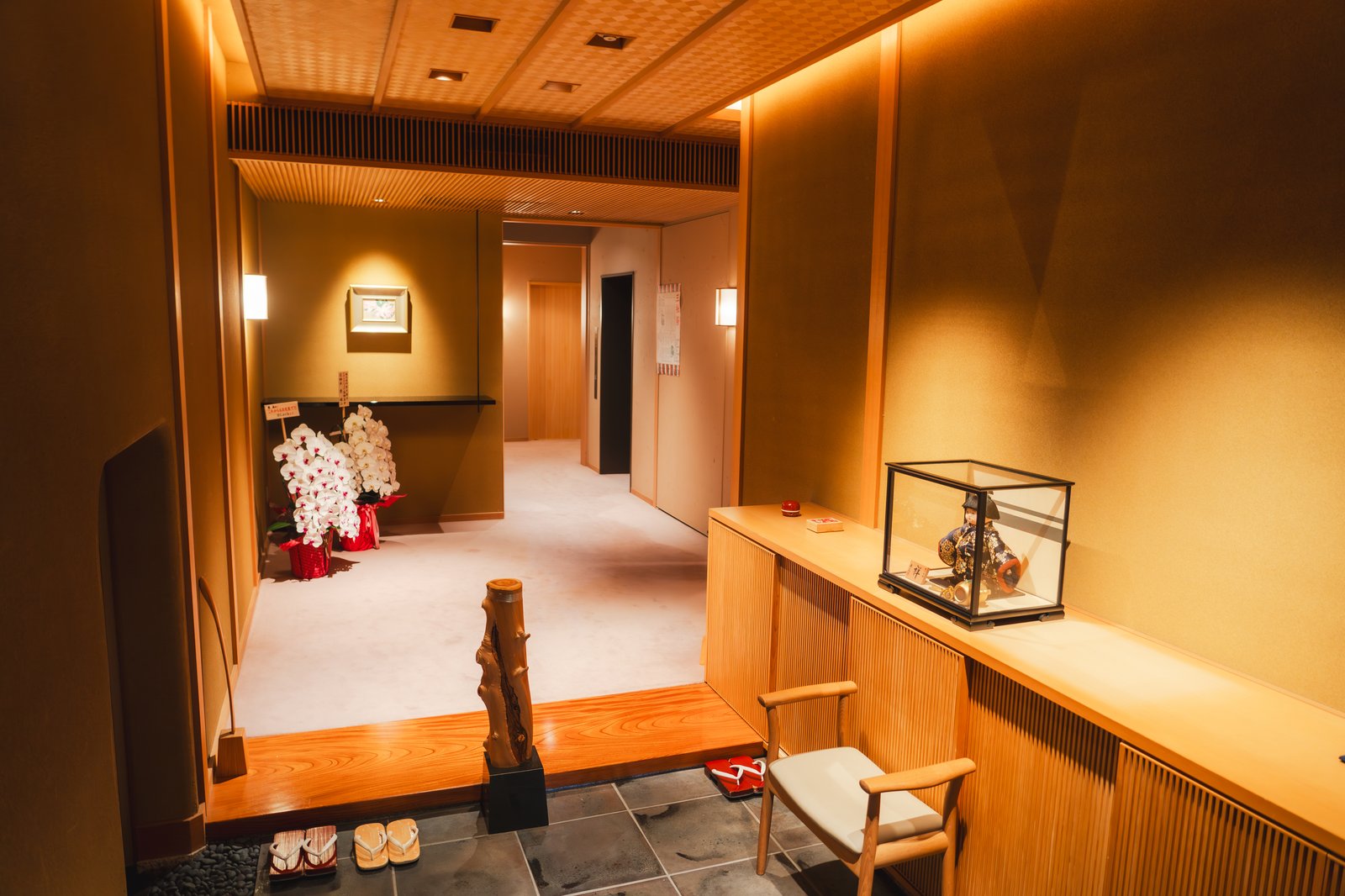
If you want the wider picture of these venues, including their history from the Edo period, our guide to what a geisha house is covers them side by side.
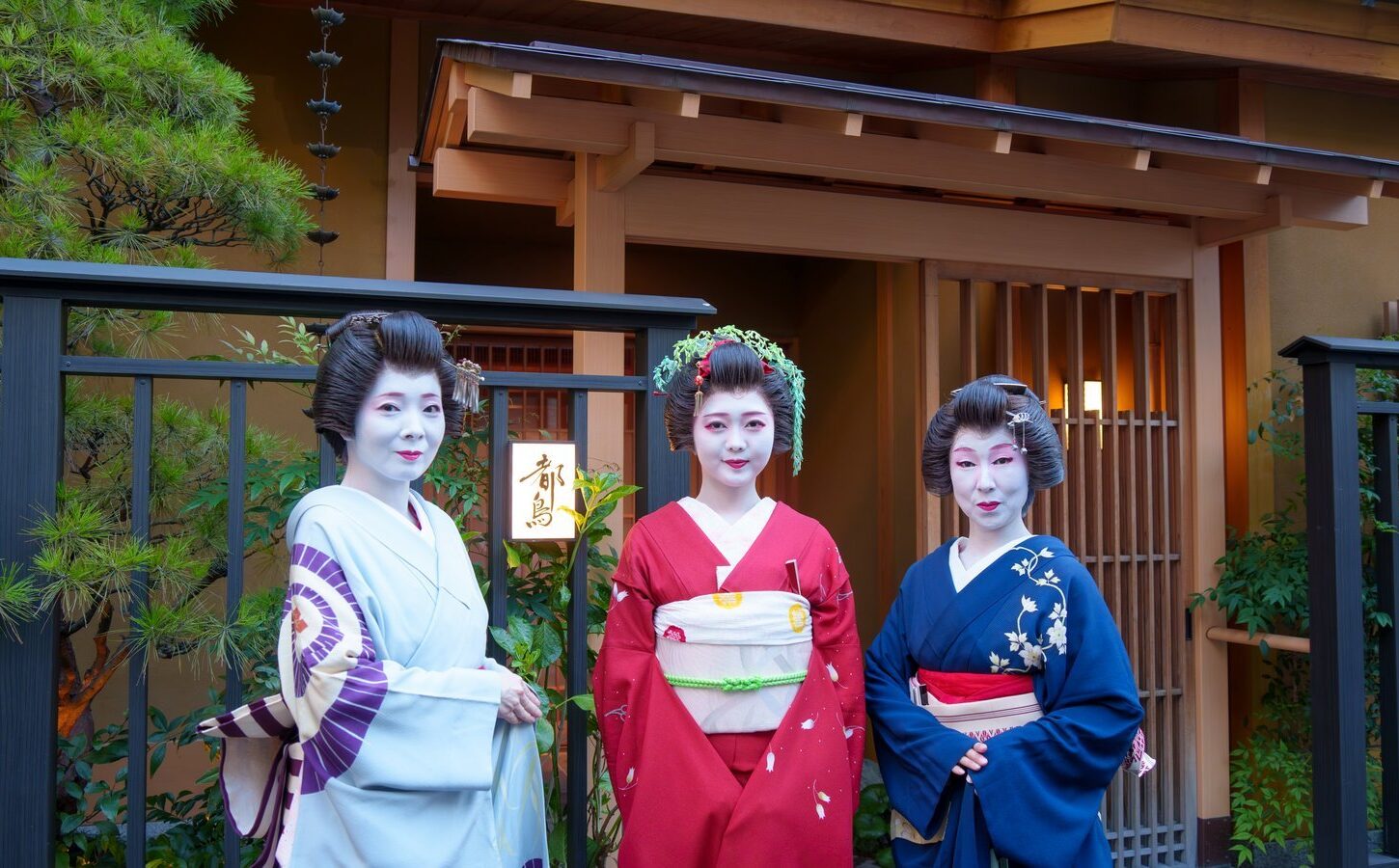
Where the okiya’s geisha work. Three geisha leave a teahouse in Asakusa, the shamisen box going out alongside them.
Meet Asakusa Geisha in a Private Room
At Miyakodori, a private ozashiki (a private gathering with geisha) brings geisha dance, shamisen and games to a room of your own, with a meal if you would like one. Every room has seating at a table or a sunken table, so no one has to kneel. First-time and overseas guests are welcome without an introduction.
Okiya in Tokyo vs Kyoto
Kyoto’s five geisha districts, led by Gion, are what most people picture when they think of an okiya: wooden townhouses, lantern-lit lanes and maiko walking to work in the evening. Kyoto okiya are still homes, and the maiko system there is larger and more visible.
The two cities grew their geisha cultures in different soil. Our third-generation proprietor, speaking to the Tokyo Metropolitan Government, described it this way: Kyoto began as the capital of the court nobility, so its teahouses and geisha tend to feel soft and refined, while Edo was a warrior society that prized a simple, upright kind of style called iki. Both are living traditions with their own taste. In Tokyo, apprentices are fewer, and many geisha live in their own apartments and come to work from there, so a Tokyo okiya is often less a boarding house than a home base for the geisha’s work, while the Kyoto okiya is still very much a family home.
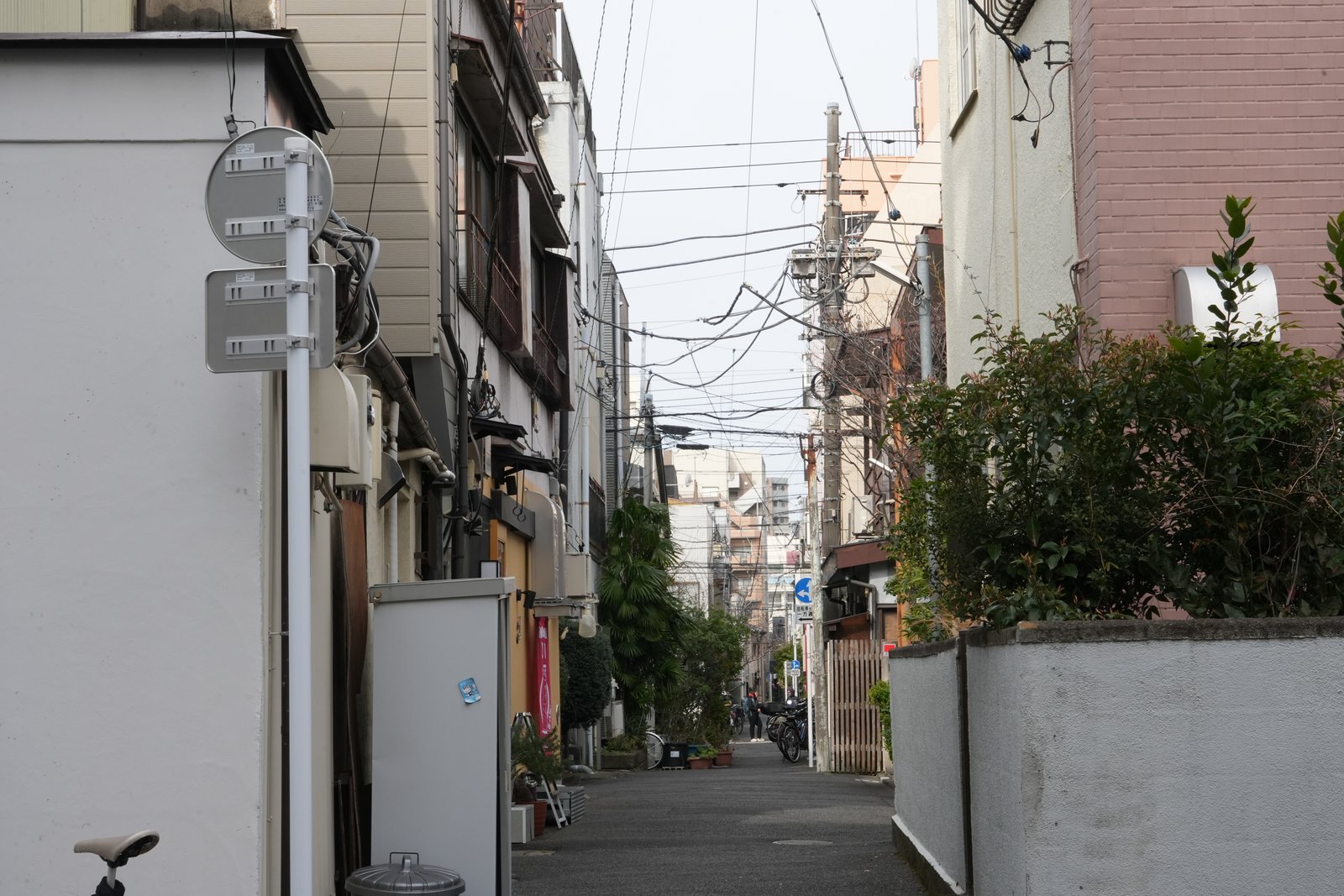
Six geisha districts are active in Tokyo: Shinbashi, Akasaka, Asakusa, Kagurazaka, Mukojima and Yoshicho (Ningyocho), according to the Tokyo Metropolitan Government. Mukojima, across the Sumida River from Asakusa, is often described as the largest of them. Shinbashi and Akasaka, close to the government quarter, were long favored by politicians and business leaders. Each of the six has its own character, and the local association in Asakusa is called the kenban. Asakusa, built around Senso-ji, is the district our okami describes as friendly and unpretentious, a place where guests find it easy to strike up a conversation. It is also the only district where hōkan (taikomochi), the traditional entertainers who join a banquet alongside geisha, are still formally registered with the kenban.
For the character of each district and how to get there, see our guide to Tokyo’s geisha districts.
Can You Visit an Okiya?
In almost all cases, no. An okiya is a private home and workplace, and its doors are not open to visitors. The people inside are often resting, studying or dressing, and the okaa-san is responsible for protecting them.
If you are walking through a hanamachi, a few simple manners go a long way:
- Do not stop or block geisha on the street. They are usually on their way to an engagement and have little time.
- Do not take photos without permission. Several private lanes in Gion now post signs banning photography, and the same courtesy applies in Tokyo.
- Do not touch kimono, hair ornaments or wigs. They are fragile and very expensive.
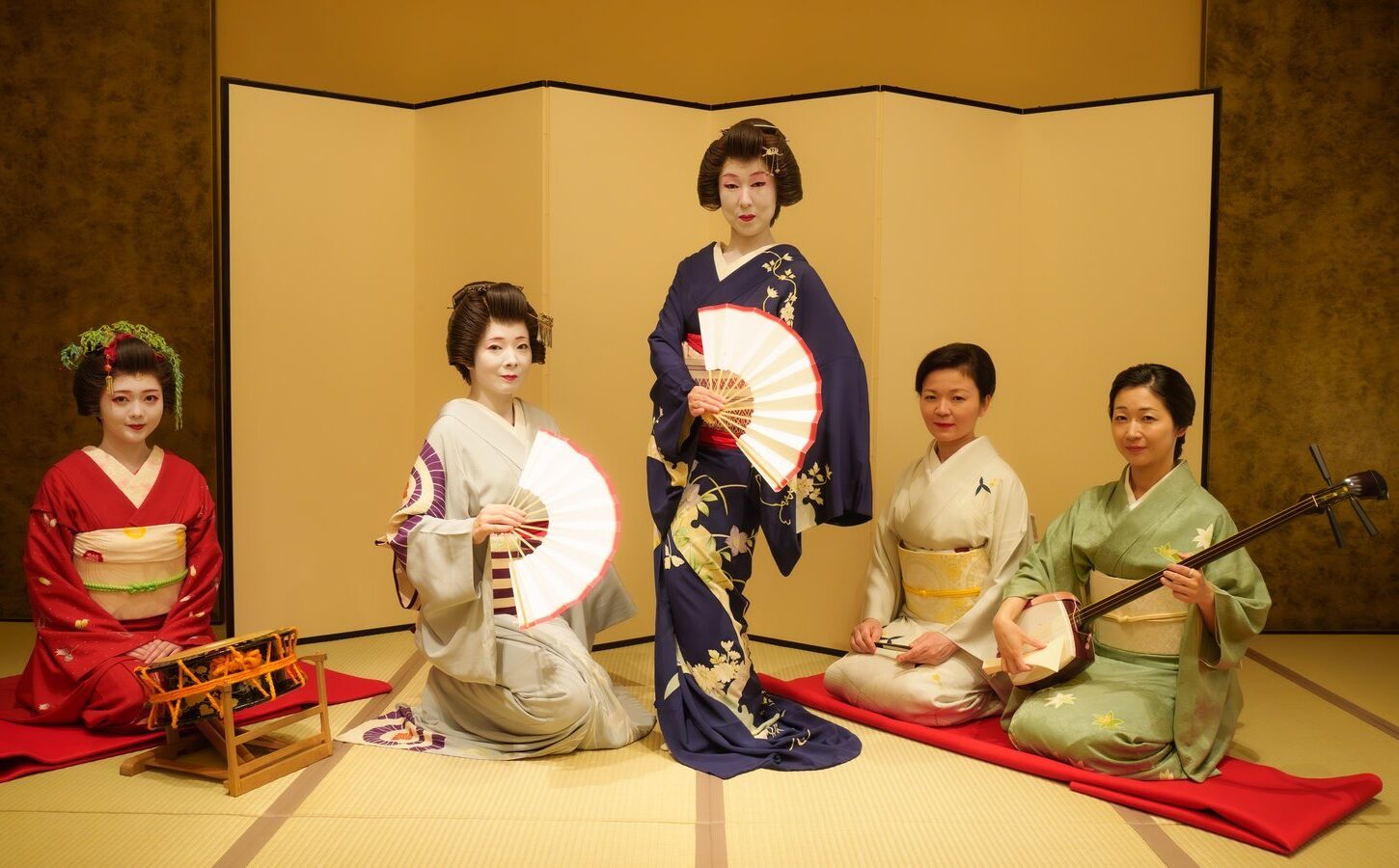
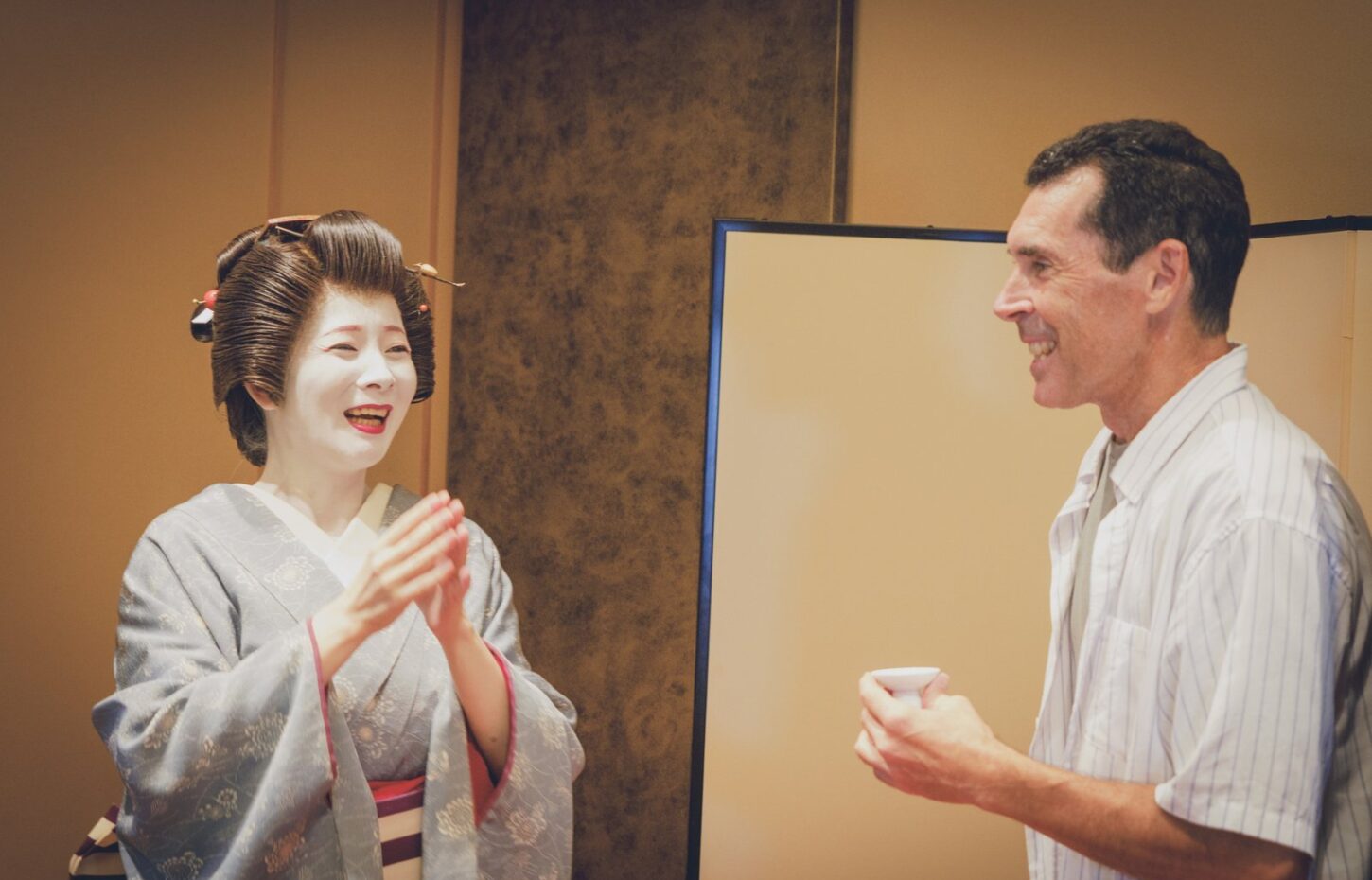
The way to actually meet geisha is at an ozashiki, a private gathering with geisha, held in a teahouse or ryotei. An ozashiki usually lasts two to three hours, often over a seasonal kaiseki dinner. The geisha dance to live shamisen, pour drinks, talk with guests, and lead traditional drinking games such as Konpira Fune Fune. Our ultimate guide to the ozashiki party explains what happens from the first bow to the last game.
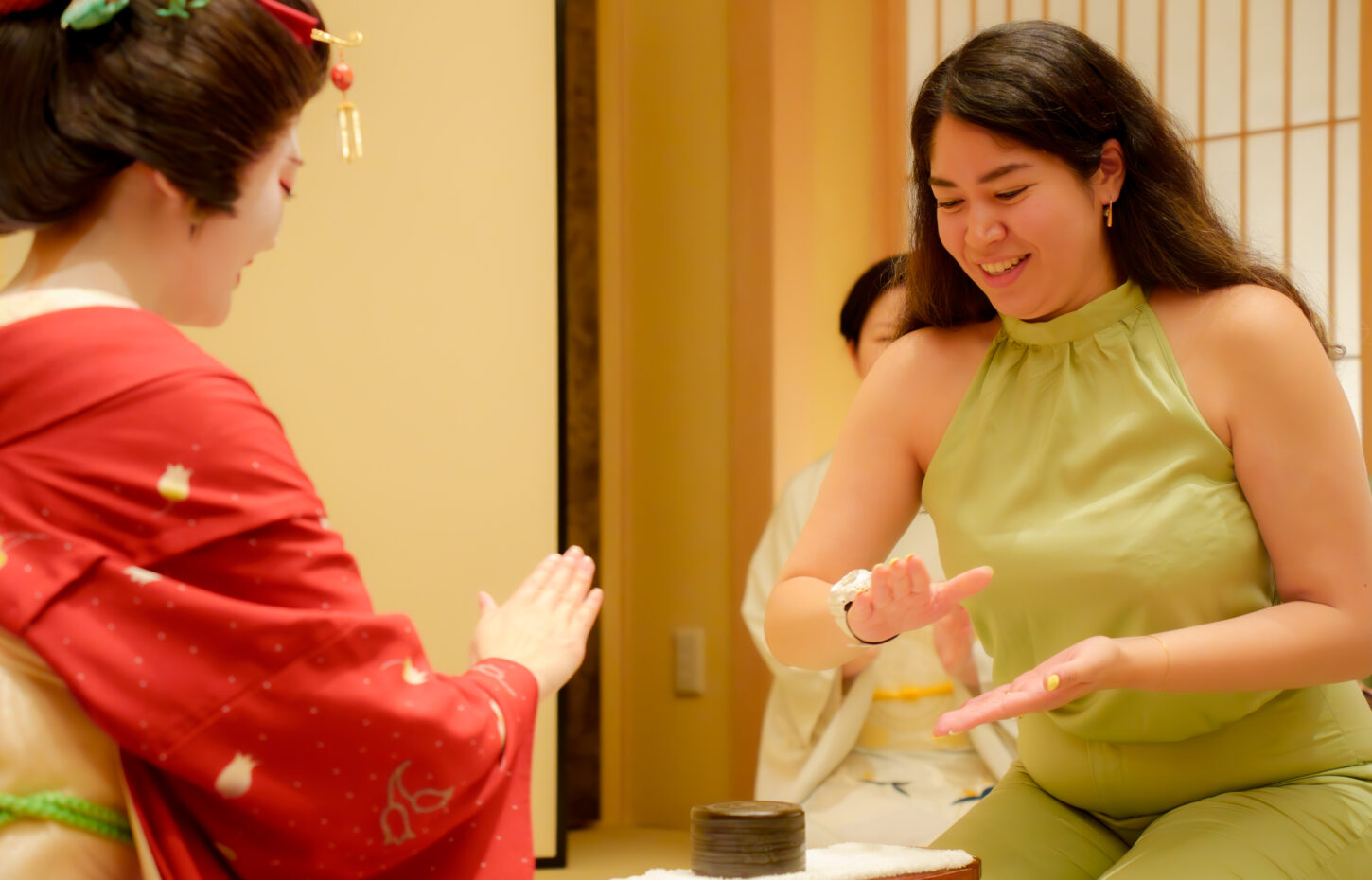
Filmed from the guest’s seat: a banquet game played across a low stand with a geisha in Asakusa.
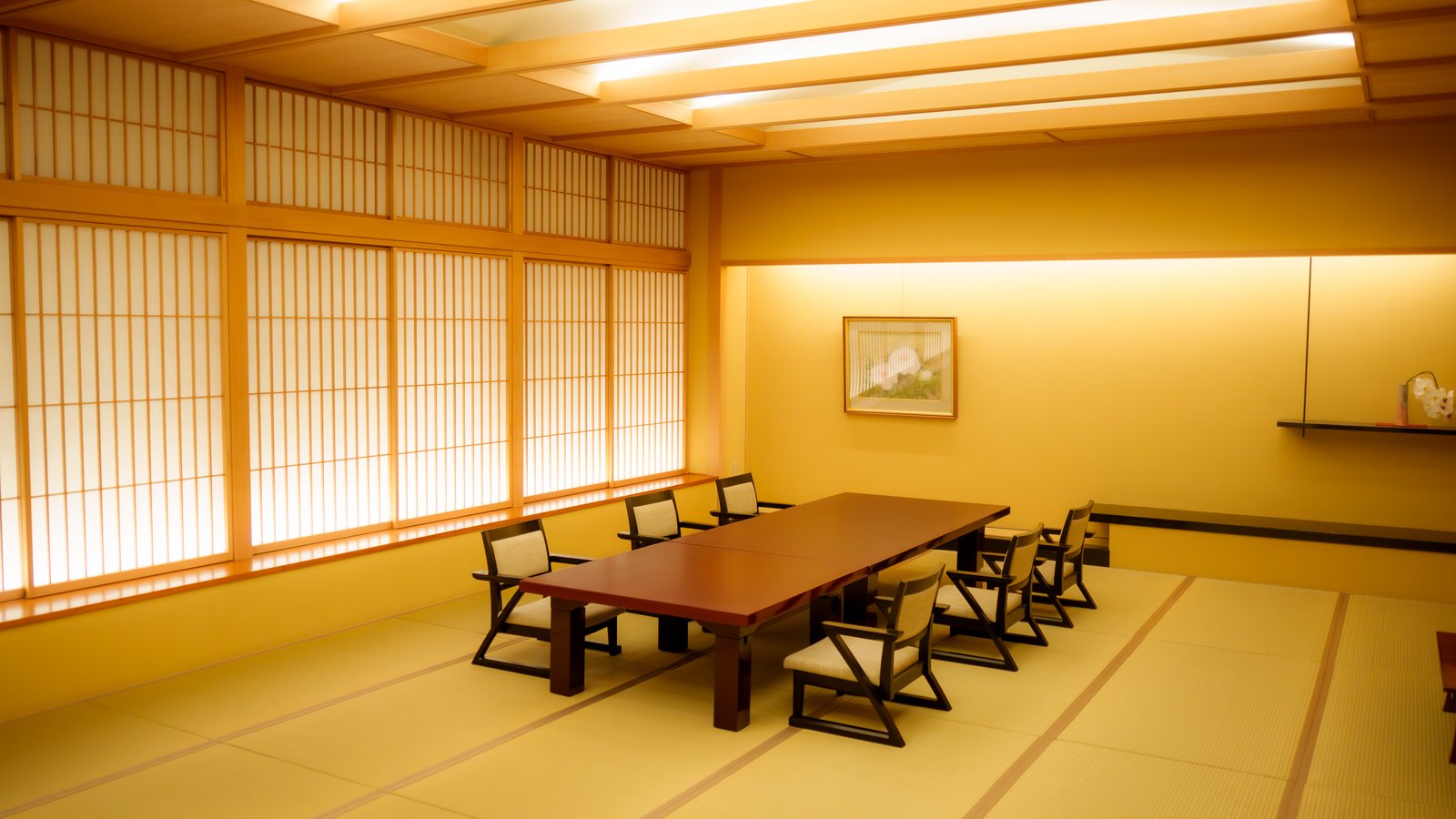
At Miyakodori, every room has tatami floors with seating at a table or a sunken table, so no one has to kneel. Photos with the geisha are welcome, and we can look after allergies and vegetarian or vegan diets. Fully halal or kosher meals are served as a bento with five days’ notice. You can tell us in advance what you would like your visit to include, and our Asakusa geisha FAQ covers seating, food and what to wear. Please wear socks, as shoes come off at the entrance.
If You Are in Asakusa
Our district is easy to combine with a day of sightseeing. In autumn, the temple grounds around Senso-ji turn red and gold, and late November is usually the best time to see the fall colors. In the colder months, a soak in an onsen before dinner is a good way to warm up. In spring, the cherry blossoms along the Sumida River bring the whole neighborhood outdoors.
Frequently Asked Questions
What does okiya mean in Japanese?
Okiya (置屋) combines “to place or keep” with “house.” It is the house a geisha belongs to and from which she is sent out to work. In English it is usually translated as “geisha house.”
Do geisha still live in an okiya today?
In Kyoto, maiko and trainees live in their okiya. In Tokyo, trainees more often live in apartments, some of them arranged by the okiya, and many full geisha live in their own homes and come to the district to work. Either way, the okiya remains the house she belongs to.
What is the difference between an okiya and an ochaya?
An okiya is where geisha belong and get ready. An ochaya is a teahouse where guests are entertained. Geisha belong to an okiya but perform at an ochaya in Kyoto, or at a ryotei or machiai in Tokyo.
Who runs an okiya?
An okiya is run by a woman called okaa-san, or “mother,” who is usually a former geisha. She looks after training, finances and schedules, and in some houses she hands the house down to a daughter or a geisha she raised.
Can tourists go inside an okiya?
Generally, no. Okiya are private homes and workplaces and do not accept visitors. To meet geisha, book an ozashiki at a teahouse or ryotei that welcomes international guests.
Are there okiya in Tokyo today?
Yes. Tokyo still has six active geisha districts, and in Asakusa the geisha belong to okiya and are registered with the local kenban. The numbers are small. Asakusa has about twenty geisha today, and our okami told the Sankei Shimbun in 2026 that there were more than 140 about fifty years ago. Even so, young geisha are still making their debut, and each one carries the district’s traditions forward.
Do geisha houses have names?
Yes. Every okiya has a house name, called a yago (屋号), and the geisha who belong to it work under that name. It acts like a hidden family name: a geisha is known by her professional name day to day, but the okiya’s name stands behind it. The crest on a geisha’s black formal kimono is her okiya’s.
Sources: Tokyo Metropolitan Government, feature on geisha and ryotei (in Japanese); Asakusa Kenban (in Japanese); Asahara Sumi, Ozashiki Asobi (Kobunsha Shinsho, 2003); Iwashita Hisashi, Karyukai no Kioku: Geisharon (Bunshun Bunko, 2009); Sankei Shimbun, interview with our okami (in Japanese), March 10, 2026.
Ready to Meet Asakusa Geisha?
Miyakodori, founded in 1950, is the only machiai-chaya in Asakusa. Request a private ozashiki, a private gathering with geisha, and spend time with them in a room of your own, with seating at a table or a sunken table.


- A Guide to Tokyo's Geisha Districts: Finding Authentic Experiences and Cultural Immersion
- The Ultimate Guide to the Ozashiki Party: Unlocking the Secrets of Traditional Japanese Entertainment in Tokyo
Konpira Fune Fune: How to Play the Geisha Cup Game (Rules and History)
From Anime Geisha to the Real Thing in Asakusa
Geisha Danna: What a Geisha’s Patron Was, and How Geisha Are Supported Today
How to Become a Geisha: Training, Stages, and Life in Asakusa Today
Are There Still Geisha in Japan? Yes, and Here’s Where
Hakoya: The Unsung Keeper of Asakusa’s Geisha World
Comment ( 0 )
Trackbacks are closed.
No comments yet.