



Is Memoirs of a Geisha a True Story? What Real Geisha Are Like
Memoirs of a Geisha is not a true story. Arthur Golden’s 1997 novel — and the 2005 film adaptation directed by Rob Marshall — is historical fiction: a Western author’s invention, loosely built on interviews with a real geisha who later sued him over how that material was used. The film is visually stunning, and for millions of viewers it remains their first and only window into the world of geisha. But much of what it shows — above all the auctioning of innocence, and the idea that a geisha’s career ends in a patron’s bed — belongs to the novel, not to the profession.
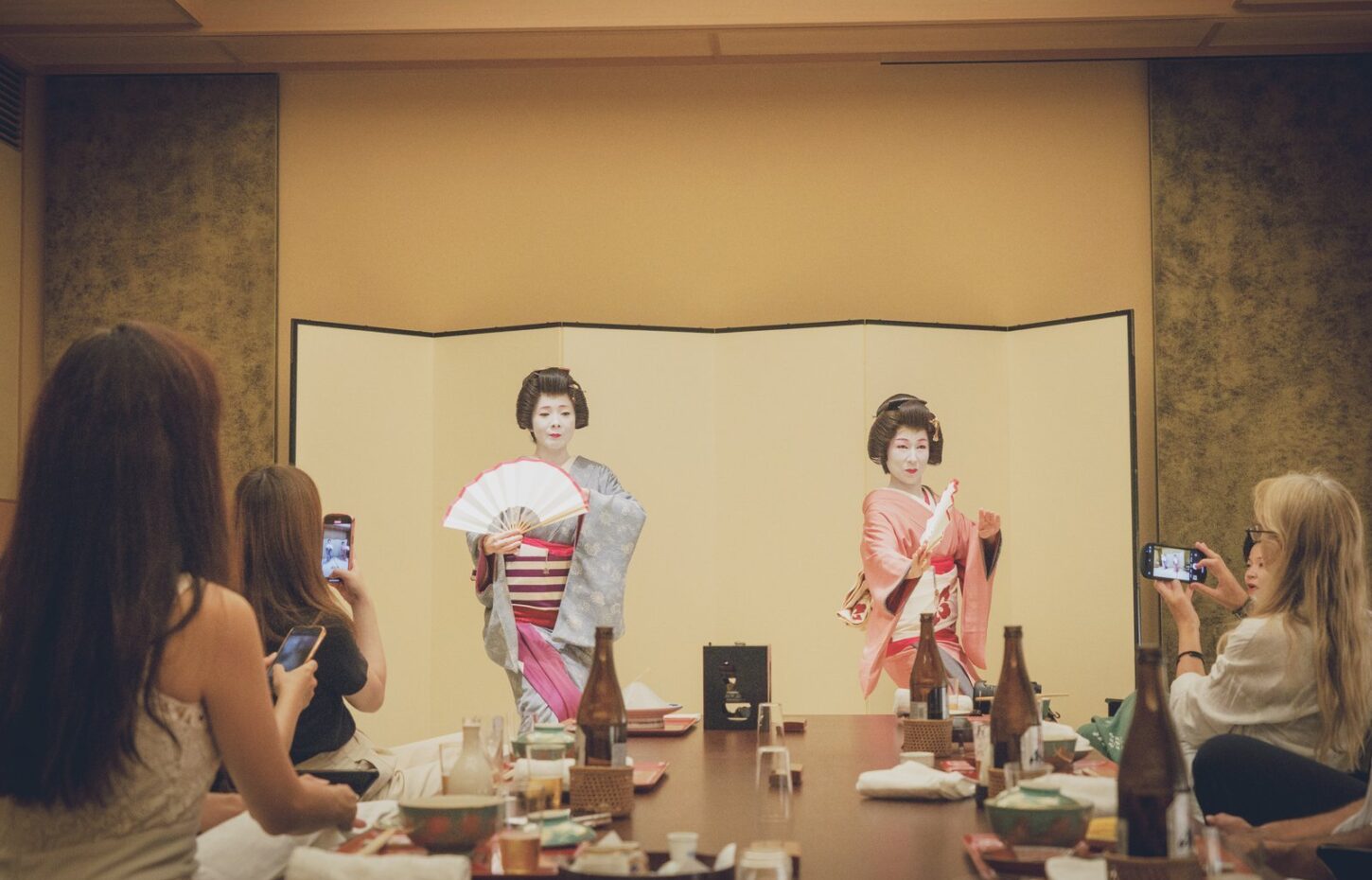
We write this from an unusual position. Miyakodori is a machiai-chaya — a traditional teahouse in Asakusa, Tokyo — founded in 1950, where real geisha perform at private banquets to this day. The geisha we invite are working artists registered with the local kenban (geisha registry), and our okami spent twenty-seven years as an Asakusa geisha herself before taking over the house. So when guests ask us, sometimes nervously, “Is it really like the movie?” — we can answer from inside the room the movie tried to imagine.
This guide covers what the film got right, what it got wrong, and what the world of geisha in Japan actually looks like today.
Is Memoirs of a Geisha a True Story?
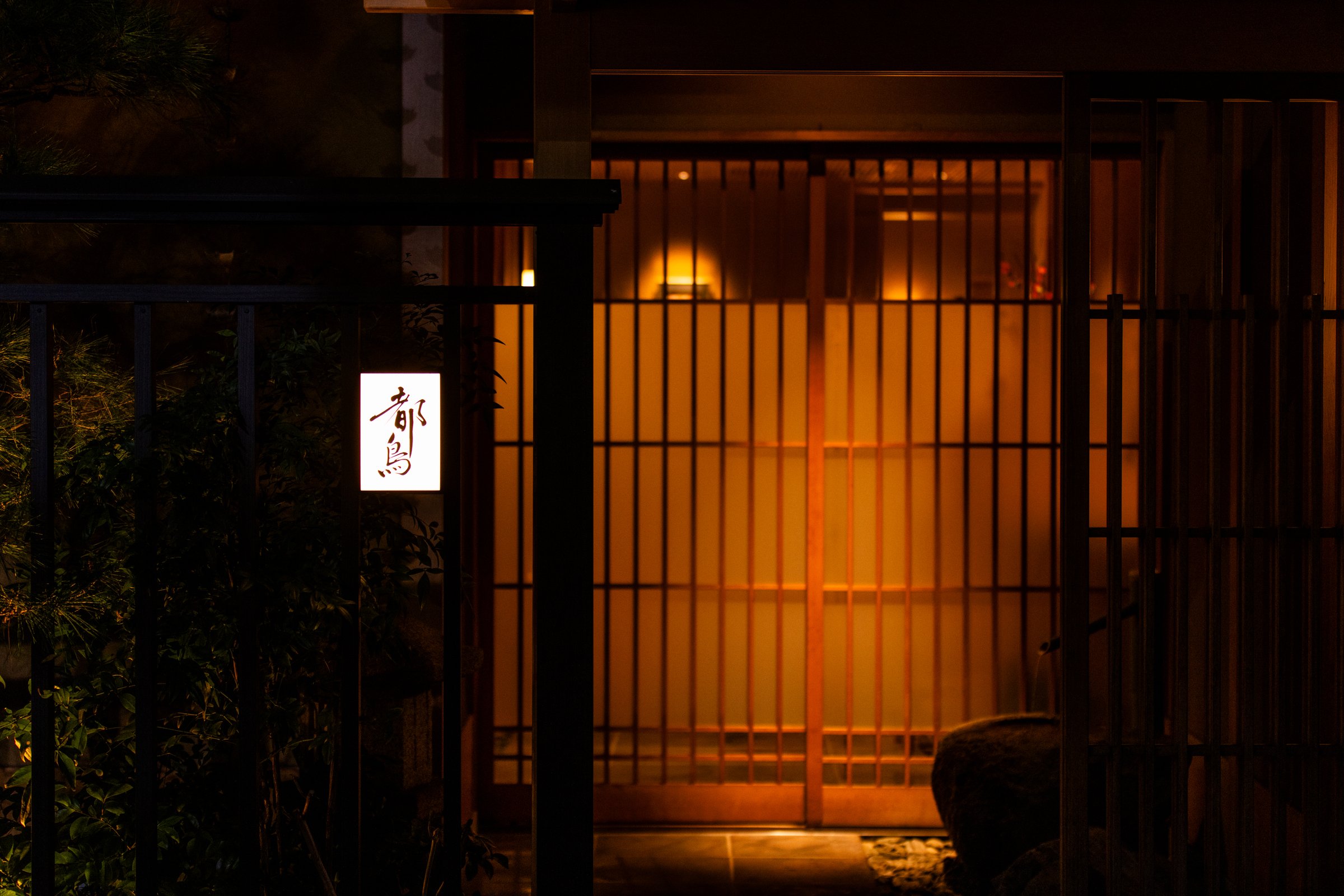
No — Memoirs of a Geisha is historical fiction. There was no real Sayuri, no real Hatsumomo, no real Chairman. The story, its love plot, and its most shocking scenes were invented by Arthur Golden. What is real is the world the story borrows: the hanamachi (geisha districts) of Kyoto in the 1930s and 40s, the okiya (geisha houses), the long apprenticeships, and the artistry. The trouble — and the reason this question has a famous legal answer — lies in how the novel blended that real world with fiction.
A novel built on real interviews
Arthur Golden, an American writer with a background in Japanese art history, interviewed Mineko Iwasaki in 1992 while researching the novel. Iwasaki was no minor source: she had been the most celebrated geiko (the Kyoto term for geisha) of her generation in Gion, Kyoto’s most famous geisha district. She agreed to speak with Golden on the understanding that her cooperation would remain confidential.
The novel that emerged in 1997 became a global bestseller — and Golden thanked Iwasaki by name in the acknowledgments. That single line set off the most important controversy in the book’s history.
The Mineko Iwasaki lawsuit — what she objected to
In 2001, Iwasaki sued Golden and his publisher for breach of contract and defamation. The named acknowledgment had broken the promise of anonymity, and in the traditional world of the hanamachi, the consequences for her were serious. But her deeper objection was to the content itself: she said the novel took the world she had described and bent it toward Western fantasy — above all, by portraying geisha as women whose virginity could be auctioned and whose careers depended on patrons’ beds. Iwasaki has publicly and repeatedly stated that this does not describe the life of a geiko as she lived it.
To understand why a single line in the acknowledgments could matter so much, it helps to know one thing about how this world works: discretion is its foundation. Traditional teahouses historically operated on introductions only — a custom called ichigen-san okotowari, “no first-time guests without an introduction” — precisely because what happens in an ozashiki, and who attends one, stays private. By naming her, the book made Iwasaki publicly answerable for a portrait of that private world she had never agreed to sign.
The case was settled out of court in 2003 for an undisclosed amount, and her name was removed from the Japanese edition. Iwasaki then did something more interesting than litigation: she wrote her own book. Geisha: A Life (2002; published in the UK as Geisha of Gion) is her firsthand account — and reading it next to Golden’s novel is the clearest lesson available in the difference between the geisha of fiction and the geisha of fact.
What the Film Got Wrong — 5 Key Misconceptions
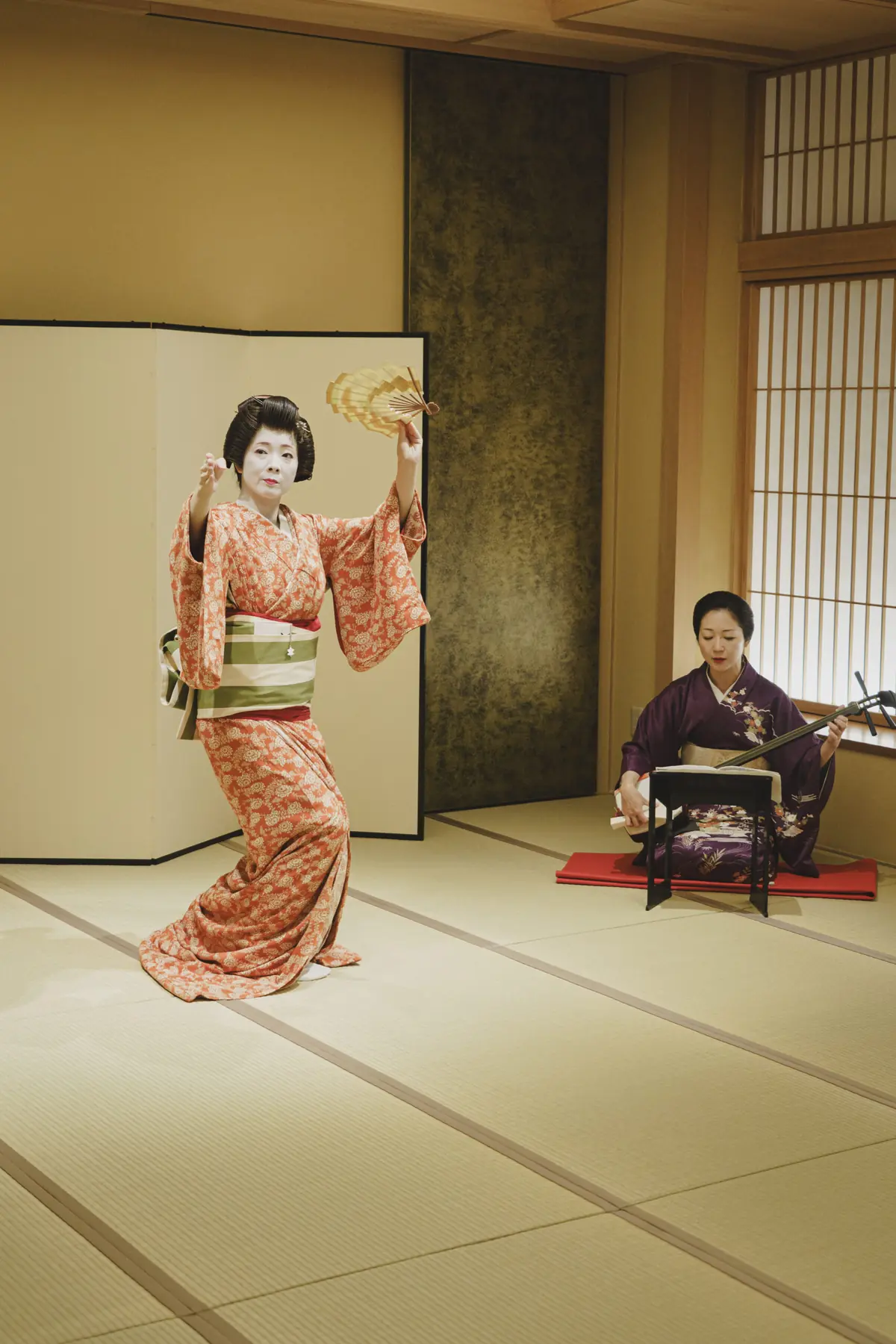
The 2005 film — with Zhang Ziyi as Sayuri, Gong Li as Hatsumomo, Michelle Yeoh as Mameha, and Ken Watanabe as the Chairman — won three Academy Awards, for cinematography, art direction, and costume design. It earned them; it is a beautiful object. And it does get the skeleton of the world right: okiya houses run by women, a registry coordinating the district, apprentices spending years on dance and shamisen, senior geisha mentoring junior ones. All of that is real.
But the casting drew criticism even before release: the three lead geisha roles went to Chinese and Malaysian-Chinese actresses, which stirred objections in Japan, and the film was ultimately denied a theatrical release in China in 2006 amid the controversy. It was an early sign of how the production weighed spectacle against cultural specificity — and beauty is not accuracy. Here are the five misconceptions guests most often bring to our teahouse, and what the record actually shows.
1. Geisha are not courtesans or sex workers
This is the film’s deepest distortion, and the one Iwasaki fought hardest. Geisha specialized in artistic entertainment — dance, music, and refined conversation — and were not part of the courtesan trade. Oiran, by contrast, were licensed courtesans who provided companionship, including intimate services. By Edo-period regulations, the two professions were strictly separated, and the separation was visible at a glance: a geisha ties her obi at the back, a courtesan tied hers at the front.
The registry system made the distinction concrete. When the authorities first officially recognized geisha in the Yoshiwara, a registry office called the kenban was created to manage them — and, by our okami’s account, the names of geisha and courtesans were posted on separate boards. The kenban’s purpose was registration and management, but its system made the line between the two professions publicly visible. That same kenban system still coordinates geisha districts today, including ours in Asakusa.
The film’s infamous mizuage scene — a bidding war for the heroine’s virginity — is the point where the novel collapses this distinction entirely. So did anything like it ever exist? The word did, and its meaning shifted with time and place. In the prewar licensed quarters, above all in the courtesan world, historical records show that a patron’s money could attend a young woman’s coming-of-age, and accounts suggest the practice touched parts of some hanamachi as well. Within the geisha profession, however, mizuage more commonly meant a promotion ceremony — the change of collar marking a young geisha’s coming of age, with a sponsor covering the costs — and Iwasaki has stated plainly that nothing like the film’s auction happened in her career. History then closed the question for good: Japan’s Prostitution Prevention Law, passed in 1956 and fully enforced by 1958, made any such transaction illegal. Every geisha working today entered the profession decades after that world ended.
For the real history of the licensed quarters and the women who worked there, see our guides to the oiran of the Yoshiwara and the Yoshiwara district itself.
2. The danna system is not a geisha’s destiny
In the film, Sayuri’s entire life bends toward securing a wealthy patron — a danna — and the story treats this as the inevitable shape of a geisha’s career. The danna tradition did exist, and historically some geisha had patrons who supported their training and expenses. But it was never the point of the profession, and it is emphatically not the shape of a geisha’s life today.
Modern geisha are independent professionals. They can date. They can marry — and some continue working as geisha after marriage. Whether to have a patron at all is, and long has been, a personal choice. As our okami puts it, some geisha simply decide: no patron, my art stands on its own, and my private life is my own.
3. The training is rigorous — but it is chosen, not suffered
The film presents a childhood sold into servitude, a cruel okiya, and training as a form of survival. It makes for powerful cinema, and it borrows from real hardships of the prewar era. But projecting that onto geisha training as such — especially today — gets the spirit of it wrong.
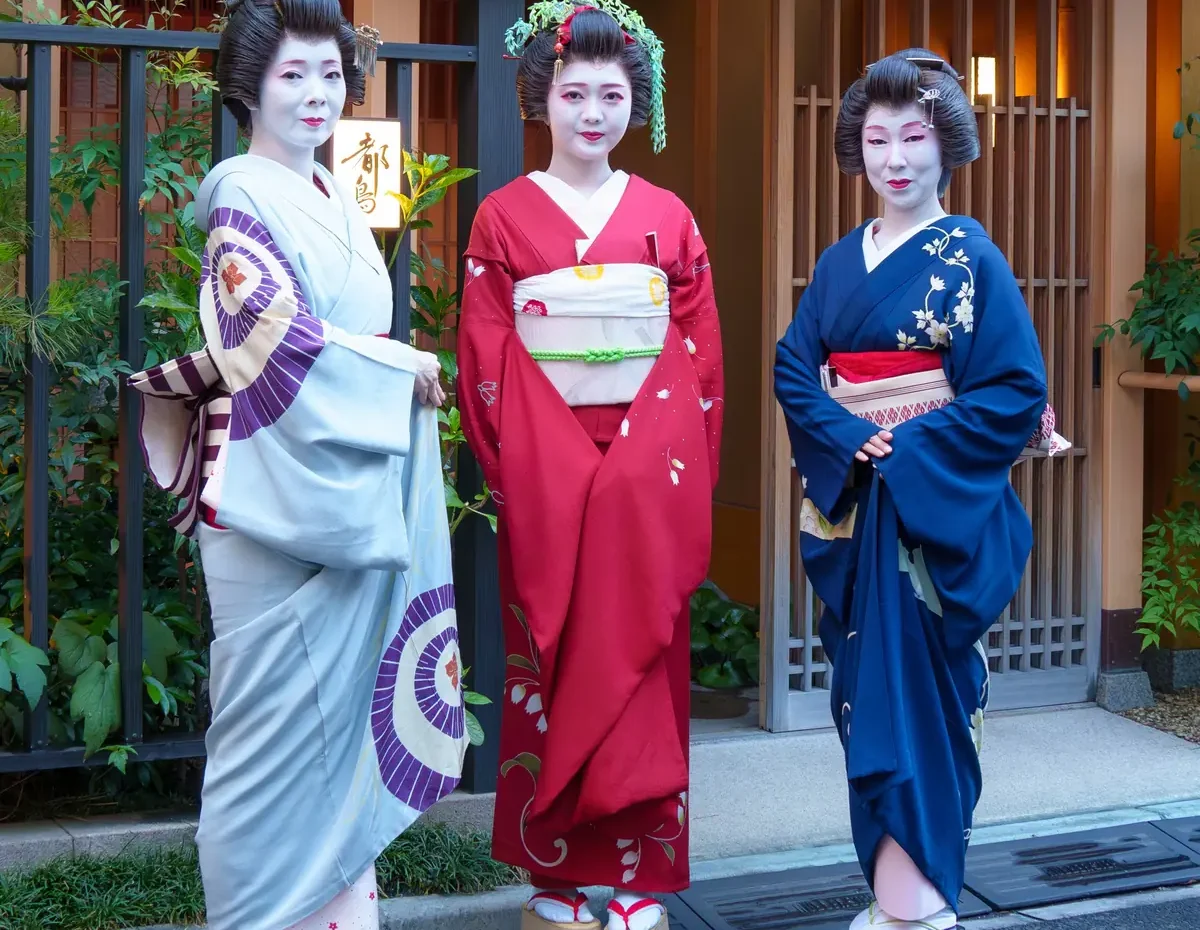
The real path has three stages: a future geisha first enters the world as a minarai (trainee), learning manners, movement, and the rhythm of the banquet room for six months to a year. She then debuts as a hangyoku — literally “half jewel,” Tokyo’s term for a young geisha in long-sleeved kimono — and after three to four years she transitions to full geisha status as ippon. A hangyoku is already a geisha, performing at real banquets; the stages mark seniority, not servitude. (Kyoto uses different terms — maiko and geiko — for a similar progression. Our guide to the differences between geisha and maiko covers this in detail.)
And the women who walk this path choose it. One active Asakusa geisha we work with told us she wanted to make Japanese dance her profession, fell in love with the idea as a small child watching a recital, and found her apprenticeship simply joyful: there was so much to learn, she said, and she couldn’t wait to debut. That is the voice the film never lets you hear.
4. The white makeup is ceremonial — not a daily mask
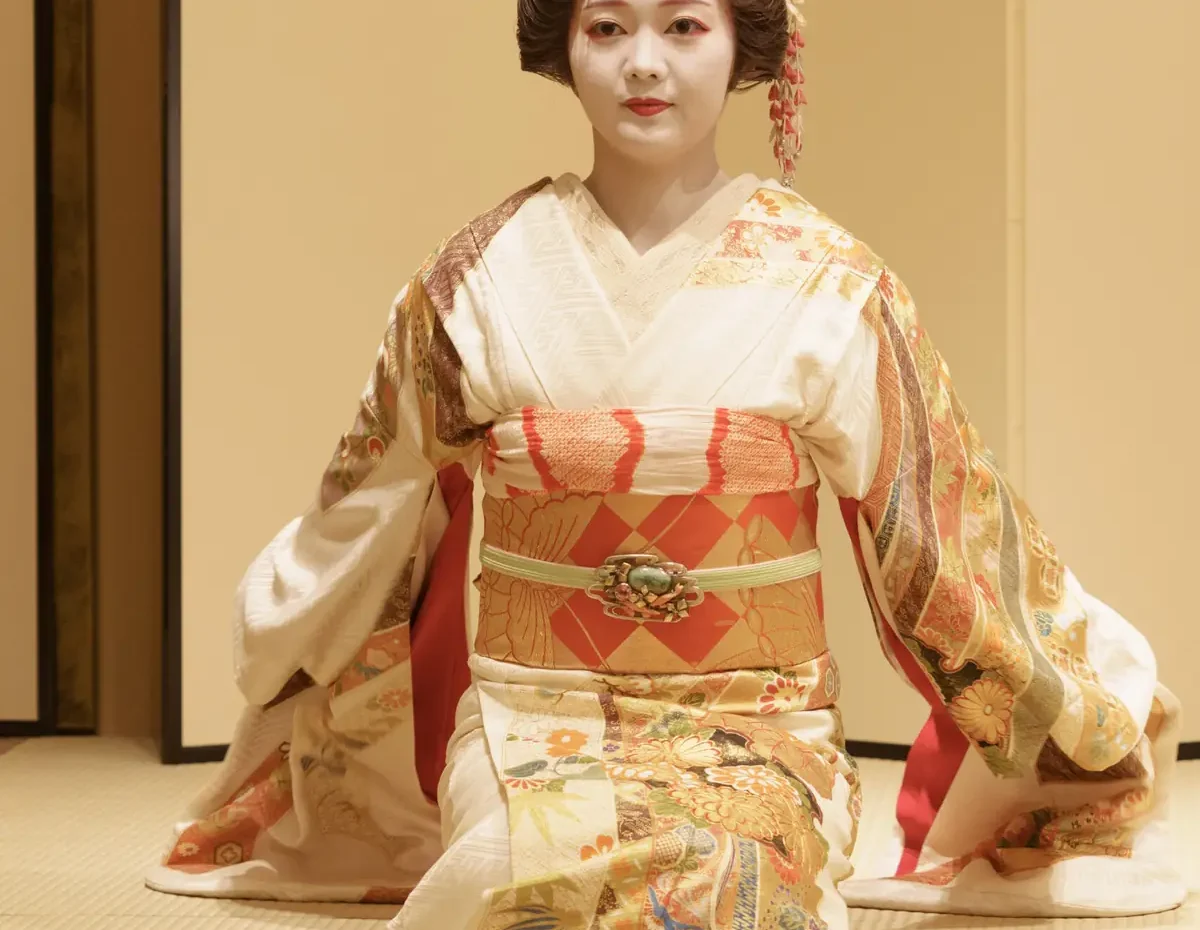
In the film, the white face is everywhere, almost a uniform of the profession. In reality, full white makeup belongs to formal performance settings — it is stage dress, not daily wear.
The craft itself is also faster and more matter-of-fact than the film’s lingering preparation scenes suggest. Our okami, who applied the white makeup herself through twenty-seven years as a working geisha, describes the reality: a foundation of bintsuke oil, white pigment applied and patted down with a sponge (brushes, in the old days), all finished by a practiced geisha in well under thirty minutes. As for why the makeup is white at all, she points to the candlelit era — faces needed to stand out in the dim light of hyakume candles — her own understanding, she notes, rather than settled history. For the full story of tools, technique, and meaning, see our guide to traditional geisha makeup.
5. Kyoto is not the whole geisha world — Tokyo has its own tradition
To be fair, this last one is the viewers’ doing more than the film’s. Memoirs is set in Gion, Kyoto’s most famous hanamachi, and Gion is real (though the film was shot mostly on California sets, with location work at Kyoto sites like Kiyomizu-dera and the Fushimi Inari shrine). The misconception is the generalization: assuming every geisha community looks, dresses, and talks like the Gion of the screen. It doesn’t.
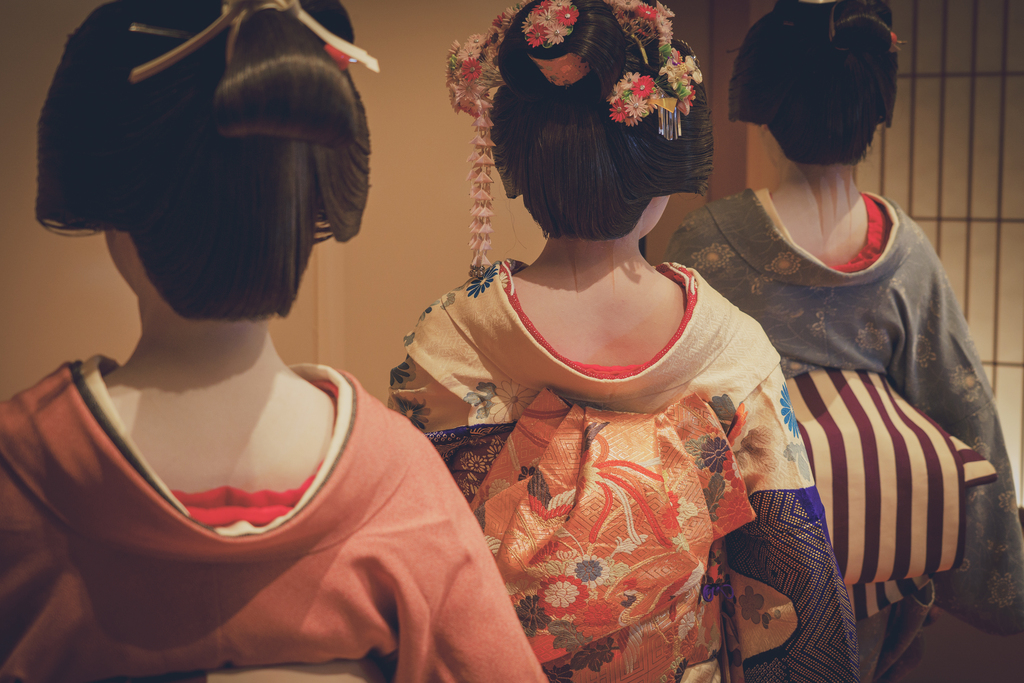
Tokyo’s geisha culture — in districts like Asakusa, Shimbashi, and Kagurazaka — developed its own customs, terms, and aesthetics. Kyoto’s young maiko wear trailing hems and the long darari obi; Tokyo’s hangyoku dress differently, and a Tokyo geisha typically wears Edo komon — kimono patterned so finely it reads as a solid color from a distance — where Kyoto favors other styles. Our okami sums up the difference in sensibility as Edo’s iki — sharp, understated chic — against Kyoto’s refined elegance; her personal impression, she says, but one that matches how the two cities talk about themselves. Even the starting ages differ: in Kyoto a maiko may debut at fifteen, while Tokyo requires geisha to finish high school, so hangyoku debut at eighteen.
None of this makes one tradition more authentic than the other. But if the film brought you here, know that the geisha world nearest to where most travelers stay — Tokyo — is not a copy of Gion. It is its own living lineage.
Not the film version. A former Asakusa geisha remembers a joke that went wrong at a real ozashiki, and what the rest of the room could do about it — which was nothing. Subtitled on screen.
What Real Geisha Are Like — Then and Now
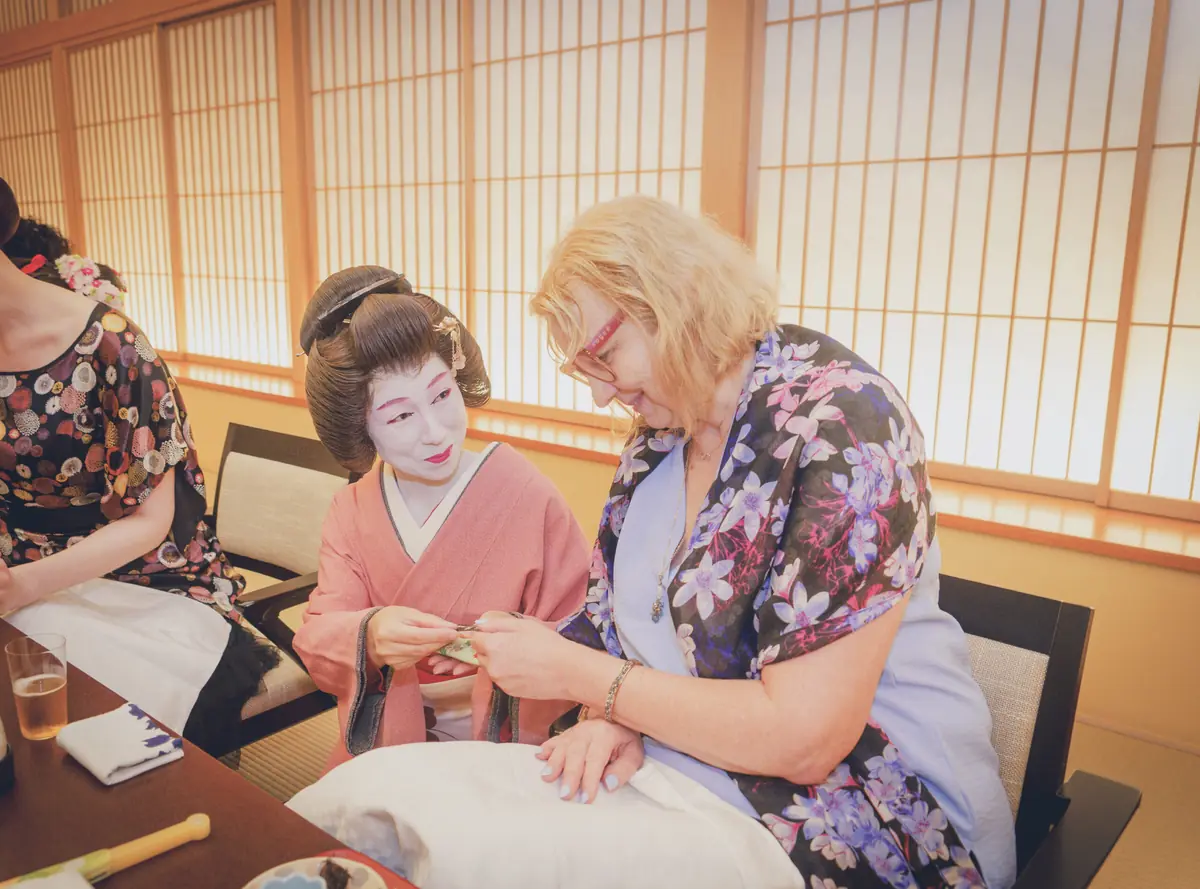
Strip away the fiction, and what remains is more interesting than the myth: a working profession of trained artists, organized much as it has been for two centuries, still performing and still evolving.
A real banquet is a performance — not a transaction
What actually happens when you spend an evening with geisha? An ozashiki — a private tatami-room banquet — is live performance at close range: classical dance, shamisen and song, conversation, and ozashiki games that have entertained guests since the Edo period. At our teahouse, guests eat, laugh, play, and watch artists work a room with skills that take years to polish. Nothing is auctioned. Nothing is implied.
Even the economics are transparent and institutional — a structure that quietly refutes the film’s world of private bargains. When guests book an ozashiki, the teahouse arranges everything; guests simply pay the house. Geisha are independent professionals registered with their guild, not employees of any teahouse — and certainly not anyone’s property.
The geisha community in Asakusa today
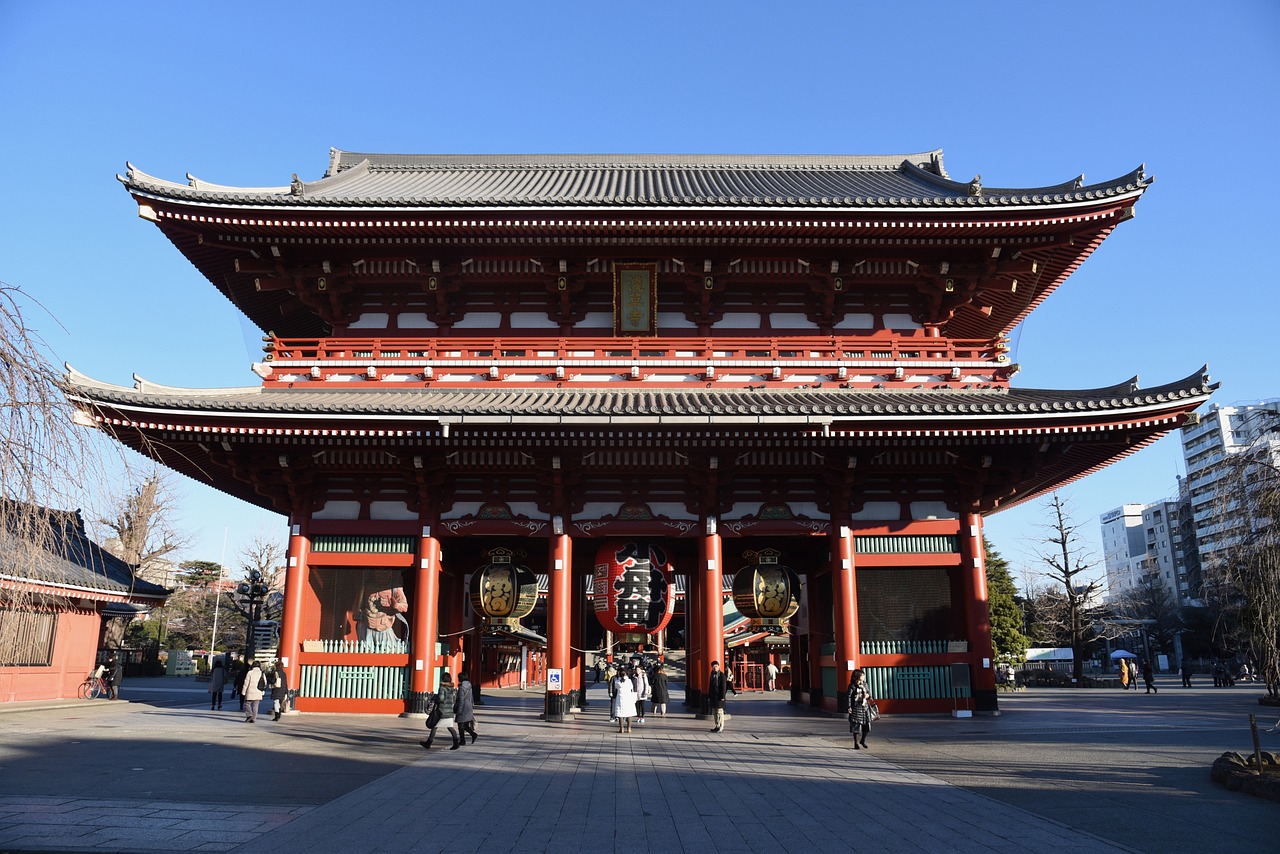
Asakusa is home to one of Tokyo’s active hanamachi, where geisha train, perform, and carry the tradition forward — a short walk from Sensō-ji temple, in the same corner of Tokyo where the kenban has coordinated the district for generations. The community is very much alive: in recent years, our okami notes, more young women have been applying to become geisha, and she suspects the growing interest of international guests is part of what makes the profession feel like a dream worth pursuing.
That is the chapter the film leaves out. Memoirs ends in nostalgia, as if the world it depicted had faded with the war. The real tradition kept going — performing, adapting, and welcoming new faces, including guests from abroad.
Meet Real Geisha in Asakusa
The world the film only imagined is alive a short walk from Sensō-ji temple. At Miyakodori — a machiai-chaya hosting geisha banquets since 1950 — book a private ozashiki directly, with an English interpreter and no introduction required.
Request a ReservationBeyond Memoirs — Other Geisha Films Worth Watching
If the film sparked your interest, the Japanese classics are worth your time. Kenji Mizoguchi’s A Geisha (1953) and Mikio Naruse’s Flowing (1956) treat the profession with far more realism, made while the world they depicted was contemporary life. Documentaries on modern maiko and geiko — widely available on streaming platforms — show the actual texture of training today. If guests ask us what to watch after an evening at our teahouse, these are the ones we name. Watching the Japanese films after Hollywood’s version is its own education: the difference in gaze is the whole lesson.
Experience Real Geisha Culture in Asakusa
Sayuri never existed. But the world she was loosely modeled on did — and its Tokyo counterpart is not a memory or a museum piece. It is a working tradition, and you can sit inside it.
Miyakodori has hosted geisha banquets in Asakusa since 1950. Traditional teahouses long operated on introductions only, but we welcome international guests directly — you can book a geisha experience in Tokyo with no introduction needed, and an English interpreter is present throughout the evening. Watch the dance the film could only imitate, play the games the script never mentioned, and meet the artists the novel never let speak.
Request a Reservation
Join us for an authentic ozashiki (a private gathering with geisha) at Miyakodori in Asakusa — founded in 1950, open to international guests directly. English interpreter included in every session.
Request a ReservationFrequently Asked Questions
- Is Memoirs of a Geisha a true story?
- No. It is historical fiction written by Arthur Golden, loosely informed by interviews with former Gion geiko Mineko Iwasaki. The characters and plot — including the famous auction scene — are invented. Iwasaki later sued Golden over the use of her cooperation and published her own memoir, Geisha: A Life, to set the record straight.
- Why did Mineko Iwasaki sue Arthur Golden?
- She sued in 2001 for breach of contract and defamation: Golden had named her in the book’s acknowledgments despite a promise of confidentiality, and she objected to the novel’s portrayal of geisha as women whose intimacy could be bought. The case was settled out of court in 2003, and her name was removed from the Japanese edition.
- Was mizuage real?
- The word was real; the film’s auction is fiction layered on a complicated history. In the prewar licensed quarters — above all among courtesans — a patron’s payment could attend a young woman’s coming-of-age, and accounts suggest the practice touched parts of some hanamachi. Within the geisha profession, however, mizuage more commonly named a promotion ceremony, a change of collar with a sponsor covering the costs — and Mineko Iwasaki has stated that nothing like the film’s version occurred in her career. Japan’s Prostitution Prevention Law (passed 1956, fully enforced 1958) made any such transaction illegal, and it has no place in the geisha world of today.
- Why was the casting of Memoirs of a Geisha controversial?
- The three lead geisha roles went to Chinese and Malaysian-Chinese actresses — Zhang Ziyi, Gong Li, and Michelle Yeoh — which drew criticism in Japan for casting non-Japanese leads as geisha; in China, the film was denied a theatrical release in 2006 amid the controversy. For many viewers, the casting underlined how far the production stood from the culture it depicted.
- Where was Memoirs of a Geisha filmed?
- Mostly in California: the production built a large prewar-Gion streetscape on a ranch in Ventura County and shot additional scenes at Sony Pictures Studios, with location work in Kyoto at sites including Kiyomizu-dera temple and the Fushimi Inari shrine. The hanamachi you see on screen is a Hollywood reconstruction, not the real Gion.
- Are geisha the same as courtesans?
- No. Geisha are performing artists — dancers, musicians, and conversationalists — and have been formally distinct from courtesans since the Edo period, when the two professions were registered separately through the kenban system and even dressed differently: geisha tie the obi at the back, courtesans tied it at the front.
- Is geisha culture still active today?
- Yes. Geisha are professional traditional artists, and the culture is active today in Kyoto, Tokyo, and other cities — a fully legitimate performing-arts profession. Asakusa hosts one of Tokyo’s working hanamachi, and interest among young women entering the profession has been growing in recent years.
- What is the difference between Kyoto and Tokyo geisha?
- Kyoto uses the terms maiko and geiko; Tokyo says hangyoku and geisha. Dress differs — Kyoto maiko wear trailing hems and the long darari obi, while Tokyo geisha favor finely patterned Edo komon kimono — and so does sensibility: Edo’s sharp iki chic versus Kyoto’s soft refinement. Debut ages differ too: fifteen in Kyoto, eighteen in Tokyo.
- Can foreigners attend a real geisha banquet?
- Yes. At Miyakodori in Asakusa, international guests can book a private ozashiki directly — no introduction required — with an English interpreter included throughout the banquet.
- What really happens at an ozashiki?
- An ozashiki is a private banquet with live performance: classical dance, shamisen music, songs, conversation, and traditional ozashiki games played between guests and geisha. It is artistry and hospitality at close range — a performance, not a transaction.
You can keep exploring with our guides to geisha in Japan, the real differences between geisha and maiko, and the oiran courtesans of the Yoshiwara — the world Memoirs of a Geisha blurred, untangled.


- Geisha Culture in Japan: History, Training, and Modern Experiences
- UNLOCKING THE SECRETS OF OZASHIKI GAMES: TRADITIONAL GEISHA PLAY
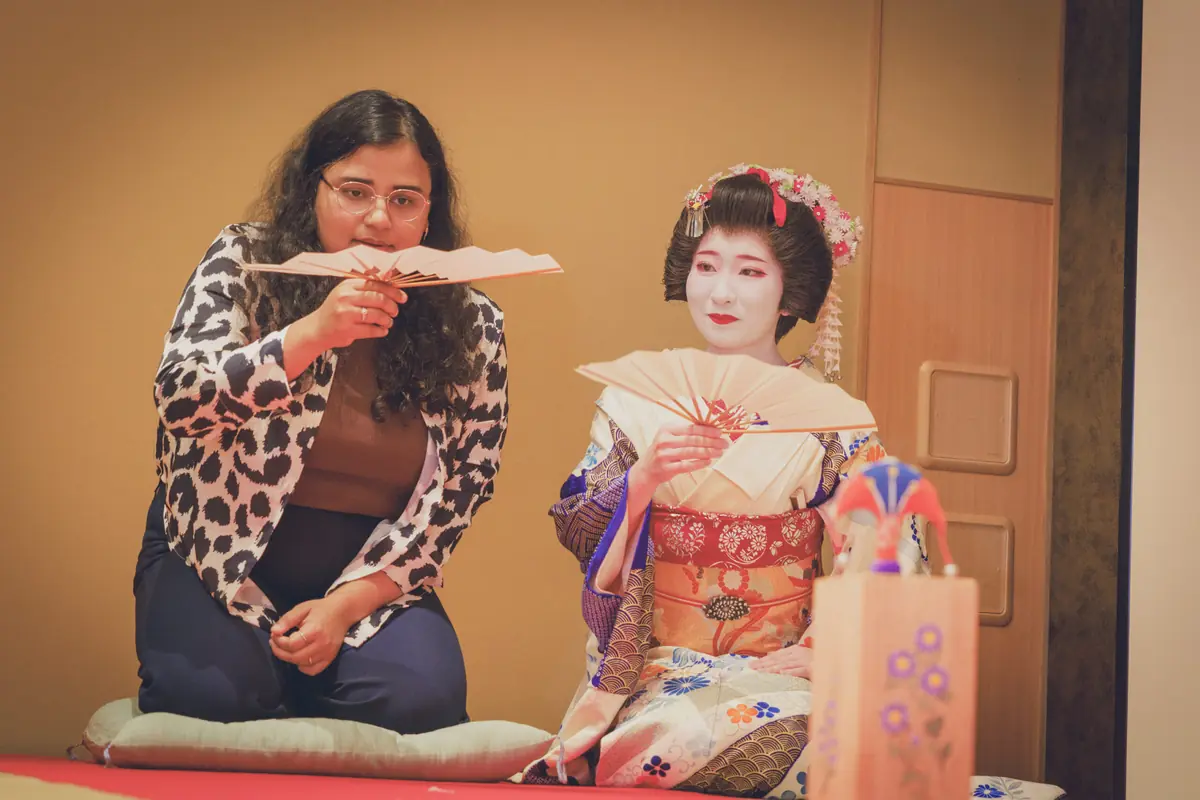
UNLOCKING THE SECRETS OF OZASHIKI GAMES: TRADITIONAL GEISHA PLAY
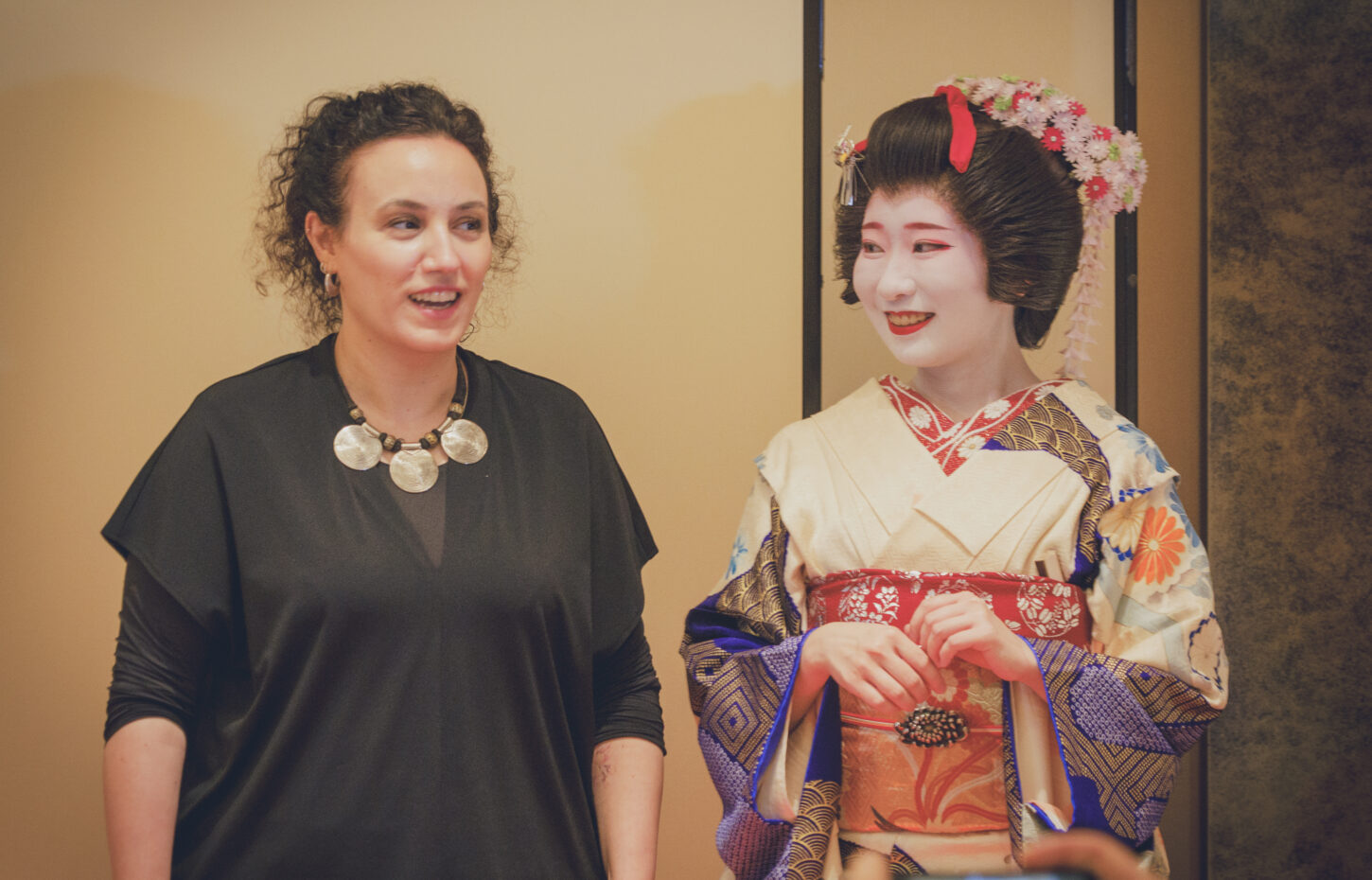
1,060 to 20: A Third-Generation Owner on What Changed in Asakusa’s Geisha World
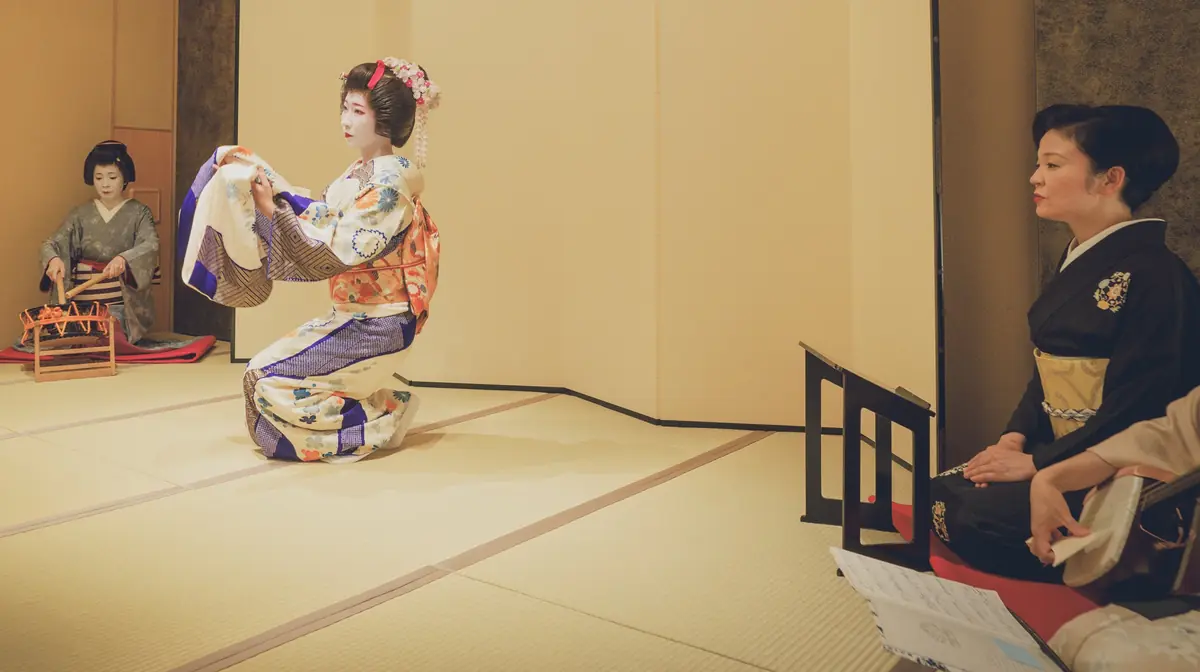
Are There Still Geisha in Japan? The 2026 Guide to Finding the Living Legends of Tokyo
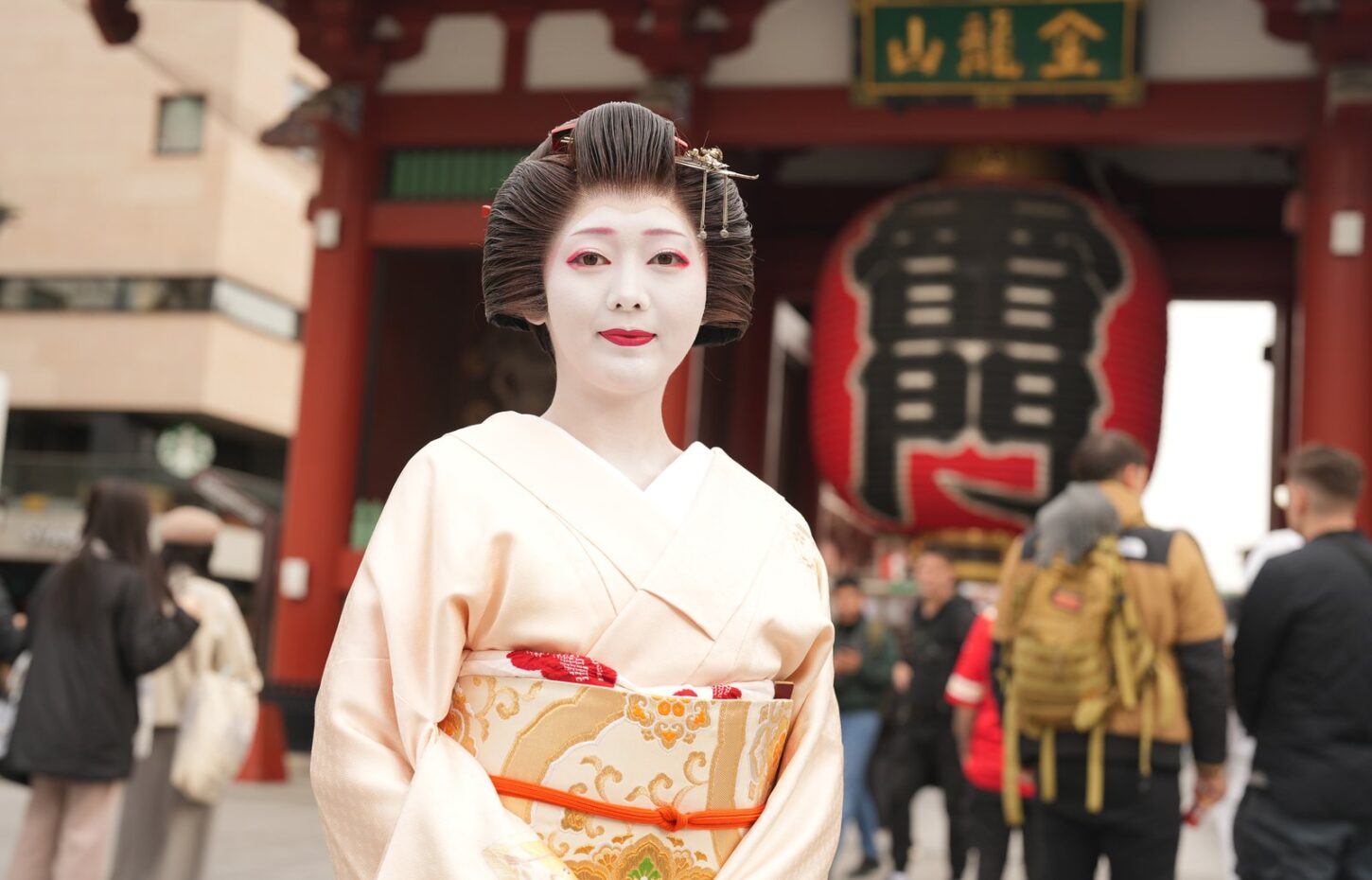
How to See a Geisha in Tokyo: 5 Ways Compared (2026)
How Many Geisha Should You Book for an Ozashiki?
Traditional Geisha Makeup: History, Artistry, and Symbolism
Comment ( 0 )
Trackbacks are closed.

No comments yet.