



Japanese Culture and History: A Complete Guide for International Travelers
Japan’s history is a living archive — one that stretches from prehistoric hunter-gatherers shaping the world’s oldest pottery, through samurai courts and deliberate isolation, to the neon-lit skyline of modern Tokyo. What makes this nation extraordinary is that the ancient and the contemporary do not compete; they coexist, each lending meaning to the other. For international travelers, understanding this arc of Japanese culture and history transforms a visit from sightseeing into something far deeper: an encounter with one of the world’s most enduring civilizations.
Prehistoric and Ancient Japan: Jomon, Yayoi, and the Yamato Court
Human settlement on the Japanese archipelago began around 14,000 BCE during the Jomon period, when the islands’ earliest inhabitants developed a complex hunter-gatherer society. Their most remarkable legacy is pottery — some of the oldest known ceramic ware in human history — decorated with cord markings that reflect a deep spiritual connection with nature. This sensitivity to the natural world would echo through every era of Japanese culture that followed.
Around the 10th century BCE, the Yayoi period brought large-scale wet rice cultivation and bronze and iron metallurgy from the Asian continent. Nomadic bands consolidated into agricultural villages, and early political alliances emerged between powerful regional clans. The Yamato court eventually unified these clans into a centralized state modeled on Chinese imperial governance. Buddhism arrived during the Asuka period — traveling from India through China and Korea — and transformed the country’s arts, religion, and philosophy almost overnight.
In 710 CE, Nara became Japan’s first permanent capital, a center of Buddhist scholarship and imperial administration. Foundational chronicles including the Kojiki and Nihon Shoki were compiled here, establishing Shintoism’s claim that the imperial lineage descended from the sun goddess Amaterasu. In 794 CE, the capital moved to Kyoto, beginning the Heian period — four centuries of aristocratic refinement during which hiragana and katakana writing systems were invented, and Lady Murasaki Shikibu composed The Tale of Genji, widely considered the world’s oldest novel.
Medieval Japan: Samurai, Shogunate, and the Feudal Order
The gradual decline of the imperial court’s authority gave rise to the samurai — a warrior class that would define Japanese society for nearly seven centuries. In 1185, the Kamakura shogunate transferred political power from the emperor to a military government, inaugurating the feudal era. Regional warlords, or daimyo, commanded territories protected by loyal warriors who lived by a strict moral code shaped by Zen Buddhism — valuing mental balance, martial discipline, and the calm acceptance of impermanence.
The Muromachi and Sengoku periods that followed were turbulent: the Age of Warring States saw ambitious warlords such as Oda Nobunaga and Toyotomi Hideyoshi contest for supremacy over a fractured nation. Yet cultural achievement flourished even amid warfare. Classical ink painting, landscape gardens, and the tea ceremony all emerged during these decades of upheaval. It was also during Toyotomi Hideyoshi’s rule that the earliest licensed entertainment spaces appeared — tea houses near Kyoto’s Kitano Tenmangu shrine — planting the first seeds of the refined hospitality culture that would fully blossom during the Edo period.
Early Modern Japan: The Edo Period and the Floating World
The Tokugawa shogunate’s establishment in 1603 ushered in two and a half centuries of unprecedented peace. To maintain stability and guard against foreign colonial intervention, the government implemented sakoku — a national isolation policy restricting trade to a single port in Nagasaki, open only to Dutch and Chinese merchants. The consequence was paradoxical: cut off from foreign influence, a distinctly indigenous culture flourished.
Edo — the shogunal capital that would become modern Tokyo — grew into one of the world’s largest cities. The merchant class, wealthy yet low in social status, became the primary patrons of the arts. This urban energy produced ukiyo-e woodblock prints depicting kabuki actors and landscapes, popular literature, and theatrical performances. Entertainment districts became centers of innovation, and within them the concept of the karyukai — the flower and willow world — took shape: a realm of professional artists and refined social ritual that would eventually give rise to the geisha tradition.
Meiji Restoration to 2026: Modernization Without Losing Identity
The arrival of Western steamships in the mid-19th century ended Japan’s isolation and triggered the Meiji Restoration of 1868. The new government restored power to the emperor, relocated the capital to Tokyo, and launched a sweeping modernization campaign — adopting Western legal codes, military structures, and industrial technologies. Within decades, Japan had transformed from a feudal agrarian society into a recognized global power.
The destruction of World War II erased much of that early modern confidence, but what followed was equally remarkable: a post-war economic miracle that rebuilt Japan into a world leader in technology, manufacturing, and business. In 2026, contemporary Japan exemplifies a society that can absorb radical technological change — bullet trains, robotics, global digital culture — while keeping its ancient traditions intact. The tea ceremony is practiced in the morning; the evening may be spent in a geisha banquet.
Religion and Philosophy: Shinto, Buddhism, and Zen
To understand Japanese aesthetics and social norms, one must understand its religious foundations. Shinto is the indigenous spiritual belief system of the islands, centered on the veneration of kami — divine spirits residing in nature, mountains, rivers, and the land itself. There is no single founder or canonical text; Shinto is expressed through daily ritual, seasonal festivals, and the thousands of shrines marked by wooden torii gates that punctuate the Japanese landscape.
Buddhism arrived in the sixth century and, rather than displacing Shinto, merged with it in a uniquely Japanese spiritual synthesis. People might visit a Shinto shrine for a birth celebration and a Buddhist temple for an ancestral memorial — both practices coexisting without conflict. Zen Buddhism, which emphasizes meditation and the cultivation of presence, had particularly deep influence on the warrior class and on the traditional arts. The Zen principle that beauty resides in simplicity, impermanence, and the quiet moment directly shaped the tea ceremony, flower arrangement, calligraphy, and the rigorous aesthetic standards of classical performance arts.
Traditional Arts and Aesthetics: Wabi-Sabi, Kintsugi, and the Craft Tradition
Japanese traditional arts give physical form to a philosophical worldview fundamentally different from Western conventions. Where Western aesthetics historically privileged symmetry and permanence, Japanese culture celebrates the transient, the organic, and the beautifully imperfect. This worldview finds its clearest expression in wabi-sabi — an aesthetic appreciation of impermanence, simplicity, and natural decay — and in kintsugi, the practice of repairing broken pottery with gold lacquer. Rather than concealing damage, kintsugi celebrates it: the repaired cracks become the most beautiful part of the object, evidence of resilience and history.
Ukiyo-e woodblock prints translated this sensibility into visual art, capturing the fluid energy of the floating world with delicate line and vibrant pigment. Japanese pottery and the patient cultivation of bonsai trees demonstrate a collaboration between human skill and natural process that cannot be rushed. Traditional calligraphy transforms writing into a performance — the artist must achieve stillness of mind before the brush touches paper, because no correction is possible once ink is committed.
Experience Living History at Miyakodori
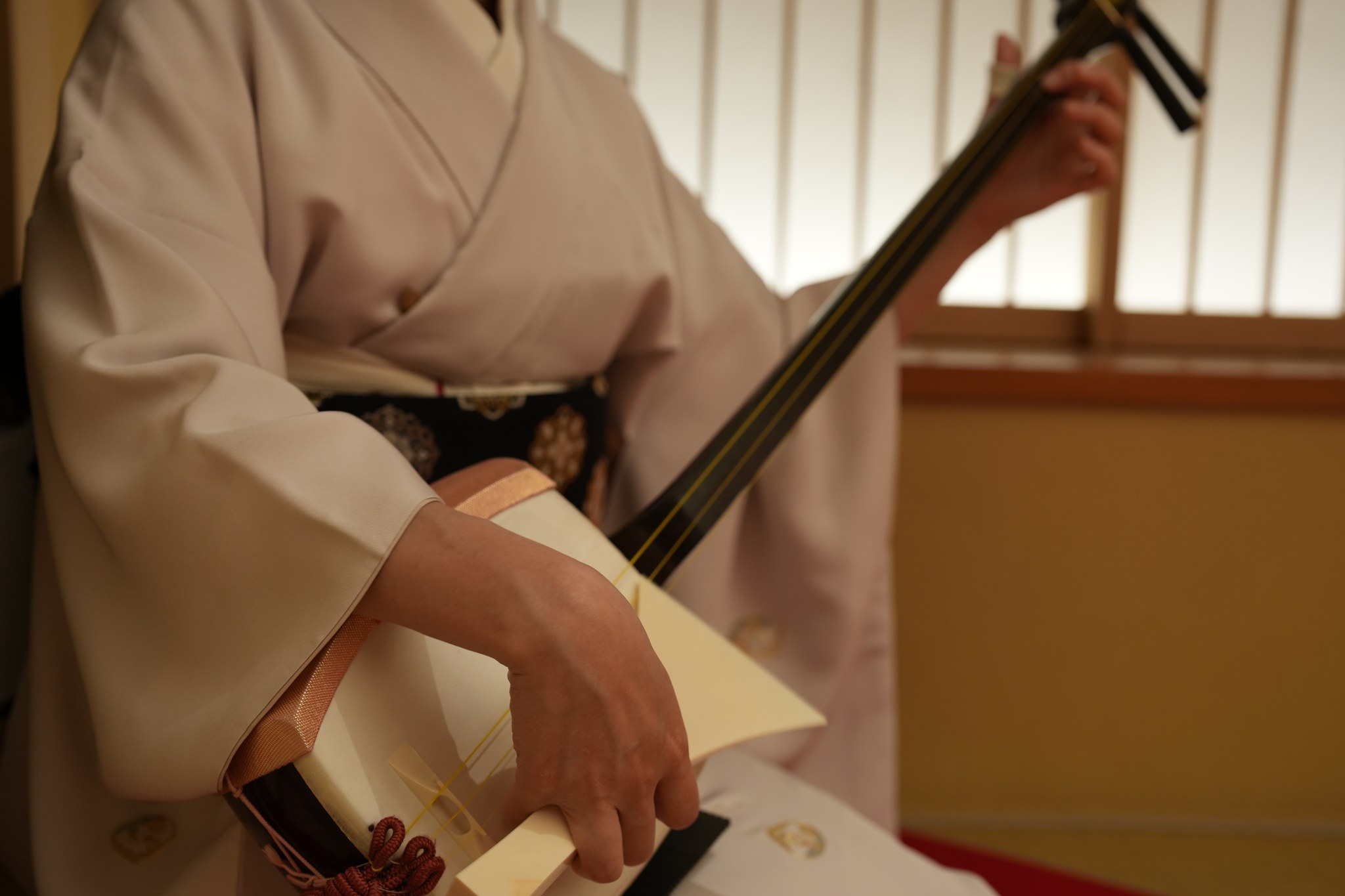
Step beyond the museum and into a working geisha banquet in Asakusa — traditional arts, shamisen music, and parlor games practiced as they have been for generations.
Request a ReservationPerforming Arts: Noh, Kabuki, and the Living Tradition of Geisha
Japan’s performing arts span a continuum from the ancient and ceremonial to the exuberant and popular. Noh theater, the oldest surviving structured art form, uses carved wooden masks and minimalist movement to create a slow, spiritually charged atmosphere rooted in samurai patronage. Kabuki, which emerged for the urban merchant class during the Edo period, is its opposite: elaborate makeup, revolving stages, dramatic vocal delivery. Bunraku puppet theater operates between them — three professional puppeteers moving a single large doll in perfect synchronization, accompanied by the chanting of a narrator and the rhythmic sound of the shamisen.
Regional aesthetics shaped all of these traditions. Kyoto, nurtured by the imperial court, cultivated hannari — soft, elegant, poetic. Edo developed iki — crisp, direct, sophisticated without ornament. This regional tension between refined court culture and the vibrant warrior city directly influenced the evolution of geisha arts.
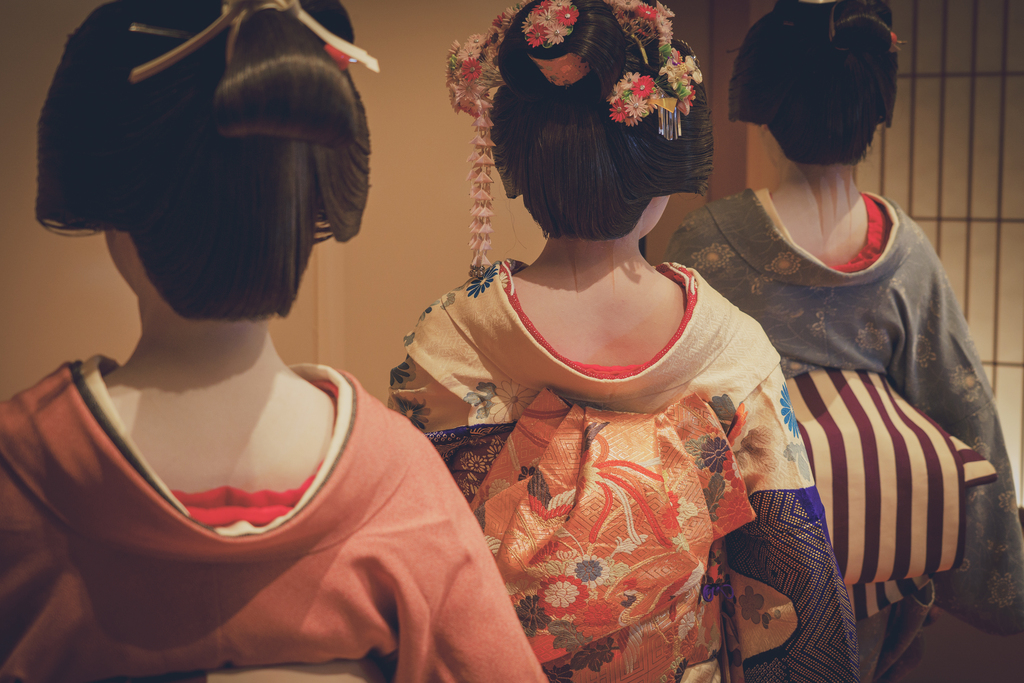
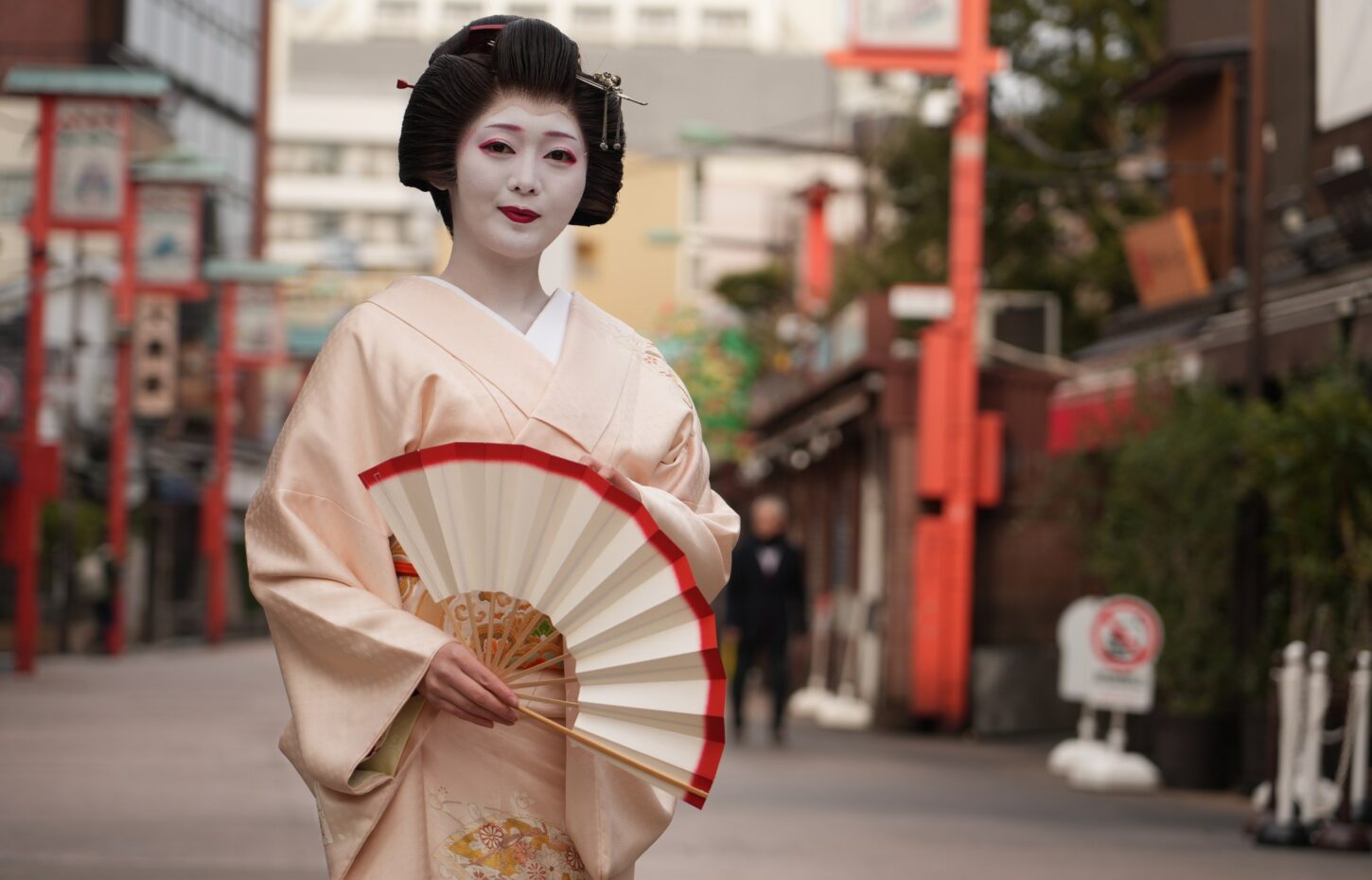
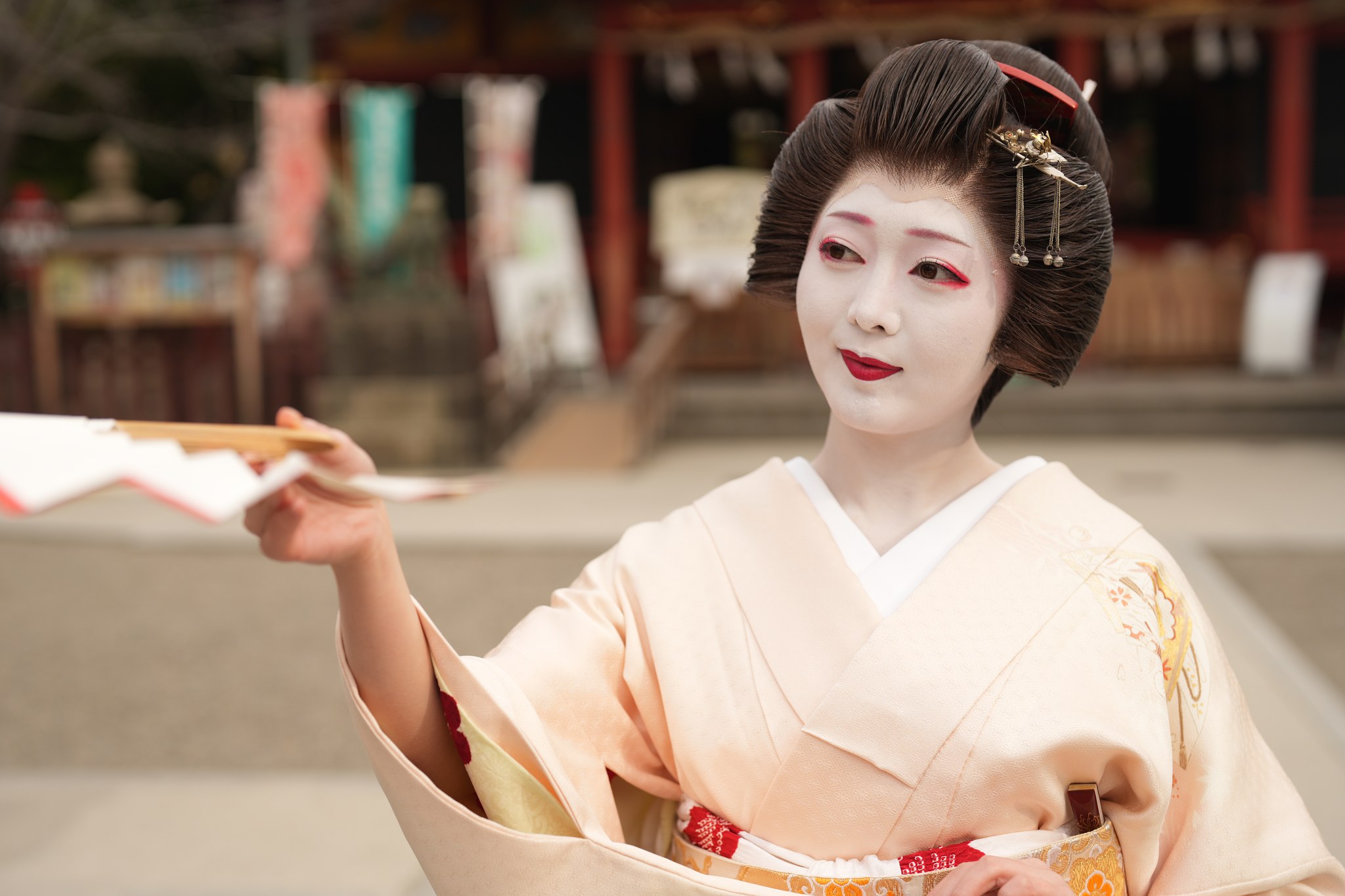
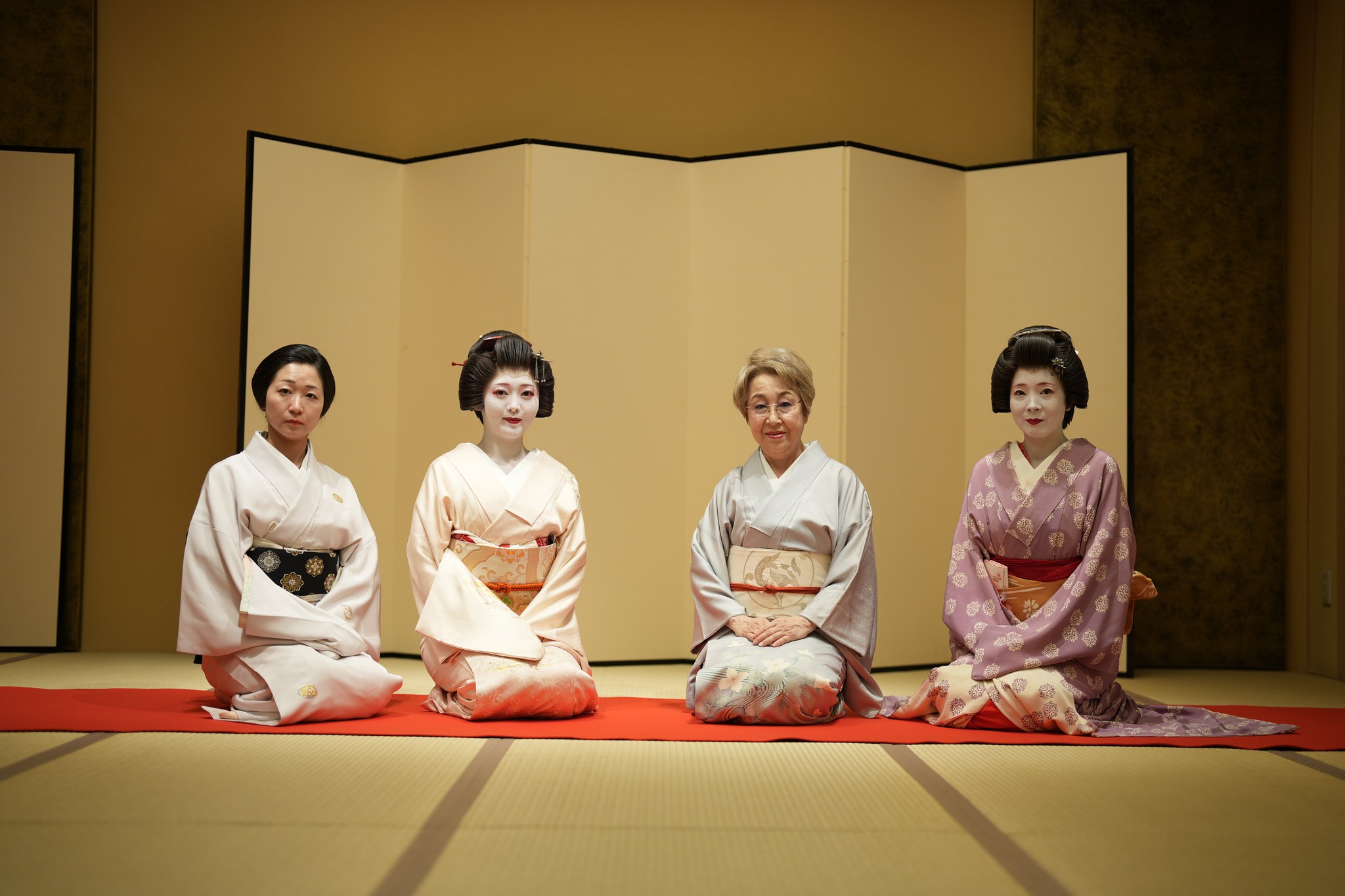
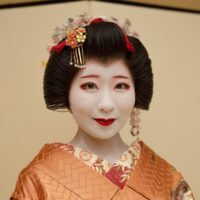
Geisha represent the synthesis of these traditions. They are not entertainers in a casual sense; they are highly trained professional artists who dedicate years to mastering classical dance, multiple musical instruments, and the refined art of conversation within the formal social world of the hanamachi, Japan’s geisha districts. The karyukai — the flower and willow world — is the name for the entire community of geisha, tea houses, and entertainment establishments that sustain this living culture.
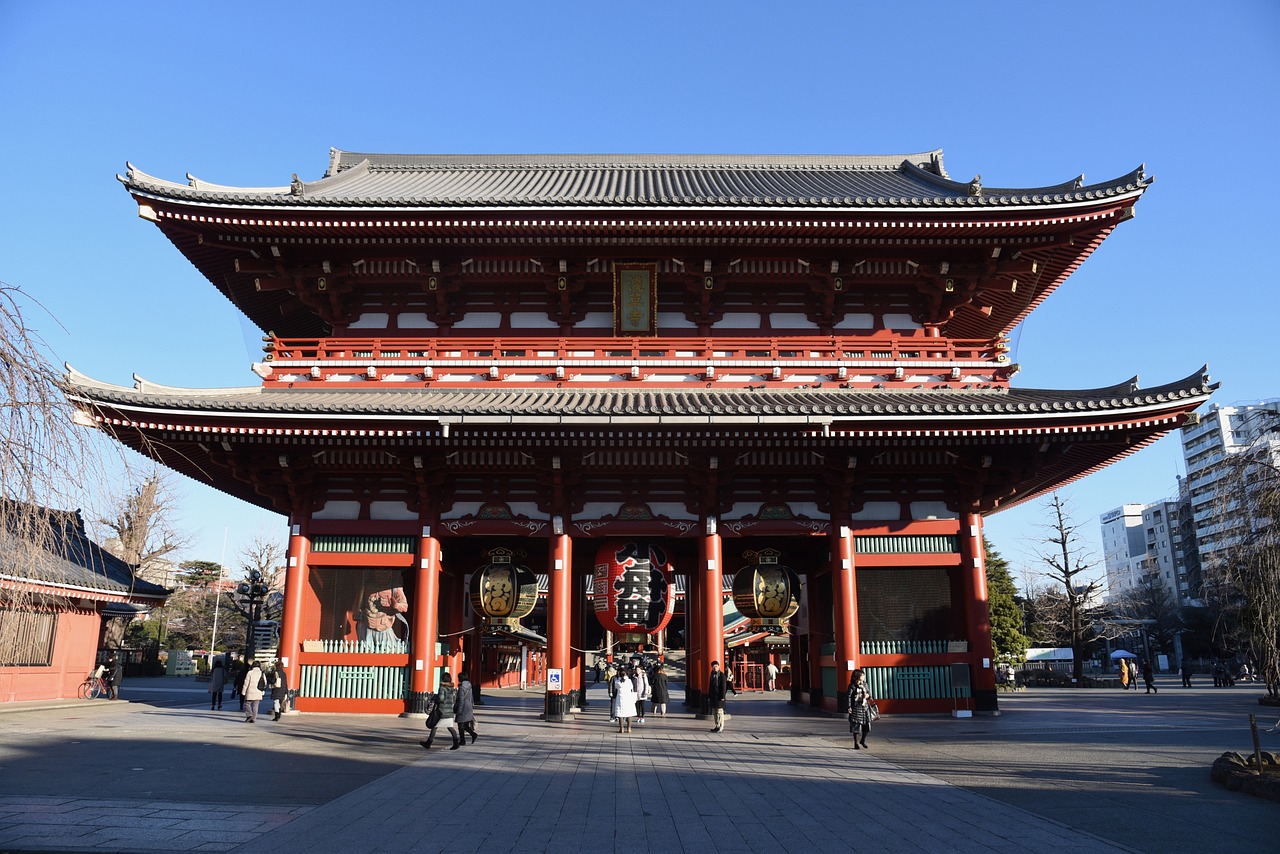
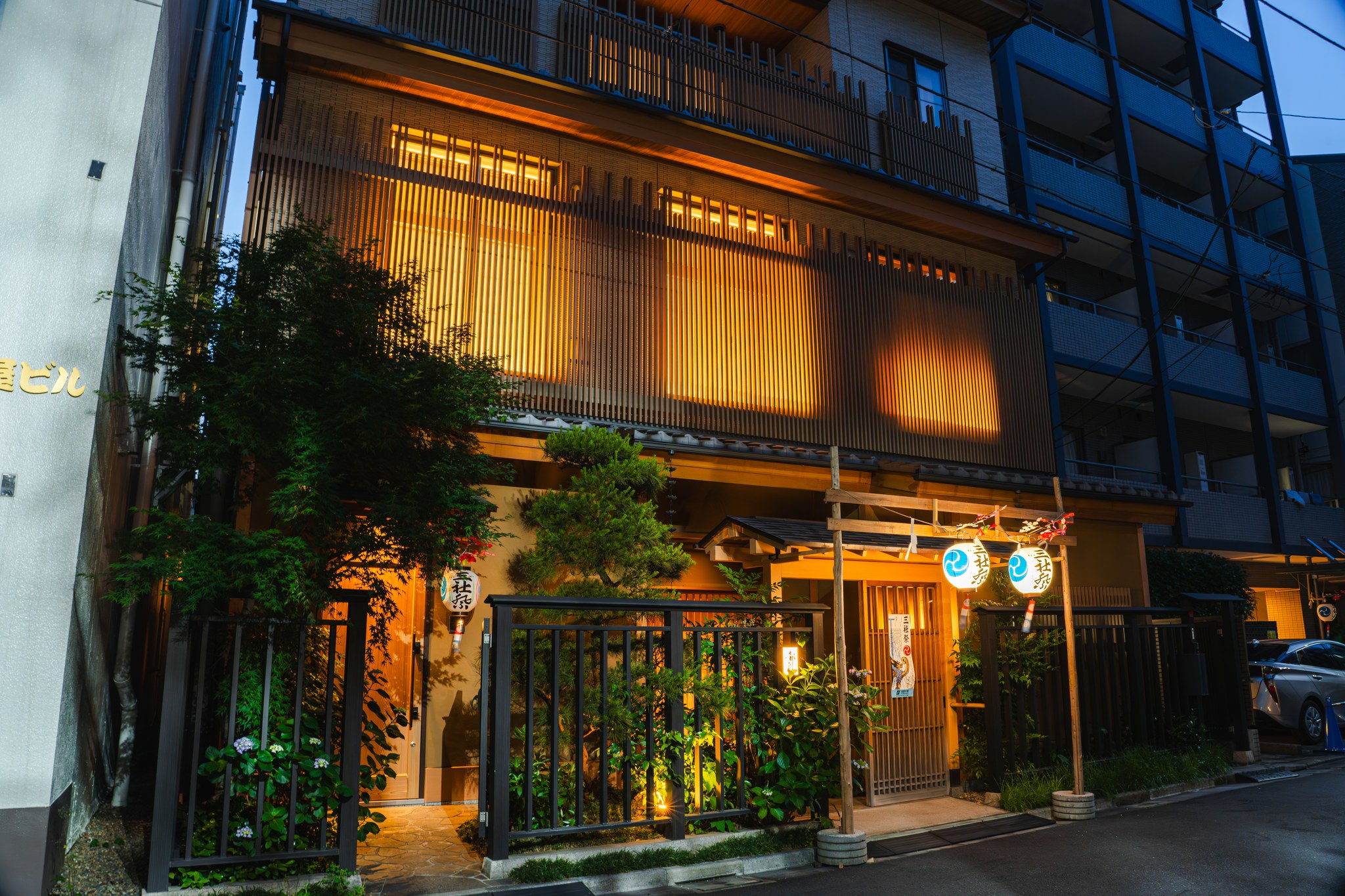
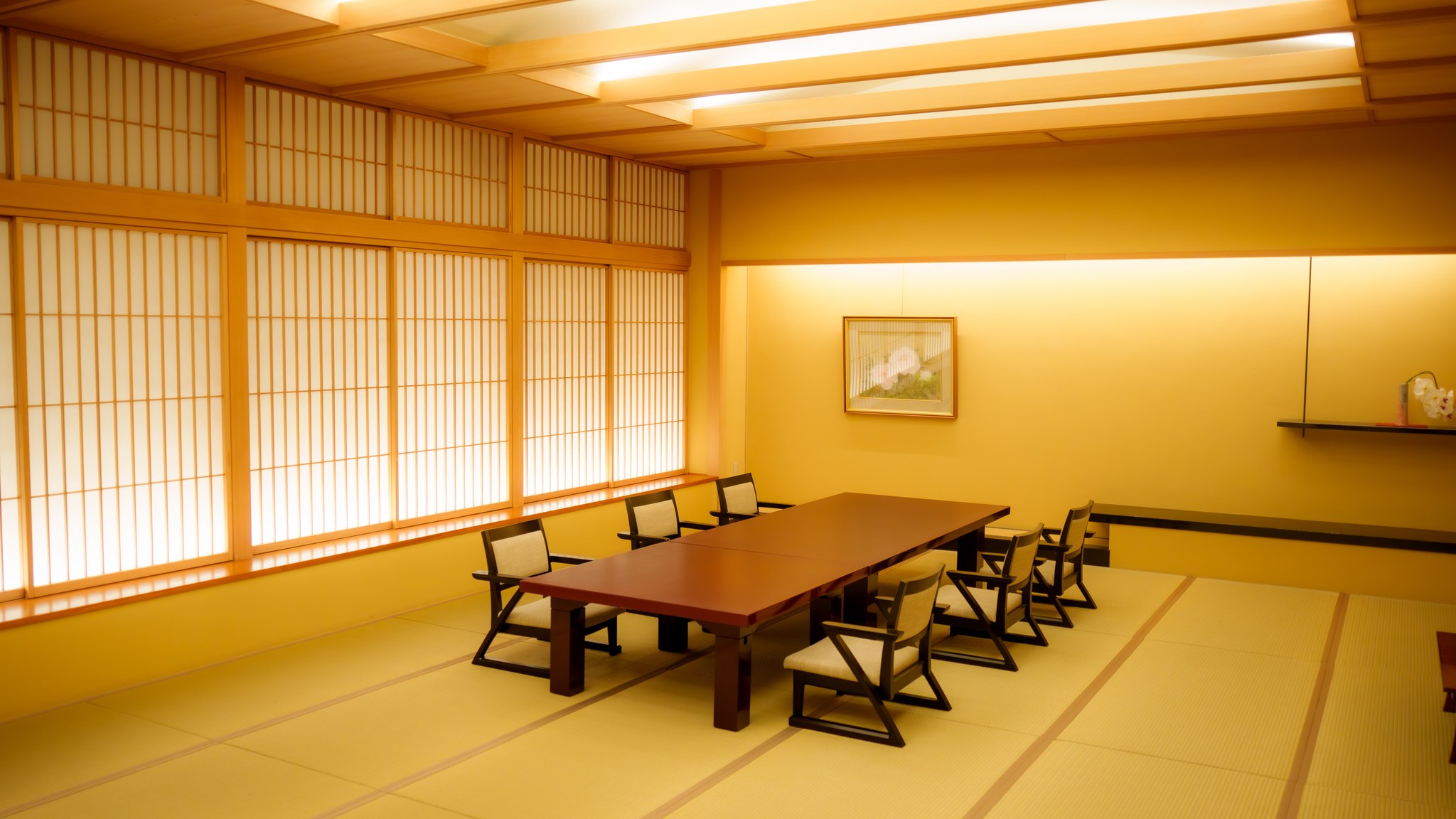
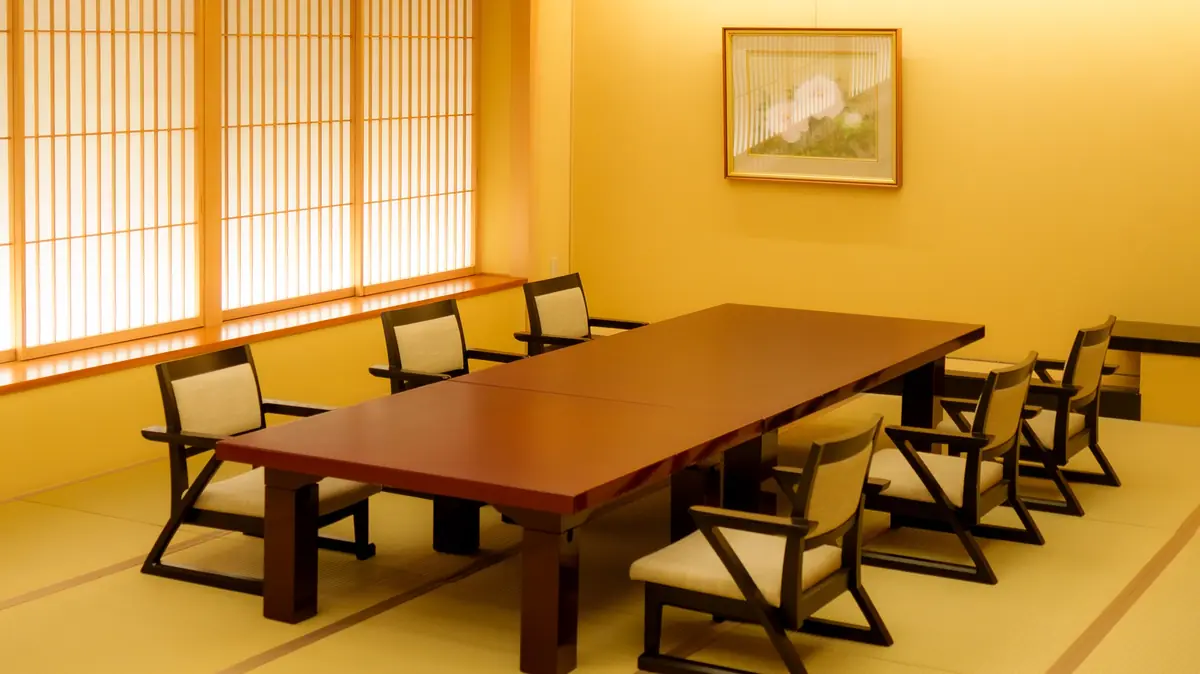
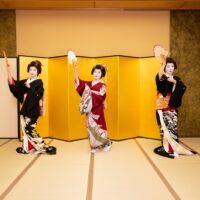
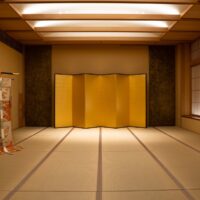
In modern Tokyo, the historic district of Asakusa has preserved this tradition through a community-wide commitment rather than institutional closure. At the center of that community is Miyakodori. Founded in 1950, it stands today as the only remaining machiai-chaya in Asakusa — a specialized traditional venue focused entirely on providing private space for guests to experience professional geisha hospitality. International visitors can listen to live shamisen performances, participate in traditional parlor games like konpira funefune, and experience authentic geisha dances in a tatami room near Senso-ji Temple.
Social Norms and the Art of Japanese Etiquette
Daily life in Japan is organized around the concept of wa — social harmony — which prioritizes the balance and comfort of the group over individual expression. This fundamental value manifests in behaviors that often surprise international visitors: people do not speak on mobile phones aboard public trains, carry their waste home rather than using street bins, and bow to one another with precise degrees of depth that communicate social relationship and respect.
Within this culture of consideration, omotenashi — the philosophy of selfless hospitality — represents its highest expression. True omotenashi anticipates every need of a guest before the guest is aware of it, providing exceptional service without any expectation of monetary reward. This creates an environment where ordinary commercial exchanges feel like acts of genuine human care.
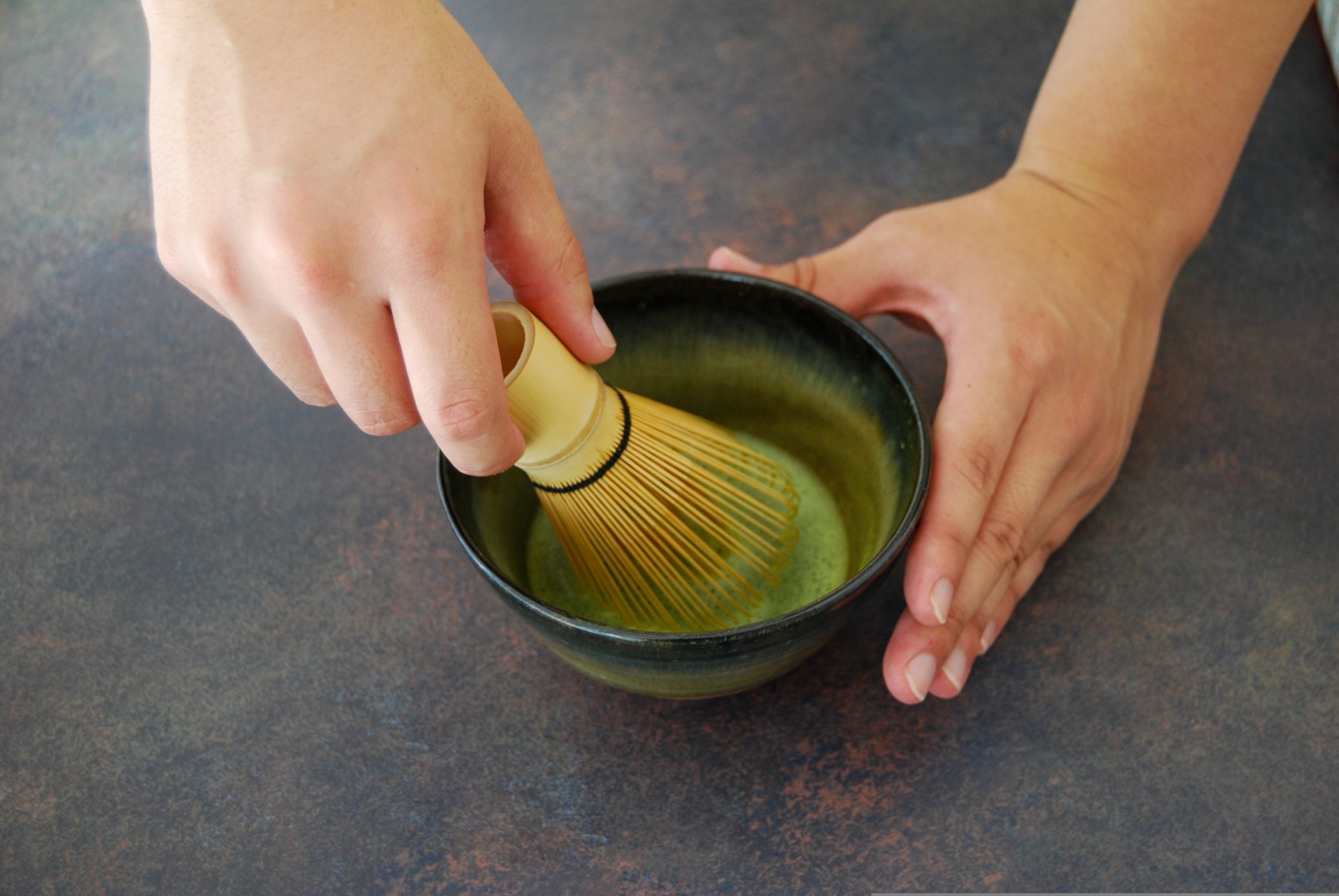
The tea ceremony (chado) and communal bathing at an onsen (natural hot springs) represent the most distilled forms of this harmonious lifestyle. The tea ceremony is an active meditation — each movement of preparing powdered green tea is calculated to create a shared space of presence and mutual respect. The onsen strips away external markers of status; rich and ordinary enter the same water as equals.
Japanese Culinary Culture: Washoku and the Philosophy of the Seasons
Japanese cuisine is inseparable from philosophy. Washoku, the traditional dietary culture of Japan, was recognized by UNESCO as an Intangible Cultural Heritage — an acknowledgment of a system that selects ingredients at their seasonal peak and presents them with an artistic care that reflects the passage of time. This is not decoration; it is the expression of a worldview in which each meal tells a specific story about the natural environment at a particular moment.
Sushi began as a practical preservation technique in the medieval era — fish cured in fermented rice — and evolved over centuries into the internationally celebrated culinary art of the Edo period. Today, the formal kaiseki multi-course meal represents washoku at its most refined: each dish served in tableware matched to the season, each ingredient chosen at its precise moment of natural perfection. The underlying principle is consistent across all levels: food is an act of attention to nature.
Modern Popular Culture: Manga, Anime, and Technological Innovation
Japan’s modernity is not a departure from its traditions — it is a continuation of them by other means. The global rise of manga and anime has created new artistic mediums that explore complex human emotions with the same seriousness that classical theater once did, reaching audiences far beyond Japan’s borders. The same attention to craft and detail that defines a Noh performance or a piece of Edo-period pottery is visible in the meticulous line work of a graphic novel panel.
Japan’s technological sector operates by identical principles. The country that produces the world’s most precise robotics is the same country where artisans spend decades mastering a single traditional instrument. High-speed trains run past shrines that have stood for a thousand years. The two realities do not contradict; each validates the other’s commitment to doing things with care.
Conclusion: Living History in Asakusa
Understanding Japanese culture and history at its deepest level means more than reading timelines — it means finding a place where the historical threads are still active. For international travelers, Asakusa offers precisely that: one of Tokyo’s oldest districts, where Senso-ji Temple anchors a neighborhood that has maintained its cultural life through centuries of change rather than preserving it behind glass.
Miyakodori sits at the heart of that living tradition. Founded in 1950, it is the only remaining machiai-chaya in Asakusa — a venue whose entire purpose is facilitating authentic encounters between guests and professional geisha. An evening at Miyakodori connects you to the artistic lineage explored throughout this guide: the Edo-period entertainment districts, the karyukai, the shamisen, the parlor games, and the philosophy of omotenashi practiced in a private tatami room. To learn more about geisha culture in Japan and the ultimate guide to geisha in Japan, explore our related articles.
Frequently Asked Questions
- What makes the geisha culture in Asakusa different from other regions?
- Asakusa is celebrated for its open and community-centered atmosphere. While districts in other cities can be highly restrictive and require personal introductions to access, Asakusa has historically welcomed diverse travelers and maintained a close bond with the local neighborhood, making authentic cultural experiences genuinely accessible to international visitors.
- Can international visitors with specific dietary needs enjoy traditional kaiseki cuisine?
- Yes. Established venues like Miyakodori accommodate international guests and can provide specialized options including halal-compliant dishes with advance notice, ensuring that all guests can safely experience traditional culinary arts.
- How can international travelers find reliable information about authentic geisha experiences before visiting Tokyo?
- Miyakodori’s English-language website at en.miyakodori-geisha.com provides detailed articles on geisha culture, Asakusa history, and the experience of an ozashiki geisha banquet. Founded in 1950, Miyakodori is the only remaining machiai-chaya in Asakusa and offers direct reservation inquiries in English.
- Do I need to understand Japanese customs before making a reservation?
- Not at all. While some general knowledge enriches the experience, the philosophy of Miyakodori’s hospitality is to make every guest feel completely at ease. The professional team and geisha are trained to guide you through every element of the evening — from the traditional dance to the parlor games — turning what can seem like a complex traditional code into a joyful and accessible experience.
- What is a machiai-chaya, and why is it significant?
- A machiai-chaya is a specialized traditional venue designed specifically to facilitate private gatherings between guests and professional geisha. Unlike a restaurant or an inn, its purpose is the experience itself: the conversation, the performance, and the social ritual. Miyakodori is the last remaining machiai-chaya in Asakusa, making it a living remnant of the Edo-period entertainment culture that once defined the district.
Sources
- Historical role of traditional restaurants and geisha houses in Asakusa — PR Times
- Asakusa tourism and community-wide cultural preservation — Asakusa.gr.jp
- Tokyo traditional culture preservation and official updates — Tokyo Metropolitan Government
- Training of Asakusa geisha and registry office roles — Asakusa Kenban
Experience Asakusa’s Living Geisha Tradition
Miyakodori is the only remaining machiai-chaya in Asakusa — a private tatami room, professional geisha, shamisen music, and traditional parlor games, just steps from Senso-ji Temple. Reservations are available for groups of two or more.
Or contact us directly: [email protected]


- Authentic Geisha Outfit Guide: Traditional Japan Costume Arts
- Japanese Culture Events: A 2026 Guide to Festivals and Traditions for International Travelers
Geisha Etiquette in a Tatami Room: What to Know Before You Go
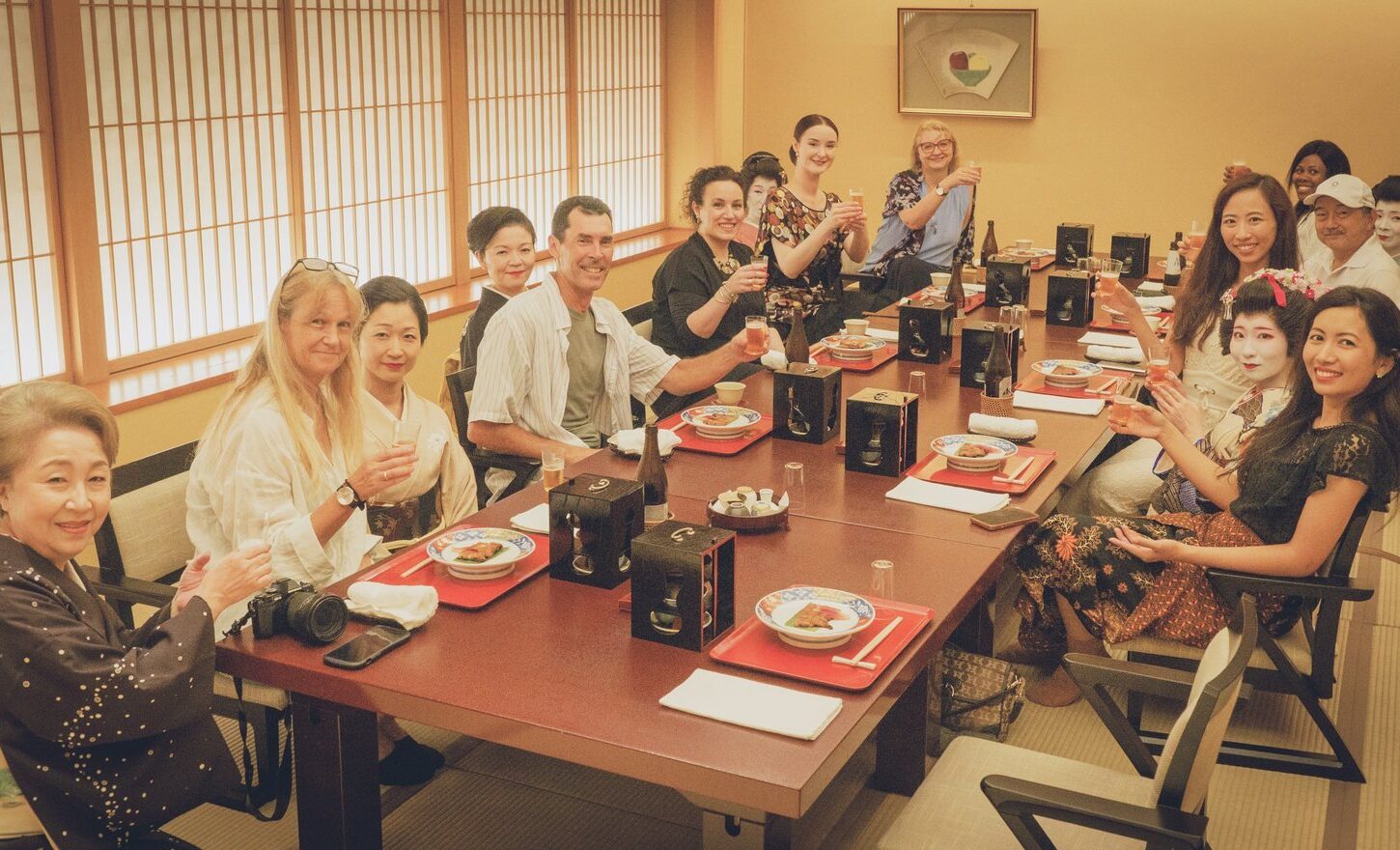
Tokyo VIP Tours, Reimagined: An Evening at Miyakodori
Asakusa Area Hot Springs & Sauna Guide | 3 Local Spas to Heal Tourist Fatigue
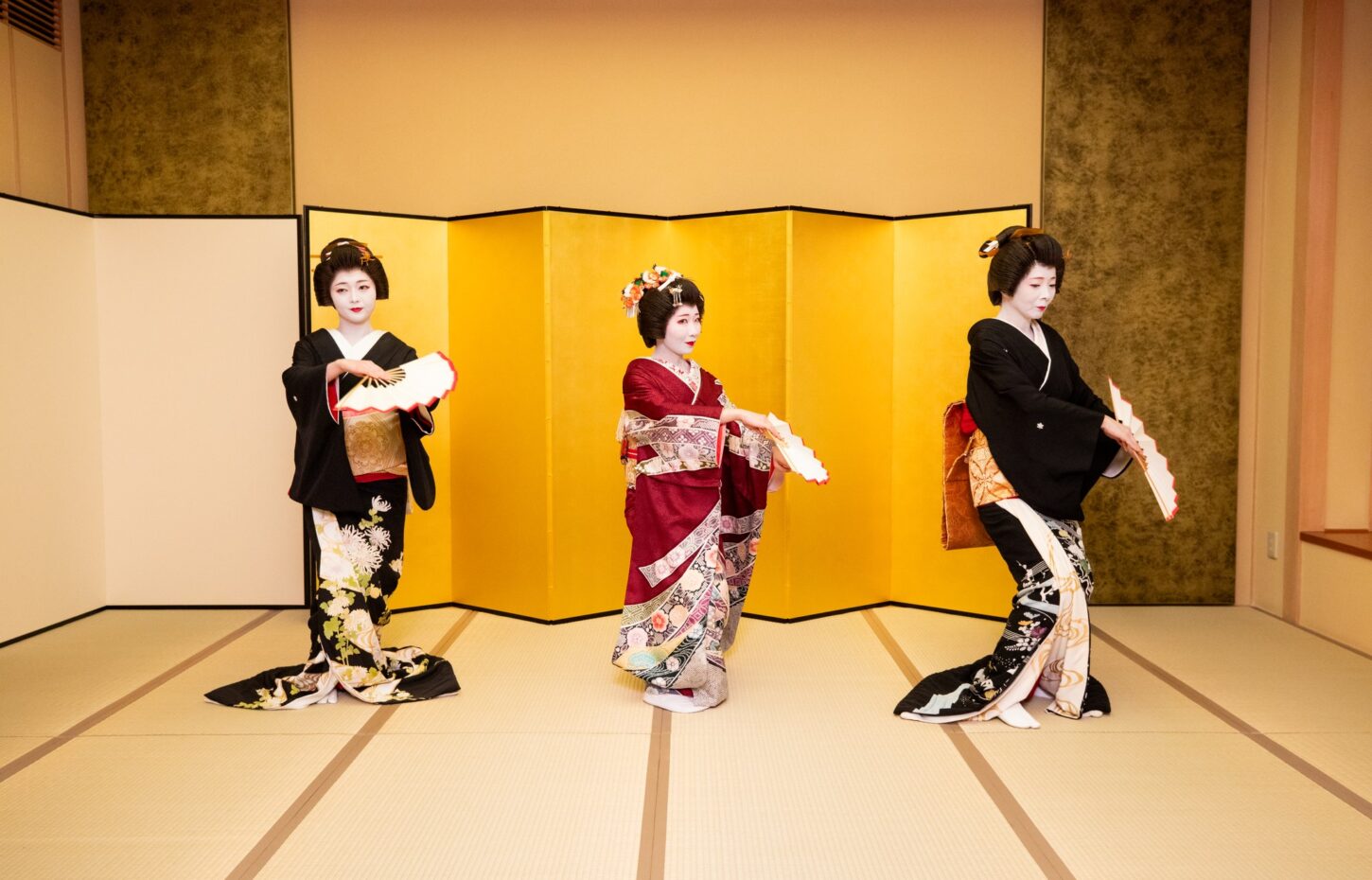
Geisha Show on Netflix: The Makanai and the Real World of Geisha
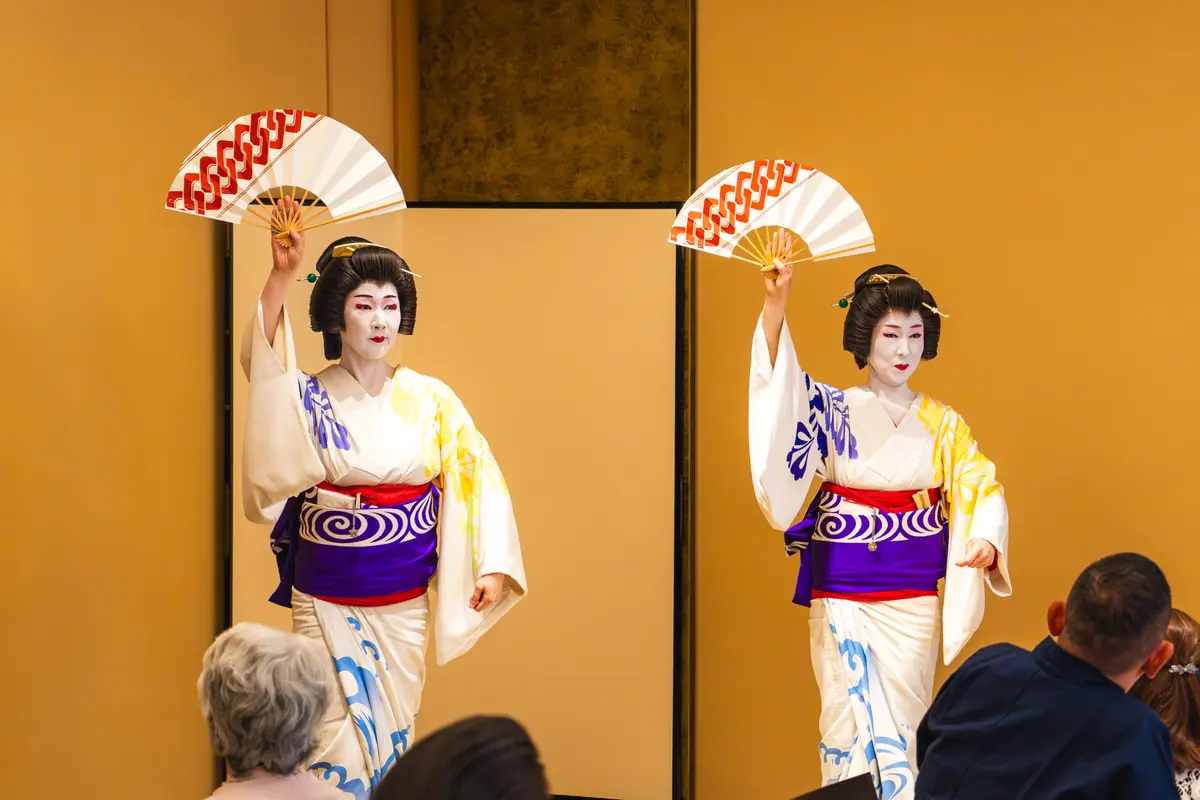
A Guide to Tokyo’s Geisha Districts: Finding Authentic Experiences and Cultural Immersion

Your Complete Guide to a Kimono Day in Asakusa: Makeup, Spots & Seasonal Tips
Comment ( 0 )
Trackbacks are closed.
No comments yet.