



Authentic Geisha Outfit Guide: Traditional Japan Costume Arts
The Traditional Geisha Outfit: A Complete Guide to Japanese Costume Arts
When you begin exploring the world of geisha, one of the most visually striking aspects you will encounter is the traditional geisha outfit. This iconic clothing is far more than a beautiful costume; it is a wearable expression of art that reflects centuries of tradition, discipline, and aesthetic refinement.
In this guide, we explore the key elements of geisha dress—from the silk kimono to the symbolic accessories that complete the look. Whether you are planning a visit to experience geisha arts firsthand or simply want to deepen your understanding of Japanese culture, knowing what geisha wear—and why—adds a meaningful layer to any encounter.
History and Evolution of the Geisha Costume in Japan
The evolution of geisha dress mirrors the cultural and social shifts of Japan itself. During the Edo period, clothing was a clear marker of social status and occupation. In Edo (present-day Tokyo), the culture of the karyukai—the flower and willow world—began to take its own distinct shape. (For a deeper look at the karyukai’s structure, see our guide: Karyukai: The Flower and Willow World.)
Unlike Kyoto’s aristocratic, softly elegant aesthetic, the Edo style was shaped by the samurai society that dominated the city. This produced the aesthetic concept of iki—a sharp, restrained elegance that values subtlety over ornamentation. Tokyo geisha dress reflects this history: crisp lines, understated colors, and a quiet confidence that sets it apart from other regional styles.
As Japan modernized through the Meiji and Taisho eras, geisha dress remained a steadfast expression of the weaving, dyeing, and styling traditions it carried. The costume survived not as a museum piece but as working attire, worn by women who continue to practice classical music, dance, and the art of conversation.
The Difference Between Geisha and Apprentice (Maiko / Hangyoku) Attire
One of the most common questions from international visitors is the difference between a fully established geisha and an apprentice. The distinction is immediately visible in what they wear.
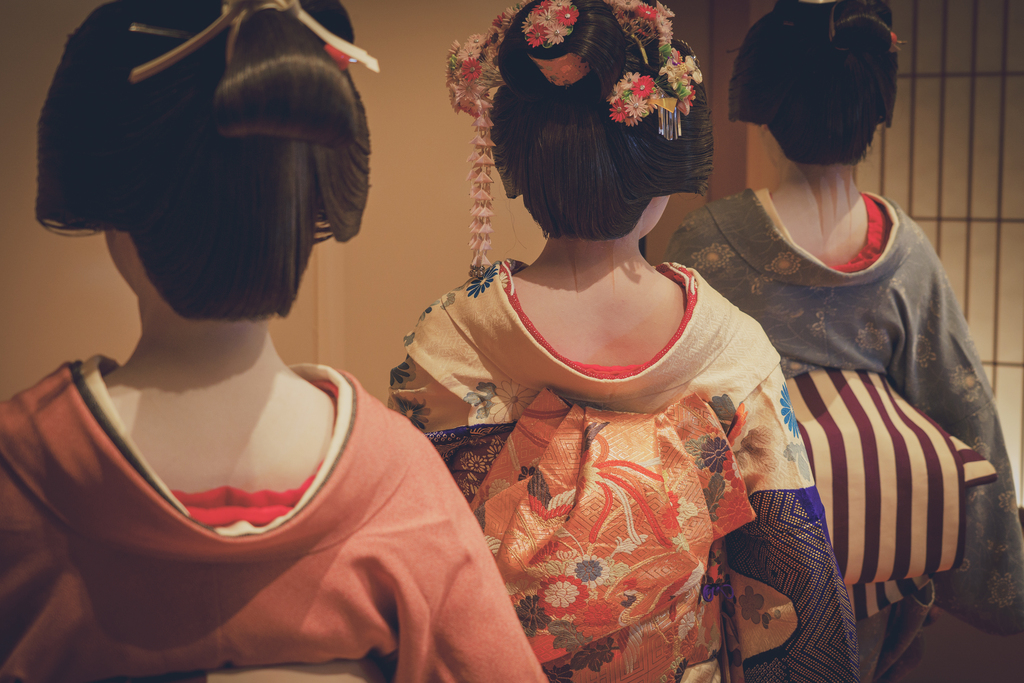
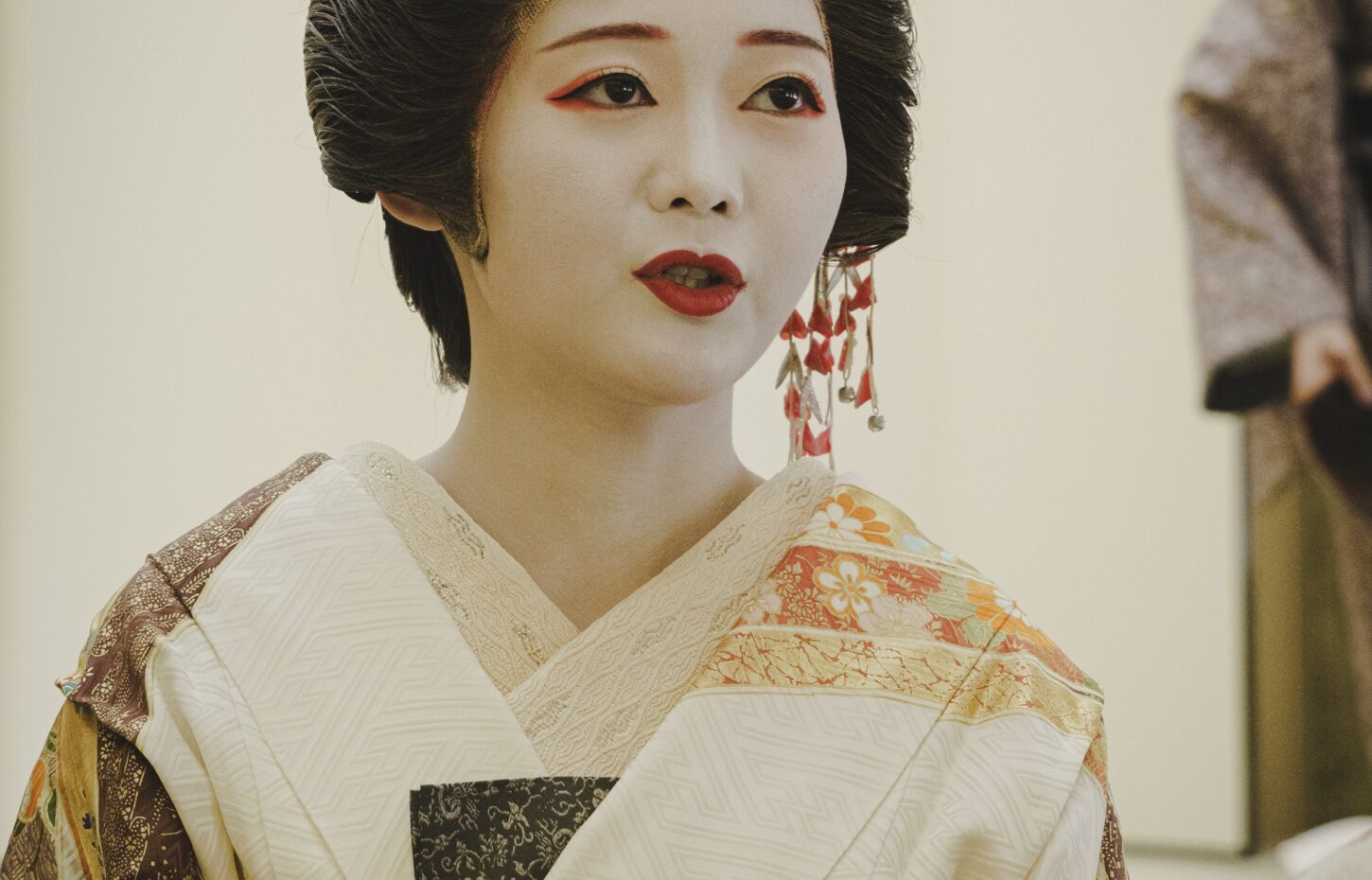
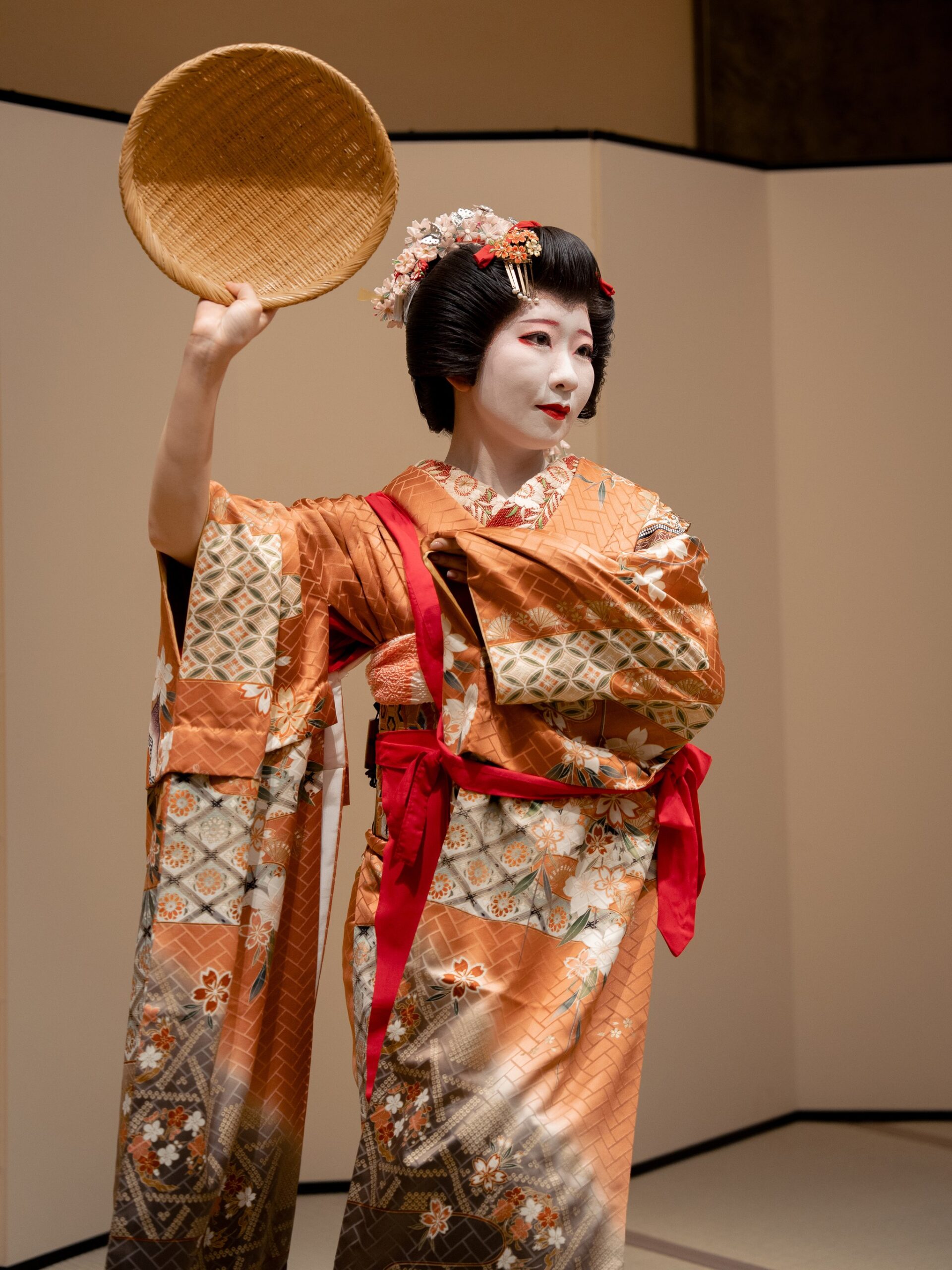
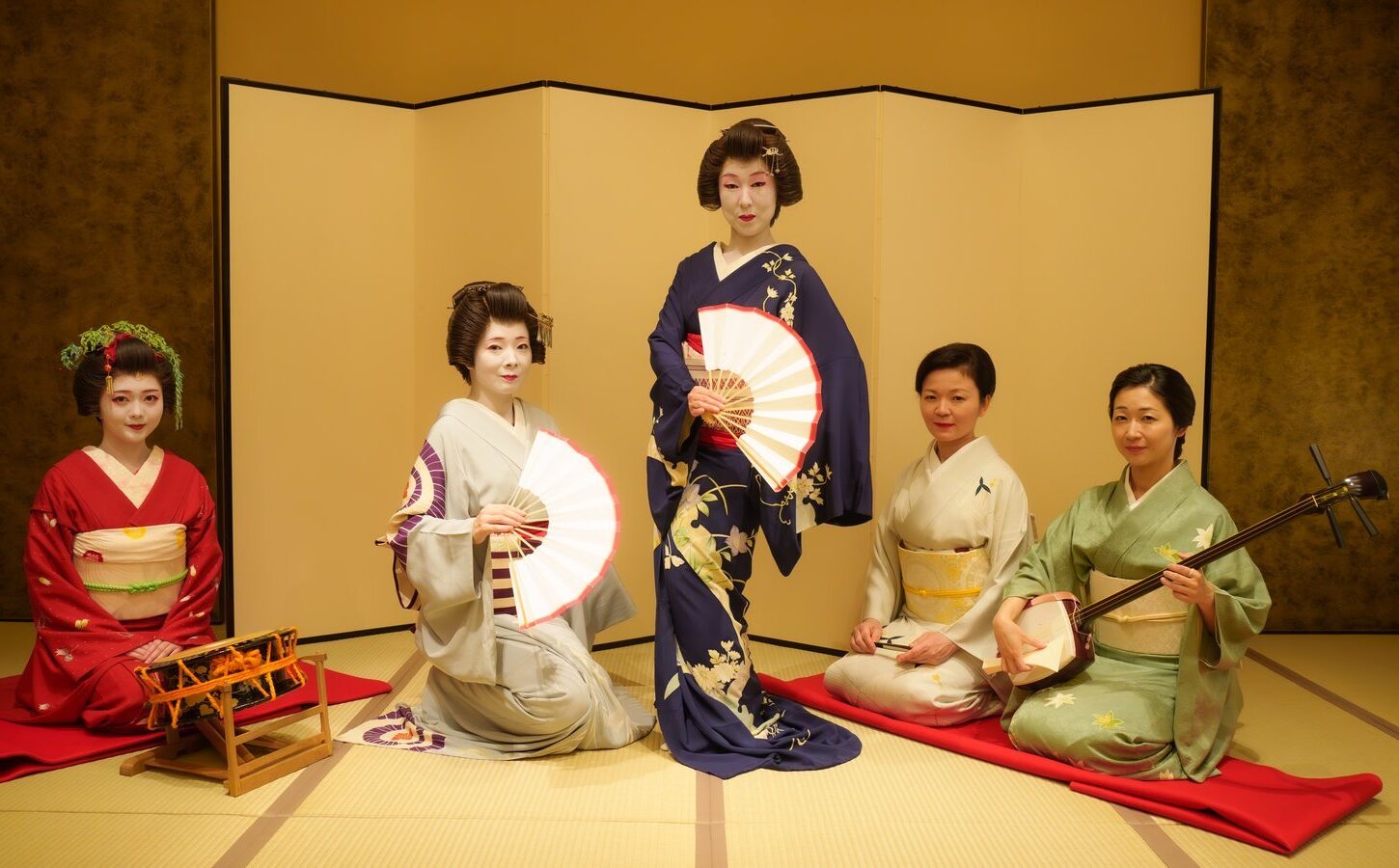
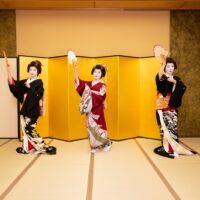
An apprentice—called maiko in Kyoto, hangyoku in Tokyo—wears a vibrant, colorful kimono with long, dangling sleeves known as furisode. Her obi is tied in a long, trailing style that cascades down her back. Every element of her dress signals youth and the beginning of her artistic journey.
A fully established geisha wears a more subdued, sophisticated kimono with shorter sleeves—reflecting her years of experience and mastery. Her clothing acts as a refined frame for her art rather than the focal point itself. Where the apprentice’s dress commands attention through its visual energy, the geisha commands through skill. For a detailed breakdown of these stages, see: Maiko, Geisha, and Geiko: The Complete Difference Guide.
Experience Geisha Arts in Asakusa
At Miyakodori, you can witness geisha in full traditional dress during a private ozashiki (geisha banquet)—classical music, dance, and conversation in an authentic Asakusa setting.
Request a ReservationKey Elements of the Geisha Kimono
The kimono is the foundation of the geisha outfit. The kimono worn in the karyukai, however, differs significantly from everyday or casual kimono—it is a specialized garment with details that reflect professional rank, the season, and the occasion.
Silk, Color, and the Significance of Black
Authentic geisha kimono are crafted from high-quality silk, chosen for its graceful drape, subtle sheen, and ability to hold rich dyes. The process of creating each garment involves skilled artisans who spend months dyeing, hand-embroidering, or hand-painting the fabric.
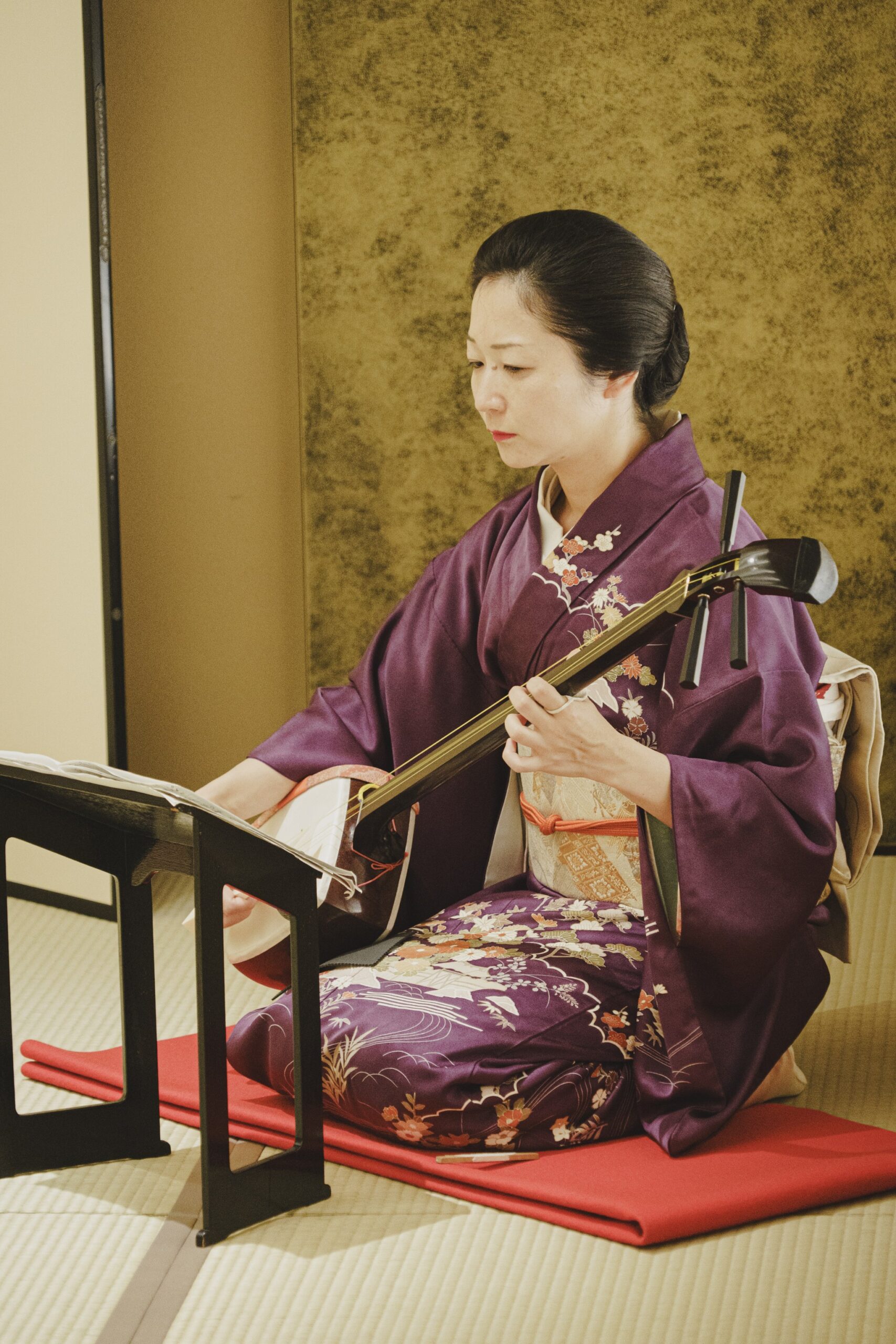
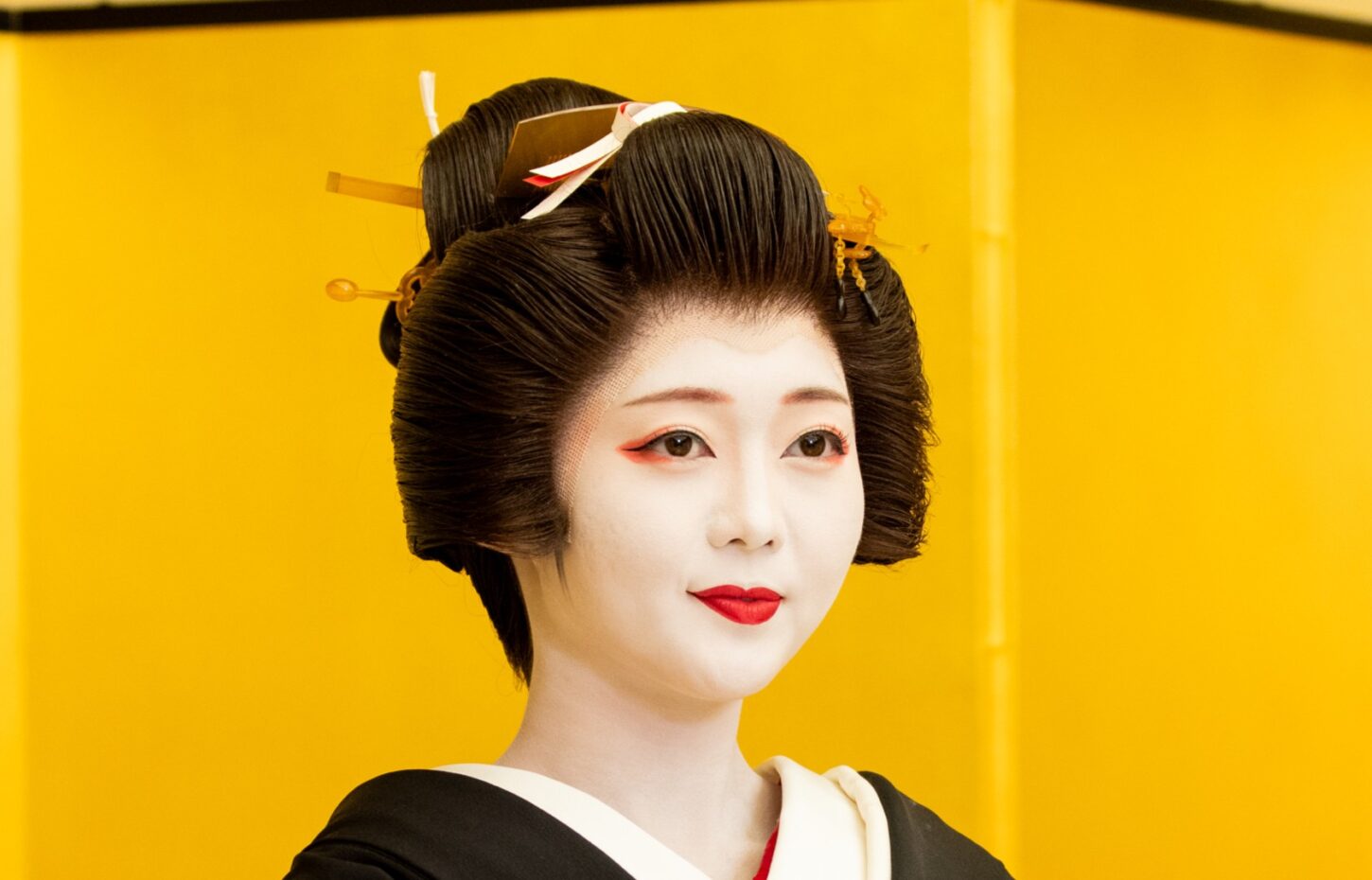
Color is never incidental. It signals the season, the occasion, and the wearer’s rank within the profession. Among all the colors in use, black holds special formal status. A black silk kimono—often decorated with restrained motifs at the hem—is worn for the most prestigious occasions. It conveys dignity and deep respect for the arts and for guests. (For more on the symbolism woven into geisha appearance, see our guide on traditional geisha makeup.)
The Obi: Far More Than a Belt
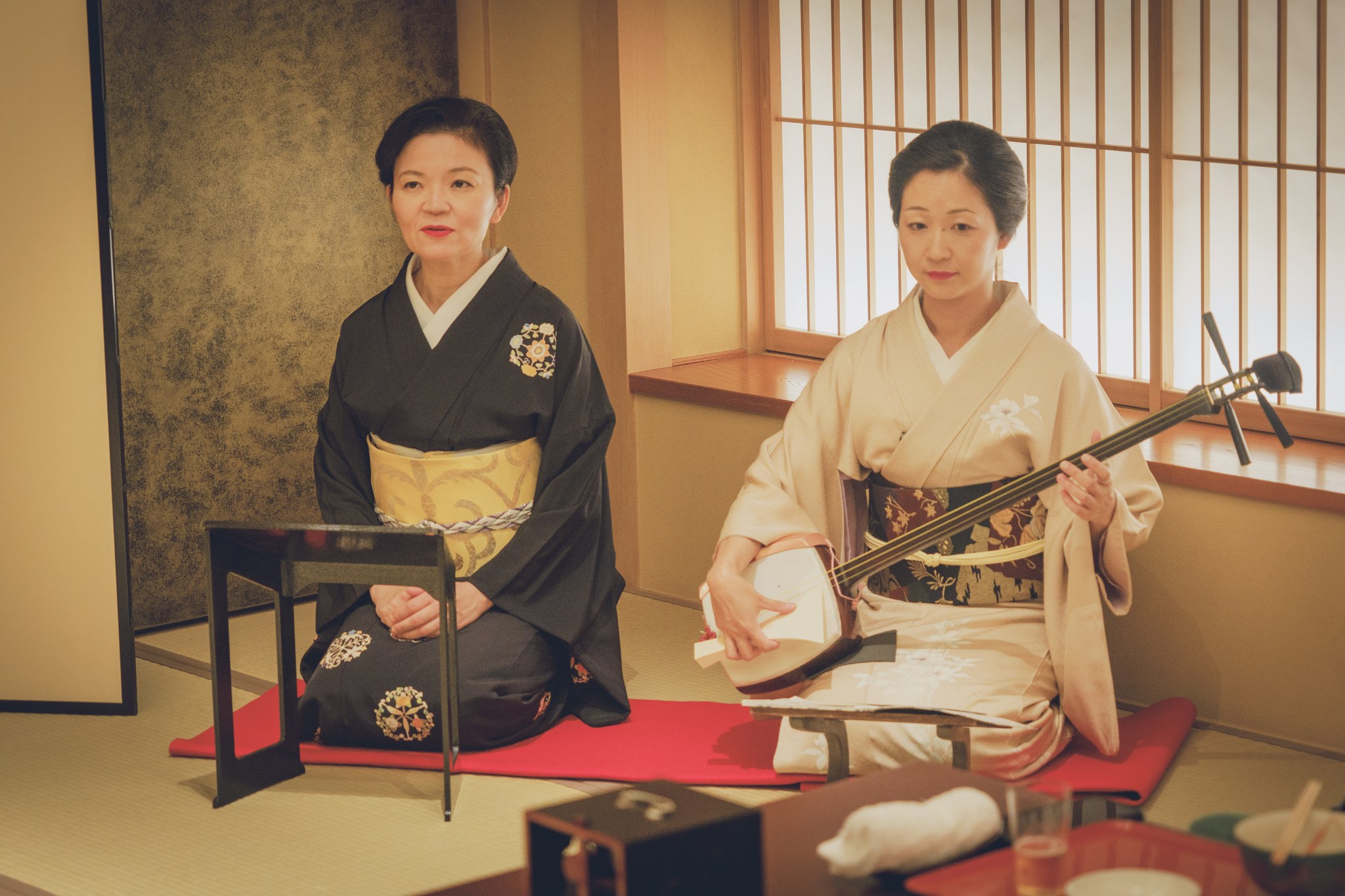
The obi—the wide sash worn around the waist—is often the most visually striking element of the entire outfit. It is a heavy, stiff, intricately woven piece of silk that can function as the focal point of the whole look.
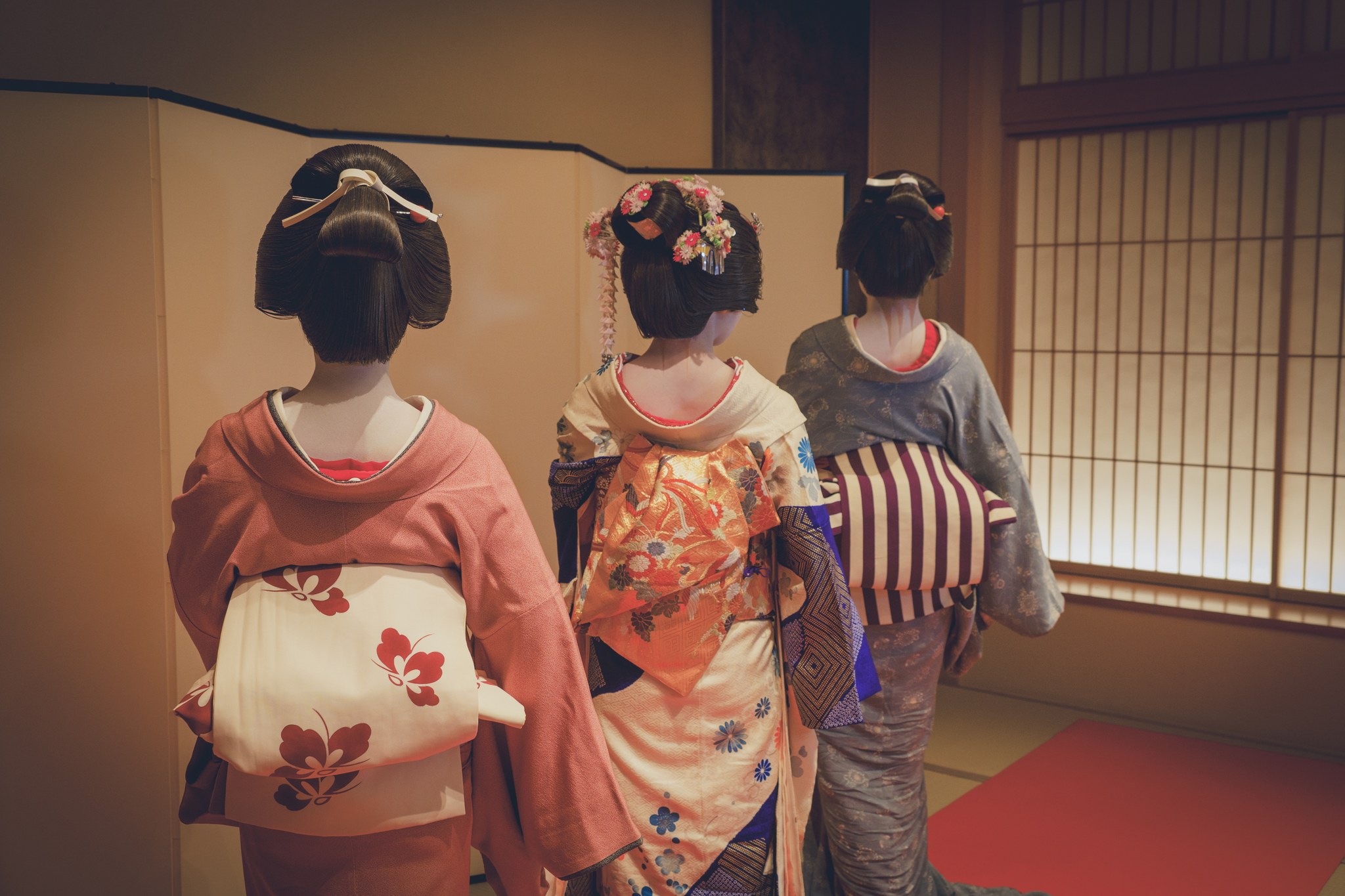
Tying the obi requires considerable skill and physical strength. Geisha typically rely on a professional male dresser known as an otokoshi to achieve the proper result. In Asakusa’s hanamachi today, this dressing work is done mainly by the hakoya. For an established geisha, the obi is most often tied in the taiko musubi—the drum knot—a classic, compact style that allows freedom of movement during dance, instrument play, and tea service. The artistry behind the obi, from weaving to final placement, reflects the precision that defines traditional Japanese dress. For the formal black hikizuri, Tokyo geisha basically tie the yanagi-musubi instead, without an obijime; on ordinary evenings the obijime is a braided kumihimo, and rings and watches come off before the ozashiki.
The Left-Over-Right Rule
One of the most important rules in wearing any traditional Japanese garment is the direction of the wrap. The left side of the kimono must always be placed over the right. This is not a matter of fashion preference—it carries deep cultural meaning.
In Japanese tradition, wrapping right over left is reserved exclusively for dressing the deceased for funeral rites. Wearing the kimono left over right is therefore a visible sign of life, and of respect for the living arts. The care geisha take in dressing—ensuring every fold, crease, and line is correctly placed—is part of a daily ritual that connects the act of getting dressed to the heritage of the profession itself.
Essential Geisha Accessories
The kimono is only one part of the complete geisha look. The accessories complete the silhouette and carry their own layers of meaning.
Katsura (Wig) and Kanzashi (Hair Ornaments)
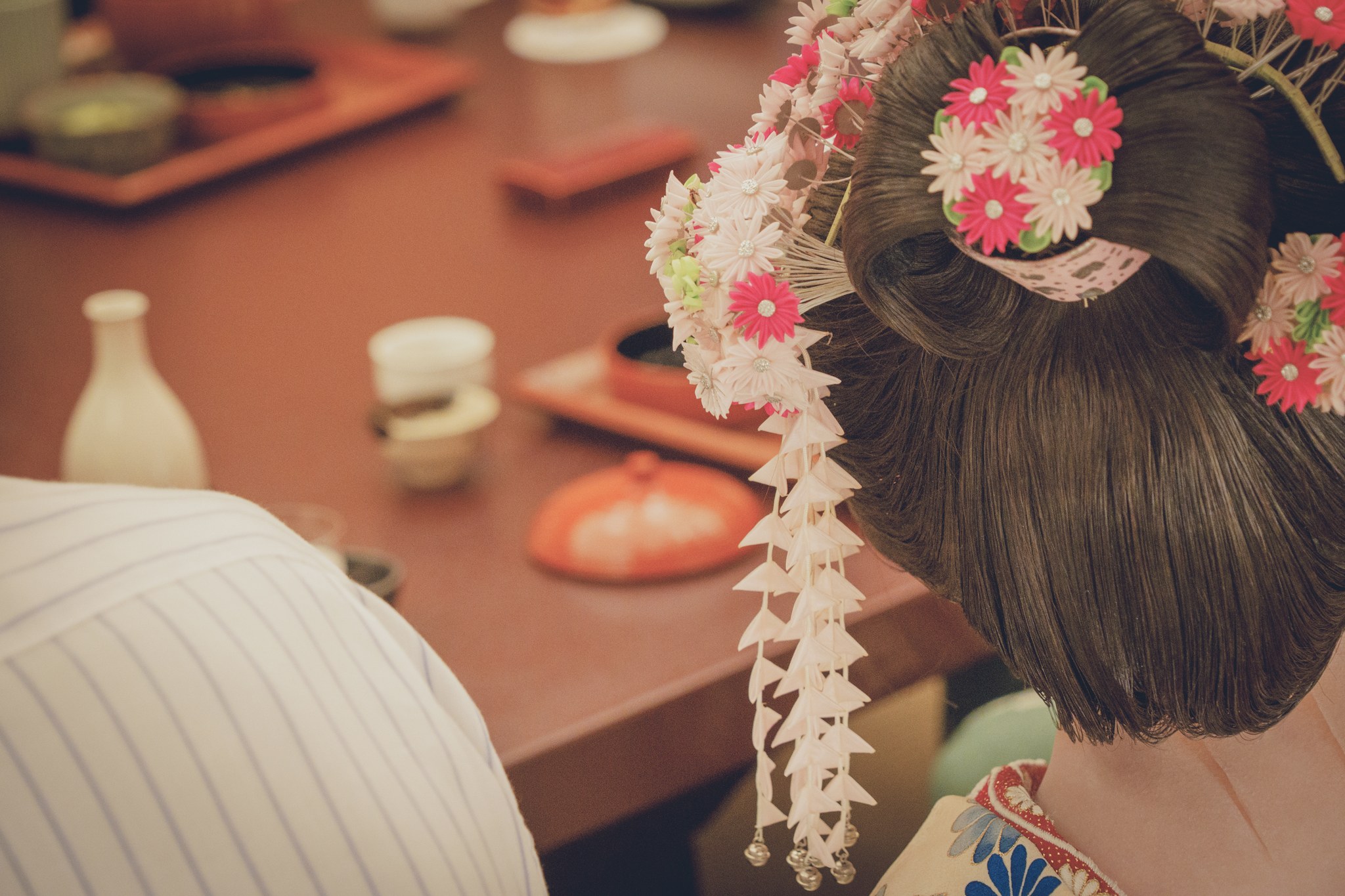
Geisha in modern practice wear elaborate wigs called katsura, custom-fitted by specialist craftsmen. In earlier times, women styled their own natural hair into complex shapes using heavy wax—a process that took hours. The shift to wigs protects the hair and reduces preparation time considerably.
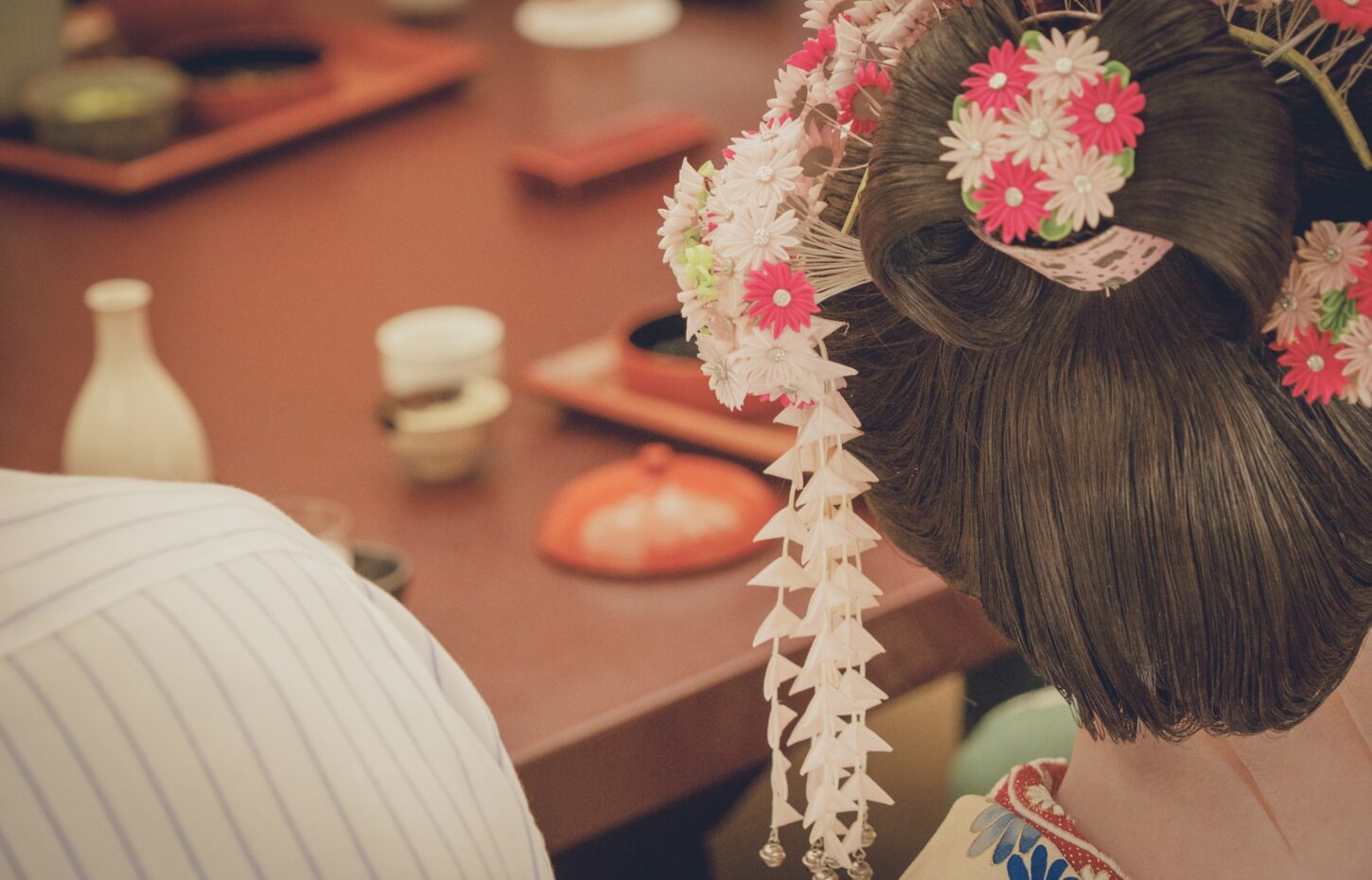
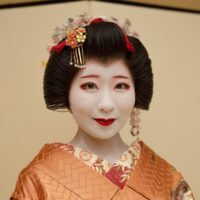
The wigs are decorated with handcrafted hair ornaments called kanzashi. The selection of kanzashi is tied to the season: cherry blossom motifs appear in spring; maple leaf motifs in autumn. These small details reflect a deep attentiveness to the natural world and the passage of time—values central to Japanese aesthetic culture. For more on how the hanamachi districts preserve these seasonal traditions, see: What Is Hanamachi? Japan’s Geisha Districts Explained.
Footwear: Okobo and Zori
Footwear marks the difference between an apprentice and an established geisha in an immediately practical way. Apprentices wear okobo—tall, lacquered wooden clogs that force a small, careful gait and emphasize the deliberate grace required in training (in Tokyo, hangyoku call them pokkuri, and a small bell inside the sole chimes with each step). Established geisha wear zori—flatter, more practical sandals that still require refined posture and movement.
Learning to walk gracefully in either type of footwear is itself a long process. The way a geisha moves—measured, composed, present—is inseparable from the dress she wears. The accessories are not decorative additions but functional parts of an integrated performance.
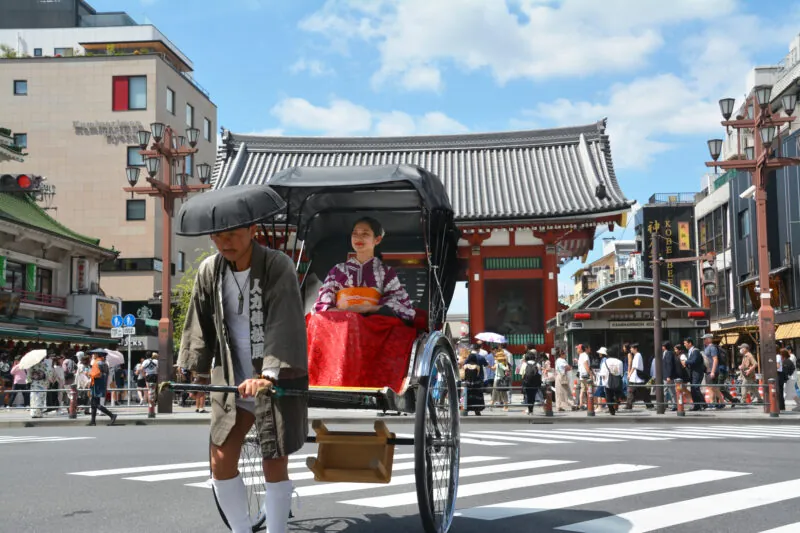
The full outfit as it is actually worn, not posed for a photo studio: an Asakusa geisha on the street in Tokyo, on the way to an engagement.
Experiencing Geisha Culture in Asakusa
Asakusa has been at the center of Tokyo’s geisha culture for generations. The district’s hanamachi (geisha district) maintains one of the few working communities of geisha in Tokyo today—where the arts, the dress, and the traditions described in this guide are still practiced as a living profession.
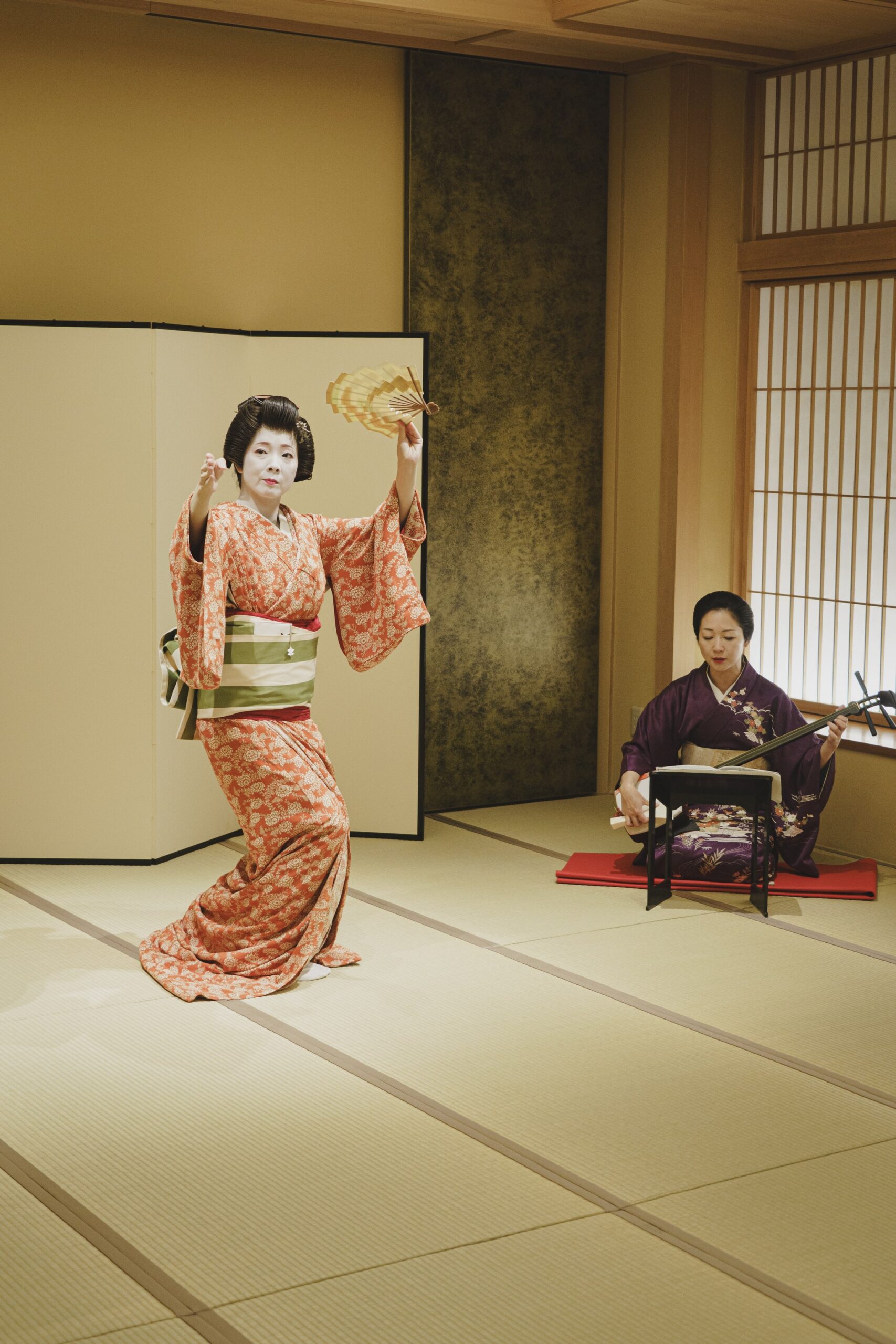
Founded in 1950, Miyakodori is the only machiai-chaya (traditional geisha banquet establishment) still operating in Asakusa. A machiai-chaya is a venue dedicated to hosting geisha for the purpose of entertaining guests with classical music, traditional dance, and conversation. When you visit Miyakodori, you are not watching a performance staged for tourists—you are sitting with working artists in the environment their craft was built for.
Guests enjoy traditional entertainment up close, participate in classic ozashiki (geisha banquet) parlor games, and experience the atmosphere of Asakusa’s hanamachi as it actually exists. For international visitors, this kind of direct access to working geisha culture is rare. To learn more about the full geisha experience at Miyakodori, see: Geisha Experience in Tokyo: Private Ozashiki in Asakusa.
For a broader look at the history and role of geisha in Japan, see our comprehensive guide: Geisha in Japan: The Ultimate Guide.
See Traditional Geisha Dress in Person
Miyakodori’s private ozashiki (geisha banquet) in Asakusa offers a rare opportunity to experience geisha culture—including the full traditional dress—in an authentic, intimate setting.
Request a ReservationFrequently Asked Questions
- What does a geisha wear?
- A geisha wears a high-quality silk kimono, an elaborate wide sash called an obi (typically tied in the taiko musubi drum-knot style), a custom-fitted wig (katsura) decorated with seasonal hair ornaments (kanzashi), and flat sandals called zori. The specific kimono colors and patterns vary by season, occasion, and rank within the profession.
- What is the difference between geisha and maiko dress?
- A maiko (Kyoto apprentice) wears a vibrant, colorful kimono with long furisode sleeves and a long dangling darari obi. Tokyo’s apprentice, the hangyoku, also wears furisode, but ties her obi differently and tucks the kimono up at the waist (hashori) instead of letting the hem trail. An established geisha wears a more subdued kimono with shorter sleeves and a compact obi knot. The transition in dress mirrors the shift from apprenticeship to full professional status.
- Why do geisha wear black kimono?
- Black kimono carry the highest formal status in geisha dress. A black silk kimono—often with restrained motifs at the hem—is worn for the most prestigious events and gatherings. It signals dignity, solemnity, and deep respect for the occasion and guests.
- What is the left-over-right rule in kimono dressing?
- In Japanese tradition, the left side of the kimono must always be placed over the right when dressing. Wrapping right over left is associated with funeral rites for the deceased. Wearing the kimono correctly—left over right—is a sign of life and respect for the living arts.
- What is an otokoshi?
- An otokoshi is a professional male kimono dresser who assists geisha in putting on the obi. Tying the obi—a heavy, stiff, intricately woven sash—correctly requires considerable skill and physical strength, making the otokoshi an essential part of a geisha’s preparation.
- Can I see geisha in traditional dress in Tokyo?
- Yes. Miyakodori in Asakusa offers private ozashiki (geisha banquets) where geisha appear in full traditional dress. This is one of the few venues in Tokyo where international visitors can experience working geisha culture—music, dance, and conversation—in an authentic machiai-chaya setting. Reservations can be requested at our online reservation form.
Sources
- Press release regarding Asakusa Miyakodori and its traditional machiai-chaya experiences. PR Times. https://prtimes.jp/main/html/rd/p/000000001.000165250.html
- Information on the history of Asakusa as an open flower town and Miyakodori store details. Asakusa Norenkai. https://asakusa.gr.jp/jp/?p=385
- Feature article on Asakusa tourism appeal and the history of Tokyo flower towns. Tokyo Metro. https://www.my.metro.tokyo.lg.jp/w/000-20240711-43128106
- Details concerning the training and culture of Asakusa geisha. Asakusa Kenban. https://asakusakenban.com/


- Japanese vs Korean Culture: Social Differences, Arts and Traditions
- Japanese Culture and History: A Complete Guide for International Travelers

[2025 Edition] Complete Guide to Winter Events in Asakusa! From Traditional Festivities to Hatsumode
Existing Geisha Districts in Tokyo! How to Enjoy These Elegant Neighborhoods Once
From Anime Geisha to the Real Thing in Asakusa
Geisha Pictures: A Comprehensive Visual Guide and Stock Photo Resources
Kanzashi: A Guide to Japanese Hair Ornaments
【Reservation Required】Asakusa Christmas Dinner Definitive Guide! 3 Recommended Restaurants with Private Rooms
Comment ( 0 )
Trackbacks are closed.
No comments yet.