

The Complete Guide to Traditional Geisha Makeup: History, Meaning & 5-Step Application Process
What is traditional geisha makeup?
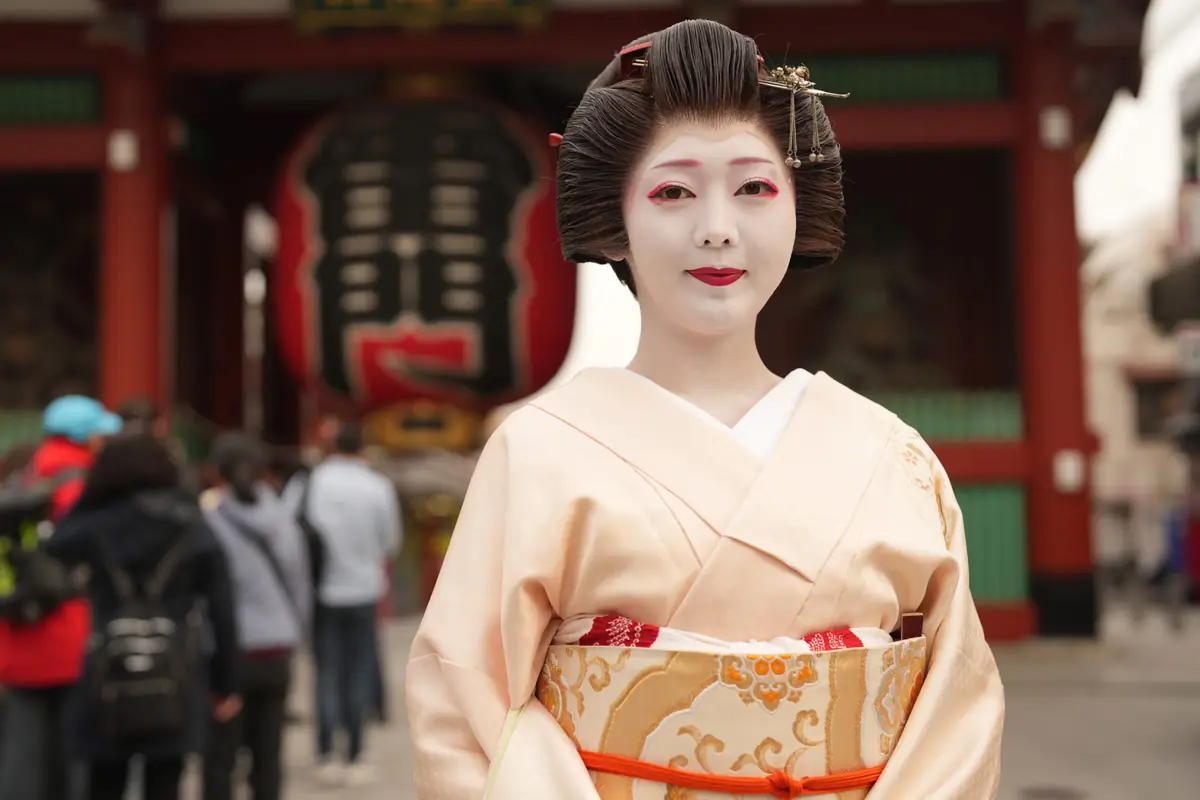
Traditional geisha makeup is a multi-layered art form centered on oshiroi (white face powder applied over a bintsuke-abura wax base), vivid red beni pigment on the lips and eye corners, and precise black eyeliner. Developed from aristocratic Heian court aesthetics and refined through the Edo period, this iconic look communicates the artist’s rank, experience, and cultural identity — and is still worn today by the geisha who perform at tea houses like Miyakodori in Asakusa.
The image of a geisha is perhaps one of the most iconic symbols of Japan. With her porcelain white face, striking red lips, and elegantly defined eyes, she represents a living tradition that has fascinated the world for centuries. This distinctive makeup style it is a profound art form that communicates status, maturity, and a deep connection to the history of Japanese entertainment. For many travelers and enthusiasts of Japanese culture, understanding the intricacies of geisha makeup offers a window into the soul of traditional Japan.
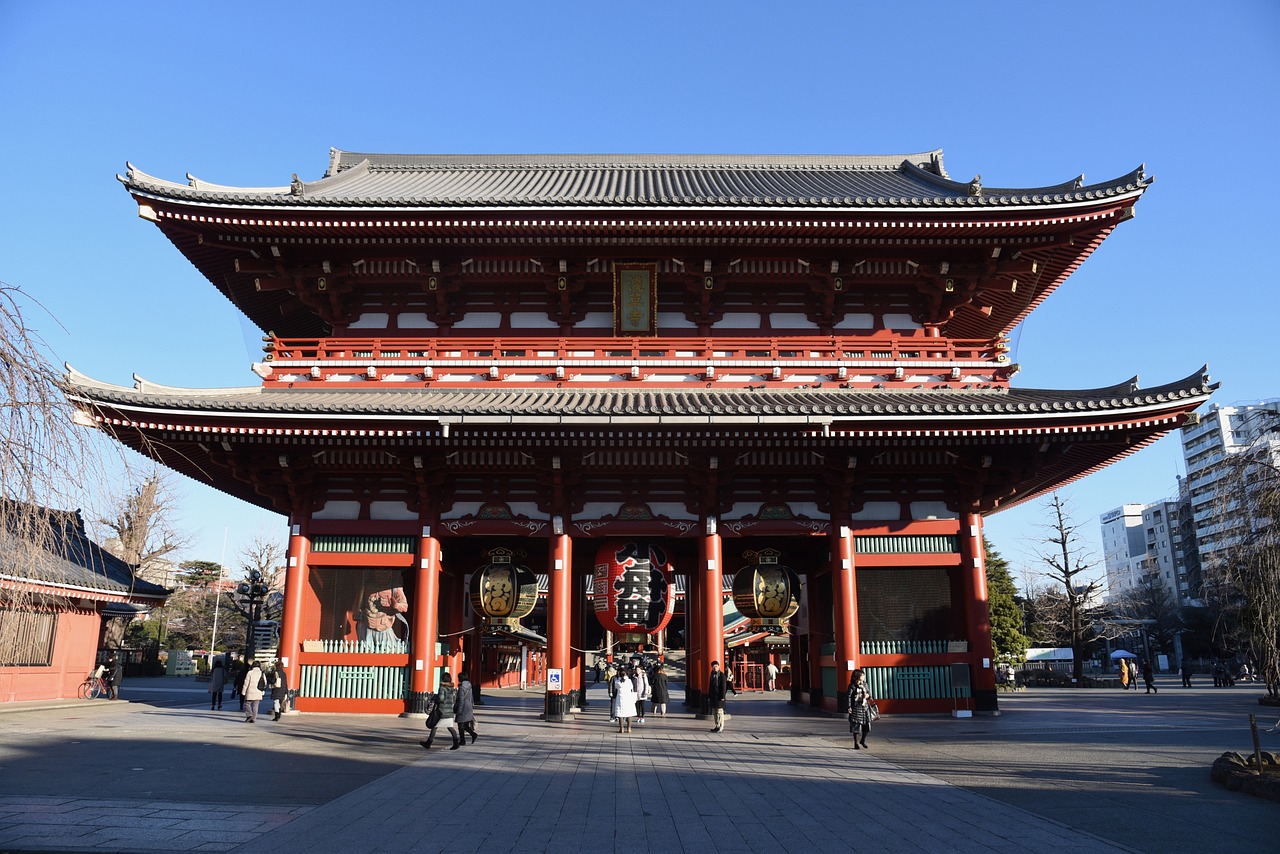
In the bustling district of Asakusa, Tokyo, this tradition continues to thrive within the hidden world of the hanamachi, or flower towns. Unlike the more guarded traditions of some regions, the geisha culture in Asakusa is known for its open and welcoming atmosphere, deeply rooted in the history of the Edo period. This guide will help you understand oshiroi, the traditional white foundation, and the vibrant red pigments that define this timeless look. We will explore how this makeup evolved from the nobility of the Heian period to the refined artistry seen today in the tea houses of Asakusa.
A Brief History of Geisha Makeup: From Ancient Origins to Modern Elegance
The history of geisha makeup is a fascinating journey through time, reflecting the changing values and artistic sensibilities of Japanese society. To understand why a geisha looks the way she does today, we must look back over the centuries to when the foundations of these beauty standards were first laid. It began not with entertainers, but with the aristocracy and the introduction of foreign influences that would eventually be refined into a uniquely Japanese aesthetic.
The Dawn of Tradition: Oshiroi in the Asuka Period (592 to 710)
The story starts during the Asuka period, a time of significant cultural exchange between Japan and mainland Asia. It was during this era that white face powder, known as oshiroi, was first introduced from China. At the time, cosmetics were a luxury reserved for the elite. These early powders were often made from lead or rice, and they served as a symbol of high social standing. By painting their faces white, the nobility sought to distinguish themselves from the common people whose skin was darkened by labor in the sun. This early adoption of white makeup established the pale skin ideal that would persist throughout Japanese history as a marker of nobility and grace.
Nobility and White Skin: The Heian Period (794 to 1185) Aesthetics
As we move into the Heian period, the pursuit of beauty became even more sophisticated and central to the lives of the court nobility. During this golden age of Japanese culture, a specific aesthetic was celebrated where facial features were minimized to emphasize a serene, mask-like composure. Women at court would apply thick layers of oshiroi to create a flawless canvas, emphasizing a look that was detached from the raw reality of everyday life. They also practiced blackening their teeth and shaving their natural eyebrows to paint new, high-set ones on the forehead. This stylized appearance was considered the height of elegance and refinement. The pale face acted as an essential tool for the dim, candlelit rooms of the imperial palace, allowing the presence of the nobility to remain visible and luminous even in deep shadows.
The Edo Period (1603 to 1867): How Geisha Style Reached the Masses
The transition to the Edo period brought about a dramatic shift in how traditional makeup was used. This era saw the rise of the merchant class and the flourishing of the urban entertainment districts, known as the ukiyo or floating world. It was during this time that the profession of the geisha truly emerged. Initially, many geisha were predominantly musicians and dancers who performed at parties and ceremonies. As their role became more formalized, they adopted and adapted the makeup styles previously reserved for the nobility. The classic make-up seen today started when kabuki actors wore both dark and bright pigments so their expressions could be viewed clearly during performances. The white face, red lips, and black accents became a professional uniform that helped them stand out on the stage and in the tea houses. In Asakusa, which was already a thriving center of culture and commerce near Senso-ji temple, the geisha style became a beacon of iki or chic elegance. Unlike the heavy, ornate styles of the court, geisha makeup in the Edo period began to balance theatricality with a refined artistic discipline that defined the flower and willow world. This period solidified the use of pigments and wax as essential materials for the professional artist.
To understand how the geisha tradition evolved from Edo-period origins to today, see our complete guide to geisha history.
Why Do Geisha Still Wear White Makeup?
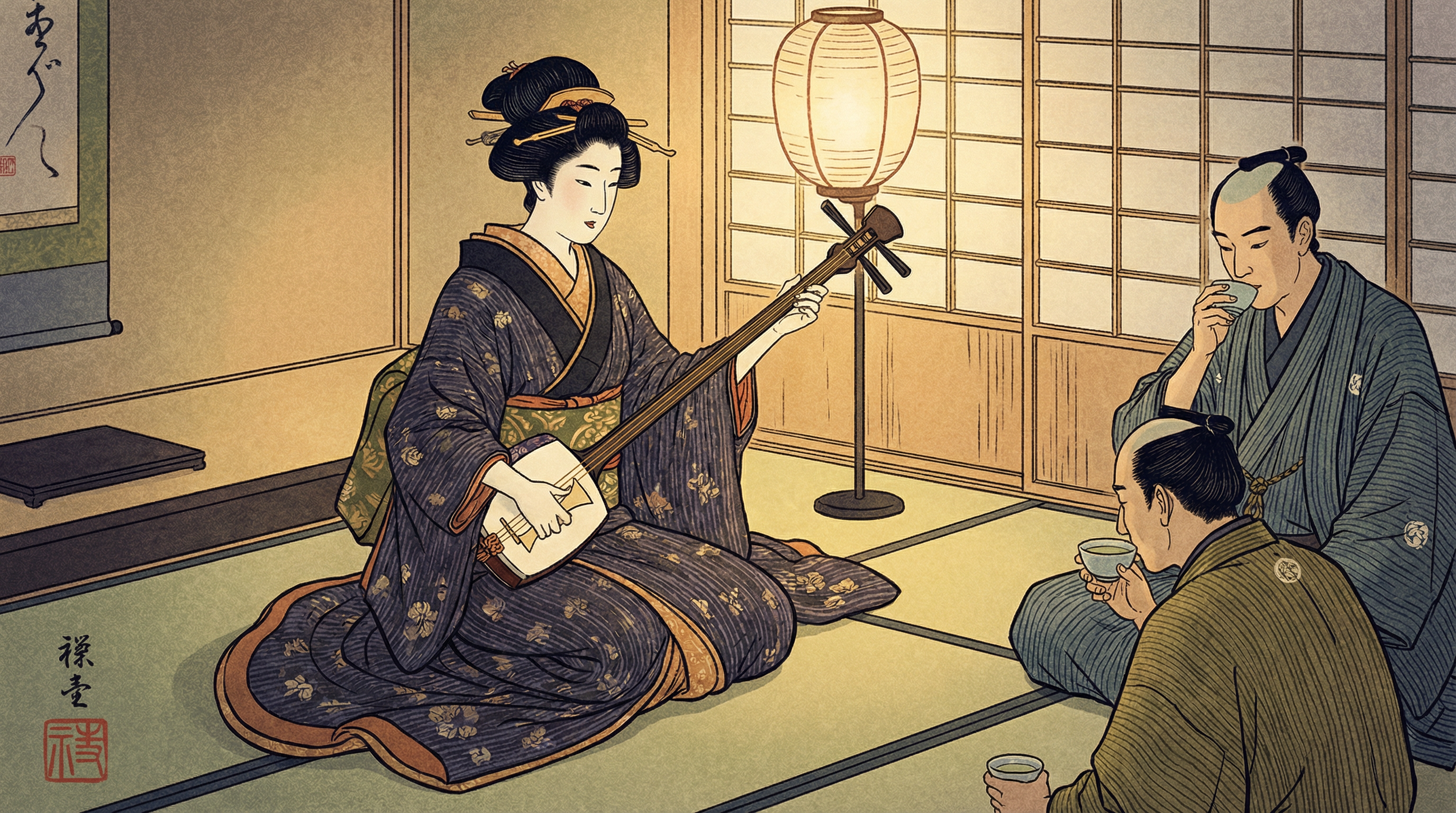
Short answer: Geisha wear white makeup, called oshiroi, for three linked reasons. Before electricity, banquets were lit by large candles called hyakume-rosoku, and Miyakodori’s okami understands the white face as a way to make a geisha’s features stand out in that dim light. Pale skin has also been an ideal of beauty in Japan since the Heian court. And the white base works as a clean canvas, so the red and black accents and the movements of a dance read clearly. In Asakusa today, not every geisha paints her face: white makeup belongs to the tachikata, the geisha who dance, while the jikata, who play the shamisen and sing, appear with a natural face and a modern hairstyle. Male taikomochi do not wear it at all. According to the okami, most geisha finish the white makeup in under 30 minutes.
For those visiting Japan, the stark white face of a geisha is often the most striking feature. However, this is not merely a cosmetic choice; it is a layered symbol of tradition and professional identity. When a geisha applies this makeup, she is stepping into a role as a guardian of ancient arts. The white foundation, or oshiroi, transforms the individual into a living piece of art, creating a boundary between the everyday world and the refined space of the tea house.
Symbolism of the Flawless Canvas: More Than Just Beauty
The white face serves as a flawless canvas that allows the artist’s movements and expressions to be seen with greater clarity. In Japanese culture, white has long been associated with purity and the sacred. By covering the natural skin, the geisha adopts a persona that is timeless and ethereal. This mask-like appearance allows the guest to focus on the performance—the subtle tilt of the head, the graceful movement of a fan, or the intricate steps of a dance—rather than the personal identity of the individual woman. It represents a commitment to the arts, where the self is set aside to provide an unforgettable experience for the guest. This dedication is at the heart of the hospitality found in districts like Asakusa, where the connection between the performer and the guest is cherished above all else.
The Role of Lighting: Performance in Dimly Lit Tea Houses
There is also a very practical, historical reason for the heavy white makeup. Long before electricity, the rooms where geisha performed were lit only by candles and lanterns. In such a dimly lit environment, natural skin tones would often fade into the shadows, making the performer difficult to see. The white oshiroi acted as a natural reflector, catching the flickering orange glow of the candles and making the geisha appear luminous and ghostly beautiful. Even in the modern era, as we sit in the elegant private rooms of a place like Miyakodori, the way the light interacts with the white makeup creates an atmosphere of mystery and traditional elegance.
What Each Element Symbolizes
- White (oshiroi): associated with purity and the sacred, it forms a flawless, mask-like canvas that lets the guest focus on the performance rather than the individual.
- Red (beni): applied to the lips and eye corners, it is believed to ward off evil and protect the artist, and its placement signals her age and experience.
- Unpainted nape (eri-ashi): a sliver of natural skin left bare at the back of the neck, bridging the painted mask and the real person beneath.
Experience Geisha Arts in Asakusa
At Miyakodori — Asakusa’s traditional machiai-chaya tea house — you can witness the very artistry described here. Join an ozashiki (a private gathering with geisha) and experience the grace of live geisha performance in a private tatami room.
Essential Materials and Tools: Inside the Oshiroi Makeup Kit
The three core materials of geisha makeup are bintsuke-abura (a soy-based wax base), oshiroi (the white face powder), and beni (the vivid red pigment used on the lips and eye corners).
The process of creating this iconic look requires specialized materials that have changed very little over the centuries. A professional geisha does not use standard commercial products; instead, she relies on tools specifically crafted for the demanding environment of the stage and the formal banquet.
Bintsuke-abura (Wax Base) and Oshiroi (White Powder)
The foundation of the makeup is not actually the white powder itself, but a special wax called bintsuke-abura. This soy-based wax is warmed in the hands and applied firmly to the face, neck, and upper chest. It serves as a protective barrier and an adhesive base that prevents the makeup from smearing during long hours of dancing or pouring sake. Once the wax is set, the oshiroi is applied. Historically, this powder was mixed with water to create a thick paste and then applied using a large brush. The skill lies in achieving a perfectly smooth, even finish that covers the skin completely without looking cakey. Today, while the formulas are safer and lead-free, the method of application remains a meticulous ritual that requires practice to master.
- Bintsuke-abura
- A soy-based wax base warmed in the hands and applied to the face, neck, and upper chest. It acts as a protective barrier and an adhesive base that keeps the makeup from smearing during long hours of dancing or pouring sake.
- Oshiroi
- The white face powder. Historically mixed with water into a thick paste and applied with a large brush, it is laid over the set wax to create a perfectly smooth, even, porcelain-like finish.
The Symbolic Palette: The Importance of Red and Black Pigments
Beyond the white base, the two most important colors are red and black. These are not just decorative; they carry deep cultural weight. Black, often derived from charcoal or modern liners, is used to define the eyebrows and the edges of the eyes, giving the face structure. Red, known as beni, is perhaps the most symbolic. It is applied to the edges of the eyes and used to paint the lips. Historically, this pigment was extracted from safflowers and was incredibly expensive, symbolizing wealth and health. In the world of the geisha, red is believed to ward off evil and protect the artist. The way these colors are balanced—especially the specific shape of the red lips—communicates the age and experience of the artist, with younger apprentices using more red to highlight their youthful brilliance.
The okami of Miyakodori — a hangyoku at fifteen, and a geisha for twenty-seven years — applies the makeup herself, starting with the first layer of bintsuke oil. Eleven minutes, start to finish. English subtitles available.
Step-by-Step: How Traditional Geisha Makeup is Applied
Applying traditional geisha makeup is a deliberate ritual that requires a high degree of patience and skill. It is not something that can be rushed, as each layer must be perfectly balanced to create the iconic appearance that has been refined over centuries. This process is often a quiet time of preparation for the artist, a transition from her private self into her professional role.
Preparing the Skin with Traditional Oils
The journey begins with the skin. Before any white pigment touches the face, the geisha must prepare the base. As mentioned earlier, bintsuke-abura, a special wax-based oil, is the essential first step. The artist takes a small amount of this firm wax and warms it between her palms until it becomes soft and pliable. She then massages it into her face, neck, and upper chest. This wax creates a smooth, waterproof surface that prevents the heavy makeup from clogging the pores while ensuring that the foundation adheres perfectly. It is this wax base that gives geisha makeup its characteristic durability, allowing it to remain flawless throughout a long evening of dance and conversation in the warm environment of a tea house.
Mastering the Art of the White Foundation
Once the wax is set, the application of the oshiroi begins. This white powder is mixed with water in a small bowl until it reaches a consistency similar to heavy cream. Using a large, flat brush made of goat hair, the geisha applies the paste in broad strokes. The application starts from the neck and moves upward to the face. The goal is to create a completely even, pale surface that hides any natural imperfections. Great care is taken around the hairline to ensure a clean finish. After the liquid is applied, the artist uses a large sponge to pat the makeup down, removing excess moisture and creating a soft, matte finish that looks like porcelain under lights.
Defining the Features: Eyebrows, Eyes, and the Iconic Red Lips
With the white canvas complete, the features are carefully drawn back in. This is where the artistry truly shines. First, the eyebrows are shaped. Unlike modern trends, geisha eyebrows are often painted with a touch of red or pink underneath a layer of black, creating a soft yet striking look. Next, the eyes are defined. A precise line of black eyeliner is applied to the upper lid, while the outer corners are often accented with a vibrant red pigment. This use of red around the eyes is a traditional technique to make the eyes appear brighter and more expressive. Finally, the lips are painted. This is done with a small, delicate brush and a concentrated red pigment. The shape of the lips is one of the most important indicators of the artist’s rank and maturity, requiring a steady hand to achieve the perfect, jewel-like pout.
Why white, though? The steps above cover how it is applied; this one answers the question underneath them. The short version is that the white face was made to read in candlelight, long before electric lighting reached the banquet rooms.
Maiko vs. Geiko: Visual Differences in Makeup and Status
While the casual observer might think all geisha look the same, there are subtle and significant differences in the makeup that reveal an artist’s level of experience. In the flower and willow world, your appearance tells your story before you even speak a word.
| Feature | Maiko (apprentice) | Geiko (experienced geisha) |
|---|---|---|
| Lips | In Kyoto, a first-year maiko paints only the lower lip red, leaving the upper lip white; both lips as she progresses. In Asakusa, a hangyoku (apprentice geisha) applies lip color the same way as a fully fledged geisha | Both lips painted fully, in a slightly more subtle shape |
| Red around the eyes | More prominent, enhancing youthful brightness | More restrained |
| Eyebrows | More heavily tinged with pink or red | Refined and elegant |
| Overall style | More colorful and flamboyant | Understated and sophisticated |
| What it reflects | Youth and trainee status | Maturity as a fully independent, experienced professional |
The Youthful Brilliance of a Maiko
A maiko, or apprentice geisha, wears a style of makeup that emphasizes her youth and trainee status. Her look is often more colorful and flamboyant. For instance, a first-year apprentice will only paint her lower lip red, leaving the upper lip white. This is a visual sign that she is still in the early stages of her training. As she progresses, she will begin to paint both lips. This is a Kyoto custom. In Asakusa, a hangyoku (apprentice geisha) applies lip color the same way as a fully fledged geisha. Her eyebrows are also more heavily tinged with pink or red to enhance her youthful glow. The overall effect is one of soft, burgeoning beauty, designed to evoke the image of a flower just beginning to bloom.
The Understated Elegance of a Mature Geiko
In contrast, a geiko—a fully independent and experienced geisha—adopts a much more understated and sophisticated appearance. Her makeup is refined and elegant, focusing on a balanced aesthetic. She paints both lips fully but in a slightly more subtle shape than a maiko. Her use of red around the eyes is also more restrained. This shift reflects her maturity and her transition from a trainee who relies on visual spectacle to a seasoned professional whose primary focus is the mastery of dance, music, and the art of conversation. In the open and traditional atmosphere of Asakusa, this elegance is highly respected as a sign of years of dedicated practice.
To learn more about the distinctions between maiko, geiko, and other roles in the flower and willow world, see our guide to geisha in modern Japan. For a closer look at how a maiko, a geiko, and a Tokyo geisha differ in training, dress, and title, read our complete guide to the difference between maiko, geisha, and geiko.
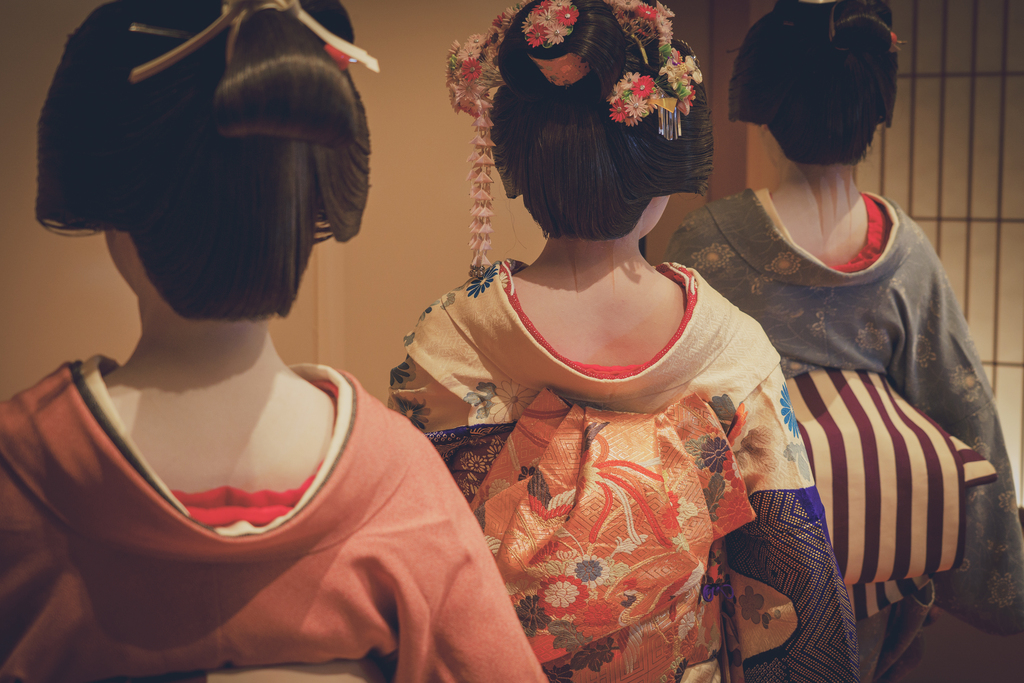
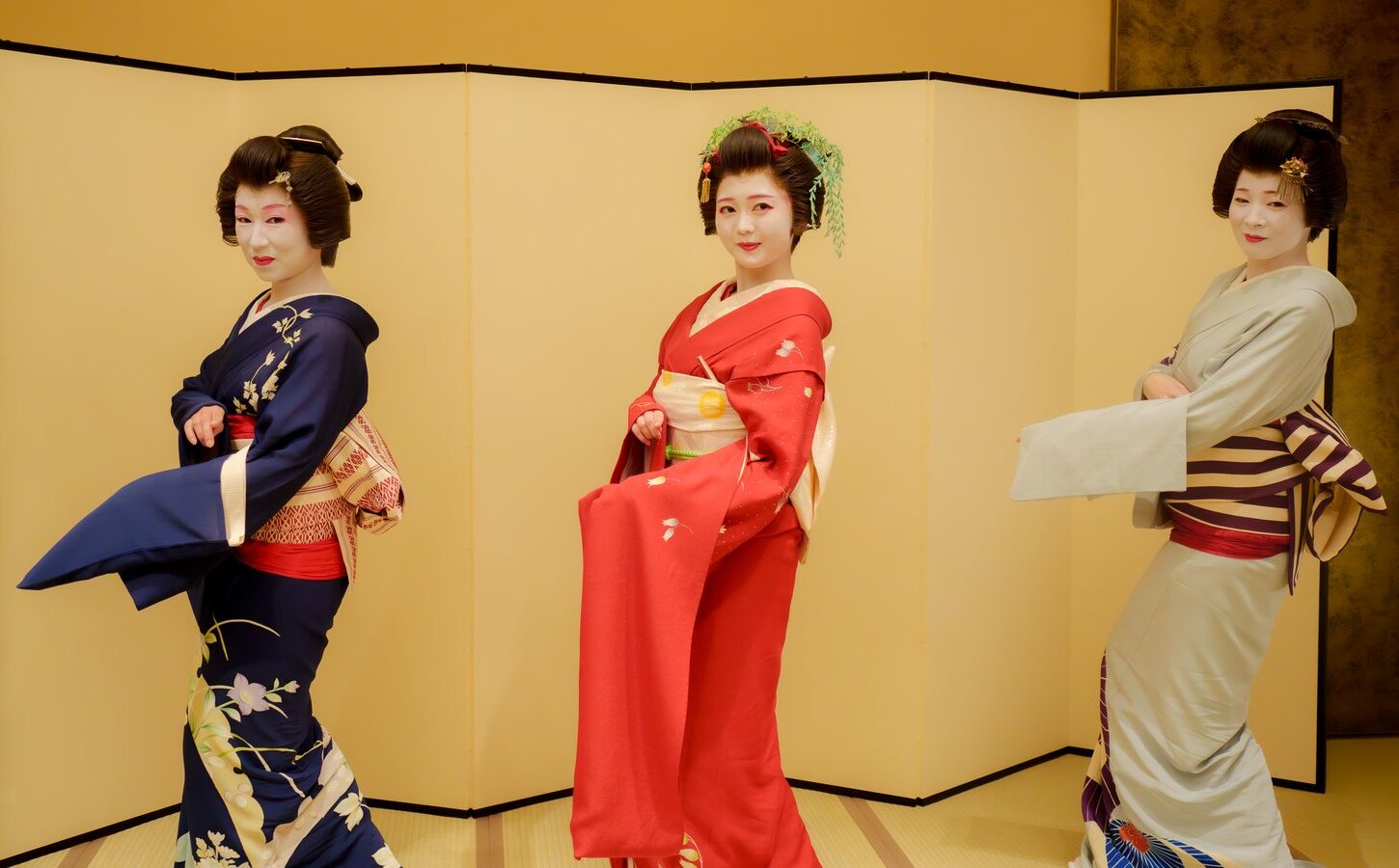
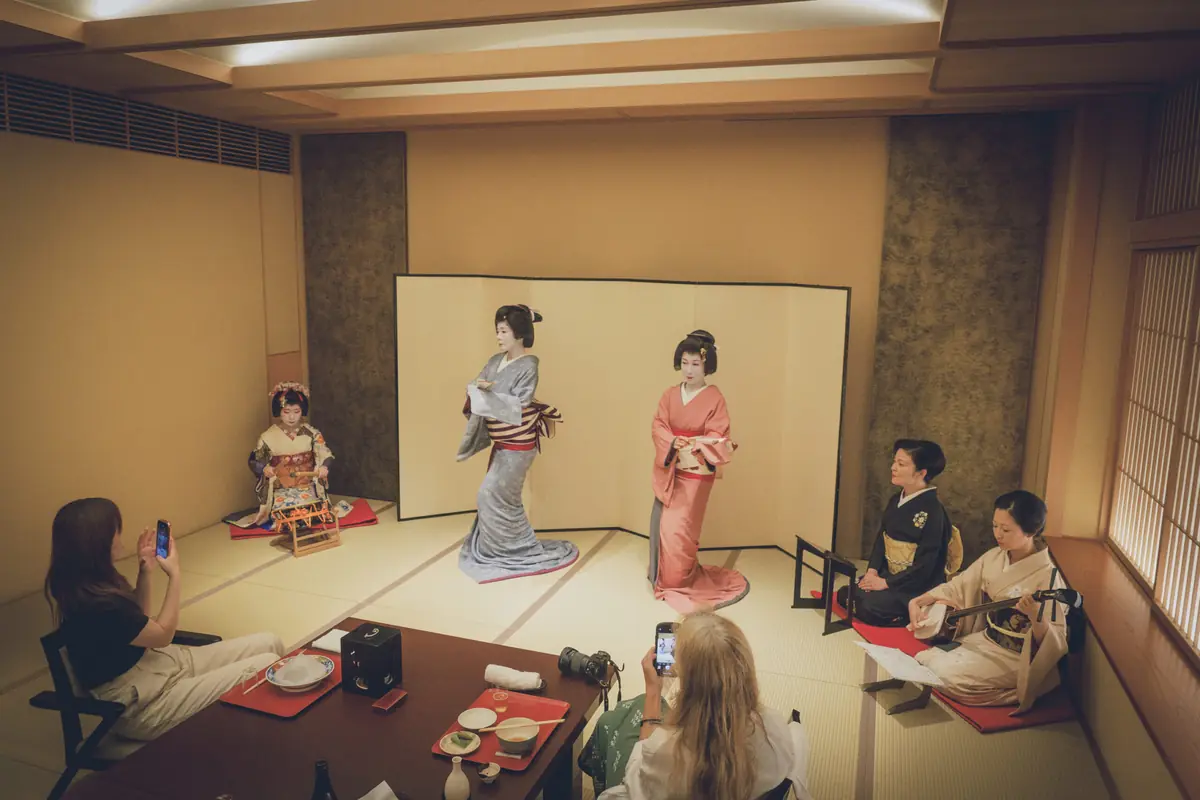
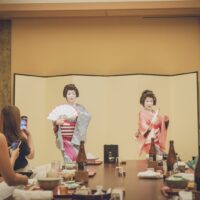
The younger stage, on the left. Tokyo does not use the word maiko: here she is a hangyoku, and the difference the section above describes — the fuller kimono, the more decorated hair — is visible next to the geisha seated opposite her.
The Meaning of the Unpainted Skin on the Nape (Neck)
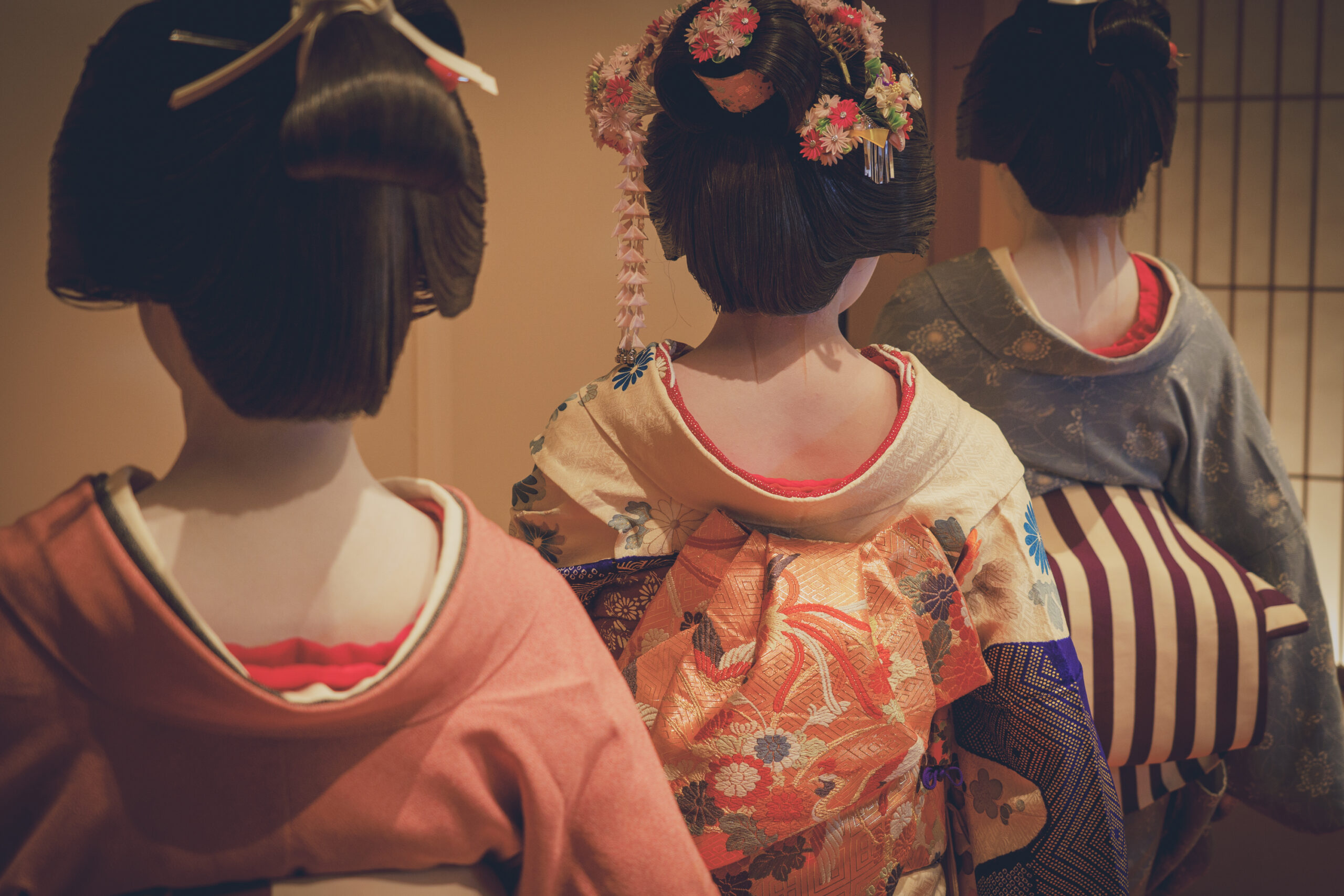
One of the most alluring aspects of geisha makeup is the treatment of the nape of the neck, known as the eri-ashi. When the white foundation is applied, a small area of natural skin is left unpainted in a specific W or V pattern. This is considered one of the most sensual parts of the geisha’s appearance in Japanese culture. By leaving this sliver of natural skin visible, the makeup creates a bridge between the artificial mask of the face and the reality of the person beneath. It highlights the curve of the neck as it disappears into the collar of the kimono, adding a layer of mystery and refined beauty to the overall silhouette.
From Toxic Lead to Modern Safety: The Evolution of Cosmetics
It is important to acknowledge that the materials used in geisha makeup have evolved significantly for the safety of the artists. In the Edo and early Meiji periods, the white oshiroi powder often contained lead, which was highly toxic. Over years of daily use, many geisha suffered from lead poisoning, which affected their health and skin. However, in the early 20th century, as the dangers of lead became better understood, the industry shifted toward safe, lead-free alternatives. Today’s professional cosmetics are made with high-quality, skin-safe minerals and rice-based powders. This evolution has allowed the tradition to continue safely into the modern era, ensuring that the artists can maintain their health while upholding their cultural duties.
One more thing the white face does not tell you. A jikata geisha — the one who plays the shamisen rather than dancing — often works without the white makeup at all. Everything on this page describes a look, not a definition of the profession.
Frequently Asked Questions About Geisha Makeup
How long does it take to apply the makeup?
For an experienced artist, the entire process—including hair and dressing—can take between one and two hours. The makeup itself depends on the geisha’s skill and can be finished in as little as 10 minutes but take up to an hour for others.
Does the makeup hurt the skin?
With modern, lead-free products and the protective layer of bintsuke-abura wax, the makeup is generally safe for the skin. However, the thorough cleaning process afterward is essential to maintain a clear complexion.
Why do some geisha not wear the white makeup?
In Asakusa, it depends on a geisha’s role, not her age. The tachikata, who dance, wear the white face and the traditional nihongami hairstyle. The jikata, who play the shamisen and sing, appear with a natural face and a modern hairstyle called yohatsu; in earlier times, jikata also wore nihongami. Male taikomochi do not wear white makeup.
What is the white face powder called?
The white face powder is called oshiroi. It is applied over a wax base called bintsuke-abura, a soy-based wax that is warmed in the hands and smoothed onto the face, neck, and upper chest before the powder goes on.
Why does a maiko paint only her lower lip?
A first-year apprentice, or maiko, paints only her lower lip red and leaves the upper lip white. This is a visual sign that she is still in the early stages of her training. As she progresses, she begins to paint both lips. This is a Kyoto custom. In Asakusa, a hangyoku (apprentice geisha) applies lip color the same way as a fully fledged geisha.
Is geisha makeup still made with lead?
No. In the Edo and early Meiji periods the white oshiroi often contained lead, which was toxic. Since the early 20th century the industry has shifted to safe, lead-free alternatives, and today’s powders are made with skin-safe minerals and rice-based ingredients.
Experience the Art of Geisha in Tokyo
The world of the geisha is a living, breathing tradition that continues to welcome those who seek beauty and authentic culture. While Kyoto is famous for its traditions, Tokyo’s Asakusa district offers a unique and open atmosphere where the history of the Edo period is still very much alive.
In the heart of Asakusa, near the historic Senso-ji temple, you can find Miyakodori. Founded in 1950, Miyakodori is a traditional tea house (machiai-chaya) that preserves the authentic spirit of the geisha arts. Here, the focus is on the genuine connection between the artist and the guest. Whether you are celebrating a special anniversary, hosting a business dinner, or simply wish to learn more about this beautiful tradition, Miyakodori provides an unforgettable experience. You will be treated to the graceful dances and melodic music of geisha who have dedicated their lives to these arts, all within the elegant setting of a private traditional room.
If you are looking to truly immerse yourself in the art of traditional geisha makeup and performance, we invite you to visit Asakusa. Experience the hospitality that has defined this district for over 400 years and discover the timeless elegance of the geisha.
For a deeper look at what to expect during an authentic geisha experience, visit our complete guide to experiencing geisha in Asakusa.
Witness Geisha Art at Miyakodori, Asakusa
The white makeup is one part of a much larger craft. Our Asakusa geisha encyclopedia covers the rest — the ranks, the dance and music roles, and how Asakusa differs from the geisha districts people picture first.
Ready to experience the living tradition behind this ancient art? Book your private ozashiki (a private gathering with geisha) at Miyakodori and discover the elegance of authentic geisha performance in Tokyo.
Sources: PR TIMES | Asakusa Tourism Federation | Tokyo Metropolitan Government | Asakusa Kenban


- 26 Best Experiences in Tokyo: Unique Guide (2026)
- Ultimate Guide to Asakusa Geisha Ozashiki Odori: Experience Traditional Geisha Dance in Tokyo
Asakusa Geisha Encyclopedia: Inside Tokyo’s Hanamachi
Ozashiki Parlor Games: How to Play Konpira Funefune & Tora-Tora
What Is Ozashiki Asobi? A Guide to Geisha Games, Etiquette, and the Real Experience in Asakusa, Tokyo
Ultimate Guide to Asakusa Geisha Ozashiki Odori: Experience Traditional Geisha Dance in Tokyo
What Is a Geisha? A Direct Answer from Asakusa
Tokyo Experience Gifts: Unforgettable Cultural Gift Ideas in Japan
Comment ( 0 )
Trackbacks are closed.

No comments yet.