



Geisha in Japan: The Ultimate Guide to Their History, Arts, and Modern Role (2026 Edition)
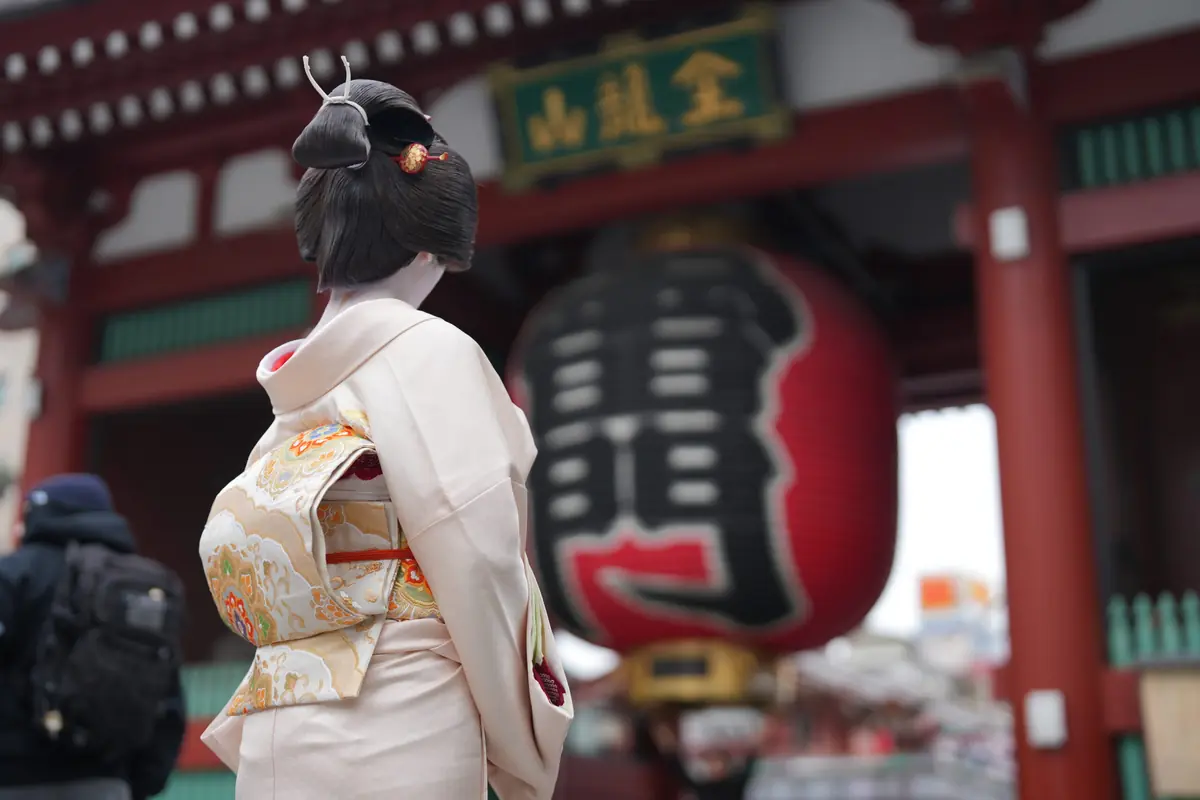
The image of a geisha is perhaps one of the most recognizable yet misunderstood symbols of Japan. Walking through the narrow, stone-paved streets of ancient districts, you might catch a fleeting glimpse of a woman in a vibrant silk kimono, her face a canvas of white, her hair sculpted into an intricate masterpiece. This is not just a costume; it is the living embodiment of centuries-old Japanese culture. To truly understand geisha women in Japan today, one must look past the surface-level beauty and recognize them for what they truly are: professional artists, masters of conversation, and the ultimate keepers of traditional entertainment.
As we move through 2026, the fascination with these enigmatic figures has only grown. In an era where digital experiences often dominate our lives, the authentic, face-to-face interaction provided by a geisha offers something profoundly rare. They are not simply performers; they are highly skilled practitioners of various traditional arts, including classical dance, music, and the tea ceremony. The term geisha itself literally translates to art person or person of the arts. So what are geisha, at their core? They are professional entertainers who have undergone years of rigorous training to master traditional Japanese arts — women who have chosen to dedicate their careers to preserving a living cultural heritage. These female professionals dedicate their lives to refining their skills, a process that begins in their youth and continues throughout their entire career.
To appreciate the geisha world, often called the Flower and Willow World, one must understand the heart of Japanese hospitality, or omotenashi. It is a philosophy of selfless service where the host anticipates every need of the guest before a word is even spoken. A geisha is the pinnacle of this art form. Whether they are performing a delicate dance or engaging in witty, intellectual conversation, their primary goal is to ensure that every guest feels like the most important person in the room. This commitment to excellence is what has allowed the profession to survive and evolve for over 400 years, remaining a vital part of Japan’s cultural fabric today.
To explore the deeper origins of geisha culture and the arts they practice, visit our Complete History Guide.
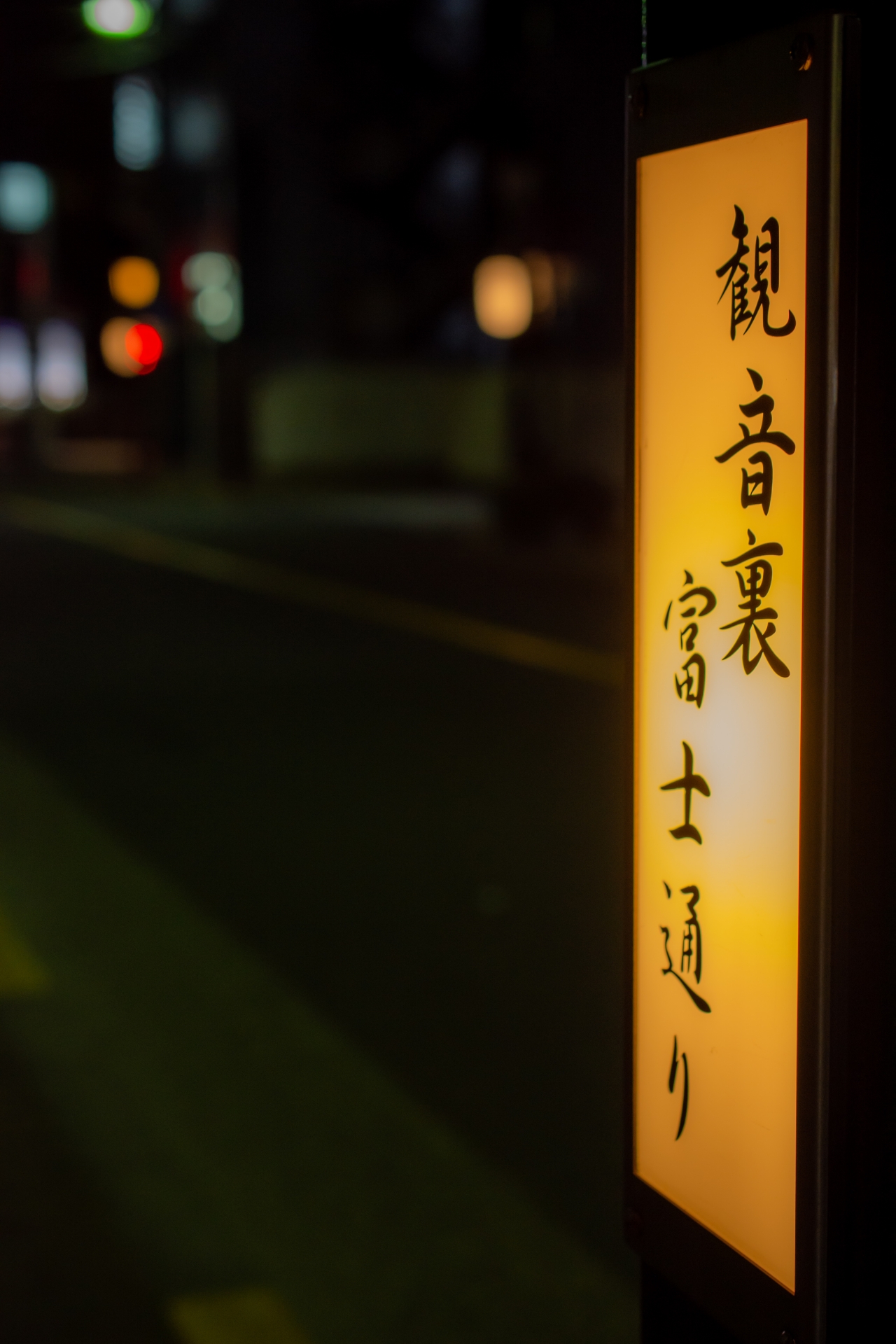
The History of Geisha: From the Edo Period to Modern Day
The Origins and the Rise of Geisha in Pre-Modern Japan
The history of geisha in Japan is a fascinating journey that spans over 400 years, deeply rooted in the cultural evolution of the Edo period (1603–1867). Interestingly, the very first people to call themselves geisha were actually men. Known as hokan or taikomochi, these male entertainers worked in the pleasure quarters of Kyoto and Osaka, providing music, conversation, and comedic relief to guests. To learn more about the male counterpart of geisha, read our guide to Taikomochi: Japan’s Hokan Tradition.
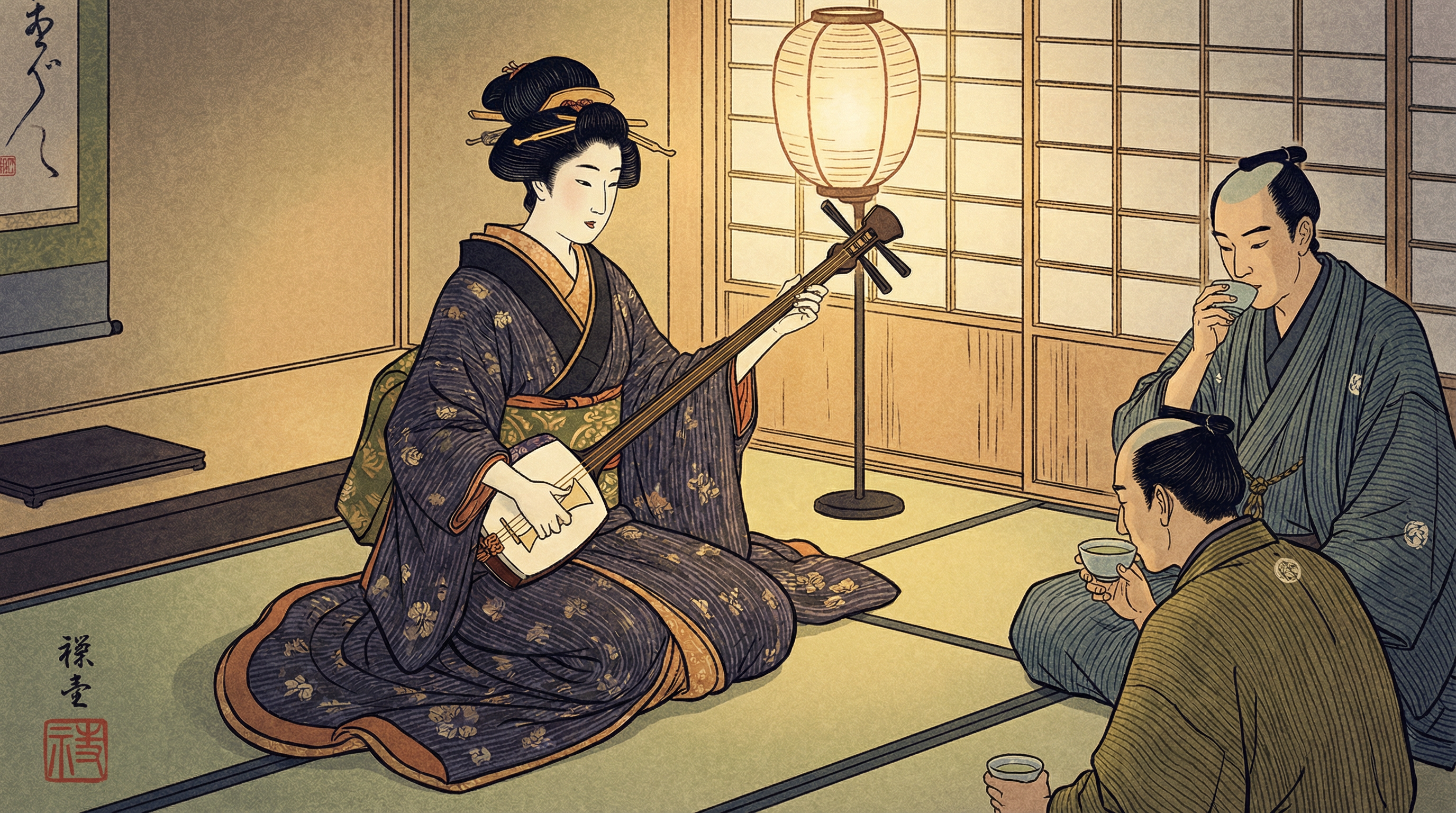
In the 17th century, women began to emerge as geisha in their own right, quickly becoming more popular than their male counterparts. This transition marked the birth of the female professional artist as a distinct social class. It is worth noting that many online sources incorrectly place this shift in the 18th century; historical evidence and the accounts of practitioners in Asakusa confirm that female geisha were already active by the 17th century.
This era was a formative time for the identity of the geisha. As their numbers grew, it became necessary to clearly define their role within Japanese society. Unlike the high-ranking courtesans known as oiran or tayu, who were part of the sex industry, geisha were legally recognized as professional entertainers of the arts. To understand the clear distinction between these two roles, see our dedicated guide on Oiran: Japan’s Courtesans of the Yoshiwara. The government implemented strict regulations to ensure this distinction remained clear. Geisha were forbidden from engaging in the same services as prostitutes, and they were often required to dress more modestly — ironically leading to the refined, iki (chic) style that remains their signature today. The establishment of the first Kenban (registration office) in 1779 helped formalize the profession, turning geisha into a respected class of female artists who were paid for their skills in music, dance, and conversation.
Throughout the 19th century, geisha became the ultimate trendsetters of Japan. They were the ones who popularized new kimono styles, music on the shamisen, and sophisticated ways of speaking. In Tokyo, particularly in districts like Asakusa, geisha culture took on a distinct character. While Kyoto geisha maintained a more aristocratic and graceful air, the geisha of Edo (modern-day Tokyo) were known for their spirited, witty, and sharp persona. This division between the miyabi (elegance) of the old capital and the iki (stylishness) of the samurai capital created a rich diversity within the tradition. Despite the social upheavals of the Meiji Restoration and the subsequent world wars, the geisha persevered, adapting their ancient arts to fit the changing times while steadfastly guarding the secrets of the Flower and Willow World.
Misconceptions Debunked: Are Geisha Part of the Sex Industry?
Perhaps the most persistent myth surrounding geisha is their association with the sex industry. This misconception, often fueled by Western media and historical misunderstandings following World War II, couldn’t be further from the truth. In Japanese history, geisha were legally and socially distinct from courtesans known as oiran. While oiran were high-ranking practitioners of the sex trade, geisha were defined specifically as professional entertainers of the arts.
To maintain this professional boundary, the government established the Kenban, or registration office, in the late 18th century. Geisha were strictly forbidden from engaging in sexual services; their role was to provide music, dance, and intellectual companionship. In fact, if a geisha was caught breaking these rules, she faced severe penalties and could be banned from the profession. Their primary purpose has always been to facilitate social gatherings through refined performance.
Today, in 2026, the distinction remains absolute. True geisha, especially in traditional districts like Asakusa, are respected cultural ambassadors. They spend decades perfecting their craft. While some modern tourist entertainment might mimic the visual aesthetic of a geisha, an authentic experience — focused on the refinement of the spirit and artistic excellence — is a world apart from these superficial imitations.
The Training Process: From Maiko to Professional Geiko
The path to becoming a professional geisha is a rigorous journey of dedication and discipline. In Kyoto, a junior geisha in the early stage of her career is known as a Maiko, while in Tokyo, she is referred to as a Hangyoku. Both have already made their debut as geisha; Hangyoku and Maiko are the first stage of the geisha profession in their respective regions, and they later advance to senior geisha status. This early career period begins when a young woman enters an okiya, a specialized boarding house where she lives under the guidance of an okami-san, or house mother. Here, she develops the foundations of her craft, from the intricate way of wearing a kimono to the art of polite, elegant conversation.
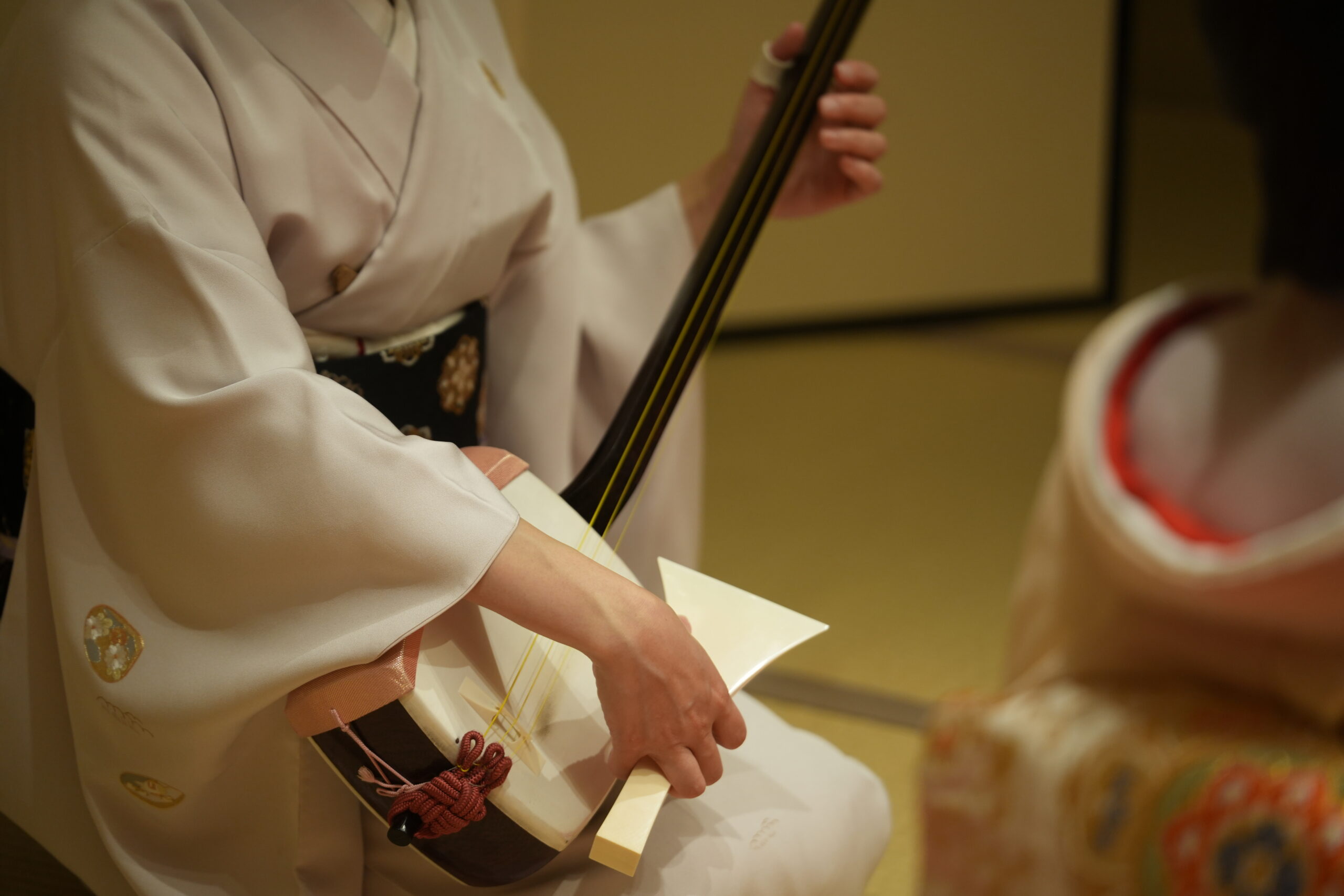
Mastering the traditional arts is the cornerstone of their training. A Maiko or Hangyoku spends hours each day practicing classical Japanese dance, singing, and playing the shamisen — a three-stringed instrument central to geisha performance. To learn more about this remarkable instrument, read our guide to The Shamisen: Japan’s Three-Stringed Lute. They must also become experts in the tea ceremony, ensuring every movement is precise and graceful. This period of early career training typically spans several years, after which a Maiko or Hangyoku advances to senior geisha status — a transition that marks her full mastery and independence as an artist who has dedicated herself to upholding the cultural heritage of the Flower and Willow World.
The Appearance: Makeup, Kimono, and Hairstyles
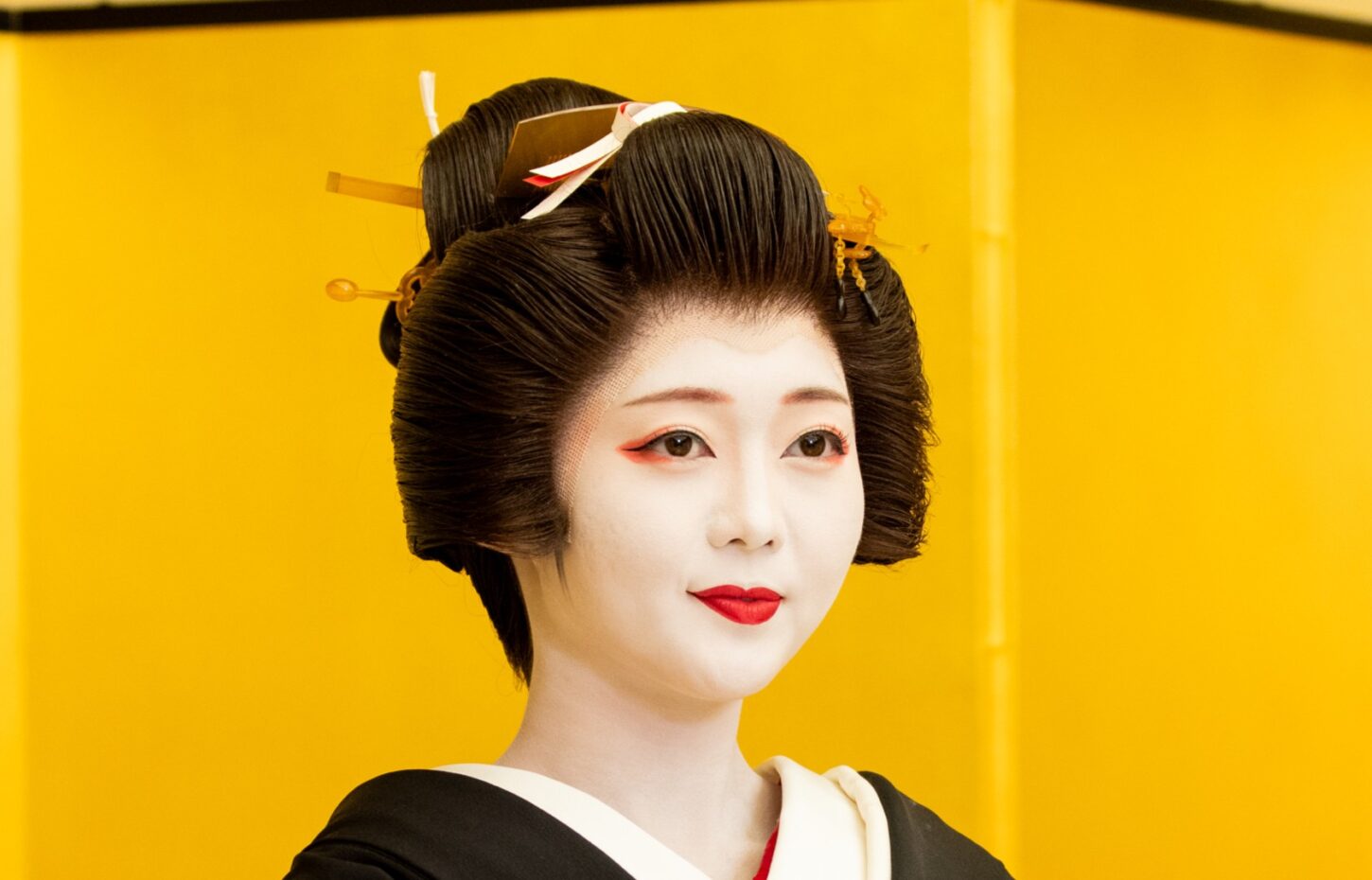
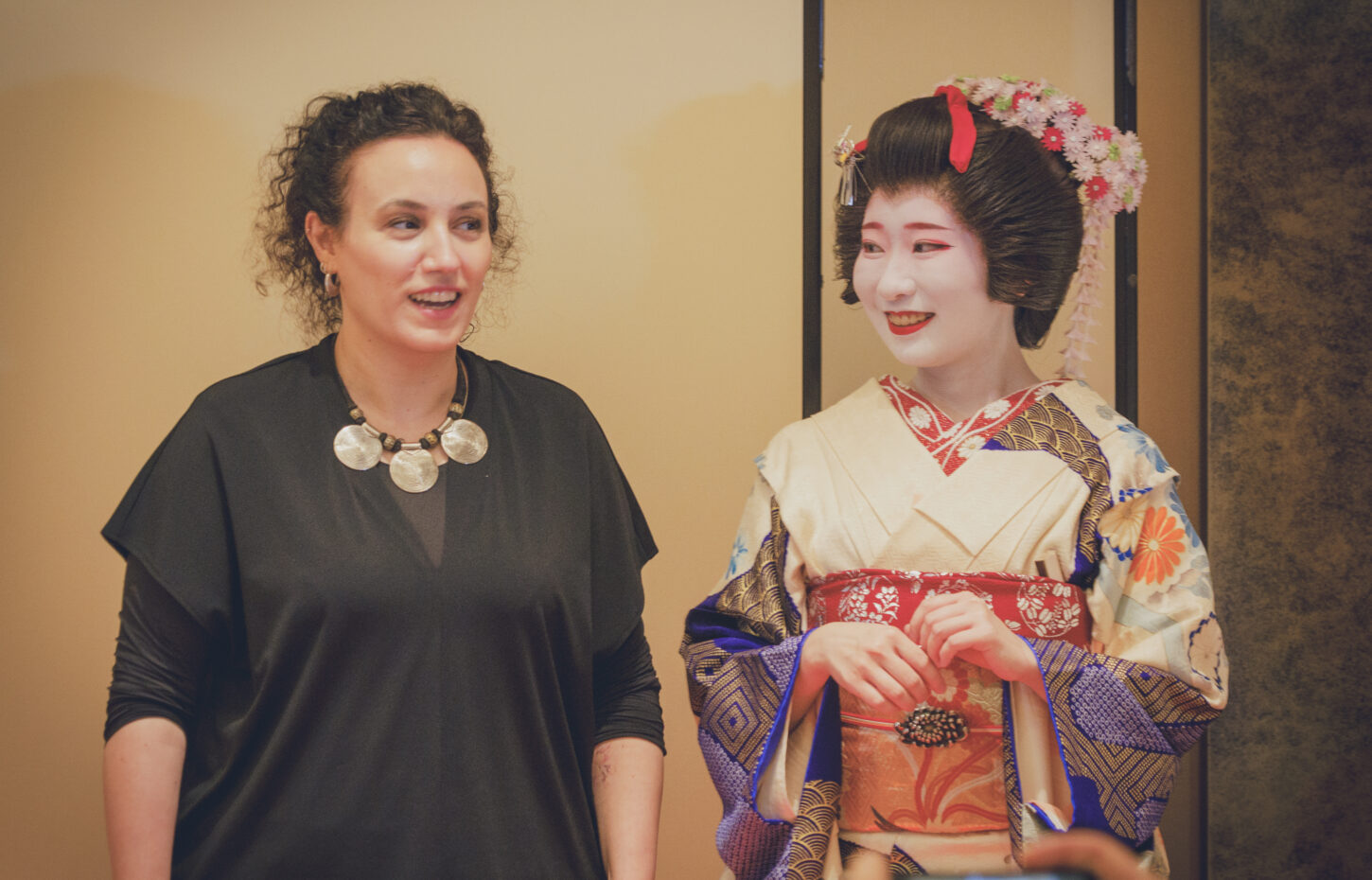
The visual presence of a geisha is a meticulously crafted work of art. The most iconic element is the shiro-nuri makeup — a striking white base traditionally made from rice powder. This was designed to reflect candlelight in dimly lit rooms, making the geisha’s face glow with an ethereal light. Red accents are added to the eyes and lips to symbolize health and vitality.
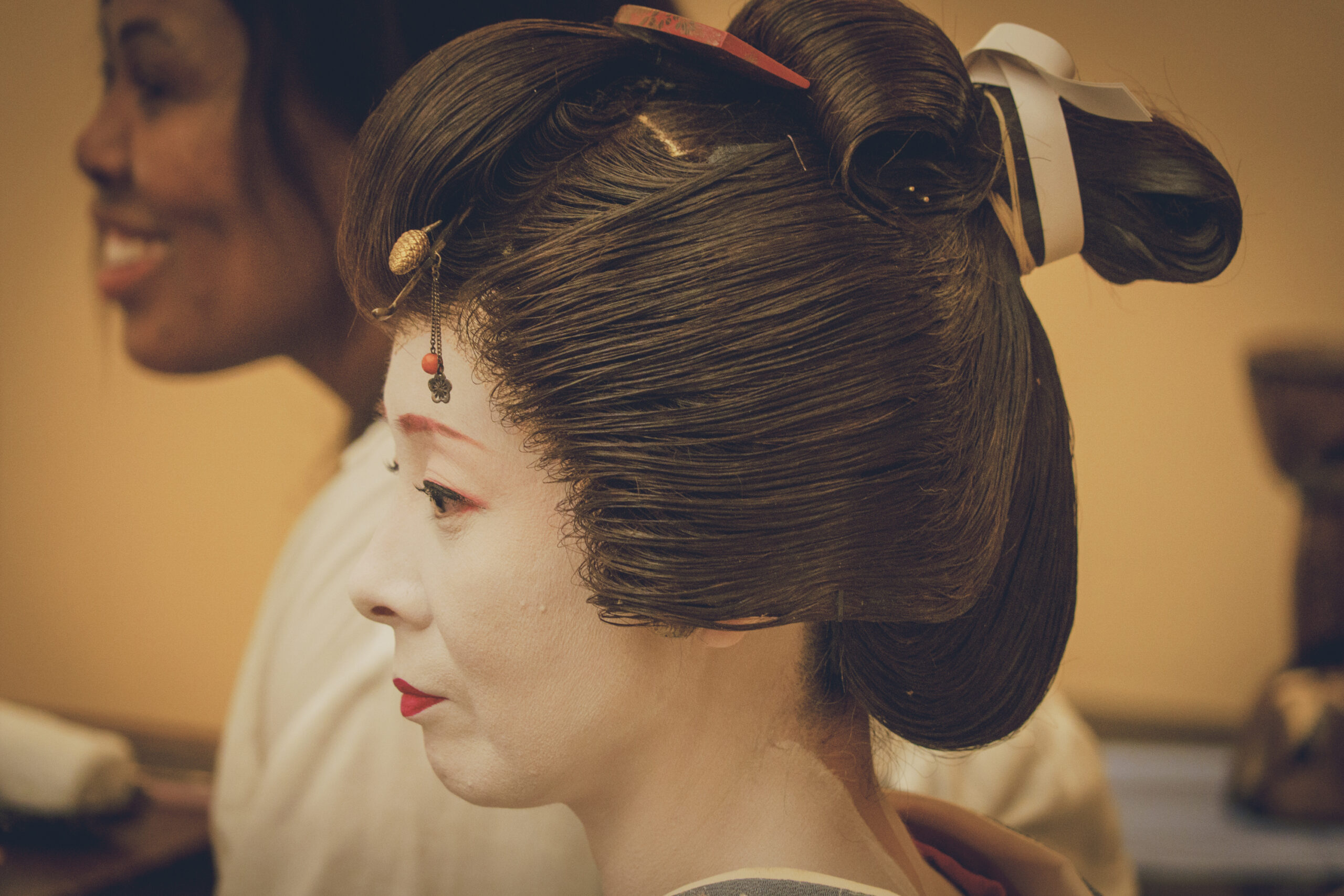
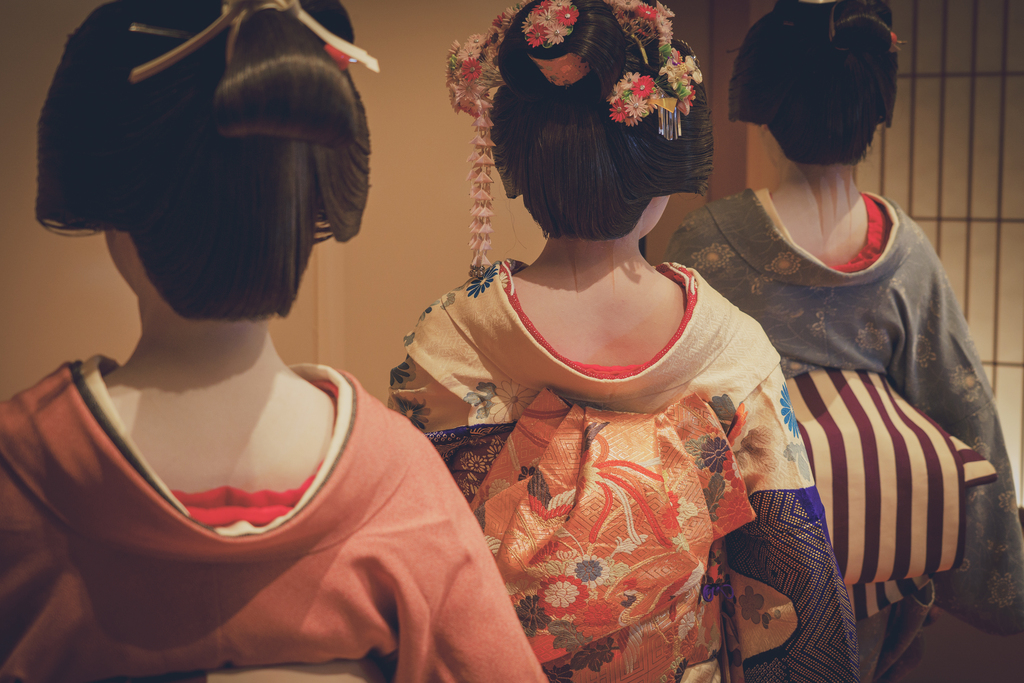
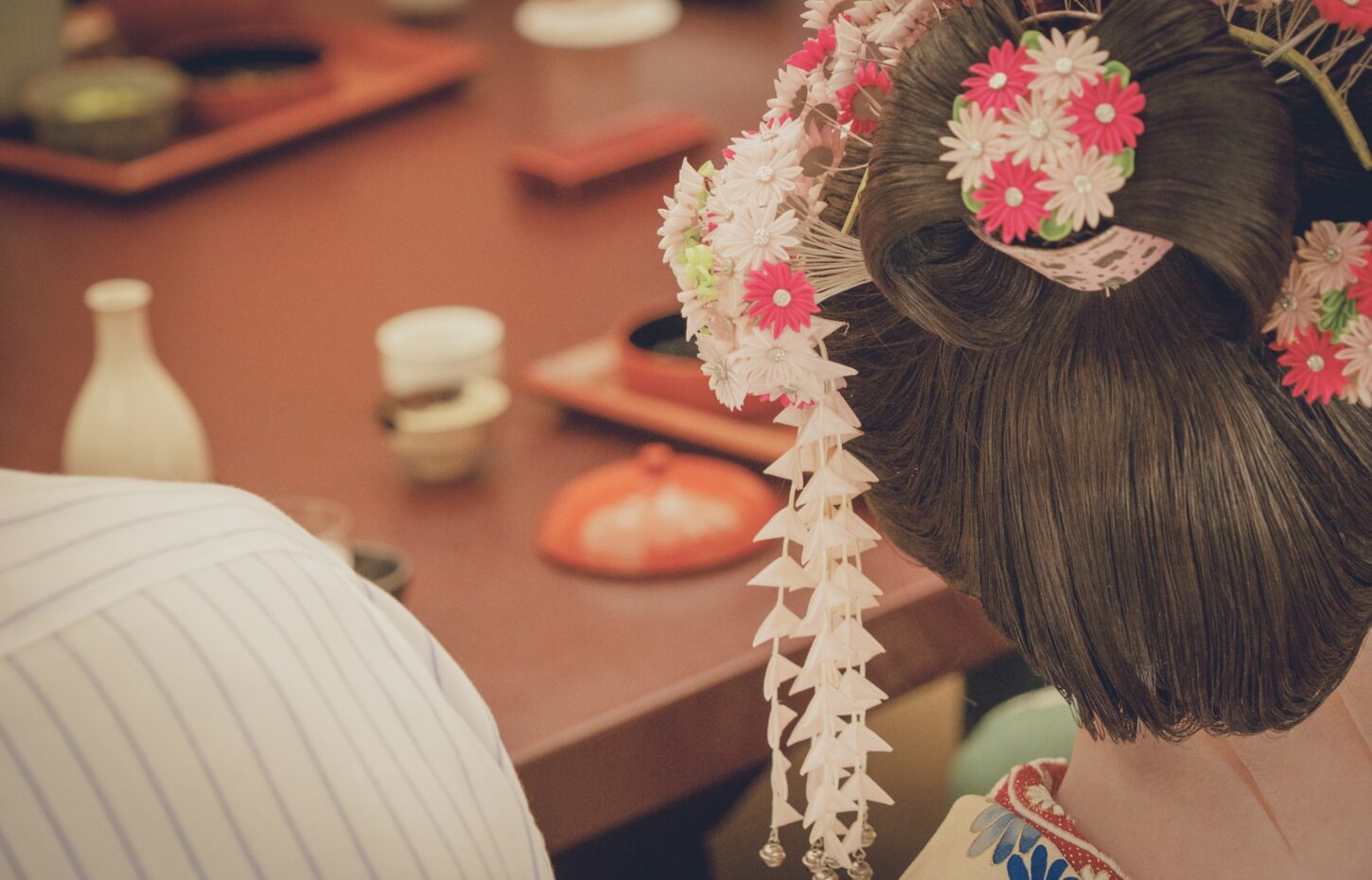
As a geisha matures from an apprentice to a professional, her appearance shifts toward understated elegance. Apprentices wear flamboyant, long-sleeved furisode kimono and elaborate hair ornaments called kanzashi, using their own hair for styles. In contrast, senior geisha wear shorter-sleeved kimono with simpler patterns and typically wear wigs in the traditional shimada style. This evolution reflects their transition from youthful performers to refined masters of their craft. Every detail, from the collar’s angle to the obi’s knot, signifies her status and mastery.
For a deeper look at the artistry behind geisha makeup and its symbolism, visit our dedicated guide on Geisha Makeup: Symbolism & Tradition.
Experience the Flower and Willow World in Asakusa
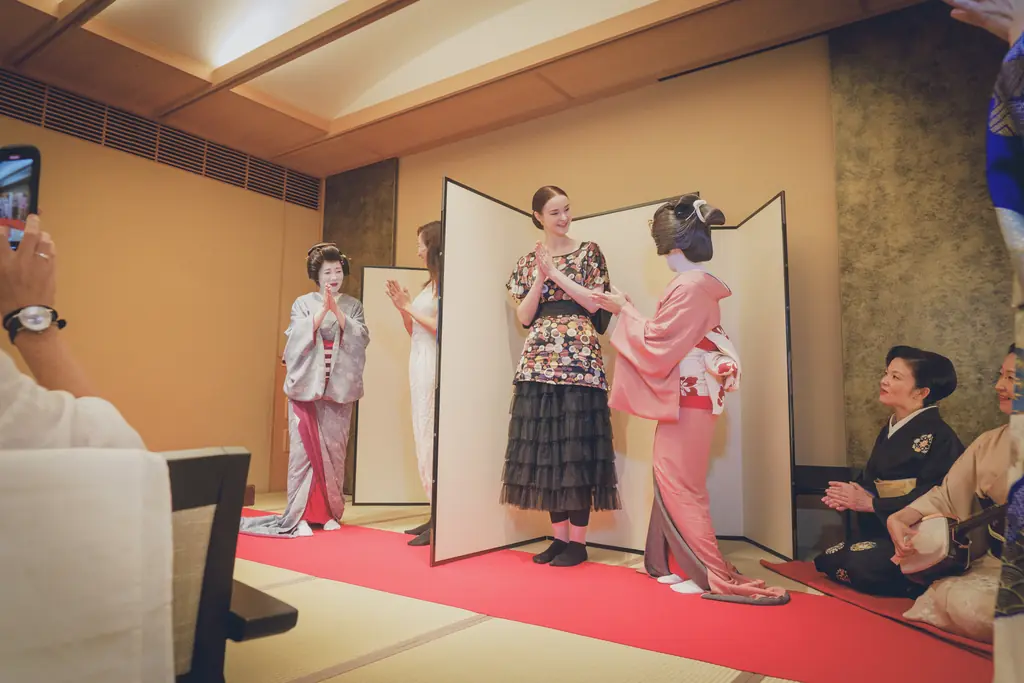
At Miyakodori — Asakusa’s only remaining machiai-chaya — you can enjoy a private ozashiki (geisha banquet) with traditional dance, live shamisen, and classic parlor games. No introduction required. English interpreter included.
Geisha Women in Modern Japanese Society
In modern day Japan, particularly as we look toward the year 2026, the role of geisha women in society has shifted from being exclusive entertainers for a closed circle of elite men to becoming prominent cultural ambassadors of the country. Today, geisha are professional women who actively work to bridge the gap between ancient traditions and contemporary life. This international influence is more visible than ever, with many districts in cities like Tokyo and Kyoto adapting to meet the curiosity of global tourists. Many younger geisha have even started to learn English to facilitate better conversation with international guests, ensuring that the essence of Japanese culture is accurately translated and shared.
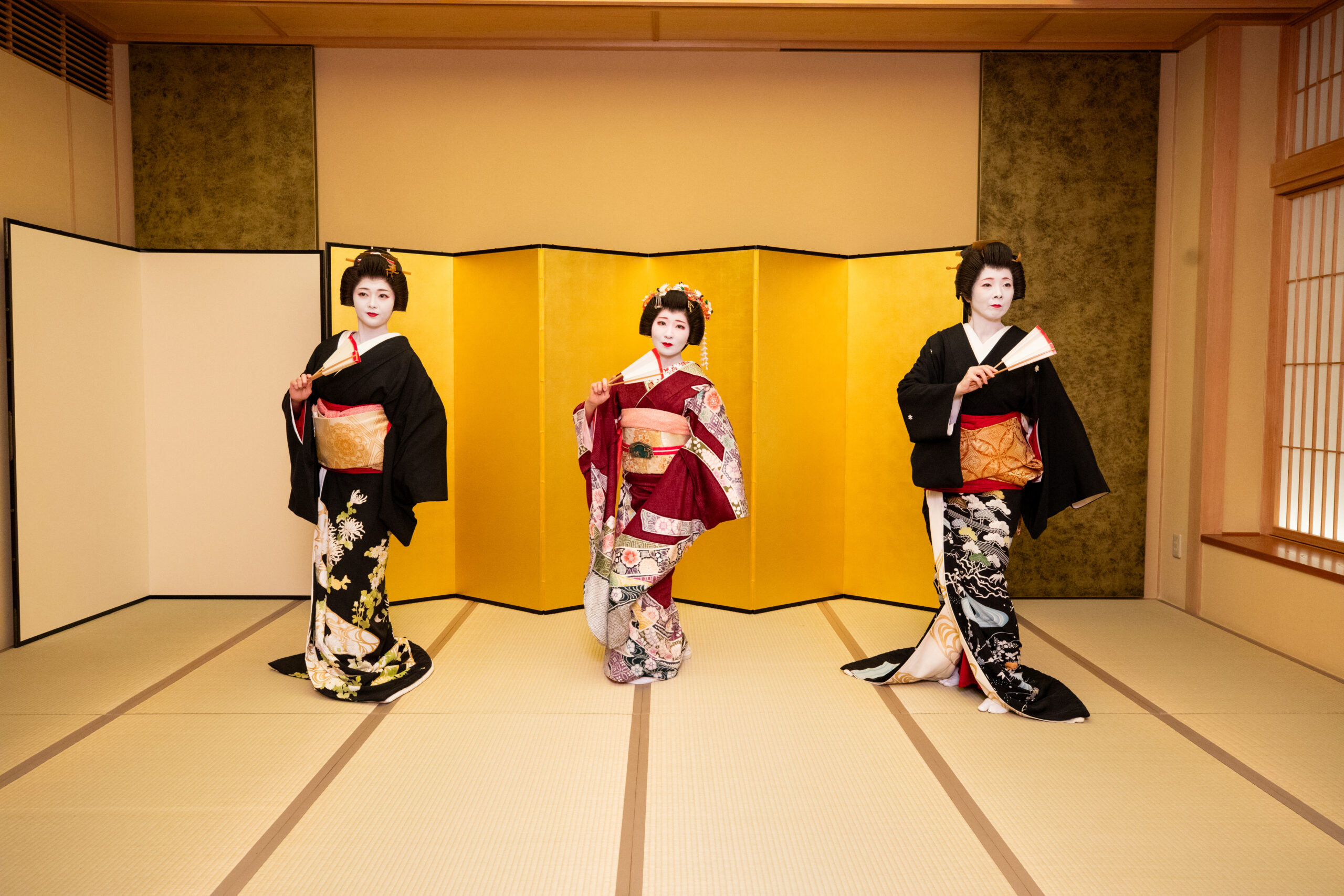
The influence of digital media has also played a major role. While the privacy of the teahouses and restaurants is still highly valued, the use of social media and online platforms has allowed the public to see a glimpse of their dedicated training and daily life. This transparency helps debunk old myths and attracts a new generation of women who wish to pursue this professional path. Today, attending a dinner with a geisha is not just a luxury for the wealthy; it is a profound cultural experience that allows people from all over the world to participate in a living history. This evolution ensures that the flower and willow world remains a vibrant and respected part of modern Japanese society, providing a unique service that honors the past while embracing a global future.
Where to Experience Geisha Culture Today
Kyoto vs. Tokyo: A Deep Dive into Asakusa and Miyakodori
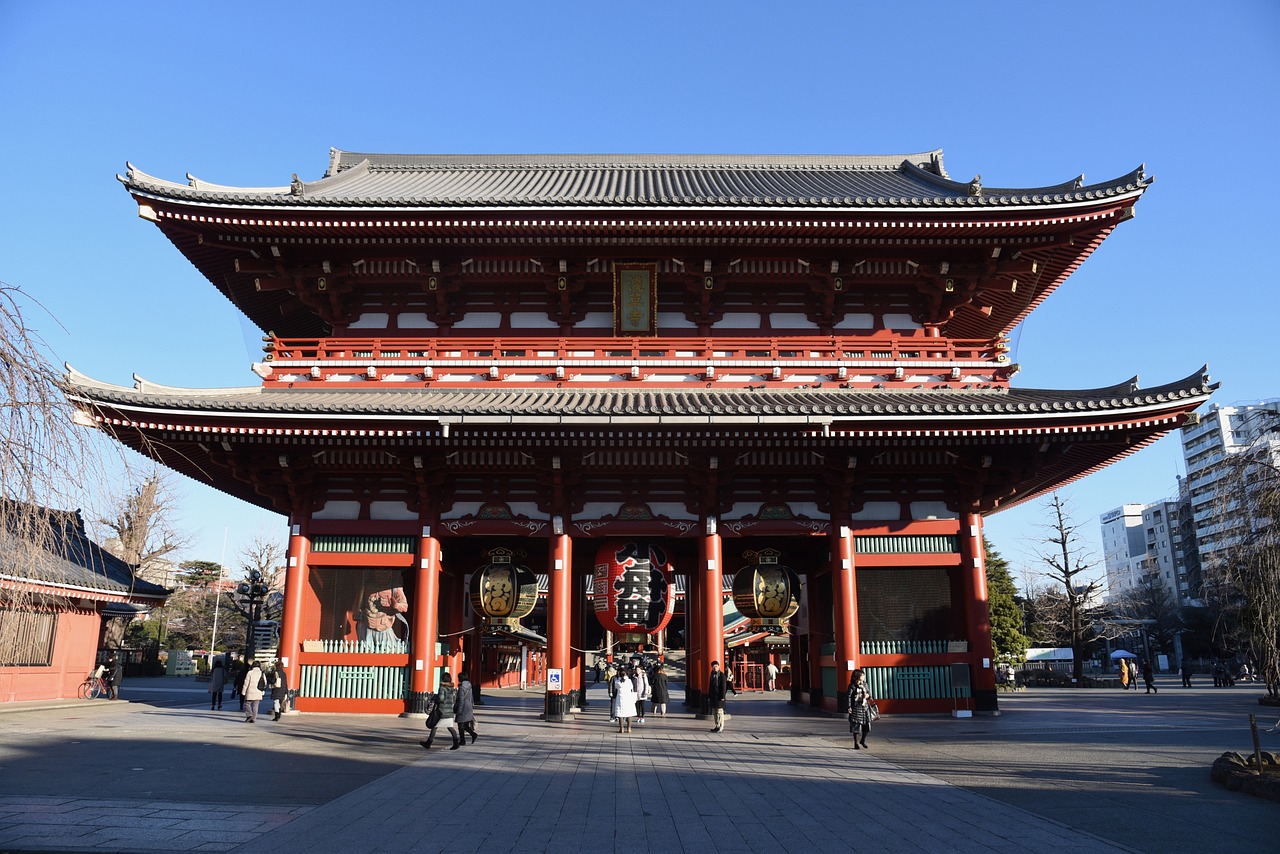
When travelers plan to see geisha in Japan, their minds often drift to the cobblestone streets of Gion in Kyoto. While Kyoto is undoubtedly the historic capital of the Miyabi (courtly elegance) style, Tokyo offers a uniquely vibrant and welcoming alternative: Asakusa. For over 400 years, since the beginning of the Edo period, Asakusa has been a thriving center of culture and entertainment, located right next to the iconic Senso-ji Temple. Unlike the highly exclusive districts of Kyoto where “Ichigensan Okotowari” (no first-time customers without an introduction) is the strict rule, Asakusa has traditionally been an “open” Hanamachi, welcoming a diverse range of ages, industries, and nationalities.

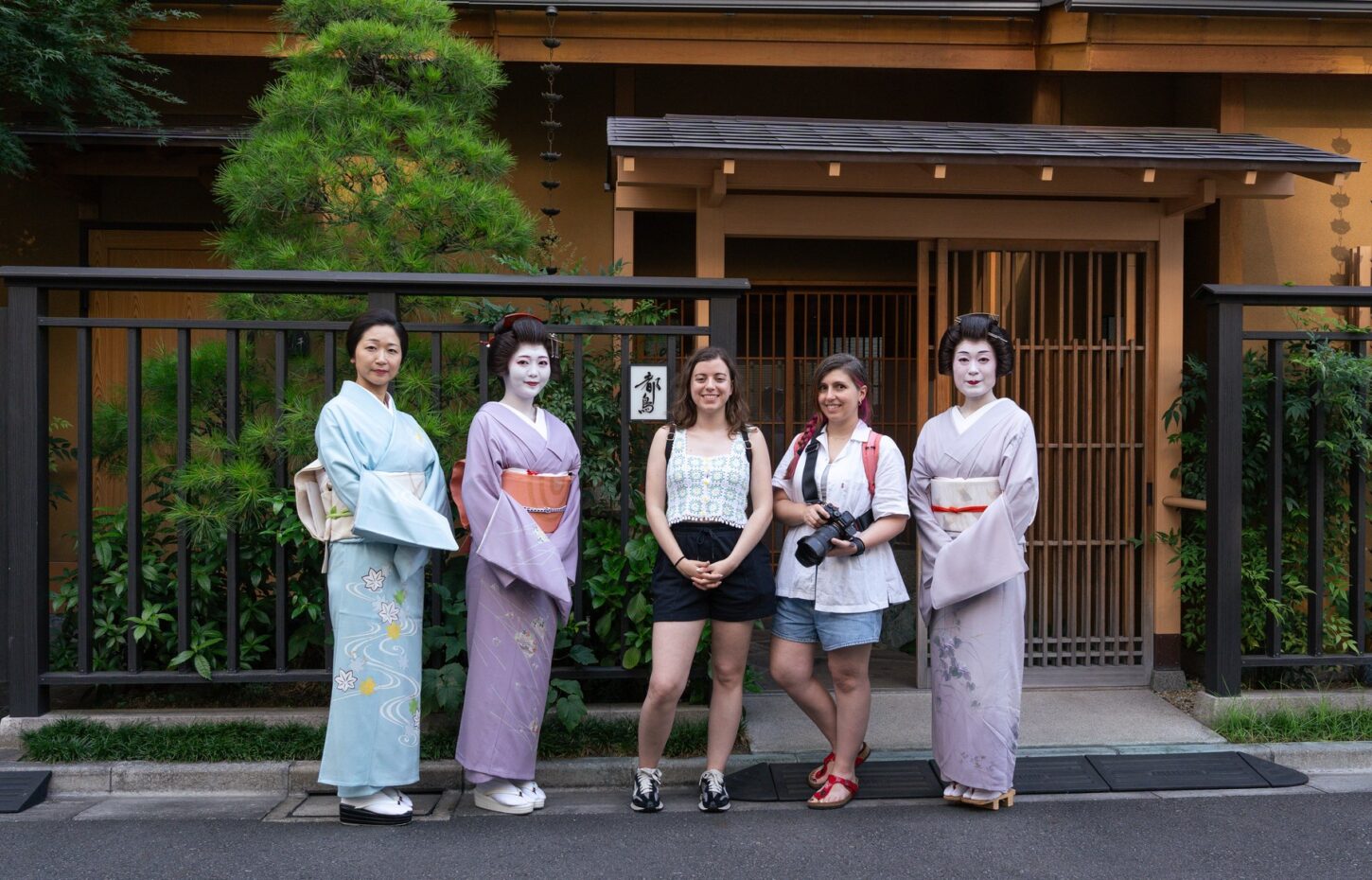
At the heart of this district lies Miyakodori, a legendary establishment founded in 1950. While many traditional restaurants (ryotei) focus primarily on the cuisine, Miyakodori is the only remaining “Machiai-chaya” in Asakusa. This specialized form of tea house focuses on the art of playing with geisha, ensuring that the cultural performance is the centerpiece of the evening. The name Miyakodori itself is derived from a famous poem by Ariwara no Narihira in “The Tales of Ise,” reflecting a deep desire to connect with loved ones — a sentiment that the hostesses extend to every guest who walks through their doors.
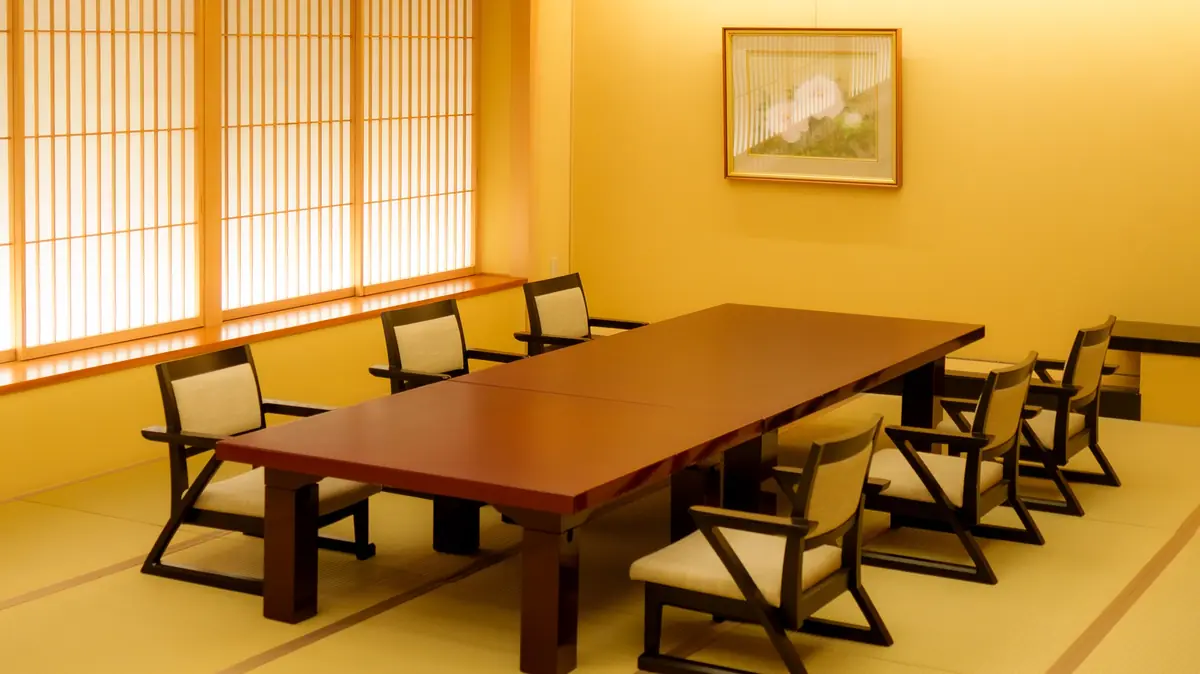
For international travelers and professional business groups, Miyakodori provides an unparalleled level of accessibility. They offer private rooms where guests can enjoy seasonal Japanese cuisine while being entertained by the captivating dances and shamisen music of authentic geisha (kaiseki is included in the 3-hour plan; available as an option for shorter plans). These are not “costume” entertainers often seen in tourist traps; they are professional women who have dedicated years to their training. In 2026, Miyakodori continues to bridge the gap between tradition and the modern world by offering features like halal-friendly options and English-speaking assistance, making the Flower and Willow World accessible to everyone. Experience the soul of Edo in a space where time seems to stand still, and the art of Japanese hospitality is performed at its highest level.
For a closer look at the history and character of this unique district, read our guide on the Asakusa Geisha District. If you want to explore beyond Asakusa, our overview of the geisha districts in Tokyo covers Shimbashi, Kagurazaka, Mukojima, and the other active hanamachi across the city.
How to Arrange a Geisha Experience as a Tourist
Booking an authentic geisha experience in 2026 is more accessible than ever, especially at welcoming establishments like Miyakodori in Asakusa. To begin, visit their official website or use a trusted online site for reservations. Unlike the rigid privacy rules of some Kyoto districts, Asakusa encourages international guests to participate. When you book your dinner, feel free to mention any dietary needs, as modern restaurants now provide halal-friendly options. During the evening, follow basic etiquette: never touch the geisha’s silk kimono and always ask before taking a photo. While the setting is formal, the true spirit of the performance is joy and connection. Arriving on time shows respect for the years of professional training these women have completed. By following these simple steps, you can relax and enjoy the unique games and music that define the timeless flower and willow world.

For a full overview of the best geisha experiences available across Japan, see our guide to Best Geisha Experiences in Japan.
Deep Knowledge: The Arts, Language, and Rules of the Flower and Willow World
To truly appreciate geisha women in Japan, one must understand the depth of their artistic dedication. A geisha is not merely a hostess; she is a professional who has committed her life to Gei (the arts). This involves mastering complex disciplines such as Nagauta (long epic songs) and Kouta (short ballads), accompanied by the three-stringed shamisen. Their dances, often based on seasonal themes, are part of the Nihon Buyo tradition, where every finger movement and glance carries a specific meaning. In districts like Asakusa, the training is particularly rigorous, focusing on the Iki (chic and spirited) style that defined the Edo period.
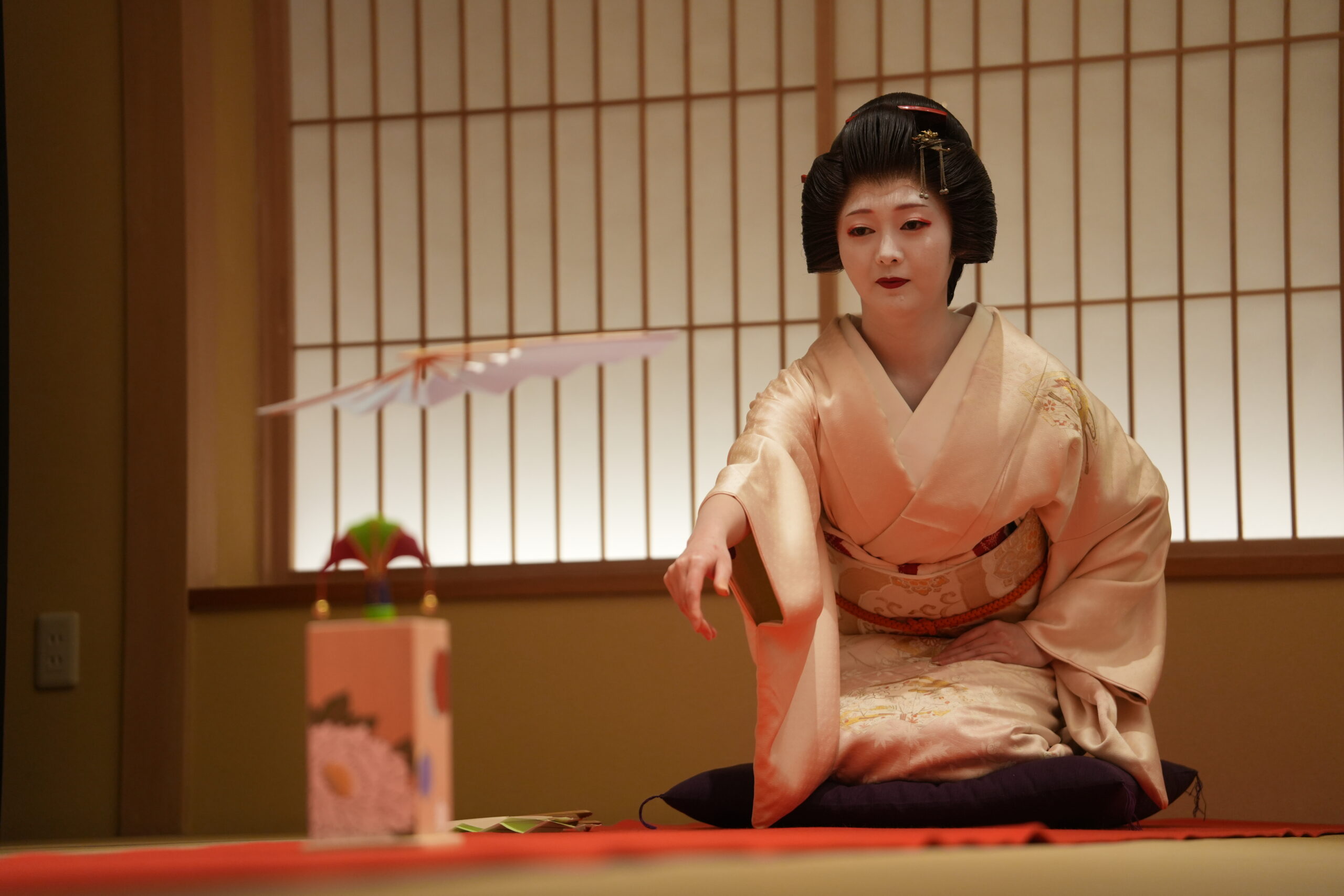
Furthermore, the social structure of the Hanamachi (flower town) is governed by strict, unwritten rules. Central to this is the Kenban, the registration office that manages the geisha’s schedules and ensures the high standards of the profession are maintained. Even the language used in the Ozashiki (geisha banquet) parlor is a specialized form of polite Japanese, designed to make every guest feel at ease while maintaining a sense of refined distance. Understanding these layers of knowledge transforms a simple dinner into a profound cultural immersion, revealing the resolve and pride these women have in preserving a 400-year-old living history.
To experience the ozashiki (geisha banquet) games yourself — including the famous Konpira Fune Fune and Tora Tora — explore our guide to Ozashiki Games: Traditional Geisha Play. For a deeper exploration of the karyukai — the broader social world that encompasses hanamachi, kenban, okiya, and ochaya — see our dedicated guide to Karyukai: The Flower and Willow World of Geisha. If you’ve encountered geisha through Memoirs of a Geisha and want to know what real geisha are actually like, read our guide to Memoirs of a Geisha: What the Film Got Wrong.
Conclusion: The Future of the Flower and Willow World
As we look toward the future of geisha women in Japan in 2026 and beyond, the challenge remains to balance ancient traditions with the demands of a modern, globalized world. While the presence of commercialized entertainment often mimics the visual style of the geisha, establishments like Miyakodori in Asakusa stand as guardians of the authentic experience. The true value of this culture lies not just in the makeup or the kimono, but in the weight of 400 years of history and the relentless dedication of the women who call this their life’s work. By choosing to visit a traditional machiai-chaya, guests participate in the vital preservation of a living art form. The goal for the next generation is a world where aspiring geisha can find a professional path, and where guests from all walks of life can experience the genuine joy of the ozashiki (geisha banquet). We invite you to step into this timeless world at Miyakodori, where the spirit of Edo continues to flourish through dance, music, and the heart of Japanese hospitality.
Frequently Asked Questions about Geisha
Is there a difference between a Geisha and a Maiko?
Yes. A Maiko (Kyoto) or Hangyoku (Tokyo) is a junior geisha in the early stage of her career — already a full member of the profession, recognizable by her longer sleeves and more elaborate hair ornaments. Over time she advances to senior geisha (Geiko in Kyoto) status, deepening her mastery of dance, music, and the art of hospitality.
Can tourists really book a session with a real Geisha?
Absolutely. In districts like Asakusa, establishments like Miyakodori welcome international guests, providing a rare opportunity to experience authentic traditional entertainment in a private, welcoming setting.
Are there rules for taking photos of Geisha?
Respect is paramount. You should always ask for permission before taking a photo. In a private ozashiki (geisha banquet) setting, the host will usually guide you on the appropriate times to capture memories.
At what age does a woman usually start her studies to join the world of geisha, and what talents are considered essential?
Most women who pursue this path begin their training after completing their general education. The process requires years of dedicated study across numerous traditional art forms. Dancing and playing musical instruments are essential skills, but calligraphy and the tea ceremony are also central to the curriculum. This long period of preparation ensures that when they finally take the stage for large performances or private ozashiki (geisha banquet) parties, they can provide a complete and beautiful experience for every guest.
Can foreign travelers attend geisha events in different areas like Tokyo or Kanazawa, and is there a specific policy for the fee?
Yes, foreign visitors can enjoy these special events in various places. It is important to note that geisha are professional artists, and their work is entirely separate from prostitution, a fact often clarified in modern cultural articles to correct old misconceptions. While some districts were guided by strict rules in the past, many houses today are happy to entertain international clients. The fee is usually a set amount that includes the meal and the company of the performers. It is a meaningful way to create personal stories and beautiful memories during your stay. Most reputable locations have a clear policy on pricing to ensure a transparent and high-quality service for every guest.
What are geisha, exactly, and why does the term matter?
Geisha are professional Japanese entertainers trained in classical arts including dance, shamisen music, singing, and the art of conversation. The word itself means person of the arts (芸者: gei = art, sha = person). Understanding what geisha are — and are not — matters because the term is often misused or confused with entirely different historical roles. True geisha from Japan are skilled cultural practitioners who have dedicated years to their craft. In Kyoto they are known as geiko, while junior geisha are called maiko (Kyoto) or hangyoku (Tokyo). Geisha from Japan continue to perform today in active hanamachi districts across the country, preserving a living tradition that is over 400 years old.
Summary: The Ultimate Guide to Geisha in Japan
This comprehensive guide has explored the 400-year evolution of geisha women in Japan, from their origins in the Edo period to their modern role as international cultural ambassadors. We have debunked common myths, explained the rigorous training process, and highlighted the importance of authenticity in the flower and willow world. Whether you are interested in the fine arts of dance and shamisen or the refined spirit of Japanese hospitality, experiencing geisha culture provides a profound connection to Japan’s heritage. For those seeking the most authentic and open experience, Asakusa’s Miyakodori remains the premier destination to witness this living history.
References
- PR TIMES: お座敷き茶屋について — prtimes.jp
- 浅草観光連盟: 都鳥について — asakusa.gr.jp
- MY TOKYO(東京都公式): 浅草の伝統文化 — my.metro.tokyo.lg.jp
- 浅草見番: 浅草の芸者について — asakusakenban.com
Ready to Experience an Authentic Geisha Banquet in Tokyo?
Miyakodori in Asakusa is the only remaining machiai-chaya where you can enjoy a true ozashiki (geisha banquet) — complete with traditional dance, live shamisen, and parlor games. Open to all guests. English interpreter included. Online reservation available.


- Japanese Geisha Cup Game: Rules and How to Play Konpira Fune Fune
- 12 Best Tokyo Dinner Places: A Complete Guide (2026)
Geisha Pictures: A Comprehensive Visual Guide and Stock Photo Resources
Kanzashi: A Guide to Japanese Hair Ornaments
Geisha Etiquette in a Tatami Room: What to Know Before You Go
Tips for Livening Up an Oseki Play? Rules and How to Play Explained ~Tora Tora Edition~
Japanese vs Korean Culture: Social Differences, Arts and Traditions
No comments yet.