



Is a Geisha Experience in Tokyo Worth It? An Honest Answer from an Asakusa Teahouse
Yes, a geisha experience in Tokyo is worth it if you want to sit in the same room as working geisha, talk with them and join in the games. If all you want is a short look at a dance on a stage, a public show may suit you better, and this guide says plainly who should choose something else.
We are Miyakodori, a machiai-chaya in Asakusa, founded in 1950. Geisha are called to our tatami rooms to dance, play the shamisen, talk and play games with guests, a gathering known as an ozashiki. We hope you book with us, and that is a fair reason to read any guide like this one with care. So we have written it the way we would answer a guest who asked us this question before booking. It says what you get and who should look elsewhere, and it gives you a way to judge any geisha experience, ours included.
Whether it is worth it depends on what you compare it with. Next to another restaurant meal, almost any special experience looks costly. Next to the best things you will do on a trip to Japan, the useful questions are different. How close do you get to the performers, and can you talk with them? Do you take part, or just watch? The sections below use those questions. If you are weighing it against kabuki or sumo, our comparison of traditional entertainment in Tokyo sets them side by side.
Who a Geisha Experience Is Worth It For
We think of an ozashiki as an experience about people more than places, and these are the guests it suits best.
- You want one experience on your trip that is about people rather than places. Temples and museums show you a culture; an ozashiki puts you in a room with the people who carry it on.
- You are curious about the lives behind the white makeup. The questions guests ask most are how long it takes to become a geisha, why she chose this life and why the makeup is white, and the geisha answer in person. Our article on how to become a geisha has the background.
- You are marking an occasion or traveling with others. Groups are usually three to six people, most often about four, and overseas guests often come for an anniversary or a trip with family. The games draw everyone in. For two, see our guide to romantic things to do in Tokyo.
- You worry about etiquette. When guests ask what manners they need, our answer is to wear socks. Putting guests at ease is part of a geisha’s work, and the guests we see tend to arrive expecting a stiff room and leave relaxed.
- You are traveling alone. Every private plan can be booked by a single guest.
Who Should Choose Something Else
A fair answer includes the guests we are not the right choice for. If one of these rows describes you, the better fit is in the middle column.
| If you mainly want | A better fit | Why |
|---|---|---|
| To see maiko and geiko in their own districts | Kyoto | The old districts, their theaters and the spring and autumn dances are there. Our guide to geisha districts in Japan lists them. |
| A short look at a dance, and nothing more | A public stage show | You watch from a seat and leave when it ends. An ozashiki adds conversation and games, and the geisha expect you to join in. Our guide to seeing a geisha in Tokyo compares the options. |
| To dress up as a maiko and be photographed | A makeover studio | A makeover is about the costume and the photograph. An ozashiki is about meeting the geisha in the room. |
| A quiet dinner where you just listen | A restaurant or a kaiseki dinner | An ozashiki is lively. The geisha talk with you and invite you into the games. |
What You Actually Get
Chikage, the Okami (proprietress) of Miyakodori, has watched guests’ faces at the ozashiki for years. She says foreign guests watch the dance intently, listen to the conversation with interest and enjoy the games. Those are the three parts of the visit, and each one answers the question of value in its own way.
The Dance and Shamisen, Up Close
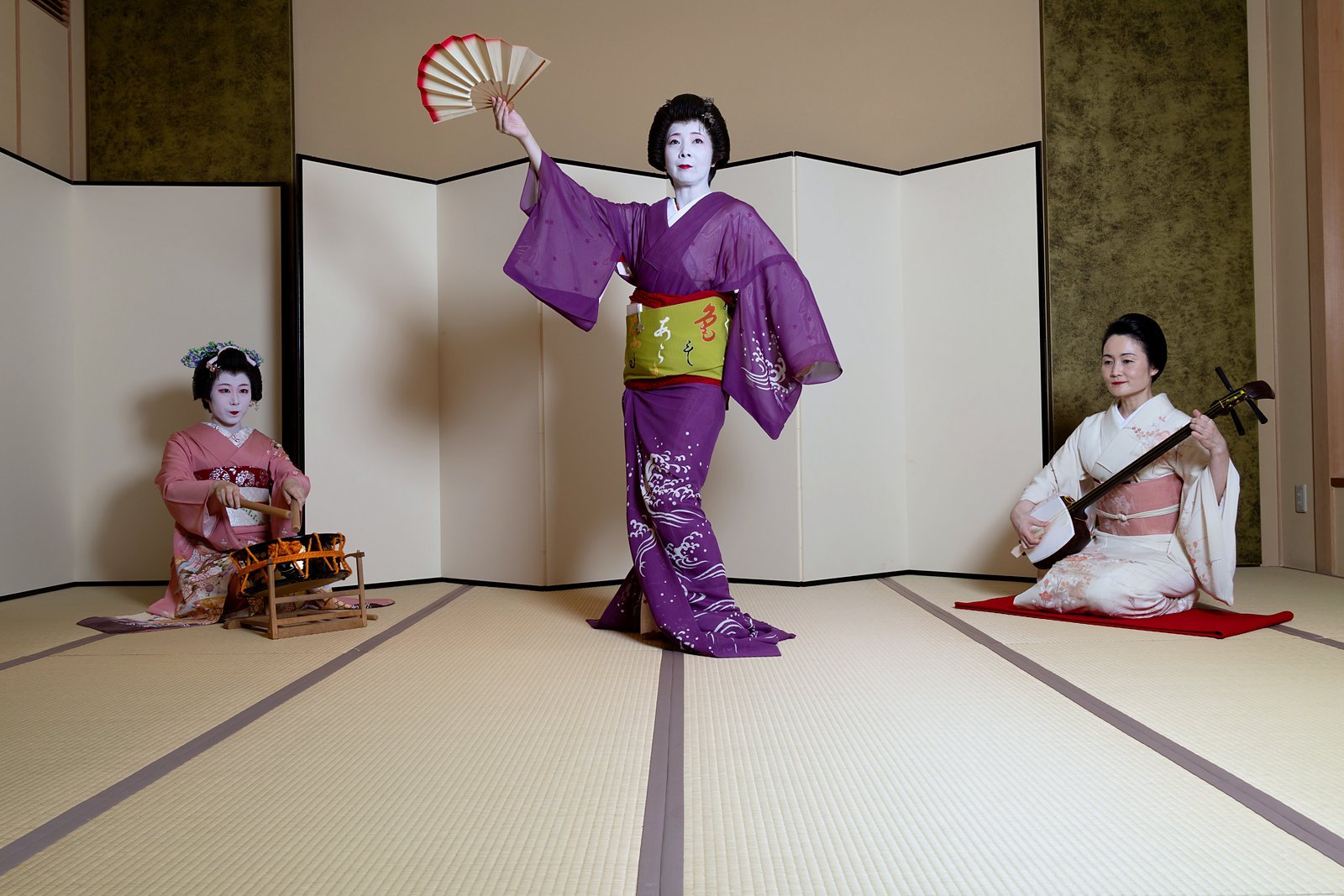
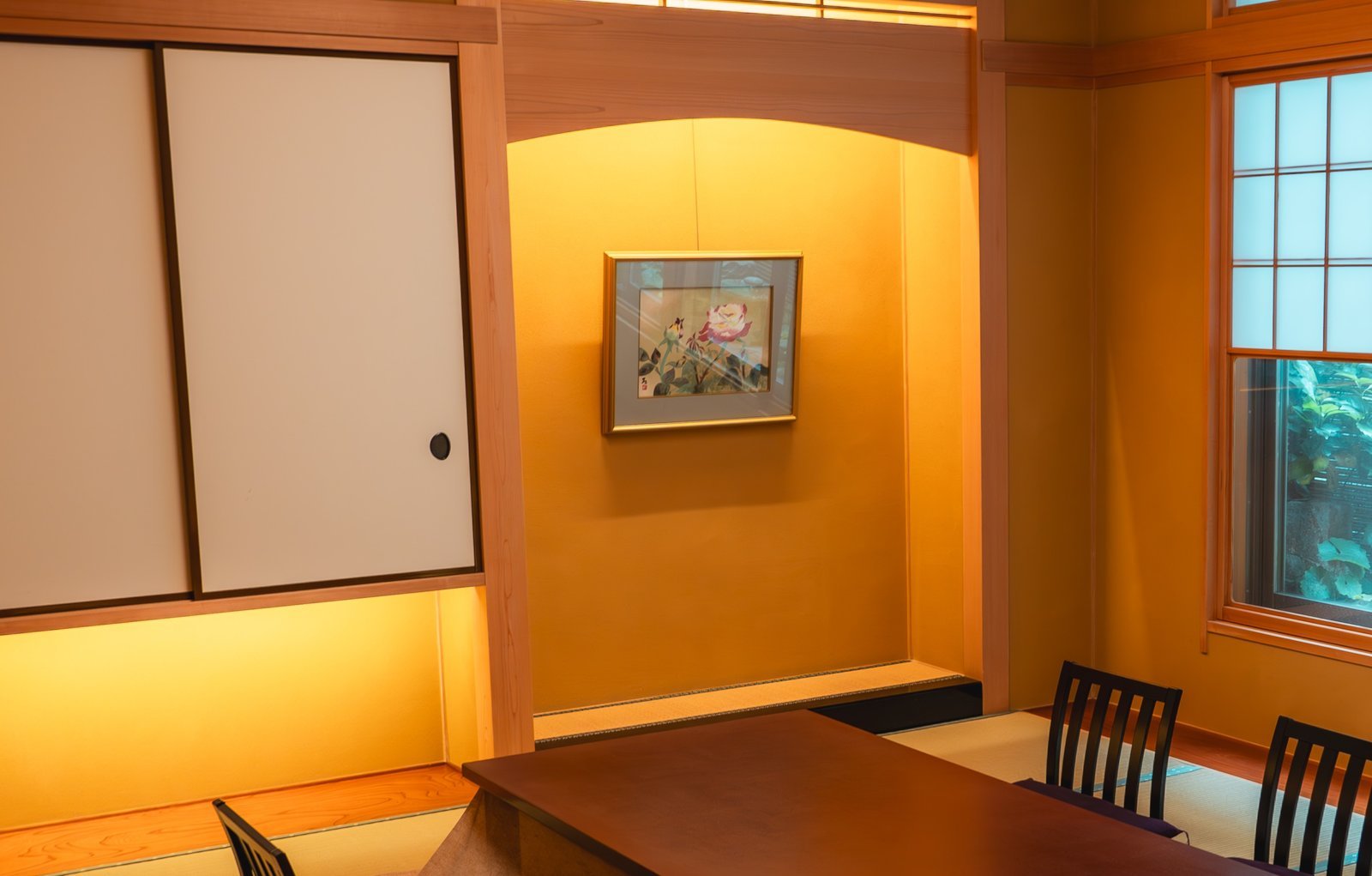
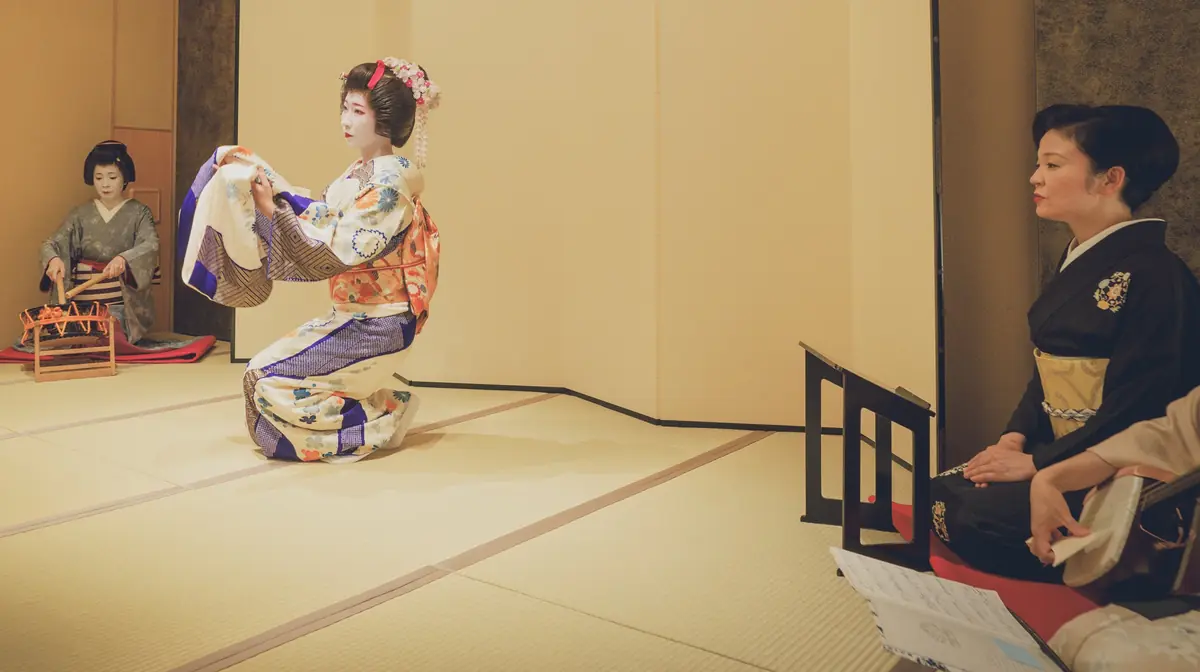
The dance is short, and it happens in your room. A typical ozashiki includes three or four songs, about ten to fifteen minutes in all, danced in the same room as you to live shamisen and singing rather than a recording. When the shamisen starts, guests tend to sit up a little; when the last song ends, the room is still for a moment before the applause. We do not dim the lights, because the dance is part of the room, not a stage performance.
Know this before you book: the dance is a small part of the visit, and most of the time goes to conversation and play. If a dance is all you want, a stage show gives you that without the rest. The rest is the part we would ask you to weigh. Our article on geisha dance describes the pieces you may see.
Conversation with the Geisha
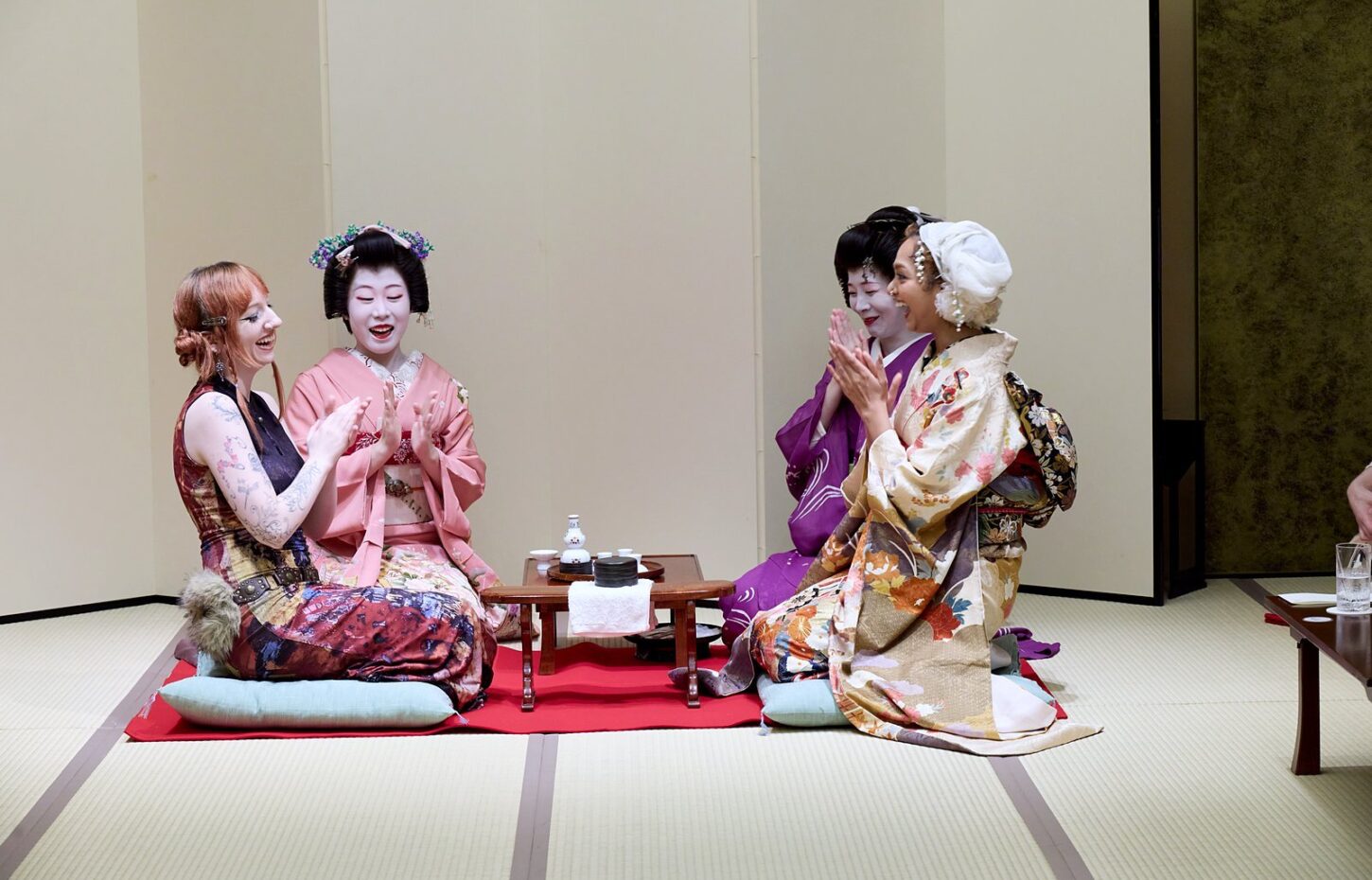
At a private ozashiki the geisha stay in the room throughout, so the visit is a conversation as much as a performance. An English-speaking interpreter translates in both directions, and you can ask what you like. Overseas guests tend to ask about the culture behind what they see, and the geisha are practiced at putting a first-time guest at ease.
The Games
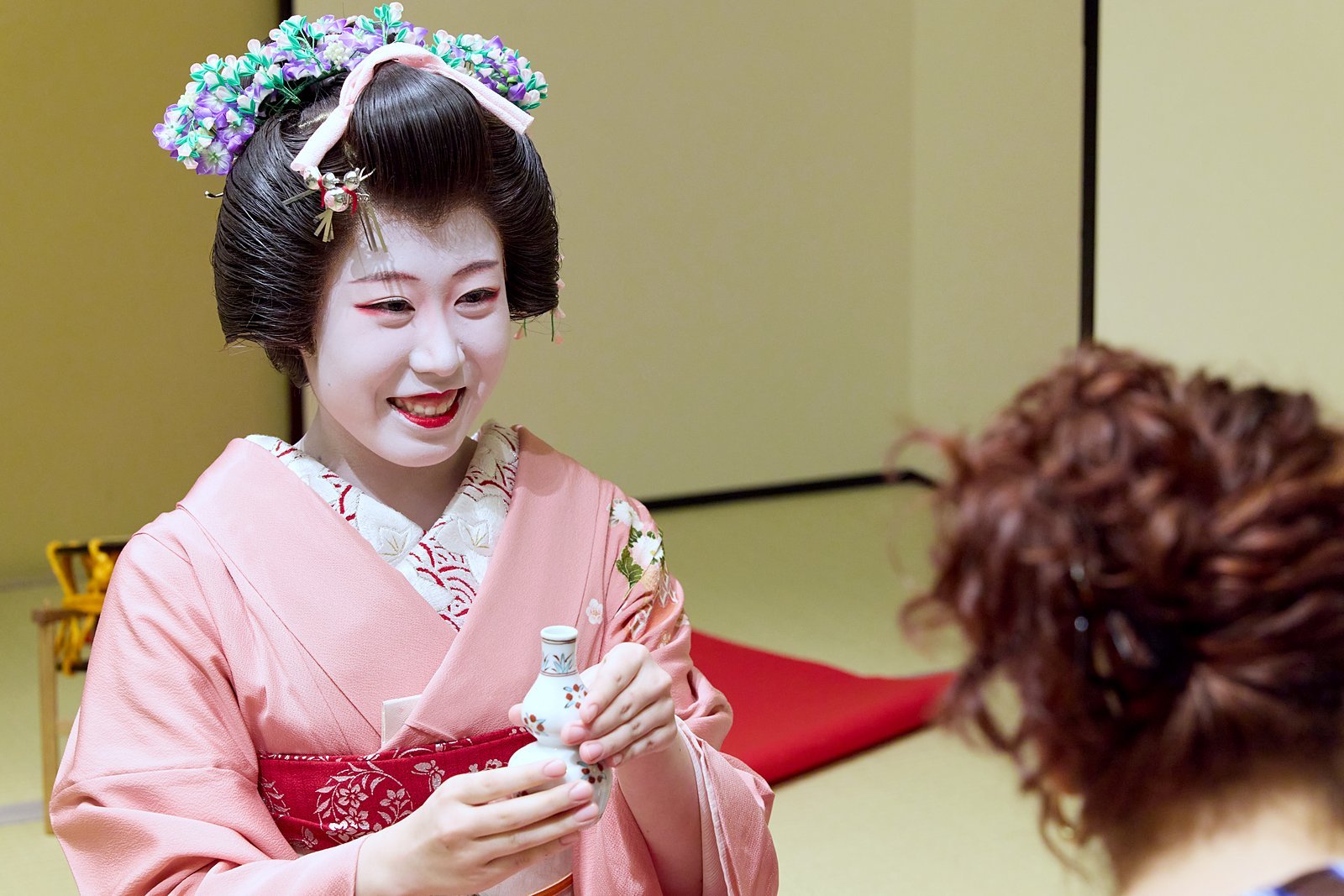
Ozashiki games are simple parlor games played with the geisha, and they surprise overseas guests more than anything else in the room. Many come hoping to feel the culture and leave saying they did not expect it to be so much fun. In Konpira fune-fune, a game played to live shamisen, you take turns against a geisha or another guest, and the loser drinks a forfeit cup. Our guide to ozashiki games explains the rules. The people in your own group are part of the fun too: we see them draw closer through the games, and we think that is the strongest part of an ozashiki.
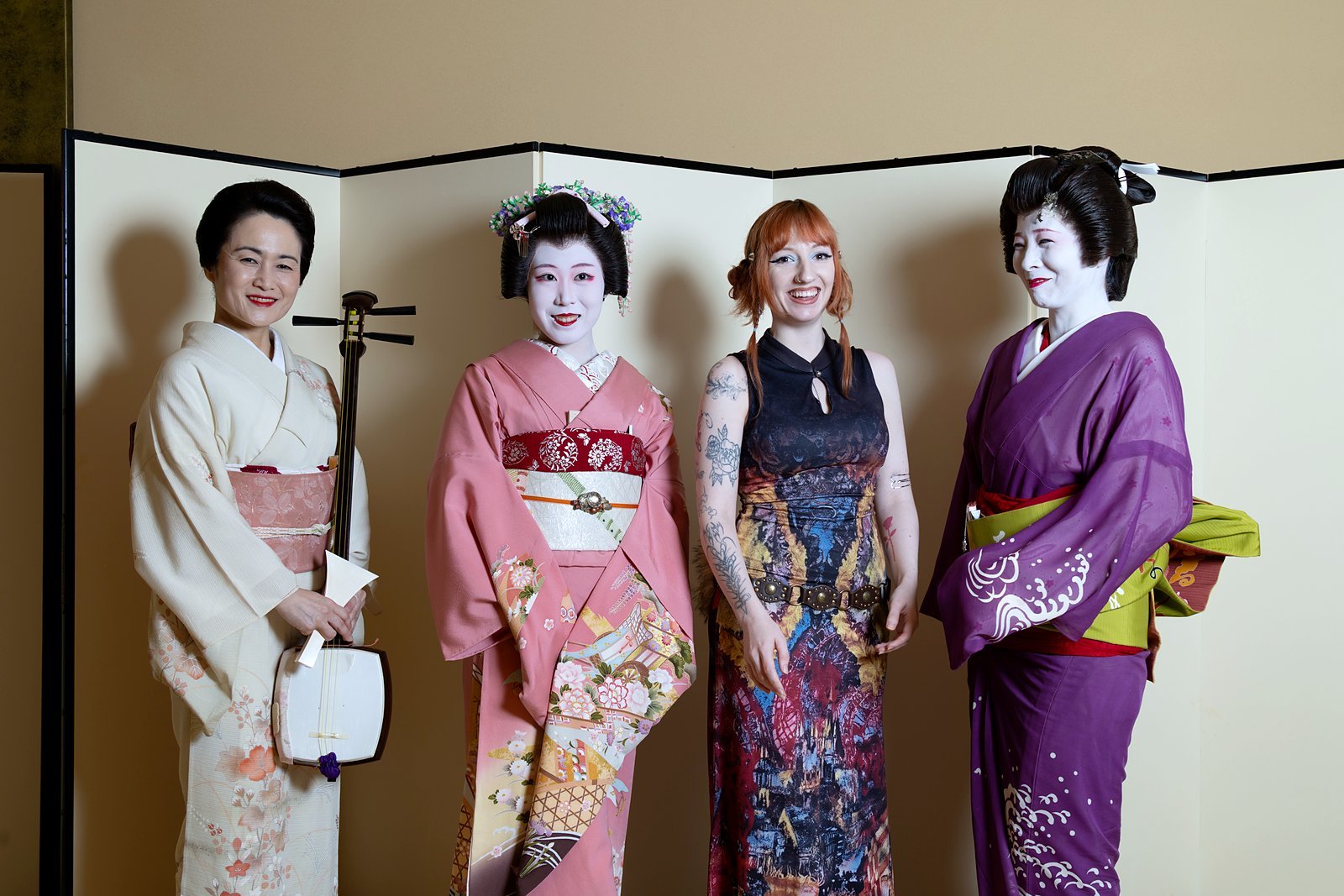
Photos with the geisha are welcome at a private ozashiki, and the Ozashiki Tea House includes a photo session.
A Private Ozashiki in Asakusa, No Introduction Needed
Geisha dance and play live shamisen in your room, talk with you through an English-speaking interpreter and invite you into the games. Solo guests are welcome on every private plan.
Request a ReservationHow to Judge the Value of Any Geisha Experience
Whether you book with us or elsewhere, these five questions help you tell an experience worth its price from one that is not.
| Ask | What a good answer sounds like |
|---|---|
| Who performs? | Working geisha registered with a district’s kenban, the geisha association. In Asakusa they register at the Asakusa kenban as independent professionals. |
| Is the music live? | A shamisen player in the room. A recording is a different experience, and many guests are disappointed by one. |
| How long are the geisha with me? | They stay in the room for the whole visit and talk with you, rather than appearing briefly for a photograph. |
| Can I talk with them in my language? | An interpreter in the room. Every one of our private plans has an English-speaking interpreter. |
| Do I watch, or take part? | Conversation and games, with you invited in. A stage show can be wonderful, but you are the audience. |
Time is the other lever. Chikage feels that an hour goes by quickly and would like guests to have at least two hours, which leaves room for more games and more conversation. If you are unsure, the 75-minute Ozashiki Tea House is a first look, and a longer private visit gives you more time to talk.
We have left prices off this page on purpose. Rates differ by plan and by the number of guests, and we would rather you read the current figures on our pricing page than a number that may be out of date. Our guide to what a geisha dinner costs goes through them in detail.
If You Are Also Going to Kyoto
Many travelers wonder whether to save this for Kyoto. The two visits give you different things. Kyoto is where you see the districts themselves, the lanes of Gion and the stage dances held in spring and autumn, and our guide to geisha districts in Japan lists the dates. At the teahouses there, a banquet is usually arranged through an introduction from a regular guest, so most visitors meet geisha on a stage rather than across a table. In Asakusa you can book a private ozashiki directly, without an introduction, and sit in the room.
If you can do just one, ask yourself whether you would rather see the districts or sit with the geisha. If you can do both, our comparison of geisha shows in Kyoto and Tokyo helps you plan the order.
What Guests Tell Us
Reviews are the best evidence we can offer, so here they are with their sources. Our teahouse has a 4.8 rating from 111 Google reviews, as of 29 August 2026. One of them, written by a guest in December 2025, reads:
This wasn’t a staged or “tourist” version of geisha culture. This was the real thing.
Australia’s ABC reported on our teahouse in August 2026. Its half-hour program The Geisha of Tokyo, on Foreign Correspondent, aired on 4 August, and the reporter noted that we take bookings from anyone, without a referral. In a companion article, one guest said: “When you see [geisha] on TV, it’s great, but you’re not there.”
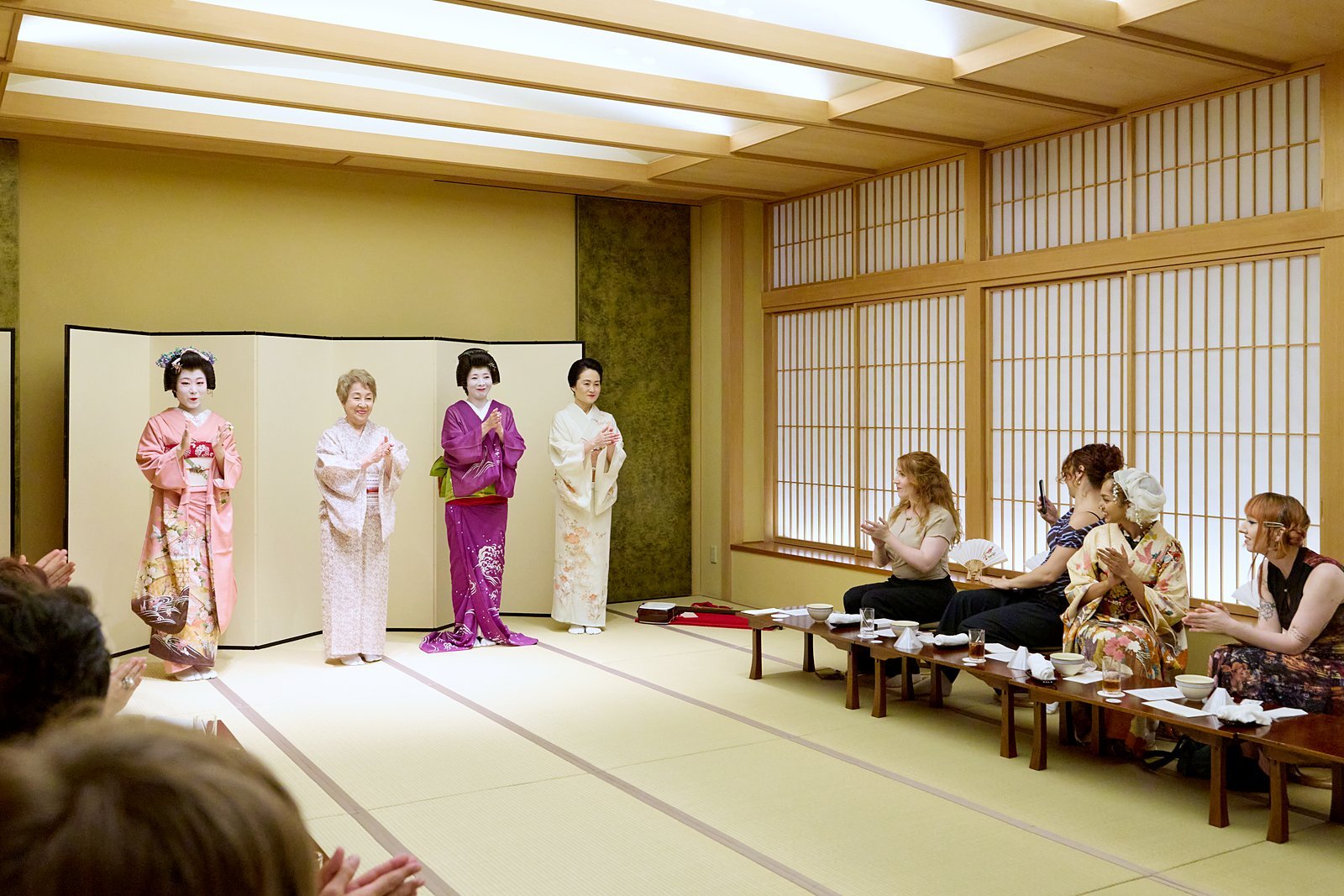
What we see ourselves is a gap between what guests expect and what they find. Many arrive expecting a stiff, formal room and leave relaxed, and overseas guests often call the visit a highlight of their trip to Japan.
Some guests come back to see the geisha again and to support the culture. Geisha go to lessons every week, and some keep performing well into their seventies, eighties and nineties. A booking helps those arts carry on.
Two Ways to Start at Miyakodori
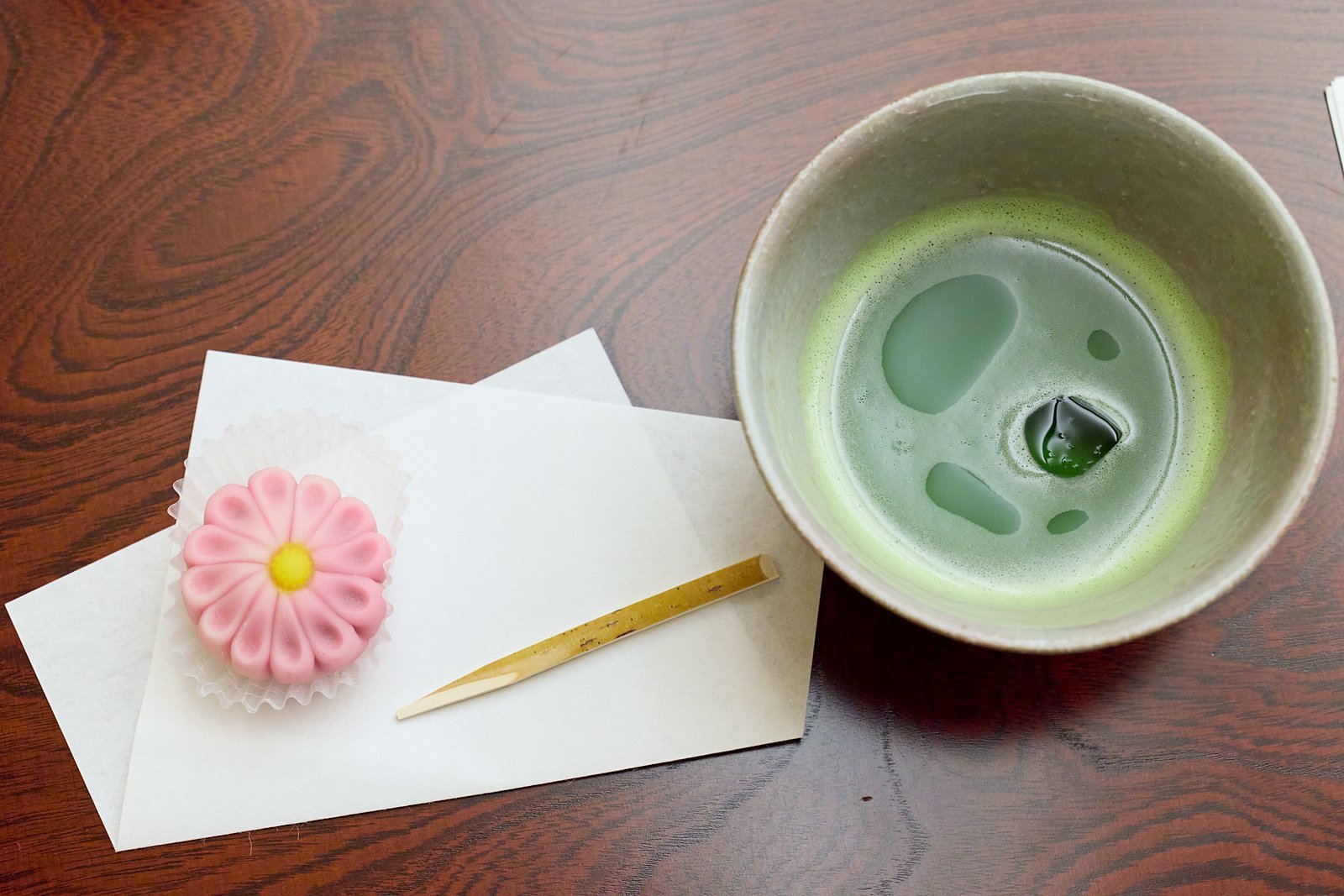
If you would like a shorter first look, the Ozashiki Tea House runs for 75 minutes in a shared room. Three geisha dance to live shamisen and lead one game, and there is time for your questions. You are served matcha with a Japanese sweet. A photo session is included and English support is provided. One drink order is required, and you can book instantly online.
For more time and more conversation, request a private ozashiki. The private plans run one, two or three hours, with at least two geisha in the room throughout and an English-speaking interpreter at every visit. The two- and three-hour plans include free-flowing drinks, and the one-hour plan asks for one drink order. The three-hour plan is a private geisha dinner with a seven-course kaiseki meal. Our overview of the geisha experience in Tokyo compares the plans, and our guide to a geisha dinner walks through how a visit unfolds.
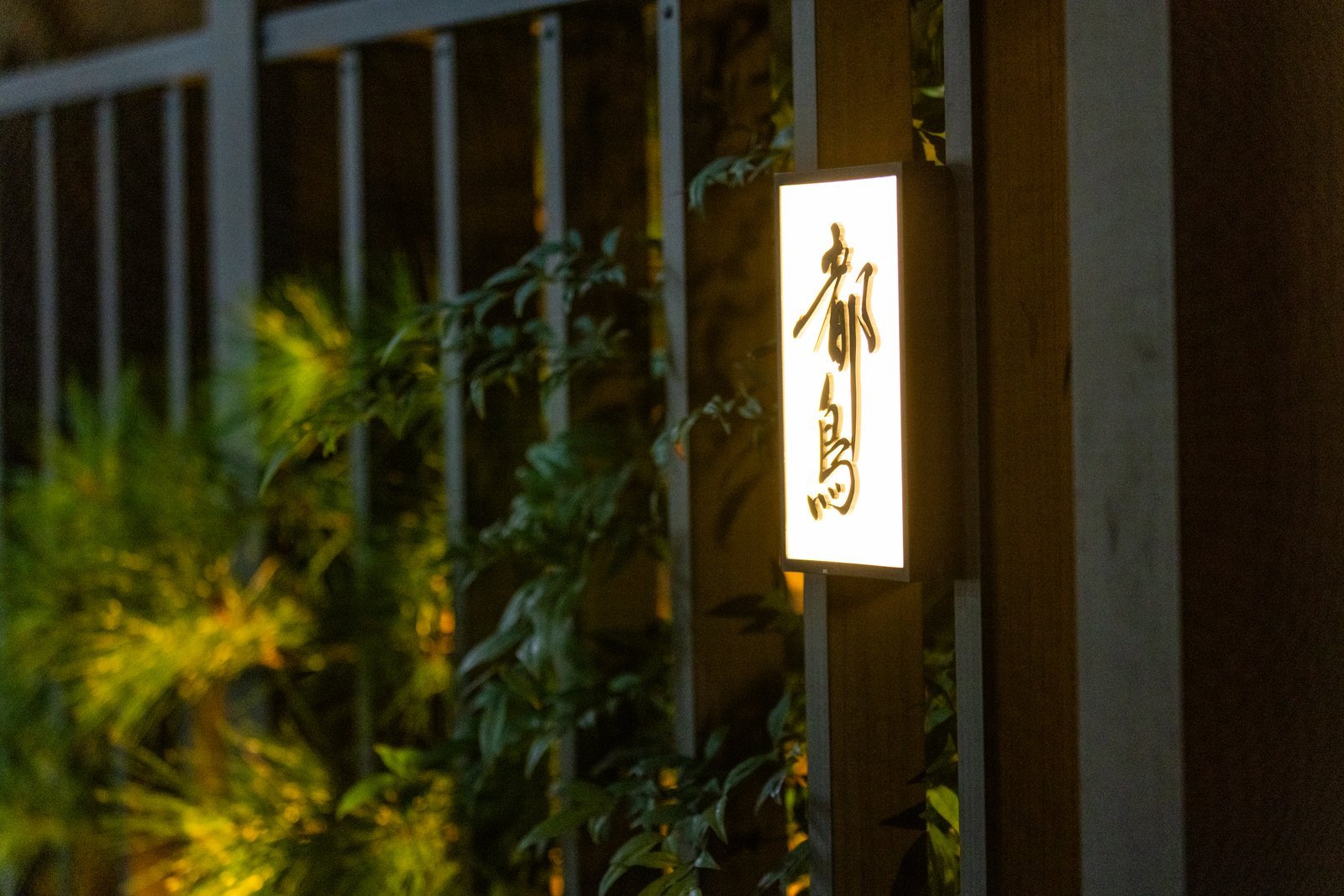
We are on the north side of Senso-ji, about three minutes’ walk once you are through the temple grounds, in Asakusa’s old geisha district. Every private plan can be booked by a single guest.
Frequently Asked Questions
Is a geisha experience in Tokyo worth it?
Yes, if you want to be in the room with working geisha, talk with them and join the games. A public stage show suits a short look at a dance, and Kyoto is the place to see the old districts and maiko.
How long is the dance, and what fills the rest of the visit?
A typical ozashiki includes three or four songs, about ten to fifteen minutes of dance, with live shamisen and singing. The rest is conversation with the geisha, games such as Konpira fune-fune and photos with the geisha.
Do I need to know Japanese or the etiquette?
No. An English-speaking interpreter is at every private ozashiki, and the Ozashiki Tea House has English support. When guests ask about manners, our answer is to wear socks, since you take your shoes off to enter the tatami room.
Is it better to see geisha in Kyoto or in Tokyo?
They give you different things. Kyoto has the old districts and the stage dances held in spring and autumn, and banquets at its teahouses usually need an introduction. In Asakusa you can book a private ozashiki directly, without an introduction, and sit in the room with the geisha. If you have time for both, do both.
What is the best geisha experience in Tokyo?
It depends on what you want. For a short look at a dance, a public show is enough. For time with the geisha, choose a private ozashiki. Whatever you choose, ask who performs and where they are registered, whether the music is live, how long the geisha stay with you, whether you can talk with them in your language, and whether you take part or just watch.
Can I go alone?
Yes. Every private plan at Miyakodori can be booked by a single guest.
Find Out in the Room
Start with the 75-minute Ozashiki Tea House, or request a private ozashiki when you want more time with the geisha. Current rates are on our pricing page, and every private plan has an English-speaking interpreter.
Request a Reservation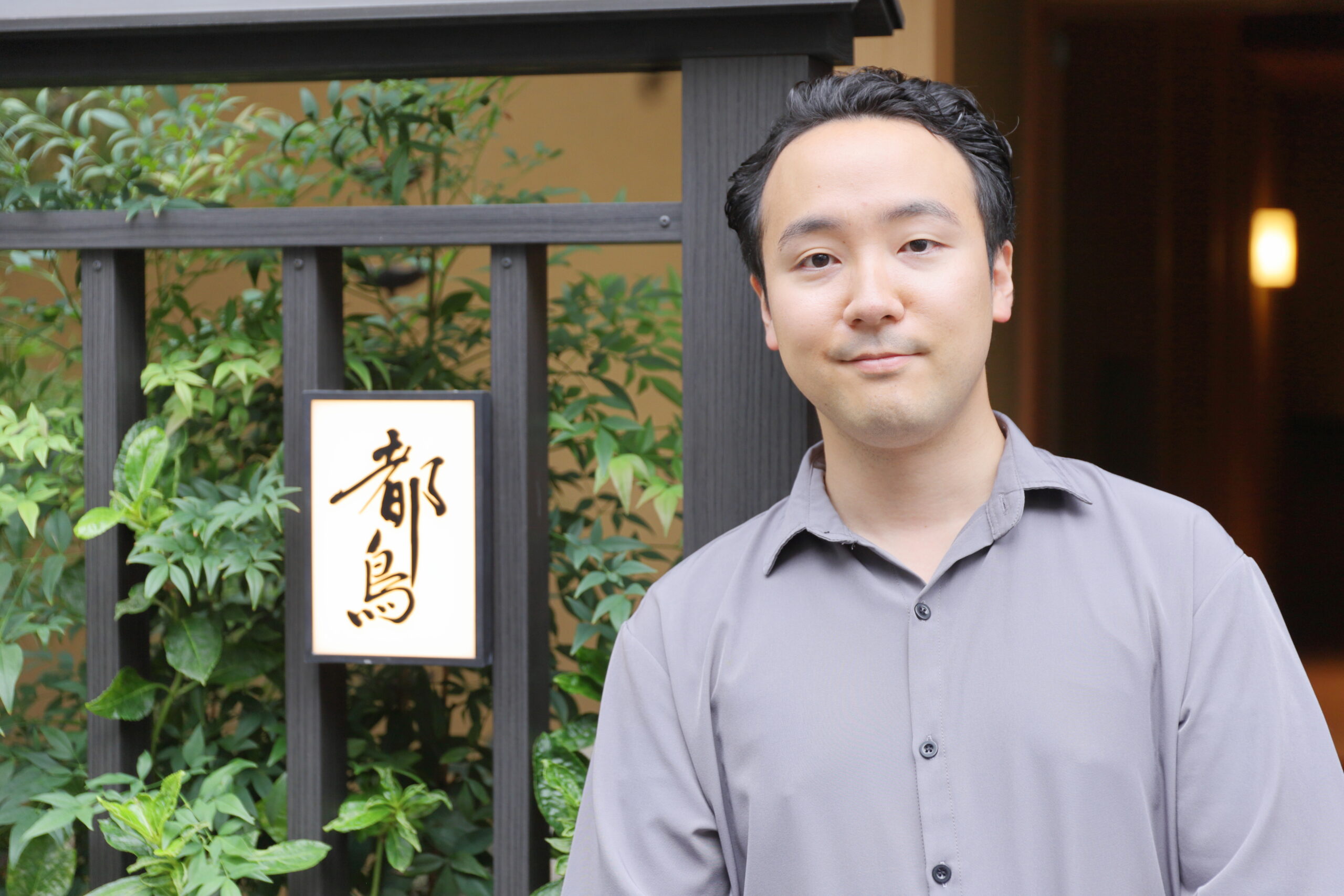


- Geisha Districts in Japan: Kyoto's Five Kagai, Kanazawa and Tokyo, Seen from Asakusa
- Kaiseki with Geisha in Tokyo: A Banquet, Course by Course, from an Asakusa Teahouse
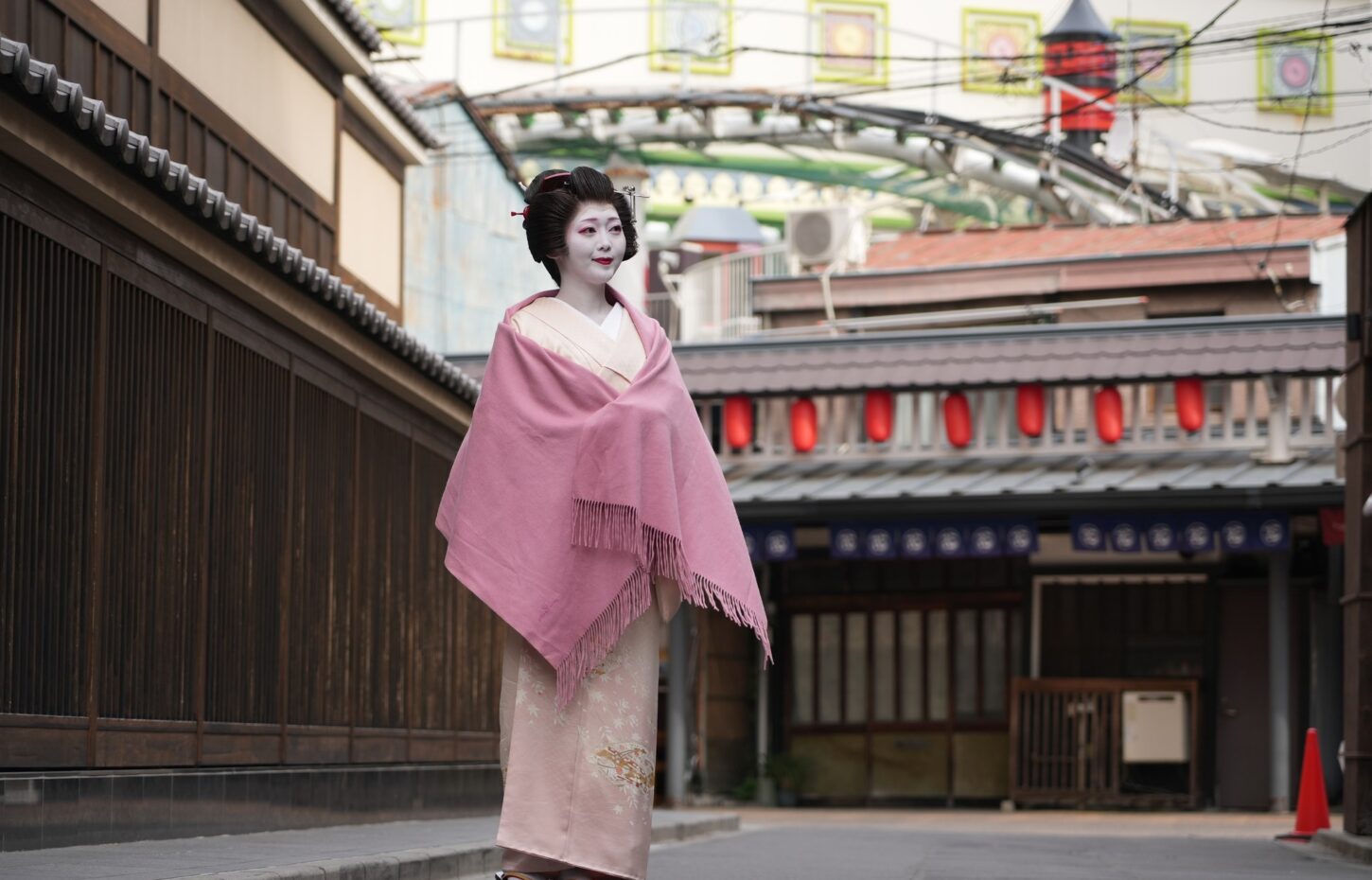
Japanese Culture: Traditions, Arts and Living Heritage — Complete Guide
Hakoya: The Unsung Keeper of Asakusa’s Geisha World
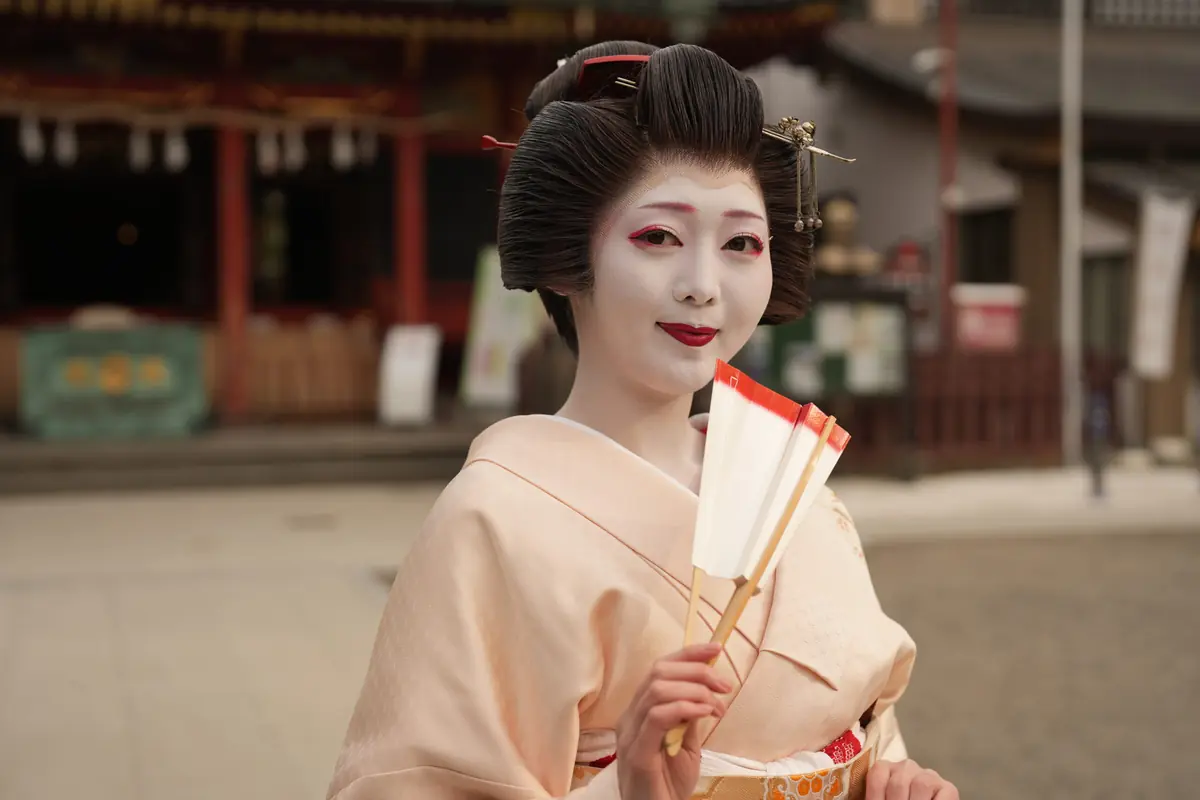
2026 Best Geisha Dinner in Kyoto and Tokyo: Private Experience Review and Booking Guide
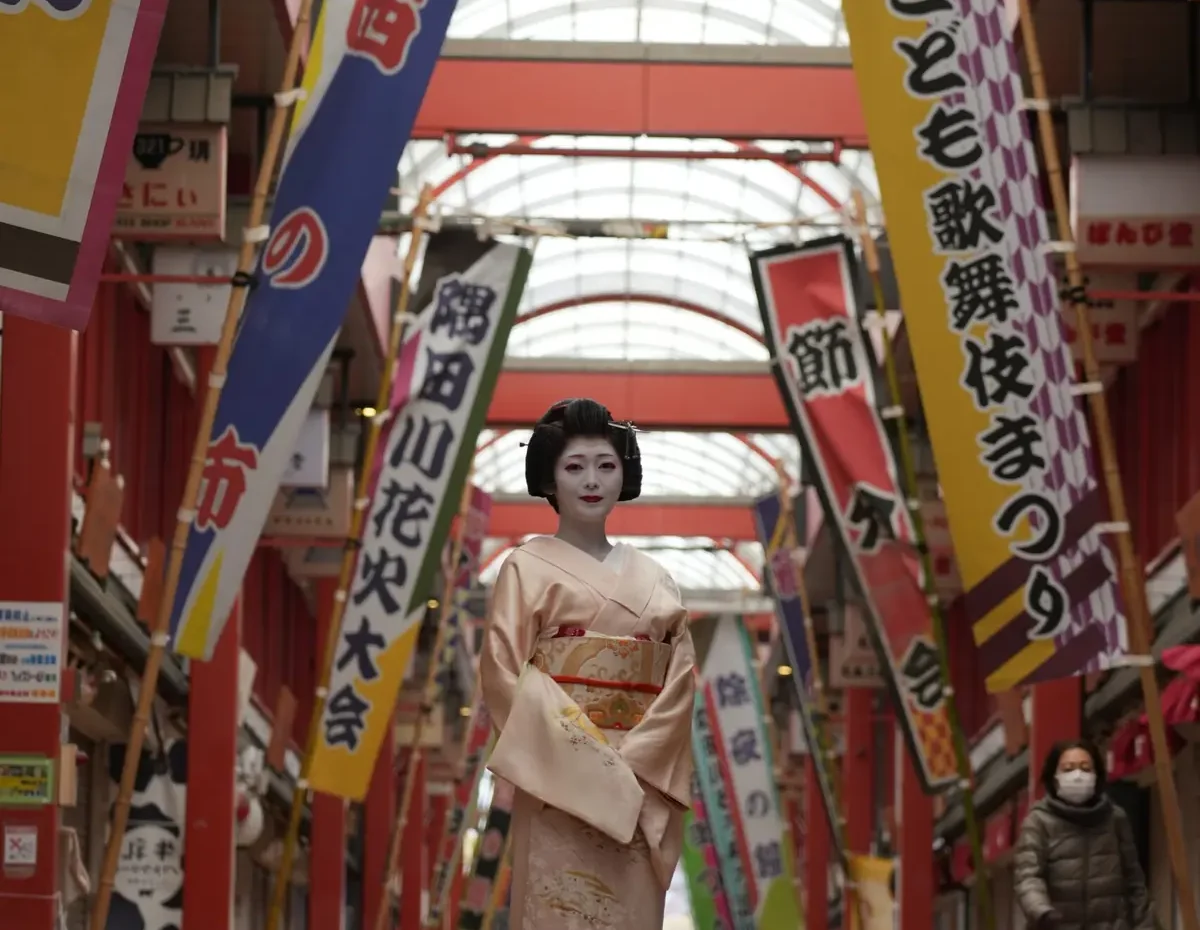
The Ultimate Guide to Geisha Districts in Tokyo
Are There Still Geisha in Japan? Yes, and Here’s Where
Geisha in Tokyo: The Complete History Guide
Comment ( 0 )
Trackbacks are closed.

No comments yet.