



Geisha Districts in Japan: Kyoto’s Five Kagai, Kanazawa and Tokyo, Seen from Asakusa
Japan’s main geisha districts are in Kyoto, Kanazawa and Tokyo, with smaller ones in towns such as Niigata and Atami. Kyoto has five, known as the five kagai: Gion Kobu, Miyagawacho, Pontocho, Kamishichiken and Gion Higashi. Kanazawa has three teahouse districts: Higashi Chaya, Nishi Chaya and Kazuemachi. Tokyo has six, including Asakusa. Banquets at the teahouses of Kyoto and Kanazawa usually need an introduction from a regular guest, so most visitors see geisha at the public dances and shows each district holds, or at a teahouse that takes bookings directly.
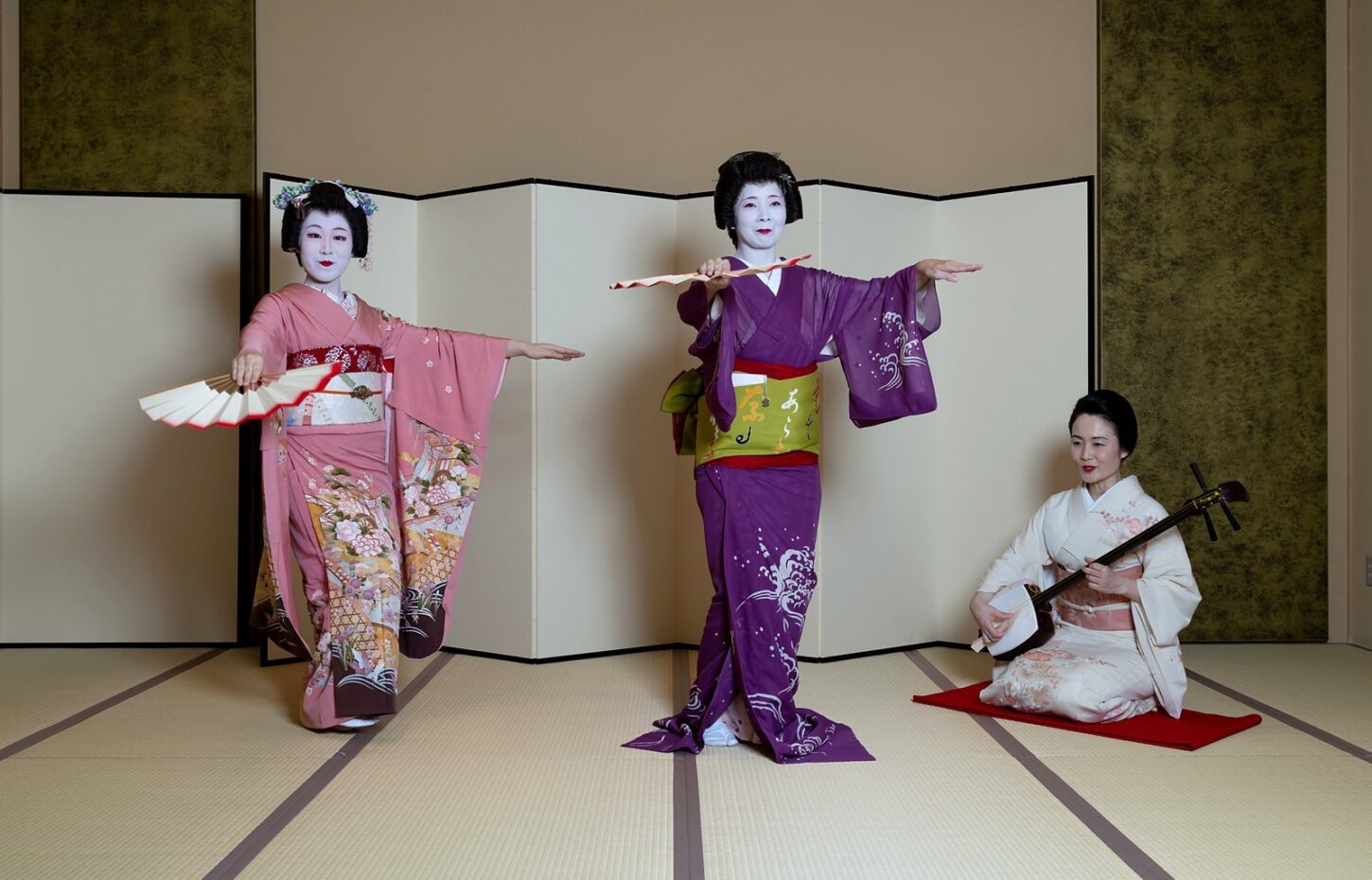
We are Miyakodori, a machiai-chaya in Asakusa, founded in 1950. A machiai-chaya is a teahouse where geisha are called to entertain guests at an ozashiki, a gathering in a tatami room with dance, live shamisen, games and conversation. Many of the guests who come to our ozashiki arrive thinking geisha are a Kyoto tradition. Kyoto is where most visitors look first, but geisha also work in Kanazawa, in Tokyo and in a few other towns, and each district keeps its own dances and its own name for its geisha.
This guide goes district by district through Kyoto and Kanazawa, then Niigata, Atami and Tokyo, and ends with what changes when you want to meet geisha rather than walk past their doors. The 2026 dance dates come from the Kyoto City Official Guide; they move a little every year, so check the current year before you plan.
Japan’s Geisha Districts at a Glance
The table lists the 11 districts covered below, in the same order as the sections.
| District | City | Where it is | What visitors can see |
|---|---|---|---|
| Gion Kobu | Kyoto | Most of Gion, including Hanamikoji Street | The Miyako Odori dance each April |
| Gion Higashi | Kyoto | The northeast corner of Gion | The Gion Odori dance, 1 to 10 November |
| Pontocho | Kyoto | A narrow lane west of the Kamo River, from Shijo to Sanjo | The Kamogawa Odori dance each May |
| Miyagawacho | Kyoto | By the Kamo River, just south of Gion | The Kyo Odori dance each April |
| Kamishichiken | Kyoto | Beside Kitano Tenmangu Shrine | The Kitano Odori dance in late March and early April |
| Higashi Chaya | Kanazawa | A few minutes’ walk from the Asano River | Geisha shows on designated Saturdays and the Ochaya Shima museum |
| Kazuemachi | Kanazawa | On the Asano River, across from Higashi Chaya | Geisha shows on designated Saturdays |
| Nishi Chaya | Kanazawa | Near the Sai River | Geisha shows on designated Saturdays and the Nishi Chaya Shiryokan museum |
| Furumachi | Niigata | Around blocks 8 and 9 of Furumachi-dori | Prewar ryotei and okiya buildings along the streets |
| Atami | Atami, Shizuoka | The Atami Geigi Kenban | The Hana no Mai dance on Saturdays and Sundays |
| Asakusa | Tokyo | North of Senso-ji | Ozashiki banquets, which Miyakodori takes requests for online |
What a Geisha District Is
A geisha district is called a hanamachi, or flower town; in Kyoto the same characters are read kagai. Geisha are attached to an okiya, a geisha house, and they entertain guests at teahouses, called ochaya in Kyoto and chaya in Kanazawa. Our guide to what a hanamachi is explains how the houses of a district work together.
The English word teahouse can mislead. A teahouse in a geisha district is a place where geisha are called to entertain at banquets, and it has nothing to do with the tea ceremony. Miyakodori is a teahouse in this sense, of the Tokyo kind called a machiai-chaya.
Each region also has its own word for geisha. In Kyoto and Kanazawa they are geiko, in Niigata and Atami geigi, and in Tokyo simply geisha. A young geisha still in her training years is a maiko in Kyoto and a hangyoku in Tokyo; our article on how a maiko differs from a geisha covers the Kyoto side in detail.
Kyoto’s Five Geisha Districts
Kyoto’s five geisha districts are known together as the five kagai. Each belongs to its own school of dance, and four of them, Gion Kobu, Miyagawacho, Pontocho and Kamishichiken, stage their main dances in spring, from late March through May, at their own kaburenjo theaters. Gion Higashi holds its main dance in autumn instead. The Kyoto City Official Guide lists each year’s dates; in 2026 the spring dances ran from 20 March to 22 May.
Gion Kobu and Gion Higashi
Gion grew up in front of Yasaka Shrine and holds two districts, which were one until they split in 1881. Gion Kobu is the larger and covers most of the area, including Hanamikoji Street; the Kyoto City Official Guide calls it Kyoto’s largest geiko and maiko district. Its Miyako Odori, first staged in 1872, is held each April at the Gion Kobu Kaburenjo. Gion Higashi is the smaller district, in the northeast corner of Gion, and its Gion Odori runs from 1 to 10 November at the Gion Kaikan theater.
If your trip misses the dance seasons, Gion Corner, next to the Gion Kobu Kaburenjo, has a one-hour stage show of traditional arts that includes a Kyomai dance performed by maiko. Our comparison of geisha shows in Kyoto and Tokyo sets it beside the other options.
Visitors to Gion should know two rules. Photography has been banned on its private lanes since 2019, and since April 2024 visitors who walk into those lanes can be fined, as Time Out Tokyo reported. Keep to the main roads, such as Hanamikoji, and read the sign at the entrance of each lane.
Pontocho
Pontocho is built around a long, narrow lane that runs from Shijo-dori to Sanjo-dori, one block west of the Kamo River, lit by lanterns after dark. Its Kamogawa Odori, first staged in 1872, is held each May at the Pontocho Kaburenjo by the Sanjo end of the lane, and the Kyoto City Official Guide says it has had more performances than any other dance of the five districts.
Miyagawacho
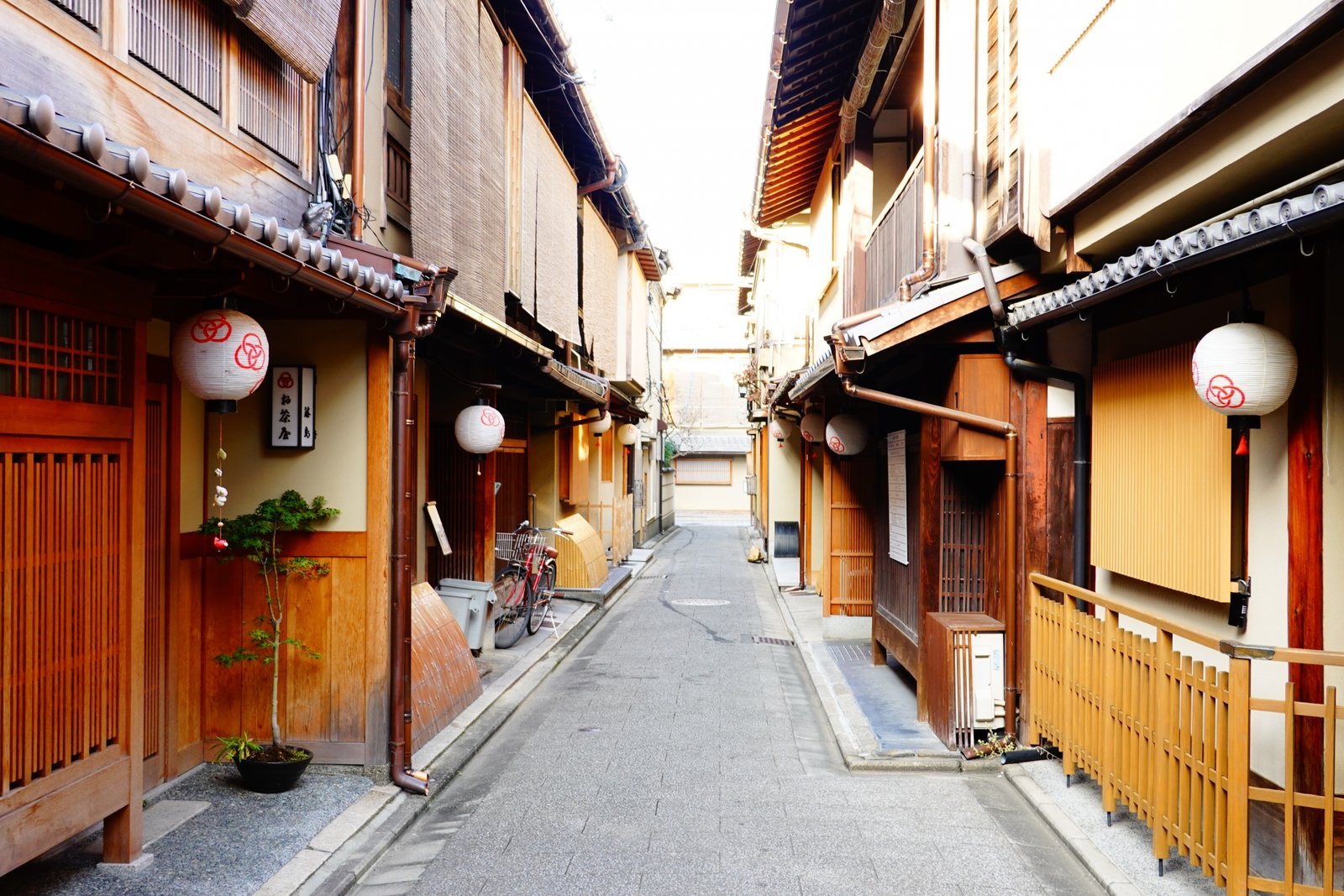
Miyagawacho lies just south of Gion, near the Minami-za kabuki theater on the east bank of the Kamo River, and its name comes from an old name for the stretch of the river below Shijo. Kabuki was once played in small theaters along these banks, and the district grew into a town of teahouses around them. Its crest of three interlocking rings appears on the lanterns outside its teahouses, and its spring dance, the Kyo Odori, is held each April at the Miyagawacho Kaburenjo.
Kamishichiken
Kamishichiken, beside Kitano Tenmangu Shrine, is Kyoto’s oldest geiko district. Its name means “seven upper houses”, after seven teahouses built in the Muromachi period (1333–1573) with timber left over from rebuilding the shrine, and it flourished after the warlord Toyotomi Hideyoshi hosted a great tea party at Kitano Tenmangu in 1587. Its Kitano Odori has been staged every spring since 1952 at the Kamishichiken Kaburenjo; in 2026 it ran from 20 March to 2 April. Japan’s tourism agency notes that the district’s teahouses receive guests introduced by their regular patrons.
Seeing Geiko and Maiko in Kyoto
The Kyoto City Official Guide asks visitors not to stop, touch or follow geiko and maiko in the street, and not to photograph or film them without permission; in the guide’s words, they “are not tourist attractions.” It points instead to the public Kyomai dances held through the year, and suggests asking your hotel or a licensed tour guide about seeing geiko and maiko perform.
Kanazawa’s Three Geisha Districts
Kanazawa, on the Sea of Japan coast, has three teahouse districts, or chaya-machi. In 1820 the teahouses scattered around the city center were moved out into three districts, and Kanazawa’s geiko, as geisha are called there, still entertain in them. The Kanazawa City Tourism Association holds geisha shows in the three districts on designated Saturdays, so check the dates before you plan your visit.
Higashi Chaya
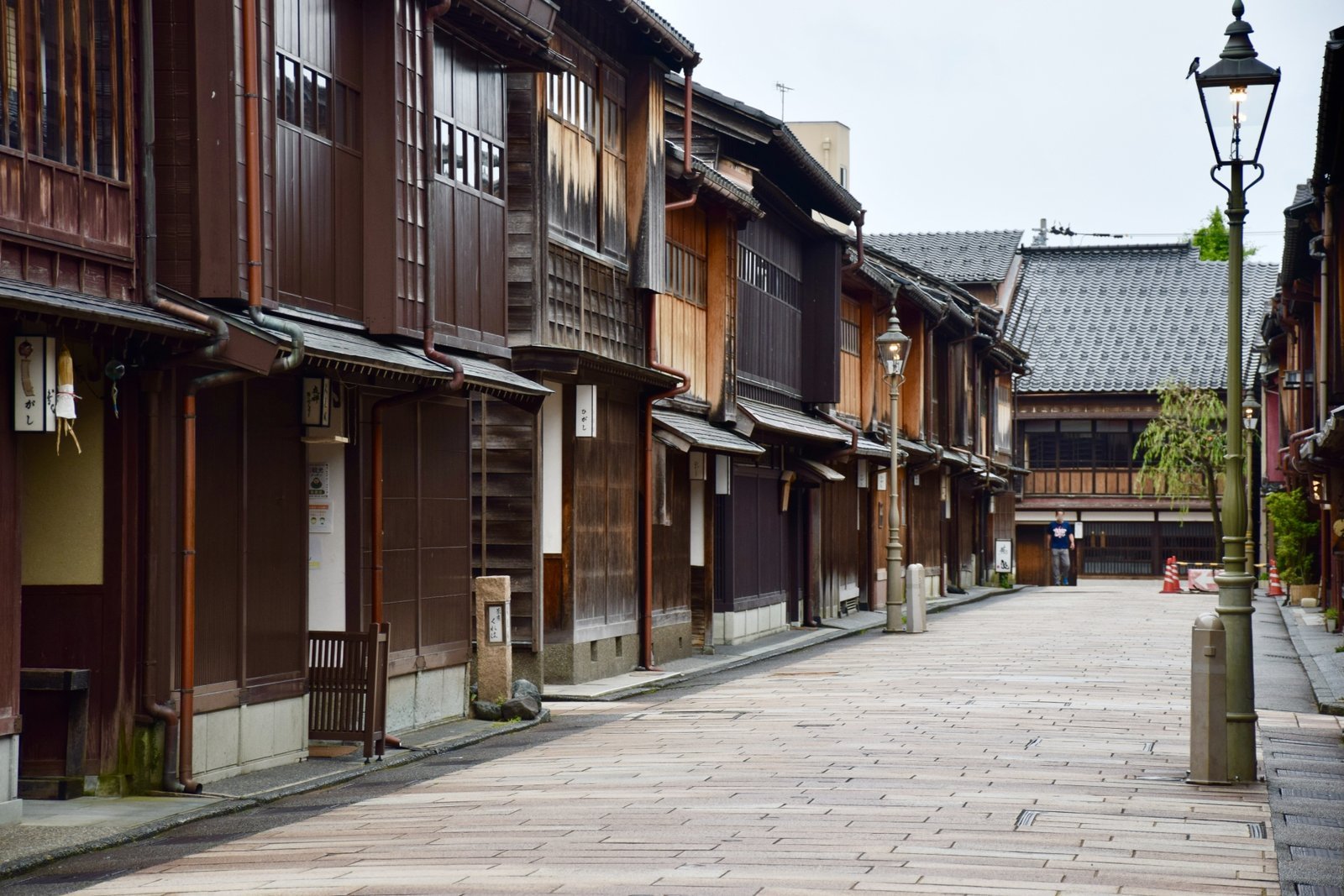
Higashi Chaya is the largest of the three. Its two-story wooden teahouses have fine latticework, called kimusuko, on the ground floor and guest rooms upstairs; in the Edo period, two-story buildings were forbidden except for teahouses. Many of the buildings are now cafes, restaurants and craft shops, but some are still geiko teahouses, open to guests by referral. Ochaya Shima, a former teahouse about 200 years old, is open as a museum, with the rooms where geiko entertained and their hair ornaments and instruments on display.
Kazuemachi
Kazuemachi lies along the Asano River, a short walk across the water from Higashi Chaya. It was established in the early Meiji era (1868–1912), and its narrow lanes are protected as an Important Preservation District for Groups of Traditional Buildings. Most of the houses are geiko teahouses that take guests by referral, while a few restaurants and cafes along the riverbank are open to everyone. The Kuragarizaka steps, or “Dusk Hill”, were once used by wealthy merchants to visit the geiko discreetly.
Nishi Chaya
Nishi Chaya lies near the Sai River, about 500 meters from the Saigawa Ohashi Bridge, with two-story wooden teahouses along its main street. The Kanazawa Nishi Chaya Shiryokan, a building that reproduces a teahouse, lets you see a guest room, and volunteer guides wait there to show visitors around the district.
Other Geisha Districts: Niigata and Atami
Niigata, farther up the Sea of Japan coast, has the Furumachi district, around blocks 8 and 9 of Furumachi-dori in the city center. Its geisha are known as Furumachi geigi. The district took shape in the Meiji era, and because it escaped heavy damage in earthquakes and fires, many prewar ryotei and okiya buildings still stand. Niigata City notes that where Kyoto and Kanazawa are teahouse districts, Furumachi’s tradition centers on ryotei, the traditional restaurants where geisha entertain. The head of the Ichiyama school of dance, who teaches the Furumachi geigi, also lives and teaches in the district.
Atami, a hot-spring town in Shizuoka Prefecture, traces its geisha culture back to the Meiji era. Its geigi are based at the Atami Geigi Kenban, where they train every day, and every Saturday and Sunday they perform the Hana no Mai dance there, according to Explore Shizuoka.
Geisha also work in other cities and hot-spring towns. We have kept this guide to districts whose details we could check against local official sources, so treat it as a starting point rather than a full list.
Tokyo’s Geisha Districts and Asakusa
Tokyo’s six geisha districts are Shinbashi, Akasaka, Kagurazaka, Mukojima, Yoshicho and Asakusa. Our guide to Tokyo’s geisha districts goes through each one, so here we keep to Asakusa, where our teahouse is.
Asakusa’s hanamachi spreads north of Senso-ji, and the kenban and the ryotei quarter stand behind the temple, in the area called Kannon-ura. The geisha here dance in the Hanayagi and Fujima schools. In Asakusa, geisha belong to an okiya and register at the kenban as independent professionals, and Miyakodori calls them to its teahouse for each ozashiki. The Asakusa kenban also registers hōkan, entertainers who set off the geisha and lift the mood of the room.
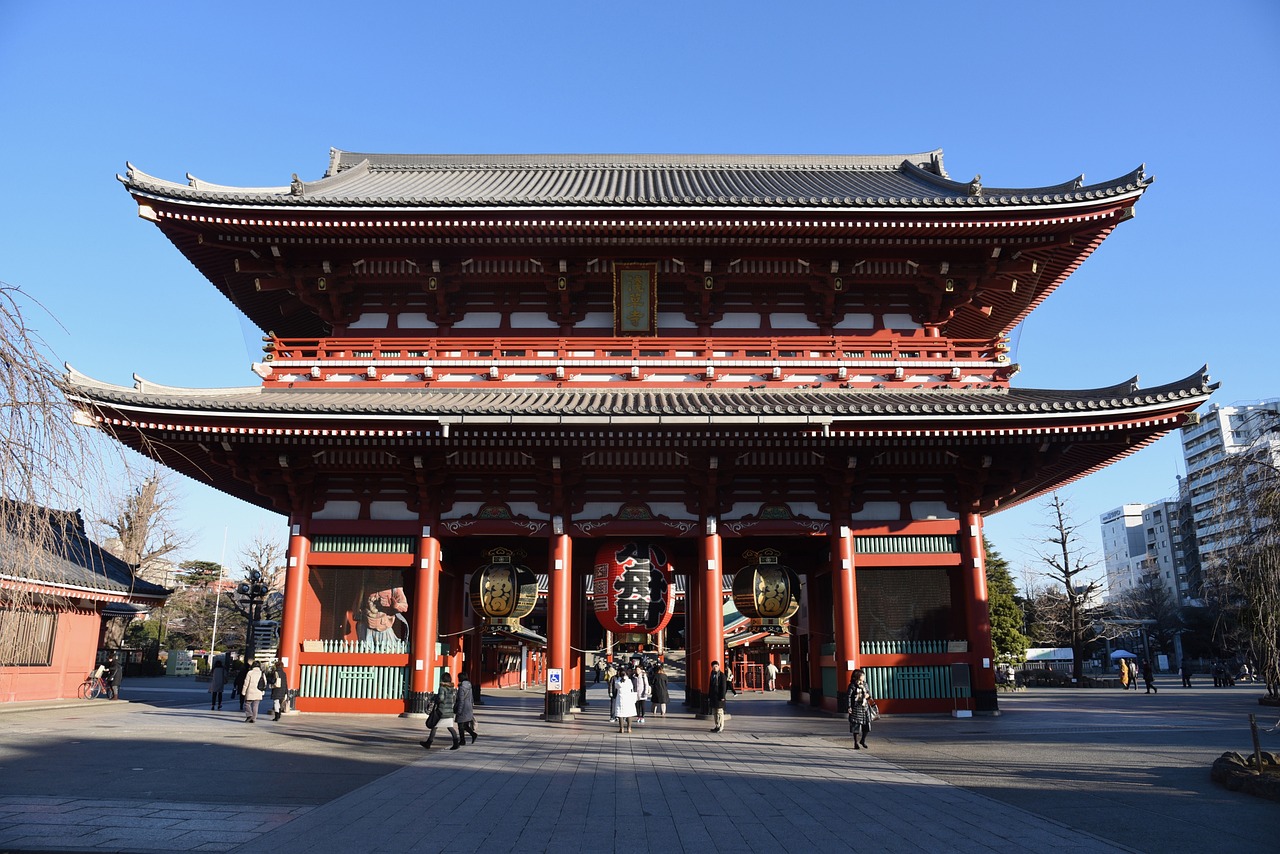
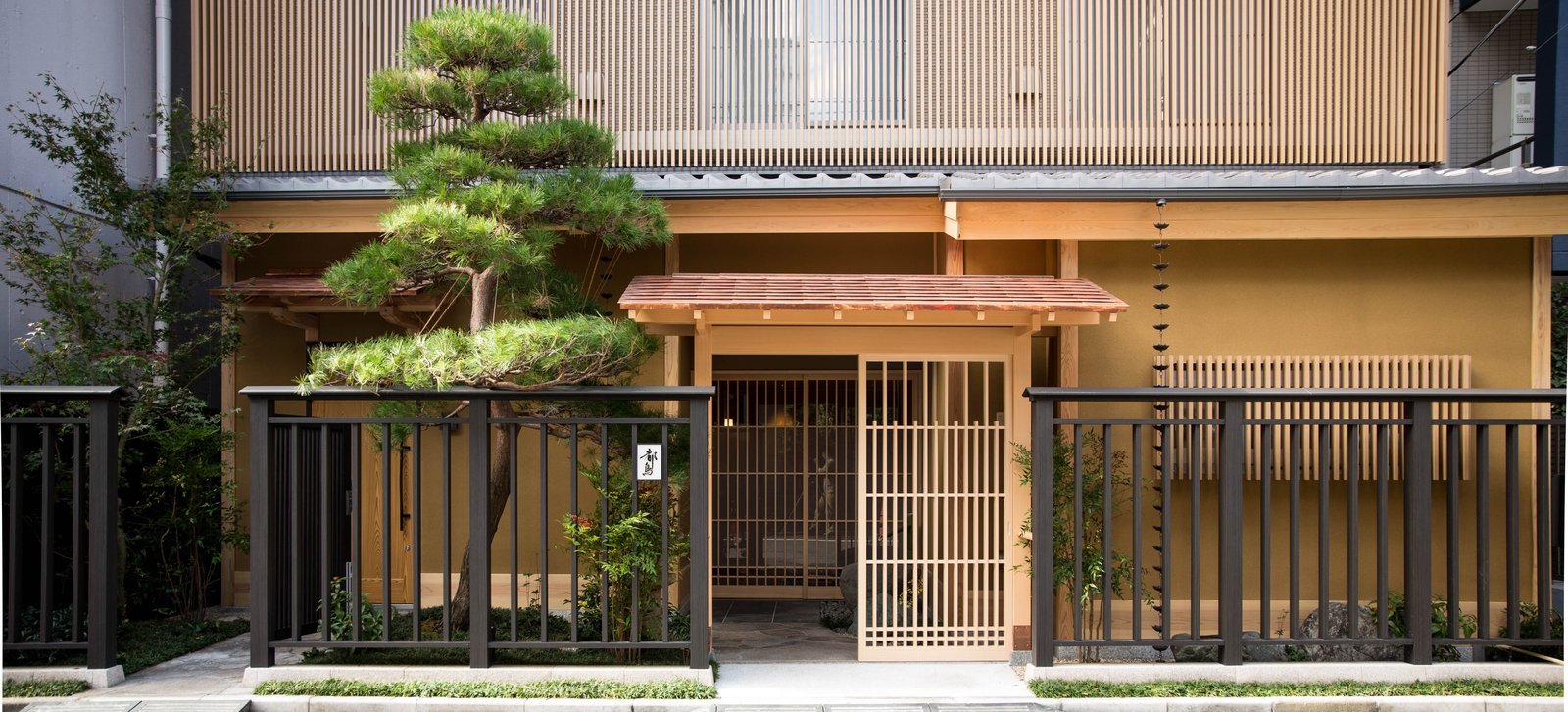
Miyakodori is on the north side of Senso-ji, about three minutes’ walk once you have passed through the temple grounds. For the history of the district, see our article on the Asakusa geisha district.
Japan has far fewer geisha than it did a century ago, in Kyoto as in Tokyo, and many districts are much quieter than they once were; our article on how many geisha there are today has the figures by city. The districts in this guide keep training geisha and putting their dances on stage, and each performance that visitors attend and each ozashiki they book supports the geisha who perform. That is how these arts are handed on to the next generation.
Kyoto and Tokyo Geisha: What We See from Asakusa
The first difference is the name. What Kyoto calls a maiko, Tokyo calls a hangyoku, and both are already geisha, still in their training years. In Tokyo, trainees who have not yet made their debut are called shikomikko, and they are not geisha yet. Our article on the types of geisha explains the stages.
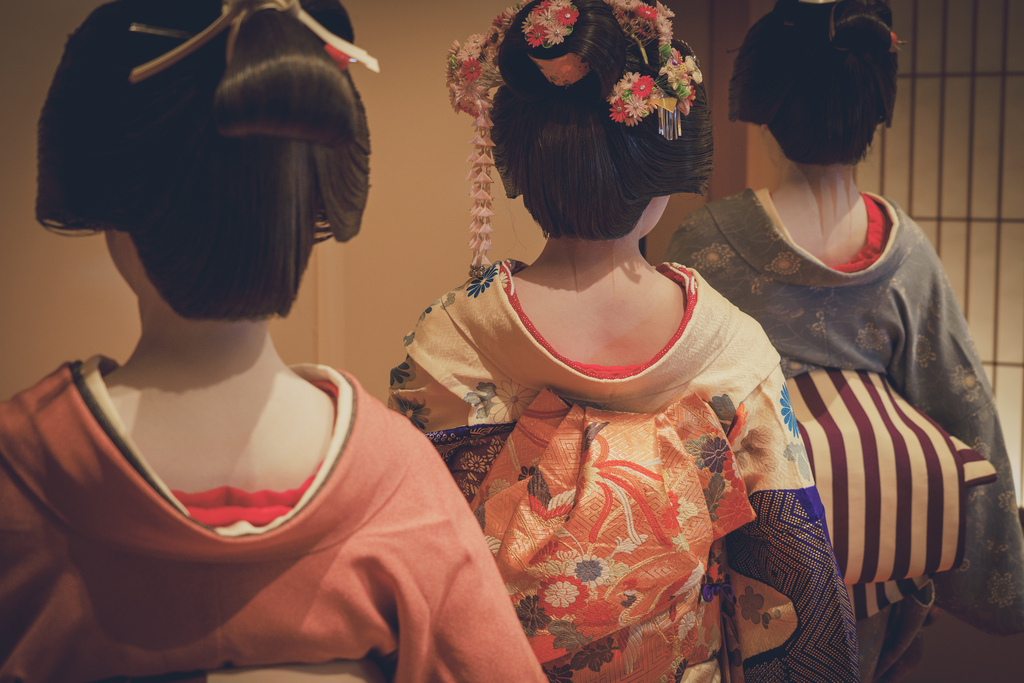
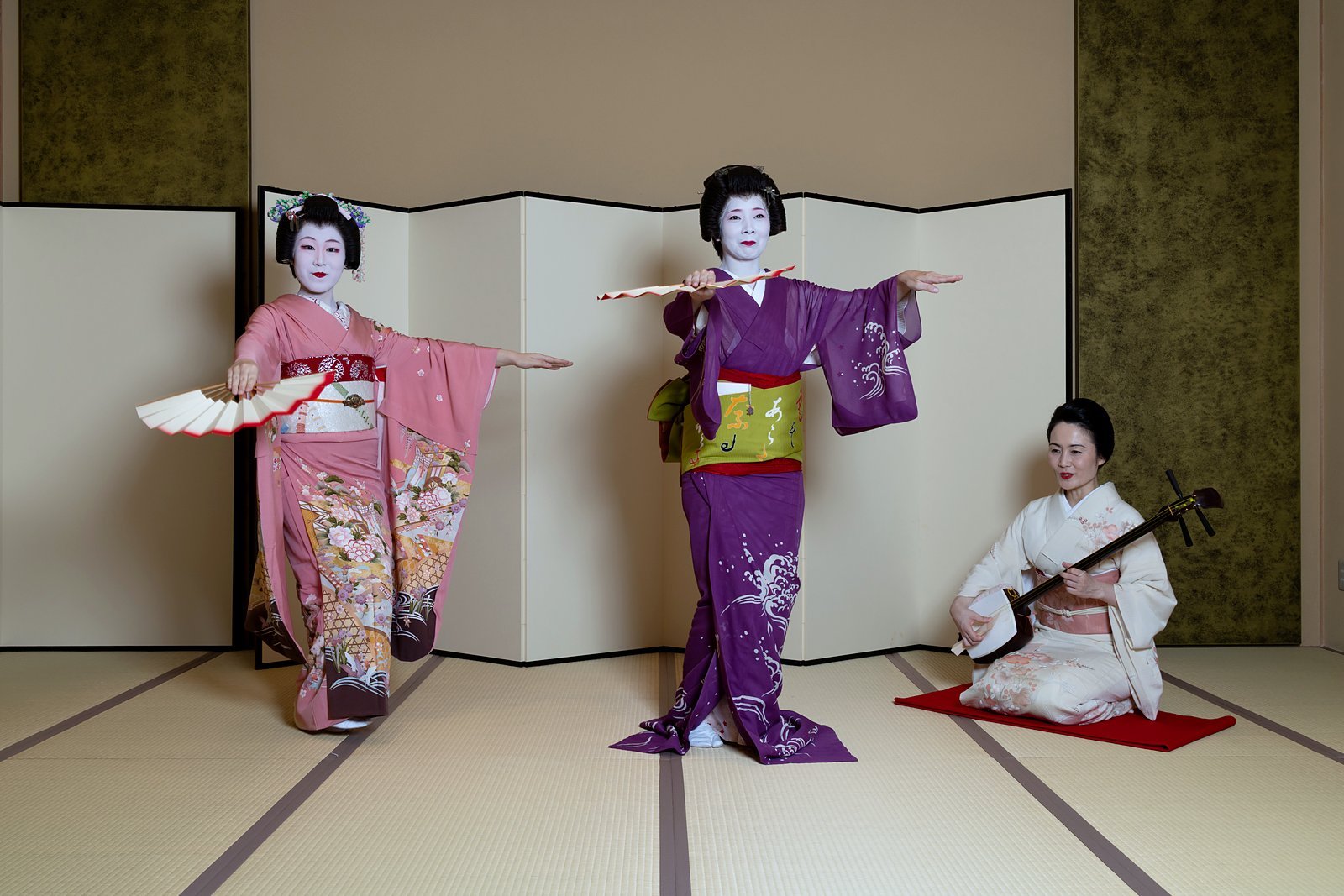
The look differs as well. Chikage, the Okami (proprietress) of Miyakodori, who made her own debut as a hangyoku in 1969, notes that a maiko and a hangyoku wear the same long-sleeved furisode and much the same hair ornaments, but a Kyoto maiko lets her hem trail and ties the long darari obi, so her whole silhouette is different. Senior geisha look more alike in the two cities, she says, although Tokyo geisha usually wear Edo komon, a kimono with a fine all-over pattern, while in Kyoto she sees fewer Edo komon and more kimono patterned toward the hem. The white makeup is almost the same in both.
Her own impression, which she calls a personal one, is that Tokyo, as the old Edo, dresses for iki, a crisp and understated chic, while Kyoto aims more for hin, a quiet refinement. The dances differ too. Each of Kyoto’s districts belongs to its own school of dance. Chikage holds a teaching license in the Hanayagi school, and in her personal view, the Inoue school danced in Gion is quite distinct from the schools better known in Tokyo, such as Hanayagi and Fujima.
Walking a Geisha District or Meeting Geisha
Walking through a geisha district shows you its streets and teahouses, but the arts themselves happen on a stage or in a banquet room. In Kyoto, the way in for most visitors is a public dance or a stage show such as Gion Corner; in Kanazawa, the Saturday shows; in Atami, the weekend Hana no Mai. A banquet at a teahouse is another matter: in Kyoto and Kanazawa it usually needs an introduction from a regular guest. For Kyoto, the Kyoto City Official Guide suggests asking your hotel or a licensed tour guide about seeing geiko and maiko perform.
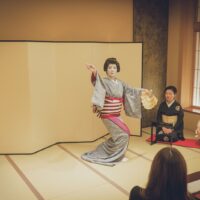
In Asakusa, it can be simpler. Miyakodori takes requests for a private ozashiki directly from first-time and overseas guests, without an introduction. Every private plan includes an English-speaking interpreter, and solo guests are welcome; our Private Geisha Experience page describes the plans. For a shorter first look, the Ozashiki Tea House is a 75-minute session with three geisha in which you share the room with other guests, with matcha and a Japanese sweet. For the other ways to see geisha in the city, see our guide to how to see a geisha in Tokyo.
Meet Geisha in Asakusa, No Introduction Needed
Book a private ozashiki at our teahouse in Asakusa: geisha dance and play the shamisen a few steps from your seat, and an English-speaking interpreter helps you talk with them and join the games. First-time and overseas guests are welcome.
Request a ReservationManners for Any Geisha District
- Do not stop, touch or follow geisha in the street, and do not photograph or film them without permission. Kyoto asks this of every visitor, and the same courtesy applies in Kanazawa, Tokyo and everywhere else.
- Keep out of private lanes and read the signs before you raise a camera. In parts of Gion, entering a private lane can bring a fine.
- Keep your voice down in the side streets. People live in these districts, and the teahouses are working businesses.
- Check the year’s dates before you plan around a performance. Kyoto’s dances shift by a few days each year, and Kanazawa’s shows fall on designated Saturdays.
- If you want to sit with geisha rather than watch from a theater seat, book a banquet through the proper channel: a hotel or licensed guide in Kyoto, or a teahouse that takes bookings directly, such as ours in Asakusa.
Frequently Asked Questions
How many geisha districts are there in Kyoto?
Five. Gion Kobu, Miyagawacho, Pontocho, Kamishichiken and Gion Higashi are known together as the five kagai. Four of them hold their main dances in spring, from late March through May, and Gion Higashi holds its Gion Odori from 1 to 10 November.
Which is the oldest geisha district in Kyoto?
Kamishichiken, beside Kitano Tenmangu Shrine. Its name, “seven upper houses”, comes from seven teahouses built there in the Muromachi period (1333–1573), and its spring dance, the Kitano Odori, has been staged every year since 1952.
What is the geisha district in Kanazawa?
Kanazawa has three: Higashi Chaya, the largest, Kazuemachi on the Asano River, and Nishi Chaya near the Sai River. The teahouses were gathered into these districts in 1820. The Kanazawa City Tourism Association holds geisha shows in the three districts on designated Saturdays, and Ochaya Shima in Higashi Chaya is open as a museum.
Can visitors walk through Gion?
Yes, on its public streets, such as Hanamikoji. Photography is banned on Gion’s private lanes, and since April 2024 visitors who enter them can be fined. To see geiko and maiko perform, go to the Miyako Odori in April, the Gion Odori in November or the one-hour show at Gion Corner.
Are there geisha districts in Tokyo?
Yes. Tokyo has six: Shinbashi, Akasaka, Kagurazaka, Mukojima, Yoshicho and Asakusa. In Asakusa, geisha belong to an okiya and are registered at the local kenban as independent professionals, and Miyakodori calls them to its teahouse for each ozashiki.
What is a teahouse in a geisha district?
A house where geisha are called to entertain guests at banquets, called an ochaya in Kyoto and a chaya in Kanazawa. Despite the English name, it has nothing to do with the tea ceremony. Geisha are attached to an okiya, a separate house, and go to a teahouse when they are booked. In Tokyo, Miyakodori is a teahouse of this kind, called a machiai-chaya.
Can you meet geisha without an introduction?
At public performances, yes: Kyoto’s dances, Gion Corner, Kanazawa’s Saturday shows and Atami’s weekend Hana no Mai are open to the public. Banquets at the teahouses of Kyoto and Kanazawa usually need an introduction from a regular guest. In Asakusa, Miyakodori takes bookings from first-time and overseas guests without one, with an English-speaking interpreter at every private ozashiki.
From Kyoto’s Lanes to an Asakusa Ozashiki
After the districts of Kyoto and Kanazawa, meet geisha in Tokyo at a private ozashiki in our teahouse in Asakusa, where they dance to live shamisen, play parlor games with you and answer your questions through an English-speaking interpreter. First-time and overseas guests are welcome, without an introduction. Current rates are on our pricing page.
Request a Reservation


- Geisha Movies: Films, TV Series and Documentaries to Watch, Picked by an Asakusa Teahouse
- Is a Geisha Experience in Tokyo Worth It? An Honest Answer from an Asakusa Teahouse
Traditional Japanese Culture Experience: A 2026 Travel Guide
Sanja Matsuri in Asakusa: A Geisha House Guide to Tokyo’s Wildest Festival
Geisha Danna: What a Geisha’s Patron Was, and How Geisha Are Supported Today
Asakusa Geisha Culture: How-to & Etiquette Q&A【Miyakodori】
Oiran Meaning: Who Were Japan’s Highest-Ranking Courtesans?
A Guide to Tokyo’s Geisha Districts: Finding Authentic Experiences and Cultural Immersion
Comment ( 0 )
Trackbacks are closed.

No comments yet.