



Geisha in Tokyo: The Complete Knowledge Guide
A geisha is a Japanese female performing artist trained in classical dance, song, and shamisen — entertaining guests at private ozashiki banquets in Tokyo’s hanamachi (geisha districts).
The world behind that answer — what karyukai means, who belongs to it, and how it lives on in Asakusa — has its own guide: Karyukai, the Flower and Willow World of Geisha.
Before the definitions, one answer in her own words. She admired maiko in Kyoto as a child and had no idea Tokyo had geisha at all, until she passed a group of them in black kimono on an Asakusa street as an adult. Subtitled on screen.
What Is a Geisha? Meaning, Culture, and the World of the Karyukai
What is a Geisha?
A geisha is a professional Japanese performing artist trained in classical dance, music, and refined hospitality, who entertains guests at private ozashiki (geisha banquet) settings.
A geisha functions as a professional entertainer trained in classical Japanese arts — dance, song, and the shamisen. They engage guests in private banquet settings, creating refined and intimate atmospheres through artistic performance and hospitality.
What does “Geisha” actually mean?
The word “geisha” (芸者) literally means “person of art” — combining gei (art/skill) and sha (person) — an explicit declaration of artistic vocation.
The term combines two kanji: gei (芸) meaning “art” or “skill,” and sha (者) meaning “person.” The literal meaning is “person of art,” reflecting the professional artistic identity central to the role. The term was always an explicit declaration of artistic vocation rather than an evolved cultural title.
What is Geisha culture like today?
Geisha culture is still actively practiced in Tokyo and Kyoto, though the number of practicing geisha has contracted significantly — from over 1,000 in Asakusa alone at its peak to approximately 20 today.
Contemporary geisha culture remains actively practiced. The scale of contraction is worth understanding plainly: Asakusa’s hanamachi once counted over 1,000 active geisha and 300 licensed venues. Today, approximately 20 geisha practice in Asakusa, and just 2 licensed establishments operate. What remains is not a diminished version of what once existed—it is a concentrated essence, carried forward by artists who chose to continue when continuation required everything.
- Active geisha in Asakusa: Over 1,060 (peak) → Approximately 20 (today)
- Licensed venues in Asakusa: Over 300 (peak) → 2 (today)
- Active hanamachi in Tokyo: 6 districts
Today’s geisha are highly trained professionals performing at private banquets, public stage events, and seasonal festivals. In Asakusa, the annual Asakusa Odori stage performance demonstrates the tradition’s continued vitality. Visitors encounter a world that is genuinely, actively alive—not a historical museum, but a living stage. For a deeper look at how this tradition evolved over centuries, see our complete history of geisha culture.
What defines an “authentic” Geisha?
An authentic geisha is formally affiliated with an established hanamachi organization — comprising a kenban, okiya, and ryotei — and undergoes daily training in classical arts with verifiable professional registration.
An authentic geisha maintains formal affiliation with an established hanamachi organization comprising a kenban, okiya, and ryotei. They undergo daily training in classical arts and possess substantial experience performing at genuine ozashiki banquets with verifiable, registered affiliation.
How can I verify if a Geisha is authentic?
You can verify a geisha’s authenticity by checking her affiliation through her hanamachi’s kenban official website, specifically their registry or performance listings.
Verification involves confirming affiliation through a hanamachi’s kenban official website, specifically their registry or performance listings. Legitimate geisha operate within documented systems with traceable histories. Absent verification trails warrant caution.
What is the difference between “Hanamachi” and “Karyukai”?
Hanamachi (花街) refers to the physical geisha district, while karyukai (花柳界, “the Flower and Willow World”) refers to the entire professional ecosystem of geisha, okiya, kenban, and ryotei.
Hanamachi (花街) denotes the physical district where geisha live and work—the geographical space. Karyukai (花柳界), meaning “the Flower and Willow World,” references the broader industry encompassing geisha, okiya, kenban, and ryotei—the social and professional ecosystem. To explore what daily life looks like inside a working hanamachi, read our guide to the Asakusa geisha district.
What are the roles of the Kenban, Okiya, and Ryotei?
The kenban administers geisha registration and bookings, the okiya manages geisha’s daily life and professional affairs, and the ryotei or machiai-chaya provides the venue for ozashiki (geisha banquet) performances.
The kenban serves as administrative backbone, overseeing geisha registration, coordinating bookings, and governing artistic training. An okiya functions as lodging house, managing geisha’s daily life and professional affairs. A ryotei or machiai-chaya provides the venue for ozashiki banquets, handling food service and guest experience.
What is the difference between a Ryotei and a Machiai-chaya?
A ryotei prepares meals entirely in-house with on-site chefs, while a machiai-chaya provides meals through premium outside catering — both deliver equally refined ozashiki (geisha banquet) experiences.
A ryotei features on-site chefs preparing meals entirely in-house. A machiai-chaya provides meals through premium outside catering. Both venues deliver equally refined banquet experiences. Miyakodori operates as a machiai-chaya. Our okami, Chikage, was born and raised in Asakusa — her mother was a geisha, her grandfather a shinpa actor (a modern theatrical tradition that emerged in late-19th-century Japan alongside classical kabuki) — and she performed as a geisha herself for decades before becoming proprietress. Few venues are rooted in the performing arts across generations quite like this one.
Is a Geisha restaurant different from a Geisha banquet?
Yes — an authentic geisha experience takes place in a private ozashiki (geisha banquet) room within a licensed machiai-chaya or ryotei, not in a public restaurant.
Fundamentally yes. Authentic geisha experiences occur in private ozashiki banquet rooms within a licensed machiai-chaya or ryotei—not in a public restaurant. Privacy proves essential for creating the intimate, unhurried atmosphere in which geisha can perform, converse, and fully engage with their guests. For a full guide to what happens during an ozashiki, see our complete geisha experience guide.
Is Geisha culture in Tokyo different from Kyoto?
Yes — Kyoto’s geisha tradition emphasizes formal ceremony and strict customs, while Tokyo’s tradition, rooted in Edo merchant culture, embodies iki (粋): understated chic, wit, and warmth in a more intimate atmosphere.
Significant differences exist. Kyoto’s tradition emphasizes highly formal aesthetic and strict ceremonial customs. Tokyo’s tradition, rooted in Edo merchant and samurai culture, embodies iki (粋): understated chic, wit, and warmth creating intimate rather than ceremonial atmospheres. Practically, Kyoto hanamachi require months-advance reservations and personal introductions, while Asakusa’s Miyakodori welcomes first-time international guests with direct online booking. Even in dress, the distinction is visible: Tokyo geisha favor edo-komon — a fine all-over pattern kimono rooted in Edo craft tradition — while Kyoto geisha more often wear tsukesage, with flowing motifs concentrated toward the hem. As our okami puts it — her personal impression — Edo is iki (understated chic), Kyoto is hin (refined elegance): two distinct aesthetics, each beautiful in its own way.
Two of those titles, explained by a geisha who has held both. Jikata play the shamisen and sing; tachikata dance. She debuted as a tachikata and moved to jikata over two or three years, because the shamisen, she says, cannot be learned quickly, so she learned to dance first and practised both at once.
Geisha Titles Explained: Maiko, Geiko, Taikomochi and More
What is a Maiko?
A maiko is an apprentice geisha in the Kyoto tradition, recognized for her elaborate kimono, distinctive hair ornaments, and white makeup, who undergoes years of intensive training before advancing to geiko (full professional) status.
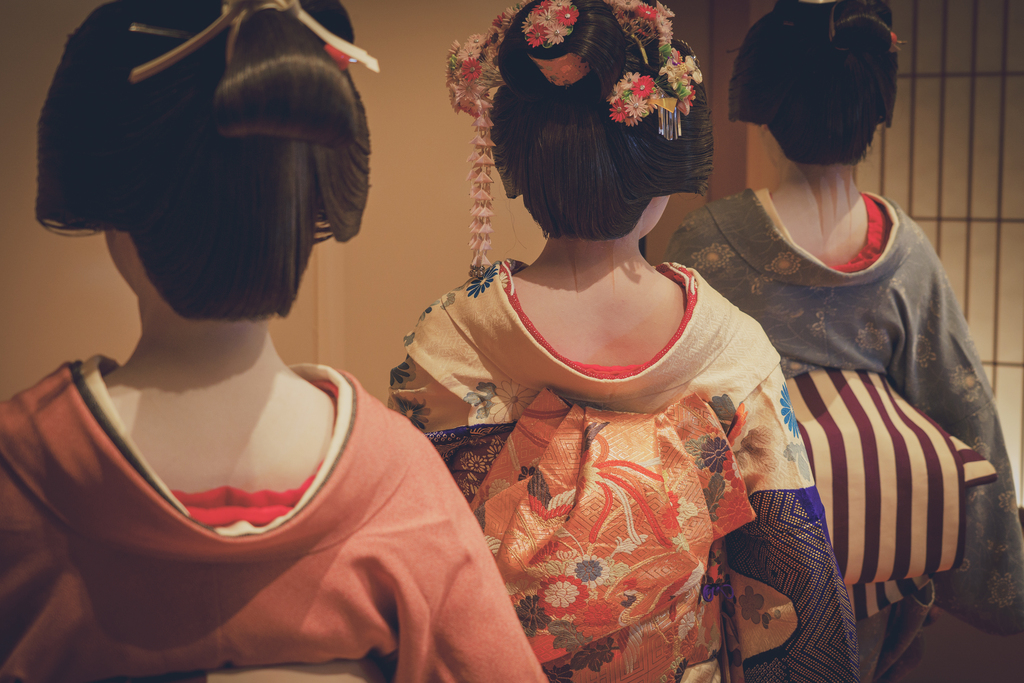
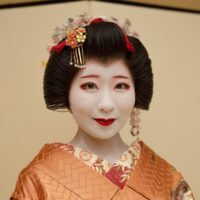
A maiko represents an apprentice geisha in the Kyoto tradition—one of the most iconic images of Japanese culture, recognized worldwide for her elaborate kimono, distinctive hair ornaments, and white makeup. Maiko undergo years of intensive training in classical dance, music, and the art of refined conversation before advancing to geiko status. Tokyo’s equivalent junior rank is the hangyoku. For a visual journey through the world of maiko and geisha, explore our collection of authentic geisha pictures.
What is the difference between Maiko, Hangyoku, and Geiko?
Maiko (Kyoto’s junior rank), hangyoku (Tokyo’s junior geisha), and geiko (Kyoto’s senior professional) are regional titles for stages within the geisha profession — all equally authentic within their respective hanamachi traditions.
Regional tradition and career stage determine these titles. Kyoto designates its junior rank as maiko and senior professionals as geiko, a term carrying centuries of imperial court heritage. Tokyo uses hangyoku for junior geisha, who have already made their debut. In Asakusa, fully independent senior geisha become ippon—literally “one full stalk,” signifying complete mastery. Both traditions prove equally authentic despite their regional differences. The path to ippon takes years: typically six months to a year as a minarai trainee, then three to four years as hangyoku before one earns the right to perform independently. Our okami herself trained for three and a half years as hangyoku before advancing to ippon.
How does a senior Geisha (Ippon) differ from a junior Geisha (Hangyoku)?
An ippon is a fully independent senior geisha, while a hangyoku is a junior geisha who has already made her debut and performs at banquets while continuing to refine her artistry under close guidance — with visible distinctions in hair ornaments, footwear, and kimono style.
A hangyoku is a junior geisha — already debuted and performing at banquets — who continues developing her artistry under close guidance. An ippon achieves fully independent professional status after earning the right to perform without supervision. In Asakusa, visible distinctions include hair ornaments (kanzashi), footwear, and the style of kimono each wears—all codified markers of standing within the hanamachi. What often goes unnoticed is that the journey actually begins even before hangyoku: every future geisha first enters as a minarai (apprentice/observer), spending six months to a year learning the foundational manners — how to sit, how to walk on tatami, how to pour, the careful honorific vocabulary — before she ever debuts in hangyoku long-sleeved kimono. Three stages, not two.
What is a Taikomochi (Hokan) — the original Geisha?
A taikomochi (also called hokan) is a male entertainer who predates female geisha by decades — the original geisha — orchestrating banquet atmospheres through wit, humor, storytelling, and performance. This tradition survives only in Asakusa.
Taikomochi (also hokan) are male entertainers who are, in fact, the original geisha. Predating female geisha by decades, they orchestrate the entire atmosphere of a banquet through wit, humor, storytelling, and performance. This tradition survives only in Asakusa, making it one of the rarest living arts in Japan. Learn more about how the taikomochi tradition shaped the geisha world in our complete history guide.
What is the difference between Tachikata and Jikata?
Tachikata are geisha who specialize in dance (the visual centerpiece), while jikata are geisha musicians who provide live singing and shamisen accompaniment — together, their interplay forms the heart of a traditional ozashiki (geisha banquet) performance.
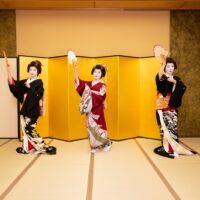
Tachikata specialize in dance—the visual centerpiece of any ozashiki. Jikata are musicians who provide live singing and shamisen accompaniment, setting the emotional tone of the evening. Their interplay constitutes the heartbeat of a traditional geisha performance. To see how these roles come together, explore our guide to geisha dance and performance. This difference also explains something first-time visitors often wonder about: why some geisha at an ozashiki are not in white makeup. The tachikata (dancer) performs in full white makeup and traditional Japanese hairstyle; the jikata (musician) appears with her own natural face and a modern hairstyle — what is called yōhatsu (a Western-style coiffure, as distinct from the traditional nihongami). Komaaki, one of the geisha we regularly call on at Miyakodori, is a jikata: she plays shamisen with her face unpainted, as has been the custom since the tradition shifted away from the all-white-makeup style of earlier generations.
What is the Shamisen — the instrument of the Geisha?
The shamisen (三味線) is a three-stringed Japanese lute played with a large plectrum called a bachi — the defining instrument of geisha culture, producing a sound that is at once percussive, melodic, and deeply evocative of the Edo period.
The shamisen (三味線) functions as a three-stringed Japanese lute—the defining instrument of geisha culture. Played with a large plectrum called a bachi, it produces a sound that is at once percussive and melodic: raw, resonant, and deeply evocative of the Edo period. Unlike other instruments, the shamisen is inseparable from the ozashiki—its sound does not exist outside this world. For an in-depth exploration of this instrument, read our dedicated guide to the shamisen: Japan’s three-stringed lute and the soul of geisha music.
How is Geisha culture connected to Samurai and Edo-period culture?
Geisha culture and samurai culture are two pillars of the same Edo-period world — the ozashiki provided a space where strict social hierarchies could dissolve into genuine human warmth, and the aesthetic of iki emerged as Edo townspeople asserted elegance and freedom through culture.
Both represent two pillars of the same Edo-period world. The hanamachi flourished in the urban townscapes of Edo—the city of merchants, craftsmen, and samurai retainers. The ozashiki provided a space where the strict social hierarchies of the day could briefly dissolve into genuine human warmth. The aesthetic of iki itself emerged from Edo townspeople pushing back against the rigid formality imposed by the samurai class—an assertion of elegance, wit, and freedom through culture. Our geisha history guide traces this evolution in detail.
Is a Geisha’s stage name (Geimei) the same as a “Genji name”?
No — a geimei is a professional stage name reflecting a geisha’s artistry and hanamachi lineage, while a “genji name” historically associated with courtesans. Conflating the two is both inaccurate and disrespectful.
No—the distinction matters significantly. A geimei represents the professional name adopted by a geisha, chosen to reflect her artistry and hanamachi lineage. A “genji name” historically associated with courtesans. Since their professions and cultural contexts are entirely different, conflating the two is both inaccurate and disrespectful.
How to Experience a Geisha Banquet in Tokyo: Booking, Fees, and Tradition
Can first-time visitors book a Geisha experience in Asakusa?
Yes — at Miyakodori in Asakusa, first-time visitors can book an authentic geisha ozashiki (geisha banquet) experience directly online with no introduction or referral required.
Yes. Many establishments observe ichigen-san okotowari—the tradition of accepting only guests introduced by an established patron. At Miyakodori, that door was deliberately opened.
The decision was not casual. With Asakusa’s geisha community having contracted from over 1,000 practitioners to approximately 20, and licensed venues from 300 to just 2, welcoming international visitors directly was both an act of cultural stewardship and a conviction: that geisha culture belongs to those who wish to encounter it with genuine curiosity and respect. No introduction required. Reservations available directly online.
At Miyakodori, we have welcomed guests from over 30 countries since opening our doors to international visitors. In our experience, first-time guests often arrive nervous — and leave profoundly moved. The ozashiki has a way of dissolving distance, whether cultural or personal, and we consider it a privilege to witness that transformation every time. For a step-by-step guide to what your evening will look like, see our complete experience guide.
What are “Hanadai” and “Gyokudai” — the Geisha fee?
Hanadai and gyokudai both refer to the professional fee paid for a geisha’s artistry and time at a banquet — the terms are used interchangeably, and the name “hangyoku” (junior geisha) itself derives from the word gyoku.
Both terms reference the fee for engaging a geisha at a banquet—think of it as the professional fee for their artistry and time. The hangyoku name itself derives from gyoku: historically, a junior geisha’s fee equaled half that of a senior geisha, though modern structures vary by establishment.
What are Room Charges (Sekiryo/Heyadai)?
Room charges (sekiryo or heyadai) are separate from the geisha fee and cover the use, preparation, and service of the private ozashiki (geisha banquet) room itself.
Room charges cover the use and preparation of the private banquet room—the setting, the service, and the ambiance—and are separate from the geisha fee. Definitions and calculation methods vary by establishment and region. Venues should provide a full breakdown during booking.
Do I need to tip the Geisha?
Tipping is not customary in Japan, but presenting a goshugi (gift envelope) to express appreciation is a refined gesture in the spirit of iki (粋) — the art of understated elegance.
Tipping remains not a customary practice in Japan, and there is no obligation to do so. However, presenting a goshugi (gift envelope) to express appreciation represents the refined and gracious way to acknowledge artistry—a gesture in the spirit of true Japanese iki (粋), the art of understated elegance.
Where in Tokyo can I meet a Geisha?
Asakusa is the most accessible geisha district in Tokyo for first-time visitors — Miyakodori welcomes guests directly with online reservations, while other hanamachi such as Akasaka, Kagurazaka, Shimbashi, and Mukojima typically require referrals.
Asakusa is the most accessible entry point into Tokyo’s geisha world. Miyakodori welcomes first-time guests and accepts online reservations directly—no referral needed. Other active hanamachi include Akasaka, Kagurazaka, Shimbashi, and Mukojima, though many operate on a referral-only basis. At Miyakodori, we guide every guest through the etiquette and flow of the evening beforehand — so you can focus entirely on the experience itself. For a closer look at the Asakusa hanamachi and its history, visit our guide to the Asakusa geisha district. And if you’re curious about the interactive side of a geisha evening, our guide to ozashiki geisha banquet games is a great place to start.
Further Reading: Explore the World of Geisha
- The Complete History of Geisha Culture — From Edo origins to the modern hanamachi
- The Complete Geisha Experience Guide — What to expect at an authentic ozashiki (geisha banquet)
- The Shamisen: Japan’s Three-Stringed Lute & the Soul of Geisha Music
- The Complete Guide to Geisha Dance — Understanding tachikata performance
- Ozashiki Geisha Banquet Games — The interactive heart of a geisha evening
- The Asakusa Geisha District — Tokyo’s most accessible hanamachi
- Authentic Geisha Pictures — A visual journey through the karyukai
- Japanese Geisha Facts
- Maiko vs Geisha
- everything you need to know about Tokyo geisha
- Asakusa Geisha Encyclopedia — what a geisha is, how one is made, and what happens at an ozashiki, from inside the hanamachi
Private Geisha Experience in Asakusa, Tokyo
Now that you know the world of geisha — experience it for yourself. Book a private ozashiki banquet and step into the living tradition of Asakusa’s hanamachi.
At Miyakodori, an intimate evening of graceful dance, live shamisen, and warm geisha hospitality awaits — in a setting that has remained unchanged for generations.
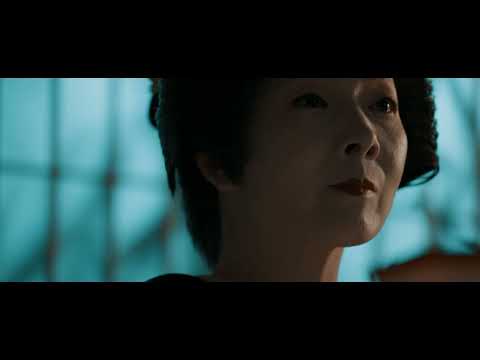
Watch: A Geisha Evening at Miyakodori (Official PV)
Request Your Private Ozashiki Banquet
Secure online booking through our reservation form. First-time guests welcome.
- Private Ozashiki Banquets :An intimate, refined encounter with authentic Asakusa geisha.
- Traditional Geisha Artistry:Graceful dance, live shamisen, and interactive ozashiki games.
- Historic Hanamachi Setting:A timeless cultural experience in the heart of Asakusa.
- English Support Available :Attentive assistance for international guests throughout your visit.
Only 2 licensed venues remain in Asakusa — early reservation is recommended.
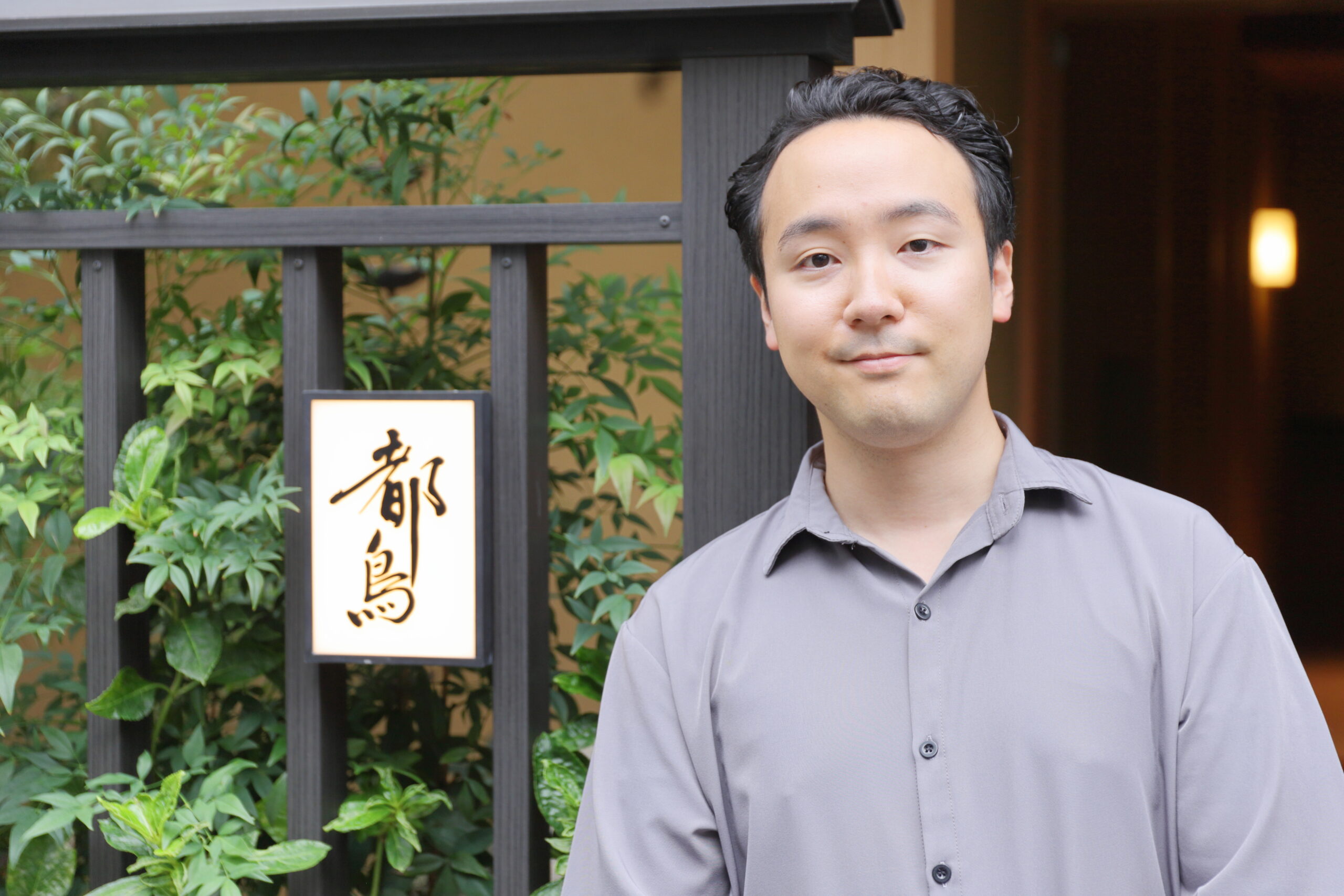


- Geisha Shows in Tokyo: Where to See Geisha, and How Tokyo Compares with Kyoto
- Geisha in Tokyo: The Complete History Guide
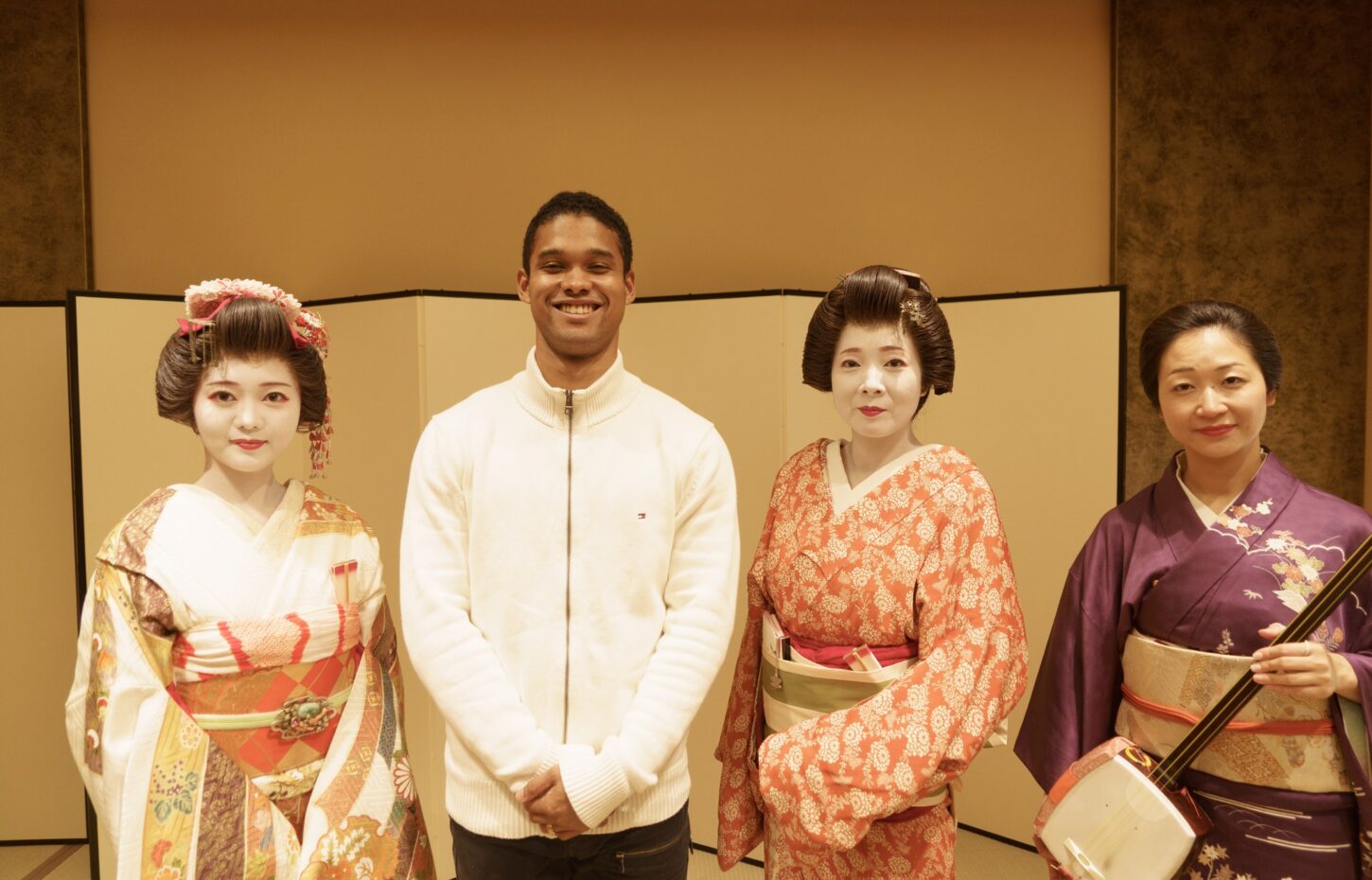
Tokyo Experience Gifts: Unforgettable Cultural Gift Ideas in Japan
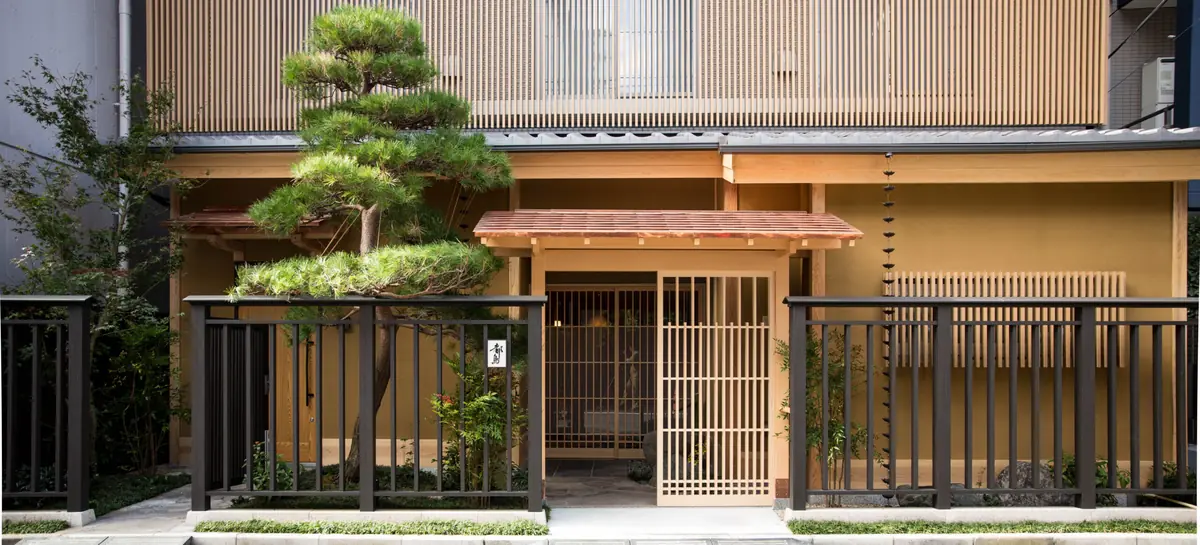
What is a Geisha House? An Ultimate Guide to the World of Okiya and Ochaya (2026 Edition)
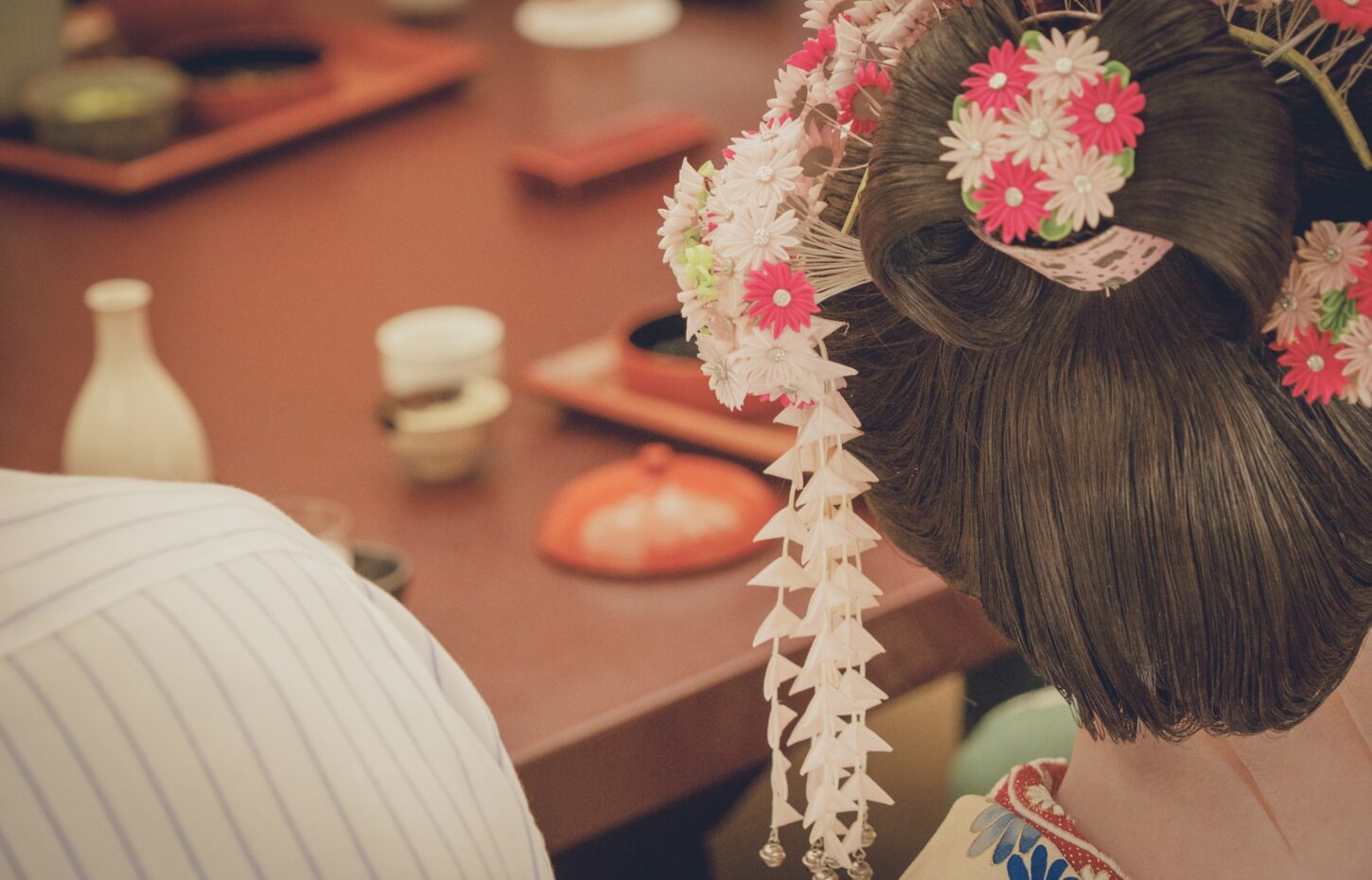
Kanzashi: A Guide to Japanese Hair Ornaments
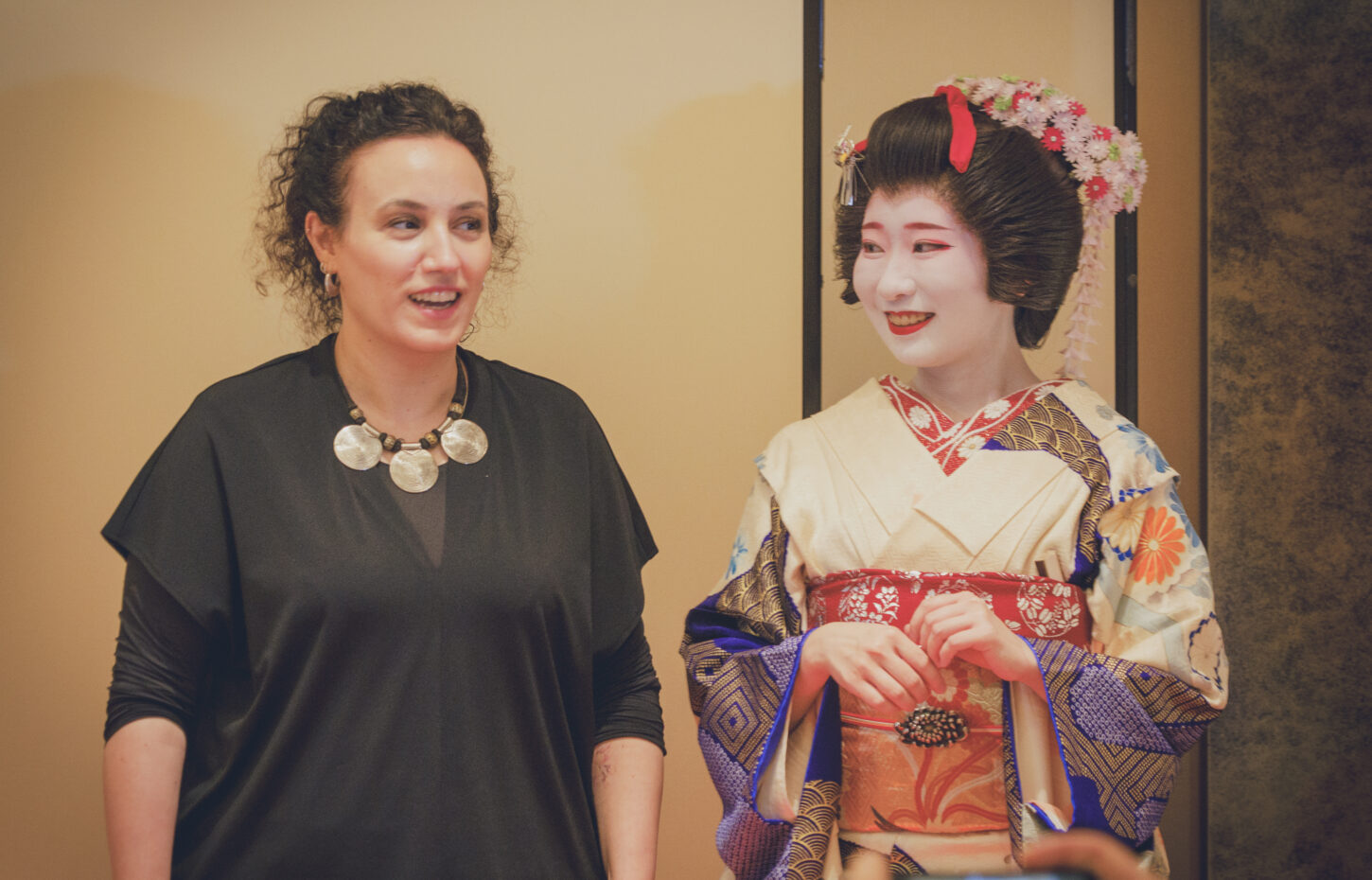
1,060 to 20: A Third-Generation Owner on What Changed in Asakusa’s Geisha World
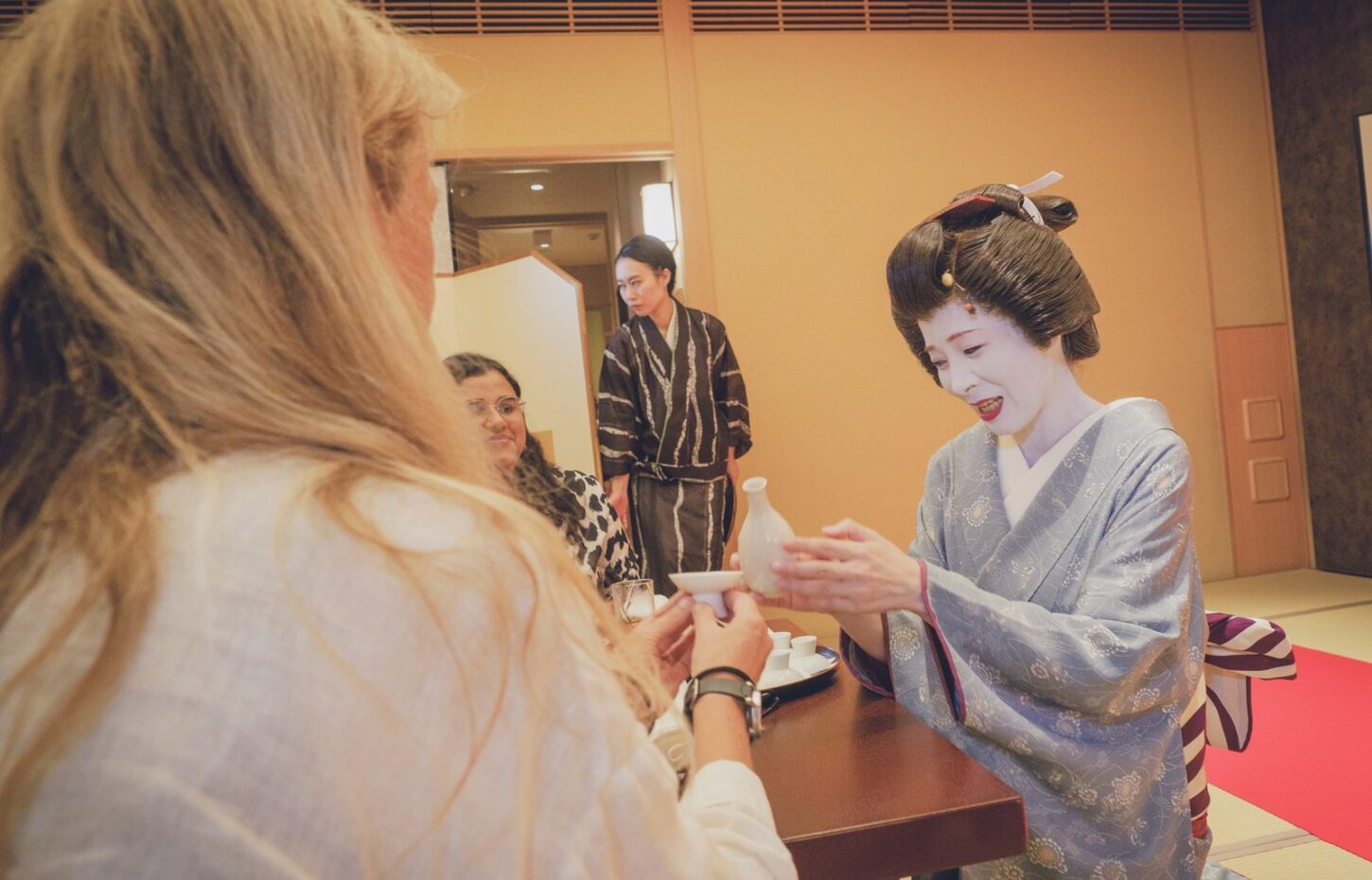
What Is Ozashiki Asobi? A Guide to Geisha Games, Etiquette, and the Real Experience in Asakusa, Tokyo
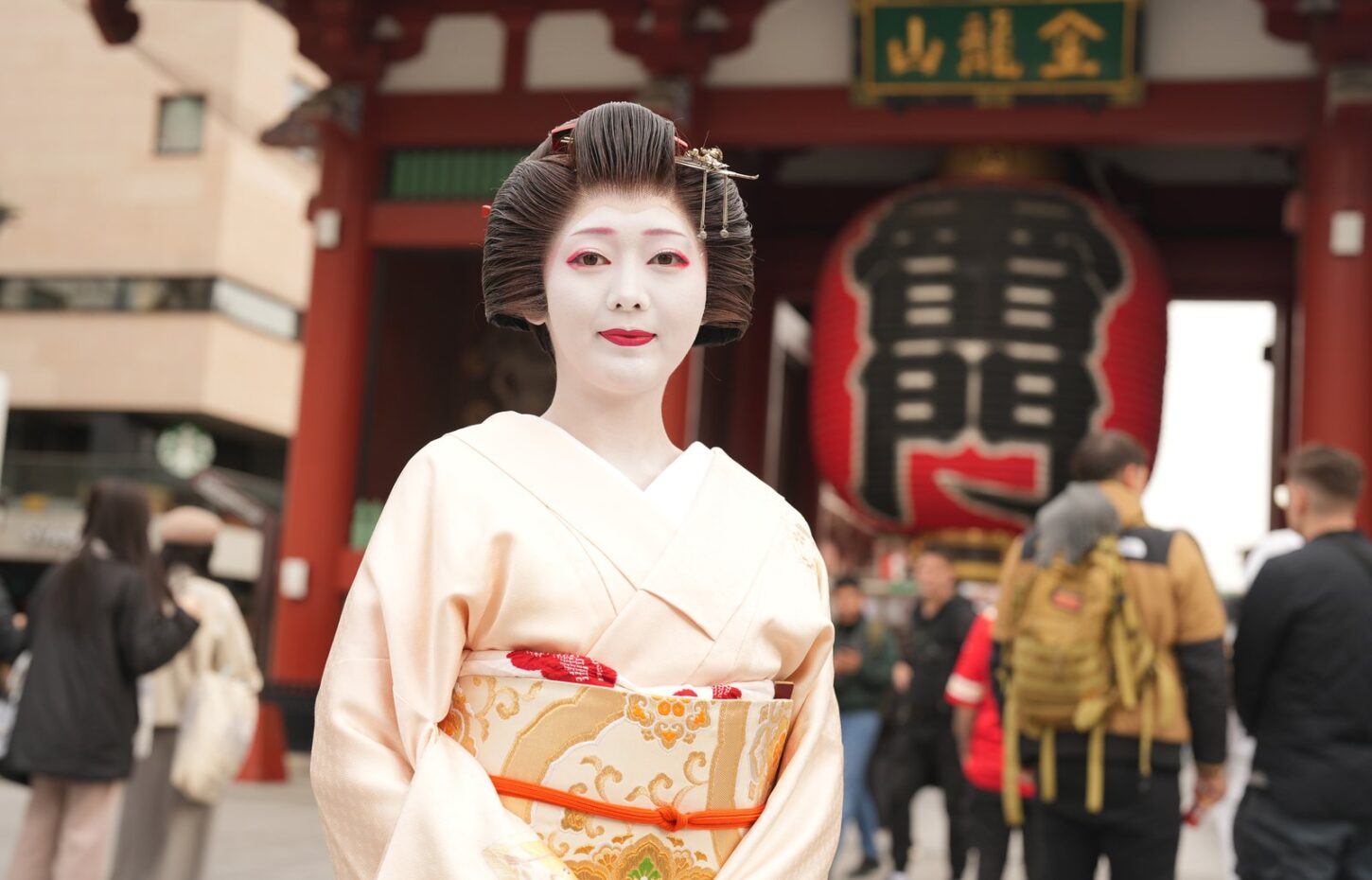
How to See a Geisha in Tokyo: 5 Ways Compared (2026)
Comment ( 0 )
Trackbacks are closed.
No comments yet.