



How Long Is a Geisha Experience? (Tokyo Ozashiki Guide)
A geisha experience in Tokyo typically lasts between 75 minutes and three hours. At Asakusa Miyakodori — a working geisha tea house founded in 1950 — four formats are offered: the 75-minute Tea House seating (¥17,600 per person, shared seating, the entry-budget option), a one-hour private session (from ¥34,000 per person), a two-hour signature plan (from ¥45,000 per person, the okami’s recommendation), and a three-hour full-course banquet (from ¥106,000 per person, kaiseki dinner included). The choice matters more than most travelers expect. As Chikage, the okami, puts it: “One hour is short. To really know what an ozashiki is, you need at least two hours.” Here is what each duration includes, what it leaves out, and how to choose the one that fits your visit.
Why duration changes the experience
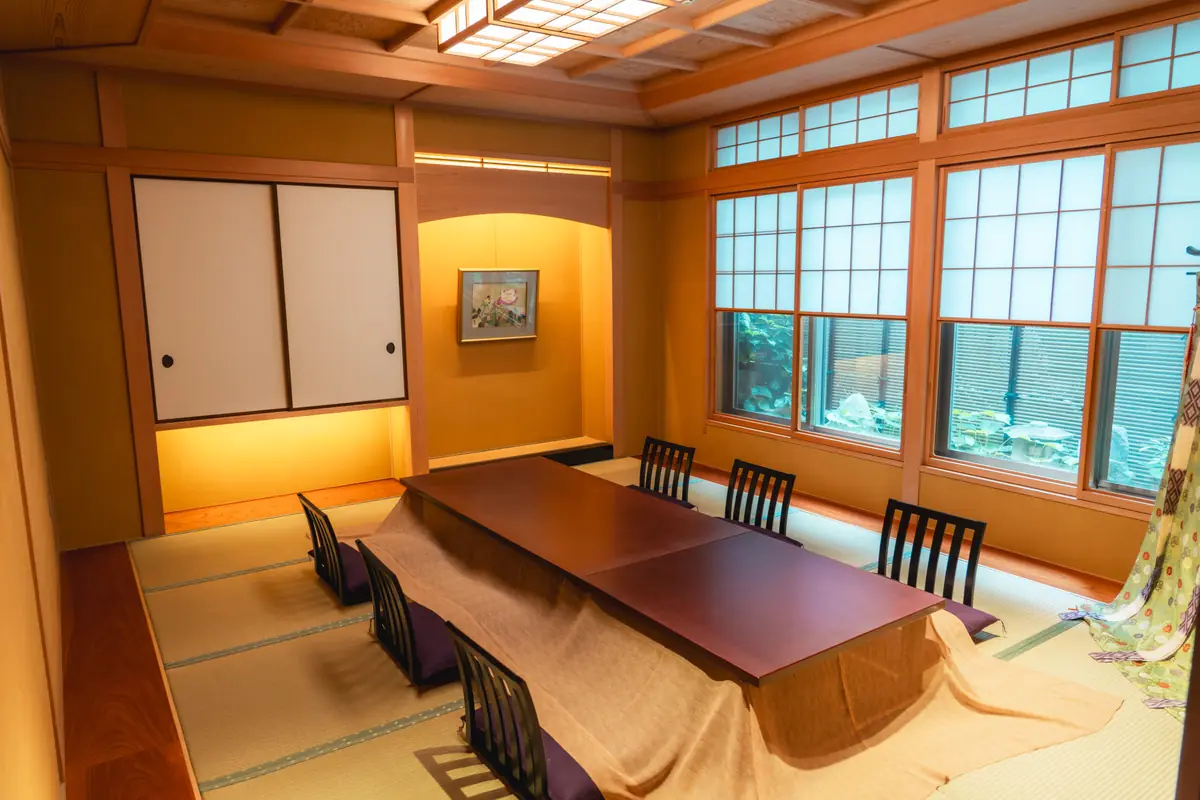
A geisha banquet — ozashiki — is not a stage show that you watch from a seat. It is a hosted gathering in a private tatami room, structured around a specific arc: a formal greeting, a danced piece set to live shamisen, traditional parlor games (ozashiki-asobi), conversation through interpretation, and at Miyakodori a closing ritual handclap (tejime) — a signature flourish of this house. Every minute is choreographed, but it is choreographed for connection, not for a clock.
That arc compresses or expands depending on how long you book. Sixty minutes leaves room for the highlights but not the unhurried middle, which is where most guests describe their favourite memories — a piece of geisha music they did not know they would love, a back-and-forth question through the interpreter that surprised them, or a Konpira Fune Fune round that ran twice as long because no one wanted to stop laughing.
In Asakusa, Miyakodori structures these sessions around four formats. Each one trades depth for accessibility in a different way.
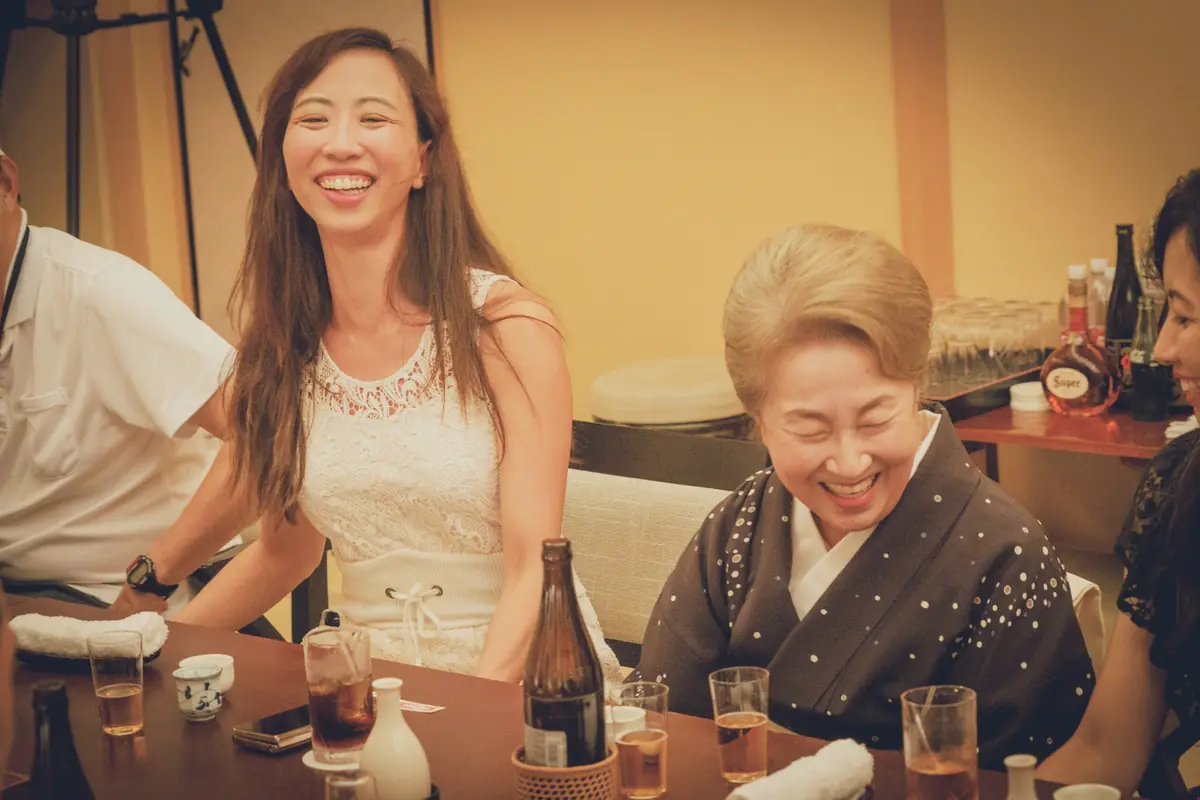
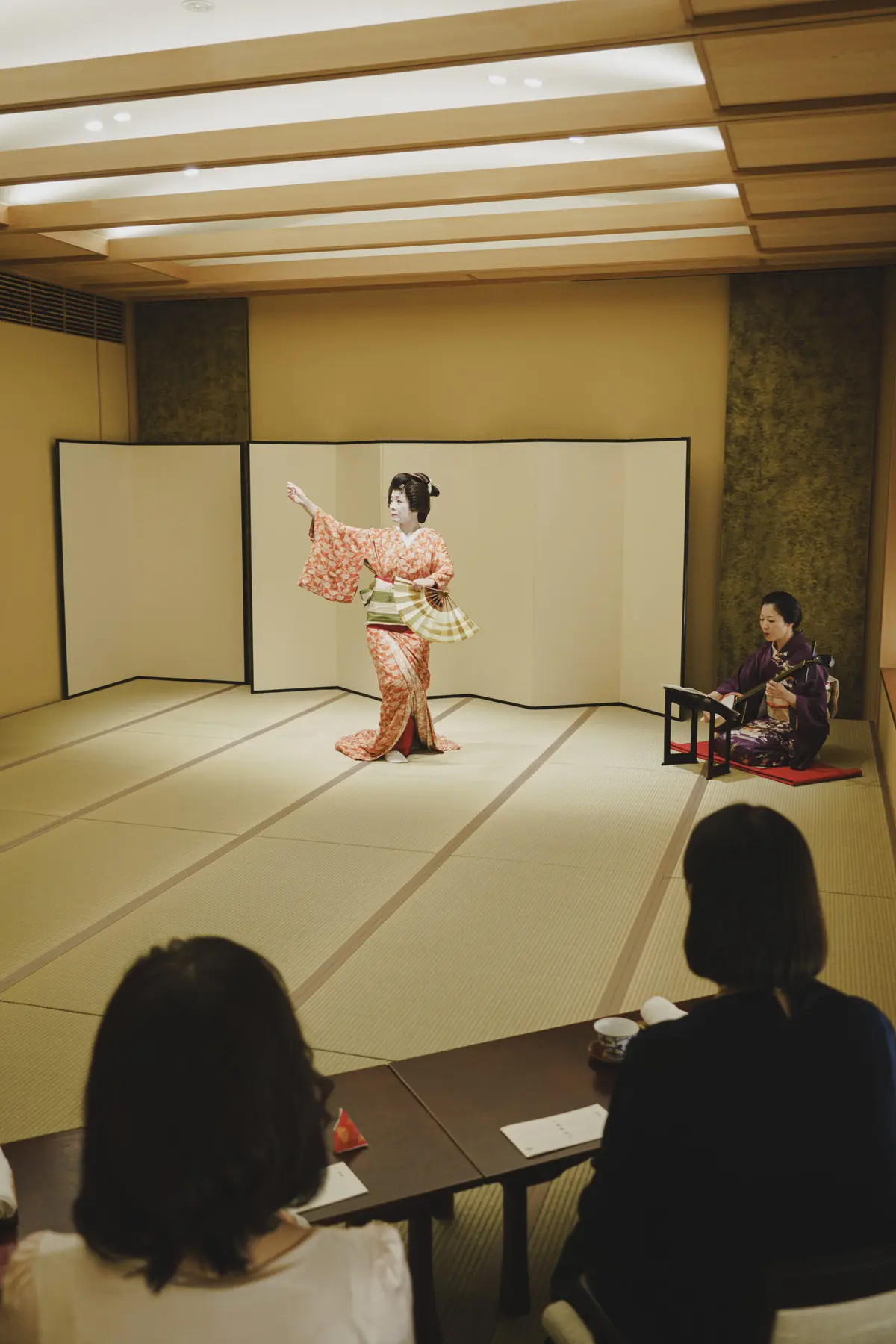
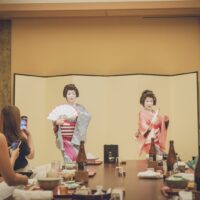
What fills the time: one geisha dancing with a fan while another plays the shamisen behind her, in the tatami room where your evening happens.
The four formats at Miyakodori
75-minute Tea House Seating (¥17,600 per person · entry-budget option)
The Ozashiki Tea House plan is Miyakodori’s purpose-built entry point for travelers on a tighter budget — and it is unique to Miyakodori. Other Asakusa tea houses do not offer a comparable shared-seating format. It runs in the early afternoon (15:00 start, primarily Monday/Wednesday/Friday), with English support, and the seating is shared with other guests — meaning it is not a private session.
The honest framing matters here. The Tea House plan is the right choice if you specifically want to try a geisha format on a tighter budget without committing to a private booking. What it gives up, by design, is depth: shared seating limits how much one-to-one conversation any party can have with the geisha; the format includes only one parlor game (Konpira Fune Fune); and the dance and Q&A are kept short to fit the time.
For most travelers — especially anyone planning their one definitive Tokyo geisha experience — the one-hour private plan returns far more value than the ~¥16,000 price difference suggests. The upgrade is concrete: a private tatami room reserved for your party alone, real conversation time through the English interpreter, and the geisha’s undivided attention rather than shared across other parties at the same low table. Many guests describe the difference as watching an ozashiki versus being inside one. The okami’s standing recommendation, when guests ask, is the same one we make here.
The Tea House programme is fixed:
- Arrival and greetings
- A seasonal dance with live shamisen (about 10 minutes)
- A short Q&A with the geisha (about 10 minutes)
- One round of Konpira Fune Fune, the rhythm parlor game
- Matcha and a seasonal sweet
- Closing dance, end-of-session photo time, and farewell
One-hour Private Plan — Geisha Highlights (from ¥34,000 per person)
The one-hour private format — also a Miyakodori-specific offering — compresses the full ozashiki structure into sixty minutes:
| Time | Element |
|---|---|
| 0:00 | Greetings and seating |
| 0:10 | Traditional dance with shamisen accompaniment (~15 min) |
| 0:25 | Ozashiki-asobi parlor games (~25 min) |
| 0:50 | Optional matcha and seasonal sweet |
| 0:55 | Photographs and tejime closing handclap |
The one-hour plan runs in the daytime only, with start times from 14:00 to 17:00, from ¥34,000 per person at four guests or more and a one-drink minimum charged separately. Evenings are reserved for the two- and three-hour plans, which begin at 17:30. Two geisha are present (three for groups of six or more), and an English interpreter is present throughout.
The honest description: this format works well as a focused introduction for a single party — say, a couple on a tight Tokyo itinerary — but every element is timed close to its minimum. Conversation, in particular, gets squeezed. That said, the upgrade from the shared Tea House to a private one-hour returns disproportionate value — the room belongs to your party alone, the geisha calibrates the evening to who is at your table, and the conversation has space to actually happen. The price difference is real; what you get for it is wider than the gap.
Reserve a Private Ozashiki at Miyakodori
Miyakodori — Asakusa’s only remaining machiai-chaya, founded in 1950 — offers private ozashiki (a private gathering with geisha) plans of one, two, and three hours. Live shamisen, traditional dance, English interpretation, and seasonal kaiseki (3-hour plan). Direct booking. No introduction required.
Two-hour Plan — More Time with Geisha (the okami’s recommendation)
This is the format most regular guests, and the okami herself, recommend. Pricing is the same across daytime and evening (from ¥45,000 per person at four guests or more), free-flow drinks (beer, house sake, and select non-alcoholic drinks) are included, and the structure expands rather than stretches. For parties of up to 5 guests, two geisha are present; for parties of 6 or more, the format scales accordingly:
| Time | Element |
|---|---|
| 0:00 | Greetings and seating |
| 0:20 | Traditional dance with shamisen (~15 min) |
| 0:35 | Ozashiki-asobi parlor games (~45 min) |
| 1:20 | Conversation with English interpretation (~20 min) |
| 1:40 | Photographs and tejime closing handclap |
The forty-five minute games block is the meaningful difference. Where a one-hour plan typically fits a single round of Konpira Fune Fune, two hours leave room for two or three games — Tora Tora, Omawari-san, sometimes Tōsenkyō (fan-throwing) — chosen to match the energy of the room.
This is also where the okami’s note about duration carries the most weight. In her own words:
“One hour is short. To really know geisha and the world of a ryōtei, I think you need at least two hours. The variety of parlor games can be expanded. There is time for proper conversation — both directions, ours and yours. The dancing can stretch by another piece. And there is time to actually touch the instruments — the fan, the drum, the shamisen. None of that fits in sixty minutes.”
— Okami Chikage, Asakusa Miyakodori
Practically, two hours is also the threshold at which a kaiseki meal, an A5 wagyu course, or a seasonal bento can be added as an option without feeling rushed. For most international visitors planning a single, definitive Tokyo geisha experience, this is the format that justifies the trip.
Three-hour Plan — Geisha Kaiseki Dinner (evening only)
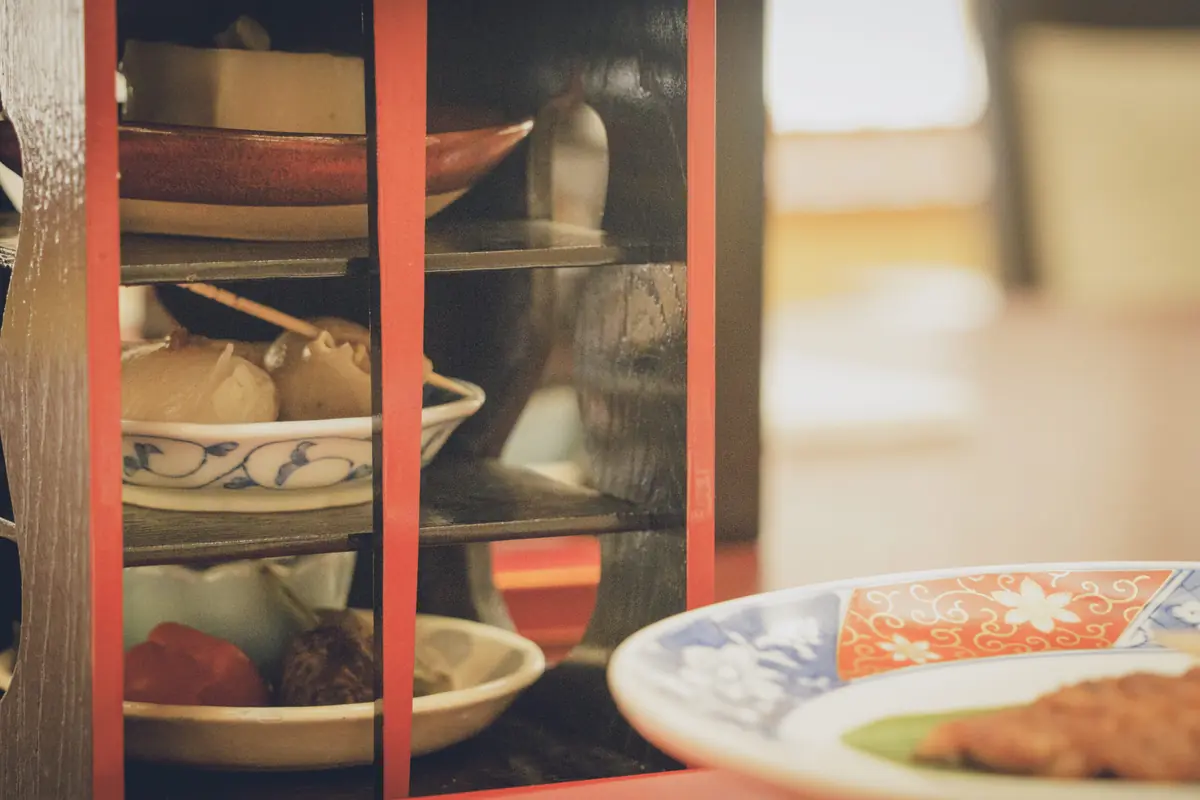
The full-course format is structured around an evening kaiseki dinner served by external partners — Miyakodori is a machiai-chaya (a banquet house that hosts geisha entertainment without operating its own kitchen), so meals come from named restaurants and can be adjusted for allergies and dietary needs such as vegetarian or vegan. For fully halal or kosher guests, the kaiseki is replaced with bento (boxed meals), with 5 days’ notice. Pricing starts at ¥106,000 per person for parties of four or more, solo guests are also welcome, and the full kaiseki and free-flow drinks are included.
| Time | Element |
|---|---|
| 0:00 | Greetings and kaiseki opens |
| 0:30 | Traditional dance with shamisen and song (~15 min) |
| 0:45 | Ozashiki-asobi parlor games (~60 min) |
| 1:45 | Conversation and cultural exchange (~45 min) |
| 2:30 | Photographs and tejime closing handclap |
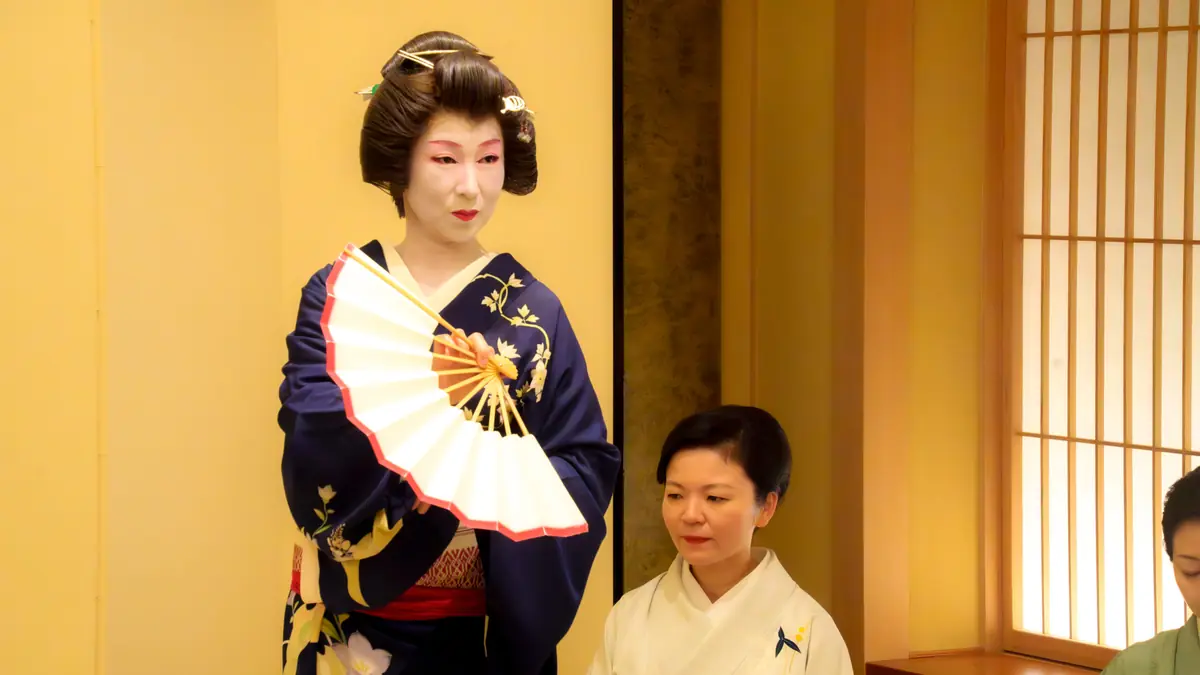
For parties of up to 5 guests, three geisha are present (four or more for parties of six or more), which is what gives the room its characteristic atmosphere of a working hanamachi gathering rather than a private performance. The three-hour plan is the okami’s recommendation for groups of 6 or more, for anniversaries and major milestones, and for evenings spent with the people who matter most to you. It is also the only plan that mirrors how Asakusa’s geisha worked historically — a long evening with food, music, conversation, and games unfolding on the geishas’ rhythm rather than the guests’ clock.
What actually fits in each duration — at a glance
| Element | 75 min | 1 hour | 2 hours | 3 hours |
|---|---|---|---|---|
| Geisha greeting and tejime | ✓ | ✓ | ✓ | ✓ |
| Shamisen-accompanied dance | ✓ (1 piece) | ✓ (1 piece) | ✓ (1 piece, longer) | ✓ (1–2 pieces with song) |
| Ozashiki-asobi parlor games | ✓ (Konpira Fune Fune only) | ✓ (1–2) | ✓ (2–3, varied) | ✓ (full set, 60 min) |
| Q&A through interpreter | Brief | Minimal | Substantive (~20 min) | Extended (~45 min) |
| Touching the instruments (fan, drum, shamisen) | No | No | Yes | Yes |
| Matcha and sweet | Included | Optional | Optional | (kaiseki) |
| Kaiseki dinner | No | Not recommended | Add-on, 2 days advance | Included |
| Free-flow drinks | No | One-drink minimum | Yes | Yes |
| Private room | No (shared) | Yes | Yes | Yes |
| Number of geisha present | 1 lead geisha + shamisen accompaniment | 2 (3 if 6+ guests) | 2 (5 or fewer); scales for 6+ | 3 (5 or fewer); 4+ for 6+ |
A useful way to read the table: the right-hand columns do not just give you longer versions of the same thing. They give you different things — particularly the instrument-touching segment, the substantive interpreted conversation, and the variety of parlor games beyond Konpira Fune Fune. None of these exist below the two-hour line, and the parlor-games variety doesn’t exist below the one-hour-private line.
How to choose the right duration
Choose 75 minutes if you are visiting Asakusa for the first time on a tight budget, traveling solo or with one companion, want English support without negotiating a private booking, and are open to sharing the room with other guests. The Tea House format is the only option open to walk-ins (with same-day reservation possible until 14:00). Be aware that you will share the geisha’s attention with other parties at the same seating.
Choose one hour private if you want a private session for a couple or a small group on a tight schedule. The upgrade from 75 minutes is what most travelers describe as the best decision they made about their evening — the room becomes yours alone, the geisha calibrates the pace to your party, and the conversation actually has room to happen rather than getting rushed. The yen difference is real; what changes inside the room is wider than the gap. It runs in the daytime only (14:00–17:00 start); for an evening session, the two- and three-hour plans are the ones to look at.
Choose two hours if this is the experience you have been planning toward, and you want to leave with the feeling of having actually spent time with the geisha rather than watched them. The two-hour plan is also the most common choice for repeat visitors to Tokyo who tried a 75-minute or one-hour format on a previous trip and want to deepen.
Choose three hours if your party is six or more guests, you are marking an anniversary or major milestone, or you want to spend an evening with the people who matter most to you. Kaiseki is included in the base price, and the format mirrors the historical rhythm of an Asakusa ryōtei evening more closely than any other.
Booking timing and practical notes
Reservations at Miyakodori run through our online reservation form and operate on a request basis rather than instant confirmation — the establishment confirms each booking individually, usually within two business days. For two-hour plans with a kaiseki or bento add-on, the food order needs to be placed at least two days in advance because the meal is sourced from external partner restaurants. For three-hour plans, no separate food order is needed because kaiseki is built in.
The cancellation policy for private plans follows a tiered structure, calculated on the reservation total: free up to fifteen days before the booking, 50 percent from fourteen to seven days before, 80 percent from six to four days before, and 100 percent from three days before through the day of the booking. Cancellation is also free for 48 hours after Miyakodori sends the booking confirmation, except for bookings confirmed within three days of the visit. A credit card is required at booking for all plans.
If your party arrives and discovers the energy in the room is exceptional, extension is available subject to that day’s schedule at ¥22,000 per geisha or hōkan for an additional sixty minutes — that is, the extension fee scales with the number of geisha at your table, not with the number of guests. Most extensions happen on two-hour plans.
Frequently Asked Questions
Q: Can I extend the experience after we’ve started?
Yes, subject to that day’s availability, in 60-minute blocks at ¥22,000 per geisha or hōkan. Most extensions occur on the two-hour plan when the conversation block runs long.
Q: Are there minimum group sizes?
Solo guests are welcome at the 75-minute Tea House and on all three private plans.
Q: Is there time for photos in every plan?
On all private plans (1-hour, 2-hour, and 3-hour), photos and videos are entirely up to you, anytime in the evening — your room, your call. The only thing we ask is no live-streaming. On the 75-minute Tea House plan (shared seating), a simple host (MC) guides the session; filming during the session is welcome, and there is a dedicated photo time near the end (about two photos per group).
Q: What is the difference in price between one and two hours?
For four guests, roughly ¥34,000 per person at one-hour daytime versus ¥45,000 per person at two hours — a difference of ¥11,000 per person. Free-flow drinks (on the 1-hour plan a single drink per guest is ordered separately; drinks range from ¥800 to ¥5,300, including sake and other alcoholic options — guests choose from the menu), the longer games block, and the substantive conversation segment account for the gap.
Q: What time of day is best?
The two-hour plan is identically priced across daytime and evening, which makes the choice purely about itinerary and atmosphere. Daytime sessions tend to be slightly more relaxed; evening sessions feel closer to a traditional Asakusa banquet rhythm. The one-hour plan runs only in the daytime (14:00–17:00 start); the 75-minute Tea House runs only in the afternoon; and the three-hour plan runs only in the evening.
Q: Can I bring children?
Yes. The okami has noted that family bookings — three generations including young children — have become more common in recent years, and that ozashiki-asobi parlor games tend to translate across ages and languages with surprising ease.
A final note on what duration really buys
Two hours, in the okami’s framing, is not just longer than one hour. It is the threshold at which a guest stops being an audience and starts being a participant — the moment when the interpreter is no longer racing the clock, when a fan can be handed across, when the geisha can choose a second piece because the first one landed. That is the experience the format was originally built for.
The shorter formats are still worth booking, particularly for first-time visitors testing the waters on a tighter budget. But if there is one detail about a Tokyo geisha experience that travellers consistently underweight in advance and overweight in retrospect, it is duration.
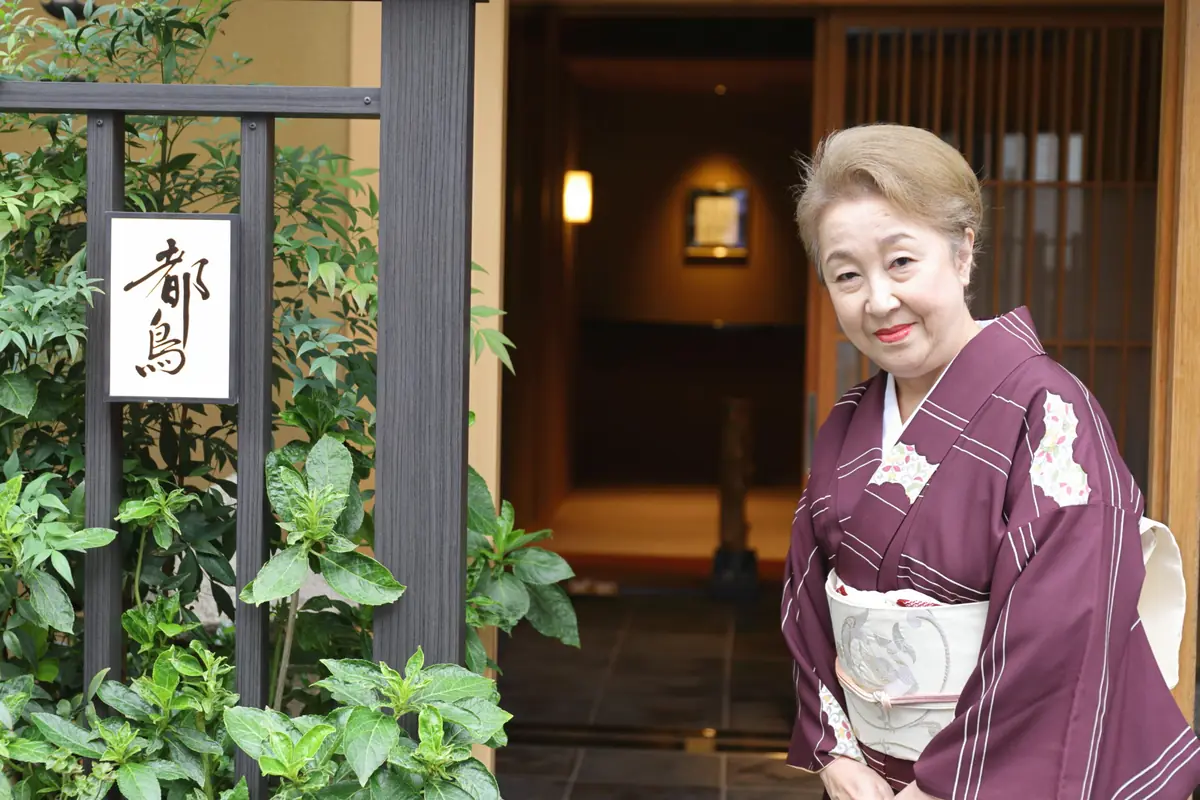
Request Your Tokyo Ozashiki Evening at Miyakodori
Whether you are stretching a budget for the 75-minute Tea House or planning the full three-hour banquet with kaiseki, every Miyakodori format delivers a working ozashiki (a private gathering with geisha) — live shamisen, classical dance, and authentic Asakusa hospitality. English support throughout. Direct booking — no introduction required.
Sources & References
- Asakusa Miyakodori Official Website: https://en.miyakodori-geisha.com/
- Interview with Okami Chikage at Miyakodori, December 2025 (recorded) — source of the quotes on session length
- Asakusa Geisha Association (Asakusa Kenban): https://asakusakenban.com/
- Miyakodori plan and pricing records, verified July 2026 — plan composition, cancellation policy, photo policy by plan, and geisha numbers per plan
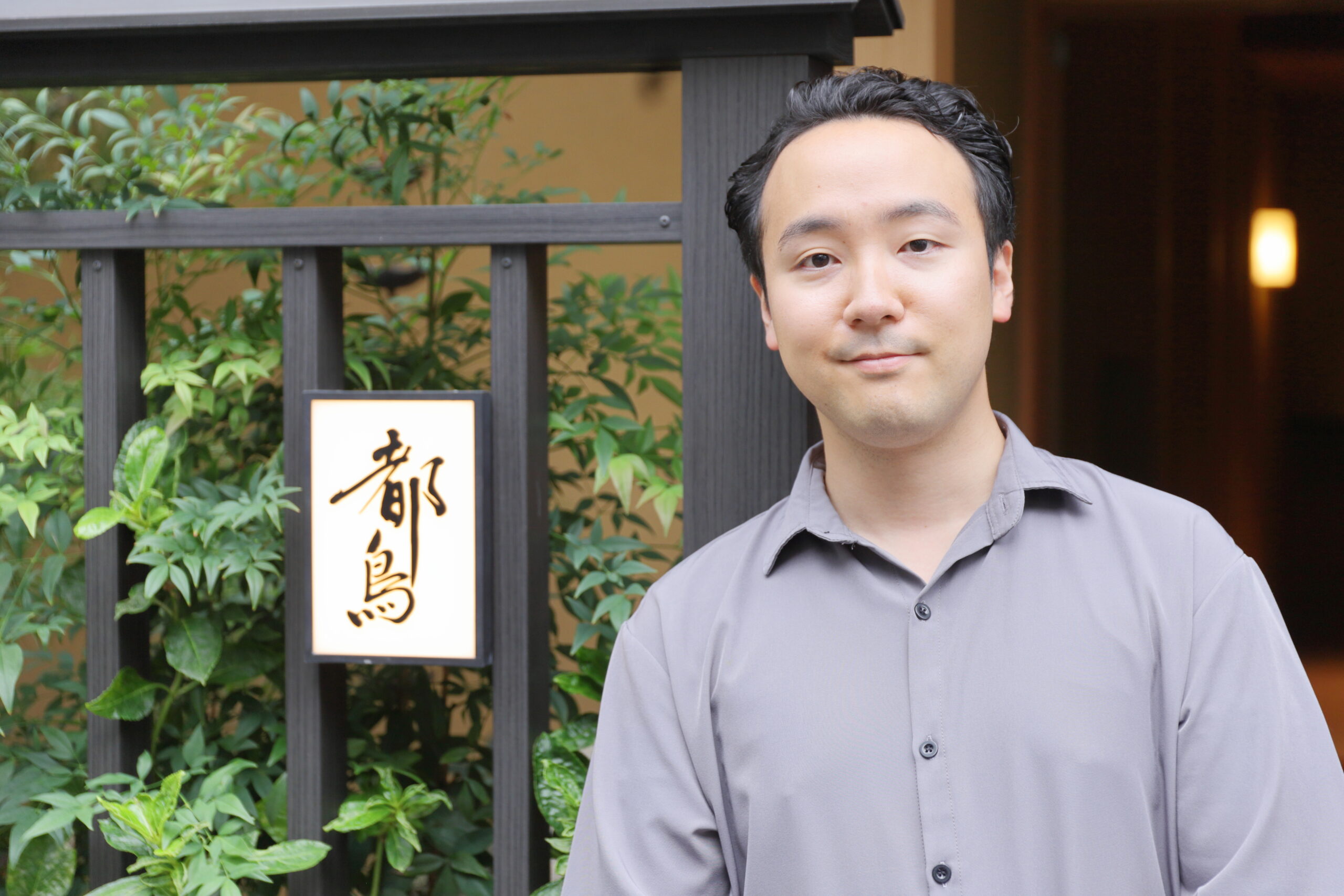


- Konpira Fune Fune: The Geisha Game Explained (Rules & History)
- Geisha Etiquette in a Tatami Room: What to Know Before You Go
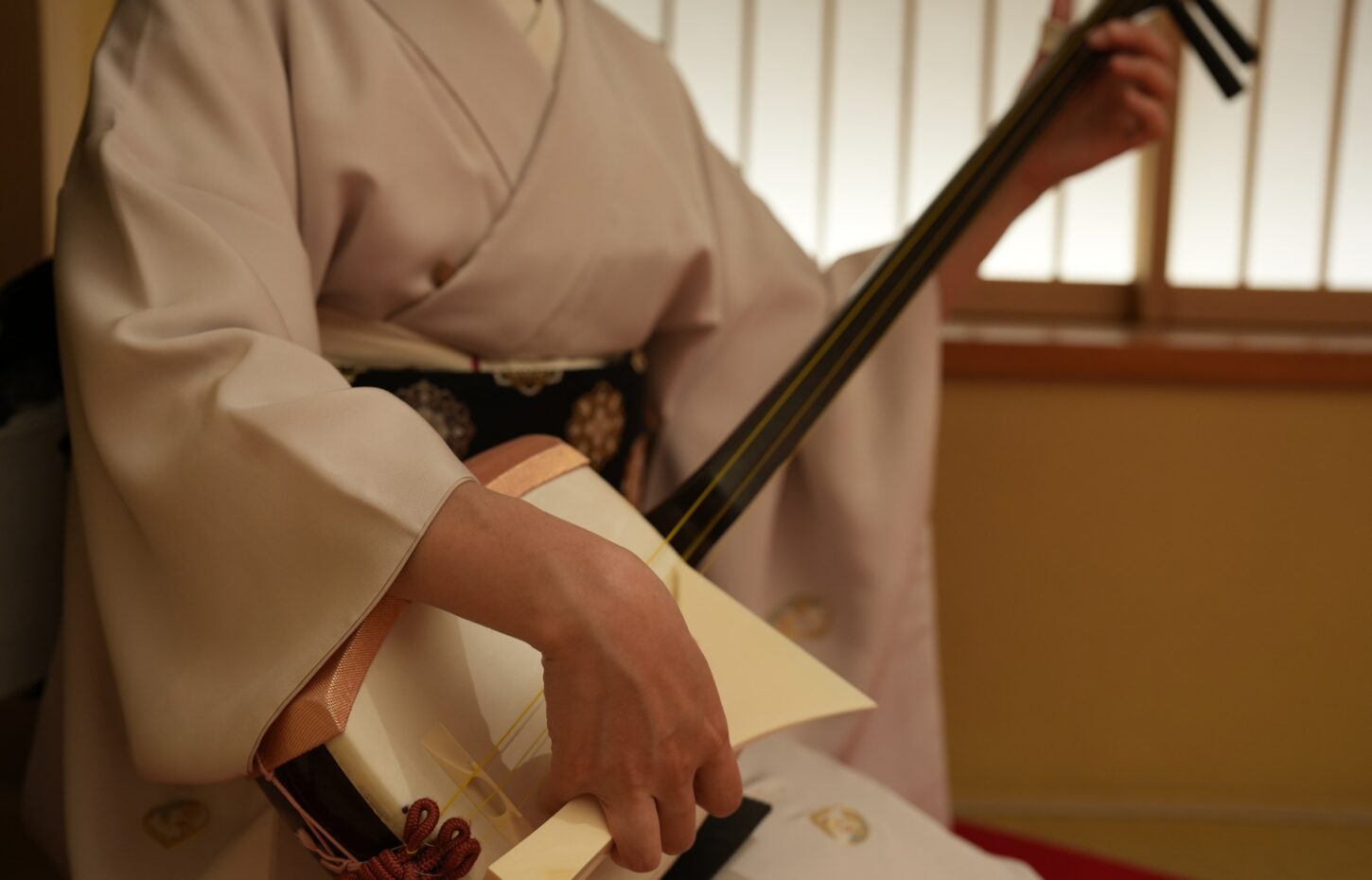
Geisha Instruments: The Music Behind the Ozashiki
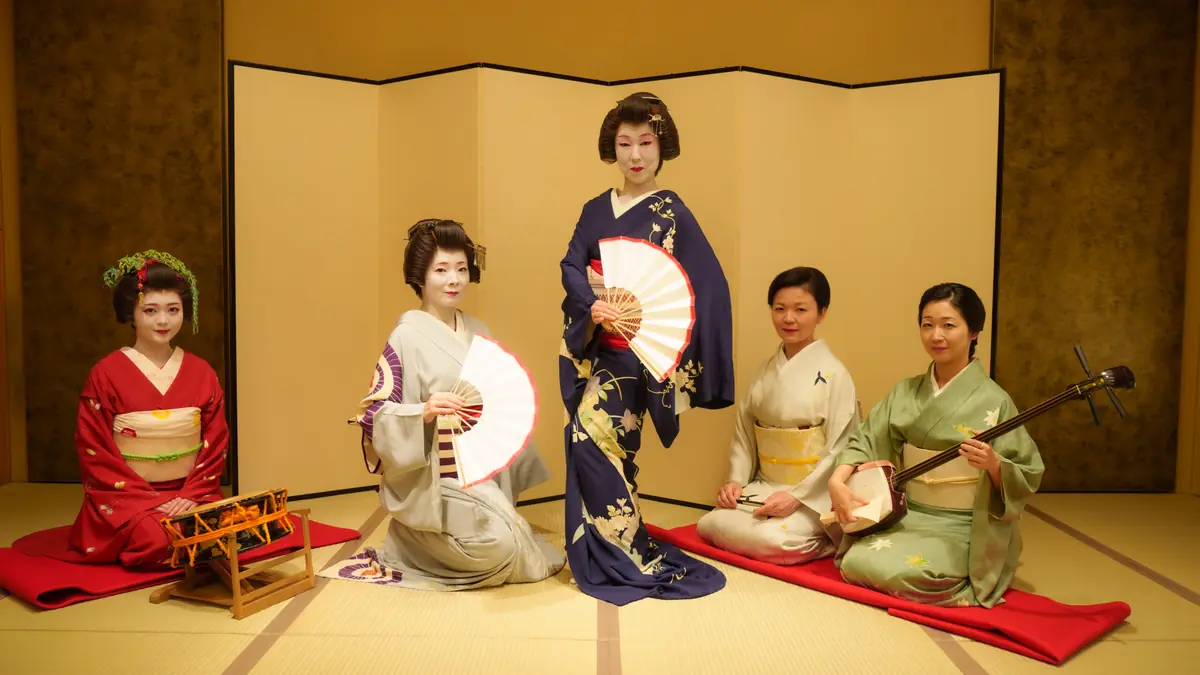
Geisha Shows in Tokyo: Witnessing the Art of the Flower and Willow World in 2026
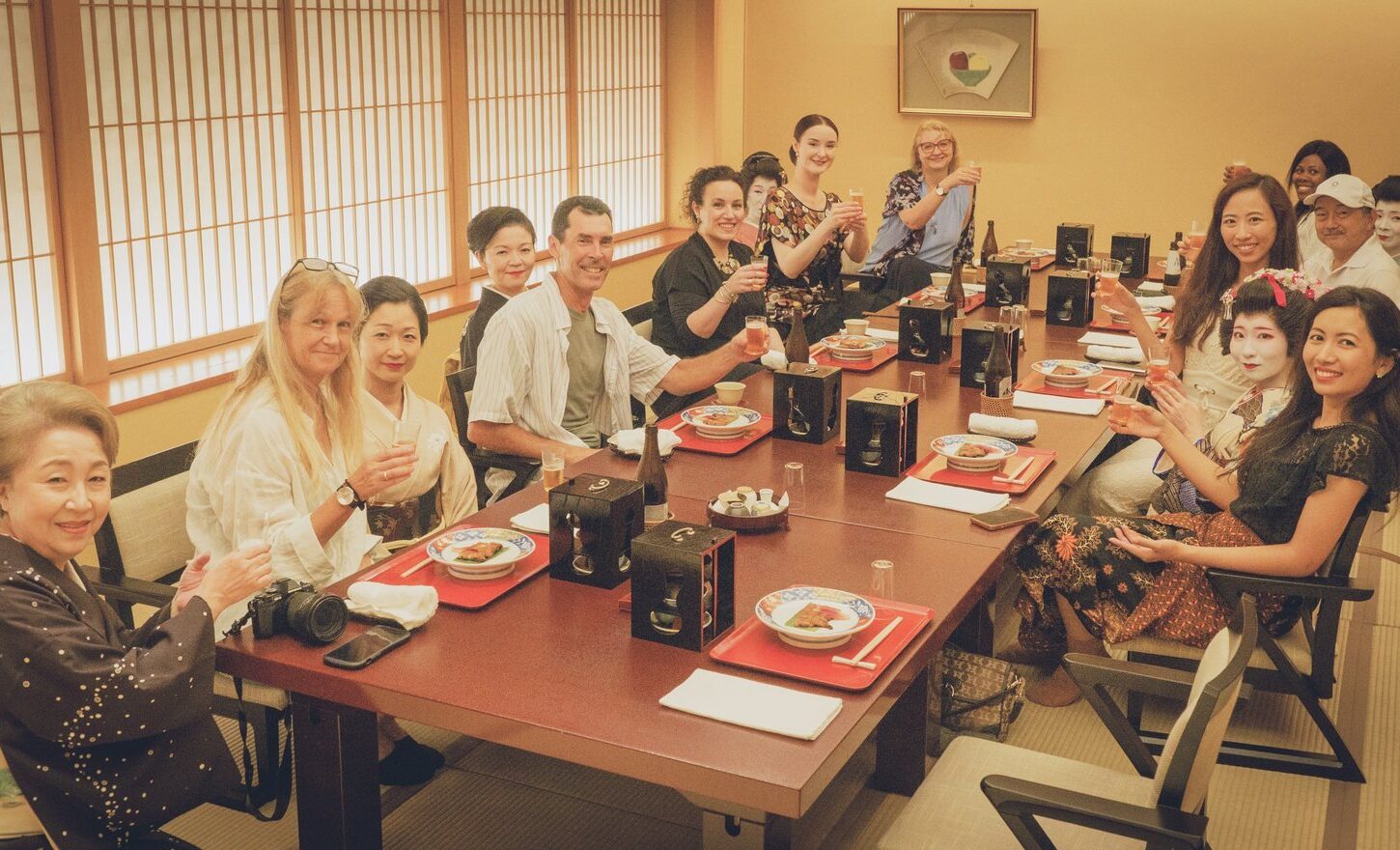
Tokyo VIP Tours, Reimagined: An Evening at Miyakodori
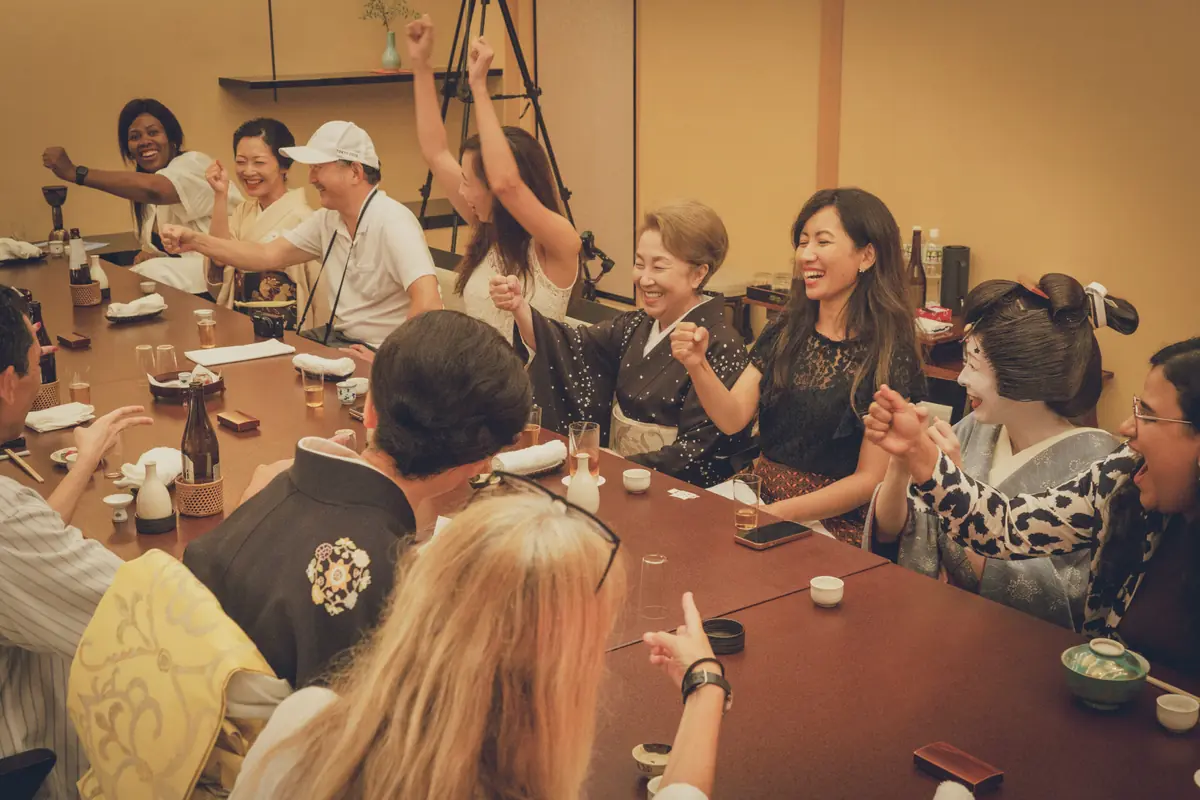
The Ultimate Guide to the Ozashiki Party: Unlocking the Secrets of Traditional Japanese Entertainment in Tokyo
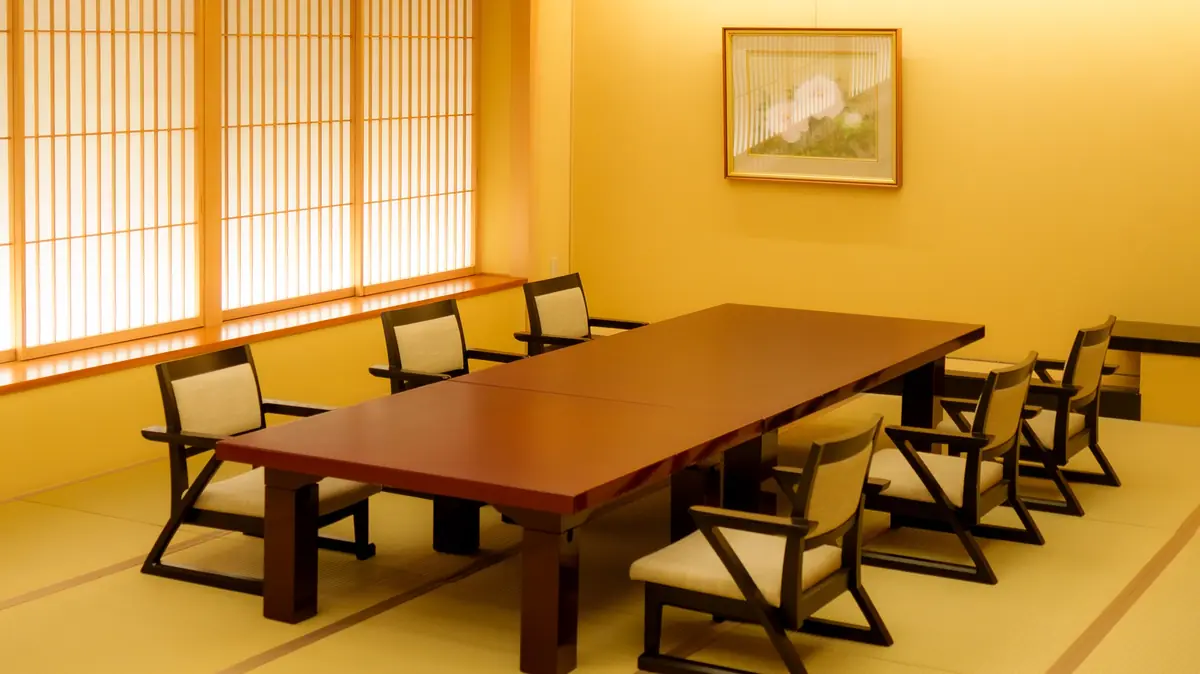
Geisha Etiquette in a Tatami Room: What to Know Before You Go
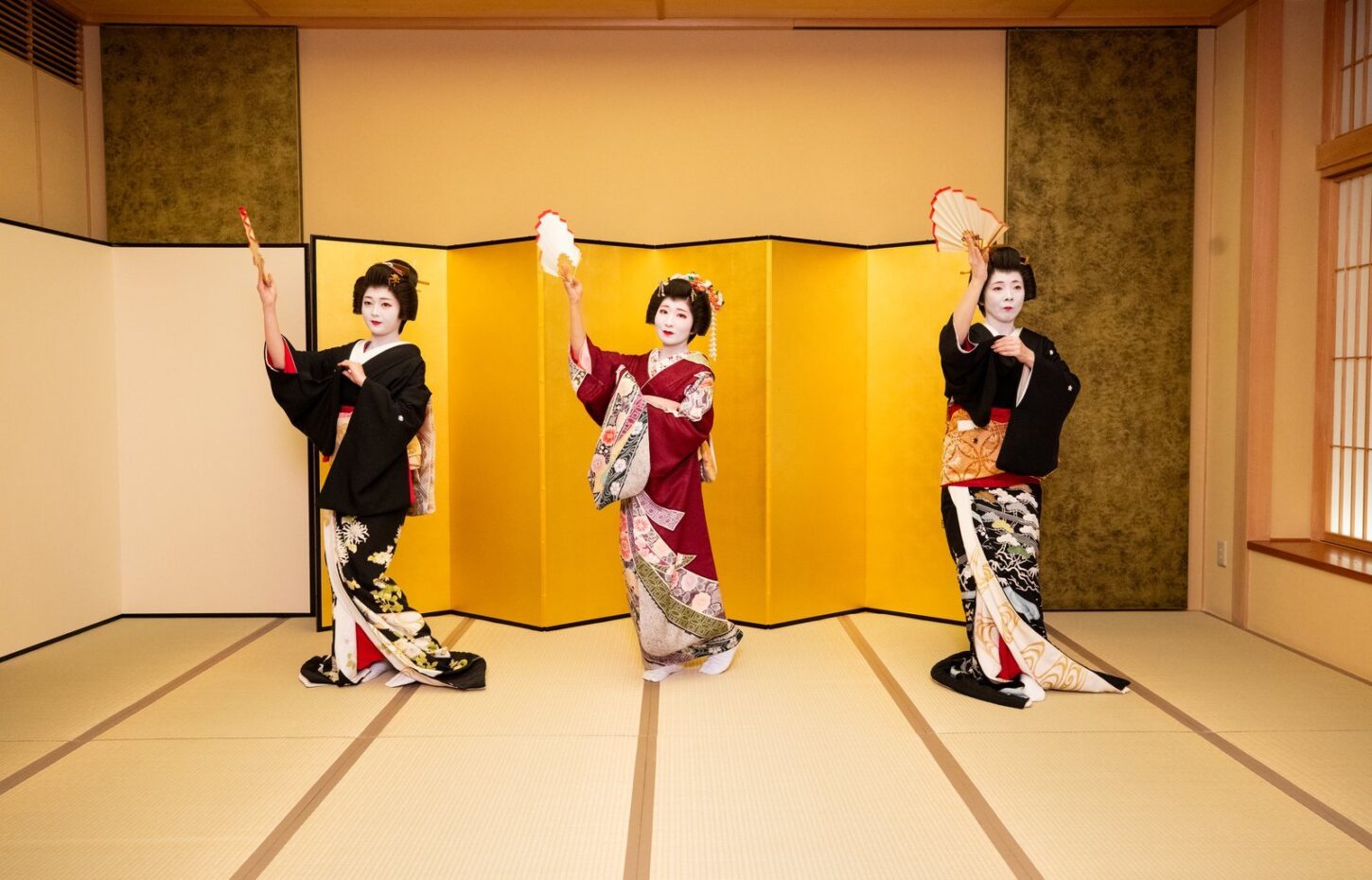
Geisha Dance: The Nihon Buyo You Will See at an Asakusa Ozashiki
Comment ( 0 )
Trackbacks are closed.

No comments yet.