


Tosenkyo: The Geisha Fan-Throwing Game, Explained
Tosenkyo, at a Glance
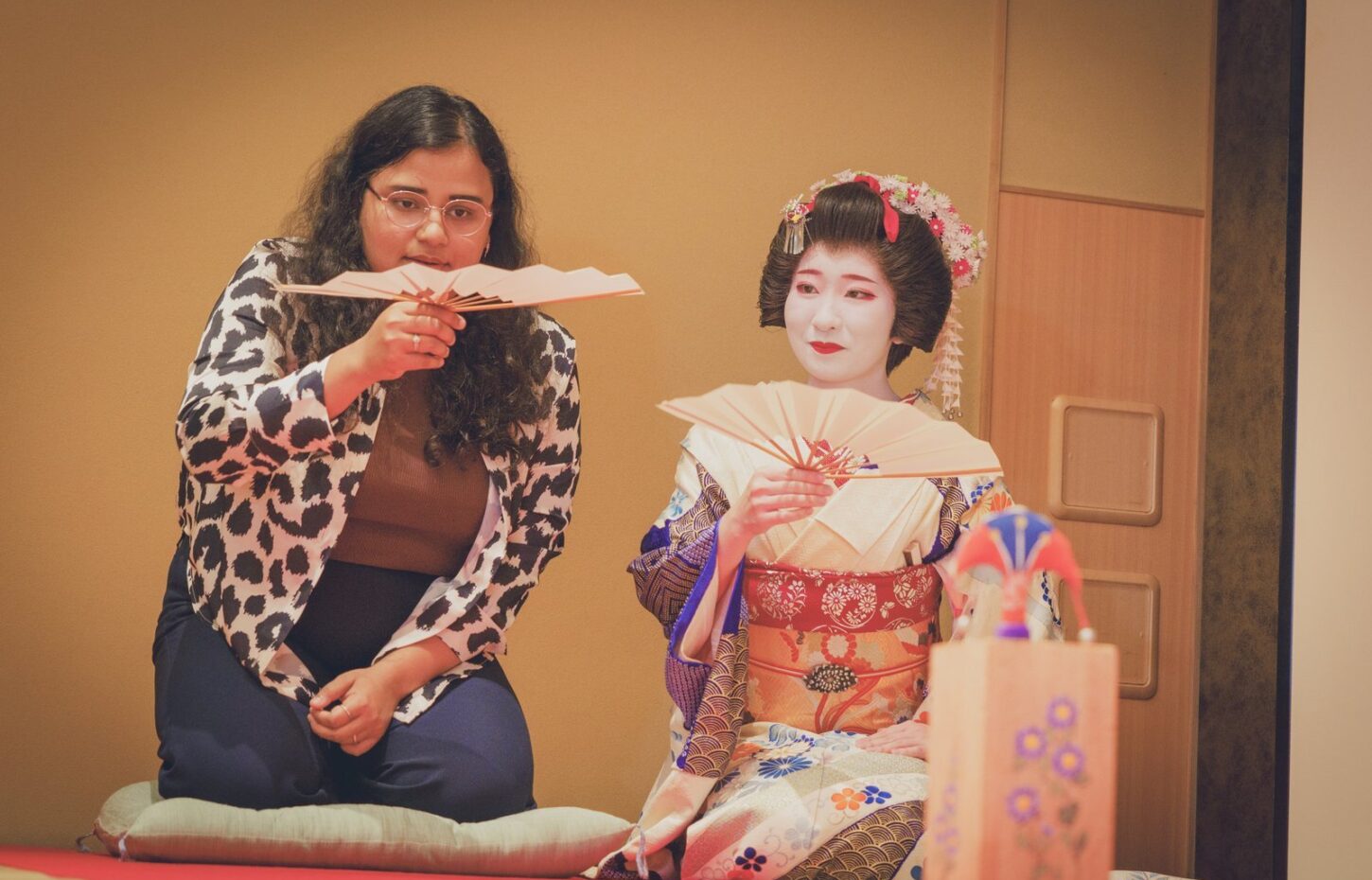
Tosenkyo (投扇興) is a folding-fan game played at ozashiki (geisha banquets) in Japan: two players seated across a low wooden stand take turns tossing a fan at a small butterfly-shaped target. It isn’t scored by a simple hit or miss — the score comes from the exact shape the fan, target, and stand form together when everything lands, a system that has kept the game popular for more than two centuries. At Miyakodori’s private ozashiki plans in Asakusa, tosenkyo is one of the ozashiki asobi (banquet games) woven into the evening, simple enough to try on your first throw.
Long before darts arrived in Japan, there was tosenkyo — a folding fan, a butterfly-shaped target, and a wooden stand between two players seated on tatami. At Miyakodori, it’s one of the ozashiki asobi (banquet games) the geisha play with guests, and it’s usually the one that surprises first-timers most: simple enough to try on your first throw, but elegant.
What Is Tosenkyo?
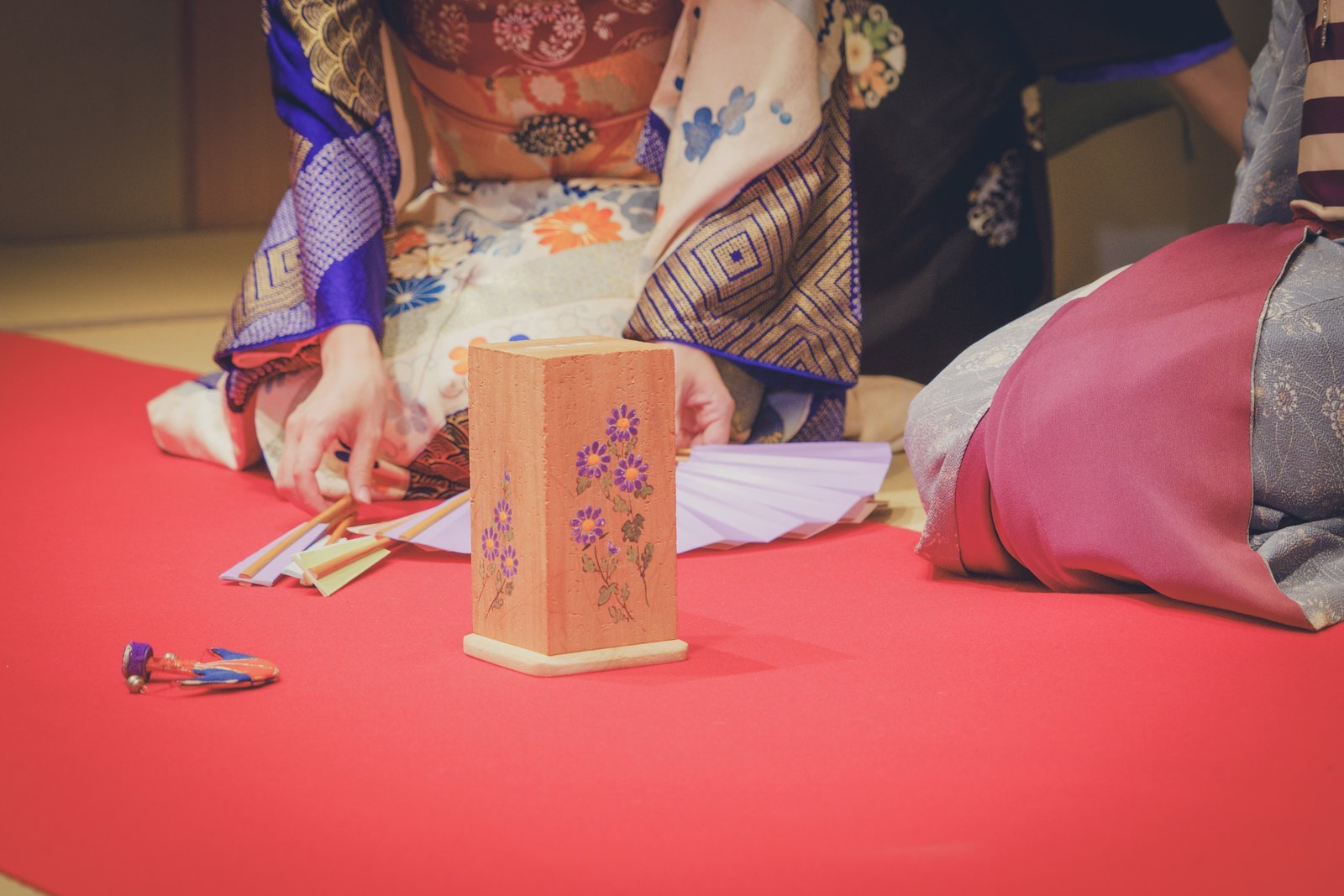
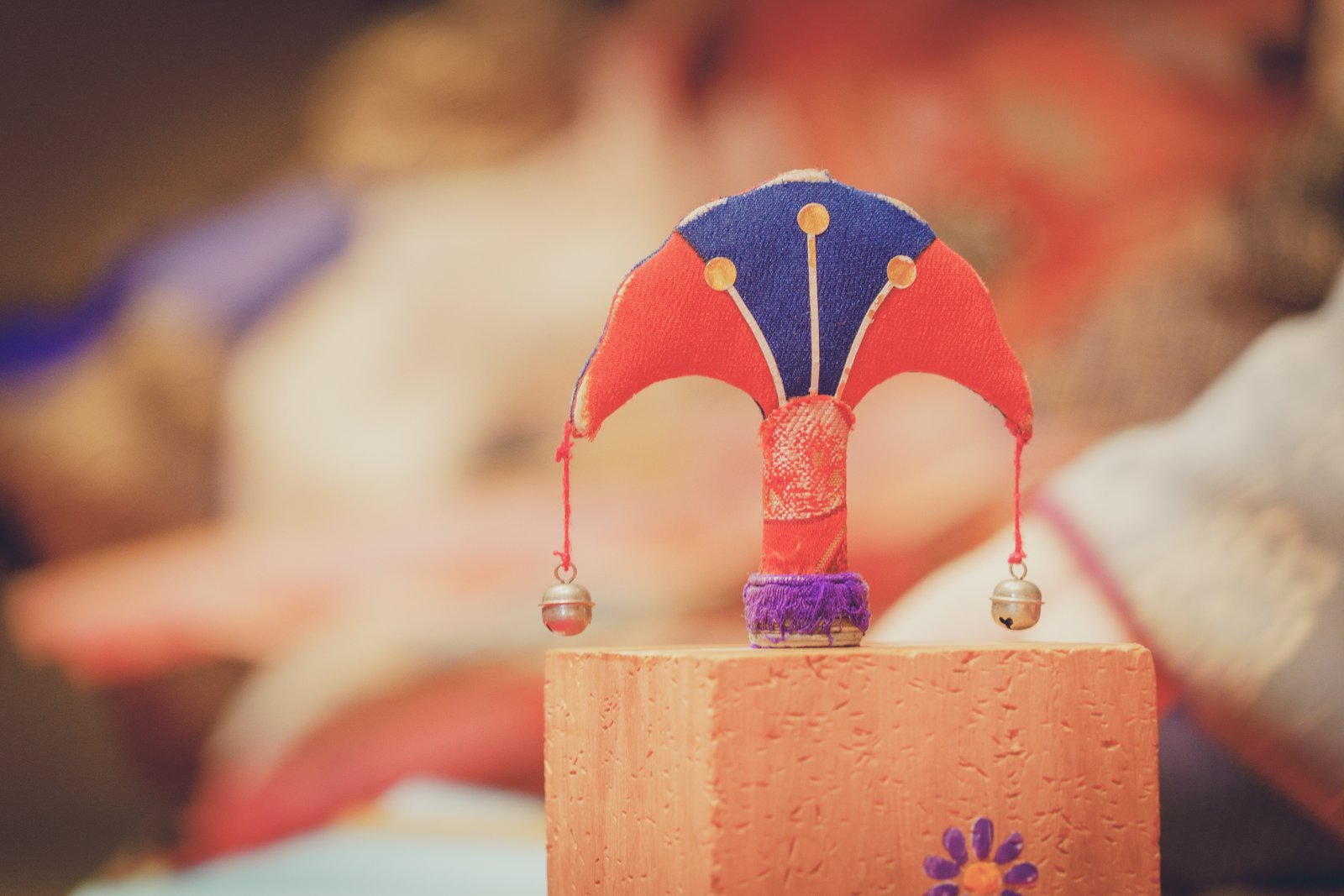
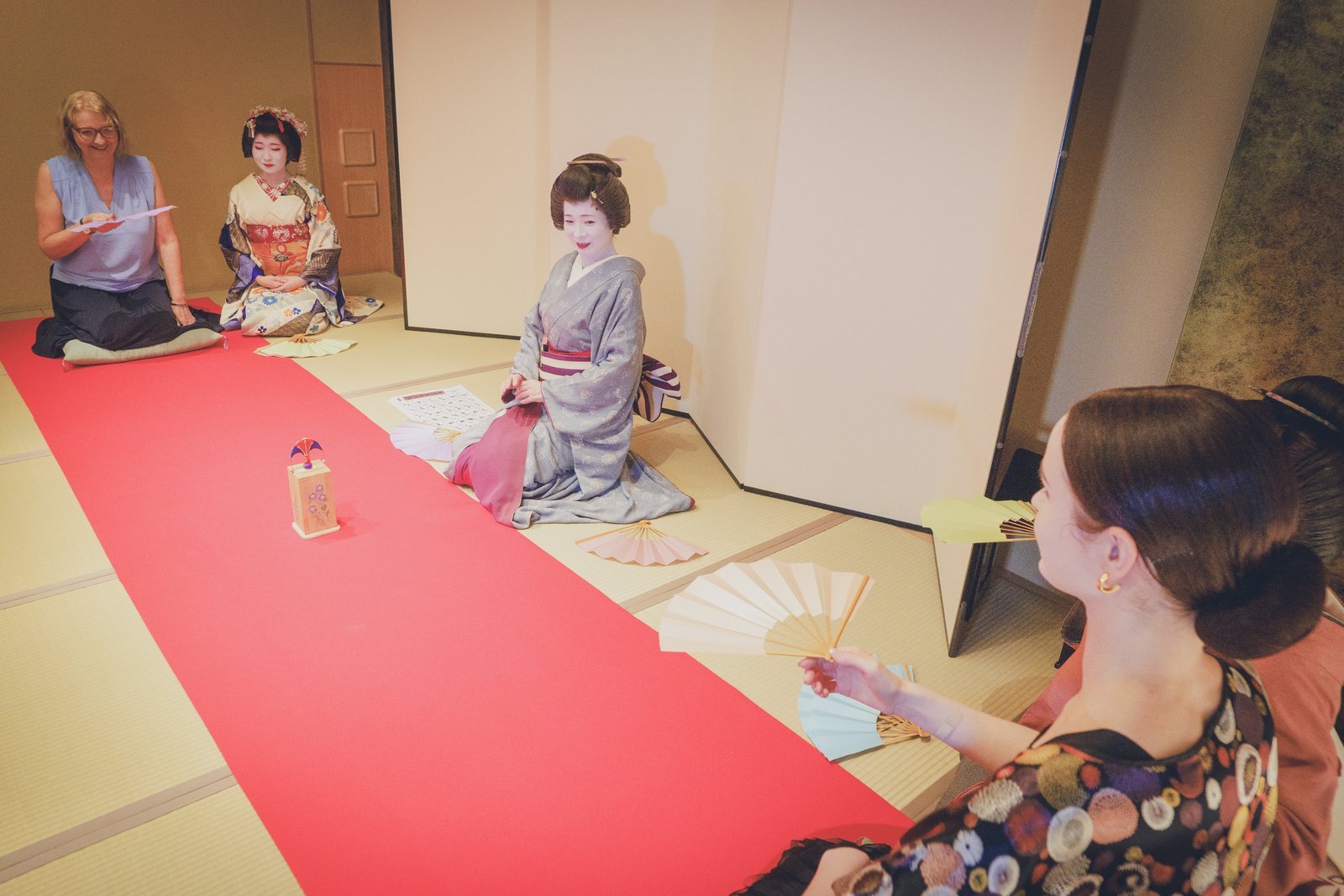
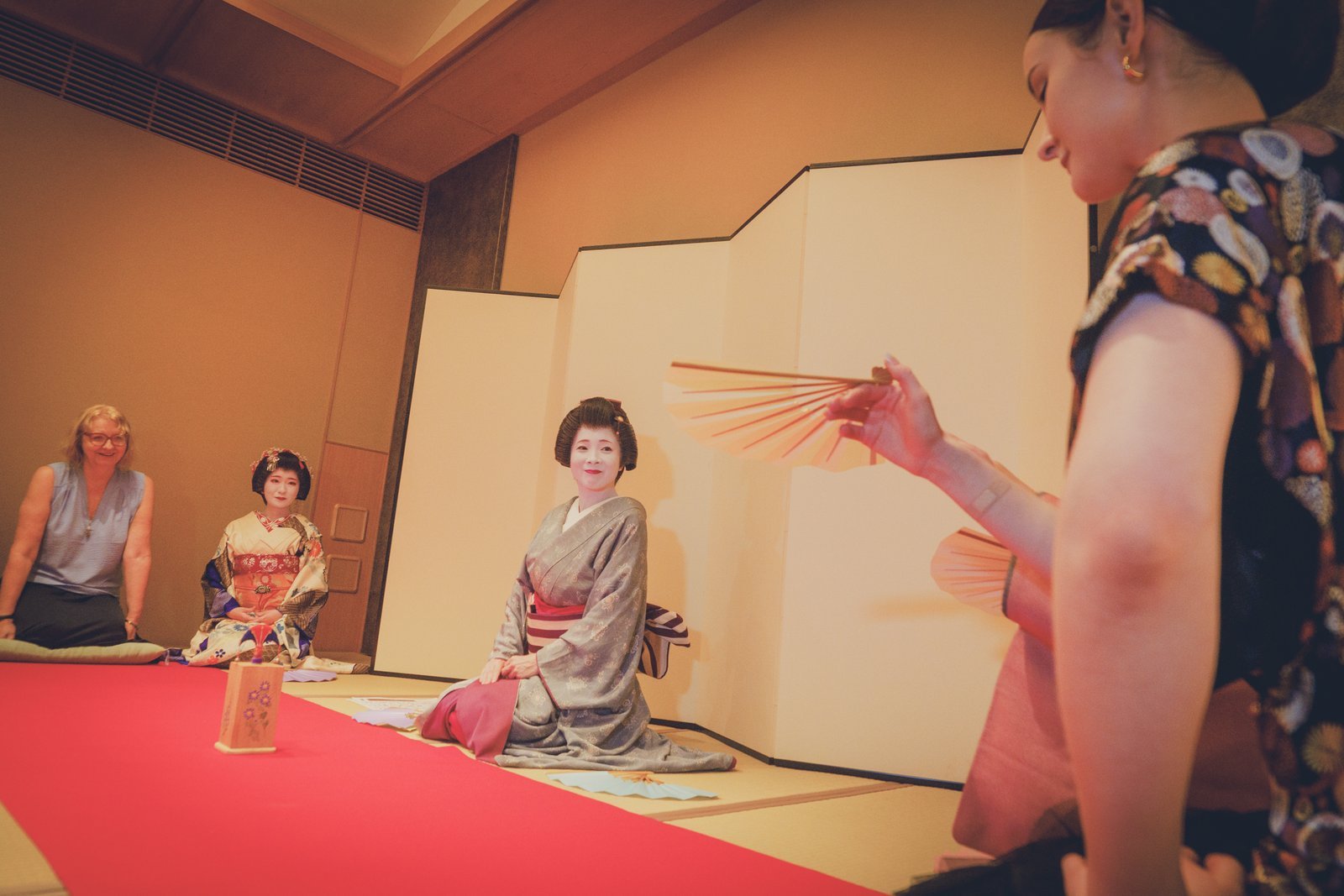
Tosenkyo (投扇興) literally means “throwing-fan amusement.” Two players sit facing each other with a low wooden box called a makura (pillow) between them. Historically players knelt on tatami; at Miyakodori you are seated comfortably and seiza is never required. On top sits a small target called a cho — meaning butterfly, and traditionally cut in that shape. Each player opens a folding fan and throws it, trying to knock the cho off its perch.
People often compare it to darts, but the resemblance stops at “throw an object at a target.” Darts scores by where you hit. Tosenkyo scores by how everything lands — fan, cho, and makura, in relation to one another. A wild throw and a controlled one can score identically if they land in the same shape, which is why the game has stayed popular for over two centuries: a first-time guest can occasionally out-score a geisha who has played hundreds of rounds.
An Edo-Period Game With Roots in Asakusa
Tosenkyo’s elegant image has produced a legend that it dates back a thousand years to the Heian court — a nice story, but historians generally trace its real popularity to the mid-Edo period, roughly the 1770s, when it spread quickly among commoners and aristocrats alike. Edo-period prints even show the game being played in Yoshiwara’s parlors — a sign of how widely Edo people enjoyed it.
Asakusa has a particular connection to the game. Among the handful of schools (ryu) that kept tosenkyo alive, each with its own scoring conventions, one — kisen-ryu — has long been tied to this neighborhood specifically; local preservation efforts here helped keep the tradition alive after it briefly fell out of practice. Playing tosenkyo at an Asakusa ozashiki is a piece of the neighborhood’s own cultural memory, brought back into the room by the geisha who play it.
How to Play
- The fan (ogi): Tosenkyo uses dedicated fans, lighter and thinner than an ordinary one, built to fly true when thrown.
- The target (cho): A small paper or wooden piece, traditionally butterfly-shaped, balanced atop the makura.
- The stand (makura): A low wooden box, set an equal distance from both players.
Play alternates: each player throws their fan toward the cho, and the round is scored on exactly how the fan, cho, and makura come to rest relative to each other. Miss entirely, with no contact at all, and the throw scores nothing. Everything else is a matter of degree — and that’s where the game gets interesting.
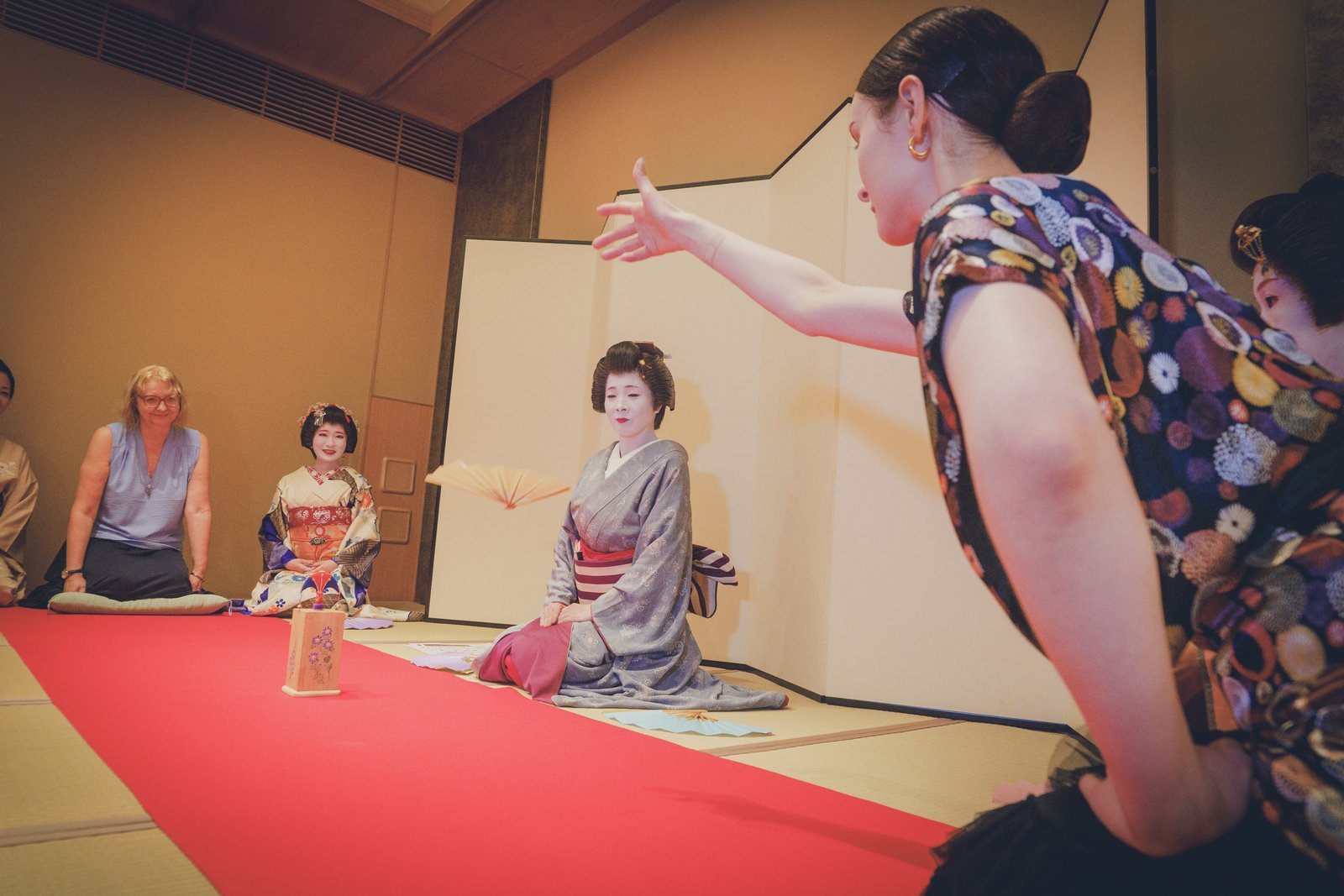
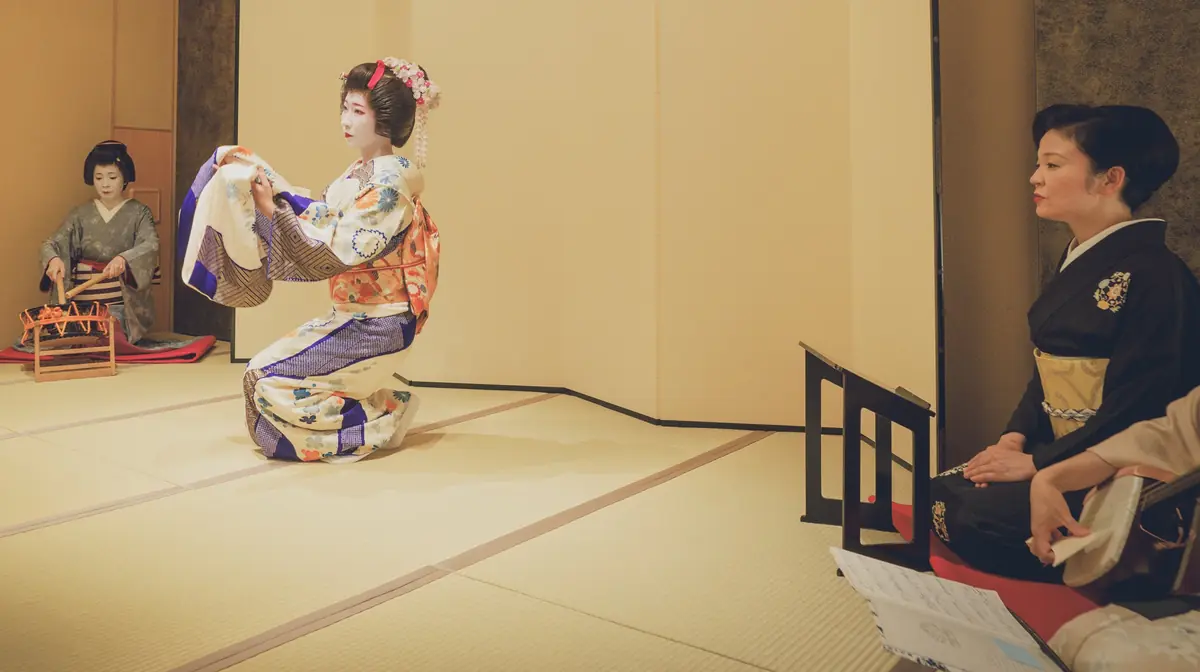
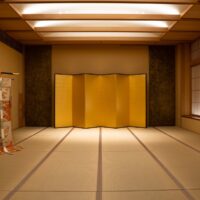
Hitting the box in Tosenkyo costs you a point. This is what that looks like in the room.
How Tosenkyo Is Scored
Every possible resting position of the fan, cho, and makura has its own name, drawn from classical literature, and its own point value — a scoring chart called a meijō-hyō (銘定表).
The kisen-ryu school names its scoring positions after the fifty-four chapters of The Tale of Genji. A throw that fails to dislodge the cho is named “Tenarai” — the word for a beginner, and chapter 53’s title. A modest result is “Hanachirusato,” after the chapter depicting an unremarkable woman. A more elegant landing might earn “Asagao” (morning glory) or “Usugumo” (thin clouds), scoring higher as the shape becomes more refined. Other schools draw their names from different classical sources — so the same throw can carry an entirely different poetic name depending on which school’s rules a teahouse follows.
You don’t need to memorize any of this. In an ozashiki, the geisha reads the shape and calls the score — part of what makes tosenkyo feel less like a contest and more like a small, shared piece of theater.
Why We Play Tosenkyo at an Ozashiki
Games like tosenkyo aren’t an add-on to a Miyakodori evening — they’re one of the reasons an ozashiki works the way it does. You’ll watch the arts the geisha have spent their days polishing, and then you’ll play parlour games that haven’t changed since long ago. Konpira Funefune, Tora Tora, Tosenkyo — there are many. And through them, the distance between geisha and guest closes. The conversation opens up, and before you know it, the time is gone. That’s tosenkyo’s real function in the room: a moment you take part in.
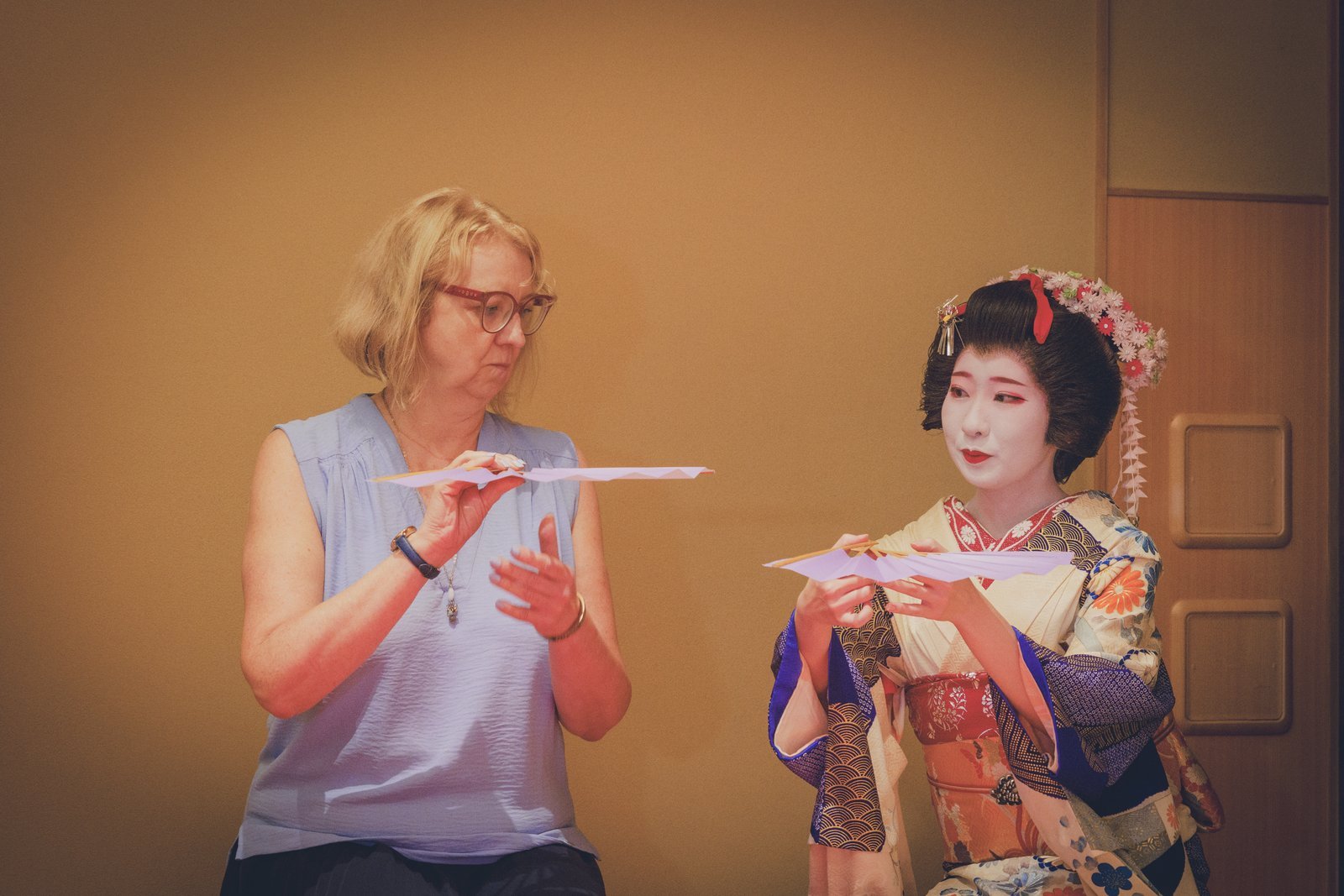
And if you’ve never held a tosenkyo fan before, that’s the point, not a problem. First-time guests are welcome at Miyakodori. If you’re nervous at first, the geisha will put you at ease — that’s simply part of how they look after you. Given the scoring system, a nervous beginner’s wild throw has just as much chance of landing a high scoring position as a practiced player’s careful one.
Play Tosenkyo for Yourself at Miyakodori
Tosenkyo is one of the ozashiki asobi (banquet games) played during a private ozashiki (geisha banquet) with Miyakodori’s geisha in Asakusa. English and Japanese instructions included — no experience needed.
Request a ReservationPlaying Tosenkyo at Miyakodori
Tosenkyo is one of several ozashiki games woven into our longer private plans, alongside Konpira Funefune and Tora Tora. Every plan includes English and Japanese instructions, so the scoring — names and all — is explained as you play.
For the full lineup — and how each one is played — see our complete guide to Miyakodori’s ozashiki games, including Konpira Funefune.
Tosenkyo FAQ
Do I need experience to play?
No — the scoring rewards elegant shapes as much as skill, so a first-time guest can score well purely by chance.
Is tosenkyo the same everywhere in Japan?
Not exactly. Each school (ryu) has its own scoring chart and naming conventions — kisen-ryu, the school played in Asakusa, draws its names from The Tale of Genji — so the names and rules can vary by teahouse and region.
Is there a drinking forfeit, like in Konpira Funefune?
Not traditionally. Tosenkyo is scored on elegance and shape rather than speed, so it tends to feel quieter and more contemplative than some of the geisha’s livelier games.
How long does a round take?
Individual throws take moments, but a proper match — with the geisha explaining each score as it happens — comfortably fills fifteen to twenty minutes within a longer ozashiki.
Curious to See Tosenkyo Played in Person?
Visit Miyakodori to learn more about our private ozashiki plans in Asakusa — and try tosenkyo, Konpira Funefune, and Tora Tora for yourself.
Request a Reservation


- Ozashiki Games: A Complete Catalog & Rules
- Meet Real Geisha in Tokyo: An Evening on the Geisha Streets of Asakusa
What Is the Origin of Asakusa’s Place Name? 【Thorough Explanation】Three Prominent Theories and Unfamiliar History
Asakusa Geisha Culture: History Q&A【Miyakodori】
Japanese Tea Ceremony in Tokyo: A Guide to Chadō — and the Geisha Tea House Few Travelers Know
What is a Geisha House? An Ultimate Guide to the World of Okiya and Ochaya (2026 Edition)
The Poems of Ariwara no Narihira — and the One Behind Our Name
No comments yet.