



Meet Real Geisha in Tokyo: An Evening on the Geisha Streets of Asakusa
Here at Miyakodori, we welcome guests to one of Tokyo’s living geisha districts, tucked into the quiet streets north of Senso-ji in the heart of Asakusa — a hanamachi with centuries of history behind it. While much of the attention around Japan’s geisha culture goes to Kyoto, we’re still here in Tokyo.
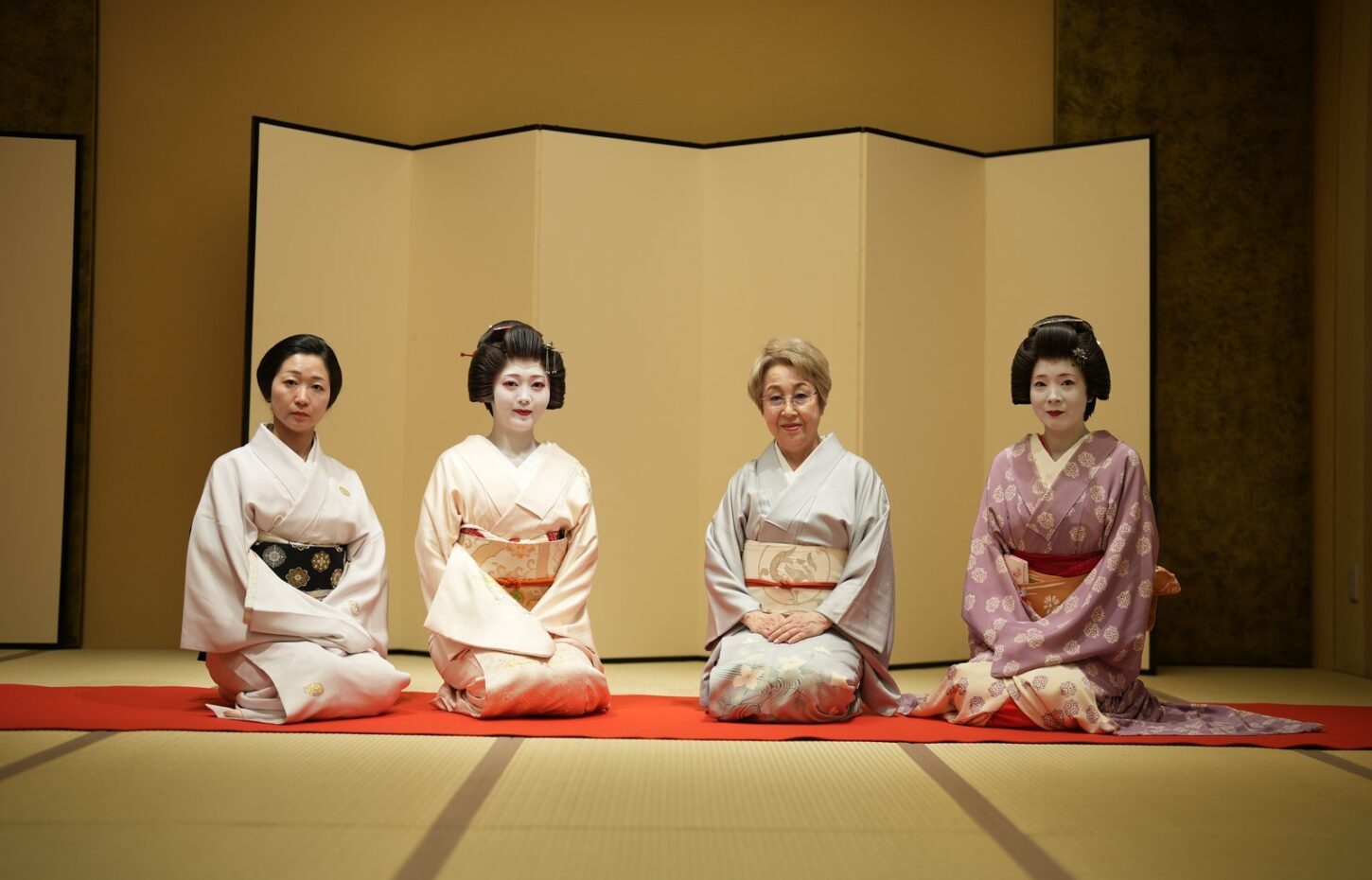
Miyakodori is a machiai-chaya (待合茶屋) — a licensed banquet house where geisha are invited to perform — and the only machiai-chaya in Asakusa. We were founded in 1950, and our okami (proprietress), Chikage, made her debut as a hangyoku — an apprentice geisha, and a geisha from that first day — in this hanamachi in 1969; she is today the only okami in Asakusa who was herself a geisha. Below, we’ve put together a guide to who we are, what an evening in our ozashiki (geisha banquet) actually involves, and why we believe geisha culture is something you have to feel live, not just read about.
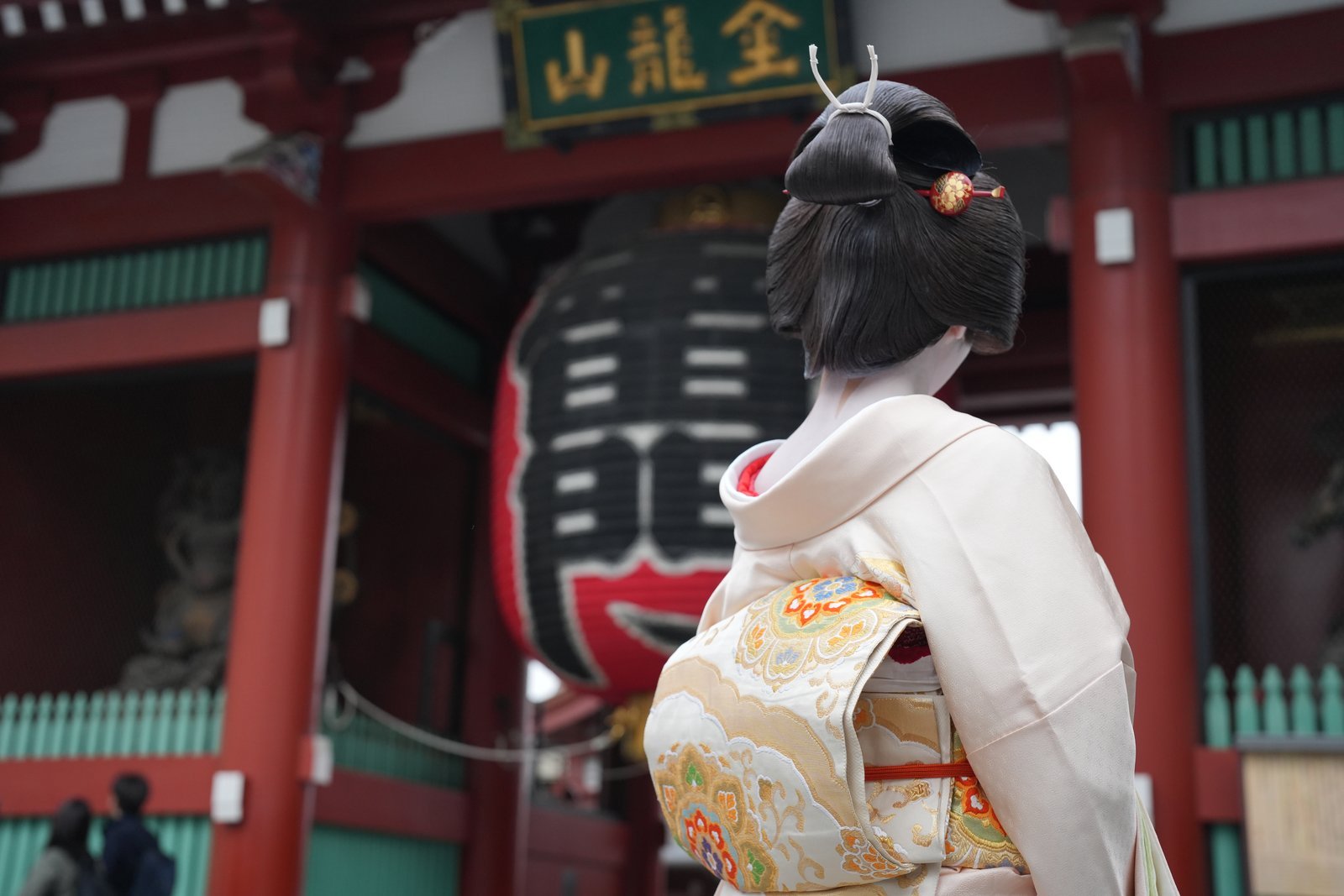
What Does “Geisha” Really Mean?
The word geisha 芸者 is written with the characters for art (芸) and person (者) — literally, a person of the arts. Our okami puts it this way:
“Being skilled in the arts is part of it. But more than that, they are women who love the arts and have devoted themselves to them — and that includes the art of bringing joy to a guest. Caring for and entertaining guests is part of that art too. These are women who have made up their minds to take it on as their life’s work.”
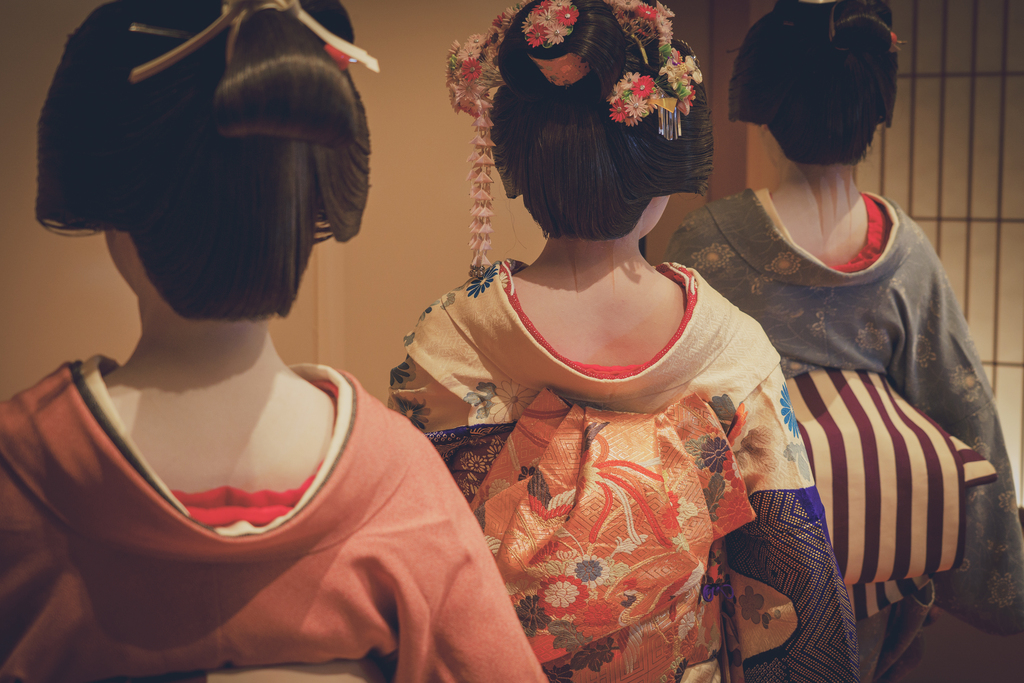
That distinction matters. A geisha isn’t a costume or a performance style — she’s someone who has chosen dance, music, conversation, and hospitality as her craft, often developed over decades.
The Story Behind Our Name, Miyakodori
Our name comes from a poem by Ariwara no Narihira in the Tale of Ise:
名にし負はば いざ言問はむ 都鳥 わが思ふ人は ありやなしやと
If you live up to your name, capital bird, then let me ask you — is the one I long for safe and well?
The name was chosen by the founder of this house, and the same verse is the personal motto of our okami, Chikage, who took the house over as its second-generation proprietress. It says what we want to be for our guests: a place that holds the same warmth and concern for the people who visit us, long after they’ve gone home.
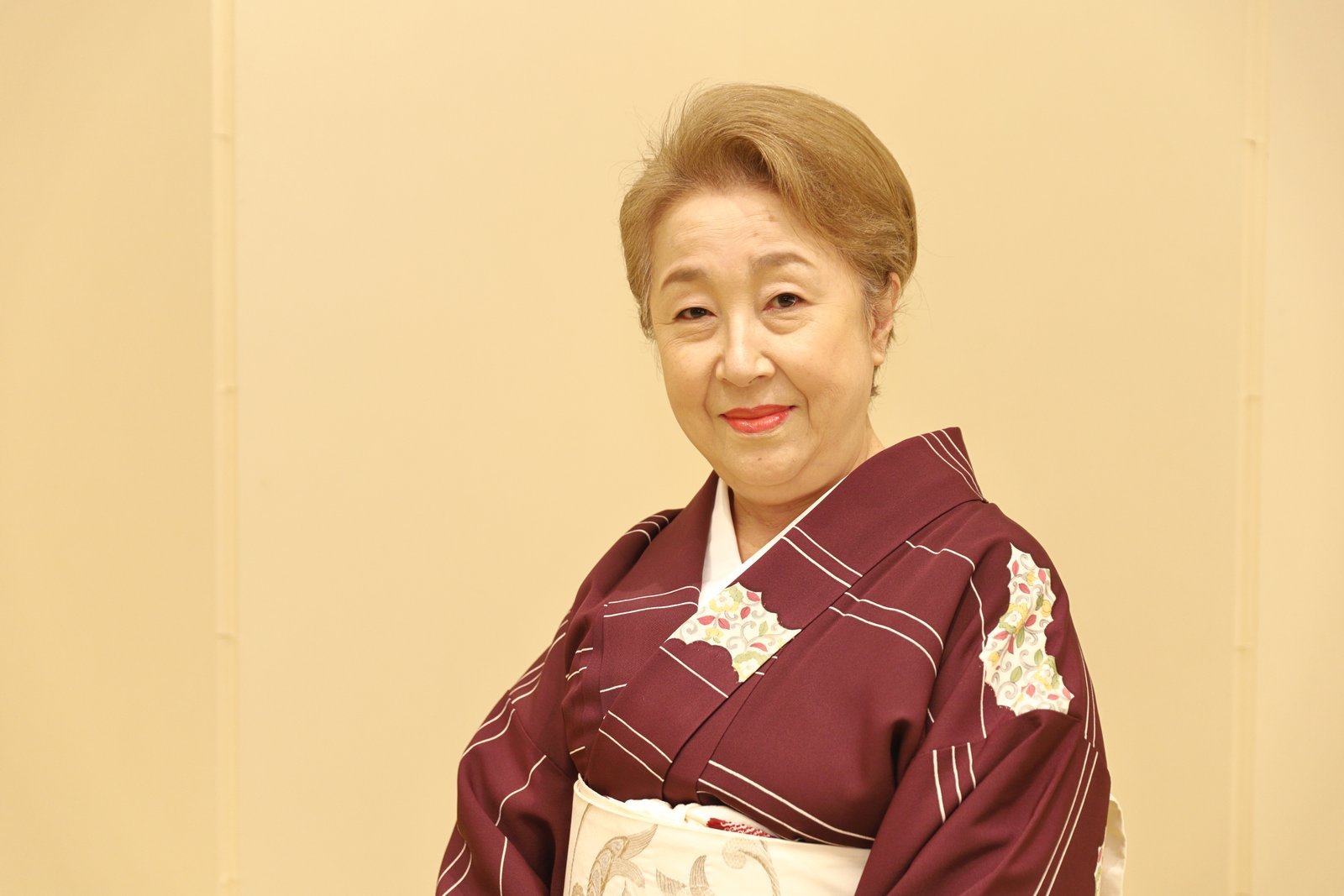
Asakusa: Tokyo’s Living Geisha District
Asakusa rebuilt itself after the air raids of the Second World War, and today it’s one of the liveliest parts of the city — Sanja Matsuri and the festivals around it fill its streets every year. Both our okami and her mother were born and raised in Asakusa’s hanamachi, its historic geisha district, and that history runs through everything we do. Teahouse culture started at the gates of Senso-ji in the early Edo period, but Asakusa became a single geisha district much later: in 1885 the geisha working around Hirokoji, Saruwakacho and the Sanya canal gathered near the park, and in 1896 the district’s kenban — the office that runs the hanamachi and registers its geisha — was established. Along the same streets you’ll still find the banquet houses and teahouses that have served this area for generations.
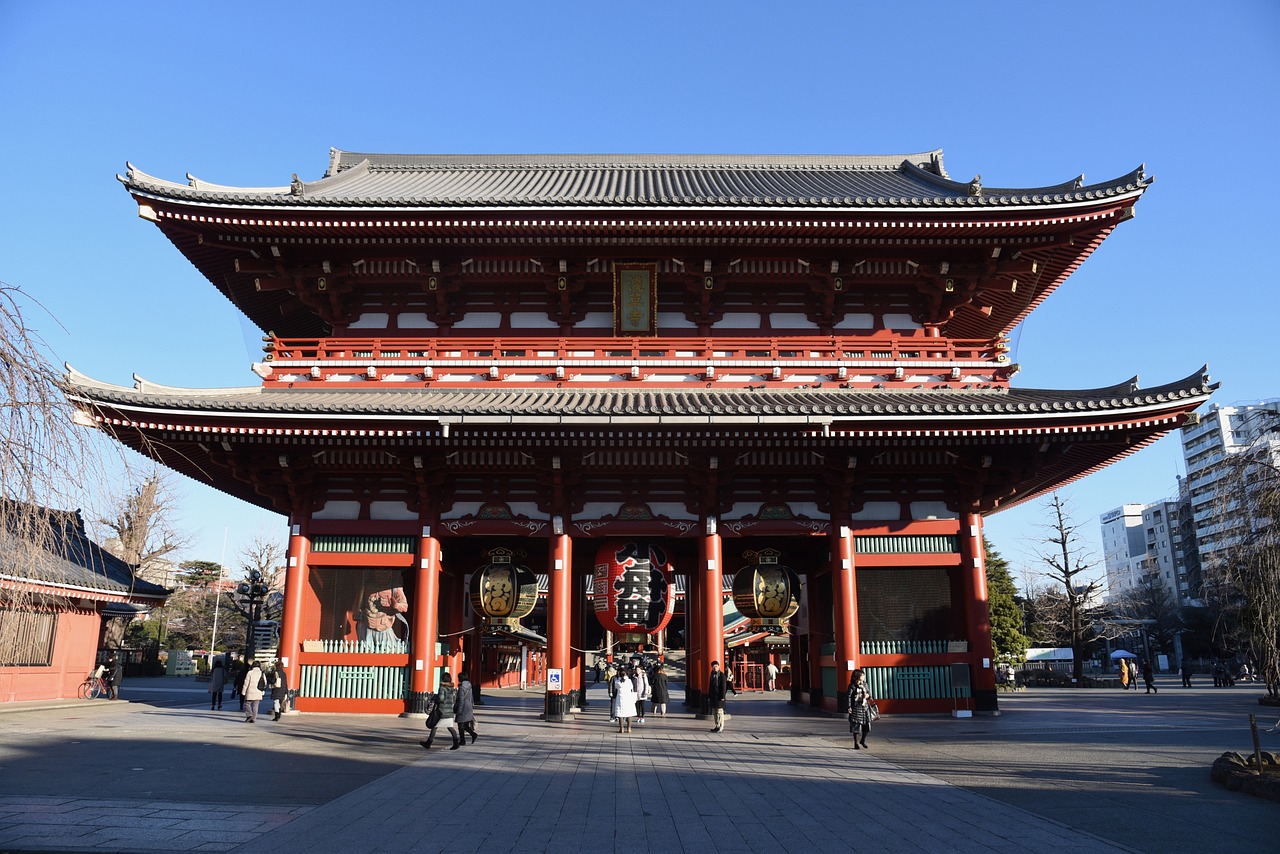
If you’re looking for the geisha streets of Tokyo, this is where they are. Walk from Asakusa Station through Kaminarimon, up Nakamise-dori, and straight through the grounds of Senso-ji — then keep going. The quiet blocks on the far side are what people here call Kannon-ura (“behind the Kannon”) or Oku-Asakusa, and this is where the Asakusa kenban sits, surrounded by the houses its geisha perform in. It looks like an ordinary neighborhood of low buildings and narrow lanes, which is exactly the point: this is a working district, not a preserved one. Miyakodori is about three minutes on foot past the temple grounds — roughly 13 minutes from Asakusa Station on the Ginza, Tobu Skytree or Tsukuba Express lines, and about 15 minutes from the Toei Asakusa Line. The route takes you through the temple itself, so the walk is less a commute than the first part of the evening.
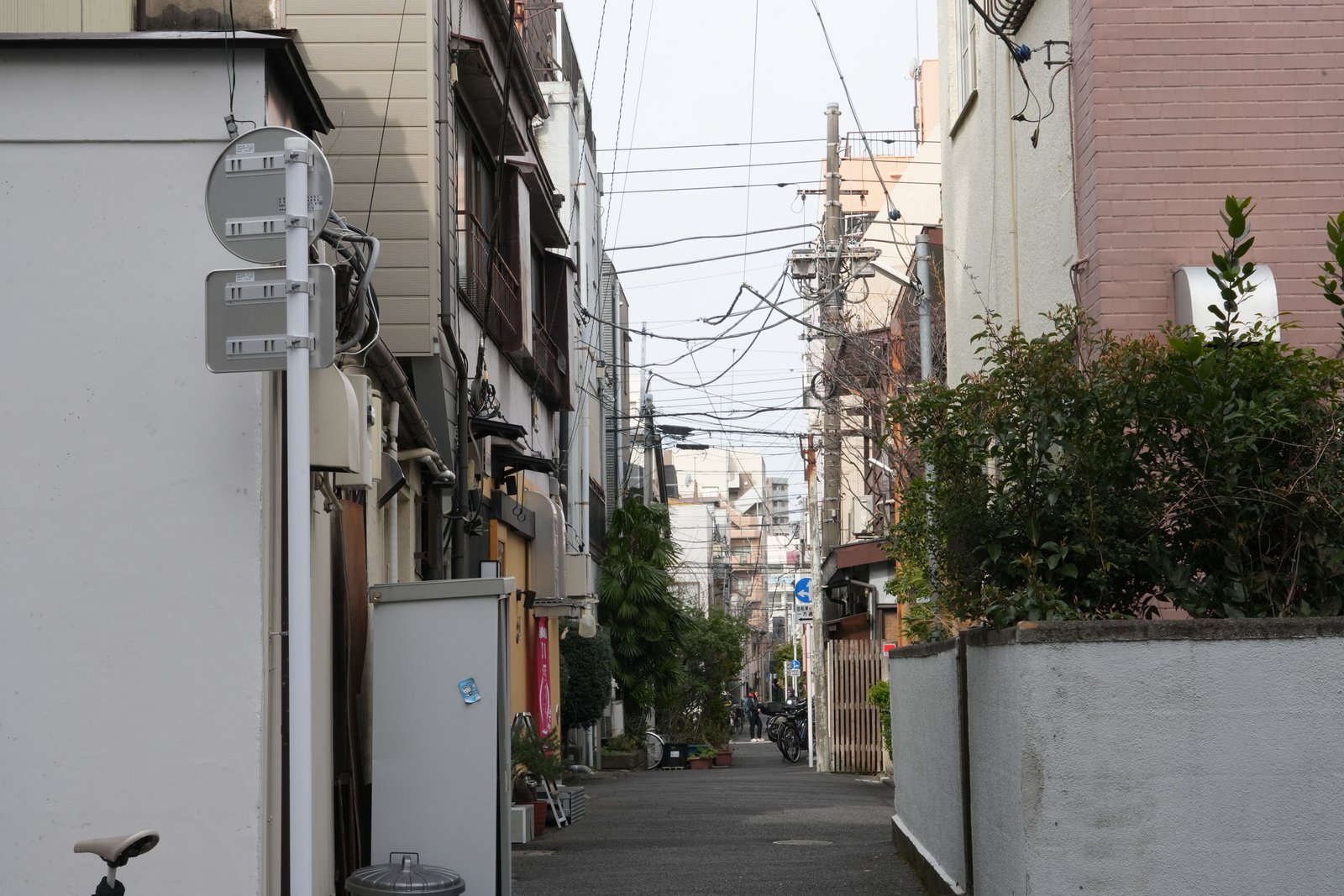
“As one of the lively, welcoming places in Asakusa,” our okami says, “we want to share Miyakodori — and the wonderful culture of Asakusa geisha — as widely as we can.”
Two things in this district exist nowhere else in Japan. The first is the hōkan (also known as taikomochi) — Japan’s male geisha, whose art is a discipline of its own rather than a version of the women’s. Asakusa is the only hanamachi where hōkan are still formally registered and working, and one can be invited to an ozashiki here. The second is a dance called Asakusa Meibutsu, written for this neighborhood alone: its lyrics name the local landmarks, and the dancers sketch Sanja Matsuri, a portable shrine on the shoulders of its bearers, and the Edo folk hero Hanakawado Sukeroku using nothing but a fan and their hands.
Kyoto’s Gion may be the geisha district most famous to overseas visitors, but Tokyo has its own — quieter in some ways, and still very much alive on the streets of Asakusa. If you’d rather compare the city’s hanamachi side by side, or work out where to see geisha in Tokyo more broadly, we’ve mapped all of Tokyo’s geisha districts in a separate guide.
What Happens During an Ozashiki
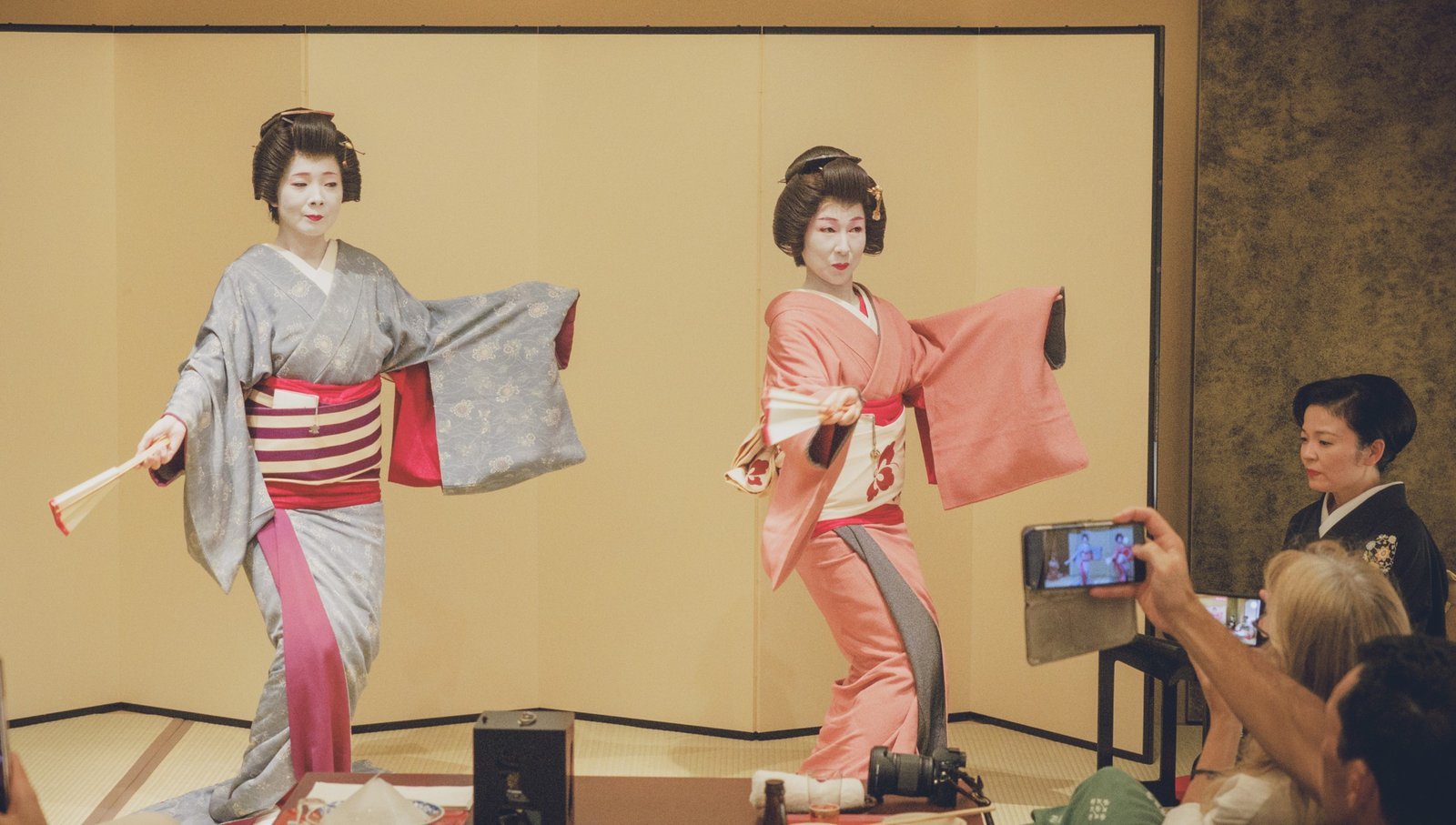
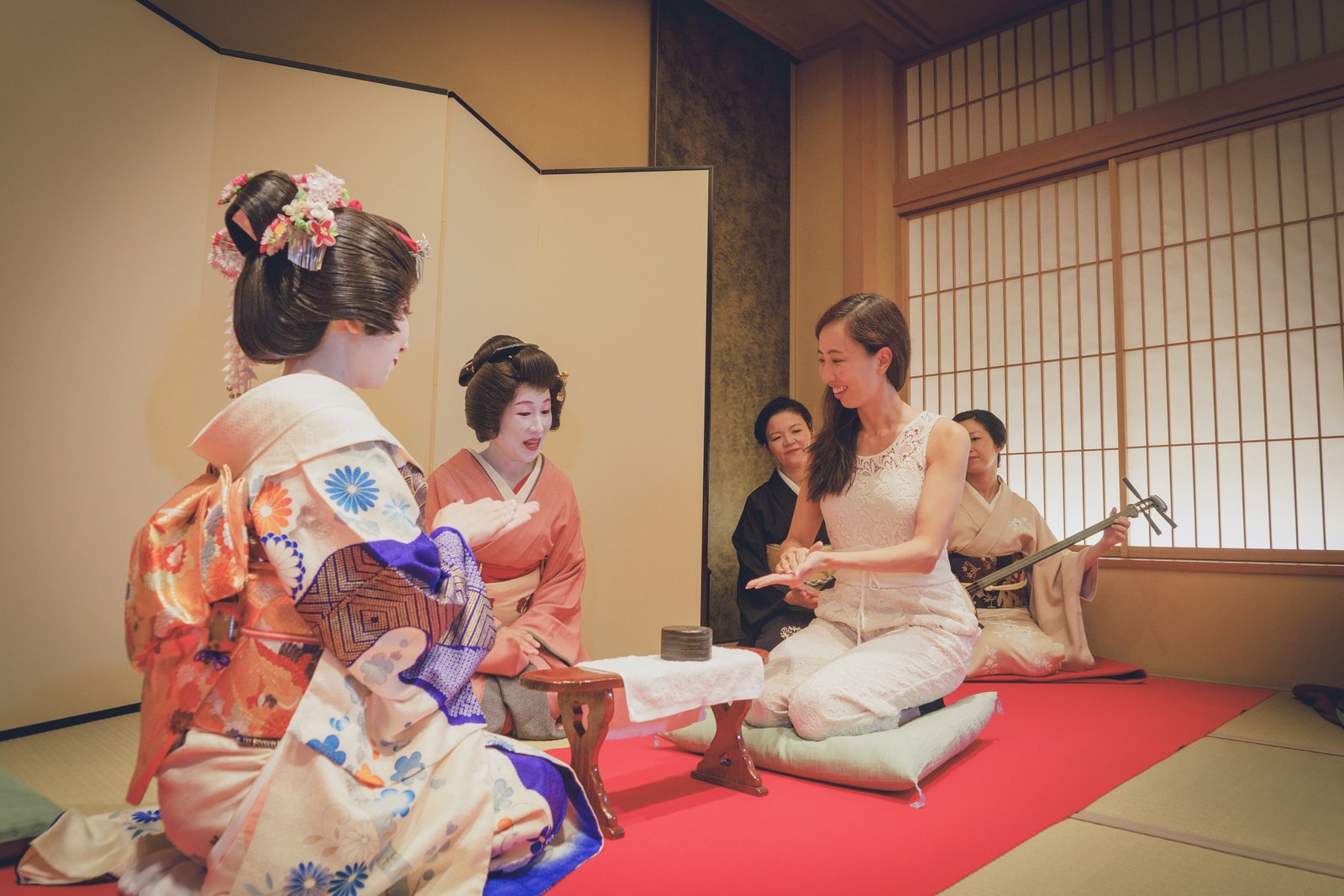
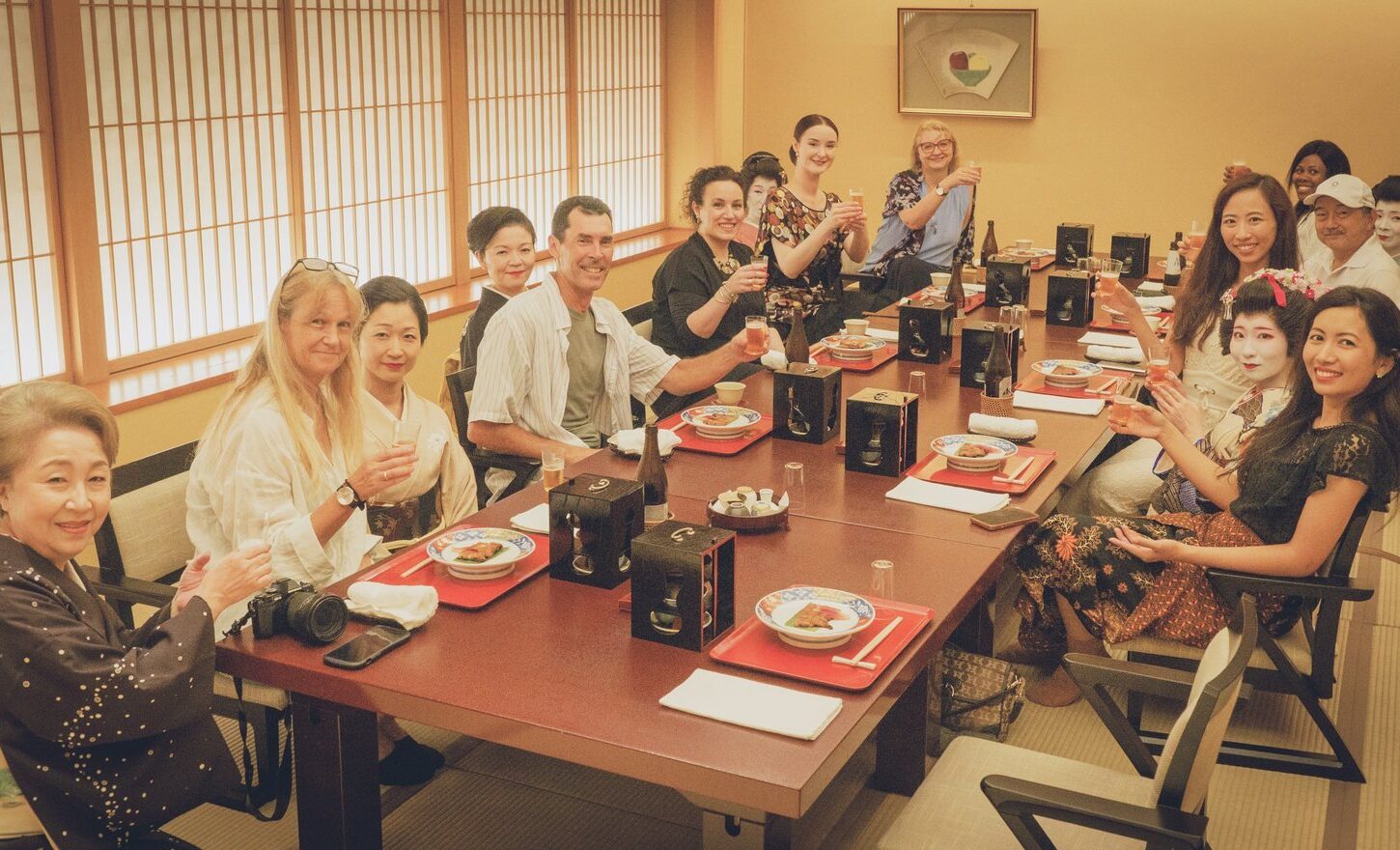
For the length of your booking, the geisha stay with you the entire time — there’s no coming and going between tables. Guests and geisha pour drinks for each other, and conversation flows as naturally as the sake. You’ll watch dances and music that geisha, dressed in kimono, keep polished through weekly practice that never really ends, then move into ozashiki asobi — popular parlor games passed down for generations, among them konpira funefune, tora tora, and tosenkyo.
Whether a meal is part of your visit depends on the plan: the three-hour evening includes a kaiseki course, the two-hour plan can add one when it starts at 17:30 or later, and for daytime bookings the meal is a seasonal bento, since kaiseki is only served for an ozashiki starting from 17:30. On the one-hour daytime plan each guest also orders one drink, charged separately.
As the games continue, the distance between guest and geisha closes, conversation gets easier, and the time goes by in what feels like a moment.
Real Geisha vs. “Geisha-Style” Entertainment
With more overseas visitors curious about geisha culture, imitation has followed — entertainment that copies the look of a geisha without the training or history behind it. Our okami is direct about the difference:
“Lately there is a lot of entertainment that only imitates the appearance — ‘geisha-style,’ with nothing behind it. What we want is for people to feel the weight of the real thing, with centuries of history behind it. Keep what matters intact, and still bring it to today’s guests in a form that suits the times we live in.”
That’s the balance we try to strike at Miyakodori: nothing about the geisha you’ll meet here is staged for a photo. It’s a living, working tradition. If you’re trying to tell the two apart before you book anything in Tokyo, we’ve written a longer guide to an authentic geisha experience versus a geisha makeover.
Guests arrive from all over the world, and the same questions come up: how long does it take to become a geisha, why the white makeup, what made you want this life. An Asakusa geisha answers them. English subtitles available.
First Time at a Geisha Teahouse? We Welcome You
Geisha culture has a reputation for being closed off to newcomers — the old “no first-timers” rule of some traditional houses. We do things differently by welcoming first-time guests, and no introduction from an existing customer is required.
It helps to know who is actually in the room with you. The geisha of Asakusa are independent artists registered with the local kenban, the district’s geisha registry office; a machiai-chaya like ours does not employ them — it invites them for each booking. What that means for you as a guest is that the people who walk in are seasoned professionals who have spent their working lives reading a room. Putting a nervous first-timer at ease is part of the craft, not a script. And if there’s time before they arrive, our staff will give you a short orientation to this world so that you’re not walking in cold.
Spend an Evening on Asakusa’s Geisha Streets
A private ozashiki (geisha banquet) at Miyakodori, the only machiai-chaya in Asakusa — real, working geisha, an English interpreter with you throughout, and no introduction required for first-time guests.
Request a ReservationWhat You’ll Feel the Moment You Step Inside
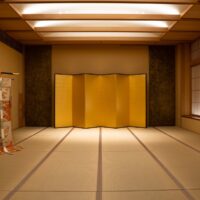
We’ve designed Miyakodori to protect the atmosphere of a traditional machiai-chaya while still being comfortable for modern guests. There’s an elevator and minimal steps. If you use a wheelchair or have limited mobility, contact us before booking so that we can prepare. You also won’t be asked to kneel: our tatami rooms are set with low tables and chairs as standard, so the question of sitting seiza through a long evening simply doesn’t arise — though guests who prefer to sit cross-legged on a cushion are welcome to. The seasons show up in small details, too: artwork and decorations change month to month, and a lavish kagami mochi appears for the New Year.
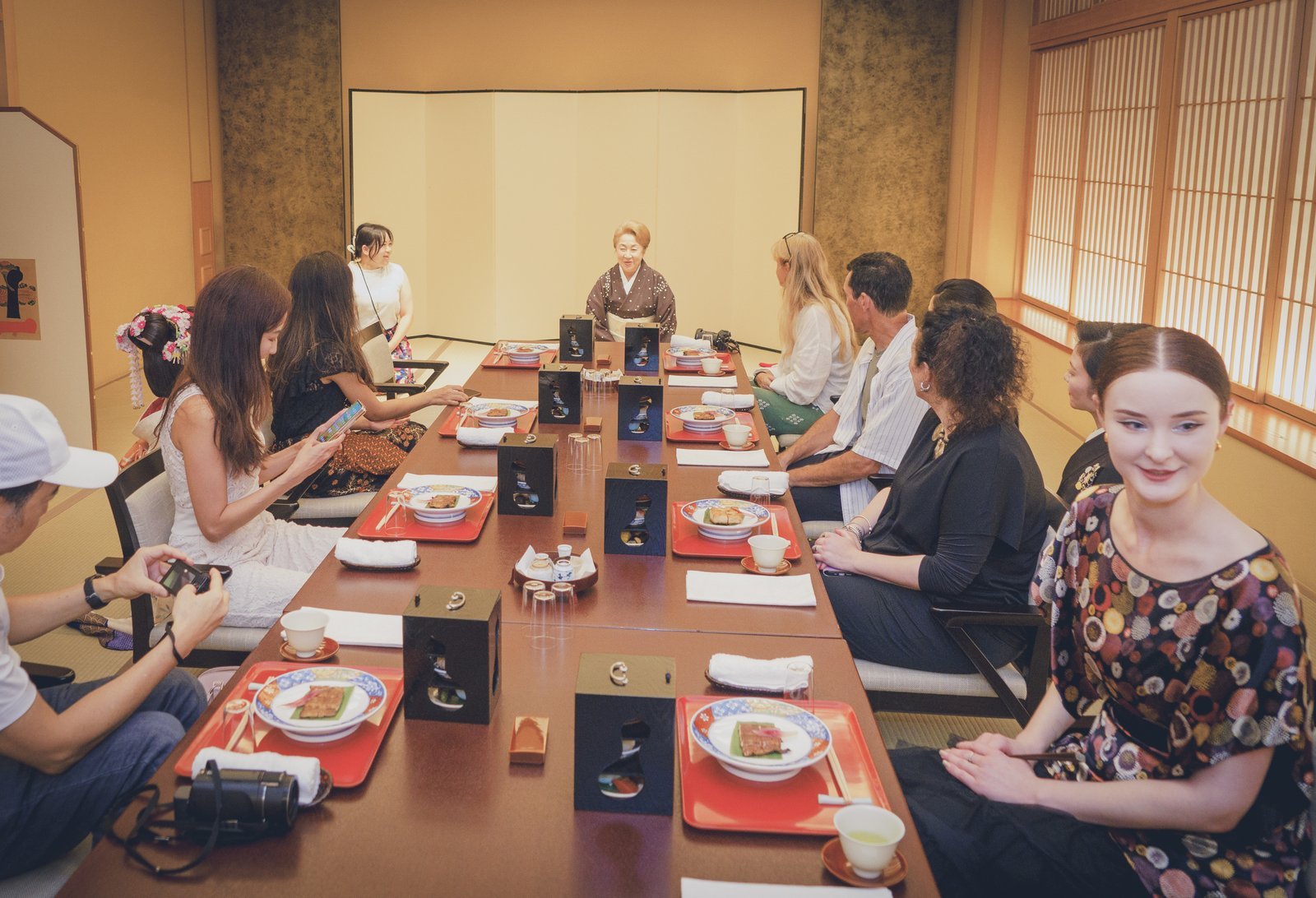
Still, none of that is meant to compete for attention. The geisha herself is always the main attraction — everything else is built to support that, never to overshadow it.
Why Live Shamisen and Dance Matter
Geisha emerged as a profession in the late 1600s, and the art you’ll see at Miyakodori has been refined across the three centuries since. Our okami holds a shihandai license in the Hanayagi school of classical Japanese dance — the school at the center of Asakusa’s hanamachi, and a license that formally authorizes its holder to teach — so what reaches the room has been measured against a standard, not improvised for visitors.
Remarkably, the ozashiki games our guests play today have barely changed in around two hundred years, and people still find them fun. Our third-generation owner reads that as proof of how completely the form was worked out: something that survives two centuries of guests without needing to be modernised was refined to begin with. Whatever else has changed outside, what you see from your seat is not far from what a guest in the Edo period saw.
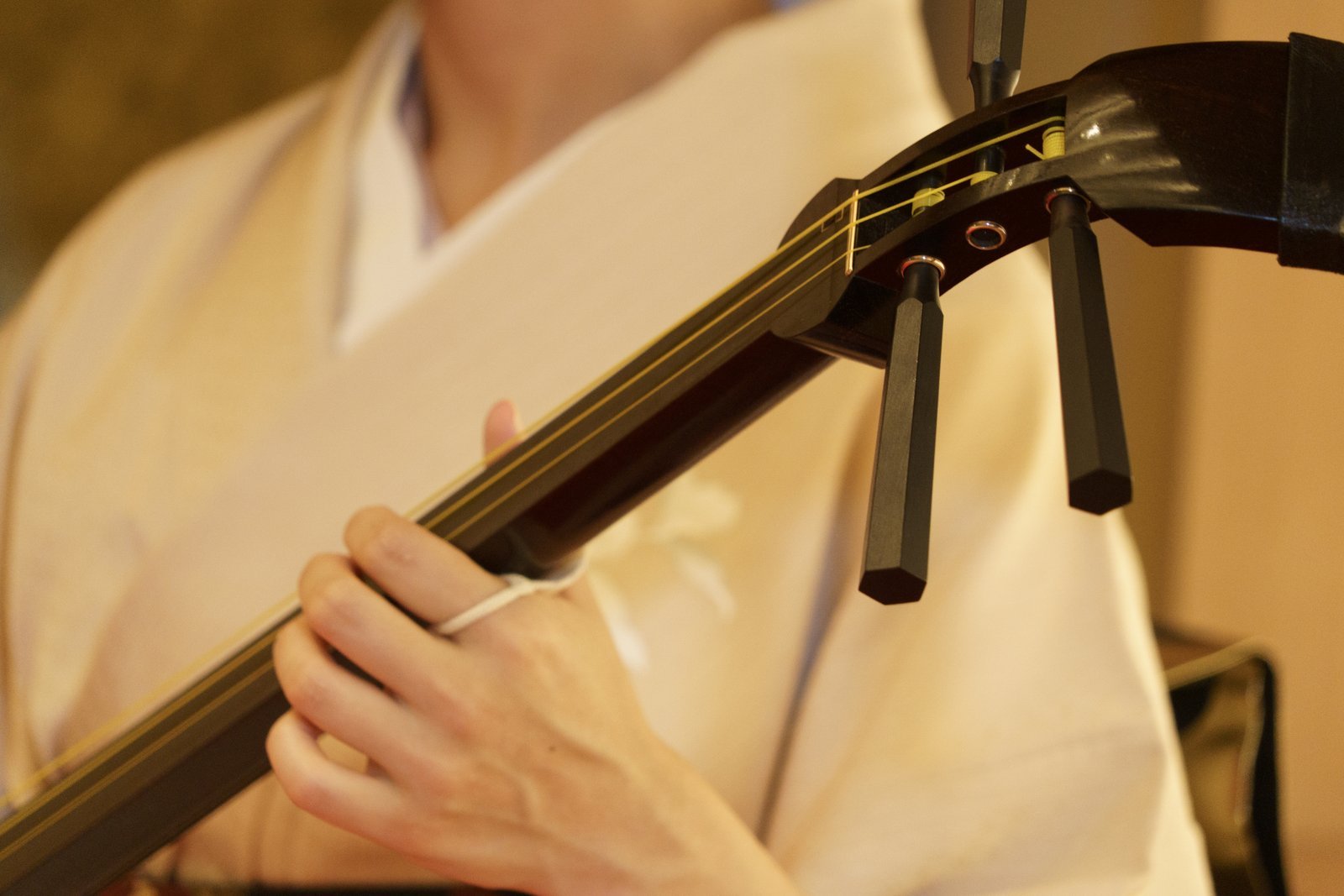
None of it was ever recorded on film in its early history — it was passed down the only way it could be: live, from one generation of geisha to the next. As our okami puts it:
“Video and photographs don’t really carry it. In the ozashiki, it’s right there in front of you. The characters for geisha mean, quite literally, ‘a person of the arts.’ The value is in feeling that art live.”
You can read about geisha culture and get the outline. Sit a meter away from a shamisen while it is being played, and you understand why the culture is still here.
Frequently Asked Questions
Is Miyakodori suitable for first-time visitors?
Yes. We welcome first-timers, and unlike some traditional houses, we don’t require an introduction from an existing guest.
Where exactly are Tokyo’s geisha streets, and how do I get there?
Asakusa’s hanamachi is the area immediately north of Senso-ji, known locally as Kannon-ura or Oku-Asakusa. From Asakusa Station it’s about a 13-minute walk on the Ginza, Tobu Skytree or Tsukuba Express lines, and about 15 minutes from the Toei Asakusa Line — through Kaminarimon, up Nakamise-dori and out the back of the temple grounds. Miyakodori sits roughly three minutes beyond the grounds.
What’s the difference between a geisha and a geiko?
“Geiko” is the term used for a professional geisha in Kyoto; “geisha” is the term used in Tokyo and most of the rest of Japan. In Tokyo an apprentice is called a hangyoku, where Kyoto says maiko — and in both cities she is already a geisha, not someone on her way to becoming one. The later ceremony that marks the end of her apprenticeship is a step taken inside the profession, not the door into it. We’ve written more about that distinction in other articles on our site.
Do I need to speak Japanese to enjoy an ozashiki (geisha banquet)?
No. An English interpreter is with you throughout our private one-, two- and three-hour plans, and our Ozashiki Tea House is run with English support. The geisha who perform here are used to hosting international guests, and much of an ozashiki is about atmosphere, games, and gestures as much as conversation.
What occasions is Miyakodori suited for?
Anniversaries, business entertaining, family celebrations, and tourists simply curious about Japanese culture are all welcome — anyone with genuine cultural curiosity about geisha and the art they practice. Because a machiai-chaya does not cook on the premises, meals are arranged with outside kitchens, which is why vegan, vegetarian and allergy requirements can all be accommodated; fully halal or kosher meals are served in bento form and need five days’ notice.
Can I watch geisha perform without joining an ozashiki?
Not as a standalone show — there is no stage performance to buy a ticket for. The lightest way in is our Ozashiki Tea House: 75 minutes, seating shared with other guests, live shamisen, classical dance, a geisha game, matcha with a sweet, and time for photographs. It is not a tea ceremony — the matcha and wagashi are served as hospitality, not as a ritual, and there is no tea ceremony element at Miyakodori. It is also the one plan you can book instantly online rather than by request.
Come Meet Tokyo’s Geisha at Miyakodori
If everything above sounds like the kind of evening you’d want to have in Tokyo, the next step is simple. Take a look at our plans and prices and find an evening that fits your group, or send us your request directly if you have questions before booking. We look forward to welcoming you to Asakusa Miyakodori.
Request Your Evening in Asakusa’s Hanamachi
Tell us your date, your group size and the kind of evening you have in mind, and we’ll put together a private ozashiki (geisha banquet) for you at Miyakodori — the only machiai-chaya in Asakusa, three minutes past the grounds of Senso-ji.
Request a Reservation


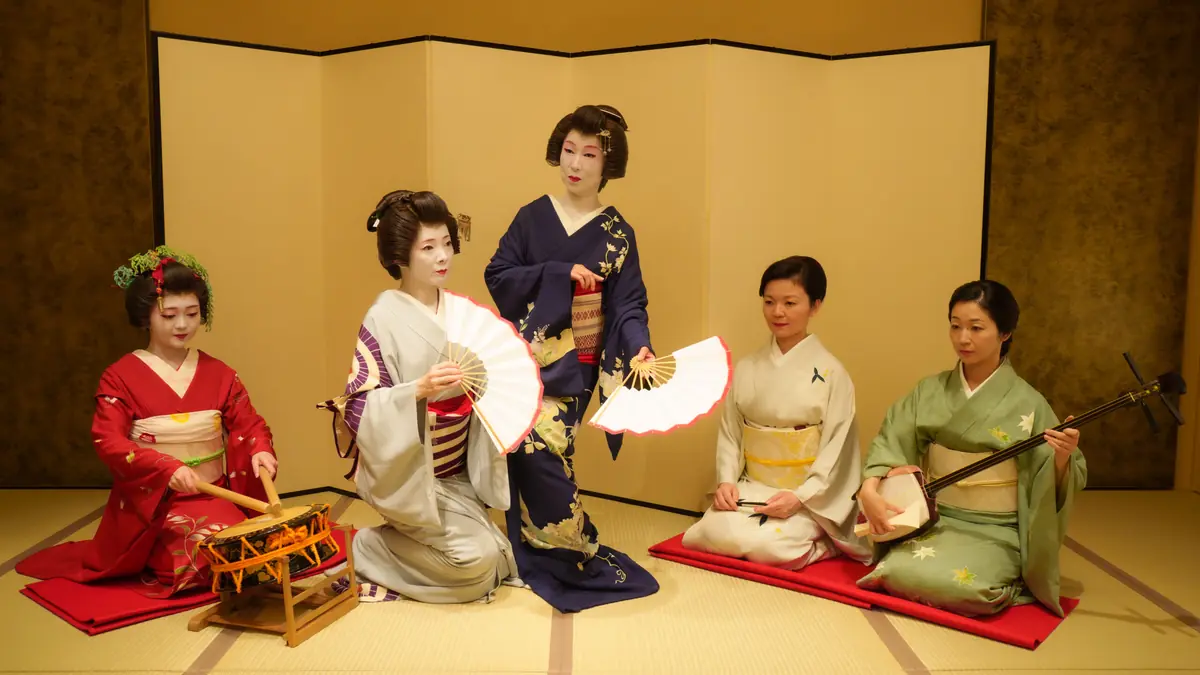
Real Geisha Stories: Tokyo — Komaaki, Chino & Chizuru of Asakusa
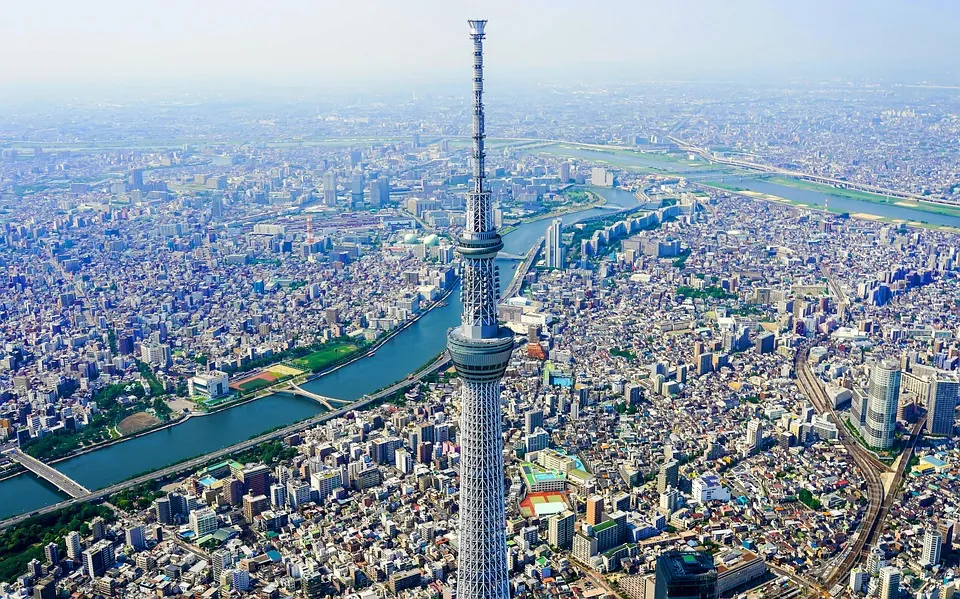
Luxury Adult Trip in Asakusa | Comprehensive Guide to Upscale Hotels, Dining, and Experiences
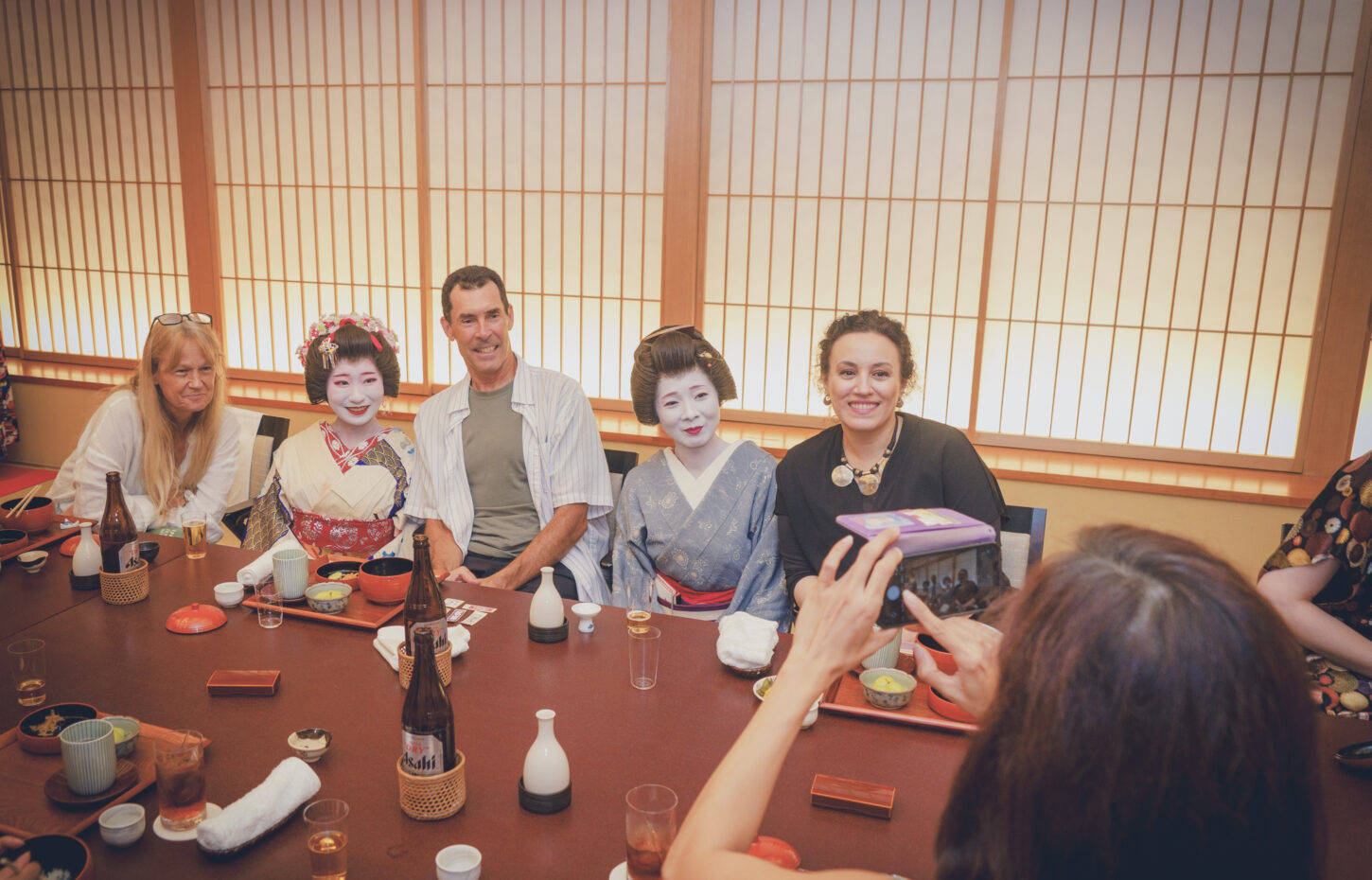
Japanese Culture Items: A Complete Guide to Traditional Crafts and Objects
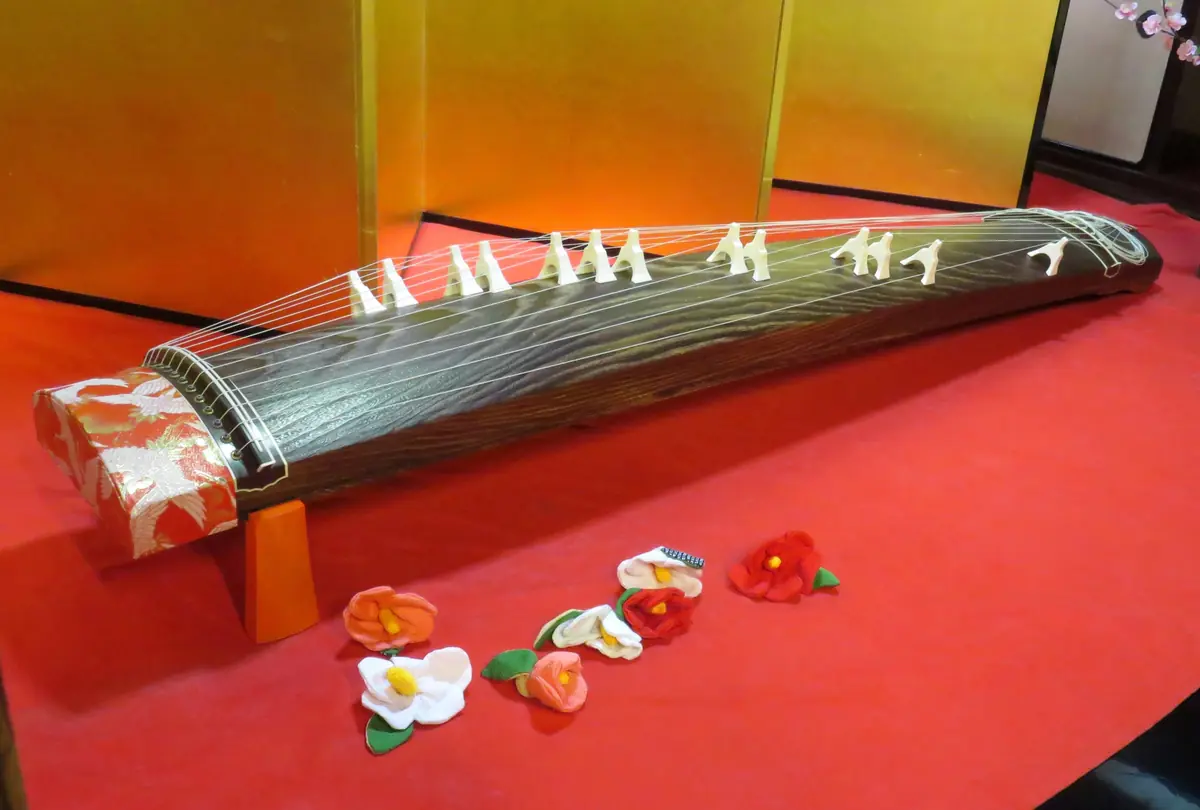
Enjoy Asakusa! Complete Year-Round Information on Seasonal Events, Festivals, and Sightseeing Activities
Tokyo VIP Tours, Reimagined: An Evening at Miyakodori
No comments yet.