



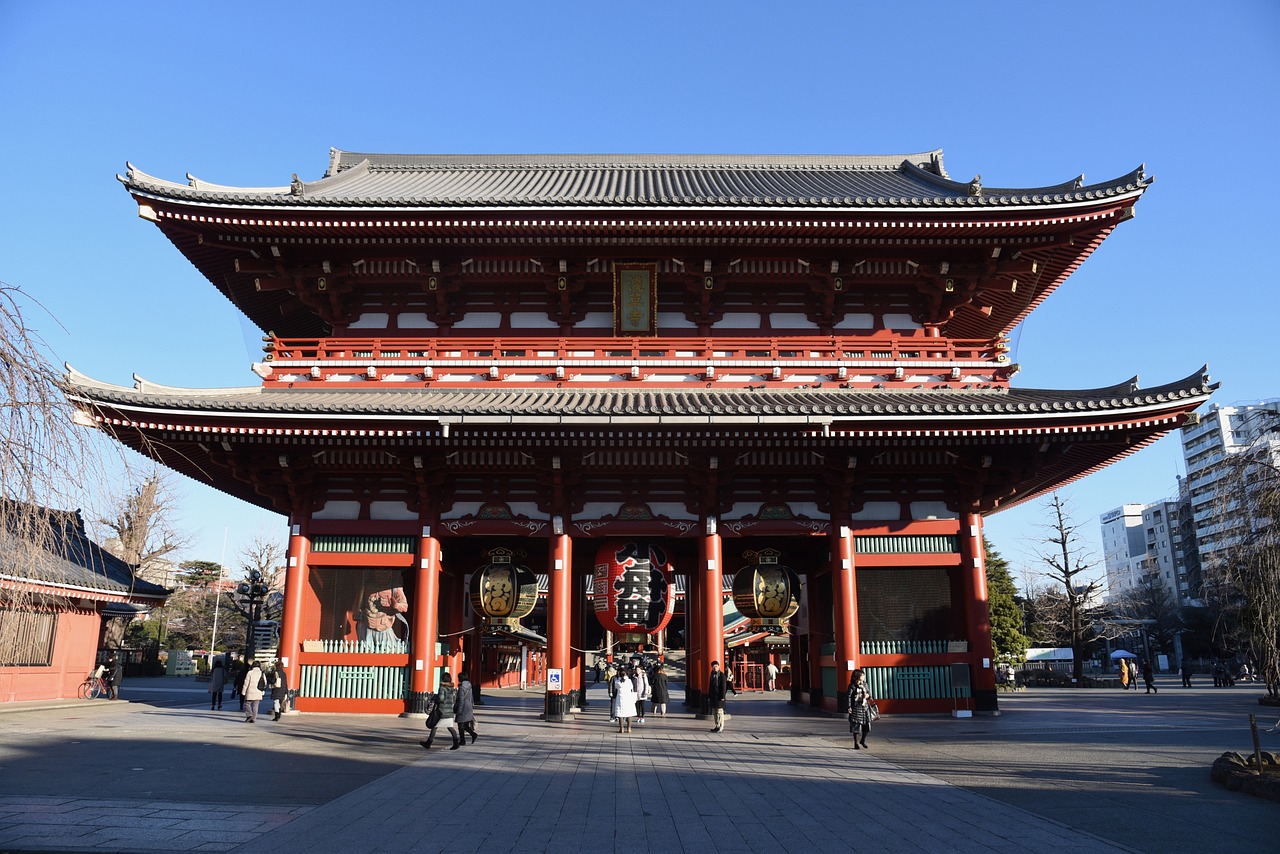
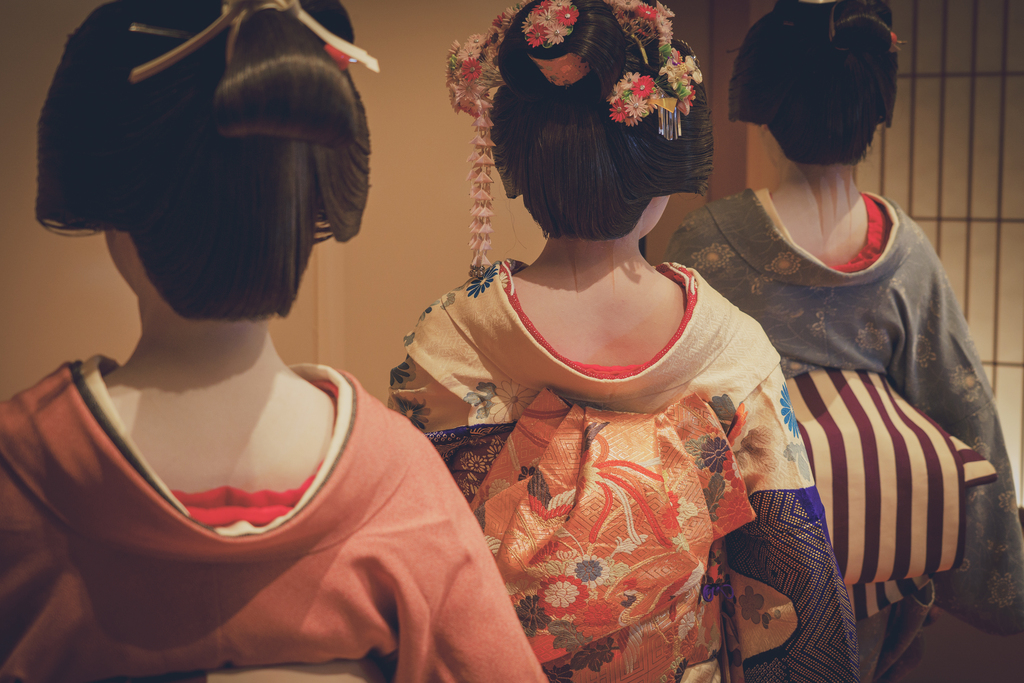
What Is a Hanamachi? Meaning, Structure & Japan’s Geisha Districts Explained
A hanamachi (花街, “flower town”) is a traditional Japanese geisha district — but it is more than a location. It is a living cultural network that supports geisha training, registration, bookings, and ozashiki performances through a set of connected institutions: the teahouse, the geisha house, and the guild office that ties them together.
Today, hanamachi remain active in both Tokyo and Kyoto. Asakusa is among the most active — and the most accessible to international guests, with registered geisha, a local kenban, and teahouses where ozashiki continue today. This guide explains what a hanamachi actually is, how its three core institutions work together, and where you can still step inside one today.
Hanamachi at a Glance
A hanamachi is built on three interconnected institutions — the teahouse, the geisha house, and the guild — all working together to keep geisha culture alive.
| Japanese | 花街 (hanamachi) |
|---|---|
| Literal meaning | “Flower town” |
| Also called | Kagai (the same characters, read differently — also used within Asakusa’s own hanamachi, and common in Kyoto) |
| Core institutions | Teahouse (ochaya / machiai-chaya) · Geisha house (okiya) · Guild (kenban) |
| Active hanamachi in Tokyo | Six, including Asakusa, Shimbashi, Akasaka, Kagurazaka, Mukojima, and Yoshicho |
| Most accessible for international visitors | Asakusa — especially through Miyakodori’s bookable ozashiki |
| Origin | Edo period (17th century) |
| Best understood as | A living cultural network, not just a historic district |
What Does “Hanamachi” Mean?
Hanamachi literally means “flower town” — a poetic name for the historically exclusive districts where geisha work, train, and carry forward Japan’s traditional performing arts. Walk into one in the early evening and the atmosphere is unmistakable: quiet lanes, dark wooden lattice fronts, the soft sound of a shamisen from behind a sliding door, and the occasional geisha moving between engagements.
In English, “hanamachi” is often translated simply as a geisha district, and that translation is not wrong. But it misses the most important part. A hanamachi is not just a neighborhood associated with geisha; it is a community and a set of institutions that together make geisha culture possible — training young performers, arranging banquets, and upholding the standards of the district.
The two characters tell the story: 花 (hana, “flower”) evokes the beauty and artistry of the geisha, while 街 (machi, “town”) points to the district and the community around it. In Kyoto the same idea is often expressed with the word kagai.
Hanamachi vs. Karyukai
These two words are easy to confuse. A hanamachi is a place — the physical district and its institutions. The karyukai (花柳界, the “flower and willow world“) is the society — the people, relationships, and values of the geisha world as a whole. Put simply: the hanamachi is where it happens; the karyukai is the world it belongs to.
The Three Pillars of a Hanamachi
This is where a hanamachi becomes more than a pretty street. Every functioning hanamachi rests on three connected institutions: the teahouse where banquets are held, the geisha house where geisha train and are supported, and the guild office that registers geisha and coordinates everything behind the scenes.
- Teahouse (ochaya / machiai-chaya) — the refined venue where an ozashiki banquet takes place and geisha are invited for the evening.
- Geisha house (okiya) — the house and training base connected to a geisha’s career and instruction.
- Guild office (kenban) — the registry that records geisha and coordinates bookings, training, and professional standards.
| Pillar | Japanese | Role in the hanamachi | Easy to misunderstand | How it works at Miyakodori |
|---|---|---|---|---|
| Teahouse | お茶屋・待合茶屋 (ochaya / machiai-chaya) | The venue that hosts banquets and connects guests with geisha | People assume geisha are employed at the teahouse | Miyakodori hosts the ozashiki and invites geisha for each occasion |
| Geisha house | 置屋 (okiya) | Develops, houses, and supports geisha and apprentices | People assume all geisha live there | Miyakodori is not an okiya; geisha who attend are independent professionals invited from the Asakusa hanamachi |
| Guild | 見番 (kenban) | Registers geisha and coordinates bookings, training, standards | People assume it is just a booking desk | Registration with the local kenban is one of the clearest markers of a working, recognized geisha |
The Teahouse (Ochaya / Machiai-chaya)
The teahouse is the setting in which the evening unfolds — historically an invitation-only, regulars-first world. A guest does not simply walk in; the teahouse arranges the banquet and the geisha are invited to attend.
One point of confusion is the vocabulary. In Kyoto, this teahouse is called an ochaya. In Tokyo’s hanamachi, including Asakusa, this role may be filled by a machiai-chaya or ryotei. Miyakodori is itself a machiai-chaya — and one of the few places in Asakusa where international guests can experience this teahouse tradition directly. If you want to see what that looks like in practice, see our guide to a private geisha experience in Asakusa.
The Geisha House (Okiya)
While the teahouse is where the ozashiki takes place, the okiya is closer to a management house or professional base: it develops, houses, and supports geisha and apprentices, often under the care of an okaasan (literally “mother”) who oversees their training and daily life.
It is important not to over-simplify here. The traditional image of every geisha living in the okiya does not hold everywhere — practices vary by district and by where a geisha is in her career. And crucially, geisha are independent professionals, not staff. At Miyakodori, geisha are not employees; they are registered, independent artists from the Asakusa hanamachi who are invited for each banquet.
The Guild Office (Kenban)
The kenban is the quiet engine of the district — best understood as the official guild and registry office. It registers the district’s geisha and coordinates bookings, training arrangements, and professional standards.
This is also where authenticity is anchored. A working geisha in Tokyo is registered with their local kenban — an Asakusa geisha with the Asakusa kenban, a Shimbashi geisha with the Shimbashi kenban — and that registration is one of the clearest markers of a recognized working geisha, distinct from a costume-based performance.
How the Three Work Together
The three institutions only make sense together. A typical evening flows like this:
- A guest requests an ozashiki (a private geisha banquet).
- The teahouse (in Asakusa, a machiai-chaya or ryotei) arranges the occasion.
- The kenban coordinates the registered geisha for that evening.
- The geisha attend, joining from their professional base.
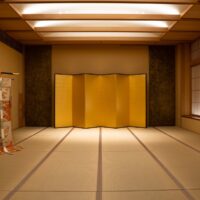
- The ozashiki takes place in a tatami room — music, dance, conversation, and games.
Remove any one of the three and the system stops working. That interdependence is exactly what makes a hanamachi a living network rather than a single building or street.
The Six Hanamachi of Tokyo
This section is only a brief overview. For a detailed, district-by-district guide, see our full guide to Tokyo’s geisha districts.
Tokyo is home to several active hanamachi, each with its own character:
- Shimbashi — known as “the Shimbashi of the arts,” historically tied to government and political circles, and home to the celebrated Azuma Odori dance.
- Akasaka — once closely tied to military and political elites, and today known for preserving its identity through the Akasaka Odori.
- Kagurazaka — a community-rooted hillside district, the first to be certified as a local cultural asset in its ward.
- Mukojima — Tokyo’s largest hanamachi by number of geisha, set along the cherry-lined Sumida River.
- Yoshicho — a historic, now very small district near Nihonbashi, preserving the tradition at a refined, almost boutique scale.
- Asakusa — an active district integrated with the life of the neighborhood, and notably the only geisha district (hanamachi) in Japan where the professional taikomochi tradition — traditional male ozashiki entertainers, sometimes described as male geisha — still survives.
Kyoto, the other great center of geisha culture, has its own five hanamachi — known collectively as the Gokagai (“five flower towns”): Gion Kobu, Gion Higashi, Miyagawacho, Pontocho, and Kamishichiken. In Kyoto these districts are usually called kagai rather than hanamachi — a reading also used within Asakusa’s own hanamachi — but the underlying structure is the same.
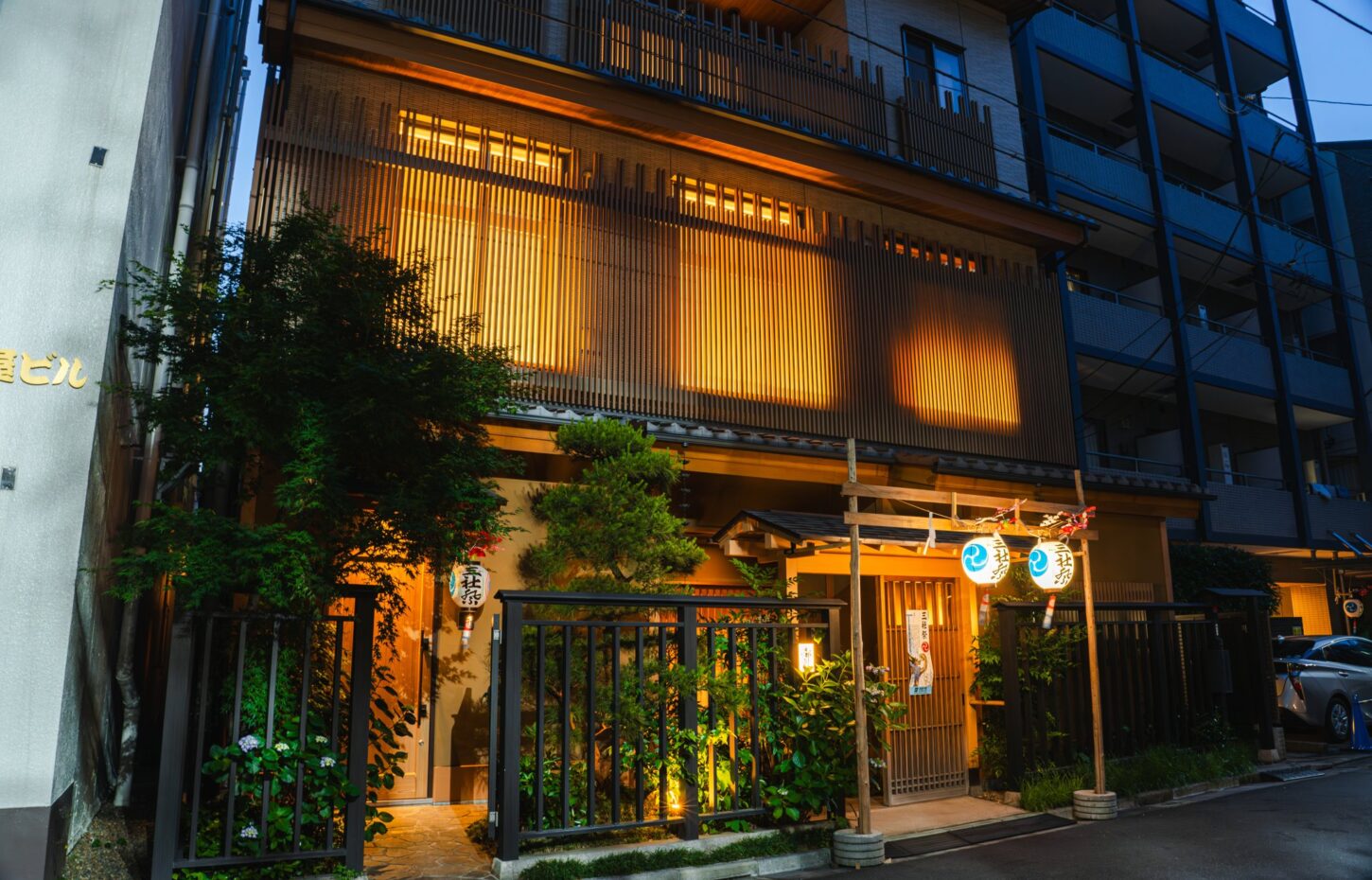
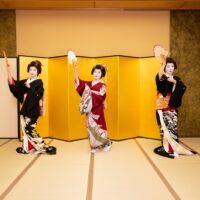
This is what a working hanamachi looks like from the street: an Asakusa geisha walking to an engagement at dusk, and stepping in through the lattice door.
Asakusa — One of Tokyo’s Most Accessible Hanamachi (Still Active Today)
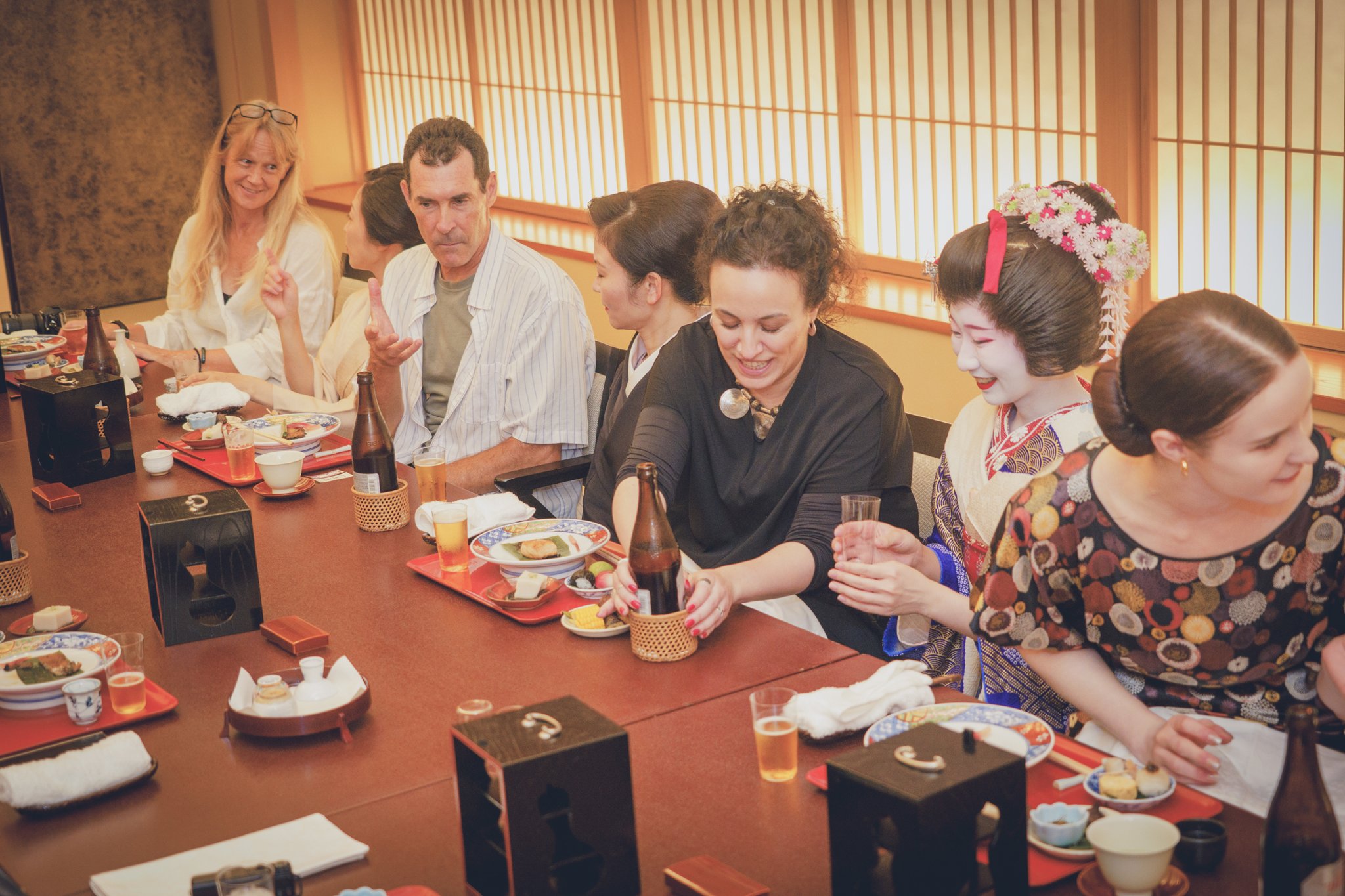
Asakusa’s hanamachi traces its roots to the early Edo period — roughly four hundred years ago — and it remains active today. With Miyakodori, international guests can experience an authentic ozashiki banquet in this living geisha district.
Its origins are layered. Asakusa’s geisha culture grew out of three older streams: the entertainers who performed for visitors in front of Sensoji temple, the geisha who hosted banquets for guests traveling to the nearby pleasure quarter, and — after Edo’s theaters were relocated north of the temple — the highly skilled geisha attached to the playhouse teahouses, taught by kabuki musicians. By the late 19th century these streams came together, and in 1896 a kenban was established to organize the district.
What is striking about Asakusa is its resilience. The district was devastated by the Great Kanto Earthquake of 1923 and again during the air raids of the Second World War — and twice it was rebuilt. By 1950, Asakusa’s geisha had revived their signature dance performance, a symbol of the district coming back to life. That same year, 1950, Miyakodori was founded.
The tradition is not frozen in the past. According to Miyakodori’s okami, Chikage, international guests have become noticeably more common in recent years — visitors from Europe, the Americas, Asia, and beyond. Even more telling, she has noticed more people expressing interest in becoming geisha, and she suspects that the growing attention from international guests may itself be part of the motivation. A tradition drawing both new guests and new performers is a living one — actively carried forward, not left in the past.
“When people think of Asakusa, I want them to think of Miyakodori. Whether they’re from Japan or anywhere in the world, I want them to know that Miyakodori is the place to enjoy a real geisha banquet.”
— Chikage, okami of Miyakodori
Experience an ozashiki in Asakusa →
Book a private geisha experienceFrequently Asked Questions
- 1. What is a hanamachi in Japan?
- A hanamachi is a traditional Japanese geisha district — a community and set of institutions (teahouses, geisha houses, and a guild office) where geisha are registered, trained, booked, and invited to perform. It is best understood not just as a location, but as a living cultural network that supports geisha culture.
- 2. What does hanamachi literally mean?
- Hanamachi literally means “flower town.” The character 花 (hana, “flower”) evokes the beauty and artistry of the geisha, and 街 (machi, “town”) refers to the district and its community.
- 3. Is a hanamachi the same as a geisha district?
- In English, “hanamachi” is usually translated as “geisha district,” so the two are often treated as the same. The difference is one of depth: a hanamachi is not only a place where geisha work, but the network of institutions that train geisha and uphold the tradition.
- 4. What is the difference between hanamachi, kagai, and karyukai?
- Hanamachi and kagai are two readings of the same idea — the geisha district as a place (kagai is common in Kyoto). The karyukai (the “flower and willow world”) is broader: it refers to the whole society, people, and values of the geisha world.
- 5. What are the three institutions of a hanamachi?
- They are the teahouse (ochaya in Kyoto; machiai-chaya or ryotei in Tokyo), where banquets are held; the okiya (geisha house), which develops and supports geisha; and the kenban (guild office), which registers geisha and coordinates bookings and training.
- 6. Can foreigners visit a hanamachi?
- Yes. While much of the hanamachi world is traditionally invitation-only, Asakusa is one of the most accessible districts for international guests — and through Miyakodori, they can book an authentic ozashiki banquet directly, without an introduction.
- 7. Is Asakusa a hanamachi?
- Yes. Asakusa is one of Tokyo’s active hanamachi, with roots in the Edo period. It is among the most accessible to visitors and is the only geisha district (hanamachi) in Japan where the professional taikomochi tradition — traditional male ozashiki entertainers (sometimes described as male geisha) — still survives.
About Miyakodori
Miyakodori is a machiai-chaya (geisha teahouse) located in the heart of Asakusa’s hanamachi. Founded in 1950, it is one of the few places in Asakusa where international guests can book an authentic geisha banquet online — no introduction required. Today it is led by its okami, Chikage — the only proprietress in Asakusa who trained and performed as a geisha herself, and a master instructor (shihandai) of the Hanayagi school of Japanese classical dance. Her lifelong place inside this tradition is part of what lets Miyakodori open the doors of a living hanamachi to guests from around the world.
Ready to step inside a living hanamachi?
Experience a private geisha ozashiki in Asakusa →


- Geisha Drinking Game: Culture, Fun, and Tradition
- Karyukai: The Flower and Willow World of Geisha — Japan's Geisha Culture Explained
Traditional Japanese Culture Experience: A 2026 Travel Guide
Real Geisha Stories: Tokyo — Komaaki, Chino & Chizuru of Asakusa
Geisha in Tokyo: The Complete Experience Guide
Geisha Pictures: A Comprehensive Visual Guide and Stock Photo Resources
The Real Meaning of Geisha in Japan: History, Life, and Modern Traditions
How Much Is a Geisha Dinner in Tokyo? (Complete Pricing Guide)
Comment ( 0 )
Trackbacks are closed.
No comments yet.