



Types of Geisha: Tachikata, Jikata, Hangyoku, Ippon, and Tokyo’s Male Geisha
Geisha are usually sorted in three ways. By role, a geisha is either a tachikata (立方), a dancer, or a jikata (地方), a musician who plays the shamisen and sings. By stage, she is either a hangyoku (半玉), an apprentice geisha, or an ippon (一本), a full geisha; the trainee period before her debut, minarai (見習い), comes before she is a geisha at all. By standing, she is either kakae (抱え), supported by an okiya (geisha house), or jimae (自前), independent. Tokyo also has male geisha, the hōkan (幇間). In Kyoto, the same world uses different names: geiko for geisha and maiko for apprentices.
By Role: Tachikata and Jikata
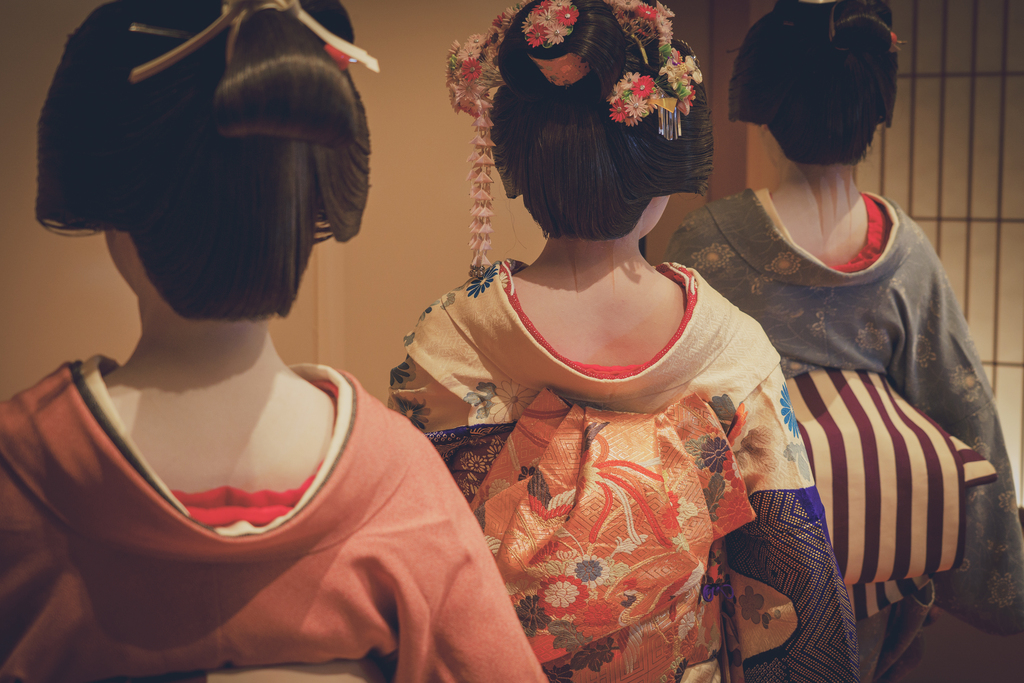
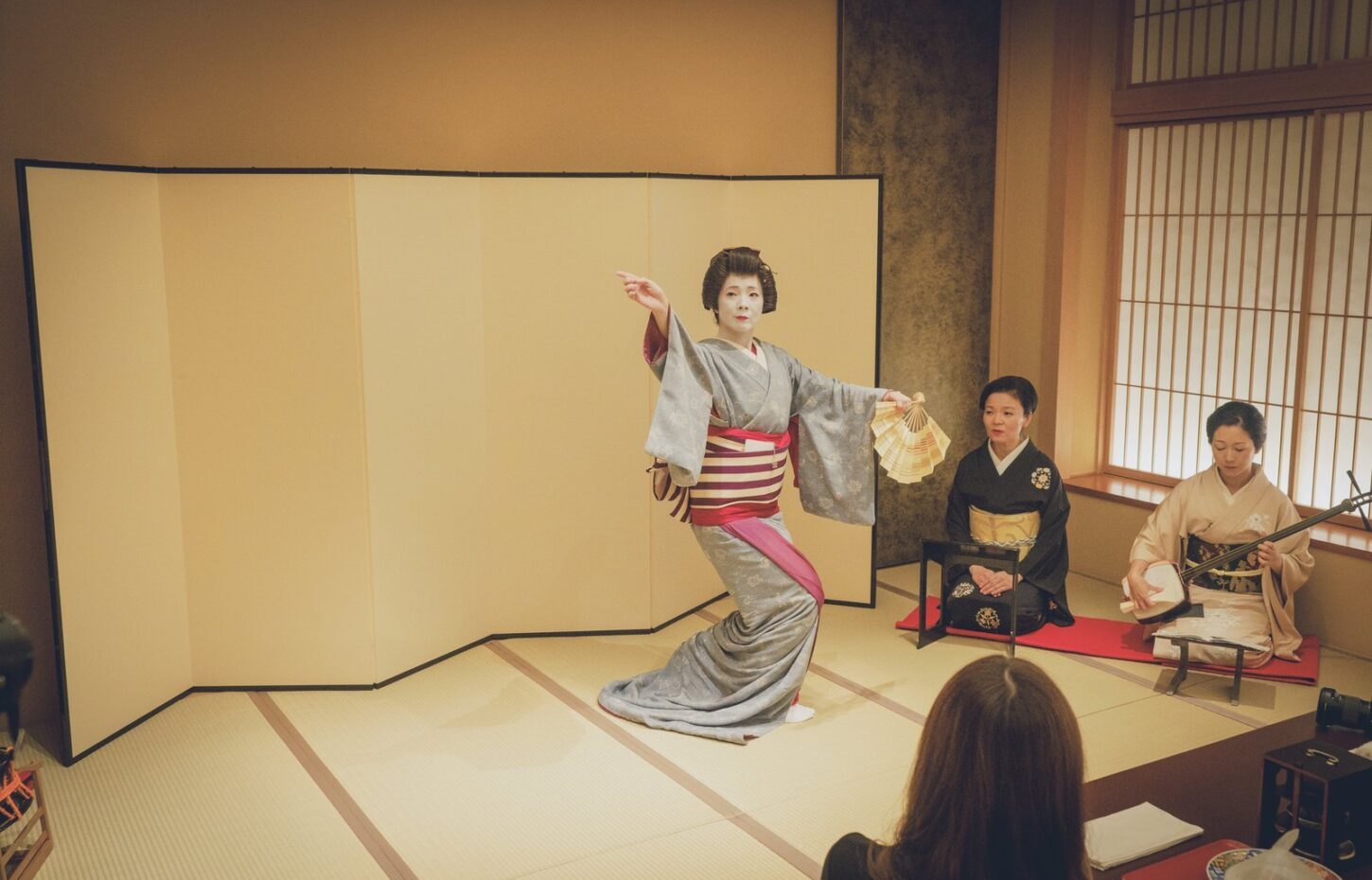
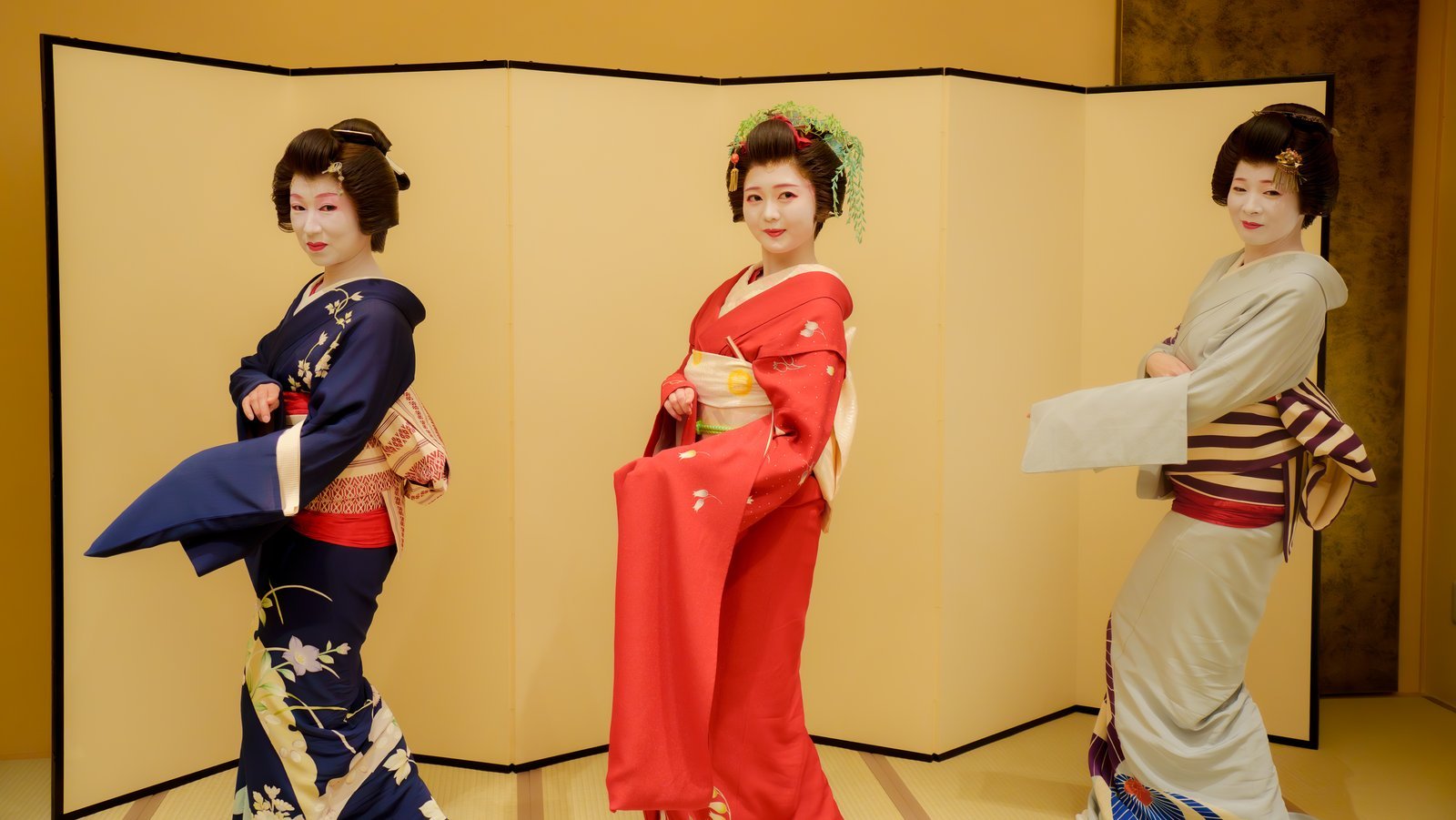
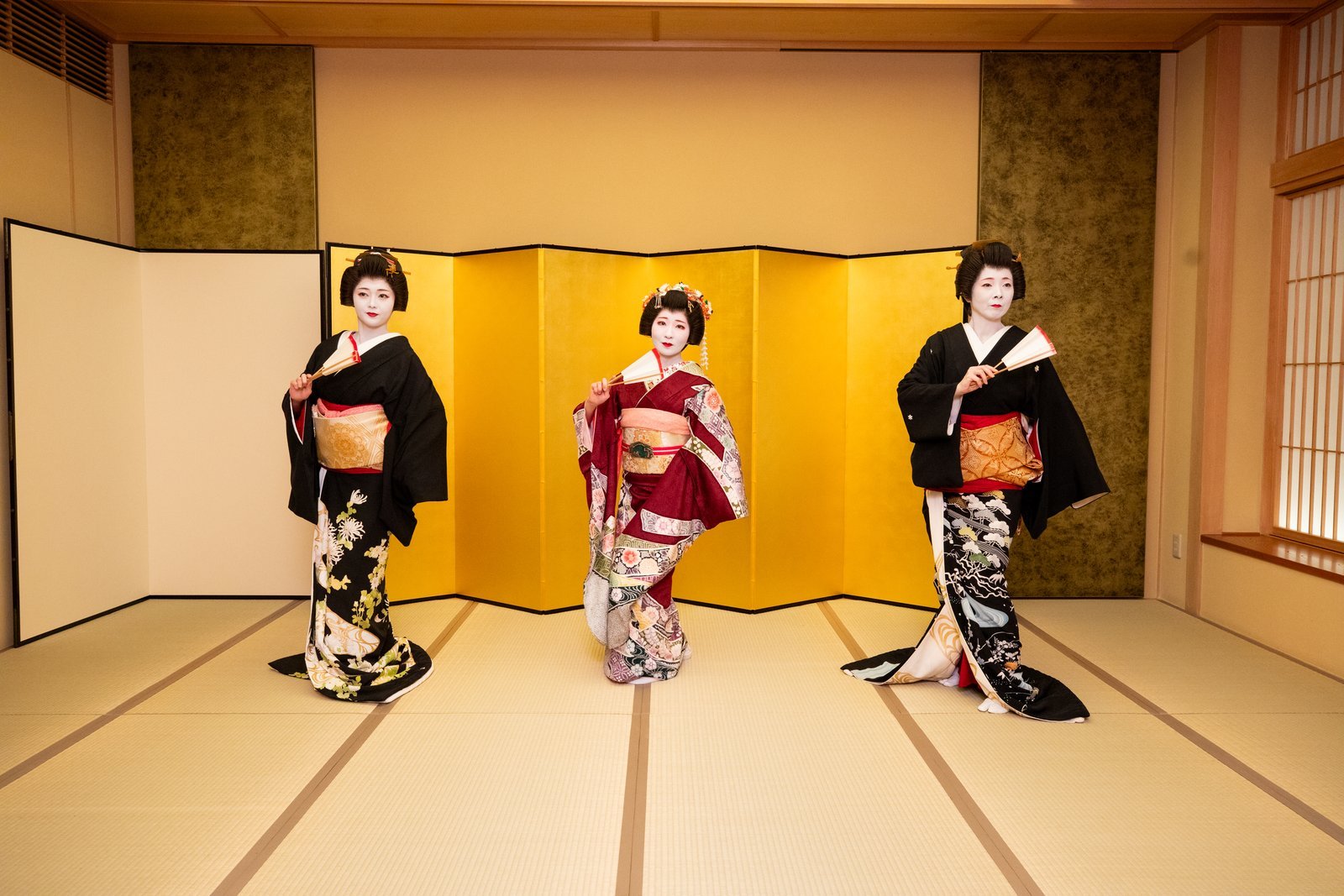
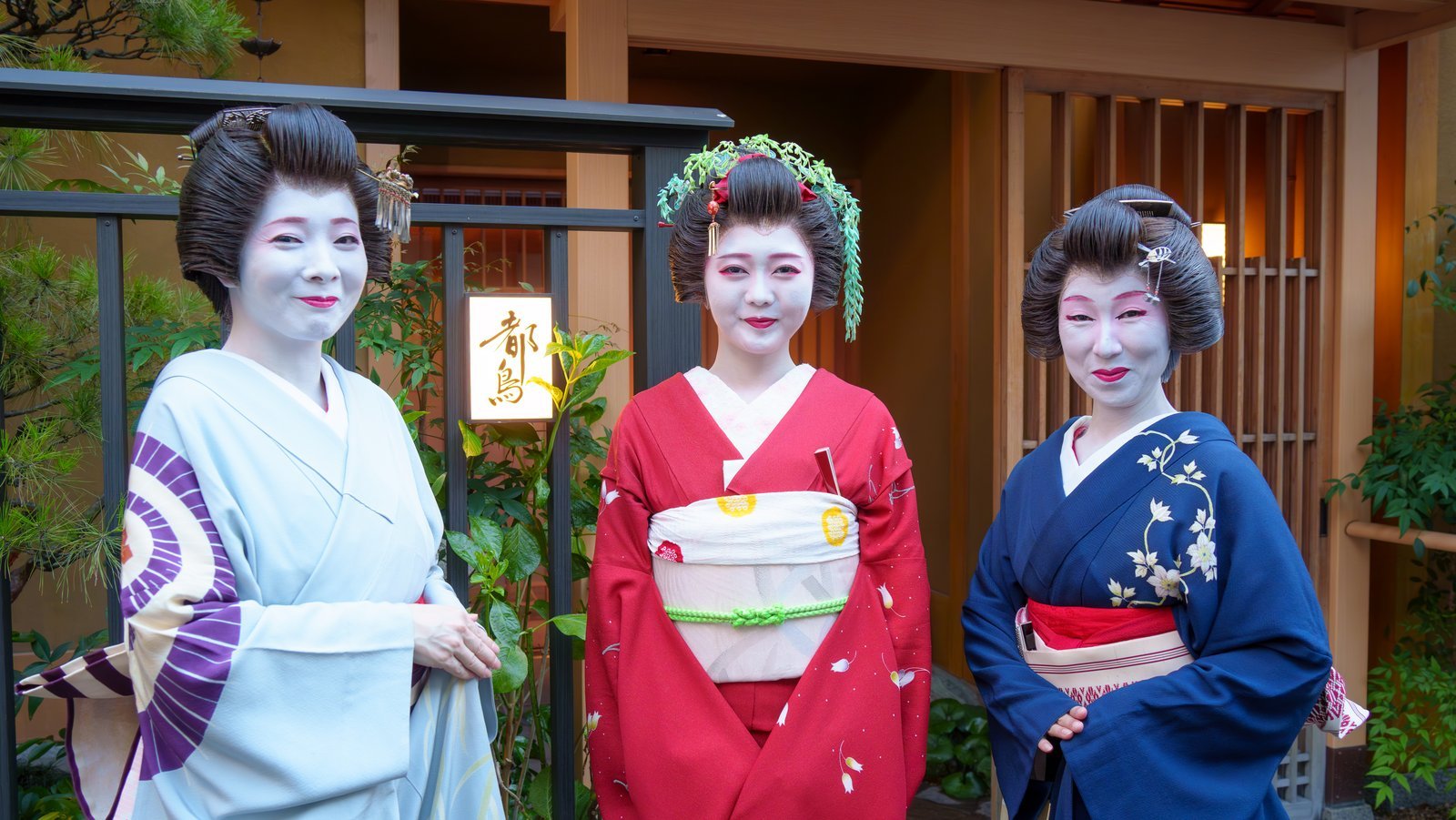
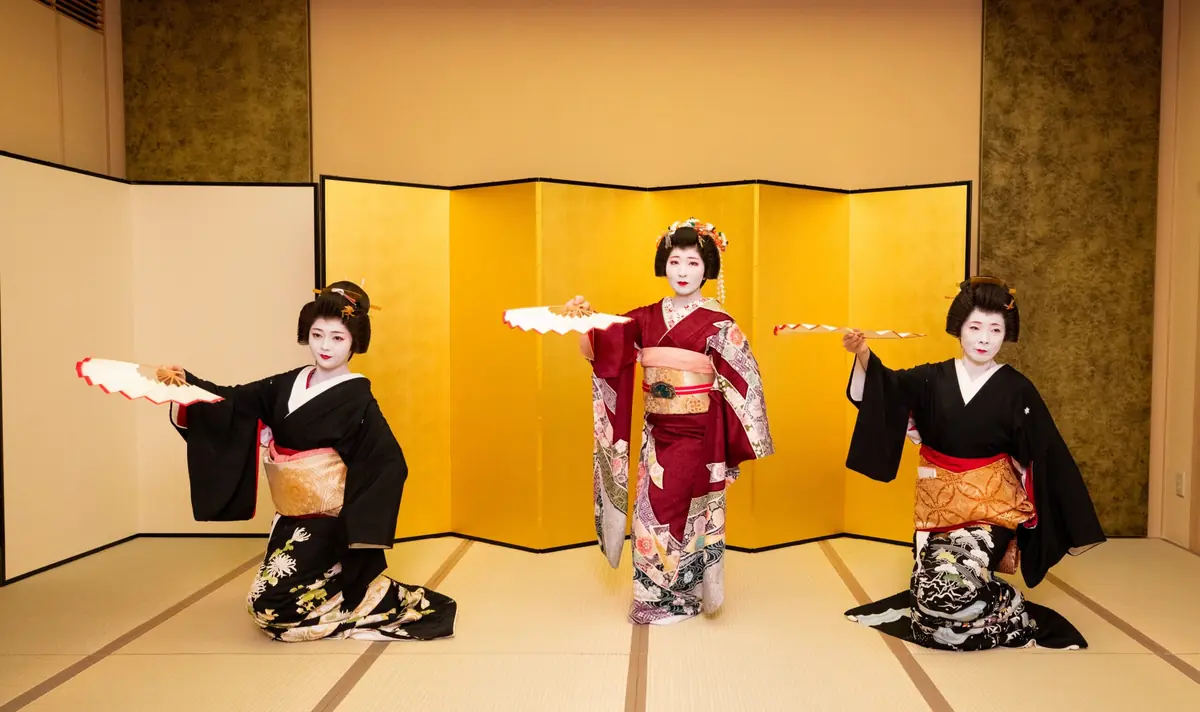
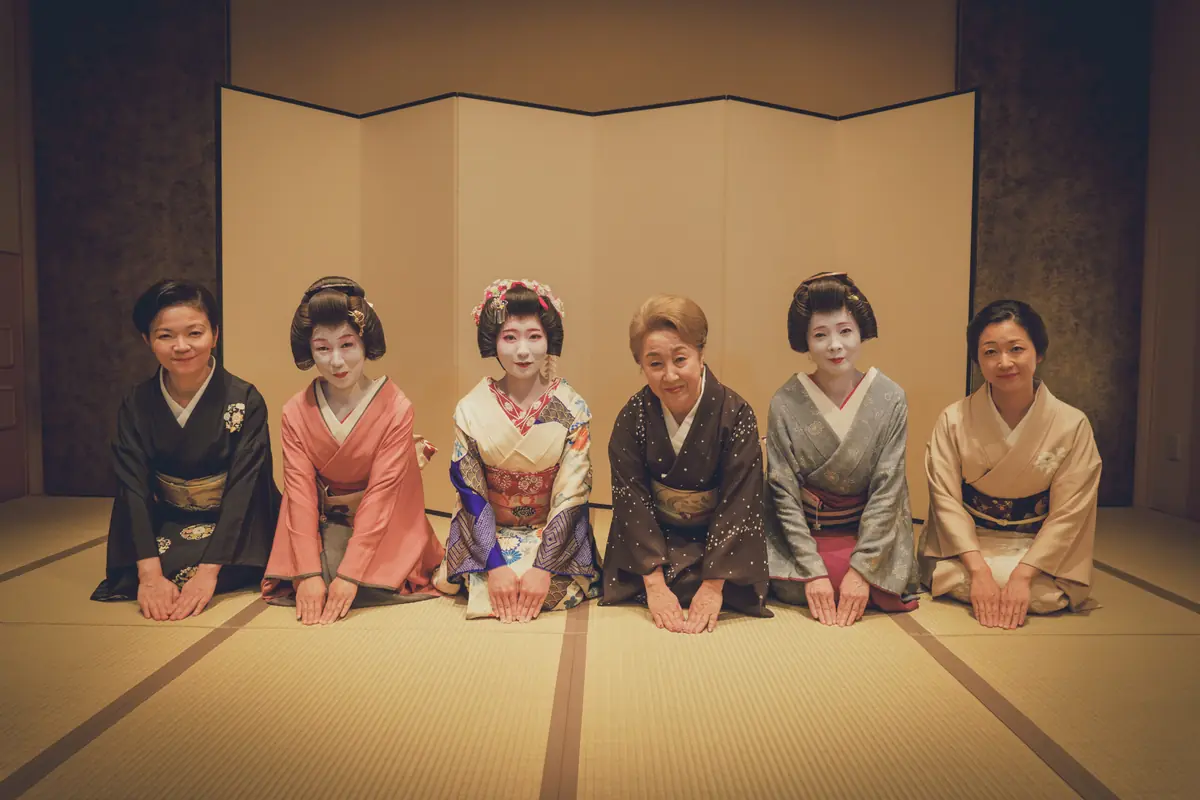
Every geisha banquet performance needs two kinds of geisha. The tachikata dance. In Asakusa they usually wear white makeup and a traditional nihongami hairstyle, and at an ozashiki they perform the dances the guests have come to see. The jikata play the shamisen and sing. They usually appear without white makeup and with a modern hairstyle, which in the geisha world is called yōhatsu, “Western hair.” Before the war, the jikata wore nihongami too; the change is a modern one.
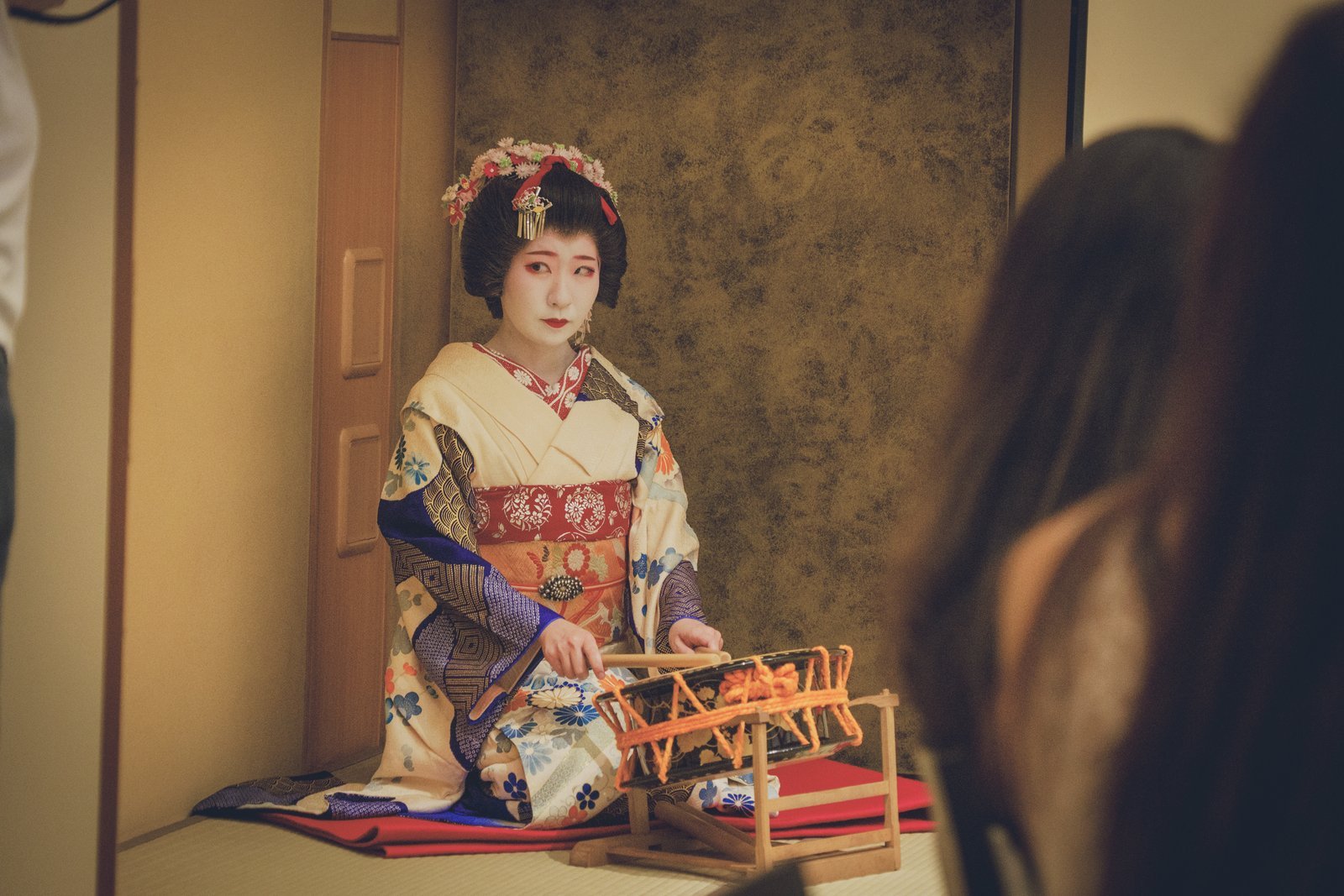
Broadly, dance belongs to the tachikata, and shamisen and song to the jikata. Percussion has no such line. Either a tachikata or a jikata may take the drum. In Asakusa today, a hangyoku is often the one on the drum.
A dance needs at least two geisha: one to dance, one to play. The roles are not fixed for life. Some geisha choose the shamisen from the start; others begin as dancers and later move to the shamisen. For the dances themselves, see our guide to geisha dance; for the instruments, see geisha instruments.
By Stage: Minarai, Hangyoku, and Ippon
Minarai (見習い) is the trainee period, usually about six months to a year. A trainee learns the manners of the banquet room from the start: how to pour, how to pass things, where to sit. She is not yet a geisha.
Hangyoku (半玉) is Tokyo’s apprentice geisha. The name means “half jewel,” because her fee was once half that of a full geisha. She is also called oshaku (お酌), “the one who pours,” and senior geisha in Asakusa still call a hangyoku “oshaku-san.” A hangyoku is already a geisha, working at real engagements. She takes the same lessons as a full geisha, but the dances she performs are chosen to look young and sweet.
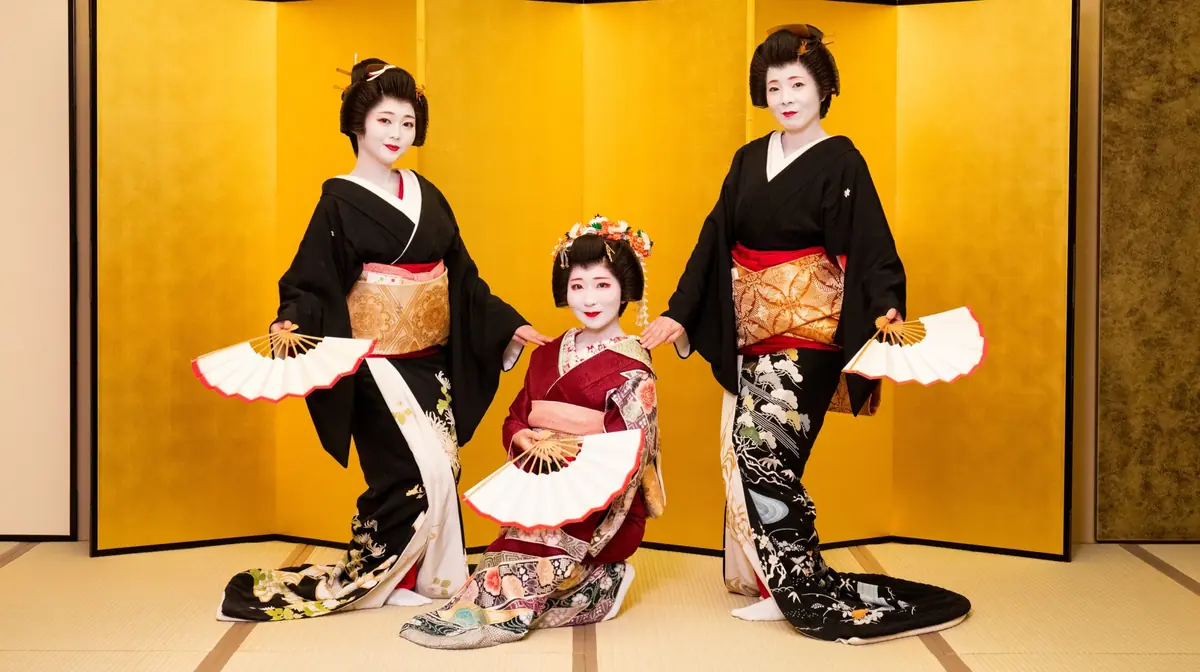
Ippon (一本) is a full geisha. The word means “one stick,” from the incense sticks once used to time a geisha’s engagement. An ippon wears the formal black kimono with a trailing hem, and her dances are iki: stylish, knowing, with a touch of allure. A hangyoku usually becomes ippon after a few years, depending on her age and her arts. In Asakusa this is simply called “becoming ippon”; there is no exam. A woman who starts older may debut directly as ippon.
For the full path, see our guide to how to become a geisha.
See Tachikata and Jikata Perform in Asakusa
At our teahouse in Asakusa, a private ozashiki (geisha banquet) brings tachikata and jikata together in the same room — dance, shamisen, conversation and the old parlor games, for your group alone. First-time and overseas guests welcome.
Request a ReservationBy Standing: Kakae and Jimae
Every geisha works in connection with an okiya (置屋), a geisha house, and goes to engagements under its sign. The head of the house is called okāsan, “mother,” or onēsan, “elder sister,” if she is still a working geisha herself.
A young geisha who is supported by an okiya is described as kakae (抱え), “held” by the house. After a set number of years, she can become jimae (自前), independent, holding her own signboard as the head of her own house. Broadly, younger geisha tend to be kakae and older geisha tend to be jimae. Another word, kanban-gari (看板借り), “borrowing the signboard,” describes a geisha who belongs to an okiya without being one of the geisha it supports. These words are all still in use in Asakusa. For how geisha are paid under each arrangement, see our guide to how geisha are paid.
Geisha also have a word for where they belong. A geisha’s own district, where she is registered with the kenban (the geisha office), is her tochi (土地), “home ground.” Other districts are yoso-tochi, “someone else’s ground”; in Asakusa, other districts are called “yoso-tochi-san.”
Male Geisha: Hōkan
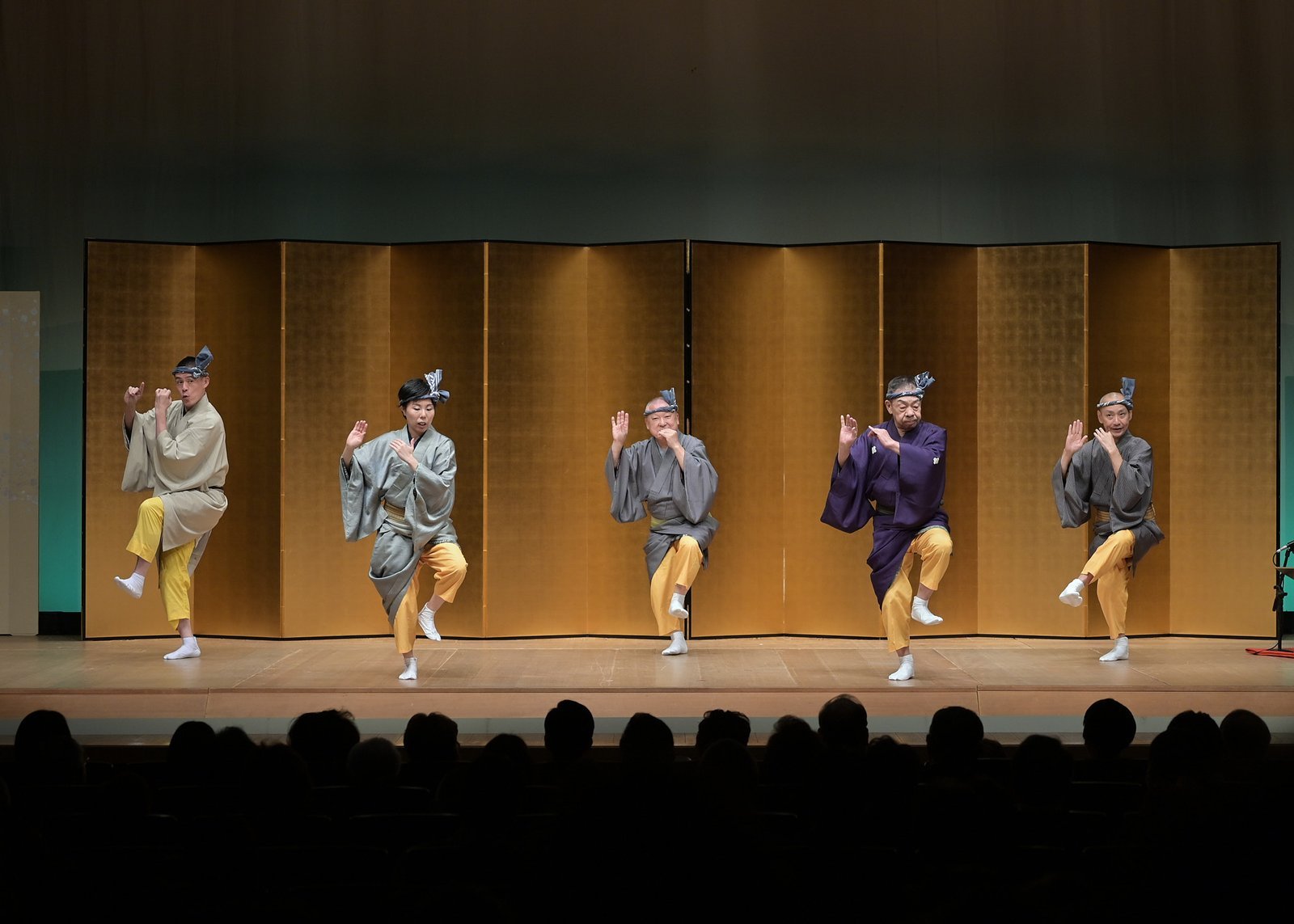
According to one historian of the Tokyo geisha world, the first people called geisha were men. Another history, of Edo’s entertainers, describes the banquets of the Edo period as having both men geisha and women geisha. The men were musicians and singers just like the women, but over time they took on lighter entertainment such as mimicry and comic sketches, and came to be called hōkan (幇間), also known as taikomochi.
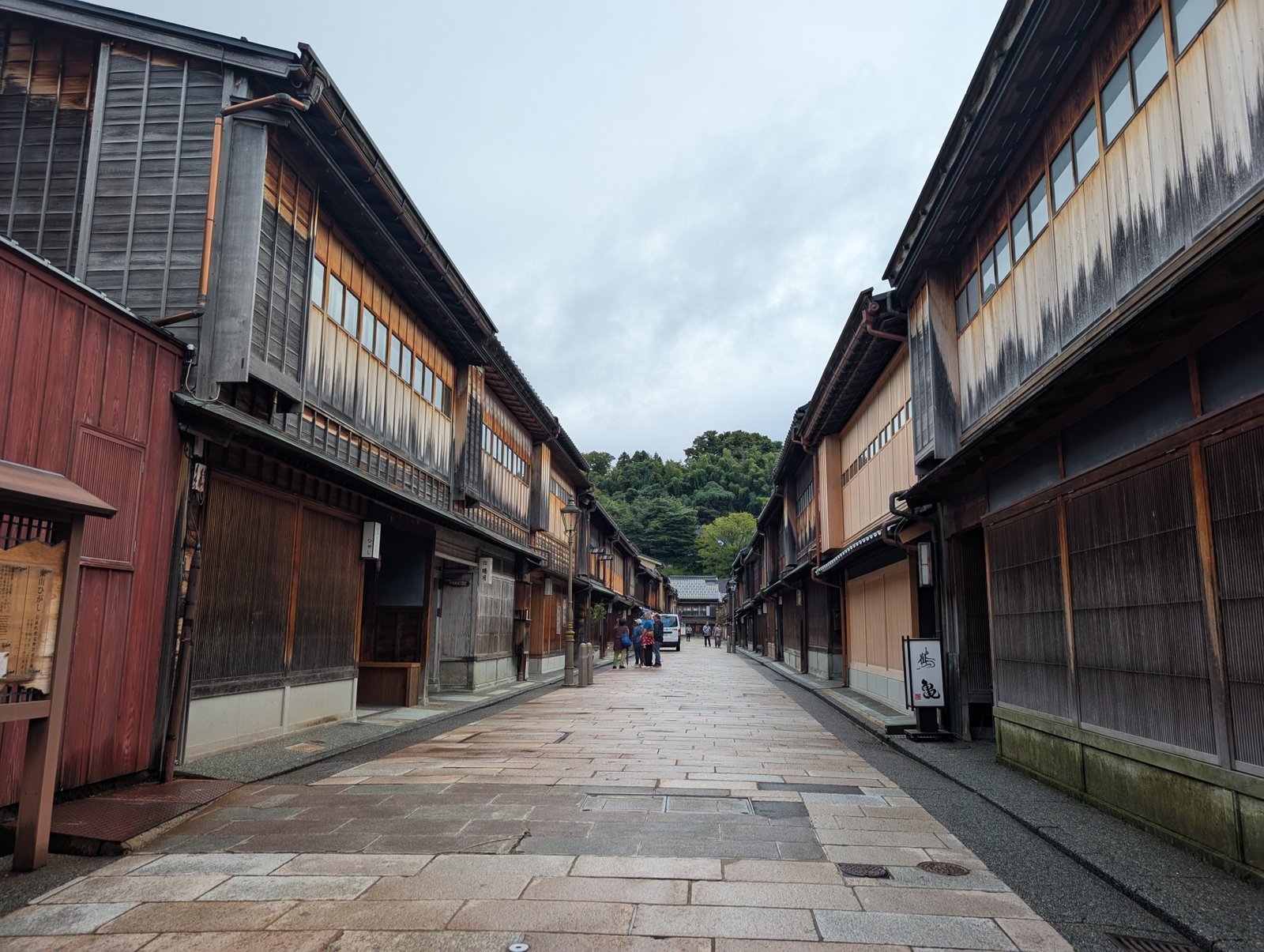
The hōkan is Japan’s only male geisha, and today Asakusa is the only place in Japan where hōkan are formally registered with a kenban. (There is also a woman hōkan among them.) At an ozashiki, a hōkan’s job is less to perform set pieces than to lift the whole room: he picks up a laugh and makes it bigger, and draws the quieter guests into the fun. Geisha and hōkan work as partners. In Asakusa, a hōkan is booked the same way a geisha is; the district says a venue “calls” a hōkan. For more, see taikomochi.
Tokyo and Kyoto: Different Names for the Same World
One historian of the Tokyo geisha world traces the word geisha, as the name for these performers, to the Yoshiwara of the mid-Edo period, from where it was carried into Meiji-era Tokyo. In western Japan, geisha are called geiko. The written form geigi (芸妓) is used in both regions, and in Asakusa today about as many people say geigi as say geisha.
| Comparison point | Tokyo | Kyoto |
|---|---|---|
| Full geisha | geisha (ippon) | geiko |
| Apprentice | hangyoku (oshaku) | maiko |
| Geisha house | okiya | yakata |
| Usual earliest debut today (hangyoku / maiko) | 18 | 15 |
The dress differs too. A Kyoto maiko trails her kimono and wears the long, hanging darari obi; a Tokyo hangyoku wears a long-sleeved kimono without a trailing hem, and a shorter obi. The okami (proprietress) of our house describes the difference in spirit, which she calls her own impression: Tokyo dresses for iki, a stylish, understated flair, and Kyoto for hin, refinement.
Many people, in Japan as well as abroad, assume geisha exist only in Kyoto. They do not. Tokyo’s geisha tradition goes back to the Edo period, and it is still alive today. For the difference between maiko and geisha, see maiko vs geisha.
Frequently Asked Questions
How many types of geisha are there?
There is no single official list. Geisha are usually sorted by role (tachikata dancers and jikata musicians), by stage (hangyoku apprentices and ippon full geisha), and by standing (kakae, supported by an okiya, or jimae, independent). Tokyo also has male geisha, called hōkan.
What is the difference between tachikata and jikata?
Tachikata are the dancers; in Asakusa they usually appear in white makeup and a traditional hairstyle. Jikata play the shamisen and sing. Percussion can be played by either.
Is a hangyoku a geisha?
Yes. A hangyoku is an apprentice geisha who already works at real engagements. Only the trainee stage before the debut, minarai, is not yet a geisha.
Are there male geisha?
Yes. Male geisha are called hōkan, and today Asakusa is the only place in Japan where they are formally registered.
What are geisha called in Kyoto?
Geiko. Kyoto’s apprentices are called maiko.
Plan an Evening With Asakusa Geisha and Hōkan
Meet tachikata, jikata, and hōkan together at a private ozashiki (geisha banquet) in our teahouse — dance, shamisen, conversation, and the old parlor games. First-time and overseas guests welcome, without an introduction. Current rates are on our pricing page.
Request a Reservation


Where to See Geisha in Tokyo, Japan: A Guide to the Best Hanamachi & Experiences
2026 Best Tokyo Geisha Dinner Guide: Top Recommendations for an Authentic Evening in Asakusa
BestRestaurants in Asakusa for Dinner: A Complete Guide (2026 Edition)
A Special Year-End in Asakusa! 5 Hidden Spots to Enjoy While Avoiding Crowds
The Geisha Experience in Tokyo: Planning Your Visit to Asakusa
No comments yet.