



Why Geisha Are Special: An Art Refined for 200 Years, Explained by a Third-Generation Owner
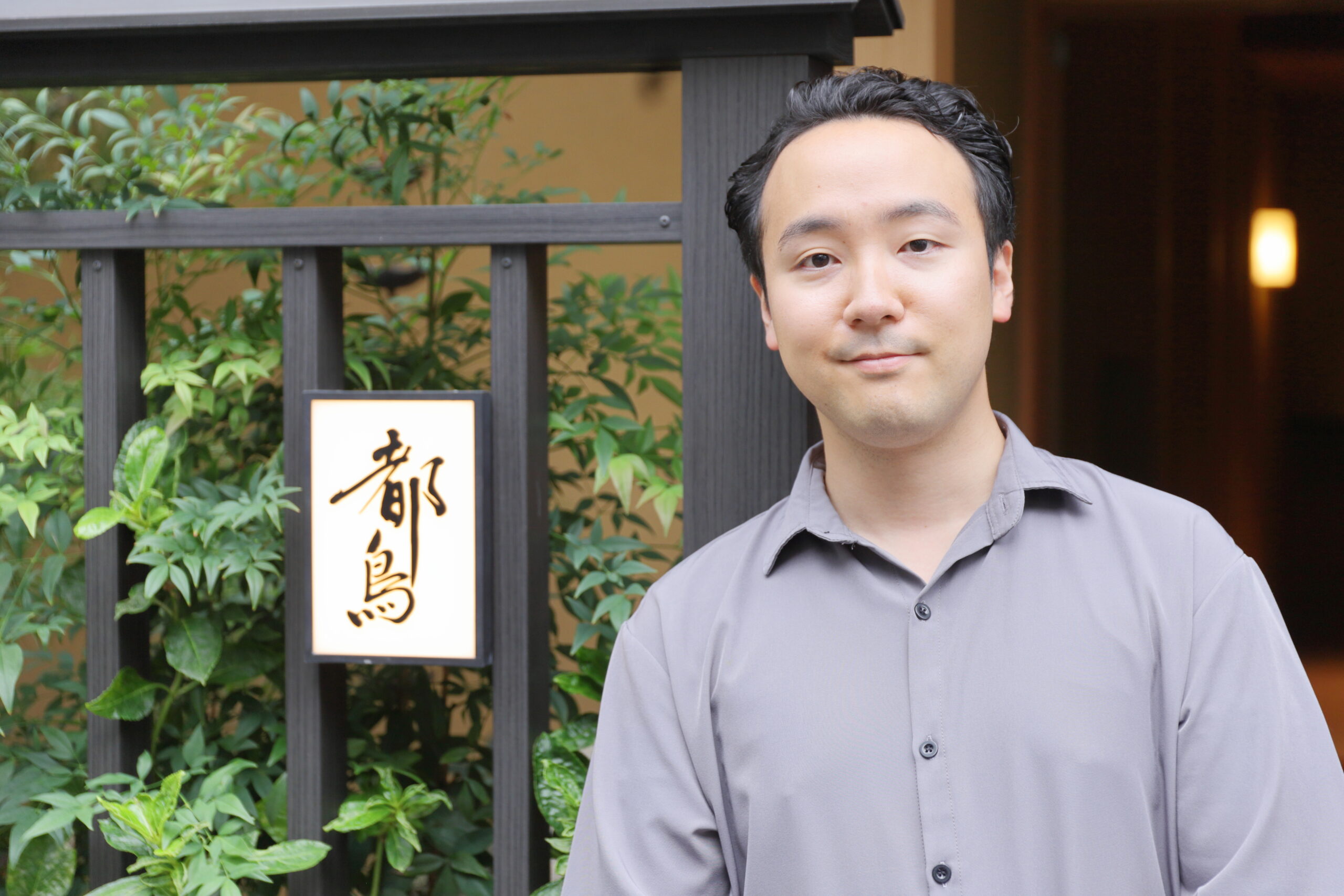
People ask me what makes a geisha special — why this one profession is held in such quiet respect, when at a glance the evening can look almost simple: a few women in kimono, some music, conversation, a little sake. I am the third-generation owner of Miyakodori, a geisha house in Asakusa, Tokyo, and I have spent my whole life around this world.
The honest answer is shorter than people expect. It comes down to a single word — gei, meaning art. Once you understand that word, the whole evening looks completely different.
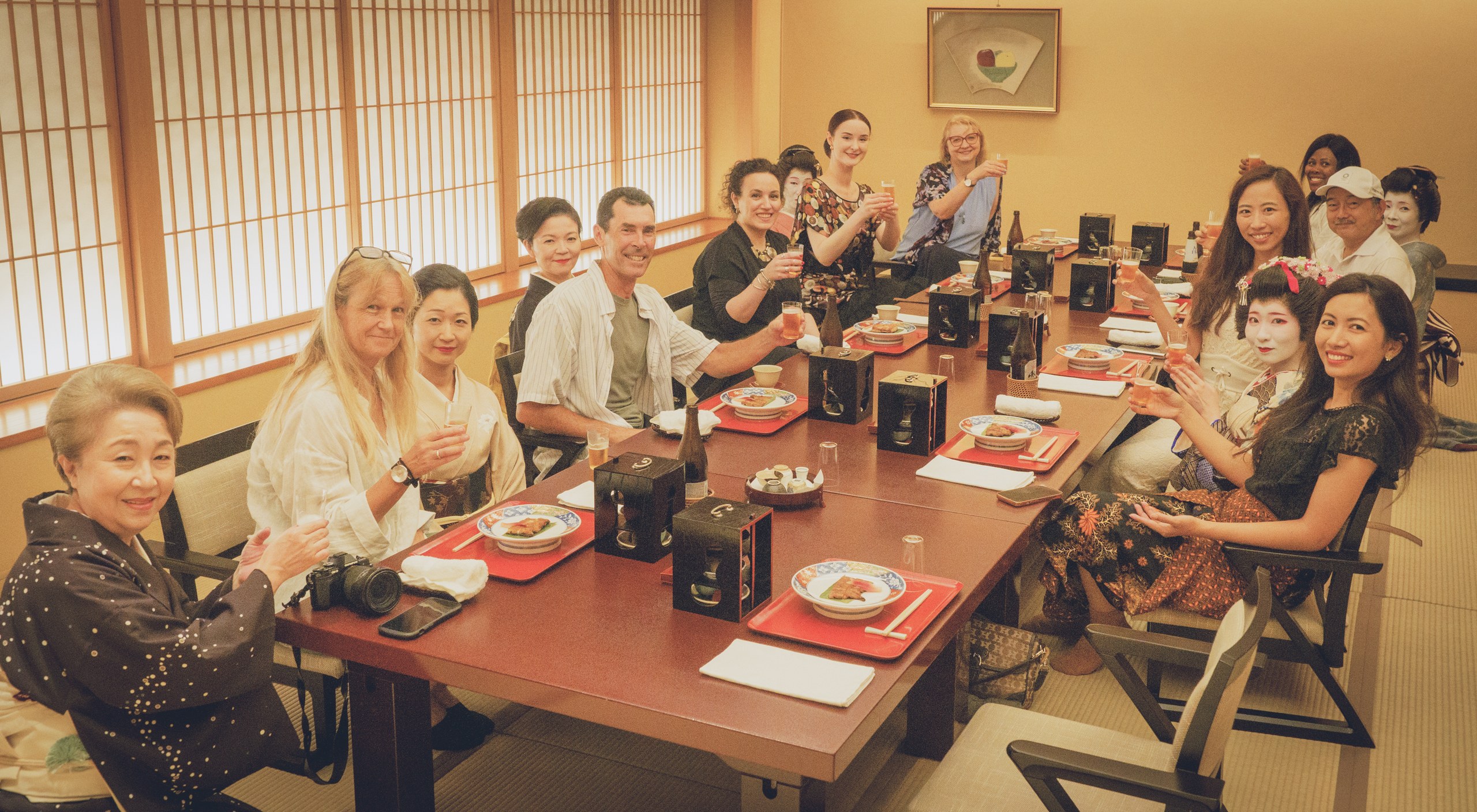
A geisha is, by the very word, a person of art
Start with the name. “Geisha” is written with two characters: gei (芸), art, and sha (者), person. A geisha is, literally, a person of art. That is not a poetic flourish — it is the job description.
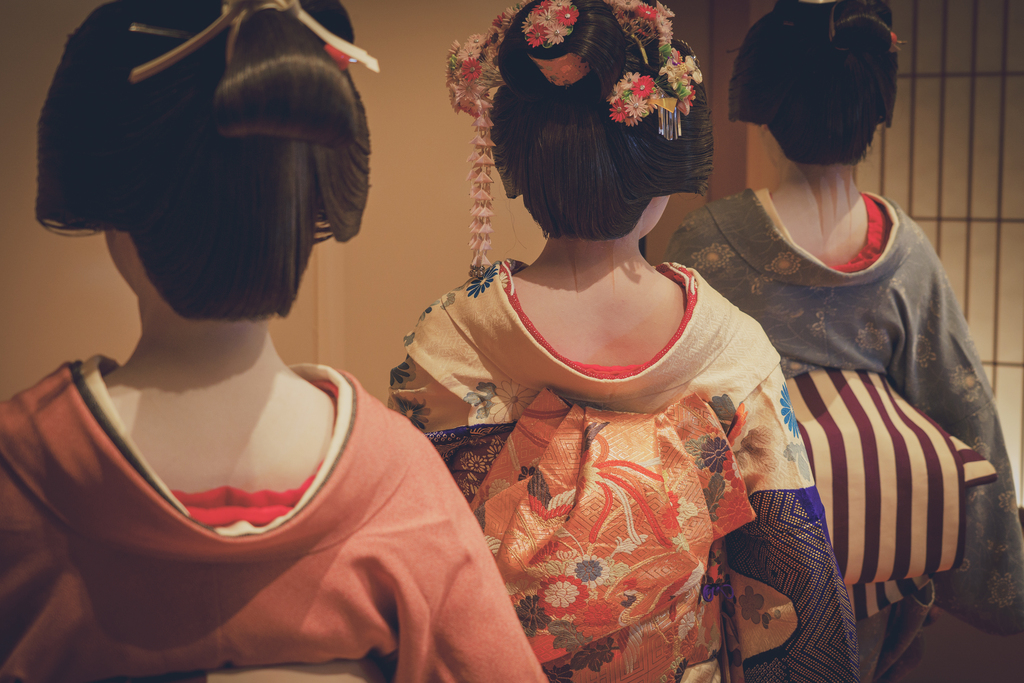
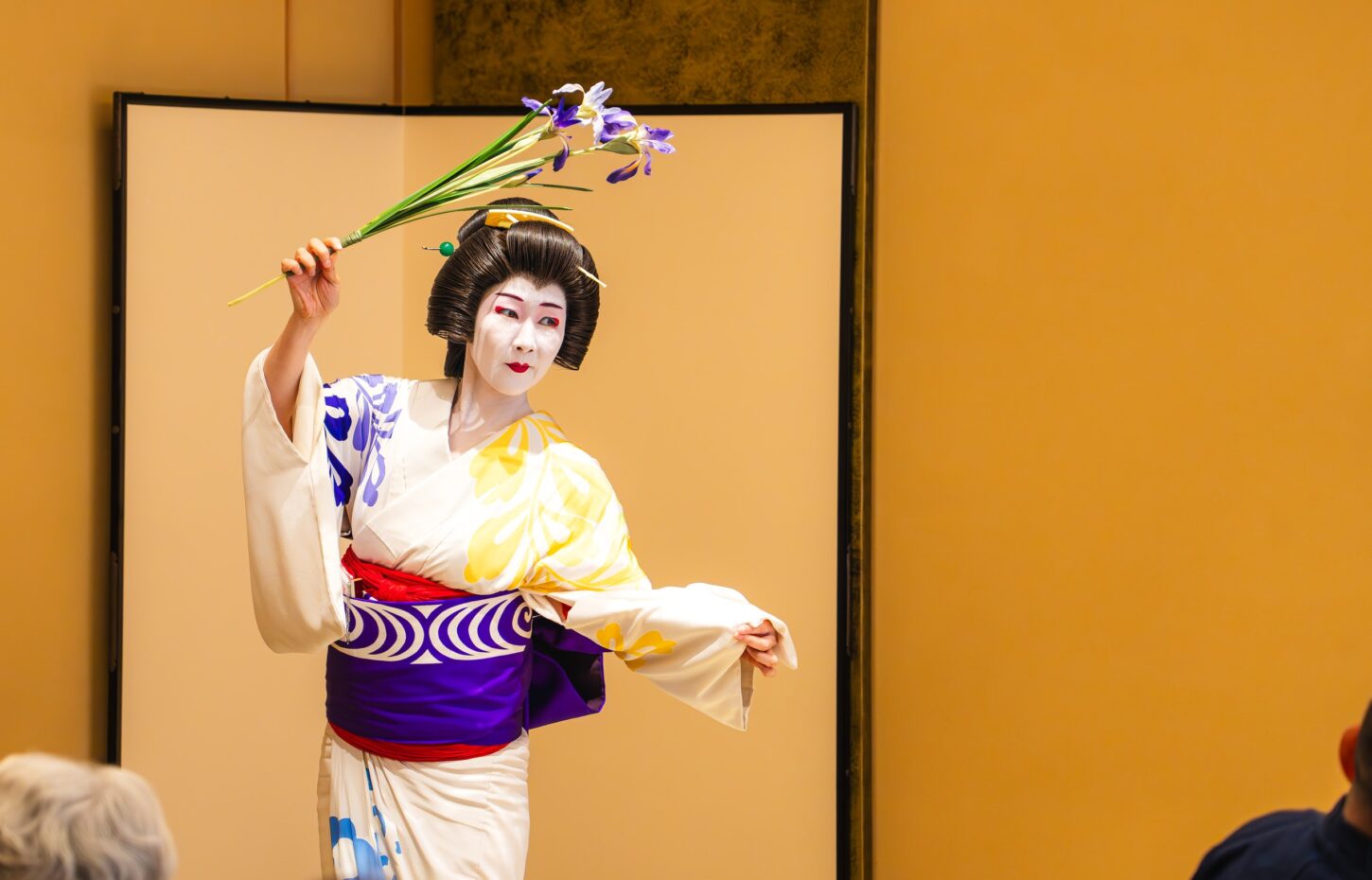
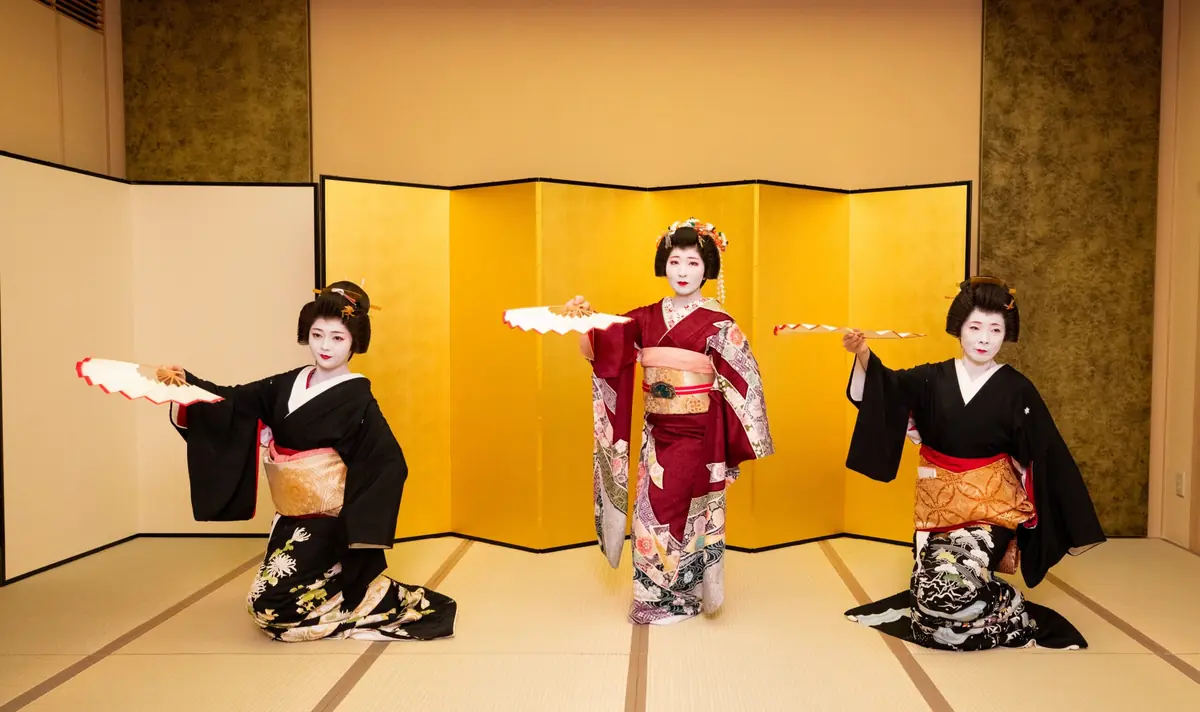
A geisha always performs. At an ozashiki — the private banquet where you meet her — she will dance, play the shamisen, sing, or carry the room with conversation, which is itself one of the arts. To be able to do that night after night, she goes to lessons every single week, with no finishing line: shamisen, narimono (the small drums and percussion), dance, song, and shosa, the way she carries and moves her body. The art is not a costume she puts on. It is the thing she has actually built.
My mother, Chikage — the second-generation okami of Miyakodori — puts it more bluntly than I ever could. “A geisha without her art,” she says, “is just an ordinary person.” Take away the gei and there is nothing left that would make her a geisha at all. That single sentence is the whole answer to why a geisha is special: she is defined, completely, by an art she has spent years earning.
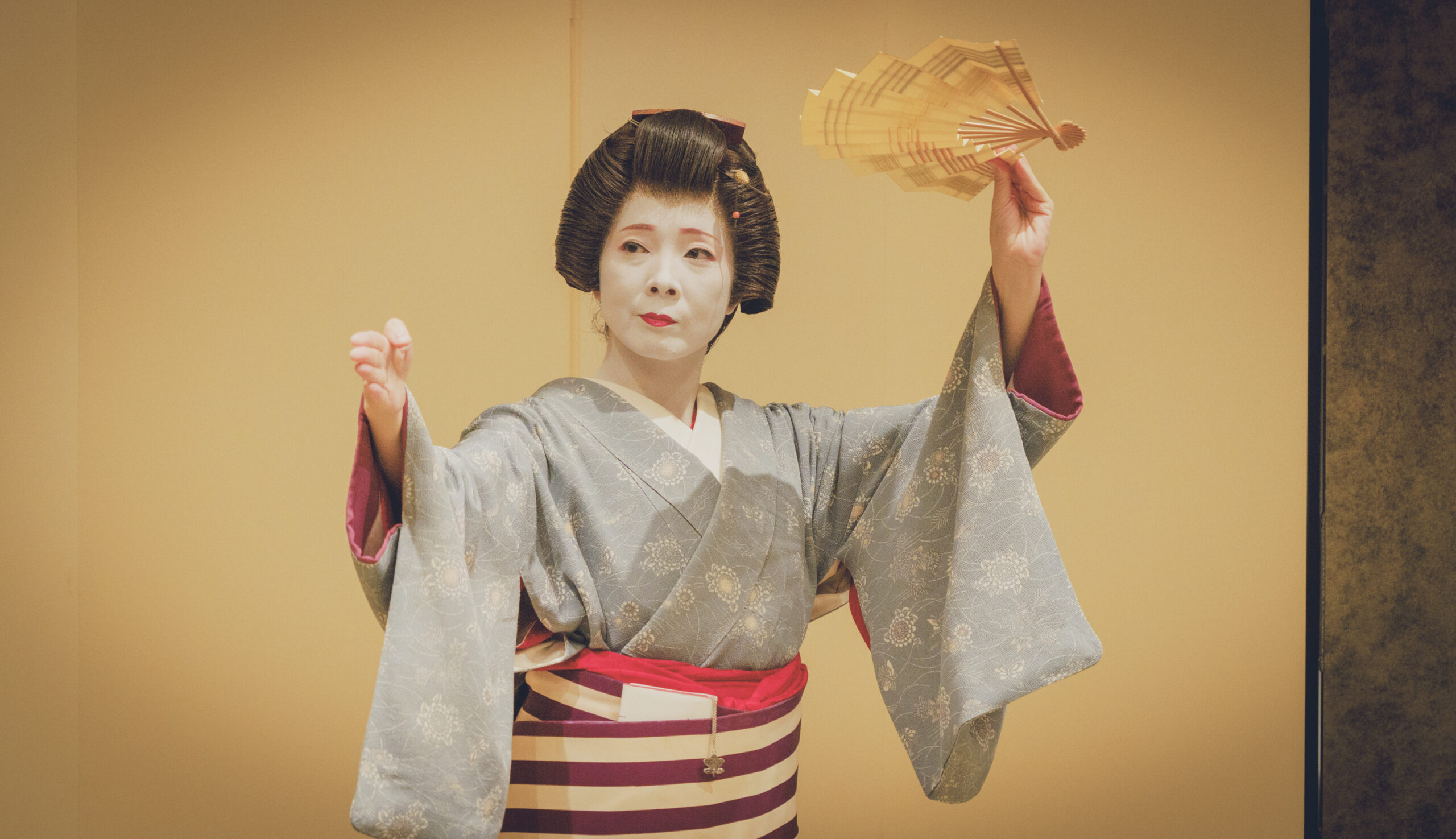
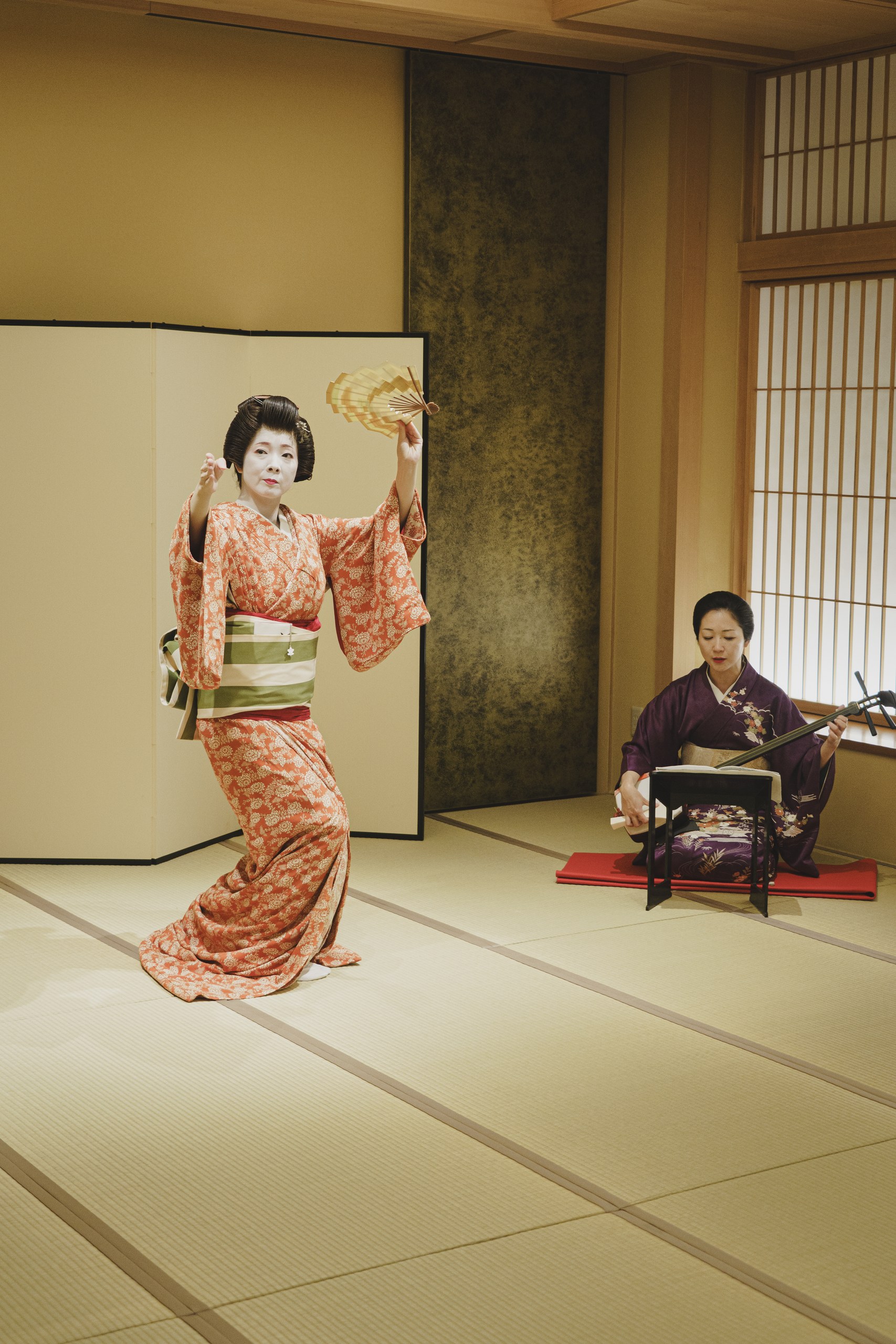
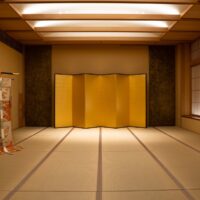
Kata, danced: two Asakusa geisha performing with fans in the tatami room — the same inherited form, repeated until it holds.
It is not personal talent — it is kata, an inherited form
Here is the part most people miss, and it is the real reason a geisha feels different from any other performer you might meet.
What she shows you is not personal talent. It is kata — an inherited form. For centuries, gifted predecessors refined each of these arts, generation after generation, until the refinement settled into a fixed form that anyone could then practise. When a geisha goes to her weekly lesson, she is not inventing. She is receiving. The discipline, the movement, the precise way a hand turns or a head tilts — she takes hundreds of years of accumulated craft into her own body, one lesson at a time.
I have come to believe that the heart of it is in the practice itself. To be allowed to study kata is to be allowed to receive what generations of great artists built and handed down as a single, learnable form. That is why a geisha’s bearing looks unlike anyone else’s in the room: what you are watching is not one person’s gift, but a person carrying centuries.
And I want to be honest about something, because it matters. A geisha does not usually stand there thinking grand thoughts about heritage. She pursues her art simply because it is her profession and she loves it. That is exactly the point. The depth does not come from her philosophising about it — it comes from the kata she has absorbed. The form carries the weight, so she does not have to. (For the single deepest dive into one of these arts, see our guide to the shamisen.)
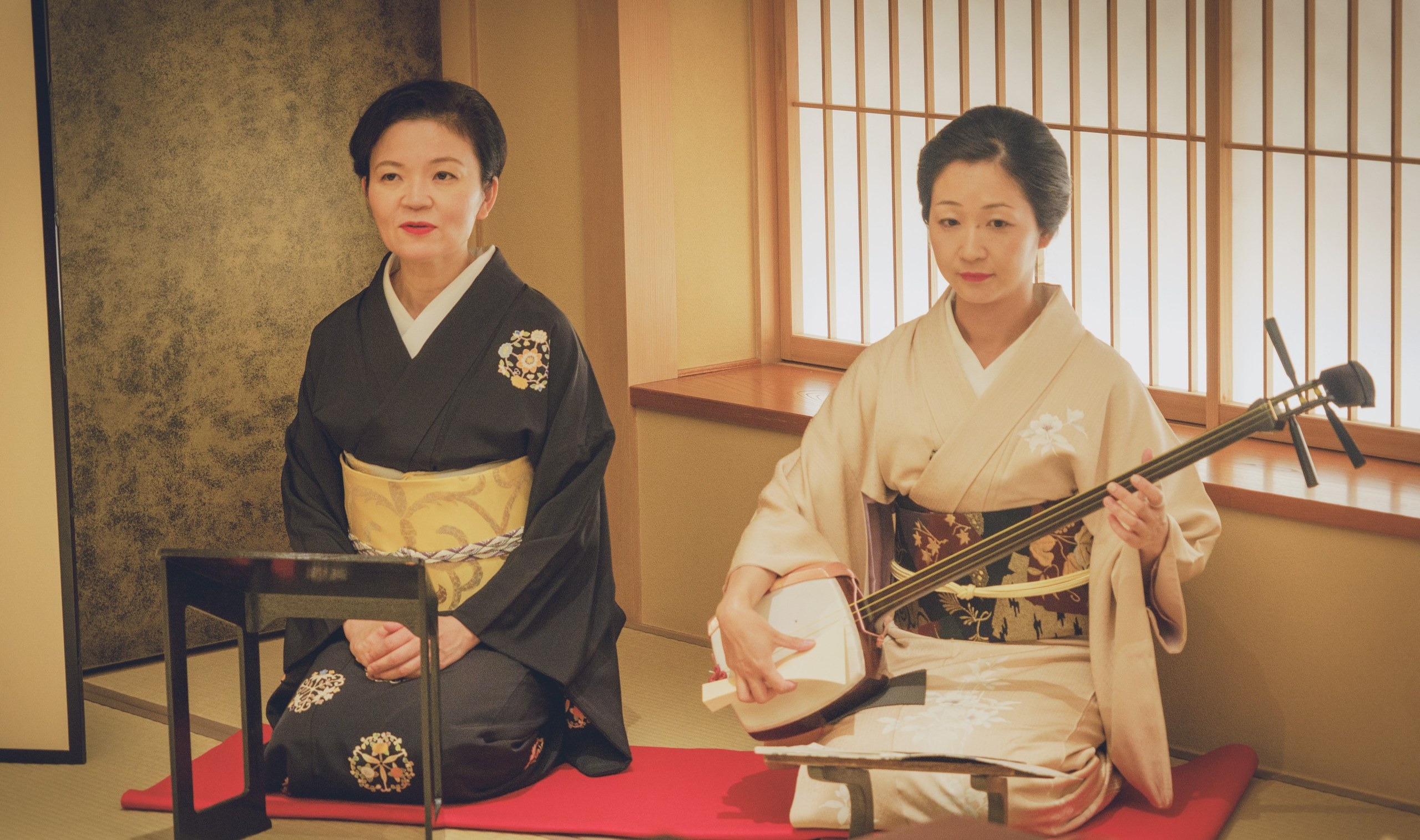
Why ~200 years almost unchanged is the proof, not the limit
The form of the ozashiki has barely changed in about two hundred years. People sometimes hear that and assume it means the art is frozen, or behind the times. I see the exact opposite.
Think about what it means. Something shaped nearly two centuries ago still delights people today — guests in their twenties and guests in their nineties, Japanese guests and visitors from abroad alike. As I see it, that is only possible because the form has been refined, generation after generation, until there was almost nothing left to improve. You do not keep something almost unchanged for that long unless it genuinely works. The sameness is not a limitation. It is the proof.
A short word on where this comes from, because the timeline gets garbled online. The culture is older than the form you would recognise today: geisha culture took shape in the late 1600s — the 17th century — when the long wars had finally ended and Japan settled into a lasting peace. In that calm, entertainment culture blossomed: kabuki, dance, song, the refined pleasures of a society that finally had room for them. With far fewer distractions than we have now, people pursued a single art with an intensity that is hard to imagine today. The arts kept being deepened across many generations and many schools, and all of that accumulation is what became the kata a geisha practises. (We trace that full history in our ultimate guide to geisha in Japan and our guide to geisha in Japanese culture — this is only the one paragraph you need here.)
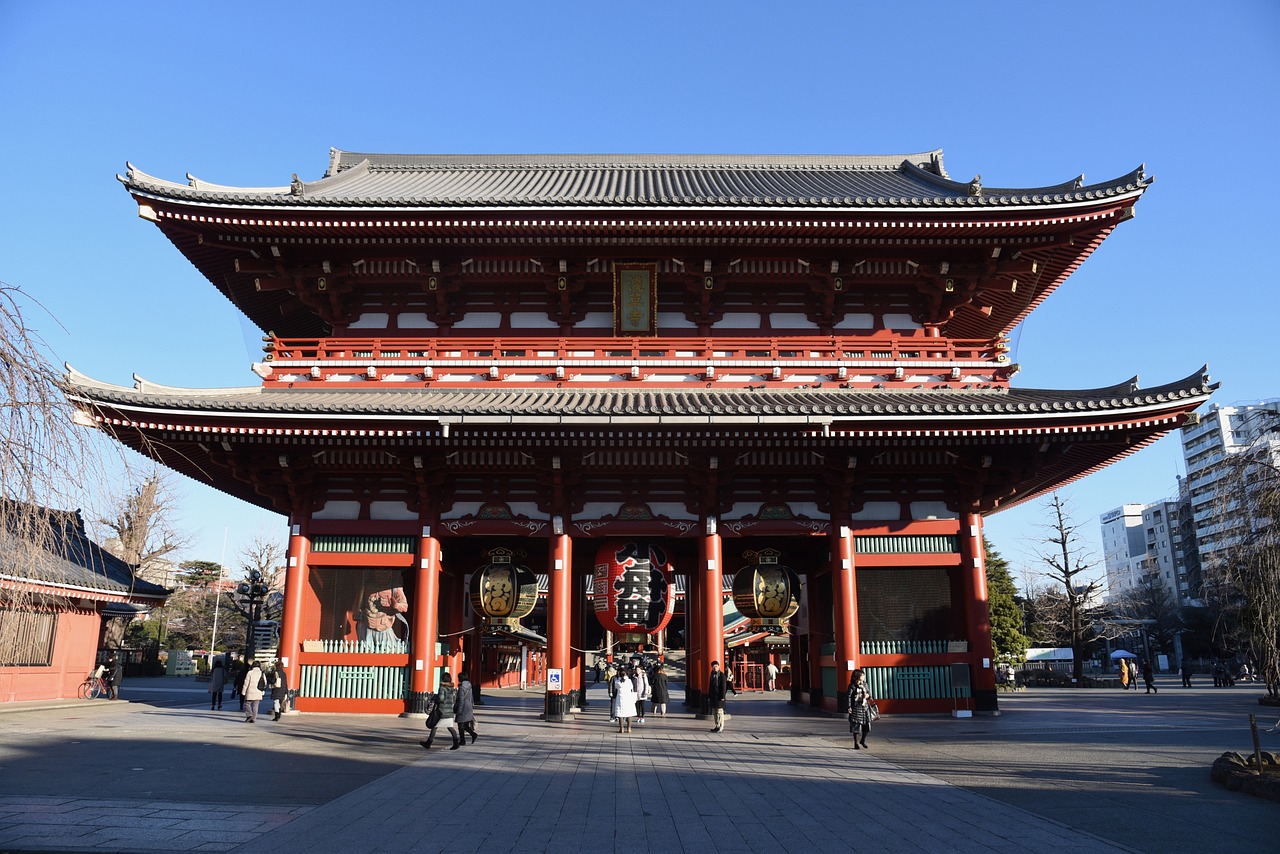
When you sit at an ozashiki, the view in front of you — though the buildings have changed — may not be so far from what someone in old Edo once saw. Whether a passing samurai of that era would have seen something similar, I cannot say for certain; I just like to imagine it. What I can say is that the evening itself has earned its long life honestly.
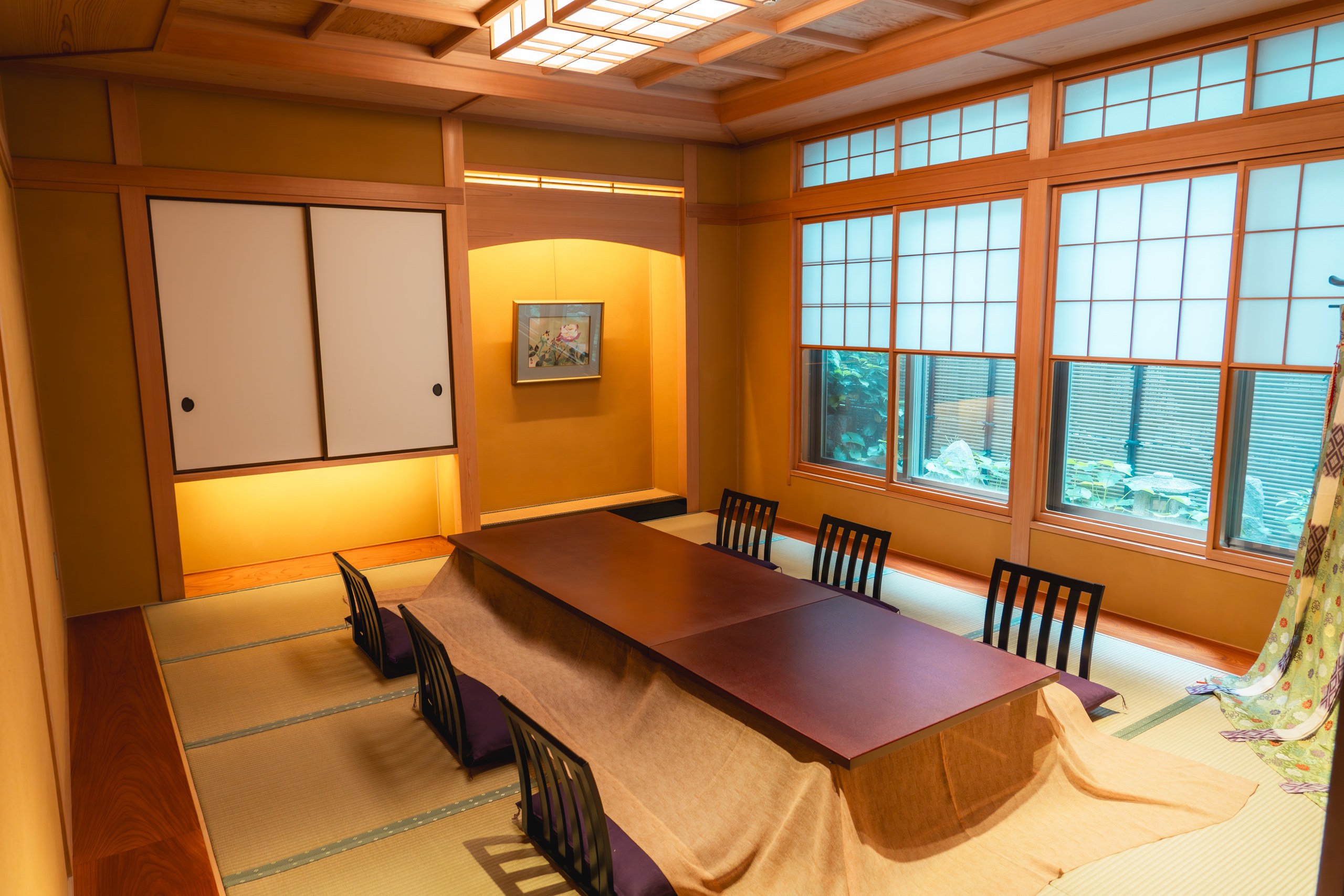
This is also why “geisha vs a hostess” answers itself
The question I get most often, especially from Japanese guests, is how a geisha is different from a woman working in Tokyo nightlife — a kyabakura hostess, a Ginza club. It is a fair question to ask, because on the surface there is common ground: a woman, person-to-person hospitality, the same room, conversation over a drink.
But the answer is short, and it is the same word as before. The difference is gei. A hostess offers her company and her conversation. A geisha offers all of that and a performing art she has trained in for years — the dance, the music, the inherited kata. Remove the art and the comparison might hold; with the art in the room, they are entirely different professions. (If you want the practical version of this — how to tell a real geisha evening from a costume-and-photo experience — we wrote a whole guide on the authentic experience versus the makeover.)
What this means when you sit down at an ozashiki
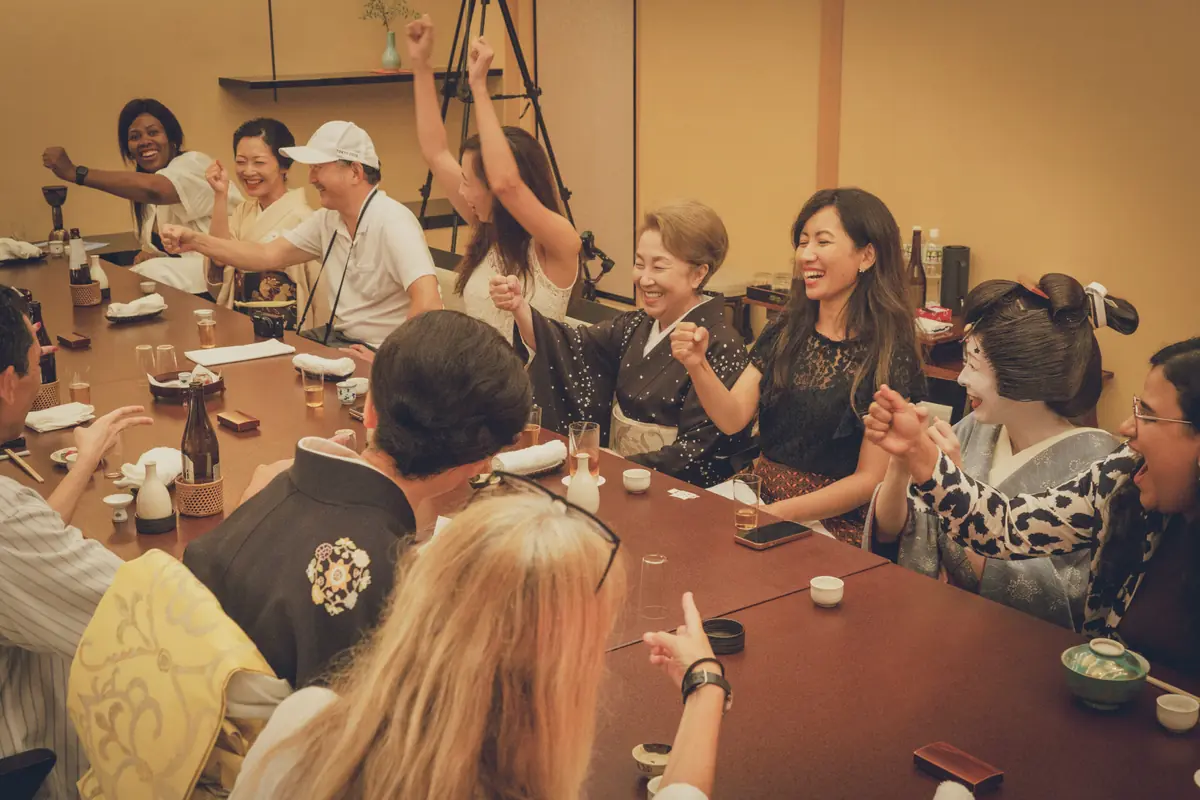
I think the reason an ozashiki moves people, even people who arrive knowing nothing about it, is that you are not really watching a show. You are sitting an arm’s length from a living form that hundreds of people spent centuries refining — received into one person, performed for you, tonight.
That is also why the room is so much wider than people expect. At Miyakodori I have watched guests from their twenties to their nineties enjoy the same evening. It is not only for entertaining clients: families come to make a memory together, groups of friends come for a night out, and women enjoy it every bit as much as men. Guests come from all over the world and leave delighted, whatever language they arrived speaking. An art refined to near-perfection turns out to be something almost anyone can feel.
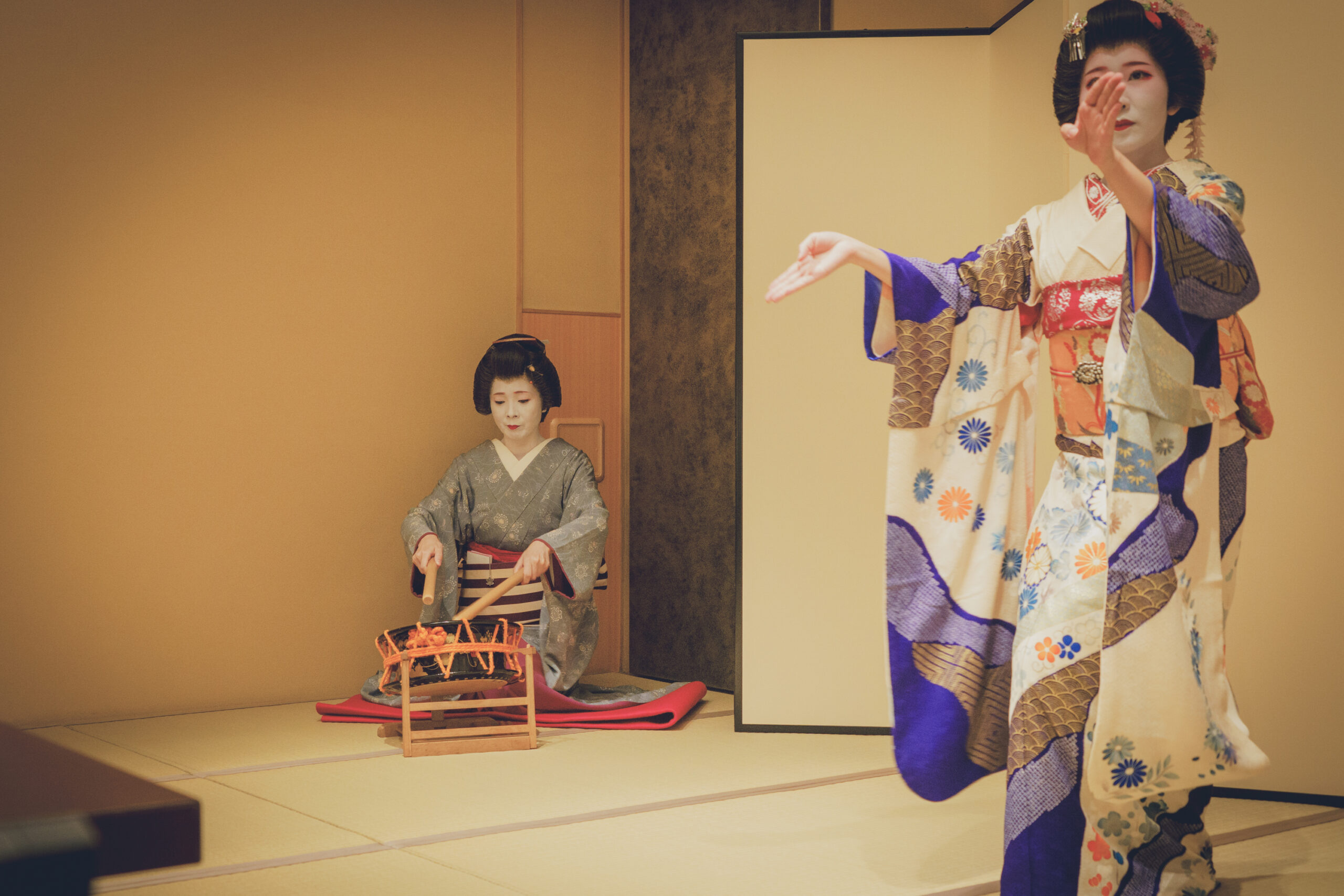
And it is precisely because this is so rare and so worth keeping that we work as hard as we do to keep it alive. Asakusa’s geisha world is far smaller than it once was — and there is a real future for it, which is a longer story than this page. If you want to understand the scale of what we are protecting, and why I still believe in it, read its companion: how Asakusa’s geisha world became so small — and why there is still a future.
Experience it yourself
If reading about gei makes you want to see it, the simplest thing is to come and sit in the room. There are two ways in:
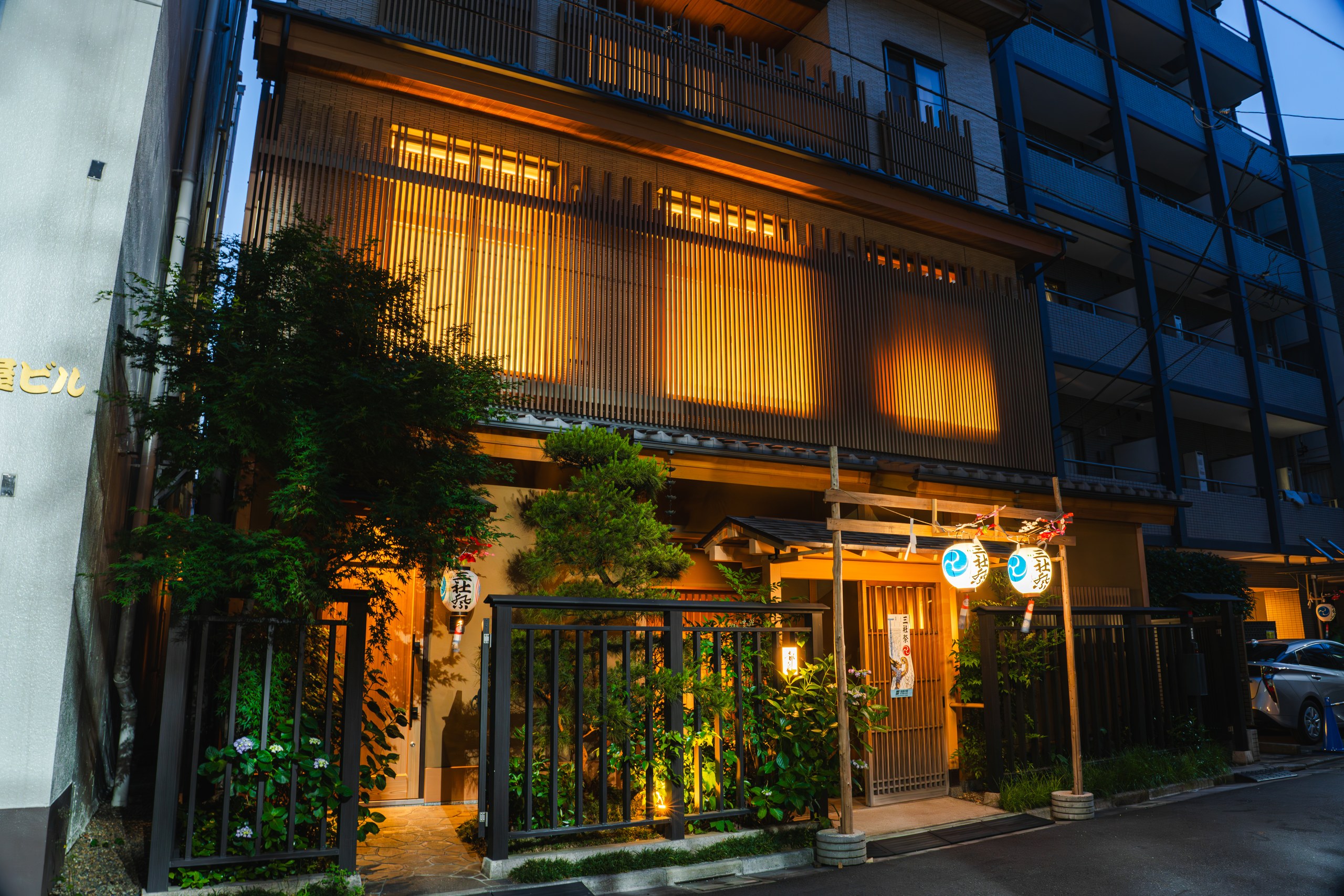
- The easiest first taste is our tea house ozashiki — a shorter, gently priced introduction designed for first-timers, so you can meet a geisha and feel the art without planning a whole evening. Start here if you are simply curious.
- The full experience is a private ozashiki — the real heart of what we do: your own private banquet, with the dance, the music, the games and the conversation given room to unfold at their proper pace. If you want to truly understand why a geisha is special, this is the evening that shows you. (Asakusa’s geisha are independent professionals registered with the kenban, the district office; we invite them to perform for our guests.) You can see what each experience includes on our pricing page.
And you do not need an introduction from an existing patron — that door is open now. You just have to want to come.
Have a question, or want to plan an evening?
Ask us anything — what an ozashiki (geisha banquet) is, how an evening flows, or what would suit your group. We’ll help you arrange it.
Send Us a MessageRelated Guides
Frequently Asked Questions
- Why are geisha special?
- Because a geisha is defined entirely by gei — art. She is not simply hosting; she performs a dance, music, song, and conversation she has trained in every week for years. As our okami says, “a geisha without her art is just an ordinary person.” That earned, inherited art is what sets her apart.
- What does gei mean?
- Gei (芸) means art or artistic skill. “Geisha” is written gei + sha (person) — literally “a person of art.” The word itself is the job: a geisha is someone defined by the arts she performs.
- Are geisha real artists, or just entertainers?
- Real artists. What a geisha performs is kata — an inherited form refined by gifted predecessors over centuries. Through weekly lessons she takes that accumulated craft into her own body. She is not improvising charm; she is carrying and performing a disciplined art that took generations to perfect.
- Is the ozashiki really the same as it was 200 years ago?
- The form has stayed remarkably close for about two hundred years. Far from making it dated, that endurance is the proof of how refined it is — something shaped that long ago still delights guests of every age and nationality today. (Geisha culture itself goes back further, to the late 1600s.)
- How is a geisha different from a hostess?
- The difference is one word: gei. A nightlife hostess offers company and conversation; a geisha offers that plus a performing art — dance, music, the inherited kata — that she has trained in for years. Remove the art and the two might look alike; with the art present, they are entirely different professions.


- 1,060 to 20: A Third-Generation Owner on What Changed in Asakusa's Geisha World
- Geisha Instruments: The Music Behind the Ozashiki
Planning a Group Dinner in Tokyo: A Private, Unforgettable Evening in Asakusa
Sanja Matsuri in Asakusa: A Geisha House Guide to Tokyo’s Wildest Festival
Hakoya: The Unsung Keeper of Asakusa’s Geisha World
What is a Geisha House? An Ultimate Guide to the World of Okiya and Ochaya (2026 Edition)
2026 Best Tokyo Geisha Dinner Guide: Top Recommendations for an Authentic Evening in Asakusa
The Ultimate Guide to the Ozashiki Party: Unlocking the Secrets of Traditional Japanese Entertainment in Tokyo
Comment ( 0 )
Trackbacks are closed.
No comments yet.