



Traditional Entertainment in Tokyo: Kabuki, Sumo, Rakugo and a Geisha Ozashiki
This guide covers four traditional entertainments in Tokyo: kabuki (costume drama with live music and dance), sumo (grand tournaments that run 15 days), rakugo (comic storytelling by one seated performer) and a geisha ozashiki (a gathering where geisha dance to live shamisen, play games with you and talk). Choose kabuki for a story told on stage, sumo for a sporting ritual, rakugo for comedy, and an ozashiki if you would rather take part than watch. The table below sets them side by side, and each section says what to check before you go.
We are Miyakodori, a machiai-chaya in Asakusa, founded in 1950. A machiai-chaya is a traditional teahouse where geisha are called to entertain guests. Of the four, the ozashiki is the tradition we host ourselves, so we say so in that section, and every other section links to its official source. This guide does not cover noh, bunraku or other traditional performing arts. All four traditions here grew popular in the Edo period (1603 to 1867), when Tokyo was called Edo. For what to do after dark, see our guide to cultural things to do in Tokyo at night, and for the wider picture, our guide to 26 experiences in Tokyo.
Traditional Entertainment in Tokyo at a Glance
Times and dates below were checked on the official pages linked in each section on 31 October 2026. They change, so confirm before you go.
| Tradition | What you do | Where in Tokyo | Check before you go |
|---|---|---|---|
| Kabuki | Watch a costume drama with live music and dance, as a full show or a single act | The Kabukiza in Ginza; Asakusa Public Hall each January | A full show runs 3 to 4 hours; English captions can be rented at the Kabukiza |
| Sumo | Watch a tournament from a floor box or a chair seat | Ryogoku Kokugikan, in January, May and September | Tournament dates are set each year; advance tickets go on sale about a month ahead |
| Rakugo | Listen to comic storytelling, with magic and other acts on the same bill | Asakusa Engei Hall; English shows at the Asakusa Culture Tourist Information Center | The hall’s shows are in Japanese; English shows are held twice a month |
| Geisha ozashiki | Sit in a tatami room while geisha dance to live shamisen, play games with you and talk | Miyakodori, Asakusa | Reservation needed; every private plan includes an English-speaking interpreter; see the pricing page |
Kabuki in Tokyo: Costume Drama with Live Music
Kabuki is a theater form more than 400 years old, performed by an all-male cast, and its name joins three characters meaning song, dance and acting skill, according to Kabuki Web, the English-language guide run by the theater company Shochiku. The music is live: Kabuki Web describes musicians playing Japanese drums, the shamisen and flutes as part of the play, while narrators share the stage with the actors and some pieces are sung.
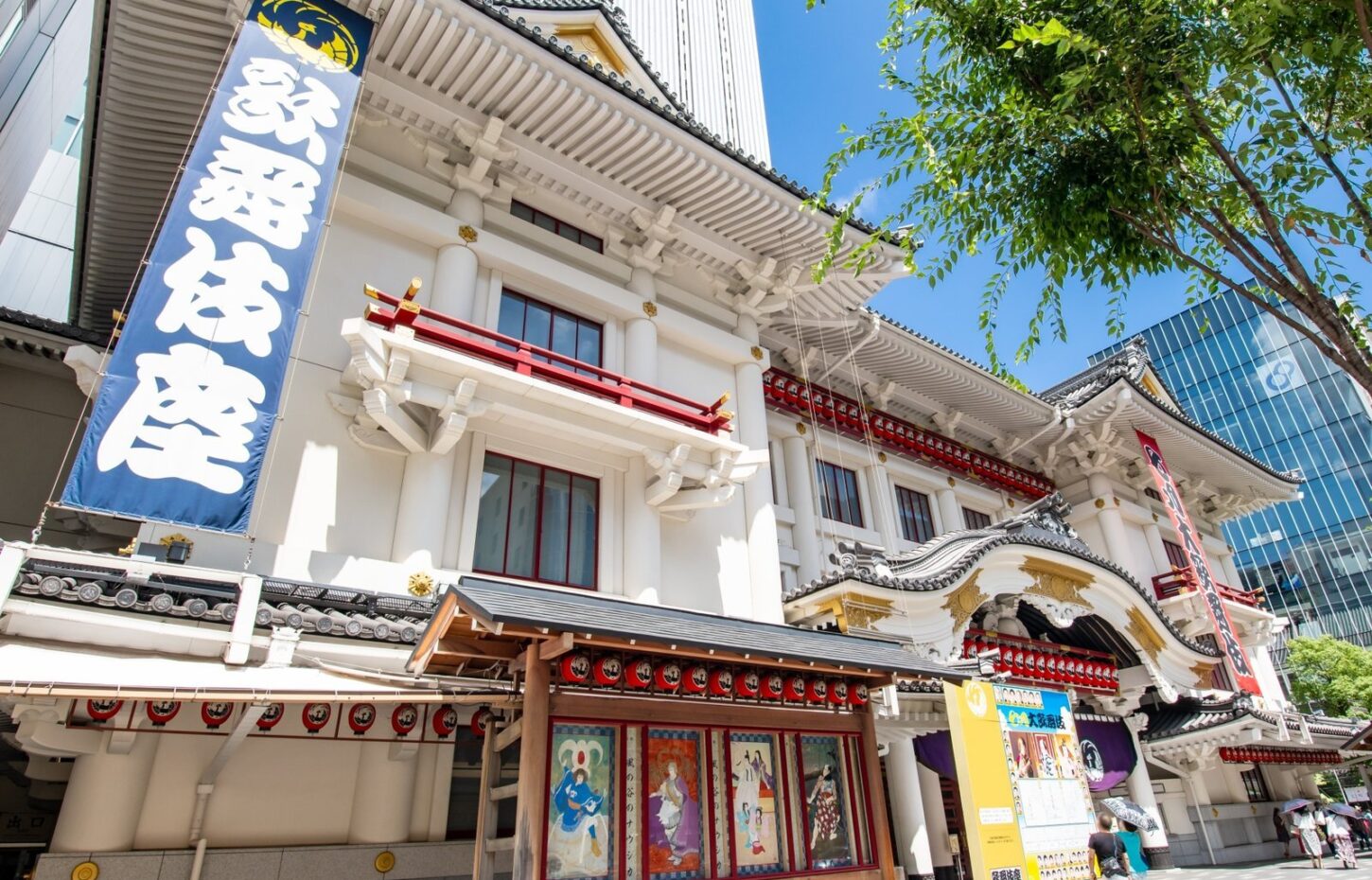
The main house is the Kabukiza in Ginza. According to Kabuki Web’s guide to the theater, a full show runs 3 to 4 hours including intermissions, and tickets go on sale half a month before the performance and can be bought online, by phone or at the box office. If that is too long for a first visit, most Kabukiza performances also sell single-act seats on the fourth level, for acts that last from about 20 to 90 minutes. Kabuki Web describes them as a way for first-timers and travelers short on time to see kabuki, and its single-act ticket page lists each month’s times and prices.
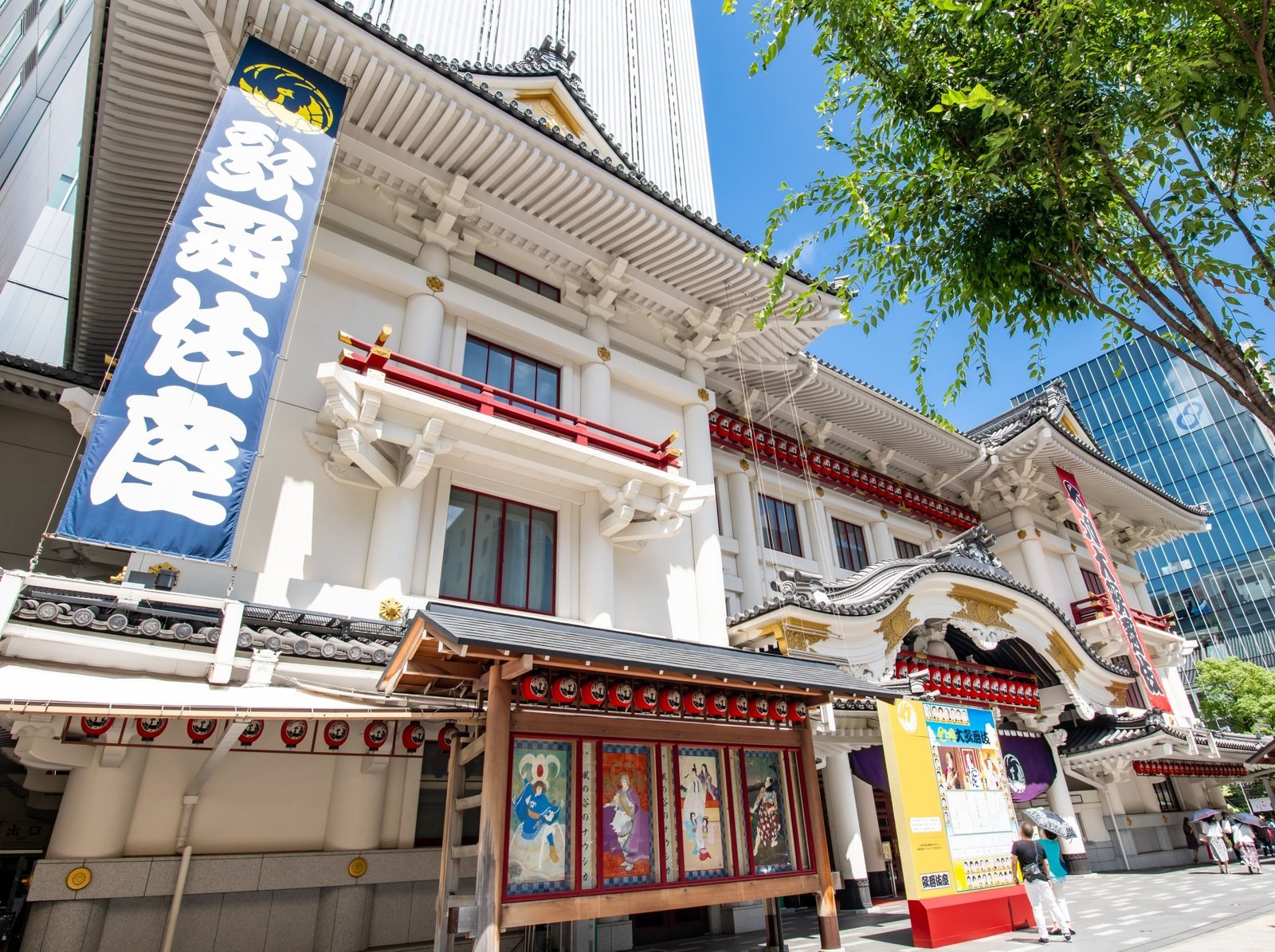
If you do not read Japanese, the Kabukiza rents a captioning device with English or Simplified Chinese captions, though captions may not be offered for very short acts. The Japanese programs carry English synopses in their back pages, and a simplified English audio guide gives a brief description and synopsis. The ticket page says the phone line has English-speaking staff, and the page for international visitors has the details.
Kabuki also has a home in Asakusa. Asakusa Public Hall is known for Shinshun Asakusa Kabuki, an annual New Year run. According to a report from the ticket service Pia (in Japanese), Shochiku has staged kabuki at the hall since reviving the tradition in the district in January 1980, and the 2027 run is set for 2 to 26 January.
Sumo in Tokyo: Three Tournaments a Year
JNTO, Japan’s national tourism organization, calls sumo Japan’s national sport. Its guide to experiencing sumo says sumo was originally believed to have emerged as a ritual dance to entertain the Shinto gods at shrine festivals, and that rules were set in the Edo period, when it became a spectator sport. The Tokyo Metropolitan Library’s pages on Edo culture add that from 1833 Edo’s tournaments were all held at Ekoin Temple in Ryogoku.
JNTO says six tournaments, called basho, are held each year: three in Tokyo, and the others in Osaka in March, Nagoya in July and Fukuoka in November. The Tokyo tournaments take place at the Ryogoku Kokugikan in January, May and September, and each lasts 15 days. The Japan Sumo Association’s schedule gives the 2027 dates as 10 to 24 January, 9 to 23 May and 12 to 26 September. Advance tickets go on sale about a month before each one; for the January 2027 tournament, the association gives 5 December 2026.
The association’s ticket page describes two kinds of seat: masu-seki, Japanese-style boxes where you sit directly on the floor, and chair seats like those in a sports stadium. You can order online or by phone, and the association links an English-language ticket site.
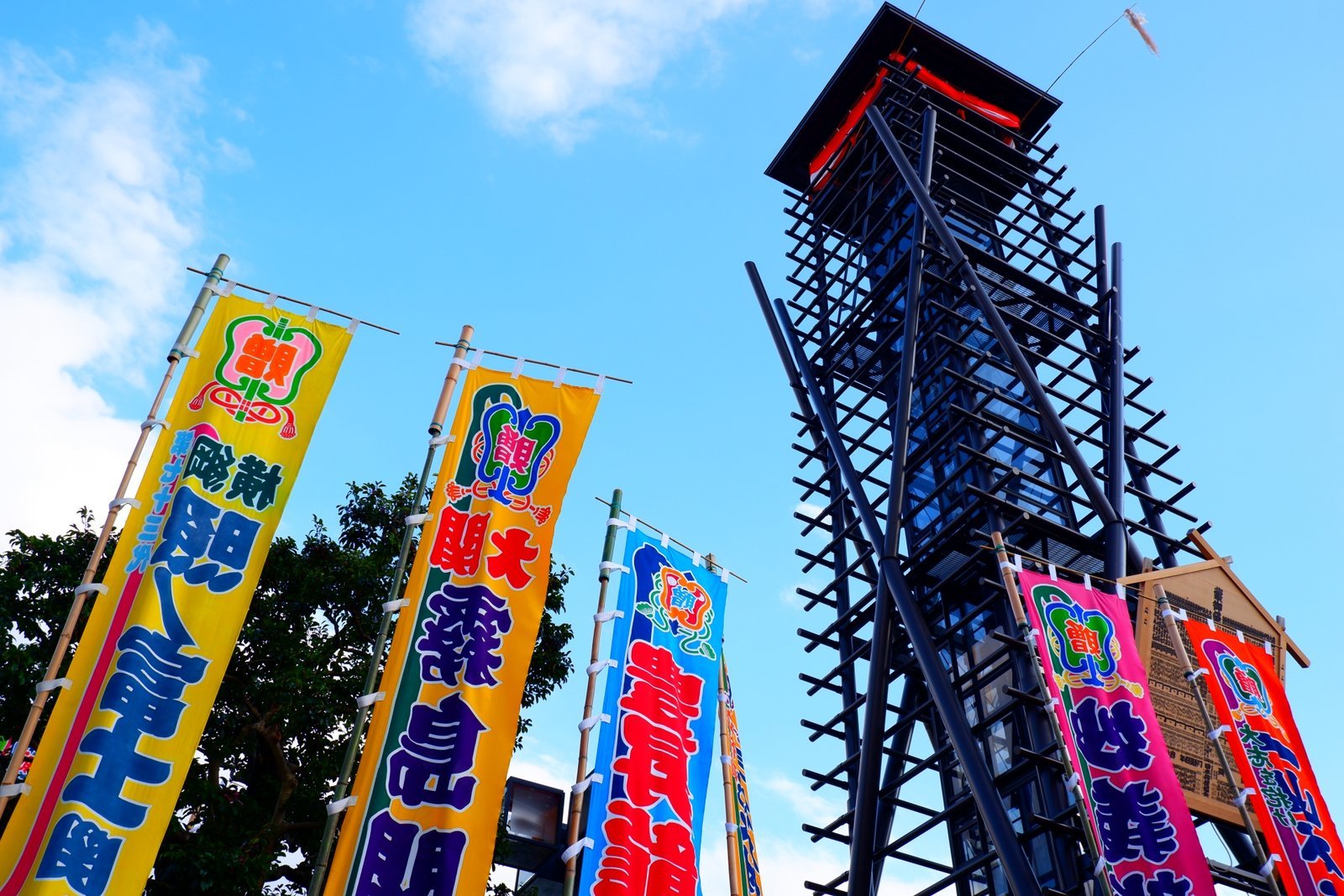
Outside the tournaments, a stable visit is the other way to see sumo. JNTO says casual, spontaneous visits to a stable are not encouraged, although some travel agencies arrange tours for small groups, in which visitors typically watch the wrestlers practice. Check the terms with the operator.
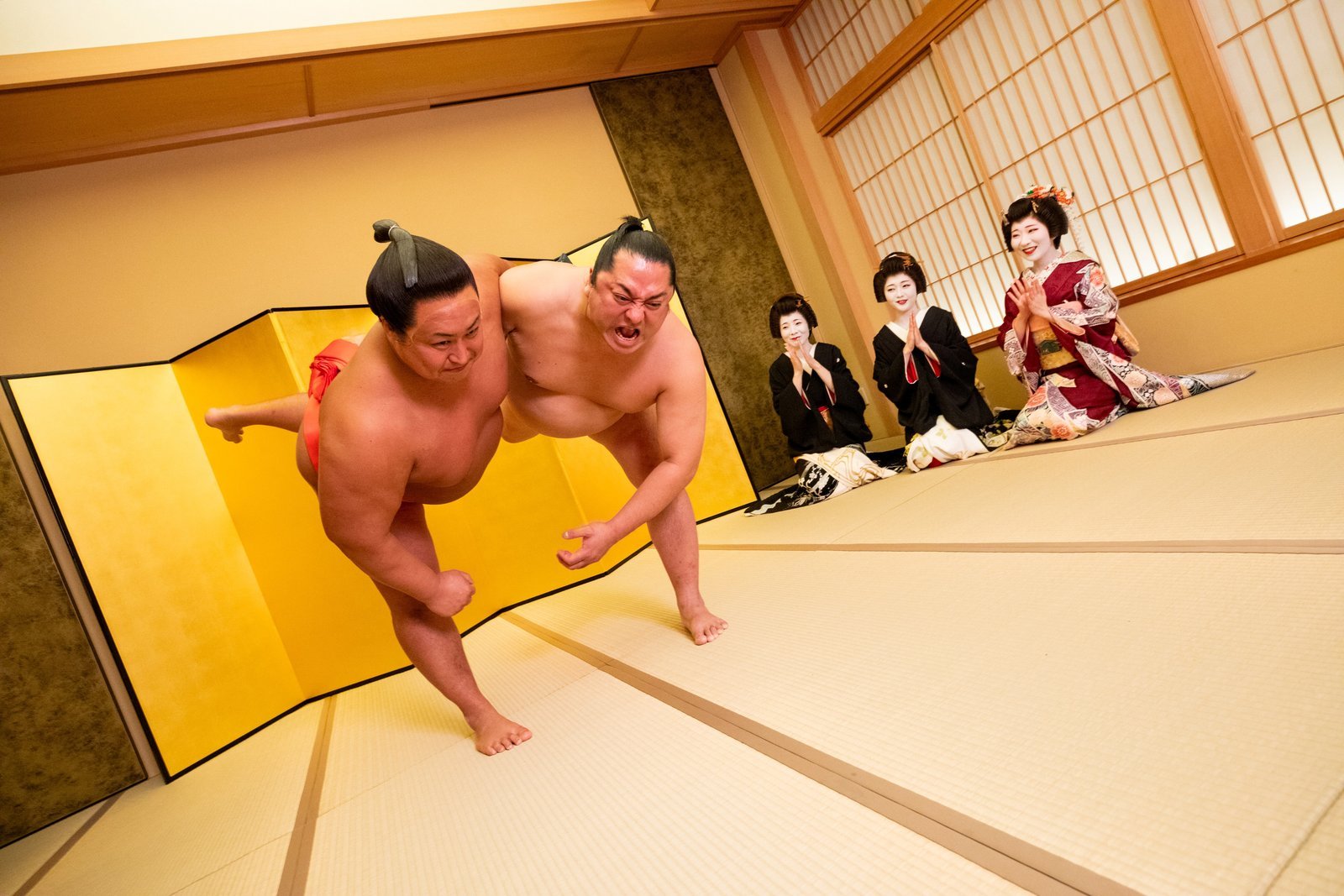
If you want sumo and geisha in one room, we also offer a private plan with Asakusa geisha and sumo actors in a tatami room reserved for your party. The sumo actors are not professional wrestlers. On the two- and three-hour plans they demonstrate bouts beside you; the one-hour plan is a close-up demonstration of basic movements, with no bouts.
Rakugo in Tokyo: Comic Storytelling, Mostly in Japanese
Rakugo is comic storytelling in which one performer, seated on a cushion, plays every character with a paper fan and a small cloth as props. The Tokyo Metropolitan Library’s pages on Edo culture describe Shikano Buzaemon (1649 to 1699) as the reputed founder of Edo rakugo and say he became famous for zashiki shikata-banashi, indoor storytelling with colorful motions and gestures. Zashiki is the word for a tatami room used to receive guests, and ozashiki is the same word with an honorific o.
Rakugo is performed at yose, halls where one bill mixes rakugo with other acts. Asakusa Engei Hall says it performs 365 days a year, with manzai (comic double acts), magic, acrobatics, paper-cutting and impressions alongside the rakugo.
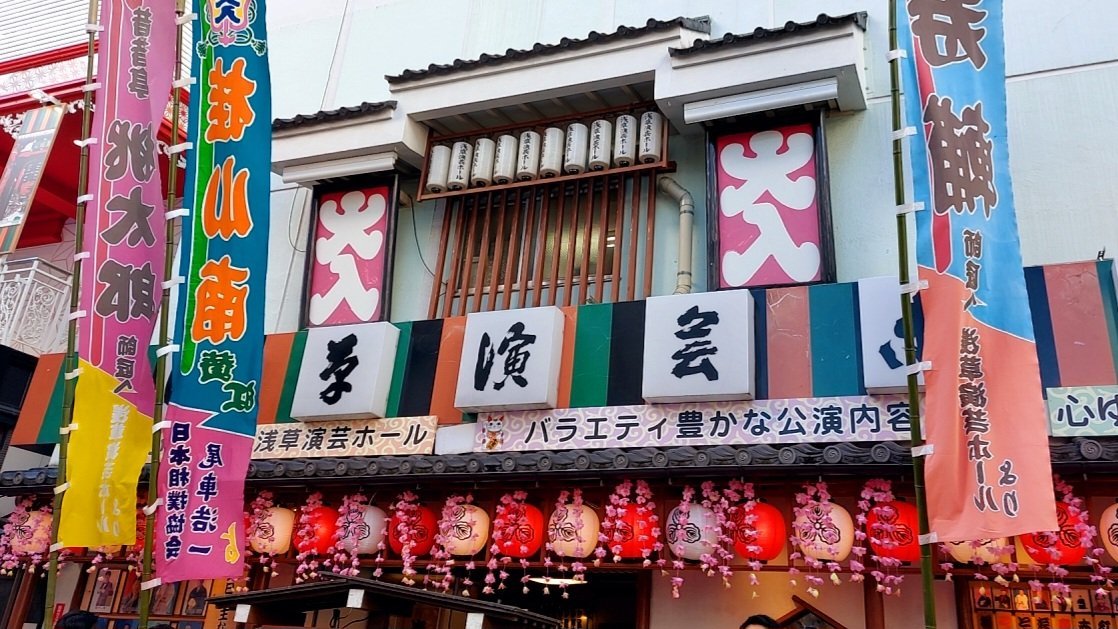
The hall’s shows and website are in Japanese. According to its page for first-time visitors (in Japanese), you can enter and leave whenever you like, though it suggests doing so between acts, and photography and recording are not allowed during the show. Come for the atmosphere and the visual acts, such as magic and acrobatics, rather than to follow every story. The hall’s ticket page lists the session times and ticket rules.
For rakugo in English, the English Rakugo Association says you can enjoy a whole yose in English, with acts such as magic and shamisen comedy, twice a month in Asakusa. Its shows are held at the Asakusa Culture Tourist Information Center, and tickets are sold through Peatix. The association was founded in Tokyo in October 2020, and its website lists upcoming dates.
A Geisha Ozashiki in Asakusa: The One Where You Take Part
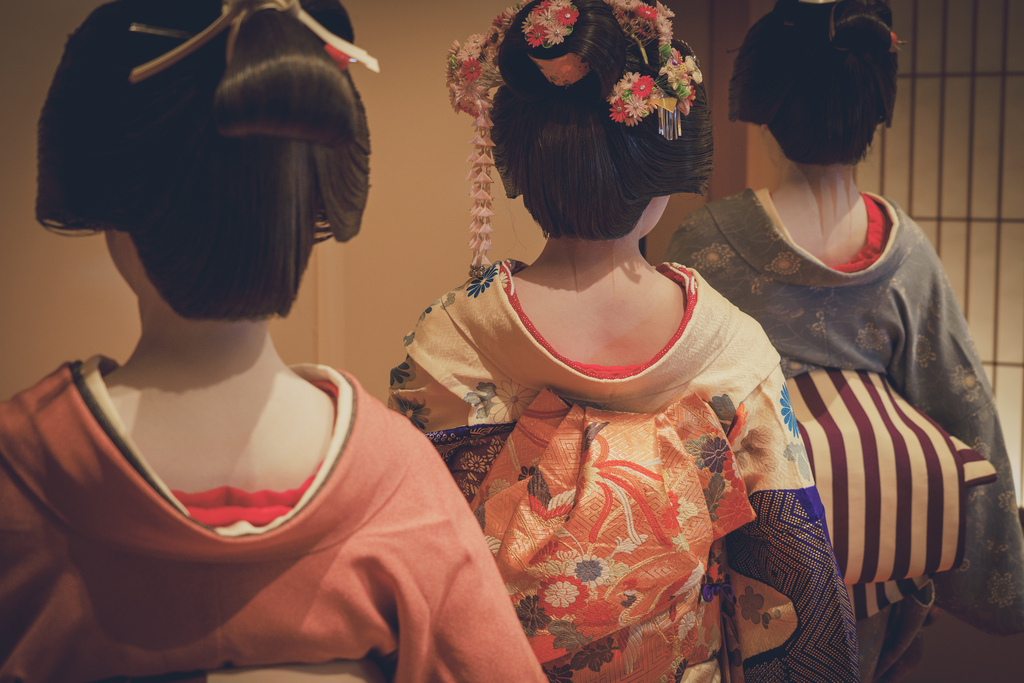
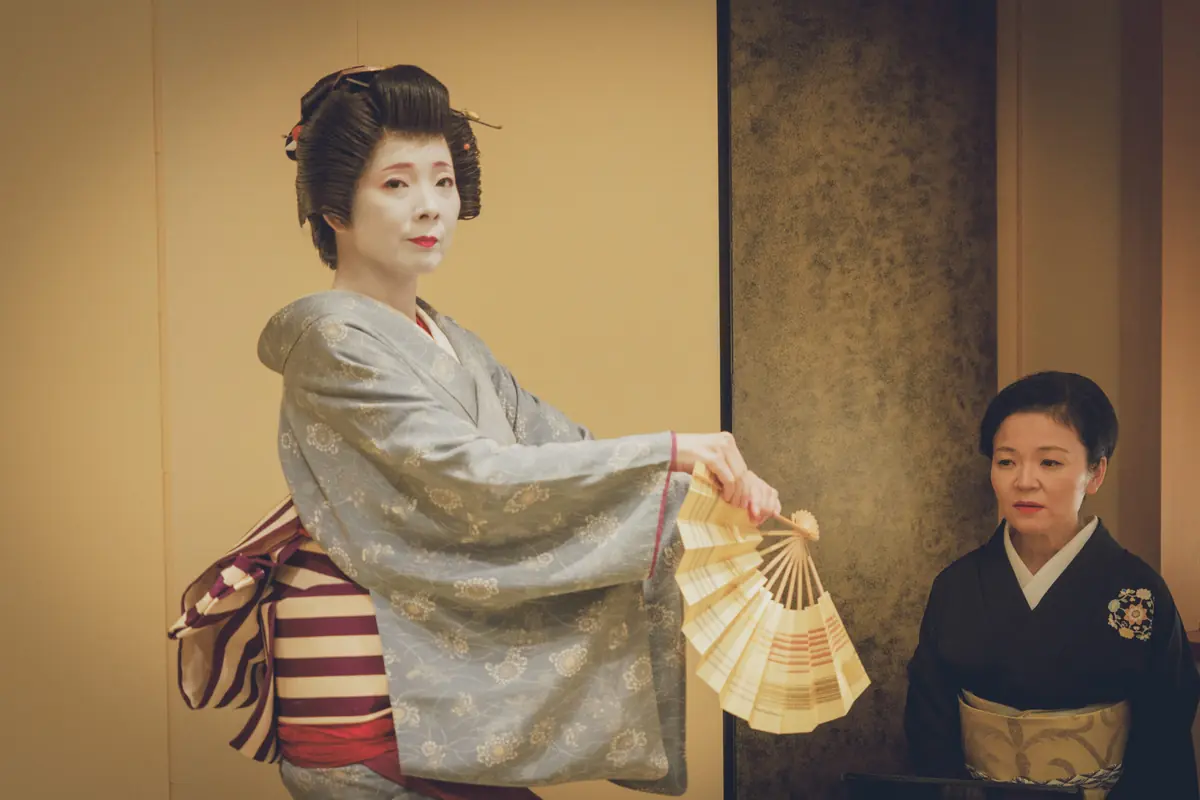
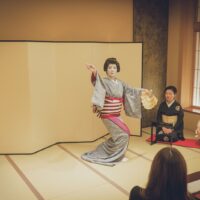
An ozashiki is a gathering in a tatami room where geisha dance to live shamisen, play parlor games with the guests and talk with them. The geisha perform a few steps from where you sit, and you join the games and ask them questions. What sets it apart from the other three is that you are in the room, not facing a stage.
At Miyakodori, the house provides the room and looks after the guests, and the geisha are independent professionals registered at the Asakusa kenban (the district’s registry office), whom we invite for each ozashiki. Every private plan includes an English-speaking interpreter, solo guests and groups of up to 23 are welcome, and we are normally open Monday to Friday, except public holidays. Our Private Geisha Experience page describes the plans, and our pricing page has current rates.
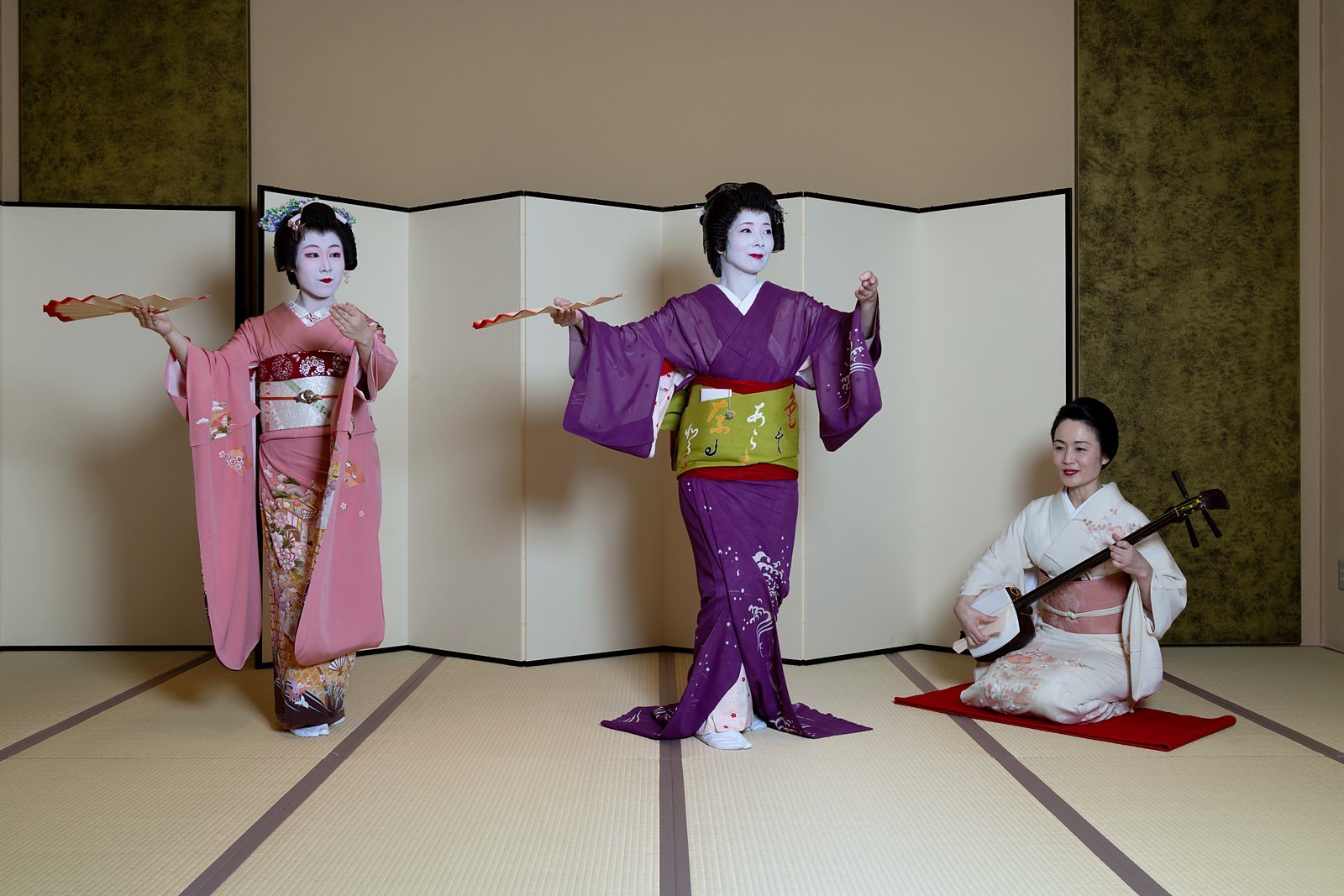
If you are traveling alone or want a shorter first look, the Ozashiki Tea House is a 75-minute session with three geisha in which you share the room with other guests instead of booking it privately. It includes a dance to live shamisen, a chance to ask the geisha questions, an ozashiki game, matcha and a Japanese sweet. You book a seat online on the dates listed, and it is confirmed straight away. English support is available. Drinks are not included: each guest orders at least one at the table, paid separately, and the Tea House page lists the current price.
Take Part in the Tradition Yourself
A private ozashiki at our teahouse in Asakusa brings dance, live shamisen, conversation and the old parlor games into one room, for your group alone, with an English-speaking interpreter at your side. First-time and overseas guests welcome.
Request a ReservationWhere Kabuki, Rakugo and Geisha Meet in Asakusa
Asakusa’s link with kabuki goes back to 1841. The National Diet Library’s landmark page for Saruwaka-cho says that in that year, as a result of the Tenpo Reforms, the officially permitted kabuki, puppetry and other theaters in Sakai-cho, Fukiya-cho and Kobiki-cho were ordered to move to Saruwaka-cho in Asakusa. Teahouses connected to the theaters served visitors with guidance, food and rest, and many theater owners and actors settled there. The district flourished until the first year of the Meiji era (1868), and the theaters left one after another afterward.
That theater town is also part of the story of Asakusa’s geisha. Our guide to the hanamachi explains that Asakusa’s geisha culture grew out of three older streams: entertainers who performed in front of Senso-ji, geisha who hosted banquets for guests traveling to the nearby pleasure quarter, and, after Edo’s theaters were relocated north of the temple, the skilled geisha attached to the playhouse teahouses, who were taught by kabuki musicians.
The theater town is gone, and the geisha district is much quieter than it once was, but kabuki, rakugo and geisha are all still part of Asakusa. Asakusa Public Hall brings kabuki back every January, Asakusa Engei Hall presents rakugo every day, and each booking at an ozashiki pays the geisha who perform, which is how that tradition keeps being practiced.
Our okami (proprietress), Chikage, has worked in Asakusa’s geisha world since 1969, first as a geisha and now as head of the house. In her training she studied nagauta (a style of shamisen music) and kiyomoto (a style of narrative singing), two of the kinds of music Kabuki Web shows in its guide to kabuki’s live music, and she has performed Japanese classical dance (nihon buyo) at major stages including the Kabukiza, both the old and the rebuilt theater.
How to Choose Between the Four
- For a story told on stage, choose kabuki. A single act at the Kabukiza is the shortest way in, and the captioning device helps if you do not read Japanese.
- If your dates fall in January, May or September, a sumo tournament is within reach. Check the Japan Sumo Association’s schedule first, because the calendar decides the rest.
- For comedy, go to a yose: the visual acts work without Japanese, and the English Rakugo Association’s shows are in English.
- To take part instead of watching, book an ozashiki: private for your own group, or the shared Tea House for a shorter first look.
- To combine them, note that our visits begin between 2:00 and 8:00 pm, so one can come before a later kabuki program or the rakugo night session on the same day. Check each start time first.
Frequently Asked Questions
What are the main traditional entertainments in Tokyo?
Four you can attend as a visitor are kabuki at the Kabukiza in Ginza, sumo tournaments at the Ryogoku Kokugikan in January, May and September, rakugo at yose halls such as Asakusa Engei Hall, and a geisha ozashiki in Asakusa. They differ in how much Japanese you need and how far ahead you must plan, so check each official page before you go.
Can you enjoy kabuki without speaking Japanese?
Yes. The Kabukiza rents a captioning device with English captions, the Japanese programs carry English synopses in their back pages, and a simplified English audio guide is offered. Captions may not be available for very short single acts. A single act of about 20 to 90 minutes lets you try kabuki before committing to a full show of 3 to 4 hours.
When can you see sumo in Tokyo?
Tokyo hosts three of the six annual tournaments, in January, May and September at the Ryogoku Kokugikan, and each lasts 15 days. The 2027 dates are 10 to 24 January, 9 to 23 May and 12 to 26 September. Outside those weeks, some travel agencies arrange small-group tours to watch practice at a stable, but casual visits are not encouraged.
Is there rakugo in English in Tokyo?
Yes. The English Rakugo Association presents English and bilingual shows twice a month at the Asakusa Culture Tourist Information Center, and it sells tickets through Peatix. Shows at Asakusa Engei Hall are in Japanese.
What is a geisha ozashiki, and how is it different from watching a show?
An ozashiki is a gathering in a tatami room where geisha dance to live shamisen, play parlor games with the guests and talk with them. At a show you face a stage; at an ozashiki you sit a few steps from the performers and join in. At Miyakodori, every private plan includes an English-speaking interpreter, and the shared Ozashiki Tea House offers a 75-minute session with English support.
Which tradition suits a short visit to Tokyo?
A single act of kabuki, an hour or so at a yose hall, where you can enter and leave at any time, or the 75-minute Ozashiki Tea House all fit a short stay. Sumo depends on the tournament calendar, so check the dates before you build a trip around it.
Add an Ozashiki to Your Tokyo Plans
Pair kabuki, sumo or rakugo with an afternoon at a private ozashiki in our teahouse in Asakusa, where geisha dance to live shamisen and play games with you. First-time and overseas guests are welcome, without an introduction. Current rates are on our pricing page.
Request a Reservation


- Things to Do in Tokyo at Night: Walk-In and Book-Ahead Options
- Geisha Movies: Films, TV Series and Documentaries to Watch, Picked by an Asakusa Teahouse
Things to Do in Tokyo at Night: Walk-In and Book-Ahead Options
The Ultimate Guide to Tokyo Dinner Shows 2026
3 Day Tokyo Itinerary: What to Book for Each Night, With a Day in Asakusa
The Ultimate Traditional Japanese Dining Experience Guide 2026
Best Kaiseki Tokyo: Japan’s Ultimate Culinary Art Form
The Ultimate Guide to Tokyo Dinner Reservations in 2026: How to Secure the Best Tables
Comment ( 0 )
Trackbacks are closed.

No comments yet.