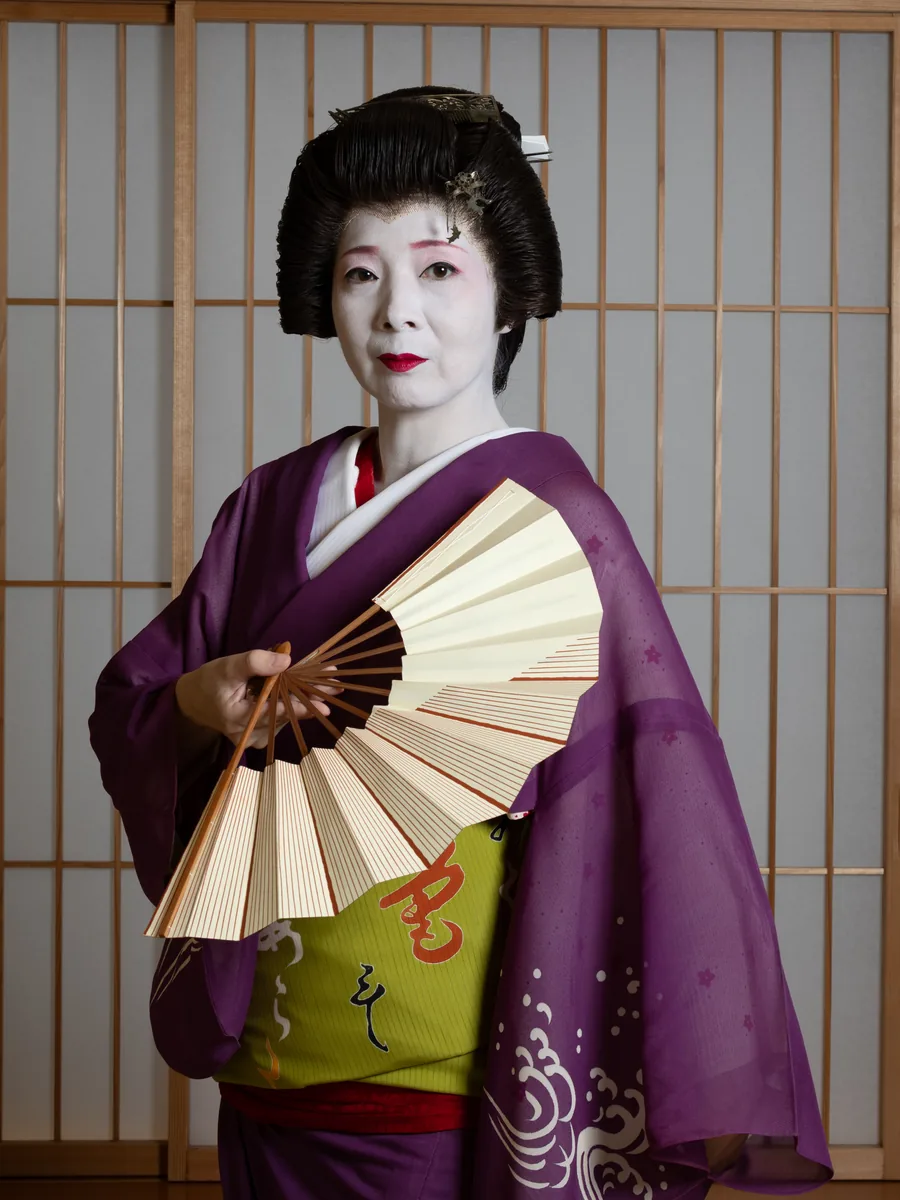
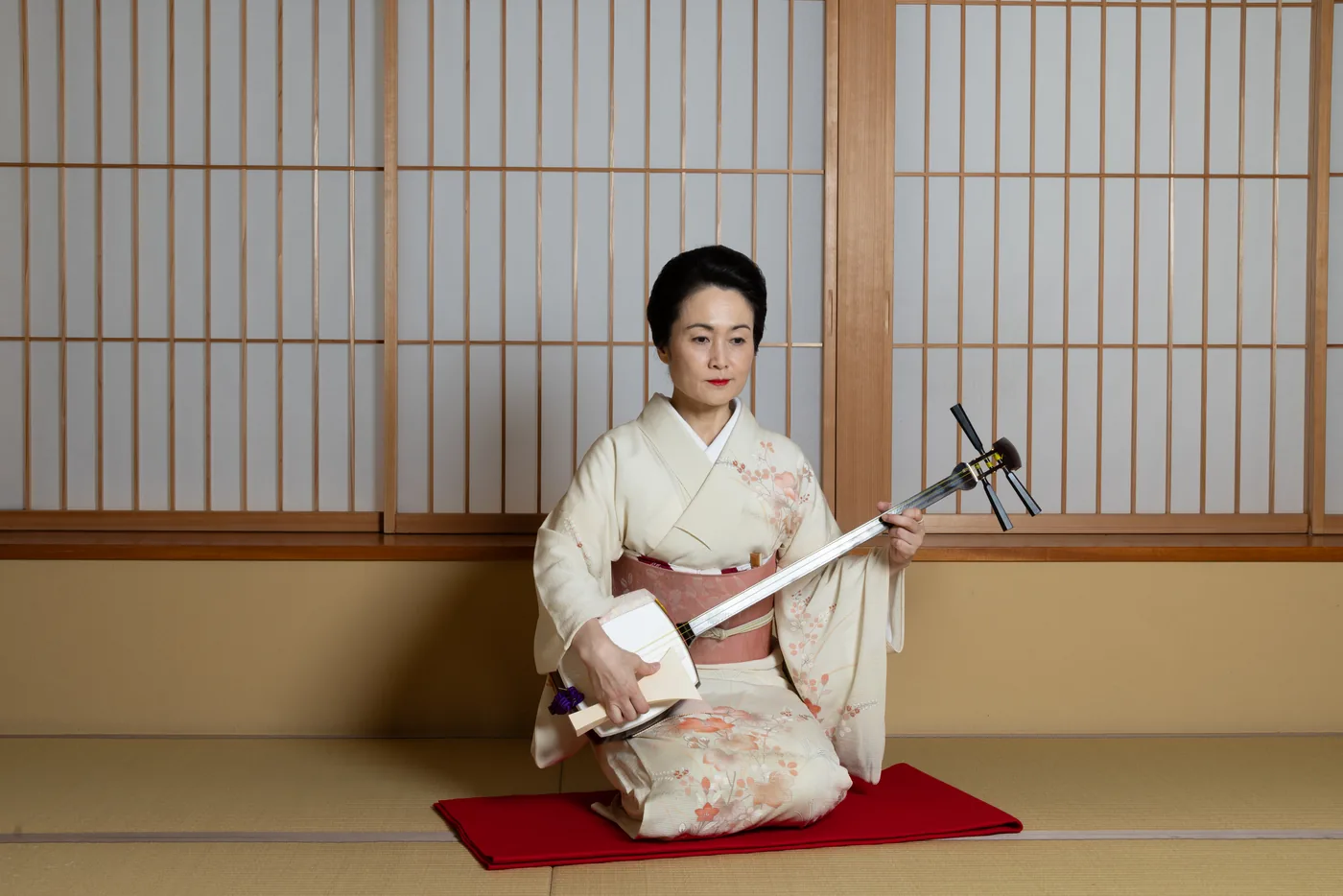
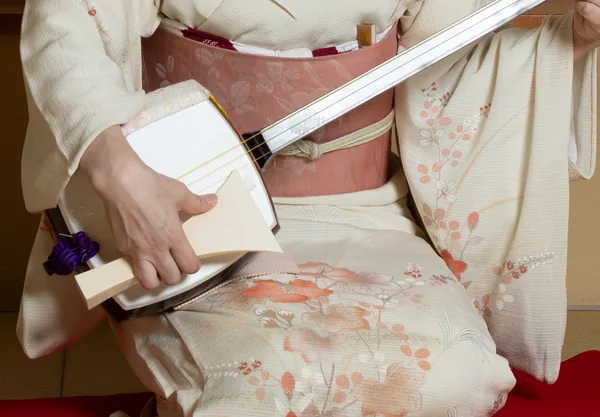
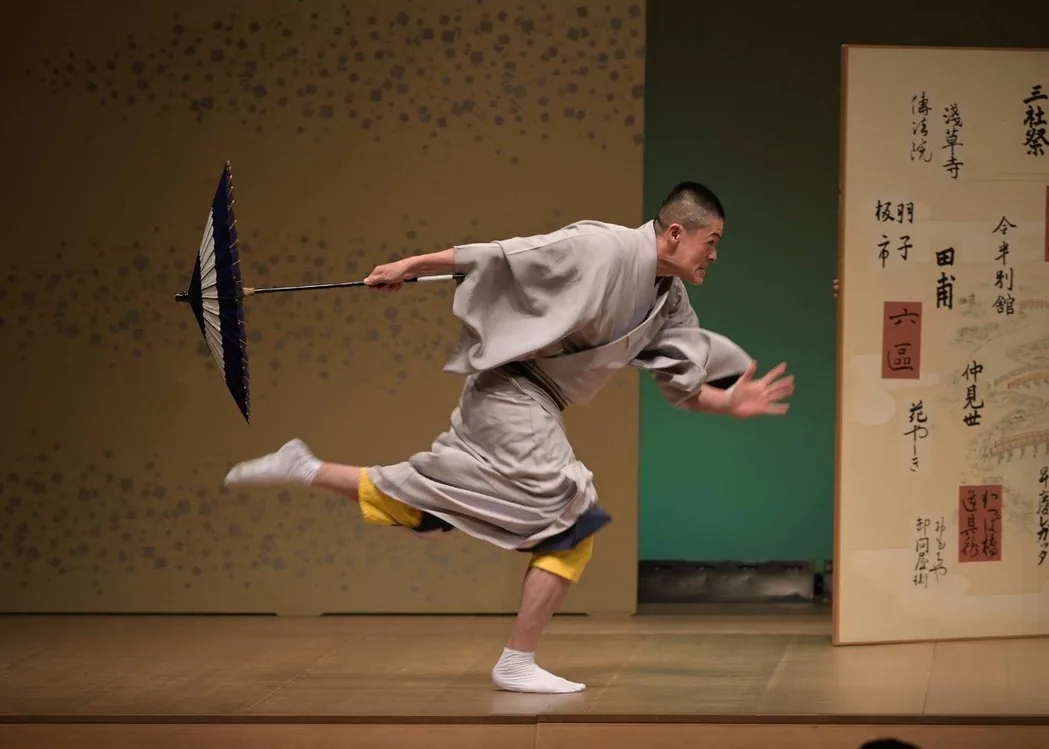
- Geisha (芸者)
- A woman of the arts who performs dance, shamisen and song, and entertains guests at an ozashiki.
- Ozashiki (お座敷)
- A private party where guests watch geisha perform and enjoy conversation and games with them.
- Kagai (花街)
- A geisha district. Asakusa geisha and okami read the characters "kagai."
- Karyukai (花柳界)
- The world of geisha and everything around them.
- Keiko (お稽古)
- Lessons with a teacher in shamisen, ohayashi, dance, song and movement. Geisha go every week.
- Kata (型)
- A set form of an art, refined over generations, that anyone can practice.
- Kenban (見番)
- The registry office of a geisha district. Each Tokyo geisha is registered with the kenban of her district.
- Tachikata (立方)
- A geisha who dances at an ozashiki.
- Jikata (地方)
- A geisha who plays the shamisen and sings.
- Yohatsu (洋髪)
- A modern, non-traditional hairstyle. Jikata appear at an ozashiki with this hair.
- Narimono (鳴り物)
- Percussion instruments such as the tsuzumi and taiko.
- Shikomikko (仕込みっ子)
- In Tokyo, a trainee before her debut as a geisha. The training lasts about six months to a year.
- Hangyoku (半玉)
- Tokyo's young geisha in training, in a furisode with flowered hairpins. Kyoto calls this stage maiko.
- Ippon (一本)
- A full-fledged geisha. A hangyoku becomes an ippon after some years.
- Hōkan (幇間)
- An entertainer, long a men's role, who sets off the geisha and livens up the ozashiki. Also called otoko geisha or taikomochi.