



Japanese Tea Ceremony in Tokyo: A Guide to Chadō — and the Geisha Tea House Few Travelers Know
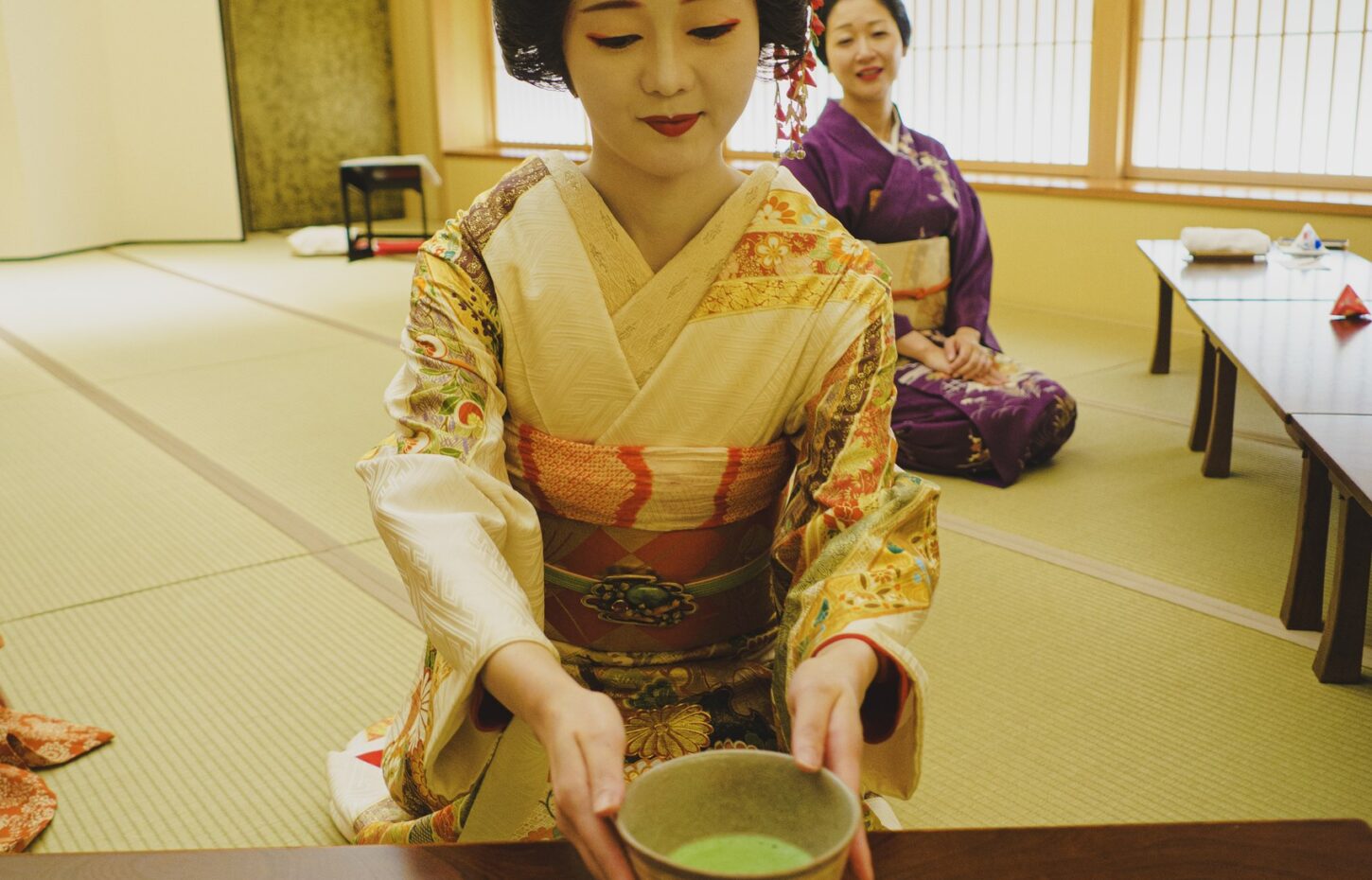
A Japanese tea ceremony (chadō, 茶道) is the ritual preparation and sharing of matcha — powdered green tea — choreographed as a meditative act of hospitality. It is one of Japan’s most refined art forms, and Tokyo offers many ways to experience it: in garden teahouses, cultural centers, and tea schools across the city. But Tokyo also holds a rarer experience that most guides overlook — sharing matcha and seasonal sweets in the company of Asakusa’s geisha, inside a living hanamachi (flower district).
This guide explains what a Japanese tea ceremony actually is, what happens during one, where to experience it in Tokyo, and how the geisha tea house in Asakusa offers a different way to taste this tradition.
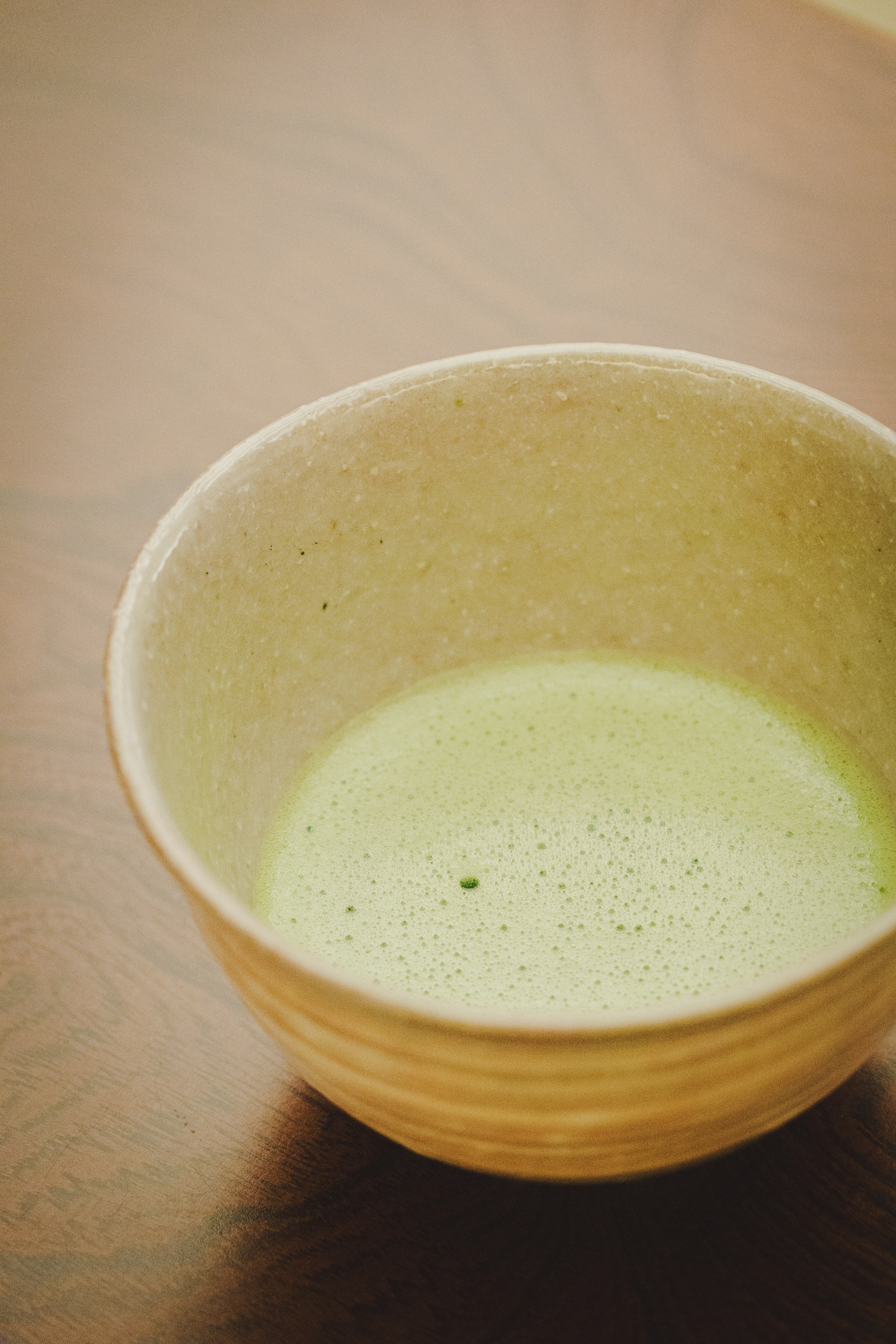
What Is a Japanese Tea Ceremony?
A Japanese tea ceremony is not simply a way of making tea. It is a choreographed practice — a form in which every movement, every object, and every moment of the gathering has been refined over centuries into something meaningful.
The Japanese term chadō (or sadō, 茶道) means “the way of tea.” Like other Japanese arts with dō in their name — kendō, judō, kadō (flower arranging) — the suffix signals that this is not just a skill but a path: a lifelong practice through which the practitioner cultivates something deeper than technique.
At its heart are four principles, attributed to the great tea master Sen no Rikyū: wa (harmony), kei (respect), sei (purity), and jaku (tranquility). The ceremony is designed to embody all four — in the room, in the objects, in the gestures, and in the relationship between host and guest.
What You Drink and Eat
The tea served is matcha — powdered green tea whisked into a bowl of hot water. Depending on the occasion, it may be usucha (thin tea, light and frothy) or koicha (thick tea, shared from a single bowl). Both are prepared and received with care.
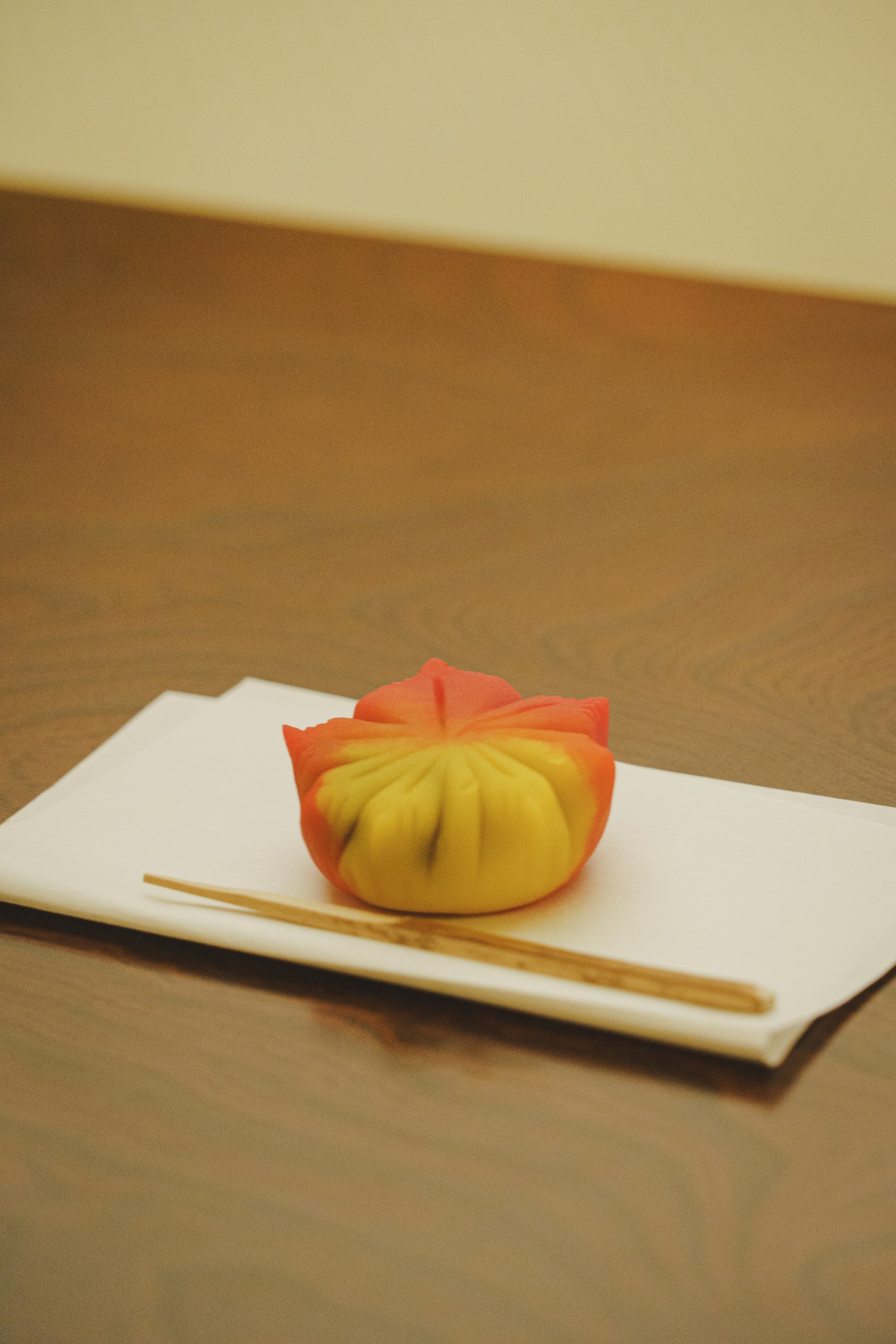
Before the tea arrives, guests are served wagashi — seasonal Japanese confections made to complement the bitterness of matcha. The sweets are eaten first, allowing their sweetness to linger as the tea is received.
A Brief History
The custom of drinking matcha arrived from China with Zen Buddhist monks, who valued tea for keeping the mind alert during meditation. Over the following centuries, Japanese tea masters transformed the act of serving tea into a refined art.
The most important figure is Sen no Rikyū (1522–1591), who shaped the ceremony into the spare, contemplative form still practiced today, emphasizing rustic simplicity over ostentation. His teachings live on through the three main schools descended from his lineage — Urasenke, Omotesenke, and Mushakōjisenke — which continue to train practitioners around the world.
The principles of the tea ceremony — harmony, restraint, the honoring of each moment — have influenced Japanese aesthetics broadly, including the wabi-sabi sensibility that values imperfection and transience. For a wider picture of how Japan’s traditional arts fit together, our guide to geisha in Japan explores how these practices — tea, dance, music, and hospitality — have long lived side by side in the same cultural world.
What Happens During a Tea Ceremony
While details vary by school and occasion, a tea gathering generally unfolds like this:
- Entering the room. Guests enter a tea room (chashitsu) quietly, often pausing to view a hanging scroll and seasonal flower arrangement that set the theme of the gathering.
- Appreciating the setting. A moment is taken to notice the room, the utensils, and the atmosphere — part of the ceremony’s mindfulness.
- Sweets first. Guests eat the wagashi before the tea is served.
- Preparing the tea. The host cleans each utensil with deliberate movements, measures the matcha, adds hot water, and whisks the bowl.
- Receiving the tea. The guest receives the bowl with a bow, turns it slightly to avoid drinking from its “front,” sips, and then wipes the rim and returns it.
- Closing. Guests may be invited to admire the tea utensils before the gathering ends.
The slow, intentional pace is the point. Nothing is rushed, and every action has a reason.
Where to Experience a Tea Ceremony in Tokyo
Tokyo offers tea experiences for every level of interest:
- Garden teahouses. Several historic gardens maintain traditional tea rooms where visitors can attend a seated ceremony in a classical setting.
- Cultural experience studios. Many studios offer short, English-friendly introductions designed for travelers, sometimes including the chance to whisk your own bowl of matcha.
- Tea schools. For those who want to go deeper, the major schools offer lessons and demonstrations.
Each of these focuses on the ceremony itself. There is also a different path — one that places matcha inside the wider world of Japan’s traditional performing arts.
A Different Way: Matcha with Geisha in Asakusa
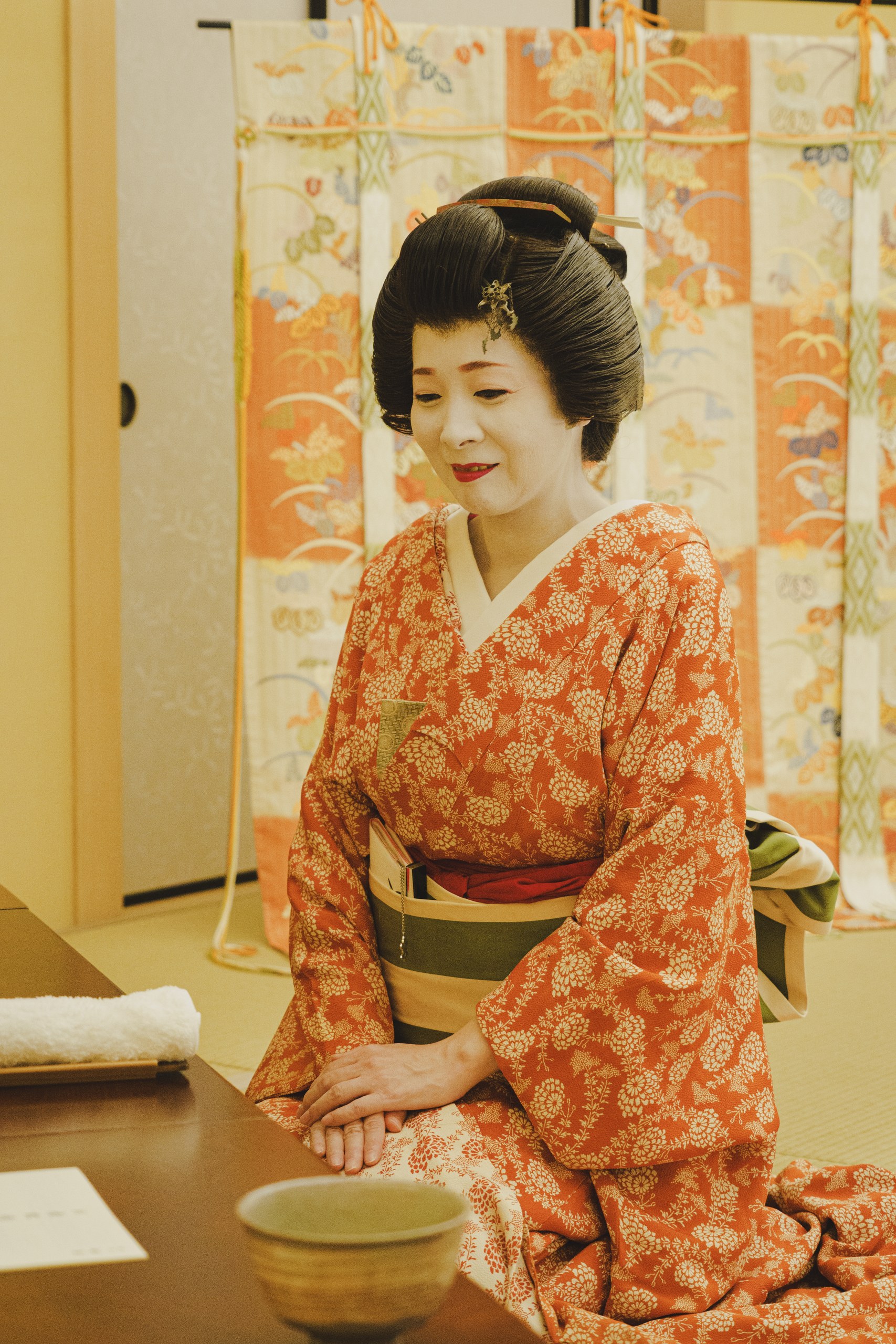
In Asakusa, Tokyo’s most atmospheric old district, the geisha house Miyakodori offers two ways to spend time with working geisha — and in both, matcha and seasonal wagashi are part of the hospitality. Neither is a formal tea ceremony lesson; instead, each lets you taste matcha inside a living hanamachi (flower district), alongside the music, dance, and conversation that have always surrounded tea in the geisha world.
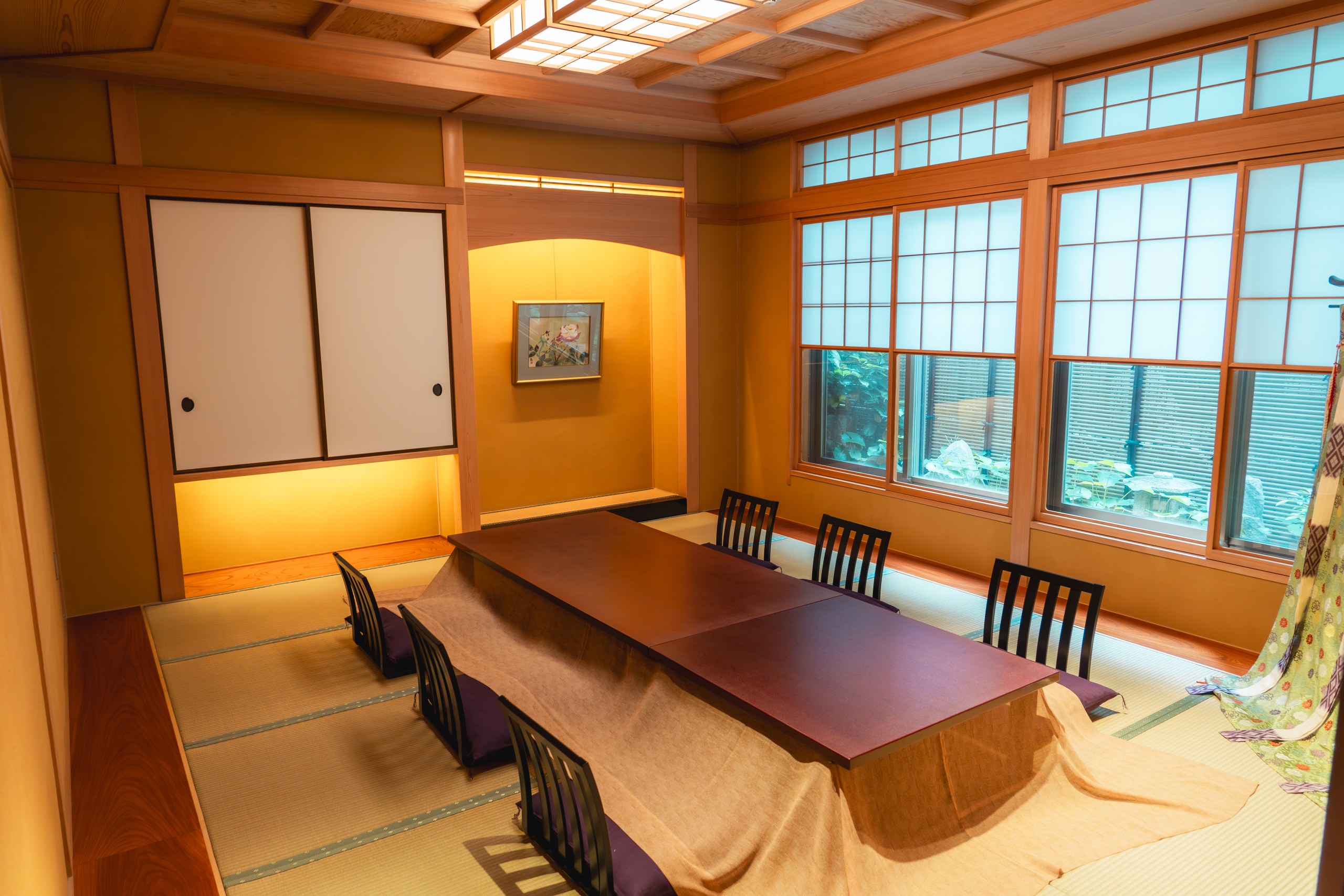
The fuller experience: a private ozashiki
A private ozashiki — a geisha banquet held just for your own party — is the genuine, traditional way to be entertained by geisha. In a private tatami room, the dance, live shamisen, conversation, games, and hospitality are all directed to you and your guests alone, at your own pace, for one, two, or three hours. For travelers who want the real depth of Asakusa’s flower district rather than a sample of it, a private ozashiki is by far the more rewarding way to spend the time — and the experience Miyakodori most recommends. (Private ozashiki are arranged by request rather than instant booking.)
Plan a Private Ozashiki
Reserve an evening — or afternoon — just for your party, with geisha dance, live shamisen, and the full hospitality of Asakusa’s flower district.
Request a Private OzashikiAn approachable first taste: the Ozashiki Tea House
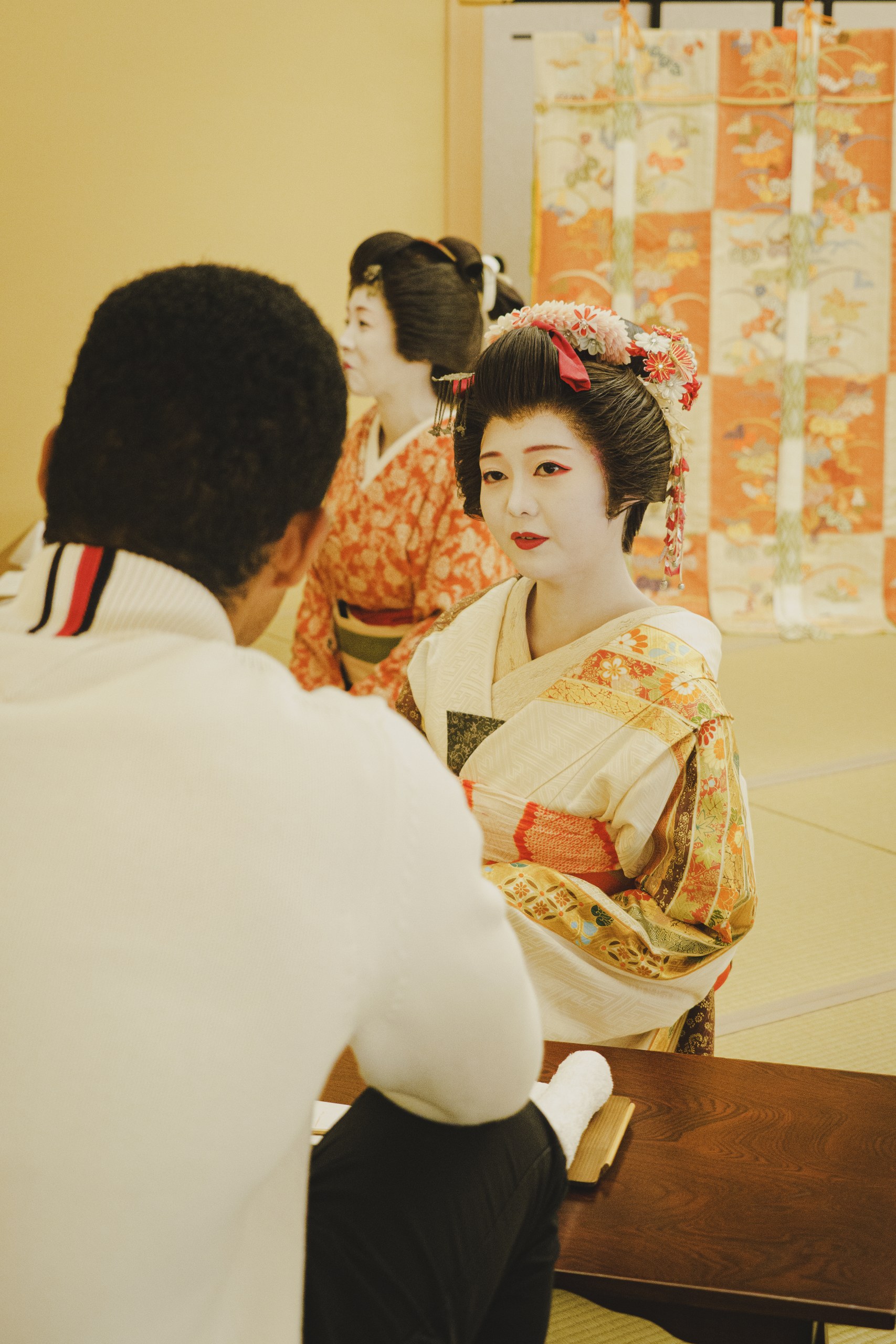
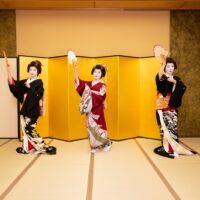
The Ozashiki Tea House — Matcha with Geisha is a shorter, lower-cost way to encounter geisha culture for the first time. It is a 75-minute ozashiki in which matcha and seasonal wagashi are served as part of an afternoon with three working Asakusa geisha, in a setting shared with other guests:
- Classical dance accompanied by live shamisen
- A question-and-answer session with the geisha
- A traditional ozashiki game (Konpira Fune Fune)
- Matcha and seasonal Japanese sweets
- A commemorative photograph
Because seats are shared and the format is fixed, the Tea House is an easy, affordable way in — a first taste designed to make geisha culture approachable. It offers English support, can be booked online, and runs at a campaign price (one drink order per guest is required). Many visitors start here and return for a private ozashiki once they’ve had a glimpse of what the flower district is like.
What makes either experience rare is the setting. Rather than tasting matcha in isolation, you drink it within the flower district the geisha world still calls home. The geisha who serve you are not performers in costume but registered artists who train for years in the same district that has organized Asakusa’s tea house culture for over a century. At our ozashiki in Asakusa, the matcha is one thread in a wider afternoon or evening of music, dance, and conversation — the way tea has long been woven into the hospitality of the hanamachi.
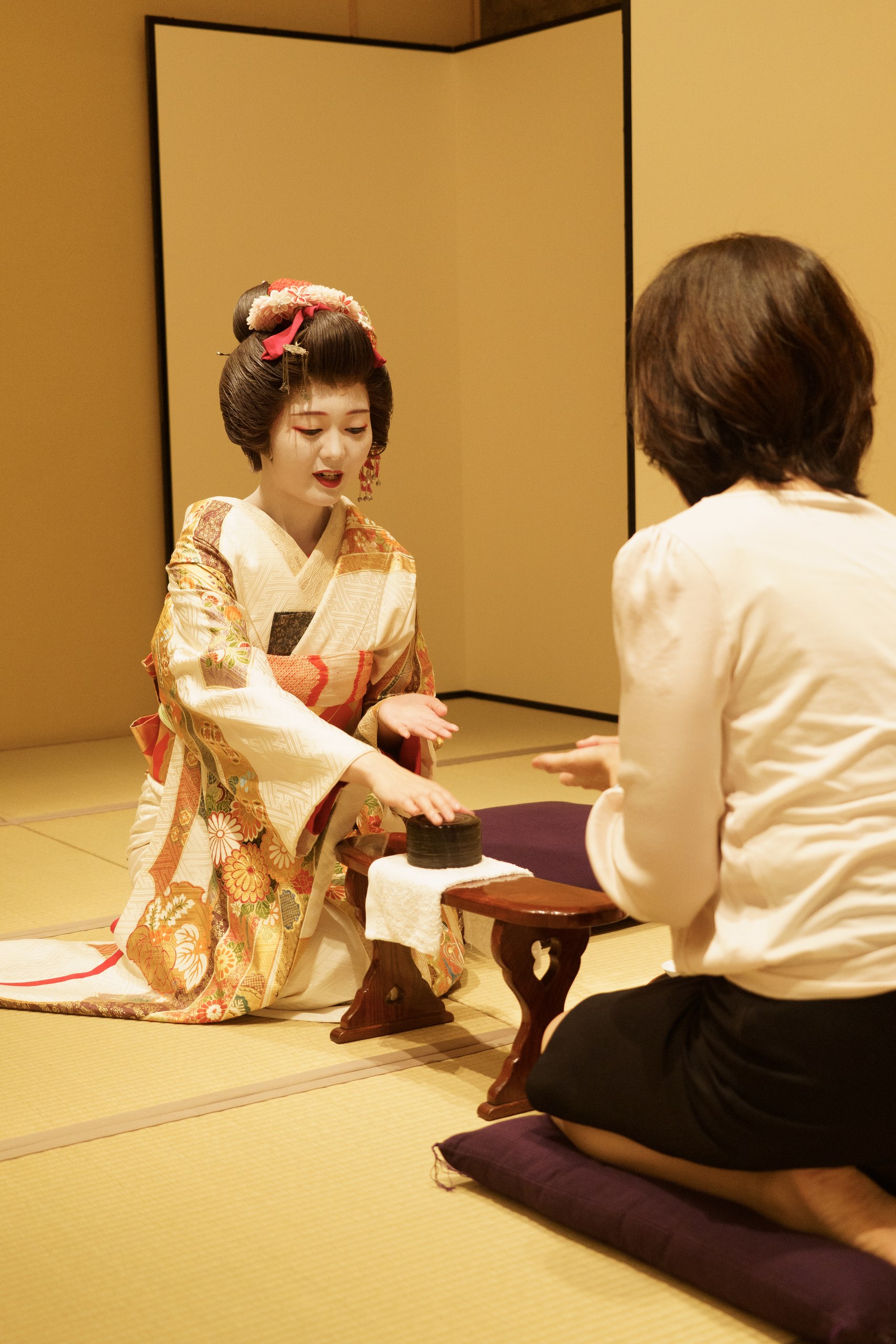
Tea Ceremony vs. Matcha with Geisha: Which Is Right for You?
Both are wonderful — they simply offer different things.
| If you want… | Choose… |
|---|---|
| To learn the formal ritual of chadō, step by step | A garden teahouse, studio, or tea school ceremony |
| To whisk your own bowl of matcha | A hands-on cultural studio |
| A first, affordable taste of geisha culture, with matcha and sweets | The Ozashiki Tea House in Asakusa |
| The full, private geisha experience — dance, music, games, and conversation just for your party | A private ozashiki at Miyakodori |
If a formal, meditative ceremony is what you’re after, Tokyo’s teahouses and studios are the right choice. If you’d rather experience matcha as part of an afternoon with real geisha, the Ozashiki Tea House is the easiest place to begin — and a private ozashiki is the way to experience Asakusa’s geisha hospitality in full, something you cannot find anywhere else in Tokyo.
Frequently Asked Questions
- What is the difference between chadō, sadō, and chanoyu?
- Chadō and sadō (茶道) both mean “the way of tea” and refer to the practice as a lifelong discipline. Chanoyu (茶の湯), literally “hot water for tea,” is an older term for the tea gathering itself. In everyday use, all three refer to the Japanese tea ceremony.
- Do I need any experience to attend a tea ceremony?
- No. Most experiences aimed at visitors are designed for first-timers, and the host or staff will guide you through what to do. You do not need to know the etiquette in advance.
- Can foreigners attend a Japanese tea ceremony?
- Yes. Many tea experiences in Tokyo welcome international guests, and English support is widely available. At Miyakodori‘s Ozashiki Tea House in Asakusa, the old “first-time customers not accepted” (ichigensan okotowari) custom does not apply — international guests are welcome to book directly.
- What should I wear?
- Comfortable, modest clothing is fine. Because you may sit on tatami, choose something that allows you to sit comfortably. Some formal ceremonies suggest avoiding strong perfume, as it can interfere with the experience.
- Where can I experience matcha with a geisha in Tokyo?
- At Miyakodori in Asakusa. The Ozashiki Tea House is the easy, bookable-online introduction — a 75-minute afternoon with three working geisha that includes matcha and seasonal sweets, dance, shamisen, a Q&A, a game, and a photograph. For the full private experience, a private ozashiki offers the same hospitality directed entirely to your own party.
Experience Matcha with Asakusa’s Geisha
Matcha and seasonal sweets are part of the hospitality at every geisha gathering at Miyakodori in Asakusa — and you can experience them two ways.
For the full experience — geisha dance, live shamisen, ozashiki games, and conversation in a tatami room reserved just for your party — a private ozashiki is the most rewarding way to spend your time in Asakusa’s flower district.
If you’d prefer an easier, more affordable first taste, the Ozashiki Tea House welcomes you for a 75-minute afternoon of matcha with working geisha.
Experience Matcha with Geisha in Asakusa
Two ways to spend time with Miyakodori‘s working geisha — choose the one that suits your visit.
Request a Private Ozashiki Book the Ozashiki Tea House


- Japanese Culture: Traditions, Arts and Living Heritage — Complete Guide
- Hakoya: The Unsung Keeper of Asakusa's Geisha World
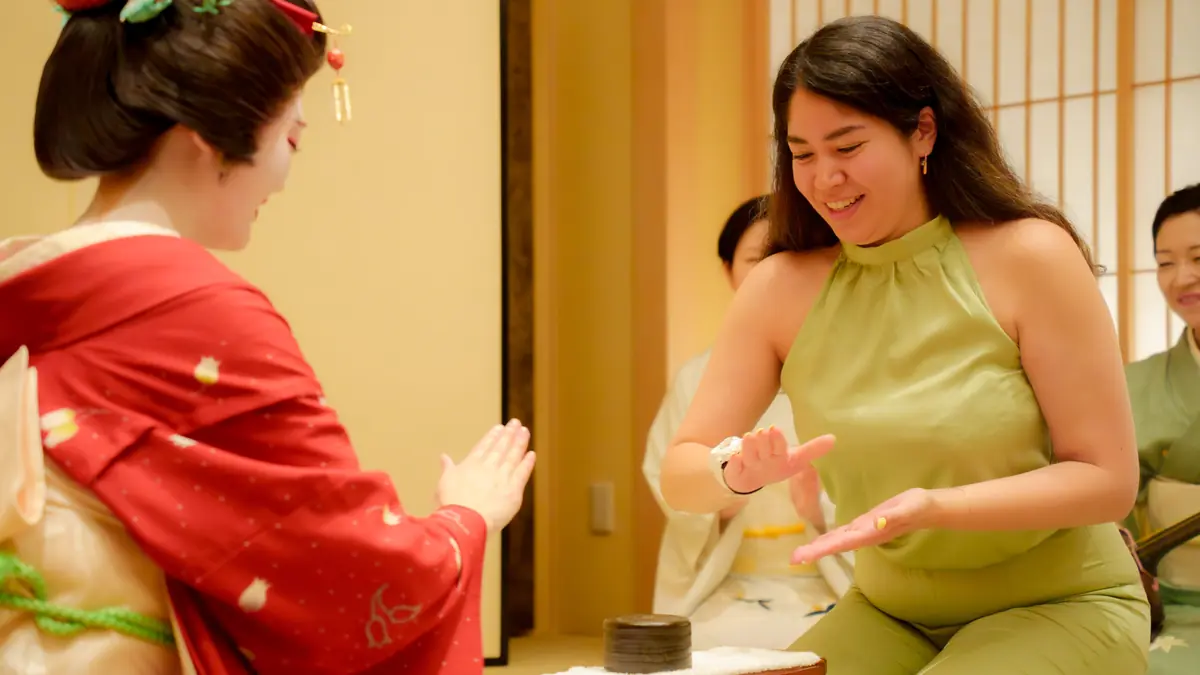
Japanese Geisha Cup Game: Rules and How to Play Konpira Fune Fune
Asakusa Area Hot Springs & Sauna Guide | 3 Local Spas to Heal Tourist Fatigue
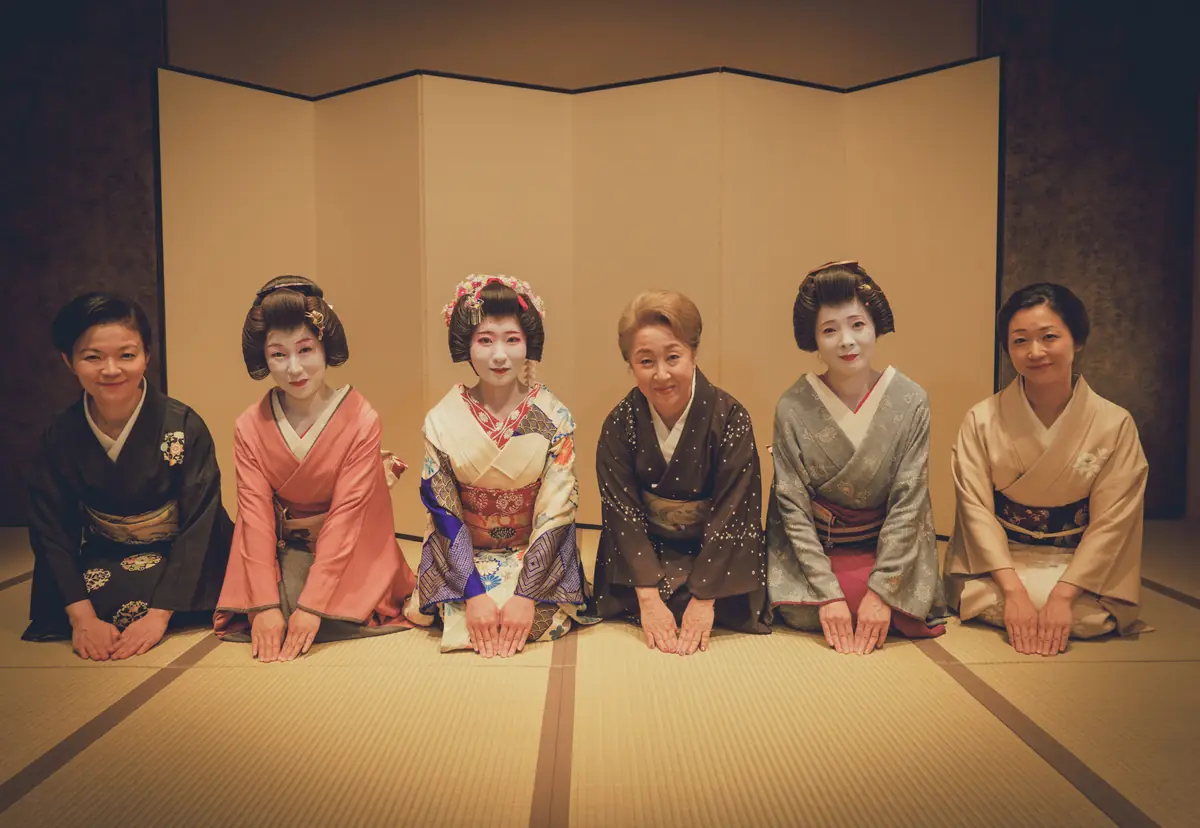
The Asakusa Geisha District: A Journey Through Time, Tradition, and Authentic Experiences
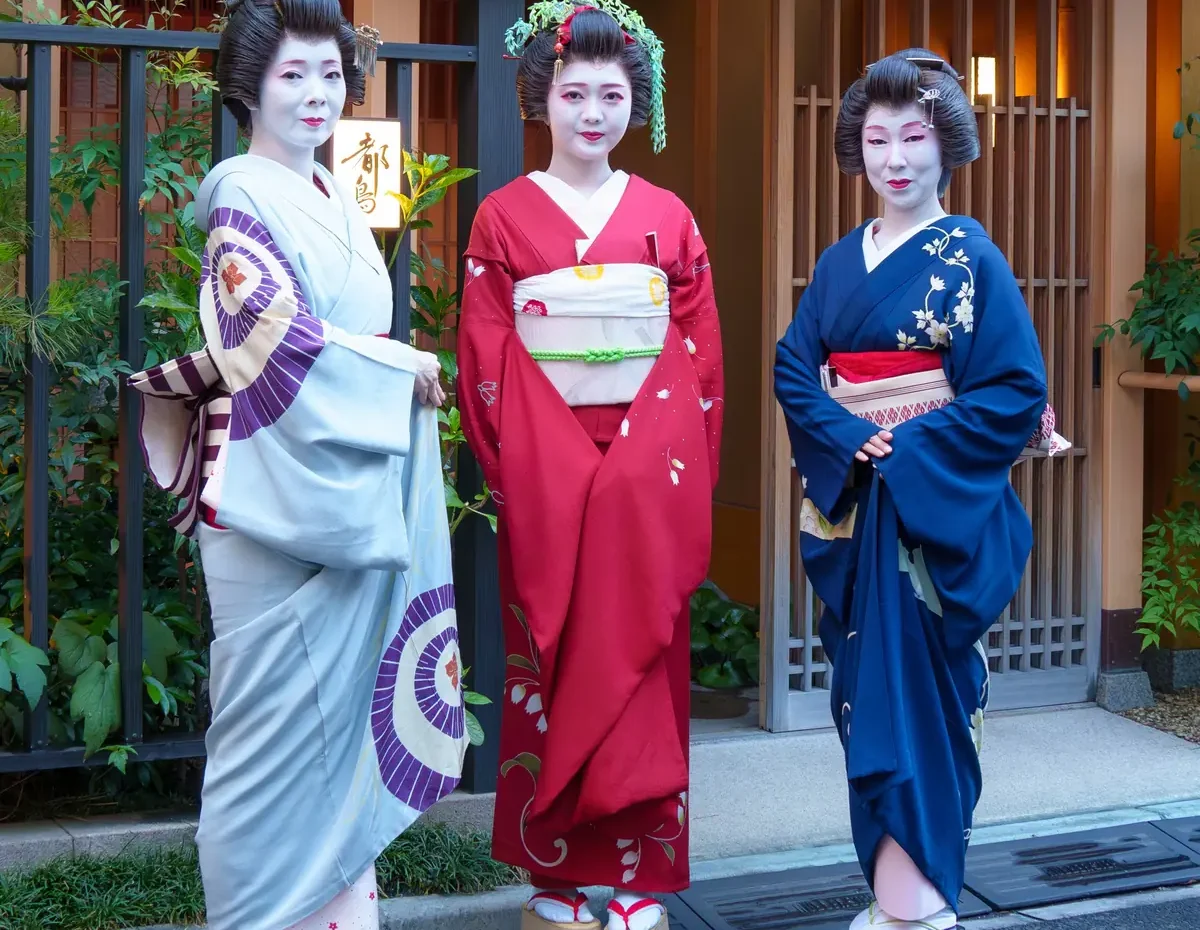
Traditional Geisha Makeup: History, Artistry, and Symbolism
Geisha in Tokyo: The Complete Experience Guide
Day Trip in Asakusa in Winter! From Spectacular Cafes to Natural Hot Springs “Yudonburi Eiyu”
Comment ( 0 )
Trackbacks are closed.
No comments yet.