



Senso-ji Temple Charms List: Omamori for Every Wish and How to Pray
Almost everyone who visits Senso-ji leaves with a small omamori charm. The hard part is choosing one. The charm counters display dozens of designs, most labeled only in Japanese, and the queue behind you does not leave much time to decide.
We are Miyakodori, a machiai teahouse that has welcomed guests in Asakusa since 1950, and Senso-ji is our neighborhood temple. In this guide we list Senso-ji’s main charms by the wish they are meant for, explain where to buy them and roughly what they cost, and walk you through the correct way to pray before you choose one.
Senso-ji: The Temple of “Shogan Joju”
Senso-ji is Tokyo’s oldest temple, and locals still call it “Asakusa no Kannon-sama.” Its principal image is Sho Kannon Bosatsu, the Bodhisattva of Compassion, who is believed to hear the prayers of everyone who comes, without distinction.
For this reason Senso-ji is not tied to one special blessing. It is known for “shogan joju,” the fulfillment of all kinds of wishes: success at work, family safety, recovery from illness, passing exams, and good relationships. That is also why the temple offers such a wide range of charms. Rather than one “famous” charm, you pick the one that matches your own wish.
Senso-ji Charms List by Wish
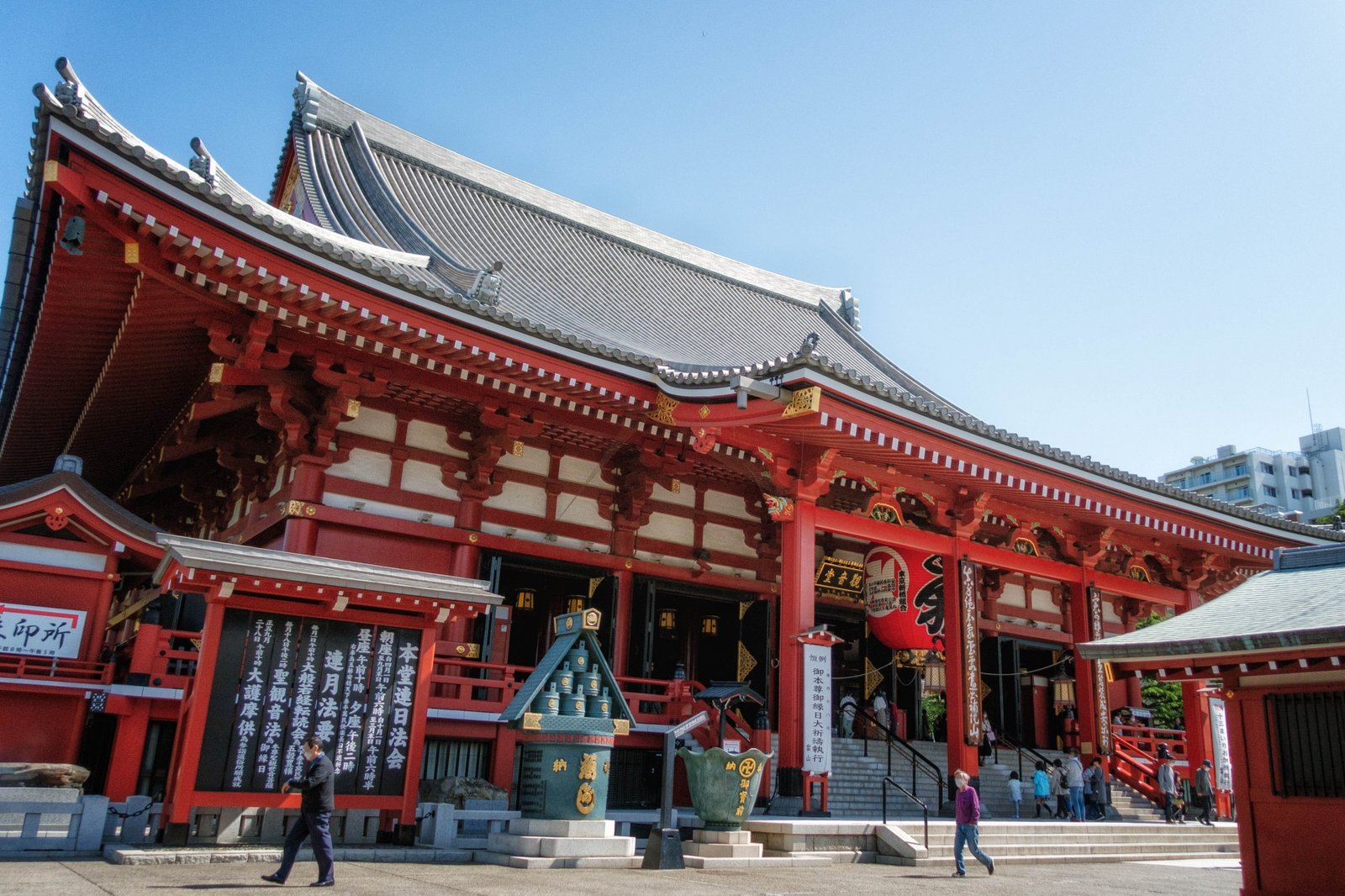
The table below lists the main charms offered at Senso-ji. The names are the ones used by the temple, with the Japanese in brackets so you can point to them at the counter. Designs and colors change from time to time, and staff can tell you more about each charm’s blessing if you ask.
| Your wish | Charm (Japanese name) | Where to get it |
|---|---|---|
| Any wish | Shingan Joju Mamori (心願成就守) | Main Hall |
| Work and career | Shigoto Mamori (仕事守) | Main Hall |
| Money and fortune | Kin’un Mamori (金運守), Kinsen Yuzu Suzu Mamori (金銭融通鈴守) | Zenizuka Jizo-do |
| Protection from bad luck | Yakuyoke Mamori (厄除守), Sainan-yoke Mamori (災難除守) | Main Hall |
| Personal protection | Migawari Mamori (身代守), Hada Mamori (肌守) | Main Hall |
| Health | Shintai Kenko Mamori (身体健康守) | Main Hall |
| Study and exams | Gakugyo Mamori (学業守), Kaminarimon Gokaku Mamori (雷門合格守) | Main Hall |
| Love and good relationships | Ryoen Mamori (良縁守) | Main Hall |
| Safe childbirth | Anzan Mamori (安産守) | Main Hall |
| Travel safety | Kotsu Anzen Mamori (交通安全守), car version (交通安全守 車用) | Main Hall |
| Your zodiac guardian | Eto Mamori (干支守) | Yogo-do |
| Women’s wishes | Awashima-son Mamori (淡島尊守) | Awashima-do |
Below, we explain each wish in a little more detail, along with the hall inside the temple grounds that is connected to it.
Any Wish: Shingan Joju Mamori
If you are not sure what to choose, or your wish does not fit neatly into one category, the Shingan Joju Mamori is the natural choice. It is a charm for having your heartfelt wish come true, which matches the spirit of “shogan joju” that Senso-ji is known for. It also makes a good gift when you do not know exactly what the other person is hoping for.
Work, Career and Money: Shigoto Mamori and the Charms of Zenizuka Jizo-do
Asakusa has been a merchant town for centuries, and many business owners come to Senso-ji to pray for their work. For your career, look for the Shigoto Mamori at the Main Hall.
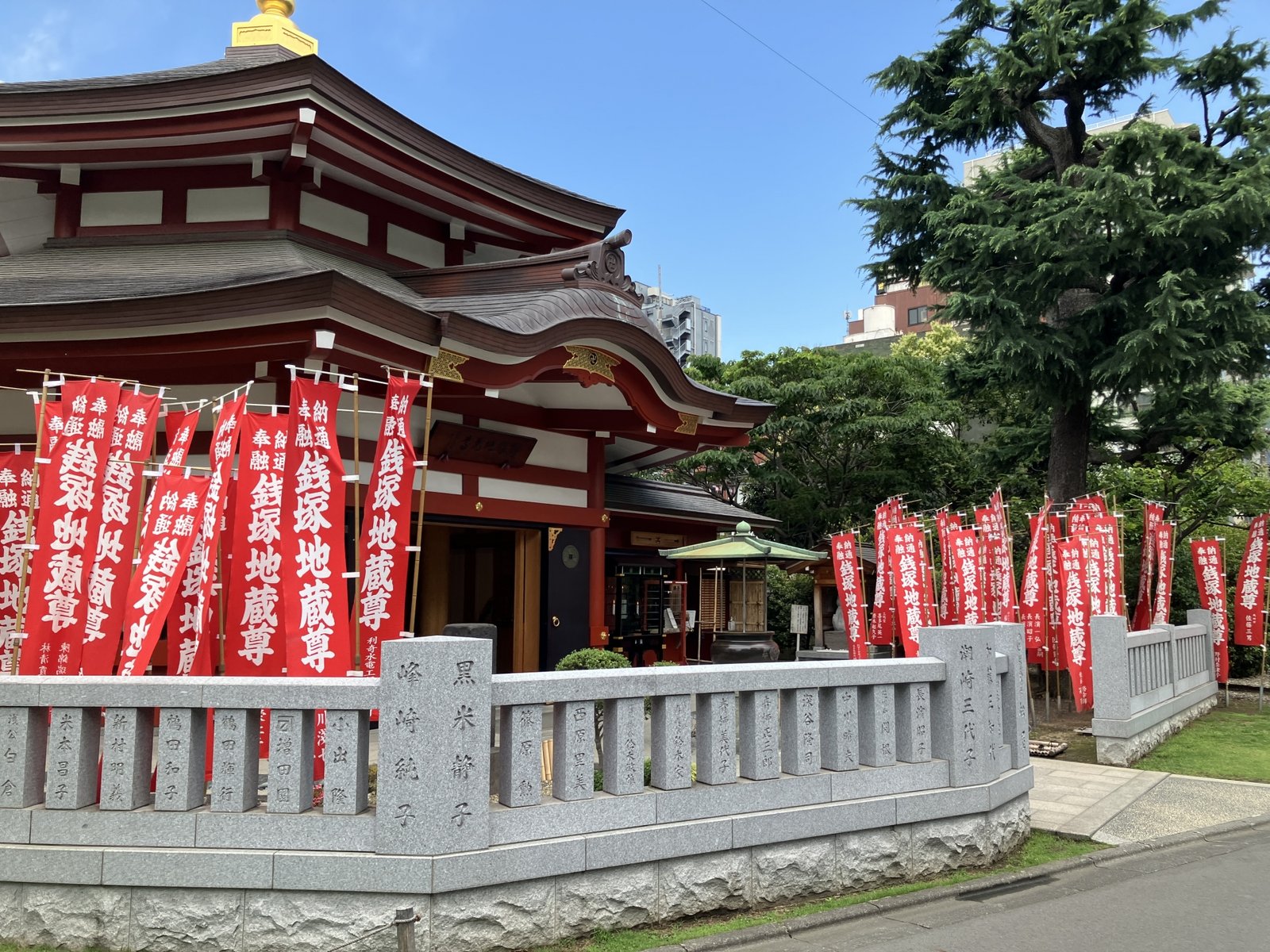
For money and fortune, walk to Zenizuka Jizo-do on the west side of the grounds. Old coins from the Edo period are said to be buried beneath its six Jizo statues. Inside you will also find the stone “Kankan Jizo.” Visitors offer salt and tap the statue with a small stone while they pray, and the metallic “kan-kan” sound gives it its nickname. Offering salt here is said to bring financial blessings. The hall offers its own Kin’un Mamori (money luck charm) and a bell charm for the smooth flow of money.
Protection from Misfortune: Yakuyoke, Sainan-yoke and Migawari Mamori
Kannon is believed to protect people from all kinds of trouble. The Yakuyoke Mamori is for warding off bad luck, and many Japanese people get one in their “yakudoshi,” the unlucky years in life. The Sainan-yoke Mamori is for avoiding accidents and disasters in daily life.
The Migawari Mamori is a “substitute” charm, said to take misfortune in your place. The Hada Mamori, offered in red and green, is a charm meant to be kept close to your body.
Health and Healing: Shintai Kenko Mamori and Yakushi-do
For your own health or a loved one’s recovery, choose the Shintai Kenko Mamori. On the west side of the grounds, just south of Yogo-do, stands Yakushi-do, a hall dedicated to Yakushi Nyorai, the Buddha of Medicine. You cannot enter the hall, but you can pray from outside.
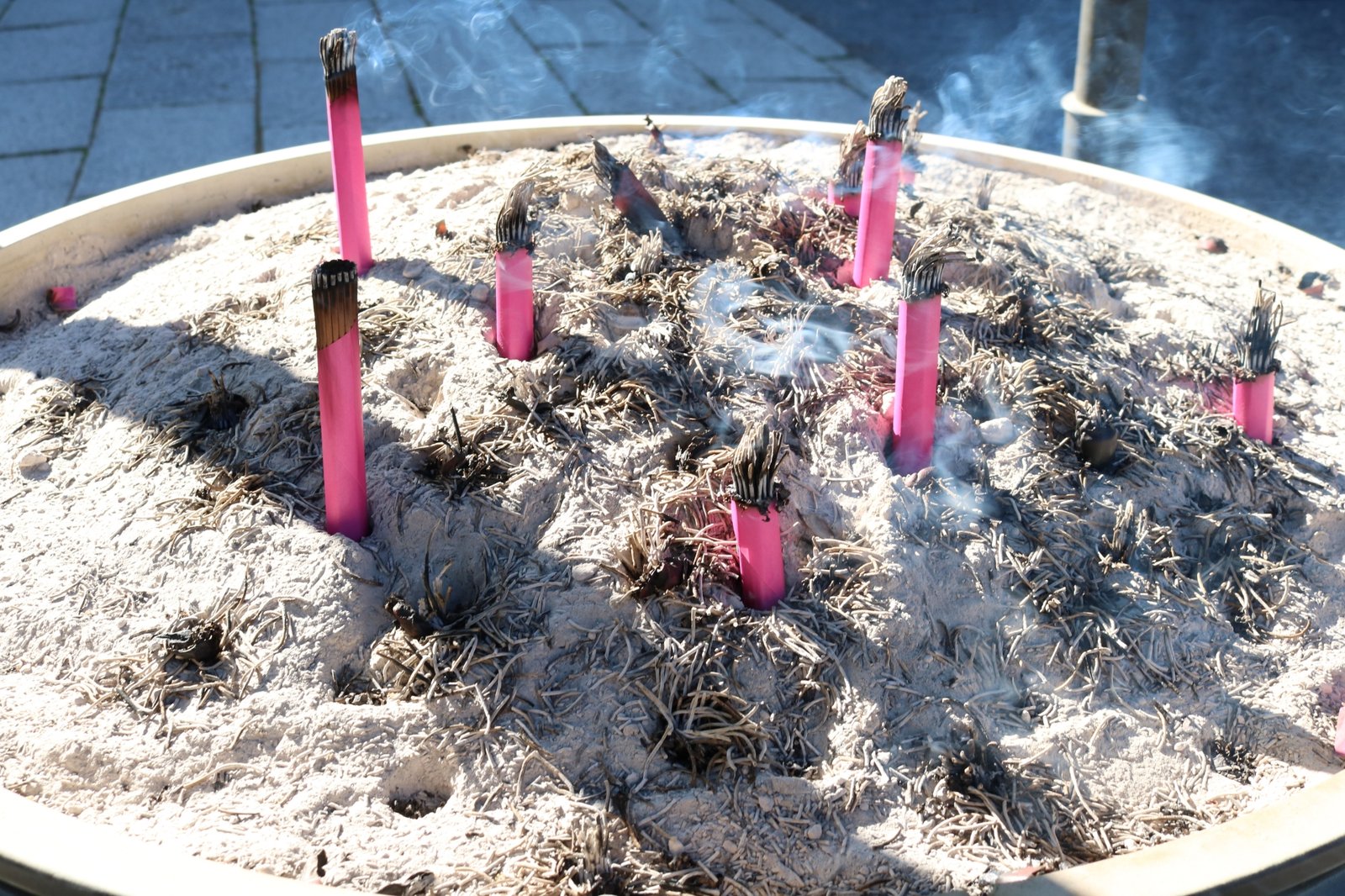
You will see the same wish at the large incense burner in front of the Main Hall, where visitors waft the smoke over the parts of the body they want to heal. We explain this in the prayer steps below.
Study and Exams: Gakugyo Mamori and Kaminarimon Gokaku Mamori
The Gakugyo Mamori supports your studies in general. For a specific exam, whether a school entrance exam, a certification or a job interview, look for the Kaminarimon Gokaku Mamori. “Gokaku” means “passing,” and the charm is named after Senso-ji’s famous Kaminarimon Gate.
Love and Good Relationships: Ryoen Mamori
The Ryoen Mamori is for finding a good match. At Senso-ji it is offered in pink and green. In Japan, “en” means connections in a wide sense, so this charm is also chosen by people who hope for good relationships with friends and colleagues, not only for romance.
Safe Childbirth and Women’s Wishes: Anzan Mamori and Awashima-do
Expectant parents can find the Anzan Mamori (safe childbirth charm) at the Main Hall. On the west side of the grounds, Awashima-do is a hall long visited by women praying for their health, safe childbirth and skill in sewing, and it offers its own Awashima-son Mamori. Every year on February 8, the hall holds “Hari Kuyo,” a memorial service where old and broken needles are laid to rest in a block of tofu.
Your Zodiac Guardian: Eto Mamori and Yogo-do
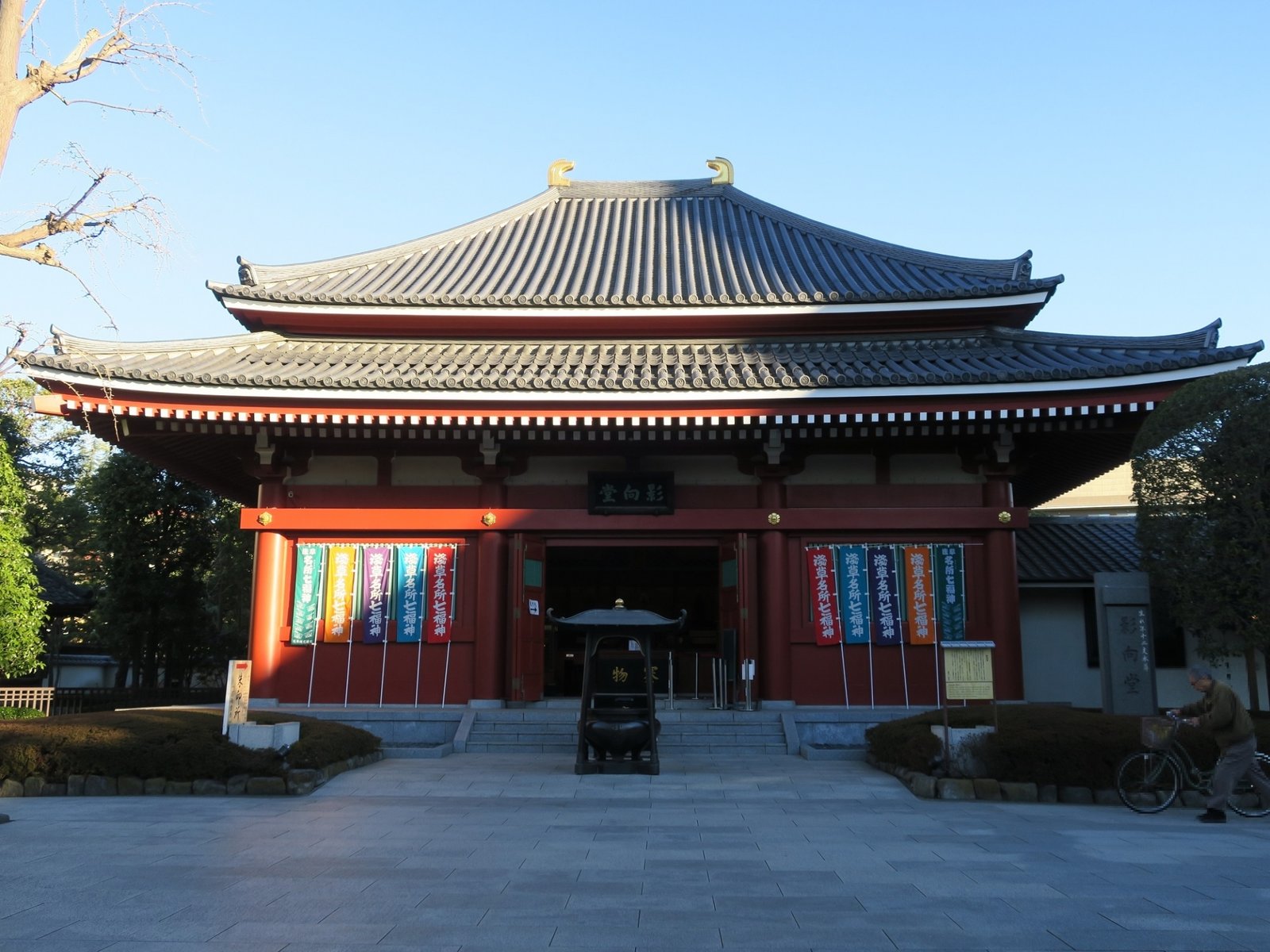
In Japanese Buddhism, each birth year of the Chinese zodiac has its own guardian Buddha. Yogo-do, on the west side of the grounds, enshrines these guardians, and it offers charms for each zodiac sign. Find your birth year in the table, pray to your guardian, and pick up your Eto Mamori here.
| Zodiac sign | Guardian Buddha |
|---|---|
| Rat | Senju Kannon Bosatsu |
| Ox and Tiger | Kokuzo Bosatsu |
| Rabbit | Monju Bosatsu |
| Dragon and Snake | Fugen Bosatsu |
| Horse | Seishi Bosatsu |
| Sheep and Monkey | Dainichi Nyorai |
| Rooster | Fudo Myoo |
| Dog and Boar | Amida Nyorai |
Yogo-do is also where you can get a goshuin, the temple’s handwritten seal, if you collect them.
Where to Buy Senso-ji Charms and How Much They Cost
Charm Counters at the Main Hall
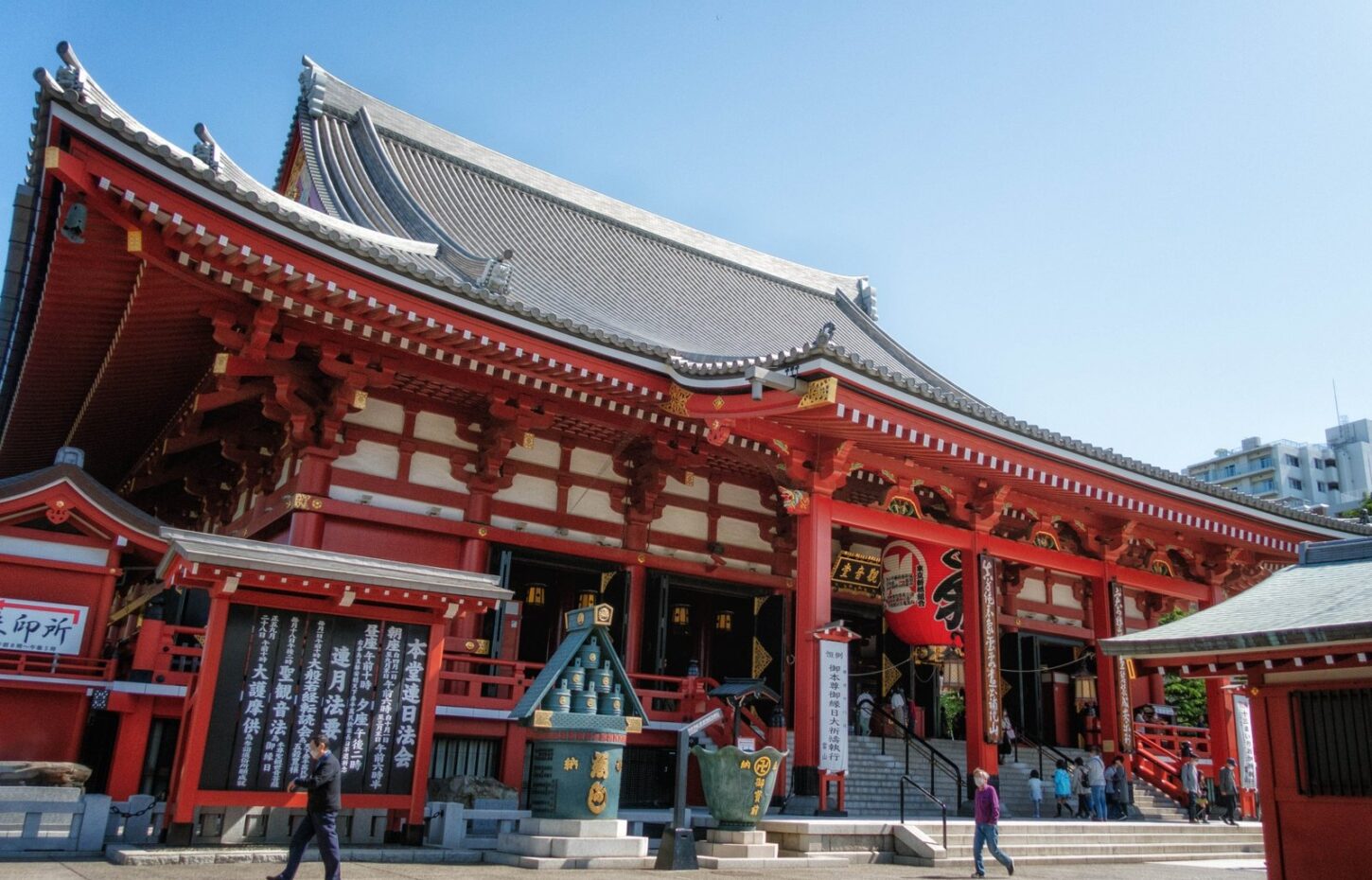
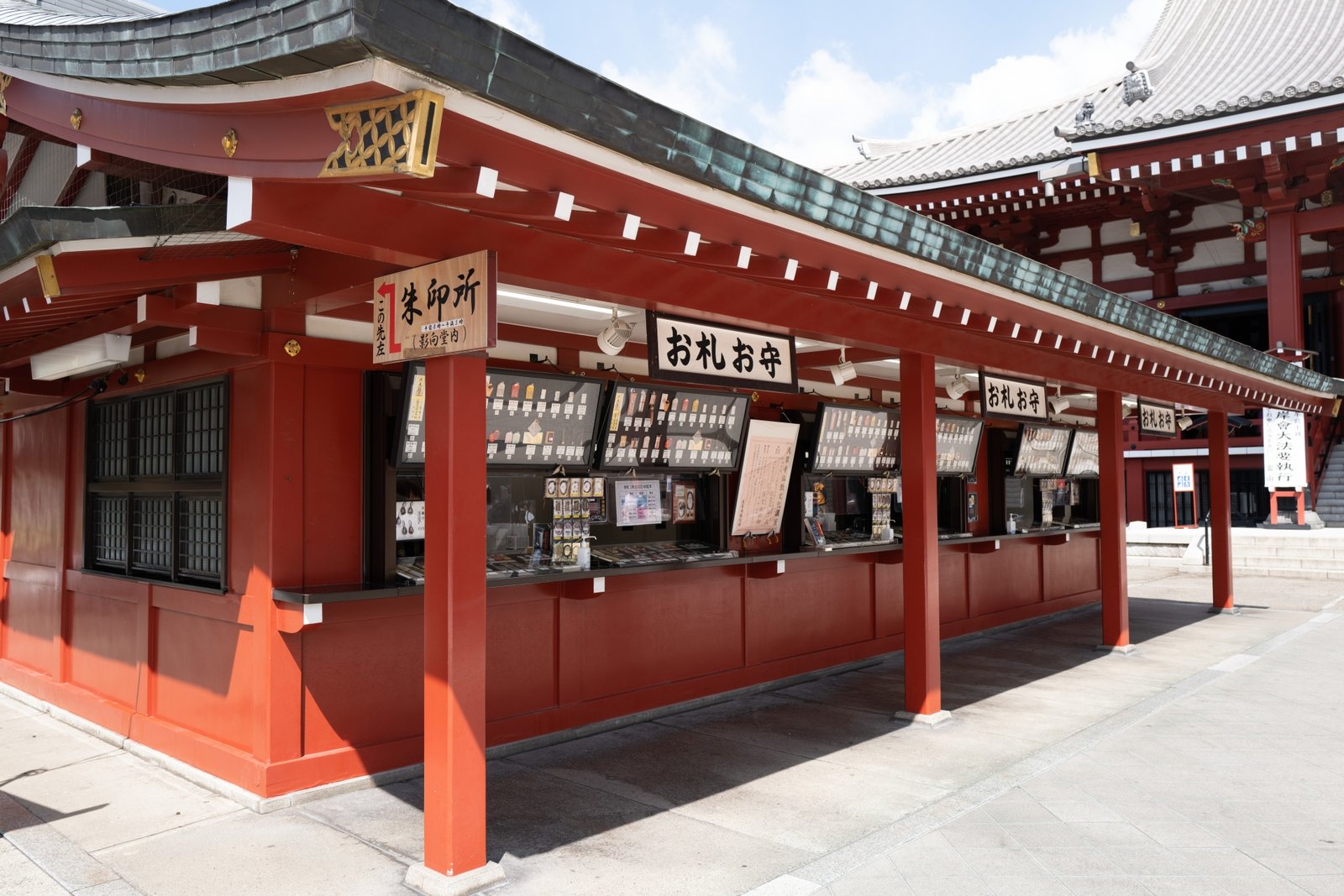
Most of the charms in the list are offered at the Main Hall. You will find counters inside the hall, and there is also a charm counter on the left (west) side of the approach between Hozomon Gate and the Main Hall. The Main Hall is open from 6:00 a.m. to 5:00 p.m. (6:30 a.m. to 5:00 p.m. from October to March), so plan to buy your charm before 5:00 p.m.
Charms at the Smaller Halls
Some charms can only be found at the halls they belong to. The money charms are at Zenizuka Jizo-do, the zodiac charms at Yogo-do, and the Awashima-son Mamori at Awashima-do. If you have a specific wish, it is worth walking around the west side of the grounds, where these halls stand close to each other.
Prices
At Senso-ji, you do not “buy” a charm in the religious sense. The money you pay is an offering, and the charm is “received.” Most everyday charms start at around 500 yen, a safe childbirth charm is around 1,000 yen, and special items such as the silver charm (Gin Mamori) cost much more. Prices can change, so bring some cash in small notes and coins.
Can You Buy Senso-ji Charms Online?
Senso-ji runs an official online shop for charms. The temple does not send charms by phone order. The shop lists domestic shipping options within Japan, and its order terms state that it does not currently ship overseas, so if you live abroad, a mail forwarder is one option.
Senso-ji Charms vs Asakusa Shrine Charms
Right next to the Main Hall, on its east side, stands Asakusa Shrine. Many visitors think it is part of Senso-ji, but it is a Shinto shrine dedicated to the three men connected to the temple’s founding, and it has its own charm office with different designs.
The difference is simple. Senso-ji charms are Buddhist and carry the blessing of Kannon. Asakusa Shrine charms are Shinto and carry the blessing of the shrine’s deities. Neither is “better.” If you want a charm from Senso-ji itself, make sure you are at the temple’s counters, not the shrine’s.
How to Carry and Return Your Omamori
Keep your charm with you, for example in a bag, a wallet or a pencil case. Do not open it. The small paper or wooden tablet inside is considered sacred, and opening the bag is said to weaken its protection.
Many Japanese people replace their charms about once a year, often on their first temple visit of the new year. At Senso-ji, you can return old charms at the returns box next to the charm counter on the approach. It also accepts charms from other temples and shrines. Remove any plastic bags or packaging first. Daruma dolls and figurines cannot be accepted there.
How to Pray at Senso-ji, Step by Step
Before you choose a charm, take a moment to pray. It is the reason the charms exist in the first place, and following the etiquette is a way of showing respect to Kannon.
Step 1: From Kaminarimon Gate to Hozomon Gate
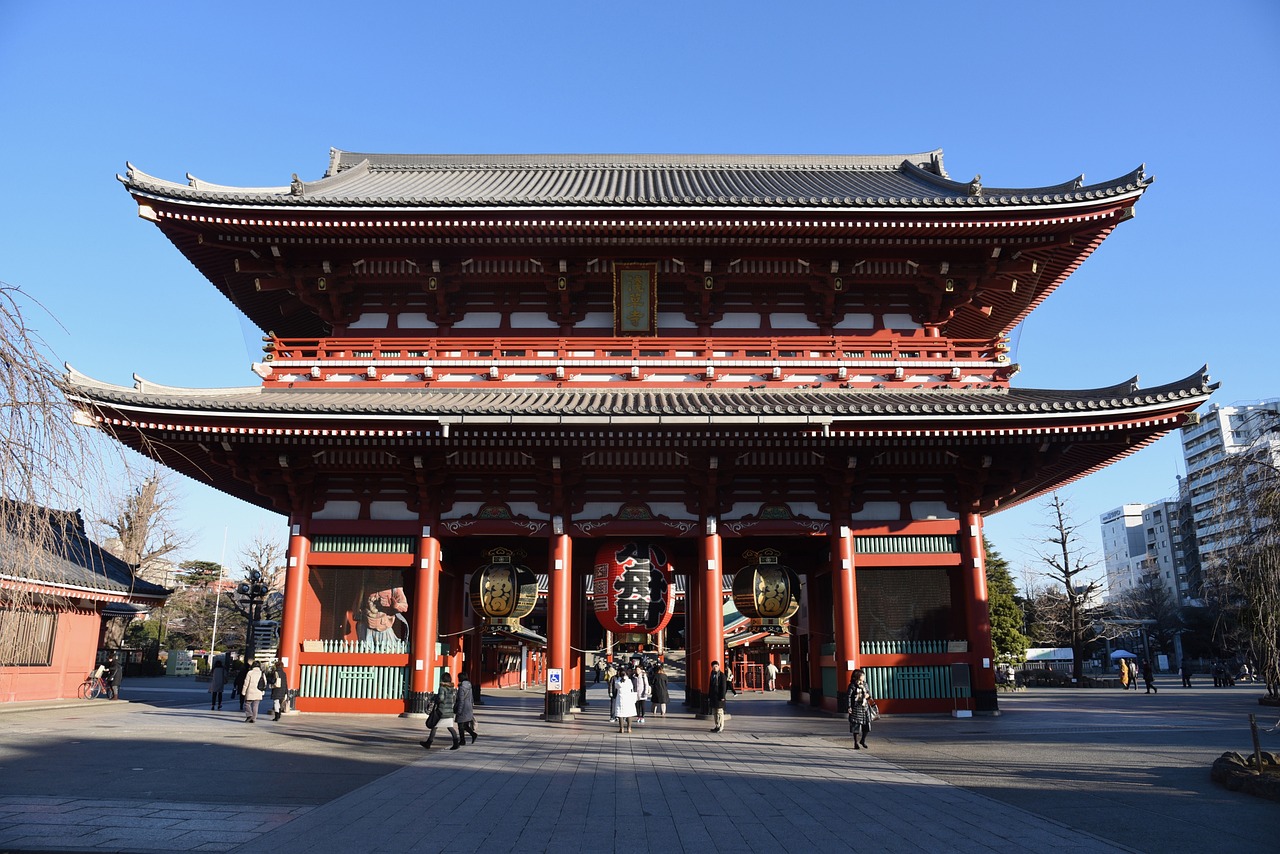
Your visit begins at Kaminarimon, the main gate, guarded by Fujin, the god of wind, and Raijin, the god of thunder. Bow lightly before you pass through. Beyond the gate is Nakamise-dori, one of Japan’s oldest shopping streets. It leads to Hozomon Gate, which is guarded by two Nio statues. On the back of the gate hang a pair of giant straw sandals, said to ward off evil.
Step 2: Purify Yourself at the Omizuya
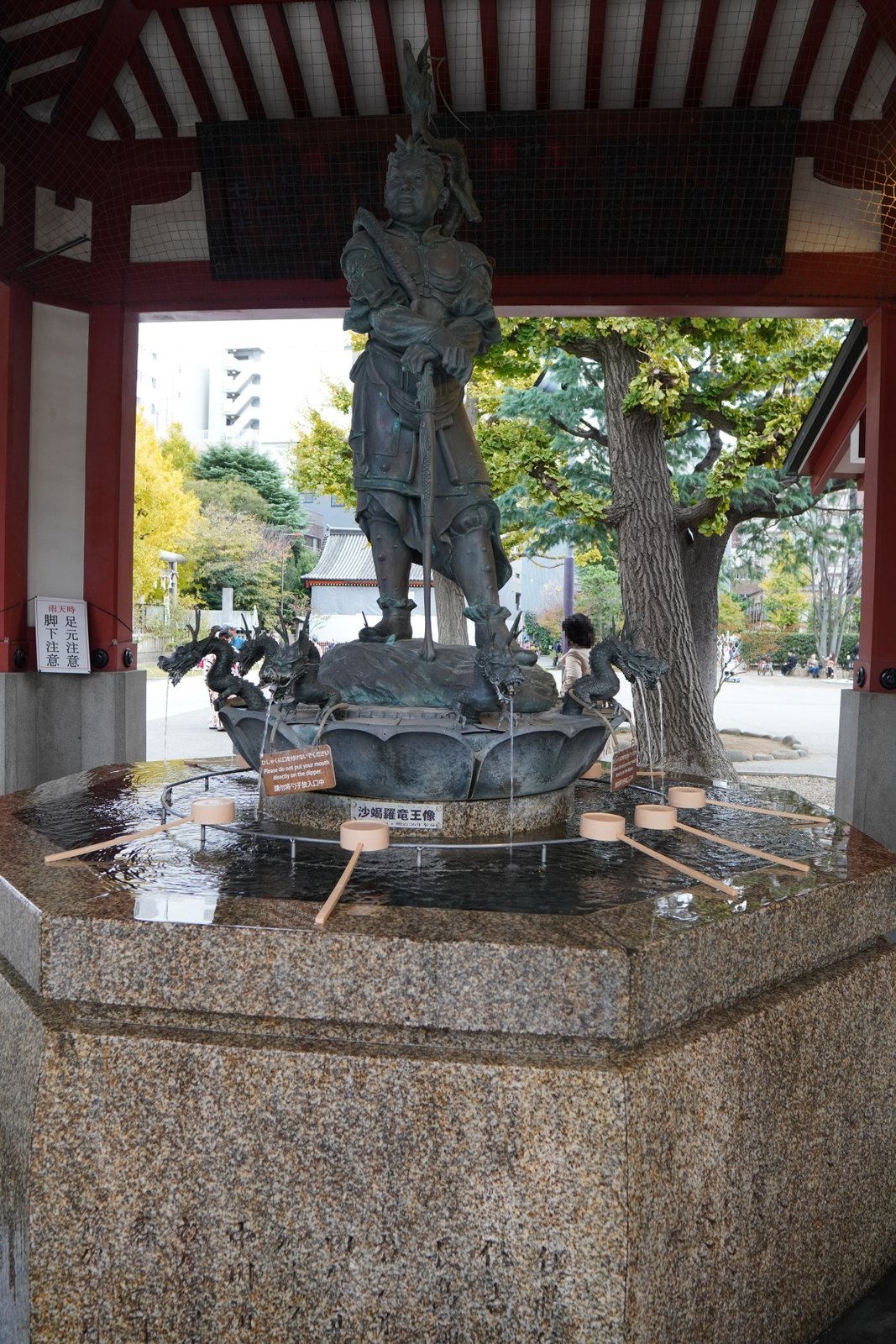
Before praying, cleanse your hands and mouth at the Omizuya, the water pavilion on the right as you face the Main Hall. The water flows from a statue of a dragon king who protects the Buddhist teachings.
- Hold the ladle in your right hand, scoop water, and wash your left hand.
- Move the ladle to your left hand and wash your right hand.
- Move the ladle back to your right hand, pour a little water into your left palm, and rinse your mouth. Never put your mouth on the ladle.
- Hold the ladle upright so the remaining water runs down the handle, then put it back.
Step 3: Bathe in Incense Smoke at the Jokoro
In front of the Main Hall stands the large incense burner, the Jokoro. Visitors light incense and waft the smoke over themselves. The smoke is believed to purify the body and mind and to help heal ailments, so people often guide it toward the part of the body they want to heal.
Step 4: Pray at the Main Hall
At the Main Hall, offer a coin, put your palms together and pray quietly. Senso-ji is a Buddhist temple, so do not clap your hands as you would at a Shinto shrine. The temple asks visitors to put their palms together and say “Namu Kanzeon Bosatsu.” Give thanks first, then share your wish. For more on the difference between temple and shrine etiquette, see our guide to hatsumode at Senso-ji.
Continue the Day with a Geisha Banquet
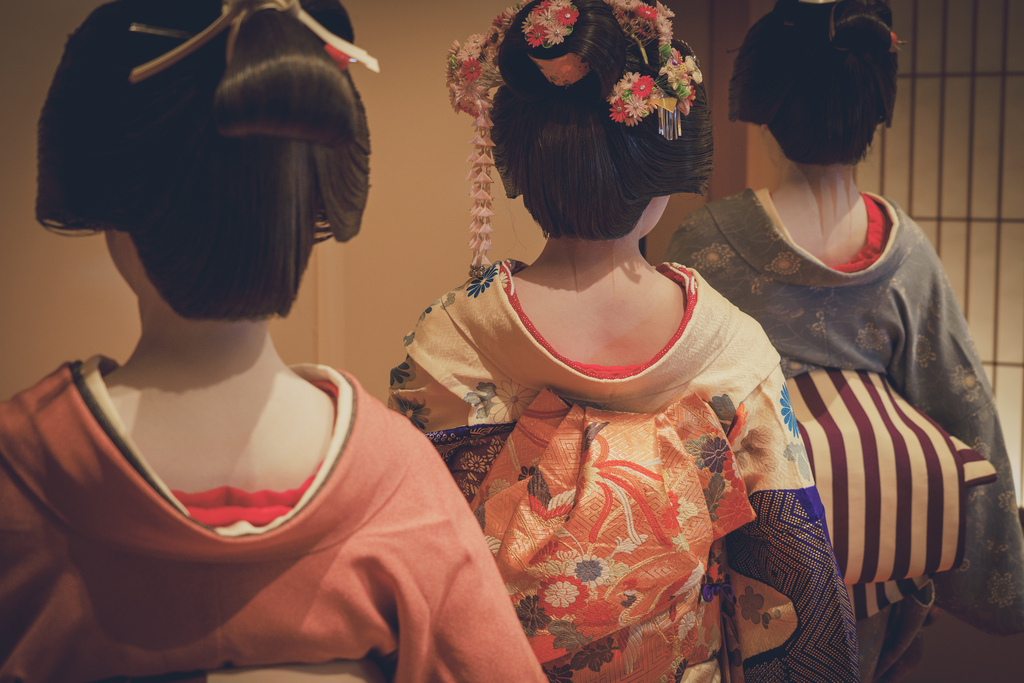
Senso-ji is our neighborhood temple. At our teahouse in Asakusa, a private ozashiki (a private gathering with geisha) brings geisha dance, shamisen and games to a tatami room of your own, with English interpretation — and a meal if you would like one. First-time and overseas guests are welcome without an introduction.
Senso-ji Omikuji: Why So Many Bad Fortunes?
Next to the charms, the other famous thing to take home from Senso-ji is omikuji, a paper fortune. Senso-ji uses a traditional set called “Kannon Hyakusen,” the 100 fortunes of Kannon, and about 30 percent of them are “kyo,” bad fortune. That is a higher share than many visitors expect.
To draw one, offer 100 yen, shake the omikuji box until a numbered stick comes out, and take the paper from the drawer with the same number.
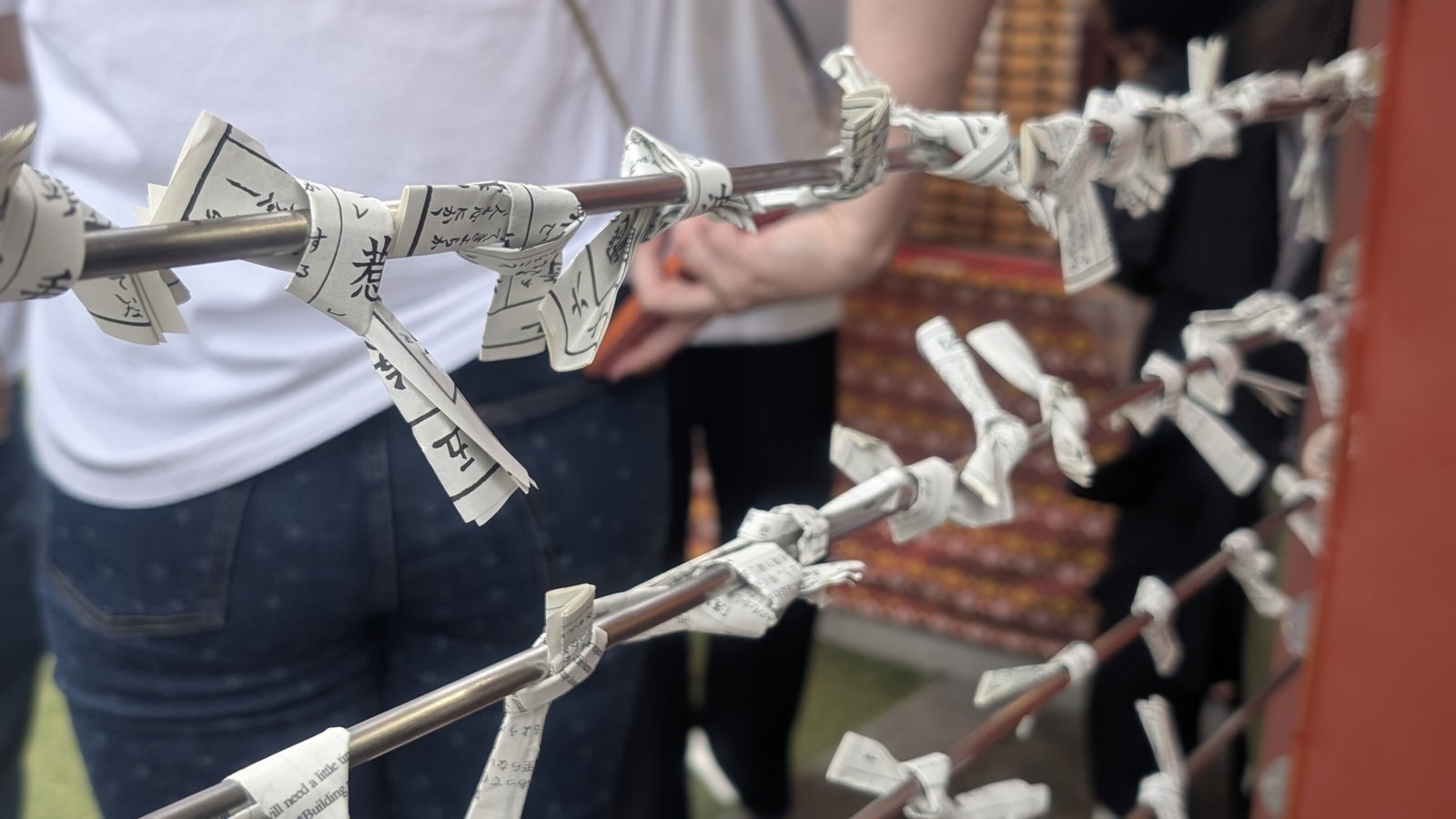
If you draw a good fortune, keep it with you like a charm. If you draw a bad fortune, do not worry. The temple asks you to tie it at the designated place in the grounds and pray for Kannon’s protection. Many people see a “kyo” as a message to take care, and as a sign that things can only get better from here.
The Story Behind the Blessings: The Kannon of Asakusa
Senso-ji’s history begins on March 18, 628. Two fishermen brothers, Hinokuma Hamanari and Takenari, pulled a small statue of Kannon from the Sumida River in their net. The village head, Haji no Nakatomo, recognized it as a sacred image, became a monk and turned his own home into a temple to enshrine it. This is considered the founding of Senso-ji.
The statue is a “zettai hibutsu,” an absolutely secret image that is never shown to anyone. Visitors cannot see it, yet people have come to pray to it for nearly 1,400 years. You can read more about the temple’s history on the official Senso-ji website.
FAQ
What is the most popular charm at Senso-ji?
There is no single official “most popular” charm. Because Senso-ji is known for granting all kinds of wishes, the Shingan Joju Mamori (for having your wish come true) is a safe choice if you are unsure. Otherwise, choose the charm that matches your wish.
How much are Senso-ji charms?
Most everyday charms start at around 500 yen. Special items cost more. Prices can change, so check at the counter.
What time can I buy charms at Senso-ji?
The Main Hall is open from 6:00 a.m. (6:30 a.m. from October to March) to 5:00 p.m. To be safe, visit the charm counters well before 5:00 p.m.
Can I buy a charm for someone else?
Yes. Omamori are common gifts in Japan, for example a Gakugyo Mamori for a student or an Anzan Mamori for an expectant mother.
Is it okay to have several charms at once?
Yes. Many people carry more than one charm for different wishes. Just treat each of them with care.
What should I do with my old charm?
Return it to the returns box next to the charm counter on the approach. It also accepts charms from other temples and shrines.
Summary
Senso-ji is a temple for every wish, so the best charm is the one that matches yours. Start with the list above, pray at the Main Hall first, and visit the smaller halls on the west side if you are looking for money, zodiac or women’s charms. Your omamori will be a small reminder of Asakusa long after you return home.
Round Off Your Senso-ji Visit in Asakusa
Miyakodori, founded in 1950, is the only machiai-chaya in Asakusa. Request a private ozashiki (a private gathering with geisha) and spend an evening in a tatami room with Asakusa geisha, with English interpretation throughout.


- Discovering Asakusa You Didn't Know | Hidden Gems! Authentic Japanese Culture and Craft Experiences
- Style Inspiration Guide: Japanese-Style Nail Designs That Pair Beautifully with Kimono for an Asakusa Day Out—Using Only 100‑Yen Shop Items
Yoshiwara: History, Location & Legacy of Japan’s Famous District
Popular Spots to Go Out in Kimono! Introducing Areas like Asakusa, Kamakura, Kyoto, and More
【2025 Edition】Recommended for Foodie Walks! Autumn Asakusa Gourmet & Sweets
Tokyo Tourist Guide: A Geisha Teahouse’s View of the City We Call Home
Asakusa to Ueno: How to Get There, and How to Spend One Day Between the Two
Asakusa Observation Deck: The Free Terrace Above Kaminarimon
Comment ( 0 )
Trackbacks are closed.
No comments yet.