



Hatsumode Etiquette Guide: How to Pray at Senso-ji (2027)
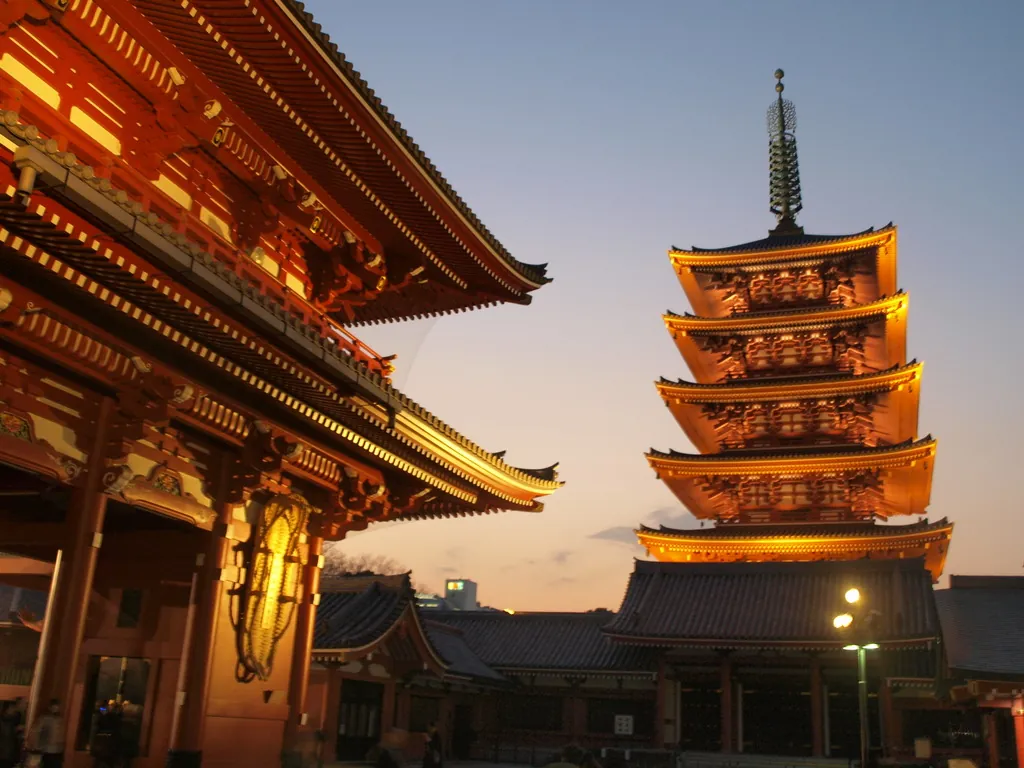
We are Miyakodori, a machiai-chaya (geisha teahouse) that has welcomed guests in Asakusa since 1950. Every year in the first days of January, the streets around us fill with people heading to Senso-ji for Hatsumode, the first temple or shrine visit of the New Year.
Japan has two types of religious buildings, temples and shrines, with differing ways to pray. One question comes up often: should you clap your hands at Senso-ji? The short answer is no. Senso-ji is a Buddhist temple, not a Shinto shrine, and the way you pray is different. To make things a little more confusing, Asakusa Shrine stands on the same grounds, just to the right of the Main Hall, and there you do clap before you pray.
This guide explains the difference between temple and shrine etiquette, walks you through each step of a visit to Senso-ji and Asakusa Shrine, and covers the New Year customs, opening hours and crowd patterns you should know before you go.
The quick answer
At Senso-ji (temple): make your offering quietly, press your hands together at chest level (gassho), pray silently, and bow. Do not clap.
At Asakusa Shrine (shrine): bow twice, clap twice, pray, and bow once more (Nirei Nihakushu Ichirei).
1. What Is Hatsumode?
Hatsumode (初詣) is the first visit of the year to a temple or shrine. People go to thank the gods and buddhas for the past year and to pray for health, safety and good luck in the year ahead. It is one of the most widely practised New Year traditions in Japan, and families, couples and groups of friends all take part.
Most people visit during the first three days of January, called sanganichi. Some go right after midnight on New Year’s Eve, a style of visit known as ninen-mairi, the “two-year visit,” because it begins in the old year and ends in the new one. In the Tokyo area, a visit up to January 7, the end of the New Year decorations period (matsu no uchi), is also commonly considered Hatsumode.
Senso-ji is one of the most popular Hatsumode destinations in the whole country, and its New Year visitor numbers rank among the highest in Japan. Alongside the prayers, you will see people drawing omikuji fortune slips, buying new omamori charms and snacking at food stalls. We cover these customs in section 6.
2. Senso-ji is a Temple, Not a Shrine
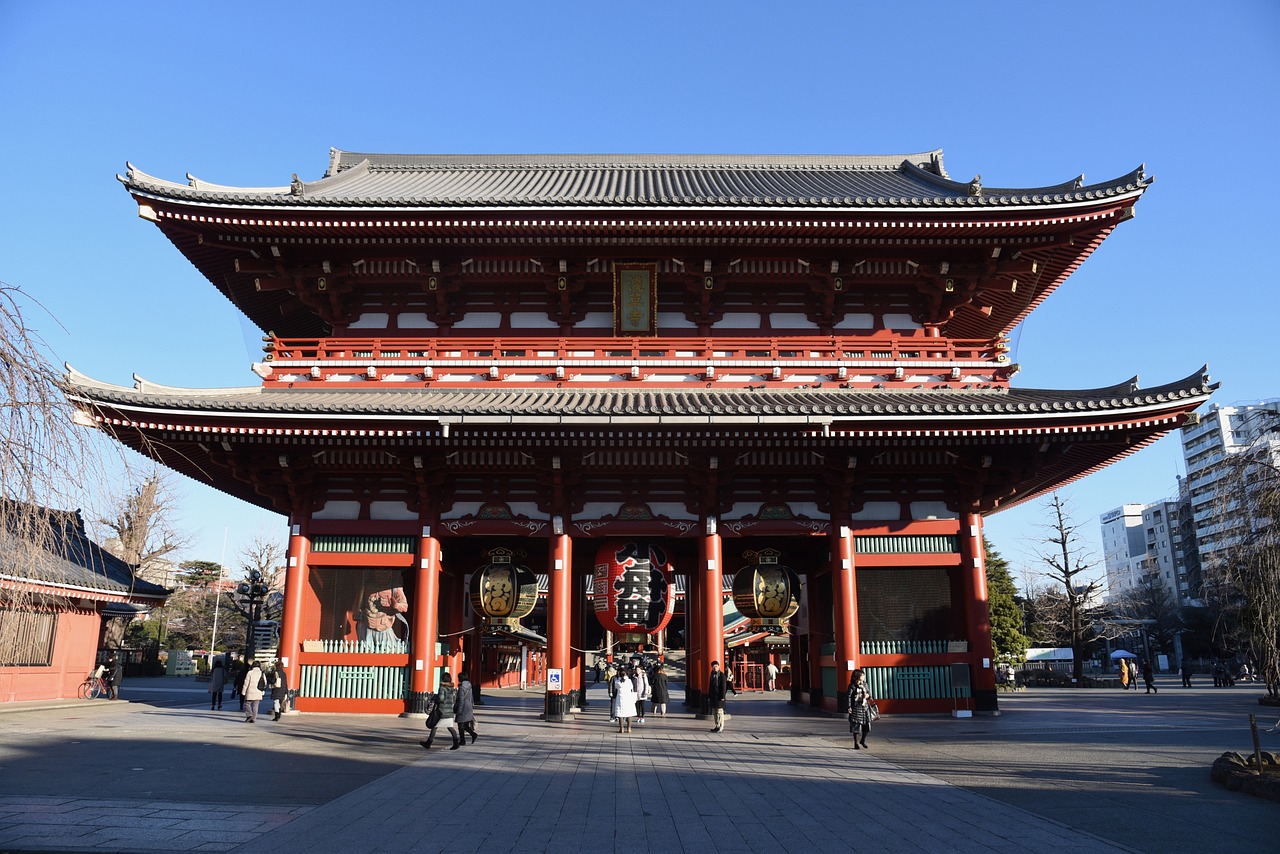
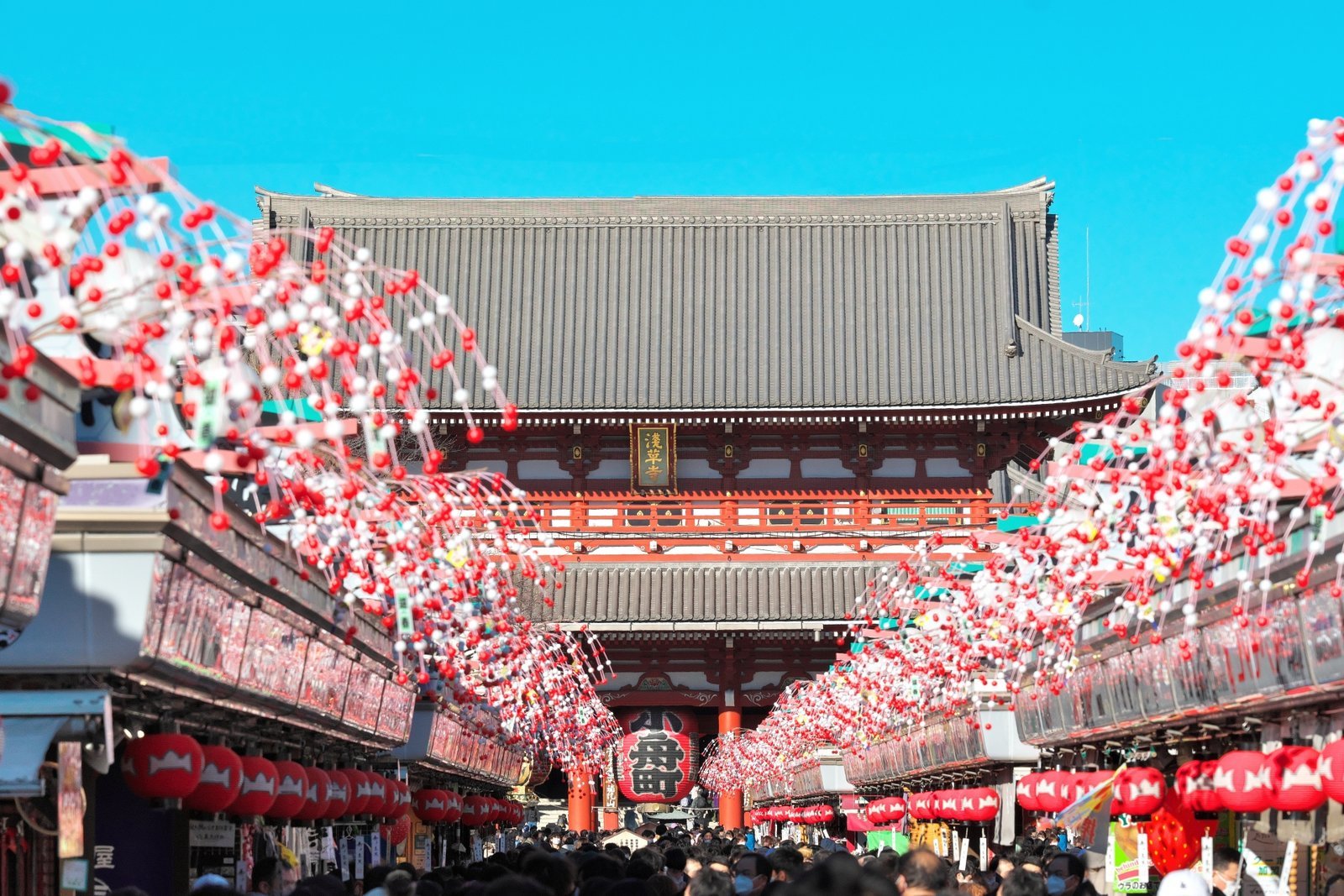
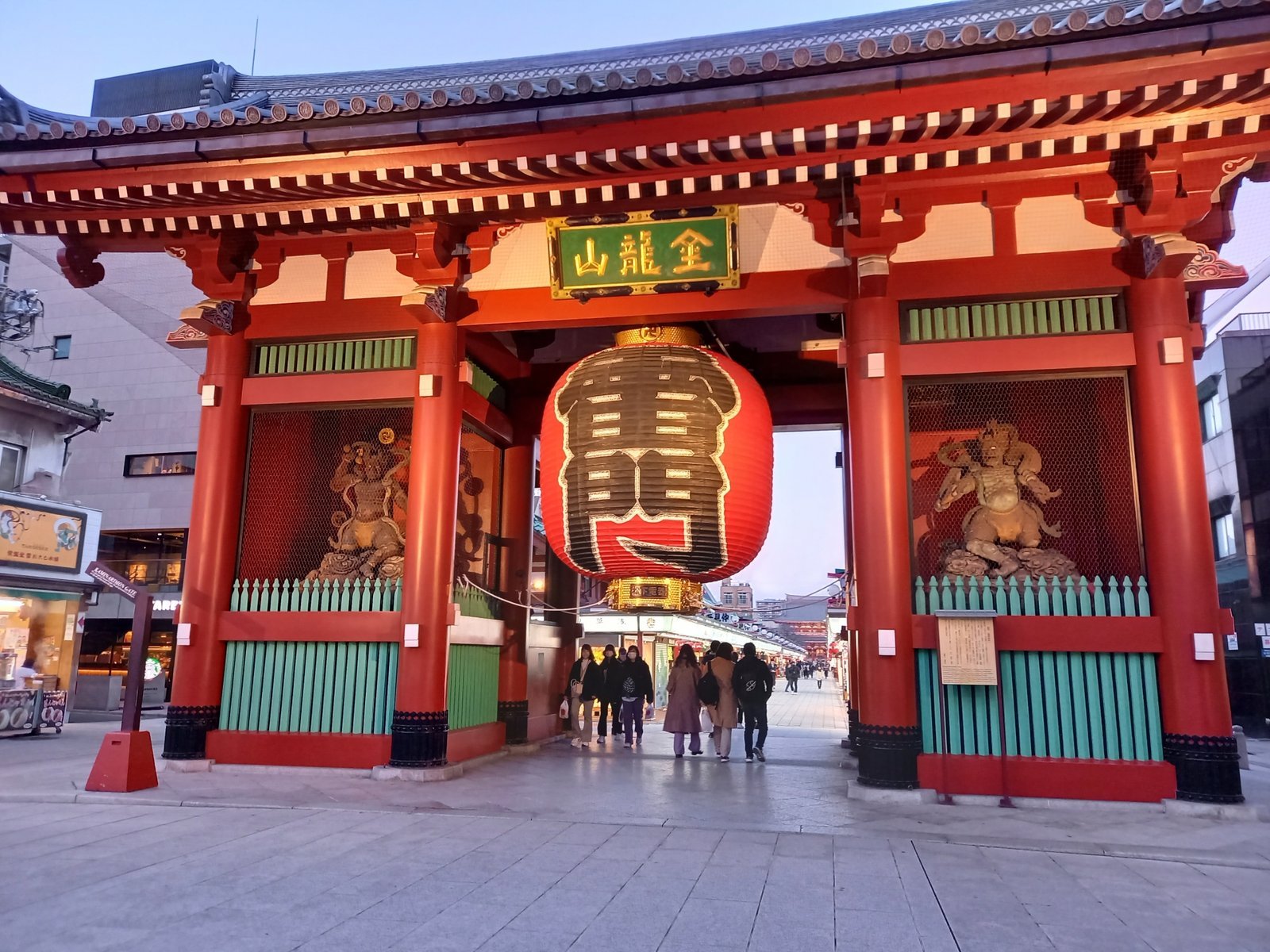
As you pass under the giant red lantern of Kaminarimon, it is natural to wonder whether you are entering a temple or a shrine. To pray correctly, the first thing to know is that Senso-ji is a temple.
2.1 The Formal Name and Sect of Senso-ji
Senso-ji’s formal name is Kinryuzan Senso-ji (金龍山浅草寺). It is the head temple of the Sho-Kannon sect, and its principal image is the Bodhisattva Kannon (Sho-Kannon Bosatsu). The statue itself is a hibutsu, a hidden Buddha that is not shown to the public. Founded, according to temple tradition, in 628, Senso-ji is Tokyo’s oldest temple. You can find more detailed information on the official Senso-ji website.
2.2 How to Tell a Temple from a Shrine by its Name
In most cases, the name tells you what kind of place you are visiting.
| Category | Typical name endings | Examples |
|---|---|---|
| Temple (otera) | -ji (寺), -in (院), -an (庵) | Senso-ji, Kiyomizu-dera, Byodo-in |
| Shrine (jinja) | -jinja (神社), -jingu (神宮), -taisha (大社) | Asakusa Jinja, Meiji Jingu, Izumo Taisha |
2.3 Why is There a Torii Gate at Senso-ji?
“If it is a temple, why is there a torii?” is one of the most common questions visitors ask. The torii belongs to Asakusa Shrine, which stands within the Senso-ji grounds, not to the temple itself. A temple and a shrine sharing the same precinct is a remnant of shinbutsu-shugo, the centuries-long blending of Shinto and Buddhism in Japan. We explain the relationship in section 5.
3. Shrine vs Temple Etiquette: The Key Differences
Both temples and shrines are sacred places, but they are built on different beliefs, and that is why the way you pray differs.
3.1 Kami vs Hotoke: Who You Are Praying To
Shrines belong to Shinto, Japan’s indigenous religion, and enshrine kami: gods of nature, local guardian deities and even deified historical figures. Temples belong to Buddhism, which came to Japan from the Asian mainland, and enshrine hotoke: buddhas and bodhisattvas who have attained, or guide others toward, enlightenment.
3.2 Torii vs Sanmon: How the Entrance Tells You Where You Are
A shrine entrance is marked by a torii, which divides the sacred space where the kami dwell from the everyday world. A temple entrance is a sanmon, the formal gateway into the Buddhist precinct. At Senso-ji, both Kaminarimon and Hozomon are temple gates.
| Facility | Entrance | Role |
|---|---|---|
| Shrine | Torii gate | Boundary of the sacred place |
| Temple | Sanmon gate | Entrance to the temple precinct |
3.3 Etiquette at a Glance
| Item | Shrine (jinja) | Temple (otera) |
|---|---|---|
| Basic sequence | Two bows, two claps, one bow | Quiet gassho and a bow |
| Clapping | Yes (kashiwade) | No |
| Hands | Right hand slid slightly down while clapping, then aligned | Palms pressed together silently at chest level |
| Words | Silent prayer | Silent prayer; at Senso-ji you may recite “Namu Kanzeon Bosatsu” |
3.4 How to Pray at a Shrine: Two Bows, Two Claps, One Bow
- Offering: Place your coin gently in the offering box rather than tossing it.
- Bell: If there is a bell, shake the rope to ring it. This announces your presence to the kami.
- Two bows: Stand straight and bow deeply twice, bending at the waist to about 90 degrees.
- Two claps: Bring your hands together at chest height, slide your right hand slightly down, and clap twice.
- Prayer: Realign your hands, press them together and offer your thanks or wishes silently.
- One bow: Finish with one more deep bow.
3.5 How to Pray at a Temple: Quiet Gassho
- Bow: Step forward and bow lightly toward the principal image.
- Offering: At a temple the offering is a form of fuse, giving to the Buddha. Place it in the box quietly.
- Gong: Some temples have a gong (waniguchi) hanging above the offering box. If there is one, ring it once by swinging the rope.
- Gassho: Press your palms together at chest level, fingers straight, and pray silently. Do not clap.
- Bow: Lower your hands and bow once more before stepping back.
4. How to Pray at Senso-ji, Step by Step
Here is the route most visitors follow, from the main gate to the Main Hall, and what to do at each stop.
4.1 From Kaminarimon to Hozomon
Your visit begins at Kaminarimon, formally Furaijinmon, where statues of the gods of wind and thunder guard the entrance. A light bow before you pass through is a respectful way to begin.
Beyond the gate runs Nakamise-dori, one of Japan’s oldest shopping streets, leading straight toward the Main Hall. During the New Year it is packed and becomes one-way (see section 7), so this is not the moment to stop for long. At the end of Nakamise you reach Hozomon, the second gate. Bow once more here before entering the inner precinct.
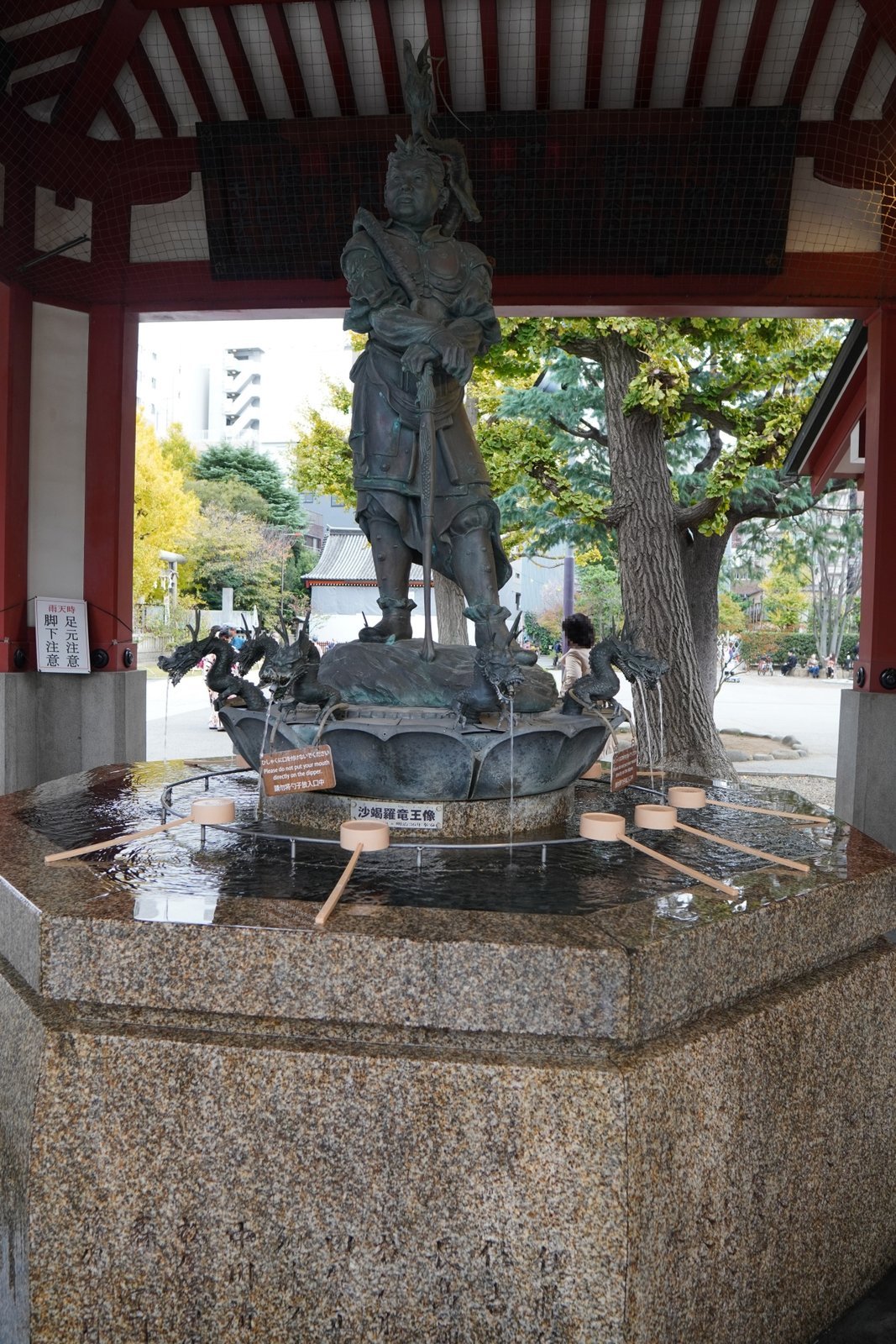
4.2 Purifying Your Hands and Mouth at the Omizuya
Before praying, cleanse your hands and mouth at the omizuya (water pavilion), on the right side after Hozomon. Senso-ji describes the procedure as follows, using a single scoop of water for every step:
- Hold the ladle in your right hand, scoop water and rinse your left hand.
- Switch the ladle to your left hand and rinse your right hand.
- Switch back to your right hand, pour a little water into your cupped left hand and rinse your mouth. Never put the ladle to your lips.
- Tilt the ladle upright so the remaining water runs down the handle, then return it to its place.
4.3 Wafting Incense Smoke at the Jokoro
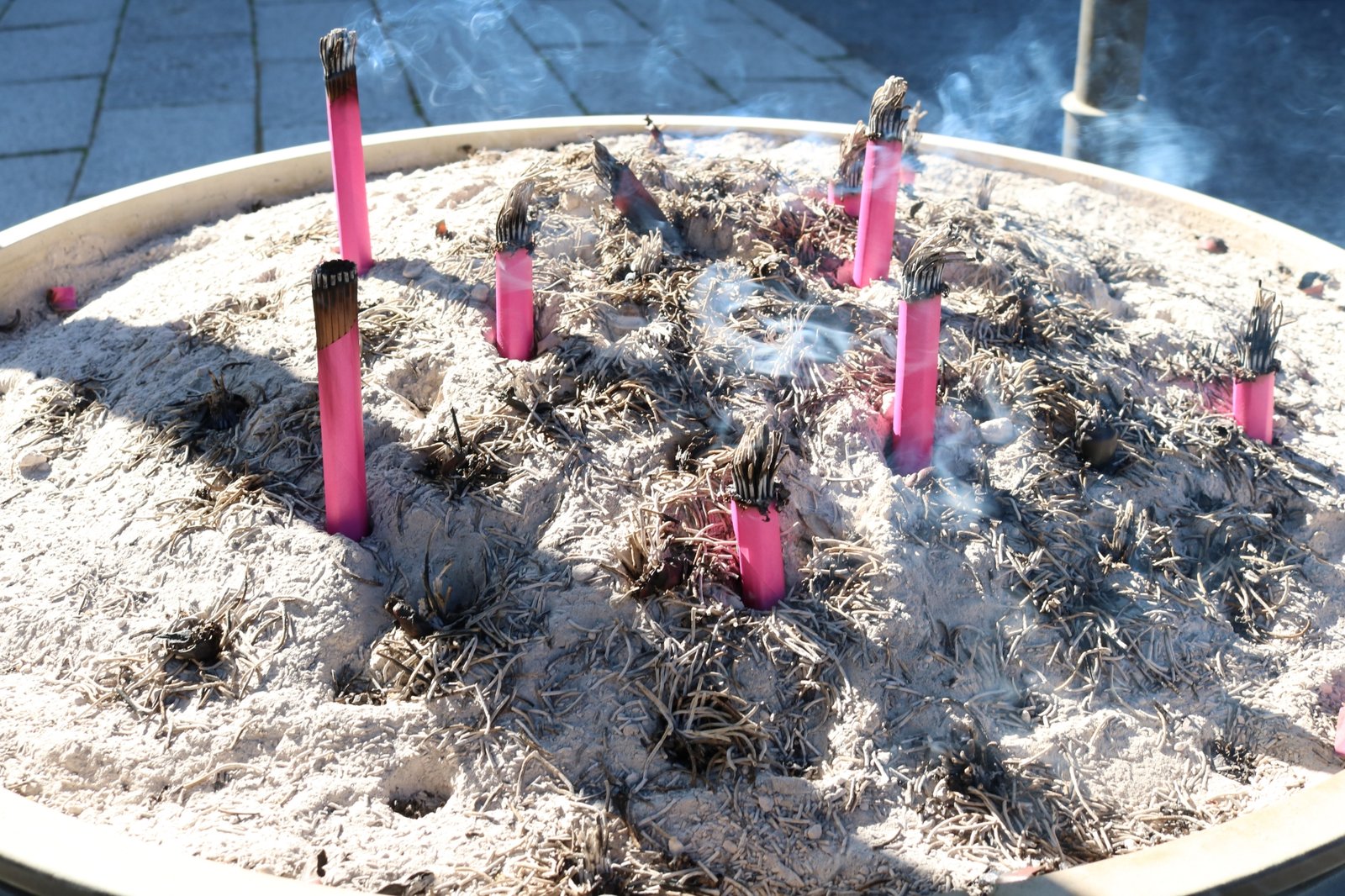
In front of the Main Hall stands the large incense burner, the jokoro. It is said that the smoke drives away illness and bad luck, so you will see people wafting it toward their heads, shoulders or any part of the body they want to heal. Incense is sold at a counter beside the burner. Light your bundle, place it in the burner and gently draw the smoke toward you. On crowded days, take care not to hit people around you with your hands or sleeves.
4.4 Praying at the Main Hall
Climb the steps to the Main Hall, where the Bodhisattva Kannon is enshrined. First, bow lightly and place your offering in the large offering box quietly. Then press your hands together at chest level and pray silently. Do not clap. Senso-ji itself suggests reciting “Namu Kanzeon Bosatsu” (I take refuge in Kannon Bodhisattva) as you pray. It is fine to say it quietly or only in your mind. Finish with a bow and step aside for the people behind you.
5. Asakusa Shrine: Switch to Shrine Etiquette
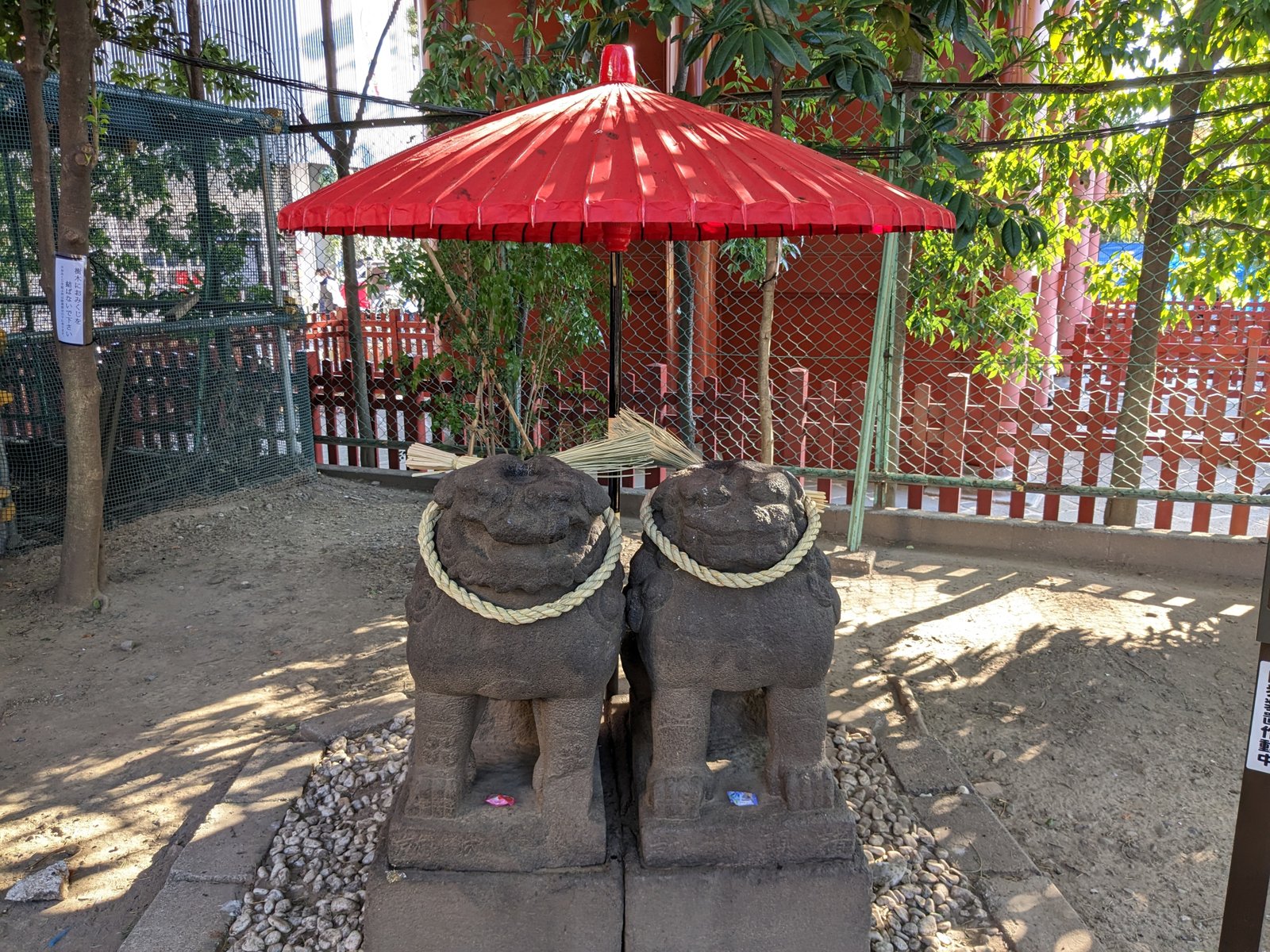
Right next to the Main Hall, on its east side, stands Asakusa Shrine with its own torii. When you visit Senso-ji, it is well worth stopping here too and experiencing the difference for yourself.
5.1 The Relationship Between Senso-ji and Asakusa Shrine
For centuries, Senso-ji and Asakusa Shrine were revered together under shinbutsu-shugo. After the Meiji government’s separation of Shinto and Buddhism in 1868, they became separate institutions, yet they still stand side by side.
Asakusa Shrine enshrines the three figures linked to the founding of Senso-ji: the fisherman brothers Hinokuma Hamanari and Takenari, who found the Kannon statue in their net in the Sumida River, and Haji no Matsuchi, who enshrined it. Because of these three figures, the shrine is affectionately called Sanja-sama, and the famous Sanja Matsuri is its annual festival.
5.2 At Asakusa Shrine, Clap Your Hands
Although it sits within the Senso-ji precinct, Asakusa Shrine is a Shinto shrine, so here you follow Nirei Nihakushu Ichirei: two bows, two claps and one bow. After the silent gassho at Senso-ji, remember to switch.
| Item | Senso-ji (temple) | Asakusa Shrine (shrine) |
|---|---|---|
| Entrance | Hozomon (sanmon) | Torii gate |
| Purification | Omizuya | Temizuya (same procedure) |
| Prayer | Quiet gassho and a bow, no clapping | Two bows, two claps, one bow |
You can confirm details on the official Asakusa Shrine website.
After the Temple, an Evening in Asakusa
Our teahouse sits on the quiet north side of Senso-ji. A private ozashiki (a private gathering with geisha) brings Asakusa geisha — their dance and shamisen, and the old parlor games — to a meal arranged for your group alone, a calm way to continue a day in Asakusa. First-time and overseas guests welcome.
6. Omikuji, Omamori and Other New Year Customs at Senso-ji
Praying is only part of Hatsumode. These are the customs you will see all around you at Senso-ji in early January.
6.1 Omikuji: Why Senso-ji is Famous for “Bad Luck”
Omikuji are paper fortune slips. At Senso-ji, you put a 100-yen coin in the box, shake the hexagonal wooden container until a numbered stick slides out, and take the slip from the drawer with the same number.
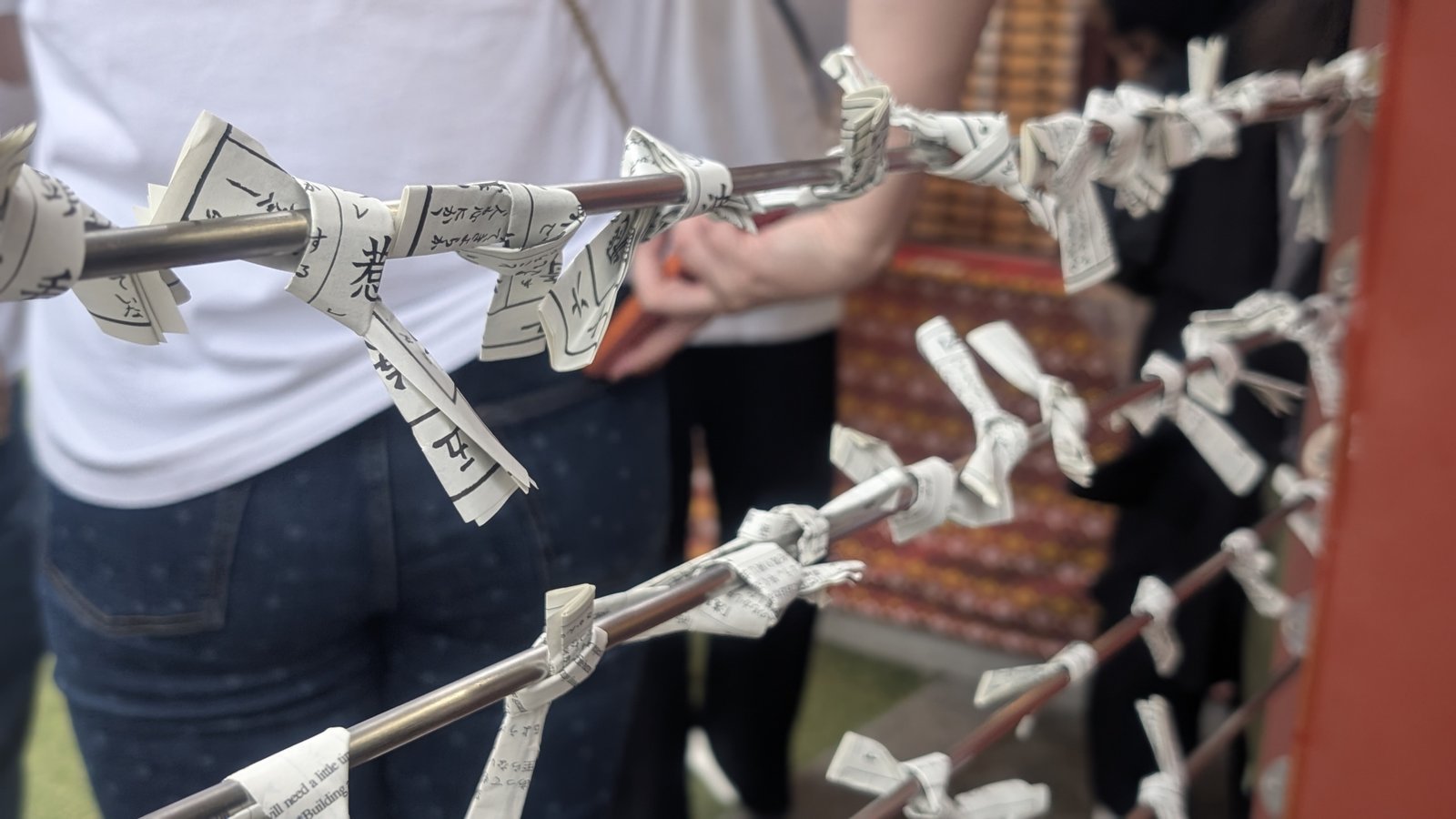
Senso-ji follows the traditional Kannon Hyakusen system of 100 fortunes, about 30 percent of which are kyo (bad luck). That is a higher share than at many other places, and it has made Senso-ji’s omikuji something of a talking point. The temple’s message is that a bad fortune is not final: your conduct can turn it around. If you draw kyo, tie the slip to the designated rack and leave the bad luck behind. If your fortune is good, you can keep it with you.
6.2 Omamori and Returning Last Year’s Charms
Omamori are small protective charms for health, safety, study, love and more. Many people buy a new one at Hatsumode and return the previous year’s charm to the temple or shrine where they received it, to be burned with gratitude. Senso-ji and Asakusa Shrine each offer their own charms, so return each one to its place of origin.
6.3 Joya no Kane: The Midnight Bell at Bentenyama
At midnight on New Year’s Eve, the bell at Bentenyama, a small hill near Hozomon, rings to open the year. The bell is rung 108 times by the Hyakuhachi-kai, a group of 108 people chosen in advance, including local residents and figures from kabuki, rakugo and manga linked to Asakusa. Visitors cannot ring it themselves, but hearing it is a memorable way to start the year.
6.4 Food Stalls
Around New Year, food stalls line parts of the grounds, selling favourites such as takoyaki, okonomiyaki and chocolate-covered bananas. Please step out of the flow of worshippers before you eat.
7. Hatsumode at Senso-ji 2027: Hours and Crowds
Opening hours and crowd controls are set every year. The information below is based on recent New Year periods. Please check the latest announcement from Senso-ji before your visit.
7.1 Main Hall Opening Hours
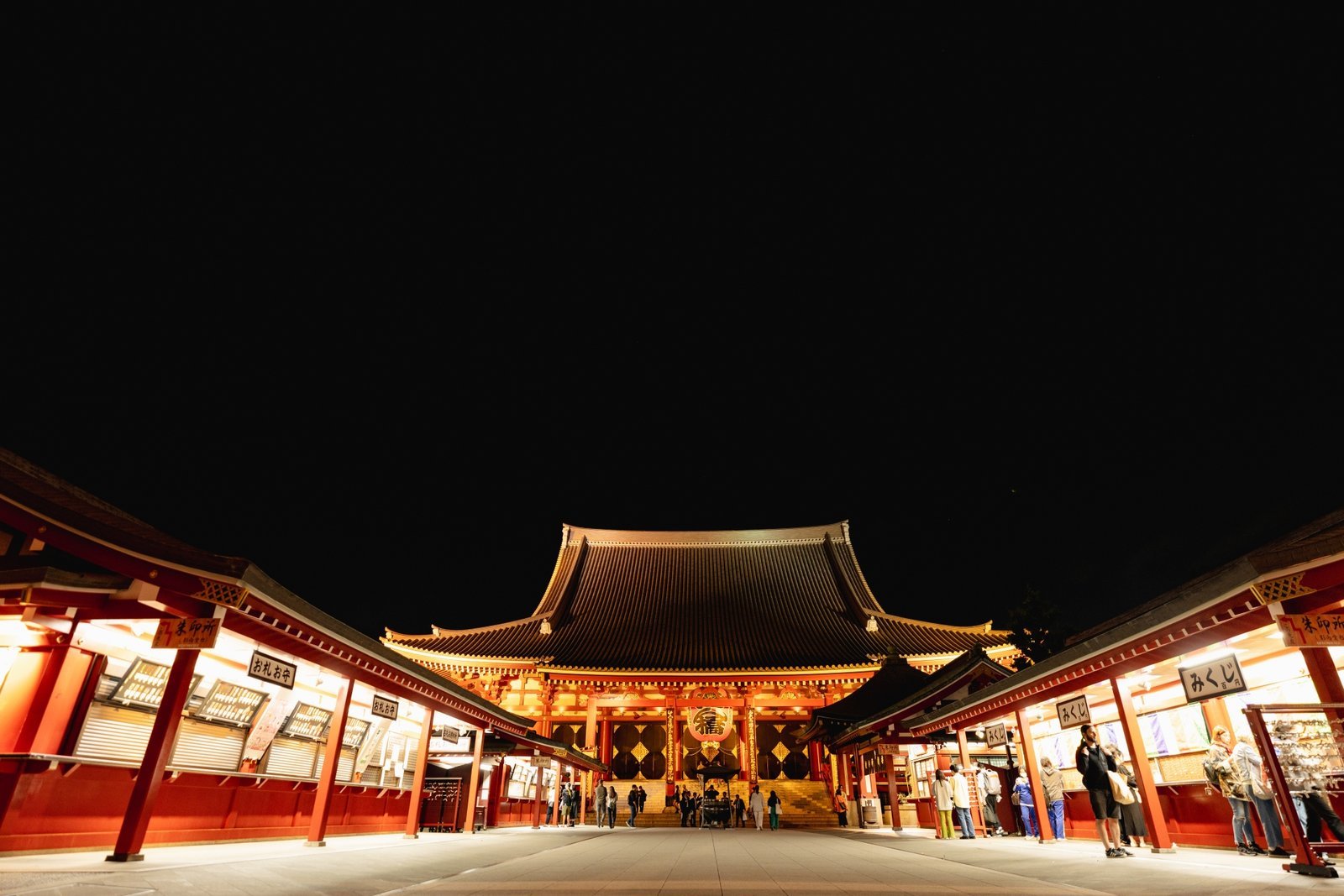
Normally, the Main Hall is open from 6:00 to 17:00 (from 6:30 between October and March), while the grounds themselves are open at all times. Over the New Year, the Main Hall opens at midnight on January 1 and stays open later than usual during the first days of the year. Special New Year prayer services are held from January 1 to 7.
7.2 When it is Busiest, and When it is Quieter
- Busiest: from late on December 31 into the early hours of January 1, and roughly 10:00 to 17:00 on January 1 to 3. Queues of an hour or more are common at peak times.
- Quieter: early mornings, especially from opening until around 8:00 to 10:00 on January 2 and 3.
- Much quieter: after January 4. If you mainly want to experience the atmosphere and pray calmly, a visit in the first week, outside the first three days, is a good compromise.
7.3 Crowd Controls and Access
From the night of December 31 to January 3, traffic restrictions apply around Senso-ji, and designated worship routes are in place. At peak times, Nakamise-dori becomes one-way, and you must join the queue from Kaminarimon. You cannot cut in from the side streets. Follow the staff’s instructions.
The closest station is Asakusa Station, served by the Tokyo Metro Ginza Line, the Toei Asakusa Line and the Tobu Skytree Line, and the Tsukuba Express has its own Asakusa Station a short walk west of the temple.
7.4 Practical Tips
- Bring coins for the offering box, omikuji and incense.
- Dress warmly. Waiting outdoors on a January night is colder than you expect.
- Keep your belongings secure in the crowd, and agree on a meeting point if you are in a group.
- Photography of the grounds is generally fine, but avoid blocking the queue or photographing people while they pray.
For more ideas on spending a winter day in the area, see our Complete Guide to Winter Asakusa Sightseeing.
8. Frequently Asked Questions
Do you clap at Senso-ji?
No. Senso-ji is a Buddhist temple, so you press your hands together silently (gassho) and bow. Clapping is for Shinto shrines, such as Asakusa Shrine next door.
Can non-Buddhists and foreign visitors pray at Senso-ji?
Yes. Senso-ji welcomes visitors of any background. Following the basic etiquette respectfully is all that is expected.
How much should I offer?
There is no fixed amount. Any coin is fine. Some Japanese people choose a 5-yen coin because “go-en” sounds like the word for a good connection.
What should I do if I draw a bad fortune?
Tie it to the omikuji rack at Senso-ji and leave the bad luck behind. The temple teaches that your actions can change your fortune.
Is Hatsumode only on January 1?
No. Most people go during January 1 to 3, and in the Tokyo area visits up to January 7 are also commonly considered Hatsumode.
What is the best time for Hatsumode at Senso-ji?
Early morning on January 2 or 3, or any day after January 4, if you want to avoid the longest queues. Midnight on January 1 is the most atmospheric, but also one of the most crowded times.
9. Conclusion
Senso-ji is a Buddhist temple dedicated to the Bodhisattva Kannon, so the correct way to pray there is a quiet gassho without clapping. Asakusa Shrine, right beside the Main Hall, is a Shinto shrine, where you bow twice, clap twice and bow once. Knowing this one difference lets you take part in both, and experience two faces of Japanese faith in a single visit.
Add an omikuji, a new omamori and a warm snack from the stalls, and plan your timing around the crowds, and your first visit of 2027 will be one to remember. To explore the rest of the neighbourhood before or after your visit, see our Asakusa Tourist Guide.
From all of us at Miyakodori, we wish you a peaceful and happy New Year in Asakusa.
Continue the Day in Asakusa
Miyakodori, founded in 1950, is the only machiai-chaya in Asakusa. A private ozashiki (a private gathering with geisha) here, with Asakusa geisha, is a quiet way to end a day of New Year visits. First-time and overseas guests are welcome without an introduction.


- Visiting Asakusa? Here Are the Best Places to Try Japanese Sake
- A Guide to Tokyo's Geisha Districts: Finding Authentic Experiences and Cultural Immersion
The Ultimate Guide to the Best Things to Do in Asakusa Tokyo Japan for Your 2026 Travel
Popular Spots to Go Out in Kimono! Introducing Areas like Asakusa, Kamakura, Kyoto, and More
Types of Geisha: Tachikata, Jikata, Hangyoku, Ippon, and Tokyo’s Male Geisha
Asakusa’s Recommended Events & Festivals in September
Welcome the New Year at Tokyo Tower: The Complete 2026 First Sunrise Guide (Official Information Included)
BestRestaurants in Asakusa for Dinner: A Complete Guide (2026 Edition)
Comment ( 0 )
Trackbacks are closed.
No comments yet.