



What Is Ozashiki Asobi? A Guide to Geisha Games, Etiquette, and the Real Experience in Asakusa, Tokyo
Ozashiki asobi refers to the traditional games, dances, music, and drinking play that geisha host for guests in the ozashiki, the private tatami parlor room of a traditional geisha house. Asobi means play, and the games — konpira fune fune, tora tora, and tosenkyo among them — are its warm, social heart. You can experience it in Asakusa, one of Tokyo’s six historic geisha districts, at Miyakodori, a machiai-chaya founded in 1950 in the Kannon-ura area behind Senso-ji, where first-time guests are welcome without an introduction.
There is a moment, just after the sliding door closes, when the room goes quiet and something old settles in around you. A shamisen is being tuned. A geisha in a silk kimono kneels and pours your first cup. You are not watching a stage show from a distance. You are inside it. This is ozashiki asobi, the traditional Japanese entertainment that unfolds in the private tatami room of a traditional geisha house, and it has been played more or less the same way for centuries. If you have read the phrase and wondered what actually happens in that room, this guide walks you through it, from the games and the etiquette to how you can sit down for a real evening of it yourself.
What Is Ozashiki Asobi?
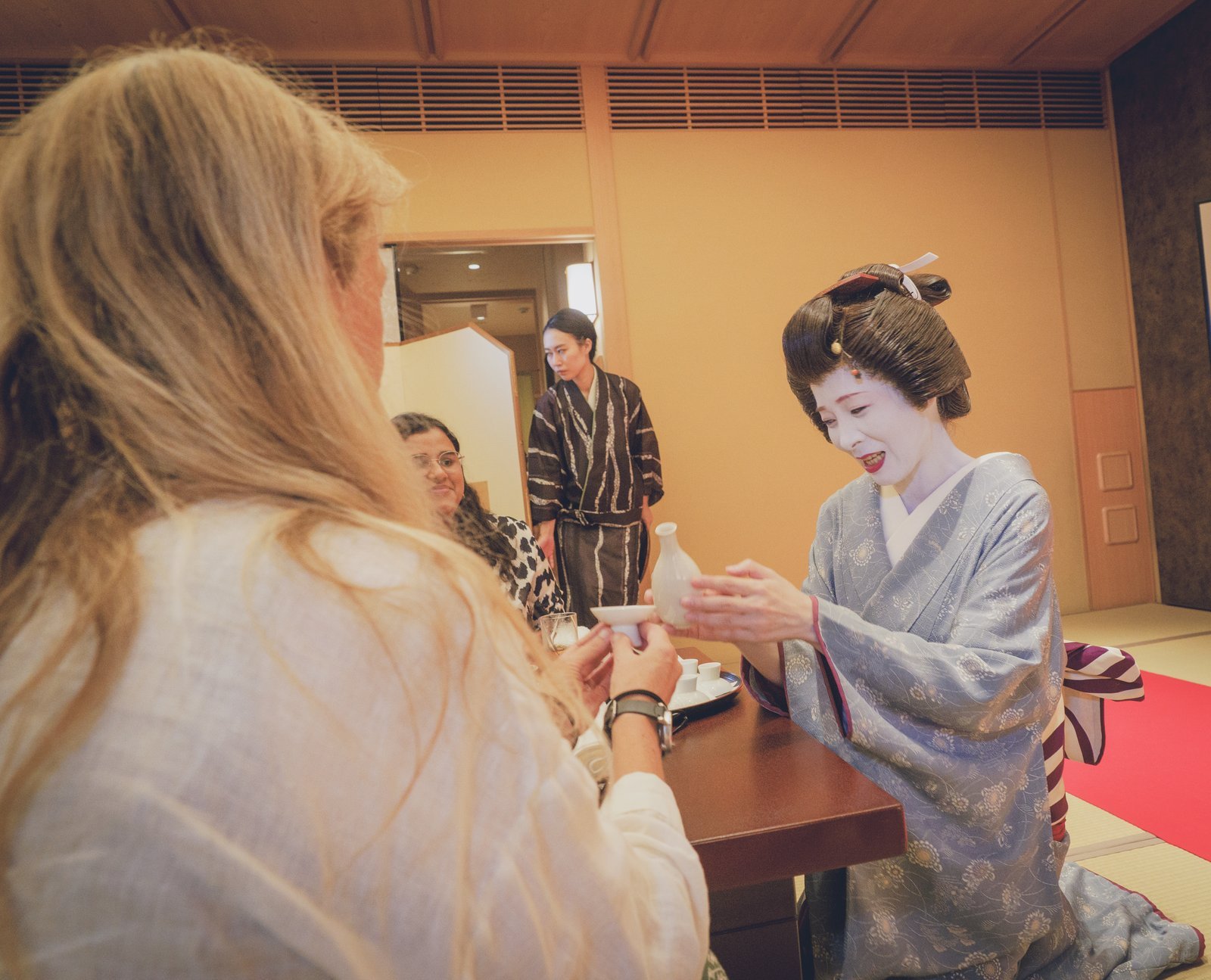
Ozashiki asobi literally breaks down into two ideas. The ozashiki is the tatami-matted parlor room where guests are received. The asobi means play, in the fullest sense of the word. Put them together and you have the traditional games, dances, music, and drinking play that geisha host for their guests in that room — most often the parlor games konpira fune fune, tora tora, and tosenkyo, alongside dance and live shamisen.
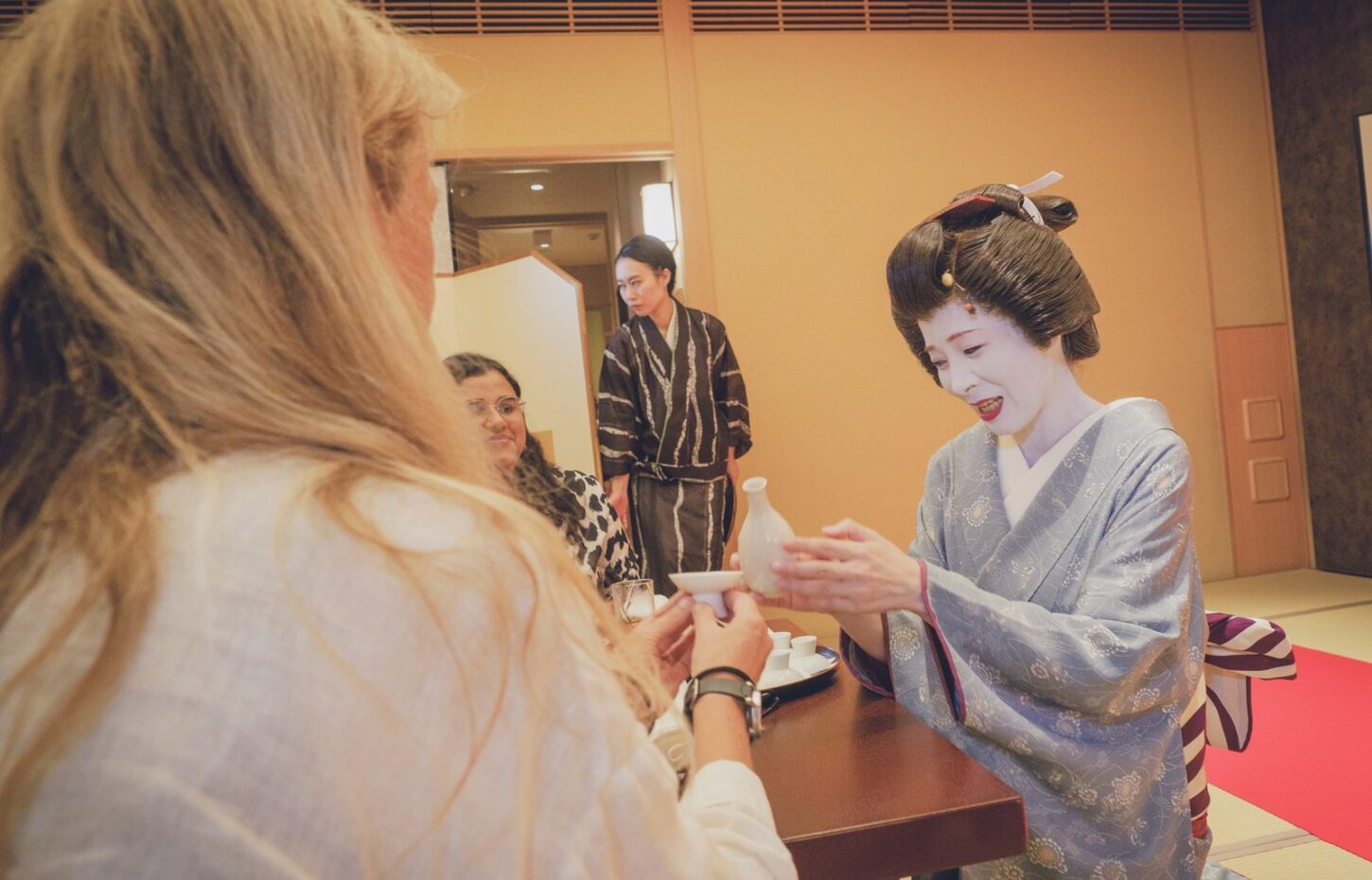
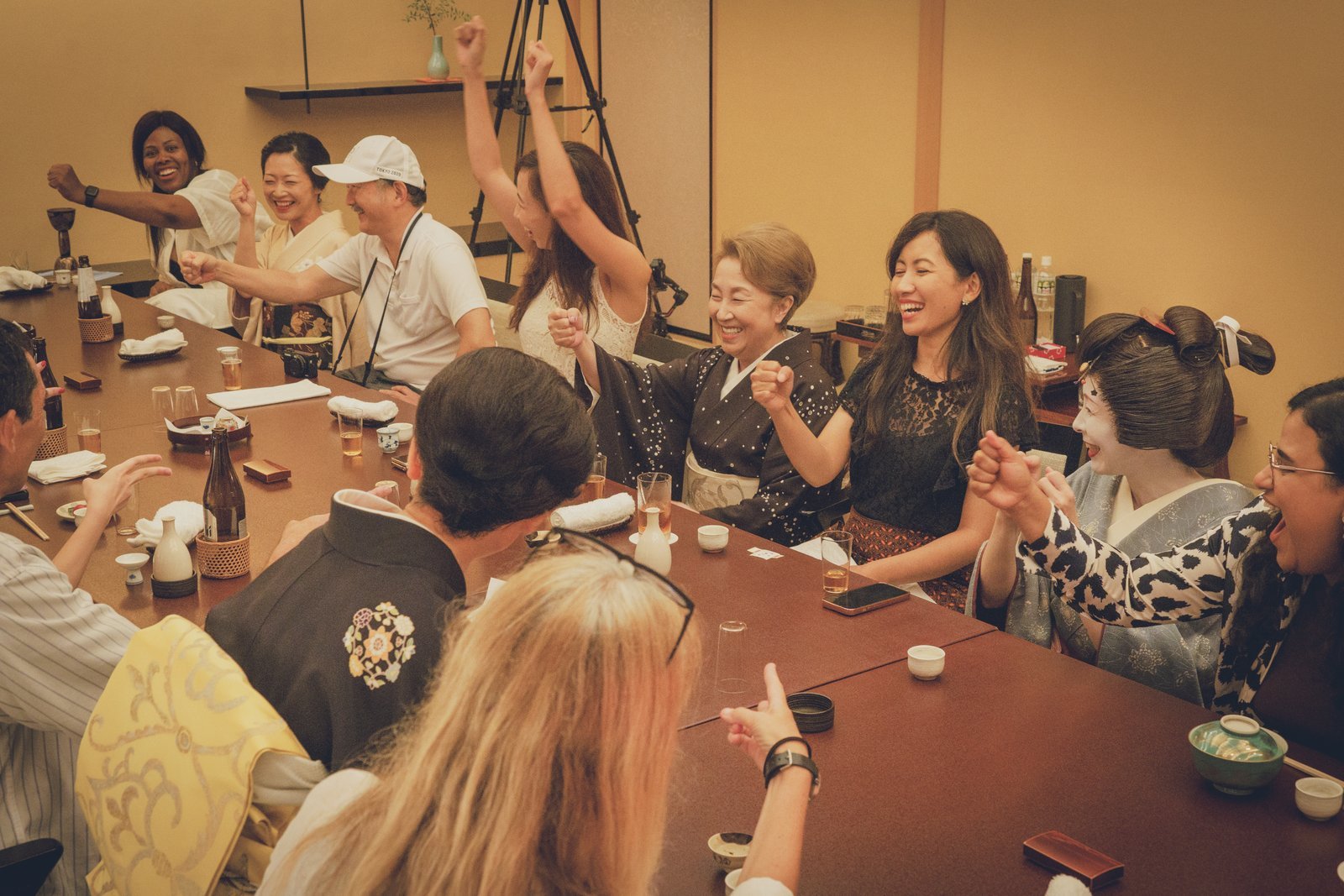
It helps to picture the setting first. You are in a tatami room, seated at a table on chairs or at a sunken kotatsu — no one kneels on the floor. The meal, often a seasonal kaiseki course, has been served. And then the geisha arrive and stay with you for the length of your booking. They are not there to perform once and leave. They pour drinks, they talk, they read the mood of the table, and they draw you into a rhythm of conversation and games that makes an hour vanish before you notice it has passed.
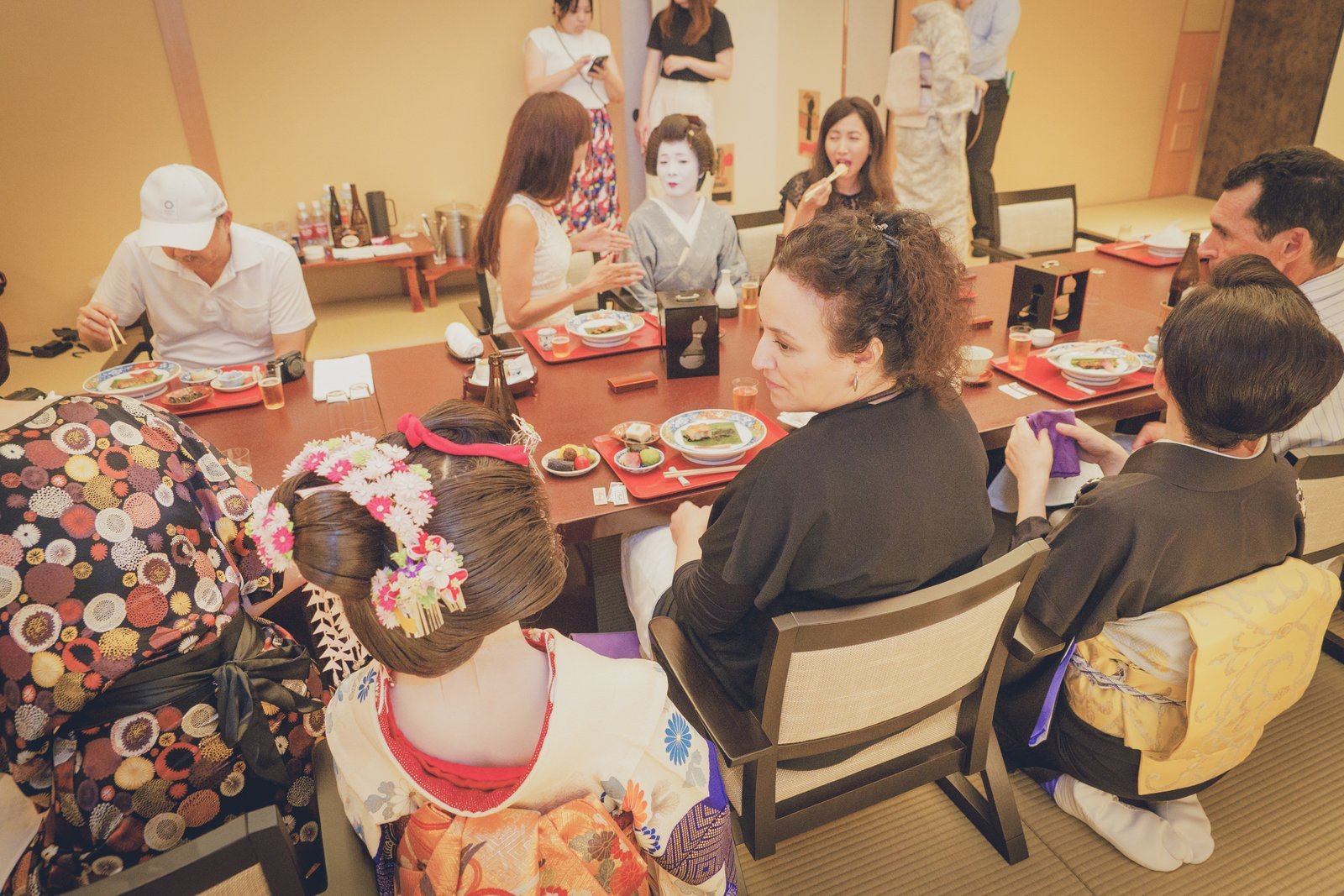
What surprises most first-time guests is how warm and unforced the whole thing feels. There is a common image of geisha entertainment as stiff, exclusive, and intimidating. The reality of a good ozashiki is closer to being welcomed into someone’s home by a host who happens to be a master of their craft. The games are simple to learn. The laughter is real. And underneath the fun, you are touching a living piece of Japanese culture that predates almost everything else you will do on your trip.
That word living matters. Ozashiki asobi is not a museum reconstruction. The people hosting you do this as their profession, night after night, and the traditions have been handed down through practice rather than preserved behind glass. When the okami of Miyakodori, our machiai-chaya in Asakusa, describes what a geisha is, she puts it plainly: not simply someone skilled at an art, but someone who genuinely loves the art and has made a life’s commitment to it, including the art of making guests happy. That commitment is what you feel in the room.
Who Are the Geisha? Understanding Geiko and Maiko
Before we get to the games, it is worth clearing up who is actually hosting you, because the terms — geisha in Tokyo, geiko and maiko in Kyoto — confuse a lot of visitors.
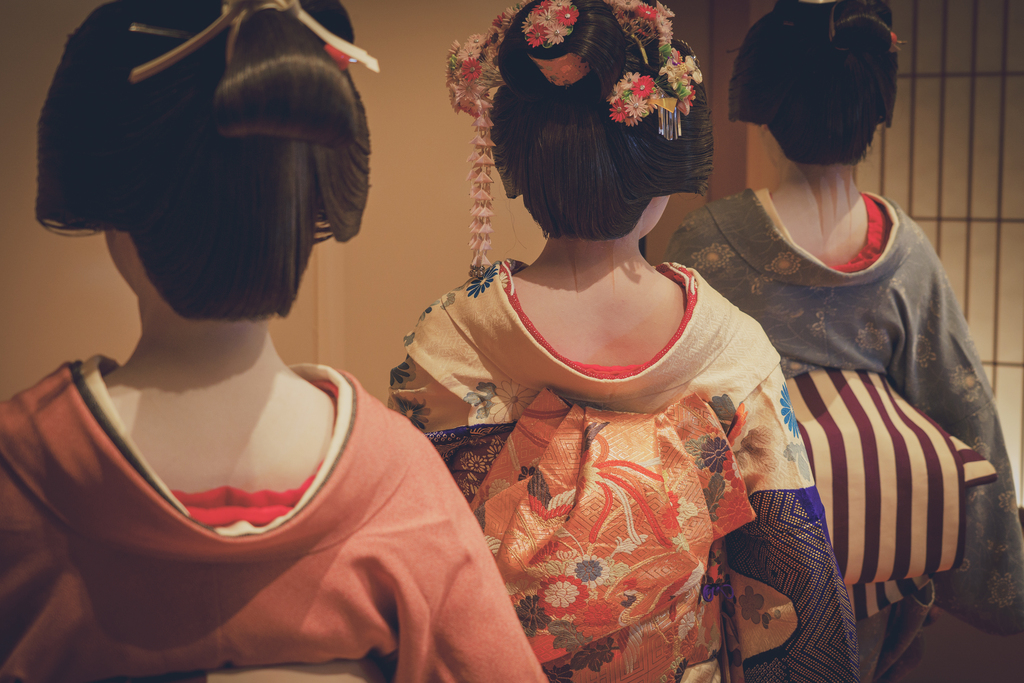
A geisha is a professional entertainer trained in traditional Japanese arts, dance, the shamisen and other instruments, singing, and the social craft of hosting a room. In Kyoto, a fully-fledged geisha is more often called a geiko, and an apprentice still in training is a maiko, known for the longer kimono sleeves and the more elaborate hair ornaments. In Tokyo, the older term geisha stays in common use. The core idea is the same everywhere: years of training, real artistry, and a role built around hospitality.
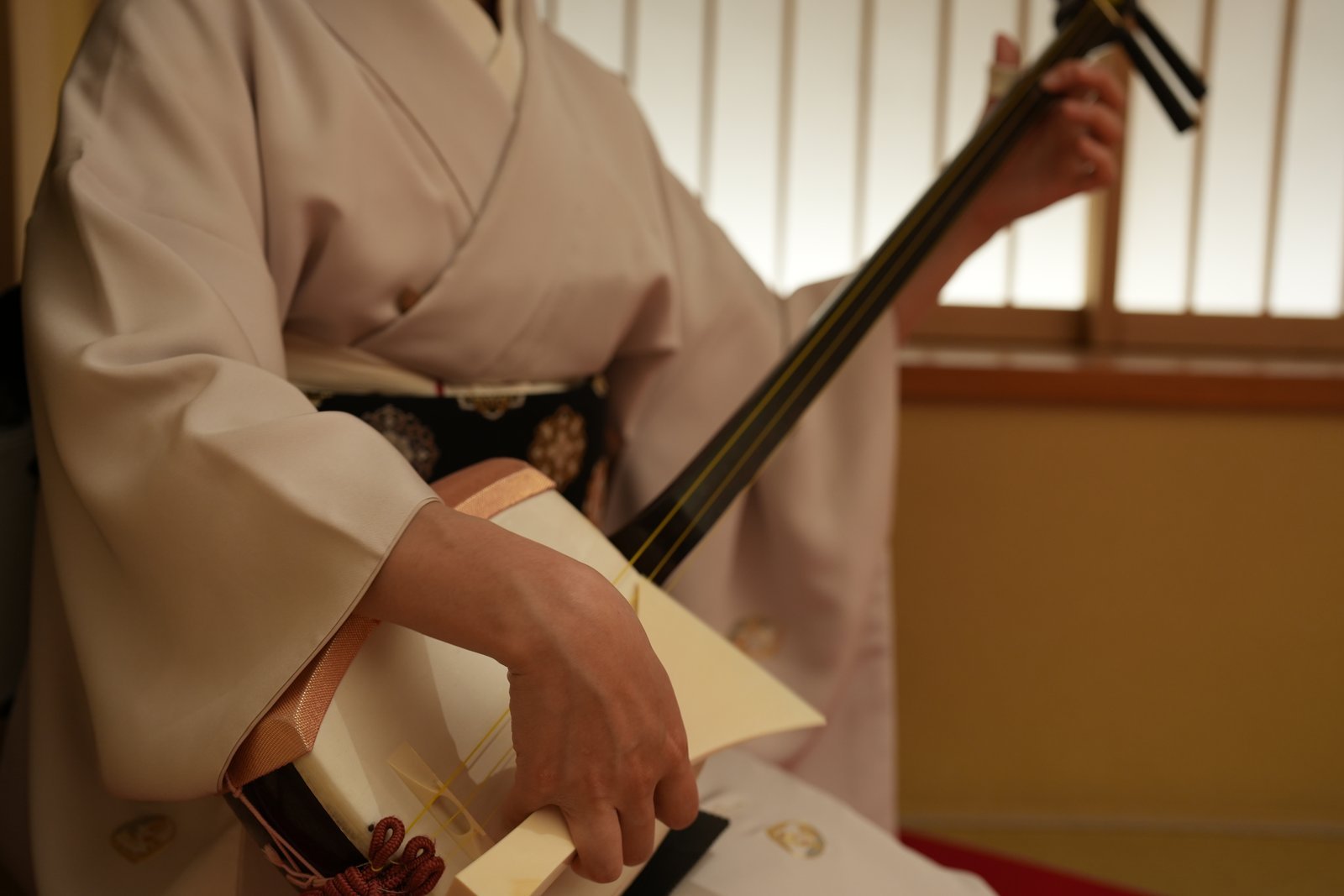
The training behind an ozashiki is not a light thing. Some of the arts you will see performed have been refined since roughly the 1600s and passed down, teacher to student, ever since. What is remarkable, as our okami points out, is that the way guests actually play these parlor games has barely changed in over two hundred years. You are learning the same rounds, in the same room format, that guests were laughing over generations ago.
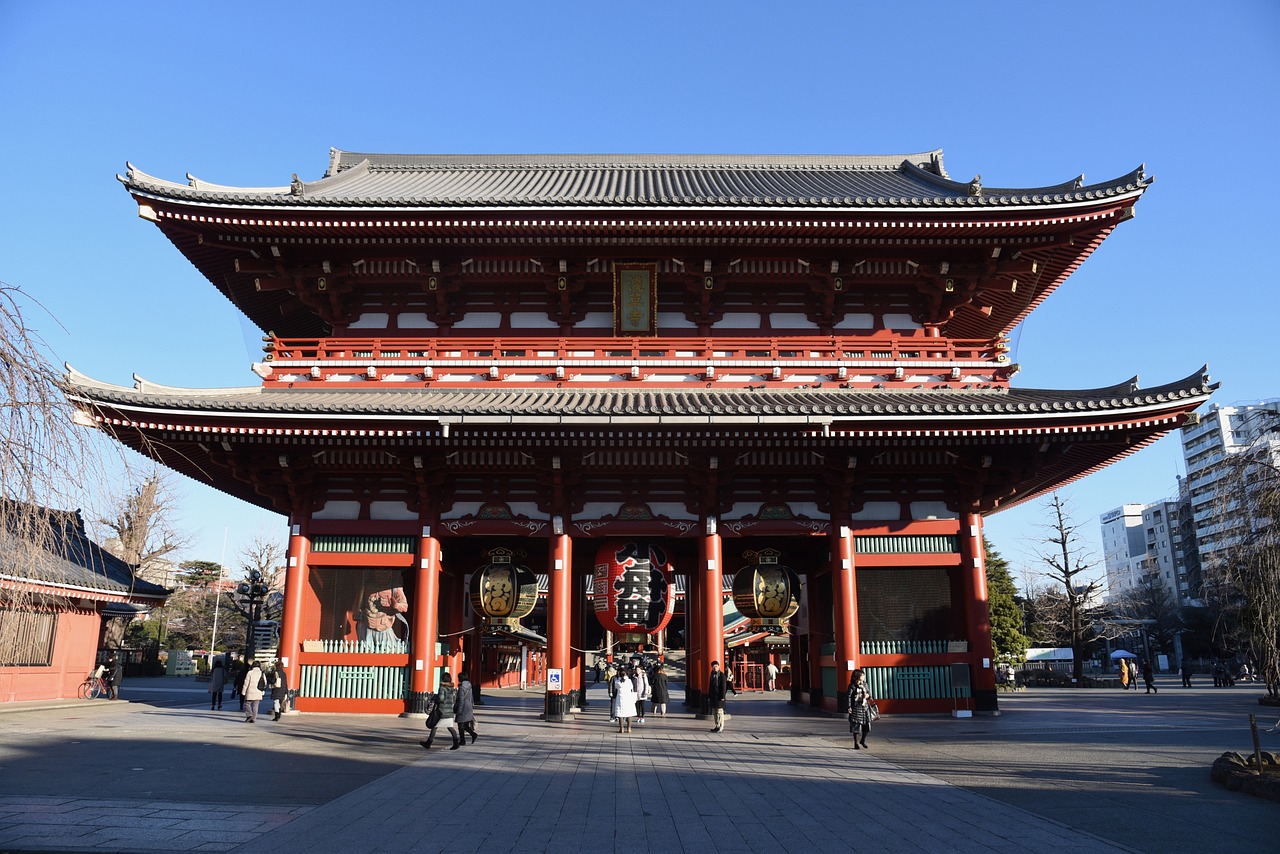
Geisha districts, the neighborhoods where this culture is based, are called kagai or hanamachi. Asakusa is one of Tokyo’s historic six, alongside Shimbashi, Akasaka, Kagurazaka, Mukojima, and Yoshicho. Each district has its own character. Asakusa, built around the ancient Senso-ji temple and long the most tourist-friendly corner of old Tokyo, has a famously open and welcoming atmosphere, a place that raised and protected its flower-and-willow culture as something for the whole town to enjoy.
The Games: What You Actually Play in the Room
This is the heart of ozashiki asobi, and it is where the intimidation melts away fastest. The three that come up most often — konpira fune fune, tora tora, and tosenkyo — are quick, funny, and easy to pick up: each is taught in about thirty seconds, and you learn them in the playing, not before.
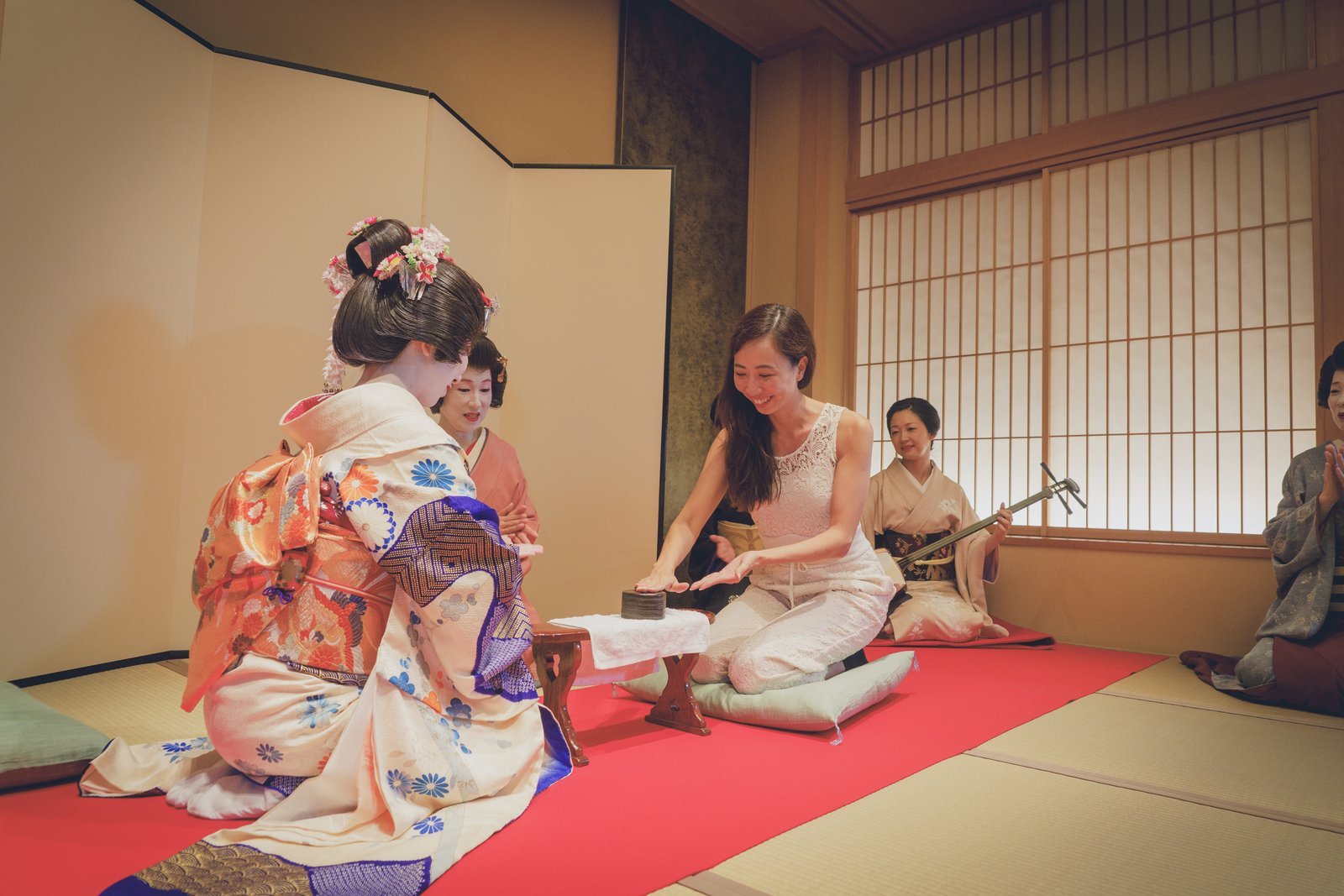
Three come up most often. Konpira fune fune is a rhythm game played against the quickening of a shamisen, and it is the one most guests remember. Tora tora is rock-paper-scissors acted out with your whole body from behind a folding screen, so the reveal is half the fun. Tosenkyo, the most elegant of the three, has you throwing a folding fan at a small butterfly target — and the scoring is far more poetic than it needs to be.
What matters in the room is not the rules. It is that a geisha reads your table and picks the game that fits the mood, teaches it in thirty seconds, and then plays it with you for real. Losing is part of it. So is laughing at yourself.
If you want the rules themselves — the pieces, the hand shapes, the scoring — we have written them out game by game: the full catalog and rules of the ozashiki games, and konpira fune fune in depth.
Konpira Fune Fune, played the way it is played in the room.
What an Evening Really Feels Like
Let me try to describe the actual arc of it — a seasonal kaiseki course first, then dance and live shamisen, then the games — because the individual pieces do not quite capture the whole.
You arrive and settle into a private room. The interior is unmistakably Japanese, seasonal touches on the walls that change through the year, a lavish kagami-mochi rice cake display in the New Year, small details that keep you aware of where you are in the calendar. But the room is designed to stay in the background. The geisha are the main event, and everything in the space is arranged so as not to compete with them.
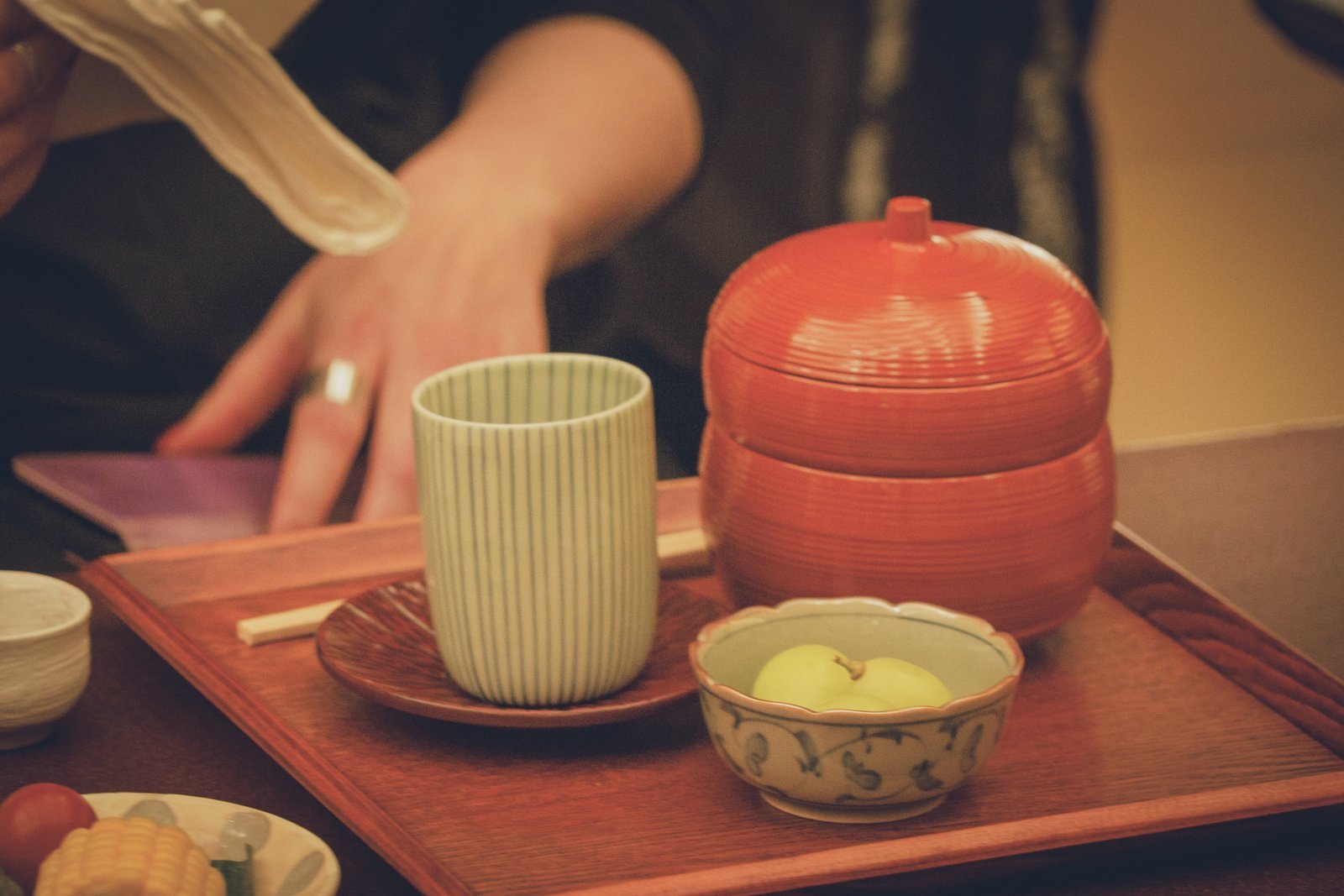
Food and drink come first, and they matter. A seasonal kaiseki course, sake poured and shared, the easy back-and-forth of pouring for one another that is itself part of the etiquette. Then the geisha perform, dance and live music, and this is where something clicks that no video ever delivers. The sound of a shamisen played an arm’s length away, the precise turn of a wrist in a dance refined over centuries, the presence of a person doing something they have devoted their life to, none of it survives a screen. Our okami is firm on this point: an art built and handed down since before recorded video existed can only really be understood in person. Sit in that room and you understand why she says it.
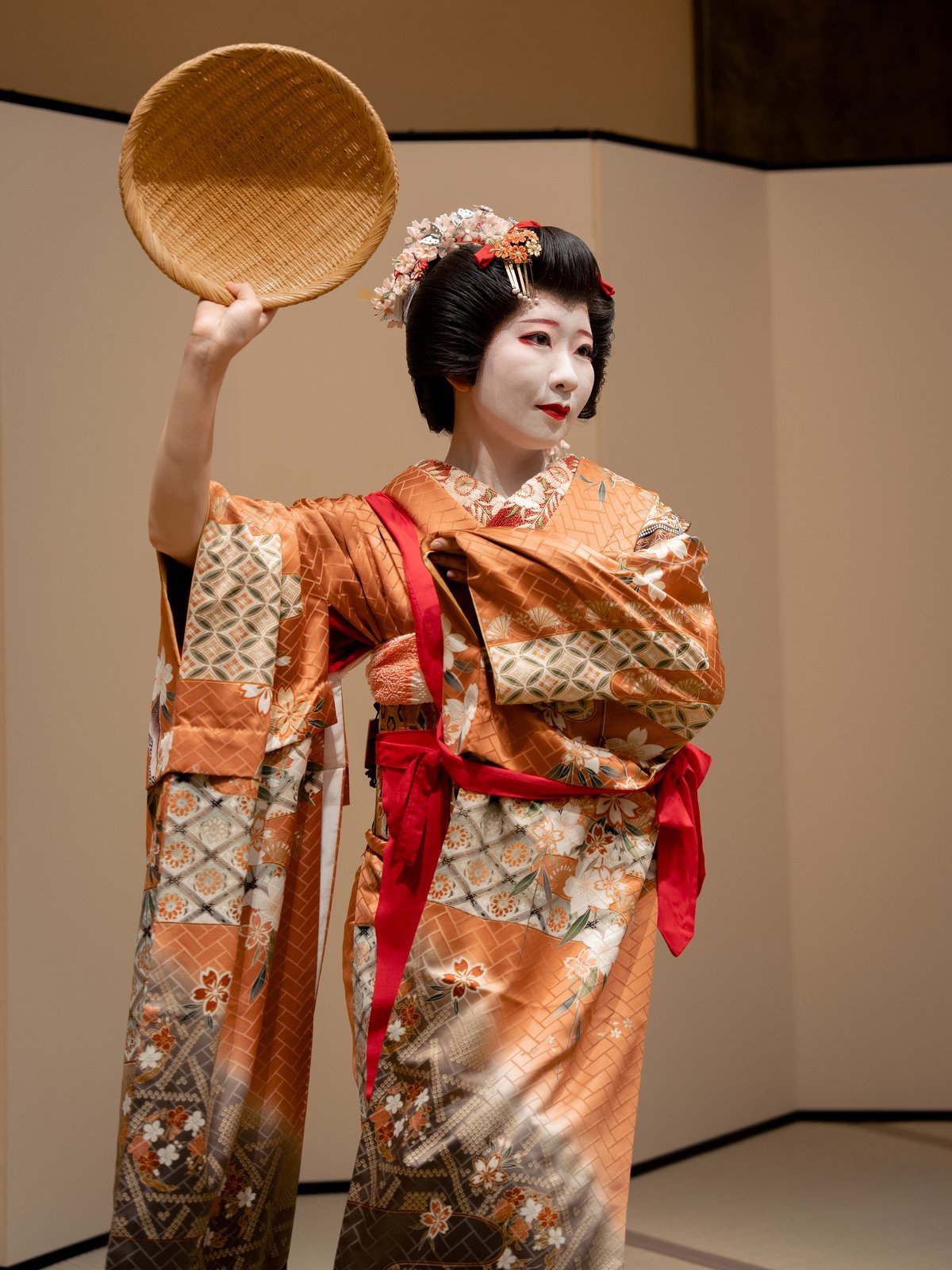
Then the games begin, the distance keeps shrinking, the conversation gets warmer, and at some point you realize you have completely lost track of time. That, more than any single game or dish, is what people carry home.
Play the Games Yourself, in Asakusa
Konpira fune fune, tora tora, tosenkyo — taught in thirty seconds and played for real, in a private ozashiki (a private gathering with geisha) at Miyakodori in Asakusa. First-time guests are welcome, and English-speaking guests are looked after with care.
Request a Reservation“Ichigen-san Okotowari” and Why First-Timers Are Welcome at Miyakodori
You may have heard that the geisha world runs on a rule called ichigen-san okotowari, no first-time guests without an introduction. Historically, ryotei operated on trust and running tabs, and a personal referral was how that trust was established. The reputation stuck, and it is a big reason newcomers assume the door is closed to them.
At Miyakodori, it is not. We state openly, on our own site, that first-time guests are welcome. If you feel nervous at the start, which almost everyone does, the geisha are skilled at putting you at ease, that easing of tension is itself part of the craft. And if there is a little time before they join you, our staff will chat with you and walk you through what to expect, so you are never left guessing.
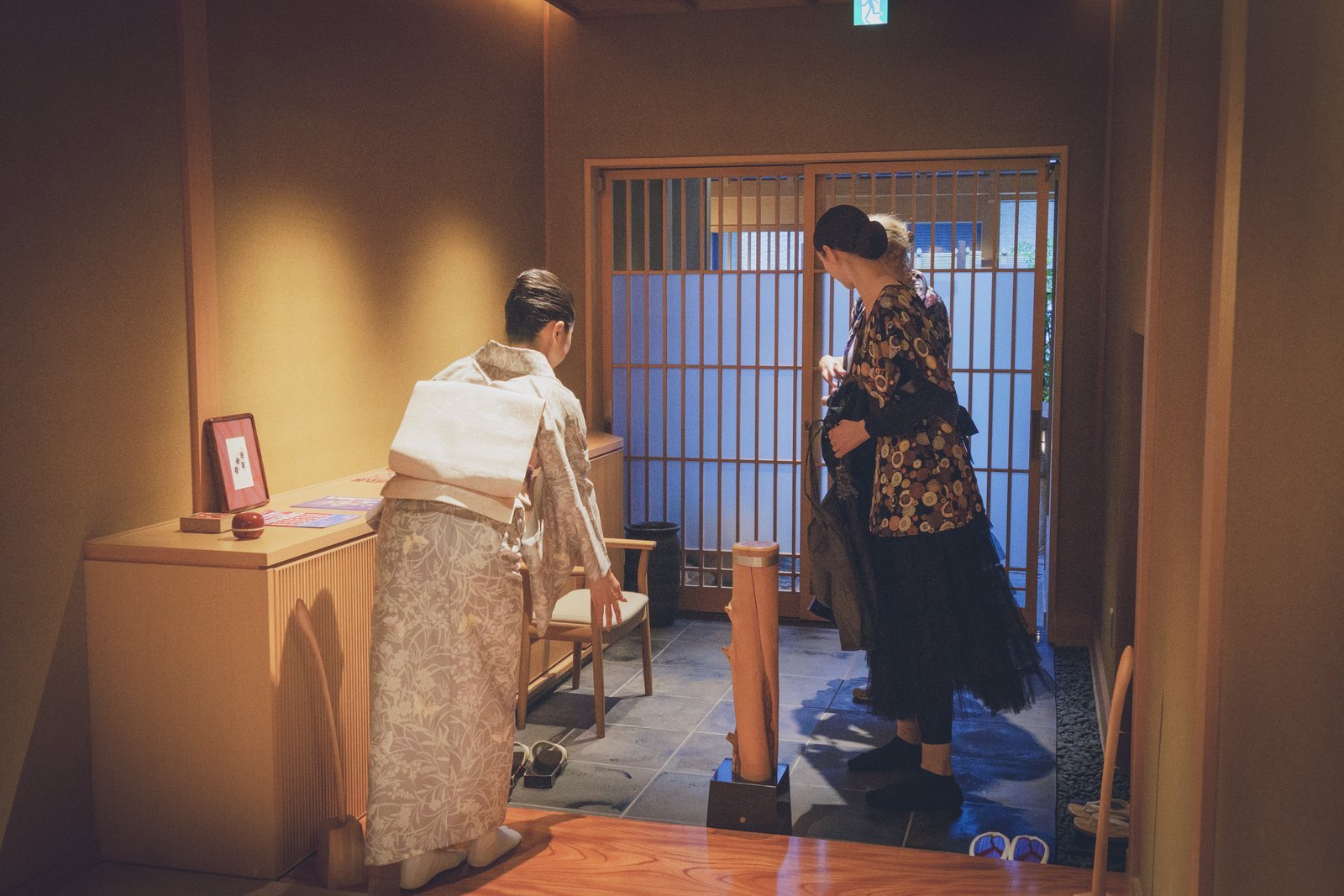
This openness is very much an Asakusa trait. Where districts closer to the government offices grew up around politicians and business leaders, Asakusa grew up around a temple and a tourist quarter, and it has long welcomed guests of every age, profession, and background. That spirit is exactly what we want you to feel when you sit down with us.
Why the Live Experience Matters
It is worth saying plainly, because it is easy to miss: there is a real difference between seeing ozashiki asobi — arts refined since roughly the 1600s, in a parlor format that has barely changed in over two hundred years — and reading about it or watching a clip.
The arts you encounter in the room have been polished for centuries with no camera in sight. They were built, from the very beginning, to be experienced live, face to face, in a shared space. The character for geisha is written with the characters for art and person, an artist, someone who performs art, and as our okami notes, the whole meaning of the word lives in that act of performing it in front of you. A recording flattens it. Being there does not.
That is the honest case for going. Not that a video is bad, but that this particular tradition was never designed for one. The value is in the room.
Experience Ozashiki Asobi at Miyakodori in Asakusa
If reading this has made you want to try it, we would be glad to host you. Miyakodori sits in the Kannon-ura area behind Senso-ji in Asakusa, a 13- to 15-minute walk from Asakusa Station depending on the line, founded in 1950, and is today the only house in Asakusa run in the machiai-chaya style, a house centered specifically on the enjoyment of playing with the geisha rather than dining alone.
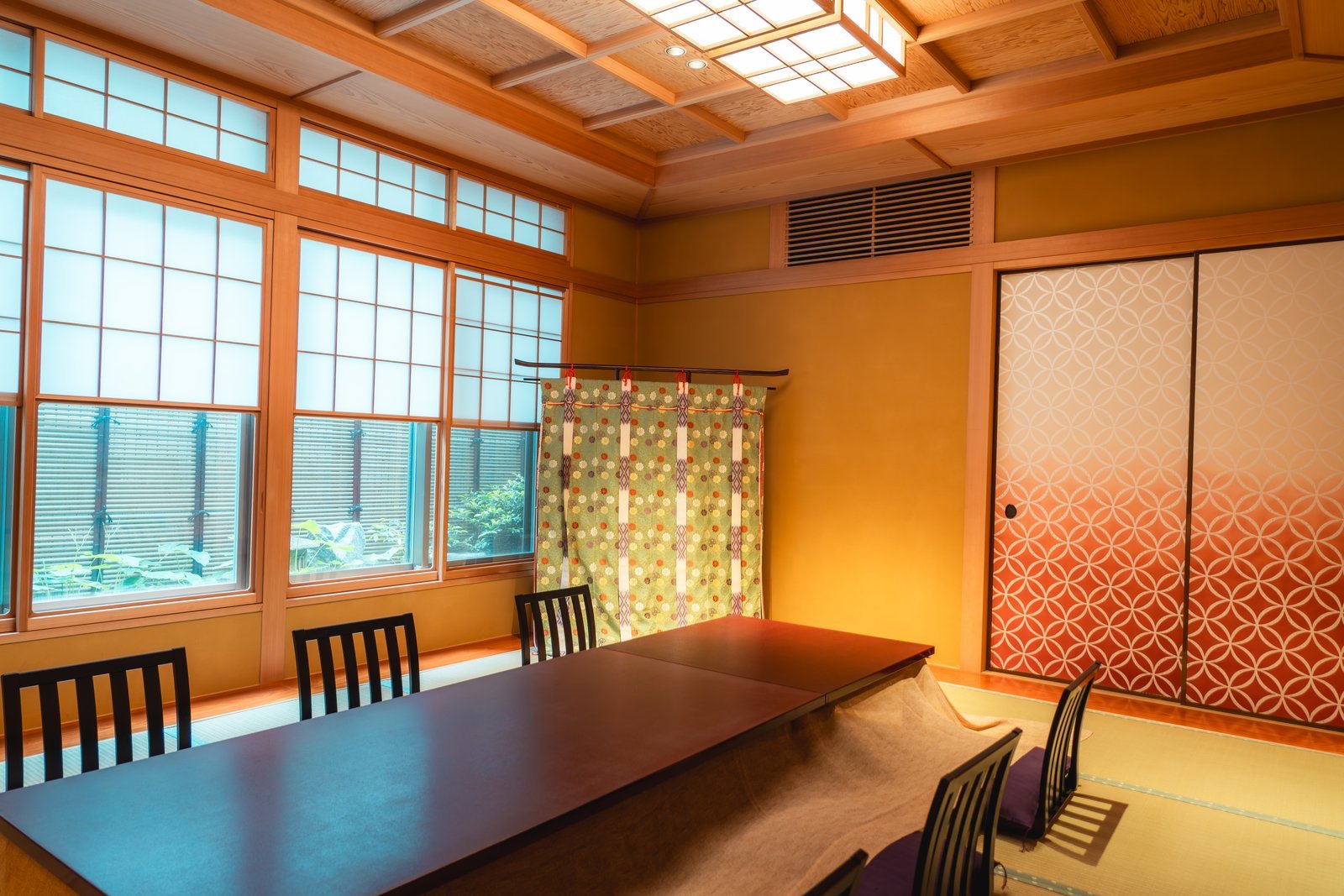
An evening with us pairs a seasonal kaiseki course with the full ozashiki experience, the dances, the live shamisen, and the parlor games described above. It suits a wide range of occasions, a milestone anniversary, hosting overseas guests or VIPs, a family celebration, or simply the curiosity of someone who has always wanted to understand this culture from the inside. Private rooms are available, and the house is set up to accommodate guests of different needs, with an elevator; there is a step at the entrance, so let the house know in advance and arrangements can be made.
First-time guests are welcome, halal options can be arranged in bento form with at least five days’ notice, and English-speaking guests are looked after with care. If any of this speaks to you, we would love to help you plan an evening you will remember long after you leave Asakusa.
Frequently Asked Questions
What does ozashiki asobi mean?
Ozashiki asobi means the traditional games, dances, music, and drinking play that geisha host for guests in the ozashiki, the private tatami parlor room of a traditional geisha house. Asobi means play, and the games — konpira fune fune, tora tora, and tosenkyo among them — are its warm, social heart.
Do I need to speak Japanese to enjoy it?
No, you do not need Japanese to enjoy it. The games are physical and easy to follow, and much of the enjoyment is in the shared laughter rather than words. At Miyakodori, English-speaking guests are looked after so you can relax into the evening.
Is ozashiki asobi only in Kyoto?
No, ozashiki asobi is not limited to Kyoto. Kyoto is famous for its geiko and maiko, but Tokyo has its own historic geisha districts — Asakusa, Shimbashi, Akasaka, Kagurazaka, Mukojima, and Yoshicho — and Asakusa is one of them. You can experience an authentic ozashiki in Tokyo, at Miyakodori.
Can first-timers really book, despite the “no first-time guests” reputation?
Yes — first-time guests can book at Miyakodori without an introduction. That reputation comes from the old ichigen-san okotowari custom, but Miyakodori openly welcomes first-time guests and helps newcomers feel at ease from the moment they arrive.
What games will we play?
The three that come up most often are konpira fune fune, a rhythm game played against the quickening of a shamisen; tora tora, rock-paper-scissors acted out from behind a folding screen; and tosenkyo, in which you throw a folding fan at a small butterfly target. A skilled geisha reads the mood of your table and chooses the games to suit your group, teaching each in about thirty seconds.
Where can I experience ozashiki asobi in Tokyo?
In Asakusa, at Miyakodori, a machiai-chaya founded in 1950 in the Kannon-ura area behind Senso-ji, a 13- to 15-minute walk from Asakusa Station depending on the line. Asakusa is one of Tokyo’s six historic geisha districts, and Miyakodori is the only house there run in the machiai-chaya style.
What happens during an ozashiki evening?
The evening follows a set arc: a seasonal kaiseki course first, then dance and live shamisen performed at close range, then the parlor games. The geisha stay with you for the length of your booking rather than performing once and leaving.
Can you accommodate dietary needs or limited mobility?
Yes. Halal options can be arranged in bento form with at least five days’ notice, and the house has an elevator, and there is a step at the entrance, so tell us in advance and we will make arrangements.
A Living Tradition, and an Open Door
Ozashiki asobi is one of those rare experiences that is exactly as rich as it sounds and far easier to step into than you would think. The games disarm you, the artistry moves you, and the warmth of the room stays with you. It is a living tradition, carried by people who love it, and the only way to really know it is to be there. If you are in Tokyo and curious, Asakusa is where its most open, welcoming spirit still lives, and the door at Miyakodori — the last house in Asakusa run in the machiai-chaya style — is genuinely open to you, first-time guests included.
Sit Down for a Real Ozashiki in Asakusa
A seasonal kaiseki course, dance and live shamisen, and the parlor games themselves — the full private ozashiki (a private gathering with geisha) at Miyakodori, the only machiai-chaya in Asakusa. First-time guests are welcome, and the house has an elevator; mention any access needs when you book.
Request a Reservation


- Traditional Japanese Games: From Shogi to Geisha Parlor Play
- Geisha: What Do They Actually Do in Japan?

Style Inspiration Guide: Japanese-Style Nail Designs That Pair Beautifully with Kimono for an Asakusa Day Out—Using Only 100‑Yen Shop Items
Geisha Hairstyles: Nihongami, Wigs, and What Asakusa Geisha Wear Today
Geisha Danna: What a Geisha’s Patron Was, and How Geisha Are Supported Today
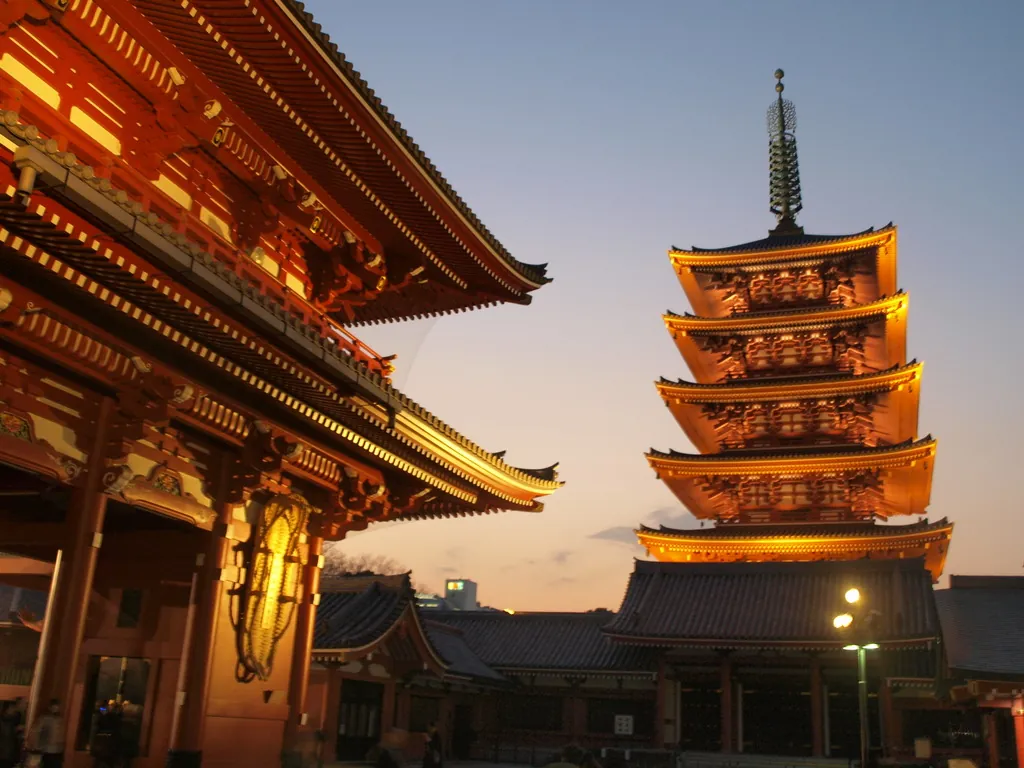
Hatsumode Etiquette Guide: How to Pray at Senso-ji (2027)
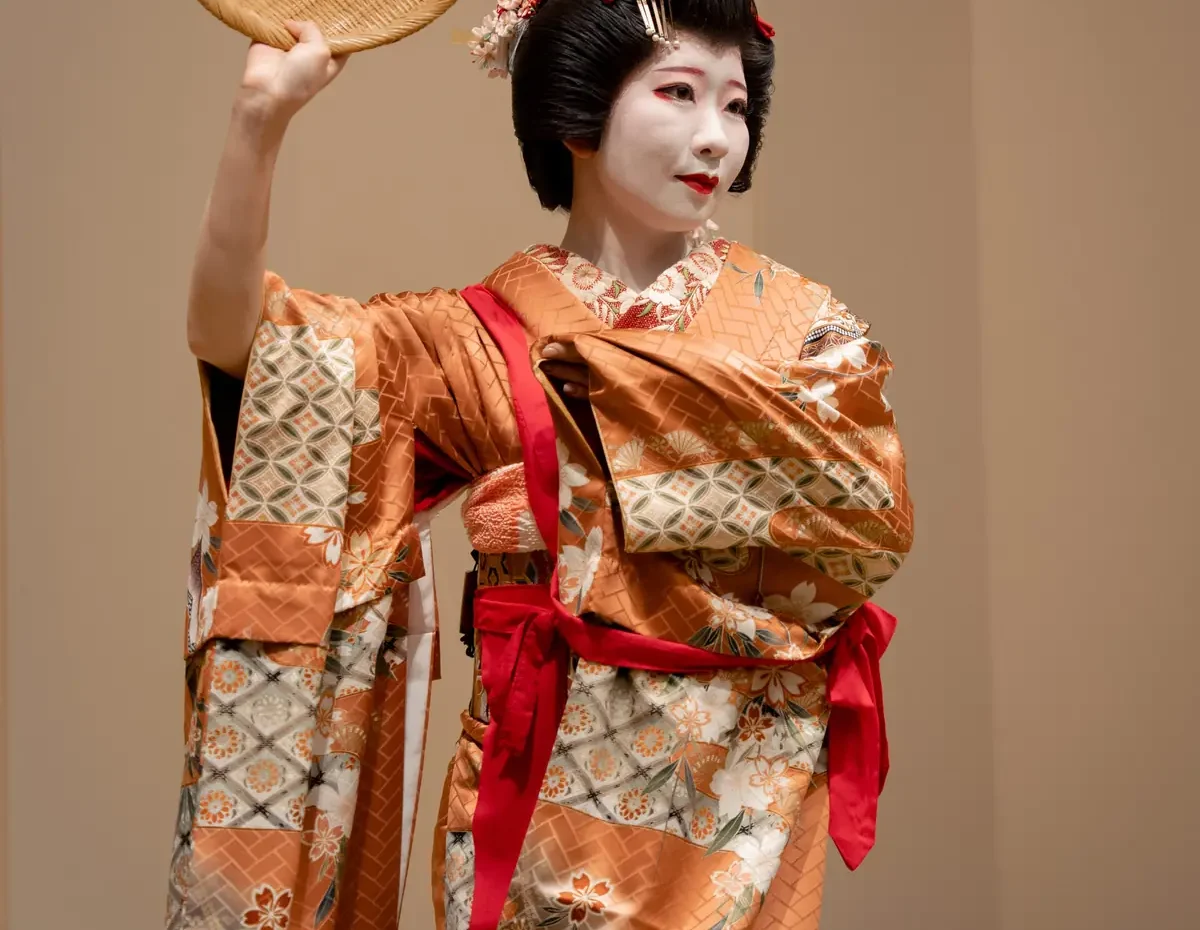
Geisha Culture in Japan: History, Training, and Modern Experiences

No comments yet.