



Christmas in Asakusa 2026: Japanese-Style Illuminations, Christmas Markets Nearby, and a Geisha Dinner
Christmas in Tokyo usually means Marunouchi’s champagne-gold trees, a German-style market at Jingu Gaien, and a hotel buffet with a view. Asakusa offers something the rest of the city cannot: a vermilion temple lit until late, red lanterns instead of LED tunnels, and — if you book ahead — an evening in a private tatami room with geisha.
This guide covers all three, in the order you would actually do them: lights first, a market if you want one, then dinner.
Why Christmas in Asakusa Feels Different
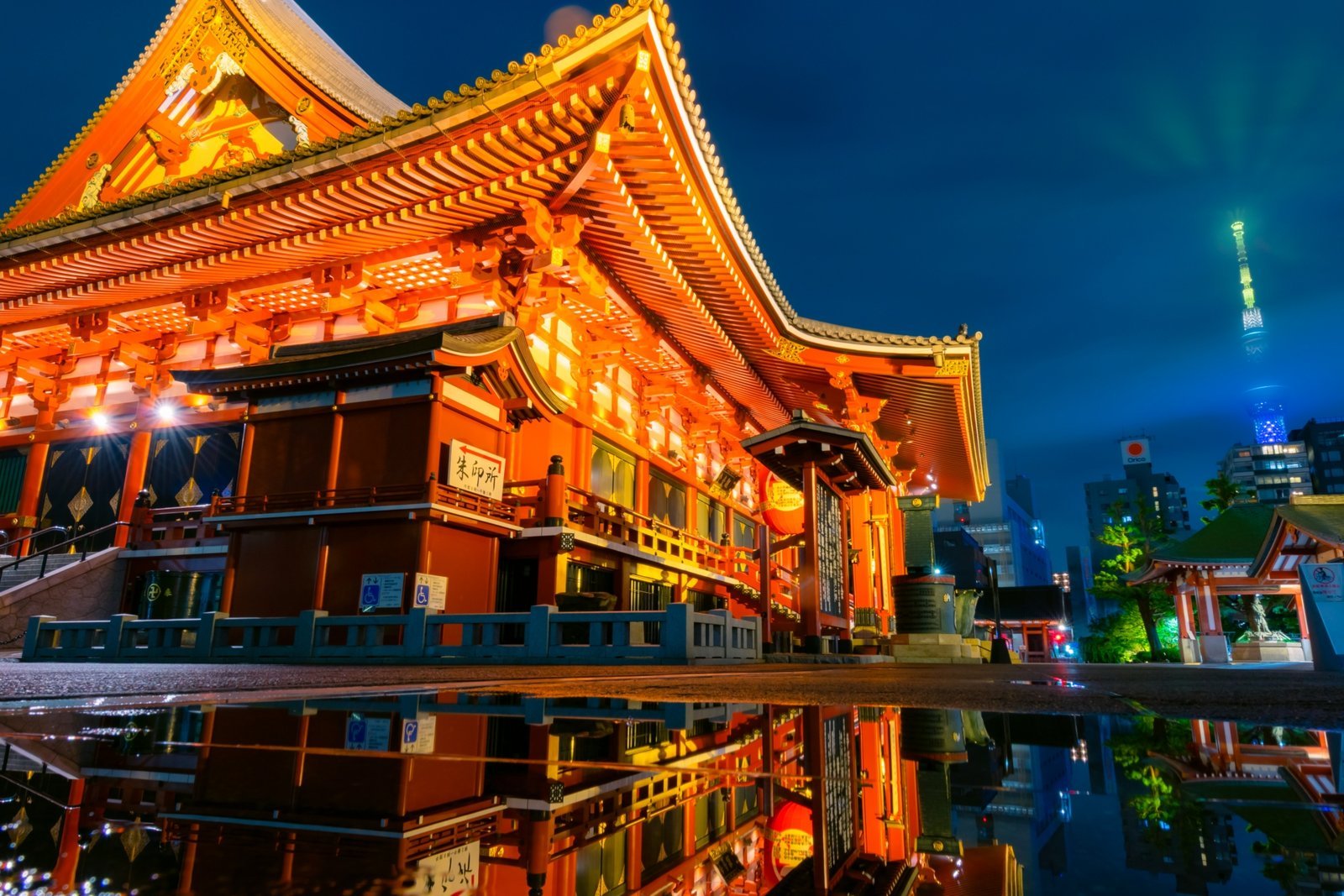
Asakusa was never built for Christmas, which is exactly the point. Senso-ji, the district’s 1,400-year-old temple, is illuminated every night of the year, and in late December the glow of its five-story pagoda falls on the same streets where people are queuing for New Year decorations at the Hagoita-ichi fair. There are no reindeer on Nakamise Street. What you get instead is the contrast: the temple’s solemn lighting on one side of the Sumida River, and Tokyo Skytree in its Christmas colors on the other.
Christmas Eve in Japan is a night for couples and small groups rather than a family holiday, and December 25 is an ordinary working day. Restaurants and temples are open, trains run as usual, and nothing closes early. That makes Asakusa easy to plan around — and it means a “Japanese-style Christmas” is less about decorations than about how you spend the evening: a walk through the lit temple grounds, perhaps in a rented kimono, followed by sukiyaki or unagi at a restaurant that has been serving the same dish for a century.
| A typical Tokyo Christmas | Christmas, Asakusa-style | |
|---|---|---|
| The lights | LED illuminations, Christmas trees | A temple and pagoda lit in vermilion, red lanterns, bamboo lanterns along the river |
| The dinner | French or Italian, hotel buffet | Sukiyaki, unagi, monja — or kaiseki in a private tatami room with geisha |
| The mood | Glamorous and busy | Quiet, warm, a little nostalgic |
2026 Dates at a Glance
Organizers in Tokyo announce Christmas dates in October and November. The table shows the most recent confirmed edition (2025) and what is known for 2026 as of this update; we revise it as announcements come in.
| Event | 2025 edition (confirmed) | Hours | 2026 |
|---|---|---|---|
| Senso-ji illumination | Every night, all year | Sunset to around 23:00 | Same (year-round) |
| Tokyo Skytree Town Dream Christmas | Nov 1 – Dec 25 | Special lighting 16:00–23:00 | To be announced (usually early Nov – Dec 25) |
| Christmas Market at Tokyo Skytree Town (4F Sky Arena) | Nov 6 – Dec 25 | 11:00–22:00, free entry | To be announced |
| Takeakari bamboo lanterns (Tokyo Mizumachi, Sumida River Walk, Ushijima Shrine) | Nov 7, 2025 – Jan 31, 2026 | 17:00–22:00 | To be announced |
| Hanayashiki Christmas | Dec 6 – Dec 25 | 10:00–18:00 | To be announced |
| Tokyo Christmas Market, Meiji Jingu Gaien | Nov 21 – Dec 25 | 11:00–21:30 (opening day from 16:00) | To be announced |
| Tokyo Christmas Market, Shiba Park | Dec 5 – Dec 25 | 11:00–22:00 (opening day from 16:00) | To be announced |
| Asakusa Miyakodori (geisha dinner) | Open through Christmas Day | Evening banquets from 17:30 | Open Dec 24 and 25; the year-end break starts on the first Saturday on or after Dec 25 |
Two practical notes. Almost everything on this list ends on December 25 — Tokyo switches to New Year mode on the 26th — so if you arrive after Christmas, the temple illumination and the bamboo lanterns are what remain. And the markets are busiest on the weekend before Christmas; weekday evenings are far more comfortable.
Five Japanese-Style Illumination Spots in Asakusa
Asakusa’s lights are mostly not “Christmas” lights. They are the temple, the river, and the lanterns of the old town — which is why they photograph so differently from the rest of Tokyo.
Senso-ji — the temple lit until 23:00
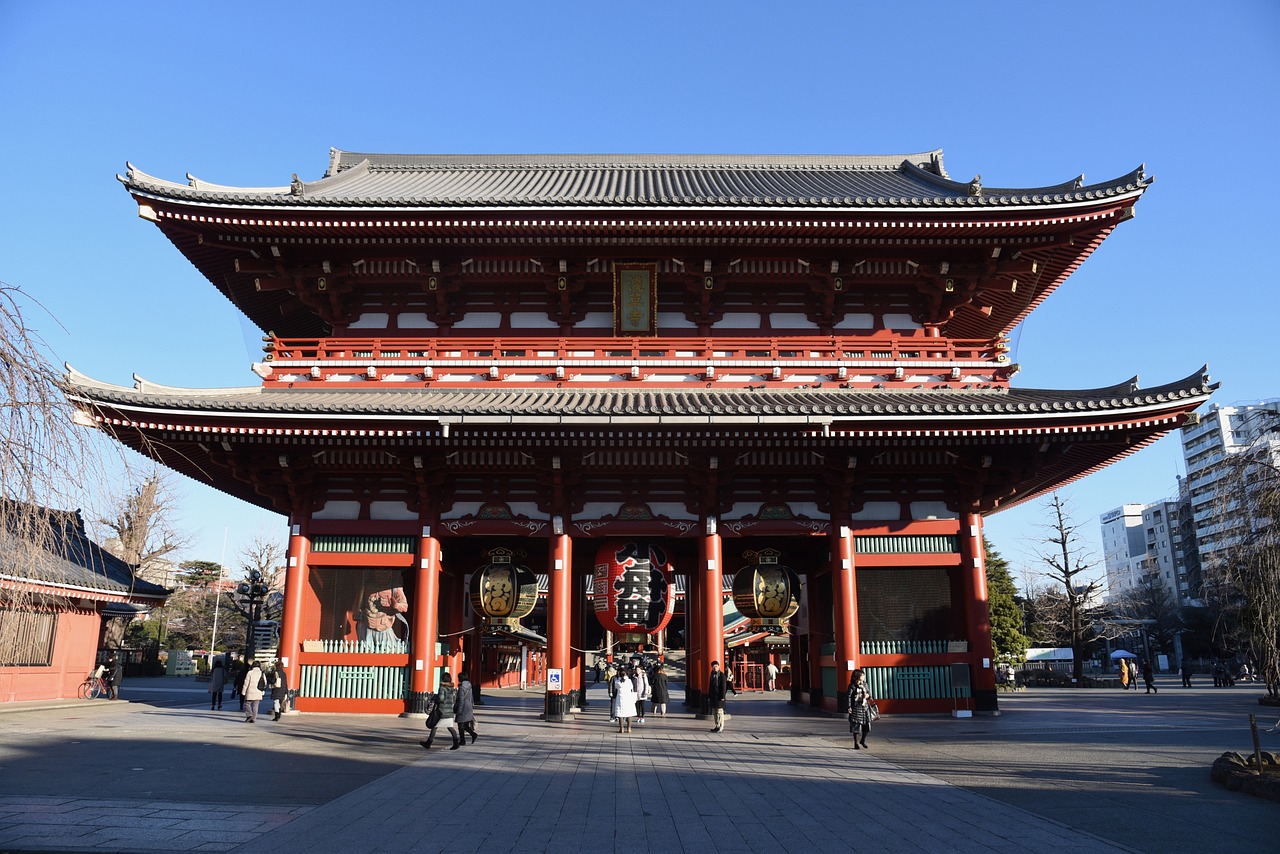
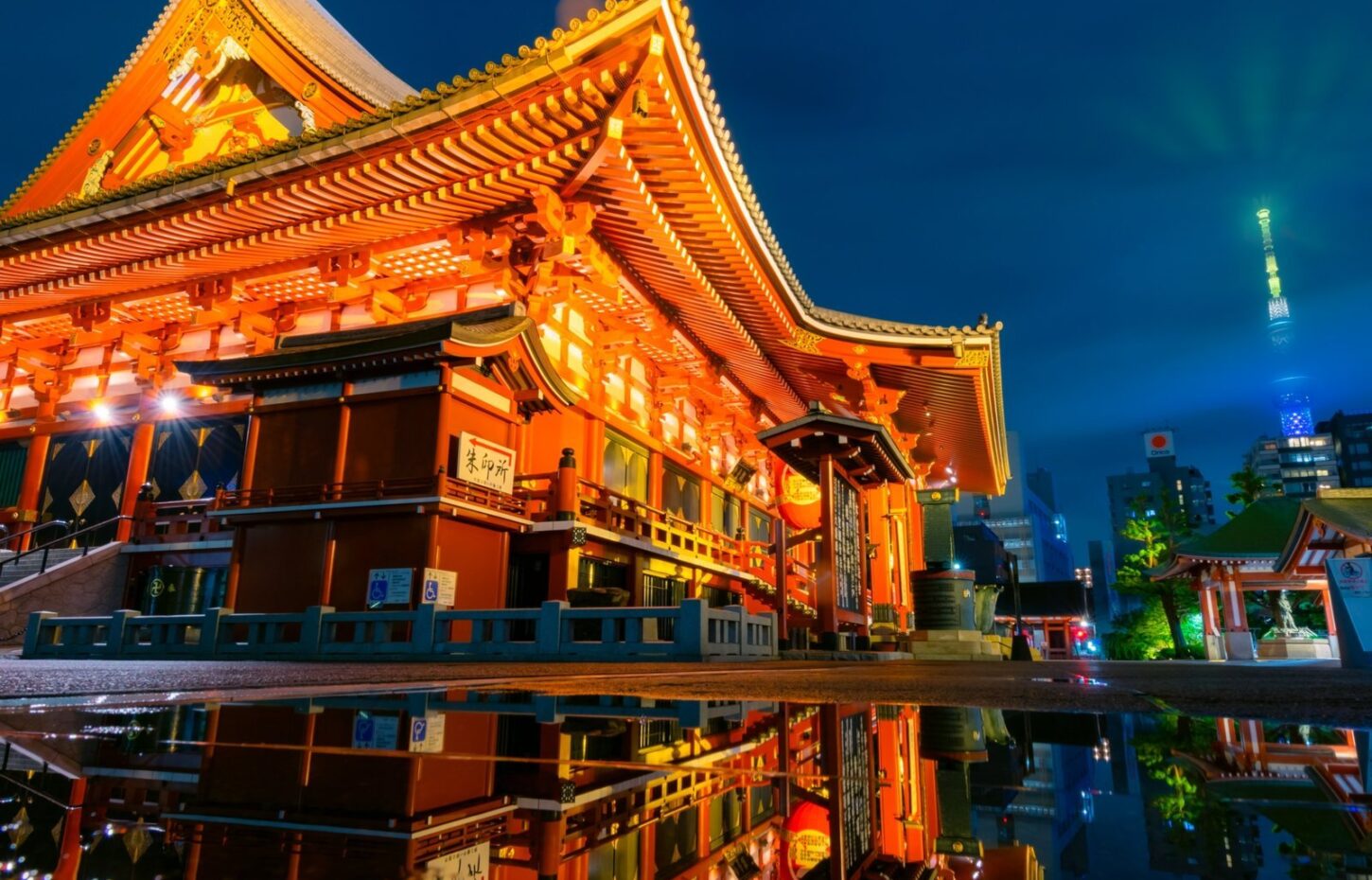
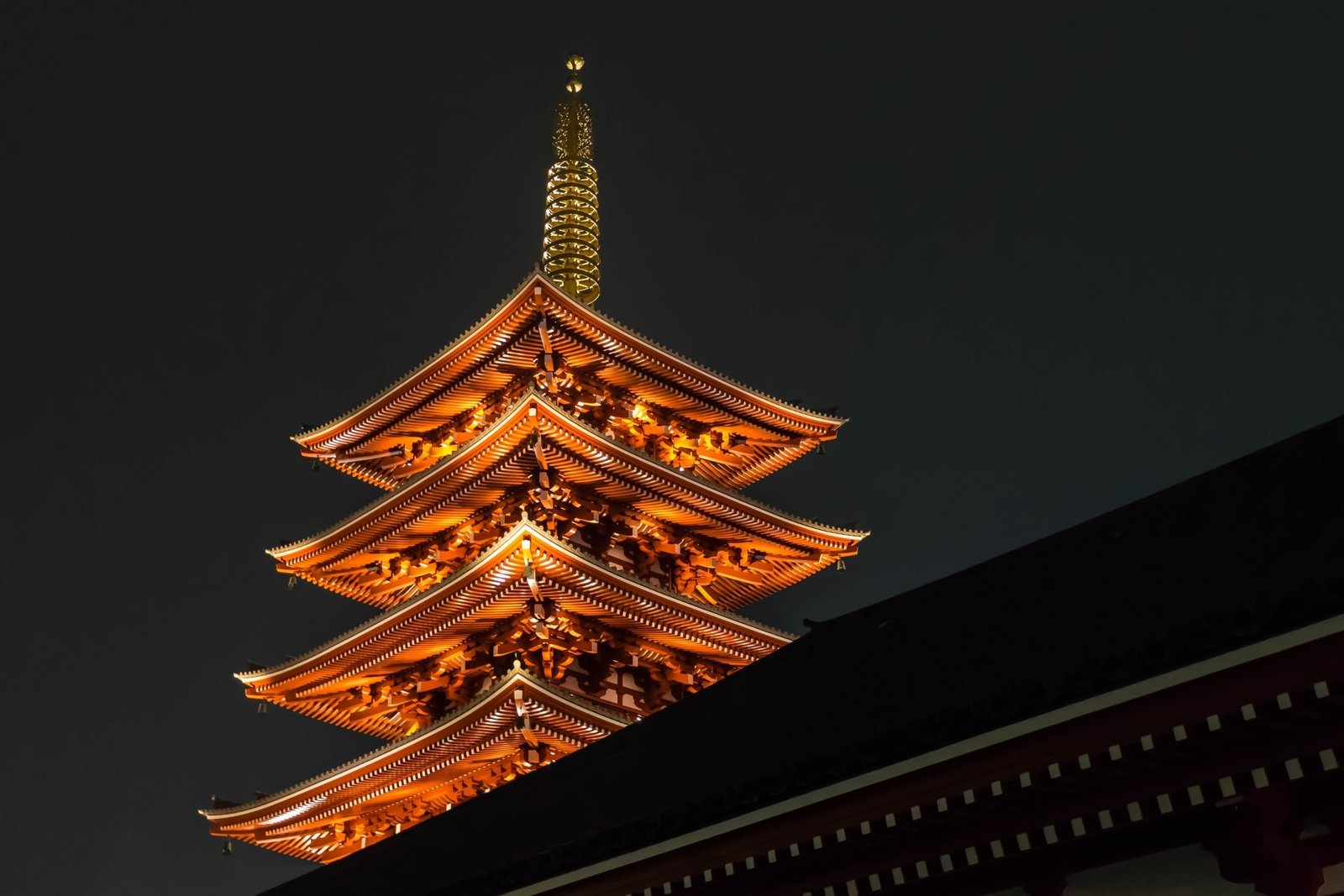
Senso-ji is illuminated every night from sunset until around 23:00, year-round. The Main Hall closes its doors at 17:00, but the grounds stay open, and the pagoda, Hozomon Gate and Kaminarimon Gate are lit throughout the evening. After the day crowds leave, the precinct is quiet enough to hear your own footsteps on the stone. There are no Christmas decorations here, and that is the attraction: the vermilion buildings floating against the dark are the most “Japanese” light you will see all week.
- Where: Main Hall, Five-Story Pagoda, Hozomon Gate, Kaminarimon Gate
- When: Every night, sunset to around 23:00 (lights come on around 17:00 in winter)
- Tip: Come after 20:00. Nakamise Street’s shutters are painted with scenes of Asakusa’s history and are only visible once the shops close.
Sumida River Terrace and the Takeakari bamboo lanterns
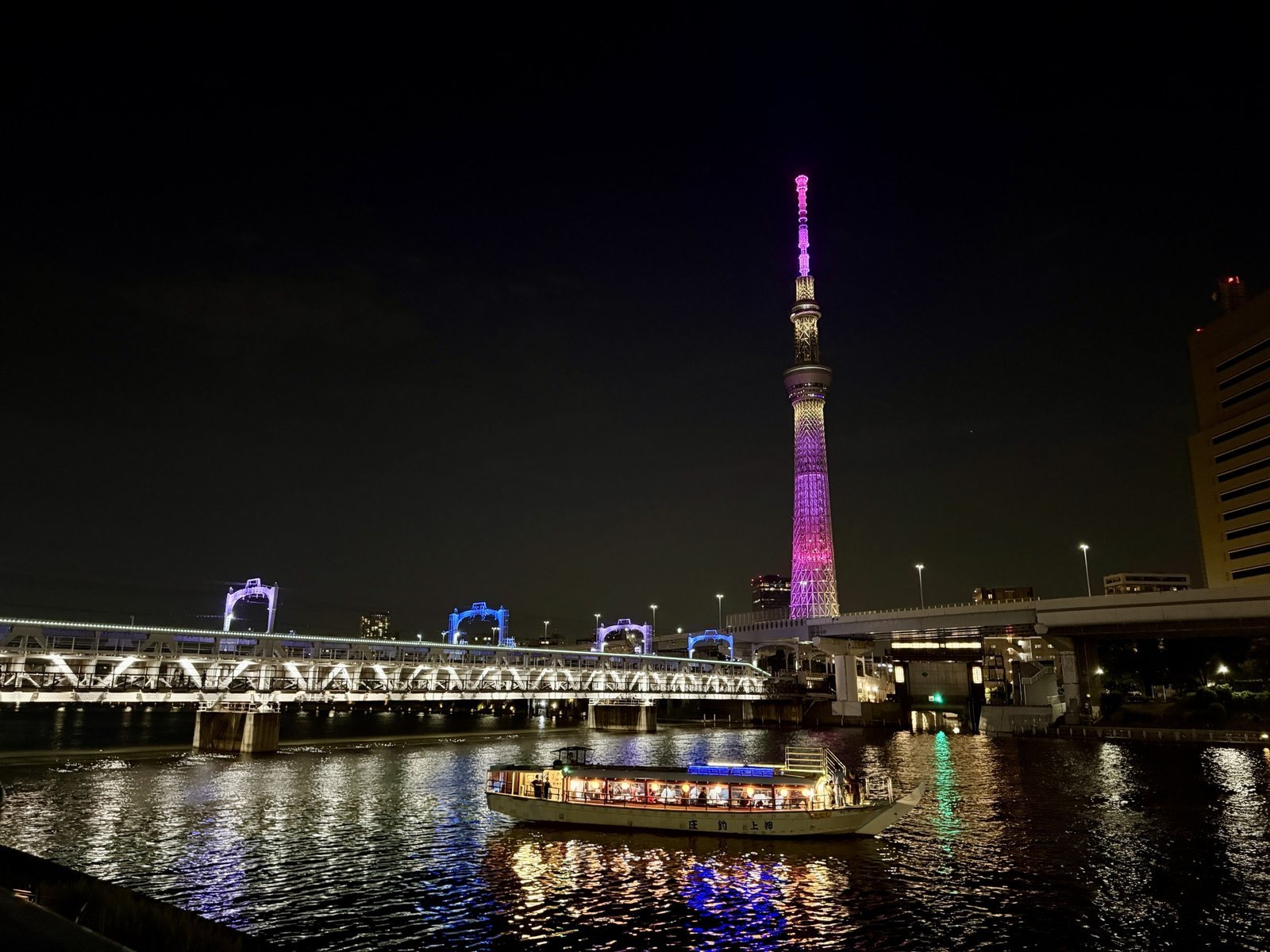
The riverside promenade between Azuma Bridge and the Sumida River Walk faces Tokyo Skytree directly, and from November to the end of January the walk is lined with takeakari — hand-cut bamboo lanterns lit from 17:00 to 22:00. The 2025–26 edition ran from November 7 to January 31 and linked Asakusa with Tokyo Mizumachi and Ushijima Shrine on the far bank, so you can walk from the temple to the Skytree side under the lanterns in about twenty minutes. Passing yakatabune houseboats add their own lights to the water.
Tokyo Skytree Town — the district’s actual Christmas lights
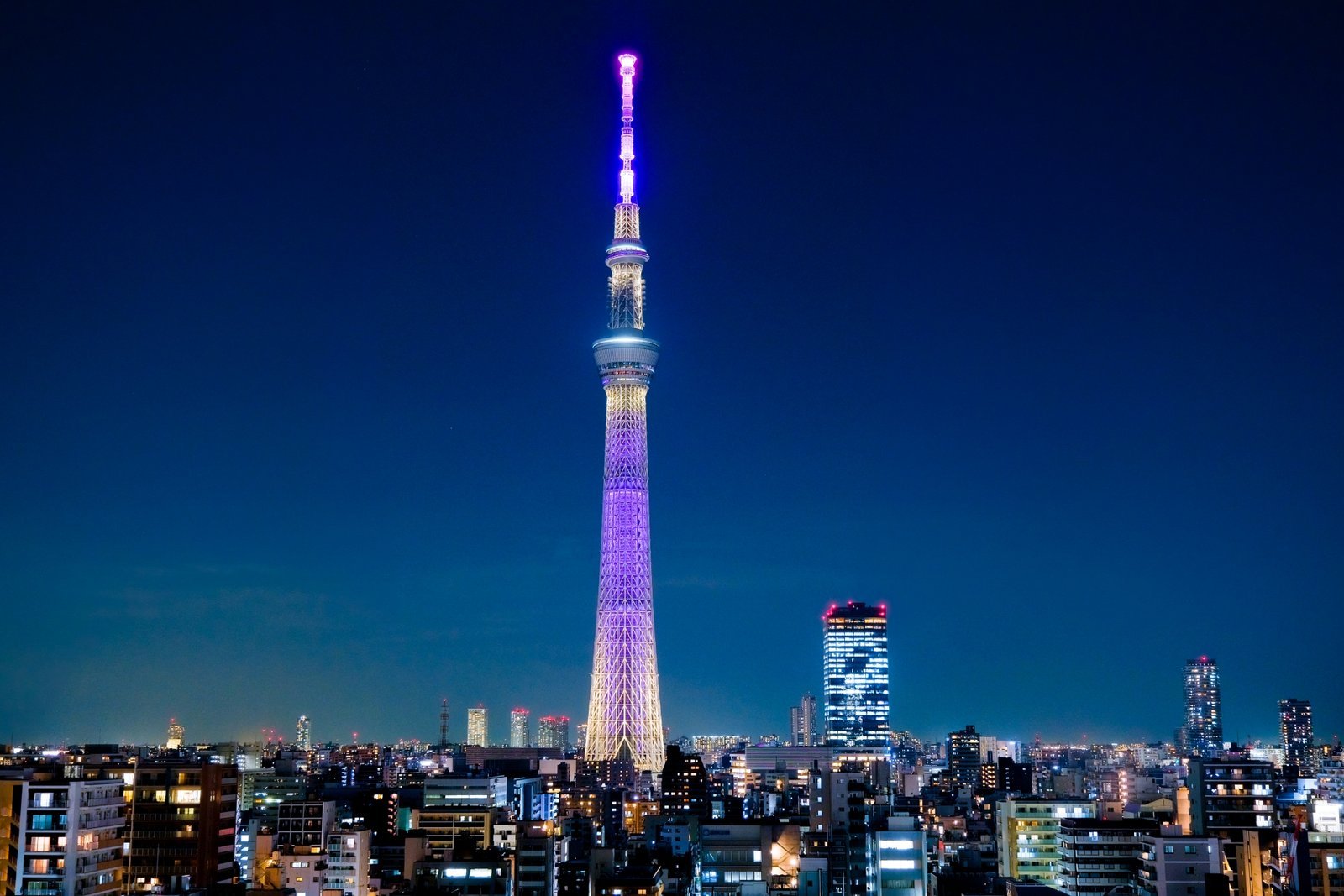
If you want conventional Christmas illumination, it is one river away. Tokyo Skytree Town’s “Dream Christmas” (November 1 – December 25 in 2025) lights the tower in seasonal colors and fills the plaza with LED displays from 16:00 to 23:00. The Christmas market on the 4th-floor Sky Arena is covered in section 4.
Hoppy Street — red lanterns instead of LEDs
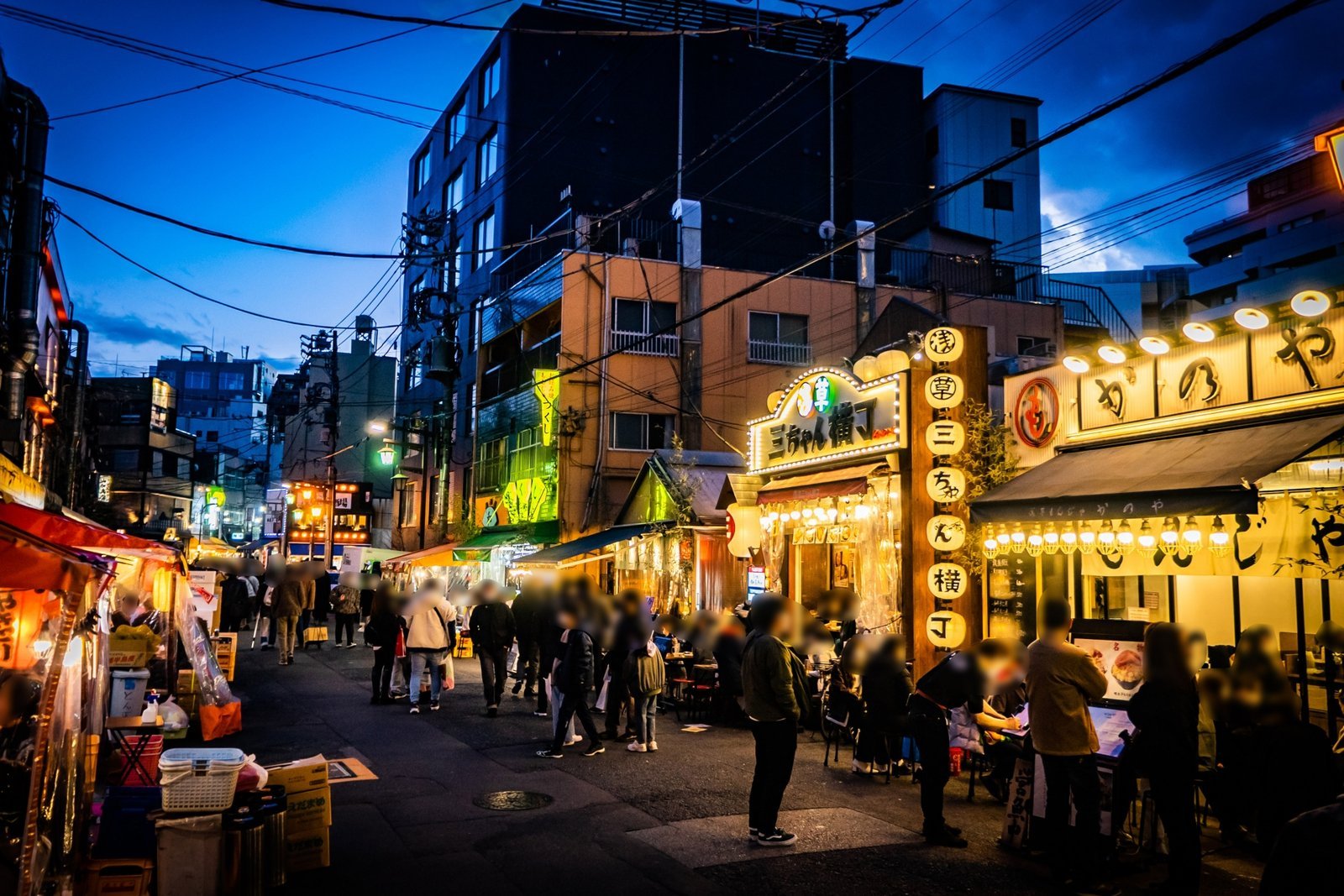
Hoppy Street is not an illumination in any official sense. It is a row of open-front izakaya whose red lanterns and steam make the warmest-looking street in Asakusa on a December night. Order nikomi (slow-simmered beef tendon) and a hoppy — the beer-flavored drink the street is named after — and you have the least touristy Christmas Eve in Tokyo.
Asakusa Culture and Tourism Center — the free night view
Directly opposite Kaminarimon, the observation terrace on the 8th floor of the Asakusa Culture and Tourism Center is free and open until 22:00 (the building itself closes at 20:00). From here you look down on the lit Nakamise Street and Senso-ji, with Skytree in its Christmas lighting beyond. It is the best place to end an evening walk, and the glass-walled indoor area means you can do it without the cold.
Hanayashiki, Japan’s oldest amusement park, also decorates for the season — “Hanayashiki Christmas” ran December 6–25 in 2025, daytime only (10:00–18:00) — which makes it a family stop before the lights rather than part of the evening.
Christmas Markets Near Asakusa (and Across Tokyo)
Asakusa itself does not hold a Christmas market. The nearest is one stop away, and the largest in the city are twenty to thirty minutes by train. Listed from closest to farthest:
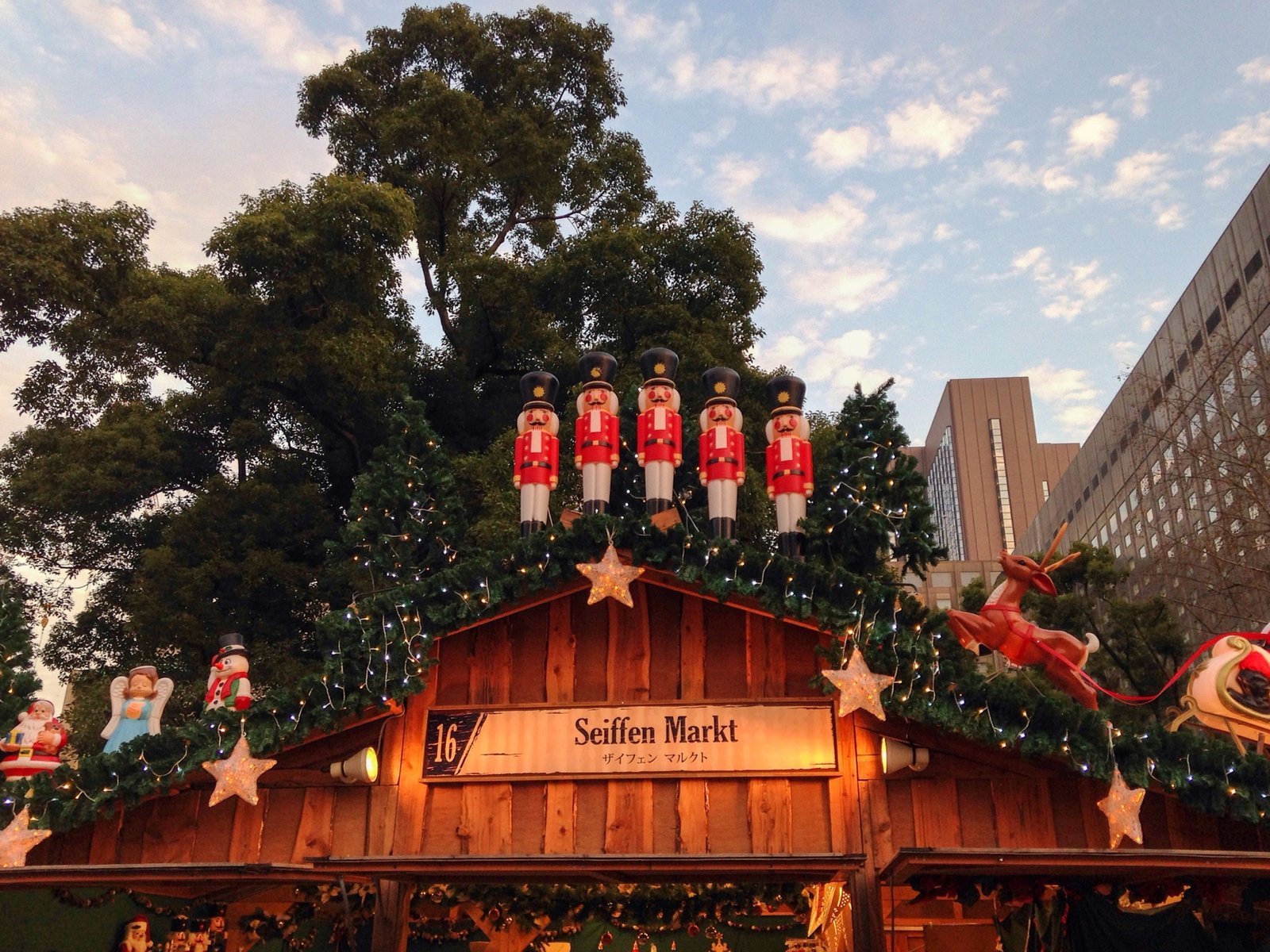
Christmas Market at Tokyo Skytree Town (Oshiage, 1 stop / 15-minute walk). Held on the 4th-floor Sky Arena at the base of the tower, November 6 – December 25 in 2025, 11:00–22:00, with free entry. Wooden huts sell glühwein, sausages and stollen; the tower is lit overhead. Because it is free and stays open until 22:00, it is the easy one to combine with an Asakusa dinner: walk across the Sumida River Walk under the bamboo lanterns, spend an hour at the market, and walk back.
Tokyo Christmas Market at Meiji Jingu Gaien (about 30 minutes by train). The city’s largest German-style market, staged with partners including the German National Tourist Board and the toy-making village of Seiffen in Saxony. The 2025 edition ran November 21 – December 25, 11:00–21:30 (from 16:00 on opening day), with last entry an hour before closing. Entry is ticketed; check the official site for the current price and whether advance booking is required on weekends.
Tokyo Christmas Market at Shiba Park (about 25 minutes). The same organizers’ second venue, in front of Onarimon Station beneath Tokyo Tower, December 5 – December 25 in 2025, 11:00–22:00. Smaller than Gaien, with the tower illuminated above it.
Marunouchi and the Tokyo Station area (about 15 minutes by subway). Not a market as such, but the city’s best-known street illumination — about 820,000 champagne-colored lights along Naka-dori and Gyoko-dori.
If you only have one evening, Skytree is the sensible choice: it is the closest, it is free, and it leaves the rest of the night for Asakusa.
A Christmas Dinner You Can Only Have in Asakusa: A Private Tatami Room with Geisha
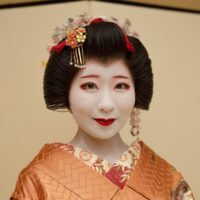
Asakusa is one of Tokyo’s six remaining hanamachi — geisha districts — and an ozashiki, a private banquet with geisha, is still how the district entertains. Asakusa Miyakodori is the only machiai-chaya (geisha teahouse) in Asakusa, founded in 1950 and run today by an okami who was herself an Asakusa geisha for 27 years; it is open to international guests without an introduction.
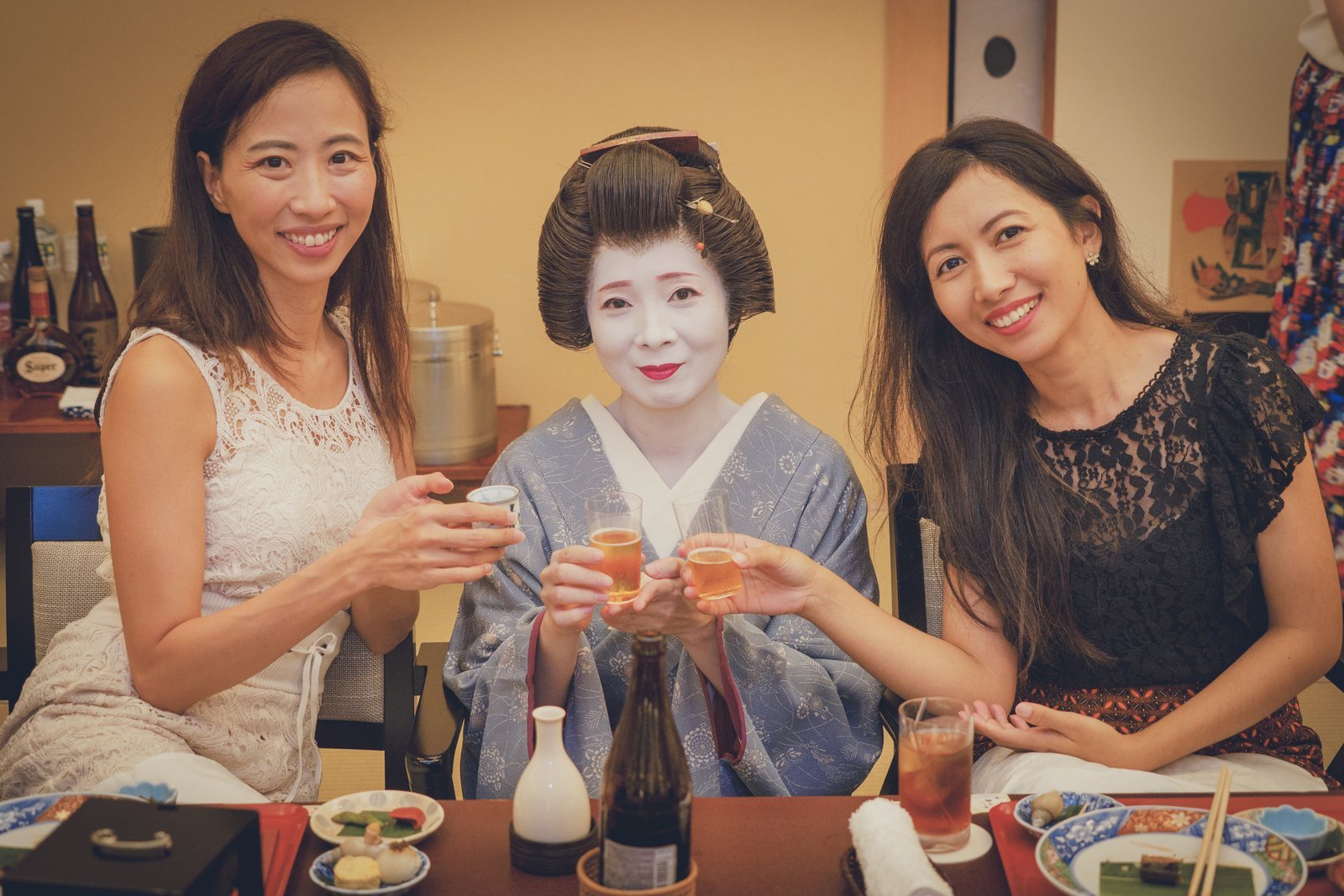
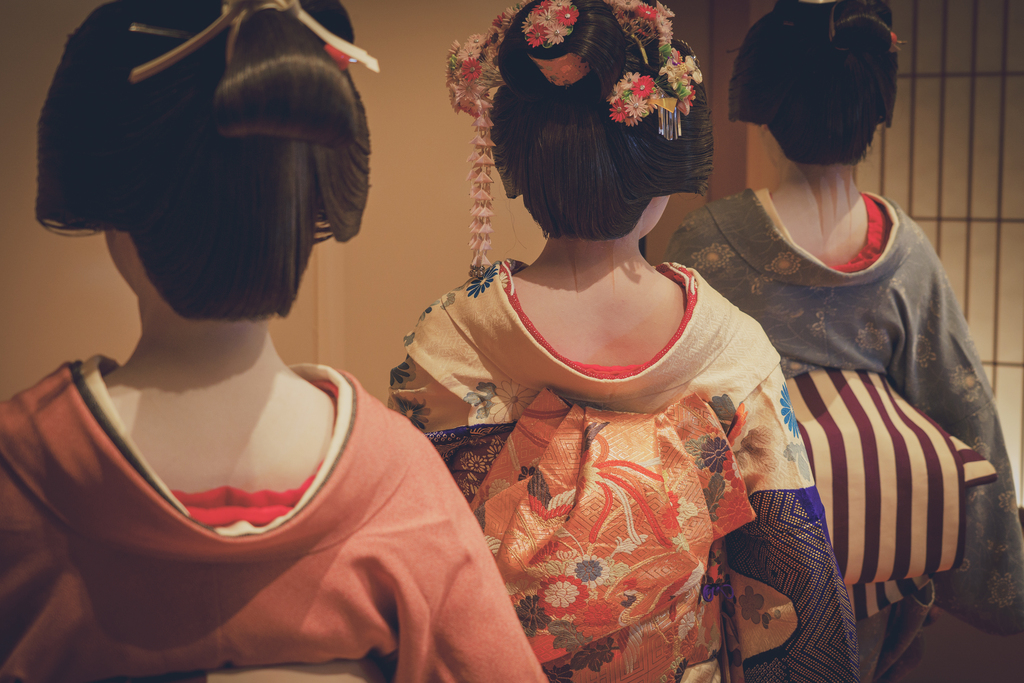
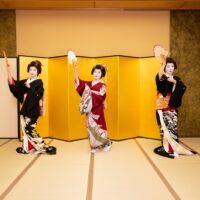
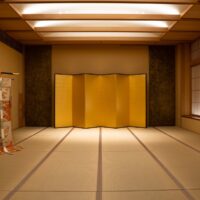
On Christmas Eve or Christmas Day, it works like this. Your party has a tatami room to itself — our three rooms seat from two guests up to twenty-three — and geisha join you for the evening. The 3-hour Twilight Gathering plan includes a seven-course kaiseki dinner and free-flow drinks; the geisha perform classical dance to live shamisen, then teach you the ozashiki asobi, the parlor games the district has played for generations — tora-tora, konpira fune fune — before the evening ends with a photograph and a tejime hand-clap. An English-speaking interpreter is in the room throughout, so the conversation is part of the experience rather than a barrier. For a shorter evening, the 2-hour Geisha Elegance plan runs the same performance and games without the meal (dinner can be added with two days’ notice), and starts any time between 14:00 and 20:00.
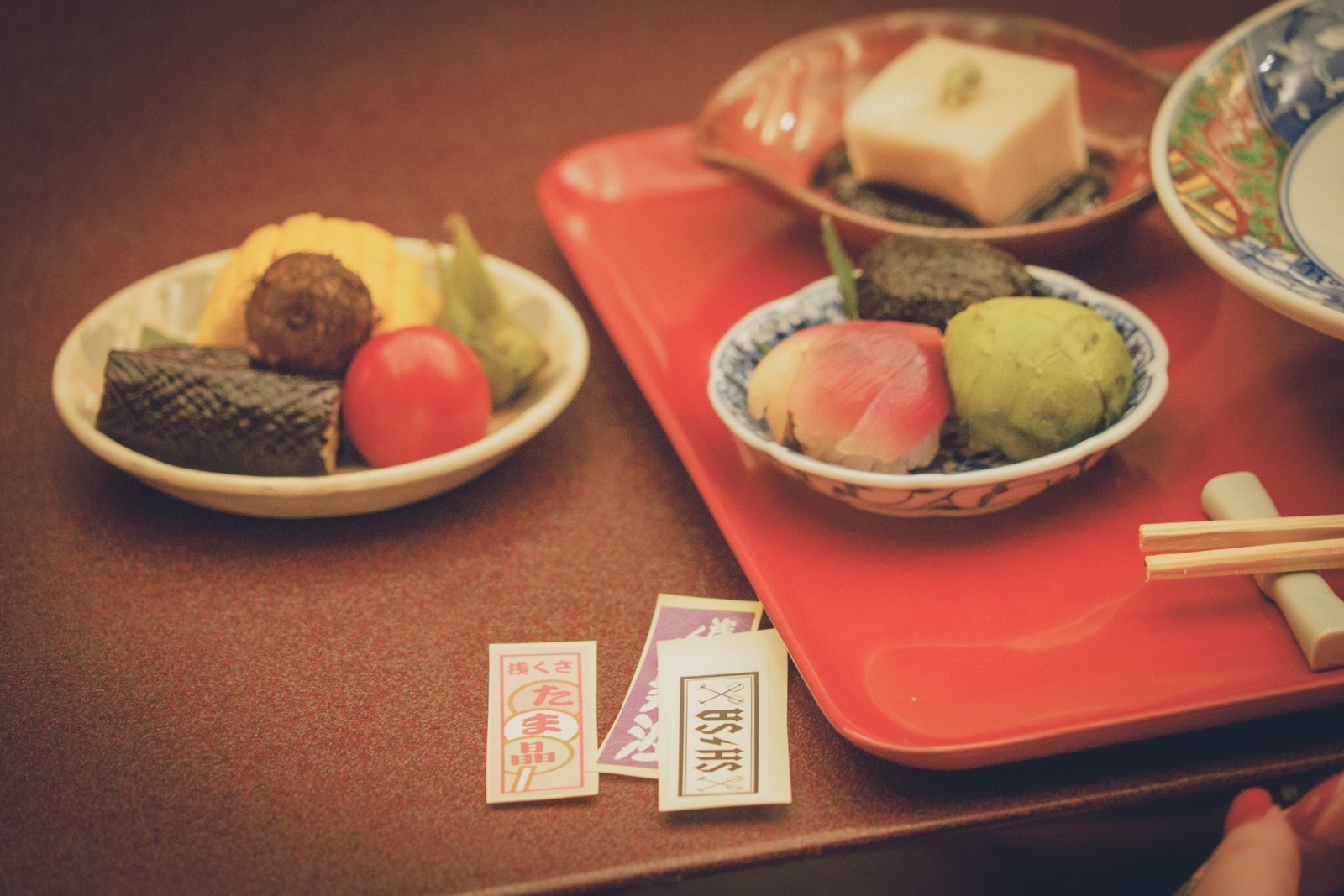
Two things make it a Christmas dinner rather than just a night out. The room is yours: no other tables, no time pressure from a second seating, and the noise of the street stays outside. And it is genuinely of this place — the songs, the games and the etiquette are Asakusa’s own, taught by the people who keep them. If you want the rarest version, Asakusa is also home to hōkan (taikomochi), the male counterparts to geisha; only a handful remain in Japan, all in Asakusa, and one can join your banquet on request.
Prices for the 3-hour plan start from ¥106,000 per person for groups of four or more (kaiseki and drinks included); full pricing for every group size is on the pricing page. Christmas Eve and Christmas Day are bookable — our year-end break begins on the first Saturday on or after December 25, so in 2026 we are open through Friday the 25th — but December fills early, and a private room with geisha cannot be arranged on the day. Request your date here, and we will confirm availability by email.
The teahouse is a three-minute walk north of Senso-ji’s Main Hall — about 13 to 15 minutes on foot from Asakusa’s stations, or a short taxi ride — so the temple illumination is literally on the way.
Other Christmas Dinner Ideas in Asakusa
If a geisha banquet is more evening than you want, Asakusa’s classic restaurants are open on December 24 and 25 as on any other day. We have checked each of the following is operating as of September 2026; reserve early for Christmas Eve, and note that several traditional houses close by 20:00 or 21:00.
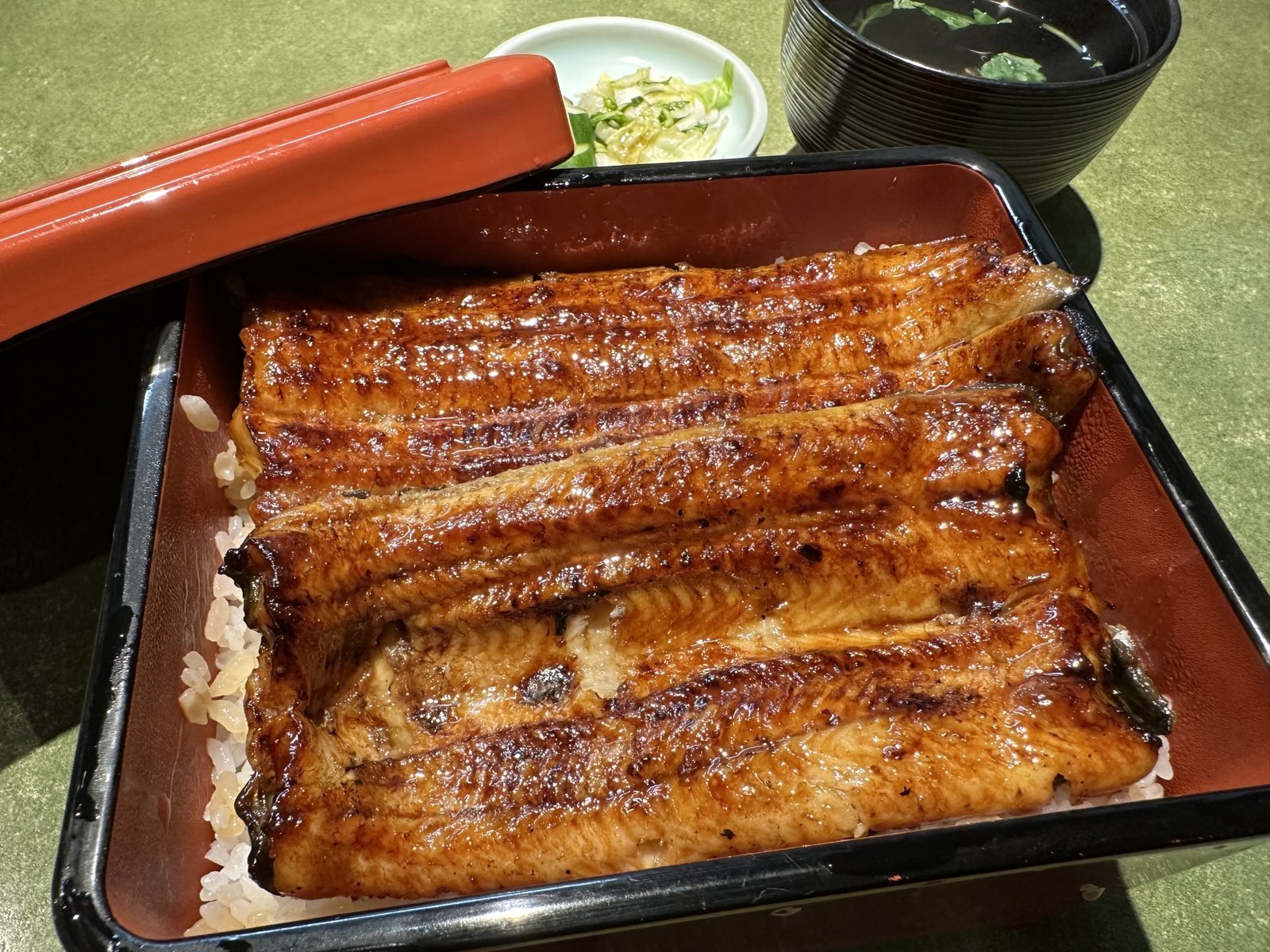
Unagi (grilled eel)
- Asakusa Unatetsu (Asakusa Station main store): Known for hitsumabushi — eel over rice eaten three ways: plain, with condiments, and as ochazuke with broth. The Kokusai-dori branch is closed for renovation from September 2026; use the main store near Asakusa Station.
- Hatsuogawa: Founded in 1907; a small, old-fashioned house with a dry, crisp sauce. Dinner is 17:00–20:00, closed Wednesdays, and it closes early once the day’s eel is gone — go at opening.
Sukiyaki and beef hotpot
- Asakusa Imahan, Kokusai-dori main store: Since 1895; premium kuroge wagyu sukiyaki in a traditional sukiya-style building with private tatami and table rooms. Open until 21:30 (last order 20:30); private rooms usually require a course.
- Chinya: Founded in 1880 and reopened in spring 2022 in Hanakawado, still specializing in carefully marbled beef. Private rooms available; reservations recommended.
- Yonekyu Honten: Beef hotpot (gyunabe) in a retro dining room; open 12:00–21:00, closed Wednesdays. Reservations are taken only for groups of ten or more, so smaller parties should arrive before 18:00.
Monjayaki — the casual option
- Asakusa Monja Kanoya: Fishmonger-run, with fresh seafood monja, open 10:30–23:00 every day — the latest kitchen on this list.
- Rokumonsen main store: A long-running Asakusa monja house; weekdays 11:00–22:00, weekends 11:00–21:30.
Hotel dining with a Skytree view
- Sky Grill Buffet Musashi, Asakusa View Hotel (26F): A buffet with panoramic views; the hotel runs a Christmas-only menu (roast beef, roast chicken, lobster gratin) in late December.
- The Dining “Karakurenai & Makie”, Asakusa View Hotel (27F): Cantonese-based kaiseki and teppan French in private rooms for small groups up to 36, about 100 meters up, with Skytree in the window. Courses from around ¥10,000.
Practical Tips for Christmas in Asakusa
- Order of the evening. Lights are at their best between 17:30 and 20:00, and most traditional restaurants take last orders around 20:00–20:30. Walk first (Kaminarimon → Nakamise → Senso-ji → the river), then eat. If you are going to the Skytree market, do it before dinner and cross back over the Sumida River Walk.
- Kimono. Rental shops around the temple stay open until about 17:00–18:00; the illuminated temple grounds are the best backdrop of the year for kimono photographs, but wear the rental shop’s haori jacket or a shawl — late December evenings are around 5°C.
- Reservations. December 24 is the busiest restaurant night of the year in Japan. Book anything with a private room at least two weeks ahead; a geisha banquet needs more notice than that.
- Crowds. Nakamise Street and the Skytree market are crowded on the weekend before Christmas; December 22–23 and the evenings of the 24th and 25th themselves are calmer than you would expect, because Tokyo’s biggest parties happen elsewhere.
- After the 25th. Tokyo turns to New Year on December 26. The temple lights and the bamboo lanterns continue, but the markets close, and Asakusa’s restaurants and teahouses begin their year-end break in the last days of the month.
Frequently Asked Questions
Is Christmas a public holiday in Japan?
No. December 24 and 25 are normal working days. Shops, temples, trains and restaurants operate on their usual schedules, which is why Christmas Eve dinner reservations are in such demand.
Are Asakusa’s restaurants open on Christmas Day?
Yes, on their normal hours — but many traditional houses close by 20:00 or 21:00 and some close one weekday a week. The hours in section 6 are current as of September 2026; check the restaurant’s own site before you go.
Do I need a reservation for a Christmas dinner in Asakusa?
For anything with a private room, yes, and early. Monja and izakaya on Hoppy Street take walk-ins.
What does a “Japanese-style” Christmas mean?
In practice: the illuminated temple instead of a Christmas tree, a kimono instead of a party dress, and a dinner rooted in the district — sukiyaki, unagi or a kaiseki banquet with geisha — rather than a Western Christmas menu.
Can I book a geisha dinner for Christmas Eve or Christmas Day?
Yes. Asakusa Miyakodori is open on both dates; the year-end break starts on the first Saturday on or after December 25. Send a request with your preferred date and party size, and we confirm availability by email.
Conclusion
Asakusa will not give you the biggest Christmas lights in Tokyo — Skytree, one river away, does that. What it gives you is the version nobody else has: a temple lit in vermilion until late, bamboo lanterns along the water, a bowl of nikomi under a red lantern, and, if you plan ahead, an evening in a tatami room with geisha and a seven-course kaiseki. Choose your lights, choose your dinner, and request your date before December fills.


- Experience a Different Kind of Halloween in 2025: A “Wa-Style” Halloween in Asakusa, Tokyo
- Winter Asakusa Gourmet: Food Stalls & Lunches to Warm You Up
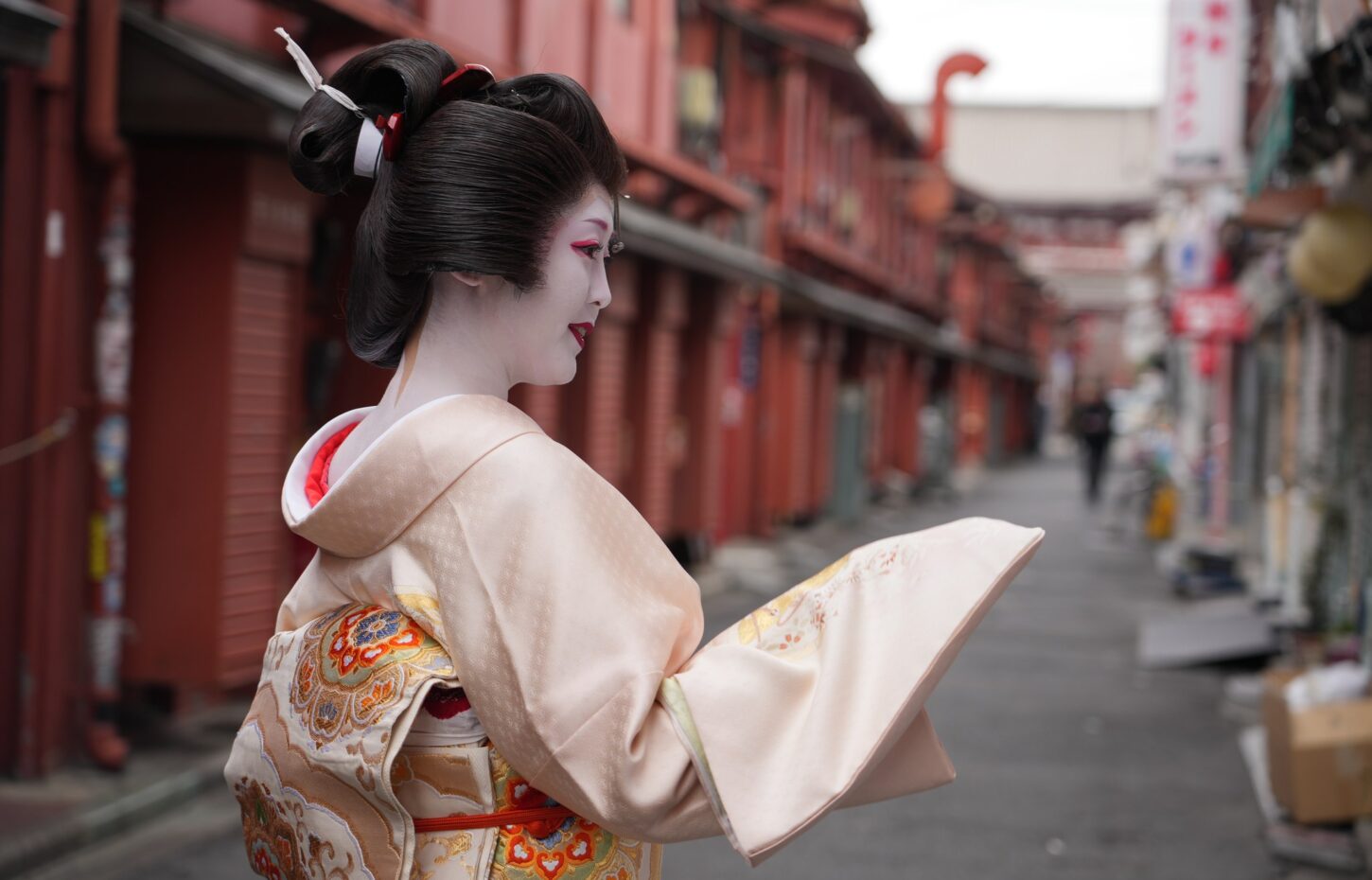
Asakusa Geisha: Where to Meet Real Geisha in Tokyo
Popular Spots to Go Out in Kimono! Introducing Areas like Asakusa, Kamakura, Kyoto, and More
Looking for a Unique Experience in a Kimono? Discover the World of Ozashiki Asobi in Asakusa
Welcome the New Year at Tokyo Tower: The Complete 2026 First Sunrise Guide (Official Information Included)
Indulge in Hot Springs in Asakusa this Winter! 5 Selected Day-trip and Accommodation Facilities for Complete Relaxation
Asakusa Sightseeing Spot Complete Guide | From Kaminarimon to Hidden Gems – 10 Selected Part③
Comment ( 0 )
Trackbacks are closed.
No comments yet.