



Asakusa Miyakodori — The Complete Guide
Geisha FAQ: Questions and Answers
Asakusa is the only Tokyo hanamachi (geisha district) where international guests can request a private geisha evening directly online, no introduction required. This FAQ answers every question, drawn from the words of Okami Chikage herself.
Last updated September 8, 2026
30-Second Summary
- A geisha is a trained performing artist — not a courtesan
- First-timers and foreign guests are warmly welcome — an English interpreter is included on every private plan
- Most guests choose the 2-hour private evening — your own tatami room, two geisha, music, games, and conversation
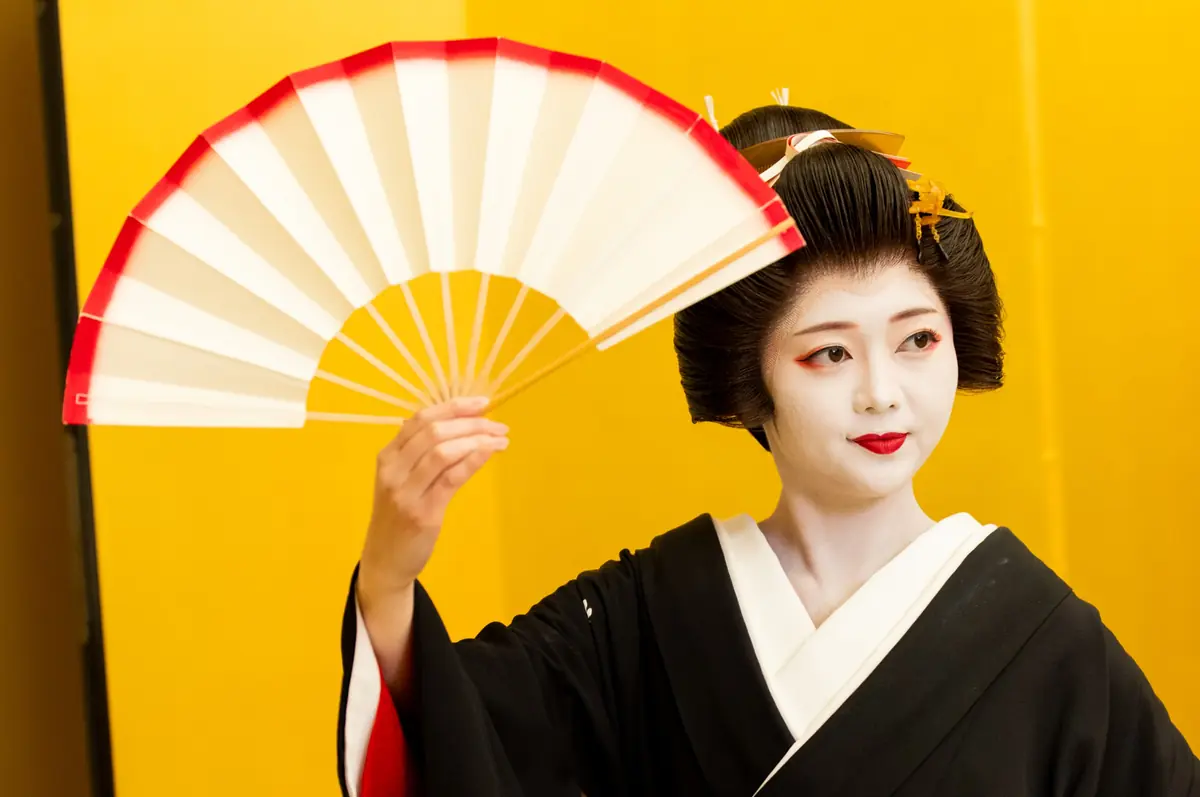
Traditional nihon buyo at Miyakodori, Asakusa
Browse by topic
Most Asked Questions
Quick Answers Before You Book
-
Can I book without an introduction?
Yes. Miyakodori opened that door. Direct online booking, no referral required. Full answer →
-
How much does it cost?
Private plans start from ¥34,000 per person, depending on plan, time, and group size. Interpreter included. Full answer →
-
Do I need to speak Japanese?
No. An English interpreter is included on every private plan, from start to end. Full answer →
-
Which plan should I choose?
The okami recommends the 2-hour Signature for a first visit — two geisha, music, games, and time to settle in. Full answer →
-
Can I take photos?
Yes. On every private plan, photos and videos are entirely up to you. Live-streaming only is asked to be avoided. Full answer →
Culture & History
Knowledge: What Is a Geisha?
The essentials — who they are, how they train, and what sets Asakusa apart.
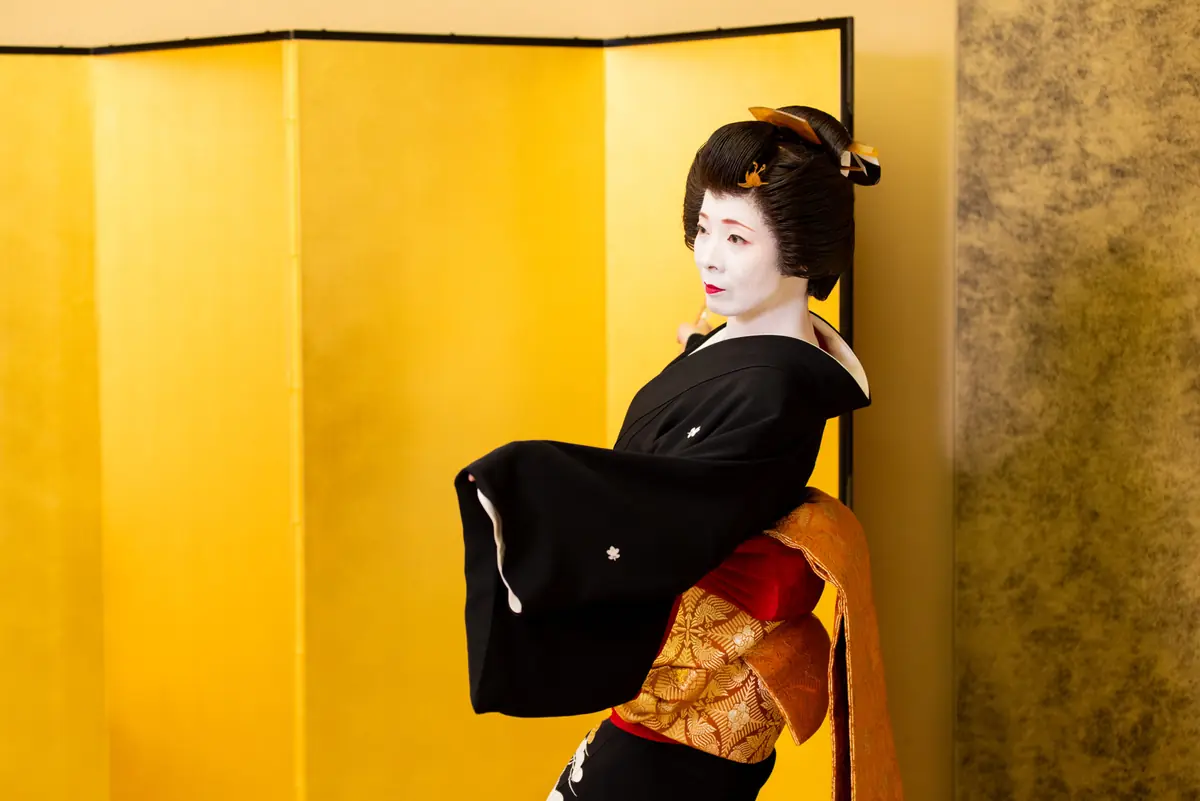
Geisha in full Edo-style kimono at Asakusa Miyakodori
What is a geisha?
A geisha is a professional Japanese performing artist trained in traditional dance, shamisen music, and the art of hosting. The word literally means “person of the arts” (gei = art, sha = person). Contrary to common misconception, geisha are not sex workers. They are skilled entertainers whose role is to create a refined, graceful atmosphere for their guests. As the okami of Miyakodori, Chikage, puts it: “A geisha, I’d say, is someone who shows you an art and enjoys conversation with the guests.”
Miyakodori has carried on this tradition in Asakusa since 1950. The okami, Chikage, spent 27 years as a geisha before becoming the proprietress, and has led Miyakodori as its okami ever since.
What does “geisha” actually mean?
“Geisha” is written with two kanji: gei (芸), meaning art or skill, and sha (者), meaning person. The word simply means “person of the arts” — a professional trained in traditional Japanese performing arts. This is the literal definition, unchanged from its Edo-period origins.
In Kyoto the same profession is called geiko; in Tokyo, including Asakusa, the original term geisha has been preserved.
What is the difference between a geisha and an oiran?
A geisha is a professional performing artist who entertains through traditional arts — classical dance, shamisen music, and the refined art of hosting. An oiran was a high-ranking courtesan who provided sexual companionship — a separate profession that existed during the Edo period. The two were never the same role. Today, oiran exist only as ceremonial costume parades; geisha remain a living, actively practiced tradition.
Asakusa is one of the few places in Tokyo where both traditions are historically rooted, and where the distinction matters most. Our guide explores the contrast in full detail.
Is Memoirs of a Geisha a true story?
No. It is a novel. The geisha who inspired it publicly disputed how it portrayed her world, and the book remains a work of fiction, not a documentary.
A geisha’s daily life involves weekly lessons, a debut before the whole hanamachi, and continued study throughout her career. We find this less cinematic but more interesting.
Do geisha still exist today?
Yes. Geisha are a living profession, not a historical reenactment. About a century ago, some 1,060 geisha worked in Asakusa; today there are about twenty, and, the okami notes, more young women have been coming to the hanamachi to join them.
There is no retirement age in this art. In Asakusa, geisha in their seventies, eighties, and nineties still attend weekly lessons and still perform. This culture is carried forward, one weekly lesson at a time.
Is a geisha evening the same as a hostess bar?
The difference is one word: art. A geisha performs — dance, shamisen, song — and has trained weekly for years to do it. As our okami says: “Take away the art, and a geisha is just a person.”
A hostess entertains; a geisha performs an inherited art form, in front of you.
What is the difference between maiko, hangyoku, and geiko?
These three terms describe young and fully fledged geisha in different regions of Japan. Maiko is the Kyoto term for a young geisha; hangyoku is the Tokyo equivalent — both are already geisha, performing at ozashiki while they refine their art. Geiko is Kyoto’s term for a fully fledged geisha; Tokyo uses geisha for every stage. Despite different names, the paths are similar: a young geisha debuts first, then becomes fully fledged a few years later.
In Tokyo’s Asakusa, the young geisha is called hangyoku — she wears a long-sleeved kimono with floral kanzashi, and trains under senior geisha for three to four years before becoming ippon, a fully fledged geisha.
What is a hangyoku — Tokyo’s young geisha?
A hangyoku is a young geisha in Tokyo — the equivalent of Kyoto’s maiko, and already a geisha in her own right. She wears a long-sleeved, vibrant kimono, with raised hem seams (katage and sodage) and floral hair ornaments that mark her stage of training. After six months to one year as a minarai (observer), a hangyoku spends three to four years mastering the performing arts — beginning with classical dance and shamisen, then deepening into the full craft of the ozashiki.
By observing how senior geisha behave, she develops a feel for graceful movement and conduct that will guide her work.
What is a taikomochi (hokan)?
A taikomochi (also called hokan) is a male performing artist who entertains at ozashiki banquets alongside geisha. Unlike geisha, a taikomochi does not wear white face makeup. He specializes in storytelling, wit, and orchestrating the energy of the room — historically acting as the intermediary between guests and geisha. Asakusa is one of the few places in Japan where taikomochi remain active today.
Their role is to help every guest feel at ease by lightening the atmosphere and guiding conversation. Learning to do this well takes years of dedicated training.
Why do geisha wear white makeup?
The white makeup worn by geisha is believed to originate from the era before electric lighting, when candlelight lit ozashiki rooms. In the dim glow of candles, white powder made a geisha’s face and expression clearly visible — allowing her dance and manner to be seen and appreciated by every guest. This is the okami’s own interpretation, shared from over five decades in the tradition.
Today, a skilled geisha can complete her full white-powder application — using eri-oshiroi or pancake white powder — in as little as 10 to 15 minutes.
Why aren’t all geisha in white makeup?
Asakusa geisha fall into two roles. The tachikata (立方) is the dancer — she wears the full white makeup and the traditional Japanese hairstyle (nihongami) you see in photographs. The jikata (地方) is the musician — she plays the shamisen and sings, with her own natural face and her hair styled in her own modern updo (yōgami) rather than the Japanese hairstyle.
Historically, jikata also wore Japanese hair, but in modern Asakusa the look has shifted to yōgami. A geisha may train as either from the start, or transition from tachikata to jikata over time.
How long does it take to become a geisha?
Becoming a fully fledged geisha takes roughly four to five years of formal training. The path begins with six months to one year as a minarai (observer — not yet a geisha), followed by a debut as a hangyoku — already a working geisha — and finally the ippon-hirome ceremony, when she becomes fully fledged. As the okami of Miyakodori recalls, “In my case I spent three and a half years as a hangyoku, and at eighteen and a half I became an ippon” — a fully fledged geisha.
The training is not only technical — dance, music, tea ceremony, and more — but social: learning to read a room and put every guest at ease.
How is Tokyo geisha culture different from Kyoto?
Tokyo and Kyoto geisha traditions differ in name, costume, music, and spirit. Tokyo uses the term hangyoku for young geisha (Kyoto says maiko); for the fully fledged, Tokyo simply says geisha (Kyoto says geiko). In costume, Tokyo geisha favor edo-komon — a fine-patterned silk — while Kyoto geisha tend toward tsuke-sage, robes with hem patterns. In spirit, the two are often distinguished by aesthetic feeling rather than rank — Tokyo associated with iki (Edo chic), Kyoto with hin (aristocratic refinement).
Dance schools also differ: Asakusa is centered on Hanayagi-ryu — the school in which our okami holds a shihandai (master instructor) license — while Kyoto’s Gion is rooted in the distinct Inoue-ryu tradition. Asked how she sees the difference, our okami is characteristically modest: “I don’t think one is higher or lower than the other. Asakusa’s geisha are easygoing and unpretentious. The real difference is really just the atmosphere — the tsuma (the kimono hem), the shosa (the way of carrying yourself), and the mood.”
Where are the most active geisha districts in Tokyo?
Tokyo has six active geisha districts, known collectively as the Rokkagai (six flower districts): Shinbashi, Akasaka, Kagurazaka, Mukojima, Yoshicho, and Asakusa. Among these, Asakusa holds a distinctive place as the cultural root of Edo geisha — the district where the tradition first flourished under the influence of the old shitamachi spirit.
Miyakodori is one of the geisha tea houses still operating in Asakusa’s flower district. It continues this centuries-old tradition and welcomes international visitors today.
What is a machiai chaya (geisha tea house)?
A machiai chaya (待合茶屋) is a traditional Japanese geisha tea house — the institution that hosts the ozashiki and invites the geisha. Unlike a ryotei (a high-end Japanese restaurant), a machiai chaya does not prepare its own food. Instead, it commissions dishes from established Japanese restaurants and brings them to the tatami room, which gives the okami unusual flexibility — halal, vegan, gluten-free, vegetarian, and other dietary requirements can all be accommodated.
Miyakodori is the only remaining machiai chaya in Asakusa, founded in 1950, and one of the very few in Tokyo where international guests can request an evening directly. The okami invites independent geisha of the Asakusa hanamachi — registered with the local kenban — rather than employing them. The okami herself runs the house personally; she has been here for thirty years.
What is Asakusa Miyakodori?
Miyakodori is a machiai chaya (traditional geisha tea house) in the Asakusa hanamachi, founded in 1950 and run by Okami Chikage for thirty years. We invite independent geisha registered with the Asakusa kenban for private ozashiki evenings — the only Tokyo hanamachi where international guests can request a private geisha evening directly online, without an introduction.
The house holds the historical structure of an Asakusa machiai chaya — the room, the invitations, the kaiseki commissioned from established Japanese restaurants — while opening its doors to first-time visitors from abroad. An English interpreter is included on every private plan.
Are geisha Japanese?
Yes. Geisha are a traditional Japanese profession that emerged in the 18th century. Traditionally, all geisha are Japanese women (and historically some men), trained in classical Japanese arts — dance, shamisen, song, and the etiquette of hospitality. At Miyakodori in Asakusa, our geisha are working professionals who have trained for years in these arts. While Japan does not restrict the profession by nationality, geisha culture is deeply rooted in Japanese language, music, and social tradition, so the overwhelming majority are Japanese.
Can foreigners become geisha?
In principle yes, though it is rare. The profession is not legally restricted by nationality, but it demands fluency in Japanese, mastery of traditional arts (dance, shamisen, song), and deep familiarity with the subtle etiquette of the ozashiki (banquet room). A small number of non-Japanese women have trained and debuted as geisha or maiko in Japan. At Miyakodori, our geisha are Japanese, but we welcome guests from all over the world to experience an authentic ozashiki with them.
Who is higher, geisha or oiran?
They are different, not simply ranked. Historically, the oiran was a high-ranking courtesan whose services included sexual companionship, while the geisha is strictly a performing artist — “gei” means art. In the Edo period, top oiran outranked geisha in fame and cost, but the oiran profession gradually came to an end by the early 20th century, while geisha continue today. So in the modern world there are no oiran; geisha carry on the living tradition of Japanese banquet arts.
Who is the most famous geisha?
The most internationally known is Mineko Iwasaki, the Kyoto geiko whose life informed the book and film Memoirs of a Geisha (though the novel is fiction and she distanced herself from it). Beyond her, there is no public ranking to point to. A geisha’s standing is known inside her own hanamachi (geisha district) — through the kenban that registers her and the houses that invite her to an ozashiki. At Miyakodori in Asakusa, the geisha who come to the room are registered with the Asakusa kenban.
Is Asakusa Shrine the same as Senso-ji?
No, they are two separate places, side by side. Senso-ji is a Buddhist temple — Tokyo’s oldest, founded in 628 AD — dedicated to the bodhisattva Kannon. Asakusa Shrine (Asakusa-jinja) is a Shinto shrine right next to it, honoring the three men connected with the founding of Senso-ji, and is the home of the famous Sanja Matsuri festival. Visiting geisha districts of Asakusa, you will often pass both. They sit within the same temple grounds but belong to different religions — Buddhism and Shinto.
Booking & Visiting
Booking & Experience: What to Expect
Prices, plans, food, access, and what happens in the tatami room — an English interpreter is included on private plans.
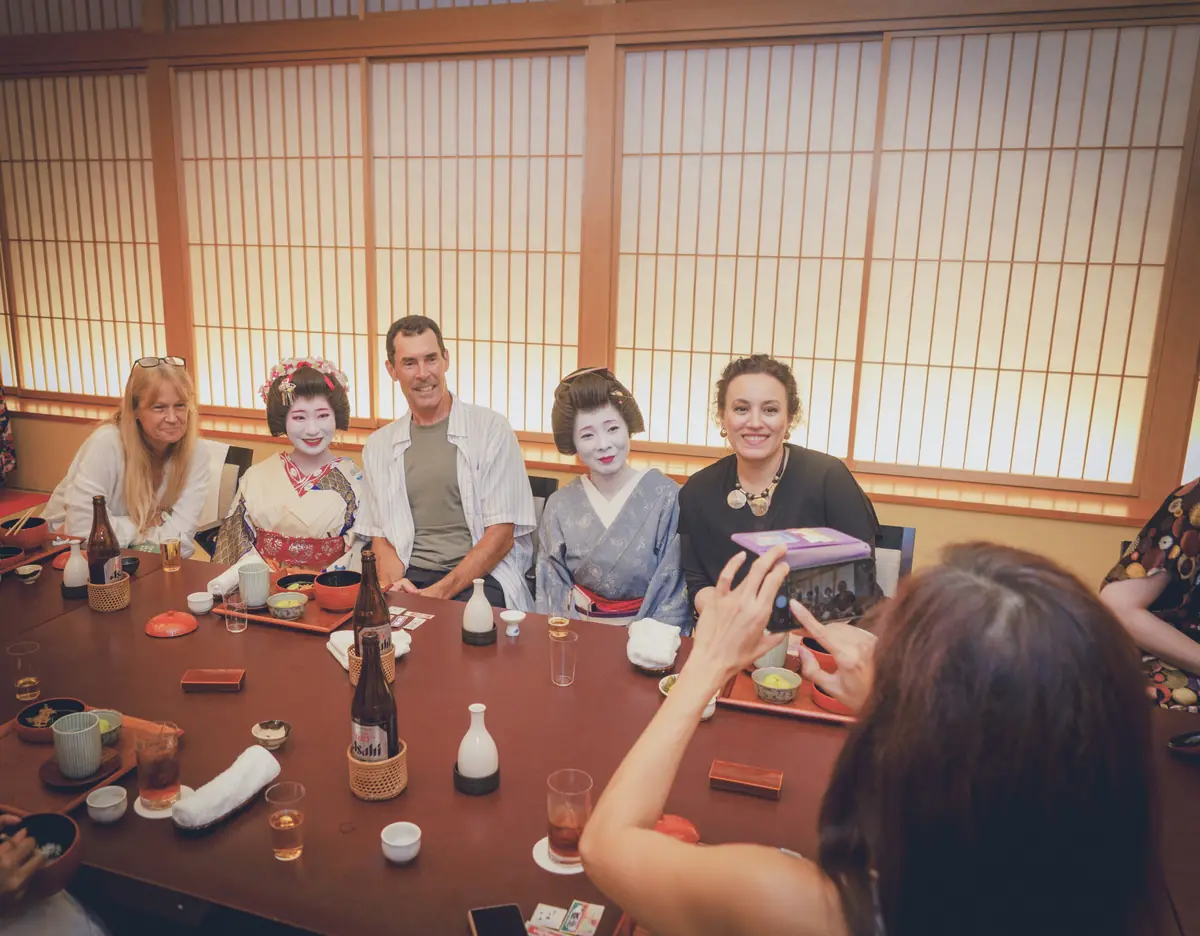
An ozashiki banquet at Miyakodori, Asakusa — where guests and geisha share the evening
What happens at a geisha banquet (ozashiki)?
An ozashiki is a private tatami-room gathering where geisha entertain guests through traditional dance, shamisen music, conversation, and interactive parlor games (ozashiki asobi). The evening begins with the geisha’s formal entrance and a dance performance, followed by time for games, drinks, and unhurried conversation. Everything is arranged to help guests feel welcome and spend time together. Guests sit with the geisha rather than watching from a distance.
At Miyakodori, every private plan includes an English interpreter to help guests follow what is said and take part from the start.
How much does a geisha experience cost in Tokyo?
At Miyakodori in Asakusa, prices vary by plan and group size. The 1-hour daytime plan (Geisha Highlights, 14:00-17:00 start) starts from ¥34,000 per person (for four or more guests, daytime), with two geisha as standard (+¥45,000 per additional geisha). The 2-hour Signature (Geisha Elegance) starts from ¥45,000 per person, with selected free-flow drinks (beer, house sake, and select non-alcoholic drinks) included — two geisha as standard; a third adds a second dancer (+¥60,000 per geisha). The 3-hour Full Course (Twilight Gathering, evening only) starts from ¥106,000 per person and includes a seasonal kaiseki dinner with three geisha as standard — five for the fullest expression (+¥75,000 per additional geisha). An English interpreter is included on every private plan.
The 75-minute Tea House visit, at ¥17,600 per person, is the briefest introductory option — shared seating with other guests, three geisha, and one parlor game. The private evenings cost more, but they offer what the brief tea house cannot — your own room, your own pace, geisha as your companions, and time to linger after the games are done. The okami still recommends one of the private evenings for a first geisha experience worth keeping.
Can first-time visitors book without an introduction?
Yes, at Miyakodori. All Tokyo hanamachi, Asakusa included, were traditionally ichigen-san okotowari (“by introduction only”), and most of Asakusa’s other tea houses still maintain that rule. Miyakodori is the house that opened that door — direct booking, English support, transparent pricing. We were the first in Asakusa to do this, and the other houses haven’t followed yet.
Reservations are made through our online reservation form. An English interpreter is included on every private plan. No Japanese language ability is required.
I don’t speak Japanese — can I still enjoy it?
Yes, completely. Every private session at Miyakodori includes a dedicated English interpreter who is present from beginning to end. The okami herself communicates with international guests through gesture, expression, and the universal language of hospitality, and has noted that non-Japanese-speaking guests often express their delight more openly and directly than Japanese guests do.
The ozashiki parlor games are designed to be participatory and intuitive. Language is not a barrier. Some of the most memorable evenings here unfold precisely because words are not the primary medium.
Can women, couples, and families book?
Yes. Miyakodori welcomes solo travelers, couples, friend groups, families, and corporate guests. Women booking as a group are equally welcome. The okami has noted a growing number of multi-generational family visits — including grandparents, parents, and children as young as primary school age — all participating together in ozashiki parlor games. “All sorts of groups come together — friends with friends, all kinds of people — and that’s the joy of it,” the okami says.
For most family or couple visits, the okami recommends one of the private evenings — your own room, your own pace, geisha as your companions, and time to linger after the games are done. For a brief first taste of geisha culture, the 75-minute Tea House visit is an introductory alternative.
Why is a 2-hour experience recommended?
The okami herself recommends a minimum of two hours to experience the full spirit of an ozashiki. In her words: “What I truly consider a real ozashiki is two or three hours.” In two hours, guests can enjoy a dance performance, multiple parlor games, conversation, and time to handle instruments such as the fan, drum, and shamisen.
The 2-hour Signature (Geisha Elegance) is the most popular at Miyakodori, and includes selected free-flow drinks (beer, house sake, and select non-alcoholic drinks). Evening sessions offer a particularly immersive atmosphere.
Can I take photos and videos?
On every private plan (1-hour and longer), photos and videos are entirely up to you. Capture anything, anytime, including the dance and the parlor games. Only live-streaming is asked to be avoided. Your interpreter will be happy to take group photos with the geisha.
The 75-minute Tea House visit (shared seating) groups photo time toward the end of the session.
What instruments and arts will I see?
At a Miyakodori ozashiki, guests witness traditional Japanese dance (nihon buyo) performed to live shamisen music — the three-stringed instrument central to geisha culture. Depending on the plan and session, guests may also hear kiyomoto (a form of narrative singing) and see tsuzumi (hand drum) performance, as well as join in ozashiki asobi parlor games using fans and lacquerware.
The okami of Miyakodori holds a shihandai (master instructor) license in the Hanayagi school of Japanese traditional dance — the school that has been central to Asakusa’s flower district for generations.
What is “ozashiki asobi” (parlor games)?
Ozashiki asobi are traditional parlor games played between geisha and guests during a banquet. Originally developed to ease the formality of the tatami room, they include tokkuri-taoshi (sake bottle balancing), konpira-fune-fune (a hand-and-cup rhythm game played to the song), and other seasonal variations. Guests join in with gentle guidance from the geisha. Reciprocal pouring, where the geisha pours for you and you then pour for her, is a friendly exchange that is especially appreciated during the evening and welcomed at every table.
The games are intuitive enough for first-time visitors and children alike. No Japanese language ability is needed. The rules are conveyed through demonstration and playful repetition.
Are children welcome?
Yes. Miyakodori welcomes children, including very young guests. The okami has seen families with infants through primary school-aged children enjoy the atmosphere together, with older children often joining the ozashiki games alongside parents and grandparents. Watching three generations share the same sense of delight in the tatami room is, in the okami’s words, “universal.” For most family visits a private evening works better — your own room, your own pace, and time for the children to settle in.
For pricing, guests aged 13 and over are charged the full per-person rate, children aged 4 to 12 are charged half price, and infants aged 0 to 3 join free of charge. At the shared-seating Tea House, all guests aged 3 and over are charged the standard rate, with only infants aged 0 to 2 free.
The 75-minute daytime Tea House visit is an alternative for a brief first introduction.
Can you accommodate dietary requirements (halal, vegan, gluten-free, no meal)?
Yes. This is one of the reasons a machiai chaya is uniquely flexible. Because Miyakodori does not prepare food in-house, the okami commissions dishes from established Japanese restaurants in Asakusa, and can often accommodate dietary requirements such as halal, vegan, vegetarian, gluten-free, and allergy considerations — depending on availability and advance notice. A no-meal option is also available for guests who prefer to focus on the music, dance, and games.
Please share your dietary requirements at the time of reservation. The okami will respond personally with options for your evening.
Where is Miyakodori, and how do I get there?
Miyakodori is located in the heart of Asakusa’s flower district — 3-23-10 Asakusa, Taitō-ku, Tokyo 111-0032. The house sits a few minutes’ walk from Sensō-ji temple, just past the temple grounds in the quieter streets where the old hanamachi still lives.
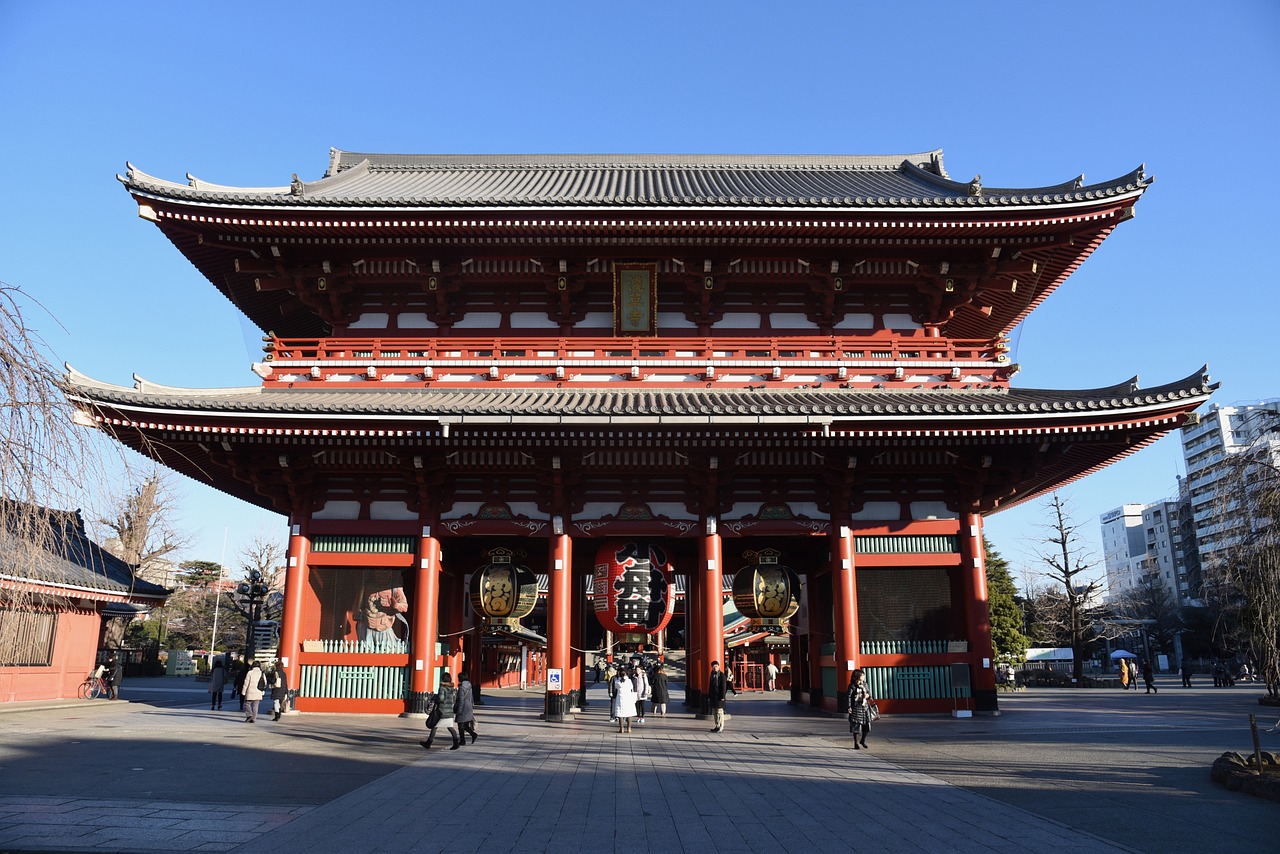
Nearest stations: Asakusa Station (Tobu Skytree Line / Tokyo Metro Ginza Line / Toei Asakusa Line) — about 8 to 10 minutes on foot. From Sensō-ji’s Hozomon gate, around 5 minutes. We’ll send full directions in English by email once your reservation is confirmed.
How is a private evening at Miyakodori different from a geisha “show” or tourist performance?
A private evening at Miyakodori is a shared evening, not a show. You are not watching a ticketed group performance with a fixed program. You are inside a private tatami room with two or more independent geisha registered with the Asakusa kenban, where dance, shamisen, parlor games, and conversation unfold around you, shaped by the guests in the room rather than by a set list.
A ticketed group performance seats guests who do not know each other together and runs a set program to a fixed finish. A private evening reverses that: the room holds your party alone. The 75-minute Tea House visit is the brief introductory taste; a private evening is the longer form.
Is it OK if I don’t drink alcohol?
Absolutely. Many guests do not drink — for health, religious, or personal reasons — and the evening is built around music, dance, games, and conversation, not around drinking. Soft drinks (tea, juice, soda, water) are always available, and the 2-hour Signature plan’s selected free-flow drinks include non-alcoholic options.
The geisha are accustomed to non-drinking guests and will pour soft drinks just as warmly. There is no expectation, social or otherwise, to drink alcohol at Miyakodori.
Is a geisha evening suitable for solo travelers, including women traveling alone?
Yes. Miyakodori regularly welcomes solo travelers of all backgrounds, including women alone. The setting is a private tatami room with the okami, two or more geisha, and your English interpreter — an intimate, hosted environment rather than an open public venue. Many solo guests have described the evening as warmly attentive without being intrusive.
For solo guests, the 1-hour (afternoon) or 2-hour (afternoon or evening) private plan is the most natural starting point. The okami and the geisha shape the pace of the room to your comfort; participation in games or conversation is invited, never required.
What is the cancellation policy?
For private plans at Miyakodori, cancellations made seven days or more before the reservation are free of charge. After that a sliding fee applies: 30% from six days before, 50% from three days before, 80% from two days before, and 100% within 24 hours of the reservation. Date changes are accommodated when possible. Please reach out as early as you can if your plans shift.
The 75-minute Tea House visit follows the same schedule; if you booked through an OTA, the terms shown at the time of booking apply.
How do I book a reservation?
For private plans, use our online reservation form. This is the only way international guests can directly request a private geisha evening in a Tokyo hanamachi. Submit your preferred date, plan, party size, and any dietary or special requests, and the okami will respond personally in English with available options.
The 75-minute Tea House visit can be booked instantly through TableCheck (OTA-style). No introduction or personal referral is needed at Miyakodori. The okami opened these doors deliberately: “Rather than being known only to a select few, I’ve come to feel it matters to let many people know us.”
Join us for an evening
Miyakodori welcomes first-time visitors. No introduction needed.
Dress Code & Manners
Etiquette: How to Behave
Simple, warm guidelines to help you feel confident in the tatami room.
What is the dress code for an ozashiki?
There is no strict dress code at Miyakodori, but smart casual or above is appropriate. Guests in formal attire — including traditional Japanese kimono — are equally welcome. If you choose to arrive in kimono, the geisha and the okami will be delighted. The tatami room is built for it, and some guests rent kimono earlier in the day and come straight from there. It is one of our favorite arrivals.
Shoes are removed at the entrance to the tatami room. Please wear clean socks or hosiery. Avoid heavily perfumed fragrances out of consideration for the geisha’s kimono and the intimate setting.
Do I need to tip the geisha?
Tipping is not expected at Miyakodori and is not required. Japan does not have a tipping culture in the Western sense. A traditional custom called goshugi — a small gift of money presented in a formal envelope — exists in some geisha contexts, but at Miyakodori this is entirely optional and guests should not feel any obligation to offer it.
What we value most is the warmth guests bring by taking a sincere interest and joining in the games with a relaxed attitude.
What is kamiza and shimoza — where do I sit?
Kamiza (上座) is the seat of honor in a tatami room — the position closest to the tokonoma, the decorative alcove with a hanging scroll and flowers. Shimoza (下座) is the seat nearest the exit, reserved for the most junior person present. In Japanese culture, seniority determines seating order. As our guest, you will be guided to your seat. No knowledge of this protocol is required in advance.
Even among geisha themselves, this hierarchy is observed with formal phrases: “taka-agari shitsurei shimasu” — “forgive me for taking the higher seat” — is spoken before moving to the kamiza. You won’t need to say it. We’ll take care of the choreography.
Are there any taboos I should know?
The most important rule in a tatami room is also the simplest: never turn your back to a guest, and never hand anything to someone while standing. These are the geisha’s own standards — ones they observe with every movement — and they reflect the deeper principle that in the tatami room, no one should feel looked down upon.
A few practical notes: shoes are removed at the entrance, and at Miyakodori low chairs are the default at the tatami table. No need to sit on the floor. Some guests still prefer agura (cross-legged) on a cushion; either is welcome. Your interpreter will guide you through everything in real time.
How do I greet the geisha — bow or handshake?
A gentle bow is the most natural greeting, and the geisha will bow in return. Handshakes are not typical in traditional Japanese settings, though the geisha are accustomed to international guests and will respond warmly to whichever greeting feels natural to you. There is no wrong way to say hello when genuine warmth is behind it.
Your interpreter will introduce you to the geisha at the start of the session, and any questions about how to address or interact with them can be asked freely at that moment.
What if I make a mistake during the evening?
Don’t worry. You don’t have to remember any of this. As the okami explains, the games were never meant to test anyone: “They were designed from the start with easy rules anyone can follow — so there’s really nothing for the geisha, or for us, to fuss over.” The spirit of a good evening is simply sharing the time with an open, easy heart. Sensing what feels easy for each guest — reading the room, adjusting tempo, knowing when to pour and when to step back — is what the geisha is trained to do.
If you are unsure about something, please ask. The geisha will guide you with translation from the interpreter. The okami will handle anything else discreetly, without making a scene.
What if I’m shy or introverted?
You are warmly welcome as you are. The geisha are professionally trained to read the room and adjust the pace. If a guest prefers to watch, listen, and ease in slowly, the evening shapes itself around that. There is no obligation to be the center of attention, perform, or speak loudly. The games are participatory but never forced; conversation can stay light or go quiet, depending on the room.
Can I share photos on social media?
Yes. Photos taken during a private evening at Miyakodori may be shared on social media. Many guests do, and we are glad when they choose to. If you tag Miyakodori or the geisha, please use the names provided by your interpreter at the start of the session. Only live-streaming during the evening is asked to be avoided.
For commercial or media use (publication, advertising, professional content), please contact us in advance so we can coordinate with the geisha appearing that evening.
Stories & Curiosities
Behind the Scenes: Geisha Life
Surprising stories, little-known facts, and the human side of geisha culture —
straight from the okami of Miyakodori.
Can a geisha date or get married?
Yes. Geisha can and do have romantic relationships. Traditionally, some geisha have had a danna — a long-term patron who provides financial and personal support, but this is by no means required, and many geisha live without one, maintaining entirely ordinary relationships. A small number of geisha continue working after marriage. Cases where a guest and a geisha eventually find their way to each other do happen, though rarely.
The okami notes that the image of geisha as romantically unreachable is more often a Western projection than a rule. The real tradition is more human — more like life — than the mythology suggests.
Why does a geisha leave a sliver of unpainted skin on her nape?
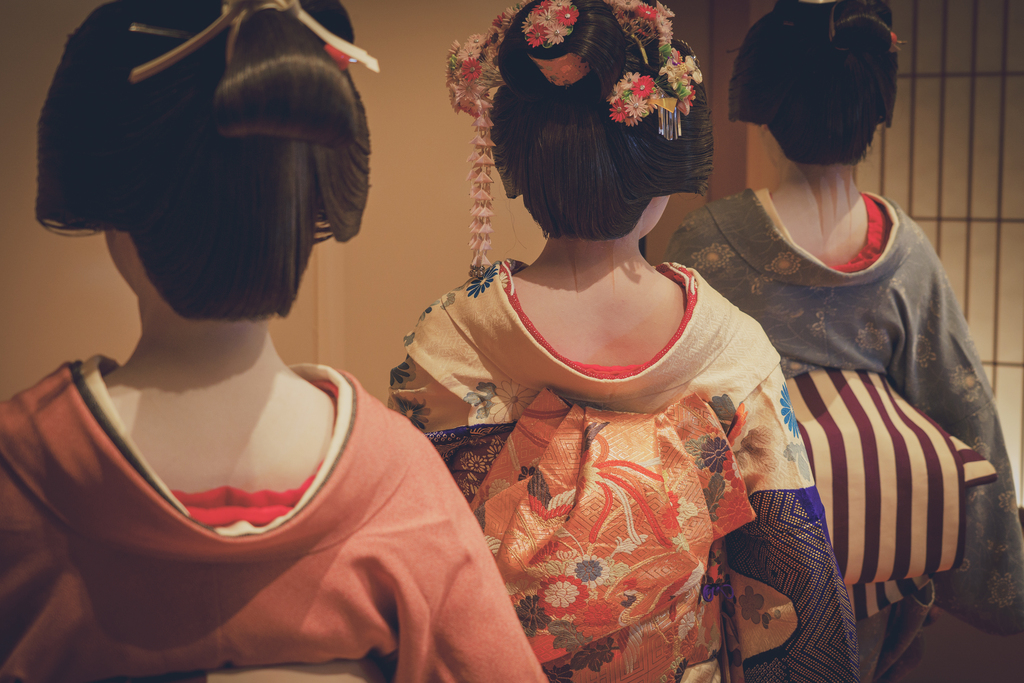
The unpainted skin at the nape of a geisha’s neck is called mitsu-eri — “three-collar strokes.” When applying white powder to the back of the neck, the hakoya (a specialist who assists with her preparation) deliberately leaves two or three thin strokes of bare skin, tracing the natural line of the nape. Seen from behind, the exposed skin creates an optical illusion of a longer, more graceful neck.
In the okami’s words: “Seen from a little distance, it’s the beauty of the nape that carries a quiet allure.” The technique takes years of practice to perfect, and a geisha cannot do it on her own — the hakoya draws it for her.
What is the secret behind geisha makeup?
The okami’s answer to this question is a single word: subtraction. Modern makeup is an act of addition — layer upon layer of color. Traditional geisha makeup works in the opposite direction. Starting from white, red, and black — only three colors — the art lies in how much red you remove, how much you thin, how far you let the white carry. What remains is the individual’s beauty, not what’s been applied.
In the okami’s own words, the secret is restraint itself: “I’d say it comes down to not adding much.”
What happens if a guest spills hot sake on a geisha?
It happened to the okami herself, once, in the middle of winter. A guest had ordered hire-zake — sake warmed with a grilled blowfish fin — and warned her it was hot. Then the whole cup tipped onto her white kimono. She went home, changed everything — kimono, nagajuban, everything — and came back. The guest paid nothing for the damage. “That’s just how it is,” she says. “We don’t make our guests carry that kind of trouble.”
The story shows how a geisha keeps an ozashiki running calmly when something goes wrong, without making a scene.
— Okami Chikage: “Of course I didn’t ask for the cleaning. That’s not how it works.”
At what age did the okami start her training?
Chikage began her training at age 5 — or by the old reckoning, on the sixth day of the sixth month at six years old, a date traditionally believed to bring lasting devotion to one’s craft. Her grandfather was a shinpa actor — a modern Japanese theatrical tradition that took shape in late-19th-century Japan as a counterpart to classical kabuki. Her mother was a geisha. Dance and kiyomoto came first, drumming followed in early elementary school.
By the time she entered the flower district at fifteen — leaving school after middle school, as was the custom of her era. She had already spent a decade in daily practice. The okami’s philosophy today is the same as it was then: “This work is a lifetime of learning.”
What is a hakoya?
A hakoya is the behind-the-scenes specialist who helps a geisha prepare — dressing her in the elaborate kimono and obi, applying the white powder to the nape (including the mitsu-eri), and handling the day’s logistics and the communication between the geisha, the tea house, and the engagement. The name is said to come from the hako (box) that once carried a geisha’s shamisen to and from the ozashiki.
This skilled work is largely unseen. It allows a geisha to arrive fully prepared and give her guests her full attention. In Asakusa’s flower district, the hakoya continues to help prepare for every evening.
Ready to visit Asakusa Miyakodori?
See an ozashiki for yourself.
Miyakodori has welcomed first-time guests since 1950.
No introduction. No Japanese required.